Introduction
Globally, improvement of the nutritional and health status of young children and adolescents has been recognized as a key strategy for building sustainable and progressive societies, as enshrined in the United Nations Sustainable Development Goals (SDGs) 2016–2030 (Development Initiatives, 2017). The SDGs for nutrition focus on reducing the prevalence of stunting by up to 40% by 2025.
The burden of ‘anthropometric failure’ (stunting, underweight and wasting) and poor health among children is heavily concentrated in low- and middle-income countries in sub-Saharan Africa and South Asia, including India (Kim et al., Reference Kim, Rajpal, Joe, Corsi, Sankar, Kumar and Subramanian2019). Over the last three decades, progress on the economic front in India has not been accompanied by commensurate improvement in the nutritional status of children. The disproportionate burden of undernutrition (as indicated by stunting, underweight or wasting) has been clustered within socioeconomically disadvantaged population groups spread across the poorest regions of India (India State-Level Disease Burden Initiative Malnutrition Collaborators, 2019). However, the risk of childhood undernutrition among disadvantaged social groups such as tribal populations is poorly understood. Such an analysis, focusing on the complexities of nutritional deprivation among children of weaker social backgrounds, would help inform targeted policy action and programme implementation.
India’s progress on improving the nutritional status of children has been mixed, with nearly half of children under the age of five (approximately 63 million) continuing to suffer from some form of nutritional deprivation (stunting, underweight or wasting) in the past three decades (Bhutta, Reference Bhutta2016; Menon et al., Reference Menon, Headey, Avula and Nguyen2018). The nationally representative National Family Health Survey (NFHS), implemented by the Ministry of Health and Family Welfare, Government of India, monitors the state of child nutrition across Indian States and Union territories. Survey data suggest that the burden of stunting among children in India decreased by only 14 percentage points over the 24-year period between 1992 and 2016 (stunted children declined from 52% in 1992 to 38% in 2016), with widespread spatial, socioeconomic and demographic heterogeneities (IIPS, 1995; IIPS& ICF, 2017). The prevalence of underweight among children dropped by 17 percentage points over the same period (from 53% in 1992 to 36% in 2016), with notable spatial, socioeconomic and demographic disparities (IIPS, 1995; IIPS & ICF, 2017), and the prevalence of wasting increased by 3 percentage points (from 18% in 1992 to 21% in 2016) (IIPS, 1995; IIPS & ICF, 2017).
In developing countries, poor nutritional status during early childhood has serious consequences, and can lead to ‘sub-optimal human capital formation’. For instance, early childhood nutritional deprivation has been found to be associated with higher risks of diarrhoeal disease and acute respiratory infection, delayed motor skills, and poor cognitive and social development during childhood; high blood pressure, obesity, diabetes and heart disease during adulthood (Barker & Osmond, Reference Barker and Osmond1986; Martorell, Reference Martorell1999; Alderman et al., Reference Alderman, Hoddinott and Kinsey2006; Kar et al., Reference Kar, Rao and Chandramouli2008; Victora et al., Reference Victora, Adair, Fall, Hallal, Martorell, Richter and Sachdev2008; Dewey & Begum, Reference Dewey and Begum2011; Lakshminarayanan &Jayalakshmy, Reference Lakshminarayanan and Jayalakshmy2015). Although several initiatives have been undertaken by the central and state governments over the past three decades, such as the Balwadi Nutrition Programme (1970), Integrated Child Development Services (ICDS) in the latter half of 1970s and the Mid-day Meal scheme (MDM) since 1995, progress has remained far from satisfactory owing to the multi-factorial dimension of the child nutrition phenomenon and widespread socioeconomic and spatial inequalities (Rajpal et al., Reference Rajpal, Kim, Sankar, Kumar, Joe and Subramanian2020). India must focus on investing in the nutritional status of children as a national development priority to achieve its goal of sustainable human capital formation. This will enable the country to maximize the potential returns from its relatively young population, often referred to in the development literature as the ‘demographic dividend’, and pave the way for sustainable socioeconomic progress.
Previous studies have shown that nutritional deprivation during childhood can lead to an irreparable loss of cognitive development, poor health and increased risk of mortality, and has also been found to be associated with low human capital formation, potentially dampening the economic productivity of the country in the long term (Hertzman, Reference Hertzman2010; Menon et al., Reference Menon, Headey, Avula and Nguyen2018). Central and state governments in India have, over the years, made concerted programmatic efforts to reduce national disease burden by improving health infrastructure, access to water and sanitation facilities and increasing awareness about hygiene. As a result, spatial inequalities across states and villages/urban centres in the prevalence of childhood stunting and underweight have declined over time (Desai & Thorat, Reference Desai and Thorat2013). However, there remain persistent socioeconomic and demographic heterogeneities in the incidence of anthropometric failure among Indian children, and regular monitoring of the trends and patterns of anthropometric failure among children across socioeconomic and demographic groups is required.
Many studies have addressed the trends in economic inequalities in child undernutrition over time in India (e.g. Subramanyam et al., Reference Subramanyam, Kawachi, Berkman and Subramanian2010; Pathak & Singh, Reference Pathak and Singh2011). However, there is a paucity of research on social group/ethnic inequalities in anthropometric failure among children in India. A study analysing child nutrition across caste groups based on NFHS-1 (1992–1993) and NFHS-3 (2005–2006) datasets indicated that the decline in the incidence of underweight children over the period 1992–2006 was least among the Scheduled Tribes, followed by Scheduled Castes and Other Backward Classes, while the highest reduction was among children from the Forward/General Caste categories (Singh, Reference Singh2011). Other studies have underscored the exceptional vulnerability to anthropometric failure of tribal preschool children in India (Kshatriya & Ghosh, Reference Kshatriya and Ghosh2008; Debnath & Bhattacharjee, Reference Debnath and Bhattacharjee2014, Reference Debnath and Bhattacharjee2016; Dey & Bisai, Reference Dey and Bisai2019; Ghosh & Varerkar, Reference Ghosh and Varerkar2019). However, there is little empirical evidence on the vulnerability to anthropometric failure among tribal vs non-tribal preschool children across the geographical and sociodemographic contours of India. The present study therefore aimed to examine the incidence of stunting, underweight and wasting among children under the age of 3 in India by social/ethnic group (tribal vs non-tribal subgroup populations).
Methods
Data
Data were from the NFHS-4 conducted in India 2015–16. The NFHS-4 is a nationally representative household survey that provides comprehensive information on fertility, mortality, maternal health care utilization, child nutritional and health status across the districts and states/union territories (UTs) of India. The stratified NFHS-4 sample was selected in two stages from the sampling frame. The rural sample was selected through a two-stage sample design with villages as the Primary Sampling Units (PSUs) at the first stage (selected with probability proportional to size), followed by a random selection of 22 households in each PSU at the second stage. In urban areas, there was also a two-stage sample design with Census Enumeration Blocks (CEB) selected at the first stage and a random selection of 22 households in each CEB at the second stage. At the second stage in both urban and rural areas, households were selected after conducting a complete mapping and household listing operation in the selected first-stage units (IIPS & ICF, 2017). The survey included data for 126,431 children under the age of 3 (0–35 months) from 5489 PSUs, 640 districts, 29 states and seven union territories.
Outcome variables
The three standard anthropometric indicators of child nutritional status were used as the outcome variables: stunting (height-for-age), underweight (weight-for-age) and wasting (weight-for-height) (WHO, 2006).
Exposure variables
A set of theoretically pertinent socioeconomic, demographic and contextual correlates of childhood undernutrition were selected, in line with the UNICEF framework on childhood undernutrition (UNICEF, 1990), existing studies on childhood nutrition and the availability of data (Di Cesare et al., Reference Di Cesare, Bhatti, Soofi, Fortunato, Ezzati and Bhutta2015; Kumar & Ram, Reference Kumar and Ram2013; Amugsi et al., Reference Amugsi, Mittelmark and Lartey2013; Mihrete et al., Reference Mihrete, Alemia and Teferra2014; Kamal et al., Reference Kamal, Hasan and Davey2015; Tsiko, Reference Tsiko2015; Chowdhury et al., Reference Chowdhury, Rahman, Khan, Mondal, Rahman and Billah2016; Krishna et al., Reference Krishna, Oh, Perkins, Lee, Heo and Lee2018; Kim et al., Reference Kim, Rajpal, Joe, Corsi, Sankar, Kumar and Subramanian2019; Vikram & Vanneman, Reference Vikram and Vanneman2020). Child-level factors included age, sex, breastfeeding status, birth size, place of delivery, full-immunization status, birth interval, wanted status of child. Maternal characteristics included age at time of birth, educational status, employment status, body mass index (BMI), exposure to mass media, antenatal care (4+ ANC visits) and experience of physical/emotional/sexual violence. Household-level characteristics included religion, social group (tribal/other), wealth status, type of cooking fuel, facility of drinking water, toilet facility, rural/urban place of residence and geographical region. Social groups were categorized with a binary variable, i.e. Scheduled Tribe=1, non-Scheduled Tribe=0. These are interchangeably referred to as ‘tribal’ or ‘non-tribal groups’ in the paper.
Analytical methods
Descriptive statistics were used to examine the patterns of stunting, wasting and underweight among the sample under-3 children. Multilevel logistic regression models were fitted to examine the adjusted effects of social group (tribal vs non-tribal) and economic, demographic and contextual factors on the risks of stunting, wasting and underweight, accounting for the hierarchical nature of the survey data (Snijder & Bosker, Reference Snijders and Bosker1999). The factors associated with stunting/wasting/underweight were analysed at three levels: individual (Level 1), individuals nested within villages (Level 2) and villages nested within districts (Level 3). The outcome variable was whether children were stunting/wasted/underweight or not (binary: yes/no). The multilevel model was:
 $${\rm{In}}\left[ {\frac{{{p_{cvd}}}}\over{{1 - {p_{cvd}}}}} \right] = \alpha + {x_{cvd}}\beta + {w_{vd}}\gamma + {z_d}n + {u_{vd}} + {v_d},$$
where [pcvd/(1 − pcvd)] is the logit in which pcvd is the probability of child c in village (PSU) v in district d suffering/having suffered from stunting/wasting/underweight; xcvd, wvd and zd are the vectors of individual-, village- and district-level attributes; α is a constant; β, γ and n are vectors of estimated parameter coefficients; and uvd and vd are unexplained residual terms at the village (PSU) and district level, respectively. Therefore, a multilevel model with two and three levels was fitted to examine the impacts of individual-, village- and district-level factors as fixed effects, and village (uvd) and district (vd) as random effects on child stunting/wasting/underweight status.
The correlations between the probability of a child being stunted/wasted/underweight in the same village (VPC v ) and same district (VPC d ) are presented as variance partition coefficients (VPCs) (Kiros &White, Reference Kiros and White2004):
 $$VP{C_{v = }}\left( {\frac{{\sigma _v^2 + \sigma _d^2}}\over{{\sigma _v^2 + \sigma _d^2 + 3.29}}} \right)$$
and
 $$VP{C_{d = }}\left( {\frac{{\sigma _d^2}}\over{{\sigma _v^2 + \sigma _d^2 + 3.29}}} \right)$$
where
 $\sigma _v^2$
denotes the village-level variance, and
 $\sigma _d^2$
denotes the district-level variance.
In addition, a test of interaction effects between social groups (tribal vs non-tribal children) with the selected measures of socioeconomic status (wealth status, education of mother, place of residence and geographic region) on the nutritional outcome (stunting, wasting and underweight) was examined. Testing of the interaction effects of tribal status of children with measures of socioeconomic status (SES) assesses the multidimensional nature of social inequality in the nutritional status of children, and highlights the heterogeneous dynamics of overlapping power structures of tribal vs non-tribal and the SES sub groups of the population (Eeckhaut, Reference Eeckhaut2020). This provides a more detailed insight than the direct ‘additive approach’ of examining the independent effect of tribal vs non-tribal status. Similar interactions between tribal vs non-tribal status and wealth status, place of residence and geographical region were implemented using the margins and marginsplot commands in STATA Version 13.1 (Buis, Reference Buis2010; Williams, Reference Williams2012). The margins command allows the estimation of the predictive odds ratios of anthropometric failure among children across the interaction term between the socioeconomic position (for instance, different categories of wealth index) and tribal status of children, after adjusting for all pertinent demographic, socioeconomic and contextual covariates in the multilevel logistic regression model. The marginsplot graphically depicts the predictive odds ratios with 95% confidence intervals, and summarizes the association between the dependent variable and interaction term. All the analyses were performed using statistical weights to adjust for the complex survey design.
Results
Descriptive statistics of study population
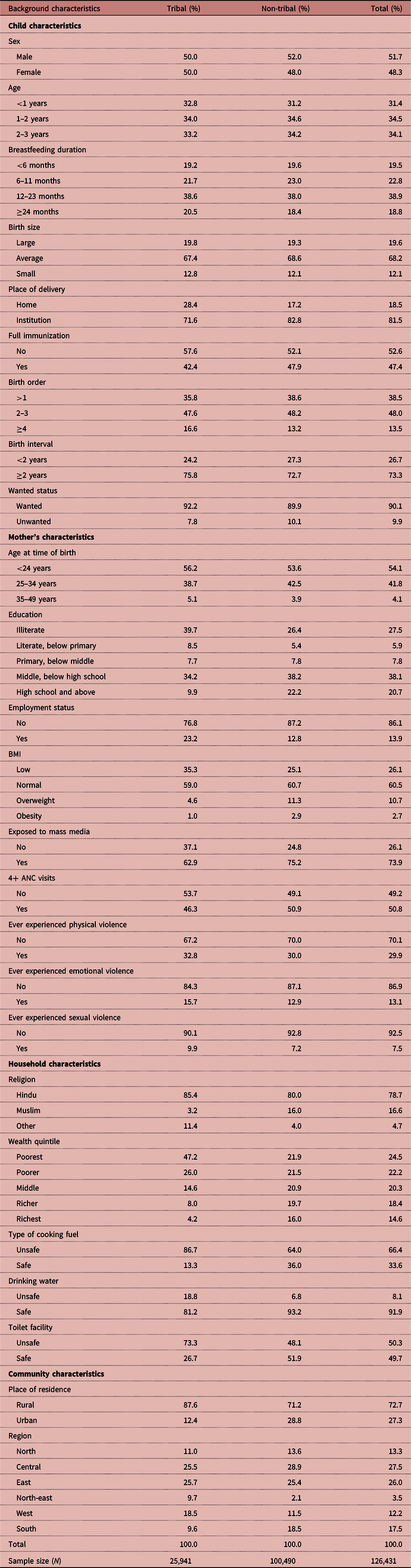
Table 1 shows the percentage distribution of the study children under 3 years by selected socioeconomic and demographic characteristics. The total population surveyed during NFHS-4 consisted of 52% male and 48% female children. Of the tribal children, nearly 50% were male, and among the non-tribal children, 52% were male. The majority (39%) were breast-fed for 12–23 months, and around 20% for less than 6 months. Around 68% of children were of average birth size, and only 12% were small at birth. The proportion of institutional delivery was less among tribal (72%) than non-tribal children (83%). Among tribal children, lack of full-immunization was relatively high (58%) compared with non-tribal children (52%). Almost three-quarters of the children surveyed had a birth interval of more than 2 years, with 50% being of birth order 2–3. Around 40% of mothers of tribal children were illiterate, whereas for non-tribal children this was 26%. Only 10% of mothers of tribal children were educated beyond high school, while 22% of mothers of non-tribal children were educated up to high school and above. One-third of non-tribal children belonged to the wealthier quintiles, whereas only 12% of tribal children belonged to this category. Only 13% of households of tribal children used safe fuel for cooking compared with 36% of the households of non-tribal children. Safe drinking water and toilet facilities were common among the households of non-tribal children. Fewer tribal children (12%) were from urban areas than were non-tribal children (29%). Higher proportions of tribal children were from the North-east (9.6%) and West (18.4%) regions compared with non-tribal children.
Demographic, socioeconomic and contextual characteristics of children aged 0–35 months, India, 2015–2016

Percentages may not add up to 100 due to rounding.
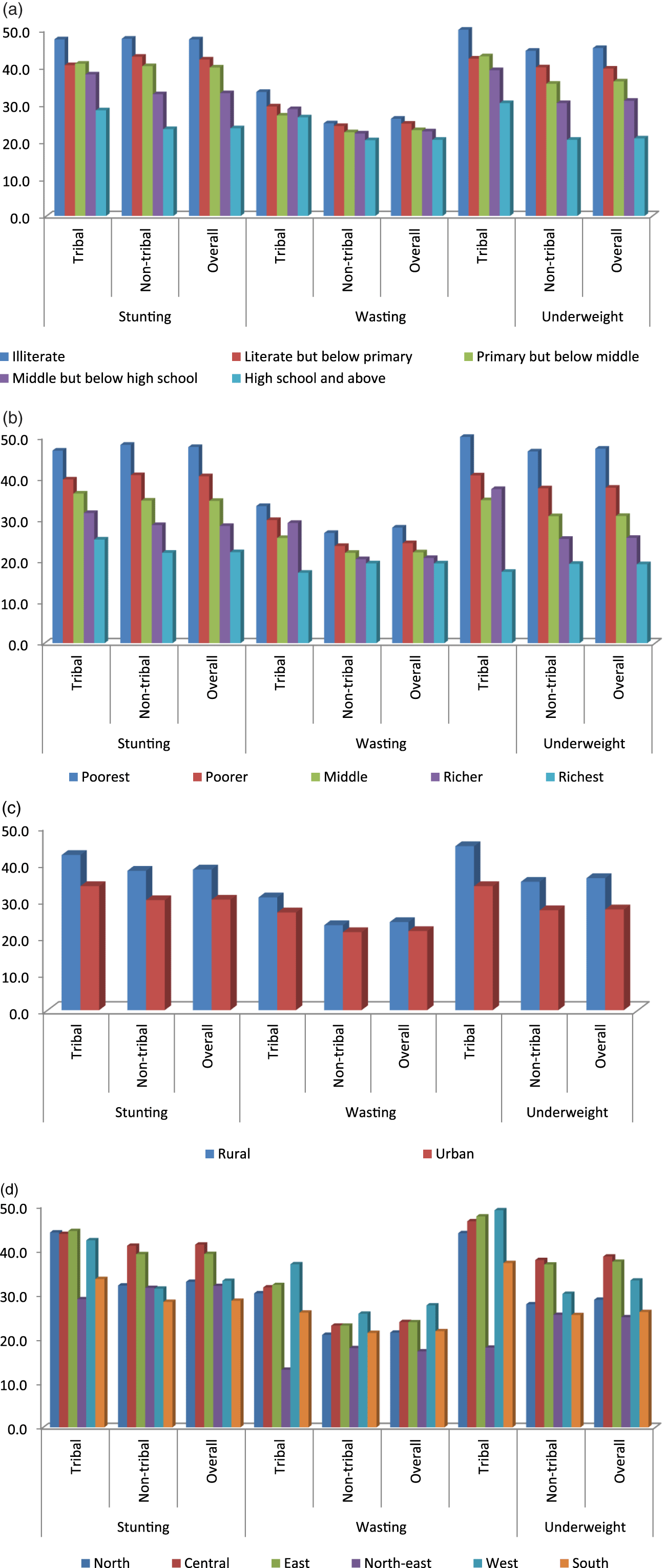
Figure 1 shows the differentials in the prevalence of childhood undernutrition by social/ethnic group and socioeconomic status as measured by the mother’s educational status, household wealth status, urban/rural place of residence and geographical region. The prevalence of stunting was high among tribal children whose mothers were illiterate, whereas it was relatively low among non-tribal children whose mothers were educated up to high school or above. Similar patterns were observed for wasted and underweight children. Likewise, the prevalence of stunting was high among tribal children from the poorest wealth quintile, but low among non-tribal children from the richest wealth quintile. The burden of stunting was higher among tribal children from rural areas and those residing in the North/Central/East regions, compared with non-tribal children from urban areas residing across the South and North-east regions. Similar patterns were observed among the wasted and underweight children.
Prevalence of child undernutrition (%) among children aged 0–35 months by tribal group and a) education of mother, b) wealth status of household, c) place of residence and d) geographical region.

Differentials in childhood undernutrition by selected characteristics
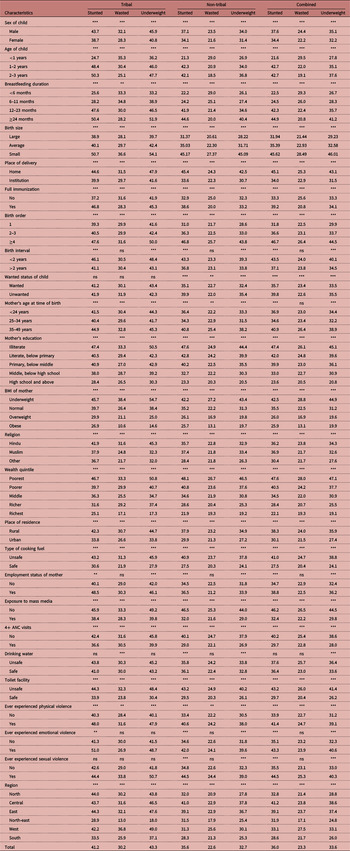
Table 2 shows the prevalence of undernutrition among the study children by selected background characteristics. Large proportions of tribal children were undernourished compared with their non-tribal counterparts. Stunting and underweight was higher among children who were breast-fed for 24 months or more, and lower among those who were breast-fed for less than 6 months. Children who were breast-fed for less than 6 months were more likely to be wasted (29%) than those who were breastfed for 24 months or more (21%). Children whose birth size was small, and those delivered at home, were more likely to be undernourished than their counterparts. Compared with ‘others’, undernutrition was higher among children of birth order 4 and above, with a birth interval of less than 2 years and who were unwanted at the time of birth. Children whose mother’s age was 35–49 years at the time of giving birth were more likely to be undernourished than those whose mothers were aged under 34 years. There was a negative association between mother’s education and child malnutrition. Children whose mothers were highly educated were less likely to be undernourished than those whose mothers were illiterate or less educated. Wealth status had an inverse association with child undernutrition. Children from wealthier households were less likely to be undernourished than those from poor households. Children from rural areas, whose households used unsafe fuel for their counterparts. Children whose mothers had more than four ANC visits, were exposed to mass media and did not experience any form of violence, were less likely to be undernourished than their counterparts.
Prevalence of stunting, wasting and underweight among children aged 3 years among tribal/non-tribal groups by background characteristics, India, 2015–2016

***p<0.001; **p<0.05; ns, not significant (p>0.05).
Multivariate analysis of childhood undernutrition
Variability in childhood undernutrition by village/community and district
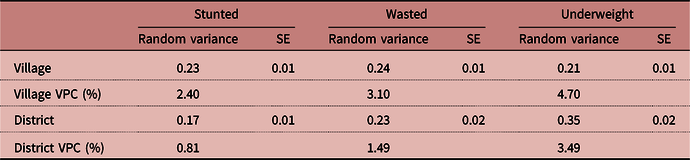
The villages/communities and districts were modelled to be random in the multilevel models. The results from the random intercept models are given in Table 3. There was a considerable degree of heterogeneity in the prevalence of stunting, wasting and underweight across villages/communities (2–5%) and districts (1–3%). Tables 4, 5 and 6 present the results of the adjusted (multivariate) models where individual/household-, village/community- and district-level covariates were incorporated into the model. After adjusting for all explanatory factors, the variance attributed to the differences across villages/communities and districts related to stunting reduced to 2% and 0.1% respectively. Similarly, after adjusting for all explanatory factors, the variance attributed to the difference across villages/communities and districts related to wasting reduced to 1.5 and 0.2% respectively, while that related to underweight reduced to 0.7 and 0.2% respectively.
Parameter coefficients for the multilevel model (random intercept only model, with correlates) for childhood undernutrition measures, India, 2015–2016

PSU=Primary Sampling Unit; VPC=Variance Partition Coefficient.
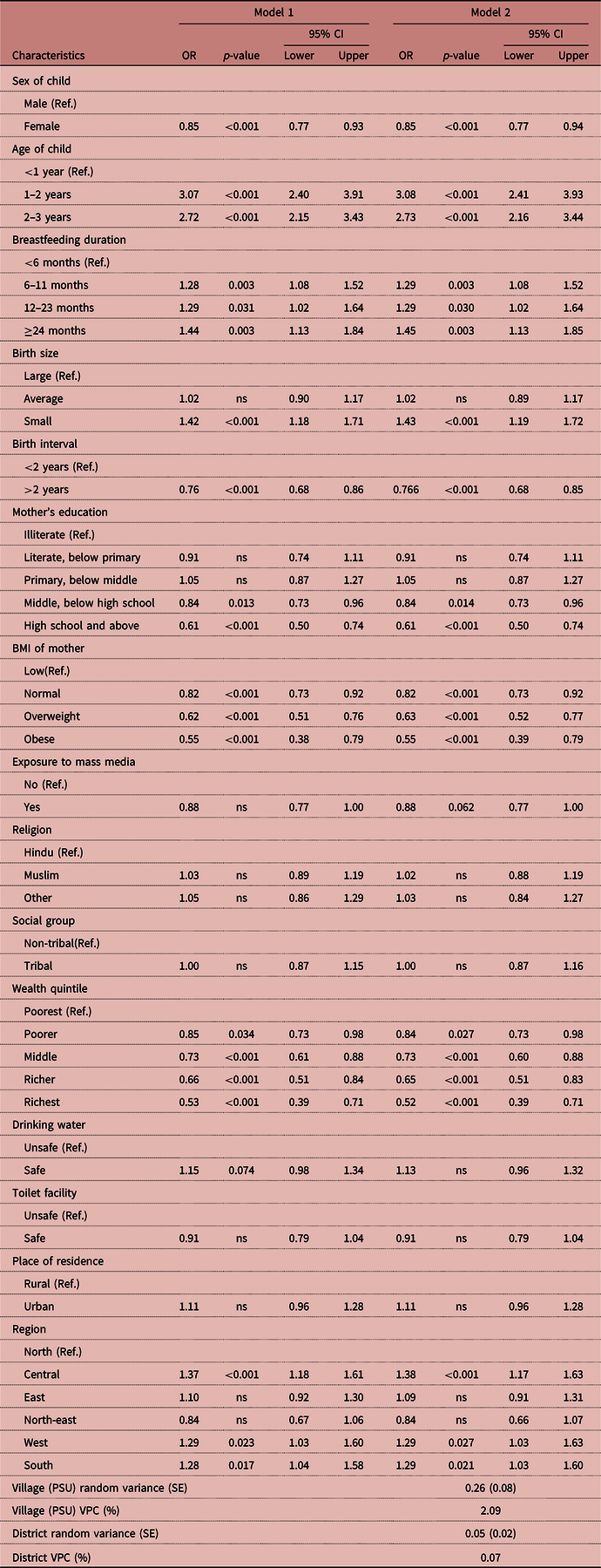
Multilevel logistic regression model showing odds ratios (ORs) and 95% CIs for stunting in children below 3 years of age, India, 2015–2016

Model 1 was adjusted for PSU and selected explanatory factors, including age and sex of children, breastfeeding status, birth size, 4+ ANC visits, place of delivery, birth order, birth interval, wanted status of child, mother’s age at the time of birth of index child, maternal education, maternal occupation, maternal BMI, exposure to mass media, experienced any intimate partner violence (physical, sexual, emotional), religion, social group (tribal vs non-tribal), wealth status, type of cooking fuel, safe drinking water, toilet facility, place of residence, geographical region.
Model 2 was adjusted for districts plus Model 1 factors.
ns, non-significant.
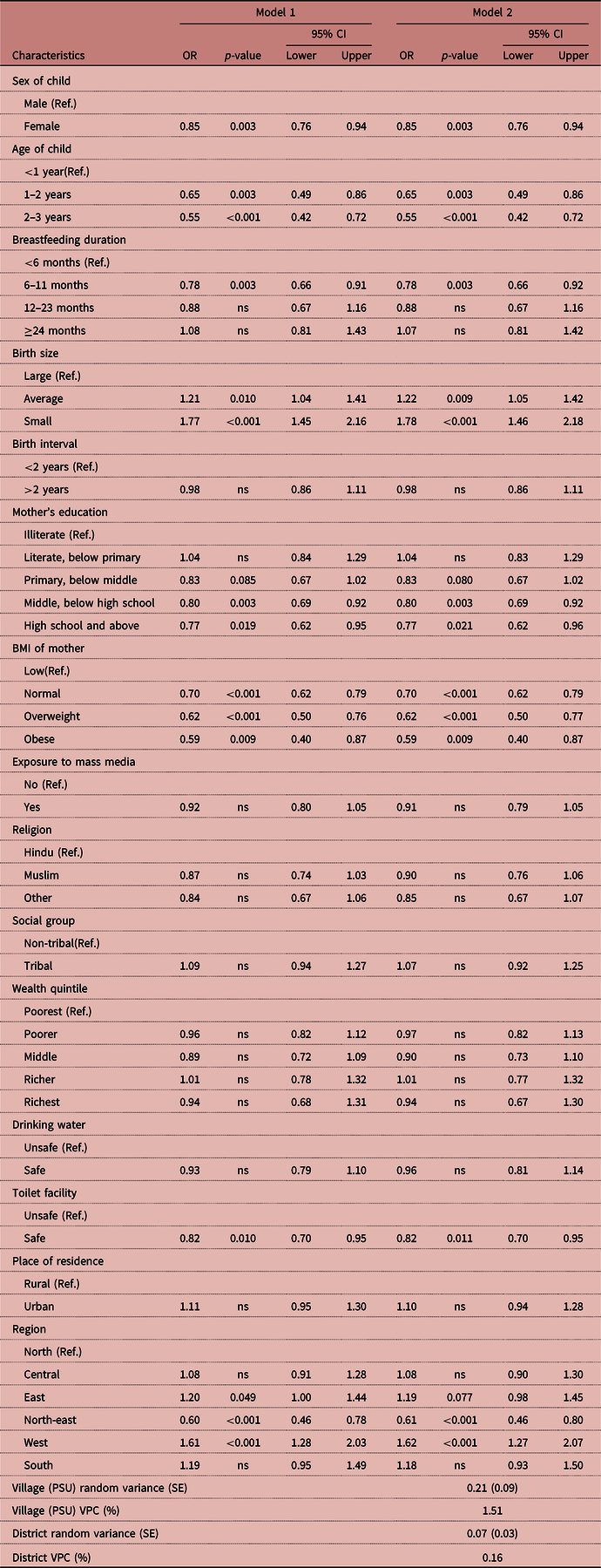
Multilevel logistic regression model showing odds ratios (ORs) with 95% CIs for wasting in children below 3 years of age, India, 2015–2016

See footnote to Table 5 for description of models.
ns, non-significant.
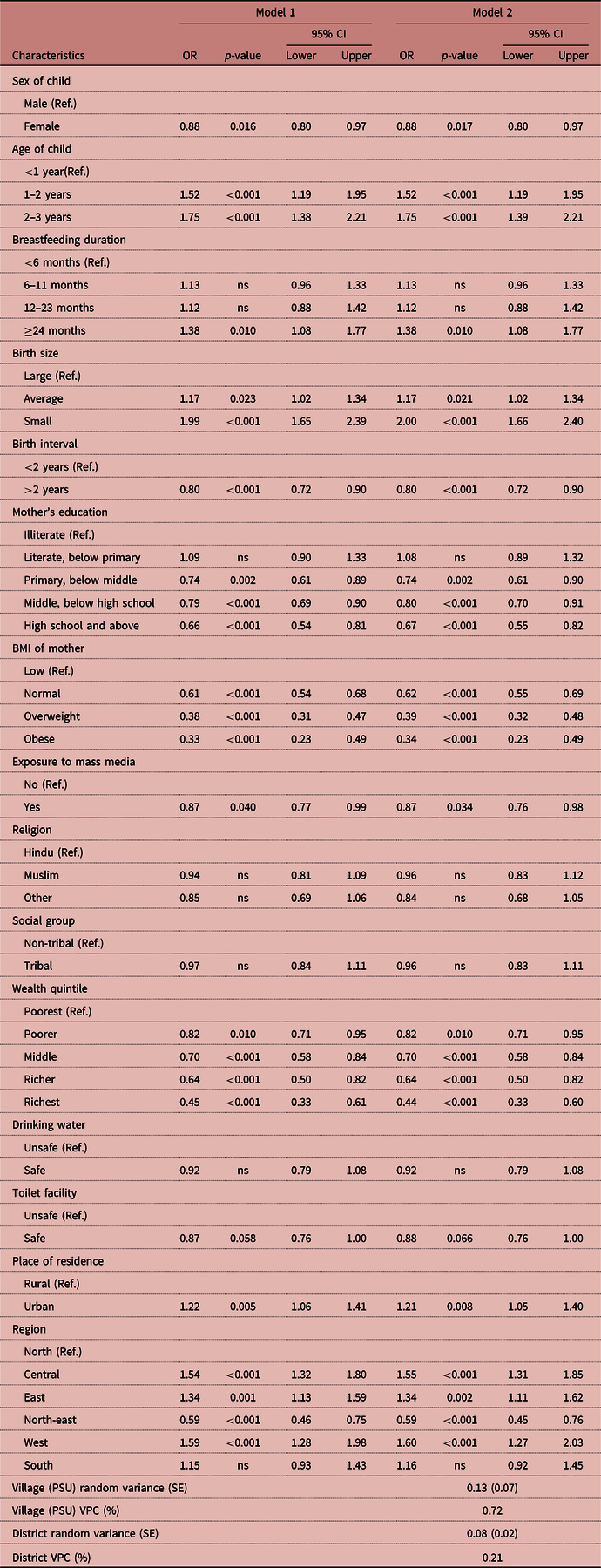
Multilevel logistic regression model showing odds ratios (ORs) with 95% CIs for underweight in children below 3 years of age, India, 2015–2016

See footnote to Table 5 for description of models.
ns, non-significant.
Risk factors for childhood stunting
Female children were significantly less likely to be stunted than male children (Table 4). The odds of being stunted were greater among children of smaller birth size. Birth interval had a significant negative association with stunting; children whose birth interval was more than 2 years were less likely to be stunted compared with others. Children whose mothers had completed primary education, did not have a low BMI and who had greater exposure to mass media were less likely to be stunted than their counterparts. The household wealth index had a significantly negative association with child stunting. Children from wealthier households had lower odds of being stunted than their poorer counterparts. Stunting was more prevalent in the Central, East, West and South regions than the North, whereas it was less common among children in the North-east when compared with those in the North. However, the tribal status of children had no statistically significant association with stunting, after controlling for all other confounding variables.
Risk factors for childhood wasting
Table 5 shows the net effect of selected background characteristics on the likelihood of childhood wasting. Female children were significantly less likely to be wasted than their male counterparts. With increase in age, the odds of being wasted significantly declined. Compared with children who were breast-fed for less than 6 months, those who were breast-fed for 6–11 months were significantly less likely to be wasted. Children who were of average or small size at birth were 1.2 and 1.7 times, respectively, more likely to be wasted than children who were of large birth size. Maternal educational status had a significant and negative association with wasting of children. Children whose mothers were more educated were less likely to be wasted. Children whose mothers were of normal weight, overweight and obese were, respectively, 70%, 62% and 59% less likely to be wasted compared with those whose mothers had a low BMI. Children whose households had safe toilet facilities were 82% less likely to be wasted than those whose households did not have safe toilet facilities. However, the tribal status of children had no statistically significant association with wasting, after controlling for all other confounding variables.
Risk factors for childhood underweight
Table 6 depicts the results of multilevel analysis showing the factors associated with a child being underweight. Female children were 88% less likely to be underweight than male children. There was a strong significant negative association between birth size of a child and their likelihood of being underweight. Compared with children whose birth size was large, those whose birth size was average and small were, respectively, 1.1 and 2.0 times more likely to be underweight. Children whose birth interval was more than 2 years were 80% less likely to be underweight than their counterparts. Children whose mothers were more educated were less likely to be underweight than those whose mothers were illiterate. Also, children whose mothers were normal weight, overweight and obese were 62%, 39% and 34%, respectively, less likely to be underweight compared with those whose mothers had a low BMI. Children whose mothers had mass media exposure were less likely to be underweight than their counterparts with no exposure. Children from wealthier households were less likely to be underweight than those from poorer households. However, like stunting and wasting, the tribal status of children had no statistically significant association with being underweight, after controlling for all other confounding variables.
Interaction effects of social/ethnic group and socioeconomic status
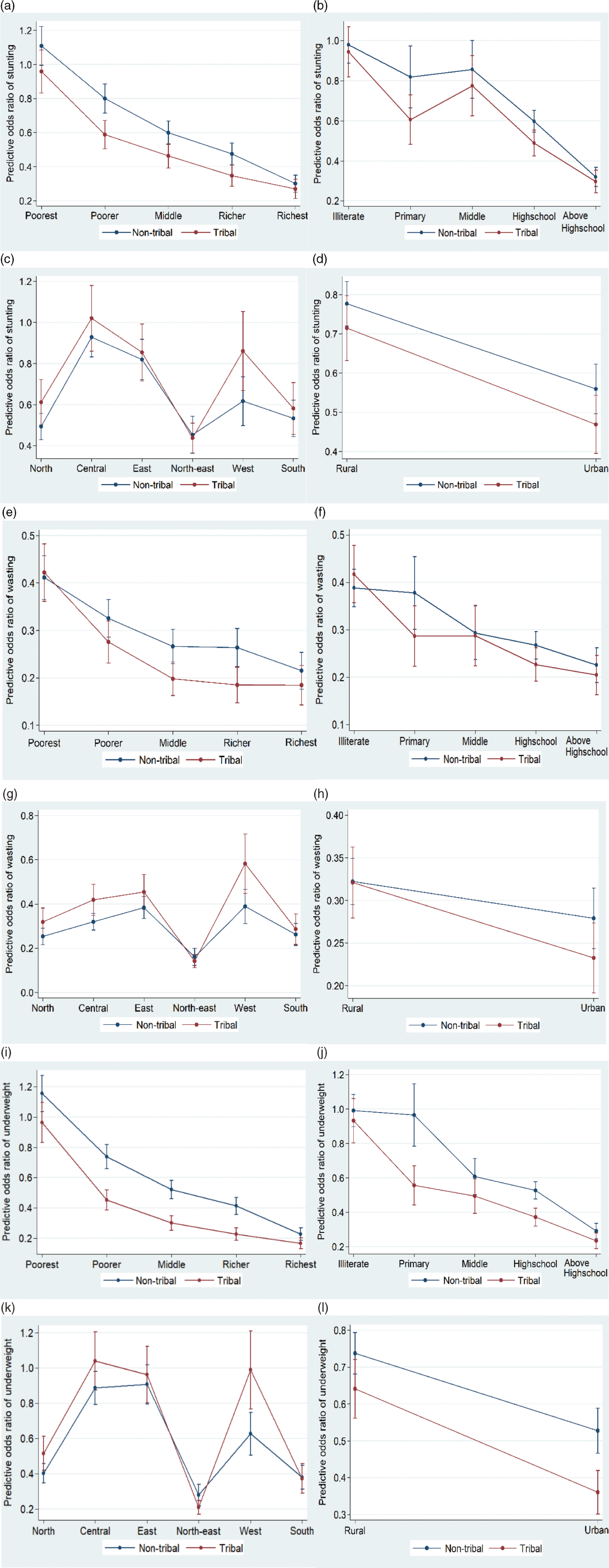
The adjusted multilevel models with interaction terms of tribal/non-tribal group with mother’s education status, wealth status, place of residence and geographical region suggested some statistically significant associations with child stunting, wasting and underweight. Tribal children from poor households, whose mothers had no/limited educational attainment, living in rural areas and from the Central/East/West regions were statistically significantly more likely to be stunted, wasted or underweight than their counterparts from wealthier households, born to educated mothers, residing in urban areas and from the North-east/South regions of India (Figure 2). The interaction effects demonstrated a promising approach to highlighting comprehensive social/ethnic group inequalities in childhood undernutrition. Therefore, an important lesson for policymakers could be that tribal children comprise a fairly heterogeneous group, and therefore deserve targeted strategic programmes to avoid wastage of resources.
Margins plot showing the interaction effect of socioeconomic status variables and tribal status with stunting, wasting and underweight among children aged 0–35 months. Interaction effect of tribal status and a) wealth index on stunting, b) education on stunting, c) region on stunting, d) place of residence stunting, e) wealth on wasting, f) education on wasting, g) region on wasting, h) place of residence on wasting, i) wealth on underweight, j) education on underweight, k) region on underweight and l) place of residence on underweight.

Discussion
This study, using a multilevel analytical framework, examined the effect of social/ethnic inequalities in the incidence of childhood anthropometric failure among children under the age of 3 years in India using NFHS-4 data. The data suggest that more than a third of children under three were stunted and underweight in 2015–16, while about a quarter were wasted, with substantial differentials across social groups (tribal vs non-tribal). The burden of stunting was found to be higher among tribal children whose mothers were illiterate, belonged to the poorest wealth quintiles, lived in rural areas, and resided in the Central, East and North regions of the country. Similar patterns were observed for underweight and wasting. These results are consistent with those of previous studies, which found higher rates of malnutrition among Scheduled Tribe/Scheduled Caste children, possibly due to their lower socioeconomic status, low parental education and inadequate use of health care services (Van de Poel & Speybroeck, Reference Van de Poel and Speybroeck2010).
The multivariate analysis confirmed that age and sex composition of children, breastfeeding status, birth size, birth interval, maternal education, maternal BMI, household wealth status and geographical region had statistically significant associations with the risk of childhood stunting. The likelihood of stunting was positively associated with age, being a male child, small birth size, having an uneducated/poorly educated mother, low maternal BMI, poor household wealth status and being from the East/Central/North regions of India. However, social group had no statistically significant association with childhood stunting. The adjusted multilevel logistic regression model indicated that a child’s risk of being underweight had a statistically significant and positive association with age, being a male child, small birth size, having an uneducated/poorly educated mother, low maternal BMI, limited mass media exposure, poor household wealth status, rural residence and being from the East/Central/North Indian regions. However, here too, social group did not have any statistically significant association with underweight children. The odds of childhood wasting had a statistically significant and positive association with being a male child, small birth size, having an uneducated/ poorly educated mother, unsafe toilet facilities and residing in the East region. However, social group did not have any statistically significant association with childhood wasting. Other studies have observed associations of household wealth, poverty, water, sanitation and hygiene, education and food systems with child malnutrition (Bawdekar & Ladusingh, Reference Bawdekar and Ladusingh2008; IFPRI, 2014; Arunkumar & Hidhayathulla, Reference Arunkumar and Hidhayathulla2015; Singh et al., Reference Singh, Alagarajan and Ladusingh2015). In a recent study, Singh et al. (Reference Singh, Srivastava and Upadhyay2019) found that the socioeconomic inequality in undernutrition was associated with several factors, including height and education of the mother, availability of safe drinking water, type of toilet facility and birth order of the child.
Variance partitioning in the incidence of childhood stunting, wasting and underweight indicated relatively larger heterogeneity at the village/community level, followed by the district level, across India. This suggests that local village/community-specific programmatic interventions within districts would be a prudent strategy for improving the nutritional status of children in India. The one-size-fits-all approach, where the district is taken as the planning unit for targeting policy implementation for nutritional transformation, may not be effective. The attenuating heterogeneities in the burden of childhood undernutrition across villages/communities, and between districts, suggest that the ongoing large-scale sanitation programmes have ameliorated the disease environment at the macro-level. This, in turn, highlights the fact that taking into account individual- and household-level factors such as household wealth, maternal education, healthy birth spacing and improved maternal nutritional, can go a long way towards reducing the burden of child anthropometric failure in tribal communities.
Statistically significant associations of interaction terms with anthropometric failure were demonstrated among children under the age of 3 in India. Tribal children born into poorer households, with less-educated mothers, residing in rural areas and from the Central/East and West regions of the country exhibited elevated odds of experiencing anthropometric deprivations than tribal children from other categories. Similar patterns were observed for non-tribal children. This indicates that substantial socioeconomic and contextual heterogeneities in the likelihood of nutritional deprivation persist among tribal children. The National Food Security Act (NFSA) 2013 promulgated a special focus on vulnerable groups such as the tribal population, with specific entitlements to support household food security through the provision of subsidized food grains, nutritional support for children (free of charge) through local anganwadi centres (6 months to 6 years of age) and mid-day meals in school up to class VIII or age 6–14 years. In addition, nutritional support for pregnant women and lactating mothers through local anganwadi centres has been provisioned (Government of India, 2013).
The findings from the present study underscore the need to devise targeted policy interventions to ameliorate nutritional deprivation among children in India, particularly those from the tribal population with the most deprived socioeconomic characteristics. Effort should be made to ensure universal access to the Public Distribution System (PDS) and Integrated Child Development Services (ICDS) for these groups. A one-size-fits-all approach to tribal children, irrespective of their socioeconomic position, may not be the most efficient, and could instead be counterproductive.
Funding
No funding was received for this research.
Conflicts of Interest
The authors have no conflicts of interest to declare.
Ethical Approval
The study was based on a secondary dataset with no identifiable information on the survey participants. The dataset is available in the public domain for research use and, hence, no approval was required from any institutional review board. The data can be downloaded from the website of the Demographic and Health Surveys (DHS) Program at: https://dhsprogram.com/data. The data for the current study were downloaded from the aforementioned website after receiving permission.