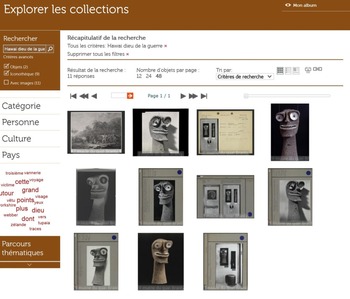
Through online digital platforms, it is easy today to ‘explore the collections’ of international museums of ethnography, to visually experience their objects, often from every angle.Footnote 1 In some cases they appear as black-and-white images – for instance on the website of the Africa Museum in Tervuren (Belgium) – and seem visibly dated.Footnote 2 The metadata do not provide precise information regarding when, by whom and under what circumstances these objects were photographed, not to mention the history of the object's translocation and appropriation. Some newer platforms are more rigorous, such as that of the Musée du quai Branly–Jacques Chirac, clearly distinguishing between representations of objects and pictures: the coloured images of the objects with a dark background depict the artefacts as currently held in the museum's collections; they are presented alongside older photographs of the same objects, whose materiality is emphasized in the metadata and through digitization (showing cardboard, album page and postcard, for instance) (Figure 1). The first type of image belongs to the ‘object’ category, while the second type refers to holdings of the ‘image library’ (iconothèque). In the case of the image library, the platform presents the image in a way that draws attention to the fact that we are looking at a photograph as distinct from the represented object. Conversely, in the case of the object images, the platform invites us to consider that it is the object itself we are observing, and not a photograph of the object. In the present time of mass digitization and expansion of online accessibility, these visual reproductions – as opposed to a perfunctory museum visit or a meeting with curators to study objects stored in research depots – very often constitute the first and sometimes primary means of observing and apprehending ethnographic objects.
Results of the inquiry ‘Hawaï Dieu de la guerre’ on the website of the Musée du quai Branly (object 71.1878.30.15), showing the diversity of digital pictures available simultaneously. Musée du quai Branly, Explorer les collections, http://collections.quaibranly.fr (accessed 5 May 2021).

In fact, this is not a new development. At the end of the nineteenth century some major anthropologists as well as art historians suggested that it might be easier to work from photographs of objects than from the objects themselves. In 1893, the British biologist, photographer and colonial administrator Everard Im Thurn claimed that ‘a good series of photographs showing each of the objects of primitive folklore … would be much more instructive and interesting than the collection of objects themselves’.Footnote 3 Art historian Bernard Berenson made the same point at the end of his life in the 1950s, admitting that he preferred to access artworks through photographic reproductions; indeed, his ‘time could have been better spent in the library, with books and photographs’, rather than travelling to see the original objects themselves.Footnote 4 Both recognized in the visual reproductions – at least the ‘good’ ones – the capacity to supplant original objects.
Photography's potential to make the object accessible, or even to serve as a substitute for it, is part of a long history of reproductions in ethnographic museums. This history spans media and formats as diverse as images, casts and duplicate specimens, which, in their own ways, function as others to the ethnographic objects with which they are linked: they are simultaneously subordinated to the referent object, and also material objects unto themselves that act upon their contexts, on users and on the ostensibly ‘original’ object to which they refer. However, there are few studies examining the ways and the extent to which images, casts and duplicates were used in and by ethnographic museums, all the more so over a long period.Footnote 5 Casts in art museums, and the role they played in visually shaping art history, have given rise, conversely, to a growing body of work.Footnote 6 Historical research on drawings, still rare when it comes to practices and collections in French ethnographic museums, tends to focus on fieldwork practices, seldom comparing these to practices within collection institutions.Footnote 7
Following this broad research field on media of reproduction in scientific and artistic collection spaces, this article focuses on the relationship between ‘original’ objects, ‘duplicates’ and photographic images. Specifically, it studies the art of photographically duplicating ethnological objects at the Musée d'ethnographie du Trocadéro (MET) in Paris, a formative institution for French ethnology, during the 1920s and 1930s and analyses how the hierarchies and connections between ‘duplicate’, ‘original’ and photographic objects shifted according to the use of and interest in these object types. The concentration on photography here relates to the specific meaning and function that this medium took on within the MET during the interwar period. First, at no time did the historical actors at the MET consider casts, drawings and photographic reproductions together; rather they treated them separately. Moreover, while there was an interest in casts at the MET, it was significantly outweighed by the interest in photography.Footnote 8 This had to do with the specific technical modalities and opportunities associated with these two media: the museum invested heavily in photography rather than casts due to the relative ease of photographic reproduction and diffusion, both through printed materials and through slide projections at conferences.Footnote 9
Using the case of the MET, the article will contrast the common definition of ‘duplicates’, which was inherited from the natural sciences and operationalized in ethnographic museums during the second half of the nineteenth century, with another possible definition referring to parallel museum practices, namely that of photographically reproduced objects.Footnote 10 The status of and issues associated with these two kinds of ‘duplicates’ – be it specimens or pictures – are obviously distinct. Some researchers have rightly stressed the difference between duplicates and reproductions.Footnote 11 While ‘duplicate specimens’ refers to a temporary state – which is shed when, by shifting contexts and institutions, the duplicate object is transformed into an original piece of a new collection – photographic duplications are the result of a process of technical replication requiring the prior and permanent existence of an original, from which copies are produced.Footnote 12 This visual duplication process suggests a hierarchy between the object and its copy, whose duration and stability deserve more scrutiny. Even if the object necessarily exists before its copy, the relation between the two can be reshaped depending on interests, uses and contexts, towards an equivalence of status and value, or even a reversal of the values. By attending to the ambivalent hierarchy between an object and its photographic double, this article will show that photographic reproductions and copies are closer to duplicate specimens in the sense that their status and value are, indeed, not stable, but are rather always (re)configured in relation to the contexts in which they are embedded.
The case studied in the article invites us to draw together the histories of photography, museums and science, in order to understand the relationship between specimen duplicates and object photography, and the specific and potentially contradictory effects these types of duplication have had on the status of ethnographic objects. Recent studies focusing on photographic practices have suggested the ambivalence of the implicit hierarchy between originals and copies in photography. Though photographs traditionally appear as ‘reproductions’ in Walter Benjamin's perspective, studies in the history of photography have proposed a more complex approach to this framing and demonstrated that the way the object is photographically depicted might affect the way the object is understood and considered.Footnote 13 Other art-historical studies have also highlighted the role of object photographs in the evolution of scientific disciplines such as astronomy, the natural sciences, archaeology and anthropology, where pictures were often privileged supports enabling scientists to undertake comparisons and to elaborate knowledge.Footnote 14 Such photographs were, and might still be today, considered enough to allow for the study of the objects thus depicted. Im Thurn's and Berenson's reflections suggest that images can be endowed with autonomy from their referent. This form of autonomy should also include a reflection on photographs as duplicates, a subject which has recently gained attention within a broader trend of renewed interest in the materiality of photographs. In a landmark article, Joan M. Schwartz identified photographic duplicates as ‘multiple original photographic documents, based on the same image, but made at various times, for diverse purposes and different audiences’.Footnote 15 Following her, scholars such as Petra Trnková or Marie-Eve Bouillon have re-evaluated the historical importance of these supposedly second-rate pictures by highlighting the practices and uses associated with them and questioning the limits of what may be defined as valuable photographic heritage.Footnote 16 These approaches extend the analysis of how photographs help duplicate objects by considering that these photographs can themselves be reproduced and generate new types of image duplicates. In the present article, I investigate and bring together the different levels where ‘duplicates’ and duplication processes occur in ethnography.
Starting from a definition of ‘duplicate’ widely used in natural-history collections until the 1850s – that is, one specimen among many of the same species or object class – the article will first examine the concept of ‘duplicate’ (most often double in French, sometimes duplicata or doublet) and its application to ethnographic objects at the MET during the 1920s and 1930s. Then it will study how the theory and practice of duplicates coexisted with the implementation of a logic of photographic reproduction of collections in the museum: through the museum's collaboration with external photographers, an actual two-dimensional, virtual (though altogether material) collection of the objects was created. If these two practices are obviously distinct, they still both deal with the question of the definition of the ethnographic object and seem to provide divergent appreciations of its status. While the first conception of duplicates refers to the epistemology and practices of natural history, the production of photographic duplicates corresponds to those of fine-art museums, where each collection piece is considered in and of itself an individual, or unica – a singular work of art. Looking at these different and concomitant practices together, which have typically been considered separately, invites us to question how these others of the ethnographic object, these duplicates and reproductions, reveal a complex and ambivalent conception of their production in the middle of the 1930s. To consider them as ‘others’ is a way of acknowledging their material autonomy with respect to the object to which they are originally linked. Next to these two kinds of ethnographic double – the alleged duplicate specimen and the photo-object – the article will consider a third: the duplication of the photographic images themselves. We will see that through images and their multiplication, museum collections circulated on different scales and in different networks, thereby responding to a logic of dissemination which resonated beyond scientific reputation.
Thinking and practising ‘duplicates’
Collecting and identifying duplicate specimens and visually reproducing objects were practices that coexisted in ethnographic museums; they were often promoted and carried out by the same museum actors and were used to both manage and enhance collections. This was the case in the 1930s at the MET, which was founded by Ernest-Théodore Hamy in 1878 in the wake of the Universal Exhibition in Paris. In the decades following its opening, the museum experienced a gradual decline in revenue, acquisitions and visitor numbers due to a chronic lack of funding. The appointment of a new director in 1928, Paul Rivet, coincided with an era of overhaul and general reorganization, which would ultimately lead to the creation of the Musée de l'homme in 1938, in place of the MET.Footnote 17 This phase of renewal of the museum from around 1928 until 1935, which is the focus of the present article, coincided with the professionalization and disciplinary development of ethnology in France following the creation of the Institut d'ethnologie de Paris led by Rivet, Marcel Mauss and Lucien Lévy-Bruhl.Footnote 18 The first generation of university-trained ethnologists – above all Marcel Griaule, who led the famous Dakar–Djibouti expedition (1930−31) – largely contributed to the museum's success by taking part in the reorganization effort.
Rivet designated as sub-director the young Georges Henri Rivière. Rivière had never overseen a museum, nor had any training in ethnology, but was well linked to the Parisian art networks and showed a distinct taste and talent for staging non-European objects. Rivière and Rivet met in 1928 at an exhibition, Arts anciens de l'Amérique, organized by Rivière at the Musée des arts décoratifs. Presenting numerous objects, some of which belonged to the MET's collections, the exhibition aroused great public enthusiasm.Footnote 19 The success of the exhibit impressed Rivet, who had already felt that the MET would need new creative inputs and support from elite social circles in order to gain prominence among Parisian, European and international museums. Rivet called on Rivière to take part in the MET's renewal. The latter became fully involved in his mission as assistant director – so much so that he even returned his salary to the museum, although it was probably not substantial given the museum's limited resources.Footnote 20 He organized an impressive number of elite social events, multiplied temporary exhibitions and, thanks to his interpersonal skills, succeeded in attracting a large number of donors and supporters, who joined the Society of Friends of the Museum. Between 1929 and 1935, he also travelled to many museums throughout the United States and Europe to discover and learn on site about emerging museum innovations, and to improve the design of the MET's rooms.Footnote 21 For Rivière, these years marked the onset of a significant career as a museologist.Footnote 22
Ethnographic objects played a major role at the time in French ethnology, which was broadly focused on material culture. For the discipline's intellectual leader, Marcel Mauss, objects had scientific value as reliable documents and ‘witnesses’ of cultural practices. They provided a kind of immediate access and testimony to the context from which they came. This conception of objects echoed the one that was common in the early twentieth century in German and Swiss anthropological museums. In a famous article from 1913, Mauss underscored the scarcity of French museum ethnographic collections compared to those of other European countries: he put the lack of objects in the spotlight. The gloomy picture drawn by Mauss was partly rhetorical, aimed at bringing to light the discipline and its lack of public funding.Footnote 23 In response, a collecting frenzy unfolded in the 1930s throughout several scientific expeditions supported by the MET. Scientific goals primarily motivated such collection ventures, but interwar French ethnology was also captivated by so-called ‘primitive art’, a racist and derogatory category used by avant-gardes and art world actors to describe objects produced mainly in Africa and Oceania. The penchant for these objects was evident in the numerous temporary exhibitions organized by Rivière, which showcased distinctive pieces, and above all in the 1932 opening of the permanent Treasure Room (Salle du trésor) exhibiting the more remarkable and valuable objects owned by the museum.Footnote 24 However, as historian of anthropology Christine Laurière has rightly suggested, the museum tended to not distinguish between the artistic and the scientific approach to ethnographic objects: they coexisted in the museum.Footnote 25 It reflected and reinforced the multiple statuses of these objects, just as did the polysemy and polymateriality of duplicates.
Although the history of French ethnology and its museums in the twentieth century has generated extensive research over the past twenty years, the issue of duplicates remains neglected. Moreover, the French case also remains a blind spot among the recent works on ethnographic duplicates and their uses as medium for exchange in and between museums, which has focused mainly on the United States and German-speaking countries.Footnote 26 In an analysis of the history of Swiss ethnology, Serge Reubi paid particular attention to duplicates and the resulting exchange networks between several ethnographic museums in Europe.Footnote 27 He noted that French museums, such as the MET and its successor, the Musée de l'homme, did not seem to be involved in the dynamic of exchanges. He assumed that the trend must have been different in France, although the question of duplicates sometimes appeared in scientific literature, as suggested by a footnote in Nélia Dias's book on the history of the Trocadero Museum before 1907.Footnote 28
Dias's footnote states that in the 1880s and the 1890s a zoologist and anthropologist, Enrico Hillyer Giglioli, asked the MET director whether he had ‘any duplicates … that [he] could dispose of for exchange’.Footnote 29 In fact, since the founding of the museum, the collection and exchange of duplicates were explicitly mentioned, as suggested in a report on the ‘Muséum ethnographique des missions scientifiques’ (eventually opened as the MET) in 1877:
Duplicate or multiple objects from the missions in general would be distributed, either by direct donation or by exchange, among the major French or foreign institutions … What is regularly practised for books, maps and documents would be done with equal regularity for ethnographic specimens.Footnote 30
In addition to this report, there is also evidence that members of learned societies, such as the Broca Society based in south-western France, attempted in the same years to ‘obtain duplicates of the Musée d'ethnographie du Trocadéro’.Footnote 31
While, as attested in the above quotes, the exchange of duplicates did take place, the very existence of these duplicates or multiples seems to have been taken for granted. The practices associated with duplicate documents served as the explicit point of reference for the MET's exchange of duplicate ethnographic specimens, but the influence of natural-history museum practices is predominant. The report's use of terms like ‘specimens’ was in line with the conception of the ethnographic object in use at that time in the MET and was part of the natural-history epistemology adopted by many of the newly established ethnographic museums in the second half of the nineteenth century. These museums sought to endow ethnographic objects, inherited from curiosity cabinets, with scientific authority and meaning, which involved their transformation into specimens as they were categorized and inventoried. Since the museums’ founding, the object was no longer regarded as original, curious or even fascinating, but became one element of an analytic grid and ‘thesaurus’, in which it had to find its place and meaning. Like a botanical sample, the ethnographic object was thus considered a copy of the specimen it represented, an ‘illustration’ of it, and could therefore be duplicated and replaced.Footnote 32 This notion of ethnographic specimen contrasted with the way works of art were considered at the time. In 1882, the Cantonal Museum of Fribourg's director emphasized the role played by duplicates in museums, stressing the hierarchy between objects according to their uniqueness in art museums:
That which constitutes the true wealth of a museum are, along with works of art, the antiquities and other historical monuments, because each of these objects is unique in its kind. If a sample, a specimen of any kind of a collection of natural history, ethnography, prints, coins, etc., disappears, it can almost always be replaced; the duplicates are, so to speak, on hand.Footnote 33
This conception of ethnographic objects as replaceable specimens still prevailed at the MET after 1928 during the reorganization phase that began with the arrival of Rivet and Rivière. The latter mentioned duplicates in a 1929 article presenting the reorganized museum, which had been divided between rooms dedicated to the general public and rooms reserved for specialists, according to the dual organization that emerged around the mid-nineteenth century in natural-history museums.Footnote 34 Thus, according to Rivière, one would keep ‘in the first room, the unica, the most characteristic pieces; in the [storage rooms], the series and the duplicates’.Footnote 35 Among the many articles by Rivière and Rivet published at the time, this is one of the few mentioning ‘duplicates’, and it suggested a very different meaning and use of ‘duplicates’ than at the end of the previous century: duplicates were objects to be kept within the museum, available for studying and comparative approaches.Footnote 36
Another major text from this period, on the other hand, more explicitly reactivated the conception of duplicates promoted in the early years of the MET, namely the Instructions sommaires pour les collecteurs d'objets ethnographiques (Summary Instructions for Collectors of Ethnographic Objects) published by the museum in 1931, on the occasion of the Dakar–Djibouti expedition. It made the following recommendation:
Also collect variants, all possible samples of the same object (in dimensions, shapes, texture). Do not be afraid of duplicates, or even triplicates, which are always useful in a museum, either because they serve to bring the object into various modes of classification (e.g., basketry, which can be included at the same time in the techniques of manufacture, in domestic furniture, in decoration, in religion), or because they are used as exchange material with other museums.Footnote 37
This clearly illustrates how the museum's priorities were intended to influence field practices, and how they also determined the understanding of the ethnographic object, as Reubi has also shown for the Swiss case.Footnote 38 The museum thus benefited from managing duplicates: in addition to making its thematic collections more comprehensive, an object could be incorporated into different series. At the same time, these duplicates constituted an exchange currency in transactions with other museums, as was already the case as early as the 1880s.
The notion that duplicates should ideally be permanent features of the museum collections coincided with the status of ethnographic objects. The term ‘specimen’ to refer to ethnographic objects was repeatedly used in the Instructions, in which the influence of instructions intended for natural scientists was quite explicit, as illustrated by the section titled ‘Packaging and preservation of specimens’.Footnote 39 This is not surprising since, as Julien Bondaz has shown, French ethnology field practices in the first half of the twentieth century were ‘mixed’: they did not adhere to disciplinary boundaries, with ethnographic objects collected alongside botanical specimens or even animals.Footnote 40 Material culture drew renewed attention in the 1920s due to the influence of Marcel Mauss: according to him, the ethnographic object was considered ‘proof of the social fact’, more revealing and more reliable than any other kind of archive, as André Delpuech reminds us.Footnote 41 A new way of dealing with objects was thus built into the discipline. It was materialized through the use of the notions of ‘documents’ and ‘witness’ to qualify ethnographic artefacts, which were no longer supposed to be evaluated according to their curious or beautiful qualities. The objects would provide ‘information’ on a ‘given civilization’, everyday objects thus proving to be the most interesting.Footnote 42 Through the museum's perspective and collection management, however, these new terms simply extended the definition of specimen and the practices surrounding it.Footnote 43
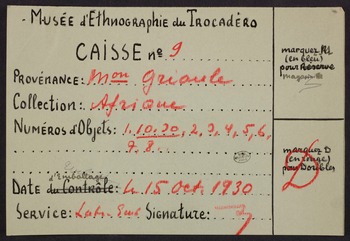
On a practical side, the MET made space for duplicates during its reorganization.Footnote 44 A ‘duplicate store’ was set up very early on, and in October 1930 Adrien Fedorowsky, the museum's technical assistant, had already suggested ways to improve the management and handling of objects in the collection. He proposed to Rivet ‘to introduce “R. D. Label Books” (Carnets d’étiquettes R. D.) to mark and identify boxes according to whether they contained objects to be put in the Reserve [R] or in the Duplicate Store [D]’.Footnote 45 He recommended that ‘the labels bear the mark R (in blue chemical pencil) or D (in red) according to the case’.Footnote 46 He illustrated his proposal with an example of a label, on which a D clearly identified as duplicated a batch of objects collected during the first Griaule expedition of 1928 (Figure 2). Thus the objects were designated duplicates as soon as they were packed, and, for the sake of efficiency, the books filing these entries would be used as inventory records.
Adrien Fedorowsky, example of a label from the R. D. Label Book, 1930. Source: Muséum national d'histoire naturelle, Paris.

The practice of collecting multiple specimens in the field was, however, largely missing from the reports of the ventures supported by the museum in the 1930s. The official documents and correspondence of the Dakar–Djibouti expedition – which listed the colossal number of objects collected, photographs taken and sound recordings made – never mention duplicates, though the collectors were undoubtedly aware of the museum's practices. Nor is there any trace of duplicates in the recent studies that examine the most important missions of the time led by Alfred Métraux, Thérèse Rivière and Germaine Tillion, Denise Paulme and Deborah Liefchitz, or Griaule.Footnote 47 In contrast, a few years earlier in Switzerland, Felix Speiser could boast of bringing back from the New Hebrides ‘three to six specimens of each type of artefact’.Footnote 48 The fact that collecting duplicates was fundamentally taken for granted during that period might explain why the practice is invisible in French ethnology and its historiography. During her 1935 mission to Mali, Paulme collected ‘a dozen of statuettes with raised arms, almost all in very good condition, [some of which], admirable, would be displayed very honourably in the African Art showcase’.Footnote 49 The museum's structure influenced collection practices in such a way that Paulme anticipated where some pieces – the most remarkable – would be displayed, which in turn suggests that the other statuettes might have been placed in the reserves or the duplicates store. It was not, however, in the field that the distinction between duplicate, reserve and display objects was made. Rather, it seems that the decision was entrusted to the museum staff, who implemented these categories when unpacking, controlling, ordering and inventorying the collections.
It is difficult to say at this point whether duplicates were exchanged. The policy in this matter was reactivated by Rivet.Footnote 50 The archives record eight such exchanges between 1929 and 1935, involving European institutions (Denmark's Nationalmuseet in 1929 and Gothenburg's Världskulturmuseet in 1930), the National Museum of Australia (1935), and especially North American institutions: the Peabody Museum of Archaeology and Ethnology (1929,Footnote 51 1933, 1935), the Chicago Field Museum (1935) and the Gila Pueblo Archaeological Foundation (1935).Footnote 52 Nevertheless, only the objects that have been entered into MET's collections have been identified to date, and the vast majority of them are American archaeological objects, in line with Rivet's interests. Only those received from the Nationalmuseet and the National Museum of Australia were ethnographic objects produced by ‘living men’ (hommes actuels), which probably involved sending back ethnographic duplicates from the MET.Footnote 53
Dedicating a room to duplicates seems to have been an obvious and coherent practice at the time, given the history of the ethnological discipline and of the museum, and Rivet's affiliation to the Muséum national d'histoire naturelle. Rivet aimed to strengthen ties between the ethnographic and natural-history institutions, and even sought to place, and succeeded in placing, the MET under the administrative control of the Muséum.Footnote 54 However, the choice was made in an international context that was starting to question the very concept of duplicates in ethnography. In an important article about ‘The meaning and task of museums of ethnography’ published in 1929 in Mouséion, ethnologist Leo Frobenius indeed defended the idea that ‘there are no duplicates in ethnography’, which accorded with a widespread disciplinary position in the German context.Footnote 55 According to Frobenius, the ethnographic object should no longer be considered a specimen, but rather a unique piece which cannot have a duplicate: ‘One does not find in a village two javelins or two huts, two baskets or two picks, and even less two human figures or two masks absolutely similar.’Footnote 56 The variations within the series had to be studied as ‘symptoms’, an approach originated in the philosophy of Leibniz and the early Enlightenment area that he pursued at his Institut für Kulturmorphologie (Frankfurt) and one that required preserving and studying each object. Frobenius contrasted this ‘symptomatic’ method against the ‘systematic’ one, specific to the natural sciences and based on a fixed classification. He called on ethnographic museum directors to modify the way they conceived and displayed collections. Rivière, a reader and contributor to Mouséion, must have been familiar with Frobenius's article. The museography he implemented in the MET's rooms aimed at enlivening (rendre vivant) the objects and closely echoed the recommendations that Frobenius formulated.Footnote 57 To some extent, when Rivière indicated in 1929 that the ‘series and duplicates’ would be housed in the research rooms, as mentioned above, he was in line with Frobenius's suggestion that duplicates, considered as comparable variants rather than equivalents, should be preserved for study.
Frobenius's viewpoint echoes the positions favoured in some art museums, where the question of duplicates was also debated: in an article about the conception of art and history museums, Jean Lameere, the secretary of the Office national des musées de Belgique, claimed in 1930 that ‘no object is useless in a museum and [that] the duplicates can be useful’.Footnote 58 The question rose mainly in connection with collections of ancient art and archaeology. The idea that there were no ‘true duplicates’ in these antiquities and archaeological collections, often held in art museums, was also defended in 1948 by Jiří Neustupný, curator at the Národní museum of Prague, during an International Council of Museums Congress (ICOM).Footnote 59 However, this did not prevent renowned museums from sometimes exchanging archaeological pieces considered duplicates, as the Museum of Fine Art, Boston and the Metropolitan Museum of Art in New York did in 1937.Footnote 60 Around 1949 the question was still being debated.Footnote 61
In comparison with Rivet's naturalist posture and his scientific conception of ethnographic objects – and their duplicates – as specimens, Rivière's vision implemented in the MET seems more ambivalent. He was more aware of the debates around museum objects and even drew inspiration from the practices of fine-art museums in designing some of the MET's rooms and temporary exhibitions – while simultaneously striving to demonstrate his ethnographic legitimacy.Footnote 62 He was clearly aware of the growing aesthetic value and attractiveness of ethnographic artefacts, which led to a more nuanced, if still primarily scientific, approach to them. This can be bolstered by analysing the museum's decisive use of photography: it became an auxiliary to the objects, and unlike the duplicate specimens, tended above all, through visual duplication, to make them unique.
To ‘duplicate’ collections in two dimensions
While it had been of little use since the opening of the MET in 1878, photography aroused great interest at the museum in the 1920s. It quickly became adopted in three different ways. First, pictures of the objects were produced in collaboration with professional photographers. Second, a photograph library (photothèque) was established and would grow in the following decades under the newly reorganized Musée de l'homme; by the 1980s, the photothèque comprised several hundred thousand photographs. Third, photography was introduced into the exhibition spaces: fieldwork photographs were brought into the showcases displaying the collections to the public and, in a much more unusual way, over a dozen ‘photography exhibitions’ of snapshots taken by ethnologists and travellers were displayed in the early 1930s. In doing so, the museum participated in the photographic dynamic promoted within avant-garde photographic circles and the illustrated press of the time.Footnote 63
Collecting photographs was a fairly common practice in ethnographic museums by the end of the nineteenth century. But the institutions that truly appreciated the interest that photographs of objects could represent were rather rare. Around 1895 only a few institutions in Europe and the United States had a photographic service and pictures depicting their collections, such as the Museum für Völkerkunde in Berlin.Footnote 64 The practice was rather widespread within art museums, which had been using photography for a long time to create albums or files. The British Museum is a well-known case: as early as 1852 the museum employed its first photographer, Roger Fenton, to depict the antiquities collections.Footnote 65 In Paris, Louvre authorities, after decades of controversy over the issue, finally set up a staging room that provided good conditions (light, background and so on) for photographing objects within the museum in 1880.Footnote 66 However, from the 1850s, art museums turned to new commercial enterprises which quickly became the main producers in this novel industry: the photographic reproduction of works of art developed into a lucrative market, held by firms such as Braun or Alinari Fratelli, which expanded their businesses throughout Europe.Footnote 67 At the same time, some natural-history museums also began adopting object photography. This was the case at the Muséum national d'histoire naturelle in Paris, where photographs (notably of specimens from the museum) had been part of the ‘scientific iconography’ since 1841. The incomplete archives of this institution, however, make it difficult to precisely trace the impact of the medium in the following decades.Footnote 68
In the 1920s, art and history museum practices tended to be standardized, while few ethnographic museums undertook the creation of photographic collections of their objects.Footnote 69 In Negro Art (1919), Latvian art theorist Vladimir Markov reports that he had to travel across Europe to take photographs of the objects featured in his book himself.Footnote 70 The situation was undoubtedly mixed. In the same years, the Museum für Völkerkunde in Hamburg employed two photographers and had a studio at their disposal, according to a Mouséion article.Footnote 71 Riviére might also have been inspired to promote photography at the MET by his observations in Parisian art and natural-history museums, as well as and during his tour of North American and Swedish museums in 1929.Footnote 72
Photography found its place at the MET from the early days of its reorganization. In June 1929, Rivet planned to ‘set up a photography service’, some ‘photography costs’ being already covered by the Society of Friends of the Museum.Footnote 73 The images were immediately designed to serve as internal operating tools. Throughout the museum reorganization process, a ‘collection project’ (chantier des collections) was carried out, whose objective was to identify, register and catalogue the collections held by the museum. The photographic reproductions had several functions. On the one hand, these pictures had to illustrate the ‘digital descriptive card’ that formed the basis of a vast catalogue of the collections.Footnote 74 This card ‘presents on the back a sketch or a photograph of the object described’; the sketch would be ‘made with Indian ink and, if necessary, indelible coloured inks’, while in the case of a ‘photographic print [it] would be glued on with the electric press, with the adhesive paper’.Footnote 75 Photographs were thus produced ‘for the catalogue’.Footnote 76 On the other hand, these pictures were also entered into the new photograph library filing cabinets, whose purpose was to collect ‘photographs of ethnographic objects from the museum or elsewhere, of scenes and types’.Footnote 77 These images were available to museum staff and ‘specialists’, as well as, ‘with justification, [to] a restricted public’.Footnote 78
To produce these pictures, Rivière planned to set up a ‘photography studio’, for which he obtained some funding in 1931.Footnote 79 Museum collaborators, many of whom were ethnology students, volunteered to run the studio. Pierre Verger, who was already very interested in photography and became a well-known photographer, describes how Rivière called upon him to undertake photography at the museum as he was skilled in photographic development and printing.Footnote 80 The Africanist ethnologist Georges J. Duchemin, later affiliated with the Institut français d'Afrique noire (IFAN), was also appointed to the photographic laboratory and studio for a while.Footnote 81 In 1933, Rivet and Rivière designated another collaborator, Wilhelm Staude, the ‘official photographer’.Footnote 82 While the first photographers were then part of the museum and scientific community, the needs of the MET, combined with a largely professionalized market for photographic production, led to a revision of this configuration. Still, the ‘modest monthly stipend’ Staude received was not enough to make his position permanent and hence the laboratory's activities remained tenuous until the MET was dismantled. Some researchers and ethnographers might have occasionally used the studio for their work; nevertheless, to photograph the MET objects, Rivière and his sister Thérèse, who was employed as secretary and managed the photographs, called upon external photographers.
A small team of regular photographers worked for the museum, which did not preclude the occasional external collaboration. Their names appear multiple times in the photography ‘inventory booklets’ (cahiers de dépouillement), introduced in 1929. In the opening of one book from 1933, a list identifies ‘Photographers of the MET’, whose names had also appeared several times in previous inventories.Footnote 83 In order to identify them more efficiently, a number was attributed to each of them in the ‘author’ column of the inventory booklet. Thus number 0.1 corresponds to Georges Allié, and the following ones to Marius Gravot, Louis Lanièpce, Albert Cintract, Paul Lemare and Maurice Rigal, all professional photographers in Paris. Cintract, who had already worked with the Muséum national d'histoire naturelle, specialized in the production of slides and countertypes, which differed from simple shots of objects.Footnote 84 Lemare and Rigal, conversely, defined themselves as industrial photographers and could therefore take photographs of objects.Footnote 85 Gravot more explicitly combined industrial photography and ‘artistic photography’, according to his signature. Lanièpce, in particular, specialized in ‘Photography in museums, private collections, objects of art and furnishings’, and Allié in ‘Photography, Reproduction of works of art’.Footnote 86
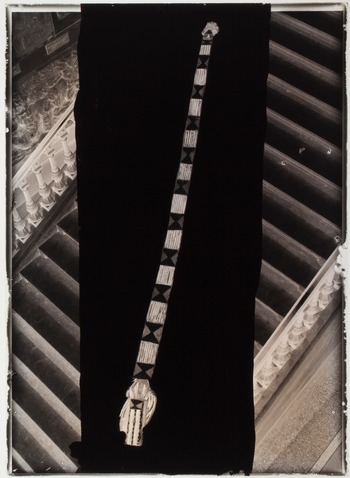
These collaborators embodied the policy of object photography that the museum staff sought to implement. As far as possible, the museum aimed not simply to possess visual reproductions of objects, but to produce pictures suited to its scientific needs and media policy. This is what Thérèse Rivière explained to photographer Gravot in a letter from 1929. She complained about several photographs ‘taken … without a white background’. These images being essentially worthless, she asked him to come back to the museum and retake them properly.Footnote 87 Calling upon specialized photographers was probably a way to avoid mistakes of this kind or to ensure that they were quickly rectified. The Image Library manager of the Musée du quai Branly, Carine Peltier-Caroff, examined the different techniques used to obtain these images at the MET. In addition to tinkering at the shooting stage, which often took place directly in exhibition rooms, cropping was almost systematic in the laboratory, and photographers sometimes ‘used inactinic paint to mask the unsightly off-screen, used black gummed paper tape to divert them or made delicate cuts in the emulsion’ (Figure 3).Footnote 88 Whether all the pictures taken during the MET period were of outstanding quality or whether they met these criteria, the museum had precise expectations about the way objects were to be depicted.
Anon., Masque, cercle de Bandiagara, 1931, gelatino-silver bromide negative on glass plate with inactinic paint. PV0081946 © Musée du quai Branly–Jacques Chirac, Paris.

The formal choices made by the MET staff might have been in line with the modalities of objective, decontextualized representation promoted in the natural and medical sciences, already used in some engravings of collected curiosities featured in the travel accounts of the late eighteenth century.Footnote 89 Anthropologist and historian of photography Elizabeth Edwards highlighted this formal link for late nineteenth-century photography: isolating, or even cropping around, the object was above all meant to make a specimen.Footnote 90 Unifying the formal aspects of object pictures helped to create an ‘equivalence system’ between images, making it easier to compare them.Footnote 91 Though the MET photographs bear traces of this scientific aspiration, they also have to be understood against the visual context of the time. They share the visual vocabulary commonly used to represent ‘non-European’ art from the 1910s, especially in artistic and art market networks. The hundred or so images that were featured in Negerplastik, Carl Einstein's famous book published in 1919, are a good example: the author obtained these photographs from 1914 onwards from art dealers to whom he was close.Footnote 92 His editor then proceeded to standardize the images in terms of their framing, lighting, contrast and so on, which greatly contributed to the book's success. Depicting the objects isolated, on a plain background, frontally or in profile, according to the established codes accepted for representing works of art for more than a century, became standard for non-Western art objects.Footnote 93
The MET embraced these representational conventions when initiating the process of visually duplicating its collections. In addition to the team of professional photographers, the museum's collaboration with other photographers sheds more light on the strategy the museum would follow with these pictures. In 1931 Rivière contacted the surrealist Man Ray, whom he was close to in Parisian artistic circles: that year, Ray ‘often came to the museum [and] photographed objects for a catalogue that never saw the light of day’.Footnote 94 The collaboration continued in 1935 when Ray took pictures of Dogon objects (Mali) collected by Denise Paulme and Deborah Liefchitz. Yet these images were not only intended to document museum collections for internal use and illustrate inventory cards. The ethnologist and writer Michel Leiris published five of them in 1936 in the artistic journal Cahiers d'art alongside a written account of the two women's expedition.Footnote 95 These photos stand out for their formal quality (Figure 4). Leafing through numerous issues of this magazine shows that the MET's objects had been reproduced there for years.Footnote 96 And Cahiers d'art was far from the only forum used by the museum. In addition to overseeing the production of photographic duplicates of the museum's objects since their arrival, Rivet and Rivière also made sure that these images were distributed to a wide variety of periodicals.
Figure 4. Michel Leiris, ‘Bois rituels des falaises’, Cahiers d'art (1936) 6–7, p. 214, showing a Man Ray photograph that emphasizes the artistic status of the Malian object, reinforced by the material quality of the print. © Man Ray 2015 Trust / Adagp, Paris 2022. Hyperlink to this image: https://gallica.bnf.fr/ark:/12148/bpt6k42263474/f214.item.
Intensified ubiquity, increased reputation
Images of objects were also widely disseminated beyond the museum's walls, in different forms, in response to the varying expectations of the public. Before exploring different collaborations with the press and the publication of postcards, it should be noted that printed reproductions of objects were used in transactions between museums, as were the duplicate objects themselves. In the early twentieth century, it was common in Switzerland for a pack of object photographs to be sent along with duplicates to a museum; pictures helped to balance transactions when the lots were not exactly of equal value.Footnote 97 The process is difficult to trace at the MET, due to the lack of archival sources; however, photographic objects from other museums, which entered the photograph collections, might have come from this kind of exchange. After the Second World War, the Musée de l'homme also adopted the practice, although it does not appear to have been systematic. For example, the archives record occasional transfer of object photographs with the IFAN in 1947 or the Nationalmuseum in Stockholm in 1954.Footnote 98 Without being equivalent to object exchange, the circulation of photographs nevertheless followed the same logic of mutual institutional recognition and reflected the museums’ intention to have exhaustive collections: the photos serve as another means to supplement the existing sets by allowing museums to integrate physically missing objects.
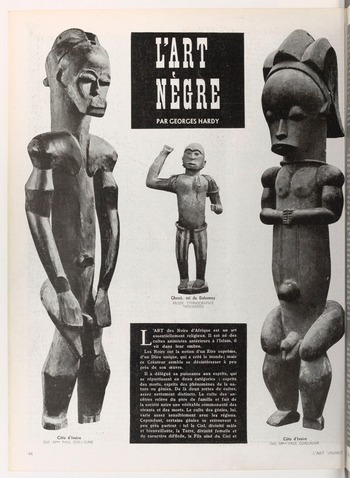
Like the duplicate specimens, the photographs thus were part of a museum economy and the relations that museums weave amongst themselves. Contrary to the duplicate specimens, however, they also helped deploy the collections and the objects beyond the walls of museums, thereby serving to open or mobilize the museum. The exchange of pictures between museums was only one of the ways the MET's objects were visually disseminated. Rivière and Rivet were more diligent in spreading the collection – at least some of its pieces – through the press and postcards. From 1928 onwards, they wrote numerous articles to popularize the museum. They also built up contacts with journalists and editors for the benefit of the museum.Footnote 99 The interwar period corresponded to an improvement of the photomechanical processes, which facilitated the reproduction of photographs and their integration into the body of the pages, so that the press became largely illustrated.Footnote 100 Newspapers and magazines were looking for images, and from very early on Rivière had given a strategic welcome to journalists at the Trocadéro, ensuring that they were provided with free-of-charge images to illustrate articles relating the museum's events. In return, Rivière regularly urged magazines to explicitly mention the museum's name when publishing reproductions of the collections.Footnote 101 Images of the MET's objects thus appeared in the pages of Vu, Revue mondiale, Beaux arts or L'art vivant, to name but a few titles, and in the Bulletin du Musée d'ethnographie du Trocadéro published by the museum with the support of donors. Some of these large-circulation titles featured bold layouts and fashionable photomontages, which sometimes included the objects after they had been cropped; photographing the objects on a white background made this integration into magazine spreads all the more frictionless (Figure 5).
Georges Hardy, ‘L'art nègre’, L'art vivant (1938), pp. 219–220, 44. The first page of this article appears as a composition in a single space, made possible by the fact that objects photographed on a plain background are easily edited.

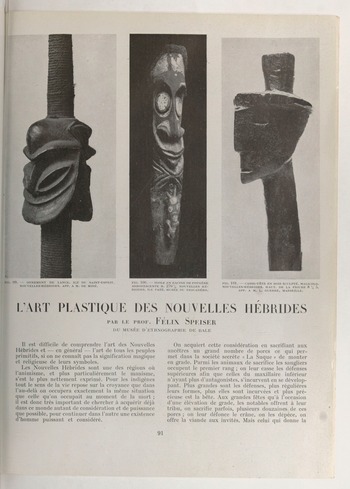
These magazines, while available to the general public thanks to their commercial distribution, moreover helped unite a community which included both ethnologists and art enthusiasts in the 1930s. They drew on collaborations and close links between MET staff, ethnographers and magazine editors.Footnote 102 The museum's collaboration with the aforementioned magazine Cahiers d'art and its editor, Christian Zervos, was particularly steady. Rivière had forged a relationship with Zervos before joining the staff of the MET. In fact, Rivière had discovered the wealth of the MET's collection while writing an article on pre-Columbian art for Cahiers d'art.Footnote 103 Founded in 1926, this artistic and literary magazine with close ties to avant-garde circles was intended to be of high quality and gathered contributors who were often specialists in their subjects. The visual quality of the images was also important: they were usually reproductions of works of art, paintings and sculptures in large format, occupying many pages of the magazine. The captions were always precise, mentioning the institution that held the piece and often its inventory number. In the early years, however, the name of the photographer was rarely mentioned. From 1929 on, reproductions of objects from the MET's collections were regularly published in thematic articles, dealing, for instance, with Polynesian and Melanesian art in an article by Eckart von Sydow; with ‘Plastic art of the New Hebrides’ by Felix Speiser (Museum für Völkerkunde, Basel) (Figure 6); or with ‘The style of New Caledonian art’ by Dominique Joseph Wölfel (Museum für Völkerkunde, Vienna).Footnote 104 Objects always appeared in advantageous size, isolated and on a plain background, without any particular formal research, alongside objects from other museums or ethnographic collections.
Félix Speiser, ‘L'art plastique des Nouvelles Hébrides’, Cahiers d'art (1929) 2–3, p. 91. Three photographs of objects from three different collections are juxtaposed in a spare and elegant way to introduce Speiser's article.

In the first years, before the MET had set up a photographic service, the Cahiers d'art's interest in publishing visual copies of the museum's collections led Zervos to send a photographer to take some pictures to illustrate an article.Footnote 105 This need for images certainly played a role in the desire to produce good in-house photographs at the MET. Rivière was fully aware of the importance of these images and of their dissemination—something Zervos reminded Rivière in 1932:
I thank you for the photographs from your Malagasy collection that should illustrate Mr. von Sydow's article. I would be very happy to have some very good photographs for the benefit of the magazine and for the benefit of your museum, because it would be good if its collections were gradually presented to the general public through a magazine which, I believe, is beginning to enjoy a solid reputation.Footnote 106
These words highlight the shared interest of both the journal and the museum in ‘presenting’ the MET's collections on paper. There was a win–win effect: the museum, which had yet to make its mark, had a vested interest in relying on a magazine that was already well established to ensure its promotion among amateurs, connoisseurs and artists; similarly, the magazine's promotion of the museum's rich collections contributed to satisfying the expectations of its readership. Yet the quality of the collections was not enough to build this mutual reputation; it also required ‘good photographs’, printed beautifully and attractively.
The object photographs reproduced on paper constituted the museum's showcase for a general public, but also for the more specialized community of art enthusiasts. The MET also published and sold postcards from its collections. As early as 1928, the museum was considering exploiting these visual objects, which appeared to be a non-negligible source of income; in 1930, a shop seems to have been set up in the ‘Great Hall’ of the museum.Footnote 107 And according to a report of January 1932, this sales service offered ‘postcards with photographic illustrations borrowed from the museum's collections’.Footnote 108 Tracing the history of several postcard series proposed by the museum shows, in fact, that some objects were regularly selected and photographically reproduced according to their aesthetic value and attractive qualities, for instance a statue from the Hawaiian islands or several Benin bronzes.Footnote 109 Both of these objects were displayed in the Salle du trésor of the museum, which opened in June 1932.Footnote 110
Offering postcard series for sale and disseminating reproductions in the press was tantamount to conferring a form of ubiquity on the objects, present both in the museum and on paper. The multiplied images extended the space and the place they occupied beyond the museum, increasing their influence, both literally and figuratively. Visual historian Olivier Lugon underlines the role of media and images in the development of the museum, which also has to be linked to the history of the exhibitions. He shows that the public presentation of objects and the use of ‘mass media’ developed simultaneously in the nineteenth century to constitute ‘the two great channels for making the objects of the world visually available’.Footnote 111 The media were then gradually used to prolong the exhibition, ‘to extend the exhibition beyond itself, by disseminating visual documentation outside the site or by perpetuating the memory after the closure’.Footnote 112 From then on, through these media ‘the exhibition becomes a public event whose impact reaches even those who would not have visited it’.Footnote 113 The entanglement is especially tangible in the MET case. Not only did certain exhibitions, such as the Bronze of Benin in 1932, result in a special issue of Cahiers d'art, which extended and expanded the museum experience across time and space, but also the museum maintained a constant cultural presence, thanks to the dissemination of visual reproductions of objects available in the museum.Footnote 114
At the same time, dissemination modalities and the attention paid to the formal and material dimension of the images by the MET staff contributed to the figurative influence of the collections. Wendy Grossman's work on photographs of African art objects has shown that the medium contributed to a deep transformation of the status of non-Western objects in the first decades of the twentieth century; through these pictures, they appeared no longer as mere exotic curiosities, but as potential works of art, endowed with originality. Photography provided these objects with an aura, thus rebutting Walter Benjamin's claim that the visual mechanical reproduction of legitimate artworks would trigger the decline of the outstanding status of these unique pieces.Footnote 115 The opposite phenomenon is all the more true when the author of the photographs enjoyed a certain reputation, as Man Ray did: in the context of the art market, renowned photographers bestowed upon photographed objects an increased value.Footnote 116 This can also be reinforced by the pictures’ materiality: for some postcard series, objects were photographed with an ‘extremely vigorous pursuit of aesthetic effects’, and some of them are visibly the result of meticulous technical work during the printing process.Footnote 117 In 1930, the museum created a catalogue for the Friends of the Museum, presenting seventeen images depicting the MET's pieces and offering prints for ten francs. Staging the objects hence contributed to the enhancement of the value of the objects pictured and, by extension, of the museum.
Conclusion
During the 1930s, the object collections of the MET were subject to a ‘duplicate’ policy, involving ethnographic duplicates and photographic objects. Consistent with ethnography's inherited legacy from natural history, Rivet sought to reactivate the collection and exchange of ethnographic duplicates for and by the museum. This aspiration was reflected in field instructions and implemented in the museum through a labelling system that distinguished duplicates from reserve objects. The practices of duplicate collection and storage were combined with photographic duplication processes, involving the creation of a photo laboratory in the museum and several professional collaborations with photographers. Their primary aims were to produce visual reproductions of objects at the MET, in various media formats, and for various audiences.
Considering these two practices together, as the article proposes, makes it possible to identify the way in which they participate in a common dynamic that consists of extending the space held by the museum's collections, of ‘multiplying’ these collections, of inserting them into a network, and of bolstering the museum's reputation. However, this perspective also allows us to see how the use of photography, which increased between the 1920s and 1930s to become ever more commonplace in ethnographic museums, also brought into question the purpose of ‘duplicate specimens’ in these museums as well as the epistemological paradigm in which they are embedded.
On the one hand, photographic objects challenged the status of duplicate specimens for these museums. While collecting duplicates is in line with a paradigm that considers ethnographic objects as potentially multiple and replaceable, photography, by contrast, as practised at the MET, tended to underline and reinforce the uniqueness of those collection objects. On the other hand, the use of photography at the MET also modified the way the museum was organized, its ecosystem and its surrounding institutional context: whereas duplicate specimens and exchanges nurtured an essentially inter-institutional and scientific network, photographs of objects brought the museum in contact with a new, diverse and less specialized general public. The photographs contributed to opening up the MET by modifying their social anchoring and those to whom they are addressed. In doing so, the intensive use of photography also initiated the development of a form of museum marketing that would gain further traction in the second half of the twentieth century.
Lastly, photographs of objects epistemologically challenged duplicates. It seems that photographs indeed modified and reconfigured the way of considering the objects’ materiality and material culture more generally. If accumulating and exchanging duplicate objects underlined the importance of the tangible, material, ‘in-presence’ experience of objects – made possible by the holding of collections – photography turned this epistemological model upside down. Paradoxically, it seems that accessing objects and their materiality no longer necessarily requires experiencing them in person. If photography mediated the MET's objects through images and allowed only virtual contact with them, the spreading of images and the potentialities of the medium seem to have simultaneously reinforced an interest in material culture and materiality.
The photographic duplications of the 1930s initiated a way of virtually scrutinizing objects and their materiality that superseded direct experience and that now extends through current technologies of visualization. With the expansion of digital imaging tools, the ubiquity of collections and collection images does not seem to have finished proliferating.
Acknowledgements
The author would like to thank the editors of the issue, Ina Heumann, Anne Greenwood MacKinney and Rainer Buschmann, for the invitation to address the topics raised in this article and for their valuable and stimulating advice throughout the writing process.