


Introduction and data sources
The National Animal Health Monitoring System (NAHMS) evaluates each type of food-animal production system every 5–10 years. The scope and objectives of each study are set with stakeholder input, which is collected through needs assessment surveys and focus groups. NAHMS works with the National Agricultural Statistics Service to obtain a stratified random sample of operations from states that account for at least 70% of the operations and animals in the food-animal production system being studied. Health and management data are collected from participating producers using structured questionnaires, and survey results are weighted according to the source population. Here we present bovine respiratory disease (BRD)-relevant estimates from the NAHMS Dairy 2014 study describing trends from 1991 to 2014 and we highlight results from the NAHMS Dairy 2014 Calf Component (USDA, 2016, 2018, In Progress; Shivley et al., Reference Shivley, Lombard, Urie, Haines, Sargent, Kopral, Earleywine, Olson and Garry2018; Urie et al., Reference Urie, Lombard, Shivley, Kopral, Adams, Earleywine, Olson and Garry2018a, Reference Urie, Lombard, Shivley, Kopral, Adams, Earleywine, Olson and Garry2018b). All of NAHMS Dairy reports are available at: https://www.aphis.usda.gov/aphis/ourfocus/animalhealth/monitoring-and-surveillance/nahms.
Dairy 2014 trends
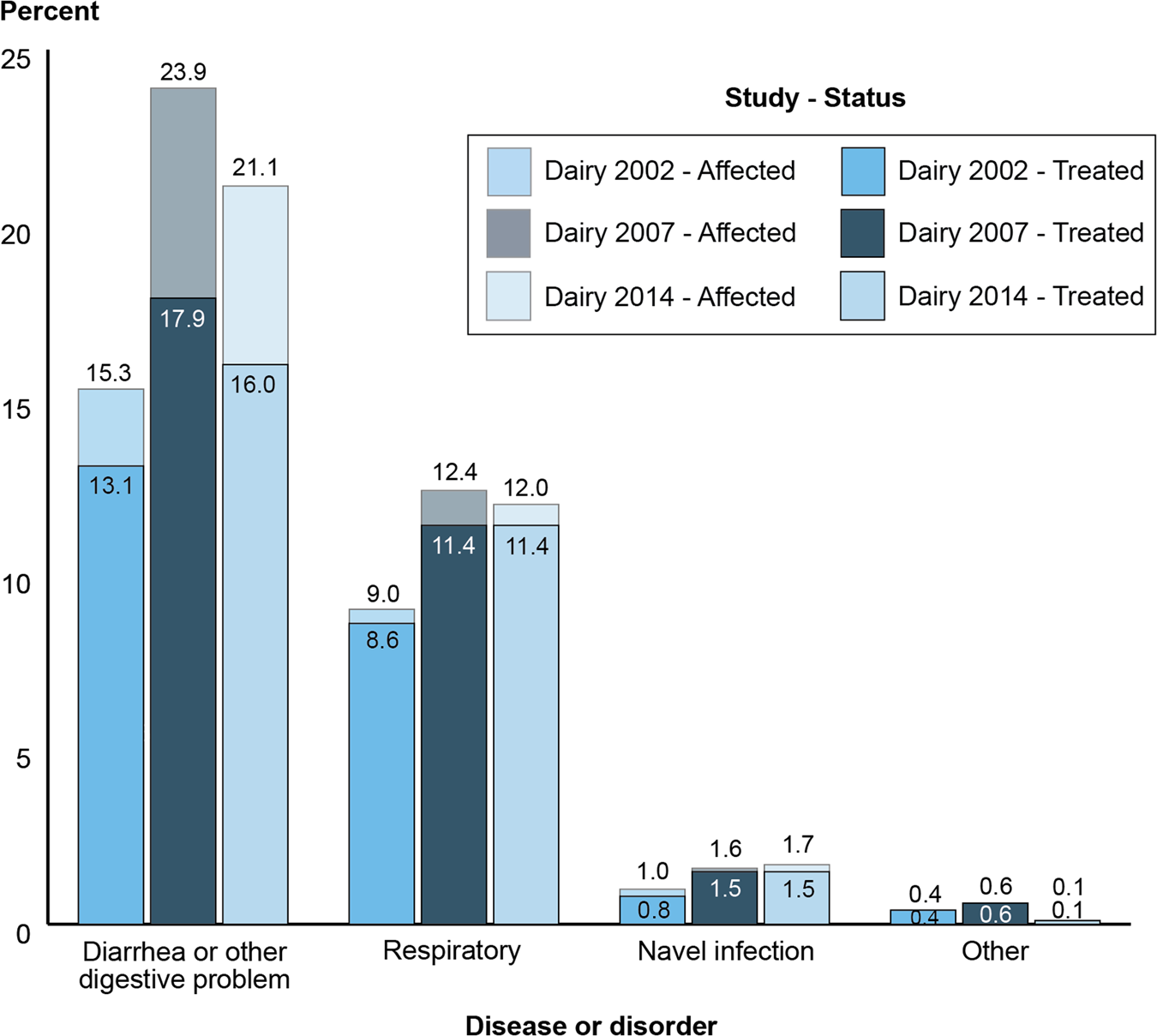
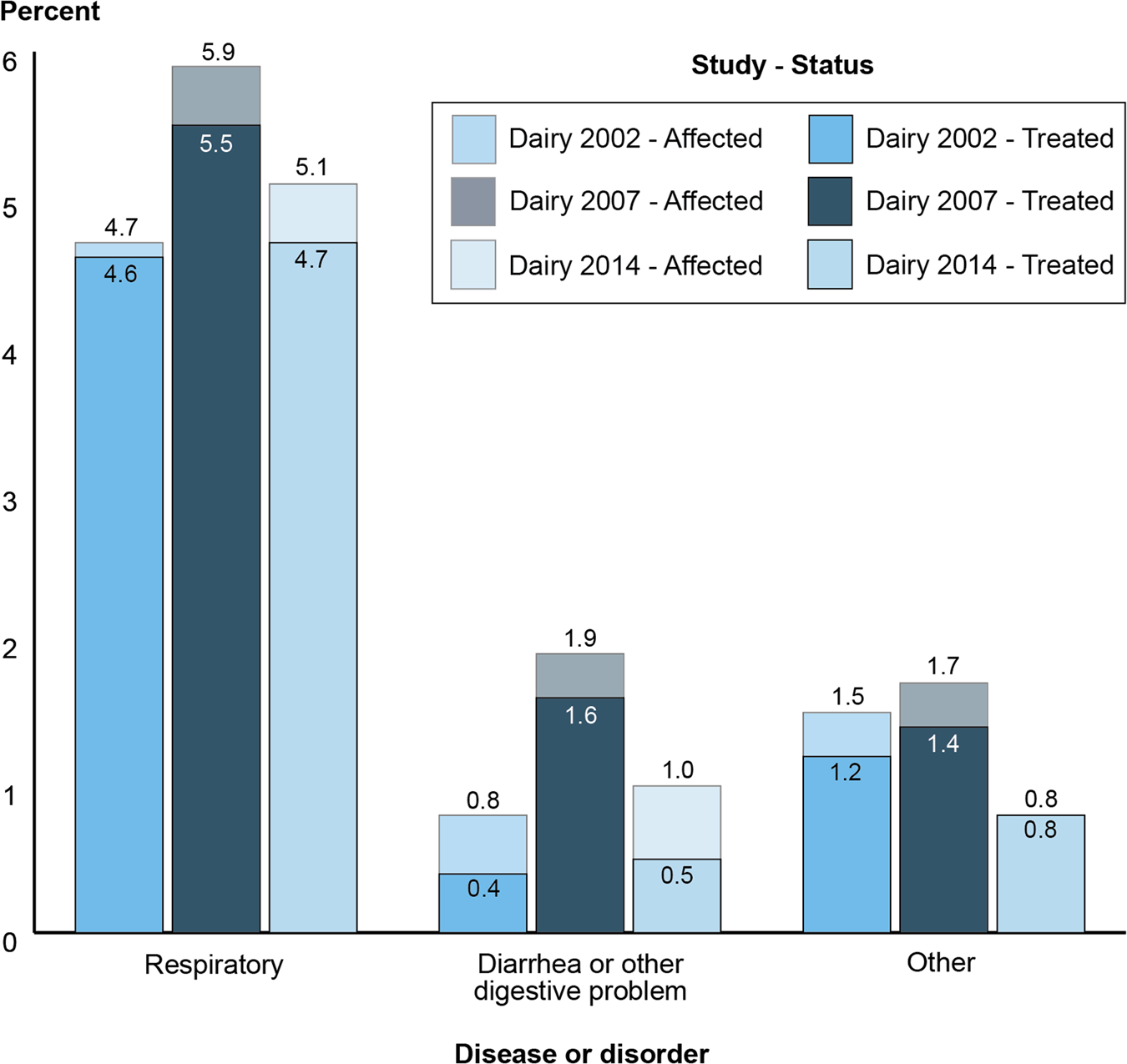
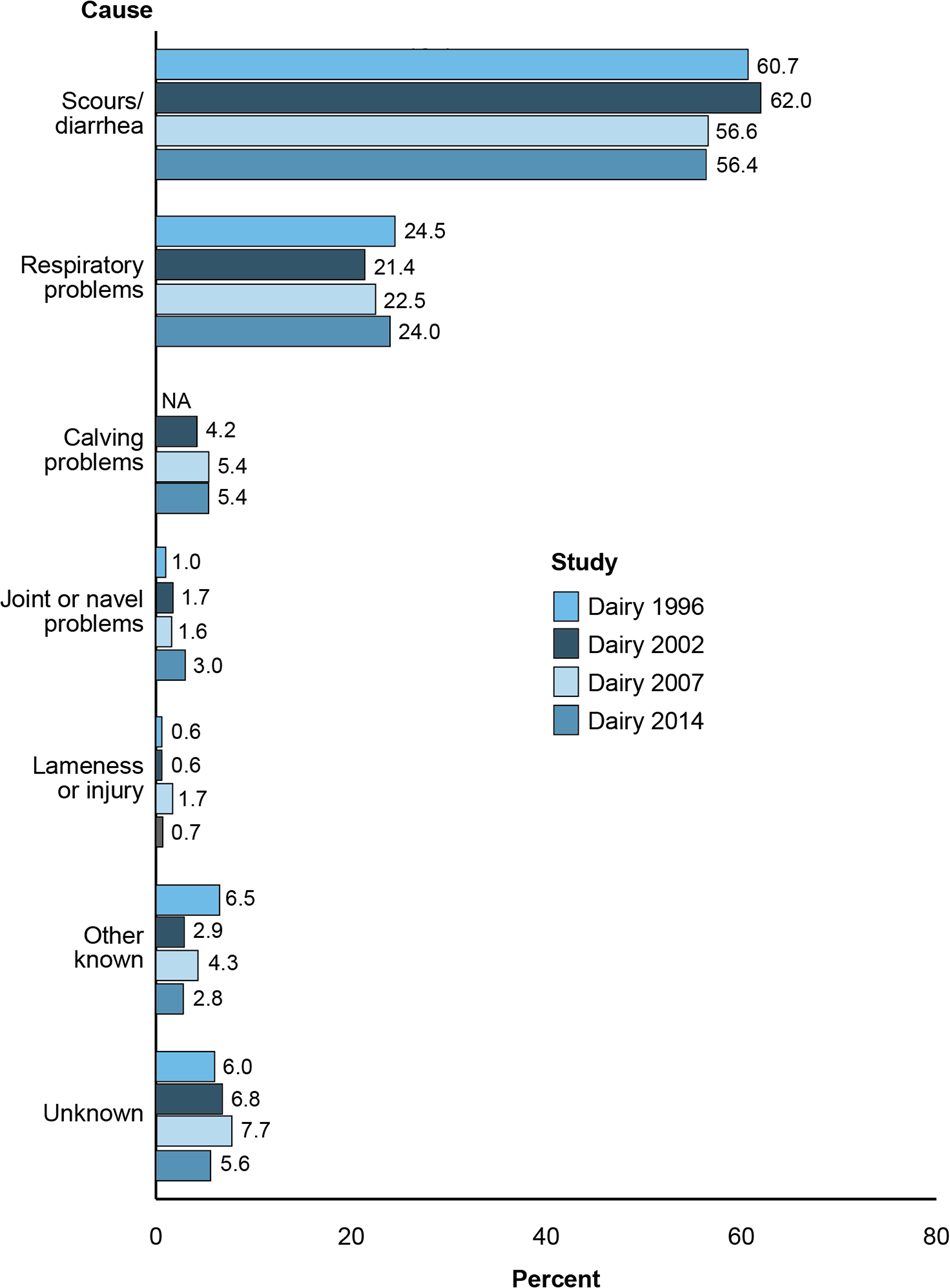
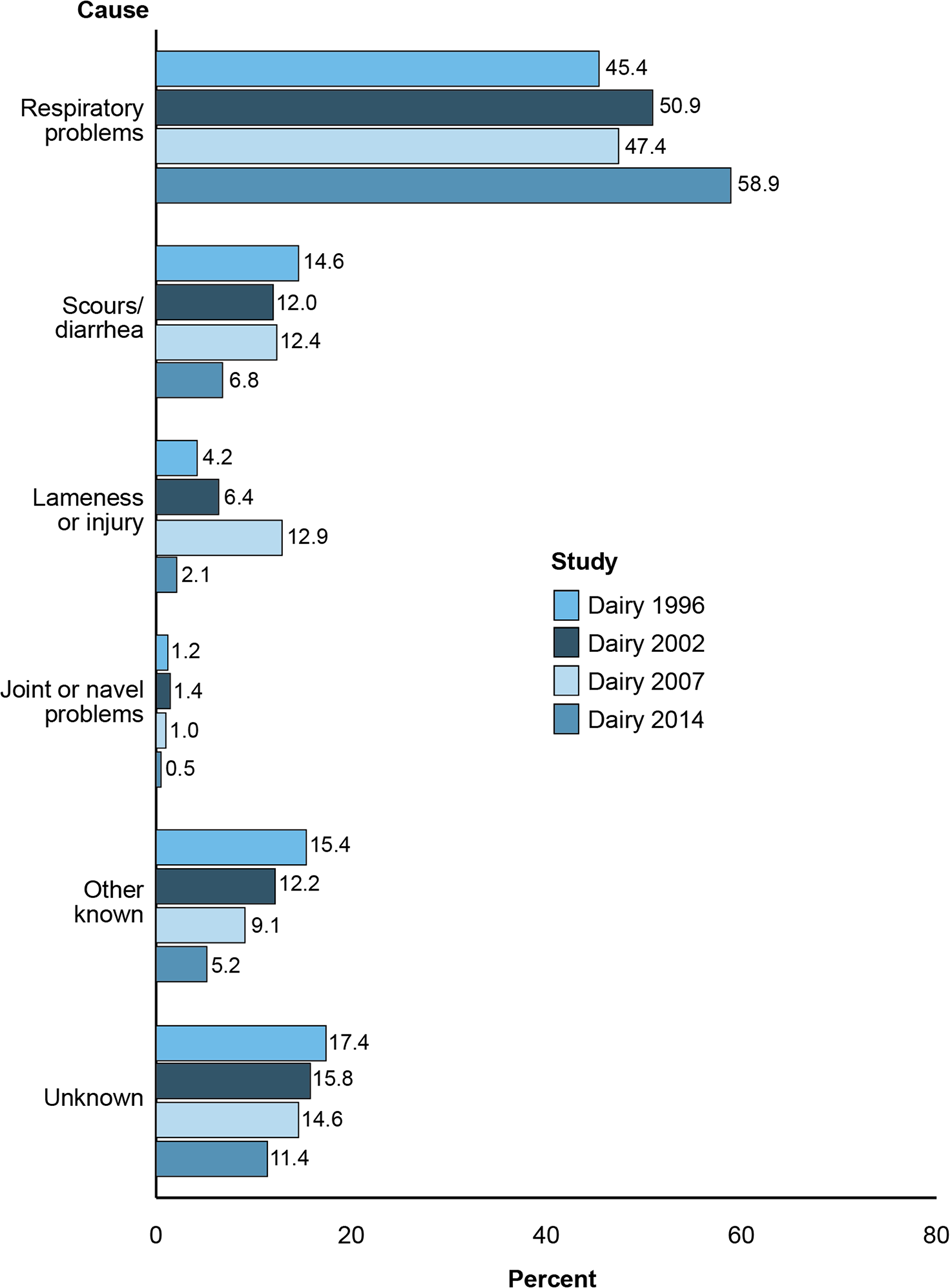
The impacts of BRD on morbidity, mortality, and antimicrobial use in calves are summarized in Figs. 1 through 4. These data indicate that BRD has been ranked the first or second most prevalent cause of morbidity and mortality in young calves for the past 22 years. NAHMS' trend analysis reveals that producer reported estimates for mortality in preweaned heifers has decreased from 11.0% (SE 0.4) in 1996, to 6.4% (SE 0.8) in 2014. This is a testament to the strides the industry has made in neonatal management, especially with respect to colostrum and transfer of passive immunity (TPI). The percentage of operations that quantitatively assess colostrum quality has increased nearly 10-fold from 2002 (5.8%, SE 0.6) to 2014 (53.3%, SE 1.8). However, the percentage of farms performing routine on-farm TPI assessment remains low at 6.2% (SE 0.2). Despite a decrease in preweaned heifer mortality, about 25% of preweaned deaths are attributed to BRD. Although mortality in weaned calves tends to be lower (3.2%, SE 0.1 to 2.6%, SE 0.1) than mortality in preweaned calves, producers have consistently attributed 45% or more of weaned heifer deaths to BRD since 1991 (45.4%, SE 2.2). NAHMS' latest estimates (58.9%, SE 4.2) suggest that BRD-related deaths in weaned heifers may be increasing. Given these impacts, it is not surprising that BRD continues to be a driver of antimicrobial use in heifer rearing programs. There is some evidence that the classes of antimicrobials being used for BRD are shifting. The percentage of operations using macrolides as their primary BRD antimicrobial and the percentage of BRD-affected calves treated with macrolides is trending upward. Meanwhile, tetracycline use in preweaned (17.9%, SE 2.7 to 2.7%, SE 1.1) and weaned (34.3%, SE 3.9 to 14.7%, SE 4.7) calves with BRD decreased. In contrast to its impact on calves, BRD is a relatively minor cause of morbidity and mortality in cows, and accounts for less than 3.0% of antimicrobial use in the adult dairy herd. Since 2002, the primary antimicrobial class for treating BRD in cows has been cephalosporin. Vaccination for BRD is relatively common, with 50–70% of operations vaccinating heifers and cows for infectious bovine rhinotracheitis (IBR), parainfluenza type-3 (PI3), bovine respiratory syncytial virus (BRSV), and bovine viral diarrhea (BVD) virus.
Percentage of preweaned heifers (as a percentage of dairy heifer calves born alive) affected with the following diseases or disorders during the 12 months prior to each study year and the percentage treated with antimicrobials. Population estimates are for operations with 30 or more dairy cows.

Percentage of weaned heifers (as a percentage of weaned heifer inventory on 1 January) affected with the following diseases or disorders during the 12 months prior to each study year and the percentage treated with antimicrobials. Population estimates are for operations with 30 or more dairy cows.

Percentage of preweaned heifer deaths by cause in the 12 months prior to each study year. Population estimates are for operations with 30 or more dairy cows.

Percentage of weaned heifer deaths by cause in the 12 months prior to each study year. Population estimates are for operations with 30 or more dairy cows.

Dairy 2014 calf component
A major objective for the Dairy 2014 study was to evaluate heifer-calf health from birth to weaning. To meet this objective, a subset of operations (n = 104) that completed the first two phases of the Dairy 2014 study elected to participate in the calf component (Urie et al., Reference Urie, Lombard, Shivley, Kopral, Adams, Earleywine, Olson and Garry2018a). This project used a data collection tool called the Heifer Calf Health Card to collect health and treatment data on 2545 calves. Approximately one-third of operations (31.7%) in this study fed pooled colostrum and more than half of the calves (63.2%) received colostrum via bottle. A Brix refractometer was used to assess colostrum quality on 17.3% of all operations, which was higher than for the 2014 Dairy survey (4.1%). Serum IgG assays revealed that 73.3% of 1623 Holstein heifer calves had successful TPI (Shivley et al., Reference Shivley, Lombard, Urie, Haines, Sargent, Kopral, Earleywine, Olson and Garry2018). Poor quality colostrum, low total volume fed, and delayed feeding contributed to failure of TPI, but 14.2% of calves with failure of TPI had no apparent risk factor. Percent morbidity and mortality in this study was 33.9 and 5.0%, respectively (Urie et al., Reference Urie, Lombard, Shivley, Kopral, Adams, Earleywine, Olson and Garry2018b). Morbidity due to respiratory signs was 9.5% of calves, while mortality attributed to respiratory signs alone, or in conjunction with digestive signs, was 14.1 and 7.0% of deaths, respectively. Calves housed in ventilated systems had a 2.2 higher odds of having a disease event reported before weaning compared with calves housed in natural ventilation systems. The primary antimicrobials used for BRD were macrolides (32.3%) and florfenicol (24.1%). Vaccinations against IBR, PI3, and BRSV were administered to preweaned calves on approximately half of operations (49.0–52.9%), while vaccines against BVD virus was administered to preweaned calves by 17.3% of operations (Urie et al., Reference Urie, Lombard, Shivley, Kopral, Adams, Earleywine, Olson and Garry2018a).
Conclusions
The dairy industry has made positive strides with respect to heifer calf health and survival over the last 25 years; however, there are still opportunities for operations to adopt practices that help reduce disease and mortality. BRD remains an important health and welfare concern on dairy farms as well as a driver of antimicrobial treatment in calves. Further research to better understand the challenges associated with BRD control and continued commitment to enhance the use of existing tools and new methods for monitoring health and detecting disease could help mitigate the impacts of BRD in calves and cows and improve the success of heifer rearing programs in the dairy industry.
Acknowledgements
NAHMS would like to acknowledge the US Dairy Industry for years of collaboration and their commitment to assisting NAHMS with its mission to monitor the health and management of US dairy cattle and to chronicle trends in our nation's dairy production systems.