Introduction
Benign paroxysmal positional vertigo (BPPV) is a common vestibular disorder. It is classified into two major types according to the nature of the induced nystagmus. The most common type is posterior canal canalolithiasis. The induced nystagmus is typically of a rotatory, vertical nature, with up beating when the head is hanging down, and down beating when in the sitting position. Nystagmus induced by posterior canal canalolithiasis is characterised by its short duration and latency.
Benign paroxysmal positional vertigo that presents with a direction-changing horizontal nystagmus, mainly induced in the right and left side head-down positions, is called lateral canal BPPV. Lateral canal BPPV is further classified into two types according to the direction of the induced nystagmus, namely geotropic nystagmus and apogeotropic nystagmus. The underlying mechanism of geotropic nystagmus is thought to be canalolithiasis of the lateral canal, and that of apogeotropic nystagmus is considered to be cupulolithiasis of the lateral canal.
This study aimed to examine the age and gender distribution of patients, clinical types of BPPV, therapeutic methods, and outcomes of BPPV. We focused on recurrent and intractable BPPV with regard to prognosis and outcomes.
Materials and methods
Of 3797 vertigo patients treated at our department from August 2004 to July 2009, we reviewed 357 BPPV patients (9.4 per cent). All patients with dizziness or vertigo were tested using the Dix–Hallpike manoeuvre. Assessment of lateral head rotation in the supine position was then made. Nystagmus was observed using an infrared charge-coupled device camera.
Posterior canal BPPV was diagnosed on the basis of the following criteria: (1) a history of brief episodes of positional vertigo, (2) the absence of an identifiable central lesion that might explain the positional vertigo, and (3) a direction-changing torsional nystagmus triggered by the Dix–Hallpike manoeuvre. Lateral canal canalolithiasis was diagnosed based on the following criteria: (1) and (2) as above, and (3) a direction-changing horizontal positional geotropic nystagmus in the right and left side head-down positions. Lateral canal cupulolithiasis was diagnosed based on the following criteria: (1) and (2) as above, and (3) a direction-changing horizontal positional apogeotropic nystagmus in the right and left side head-down positions. Mixed-type BPPV was diagnosed in cases of combined positional nystagmus of posterior canal and lateral canal BPPV. Patients with the sensation of vertigo, who were suspected of having BPPV but who did not have direction-changing positional nystagmus on head movement, were excluded from this study. All patients had their hearing checked using pure tone audiometry.
The posterior canal BPPV patients were divided into two groups according to the treatment methods. One group underwent the Epley manoeuvreReference Epley1 (194 patients, 84 per cent) and the other received medication (betahistine mesilate) (38 patients, 16 per cent). The lateral canal canalolithiasis patients were also divided into two groups according to the treatment methods. One group underwent the Lempert manoeuvreReference Lempert and Tiel-Wilck2 (31 patients, 45 per cent) and the other received medication (38 patients, 55 per cent). Lateral canal cupulolithiasis patients (46 patients) were treated with medication and non-specific physical techniques, such as Brandt–Daroff exercisesReference Brandt and Daroff3 or head shaking.
Patients with BPPV were then divided into three groups according to the prognosis: a curable BPPV group, a recurrent BPPV group and an intractable BPPV group. Recurrence was considered as the reappearance of symptoms after a symptom-free interval of more than 21 days. The follow-up period for checking recurrence was from one to six years. Intractable cases were those cases in which symptoms persisted for more than 60 days.
For statistical analysis, we used the Student's t-test; p values less than 0.05 were considered to indicate statistical significance.
Results
Patient age and gender
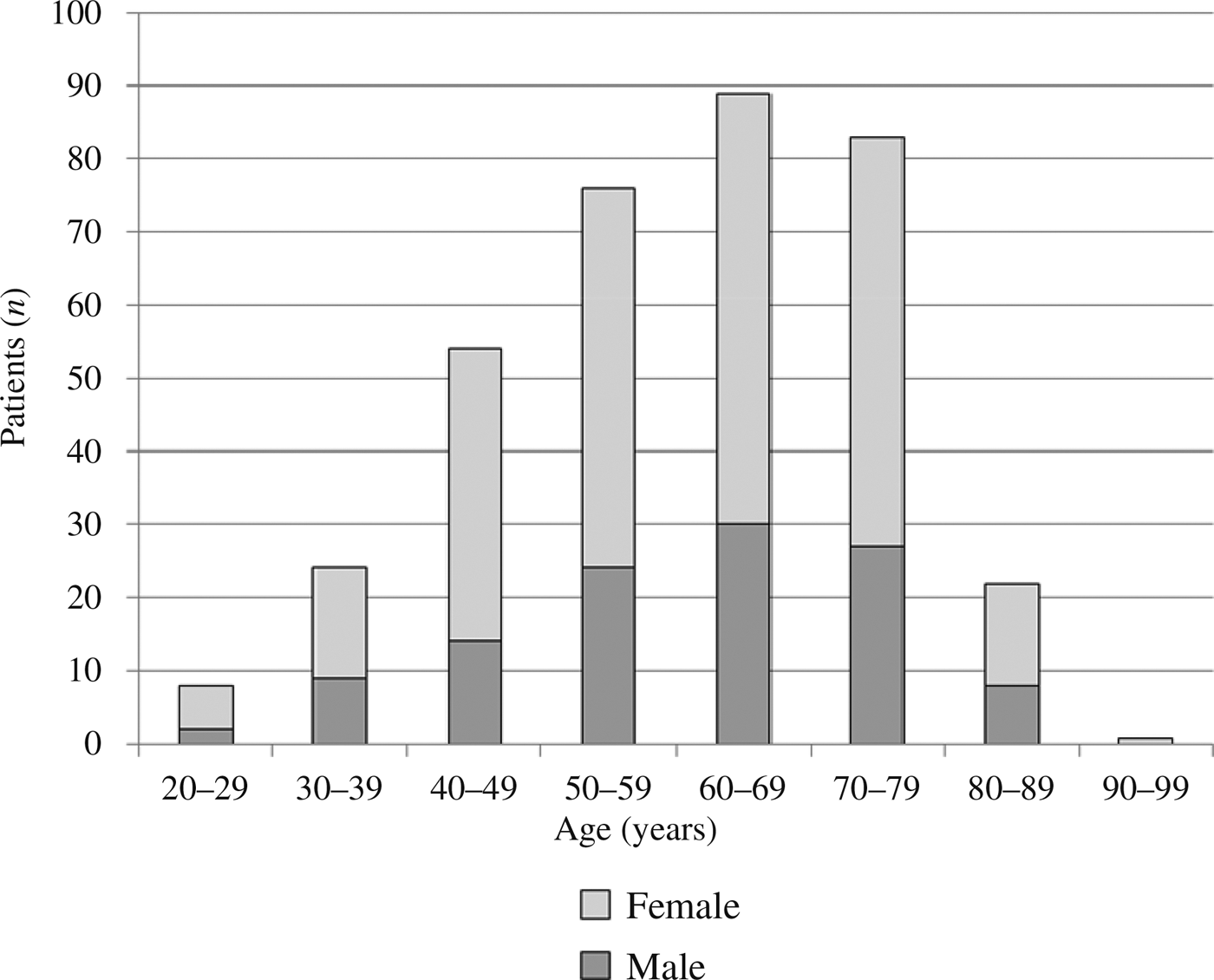
The ages of all BPPV patients ranged from 21 to 94 years, with an average age of 60 years. There were 114 men (31.9 per cent) and 243 women (68.1 per cent). The distributions of age and gender are illustrated in Figure 1.
Age and gender of patients with benign paroxysmal positional vertigo.

Benign paroxysmal positional vertigo types
Posterior canal BPPV was diagnosed in 232 patients (65.0 per cent), lateral canal canalolithiasis in 69 patients (19.3 per cent), lateral canal cupulolithiasis in 46 patients (12.9 per cent) and mixed-type BPPV in 10 patients (2.8 per cent).
Average resolution time
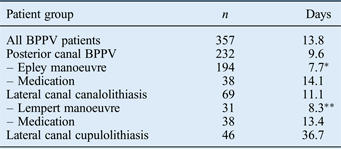
The average period of time from initial consultation to resolution of symptoms in all BPPV patients was 13.8 days (Table I). For the posterior canal BPPV patients, the average resolution time was 9.6 days. The average resolution time was 7.7 days in the Epley manoeuvre group and 14.1 days in the medication group. The resolution time in the Epley manoeuvre group was significantly shorter (p = 0.0010).
Average resolution time
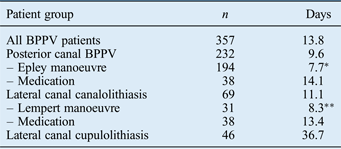
*p = 0.0010 versus the medication group. **p = 0.0491 versus the medication group. BPPV = benign paroxysmal positional vertigo
For the lateral canal canalolithiasis patients, the average resolution time was 11.1 days. The average resolution time was 8.3 days in the Lempert manoeuvre group and 13.4 days in the medication group. The resolution time in the Lempert manoeuvre group was significantly shorter (p = 0.0491).
For the lateral canal cupulolithiasis patients, the average resolution time was 36.7 days. The resolution time in the lateral canal cupulolithiasis group was significantly longer than that in both the posterior canal BPPV group (p = 0.0000) and the lateral canal canalolithiasis group (p = 0.0001).
Curable group
The average age of the 284 patients in the curable BPPV group was 59.2 years. The BPPV types encountered were: posterior canal BPPV (193 patients, 68.0 per cent), lateral canal canalolithiasis (53 patients, 18.7 per cent), lateral canal cupulolithiasis (32 patients, 11.3 per cent) and mixed-type BPPV (6 patients, 2.1 per cent).
Recurrent group
The recurrence rate was 14.8 per cent. The average age of the 53 patients in the recurrent BPPV group was 61.3 years, which was not significantly different from that of the curable BPPV group. Types included: posterior canal BPPV (31 patients, 58.5 per cent), lateral canal canalolithiasis (15 patients, 28.3 per cent), lateral canal cupulolithiasis (5 patients, 9.4 per cent) and mixed-type BPPV (2 patients, 3.8 per cent). Although the percentage of lateral canal canalolithiasis cases was higher in the recurrent group than in the curable BPPV group, the difference was not significant.
Recurrence patterns
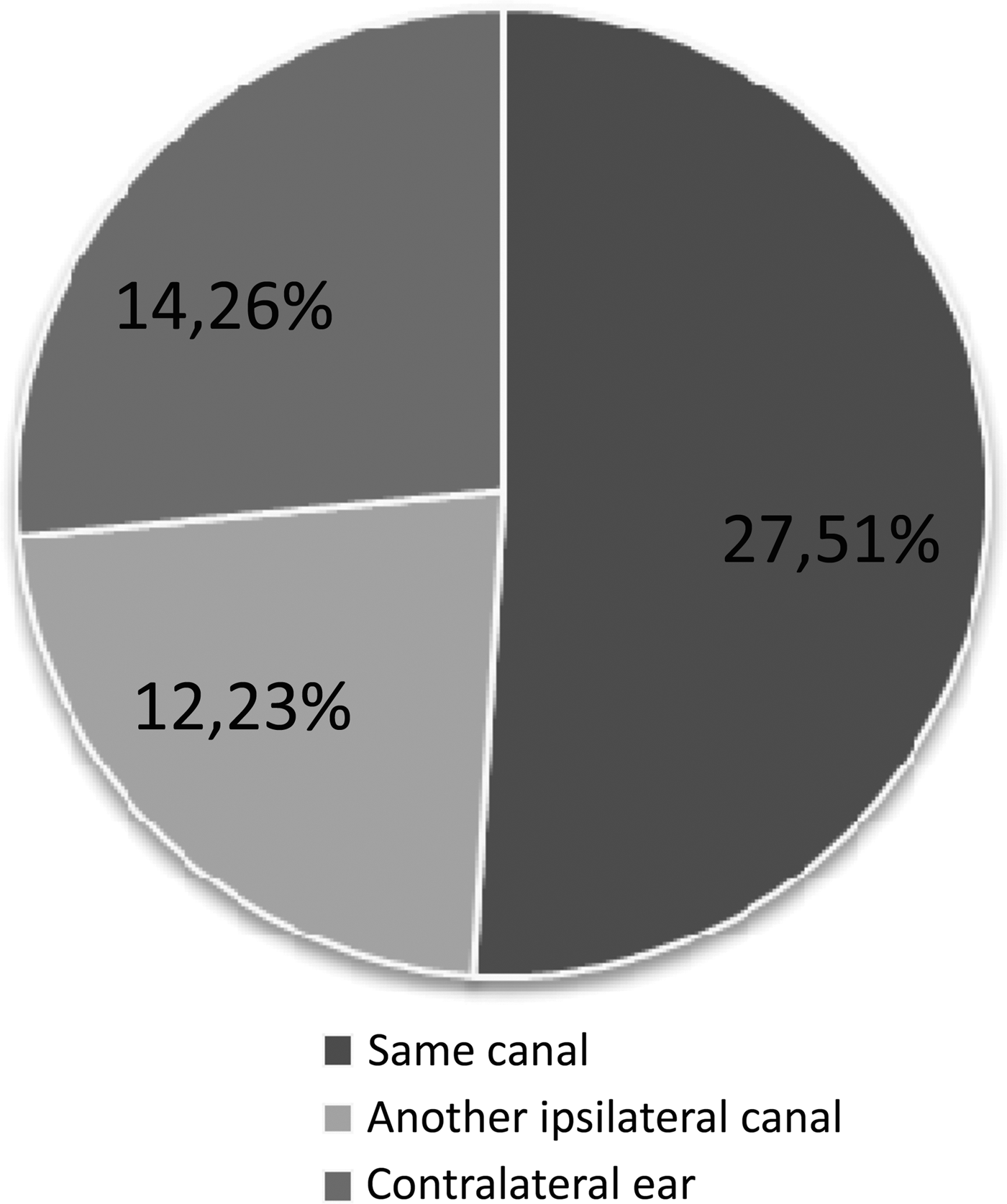
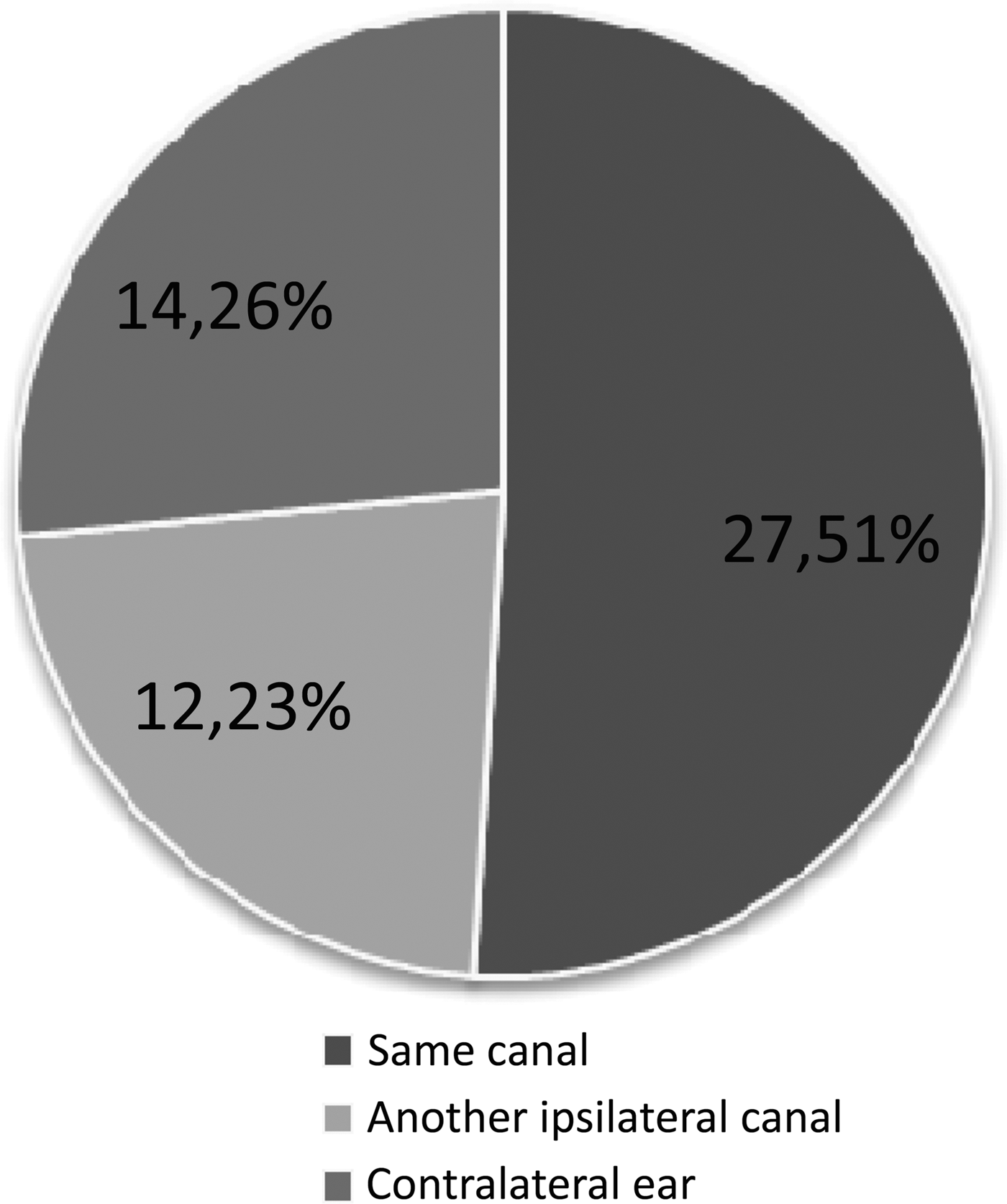
Recurrence involved the same canal in 27 patients (50.9 per cent), another ipsilateral canal in 12 patients (22.6 per cent) and the contralateral ear in 14 patients (26.4 per cent) (Figure 2).
Recurrence patterns.
Patient age and gender at recurrence
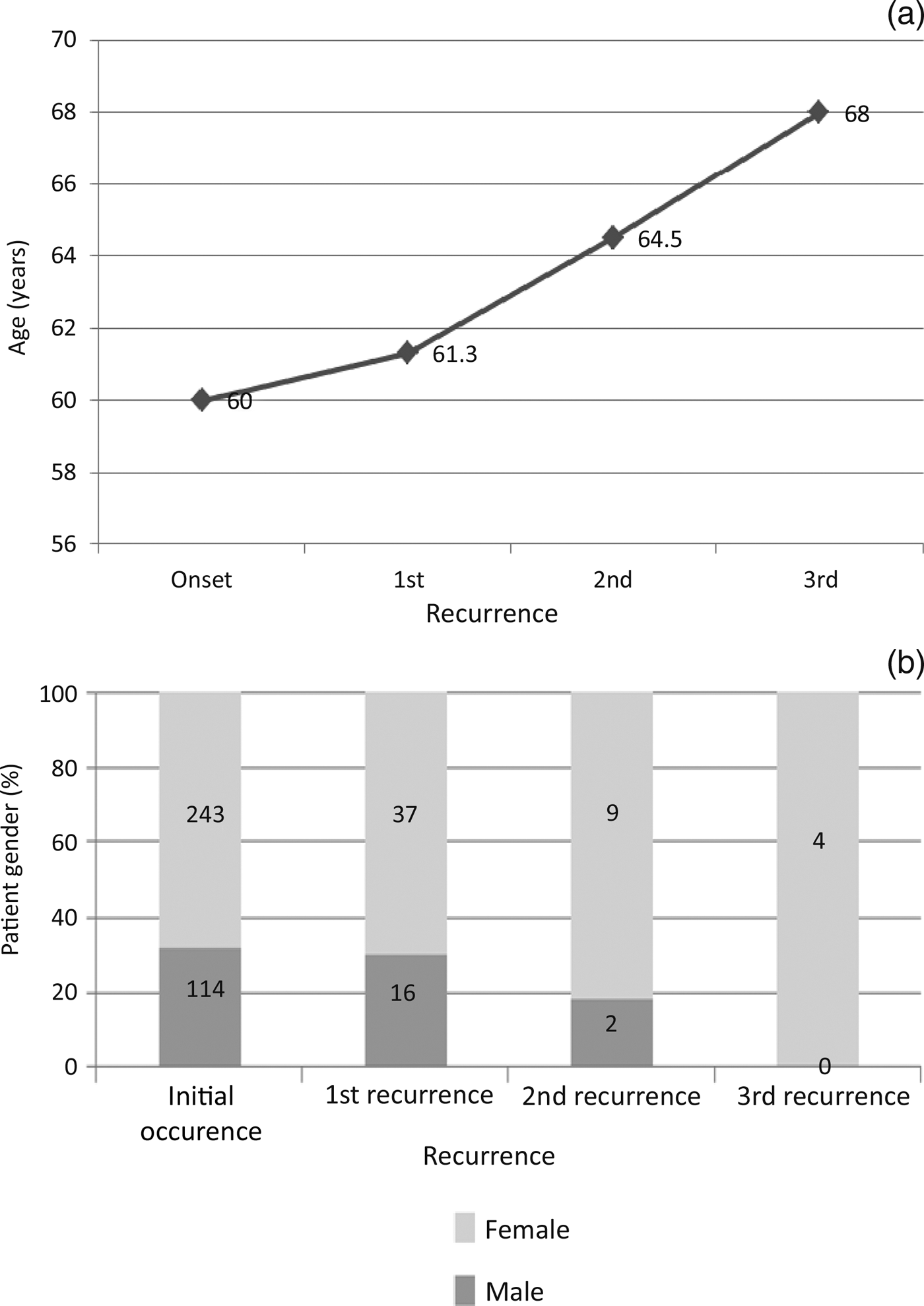
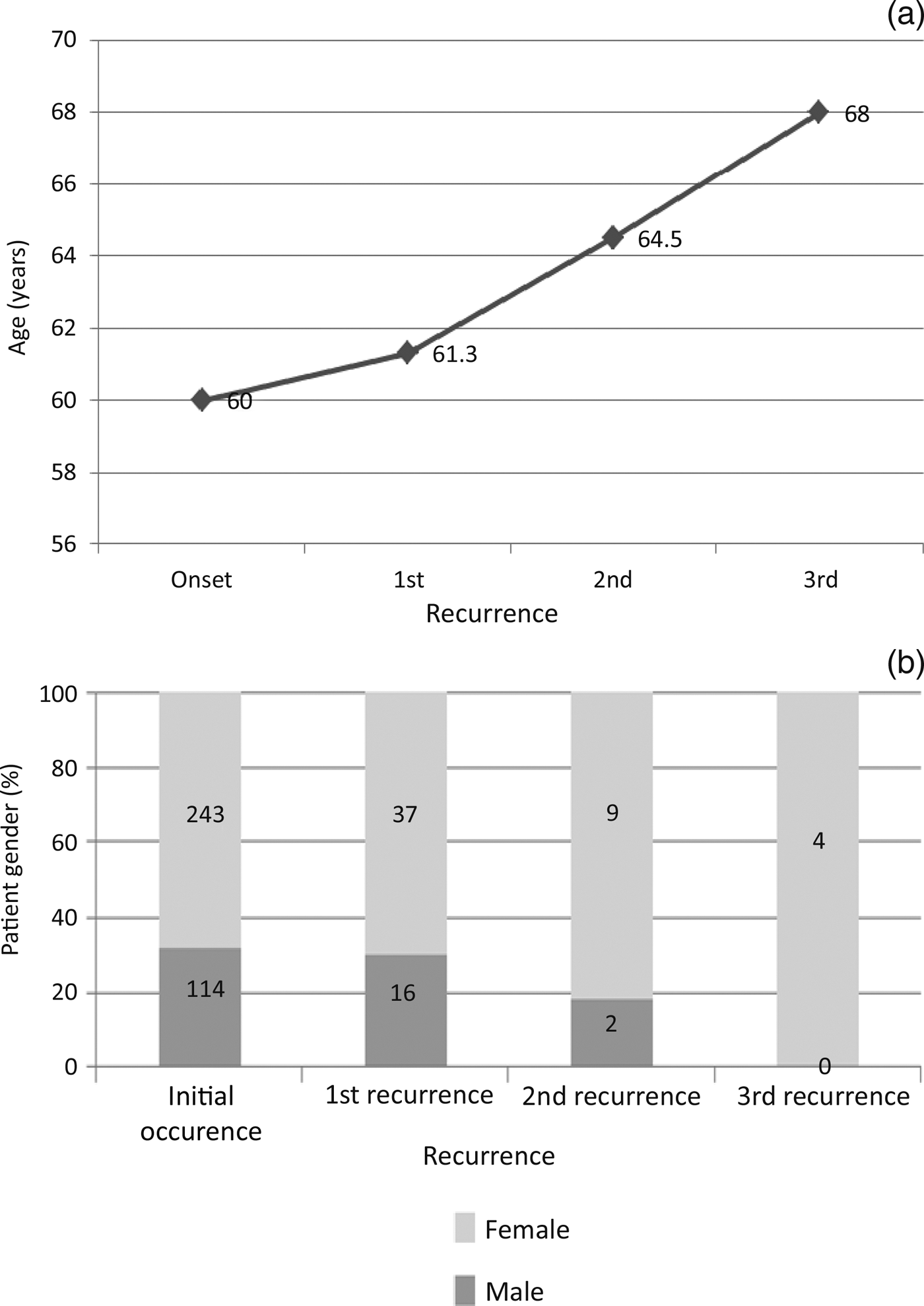
Fifty-three patients experienced a single recurrence, 11 experienced a second recurrence and 4 experienced a third recurrence. The average age at recurrence was 61.3 years at the first recurrence, 64.5 years at the second recurrence and 68.0 years at the third recurrence. In males, the incidence was 30.2 per cent at the first recurrence, decreasing to 18.2 per cent at the second recurrence and to 0 per cent at the third recurrence. In females, the incidence was 69.8 per cent at the first recurrence, increasing to 81.8 per cent at the second recurrence and to 100 per cent at the third recurrence. The average age of patients and the predominance for females increased in relation to the number of recurrences (Figure 3).
Patient age and gender at time of recurrence.
Intractable group
Of the 357 BPPV patients, there were 20 intractable cases (5.6 per cent). The average age of the intractable group was 68.3 years, which was significantly higher than in the curable BPPV group (p = 0.0023). Of these 20 cases, 8 patients had posterior canal BPPV (40.0 per cent), 1 had lateral canal canalolithiasis (5.0 per cent), 9 had lateral canal cupulolithiasis (45.0 per cent) and 2 had mixed-type BPPV (10.0 per cent). The lateral canal cupulolithiasis group had a significantly higher rate of intractability than the curable BPPV group (p = 0.0040). The resolution period was over 100 days for 4 lateral canal cupulolithiasis patients.
Inner-ear function
Eleven (4 per cent) of 284 patients had sensorineural hearing loss (SNHL) in the curable BPPV group. Of the 53 recurrence cases, 3 (6 per cent) had SNHL, while 5 (25 per cent) of the 20 intractable cases had SNHL. Sensorineural hearing loss was more frequently associated with intractable BPPV than with curable BPPV (p = 0.0004).
Discussion
We set out to determine the clinical aspects and therapeutic strategies for BPPV. We reviewed 357 (9.4 per cent) patients diagnosed with BPPV (of 3797 vertigo patients treated over a 5-year period). Patients for whom a diagnosis of BPPV was only suspected were excluded from this study. If they had been included, the number of BPPV patients would have been more than doubled. In decreasing order of frequency, the types of BPPV encountered were: posterior canal BPPV, lateral canal BPPV and mixed-type BPPV. This is probably due to the anatomical location of the semicircular canals. If otoconial debris is dislodged, it tends to fall towards the back and bottom of the membranous labyrinth, where the posterior canal is located.
The Epley manoeuvre was performed on 84 per cent of patients in the posterior canal BPPV group, and the Lempert manoeuvre was carried out on 45 per cent of patients in the lateral canal canalolithiasis group. The Lempert manoeuvre was performed less than the Epley manoeuvre; this is because diagnosis of the affected side in lateral canal canalolithiasis cases is more difficult than in posterior canal BPPV cases. The average resolution time was significantly shorter in patients treated with the Epley manoeuvre than in those treated with medication (p = 0.0010). In addition, the average resolution time was significantly shorter for patients treated with the Lempert manoeuvre than for those treated with medication (p = 0.0491). The Epley and Lempert manoeuvres should be performed on patients who can tolerate the procedures well, and who do not have cervical spine problems or other conditions.
The average resolution time was significantly longer in cases of lateral canal cupulolithiasis than in the other types of BPPV. Lateral canal cupulolithiasis patients were treated by medication and non-specific physical techniques, such as the Brandt–Daroff exercises or head shaking. The findings of the present study suggest that these manoeuvres are not very effective for treating lateral canal cupulolithiasis.
We have previously performed model experiments using the membranous labyrinth of bullfrogs and confirmed the physiological validity of cupulolithiasis.Reference Otsuka, Suzuki and Furuya4 These experiments showed that the otoconia may not easily detach from the cupular surface in situations of cupulolithiasis. The cupula is mainly composed of mucopolysaccharide, which is very adhesive in nature. This adhesiveness makes the otoconia difficult to detach, resulting in intractable cupulolithiasis.Reference Otsuka and Suzuki5 Physical therapy with maximal effectiveness for cupulolithiasis is required.
Kim et al. recently reported a new cupulolith repositioning manoeuvre with mastoid oscillation using a hand-held vibrator.Reference Kim, Jo, Chung, Byeon and Lee6 Symptoms were resolved in 62 per cent of the patients after 1 session and in 97 per cent of the patients after 6 sessions. The authors concluded that this manoeuvre was effective for lateral canal cupulolithiasis. We have previously investigated the kinds of stimuli that might be effective for detaching the otoconial mass from the cupula in experimental models of cupulolithiasis.Reference Otsuka, Suzuki, Negishi, Shimizu, Inagaki and Konomi7 We concluded that vibration was the most effective method of detaching the otoconia from the cupula. We plan to examine the clinical efficacy of a mastoid oscillation manoeuvre in the treatment of lateral canal cupulolithiasis.
Various authors have reported different recurrence rates for BPPV, ranging from 7 to 50 per cent.Reference Steenerson, Cronin and Marbach8–Reference Ahn, Jeon, Kim, Park, Hur and Kim11 Our result was 14.8 per cent, which was within this range. Pérez et al. reported 19 cases of recurrence; of those, the recurrence rate in the same canal was 31.6 per cent, recurrence in another ipsilateral canal was 31.6 per cent and recurrence in the contralateral ear was 36.8 per cent.Reference Pérez, Franco, Cuesta, Aldama, Alvarez and Méndez12 These authors emphasised the importance of examining each canal in both ears, because BPPV is a syndrome that tends to relapse, rather than being a single entity that affects a particular side or canal. In our results (of the 53 patients with recurrence), recurrence in the same canal was around 50 per cent, while recurrence in another ipsilateral canal was about 25 per cent and recurrence in the contralateral ear was around 25 per cent (Figure 2). We contemplated that the otoconia tended to be detached from the same utricle and moved into the same semicircular canal while maintaining head position during sleeping or head movement during everyday activity. On the other hand, the otoconia detached from the contralateral utricle only occasionally.
As the number of recurrences increased, the average age of patients and the predominance in females increased (Figure 3). Brandt et al. also reported that women were more likely to experience recurrence than men.Reference Brandt, Huppert, Hecht, Karch and Strupp9 It has been speculated that the decrease of oestrogen during and after menopause affects calcium metabolism, leading to detachment of the otoconia from the utricle. Oestrogen plays an important role in otoconial metabolism. After ovariectomy, the density of otoconia has been reported to decrease and the size of the otoconia increases.Reference Vibert, Sans, Kompis, Travo, Muhlbauer and Tschudi13 In adult animals, the number of otoconia and concentration of calcium decreases.Reference Takumida and Zhang14 Motohashi et al. reported that oestrogen receptors were expressed in the inner ear (i.e. in the outer and inner hair cells, spiral ganglion cells, vestibular ganglion cells, dark cells and endolymphatic sac), and that these expressions decrease with increasing age.Reference Motohashi, Takumida, Shimizu, Konomi, Fujita and Hirakawa15 This finding suggests that a decreased oestrogen receptor level of the dark cells in aged animals leads to changes in otoconia. The rapid decrease in the oestrogen level in menopause causes a decrease in the number of oestrogen receptors, which may induce a disturbance in the otoconial metabolism.
The average age of patients was significantly higher in those with intractable BPPV compared with curable BPPV patients (p = 0.0023). The rate of SNHL was also significantly higher in patients with intractable BPPV than in curable BPPV patients (p = 0.0004). Both the ageing process and SNHL may be associated with ischaemia. Four of the lateral canal cupulolithiasis patients had a resolution time of over 100 days. It is difficult to explain the mechanism of this long resolution time simply based on the effects of cupulolithiasis. We speculate that the cupula may sustain morphological damage from ischaemia, such as shrinkage.
• For posterior canal benign paroxysmal positional vertigo (BPPV) cases, resolution time was shorter following Epley manoeuvre versus medication
• For lateral canal canalolithiasis cases, resolution time was shorter following Lempert manoeuvre versus medication
• Resolution time was longer for the lateral canal cupulolithiasis group than other BPPV types
• Average patient age and female predominance increased with the number of recurrences
• Average patient age and sensorineural hearing loss rate were higher for intractable BPPV cases
Research suggests that the cupula shrinks under various conditions.Reference Konomi, Suzuki, Otsuka, Shimizu, Inagaki and Hasegawa16–Reference Suzuki and Suzuki18 Konomi et al. reported that the cupula shrank after a gentamicin injection into the inner ear, with or without damage to the sensory cells.Reference Konomi, Suzuki, Otsuka, Shimizu, Inagaki and Hasegawa16 It is expected that the movement of the cupula will change as it shrinks. Kondo et al. observed similar cupular changes after puncturing the membranous labyrinth.Reference Kondo, Suzuki, Konomi, Otsuka, Inagaki and Shimizu17 The cupula was also found to change in a high osmolarity environment.Reference Suzuki and Suzuki18 In addition, cupular change was revealed in our ischaemia model.Reference Suzuki and Suzuki18 The cupula is fragile, and change is induced easily as a result of various insults, including SNHL and other inner-ear diseases. Maintaining a favourable inner-ear condition for calcium metabolism should help to prevent recurrence and intractability of BPPV.
This study had the limitation of being retrospective and was conducted at a single institution only.
Conclusion
For the posterior canal BPPV patients, the resolution time was significantly shorter in the Epley manoeuvre group than in the medication group. For the lateral canal canalolithiasis patients, the resolution time was significantly shorter in the Lempert manoeuvre group than in the medication group. The resolution time was significantly longer in the lateral canal cupulolithiasis patients than in the other BPPV patients. As the number of recurrences increased, the average age of patients increased as did the predominance in females. The average patient age and the rate of SNHL were significantly higher in those with intractable BPPV compared with the curable BPPV patients.
Acknowledgements
The authors are indebted to Dr Clifford A Kolba and Prof J Patrick Barron at Tokyo Medical University for their editorial review of the English manuscript. This study was supported by a Health and Labor Science Research Grant for Research on Specific Disease (Vestibular Disorders) from the Ministry of Health, Labor and Welfare, Japan (2012–13).