In the analysis of war economies in Europe between 1939 and 1945 the question of industrial mobilisation is fundamental, but remains imperfectly understood. Governments in belligerent countries created frameworks within which industry and labour were encouraged and coerced to maximise output in ways which were modified according to resource availability, changing war plans and the fortunes of military campaigns, including territorial conquest and occupation. As Mark Harrison has recently suggested, prewar mobilisation of the Axis powers was based on the expectation of rapid victories, that of the Soviet Union was designed to defend itself against attack from the west, while the rapid mobilisation of the western Allies took place only when they regarded war as certain. The United Kingdom, the United States and the Soviet Union ‘mobilized their economies knowing that only quantitative effort could neutralize the qualitative advantage of the Axis powers’ and that during the conflict, the key was ‘not so much to have detailed economic controls as to be able to maintain economic integration under intense stress’.Footnote 1
For the belligerent powers this last point implies a need to understand the process of mobilisation in different regions and also how regions were integrated into national war economies. Much of the work on industrial mobilisation, however, concentrates on outcomes and on national aggregates, paying much less attention to regions and to the process of production in a wider social and political context.
The literature on the war itself is still dominated by the official histories, which, although they contain vast amounts of detail not readily available elsewhere, have disappointed many economic historians by the questions they do not satisfactorily address. Among the most important of these are the problems of resource allocation and the means by which, and the extent to which, these were resolved.Footnote 2 For the United Kingdom of Great Britain and Northern Ireland the official History of the Second World War: United Kingdom Civil Series was published in more than fifty volumes from 1949 onwards. Unfortunately, very few if any of the volumes take an explicitly UK-wide view and they are dominated by the view from London, making the series title essentially a misnomer.
The aim of much of the economic history of the war has been to move beyond the official histories and to ask new questions, especially in a comparative context. Thirty years ago Alan Milward declared himself ‘infuriated’ by those works of military history ‘in which armies and navies come and go, commanded by greater or lesser figures deciding momentous historical issues’ but which said nothing ‘of the real productive forces which alone give such events meaning or, indeed, make them possible’.Footnote 3 His War, Economy and Society, 1939–1945 was a bold and highly successful work of comparative economic history based largely on published sources. Since then other work, by Richard Overy, Mark Harrison and Talbot Imlay, for example, has pursued both national and comparative themes and added a great deal to our knowledge of the war.Footnote 4 In the United Kingdom some of the most impressive work has focused on women workers, but as Peter Howlett and David Edgerton have emphasised, the business history of the war, including the role of businessmen in government, remains seriously under-researched and there are very few studies of the regional experience of mobilisation.Footnote 5 Imlay's recent comparative study of Britain and France between 1938 and 1940, influenced by the work of Jay Winter and Jean-Louis Robert on the First World War, has argued for an approach which incorporates strategic, domestic–political and political–economic dimensions. Such an approach is most appropriate for work at the level of nation states. Regional studies, while not neglecting the strategic context, have to take the national and international strategy as given, but they can focus more on Imlay's second and third areas, integrating economic, social and political history in order to address themes which do not figure largely in the official histories. These include the problems faced by firms in wartime expansion, the impact of mobilisation on men and women workers, migration, political consensus and dissent, and the extent to which distance from London affected the rate of mobilisation.
In the United Kingdom, alongside the enormous growth in central government, organisation of the war effort had a strong regional element from early in 1940. This article adds to our knowledge of the process of mobilisation by drawing heavily on new archival evidence to examine the relationships between government, industrial mobilisation and society in one region of the United Kingdom – Northern Ireland – between 1939 and 1945, and sets the discussion in a wider British context. It considers the changing administrative framework of war production, the political debate over military and industrial conscription, and why industrial mobilisation was relatively slow and unemployment relatively high. For Northern Ireland this article takes the discussion well beyond the official history of the regionFootnote 6 and confirms the value of a broad approach to wartime regional history. It concludes that because the history of Northern Ireland differed so markedly from Britain we should be careful before making UK-wide generalisations about wartime experience.
Regional organisation and the debate on military conscription
In the Second World War both the administrative machinery and the military technology were far more complex than they had been in the First. The technical, strategic and economic synthesis was therefore much more difficult to achieve at national level, and this made an effective system of regional economic organisation all the more essential. The diversity of productive potential of different regions was so great that central government had to devolve some responsibility down to the regions.Footnote 7 Indeed, the issue of regional versus centralised control in war production was a ‘most difficult and bitterly contested’ one, according to Harold Macmillan who, as chairman of the Industrial Capacity Committee, was closely involved in all the debates in 1940 and 1941.Footnote 8 Regional organisations offered a more appropriate framework for settling local rivalries between the service departments and provided a valuable forum where representatives of employers, trade unions and the production ministries might meet on a regular basis. Given the experience of the First World War, the need to establish a framework which minimised inter-departmental rivalry was paramount.Footnote 9 Northern Ireland was one of twelve area boards established in January 1940 to provide the national framework for regional organisation.Footnote 10 From July 1940 the boards were collectively responsible to the newly established Industrial Capacity Committee and through that to the Production Council. Among their key functions were to co-ordinate the production of essential stores, to facilitate the exchange of information between relevant ministries, service departments and the area advisory committees; to address difficulties in increasing output; to convey proposals for the expansion of industrial capacity in the area; and to inform London of any problems with priority of contracts. To assist with these tasks the boards were permitted to set up advisory panels on an industrial or geographical basis.Footnote 11
With so much at stake and with so many conflicting interests involved it was only to be expected that the system would experience substantial evolution, especially after the formation of the Churchill government in May 1940. In May 1941 area boards were replaced by the Production Executive's regional boards, now responsible directly to the Production Executive, established in January 1941 and chaired by Ernest Bevin as minister of labour and national service. Much to the regret of some regional board members who sought more executive authority, Bevin saw their functions as largely advisory, suggesting that it was ‘difficult, even dangerous, to think too much in terms of the devolution of power’.Footnote 12 In Northern Ireland the evolution of the role, personnel and functions of regional organisation had to take account of the existence of devolved government in the region which had operated since the partition of Ireland in 1921, with a prime minister and cabinet of ministers based in Belfast. The latter included a ministry of commerce, which had no direct equivalent at Westminster, and a ministry of labour. Neither Viscount Craigavon, prime minister until November 1940, nor his successor between then and April 1943, John Andrews, proved to be capable leaders of wartime mobilisation. Only from April 1943, when the minister of commerce and production, Sir Basil Brooke, became premier, did Northern Ireland have a prime minister who demonstrated effectiveness in the organisation of war production.Footnote 13
Northern Ireland was a traditional industrial region, dependent to a considerable extent on textiles (where most of the workforce were women), shipbuilding and engineering, centred on Belfast. The region suffered substantial structural and cyclical unemployment in the interwar period, and by July 1938 unemployment stood at 29.1 per cent of the insured industrial labour force, the highest figure since the creation of Northern Ireland in 1921,Footnote 14 while per capita incomes were about 55 per cent of the British level.Footnote 15 A population of about 1.4 million contained just under 350,000 insured workers at the start of the war, and in the transition from peace to war the contrast with Britain could hardly have been greater: in August 1939 unemployment as a percentage of the insured labour force in Britain was 8.3 per cent, declining to 5.2 per cent in November 1940. The corresponding figures for Northern Ireland were 19.5 per cent and 21.7 per cent.Footnote 16 The largest manufacturing industry, linen, was more dependent on raw material from Europe than almost any other UK industry, and the loss of supplies of flax from the Baltic states and the Low Countries contributed to the serious unemployment position. In spring 1941 very few linen companies were working at more than 60 per cent capacity and in July unemployment in the industry reached 37.1 per cent.Footnote 17 Unemployment remained well above the British average throughout the war, and, although it fell steeply from spring 1941, reaching its lowest point in autumn 1944, the regional economy never sustained ‘full’ employment.
Unlike many of the depressed regions in the United Kingdom, Northern Ireland had not been designated a Special Area, a label regarded as a stigma by some in the ruling Unionist Party, since it would have been an admission of failure by a party which had used the industrial success of the region as a key reason for partition of the country in 1920–1.Footnote 18 It was also a politically divided society, with about two-thirds of the population voting unionist and a third nationalist. Among the latter, support for the war could not be taken for granted, and active, even violent, opposition from republicans was always possible. The growing political consensus about the war which Imlay has identified for Britain did not apply in Northern Ireland.Footnote 19 Belfast was the largest city, the centre of government, industry and finance, the major port and principal location of electrical power generation – an unusually high degree of economic integration which brought benefits in peacetime but correspondingly serious risks of disruption from bombardment in wartime. During the war the region differed from Britain in three related respects: it had no military conscription, no compulsory general registration of labour and no policy of concentrating industry to make maximum use of labour and factory space.
In the absence of military conscription, close attention was paid to the rate of voluntary recruitment to the British army. This was in fact disappointing, declining from 2,500 per month at the start of the war to just 600 by December 1940, leading to some nationalist mockery of unionist claims of loyalty to Britain.Footnote 20 More generally, the absence of conscription meant that the political and economic context of the debates about mobilisation was very different from that in Britain. It was also the main reason why unemployment during the war was much greater, but dilution of skilled labour and the role of women in traditionally ‘male’ employment was much less than in Britain. The relatively high levels of unemployment marked this region out as the least mobilised of any in the United Kingdom throughout the conflict. As late as September 1942, Northern Ireland still had a ‘practically unlimited’ supply of unskilled employees, and the availability of labour in general was greatest in this region, followed by the northern region of England, Scotland, parts of east London and the south east region respectively. In terms of areas to which industrial production might be directed, Northern Ireland, where ‘all services were satisfactory’ was seen to be the most favourable, followed by east and south London. Scotland and the northern region of England were next, except for production which required rail transport from the congested Midlands or the south of England, and in both Scotland and the northern region factory premises were in short supply and the electricity supply difficult. Within the United Kingdom overall, the north-west of England and the Midlands were the most comprehensively overloaded in terms of the government's criteria of factory premises, labour, electricity, gas, accommodation for billeting, transport and coal, while Northern Ireland was the least so.Footnote 21
There were two main arguments used against the imposition of conscription. First and most significant was the well-founded fear of political and social disorder organised by various groups, sometimes with the support of the Catholic Church. Towards the end of the First World War, the mere threat of military conscription in Ireland had been enough greatly to increase clerical and republican hostility to Britain and had contributed substantially to Sinn Féin's landslide general election victory in 1918.Footnote 22 The Irish Republican Army (IRA), which had embarked on a widespread bombing campaign in Britain in the early 1920s, returned before the outbreak of war to undertake active and geographically widespread operations which continued well into 1940 in both Northern Ireland and Britain. The most serious incident, in August 1939, was a bomb in Coventry which killed five people, leading to anti-Irish feeling and walk-outs by workers in this industrially most important city; five IRA members were put on trial for murder and two were hanged. Action by the IRA ‘expeditionary force’ resulted not only in a strengthening of security measures but also to extensive deportations of suspects from Britain to Eire, which in turn led to more bombings.Footnote 23 In Northern Ireland early wartime targets included cinemas showing British newsreels of the war, as well as civilian musicians entertaining the troops. The 1939–40 IRA campaign was greatest in Derry and Belfast and led to large-scale internment.Footnote 24 Republicans also ran a radio station from west Belfast, set fire to gas masks and were alleged to have helped Germany by not always complying with blackout orders.Footnote 25
How much disorder would be generated by conscription was impossible to judge, but Basil Brooke, who had been placed in charge of recruiting in the summer of 1940, expected it to range from ‘passive resistance to actual rioting’.Footnote 26 Brooke had an early warning about this on a recruiting campaign visit to the city of Derry in August 1940, when the unanimous view of the lord lieutenant and his deputies was that conscription should definitely not be applied to Northern Ireland and that ‘Derry would go up in flames if it was’.Footnote 27 In 1941, among those groups organising opposition was the Ulster Gaelic League, which also wanted all British soldiers to leave Northern Ireland.Footnote 28 The leader of the Catholic Church in Ireland, Cardinal Joseph MacRory, himself from Ballygawley, close to the border in the northern county of Tyrone, had consistently opposed British policy in Ireland, especially partition. Early in the war a German representative in Dublin even speculated that MacRory might be prepared to consider German intervention to end partition.Footnote 29 His opposition to conscription was absolute. In a letter to the Irish bishops in May 1939 and in a radio broadcast of May 1941 MacRory argued that partition had deprived northern Catholics of ‘their fundamental rights as citizens in their own land. In such circumstances, to compel them to fight for their oppressor would be likely to arouse indignation and resistance’.Footnote 30 When Churchill decided that conscription would not go ahead, a relieved Brooke confided in his diary that it was ‘probably a wise decision’.Footnote 31 Later in the war Brooke, now prime minister, continued in public to support military conscription, but ‘loyally accepted’ the British government's view.Footnote 32
A second argument against conscription related to the labour market. The introduction of conscription in Northern Ireland would lead to an unwelcome cross-border influx of workers from neutral Eire and this would not only cause immediate resentment among conscripts and their relatives, but it would probably continue to create political and social problems after the war had finished, since it would not be easy to force people to return to Eire.Footnote 33 Cross-border migration was made as difficult as possible, not only to deter ‘the surreptitious entry of dangerous persons’,Footnote 34 most notably IRA members, but because of the political imperative to prevent Eire citizens from taking scarce jobs in the north. The minister of home affairs introduced the use of permits for anyone not normally resident in Northern Ireland and thereby included not only those from Eire but also those migrants from Britain who had slipped into the region to avoid conscription. The scheme was introduced on 1 January 1943 but made retrospective in application to 1 January 1940.Footnote 35
Problems of regional mobilisation
The rearmament programme begun in 1935 had brought only limited benefits to Northern Ireland compared with many other British regions. Inability to bring more employment to the region gave rise to increasingly serious criticism, not least from the government's own supporters in the Orange Order and the Ulster Unionist Labour Association.Footnote 36 Unlike Britain, Northern Ireland had not benefited from a factory construction programme, nor was there evidence of systematic planning to disperse productive capacity to minimise the effects of concentrated enemy bombing. In 1939 and 1940 there had been a migration of firms from some of the most vulnerable areas such as London, the south-east and the Midlands, but none of these had come to Northern Ireland. A further difficulty was the rapid turnover of British ministers and the disruption of negotiations with Westminster for contracts that this caused.Footnote 37 Moreover, rearmament in many British industrial regions such as the west Midlands from 1935 raised the consciousness of managers and workers of the growing probability of conflict and instilled a sense of urgency about production rarely found in Northern Ireland.Footnote 38 Prewar rearmament in Britain also caused labour shortages and the poaching of skilled labour, both of which were exceptional in Northern Ireland before 1941, when their incidence became quite suddenly a serious cause for concern and governments and managers were reminded just how few skilled workers needed to leave a firm in order to disrupt production.Footnote 39 So few war contracts had been awarded to firms in the region by the end of the first full year of war that a batch of propaganda posters sent from England exhorting men and women to work harder, and for longer hours, and including the slogan ‘Go to it’, were an embarrassment both to employers and to the Belfast government, who asked for them not to be displayed on the grounds that there was very little for the workers to go to.Footnote 40 All of this reinforced the markedly negative effect on morale caused by unemployment. These observations do not, however, mean that all opportunities for orders were taken. Several months into the war there was still evidence of apathy and a reluctance of firms in Northern Ireland to undertake work even for such a leading British armaments contractor as Metropolitan Vickers. The consequence was that the work went to firms in Lancashire and Yorkshire instead, much to the disappointment of the area board which had brought Vickers’ representatives over to Belfast in the first place.Footnote 41
Two major contributory factors to the slow rate of mobilisation in the later 1930s and early 1940s were the failure to secure the building of one or more Royal Ordnance Factories (ROFs) and the very small number of Admiralty orders for Harland & Wolff shipbuilders. The construction of new ROFs in Britain was one of the most remarkable features of the rearmament period and the first two years of war. By December 1939 ten had been built, employing some 54,000 workers, and another nineteen were planned. Just over two years later, forty ROFs would employ 312,000 workers. In employment terms this equated to ‘the creation of a major new industrial sector’.Footnote 42 Persistent lobbying had brought ROFs to depressed areas such as south Wales in the later 1930s, and the local impact on employment could be profound. By 1943 the ROFs at Bridgend and Glascoed employed 50,000 workers, 70 per cent of whom were women.Footnote 43 Despite many efforts, no ROF was built in Northern Ireland and this represented perhaps the most significant single disappointment of the period 1935–45. In a written Commons answer in July 1940, Macmillan simply declared that the disadvantages of establishing an ROF in Northern Ireland outweighed the advantages, and declined to give details which ‘might assist the enemy’,Footnote 44 but cancellation came after a national review of the factory-building programme and a recognition that the programme was both far too ambitious and unnecessary.Footnote 45
How much the IRA campaign in both Britain and Northern Ireland adversely affected the latter's bid to get an ROF is debatable, although it must have been a factor, as it was in some other decisions about whether to expand munitions production in the region. For example, in March 1940 when the Belfast branch of one of the United Kingdom's largest engineering companies, the Leeds-based Fairbairn, Lawson, Combe Barbour Ltd, was asked to take on substantial shell production, the Director of Ammunition Production became concerned at ‘the possibility of IRA interference’. The local MP, Edmund Warnock, reassured him that ‘in selecting the premises, care was taken to choose a building in a safe area. This building is in the heart of an intensely loyal district which is free from political or sectarian disturbance’. Further, another Belfast engineering company, James Mackie & Sons, which was then already engaged in a range of armaments production, was located in a much more ‘difficult’ area in west Belfast, but there had ‘never been hint or suggestion of IRA disturbance there’.Footnote 46
With regard to shipbuilding, prewar unemployment was higher than in other large UK centres of the industry, and at the end of 1937 Harland & Wolff were not even on the official Admiralty List of contractors for destroyers and submarines. Even so, the chairman of the firm cautioned against political pressure on the Admiralty for further contracts, since it would not change government programmes but would cause friction with other shipbuilding firms.Footnote 47 Only two navy vessels were on the stocks in 1938, and builders on the Clyde, the Tyne and the Mersey and at Barrow-in-Furness were all much more successful in securing contracts.Footnote 48 This may well have been due to more competitive tendering from other areas, and there is a suspicion that Harland & Wolff may have priced themselves out of the running for contracts.Footnote 49 At about the same time two of Belfast's largest engineering companies, which could work to capacity on their normal commercial business, showed little initial enthusiasm for extending their productive capacity, even with the offer of War Office subsidies to do so, to meet any future ‘war emergencies’.Footnote 50 In Northern Ireland, as in Britain, it was not easy to persuade firms to switch to munitions work from their normal commercial business, especially when the latter seemed both secure and profitable. The prospect of disruption, the expense of expanding capacity and lack of guarantees of further orders rarely appealed to firms’ short-term financial horizons.Footnote 51
In explaining the slow rate of mobilisation, detailed analysis of Northern Ireland early in the war took the form of a report undertaken for the war cabinet at the end of 1940 by Harold Wilson, then a young economist employed by the cabinet secretariat in London. After fifteen months of war, Northern Ireland's contribution to the war effort had been negligible, even in shipbuilding and engineering, despite the fact that it had suffered less from enemy action than any other part of the United Kingdom, which made it the most attractive location for the development of munitions production. The contrast with industrial regions in Britain was stark: Wilson pointed out that in Northern Ireland ‘since the outbreak of war the siren has sounded only five times. The loss of production associated in Great Britain with enemy air raids – that which is due to loss of time during alerts, to inability to work night shifts, to absenteeism, to dislocation of electricity, water and transport services – to nervous and physical exhaustion, is unknown in Northern Ireland’.Footnote 52 Moreover, at that stage, the Irish Sea remained an almost completely safe waterway. If such characteristics strengthened Northern Ireland's case for more contracts, the absence of air attack early in the war, together with the physical distance of the region from Dunkirk may have both contributed to a psychological detachment which was conducive to a lack of urgency in the war effort. As Sir Walter Smiles, chairman of the Northern Ireland area board, told Harold Macmillan in April 1941, ‘in this little corner of the British Empire we hardly yet realise that the nation is engaged in a life and death struggle’.Footnote 53
Until the unexpectedly rapid fall of France in 1940 it had been widely assumed that the region was not vulnerable to air attack. Then there were two major air strikes on Belfast, on the nights of 15/16 April and 4/5 May 1941. The first of these may have killed up to a thousand people, perhaps the greatest number in a single night in any UK city outside London during the war. Altogether during the Belfast blitz, 56,622 houses in mainly working class areas were hit, 3,200 of which were demolished and another 3,952 ‘badly damaged’.Footnote 54 Poor air defences and civil defence planning were coupled with a sense of near-panic at cabinet meetings, at which it was very clear that the government was simply unprepared for the damage that heavy bombing might inflict on industrial capacity, workers’ housing, civilian morale, power supplies or indeed the ability of government to function at all. Only after these raids did ministers begin to give serious thought to dispersal of production and of government departments.Footnote 55 Nor was there any immediate solution for the short-term refugee crisis caused by the lack of accommodation for the very large numbers forced to leave Belfast. After the May raid 20,000 people were sleeping out at night, including some families with up to nine children.Footnote 56
Further evidence on the barriers to industrial mobilisation can be drawn from Harold Macmillan's visit to the region as part of his UK-wide tour of area boards in spring 1941, itself prompted by criticism of the slow rate of increase in war production. In his visits to different areas Macmillan sought as wide a range of views as possible from groups of trade unionists, representatives from chambers of commerce and engineering and other employers, as well as the area board, on how output might be increased. The main complaints from trade unionists were that, unlike in Britain where trade unionists (i.e. Bevin) had been brought into government at cabinet level, this had not happened in Northern Ireland, nor did the region have a labour supply inspectorate to promote efficient use of the workforce. One of the major engineering employers pointed to the lack of expert officers in the ministry of supply who could evaluate production possibilities of firms outside the shipbuilding and engineering sectors. For Macmillan the prerequisites for more rapid mobilisation in the region were the improvement in the quality of labour through upgrading, training and dilution, and better subcontracting, so as to utilise machine tools more intensively. No opposition to the principle of dilution was found and Macmillan recognised that the lack of government contracts could always be used by unions, especially the Amalgamated Engineering Union (AEU), as a reason not to accept dilution. He also stressed to Bevin the need for a labour supply officer to regulate the skilled labour employed by individual firms and a welfare officer to ensure appropriate working conditions.Footnote 57
A major part of the problem for Northern Ireland was constitutional and administrative, especially the way in which powers were divided between Belfast and London under the Government of Ireland Act of 1920 and the Anglo-Irish Treaty of 1921. While the Northern Ireland government was responsible for labour in the region, decisions about munitions production were made in London. At the end of 1940 Northern Ireland was not represented on the Production Council, the Labour Supply Board, the Economic Policy Committee or the Industrial Capacity Committee.Footnote 58 The lack of integration into British policy-making materially weakened the Northern Ireland government's ability to lobby effectively on behalf of industry, and also limited Westminster's appreciation of Northern Ireland's industrial potential. Ernest Bevin, moreover, made it very clear that neither he, nor the production ministers, had direct responsibility for the region.Footnote 59 In addition to these obstacles, geography also played a role in government policy, since the ‘driving force of the production departments’ in London declined with distance and was ‘practically nil’ by the time it reached Northern Ireland.Footnote 60 Although Scotland was much more integrated than Northern Ireland into the British state, it seems clear that geographical remoteness from London also resulted in disadvantage both before and during the war.Footnote 61 It has been suggested that Whitehall did not always give parity of treatment to Scottish interests, that in the early stages of the war English interests did much to prevent a large-scale dispersal of factories to less vulnerable Scotland, and that English firms had considerable success in arguing that where ‘non-essential’ production was continued, this should be in England rather than Scotland. In Scotland, especially in the first half of the war, this became a political issue not only because of the relatively small number of ‘new’ industries compared with England, and the fear that after the war the industrial structure would continue to be outdated, but also because of the need for migrants to leave to work in England.Footnote 62 In key aspects of economic administration, there was no ‘United’ Kingdom during the war.
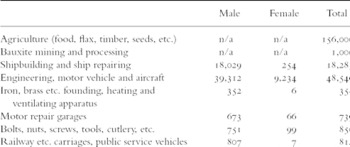
Politicians such as Sir Basil Brooke, minister of commerce from 1941, were consistent in their view that war contracts should be awarded to the region rather than men and women being sent to Britain to work. His view was repeated on many occasions by Unionist MPs at Westminster. Brooke supported those trade unionists who resisted dilution of skilled labour on the grounds that in the absence of conscription it was unnecessary until substantial war contracts had been received.Footnote 63 The issue of dilution of skilled labour was much more controversial in Northern Ireland during the war than it was in Britain. National agreements were signed in August and September 1939 between the Engineering Employers’ Federation and the AEU relating to dilution, and another in May 1940 on the employment of women in engineering.Footnote 64 But the ‘nation’ in these cases was Great Britain, and not the United Kingdom, so that the agreements did not apply in Northern Ireland; this meant that dilution proceeded much more slowly in those engineering shops where the AEU was strongly represented. The union argued that as long as there was unemployment among skilled men, and given the absence of conscription in Northern Ireland, there was no need for dilution. With a few exceptions, such as centre-lathe turners and electricians, there was little evidence of a shortage of skilled labour in Northern Ireland for over a year into the war, but after that the issue became increasingly pressing and occupied a considerable amount of time at the meetings of the Production Executive. The difference from parts of industrial England was well illustrated in spring 1941, when the area board in Belfast heard that ‘in engineering shops in Manchester one turner is looking after six machines worked by women, while here [in Belfast] each machine was worked by a qualified turner’.Footnote 65 Similarly, while in Britain women in shipbuilding accounted for 9 per cent of the workforce by 1943,Footnote 66 the figure in Belfast was less than 2 per cent (see Table 1). Moreover, single shift working remained much more typical for much longer in Northern Ireland than was the case in Britain.
Estimate of numbers engaged in war work in Northern Ireland, June 1943

Notes: Data include office staff and supervisory staff, but exclude other administrative staff, those in H. M. forces, civil defence, the merchant navy, central and local government, transport and other public utilities and distributive trades in Northern Ireland, and those Northern Ireland residents engaged in war work in Great Britain (c. 25–30,000) and on the manufacture of civilian clothing (11,217).
Data sources for individual rows: (a) Estimates by Ministry of Labour for Northern Ireland, (a)+ provisional estimate; (b) Estimates by Ministry of Labour and Ministry of Agriculture, (c) Ministry of Labour ‘L’ returns for employment as at June 1943 (excluding firms employing less than six workers); (d) Ministry of Commerce for Northern Ireland.
Source: Ministry of Labour for Northern Ireland, ‘Approximate Number of Persons Engaged on War Work’, July 1943, PRONI COM 61/958.
Business and labour relations
In analysing wartime industrial mobilisation it is necessary to consider not only the experience of large firms, atypical but always the most visible to governments and to historians, but also the extent to which small and medium-sized firms were brought into the war effort. This section provides new evidence on the difficulties of mobilisation of both small and large firms during the war, drawing examples from textiles, shipbuilding and aircraft production. In the politically sensitive and jealous world of war contracts, mobilisation of heavy industry needed people with big-business experience who were ‘above party’ to act as a link between private industry and government. How this was achieved remains a seriously neglected aspect of the war economy. In Northern Ireland Brooke made two key appointments shortly after becoming minister of commerce. First, John Guthrie, who came out of retirement from his post as senior overseas engineer with the British multinational company Babcock and Wilcox, was appointed to serve as an area officer to liaise between engineering firms and the production departments of the ministry of supply, a post calling for ‘energy, tact and resource’.Footnote 67 Second, in July 1941, with the approval of Beaverbrook and Sir Charles Craven (the British government's chief industrial adviser), Brooke appointed Ernest Cooper, a director of Gillette Industries in England, to work with the production committee of the ministry of commerce. His initial brief was to analyse the reasons for the slow rate of industrial mobilisation in the region.Footnote 68
Northern Ireland was predominantly a region of small and medium-sized enterprises – precisely the kind that often lost out in rearmament and wartime contracts. This had also been a feature of the First World War.Footnote 69 Complaints from chambers of commerce, the main institutional voice of these firms, illustrate well their frustrations and underemployment in provincial towns almost two years into the war.Footnote 70 A useful illustration of the difficulties of mobilising small firms is the important shirt industry in the north-west of the region, centred on Derry city. As a leading UK centre for this industry, the Derry region had more than thirty firms with considerable potential to produce clothing for the armed forces. Before the war most of these firms employed fewer than ninety workers, and it was difficult for them to tender for contracts.Footnote 71 A trade association helped some of them to connect to government, but not all were members, nor was it easy for firms to agree a common price. Even had a common price been agreed, if it were too high then no firm would be awarded a contract, leaving the industry, and the region, in a worse position than before. In any case, with much excess capacity, government orders tended to go to the lowest bidder, which, given the cost of freight from distant Northern Ireland, was a real barrier to Ulster firms, the majority of tenders submitted from this region being rejected because they were too high. A further drawback for many small firms throughout the United Kingdom was their slender financial resources which meant that they could not withstand the delays in payment which usually accompanied government contracts. The minister of supply in Britain ‘simply could not be bothered’ to deal with small firms which needed immediate payment, and government was much more disposed to deal with larger, stronger, firms, especially those with factories in Britain which tended to be better known to the authorities in London.Footnote 72 These considerations help to explain why, in the immediate prewar period and in the very early stages of the conflict, small firms in Northern Ireland could be at a serious disadvantage, although the extent of this disadvantage declined as demand for military clothing eliminated excess capacity and both price and distance became less important as determinants of success in securing government contracts. By spring 1941 the industry was working ‘almost to capacity’.Footnote 73
In August 1940 there were only five firms on direct government contracts and, even though this number had more than doubled by the end of the year, the total remained very small.Footnote 74 While the business history of the war ‘remains under a shroud’,Footnote 75 evidence on different firms can exemplify the problems in expanding output. What this shows is that even large firms on direct contracts faced very substantial obstacles to expanding production, and that the process was never smooth. Labour immobility, skills shortages, trade disputes, production bottlenecks, managerial shortcomings, dispersal of production, endless changes to specifications and erratic ordering by government all contributed to this. Similarly, once the peak of the war effort was past, firms typically faced cuts in government contracts which could be immediate and severe, leading to disruption in production schedules and uncertainties which made management extremely difficult.
Harland & Wolff was easily the largest manufacturing enterprise in Northern Ireland and one of the largest shipyards in the world, doubling its wartime labour force to reach 30,000 in 1945, by which time it had expanded into armaments and tank production. It exercised a powerful impact on manufacturing in industrial Belfast, and as a bastion of the skilled male Protestant working class had an unmatched political influence. For the regional economy, one of the most important difficulties at Harland & Wolff was its poorly developed connections to sub-contractors, leading to under-utilisation of capacity in small and medium sized firms which could have contributed more to wartime production. Even before the First World War this firm was highly unusual within UK shipbuilding because it manufactured for itself most of the components which in British yards were typically supplied by subcontractors.Footnote 76 For this reason, by the Second World War, the firm had long regarded itself as ‘an isolated unit’Footnote 77 and was not inclined to co-operate easily with government officials or trade unions, nor did politicians show much enthusiasm for intervening in the firm's affairs. In any case the Admiralty had such well-developed links with the yard that it was difficult for politicians to intervene.
By the end of 1940 Harland & Wolff was working 144 hours a week – twenty-four hours every day except Sunday.Footnote 78 From early on in the war, however, the firm was heavily criticised – by the Admiralty for its inability to meet production targets and for the quality of some of its work, and by the trade unions for the lack of canteen and welfare facilities and poor transport to and from the Queen's Island yard, and for the fact that workers who were just a few minutes late for work were locked out, leading to involuntary absenteeism and substantial loss of production for a complete day.Footnote 79 The yard was badly damaged during an air raid of early May 1941, but the prospects for dispersal were limited. Any decision had to balance the reduced production in the short term against the possible advantage of higher and more regular output if the works could be dispersed to one or more safe sites. Dispersing formerly integrated plants to a number of different locations also ran the risk of introducing new diseconomies of scale.Footnote 80 These considerations carried particular weight where, as in the case of Harland & Wolff, production was already unsatisfactory.Footnote 81 The unco-operative nature of the management at Harland & Wolff with respect to such important questions as night-shift working, joint production committees, canteens and worker welfare still caused the minister of commerce serious concern two years later because of the large size of the firm which had an adverse impact ‘on the general drive for accelerated and expanded production’.Footnote 82 Harland & Wolff's practice of locking out for the whole day workers who arrived slightly late was still evident in the spring of 1943.Footnote 83
In February 1943 a British government delegation learnt that that absenteeism in the Belfast shipyards was twice as bad as the worst yard in Britain, and three times as bad as the best. While absenteeism in British shipyards was a punishable offence under the Essential Work Order of March 1941 this did not at that time apply to shipyards in Northern Ireland, where it was opposed by both employers and the AEU. When the question of dilution was raised, it was shown that the ratio of skilled workmen to dilutees was higher in Northern Ireland than in any other part of the United Kingdom and this contributed to raising the cost of production.Footnote 84 The resistance to dilution varied between different groups of workers, but by late 1943 dilution had proceeded far among welders and shipwrights, much less so among electricians and least of all among plumbers where the union insisted that until all their unemployed members in Eire had been taken on they would resist dilution. Moreover, the demand for skilled labour from other large employers was now beginning seriously to compete with the shipyard, something that had been almost unheard of. The managing director of Harland & Wolff argued that, unless an immediate solution was found to the problem of labour availability, construction and repair work must be lost to Belfast. Before the end of 1943 the Admiralty would make further criticisms of the Belfast shipyard, this time for failing to meeting deadlines for contracts, an especially serious issue before the impending invasion of Europe in 1944.Footnote 85
If Harland & Wolff faced particular problems and criticisms, so did the aircraft manufacturers Short and Harland. This firm, established in Belfast in 1936 as part of the strategy of developing productive capacity in relatively safe areas, was 60 per cent owned by Short Brothers of Rochester in Kent and 40 per cent by Harland & Wolff. It was a rare example of a ‘new’ industry in the region and was a product of British government encouragement to large shipbuilders such as Harland & Wolff, John Brown in Clydebank and Vickers at Barrow to join with aircraft manufacturers to pool expertise and inject new capital.Footnote 86 The history of this firm has attracted most attention because of the design, managerial and production failures leading to the nationalisation of the parent company Short Brothers in 1943, which helped to trigger a major political debate in the United Kingdom on the government's intentions regarding the ownership of industry.Footnote 87 The expansion of the firm in Northern Ireland, where it employed some 15,200 workers by March 1942, was based mainly on the problematic Stirling heavy bomber and the Sunderland flying boat, and clearly posed serious challenges to the management.
After the May 1941 air raids, the firm opened eight dispersal factories in addition to the main works, but Shorts faced a ‘point blank’ refusal by men to work night shifts at the latter, and even a 59-hour week in day shifts, essential to reach the production targets, could not be achieved. These hours compared very unfavourably with large numbers of British firms engaged in aircraft production, where double-shift working was typical and even three-shift working not unknown.Footnote 88 The AEU, which itself did not admit women members until 1943, opposed the introduction of women workers at the main works and they comprised less than 5 per cent of the workforce by March 1942. This figure was derisory compared with the dispersal factories, some of which had more than 80 per cent women workers and where there seems to have been no objection to day and night shift working. The opposition encountered by the introduction of women workers at the main works was especially resented by management, since the productivity of women at the dispersal factories was acknowledged to be so much greater. In the general manager's words, ‘much more difficult work is being done in a shorter time, after a few months training, by the girls in the various Dispersal Factories, than is being done by boys in their third year and even by men’.Footnote 89 Despite the various obstacles facing Short and Harland, it has been argued that public ownership may have assisted the company by improving communications with the parent company in England, and also improving labour relations through the introduction of a joint production committee.Footnote 90 Even so, until the end of the war, strike action and managerial shortcomings continued to blight production and led to real concerns for the Northern Ireland government about the future viability of aircraft production in the region.Footnote 91
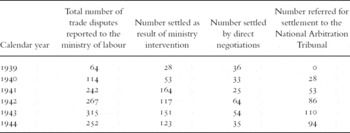
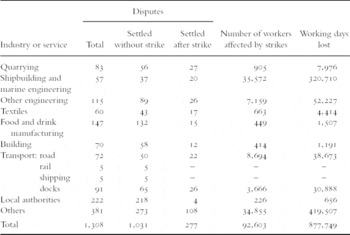
The relatively slow rate of industrial mobilisation led to public criticism in both Britain and Northern Ireland. In May 1941, Churchill privately expressed concern at the ‘limited extent’ of the region's ‘contribution to the nation's industrial war effort’.Footnote 92 This contributed significantly to government unpopularity, reflected in by-election defeats, and, ultimately, to the resignation of the prime minister, John Andrews, in 1943. In the absence of military conscription and compulsory labour registration the British press warmed to the theme of the unequal sacrifices of Great Britain and Northern Ireland. It also became much more intolerant of rising strike activity, especially in 1942–3, when unemployment had begun to fall rapidly and labour market conditions were more favourable for workers than at any previous time in the history of Northern Ireland. According to one calculation, strikes in war industries in the region had resulted in 3 million working hours lost in the nine months to April 1943, a figure which constituted ‘a disgrace to Britain and the Empire’.Footnote 93 Although the density of union membership for both men and women in Northern Ireland was considerably lower than for the United Kingdom as a whole, between 1938 and 1943 trade union membership in Northern Ireland increased by some 57 per cent, and almost all of this increase was in unions based in Britain.Footnote 94Table 2 provides data on the escalating number of disputes, while Table 3 contains the total number of strikes and working days lost by industry between 1941 and 1945. Recent research has concluded that in the absence of conscription and the direction of labour, the system of wartime industrial relations in Northern Ireland was even more of a voluntary one than that in Britain and that this resulted in ‘a lack of discipline’ in the labour force.Footnote 95 Despite the introduction of compulsory industrial arbitration in 1940, the expansion of large scale production, the inexperience of management in dealing with rapid unionisation, a resurgent Belfast Shop Stewards’ Movement and greater power for organised labour than had been experienced in a generation, all led to remarkable strike activity. From being typically less strike-prone than Britain before 1939, Northern Ireland experienced a disproportionately severe level of industrial unrest during the war, especially in engineering and shipbuilding. Moreover, a textile strike in 1940 and the widespread stoppage in shipbuilding, engineering and aircraft manufacture in 1944 which the government thought had the potential to become a general strike, were among the most serious disputes anywhere in the United Kingdom during the war. Despite the absence of a coal industry, Northern Ireland, with 2.5 per cent of the insured UK workforce, accounted for 10 per cent of the working days lost.Footnote 96
Industrial disputes and arbitration in Northern Ireland 1939–44

Source: Ministry of Labour for Northern Ireland, Statistics of Industrial Disputes, PRONI CAB 3A/89.
Industrial disputes and strikes in Northern Ireland, 1941–5, by industry

Source: Ulster Year Book (Belfast: HMSO, 1947), 168.
Unofficial strikes caused by wage disputes, transport difficulties and other, often quite minor, issues at the workplace, the optimum use of skilled and other labour and the creation of a pool of skilled labour through extensive training were seen as the most important obstacles facing Northern Ireland's industrial expansion.Footnote 97 In attempting to overcome the production problems it faced, the Northern Ireland ministry of commerce sought assistance from government officials in Scotland, three of whom, the regional technical officer and his deputy, and the labour supply officer, visited shipbuilding, engineering and aircraft manufacturing plants in the region early in 1942.Footnote 98 The main solution was the appointment of a labour inspectorate along the lines already established in Scotland. In Northern Ireland, they identified a ‘definite lack of co-operation and good-will, almost amounting to suspicion amongst employers, management and employees’. Some of this was due to supervisors who, while ‘capable in the technical sense’ lacked ‘the aptitude for handling man-power efficiently’. In other cases ‘over-zealous’ trade union officials were to blame. With regard to unofficial strikes, the Scottish experience had been that labour supply officers were crucial in addressing issues which if left alone were likely to lead to industrial dispute. While the appointment of labour supply officers made the government of Northern Ireland much more interventionist, it is clear that both employers and trade unions, who had criticised the government for not intervening more often in labour supply, welcomed the move. There was also general agreement that the Scottish model would suit conditions in Northern Ireland. Two labour supply officers were appointed shortly thereafter, one on secondment from Harland & Wolff, the other a senior official in the AEU, and both had a record of military service in the First World War.Footnote 99 In taking this step, the government was belatedly responding to a need which had been obvious at least since Harold Macmillan's visit to the region a year before. While it might have been too late to make a major difference to the settling of disputes it is possible that it prevented minor grievances from escalating into strikes.
Women and labour migration
In arguing the case for more war contracts, the Belfast government always used the high levels of unemployment in the region as evidence that labour was available. However, the government did not possess data on potential labour supply, including possible migration within the region, while the Westminster government was more interested in the labour available for migration to Britain. With regard to the movement of labour within Northern Ireland, there were a number of serious constraints. The expansion of war industries and the establishment of dispersal factories required more travel by tram, bus or train, and this was something ‘comparatively new to the bulk of Northern Ireland labour’.Footnote 100 So strong was the custom of walking a very short distance to work that some workers in Belfast were reluctant to accept employment even a short tram-ride away. This may well have been reinforced by sectarianism and a strong sense of territoriality in working-class areas which would have increased the aversion to travel through areas perceived to be hostile. Given that travel to dispersal factories might involve three hours’ travel a day it is no surprise to find considerable opposition to the idea.Footnote 101
The potential supply of women workers within Northern Ireland seems to have been characterised by a very high degree of immobility. Important new evidence on this can be found in local surveys undertaken in summer 1943, when unemployment was approaching its wartime minimum. One of these was a special enquiry undertaken by the ministry of labour of almost 3,000 unemployed women registered at Belfast and seven provincial labour exchanges, comprising about 75 per cent of the registered unemployed women in Northern Ireland. This survey is particularly useful in identifying different reasons for the immobility of women and used four sub-categories for the purpose. Women in the first category, numbering 121 or about 4 per cent, were described as ‘hard core’ and held to be unemployable under any circumstances because of age or physical infirmity. The second group, numbering 324, some 11 per cent of unemployed women, was more problematic, since it included those who were theoretically employable but were either ‘approaching confinement’, whose benefit had been stopped after refusal to accept employment or who had left employment without reasonable cause. The ministry was afraid that if these women were to be offered work they would effectively escape punishment and be able more easily to leave lower paid, but still essential, employment, such as textiles, to work in munitions.
By far the largest group were the 2,224 women, some 74 per cent of the total, who could not be transferred from their own areas. Slightly over half of these were single women with domestic responsibilities, while the remainder were married or widows with dependent children. Parental objection to moving outside the area was cited as an influence on single women as old as 30. This left a residual 318 women who ‘purport to be transferable’, but who, in the ministry's view, would not actually accept work outside the area if it was offered. All in all not more than around 110 women – between 3 or 4 per cent of the total – were genuinely mobile. By summer 1943, 4,528 women from Northern Ireland had been placed in employment in Britain, many with the help of British firms who sent representatives to the region. There was general agreement that this had practically exhausted the supply of what the Ministry of Labour termed ‘genuinely mobile women’. Women from country areas of Northern Ireland were slightly less reluctant to move away than those from Belfast, but, among the former, those who were mobile were more likely to go to Britain than to Belfast, since British firms could often provide ‘greater amenities’.Footnote 102
In an English context Summerfield has suggested that the extent of social mixing in war factories was much less than the propaganda in the ‘people's war’ portrayed, and that employers often resisted the recruitment of women over 40.Footnote 103 Evidence from the Northern Ireland ministry of labour supports these arguments, and reveals how both could militate strongly against mobility, even within an individual district. In 1943 it was confirmed that some employers would reject applicants who were over 40 years old or because they came from ‘social classes lower than the majority of their employees’. Moreover, religion in Northern Ireland, much more than in England, was used as a reason for accepting or rejecting an application for work.Footnote 104 For women with children it might have been expected that provision of childcare facilities would have increased the likelihood of entering the labour market, but in country areas, much more than in Belfast, this may not always have been the case. A survey of women aged between 18 and 34 in the Antrim Town area in 1943 confirmed ‘a general prejudice in the rural districts against collective minding of children’ and that even if a crèche were available, children would have to be moved ‘in all weathers and outside healthy bedtime hours’. So strong was the tie to the district that women would rather forego unemployment benefit than take employment elsewhere, and this survey doubted whether more than 0.5 per cent of unemployed women were mobile.Footnote 105 In such circumstances the logic of arguments for bringing work to the workers became compelling.
During the war both Northern Ireland and Eire provided labour for Britain. Given Eire's neutral status the recruitment process had to take place relatively discreetly, but it became urgent from 1941 as general labour shortages developed in the British war economy and the supply of mobile workers declined steeply.Footnote 106 Initially under the auspices of firms with an established presence in Eire, such as ICI and Ford Motors, control passed to official organisations such as ‘British Foundries’ and ‘British Products’. Between 1942 and 1945, almost 40,000 workers, a third of them women, were recruited from Eire by the ministry of supply (28,600), the ministry of aircraft production (8,858) and the Admiralty (1,753).Footnote 107 Most of the women who went from Northern Ireland to Britain worked in ROFs or other large munitions factories where both working conditions and welfare facilities were relatively good.Footnote 108 Between February 1940, when data were first collected, and March 1942, some 31,176 people transferred to Britain from Northern Ireland. Of these, 28,002 were men, 25,292 of them classed as unskilled; 3,174 were women, and of this total 2,850 were unskilled.Footnote 109 Many of the hostels at ROFs were purpose-built for women, with canteen, dormitory and welfare block, other hostels were operated by firms such as ICI, Vickers and Imperial Tobacco, some for both men and women, but more usually for one or the other.Footnote 110 In still other cases, such as the Standish Small Arms Ammunition factory near Wigan in Lancashire, an agency factory for components and shell filling operated by ICI, which could not find local labour and applied urgently to the Northern Ireland government for women workers in February 1942, it was stressed that ‘care would be taken to ensure that they were given comfortable homes and their welfare properly studied’.Footnote 111
The increasing government demands for labour from Northern Ireland and from Scotland led to political reactions in both those countries. In Scotland complaints focused on the lack of government orders, underutilised resources and the fact that the country seemed to be used mainly ‘to provide a supply of mobile girls for England’.Footnote 112 In Northern Ireland, even more than Scotland, migration of labour became a sensitive political issue. The main reason for this was that some migration was perceived to be ‘forced’ when, under the Unemployment Insurance Acts, refusal by men or single women to accept work in Britain was deemed to be unreasonable and could lead to discontinuance of benefit for up to six weeks. In addition, given the delicate sectarian balance of local populations and the potential for changes to electoral demography that emigration might bring, much attention was focused on the religious denomination of the emigrants. For many, the mere fact of emigration was a result of the failure of the Belfast government to secure sufficient war work for the province, and since unemployment was much higher among the Catholic population it followed that they would provide a disproportionate number of those forced to migrate. The championing of the integrity of the family, and of social security, could therefore coincide with criticism of government economic policy. Thus Jack Beattie, campaigning as the (ultimately successful) Northern Ireland Labour Party candidate in the West Belfast by-election in January 1943, the first to be influenced by the Beveridge Report published the previous month, declared that he stood ‘for the maintenance of family life’, opposed the sending of men and women across to Britain and demanded work in Northern Ireland for ‘husbands, brothers, sons and daughters now forced to earn their bread among strangers’.Footnote 113 At the same time, nationalist critics made much of the fact that Protestants had greater protection against forced migration since they were more likely to have ‘steady and sheltered’ employment, in the police for example.Footnote 114 During the war this issue served to draw attention to the wider question of under-representation of Catholics in public employment,Footnote 115 which would become a central feature of the civil rights campaigns of the 1960s.
The force of these arguments was greatest in polarised urban areas such as Derry, the second largest city in Northern Ireland. Three years before the war the city's electoral boundaries had been altered by the Unionist government so as to deny the nationalist majority control of the corporation.Footnote 116 This high-profile case of gerrymandering had done much to worsen already strained community relations. However, the government also came in for criticism from Derry unionists. As early as 1940, the City of Derry and Foyle Unionist Association accused Belfast of not giving Derry its fair share of work, adding that there was ‘no employment for men in the city’.Footnote 117 During the war the mainstay of the local economy, shirt manufacture, received large government contracts for the armed forces, but this had largely benefited women.Footnote 118 Hopes that the new US naval base established in 1941 would provide long-term work for men proved misplaced, since the Americans provided most of their own labour. By late 1943 male unemployment accounted for almost 80 per cent of the total in the city.Footnote 119 Given this political and social background, sending unemployed men from Derry to Britain was a gift to government critics. A meeting of nationalists in the city in October 1943 saw it as ‘nothing less than a prearranged plan, a form of economic conscription, to drive Catholic men and boys out of their country’.Footnote 120 At the same time Derry Board of Guardians heard an allegation that of 5,000 people sent to Britain since the start of the war fewer than fourteen were non-Catholics. Not only did the claims made by the dependents of men sent to Britain pending remittances from them constitute a serious burden on the rates, but the dependents also had ‘the stigma of getting outdoor relief even though it was of a temporary nature’.Footnote 121
Government, labour registration and the end of the war
In Britain the demand for labour had become so great by 1941 that the government could no longer delay the introduction of a general survey of men and women who might be available for work. At the same time, the government stepped up its drive to concentrate industries with the aim of releasing labour for munitions production.Footnote 122 Neither of these measures applied to Northern Ireland, but in 1943 the Belfast government had finally to acknowledge that it had no precise idea how much or what kind of labour was available – a major obstacle if the region were to attract firms from Britain. It did admit that this lack of knowledge led to ‘the anomaly of the poverty of labour in the midst of plenty’.Footnote 123
The suggestion that a general compulsory registration scheme for labour might be extended to Northern Ireland was made more than once. The response, however, had to take into account potential levels of popular resistance unknown in Britain. In 1942 Basil Brooke's judgement was that industrial conscription would probably generate ‘as much agitation and difficulty’ as the introduction of military conscription.Footnote 124 In September the following year, Sir Charles Wickham, Inspector General of the Royal Ulster Constabulary, thought that the main line of opposition would be the perception among the civilian population that compulsory registration would be ‘the thin end of the wedge to military conscription’. Particular opposition to the compulsory registration of women would be faced in country districts and there would be parental objection to children being sent away from their homes. The opposition to compulsory registration of older women which had been seen in England would be ‘even stronger’ in Northern Ireland.Footnote 125 Wickham thought that if the aim was to register 250,000 women, about a third would be Catholics influenced by the attitude of their church; even if the church remained neutral, about 10 per cent of Catholic women (some 8,300) might defy registration. In addition, as the experience in Britain had shown, another 3 per cent (amounting to 5,000) Protestant women might refuse to register on other grounds. The authorities therefore might have to deal with 13,000 women defying the law. Since there was only one women's prison in Northern Ireland – in Armagh, with fifteen vacant places and a total capacity of only 120 – this was indeed a formidable difficulty.Footnote 126 In Belfast, cabinet ministers disagreed about the wisdom of compulsory registration, and eventually opted for a voluntary scheme for women. It was made clear to any woman who considered registering under this scheme that if she declared her willingness to go anywhere in Northern Ireland to work, assuming that suitable accommodation was available, she should feel honour-bound to accept the work. The minister of labour, however, gave an assurance that there would be no compulsion.Footnote 127
The voluntary registration scheme was given a positive welcome in a way that a compulsory scheme certainly would not. Margaret MacAlpine and Celia Prendergast, respectively the chair and secretary of the Women's War Effort Association, argued that the minister of labour for Northern Ireland should not only call a conference of women in order to examine ‘ways and means of meeting this increased demand on woman power’, but should also declare support for ‘the principle of equal pay for equal work’ in the region. Above all, government had to recognise its obligations towards working women with domestic responsibilities: ‘In order to do both jobs successfully and without impairing the health of the family, such amenities as nurseries, school meals, canteens in industry, shopping and laundry facilities should be provided’.Footnote 128 By this stage of the war nursery schools for the children of war workers had begun to be provided. The first one opened in east Belfast in late spring 1943, but later that year the government was actively lobbied by women factory workers for more extensive provision.Footnote 129 More generally the war did see greater awareness of personnel management and of the need for better provision of welfare facilities at firm level. The dominance of old firms, most of which were small or medium-sized, meant that in contrast to Britain, where there were many more new factories and firms, Northern Ireland had at the start of the war lagged seriously behind in the provision of facilities for the workforce. Chief among these were canteen and welfare amenities, which were improved during the war under pressure from the workforce and the government, both of which recognised their importance in attracting labour and combating absenteeism. In 1939 only three firms employed a welfare supervisor and only three had canteens; by 1945 the figures were thirty-seven and more than one hundred respectively.Footnote 130
In 1943, when industrial mobilisation in the region had only just become more established, the national war effort began to level off and then decline. In Britain cuts in government orders led to unemployment, which affected morale and led, as did better news from the front, to a relaxation in the sense of urgency over war production.Footnote 131 In Northern Ireland government, firms and unions began to try to envisage the postwar regional economy, although there was no unanimity about prospects.Footnote 132 More than in any other UK region, however, there was considerable apprehension about the end of the conflict, reflected in the large trade union deputations organised from 1944 to lobby government over unemployment. A particular concern was the re-emergence of a male unemployment rate which was very much higher than that for women, and a recognition that any new industries attracted to the region would be likely to employ mainly women.Footnote 133 Mindful of the experience of the 1920s and 1930s, male trade unionists feared ‘a return to the old position of women working and supporting their menfolk’.Footnote 134 Although some in government feared transitional problems following the ending of war contracts, unemployment was predicted to be short-lived and local, and the main problem was expected to be a labour shortage. In such circumstances, time-consuming schemes to promote short-term employment might be counterproductive, impeding the ‘normal expansion of trade or the carrying out of public works of permanent value’.Footnote 135 In fact, trade union fears were justified and unemployment, as in the war, continued at a much higher level in Northern Ireland than in the rest of the United Kingdom throughout the postwar decades. In that crucial respect, and in contrast to so much of western Europe, there was no golden age for this regional economy, despite an energetic regional policy pursued by the devolved government after 1945.Footnote 136
Conclusion
This article has argued that in explanations of regional industrial mobilisation account has to be taken not merely of economic, but of geographical, political and social factors. The politics of Northern Ireland and the fear of social disorder were critical in the decisions not to introduce military conscription or general compulsory registration of labour. The first decision was a key determinant of a level of unemployment which was always much higher than the UK average, and this in turn limited the extent of dilution and the role of women in traditionally ‘male’ employment. The second decision meant that the government did not undertake a comprehensive register of available labour at any time during the war, but local surveys pointed to some severe constraints in the supply and mobility of women workers. For constitutional reasons Northern Ireland was not fully integrated into the British political decision-making process, and this had adverse consequences for the award of war contracts. The capability of managers was severely tested in those large firms most affected by industrial expansion, with some very visible dilution in management, especially where production had to be dispersed over several sites. These are important areas for the economic, social and business historian. In some respects Northern Ireland was unique, but we still know relatively little about the implications for mobilisation of geographical distance from London and the experience of managers and workers in most regions, as well as the administration of regional production. This applies not only to regions first and most directly affected by war production such as the west Midlands and north-west of England, but also to others such as the south-west, where the impact was slower and less complete. Just as the great value of the comparative work of historians such as Milward, Overy, Harrison and Imlay requires no emphasis, so more research into the regions during the period 1939–45 should enable us to move further from the fifty-year dominance of the official histories, and greatly improve our understanding of that elusive concept, the war economy.