


Introduction
Eating disorders (EDs) consist of a wide range of debilitating psychiatric diseases which are characterised by the dysregulation of weight and appetite(1). Types of eating disorders include anorexia nervosa (AN) and bulimia nervosa, which also include a range of psychiatric diseases characterised by appetite dysregulation leading to abnormal feeding behaviour(1). AN and BN are manifested by severe dietary restriction and/or binge eating(Reference Campbell and Peebles2–Reference Himmerich, Bentley and Kan4). To date, among eating disorders, AN is the most investigated one in relation to the gut microbiota(Reference Armougom, Henry and Vialettes5–Reference Mack, Cuntz and Grämer9). Since ED are characterised by behaviour alterations, they have been classified as psychiatric diseases involving an impaired brain function(Reference Scharner and Stengel10). Research done in the past two decades has shed more light on their origins, which seem to depend also on factors outside the brain, such as interactions with endocrine and immune systems as well as the gut microbiota(Reference Borgo, Riva and Benetti11,Reference Schorr and Miller12) . This review seeks to address the role of the gut microbiota in the pathogenesis, recovery or relapse, and treatment of AN, mainly focusing on the microbiota–gut–brain axis, and to consider the possibility of gut microbiota manipulations as a contributing factor in facilitating weight gain, reducing gastrointestinal distress due to illness and perhaps reducing anxiety and depression.
Anorexia nervosa
Anorexia nervosais a serious psychiatric and eating disorder which is characterised by serious occurrence of underweight (body mass index (BMI) <18·5 kg/m2), concurrent malnutrition, an intense fear of gaining weight, and alterations in an individual’s perception of their weight and body image with a denial of the importance of feeding(Reference Call, Walsh and Attia13). The prevalence of AN in the general population has been estimated to be approximately 1·4% for women and 0·2% for men, and to be steadily increasing in most countries(Reference Galmiche, Déchelotte and Lambert14). AN has poor treatment outcomes and the highest mortality rate of any psychiatric disorder, with a standardised mortality ratio >5 (ratio of observed deaths in individuals with AN to expected deaths in the general population)(Reference Arcelus, Mitchell and Wales15). AN can be classified into two subtypes: restricting type (where patients limit their food intake to decrease body weight) and binge eating/purging type (where patients use self-induced vomiting, laxatives, diuretics or enemas to counteract food intake)(Reference Call, Walsh and Attia13).
Subjects with eating disorders such as AN often present with comorbid conditions of anxiety disorders, such as obsessive–compulsive disorder (OCD), social phobia or generalised anxiety disorder, prior to the emergence of the ED(Reference Kaye, Bulik and Thornton16). There may be individual differences especially with regards to behavioural features that go far beyond the mere classification(Reference Manuelli, Blundell and Biino17). Despite the aetiology, the pathophysiology remains unclear. AN is considered a multifactorial disease in which biological, psychological and socio-cultural factors are implicated(Reference Gorwood, Blanchet-Collet and Chartrel18). The gut microbiota has gained a relevant role as a proposed biological factor of AN during the past two decades. In fact, the gut microbiota has been implicated to be involved in weight regulation, fat storage and energy harvest from diet, as well as in eating behaviour, anxiety and depression(Reference Torres-Fuentes, Schellekens and Dinan19–Reference Fetissov22).
The gut microbiota
The human gut microbiota consists of trillions of microbial cells and thousands of bacterial species(Reference Thursby and Juge23). It encompasses millions of microorganisms belonging to the three domains of life: Bacteria, Archaea and Eukarya, which are involved in several different functions(Reference Gill, Pop and DeBoy24,Reference Bäckhed, Ley and Sonnenburg25) . There is a wide diversity in the gut microbiota; some phyla such as Bacteroidetes, Firmicutes, Actinobacteria, Proteobacteria, Verrucomicrobia, Fusobacteria and a few Archaea, mainly methanogens, are prevalent(Reference Shortt, Hasselwander and Meynier26). These microbes play important roles in the breakdown, absorption and metabolism of dietary components, including pathways associated with the microbial degradation of carbohydrates and amino acids as well as production of vitamins B and K(Reference Shortt, Hasselwander and Meynier26). In the large intestine, microbes digest carbohydrates, proteins and lipids left undigested by the small intestine; indigestible substances, such as the walls of plant cells, cellulose, hemicellulose, pectin and resistant starch, are subjected to microbial degradation and subsequent fermentation(Reference Bäckhed, Ley and Sonnenburg25). Dietary regimes consisting of unrefined foods and non-digestible substances have been shown to cause growth of microbes which are capable of degrading polysaccharides to short-chain fatty acids (SCFAs)(Reference Morrison and Preston27). SCFAs are food metabolites produced by bacterial fermentation in the colon. They include, for example, butyrate produced mainly by Firmicutes, propionate produced by Bacteroidetes, and acetate produced by some anaerobes, and they represent the greatest source of energy for intestinal cells(Reference Topping and Clifton28). The gut microbiota varies in the number and type of species along the intestine, and its density and composition are affected by many factors, such as the host’s genetics, ethnicity, age, environmental microbial exposures, infections, medications, chronic diseases, stress, physical exercise and sleep(Reference Singh, Chang and Yan29,Reference Goodrich, Waters and Poole30) . Dietary composition, both long-term and short-term, may influence the gut microbiota composition(Reference Doré and Blottière31–Reference Zmora, Suez and Elinav33). Interestingly, the gut microbiota plays important roles in many aspects that are characteristic of AN, including regulating mood and anxiety(Reference Slyepchenko, Maes and Jacka34), behaviour(Reference Dinan and Cryan35), appetite(Reference van de Wouw, Schellekens and Dinan36), gastrointestinal symptoms(Reference Guinane and Cotter37) and metabolism(Reference Mithieux38). Studies have investigated the association between the gut microbiota and psychopathology in patients with AN(Reference Kleiman, Watson and Bulik-Sullivan7,Reference Mack, Cuntz and Grämer9,Reference Borgo, Riva and Benetti11) . Since changes in diet may profoundly impact the composition and function of the gut microbiota, and knowing that the diet of patients with anorexia is dramatically altered both quantitatively and qualitatively, the result could be a dysbiosis that may contribute to the onset or maintenance of disorders associated with AN.
The microbiota–gut–brain axis in anorexia nervosa
During the past decade, a growing body of evidence derived from animal models and human studies found a communication between the intestinal microbiota and the brain (i.e., the so-called microbiota–gut–brain axis)(Reference Cryan and O’Mahony39). The role of the microbiota–gut–brain axis is to monitor and integrate gut functions as well as to link emotional and cognitive centres of the brain with peripheral intestinal functions and mechanisms such as immune activation, intestinal permeability, enteric reflex and entero-endocrine signalling(Reference Rhee, Pothoulakis and Mayer40). The bidirectional communication network of microbiota–gut–brain axis includes the central nervous system (CNS), both brain and spinal cord, the autonomic nervous system, the enteric nervous system (ENS) and the hypothalamic pituitary adrenal (HPA) axis. This bidirectional communication occurs through neuronal and immunological pathways with contributions from the endocrine system, and has proven to have a relevant role, not only in normal gastrointestinal function, but also in cognitive functions. Therefore, an alteration at this level involves various types of alterations, including inflammatory and functional gastrointestinal symptoms and eating disorders(Reference Al Omran, Aziz, Lyte and Cryan41). The relationship between the intestinal microbiota and AN is currently receiving more research attention, but the specific mechanism through which the gut microbiota could affect the brain is still unclear. The microbiota–gut–brain axis is complex, and is carried out in several ways, which include communication through neuronal and hormonal pathways. Alterations in the microbiota–gut–brain axis may affect intestinal motility and secretion, cause visceral hypersensitivity and lead to changes in entero-endocrine and immune system function(Reference Carabotti, Scirocco and Maselli59).
Neural interconnection
The vagus nerve is a critical component linking biological function in the CNS and the ENS(Reference Al Omran, Aziz, Lyte and Cryan41,Reference Sampson and Mazmanian42) . Signals from the ENS could either interact directly with vagus nerve or indirectly through the mediation of enteroendocrine cells and hormonal factors(Reference Ma, Xing and Long43). The vagus nerve is able to sense the metabolites of gut microbiota through its afferent fibres, transferring this gut information to the CNS where appropriate responses are generated(Reference Bonaz, Bazin and Pellissier44). Inappropriate activation of the vagus nerve results in excessive activation and elevation of neurotransmitters leading to the impairment of the digestive process and alterations of gastrointestinal motility(Reference Ma, Xing and Long43).
The gut microbiota has been shown to affect circulating levels of various neurotransmitters. Gamma-aminobutyric acid (GABA), the main inhibitory neurotransmitter in the central nervous system, is involved in the regulation of many physiological pathways(Reference Roubalová, Procházková and Papežová45). Lactobacillus, Bifidobacterium, Bacteroides and Parabacteroides are capable of synthesising GABA to reduce anxiety and stress, while Escherichia, Bacillus and Saccharomyces produce norepinephrine(Reference Lyte46–Reference Strandwitz, Kim and Terekhova48). Accumulating evidence gathered from animal research suggests that gut microbiota influences circulating GABA levels since germ-free animals have considerably reduced luminal and serum levels of GABA(Reference Strandwitz49). In humans, preliminary studies suggest that manipulating the human gut microbiota may impact GABA levels(Reference Kootte, Levin and Salojärvi50,Reference Dahlin, Elfving and Ungerstedt51) , and a genetic study has provided evidence for a role of GABA in the recovery from eating disorders(Reference Bloss, Berrettini and Bergen52). Serotonin has been isolated from Candida, Streptococcus, Escherichia and Enterococcus, and dopamine is recognised as one of the final products of the metabolism of Bacillus and Serratia (Reference Cani and Knauf53,Reference Evrensel and Ceylan54) . Further, indigenous spore-forming bacteria can induce serotonin biosynthesis from colonic enterochromaffin cells(Reference Yano, Yu and Donaldson55). In fact, dysregulation in the serotonin system at cortical and limbic levels could be associated with some features commonly affecting patients with AN such as anxiety, behavioural inhibition and body image distortions(Reference Bailer and Kaye56).
Endocrine interconnection
The HPA axis is a collection of structures that coordinates the stress response in organisms(Reference Tsigos and Chrousos57,Reference Sudo58) . The mediators of the stress response are localised in paraventricular nucleus (PVN) of the hypothalamus, the anterior lobe of the pituitary gland, and the adrenal gland(Reference Tsigos and Chrousos57,Reference Sudo58) . Environmental stressors and elevated levels of systemic pro-inflammatory cytokines trigger the release of corticotropin-releasing hormone from the paraventricular nucleus. The corticotropin-releasing hormone then acts on the anterior pituitary to release adrenocorticotropic hormone, which subsequently acts on the zona fasciculata of the adrenal cortex to secrete cortisol. Peak secretion of cortisol occurs in the morning and low at night. In sufficient quantities, cortisol inhibits the release of both adrenocorticotropic hormone and corticotropin-releasing hormone. Cortisol participates in blood pressure regulation, immune system modulation and metabolism of lipids, protein and carbohydrate, and also has anti-inflammatory effects(Reference Tsigos and Chrousos57,Reference Sudo58) . Cortisol levels affects many organs in the human body, including the brain. Through a combination of neural and hormonal routes of communication, the brain influences activities of intestinal effectors cells (e.g. immune cells, interstitial cells of Cajal and enterochromaffin cells). These cells function under the influence of the gut microbiota(Reference Carabotti, Scirocco and Maselli59).
Sudo et al.(Reference Sudo, Chida and Aiba60) showed that germ-free (GF) mice had a more aggressive HPA stress response than mice colonised by microbes. In addition, subsequent studies have shown that GF mice differ from conventional mice in their brain and neuron morphology, degree of anxiety, levels of serotonin, and brain-derived neurotropic factors(Reference Bercik, Denou and Collins61–Reference Clarke, Grenham and Scully66). Other endocrine systems also appeared to be affected by the gut microbiota(Reference Neuman, Debelius and Knight67); in fact, modulation of behaviour by the gut microbiota occurs through neurohormones such as serotonin and dopamine(Reference Lyte46). The gut microbiota was demonstrated to produce and respond to neurohormones, such as serotonin, dopamine and norepinephrine(Reference Roshchina, Lyte and Freestone68). Alcock et al.(Reference Alcock, Maley and Aktipis69) suggests that certain microorganisms can induce effects, either positive or negative, on host feeding patterns and emotional behaviour through the release of neurohormonal molecules. By studying the faecal microbiota of patients with AN and age-matched healthy controls, Morita et al. found that patients with AN had significantly lower levels of the Clostridium coccoides group, the Clostridium leptum subgroup, Bacteroides fragilis and Streptococcus than the control group. Taken together, these results confirm the dysbiosis in the gut of patients with AN regarding these bacteria(Reference Morita, Tsuji and Hata8).
Immune interconnection
Gut microbiota can modulate the immune system through the release of various neuroactive substances, and also antigens mimicking host neuropeptides and neurohormones(Reference Roubalová, Procházková and Papežová45). The autoantibodies for microbiota-produced antigens have been connected to neuropsychiatric disorders such as anxiety, depression, and eating and sleep disorders(Reference Roubalová, Procházková and Papežová45). Gut microbiota affects mucosal immune activation. The enhanced mucosal inflammation induced in mice after treatment with oral antimicrobials increases substance P expression in ENS, an effect normalised by the administration of Lactobacillus paracasei, which also attenuates antibiotic-induced visceral hypersensitivity(Reference Bercik, Denou and Collins61). The effects of microbiota on immune activation might be in part mediated by proteases which are often upregulated in intestinal-immune mediated disorders(Reference Saito and Bunnett70). Elevated levels of proteases have been detected in faecal samples of patients with inflammatory bowel disease associated with specific types of gut bacterial species(Reference Gecse, Róka and Ferrier71). A large Finnish case–control study showed that patients with AN have a higher risk of endocrinological or gastroenterological autoimmune disease, supporting the connection between compromised immune system and AN(Reference Raevuori, Haukka and Vaarala72). Similarly, in a UK record-linkage cohort study, AN was associated with increased risk of several autoimmune diseases(Reference Wotton, James and Goldacre73). Furthermore, meta-analyses on AN and inflammatory cytokines showed increased levels of IL6, IL1 and TNFα in patients with AN(Reference Dalton, Bartholdy and Robinson74,Reference Solmi, Veronese and Favaro75) . In general, there is a link between AN and changes in the immune system, but not much is known about the possible links between microbiota and the immune system in AN(Reference Gibson and Mehler76).
A study of circulating neuropeptide autoantibodies showed increased serum immunoglobulin (Ig) M autoantibodies in AN against α-melanocyte-stimulating hormone (α-MSH), oxytocin and vasopressin and increased IgG autoantibodies against vasopressin(Reference Fetissov, Harro and Jaanisk77). A-MSH autoantibody levels correlated with total score as well as with subscale dimensions on the Eating Disorder Inventory-2 score, suggesting an immune system-mediated malfunction in the melanocortin system, which is a key player in appetite control(Reference Fetissov, Harro and Jaanisk77). In addition, sera from patients with AN or BN were shown to bind to α-MSH-positive neurons and their hypothalamic and extrahypothalamic projections in rats(Reference Fetissov, Hallman and Oreland78). The same researchers showed that IgG from patients with obesity prevented the central anorexigenic effect of α-MSH in rodents, further supporting the hypothesis that α-MSH autoantibodies can affect food intake(Reference Lucas, Legrand and Bôle-Feysot79). A possible link between gut microbiota and the melanocortin system is enterobacterial caseinolytic protease B (ClpB) production. This is based on the fact that ClpB has an α-MSH-like motif which can trigger the production of α-MSH-cross-reactive antibodies(Reference Tennoune, Chan and Breton80). Furthermore, ClpB autoantibodies were increased in patients with AN and associated with Eating Disorder Inventory-2 scores similarly to the α-MSH autoantibodies(Reference Tennoune, Chan and Breton80). Both ClpB- and α-MSH-reactive immunoglobulin production increased in a rat model of chronic food restriction(Reference Breton, Jacquemot and Yaker81). A pharmacological study identified that a fragment of ClpB with α-MSH homology is an agonist for melanocortin 1 receptor(Reference Ericson, Schnell and Freeman82).
Another example of autoantibodies related to appetite-regulating hormones in AN is orexigenic hormone ghrelin. Concentrations of free active acyl ghrelin and degraded des-acyl ghrelin is shown to be increased in AN(Reference Takagi, Legrand and Asakawa83–Reference Troisi, Di Lorenzo and Lega88). While acyl ghrelin is orexigenic, there is evidence that des-acyl ghrelin may have an opposing effect on appetite(Reference Asakawa, Inui and Fujimiya89–Reference Fernandez, Cabral and Cornejo91). Binding of ghrelin to immunoglobulins protects them from degradation. IgG, IgA and IgM antibodies against acylated ghrelin were reduced in AN with ghrelin IgG autoantibodies mostly bound in immune complexes with des-acyl ghrelin(Reference Terashi, Asakawa and Harada92). Thus, if des-acyl ghrelin is anorexigenic, binding to IgG should offer some degree of protection in AN. Another study by the same researchers showed no difference between ghrelin IgG autoantibodies between AN and controls, but affinity for ghrelin binding was reduced(Reference Takagi, Legrand and Asakawa83). Chronic co-administration of ghrelin and IgG from patients with AN into rats had lower orexigenic effect compared with IgG from patients with obesity(Reference Takagi, Legrand and Asakawa83). Sequence homology between ghrelin and products of gut microbes could potentially link microbiota with the observed ghrelin autoantibodies(Reference Fetissov, Hamze Sinno and Coëffier93).
Intestinal microbiota alterations in anorexia nervosa
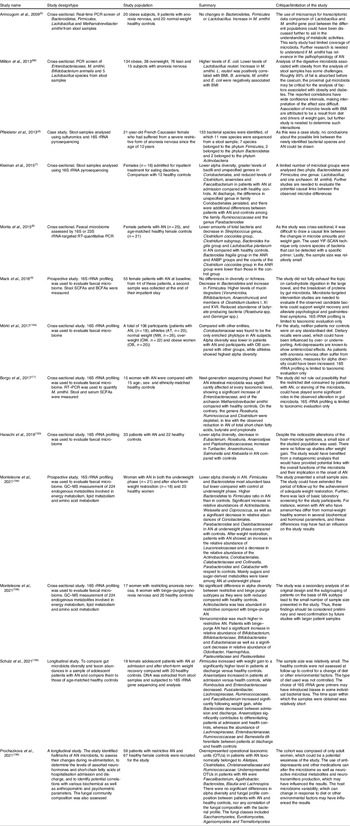
Differences in the gut microbiota composition have already been demonstrated between subjects with obesity and normal-weight individuals(Reference Bervoets, Van Hoorenbeeck and Kortleven94,Reference Turnbaugh, Hamady and Yatsunenko95) . Likewise, an involvement of the gut microbiota in both weight gain and weight loss, as well as in energy extraction from the diet, has been demonstrated in human and animal studies(Reference Flint96,Reference Cox, Yamanishi and Sohn97) . Finally, in recent years, it has been recognised that gut microbiota not only influences gastrointestinal disorders and weight regulation in healthy individuals(Reference Guinane and Cotter37), but can also affect patients with AN. This finding has been studied by Armougom et al.(Reference Armougom, Henry and Vialettes5), Million et al.(Reference Million, Angelakis and Maraninchi98) and Morita et al.(Reference Morita, Tsuji and Hata8), analysing a variety of microorganisms present in patients with AN. Armougom et al.(Reference Armougom, Henry and Vialettes5) reported for the first time that there is an increase of Methanobrevibacter smithii in patients with AN. The archaeon plays a role by removing hydrogen excess from bacterial fermentation in the gut microbiota, which appears to lead to the optimisation of food transformation in very-low-energy diets. Moreover, this could also be associated with constipation, which is a common feature in AN(Reference Armougom, Henry and Vialettes5). Million et al.(Reference Million, Angelakis and Maraninchi98), analysing faecal samples from obese, overweight, lean and anorexic subjects, confirmed the increase of M. smithii in subjects with BMI <25 kg/m2 compared with individuals with BMI >25 kg/m²(Reference Million, Angelakis and Maraninchi98). In addition, Morita et al.(Reference Morita, Tsuji and Hata8) found that patients with AN had significantly lower amounts of total bacteria and obligate anaerobes, including those from the Clostridium coccoides group, Clostridium leptum subgroup and Bacteroides fragilis group, than the age-matched healthy controls. Moreover, Pfleiderer et al.(Reference Pfleiderer, Lagier and Armougom6) found eleven completely new bacterial species and four new micro-eukaryote species in a faecal sample from a single patient with AN. In subsequent years, numerous other larger-scale clinical trials that investigated the composition of the gut microbiota in patients with AN, as shown in Table 1, were conducted. Finally, the gut microbiota has also been shown to have a role in anxiety, obsessive–compulsive disorder and depression(Reference Halverson and Alagiakrishnan99), which are common comorbidities of eating disorders(Reference Alsten and Duncan100).
Gut microbiota composition in patients with anorexia nervosa

Bacterial abundance in anorexia nervosa
Few studies have investigated the abundance of the gut microbiota in AN. Both Million et al.(Reference Million, Angelakis and Maraninchi98) and Mack et al.(Reference Mack, Cuntz and Grämer9) have demonstrated a normal abundance of the gut microbiota in AN. Million et al.(Reference Million, Angelakis and Maraninchi98) found higher levels of Escherichia coli and lower levels of Lactobacillus reuteri in patients with AN than they did in normal-weight individuals. The energy and macronutrient intake of patients with AN at baseline was low compared with those of normal-weight participants; nevertheless, both groups presented similar daily fibre intake, mainly due to the high consumption of fruit, vegetables and whole-wheat bread. This factor may perhaps have protected against the reduction in the alpha-diversity of the gut microbiota. Bacteroidetes, Firmicutes, Actinobacteria, Proteobacteria and Verrucomicrobia are the dominant phyla in individuals(Reference Mack, Cuntz and Grämer9,Reference Borgo, Riva and Benetti11) . Interestingly, weight loss due to low carbohydrate or low-fat diets seems to lead to an increase in the Bacteroidetes levels(Reference Clarke, Murphy and Nilaweera101), while high-fat diets are associated with an increase in the levels of Firmicutes and Proteobacteria and a reduction of Bacteroidetes (Reference Gómez-Zorita, Aguirre and Milton-Laskibar102). However, the results of studies examining the relative abundance of Firmicutes and Bacteroidetes in patients with AN have been contradictory. Mack et al.(Reference Mack, Cuntz and Grämer9) found that the phylum Bacteroidetes was significantly lower and the level of Firmicutes was significantly higher in patients with AN than they were in normal-weight participants. Similar results were obtained by Kleiman(Reference Kleiman, Glenny and Bulik-Sullivan103) and Armougom(Reference Armougom, Henry and Vialettes5). However, Borgo et al.(Reference Borgo, Riva and Benetti11) found that the gut microbiota of subjects with AN was enriched in Bacteroidetes and depleted in Firmicutes, and reduction in Firmicutes was in line with the lower faecal butyrate concentration in the individuals with AN. Moreover, patients with AN have shown elevated relative abundance of Actinobacteria (mainly Bifidobacterium)(Reference Mack, Cuntz and Grämer9) and elevated levels of Proteobacteria and Enterobacteriaceae compared with healthy normal-weight controls(Reference Borgo, Riva and Benetti11). Patients with AN have also demonstrated reduced abundance of Lactobacillus (Reference Armougom, Henry and Vialettes5,Reference Million, Angelakis and Maraninchi98) and decreased levels of Ruminococcus and butyrate-producing Roseburia (Reference Mack, Cuntz and Grämer9,Reference Borgo, Riva and Benetti11) . A previous study also demonstrated that patients with AN had increased levels of Coriobacteriaceae (Reference Mörkl, Lackner and Müller104). M. smithii was increased in patients with AN compared with normal-weight individuals in several studies(Reference Armougom, Henry and Vialettes5,Reference Mack, Cuntz and Grämer9,Reference Borgo, Riva and Benetti11,Reference Million, Angelakis and Maraninchi98) ; 22% of patients with AN at baseline were found to carry M. smithii compared with 15% of the normal-weight controls, whereas it was observed in 100% of the AN participants in Armougom’s study(Reference Armougom, Henry and Vialettes5). M. smithii plays a key role in improving the efficacy of microbial fermentation, and its abundance has been hypothesised to optimise energy extraction from very-low-energy diets(Reference Ruusunen, Rocks and Jacka105). In addition, differences have been found between restrictive and purgative AN subtypes(Reference Pfleiderer, Lagier and Armougom6–Reference Mack, Cuntz and Grämer9). These types differ in their eating behaviour in that individuals with the restrictive form eat only small amounts of food at one time, whereas persons with the purgative type control their energy intake by vomiting after a meal. Morita et al. provided a detailed account of there being no significant difference between the two types in terms of the abundance of individual species(Reference Morita, Tsuji and Hata8), while in Mack’s study, the microbial structure was significantly explained by the AN subtype(Reference Mack, Cuntz and Grämer9). This is also supported by Alessio’s study, which found distinctions between the metabolomics and the microbiome profiles of the binge eating and restrictive subtypes of AN(Reference Monteleone, Troisi and Serena106). Heterogeneity in the results from the various studies on dysbiosis in AN may be due to differences in methodology, variations in study design, or individual differences in patients with AN(Reference Breton, Tirelle and Hasanat107).
Most of the studies conducted on the gut microbiota in AN have examined faecal samples, which means that they mainly reflect the colorectal microbiota. However, in addition to the colon and rectum, the small intestine – in particular the ileum – could be another potential and relevant site for sampling the gut microbiota in AN whenever sampling from the small intestine is possible. This is due to the fact that the small intestine is the region where the breakdown and absorption of nutrients occurs. It is conceivable that restrictive dietary intake, which is often present in the setting of AN, leads to dysbiosis in the small intestine or that microbial dysbiosis in this compartment could influence the brain to limit food intake via the microbiota–intestine–brain axis(Reference Schwensen, Kan and Treasure108). The bacteria and archaea from the small intestine are subjected to a harsh environment. With rapid transit times, digestive enzymes and bile acids, the conditions in the small intestine are in contrast to the more moderate environment in the colon, requiring extremely resilient inhabitants with different survival plans(Reference Zoetendal, Raes and van den Bogert109). Furthermore, these microbes are either destroyed or rendered inactive in the digestive tract(Reference Zoetendal, Raes and van den Bogert109). As a result, data from faecal samples may not represent the gut microbiota in the small intestine. Nevertheless, to date, faecal samples remain convenient, minimally invasive and an easy way to study the gut microbiota. In addition to faecal analysis, the introduction of small-intestine biopsy samples could be conceivable in the future.(Reference Schwensen, Kan and Treasure108).
Bacterial fermentation products in anorexia nervosa
SCFAs mainly represent products of carbohydrate fermentation, whereas branched-chain fatty acids (BCFAs) (consisting mostly of isobutyrate and isovalerate) are products of protein fermentation(Reference Macfarlane and Macfarlane110). A particularly important function of the large intestine is the fermentation process, which is the anaerobic breakdown of carbohydrates into SCFAs (C2–C6). SCFAs constitute about two-thirds of the concentration of colon anions (70–130 mmol/L), mainly as acetate, propionate and butyrate(Reference Mortensen and Clausen111). SCFAs are of great importance in understanding the physiological function of dietary fibres; their production and absorption are also associated with the nourishment of the colon mucosa and the absorption of sodium and water, as well as the mechanisms underlying diarrhoeal processes. SCFAs butyrate and propionate, along with the other gut microbiota-processed metabolites, including deoxycholate, 4-aminobenzoate and tyramine, improve gastrointestinal motility by inducing serotonin biosynthesis from colonic enterochromaffin cells(Reference Yano, Yu and Donaldson55). In a study by Mack et al.(Reference Mack, Cuntz and Grämer9), SCFA levels were found to be comparable among patients with AN and normal-weight participants, but were reduced in studies by both Borgo and Morita(Reference Morita, Tsuji and Hata8,Reference Borgo, Riva and Benetti11) . In Million’s study(Reference Million, Angelakis and Maraninchi98), acetate and propionate concentrations were decreased, while in an Italian study(Reference Borgo, Riva and Benetti11), both total SCFAs and butyrate and propionate levels were reduced. In contrast to Mack’s study(Reference Mack, Cuntz and Grämer9), only butyrate proportions were lowered in patients with AN compared with normal-weight controls. Macfarlane(Reference Macfarlane, Gibson and Cummings112) demonstrated significant differences in bacterial fermentation in the large gut; SCFAs, lactate and ethanol concentrations were higher in the caecum and the ascending colon. The products of protein fermentation, such as ammonia, were also increased. BCFAs progressively increased from the right to the left colon, according to the pH of the intestinal contents. BCFAs are produced during fermentation of branched-chain amino acids (BCAAs) valine, isoleucine and leucine by gut microbiota in the colon(Reference Macfarlane and Macfarlane110,Reference Macfarlane, Gibson and Cummings112) . It has been shown that concentrations of total BCFAs, in particular isovalerate and isobutyrate, are increased in patients with AN(Reference Mack, Cuntz and Grämer9,Reference Holman, Adams and Nelson113) , suggesting an increase in bacterial protein fermentation. The amount of dietary products reaching the colon in patients with AN is probably lower than normal owing to a small intake. Thus, the source of increased BCFAs may be fermentation of endogenous host and microbe-derived proteins(Reference Mack, Cuntz and Grämer9). Consequently, there is a reduced production of other SCFAs and an increase in the BCFA concentration. These alterations in the composition of the gut microbiota could have important implications for metabolic dysfunctions as well as insulin resistance conditions(Reference Gérard and Vidal114). Moreover, Mack et al.(Reference Mack, Cuntz and Grämer9) reported that, after nutritional rehabilitation, total BCFA and valerate concentrations were found to have increased after weight restoration, which may be due to the increased protein intake from the diet or a persistent increase in protein fermentation(Reference Mack, Cuntz and Grämer9). Surprisingly, a shift from SCFA production from carbohydrates to BCFA production by amino-acid fermentation has also been demonstrated after weight loss surgery, which was shown to be due to reduced starch intake from the diet(Reference Farup and Valeur115).
Trace amines tyramine and β-phenylethylamine are produced by the gut microbiota from tyrosine and phenylalanine, respectively. Tyramine and β-phenylethylamine enhance gut motility by binding and signalling through trace amine-associated receptors (TAARs) lining the wall of the small intestine and colon(Reference Broadley, Akhtar Anwar and Herbert116,Reference Bugda Gwilt, González and Olliffe117) . Thus, these trace amines could help to reduce constipation among patients with AN. Further, activation of TAAR1 by a full agonist reduced compulsive eating in rats(Reference Ferragud, Howell and Moore118), suggesting that TAAR1 activation could have some potential in the treatment of the binge–purge subtype of AN.
Intestinal microbiota and gastrointestinal symptoms in anorexia nervosa
Several studies suggest that gastrointestinal disorders are common in patients with AN, contributing to increased anxiety, decreasing quality of life and worsening of treatment outcomes(Reference Hetterich, Mack and Giel119,Reference Sato and Fukudo120) . In fact, gastrointestinal symptoms are very common, and involve different anatomical regions, such as the oesophagus, stomach and intestine.
The connection between the intestinal microbiota and gastrointestinal symptoms has already been widely studied in other diseases, such as irritable bowel syndrome (IBS) and chronic constipation(Reference Cao, Liu and An121). Faecal and mucosal microbiota from patients with IBS and healthy subjects has been analysed, and the intestinal microbiota profile associated with the severity of IBS symptoms has been identified(Reference Tap, Derrien and Törnblom122). On the basis of the links established between intestinal microorganisms and gastrointestinal dysfunctions, we can hypothesise that intestinal dysbiosis in patients with anorexia may contribute to the onset or maintenance of functional gastrointestinal disorders associated with AN.
Heartburn, non-cardiac chest pain, dysphagia and globus are oesophageal symptoms often present in patients with AN(Reference Wang, Luscombe and Boyd123). One of the first studies conducted on thirty patients with AN showed that a significant proportion had oesophageal motility disorders such as achalasia (23%) or other oesophageal motility abnormalities (27%)(Reference Stacher, Kiss and Wiesnagrotzki124). More recently, Benini et al.(Reference Benini, Todesco and Frulloni125) showed that the presence and severity of symptoms such as dysphagia, heartburn and regurgitation were significantly higher in the restrictive and binge–purge types of patients with AN compared with normal-weight controls. Also, patients with AN, in contrast to healthy subjects(Reference Bluemel, Menne and Milos126), often complain of a feeling of fullness and early satiety, satisfying the criteria for the diagnosis of postprandial distress syndrome, which were introduced in the criteria of Rome III(Reference Wang, Luscombe and Boyd123,Reference Santonicola, Siniscalchi and Capone127) . Occasionally, in patients with AN, dyspeptic symptoms can also be used as an excuse to refuse food(Reference Lee, Lee and Ngai128). Boyd et al. showed that IBS was the most common functional gastrointestinal disorder in patients with AN (56% of all cases) according to the Rome II criteria(Reference Boyd, Abraham and Kellow129). One study found defecatory disorders in 93% of patients with AN. According to their findings, the prevalence of defecatory disorders increased from 75% to 100% when BMI was less than 18 kg/m2, and from 60% to 75% when illness duration was longer than 5 years(Reference Sileri, Franceschilli and De Lorenzo130). Moreover, growing evidence suggests a link between constipation in AN and delayed colonic transit(Reference Waldholtz and Andersen131–Reference Zipfel, Sammet and Rapps133). Interestingly, it seems that gastric emptying and gastrointestinal symptoms may improve following weight rehabilitation(Reference Bluemel, Menne and Milos126,Reference Waldholtz and Andersen131) , even without reaching normal BMI(Reference Szmukler, Young and Lichtenstein134). Mack et al.(Reference Mack, Cuntz and Grämer9) found that nutritional rehabilitation may decrease lower gastrointestinal symptoms (e.g. constipation) but not upper gastrointestinal symptoms (e.g. abdominal fullness, abdominal bloating and feeling of abdominal distension). Sometimes patients can suffer from delayed gastric emptying, constipation or visceral hypersensitivity. This symptomatic picture could result in poor compliance and reduced outcomes(Reference Hetterich, Mack and Giel119,Reference Sato and Fukudo120) .
Current treatment of anorexia nervosa
Current treatment of AN is based on a combination of nutritional rehabilitation and psychological approaches to promote both weight recovery and reverse malnutrition and to address eating behaviours(1,135) . Nutritional rehabilitation plays a predominant role with respect to pharmacological treatment and psychotherapy(Reference Bulik, Berkman and Brownley136).
The primary goal is to reverse malnutrition and its complications. Higher weight recovery rate predicts better outcome at 1 year.(Reference Lock and Litt137–Reference Baran, Weltzin and Kaye139). However, the weight restoration must be balanced considering the potential medical complications linked to the refeeding syndrome, such as cardiac arrhythmia, cardiac failure or arrest, haemolytic anaemia, delirium, seizures, coma and sudden death(Reference Fisher, Simpser and Schneider140–Reference Beumont and Large142).
Treatment efficacy
As reported in the study by Zipfel et al.(Reference Zipfel, Sammet and Rapps133), only half of patients with AN recover fully in the long term. Similar results were highlighted by the study of Rigaud et al., which emphasises that current treatment efficacy remains limited since 40% of patients with AN still show prolonged symptoms after 10 years of medical care(Reference Rigaud, Pennacchio and Bizeul143). Both Treasure’s and Zipfel’s studies(Reference Zipfel, Sammet and Rapps133,Reference Treasure, Zipfel and Micali144) have shown that the current methods of treatment for AN are not completely or are only partially effective, and may indeed cause frequent relapses, especially among adults. Unfortunately, clinical protocols for refeeding present a wide range of heterogeneity with large variations in initial energy intake, progress rates and delivery modes. Also, in recent years, there has been a shift from higher-energy-intake approaches and/or faster approaches to increasing energy in hospitalised patients with AN. Consequently, low-energy approaches with slow progress could play a role in severely malnourished and more chronic pathologies, while a higher-energy approach would be indicated for patients with moderate malnutrition who are seriously ill(Reference Garber, Sawyer and Golden145).
In patients with AN, the voluntary restriction of energy intake that lasts months or even years, could lead to a severe reduction of body mass, with a consequent reduction in total body fat as well as in total body lean mass(Reference Kerruish, O’Connor and Humphries146–Reference Probst, Goris and Vandereycken148), depending also on the subtype of AN and on behavioural features(Reference Manuelli, Blundell and Biino17). Several studies suggest that the current approaches to weight restoration predispose female patients to a central adiposity pattern, whereas very little is known about body fat distribution after weight restoration in men(Reference El Ghoch, Calugi and Lamburghini149). Despite the possible abnormal body fat distribution after weight restoration, refeeding approaches and the restoration of an optimal nutritional status are of enormous importance. It has been shown that a higher BMI correlates with a better outcome after treatment and prevents associated comorbidities, such as depression, osteoporosis and infertility(Reference Kaplan, Walsh and Olmsted150–Reference Meehan, Loeb and Roberto152). More research needs to be conducted in this area to find weight restoration protocols which improve lean mass, prevent harmful comorbidities and do not result in central obesity.
Management of gut microbiota in treatment of anorexia nervosa
Assuming that the gut microbiota can influence metabolic and psychological health parameters in patients with AN, it would be interesting to investigate the role of integrative therapies in restoring the gut microbiota in conditions of dysbiosis in order to obtain better long-term clinical outcomes. The gut microbiota could be modulated directly by faecal microbiota transplantation (FMT) or by antibiotics or pro/prebiotics.
Faecal microbiota transplantation
FMT is the engraftment of gut microbiota from a healthy donor into a recipient, which aims to restore the normal gut microbial community. FMT has been used sporadically for over 50 years until indicated as a highly efficient treatment in epidemics of Clostridium difficile and associated symptoms. In recent years, FMT has been used in other pathological conditions, such as IBD, IBS, metabolic syndrome, neurological development disorders, autoimmune diseases and allergic diseases, all derived, at least in part, from dysfunction related to the gut microbiota.(Reference Xu, Cao and Wang153)
Case studies suggest that treatments with FMT have potential clinical applications in a wide spectrum of other conditions associated with intestinal dysbiosis. Hence, besides conventional approaches, FMT is promising as an alternative therapy for many extra-intestinal disorders which are associated with the gut microbiota(Reference Xu, Cao and Wang153,Reference Borody and Khoruts154) . An early study of one patient with AN showed restoration of intestinal barrier function 6 months after FMT and an increase of Akkermansia muciniphila and M. smithii at 12 months after FMT(Reference Prochazkova, Roubalova and Dvorak155). In another case study, FMT led to a 13·8% weight gain over a 36-week follow-up period in a patient with recurrent underweight following clinical recovery from AN(Reference de Clercq, Frissen and Davids156). In this study(Reference de Clercq, Frissen and Davids156), resting energy expenditure was decreased after the FMT, which may have contributed to the observed weight gain. In addition, the levels of faecal SCFAs and SCFA producer and mucin degrader A. muciniphila increased, suggesting better energy harvest. Trials evaluating safety, feasibility, tolerability and acceptability (ClinicalTrials.gov: NCT03928808) of FMT and effects of FMT on gut microbiota composition, weight gain, appetite, satiety and other clinical outcomes (trialregister.nl: NL6181) in individuals with AN will shed more light on the potential of FMT in treatment of AN.
Probiotics and prebiotics supplementation
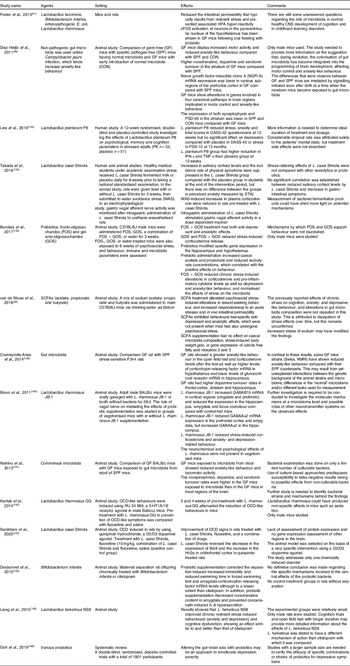
Despite that fact that the implications of the microbiota–gut–brain axis for clinical practice are still unclear, both pro-/prebiotics and antibiotics represent mechanisms to restore a healthy intestinal microbiota in patients with AN (Table 2). Antibiotics could be used to eliminate pathogens that disrupt intestinal integrity, and probiotics could help to restore beneficial species known to increase gut epithelial health. For example, Pimentel et al. found that the elimination of M. smithii using antibiotic rifaximin reduced bloating symptoms(Reference Pimentel, Lembo and Chey157). Finally, antibiotics such as erythromycin and other prokinetic agents have been used in clinical settings to accelerate gastric transit time and weight gain and to reduce gastrointestinal stress(Reference Stacher, Peeters and Bergmann158,Reference Hiyama, Yoshihara and Tanaka159) . In light of this, it seems that a diet rich in probiotics and prebiotics or the complementation of a diet with some probiotic strain gives promising results(Reference Larroya-García, Navas-Carrillo and Orenes-Piñero160).
Probiotics and prebiotics supplementation

Wallace and associates found that a significant number of Lactobacillus and Bifidobacterium strains seem to show the most beneficial effects in improving mood and reducing anxiety and cognitive symptoms(Reference Wallace and Milev161). Recently, it has been suggested that supplementing a diet with the probiotic strain Lactobacillus plantarum P8 alleviates stress and anxiety that could be related to AN(Reference Lew, Hor and Yusoff162). Along the same lines, L. casei strain Shirota supplementation alleviated stress-induced cortisol release and physical symptoms in humans and animal models(Reference Takada, Nishida and Kataoka-Kato163).
Furthermore, a consensus report by Gibson et al. showed that the use of fructans as prebiotics led to a reduction in obesity, diabetes, hepatic steatosis, inflammation and insulin resistance and promoted the secretion of YY peptide and glucagon-like peptide-1 (GLP1)(Reference Gibson, Hutkins and Sanders164). Inulin is the best-known type of fructo-oligosaccharide (FOS) and has been shown to inhibit intestinal colonisation by pathogens, providing a protective effect against acute or chronic intestinal disorders. Recent evidence from research in mice shows that serial administration of FOS (an artificial sweetener) and galacto-oligosaccharides significantly alters bacterial abundances in the gut microbiota and reduces both anxiety-like and depressive behaviour(Reference Burokas, Arboleya and Moloney165). In another study, SCFA supplementation in mice undergoing psychosocial stress had anti-depressant and anxiolytic effects, and it reduced anhedonia, stress responsiveness and gut permeability, which were increased by stress(Reference Wouw, Boehme and Lyte166).
The communication between the brain and the gut microbiome in other mental illnesses besides AN has also been studied in the past decades. Conditions such as anxiety, obsessive–compulsive disorder and major depression are common comorbidities of AN. Data from literature have shown a link between anxiety and the gut microbiota(Reference Foster and McVey Neufeld21,Reference Malan-Muller, Valles-Colomer and Raes167) . Germ-free mice show reduced anxiety-like behaviour(Reference Diaz Heijtz, Wang and Anuar63), although germ-free rats exhibit more anxiety-like behaviour compared with controls(Reference Crumeyrolle-Arias, Jaglin and Bruneau168). Moreover, it has been demonstrated that probiotic and prebiotic supplements can reduce anxiety-like behaviour in rodents(Reference Bravo, Forsythe and Chew169). These improvements were accompanied by alterations in the regional central GABA receptor expression and reduced corticosterone levels. The beneficial effects were not achieved in vagotomised mice, which shows that they were mediated by the vagus nerve.
There is evidence indicating that OCD-like behaviour in rodents can be modified by microbial treatments, including germ-free environments and probiotic supplements(Reference Nishino, Mikami and Takahashi170,Reference Kantak, Bobrow and Nyby171) . Specifically, supplementation with L. casei Shirota in a rat model of OCD reduced OCD-like behaviour, which was accompanied by an increase in brain-derived neurotrophic factor (BDNF) and a reduction in 5-hydroxytryptamine receptor type 2A(Reference Sanikhani, Modarressi and Jafari172). Similarly, in a mouse study, the induction of OCD-like behaviour with 5-HT1A/1B receptor agonist was blocked using a L. rhamnosus GG pre-treatment(Reference Kantak, Bobrow and Nyby171). This protective effect was similarly achieved by pre-treatment with fluoxetine.
Both probiotic and prebiotic treatments have been shown to reduce depressive-like behaviour in rodent models(Reference Desbonnet, Garrett and Clarke173). In a rat study(Reference Liang, Wang and Hu174), supplementation with L. helveticus NS8 reduced chronic restraint stress-induced anxiety and depression and cognitive dysfunction to a similar or higher extent compared with citalopram. The behavioural improvements were accompanied by reduced plasma corticosterone and adrenocorticotropic hormone levels as well as higher plasma interleukin-10 levels. Hippocampal serotonin and norepinephrine levels and BDNF gene expression were improved. A recent meta-analysis of human studies suggests that probiotics reduce depressive symptoms in patients with major depression, and that using multiple strains is more effective than using a single strain(Reference Goh, Liu and Kuo175).
Nutritional rehabilitation
The growing evidence in favour of poor outcomes due to undernourishment in AN has led to a change in clinical practice towards higher energy intake. Higher-energy diets produced rapid weight gain compared with lower-energy diets(Reference Garber, Sawyer and Golden145), and it also appears that they are associated with a shorter length of hospital stay(Reference Golden, Keane-Miller and Sainani176). Similar results have been found by both Peebles and Smith(Reference Peebles, Lesser and Park177,Reference Smith, Yatsunenko and Manary178) . Thus, the high-energy-intake approach represents the current AN standard of care, beginning with consuming at least 1400 kcal/d or more through meals alone(Reference Golden, Keane-Miller and Sainani176,Reference Redgrave, Coughlin and Schreyer179–Reference Leclerc, Turrini and Sherwood182) or combined naso-gastric and oral feeding(Reference Hatch, Madden and Kohn183). However, to date, none of the published high energy nutritional refeeding protocols has been tested for possible effects on the intestinal microbiome. Overall, energy intake and proportions of macronutrients may alter the composition of the intestinal microbiota(Reference Scott, Gratz and Sheridan184). In particular, a diet rich in fats and proteins and low in non-digestible carbohydrates and other fibres can lead to an altered microbial diversity and potential dysbiosis(Reference Singh, Chang and Yan29,Reference Simpson and Campbell185,Reference De Filippo, Cavalieri and Di Paola186) . Furthermore, recent evidence(Reference Armougom, Henry and Vialettes5) illustrates that micronutrient deficiencies disrupt the gut microbiota composition and function, dictating microbial–microbial as well as microbial–environmental interactions throughout the gut(Reference Hibberd, Wu and Rodionov187).
According to literature, a diet favourable to the gut microbiota should include non-digestible carbohydrates, different types of fibre, especially prebiotics, proteins mainly based on plants, mono- and polyunsaturated fatty acids, micronutrients and phytochemicals(Reference Singh, Chang and Yan29,Reference David, Maurice and Carmody188,Reference Yang, Liang and Balakrishnan189) .
Non-digestible carbohydrates and prebiotic foods could have a beneficial effect by increasing the levels of beneficial intestinal Bifidobacterium and lactic acid bacteria and play a role in the generation of SCFA(Reference Singh, Chang and Yan29,Reference Simpson and Campbell185,Reference Cotillard, Kennedy and Kong190) . Fermented foods, such as kefir, yogurt, sauerkraut and tempeh, have also been noted as important sources of probiotics, and may provide energy and nutrients for weight restoration as well as aid nutritional recovery(Reference Rocks, West and Hockey191). Furthermore, evidence indicates that the way food is processed determines the amount and type of nutrients that reach the gut bacteria and influence growth and production of the gut microbiota metabolites(Reference Ercolini and Fogliano192).
Conclusion
The mechanisms underlying the development of AN often involve a complex interplay of the microbiota–gut–brain axis. There is mounting evidence linking the dysbiosis of gut microbiota in AN and psychiatric disorders. To date, although limited changes have been observed in the gut microbiota composition in the post-nutritional rehabilitation state, nutritional treatment has proven useful in weight restoration in patients with AN. Appropriate consideration should therefore be given to structuring nutritional treatment strategies aimed at improving the gut microbiota composition and optimising the treatment for AN. Results thus far obtained highlight the importance of modulating the gut microbiota in order to influence the nutritional status and improve long-term results, whilst maintaining limited side effects. Recent studies provide evidence to the effect that incorporation of microbiome data into dietary planning will help design novel foods aimed at combating specific health issues, thus potentially ushering us into an era of personalised nutrition. Large randomised controlled trials involving faecal microbiota transplantation, pre-/probiotics and personalised refeeding protocols combined with multidisciplinary approach are needed to address the metabolic and psychological factors that contribute to and maintain AN.
Acknowledgments
The authors thank Professor S.G. Sukkar and Dr. Stefano Pinelli for the support given. The authors thank Jussi Heinonen, M.A., LL.B., for the language review of this article.
Author Contribution
L.L. wrote first version of the manuscript; P.D. and M.J.H. drafted and revised the manuscript; C.H. and F.G. were involved in the critical reading and reviewing of the manuscript. L.L. is the corresponding author and thus takes responsibility for the integrity of the data and the accuracy of information presented in this review.
Conflict of Interest
The authors declare no conflicts of interest within the contents of this article.
Funding
None.