Introduction
Emotional security theory posits that maintaining a sense of protection, safety, and security is a primary goal for children and adolescents (Davies et al., Reference Davies, Forman, Rasi and Stevens2002). And the process of preserving emotional security in the face of interparental conflict requires considerable expenditures of psychological and physical resources, limiting capacities to pursue developmental goals and increasing risk for exhibiting a wide array of psychological problems including internalizing (e.g., depression, anxiety) and externalizing (e.g., aggression, conduct problems) problems (Cummings & Davies, Reference Cummings and Davies2010). In line with this theory, previous studies have suggested that witnessing high levels of interparental conflict can increase adolescents’ risk for depression (e.g., Barton et al., Reference Barton, Beach, Kogan, Stanley, Fincham, Hurt and Brody2015; Harold & Leve, Reference Harold, Leve, Balfour, Morgan and Vincent2012; Davies et al., Reference Davies, Martin, Coe and Cummings2016).
With regard to stage salient tasks of adolescence, a secure base allows for adolescents to strike a balance between the need to develop autonomy while maintaining relatedness in the family system (Allen & Antonishak, Reference Allen, Antonishak, Prinstein and Dodge2008). As such, the burdens of coping with interparental conflict may assume particular significance in the lives of young adolescents. Notably, a study specifically documented that interparental conflict was a stronger predictor of adjustment problems in adolescence than in earlier childhood (Cummings et al., Reference Cummings, Schermerhorn, Davies, Goeke-Morey and Cummings2006), consistent with the notion that adolescents may be more aware of the threats posed to emotional security by interparental conflict (Cummings & Davies, Reference Cummings and Davies2010). Besides, children’s dispositions to mediate interparental conflicts increase sharply during preadolescence and peak sometime during early adolescence (Cummings et al., Reference Cummings, Ballard, El-Sheikh and Lake1991). Thus, warranting increased attention to the association between interparental conflict and depression during this stage of life.
Despite earlier studies establishing a robust association between interparental conflict and adolescent depression, yet understanding of the roles of possible mediators (intervening mechanisms linking these behaviors) and moderators (factors associated with stronger or weaker associations) is still relatively limited. In line with the family ecology framework, interpersonal factors in the family are hypothesized to affect adolescent development (distal effects) indirectly through a number of family-level mediators (proximal effects). Furthermore, such indirect pathway may be affected by a number of contextual or moderator variables (Pedersen & Revenson, Reference Pedersen and Revenson2005). Hence, the present study aimed to examine mediational effects of family functioning in the interparental conflict-adolescent depressive symptoms link. At the same time, the present study also aimed to examine the moderating role of cultural beliefs about adversity in the direct pathway from interparental conflict to adolescent depressive symptoms and the indirect pathway via family functioning. Specifically, the present study investigated whether cultural beliefs about adversity moderated the associations between interparental conflict and adolescent depressive symptoms, and between family functioning and adolescent depressive symptoms (i.e., the second link of the indirect pathway that mentioned above).
Family functioning as a potential mediator
Family functioning is a comprehensive indicator that reflects the overall quality of family system, concerning all aspects of family life such as family atmosphere, communication between family members, and problem solving, and so forth (Olson et al., Reference Olson, Russell and Sprenkle1983). And the core dimensions of family functioning are cohesion and adaptability. Family cohesion refers to the emotional bonding among family members (e.g., parent–child, wife–husband), whereas family adaptability refers to the capacity of families to modify their rules (e.g., discipline), leadership, and roles in response to challenging situations, such as illness or stress (Birmes et al., Reference Birmes, Raynaud, Daubisse, Brunet, Arbus, Klein and Grandjean2009).
According to family systems theory, the family is a hierarchically organized system, comprised of smaller subsystems, such as marital, parental and sibling, and interactions occur within and across these various levels (Cox & Paley, Reference Cox and Paley1997). Thus, family functioning as a factor at the entire family level may be impacted by subsystem factors, such as interparental conflict. The marital relationship is the foundation for the family system (Cox & Paley, Reference Cox and Paley1997), and spillover hypothesis posits that the deleterious effect of interparental conflict could bleed into the entire family environment (Kitzmann, Reference Kitzmann2000; Sturge-Apple et al., Reference Sturge-Apple, Gondoli, Bonds and Salem2003), thereby resulting in more negative family functioning. Besides, some studies have found that interparental conflict may exert its deleterious effects against family functioning in different ways, such as blurring the boundaries between subsystems (Shek, Reference Shek1999), reducing the availability of communication between family members (Low et al., Reference Low, Overall, Cross and Henderson2019), and destroying the cohesion and adaptability of the whole family (Mitchell et al., Reference Mitchell, Szczerepa and Hauser-Cram2016; Smith et al., Reference Smith, Nelson and Adelson2019).
Regarding the relationship between family functioning and adolescent depression, previous studies have revealed that depression symptoms have been consistently correlated with an overall negative family climate (Hughes & Gullone, Reference Hughes and Gullone2008; Bouma et al., Reference Bouma, Ormel, Verhulst and Oldehinkel2008), which reflects the socioemotional quality of family functioning (Brinksma et al., Reference Brinksma, Dietrich, de Bildt, Buitelaar, van den Hoofdakker, Hoekstra and Hartman2020), as well as with specific deficits such as low warmth, cohesion, and adaptability, and high disagreement and control (Freed et al., Reference Freed, Rubenstein, Daryanani, Olino and Alloy2016; Restifo & Bögels, Reference Restifo and Bögels2009; Sander & McCarty, Reference Sander and McCarty2005).
Thus, the potential pathway by which the effect of interparental conflict on adolescent depression can be traced is family functioning. The only study examining the mediating processes linking interparental conflict and adolescent depression has provided support for this hypothesis (Unger et al., Reference Unger, Brown, Tressell and McLeod2000). Unger et al. (Reference Unger, Brown, Tressell and McLeod2000) demonstrated that higher levels of interparental conflict was related to negative family functioning, which linked to higher levels of adolescent depression. However, whether these findings can be generalizable to the Chinese subgroup still remains doubtable, because the study’s participants were all Caucasian adolescents. In fact, different from Western society, Chinese culture values collective familism and interdependence between family members more (Shek, Reference Shek2006; Leung & Shek, Reference Leung and Shek2020). The old Chinese saying “jia he wan shi xing” (harmony in the family is the basis for success in any undertaking) suggests the importance of family functioning in determining one’s own fate, and reflects the important role of the family among Chinese people (Leung et al., Reference Leung, Shek and Li2016). Therefore, negative family functioning may be more deleterious to Chinese adolescents. Besides, this saying also reflected that there is a strong emphasis on family harmony in Chinese culture. And interparental conflict may have more negative impacts on family functioning in Chinese culture because it is perceived to violate important social norms around family interaction patterns (Chung et al., Reference Chung, Flook and Fuligni2009).
Against this background, there is a need to consider the mediating role of family functioning in the Chinese contexts. To fill in this research gap, the present study aimed to examine how family functioning would mediate the influence of interparental conflict on Chinese adolescents’ depressive symptoms.
Cultural beliefs about adversity as a potential moderator
Although interparental conflict and negative family functioning may be associated with adolescent depression, not all adolescents will be affected to the same extent by these risk factors. This kind of phenomenon correlates with the notion of resilience, which is described by some researchers as the process of overcoming rather than succumbing to the effects of exposure to risks during an individual’s life (e.g., American Psychological Association, 2014; Panter-Brick & Leckman, Reference Panter-Brick and Leckman2013). Adolescents who encounter high-risk situations, such as interparental conflict might show resilience because they draw on sufficient protective factors to mitigate the deleterious effect of adversity (Luthar, Reference Luthar, Cicchetti and Cohen2006; Mastern, Reference Masten2018; Reed et al., Reference Reed, Fazel, Jones, Panter-Brick and Stein2012). Thus, for adolescents exposed to interparental conflict and/or negative family functioning, there is a compelling need to identify potential protective factors for mental health, because it would provide a basis for more effective interventions to support the healthy development of these adolescents.
From a cultural perspective on resilience, resilience is culturally specific (PanterBrick & Eggerman, Reference Panter-Brick, Eggerman and Ungar2012; Walsh, Reference Walsh, Southwick, Litz, Charney and Friedman2011), and it can be determined by some cultural factors that regulate how individuals cope with adversity (Southwick et al., Reference Southwick, Bonanno, Masten, Panter-Brick and Yehuda2014). Thus, as social constructions that are part of a culture, cultural beliefs about adversity, referring to those concepts about the nature of adversity such as its causes, consequences and the proper coping behavior (Shek, Reference Shek2005), may be potential protective factors that could mitigate the deleterious effect of interparental conflict and negative family functioning. Cultural beliefs can influence how people perceive, approach, and tackle adversities in life (Lee et al., Reference Lee, Kwong, Cheung, Ungar and Cheung2010). As Walsh (Reference Walsh2006) pointed out, “the definition and meaning of struggle and adversity is culturally varied” (p. 67). As such, beliefs about adversity are culturally specific in nature. And in the Chinese culture, there are indigenous conceptions of beliefs about adversity. On the one hand, rooted in Confucian thoughts, with inner strengths and virtues such as perseverance and tolerance (Shek, Reference Shek2004; Shek et al., Reference Shek, Tang, Lam, Lam, Tsoi and Tsang2003), there are cultural beliefs that emphasize the positive value of adversity and men’s capacity to overcome adversity (i.e., positive cultural beliefs about adversity). On the other hand, under the influence of Buddhism and Taoism, superstition and emphasis on fate are intrinsic to the traditional Chinese culture. As a result, there are cultural beliefs that emphasize people’s inability to overcome adversity (such as fate) and the negative impact of adversity (i.e., negative cultural beliefs about adversity).
Existing studies have demonstrated that exposure to harsh and non-nurturing environments (e.g., family socioeconomic disadvantage) may exacerbate the risk of psychological problems among Chinese adolescents with negative cultural beliefs about adversity. While positive cultural beliefs about adversity can mitigate the risk of internalizing and externalizing problems among Chinese adolescents in the context of a negative family environment (Shek, Reference Shek2005; Leung & Shek, Reference Leung and Shek2013). However, it is still unclear whether and how the relationships between interparental conflict and adolescent depressive symptoms, and between family functioning and adolescent depressive symptoms depend on youths’ cultural beliefs about adversity levels.
Although questions remain as to precisely how cultural beliefs about adversity moderate associations between interparental conflict and adolescent depressive symptoms, and family functioning and adolescent depressive symptoms, two protective models of resilience offer some guidance how cultural beliefs about adversity may serve to potentiate adolescents’ ability to overcome adversity. Each model shares the assumption that positive cultural beliefs about adversity primes children to become increasingly capability to conquer risks. However, they differ significantly in their articulation of the conditions that engender children’s heightened resiliency.
In the first conceptualization, the protective-stabilizing model proposes that a protective factor can help to neutralize the effects of risks (Luthar et al., Reference Luthar, Cicchetti and Becher2000). That is, higher levels of interparental conflict/negative family functioning are associated with more depressive symptoms among adolescents with negative cultural beliefs about adversity, but there is no relationship between interparental conflict/negative family functioning and depressive symptoms among those who with positive cultural beliefs about adversity. According to the second conceptualization, the protective-reactive model postulates that a protective factor diminishes, but does not completely remove, the expected correlation between a risk and an outcome (Luthar et al., Reference Luthar, Cicchetti and Becher2000). In applying the protective-reactive model to cultural beliefs about adversity, the relationship between interparental conflict/negative family functioning and the depressive symptoms is stronger among adolescents with negative cultural beliefs about adversity.
Summarized, given the diversity of different forms of moderation based on cultural beliefs about adversity, a central objective of this study is to employ tests of moderated mediation to explore the two alternative hypotheses on the role of cultural beliefs about adversity in altering the direct and indirect links between interparental conflict and adolescent depressive symptoms.
The present study
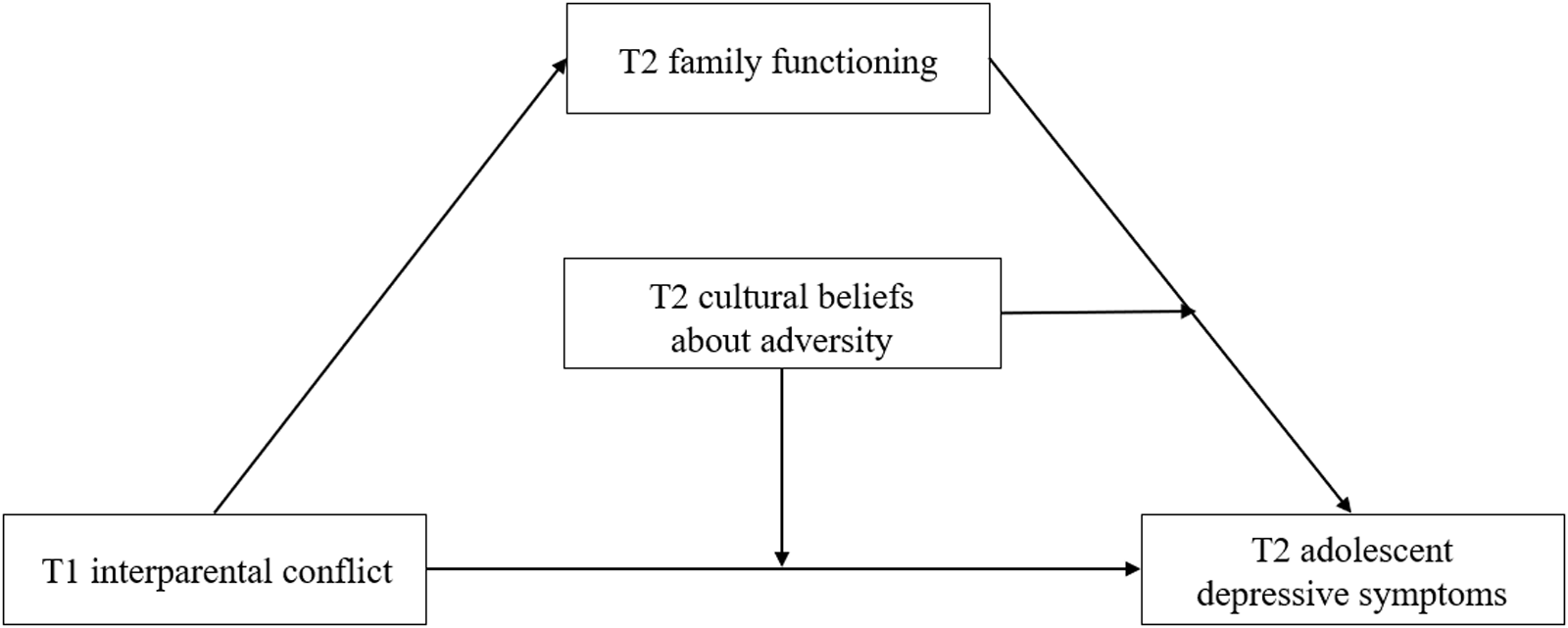
The objective of this study was to explore the mechanisms and conditions under which interparental conflict relates to depressive symptoms among a sample of Chinese adolescents over two waves, spaced 12 months apart. Specifically, a moderated mediation model was examined to answer two research questions: (a) whether family functioning mediates the association between interparental conflict and adolescent depressive symptoms; and (b) whether cultural beliefs about adversity moderate the direct link and the second chain of the indirect link between interparental conflict and adolescent depressive symptoms—namely, the link between interparental conflict and adolescent depressive symptoms, and the link between family functioning and adolescent depressive symptoms (see Figure 1 for the conceptual model). The moderated mediation model in the present study would not only explain how interparental conflict influences adolescent depressive symptoms, but would also indicate when and how this mediating mechanism works.
Conceptual framework linking interparental conflict with adolescent depressive symptoms.

Method
Participants
A stratified cluster sampling method of students in 12 randomly selected schools (six primary schools and six secondary schools) in three cities of Henan Province was adopted to recruit the respondents. At Time 1 (T1), 1,581 adolescents in Grades 5–8 participated in the study. As adolescents in Grade 6 graduated and adolescents in Grade 8 were preparing to enter junior high school, 817 adolescents in Grades 5 and 7 were invited to fill out the questionnaire at Time 2 (T2), with an interval of 1 year form T1. Independent t tests indicated that those invited to participate at Time 2 did not differ from those not invited in family SES, interparental conflict, family functioning, adolescent depressive symptoms at T1, ps > 0.05. After matching, 725 adolescents completed the questionnaires at both two time points, with an attrition rate of 11.26%. The dropout and retained participants did not differ in demographic variables or any of the study variables at T1, ps > 0.05.
Adolescents were only included in this paper if: (a) the adolescents were from intact two-parent families and (b) living with their parents during the research period. These inclusionary criteria resulted in the exclusion of 74 adolescents (i.e., 53 failed to meet the first condition; 21 failed to meet the second requirement), yielding a sample of 651 adolescents. Independent t tests were performed to examine whether there were any differences between adolescents in the final analytic sample and adolescents who were excluded. Results revealed that the exclude and include adolescents did not differ in demographic variables and the study variables except interparental conflict, ps > 0.05. And the excluded adolescents reported significantly higher interparental conflict that those were included (p < .05).
Among the 651 adolescents at T1, 368 were girls (56.5%) and 283 were boys (43.5%). The mean age of these adolescents was 14.27 years (SD = 1.15) at T2.
Procedures
During T1, prior to study participation, invitation letters were given to adolescents and their parents including a detailed description of the study through the adolescents’ head teachers. On the day of data collection at T1, adolescents were invited to fill out a written questionnaire about interparental conflict and depressive symptoms in classrooms during regular school hours, supervised by trained teachers. All adolescents were given adequate time to complete the questionnaires. Meanwhile, parents also were invited to complete a series of family sociodemographic questionnaires, which adolescents brought home from schools. At T2, adolescents completed questionnaires on family functioning, cultural beliefs about adversity and depressive symptoms. The T2 measurement occurred 1 year after the T1 measurement. The procedures were identical to those that were used in T1.
Measures
Interparental conflict (T1)
Interparental conflict was measured by 10 items, two subscales (i.e., Intensity and Frequency) of the Children’s Perception of Interparental Conflict Scale (Grych et al., Reference Grych, Seid and Fincham1992), where adolescents reported the interparental conflict that they perceived. Each item is rated on a 5-point Likert scale ranging from 1 (almost never true) to 5 (almost always true). A sample item of the Intensity subscale is “My parents get really mad when they argue” and that of the Frequency subscale is “I often see my parents arguing.” Previous studies have confirmed that the scale is reliable and valid in Chinese children (Ai et al., Reference Ai, Xu, Li and Li2017). The internal consistency was high for each subscale (α = 0.82 for the Intensity subscale, and 0.84 for the Frequency subscale), with higher mean scores indicating greater interparental conflict. And the construct validity of the whole measure was good (χ 2/df = 2.40; RMSEA = 0.011, CFI = 0.924, TLI = 0.936, SRMR = 0.048).
Family functioning (T2)
Based on the McMaster Family Assessment Device (Epstein et al., Reference Epstein, Baldwin and Bishop1983) and the Family Adaptability and Cohesion Evaluation Scale (Olson et al., Reference Olson, Portner and Bell1982), National Children’s Study of China designed a scale that assesses family functioning in two dimensions: cohesion and adaptability (Dong & Lin, Reference Dong and Lin2011). Previous study has proven that this scale was reliable and valid in Chinese children (Dong & Lin, Reference Dong and Lin2011). The general functioning subscale of this scale was designed to assess the global family functioning in a brief format. Thus, in the present study, family functioning was measured using this 5-items subscale. Statements were rated by adolescents on a 5-point Likert scale ranging from 1 (almost never true) to 5 (almost always true). A sample item reads “In times of crisis we can turn to each other for support.” The item scores were averaged to form a composite score for family functioning with higher mean scores indicating higher levels of family functioning. In this study, the internal consistency was α= 0.91. And the results of confirmatory factor analysis indicated that the construct validity of this measure is good (χ 2 /df = 2.42; RMSEA = 0.019, CFI = 0.944, TLI = 0.988, SRMR = 0.047).
Adolescent depressive symptoms (T1–T2)
Adolescent depressive symptoms were measured using the Children’s Depression Inventory-Short Version (Kovacs, Reference Kovacs2003). Adolescents respond to items assessing sadness, self-blame, and interpersonal relationships by selecting which of the three descriptions best fits how they have been feeling during the past 2 weeks (e.g., “I do most things O.K., I do many things wrong, I do everything wrong”) for 10 items. Based on a 0–2 scale, higher total scores indicate the presence of more severe depressive symptoms (range 0–20). The scale has been proven to be reliable and valid in Chinese children (Li et al., Reference Li, Zhang, Chen, Yuan, Zhang, Tian and Qu2019). Internal consistencies in this study yielded α’s = 0.88 (T1) and 0.90 (T2). And the construct validity was good (χ 2 /df = 2.86; RMSEA = 0.009, CFI = 0.929, TLI = 0.908, SRMR = 0.044).
Cultural beliefs about adversity (T2)
Adolescents’ cultural beliefs about adversity were measured by the Chinese Cultural Beliefs about Adversity Scale (Shek, Reference Shek2004). It is a 9-item scale with two subscales: positive Chinese beliefs about adversity (seven items, e.g., “Chi de ku zhong ku, fang wei ren shang ren” [hardship increases stature]; “You zhi zhe shi jing cheng” [when there is a will, there is a way]), and negative Chinese beliefs about adversity (two items, e.g., “Ren de ming tian zhu ding” [whether a life is good or bad depends on fate]; “Ren qiong zhi duan” [poverty stifles ambition]). For each item, adolescents are asked to rate their degree of agreement with the item on a 6-point scale ranging from 1 (strongly disagree) to 6 (strongly agree). For each item, adolescents are asked to rate their degree of agreement with the item on a 6-point scale ranging from 1 (strongly disagree) to 6 (strongly agree). The mean of the nine items was taken, with the negative Chinese cultural beliefs about adversity subscale reverse coded. Higher scores indicated a higher degree of agreement with positive Chinese cultural beliefs about adversity. The scale has been proven to be reliable and valid in Chinese children in previous studies (Li et al., Reference Li, Zhang and Zhao2021; Shek, Reference Shek2004, Reference Shek2005). Internal consistencies in this study reached α = 0.77. Confirmatory factor analysis suggested that the construct validity was good (χ 2 /df = 2.05; RMSEA = 0.044, CFI = 0.990, TLI = 0.979, SRMR = 0.020).
Covariate
Covariates included family SES, adolescents’ gender, age and the baseline levels of adolescent depressive symptoms. In detail, five variables were used to calculate family SES, including parents’ educational level and occupational prestige, as well as household income per month. Educational level was coded as 1 = junior high school or lower, 2 = senior high school graduate, and 3 = some college, whereas occupational prestige was coded as 1 = peasant or jobless, 2 = blue collar, and 3 = professional or semiprofessional. Monthly income was divided into three grades: 1 <= 5,000 yuan, 2 = between 5,000 and 10,000 yuan, and 3 = more than 10,000 yuan. Each was standardized and then averaged to calculate a z-score with higher scores indicating higher SES (Cohen et al., Reference Cohen, Doyle and Baum2006).
Data analysis plan
In the preliminary analyses, descriptive statistics and bivariate correlations were employed to examine associations among the main variables using SPSS 24.0. Then the conceptual model (Figure 1) was tested under the structural equation modeling framework using Mplus 7.0 (Muthén & Muthén, Reference Muthén and Muthén2017), which uses full information maximum likelihood (FIML) to accommodate missing data (Cham et al., Reference Cham, Reshetnyak, Rosenfeld and Breitbart2017). The analyses were conducted in two stages. First, the mediation model was assessed to test the hypothesized mediating effects of family functioning. Second, a moderated mediation model was estimated to examine whether cultural beliefs about adversity moderated the direct pathway form interparental conflict to adolescent depressive symptoms and the second link of the indirect pathway via family functioning. Given that bootstrapping is a powerful tool for testing the significance of mediation hypotheses within psychology (Shrout & Bolger, Reference Shrout and Bolger2002), it was used to test for the significance of the indirect and moderated mediation effects. The bootstrapping method produced 95% bias-corrected confidence intervals for the indirect effect and moderated mediation effect from 2000 resamples of the data. If the 95% bias-corrected confidence interval for the parameter estimate does not contain zero, then the indirect and moderated mediation effects are significant at α = 0.05 (Preacher & Hayes, Reference Preacher and Hayes2008). Fit indices include the comparative fit index (CFI), the Tucker–Lewis index (TLI), the root mean square error of approximation (RMSEA), and the standardized root mean square residual (SRMR). Statisticians have stated that the fit of the models are considered acceptable when the CFI and TLI values are above 0.90, and the RMSEA and SRMR values are below 0.08 (Hu & Bentler, Reference Hu and Bentler1999).
Results
Descriptive analyses
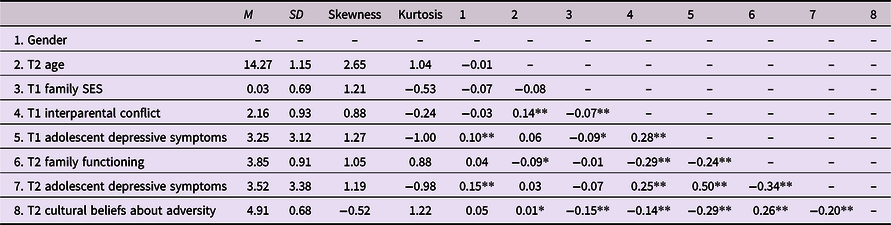
Descriptive statistics and correlations of all study variables are shown in Table 1. Correlational analyses indicated that T1 interparental conflict was positively associated with T2 adolescent depressive symptoms (r = .25, p < .01). Additionally, T2 family functioning and cultural beliefs about adversity were negatively associated with T2 adolescent depressive symptoms, r = −.34 (p < .01) and −.20 (p < .01), respectively.
Descriptive statistics, and correlations of study variables in the study (N = 651)

Note. *p < .05, **p < .01, ***p < .001. M = mean; SD = standard deviation.
Testing for the mediation effect of family functioning
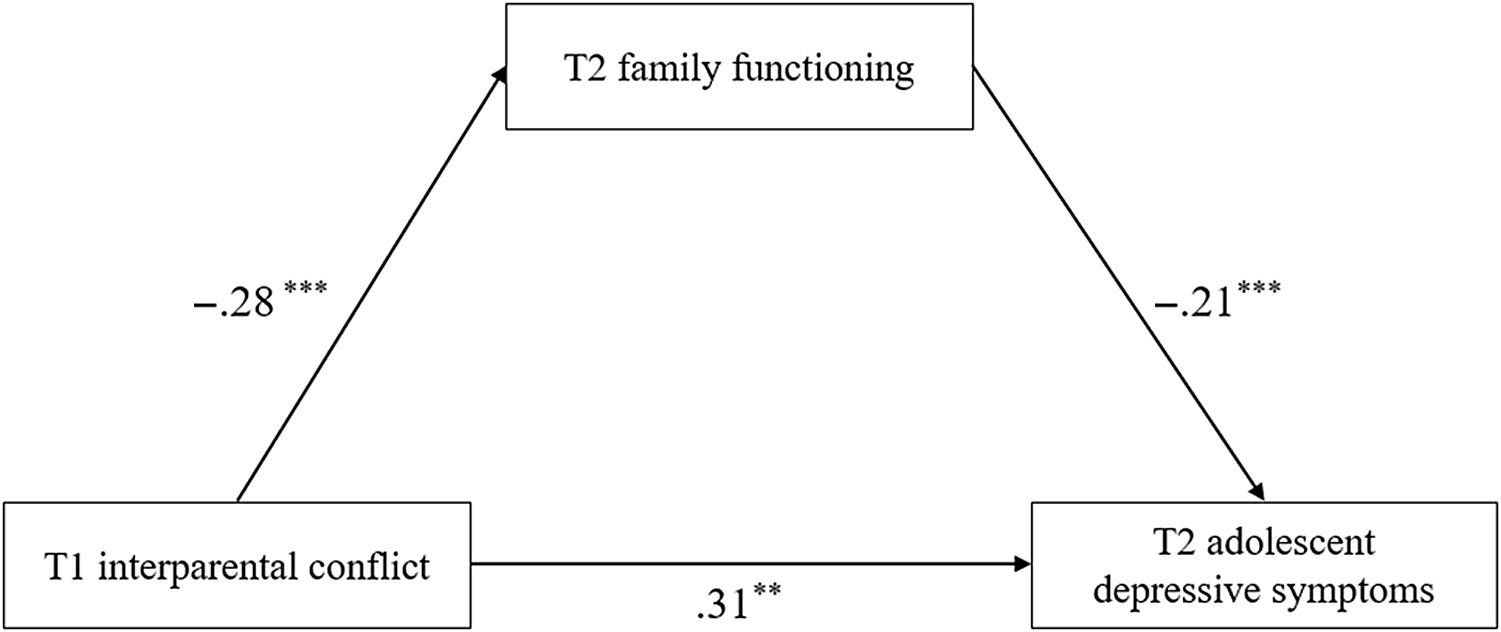
To test the mediation hypothesis, a mediation model was conducted to examine whether T1 interparental conflict might indirectly be associated with greater T2 adolescent depressive symptoms (controlling for the baseline level of adolescent depressive symptoms). The model fit the data well, χ2(3) = 13.122, p < .001, RMSEA = 0.013, CFI = 0.947, TLI = 0.989, SRMR = 0.016. The results indicated that the indirect effect from interparental conflict to adolescent depressive symptoms via family functioning was significant (indirect effect = 0.06, SE = 0.02, 95% CI = [0.03, 0.21]). Specifically, as presented in Figure 2, the path from T1 interparental conflict to T2 family functioning (b = −0.18, SE = 0.05, β = −0.28, p < .001) and the path from T2 family functioning to T2 adolescent depressive symptoms were significant (b = −0.16, SE = 0.04, β = −0.21, p < .001). Additionally, the direct effect from T1 interparental conflict to T2 adolescent depressive symptoms was also significant (b = 0.20, SE = 0.05, β = 0.31, p < .01). In sum, the mediation hypothesis was supported.
Standardized path coefficient for the mediation model for adolescent depressive symptoms. All continuous variables were standardized before they were entered into the path model. The model also included age, gender, and family SES as covariates. *p < .05, **p < .01, ***p < .001.

Testing for the moderated mediation model
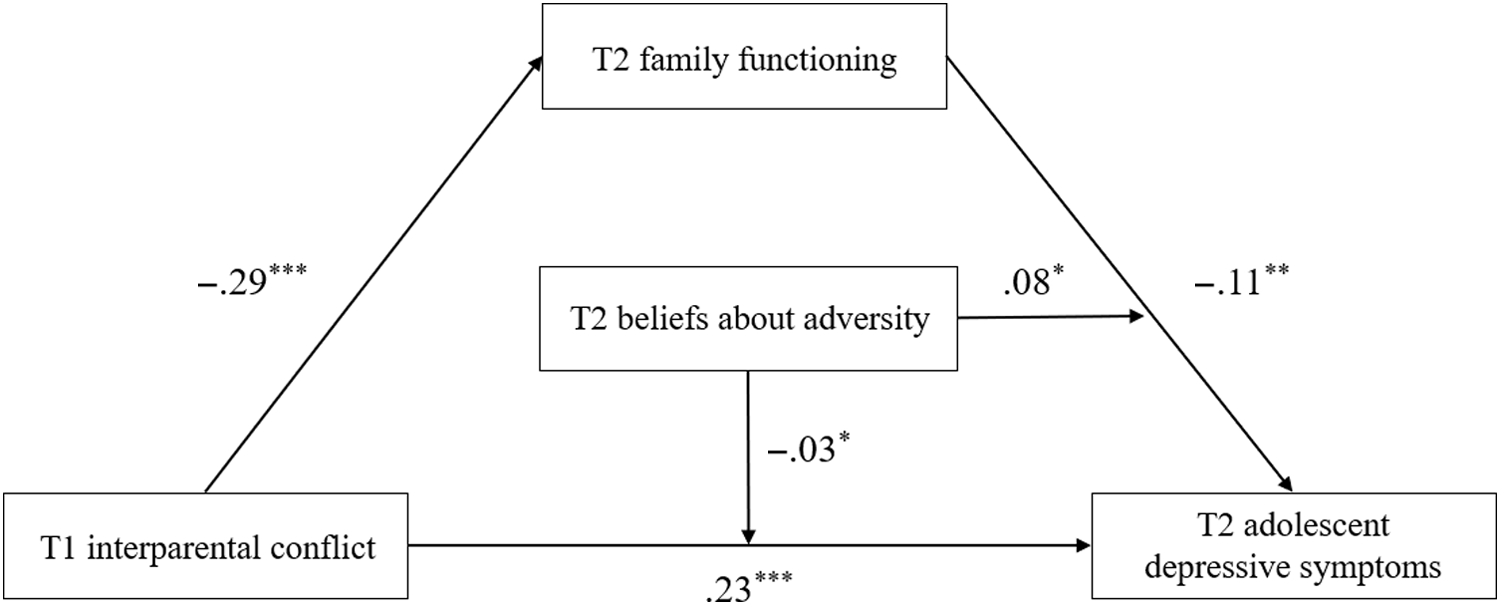
To examine the moderating effect of cultural beliefs about adversity, a moderated mediation model was tested. When testing this moderated mediation model, Mplus code provided by Stride and his colleagues (Reference Stride, Gardner, Catley and Thomas2015) was utilized. By converting the original SPSS PROCESS macro syntax into the Mplus program, this method allows for the use of the FIML for missing data within the framework of PROCESS (Kim & Kochanska, Reference Kim and Kochanska2020). The results indicated that the model demonstrated adequate fit to the data, χ2(6) = 42.057, p < .001, RMSEA = 0.032, CFI = 0.987, TLI = 0.926, SRMR = 0.011. Standardized path parameters for the model are presented in Figure 3. There was a significant main effect of T1 interparental conflict on T2 family functioning (b = −0.19, SE = 0.05, β = −0.29, p < .001) and adolescent depressive symptoms (b = 0.11, SE = 0.05, β = 0.23, p < 0.001). T2 family functioning was negatively related to T2 adolescent depressive symptoms (b = −0.19, SE = 0.02, β = −0.11, p < .01).
Standardized path coefficient for the mediation model for depressive symptoms. All continuous variables were standardized before they were entered into the path model. The model also included age, gender, family SES, baseline levels of adolescent depressive symptoms as covariates. *p < .05, **p < .01, ***p < .001.

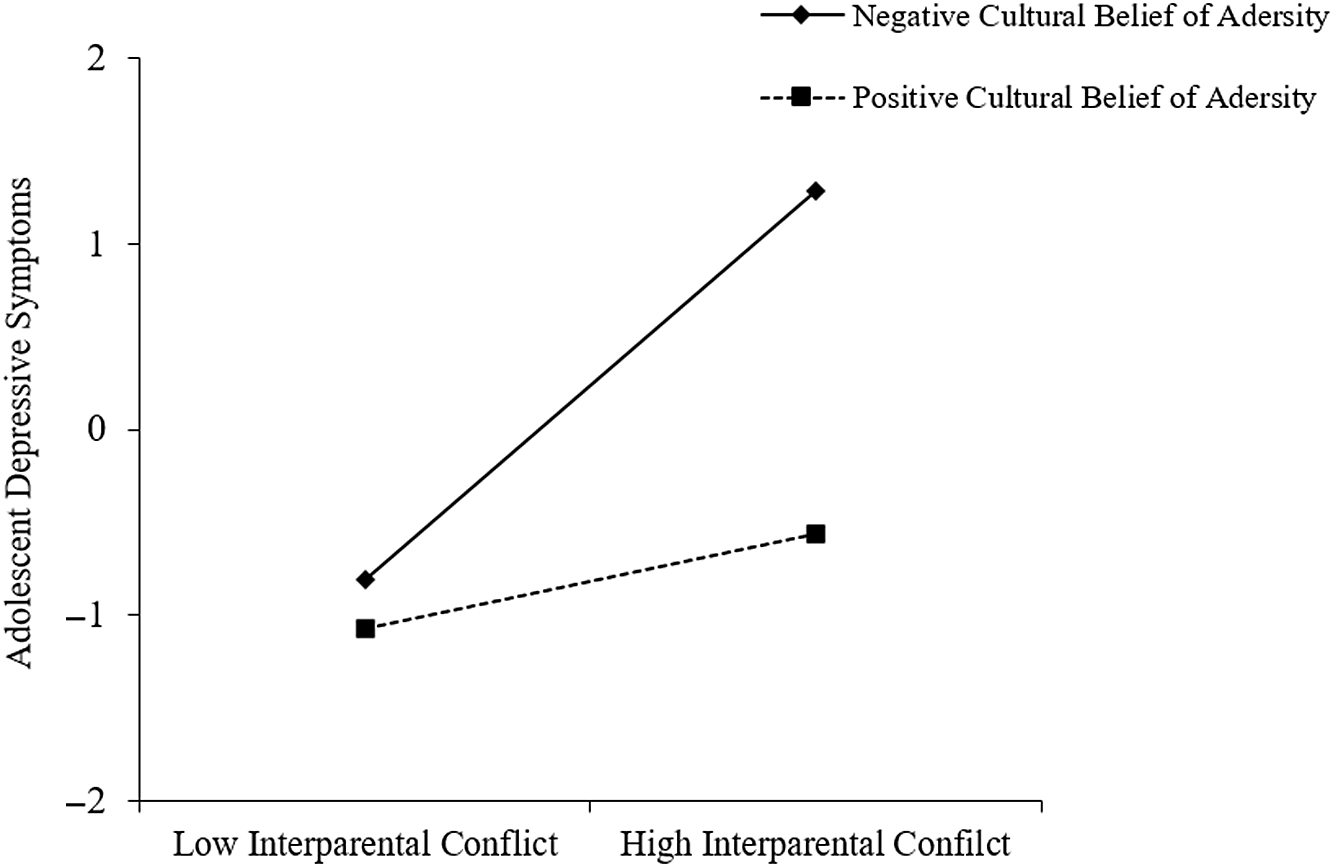
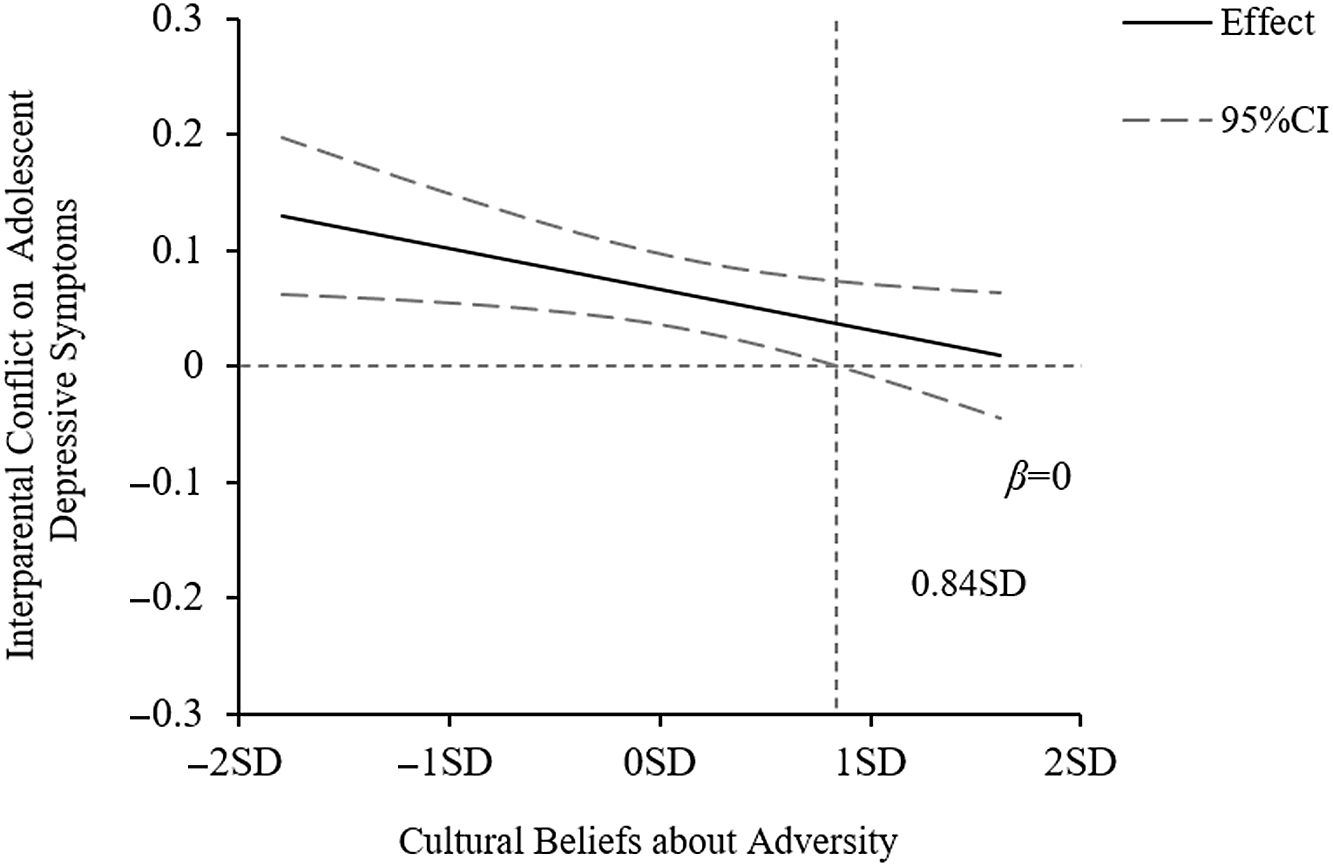
In addition, two significant interactions were revealed. First, the interaction between T1 interparental conflict and T2 cultural beliefs about adversity was significant for adolescent depressive symptoms (b = −0.06, SE = 0.03, β = −0.03, p < .05). Using simple slope to illustrate the interaction (see Figure 4), the buffering role of cultural beliefs about adversity was significantly apparent. Interparental conflict and depressive symptoms were more rigorously associated among adolescents whose cultural beliefs about adversity were negative (−1 SD: β = .49, t = 2.38, p = .02; 1 SD: β = 0.13, t = 1.50, p = .14). Here, adolescents with negative cultural beliefs about adversity presented with higher levels of depressive symptoms when facing interparental conflict. To further deconstruct the moderation effect, the Johnson–Neyman regions of significance were plotted. This test can assess the range of moderator (i.e., cultural beliefs about adversity) scores within which the effect of a predictor (i.e., interparental conflict) on an outcome (i.e., adolescent depressive symptoms) becomes significant (Preacher et al., Reference Preacher, Curran and Bauer2006). The results indicated that for adolescents for whom the cultural beliefs about adversity were at or below 0.84 SD, the association between interparental conflict and depressive symptoms was significant. However, for adolescents whose cultural beliefs about adversity exceeded 0.84 SD, interparental conflict was not significantly associated with depressive symptoms (see Figure 5). Echoing these results, the present study intuited these findings as a protective role of cultural beliefs about adversity.
Plot of cultural beliefs about adversity as a moderator between interparental conflict and adolescent depressive symptoms at Time 2. Interparental conflict and adolescent depressive symptoms were positively associated with each other when cultural beliefs about adversity were negative (one standard deviation below the sample mean) but unrelated when cultural beliefs about adversity were positive (one standard deviation above the sample mean).

Conditional effect of interparental conflict on adolescent depressive symptoms at different levels of cultural beliefs about adversity. Note. The Y-axis represents the effect of interparental conflict on adolescent depressive symptoms (e.g., the model-based beta-weight). The X-axis shows the levels of cultural beliefs about adversity (standardized). The solid line represents the point estimate for the conditional effect of interparental conflict on adolescent depressive symptoms at different levels of cultural beliefs about adversity. Dashed lines represent the upper and lower limits of the 95% confidence interval around this point estimate. Levels of cultural beliefs about adversity for which the 95% confidence interval does not include zero (i.e., levels of cultural beliefs about adversity at or below 0.84 SD, standardized) indicate levels of cultural beliefs about adversity for which the effect of interparental conflict on adolescent depressive symptoms is significant.

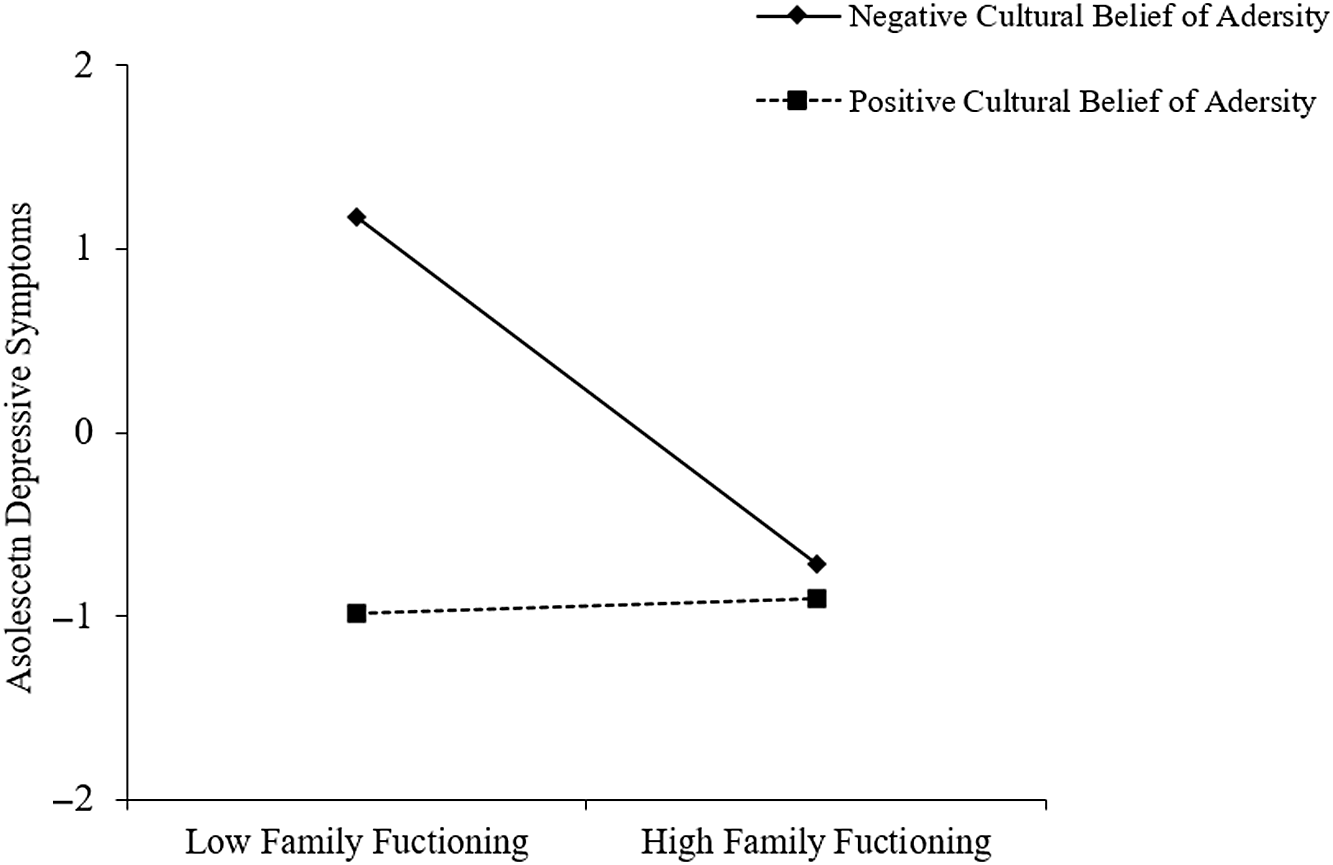
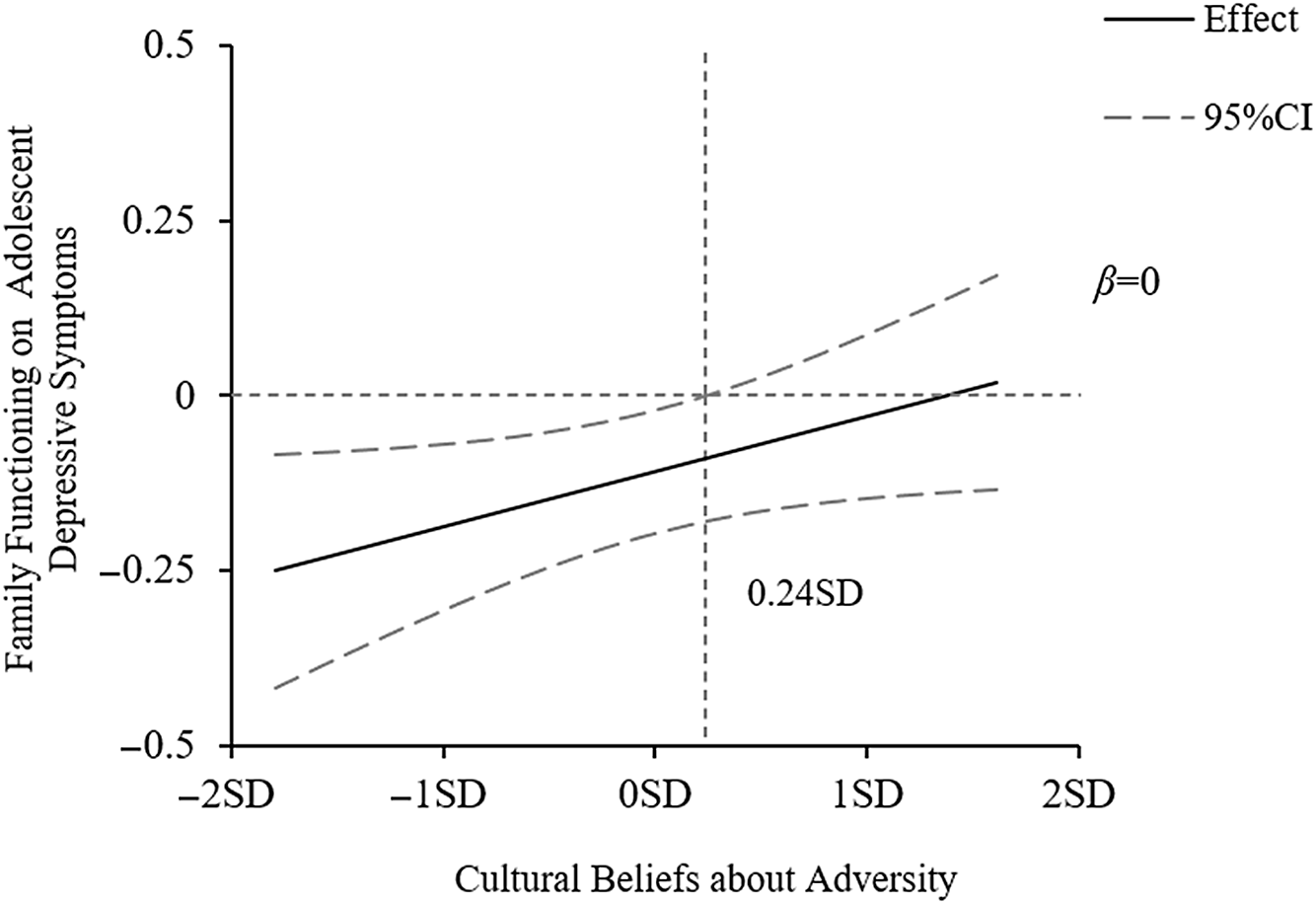
Second, there was also a significant interaction between T2 family functioning and cultural beliefs about adversity on T2 adolescent depressive symptoms (b = 0.02 SE = 0.01, β = 0.08, p < 0.05). Probing this with a simple slope for illustration purposes (see Figure 6) indicated a pattern of effect that was stronger when adolescents’ cultural beliefs about adversity were negative (−1 SD: β = −0.43, t = −2.07, p = .01; +1 SD: β = 0.02, t = 0.20, p = .84). Among adolescents whose cultural beliefs about adversity were more positive, family functioning made no difference in their depressive symptoms. However, among adolescents with negative cultural beliefs about adversity, family functioning was negatively related to more depressive symptoms. In addition, the Johnson–Neyman regions of significance for this interaction demonstrated that among adolescents whose cultural beliefs about adversity were 0.24 SD or below, the association between family functioning and adolescent depressive symptoms was significant, whereas above this value the association was not significant (see Figure 7).
Plot of cultural beliefs about adversity as a moderator between family functioning and adolescent depressive symptoms at Time 2. Family functioning and adolescent depressive symptoms were negatively associated with each other when cultural beliefs about adversity were negative (one standard deviation below the sample mean) but unrelated when cultural beliefs about adversity were positive (one standard deviation above the sample mean).

Conditional effect of family functioning on adolescent depressive symptoms at different levels of cultural beliefs about adversity. The Y-axis represents the effect of family functioning on adolescent depressive symptoms (e.g., the model-based beta-weight). The X-axis shows the levels of cultural beliefs about adversity (standardized). The solid line represents the point estimate for the conditional effect of family functioning on adolescent depressive symptoms at different levels of cultural beliefs about adversity. Dashed lines represent the upper and lower limits of the 95% confidence interval around this point estimate. Levels of cultural beliefs about adversity for which the 95% confidence interval does not include zero (i.e., levels of cultural beliefs about adversity at or below 0.24 SD, standardized) indicate levels of cultural beliefs about adversity for which the effect of family functioning on adolescent depressive symptoms is significant.

Besides, the results of the moderated mediation analysis that overall influences of interparental conflict to adolescent depressive symptoms via family functioning varied depending on adolescent’s cultural beliefs about adversity. The indirect effect was present among adolescents with negative cultural beliefs about adversity (−1 SD), but it was absent among adolescents with positive cultural beliefs about adversity. Specifically, conditional indirect effects were estimated to 0.04 (SE = 0.02, 95% CI = [0.02, 0.10]) and 0.03 (SE = 0.03, 95% CI = [−0.05, 0.16]), respectively for Mean−SD and Mean+SD of T2 cultural beliefs about adversity scores.
Sensitivity analyses
In order to examine both the robustness of our major findings, multigroup moderated-mediation model analysis (boys vs. girls) was conducted to examine the potential gender differences. First, an unconstrained model wherein all parameters were freely estimated between boys and girls was fit. Second, a constrained model with all parameters constrained to be equal between girls and boys was fit. And according to the results of chi-square difference test, the fully constrained model resulted in a significant decrement in model fit [Δχ2(6) = 21.334, p < .001]. Thus, the modification indices for suggestions about which parameter to free to improve model fit were checked. And the results suggested that freely estimating the moderating effect of cultural beliefs about adversity in the association between family functioning and adolescent depressive symptoms would improve model fit. Allowing this parameter to vary between boys and girls resulted in a model fit no worse than the unconstrained model [Δχ2(5) = 8.470, p > .05]. Results indicated that for both moderated mediation models this association was 0.10 for girls and 0.07 for boys (ps < 0.05), a negligible difference.
Discussion
Theoretical and empirical studies have indicated that interparental conflict is a risk factor for adolescent depressive symptoms (e.g., Khaleque et al., Reference Khaleque, Uddin, Shirin, Aktar and Himi2016). However, it is less clear through what mechanisms and under what conditions interparental conflict is related to depressive symptoms among Chinese adolescents. Therefore, the central purpose of the current study was to further delineate the complex underlying mechanisms of interparental conflict on adolescent depressive symptoms by incorporating cultural (i.e., cultural beliefs about adversity) and contextual (i.e., family functioning) factors.
Consistent with prior studies (O’Hara et al., Reference O’Hara, Sandler, Wolchik and Tein2019), the present study indicated that interparental conflict was a consistent predictor of depressive symptoms in adolescents. More importantly, the significant mediation model revealed a significant positive longitudinal indirect path from interparental conflict to adolescent depressive symptoms via family functioning, even after T1 adolescent depressive symptoms was controlled. In more detail, these findings indicated that interparental conflict is negatively associated with family functioning, which in return, negatively relates to adolescent depressive symptoms. According to the mediation model, the relationships between interparental conflict and adolescent depressive symptoms may be explained, at least in part, by deficits in family functioning.
Theoretically speaking, in addition to the overall mediation result, the link between interparental conflict and family functioning is also noteworthy. Consistent with previous studies (Low et al., Reference Low, Overall, Cross and Henderson2019; Shek, Reference Shek1999), the current study found that greater interparental conflict was associated with lower levels of family functioning. This finding provides some evidence for the idea that the detrimental effects of interparental conflict can spill over to the whole family and thus lead to a decrease in family functioning (Kitzmann, Reference Kitzmann2000; Mikulincer et al., Reference Mikulincer, Florian, Cowan and Cowan2002). Several explanations are possible. As suggested by previous studies, parents in high conflict marriages tend to triangulate their children into their fights, usually to form an alliance with the children against their spouse (Bukhari & Masood, Reference Bukhari and Masood2018; Fosco & Grych, Reference Fosco and Grych2010; Cheung et al., Reference Cheung, Cummings, Zhang and Davies2016). This hostile and antagonistic alliance can erode family cohesion. In addition, high interparental conflict can disrupt the stability of the family system and threaten the ability of the family to adapt and reorganize when facing intense stressors (Unger et al., Reference Unger, Brown, Tressell and McLeod2000). Interparental conflict can also introduce a negative atmosphere into the entire family, which may emotionally drain family members and thus reduce their sensitivity and attentiveness towards each other (James & Hunsley, Reference James and Hunsley1995; Margolin et al., Reference Margolin, Christensen and John1996).
The second aim of this study was to investigate the moderating role of cultural beliefs about adversity on the direct and indirect paths from interparental conflict to adolescent depressive symptoms. A significant interaction effect was found between interparental conflict and cultural beliefs about adversity in predicting adolescent depressive symptoms approximately 1 year later. Specifically, interparental conflict was only positively associated with depressive symptoms when adolescents’ cultural beliefs about adversity were negative (but not positive), suggesting that interparental conflict has a more deleterious effect on adolescents with negative cultural beliefs about adversity. Besides, by impacting the link from family functioning to adolescent depressive symptoms, cultural beliefs about adversity also moderate the indirect effect of interparental conflict on adolescent depressive symptoms as well. Similarly, it was found that family functioning was only negatively associated with depressive symptoms among adolescents with negative cultural beliefs about adversity. Taken together, these findings are in support of the protective-stabilizing model of resilience, which states that a protective factor can help to neutralize the negative effects of risks. Namely, when the protective factor is absent, higher levels of risk are linked with higher levels of a negative outcome; however, when the protective factor is present, there is no relationship between the risk and outcome (Luthar et al., Reference Luthar, Cicchetti and Becher2000).
Definitive empirical support garnered for the protective-stabilizing model begs the question of why adolescents with positive cultural beliefs about adversity evidence much better development outcomes in the face of risks. Cultural beliefs may influence how adversity is defined and conceptualized, and may also shape coping resources and behaviors (Shek, Reference Shek2005). In Chinese society, adolescents with positive cultural beliefs about adversity usually have more inner strengths and virtues such as perseverance and tolerance (Shek, Reference Shek2004). These adolescents usually tend to see adversity as a chance for personal development. Besides, they would perceive success as attributed by internal factors such as effort. Thus, they usually tend to tend to act positively in the face of difficulties and challenges, which in turn may result in better psychological well-being (Shek et al., Reference Shek, Tang, Lam, Lam, Tsoi and Tsang2003). In contrast, those Chinese adolescents with negative cultural beliefs about adversity always think adversity is destined and insurmountable. They might find that success and failure determined by external factors that are uncontrollable. As a result, they may feel extremely stressful and exhibit a sense of learned helplessness, which in turn may develop into negative affective reaction and motivational deficit (Leung & Shek, Reference Leung and Shek2013).
However, it is important to keep in mind that the protective-stabilizing effects of cultural beliefs about adversity may only fit within the context of a sample that endorses low rates of interparental conflict and depressive symptoms. Recall that the present sample is not one with high rates of interparental conflict. In this case, the detrimental effects of interparental conflict may be smaller, while things may be much more complicated within the context of a sample that endorses high rates of conflict. Therefore, whether there are the same protective-stabilizing effects of cultural beliefs about adversity in a sample with higher-interparental conflict is still need further exploration. But the explanation mentioned above is quite speculative, and the present study offer it as a hypothesis to be tested in future research. It will be important to replicate the findings with a sample of adolescents who report higher interparental conflict to gain a more complete picture of the conditions under which cultural beliefs about adversity may be protective.
Although these findings require replication within a high-interparental conflict sample that can more powerfully test the specificity and generalizability of protective-stabilizing effects of cultural beliefs about adversity, it does confirm that cultural beliefs about adversity are efficient protective factors that can promote adolescents’ resilience. Given that cultural beliefs about adversity can be modifiable (Lee et al., Reference Lee, Kwong, Cheung, Ungar and Cheung2010), interventions and prevention of adolescent depression may incorporate training to foster more positive concepts about the nature of adversity and difficulties among vulnerable groups of adolescents.
The present study has a number of limitations. First, as the sample was recruited from only one province in China, lacking in national representation, these findings may not be generalizable to all Chinese adolescents. Furthermore, the participants of the present study were all Chinese adolescents, so these findings also may not be generalizable to other cultural environments. Cultural beliefs about adversity exist in all different cultures, but cultural beliefs about adversity in different cultures are different (Shek, Reference Shek2005). Thus, future research can repeat this research in other cultures to examine whether the protective effects of cultural beliefs about adversity have cross-cultural consistency. Second, all of the measures in this study are self-reported and thus may be subject to respondent bias. Using a multiple information approach, where reports from children, parents and perhaps teachers are combined, might bolster the validity of the study and provide a more detailed understanding of the variables at hand. Third, as adolescents generally reported low interparental conflict, depressive symptoms, and high cultural beliefs about adversity, ceiling and floor effects may have limited our ability to fully understand the association of those study variables. Last, no causal relationships can be determined given the correlational nature of the study. Although there is robust evidence for the proposed conceptual model given that the current study used a longitudinal design, and was grounded in strong theoretical frameworks, the possibility of potential bidirectional relationships between some study variables cannot be excluded. Future research needs to employ more exact longitudinal designs using multiple waves to better capture developmental changes and gain further insights into the directionality of the links documented in the current study.
Integrating multiple theories, the present study aimed to delineate the complex underlying effects of interparental conflict on adolescent depressive symptoms, by examining the synergetic influences of family functioning and cultural beliefs about adversity in understanding the aforementioned association. The present findings support prior studies demonstrating the adverse effects of interparental conflict on adolescent depressive symptoms; furthermore, the findings move beyond demonstrating simple main effects by identifying family functioning as a pathway of association between interparental conflict and adolescent depressive symptoms. Additionally, the present results provided novel insight into factors explaining individual differences in susceptibility to interparental conflict, by demonstrating that cultural factors (i.e., cultural beliefs about adversity) can alter the association between interparental conflict and adolescent depressive symptoms, and between family functioning and adolescent depressive symptoms. Specifically, further examination of the moderating role of cultural beliefs about adversity showed that relatively positive cultural beliefs about adversity could buffer the adverse effects of interparental conflict and reduced family functioning. These findings indicate that it would be useful for interventions and preventions for adolescent depression to enhance positive cultural beliefs about adversity.
Acknowledgments
We are grateful to many students, staff, and colleagues for their contributions to this research, and all the participating parents and children for their commitment to this study over the years.
Funding statement
This study was funded by the Collaborative Innovation Center of Assessment toward Basic Education Quality, Beijing Normal University.
Conflict of interest
None.