Young people's experiences of citizenship and attitudes to democracy are characterised by ambivalence and change. They are ambivalent to the extent that experiences of citizenship are fluid and typically feature tensions related to feelings of belonging and not belonging, alongside varied perceptions of the extent to which young people feel that they can engage and influence issues of concern. Ambivalence is arguably heightened in the lives of many young Indigenous Australians who experience particularly acute forms of vulnerability, marginalisation and precarity compared to Australian youth in general. Change is evident in a wider documented shift from conventional political loyalties, institutions and processes of democracy, such as voting and political parties, to greater interest in issue-based ‘politics of choice’ (Norris, Reference Norris2002). This change is evident in the ways that many Indigenous young people, as with many young people in general, are oriented towards engaging and influencing particular issues of relevance to them at the local level.
In 2016, the authors were contracted to evaluate an Indigenous leadership program. During the evaluation, wider data beyond the evaluation was collected from Indigenous young people, including Aboriginal and Torres Strait Islander people, through surveys and focus groups conducted with both participants in the program and a control group of Indigenous young people who had not participated in the program. The following discussion is not about the evaluation of the program but instead interrogates aggregated data from both program participants and the control group, which provide insight into the experiences of citizenship and democracy by young Indigenous Australians. This paper examines these experiences in three ways. First, it examines the attitudes of young Indigenous Australians in relation to conventional political, economic and cultural domains of citizenship. These include the following: attitudes to voting (political); social mobility, namely perceptions of the value of education as a basis for employment (economic); and cultural identity and related rights to cultural empowerment and self-determination as central to identity formation (cultural). Second, this paper highlights young Indigenous Australians’ perceptions of spheres of influence, which as suggested above are predominantly identified to be at the local level. Third, throughout the discussion this paper looks at participants’ perceptions of the enablers and barriers to influence and participation in shaping their communities.
The findings have implications for educators seeking to connect to and develop young Indigenous people's experiences of citizenship and civic participation. They suggest a need to critically interrogate the concept of democratic citizenship through scholarly lenses, such as the relationship between citizenship and belonging (Harris, Reference Harris2016; Wood & Black, Reference Wood and Black2016; Yuval-Davis, Reference Yuval-Davis2006). Citizenship has an affective dimension, in which feelings of belonging and not belonging play a powerful role in experiences of democratic citizenship. Feelings of belonging and citizenship can be closely and powerfully linked (Wood & Black, Reference Wood and Black2016). A second lens, the role of affect, is also significant in shaping young people's citizenship (Arnot & Swartz, Reference Arnot and Swartz2012; Bondi & Davidson, Reference Bondi and Davidson2011). This, in turn, relates to resilience and identity. A third lens used in this discussion is the conceptualisation of citizenship as acts that focus on what people do (Isin, Reference Isin, Isin and Nielsen2008). A fourth aspect of the discussion focuses on sites of citizenship. Spatial dimensions in which such ‘acts of citizenship’ are enacted emerge both in the wider literature and this study. These acts are seen to take place predominantly at the local level and are tied to the cultural landscapes in which our participants live, where connection to the local community is particularly important.
Research Design
Participants in this study included young Indigenous people aged 14–17 years. Fifty eight of these were formally engaged in an Indigenous youth leadership program, which recruits Aboriginal and Torres Strait Islander boys and girls to participate in camps that provide information and activities on issues such as cultural identity, leadership, active citizenship, political literacy, health and wellbeing, education and employment pathways. In addition, a group of twenty-three Aboriginal and Torres Strait Islander youth (aged 11–19 years) not involved in the program were sourced through a snowballing technique, an approach for locating information-rich key informants (Creswell, Reference Creswell2015). Participants from the leadership program were asked to nominate and or invite friends and relatives of appropriate age to participate in order to create a control group. Snowball sampling enabled the identification of these resources within the Indigenous community and to select those young people best suited for the needs of this research project.
This paper draws from two instruments utilised in the evaluation. The first was an online survey developed for the two participant groups. Demographic and attitudinal data were collected in the survey relating to their views of certain aspects of democratic participation, such as voting, as well as their engagement (and otherwise) in their communities. The survey combined quantitative (five point) Likert scale questions with the opportunity for respondents to add open text responses justifying or explaining their choices.
A focus group methodology was also utilised that was previously developed by Walsh and Black (Reference Walsh, Black, Pickard and Bessant2018a). Focus groups in general are a well-recognised means of encouraging people, including young people, to describe their experiences in their own terms (Yin, Reference Yin2003). Focus groups were used to foster synergistic or snowballing insights through the interactions of the group that were not possible within a one-to-one interview (Wilkinson & Birmingham, Reference Wilkinson and Birmingham2003). The methodology provided rich data on their attitudes to influence and participation that are characterised by varying or contradictory perspectives (Neuman, Reference Neuman2003). During this process, respondents were engaged in a culturally sensitive manner under the supervision of an independent Indigenous Advisory Group.
Where the survey data sought to capture key demographic information and other data related to participation, the focus group discussions adopted a methodology seeking to explore young people's perceptions and experiences of power and participation by investigating different modes or ‘channels’ of influence and participation. While the sampling intention for the evaluation of the leadership program was to create two purposive, parallel critical cases (Flyvberg, Reference Flyvberg2006; Yin, Reference Yin2003) to provide both reinforcing and varying insights into the various forces that impact the experiences of program participants, this paper has aggregated the data of both groups.
Six focus groups were conducted for each of the participant groups during April, May and June of 2016. Focus groups were held in two Australian regional centres (Mildura and Rowsley) as well as locations in the Victorian city of Melbourne. Four activities were conducted during the focus group sessions. In Exercise One, Issues that Matter, participants were asked to identify the issues that are important to them. Drawing from a list of issues of importance to young people identified by a national survey of Australian youth (Mission Australia, 2012), participants selected three of those they consider most important. The list included the following: adolescence/youth; alcohol and drugs; bullying; crime, safety, violence; the economy and financial matters; education; employment; the environment; equity and discrimination; health; homelessness/housing; lesbian, gay, bisexual, and transgender (LGBT) issues; mental health; politics and societal values; and population issues. Other issues included women's interests; political participation; equal access to technology for communication and creative self-expression; and family/community connection. Where none of the listed issues were seen to be pertinent, participants were invited to add in their own.
The second exercise asked participants to identify the spheres in which they felt they could influence their worlds. Participants reflected on their experience as young people of potential influence in relation to the issues nominated in Exercise One. They were asked to position where they felt they had influence at local, national and global levels, and could pick more than one sphere.
For the third focus group exercise, participants were asked what enablers and barriers were perceived by them to impact on their capacity to influence and shape their worlds and potentially address key issues of concern.
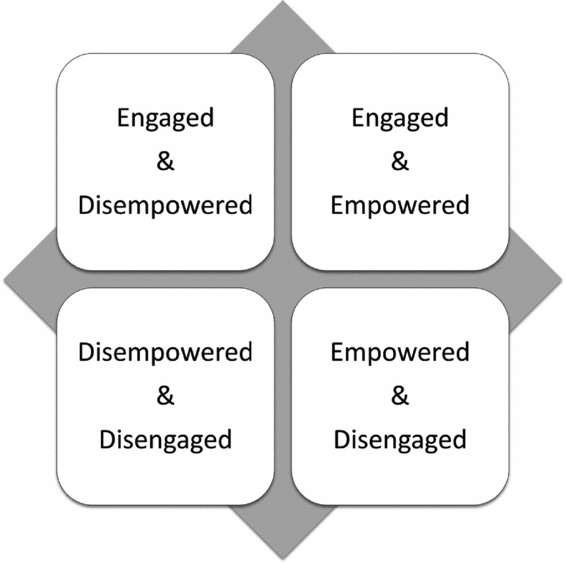
Exercise Four, Engaged and Empowered, drew from a conceptual framework proposed by Arvanitakis (in Arvanitakis & Sidoti, Reference Arvanitakis, Sidoti, Walsh and Black2011), wherein participants were then asked to explore and place themselves within the four possible areas delineating degrees of engagement with issues of concern and feelings of empowerment to act on those issues: (1) Engaged and Disempowered; (2) Engaged and Empowered; (3) Disempowered and Disengaged; and (4) Empowered and Disengaged. Engaged suggests being interested and keen to be involved. Disengaged suggests a disinterest in any particular issue. Empowered suggests a feeling of being able to participate, influence and make change. Disempowered suggests feeling a lack of opportunity to participate, influence and make change.
Figure 1 was posted at each venue. Participants wrote their name on a post-it note and stuck it in the quadrant/s in which they identified themselves, relating back to the issues of concern identified in Exercise One.
Exercise Four: Engagement and Empowerment.

Findings
Issues rating highly as a concern in Exercise One included the following: alcohol and drugs, crime, safety, violence, education, equity and discrimination, and health, including mental health. The identification of good health and wellbeing, along with education as a basis for employment, rated most highly. For example, about 40% of focus group participants chose alcohol and drugs as their first issue of concern, the problems of which were directly experienced in their local communities. Only 15% chose education as the first priority, although it was a significant recurring theme during focus group discussions, as we shall see below.
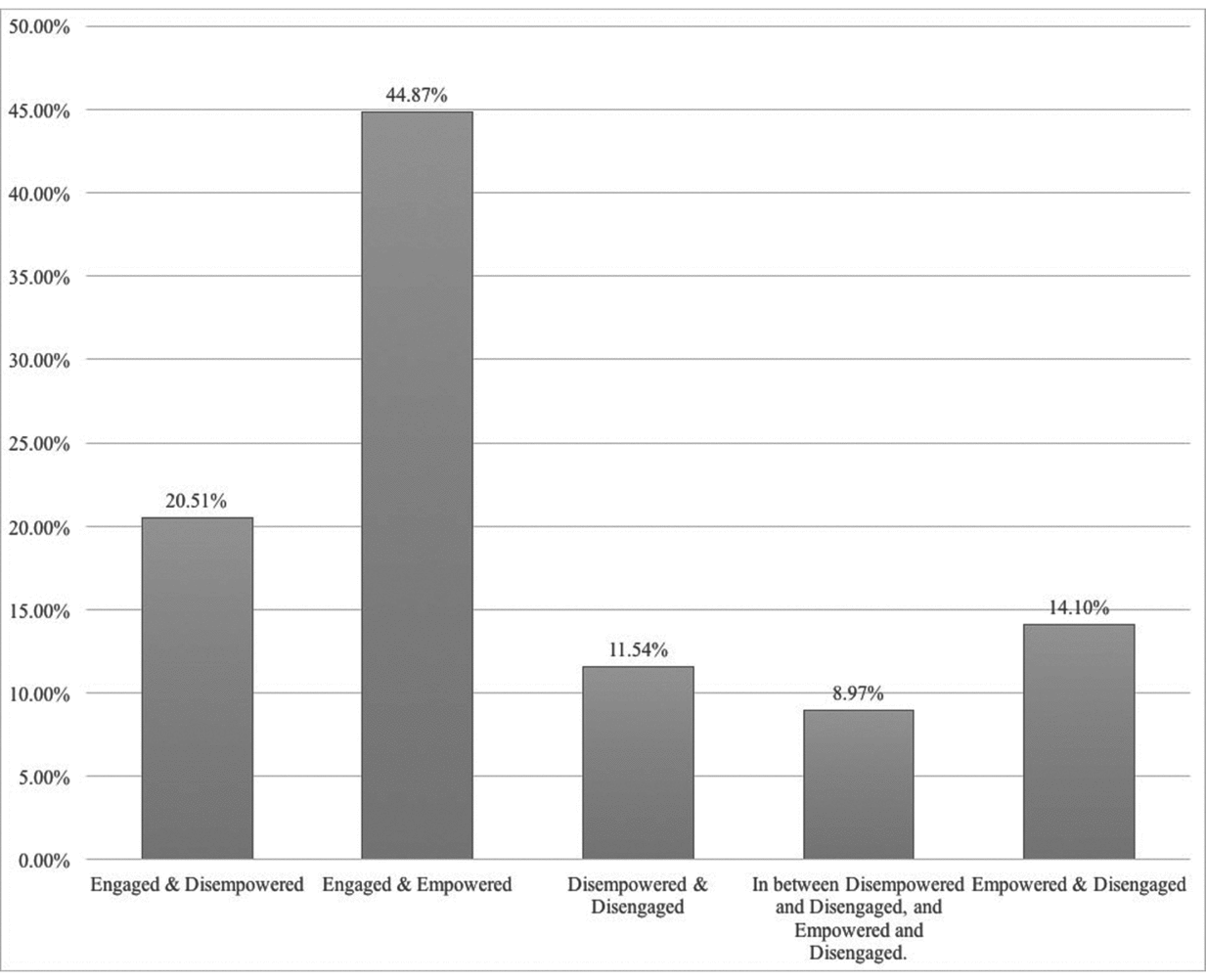
During the fourth focus group exercise (N = 78), 45% of respondents identified as Engaged and Empowered (see Figure 2). That is, they took an interest in issues of concern to them and felt that they could act on influencing those issues. Just 20.51% of responses identified as Engaged and Disempowered, that is, they were engaged with issues of concern but did not feel as though they could influence change in relation to them. As one respondent wrote: ‘I have strong beliefs and am highly engaged however I feel as though I can't do anything about it.’ Levels of reported disengagement were notable. 14.10% identified as Empowered and Disengaged, while 11.54% saw themselves as Disempowered and Disengaged. 8.97% positioned themselves as feeling somewhere in between Disempowered and Disengaged and Empowered and Disengaged. When viewed in total, the orientation towards disengagement is significant as reported by just over a quarter of participants (25.64%). This variation reflects the ambivalence of young people, particularly in relation to traditional forms and avenues of citizenship and democracy, which we will discuss below.
Feelings of Engagement and Empowerment.

Conventional approaches to democratic citizenship associate it with the legal status, entitlements and responsibilities of being a citizen (Marshall, Reference Marshall1964). These include rights to vote, to social mobility and to ‘cultural empowerment’; that is, ‘to participate effectively, creatively and successfully within a national culture’ (Turner, in Stevenson, Reference Stevenson2003, p. 12). Our starting point is to examine how Indigenous young participants viewed these dimensions.
Attitudes to Voting and Politicians
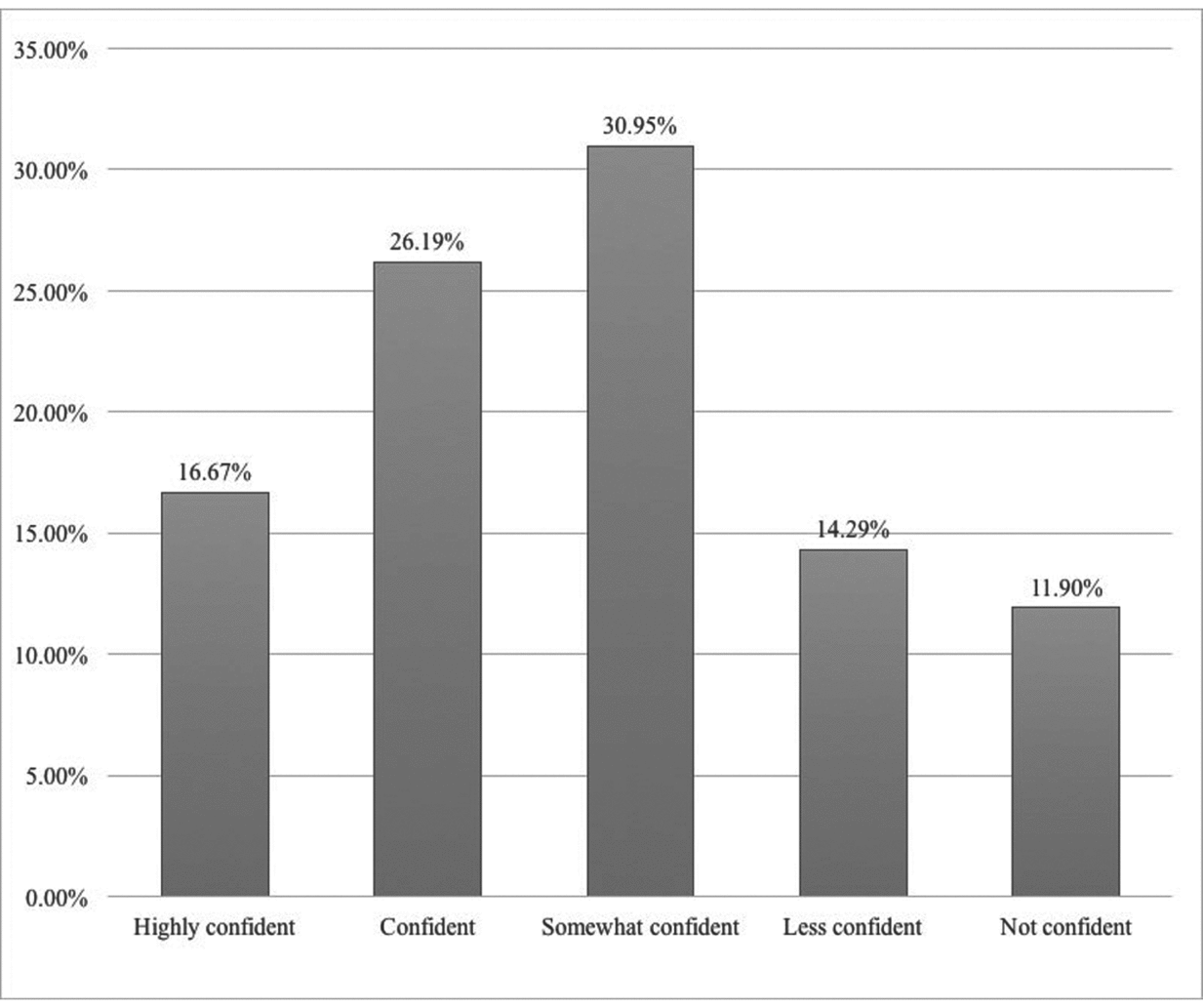
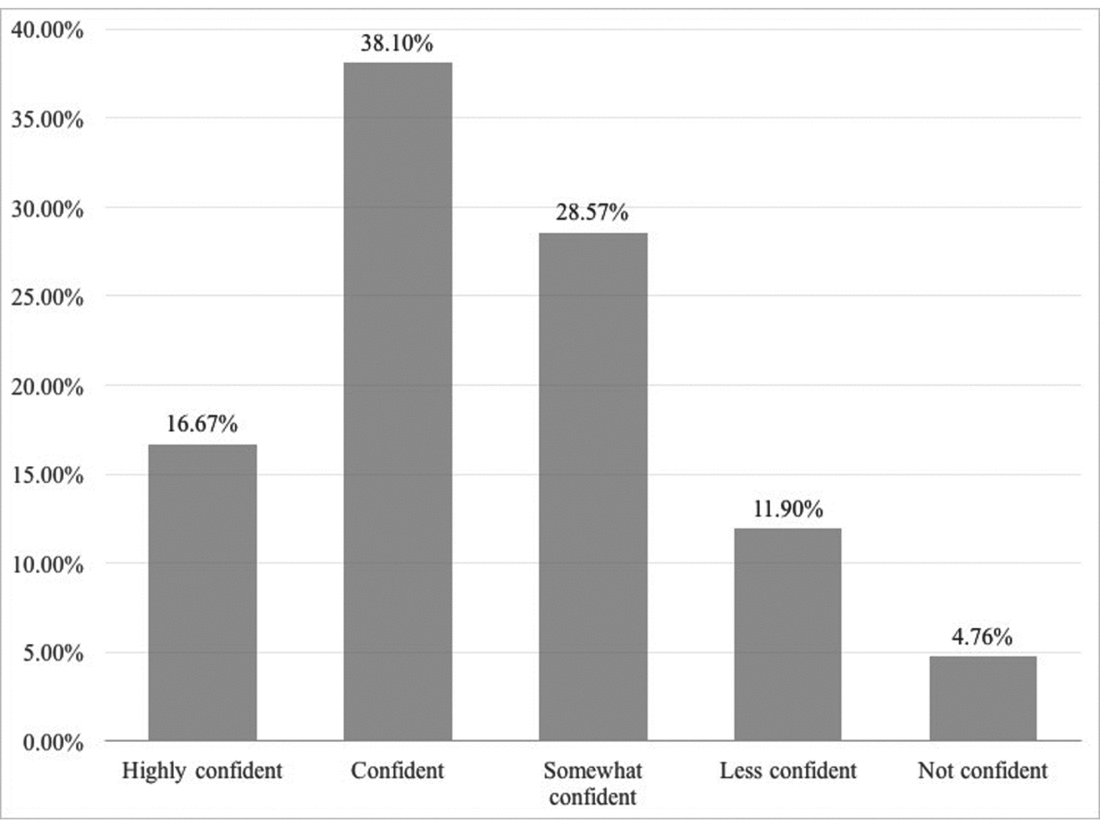
We begin with voting, which is a practice that is one of the first activities through which young people will experience formal citizenship. This experience is typically a feeling (Osler & Starkey, Reference Osler and Starkey2005, authors’ emphasis). Data from this study is consequently useful to understand young Indigenous people's understandings of, feelings towards and attitudes to electoral participation and fairness of the electoral system. According to the survey data (see Figure 3), when asked ‘How confident am I that I have an understanding of the electoral and voting system?’, 42.86% of survey respondents were confident or highly confident that they have an understanding of the electoral and voting system. When the somewhat confident category is included, 73.81% of participants felt that they had an understanding of the electoral and voting system.
Confidence in the understanding of the electoral and voting system.

Taking into consideration the age of some of the study's participants, it would be fair to presume that there was a developing understanding around the electoral and voting system processes. Survey findings suggest that an Indigenous young person who is closer to the voting age perceived that they had a better understanding of the democratic processes, such as voting and electoral systems and their role within these processes.
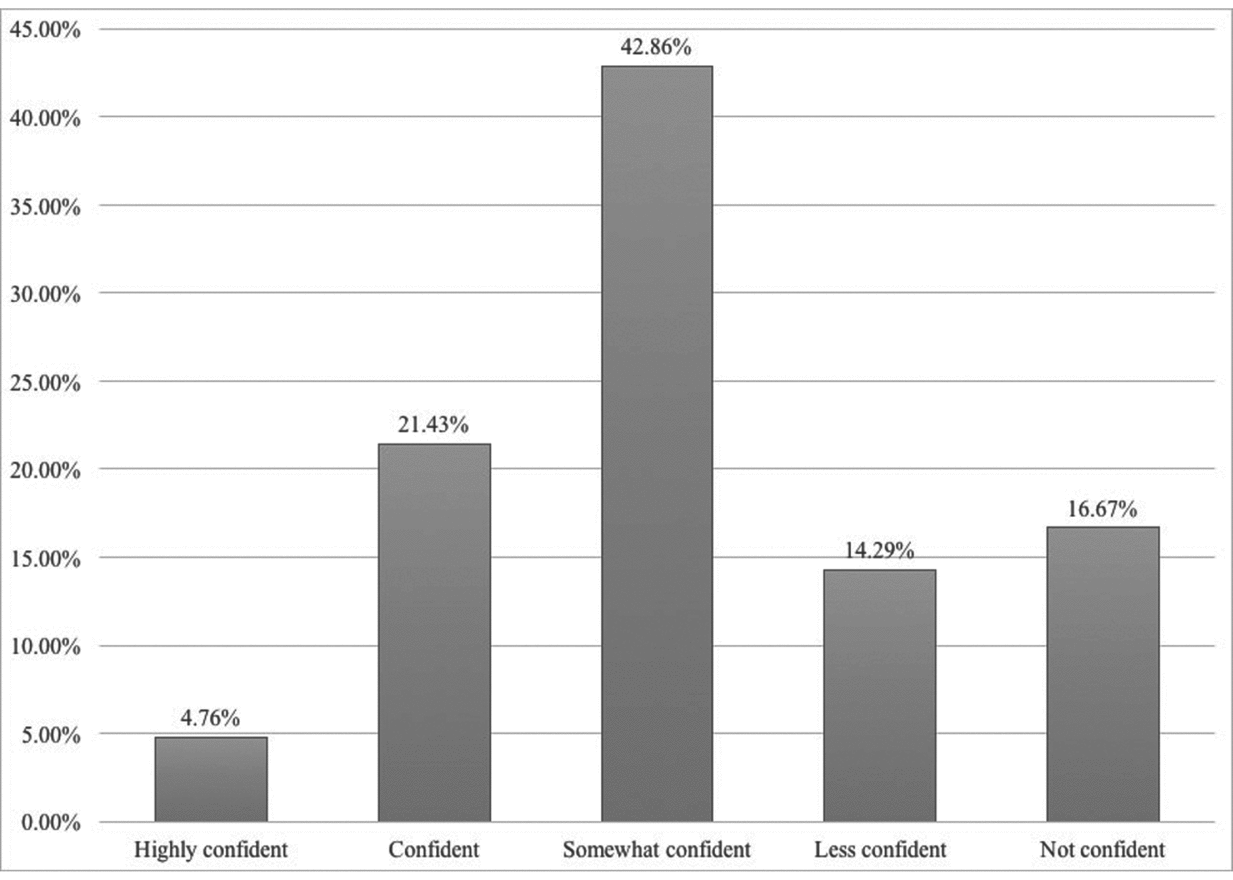
Participants were also asked ‘How confident am I that I believe that the electoral and voting system processes are fair?’ (see Figure 4). 26.19% of participants were highly confident or confident that they believed that the electoral and voting system process is fair. However, when the somewhat confident category is included, 69.05% of participants believed the process to be fair.
Confidence in the fairness of electoral system.

Participants who chose highly confident or confident commented about this issue in a number of ways. One noted that, with the extension of compulsory suffrage to Indigenous people in 1962, voting opened as a channel to participation. Another identified the importance of voting with a generational shift: ‘Aboriginal people didn't get to vote so that was unfair but now it is good other than some of our elders think that we don't have to vote’ (Survey Response).
Others noted the voting system provides greater equality of opportunity to people in general to; ‘have my say’; and ‘Many years ago the system was decidedly unjust and unfair but now there's freedom of choice’ (Survey Responses). For those who identified as Engaged and Empowered in Exercise Four, belief in the electoral system was perhaps best characterised by the view that:
Every vote counts, that's why you have all of Australia voting to see who they want put into it and that's what it means by as ‘’come vote local” because as an individual you can influence others which they would influence others in a continuous form (Focus Group Participant).
Other survey respondents offered the following favourable dispositions to voting along gender and cultural lines:
I believe as a young, Indigenous woman, our community needs to vote and that it is crucial for our voices to be heard. We do not want to elect someone who does not value Aboriginal culture, tradition and ways (Survey Response).
Another related a powerful response intimately tied to confidence in electoral participation, to their culture and social justice:
I understand my role as a strong Aboriginal woman in an unjust society, who must do all she can to ensure that the future generations live in a safe, beautiful and sustainable environment enriched in cultural knowledge. And that my vote contributes to what our future may look like. As well as the privilege of voting is something I should use to my advantage, due to not being able to vote in past (Survey Response).
The act of voting is associated here to the maintenance of cultural identity and cultural empowerment.
Counterbalancing these attitudes were those reflecting disengagement and feelings of disempowerment. Some key themes emerged in the reported barriers to influence and participation. Several focus group participants identified a lack of experience and knowledge of how best to exert influence, which was about ‘not having a plan of attack,’ ‘lacking self–confidence’ and ‘trusting yourself’ (Focus Group Participants). Some noted ageism as a barrier, with adults seen to not take young people's views seriously. Others who expressed a lack of confidence indicated a lack of knowledge of the democratic process itself. These included questions such as the following: ‘What's a democratic system?’ and that ‘I don't know anything about democracy I have no idea what it is,’ suggesting a combined lack of political knowledge, political literacy and resilience (Focus Group Participants).
Focus group discussions in particular suggested a more ambivalent relationship to conventional institutions and processes of democracy. Participants’ attitudes to voting and politicians in general were characterised by degrees of engagement and disengagement. For example, in one focus group, respondents reported attitudes ranging from a belief that voting ‘probably might change the community to make it . . . better’ (Focus Group Participant) to ‘I don't reckon mine would matter’ (Focus Group Participant). Similarly, when asked if they would vote in the 2016 Australian federal election, a range of opinions was also offered. For example, one Focus Group Participant would vote to ‘feel like I was involved – so that I would feel like I was a part of it.’ Voting was strongly associated here with having a voice. Examples of more disengaged views included the following: ‘They're going to do whatever they want to do anyway regardless of who we vote for or what we vote on. . .’ and ‘I'd rather pay the fines [for not voting]’ (Focus Group Participants).
Participants were asked how they felt about Australian politicians and if they would vote (hypothetically for some, who were ineligible due to their age). Responses were mixed, but tended to be negative. Disengagement from mainstream politics and politicians was pronounced, with low levels of interest in and identification with politicians a recurring theme. One stated: ‘I don't feel like I can do anything, so I don't take an interest in it.’ Another had ‘no interest in that at all’ in politicians. And as for participating in elections, one said ‘I wouldn't. . . Doesn't really faze me, the outcome’, while another ‘just wouldn't care’ (Focus Group Participants). One young survey respondent would not enrol to vote ‘because it's a waste of time.’
A male focus group participant was particularly strong in his view, suggesting that politicians are:
All criminals. They all take our money. . ., throw us under the gutter. They have no respect for Aboriginal people. [If] they want us to have a constitution put us in a constitution. We need a treaty. . . They won't give it to us. There was a big debate about was this country settled. . . It wasn't settled it was invaded. . . We didn't give them land, we didn't have an agreement. . . They tried to kill us off, [but] we're still here (Focus Group Participant).
It was added that ‘we don't get to actually choose who runs our country. It's just we choose a party but they'll choose a person so you don't really get that much say’ (Focus Group Participant).
Perhaps in response to these perceptions of seemingly remote elected officials, local sites were seen to be important places to enact everyday forms of citizenship, a key finding of this study. Of the total of respondents to the second focus group exercise (N = 79), a clear majority of respondents (59.49%) nominated the local exclusively as their main site of potential influence. 12.66% nominated the national exclusively, while only 3.78% listed the global as a potential site of influence.
Specific local sites and outlets in which young people could express their views were seen to be important enablers to participation and influence. As a key enabling sphere of participation and influence, these sites included home, work, community volunteering, the local council and health service, the Country Fire Authority, social groups, youth parliament, and ‘community events so they can actually get out the word in front of everybody. . . For example, bullying and suicide around here is bad,. . .so if they had someone come in and [hold a community event] about that issue and then actually show you how many people have actually committed suicide from bullying’ (Focus Group Participant).
Local people, such as teachers, mentors and peers, were also important enablers. Schools, football and netball clubs also featured prominently as local sites. Some of the respondents who believed they could engage in the democratic process held the view that: ‘I was taught [to vote] at school [and] I am confident in using this process.’ Through football and netball clubs, for example, participants felt they could influence their communities through coaching and ‘helping’ in leadership roles, such as being captain, umpires and other leadership groups (Focus Group Participant). Education and youth programs were identified as key enablers, such as leadership programs and events, camps, conferences, and training: ‘Many of my peers are part of these [youth participation] programs, and they inform me and keep me updated on current issues’ (Survey Response).
There were, however, differences among focus group participants as to whether coming from a small local community is either an enabler or inhibitor to influence. In one regional focus group, influence was seen to be more likely ‘because we have a small community and people would listen to us through forums and conferences’ (Focus Group Participant). But, again, some of these sites were viewed ambivalently: ‘Even though they might not listen, we still get the places to go to, like a council or something where we can still give our opinion and something like that. Even though they might not listen, that's still there’ (Focus Group Participant).
While the focus groups overall reported a strong local orientation, in certain circumstances the national sphere of influence was identified as stemming from the local. For Exercise Two, just under one in five respondents (19%) saw themselves as potentially influencing across more than one sphere of influence. 10.13% nominated both the local and national as potential sites of influence. The survey findings presented a stronger link between the local and the national. When asked: ‘How confident am I that I can identify important issues that need to be solved in my local and national community?’, 55% of participants were highly confident or confident in their ability to recognise the connection between politics and their own local and broader community issues, including at a national level. However, as Figure 5 indicates, when the somewhat confident category is included, 83.34% of participants believed they can recognise the connection between politics and their local and national community.
Confidence in issues that need to be solved in local and national community.

Some responses to Exercise Four also highlighted the intersection of local and national spheres of influence: ‘I am engaged and empowered, I can do anything not only at a local level but [at a] national level.’ Focus group discussions yielded further insight into this connection. During focus group discussions, it was suggested that ‘You have to go big to try and – I reckon in like the national scale they listen to kids more than the local’ (Focus Group Participant). There was agreement that making change best starts at the local level as a basis for influencing the national through connecting with others as a foundation for collective action: ‘The politicians have the power to improve or ruin communities through their decisions but ultimately it is the communities that choose our leaders’ (Survey Response). Some focus group participants perceived that they have a national influence through using Facebook and other media, national strikes, politics and the Koori Youth Summit. One young man felt that democratic freedoms provided by the state were potential enablers, in that ‘we live in a country that lets us have the opinion. . . In other countries, you say something against the leader and you get put in prison or something like that’ (Focus Group Participant).
Just under 9% proposed all three spheres (local, national and global) as potential sites of influence (8.86%). When combining figures of those who nominated one sphere with those who nominated additional spheres as well, a striking image appears which affirms that the local is perceived as a key site of influence, with the global seeming distant and abstract. Over half of respondents in total (53.16%) nominated the local, in contrast to 31.65% national and just 12.66% in total nominating the global sphere of influence. One participant reported lacking any knowledge of how to influence globally.
Several focus group participants hoped to have a bigger and wider influence in the future: ‘I believe I have influenced my local community so far. However I hope one day to influence people at a national level regarding social and political issues’; and ‘I feel like I can make a difference on a local level but national and global [levels] not right now.’ In contrast to this, just over 5% of respondents to Exercise Two reported feeling unable to influence any sphere at all.
Cultural Identity and Resilience
Cultural identity was a recurrent theme raised by focus group discussants as a basis for self-confidence. Similarly, resilience also emerged as a powerful basis for active participation. The focus groups, for example, highlighted key psychological factors that enabled active participation, such as self-belief, self-image, being courageous, pride in one's heritage culture and self-confidence. Confidence, it was suggested, could be built ‘if you try something and you fail it, then you go back and try it harder and then you might succeed at it.’ This is integral to resilience, which as one female participant summarised it, is the will to ‘keep trying’ (Focus Group Participant).
Perhaps most significantly, being Indigenous was seen by some members of the focus groups to be a barrier to active participation. One female participant said that for ‘the white person [it] would be a lot easier for them to get noticed and do stuff. . .’ (Focus Group Participant) and that ‘because being an Indigenous person it's harder to get into the higher places [of government] than what white people would’ (Focus Group Participant). Another respondent also highlighted the fact that ‘there's never been an Aboriginal Prime Minister, it's always been a white guy.’
At the same time, being Aboriginal also enabled the possibility of gaining the support of other Aboriginal people. One male participant from a regional focus group highlighted how:
it's harder to get a voice out there. . .because you're Aboriginal but then if you put it another way, if you're Aboriginal then you get your Aboriginal community to come and help you and you get a bigger voice, more people helping you (Focus Group Participant).
Local communities were seen to be sources of cultural strength and resilience.
Attitudes to Social Mobility
Turning now to social mobility, focus groups, in particular, raised education and employment as a key issue of concern, an enabler and barrier to influence (because of negative stereotypes), which were closely linked: ‘[Education] gets you to places that you would never think you would get there. . . It depends what you want to do though, if you want to get into banking or something having that education will help you get there’ (Focus Group Participant). Similarly, one regional young participant suggested: ‘You need education to have a good life, [and] get a good job’, ‘because you need it through life’ (Focus Group Participant).
In one regional focus group, the attainment of sufficient education was something some participants perceived to be a struggle to achieve. One young female highlighted that ‘when you don't complete school it's more challenging to get where you want to go’ (Focus Group Participant). Respondents made explicit links between social mobility and political influence. Lack of educational attainment was identified as a barrier to accessing and assuming the mantle of political leadership: ‘well if say someone dropped out in Year Seven and they wanted to make a difference and try to become, like into say prime minister area, they wouldn't allow him because. . . he'll stuff the country’ (Focus Group Participant). It was added that ‘they'll just look down at you, like well you shouldn't be here you're not in our league because you never finished school’ (Focus Group Participant).
Discussion
The overall findings from Exercise Four reflect the range and diversity of attitudes held by young people generally, sharing an overall ambivalence to conventional channels and institutions of influence. This ambivalence towards the electoral system, and politicians in particular, is consistent with young people in general, as well as wider segments of the Australian population. Erosion of trust in the electoral system and democracy is pronounced across all age groups and has been occurring for some time (Australia Institute, 2013; Markus, Reference Markus2016; Print, Saha, & Edwards, Reference Print, Saha and Edwards2004). For example, the attitudes of respondents to our study reflect findings from other relevant research conducted by the Lowy Institute that have found that a significant proportion of young people are sceptical about democracy in general (Oliver, Reference Oliver2015). Detailed studies of young people's attitudes to democratic values and participation in society have found that while many Australian youth have a well-developed set of democratic values, they adopt a passive rather than an active style of engaging in conventional citizenship activities. Many participate formally through voting and they will pursue issues where they see some community benefit, but they do not see themselves exercising an effective presence in the formal political system (Mellor & Kennedy, Reference Mellor and Kennedy2003).
The lack of knowledge and experience as a barrier to influence highlighted by focus group discussants is consistent with wider studies into young people's confidence in, and knowledge of, democracy and participation (Print et al., Reference Print, Saha and Edwards2004). Similarly consistent with other findings about youth in other countries (e.g. Coe, Wiklund, Uttjek, & Nygren, Reference Coe, Wiklund, Uttjek and Nygren2016), barriers to influence and participation included a perceived ageism, in that no adults appeared to be prepared to have confidence in and listen to them because they are young.
But while the narratives provided in this study signalled some experiences and feelings of marginalization and discrimination, some cast political engagement and, importantly, disengagement as an act of resistance. This can also be seen as an enactment of citizenship.
Young people's experiences of and attitudes to the enactment of citizenship are significant in light of insights from the respondents to this study. Recent scholarship on citizenship has further sought to emphasise how citizenship is enacted. Looking at acts of citizenship reorients the focus of analysis away from ‘what people say (opinion, perception, attitudinal surveys) to what people do’ (Isin, Reference Isin, Isin and Nielsen2008, p. 371). By understanding citizenship as ‘part of daily life, something we enact’ (Staeheli, Ehrkamp, Leitner, & Nagel, Reference Staeheli, Ehrkamp, Leitner and Nagel2012, p. 631), this performative dimension of citizenship is important to understanding the experiences of the young Indigenous people encountered in this study. It seeks to move beyond conceptualisation of citizenship as a formal legal status, entailing rights such as voting, to young people's ordinary or everyday experiences of citizenship (Harris & Roose, Reference Harris and Roose2013; Harris, Wyn, & Younes, Reference Harris, Wyn and Younes2010).
These intersect with affective dimensions of citizenship and politics of belonging according to which belonging is constructed within ‘particular collectivities’ characterised by boundaries which ‘are often spatial and relate to a specific locality’ (Yuval-Davis, Reference Yuval-Davis2011, p. 10). The findings of this study further affirm the importance of how young people's daily citizenship that is enacted in such local sites echo other studies, such as one of young people in New Zealand from Māori, Pacific Island and Asian backgrounds which found that ‘emotive, affective and embodied citizenship responses. . . are intricately tied to spatial and cultural landscapes’ (Wood, Reference Wood2013, p. 50). This is perhaps why connection to the local community is important to many of the young Indigenous participants in this study.
In our study, these dimensions of citizenship were also bound up with notions of identity, resilience and social mobility. This suggests a need to interrogate other related dimensions of citizenship, such as its cultural and economic dimensions, in more nuanced ways.
Cultural identity is another key dimension of citizenship, which in this study was linked to local feelings of engagement and influence. Participants identified a powerful link between their cultural background, educational attainment and political influence, particularly at the local level.
Confidence, resilience and culture were often entwined. Being shy and having low confidence, shame, being nervous, being tired, and ‘being scared’ were cited as barriers to participation and influence. One female focus group participant said it ‘comes down to that internal barrier. . . like you have fear of embracing issues because fear of discrimination against you because [being] Aboriginal you could feel that or it could be fear of not getting heard’ (Focus Group Participant). But at the same time, local communities were also seen to reinforce senses of identity, pride and resilience.
Social mobility, and the capacity to participate economically as a source of security, is a major concern of young Australians (Cave, Fildes, Luckett, & Wearring, Reference Cave, Fildes, Luckett and Wearring2015; Robinson & Lamb, Reference Robinson and Lamb2009). This is particularly the case for Indigenous young Australians, who are among the most vulnerable to marginalisation from opportunities to work and study postschool. There are pronounced differences in their transitions to work and further study postschool compared to Australian youth as a whole (Long & North, Reference Long and North2009). Participants in our study were sometimes acutely aware of this. Education was seen to be a key enabler of young Indigenous Australians’ ability to participate in and influence society, but at the same time, from a social perspective, being Indigenous was closely associated with the challenges arising from the lack of educational attainment, as well as the negative perceptions of others as to their capacity to gain it:
[P]eople say. . . “Wow!” They don't generally think Indigenous people can do that, it's just the stereotype that they'll drop out, try and get on the dole. . . But if they see look, “You completed Year 12! You're Koori!” That's just like two bonuses. They find it, “Wow, you're actually trying to do something for yourself” (Focus Group Participant).
This is an example of resilience in that the participant sees himself as being able to overcome the difficulty posed by stereotypical assumptions that Indigenous young people are not able to complete school. Nevertheless, the participants’ narratives reflected a status-oriented perspective that equates education with higher status, but unlike the political engagement narratives outlined above, they did not (with a few exceptions) necessarily identify the structural inequities faced by Indigenous youth that make educational attainment harder (and less likely) compared to many young people from other backgrounds.
School completion is as much a basis for social mobility as for overcoming stereotypical prejudices and barriers that constrain perceptions by young people of their social mobility. In doing ‘something for yourself,’ resilience here is individualised; but a social dimension of resilience is equally at play. Education was, for example, linked to enabling community strengthening and social cohesion. It was seen to be important not only for individual mobility, but also for the agency it affords to assist others: ‘So you can get a job and then you can help other people, it's not just for yourself it's to help other people. . . Because you can teach other people’ (Focus Group Participant). It is a source of resilience that is understood as not only something derived in individuals, but also in their relationship to members of their wider social ecology, such as peers, mentors, teachers, elders and parents, who were identified by participants to be important to overcoming adversity by drawing on community resources to build resilience and foster participation and influence. Elders, for example, were seen by some as an important enabler, to ‘get them to go around to the other adults and. . . get them to talk to them about what your opinion is’ (Focus Group Participant) (although as one testimony above suggests, some elders ‘think that we don't have to vote’). Local social ecologies were thus important enablers.
These social ecologies of resilience are seen in the wider contemporary literature to be important beyond individualised traits and cognitive ability (Rose, Reference Rose2014; Ungar, Reference Ungar and Ungar2013). Our findings suggest that it is at the local level in which these social ecologies can flourish. Participants in our study found meaning and possibility to influence through everyday acts of citizenship, in which the act of doing is valued and valuable. This has also been found among other young Australians (Walsh & Black, Reference Walsh and Black2018b). We suggest these social ecologies are potentially important to developing citizenship for ‘thicker’ notions of democracy.
At a wider level, discourses of democracy (Zyngier, Reference Zyngier2016) have been variously characterised in terms of representative versus participatory democracy, with the former highlighting electoral processes, and the latter focusing on critical engagement and social justice. According to Crick (Reference Crick2000), democracy is a promiscuous word that is archetypically difficult to pin down, with as many meanings as there are uses for the term because of its conceptual complexity. This study affirms the contested nature of the term. The notion of thick and thin democracy (Gandin & Apple, Reference Gandin and Apple2002) builds on the seminal work of Barber (Reference Barber2004) who raised pivotal questions on the saliency of liberal democracy, including the tension between individualism and the rights of all citizens framed by concepts of shallow and deep democracy (Furman & Shields, Reference Furman, Shields, Firestone and Riehl2005), suggesting that participatory citizenship demands every member of the community to participate in self-governance which leads to a strong(er) democracy.
The ambivalence suggested in this study highlights an orientation towards thin and individualised notions of democracy (e.g. which identified with processes such as voting). Local sites were important to developing this understanding of how democracy works at the ‘thin’ level: ‘Being a part of the [Koori Youth Club] I have a better understanding of how it works and how laws and systems are enforced, implemented or monitored’ (Survey Response). A task for educators is how to harness in young people this understanding of ‘thin’ democracy, alongside deeper feelings of local efficacy and power of social ecologies, to foster feelings, capabilities and acts to exert national and global influence.
Before concluding this paper, it is important to highlight a methodological limitation in this study in relation to use of the term ‘empower.’ When used in the context of Indigenous young people, focus group discussions revealed how the term is culturally laden with ideas of power rooted in dominant, non-Indigenous discourses and structures of ‘power holders.’ While the term was explicitly discussed in the focus groups in relation to influence at local, national and global levels, the study suggests that the very idea of empowerment is tethered to power structures and discourses that may be patronising and alienating to the Indigenous participants. Nevertheless, many participants in the study were particularly aware of certain gendered- and racially-based nature of dominant power structures.
Conclusion
While significant variations in degrees of engagement and perceived empowerment (Exercise Four) highlight a pervasive ambivalence among young Indigenous respondents’ interest in, and potential influence of, issues of concern, a positive image emerges overall of their engagement (75.42%). While it is acknowledged that these findings may be skewed towards the attitudes of participants in the leadership program who may be predisposed to engagement by virtue of their participation in the program, engagement was experienced predominantly by most participants in the study at the local level. The first key dimension of citizenship arising in this study is its spatial or situated-ness in relation to the local in which social ecologies play a key role. Many participants highlighted the importance of school and education-related activities at this level and the affective feelings of being involved and helping others. This sends a powerful message to educational practitioners and policy makers: the local is a key site in positively shaping the citizenship of young people, with an opportunity for schools and quotidian educational activities in local settings to play a central role.
Following Wood and Black (Reference Wood and Black2016), re-theorising citizenship in terms of acts rather than legal status urges consideration of the conditions in which citizenship is made. Citizenship is bound up with cultural identity, resilience and social mobility. Given the strong relationship of citizenship to affective dimensions of citizenship that is often felt for the first time by young people through their schools, local community participation and voting, educators working in a range of settings can therefore play an important role in empowering and responding to the ambivalent attitudes and experiences of young Indigenous Australians.
Enhancing democratic citizenship and participation as a basis to influence should therefore start with a more nuanced and multi-faceted understanding of citizenship, including and beyond its legal status. This includes being more attuned to these everyday experiences and citizenship acts that do not necessarily register on conventional notions and measures of citizenship (Wood, Reference Wood, Kallio, Mills and Skelton2015). This insight has a wider set of implications in relation to contemporary understandings of youth citizenship. Research shows that young people are increasingly politically active via new modes and spaces, such as online, rather than via traditional avenues, such as voting and membership of political parties. When measured in terms of conventionally recognised actions, such as joining political parties, young people may be seen to be disengaged, but if everyday acts of citizenship are included, such as informal participation in the community, advocacy groups or in campaigns or issues by sharing or commenting on social media, then youth engagement significantly increases (Collin, Reference Collin2008; Dusseldorp Skills Forum & Saulwick Muller Social Research, 2006; O'Neill, Reference O'Neill2014).
While this study affirms a need to better understand how and the conditions in which citizenship is made, this is not to suggest that rights are unimportant. As Yarwood (2014, p. 70) suggests, ‘people only attain full citizenship when they mobilise, use and perform their rights and duties.’ The findings of this study suggests that consideration of all these dimensions leads to a more nuanced understanding of citizenship that provides valuable insights to educators seeking to develop more engaged and empowered Indigenous young people in Australia.
Acknowledgments
The authors would like to gratefully acknowledge the research assistance provided by Jasmine Evans and Misol Kim. In 2016, the authors were contracted by the Victorian Electoral Commission and the Tigers in Community Foundation Limited through the Korin Gamadji Institute to evaluate the Richmond Emerging Aboriginal Leadership (REAL) program. While this paper draws from data collected during that evaluation, the analysis and views expressed in this paper are beyond the remit of that evaluation and are those solely of the authors and not those of the Victorian Electoral Commission, the Tigers in Community Foundation Limited or the Korin Gamadji Institute.
About the Authors
Lucas Walsh is Deputy Dean (Acting) in the Faculty of Education at Monash University. He was previously Director of Research and Evaluation at The Foundation for Young Australians. He has been invited to advise local, state and federal governments, including the National Curriculum Board and Australian Institute for Teaching and School Leadership. He has published one co-edited book and two co-authored books. His fourth and latest book, ‘Educating Generation Next: Young People, Teachers and Schooling in Transition,’ is published by Palgrave Macmillan.
David Zyngier is a Senior Lecturer in the Faculty of Education at Monash University and a former school principal and state school teacher. His research focuses on Culturally, Linguistically and Economically Diverse (CLED) learning communities; social justice; democratic education; teacher knowledge and beliefs. He is a co-founder of the Global Doing Democracy Research Project, an international project examining perspectives and perceptions of democracy, and in 2013 was awarded an Australian Research Council Fellowship ($365,000) to further research teachers' perceptions of democracy.
Venesser Fernandes is a Lecturer of educational leadership studies in the Faculty of Education, Monash University, Melbourne, Australia. She is currently teaching the Masters of Leadership Studies, Masters in Education and Masters in International Development programs. Her teaching and research interests include leadership and organisational development studies; school leadership studies; youth leadership studies, school accountability and improvement systems, data-informed decision-making processes in education; change management systems; quality management systems; using and evaluating research evidence in education; and educational policy. She has also been a school reviewer for the Department of Education and Training, Victoria from 2015 to 2017. She is currently carrying out research in Australian schools in the area of data-informed decision-making and evidence-based school leadership.
Hongzhi Zhang is a Lecturer in the Faculty of Education, Monash University. His research interests include educational equity, education policy, Asia study, curriculum and pedagogy. Drawing on educational philosophies of Asian traditions, he has a sustained track record of publication of work about ‘Asia as method’ in educational studies (with Dr Philip Chan and Prof Jane Kenway, an edited book by Routledge—Asia as Method in Education Studies: A Defiant Research Imagination, published 2015).