INTRODUCTION
Over 2 billion individuals are infected with one or more helminth species, making them among the most prevalent infections of humans (Hotez et al. Reference Hotez, Bundy, Beegle, Brooker, Drake, de Silva, Montresor, Engels, Jukes, Chitsulo, Chow, Laxminarayan, Michaud, Bethony, Correa–Oliveira, Shu–Hua, Fenwick, Savioli, Dean, Joel, Anthony, George, Mariam, David, Prabhat, Anne and Philip2006; de Silva et al. Reference de Silva, Brooker, Hotez, Montresor, Engels and Savioli2003). In many resource-limited settings, these helminth infections directly contribute to significant morbidity, particularly among young children and pregnant women (WHO, 2010). In addition, growing evidence suggests important immunological interactions between helminths and other diseases, including HIV-1, malaria and tuberculosis (Fincham et al. Reference Fincham, Markus and Adams2003; Mwangi et al. Reference Mwangi, Bethony and Brooker2006; Brooker et al. Reference Brooker, Akhwale, Pullan, Estambale, Clarke, Snow and Hotez2007; Elias et al. Reference Elias, Britton, Kassu and Akuffo2007, Reference Elias, Britton, Aseffa, Engers and Akuffo2008; Troye-Blomberg and Berzins, Reference Troye-Blomberg and Berzins2008; Labeaud et al. Reference Labeaud, Malhotra, King, King and King2009; Moreau and Chauvin, Reference Moreau and Chauvin2010; Roussilhon et al. Reference Roussilhon, Brasseur, Agnamey, Perignon and Druilhe2010). In sub-Saharan Africa, where the vast majority of HIV-1 infected individuals reside, over 22 million people are estimated to be co-infected with both helminths and HIV-1 (Fincham et al. Reference Fincham, Markus and Adams2003; UNAIDS, 2007). Evidence from several studies suggests that de-worming individuals co-infected with HIV-1 may delay HIV-1 disease progression by reducing HIV-1 viral load and/or increasing CD4 counts (Wolday et al. Reference Wolday, Mayaan, Mariam, Berhe, Seboxa, Britton, Galai, Landay and Bentwich2002; Brown et al. Reference Brown, Kizza, Watera, Quigley, Rowland, Hughes, Whitworth and Elliott2004; Kallestrup et al. Reference Kallestrup, Zinyama, Gomo, Butterworth, Mudenge, van Dam, Gerstoft, Erikstrup and Ullum2005; Modjarrad et al. Reference Modjarrad, Zulu, Redden, Njobvu, Lane, Bentwich and Vermund2005; Nielsen et al. Reference Nielsen, Simonsen, Dalgaard, Krarup, Magnussen, Magesa and Friis2007; Walson et al. Reference Walson, Otieno, Mbuchi, Richardson, Lohman-Payne, Macharia, Overbaugh, Berkley, Sanders, Chung and John-Stewart2008, Reference Walson, Herrin and John-Stewart2009). The magnitude of changes in HIV-1 viral load documented in both individual randomized trials and in a pooled analyses of all available data (0·3–0·5 log10 copies/mL) may increase the annual risk of progression to an AIDS-defining illness or death by as much as 25%–44% (Modjarrad et al. Reference Modjarrad, Chamot and Vermund2008; Baggaley et al. Reference Baggaley, Griffin, Chapman, Hollingsworth, Nagot, Delany, Mayaud, de Wolf, Fraser, Ghani and Weiss2009). It is plausible that providing anthelmintics to individuals with HIV-1 may be a safe, inexpensive and practical intervention to slow progression of HIV-1.
Variability in the geographical distribution of individual helminth species, as well as species-specific differences in the host response to helminth infection, may influence the relative benefit of de-worming in co-infected individuals (Brooker et al. Reference Brooker, Rowlands, Haller, Savioli and Bundy2000, Reference Brooker, Kabatereine, Smith, Mupfasoni, Mwanje, Ndayishimiye, Lwambo, Mbotha, Karanja, Mwandawiro, Muchiri, Clements, Bundy and Snow2009; Anthony et al. Reference Anthony, Rutitzky, Urban, Stadecker and Gause2007; Hewitson et al. Reference Hewitson, Grainger and Maizels2009; Bourke et al. Reference Bourke, Maizels and Mutapi2010; WHO, 2010). Two randomized trials examining the effect of treating helminths on markers of HIV-1 progression have suggested significant benefit with the treatment of specific helminth species. In a randomized double-blind, placebo-controlled trial conducted in Kenya, significantly higher CD4 counts and a trend towards lower plasma HIV-1 viral load were reported following treatment with albendazole among individuals with documented Ascaris lumbricoides at baseline (Walson et al. Reference Walson, Otieno, Mbuchi, Richardson, Lohman-Payne, Macharia, Overbaugh, Berkley, Sanders, Chung and John-Stewart2008). In this study, significant benefit was not observed following the treatment of other species of soil-transmitted helminths. In addition, another randomized trial conducted in Zimbabwe also suggested a significant attenuation of plasma HIV-1 viral load increase following the treatment of Schistosoma mansoni (Kallestrup et al. Reference Kallestrup, Zinyama, Gomo, Butterworth, Mudenge, van Dam, Gerstoft, Erikstrup and Ullum2005). It is unclear whether these differences in effect associated with the treatment of individual helminth species represent species-specific differences in the host immune response to de-worming, differences in the effectiveness of treatment regimens used for each species, or a failure to adequately power these studies to detect other important species-specific differences in treatment effects. It is important to examine the effect of eradicating individual helminth species on markers of HIV-1 disease transmission in order to target de-worming strategies to provide maximum benefit to co-infected individuals.
We previously reported data from a systematic review and meta-analysis of the published literature documenting benefit following helminth treatment among HIV-1 co-infected individuals (Walson et al. Reference Walson, Herrin and John-Stewart2009). Given the possible differences in effect observed with individual helminth species, we have conducted a meta-analysis of these data to determine the effect of treatment of individual helminth infections on markers of HIV-1 progression. In addition, we examined strengths and limitations of available studies and suggest important considerations for the design and methodology of future studies evaluating the impact of de-worming among HIV-1-infected individuals. Determining if the effect of de-worming on markers of HIV-1 progression varies by helminth species may improve our understanding of host immunity and inform the development of effective interventions for HIV-1/helminth co-infected individuals.
MATERIALS AND METHODS
Searching strategy
We conducted a systematic review of the literature using the methods of the Cochrane Collaboration (Higgins and Green, Reference Higgins and Green2009). The full text of the search strategy employed has been published previously (Walson and John-Stewart, Reference Walson and John-Stewart2008). The search was updated in January 2010 using MEDLINE (1966–2010), EMBASE (1980–2010), CENTRAL online (1980–2010) and AIDSearch online (1980–2010) to identify research studies that investigated the association between helminth co-infection and HIV-1 disease progression. The references of all identified articles, as well as review articles were examined to locate additional studies not identified during the computerized search. Studies published in all languages and in all countries were considered.
Selection
Each study was reviewed independently by the authors and included if it met all 5 of the following criteria: (1) study population included HIV-1 seropositive individuals with documented helminth co-infection; (2) helminth infection was documented by direct stool microscopy, concentration techniques, other microscopic methods (such as Kato-Katz), culture of stool samples, antigen testing methods (e.g. ELISA kits), modified Knott's concentration methods for microfilaria, or other immunochromatographic testing methods; (3) anthelmintic therapy was defined as any intervention approved for use in the eradication of helminth infection in humans, including benzimidazoles, ivermectin, praziquantel, diethylcarbamazine, bithionol, oxamniquine, pyrantel and nitazoxanide; (4) studies utilized an appropriate control group including comparison to another anthelmintic drug, placebo, no treatment, or helminth uninfected individuals; and (5) study design was limited to either a randomized control trial comparing treatment to placebo among helminth-infected individuals, or a prospective cohort design comparing treatment among helminth-infected individuals to non-treated, non-helminth-infected individuals. The above criteria were selected to increase comparability between the studies.
Quality assessment
Quality assessments of observational and randomized trials have been previously published (Walson and John-Stewart, Reference Walson and John-Stewart2008; Walson et al. Reference Walson, Herrin and John-Stewart2009). Quality of the studies varied both within study design and between study designs. Randomized studies were of the highest quality of included studies. Quality scores were not assigned.
Data abstraction
Separate standardized data abstraction forms were used for randomized trials and cohort studies. Authors JW and GJS independently extracted the following data elements: author(s), year of publication, year in which study was conducted, study design, study duration, completeness of follow-up for cohort studies, country and location of the study, setting (e.g. urban or rural, hospital or clinic), method(s) of recruitment; number of participants, characteristics of participants (age, gender, socioeconomic status, HIV-1 stage if available), details of intervention (medication, dose, duration, number of treatments), details of outcomes (change in HIV-1 RNA, change in CD4 count, change in rate of clinical HIV-1 disease progression, changes in WHO or CDC staging, mortality), and quality assessment.
Where data were incomplete, attempts were made to contact the original authors for clarification of relevant information. Authors were asked to provide data when outcomes or populations included in this review were not clearly defined in published manuscripts.
Study characteristics
Classification of studies
Study design was classified as either prospective cohort or randomized-controlled trial (RCT). Prospective cohort studies compared HIV-1 and helminth-co-infected individuals who were treated with anthelmintics to an internal comparison group consisting of HIV-1 infected, helminth uninfected individuals who did not receive anthelmintics. Randomized controlled trials were those studies in which assignment to treatment group (active drug or placebo) was determined by random allocation.
Outcome
The primary outcomes of interest were changes in plasma HIV-1 RNA levels and changes in absolute CD4 counts before and after use of anthelminthic therapy. Secondary outcome measures included markers of clinical disease progression, adverse events and mortality.
Quantitative data synthesis
Results from a systematic review and meta-analysis of the data by species are presented for those species evaluated in multiple studies and treated according to a standardized treatment recommendations. This is followed by a summary of results for species evaluated in only one study, or species-specific infections not treated according to the recommended treatment guidelines (Anonymous, 2007). CD4 and viral load outcomes included in this review were reported using similar continuous scales of measurement. CD4 counts were measured in cells/mm3 and viral load was measured as log10 copies/mL. A weighted mean difference (WMD) and 95% confidence interval (CI) were computed as the change in CD4 count and change in log10 HIV-1 RNA after anthelmintic treatment (compared to participants who were helminth uninfected and untreated). WMDs of CD4 count and HIV viral load were evaluated between baseline and 12 weeks post-treatment in treatment and placebo groups in randomized trials (Kallestrup et al. Reference Kallestrup, Zinyama, Gomo, Butterworth, Mudenge, van Dam, Gerstoft, Erikstrup and Ullum2005; Nielsen et al. Reference Nielsen, Simonsen, Dalgaard, Krarup, Magnussen, Magesa and Friis2007; Walson et al. Reference Walson, Otieno, Mbuchi, Richardson, Lohman-Payne, Macharia, Overbaugh, Berkley, Sanders, Chung and John-Stewart2008). The length of time between baseline and post-treatment follow-up used in the calculation of WMDs varied slightly in cohort studies from either 4 months (Elliott et al. Reference Elliott, Mawa, Joseph, Namujju, Kizza, Nakiyingi, Watera, Dunne and Whitworth2003; Modjarrad et al. Reference Modjarrad, Zulu, Redden, Njobvu, Lane, Bentwich and Vermund2005), or 6 months (Brown et al. Reference Brown, Kizza, Watera, Quigley, Rowland, Hughes, Whitworth and Elliott2004) and comparisons were between helminth infected/treated and uninfected/untreated (Elliott et al. Reference Elliott, Mawa, Joseph, Namujju, Kizza, Nakiyingi, Watera, Dunne and Whitworth2003; Brown et al. Reference Brown, Kizza, Watera, Quigley, Rowland, Hughes, Whitworth and Elliott2004; Modjarrad et al. Reference Modjarrad, Zulu, Redden, Njobvu, Lane, Bentwich and Vermund2005). The meta-analysis used a DerSimonian and Laird random effects model to compute pooled WMDs of CD4 count and HIV viral load. The Cochrane's chi-squared test for heterogeneity set at a significance of P<0·10 was evaluated. The extent of heterogeneity was measured using tau squared, a measure of between-study variance. Data were analyzed using Stata 11 (Stata Corporation, College Station, TX) and figures were created using Stata version 11.
RESULTS
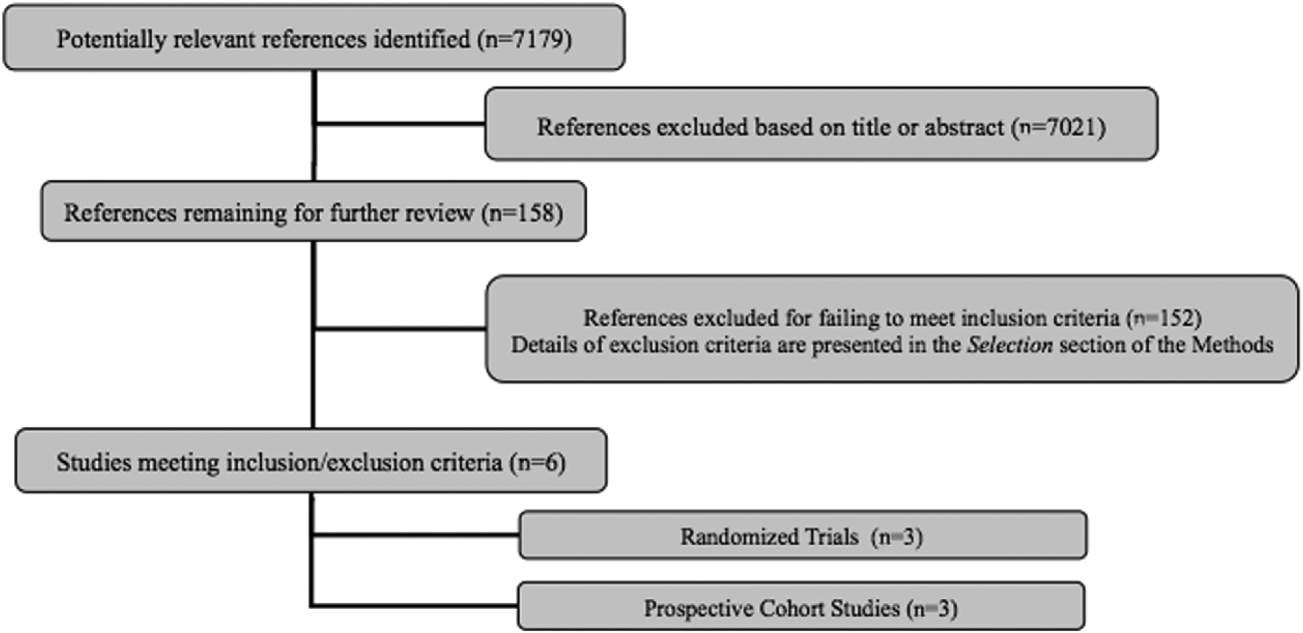
Using the search criteria outlined above, we identified 7,179 published studies of which 6 articles met the pre-specified inclusion criteria (Fig. 1). The study population included HIV-1-infected adults co-infected with at least one helminth species. The number of studies evaluating each helminth species is as follows; (S. mansoni (n=4) (Elliott et al. Reference Elliott, Mawa, Joseph, Namujju, Kizza, Nakiyingi, Watera, Dunne and Whitworth2003; Brown et al. Reference Brown, Kizza, Watera, Quigley, Rowland, Hughes, Whitworth and Elliott2004; Kallestrup et al. Reference Kallestrup, Zinyama, Gomo, Butterworth, Mudenge, van Dam, Gerstoft, Erikstrup and Ullum2005; Modjarrad et al. Reference Modjarrad, Zulu, Redden, Njobvu, Lane, Bentwich and Vermund2005), Strongyloides stercoralis (n=2) (Brown et al. Reference Brown, Kizza, Watera, Quigley, Rowland, Hughes, Whitworth and Elliott2004; Modjarrad et al. Reference Modjarrad, Zulu, Redden, Njobvu, Lane, Bentwich and Vermund2005), hookworm species (n=4) (Elliott et al. Reference Elliott, Mawa, Joseph, Namujju, Kizza, Nakiyingi, Watera, Dunne and Whitworth2003; Brown et al. Reference Brown, Kizza, Watera, Quigley, Rowland, Hughes, Whitworth and Elliott2004; Modjarrad et al. Reference Modjarrad, Zulu, Redden, Njobvu, Lane, Bentwich and Vermund2005; Walson et al. Reference Walson, Otieno, Mbuchi, Richardson, Lohman-Payne, Macharia, Overbaugh, Berkley, Sanders, Chung and John-Stewart2008), Trichuris trichiura (n=3) (Elliott et al. Reference Elliott, Mawa, Joseph, Namujju, Kizza, Nakiyingi, Watera, Dunne and Whitworth2003; Brown et al. Reference Brown, Kizza, Watera, Quigley, Rowland, Hughes, Whitworth and Elliott2004; Walson et al. Reference Walson, Otieno, Mbuchi, Richardson, Lohman-Payne, Macharia, Overbaugh, Berkley, Sanders, Chung and John-Stewart2008), A. lumbricoides (n=3) (Elliott et al. Reference Elliott, Mawa, Joseph, Namujju, Kizza, Nakiyingi, Watera, Dunne and Whitworth2003; Modjarrad et al. Reference Modjarrad, Zulu, Redden, Njobvu, Lane, Bentwich and Vermund2005; Walson et al. Reference Walson, Otieno, Mbuchi, Richardson, Lohman-Payne, Macharia, Overbaugh, Berkley, Sanders, Chung and John-Stewart2008), Wuchereria bancrofti (n=1) (Nielsen et al. Reference Nielsen, Simonsen, Dalgaard, Krarup, Magnussen, Magesa and Friis2007), and Mansonella perstans (n=1)) (Brown et al. Reference Brown, Kizza, Watera, Quigley, Rowland, Hughes, Whitworth and Elliott2004). All of the studies included were conducted in sub-Saharan Africa and all were published between 2003 and 2008.
Flow diagram of study selection with number of permissive articles.

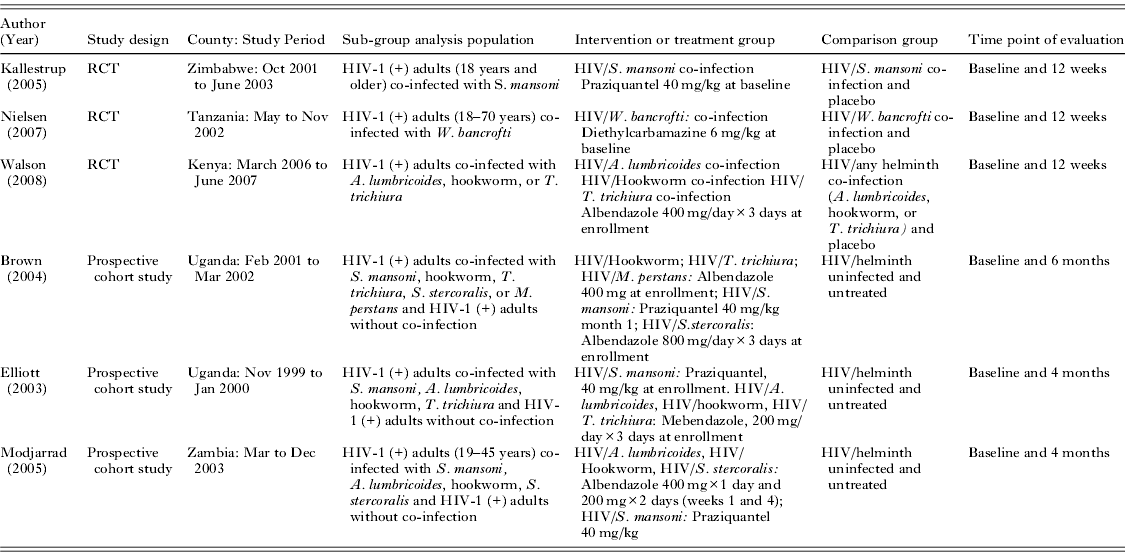
A total of 3 randomized controlled trials (Kallestrup et al. Reference Kallestrup, Zinyama, Gomo, Butterworth, Mudenge, van Dam, Gerstoft, Erikstrup and Ullum2005; Nielsen et al. Reference Nielsen, Simonsen, Dalgaard, Krarup, Magnussen, Magesa and Friis2007; Walson et al. Reference Walson, Otieno, Mbuchi, Richardson, Lohman-Payne, Macharia, Overbaugh, Berkley, Sanders, Chung and John-Stewart2008) and 3 prospective cohort studies (Elliott et al. Reference Elliott, Mawa, Joseph, Namujju, Kizza, Nakiyingi, Watera, Dunne and Whitworth2003; Brown et al. Reference Brown, Kizza, Watera, Quigley, Rowland, Hughes, Whitworth and Elliott2004; Modjarrad et al. Reference Modjarrad, Zulu, Redden, Njobvu, Lane, Bentwich and Vermund2005) were included. Study methodology was similar among randomized trials and prospective cohort studies regardless of the helminth species investigated. Details of the methodology used in each study are listed in Table 1.
Summary of included studies

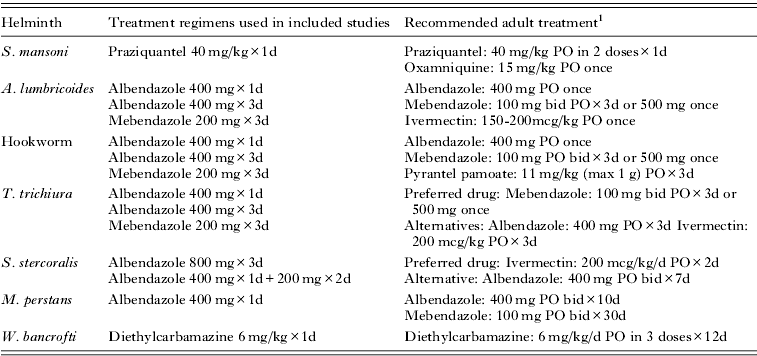
Treatment courses for nematode infections varied between studies; consisting of either 400 mg of albendazole/day for 3 days (Walson et al. Reference Walson, Otieno, Mbuchi, Richardson, Lohman-Payne, Macharia, Overbaugh, Berkley, Sanders, Chung and John-Stewart2008), 400 mg of albendazole on the first day followed by 200 mg per day for 2 days (Modjarrad et al. Reference Modjarrad, Zulu, Redden, Njobvu, Lane, Bentwich and Vermund2005), a single dose of 400 mg of albendazole (Brown et al. Reference Brown, Kizza, Watera, Quigley, Rowland, Hughes, Whitworth and Elliott2004), or 200 mg of mebendazole per day for 3 days (Elliott et al. Reference Elliott, Mawa, Joseph, Namujju, Kizza, Nakiyingi, Watera, Dunne and Whitworth2003). One study prescribed 800 mg of albendazole for 3 days for infections with S. stercoralis (Brown et al. Reference Brown, Kizza, Watera, Quigley, Rowland, Hughes, Whitworth and Elliott2004). Schistosome infections were evaluated in 4 studies and all used a standard dose of 40 mg/kg of praziquantel for treatment (Elliott et al. Reference Elliott, Mawa, Joseph, Namujju, Kizza, Nakiyingi, Watera, Dunne and Whitworth2003; Brown et al. Reference Brown, Kizza, Watera, Quigley, Rowland, Hughes, Whitworth and Elliott2004; Kallestrup et al. Reference Kallestrup, Zinyama, Gomo, Butterworth, Mudenge, van Dam, Gerstoft, Erikstrup and Ullum2005; Modjarrad et al. Reference Modjarrad, Zulu, Redden, Njobvu, Lane, Bentwich and Vermund2005).
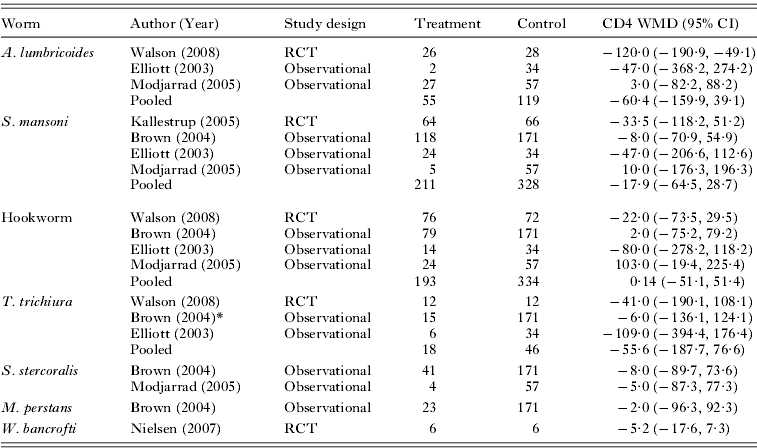
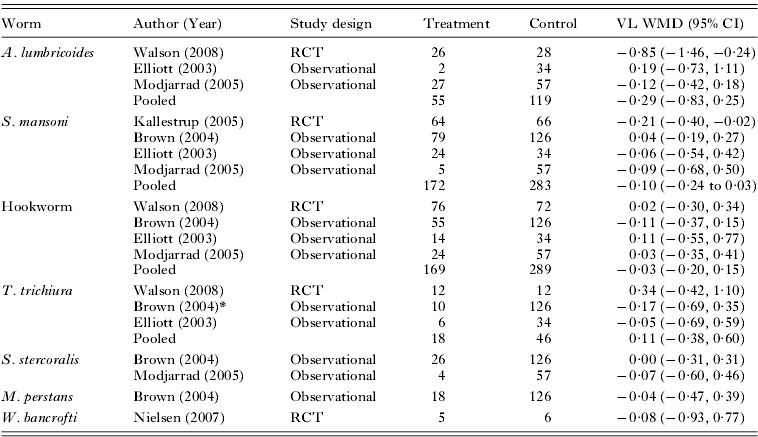
Pooled analyses were performed on the 4 helminth species in which; (1) results were available from more than 1 study and (2) treatments followed currently recommended guidelines for each of the included species (A. lumbricoides, S. mansoni, Hookworm and T. trichiura - Elliott et al. Reference Elliott, Mawa, Joseph, Namujju, Kizza, Nakiyingi, Watera, Dunne and Whitworth2003; Brown et al. Reference Brown, Kizza, Watera, Quigley, Rowland, Hughes, Whitworth and Elliott2004; Modjarrad et al. Reference Modjarrad, Zulu, Redden, Njobvu, Lane, Bentwich and Vermund2005; Walson et al. Reference Walson, Otieno, Mbuchi, Richardson, Lohman-Payne, Macharia, Overbaugh, Berkley, Sanders, Chung and John-Stewart2008 – see Table 2). Results of the pooled-estimates evaluating the effect of helminth treatment on CD4 count and HIV viral load are presented below for each species separately. Heterogeneity was minimal (P>0·2) in all of the analyses presented with the exception of change in CD4 count and viral load among individuals with A. lumbricoides (results described below). CD4 results for each species are presented in Table 3, and HIV viral load results are presented in Table 4.
Recommended treatment regimen by helminth species
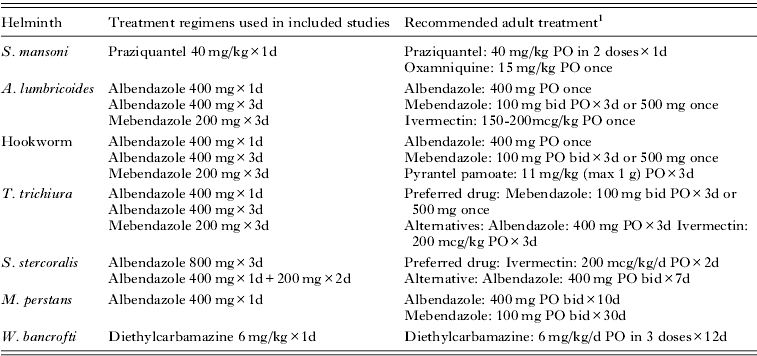
Key to abbreviations: d: Day; PO: By mouth; BID: Twice a day.
1 Source: Anon. (2007). Drugs for parasitic infections. Medical Letter on Drugs and Therapeutics, 5 (Suppl), e1–e15.
Weighted mean differences (WMDs) of CD4 count outcomes by species
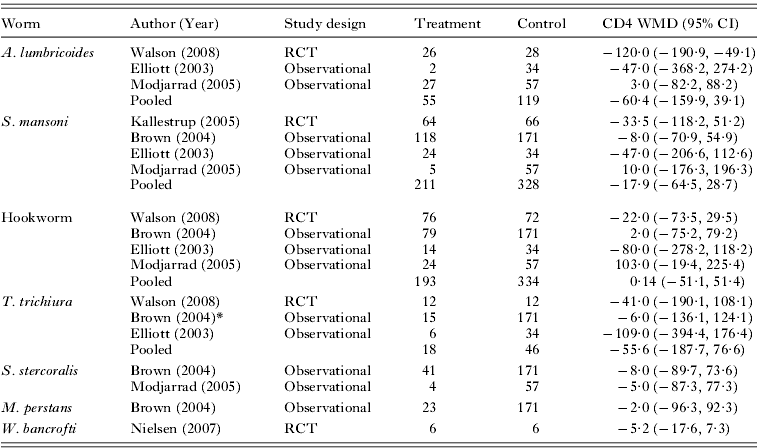
* Not included in pooled estimate because of treatment regimen.
Weighted mean differences (WMDs) of viral load outcomes by species
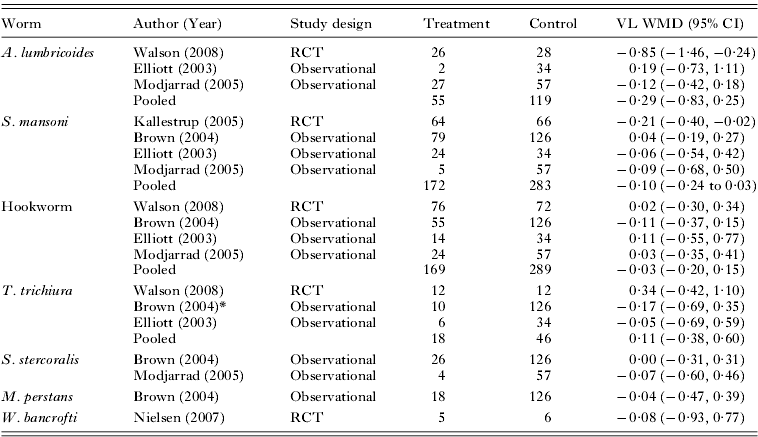
* Not included in pooled estimate because of treatment regimen.
Species-specific effects of treatment
A. lumbricoides
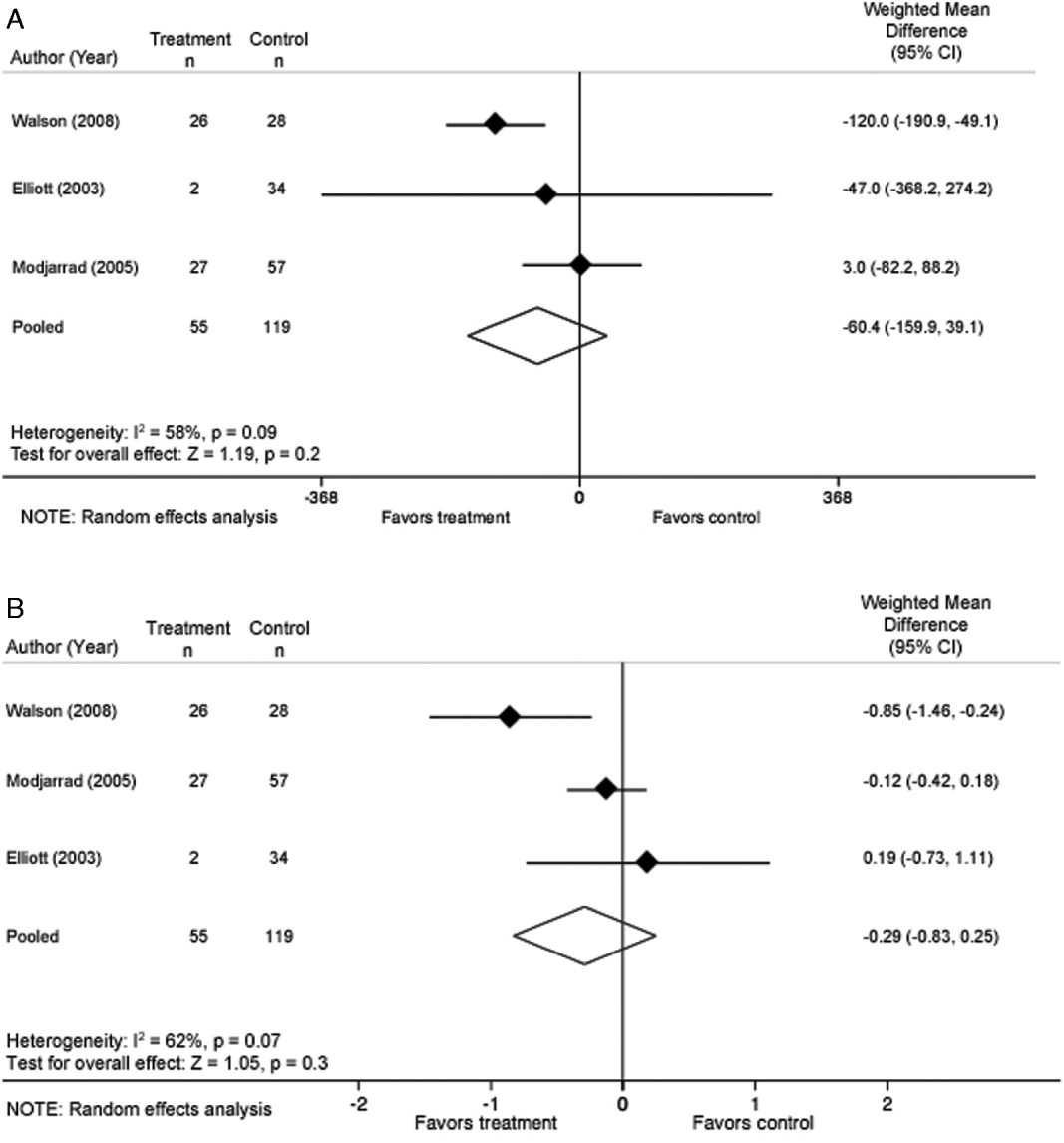
Three studies evaluated the effect of treatment for A. lumbricoides on CD4 count (n=174) and HIV viral load (n=174) (Elliott et al. Reference Elliott, Mawa, Joseph, Namujju, Kizza, Nakiyingi, Watera, Dunne and Whitworth2003; Modjarrad et al. Reference Modjarrad, Zulu, Redden, Njobvu, Lane, Bentwich and Vermund2005; Walson et al. Reference Walson, Otieno, Mbuchi, Richardson, Lohman-Payne, Macharia, Overbaugh, Berkley, Sanders, Chung and John-Stewart2008). Details of the study design and methodology are summarized in Table 1. Using a random effects model, treatment for A. lumbricoides was not associated with CD4 count (WMD=−60·4; 95% CI: −159·9, 39·1) (Fig. 2A), or HIV viral load (WMD=−0·29; 95% CI: −0·83, 0·25) (Fig. 2B). The test for heterogeneity was statistically significant in both the analysis of HIV viral load (P=0·07, tau squared=0·14) and CD4 count (P=0·09, tau squared=0·00).
Treatment effect of A. lumbricoides on HIV disease progression. A. A. lumbricoides: Change in CD4 count after treatment or no treatment. B. A. lumbricoides: Change in Log10 HIV-1 RNA after treatment or no treatment.

S. mansoni
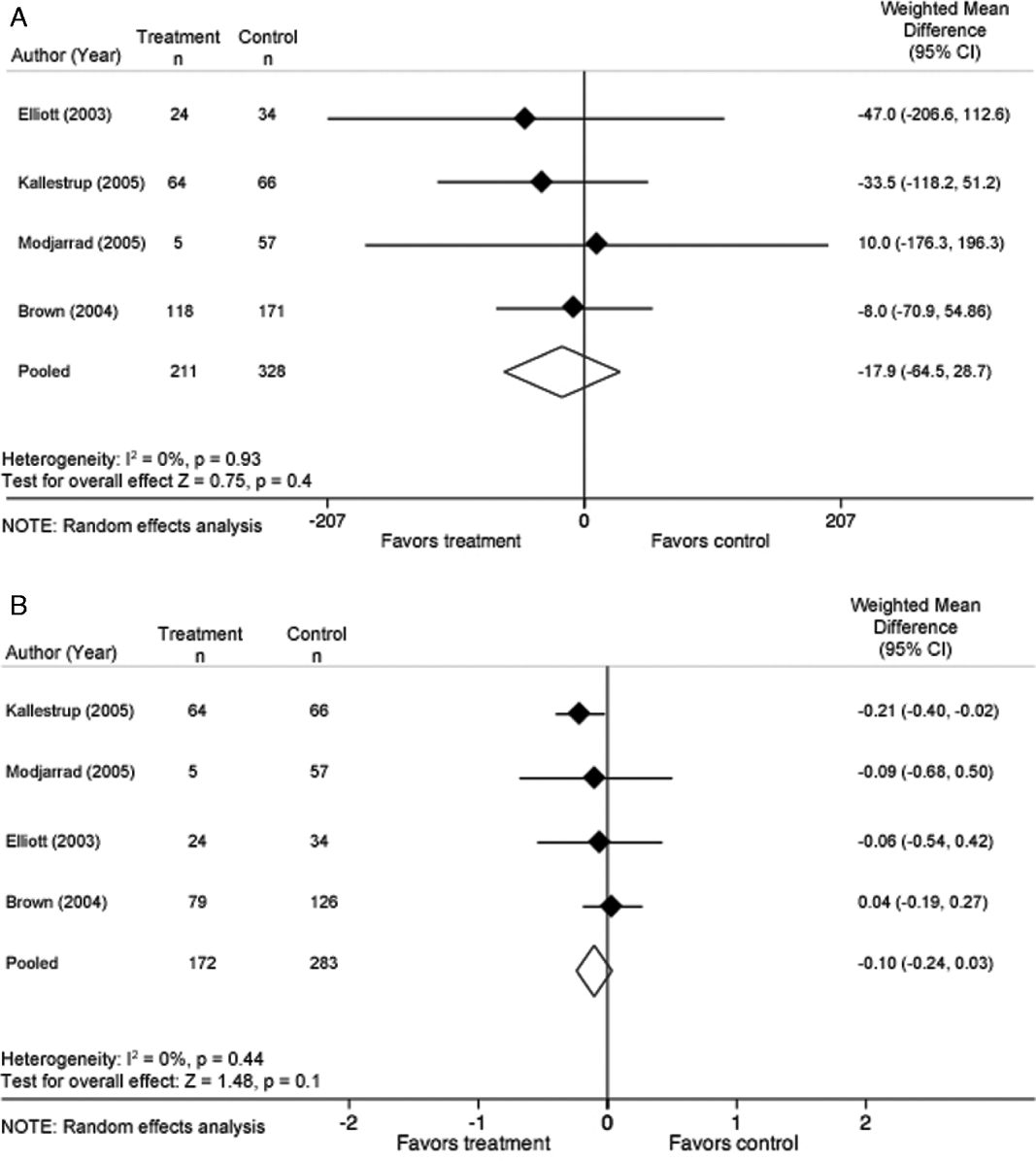
Four studies evaluated the effect of treatment for S. mansoni on CD4 (n=539) and HIV viral load (n=455) (Elliott et al. Reference Elliott, Mawa, Joseph, Namujju, Kizza, Nakiyingi, Watera, Dunne and Whitworth2003; Brown et al. Reference Brown, Kizza, Watera, Quigley, Rowland, Hughes, Whitworth and Elliott2004; Kallestrup et al. Reference Kallestrup, Zinyama, Gomo, Butterworth, Mudenge, van Dam, Gerstoft, Erikstrup and Ullum2005; Modjarrad et al. Reference Modjarrad, Zulu, Redden, Njobvu, Lane, Bentwich and Vermund2005) (Table 1). Using a random effects model, treatment for S. mansoni was not associated with CD4 count (WMD=−17·9; 95% CI: −64·5, 28·7) (Fig. 3A), however there was a trend towards an association between treatment for S. mansoni and a decrease in HIV viral load (WMD=−0·10; 95% CI: −0·24, 0·03) (Fig. 3B).
Treatment effect of S. mansoni on HIV disease progression. A. S. mansoni: Change in CD4 count after treatment or no treatment. B. S. mansoni: Change in Log10 HIV-1 RNA after treatment or no treatment.

Hookworm
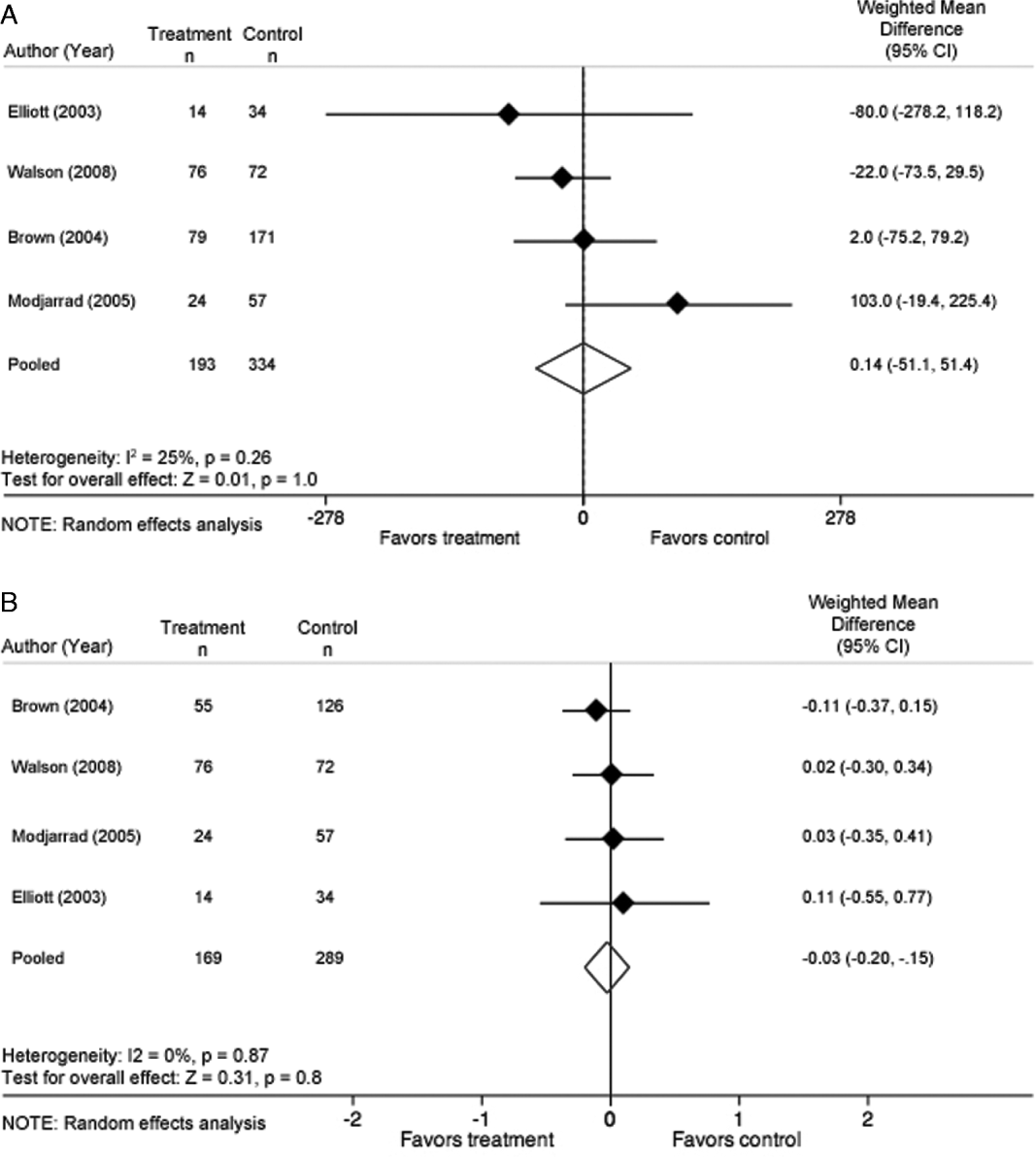
Four studies evaluated the effect of treatment for hookworm on CD4 (n=527) and HIV viral load (n=458) (Elliott et al. Reference Elliott, Mawa, Joseph, Namujju, Kizza, Nakiyingi, Watera, Dunne and Whitworth2003; Brown et al. Reference Brown, Kizza, Watera, Quigley, Rowland, Hughes, Whitworth and Elliott2004; Modjarrad et al. Reference Modjarrad, Zulu, Redden, Njobvu, Lane, Bentwich and Vermund2005; Walson et al. Reference Walson, Otieno, Mbuchi, Richardson, Lohman-Payne, Macharia, Overbaugh, Berkley, Sanders, Chung and John-Stewart2008) (Table 1). Using a random effects model, treatment for hookworm was not associated with CD4 count (WMD=0·14; 95% CI: −51·1, 51·4) (Fig. 4A) or HIV viral load (WMD=−0·03; 95% CI: −0·20, 0·15) (Fig. 4B).
Treatment effect of Hookworm on HIV disease progression. A. Hookworm: Change in CD4 count after treatment or no treatment. B. Hookworm: Change in Log10 HIV-1 RNA after treatment or no treatment.

T. trichiura
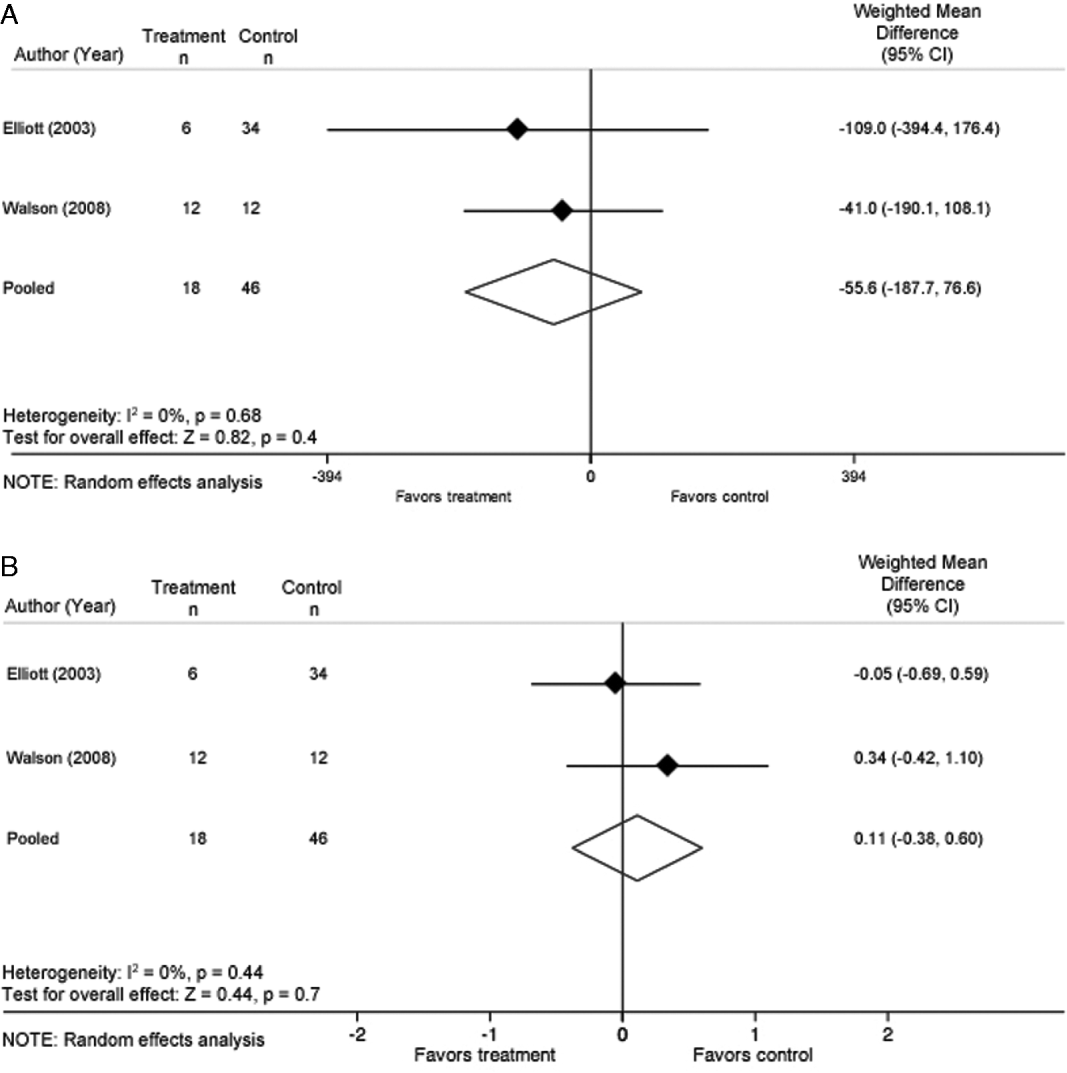
While 3 studies included in this review evaluated the effect of treatment for T. trichiura on CD4 and HIV viral load, the pooled data are limited to the 2 studies which gave the recommended treatment course of either 200 mg of mebendazole for 3 days (Elliott et al. Reference Elliott, Mawa, Joseph, Namujju, Kizza, Nakiyingi, Watera, Dunne and Whitworth2003) or 400 mg of albendazole for 3 days (Walson et al. Reference Walson, Otieno, Mbuchi, Richardson, Lohman-Payne, Macharia, Overbaugh, Berkley, Sanders, Chung and John-Stewart2008). A total of 64 subjects are included in the viral load analysis and 64 are included in the analysis of CD4 count (Elliott et al. Reference Elliott, Mawa, Joseph, Namujju, Kizza, Nakiyingi, Watera, Dunne and Whitworth2003; Brown et al. Reference Brown, Kizza, Watera, Quigley, Rowland, Hughes, Whitworth and Elliott2004; Walson et al. Reference Walson, Otieno, Mbuchi, Richardson, Lohman-Payne, Macharia, Overbaugh, Berkley, Sanders, Chung and John-Stewart2008) (Table 1). Using a random effects model, treatment for T. trichiura was not associated with CD4 count (WMD=−55·6; 95% CI: −187·7, 76·6) (Fig. 5A) or HIV viral load (WMD=0·11; 95% CI: −0·38, 0·60) (Fig. 5B).
Treatment effect of T. trichiura on HIV disease progression. A. T. trichiura: Change in CD4 count after treatment or no treatment. B. T. trichiura: Change in Log10 HIV-1 RNA after treatment or no treatment.

M. perstans
One prospective cohort study evaluated the effect of treatment of M. perstans on CD4 count and HIV viral load (n=144) (Brown et al. Reference Brown, Kizza, Watera, Quigley, Rowland, Hughes, Whitworth and Elliott2004), therefore, pooled data are unavailable. Treatment in this study consisted of a single dose of 400 mg of albendazole. Treatment of M. perstans was not associated with CD4 count (WMD=−2·0; 95% CI: −96·3, 92·3) or HIV viral load in this study (WMD=−0·04; 95% CI: −0·47, 0·39).
W. bancrofti
One randomized clinical trial evaluated the effect of treatment of W. bancrofti on CD4 count and HIV viral load (n=17) (Nielsen et al. Reference Nielsen, Simonsen, Dalgaard, Krarup, Magnussen, Magesa and Friis2007), therefore pooled data are unavailable. Infections with treated with 6 mg/kg of diethylcarbamazine. Treatment of W. bancrofti was not associated with CD4 count (WMD=−5·2; 95% CI: −17·6, 7·3) or HIV viral load (WMD=−0·08; 95% CI: −0·93, 0·77) in this study.
S. stercoralis
Two cohort studies evaluated the effect of treatment for S. stercoralis on CD4 (n=273) and viral load (213) (Brown et al. Reference Brown, Kizza, Watera, Quigley, Rowland, Hughes, Whitworth and Elliott2004; Modjarrad et al. Reference Modjarrad, Zulu, Redden, Njobvu, Lane, Bentwich and Vermund2005). HIV-1-infected individuals in these studies were treated with either 800 mg of albendazole for 3 days (Brown et al. Reference Brown, Kizza, Watera, Quigley, Rowland, Hughes, Whitworth and Elliott2004), or 400 mg of albendazole on the first day and 200 mg for 2 subsequent days (Modjarrad et al. Reference Modjarrad, Zulu, Redden, Njobvu, Lane, Bentwich and Vermund2005). Because neither of these studies utilized the current recommended dose of 400 mg of albendazole per day for 7 days (Anonymous, 2007), these data were not pooled. Lastly, neither of these studies found a treatment effect on CD4 count or HIV viral load.
DISCUSSION
Data from several randomized trials have suggested species-specific differences exist in the observed benefit associated with de-worming, specifically among individuals infected with A. lumbricoides and S. mansoni. In this analysis, we stratified data from studies evaluating the effect of de-worming on markers of HIV-1 disease progression by helminth species and conducted a pooled analysis including data from both randomized and observational studies. Data from sub-group analyses from studies examining the treatment of A. lumbricoides, S. mansoni, hookworm, T. trichiura, M. perstans and W. bancrofti in HIV-co-infected individuals were included. In this pooled analysis, no significant benefits on markers of HIV-1 disease progression were observed with the treatment of any individual helminth species.
It is possible that the observation of benefit observed in the randomized trials following treatment of A. lumbricoides and S. mansoni was a result of type I error. However, as the randomized trial design provides the strongest level of evidence, the highly significant improvement in CD4 count and trend towards a reduction in viral load following de-worming in A. lumbricoides and HIV-1-co-infected individuals seen in one randomized trial (Walson et al. Reference Walson, Otieno, Mbuchi, Richardson, Lohman-Payne, Macharia, Overbaugh, Berkley, Sanders, Chung and John-Stewart2008), and the significant attenuation in viral load observed following treatment for schistosomiasis in another randomized trial (Kallestrup et al. Reference Kallestrup, Zinyama, Gomo, Butterworth, Mudenge, van Dam, Gerstoft, Erikstrup and Ullum2005), suggest that type I error is unlikely. It appears more likely that the inclusion of observational studies in the pooled analysis may have resulted in type II errors, as many of these studies had notable limitations in their design and methodology.
There are several possible explanations for why benefit was observed in randomized trials following treatment of A. lumbricoides and S. mansoni, but not with other helminth species. A. lumbricoides-infected individuals, when compared to helminth uninfected controls, have been observed to have lower levels of TH1 cytokines and higher levels of TH2, pro-inflammatory, and immunosuppressive cytokines (Malla et al. Reference Malla, Fomda and Thokar2006). These differences in TH2 polarization appear to be more prominent with A. lumbricoides infection than with hookworm or Trichuris (Cooper et al. Reference Cooper, Chico, Sandoval, Espinel, Guevara, Kennedy, Urban, Griffin and Nutman2000; Pit et al. Reference Pit, Polderman, Baeta, Schulz-Key and Soboslay2001; Bradley and Jackson, Reference Bradley and Jackson2004; Jackson et al. Reference Jackson, Turner, Rentoul, Faulkner, Behnke, Hoyle, Grencis, Else, Kamgno, Bradley and Boussinesq2004; Geiger et al. Reference Geiger, Caldas, McGlone, Campi-Azevedo, De Oliveira, Brooker, Diemert, Correa-Oliveira and Bethony2007). HIV-1- infected individuals co-infected with A. lumbricoides who received albendazole displayed significantly larger reductions in interleukin-10 (IL-10) when compared to those receiving placebo, suggesting treatment of A. lumbricoides may reduce IL-10- mediated immunosuppression (Blish et al. Reference Blish, Sangaré, Herrin, Richardson, John-Stewart and Walson2010). Similarly, a predominant TH2 response is also thought to occur among individuals with early schistosomiasis, followed by IL-10 mediated hyporesponsiveness during chronic infection (Burke et al. Reference Burke, Jones, Gobert, Li, Ellis and McManus2009; Taylor et al. Reference Taylor, Krawczyk, Mohrs and Pearce2009). The strong TH2 polarization and IL-10-mediated hyporesponsiveness seen with these infections may significantly affect the hosts ability to control HIV-1 replication and may explain the observation of benefit following de-worming of A. lumbricoides and S. mansoni-infected individuals.
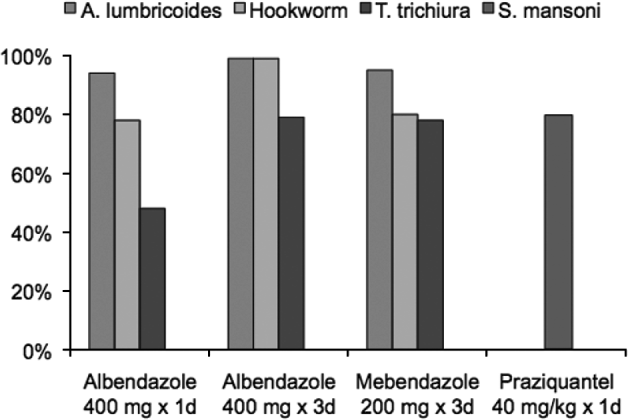
The failure to detect an association between de-worming and markers of HIV-1 progression may also have been influenced by the variation in efficacy of the treatment regimens used for each species. The efficacy of a single 400 mg dose of albendazole is significantly different for each of these individual helminth species (Fig. 6). While this treatment regimen is highly effective against A. lumbricoides (cure >94%) (Bennett and Guyatt, Reference Bennett and Guyatt2000; Horton, Reference Horton2000; Keiser and Utzinger, Reference Keiser and Utzinger2008), cure rates are significantly lower for hookworm (cure 78%) (Horton, Reference Horton2000) and T. trichiura (cure 28–48%) (Bennett and Guyatt, Reference Bennett and Guyatt2000; Horton, Reference Horton2000; Keiser and Utzinger, Reference Keiser and Utzinger2008). The lower efficacy of treatment of hookworm and T. trichiura infection may have reduced the ability of this analysis to detect an effect, as many of these individuals who were randomized to albendazole may not actually have been cured of their infection. These individuals would effectively dilute the effect of treatment observed in the analysis.
Previously published data on the proportion of patients cured by treatment regimen.

Finally, it is important to note that many studies conducted to date have not been designed to evaluate species-specific effects among individual sub-groups of patients. In retrospectively evaluating the power of published studies, we determined that less than 35% of sub-group analyses had adequate power (>80%) to detect meaningful differences when stratified by individual helminth species. It is plausible that species-specific differences have not consistently been observed due to inadequate power in these studies.
Due to the wide heterogeneity of methodologies used in HIV/helminth co-infection treatment studies, we applied stringent inclusion criteria, resulting in only six studies being included in this review. Many studies conducted to date have included inappropriate comparison groups, limiting the ability of these studies to make valid comparisons. Some studies have compared individuals who test negative for helminths at follow-up to those who test positive for helminths at follow-up. There may be important differences in the immunological responses to helminth infection between individuals who successfully clear helminth infection following therapy and those who do not (Mutapi, Reference Mutapi2001; Anthony et al. Reference Anthony, Rutitzky, Urban, Stadecker and Gause2007). These differences may also be related to individual immune control of HIV-1. Differences in factors associated with risk of re-exposure to helminth infection are also likely to exist between participants who are rapidly re-infected with helminths compared to those who are not. Given that both re-infection and/or decreased immune control of HIV-1 are likely to dilute the treatment effect, this methodology may result in a significant bias towards the null.
Insufficient data from individual trials exist to determine the effect of treating individual helminths on markers of HIV-1 progression. As a result, we sought to increase the effective sample size of each comparison by pooling data from multiple prospective studies. While this approach may add power to the analysis of each comparison, differences in study design and methodology between included studies are an important limitation of this analysis. In addition, while randomized trials of anthelminthic therapy provide the strongest level of evidence to determine the possible benefit of such treatment, the analysis of sub-groups within these cohorts reduces the benefit of randomization. We also included several observational studies, all of which may be limited by bias. The lack of standardized treatment regimens included in the analysis likely resulted in differences in treatment efficacy by study and by species. Finally, study sample sizes were relatively small and species-specific analyses from individual studies lacked power to detect meaningful effects.
While the implications of these data may be important for all HIV-1-infected individuals, HIV-1-infected children may benefit disproportionately. In addition to harbouring a large burden of helminth infections, HIV infection is often undiagnosed and untreated in young children in many resource-limited settings. Without effective antiretroviral therapy, mortality approaches 50% in the first two years of life for these children. It is critical that practical and effective approaches to delay immunosuppression be examined and implemented in pediatric populations in order to maximize benefit.
Conclusions
Understanding differences in the treatment effects among helminth species may lead to better clinical and therapeutic management of these infections. It is important to determine the relative benefit of treating individual helminth species on markers of HIV-1 progression. Further trials are needed to confirm the possible role of anthelmintic treatment in HIV-1 co-infected individuals, particularly in populations most likely to benefit, such as young children. Such studies should be rigorously designed and adequately powered to detect species-specific effects.
ACKNOWLEDGEMENTS
We would like to acknowledge the support of the Royal Society of Tropical Medicine and Hygiene and the British Society for Parasitology for providing funds for travel. In addition, we would like to acknowledge the support of the University of Washington Kenya Research Program and the University of Washington International AIDS Research and Training Program.
FINANCIAL SUPPORT
This work was supported by the University of Washington, Center for AIDS Research (CFAR), USA.