Introduction
Agriculture has undergone major evolution in the past century, leading to a significant increase in crop yields (Warren Reference Warren1998). From the 1930s to the 2010s, grain corn, cotton (Gossypium hirsutum L.), rice (Oryza sativa L.), and soybean crop yields have shown increases in the United States of 740%, 390%, 350%, and 290%, respectively (USDA-NASS 2020; Warren Reference Warren1998). The discovery of synthetic herbicides, including MCPA, and 2,4-D in the 1940s, had a positive impact on crop yields by allowing more effective control of weeds (Troyer Reference Troyer2001). For example, 2,4-D was adopted as an effective (>90%) broadleaf weed control compound used at lower concentrations compared to organic herbicides, such as sodium chlorate and sodium thiocyanate (Marth and Mitchell Reference Marth and Mitchell1944). The introduction of S-triazine (e.g., atrazine) herbicides in the 1950s represents another milestone in terms of weed control and herbicide popularity among growers (LeBaron et al. Reference LeBaron, McFarland and Burnside2008). The combination of PRE and POST herbicides plus cultural and mechanical methods reduced the need for labor-intensive hand weeding, increased efficacy, and greatly reduced the costs for weed management (Gianessi and Reigner Reference Gianessi and Reigner2007; Holstun et al. Reference Holstun, Wooten, McWhorter and Crowe1960).
From the 1940s to the 1980s (herbicide discovery era), novel herbicide chemistries with broad weed control spectra, application window in relation to crop developmental stage, and selectivity were discovered. During that time, on average, a new herbicide site of action (SOA) was introduced every 2 yr (Appleby Reference Appleby2005; Duke and Dayan Reference Duke and Dayan2018). Herbicides quickly became synonymous with weed management and through this date represent the most commonly adopted tool for weed control in conventional production systems. In recent years, given the shortage and challenges related to novel herbicide discovery (Duke Reference Duke2012), industry focus has shifted toward biotechnology and the development of crop hybrids or varieties genetically engineered with herbicide-resistant (HR) genes (Bonny Reference Bonny2011; Owen Reference Owen2000). In 1996, glyphosate-resistant (GR) soybean (Roundup Ready®) was the first transgenic HR crop to be introduced, followed by GR corn and GR cotton, which allowed growers to spray glyphosate, a systemic, nonselective, and very effective herbicide POST in GR crops (Padgette et al. Reference Padgette, Kolacz, Delannay, Re, LaVallee, Tinius, Rhodes, Otero, Barry, Eichholtz, Peschke, Nida, Taylor and Kishore1995). Glyphosate use has risen followed the introduction of GR crops in 1996 (Benbrook Reference Benbrook2016). This increase was further accelerated with introduction of GR crops in developing countries such as Brazil and Argentina in the early 2000s. In 2014, glyphosate represented 66% of herbicide applications in Brazil (SIDRA-IBGE 2020). GR crops are documented as the most adopted technology of modern agriculture (Green Reference Green2018). However, glyphosate overreliance resulted in weed shifts and evolution of GR weeds (Owen Reference Owen2008). Thus far, there are 50 confirmed GR weed species worldwide, 9 weed species in Brazil, including sourgrass and horseweed (Heap Reference Heap2020).
Rapid evolution of GR weeds prompted the development of other HR crops such as glufosinate, 2,4-D, and dicamba-resistant (DR) soybean, cotton, and/or corn. The new synthetic auxin-resistance (AR) technology was introduced in 2017 to the United States and is expected soon to become available in Brazil. The Roundup Ready 2 Xtend® (Bayer Crop Science, St. Louis, MO) allows the use of glyphosate and new dicamba formulations, including diglycolamine salt with VaporGrip®, an acetic acid-acetate buffering system, or a dicamba salt N,N-Bis-3-aminopropyl methylamine in DR crops. Moreover, the 2,4-D–resistant technology, marketed as Enlist E3® (Corteva Agriscience, Wilmington, DE), allows glyphosate, glufosinate, and a new 2,4-D-choline salt formulation application in Enlist® crops (Wright et al. Reference Wright, Shan, Walsh, Lira, Cui, Song, Zhuang, Arnold, Lin, Yau, Russell, Cicchillo, Peterson, Simpson, Zhou, Ponsamuel and Zhang2010). These new 2,4-D and dicamba formulations are products with reduced volatility compared to their previous formulations. However, in the first year of AR crops in the United States, an estimated nearly 1.4 million hectares of non-DR soybeans were injured by dicamba (Oseland et al. Reference Oseland, Bish, Steckel and Bradley2020). In Nebraska, 51% of survey respondents noted dicamba injury in their non-DR soybeans in 2017 (Werle et al. Reference Werle, Oliveira, Jhala, Proctor, Rees and Klein2018). It is still controversial whether the injury on sensitive vegetation is due to dicamba vapor, particle drift, and/or tank contamination. Nonetheless, the upcoming introduction of AR crops in Brazil raises concerns of off-target movement (OTM) and requires research.
The introduction of AR crops increases complexity but represents a new milestone in terms of weed management; thus, it is essential to document current practices prior to their introduction and after nearly 20 yr of GR crops use in Brazil. Surveys are useful tools for documenting agricultural practitioners’ knowledge and perceptions regarding specific strategies. For example, a survey with pesticide applicators indicated the need for further education regarding application of synthetic auxin technologies in the US state of Missouri (Bish and Bradley Reference Bish and Bradley2017). Also, a survey conducted in Argentina demonstrated that weed control is based on empirical short-term decisions, with >53% using solely herbicides for weed management (Scursoni et al. Reference Scursoni, Vera, Oreja and Kruk2019). A survey documented a concern about protoporphyrinogen oxidase (PPO) inhibitor–resistant Palmer amaranth (Amaranthus palmeri S.Watson) in the US Southwest, the need for diversified weed management strategies, and additional cover crop research in that geographic region (Schwartz-Lazaro et al. Reference Schwartz-Lazaro, Norsworthy, Steckel, Stephenson, Bish, Bradley and Bond2018). Therefore, documenting current weed management practices in different regions of Brazil could improve weed management decisions, policy, education, investments, research priorities, and further needs.
In Brazil, growers rely mainly on crop advisors for crop management decisions, including strategies for weed control (MR dos Reis, personal communication). The use of survey questionnaires in Brazil with agricultural practitioners has been lacking. Therefore, the objective of this survey was to understand from growers and crop advisors (e.g., crop consultants, cooperatives, industry, and university representatives) current agricultural management practices, perceptions, and challenges regarding current cropping systems and weed management in Brazil. The survey specifically focused on crop management, troublesome and HR weeds, and evaluation of interest, value, and potential challenges the new AR technologies may face if deployed/adopted in Brazil.
Materials and Methods
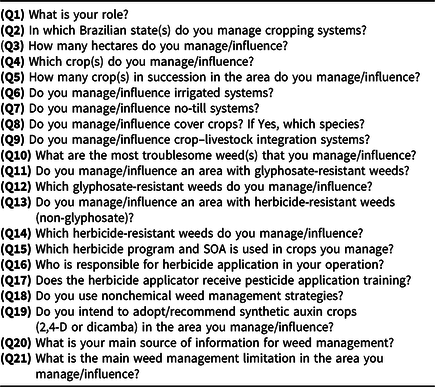
A survey was developed to understand Brazilian stakeholders’ perceptions and challenges about cropping systems and weed management strategies (Table 1). To reach a broad representation, the survey was conducted online using Qualtrics (Provo, UT) linked to the University of Wisconsin-Madison and circulated via social media, including Twitter® (San Francisco, CA), Facebook® (Menlo Park, CA), LinkedIn® (Sunnyvale, CA), and Whatsapp® (Menlo Park, CA). The messenger Whatsapp® is popular among agricultural stakeholders in Brazil. Extension agents also assisted with distributing the survey questionnaire to stakeholders through their electronic listservs.
Survey questionnaire available online for agronomist, consultant, grower, industry, and university representatives in the 2018 Cropping Systems Weed Management Survey.

The survey comprised three sections. Questions in the first section focused on respondents’ demographics: (Q1) role (e.g., grower or industry representative), (Q2) region, and (Q3) managed area (in hectares). The second section was designed to focus on cropping systems practices: (Q4) crops managed, (Q5) crop succession, (Q6) irrigation, (Q7) tillage, (Q8) cover crops, and (Q9) crop-livestock integration. The third section focused on weed management strategies: (Q10) troublesome weeds, (Q11 through Q14) HR weeds, (Q15) herbicide programs and SOA, (Q16 and Q17) herbicide application information, (Q18) nonchemical weed management, and (Q19) adoption of AR crops. The third section also incorporated general questions (Q20 and Q21) about cropping systems and weed management challenges (Table 1).
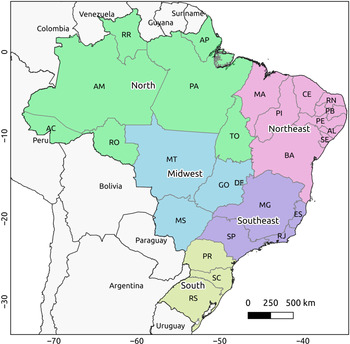
The online survey was available from April 1 through June 30, 2018. Results were exported from Qualtrics as a Microsoft Excel (Microsoft Office, Redmond, WA) file, with the answers to each question in separate columns. Survey data were sorted and analyzed using the sort, filter, and count functions in Microsoft Excel and summarise, filter, and pipe in the package tidyverse (Wickham Reference Wickham2017) of R statistical software (R Core Team 2020). For most questions, results are presented as: (1) percentage of respondents, (2) percentage of answers, and (3) percentage of number of hectares represented. Not every respondent answered every question; for some questions, respondents were allowed to select among multiple choices (e.g., Q15, herbicide programs and SOA). Moreover, survey respondents were grouped according to their region as listed in the demographic geopolitical Brazilian map: North, Northeast, Midwest, Southeast, and South (Figure 1).
Brazilian map highlighting the five geopolitical macro-regions: North, Northeast, Midwest, Southeast, and South.

Results and Discussion
Crop Management
Demographics
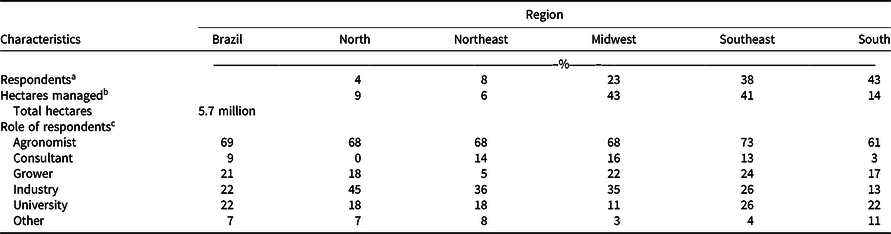
Survey answers were obtained from 343 stakeholders, representing 21 of 27 Brazilian states (including the Federal District, home of Brazil’s capital, Brasilia). Most survey respondents were located in the South (43%) and Southeast (38%) regions of Brazil; however, 43% of managed hectares represented in the survey are in the Midwest region (Table 2). The South and Southeast regions encompass small/medium farm sizes (<500 ha), whereas the Midwest, North, and Northeast regions represent the newly expanded agricultural region in Brazil, with farm sizes of >500 ha up to 100,000 ha (Dias et al. Reference Dias, Pimenta, Santos, Costa and Ladle2016). Most survey respondents identified themselves as agronomists (69%), followed by university and industry representatives (22%), growers (21%), and consultants (9%; Table 2). Respondents represent a total of 5.7 million crop hectares, a representative area, as there are 78 million ha of Brazilian territory occupied with crops and planted forest (IBGE 2020).
Percentage characteristics of respondents of the 2018 Cropping Systems Weed Management Survey, according to Brazilian region.

a Total number of respondents, n = 279.
b Number of respondents, n = 123.
c Number of respondents, n = 277.
Cropping Systems
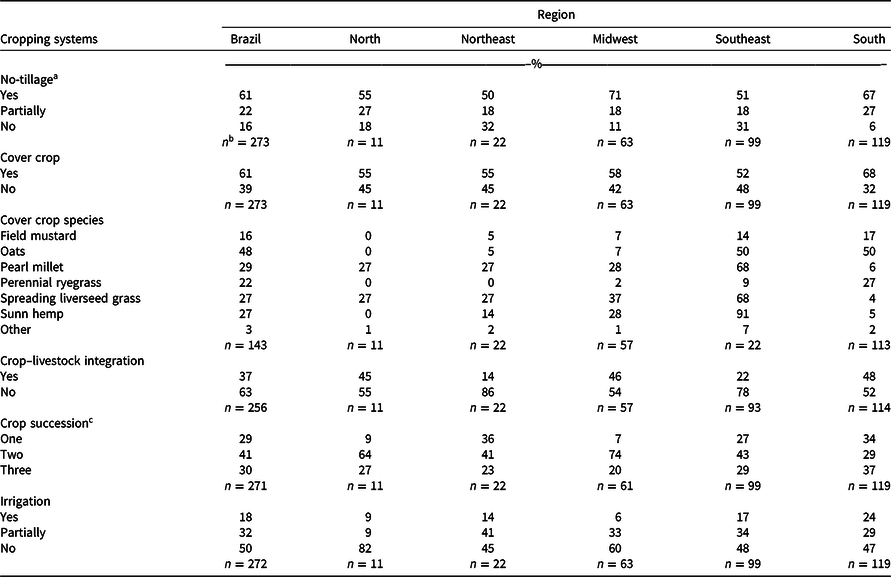
The survey showed that only 16% of respondents manage crops in conventional tillage in Brazil, with highest no-till practice in the Midwest (71%) (Table 3). An average of 6 out of 10 respondents adopt/recommend cover crops to some extent (Table 3), with oats (Avena sativa L., 48%), sunn hemp (Crotalaria juncea L., 27%), pearl millet [Pennisetum glaucum (L.) R.Br., 29%], spreading liverseed grass (Urochloa spp., 27%), perennial ryegrass [Lolium perenne (L.) ssp. perenne, 22%], and field mustard (Brassica rapa L., 16%) ranked as the top cover crop species adopted by respondents (Table 3). Moreover, crop–livestock integration is adopted by 37% of respondents in Brazil (Table 3). Crop–livestock establishment varies within Brazilian regions, plant species selection, and rotation sequence between livestock systems and crop succession/rotation (Moraes et al. Reference Moraes, Anghinoni, Lustosa and Kunrath2014).
Cropping system management strategies (no-tillage, cover crops, crop–livestock, crop succession, and irrigation) adopted in Brazil according to the 2018 Cropping Systems Weed Management Survey.

a Conservation tillage.
b Number of respondents.
c Number of crops grown within a year.
Survey results show that crop succession (i.e., crop rotation within a year) is a common practice in Brazil, whereas 71% of respondents manage at least two crops on the same land within a year (Table 3). In the South, nearly 40% of respondents grow three crops on the same land within a year but 20% in the Midwest, which strongly rely on two crop succession systems (74%). Soybean is usually planted as the first crop, followed by corn or cotton, and pulse, small grains [barley (Hordeum vulgare L.), oats, cereal rye (Secale cereale L.), and triticale (Triticosecale rimpaui C. Yen & J.L. Yang)], or cover crops across the country (Cerdeira et al. Reference Cerdeira, Gazziero, Duke and Matallo2011). The number of crops per year is probably a result of moisture availability due to higher and more regular precipitation in southern regions than northern Brazilian states (Alvares et al. Reference Alvares, Stape, Sentelhas, de Moraes Gonçalves and Sparovek2013). Moreover, 50% and 32% of survey respondents manage rainfed (nonirrigated) and partially irrigated fields, respectively (Table 3). Therefore, according to our survey no-till, crop succession, and cover crops are common practices in Brazil.
No-till strongly contributed to the expansion of annual crops in Brazil, especially in the Cerrado (savanna biome) area in the 1980s onwards (Sanders and Bein Reference Sanders and Bein1976). The geography of the Cerrado biome includes the Midwest and parts of the Southeast, North, and Northeast region of Brazil (Figure 1). The Cerrado is characterized by favorable topography for agriculture but low soil fertility (Goedert Reference Goedert1983), which was mainly used for pastures. In the early 2000s, it was estimated that 11% and 41% of the Cerrado area was covered with cropland and planted pastures, respectively (Klink and Machado Reference Klink and Machado2005). The cropland in the Cerrado expanded 81% from 2000 to 2014, mainly replacing poorly managed pastures (Zalles et al. Reference Zalles, Hansen, Potapov, Stehman, Tyukavina, Pickens, Song, Adusei, Okpa, Aguilar, John and Chavez2019). No-till, crop succession, cover crops, and crop–livestock integration strategies have resulted in improved soil chemical and physical properties in Brazil, especially in the Cerrado biome (Moraes et al. Reference Moraes, Anghinoni, Lustosa and Kunrath2014; Yamada Reference Yamada2005).
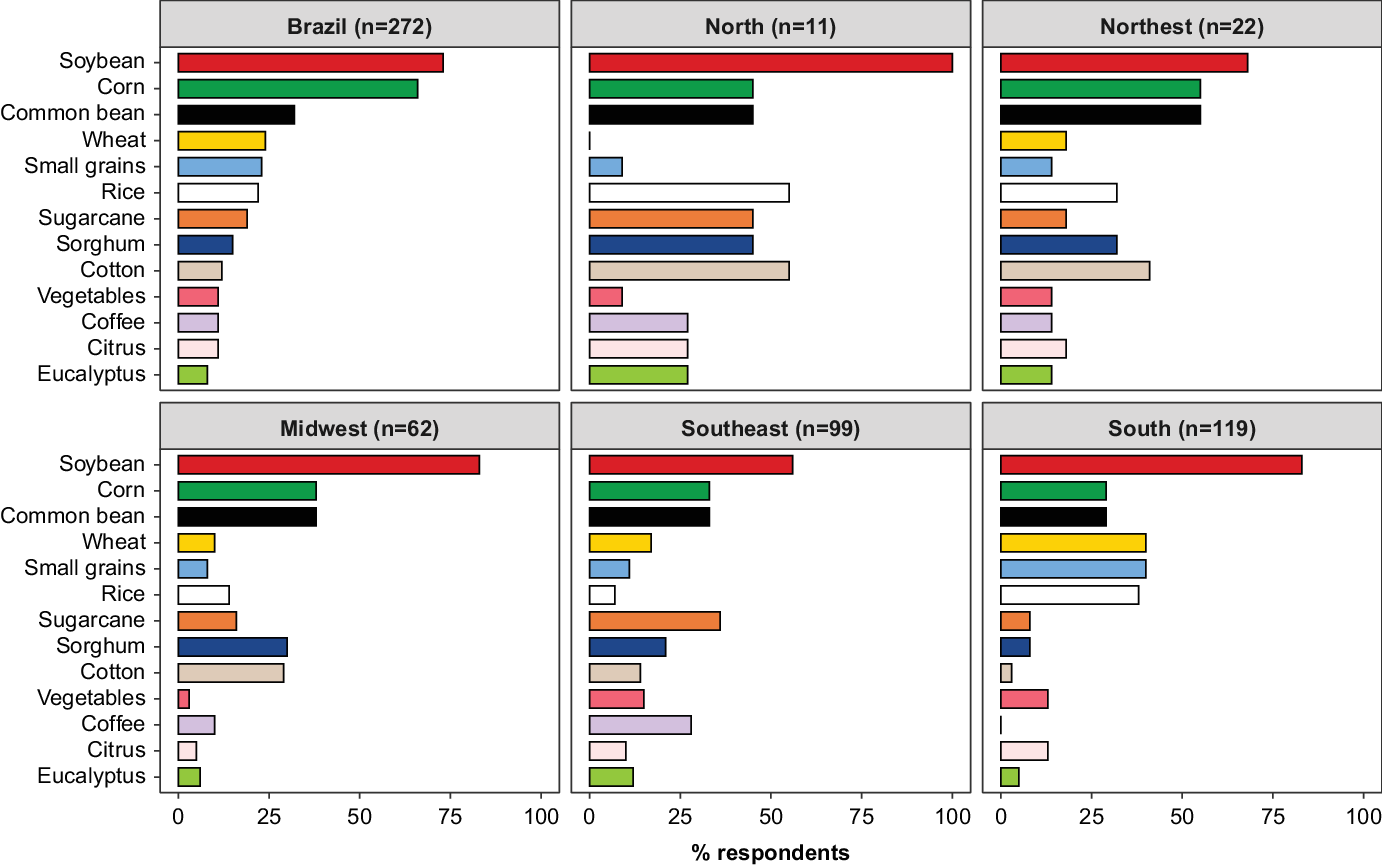
The current expansion of cropland is occurring to the new Cerrado areas within the states of Maranhão, Tocantins, Piauí, Bahia (MA-TO-PI-BA), and in the Northeast and North parts of the Amazonian biome in the state of Pará (North region) (Lucio et al. Reference Lucio, Kalsing, Adegas, Rossi, Correia and Gazziero2019; Zalles et al. Reference Zalles, Hansen, Potapov, Stehman, Tyukavina, Pickens, Song, Adusei, Okpa, Aguilar, John and Chavez2019). The steady increase of cropland in Brazil is partially due to the success of no-till and soybean production in the Cerrado (Araújo et al. Reference Araújo, Sano, Bolfe, Santos, dos Santos and Silva2019; Fearnside Reference Fearnside2001). The importance of soybean for Brazilian agriculture is highlighted in our survey, as it is the most managed crop across the five major regions (Figure 2). Currently, there are 36 million ha of soybean grown with productivity of 119 billion kg of grain, which makes soybean the top agricultural export commodity of Brazil (IBGE 2020).
Percentage of respondents managing crops by Brazilian regions according to the 2018 Cropping Systems Weed Management survey (n = number of respondents). Citrus [Citrus × sinensis (L.) Osbeck]; coffee (Coffea arabica L., Coffea canephora Pierre ex Froehner), eucalyptus (Eucalyptus spp.), small grains (barley, cereal rye, oats, triticale), sorghum [Sorghum bicolor (L.) Moench], sugarcane (Saccharum officinarum L.), vegetables (carrot, Daucus carota (L.) var. sativus Hoffm.; garlic, Allium sativum L.; onion, Allium cepa L.).

Weed Management
Herbicide Programs
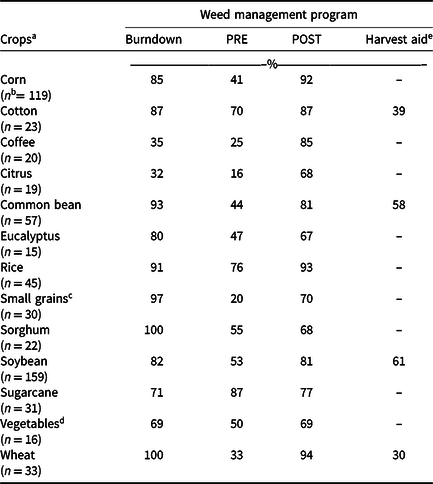
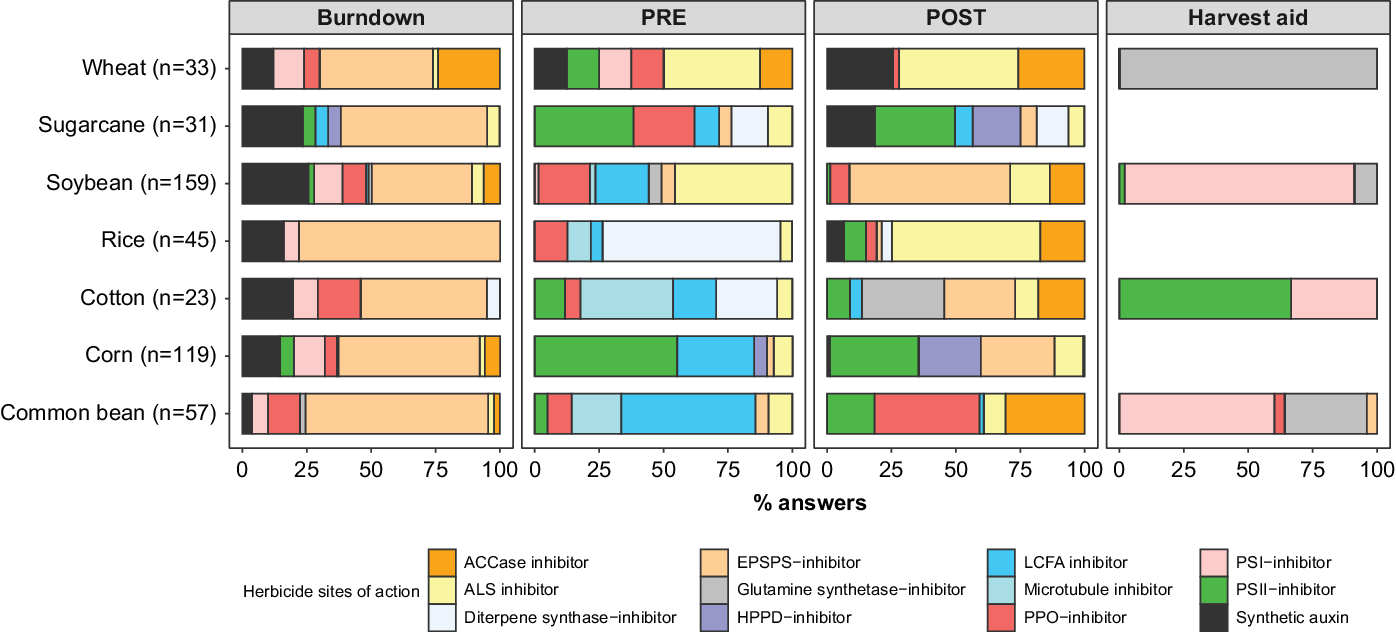
The wide adoption of no-till soybean systems in Brazil would be less likely without glyphosate. Because glyphosate is a nonselective and systemic herbicide, it provides strong vegetation control (Duke and Powles Reference Duke and Powles2008). Over 80% of respondents spray/manage burndown-type herbicides for management of existing vegetation prior to establishment of annual crops (Table 4). High glyphosate reliance is clearly demonstrated, as this is the main herbicide used for burndown applications to target weed control and cover crop termination in several annual and perennial cropping systems (Figure 3). Additional herbicide options sprayed as part of burndown programs are the synthetic auxin (e.g., 2,4-D), photosystem I (PSI, e.g., paraquat), and PPO (e.g., saflufenacil)–inhibiting herbicides. The survey also showed glyphosate as a foundation for POST weed management in corn, cotton, and soybean (Figure 3). For instance, Ulguim et al. (Reference Ulguim, Agostinetto, Vargas, Dias Gomes da Silva, Moncks da Silva and da Rosa Westendorff2017) have documented that within a soybean season, glyphosate is typically sprayed three times in Rio Grande do Sul state (RS, South region).
Herbicide program (burndown, PRE, POST, and harvest aid) for weed management in multiple crops in Brazil according to the 2018 Cropping Systems Weed Management Survey.

a See Figure 2 for Latin binomials and authorities of crops not otherwise mentioned in text.
b Number of respondents.
c Barley, cereal rye, oats, triticale.
d Carrot, garlic, onion.
e Herbicide applied at crop maturity to desiccate weed and crop foliage.
Percentage of answers by survey respondents on herbicide site-of-action use on common bean, corn, cotton, rice, soybean, sugarcane, and wheat in burndown, PRE, POST, and harvest aid programs according to the 2018 cropping systems weed management survey (n = number of respondents). Abbreviations: ACCase, acetyl-CoA carboxylase; ALS, acetolactate synthase; HPPD, 4-hydroxyphenylpyruvate dioxygenase; LCFA, long-chain fatty acids; PSI, photosystem I; PSII photosystem II; PPO, protoporphyrinogen oxidase.

Our survey suggests that PRE herbicides use are not popular as burndown and POST herbicide programs (Table 4). Not only are PRE herbicides costly, but they are also restricted because of intensive crop succession/rotation (Reis et al. Reference Reis, Aquino, Melo, Silva, Dias, Reis, Aquino, Melo, Silva and Dias2018) and are typically not adopted in the absence of HR weeds. In addition, cover crop residue from burndown applications in no-till systems results in a physical barrier that may either prevent germination of early-season weed species (Altieri et al. Reference Altieri, Lana, Bittencourt, Kieling, Comin and Lovato2011) or prevent sprayed PRE herbicides from reaching the soil (Christoffoleti et al. Reference Christoffoleti, de Carvalho, López-Ovejero, Nicolai, Hidalgo and da Silva2007), thus reducing either the need for PRE herbicides or the efficacy of PRE herbicides on weeds.
Troublesome and HR weeds
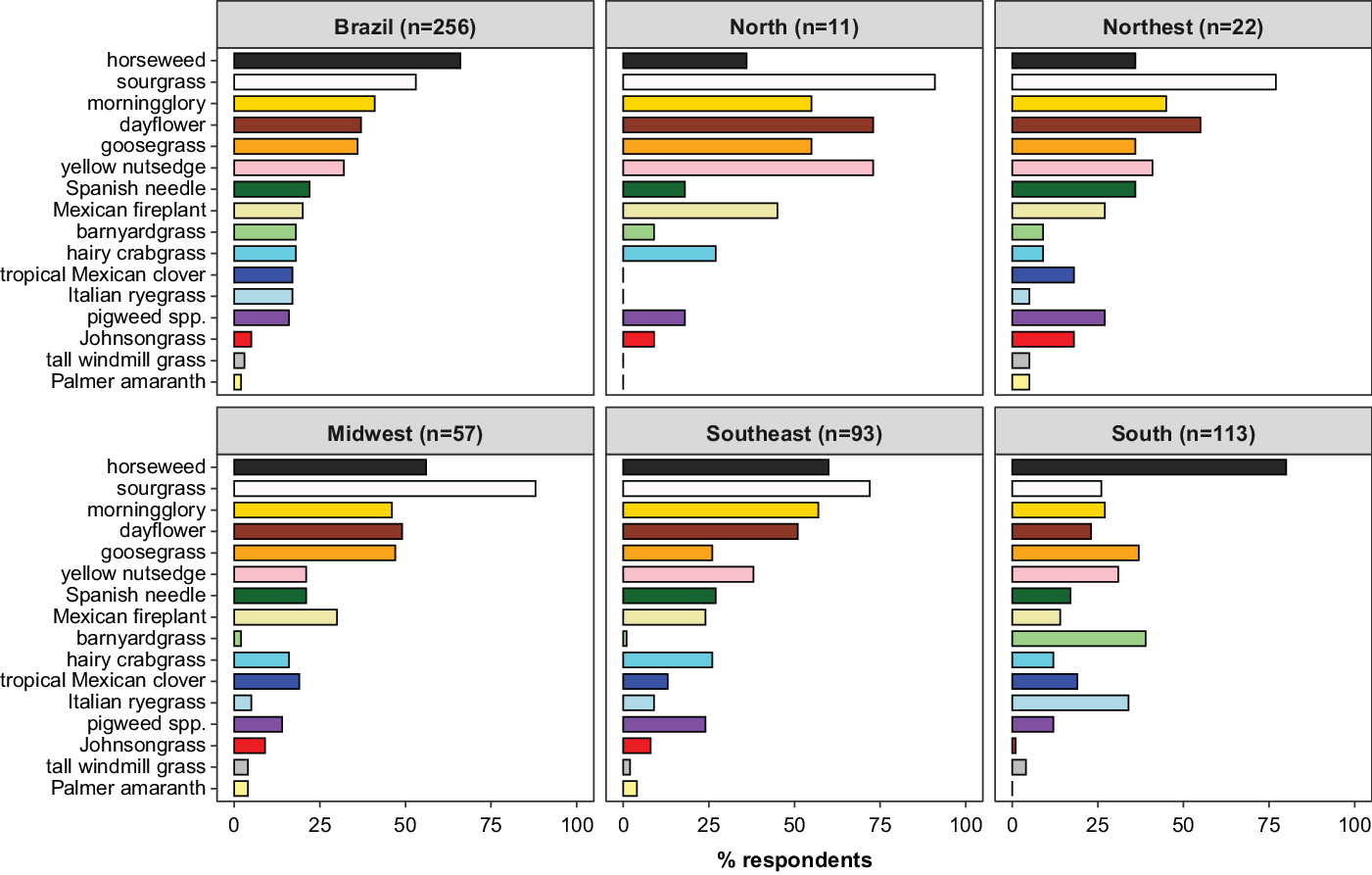
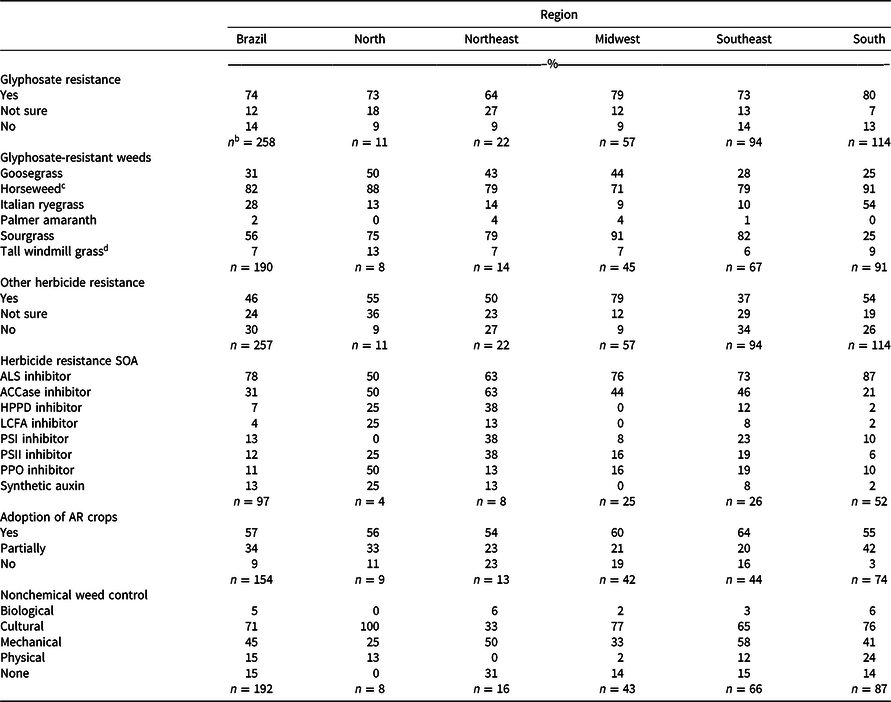
Survey results indicate that the top five problematic weed species in Brazil are either glyphosate tolerant (morningglory and dayflower) or GR (horseweed, sourgrass, and goosegrass) (Figure 4). Distribution of troublesome (Figure 4) and GR weeds (Table 5) varied across regions. Although ranked among the most problematic grass weed because of its high capacity to evolve resistance to herbicides (Preston et al. Reference Preston, Wakelin, Dolman, Bostamam and Boutsalis2009), Italian ryegrass [Lolium perenne subsp. multiflorum (Lam.) Husnot], a cool-season grass, is mainly adapted to the South region of Brazil (Table 5 and Figure 4). However, horseweed, an annual species adapted to no-till areas, is reported as the most widespread weed species present in nearly 50% of soybeans cropland of Brazil (Lucio et al. Reference Lucio, Kalsing, Adegas, Rossi, Correia and Gazziero2019). Because of horseweed’s intrinsic biology, its seeds may reach the planetary boundary layer (140 m) achieving seed dispersal of as much as 500 km (Shields et al. Reference Shields, Dauer, VanGessel and Neumann2006) strongly contributing to the spreading of horseweed to adjacent and nonadjacent areas (Dauer et al. Reference Dauer, Mortensen and Vangessel2007). The seed-mediated flow also plays an important role in distribution of other HR weeds. The first reports of GR Palmer amaranth and GR sourgrass in South America were in Brazilian neighboring countries Argentina and Paraguay, respectively (Heap Reference Heap2020). It is hypothesized that seeds from these two weed species migrated to Brazil through equipment, human traffic, and/or animals. For example, GR sourgrass is widespread across Brazilian regions but was first reported in western Paraná state (PR, in southern Brazil) in 2016 near Paraguay (Ovejero et al. Reference Ovejero, Takano, Nicolai, Ferreira, Melo, Cavenaghi, Christoffoleti and Oliveira2017). Genetic similarities within GR sourgrass biotypes from Paraguay and Paraná were found but not with GR sourgrass biotypes from the Southeast and Midwest (Takano et al. Reference Takano, Constantin, Mangolim and Bevilaqua2018), suggesting that evolution of GR sourgrass is occurring through seed-mediated flow and independent selection.
Percentage of respondents managing troublesome weeds by Brazilian regions according to the 2018 cropping systems weed management survey (n = number of respondents). Dayflower (Asiatic dayflower and Benghal dayflower), hairy crabgrass (Digitaria sanguinalis L. Scop.), horseweed (asthmaweed, Canadian horseweed, and tall fleabane), Johnsongrass (Sorghum halepense L. Pers.), Mexican fireplant (Euphorbia heterophylla L.), pigweed sp. (Amaranthus spp.), Spanish needle (Bidens spp.), tall windmill grass (Chloris elata Desv.), tropical Mexican clover (Richardia brasiliensis Gomes), yellow nutsedge (Cyperus esculentus L.).

Weed management status (herbicide weed resistance) and strategies (adoption of auxin-resistant crops and nonchemical control) in Brazil according to the 2018 Cropping Systems Weed Management Survey. a

a Abbreviations: ACCase, acetyl-CoA carboxylase; ALS, acetolactate synthase; AR, auxin-resistant; HPPD, 4-hydroxyphenylpyruvate dioxygenase; LCFA, long-chain fatty acid; PPO, protoporphyrinogen oxidase; PSI, photosystem I; PSII, photosystem II; SOA, site of action.
b Number of respondents.
c Asthmaweed, Canadian horseweed, and tall fleabane.
d See Figure 4 for Latin binomials and authorities of weeds not otherwise mentioned in text.
GR weeds have been documented in orchard, cereal, and legume crops (Vila-Aiub et al. Reference Vila-Aiub, Vidal, Balbi, Gundel, Trucco and Ghersa2008) and are on the rise across Brazilian cropping systems. Nine weed species have evolved resistance to glyphosate in Brazil, including four monocots and five dicots (Brunharo et al. Reference Brunharo, Patterson, Carrijo, Nicolai, Gaines, Nissen and Christoffoleti2016; Heap Reference Heap2020; Küpper et al. Reference Küpper, Borgato, Patterson, Netto, Nicolai, Nissen, Gaines and Christoffoleti2017; Takano et al. Reference Takano, Ovejero, Belchior, Maymone and Dayan2019). Recent reports have documented glyphosate failure to control slim amaranth (Amaranthus hybridus L.) (HRAC-BR 2019) and jungle rice [Echinochloa colona (L.) Link] (Pivetta et al. Reference Pivetta, Dornelles, Sanchonete, Goergen, Soares, Brun and Pedrollo2018) in Brazil. Other HR weeds, including those resistant to acetolactate synthase (ALS)–inhibitor herbicides, are widespread in Brazil. For example, our data suggest that 87% of respondents are managing ALS inhibitor–resistant weeds in the South (Table 5), a region where ALS-inhibiting herbicides are a foundation for weed control in rice, wheat (Triticum aestivum L.), and soybean (Figure 4). Weed resistance to ACCase-inhibitor herbicides is also a major problem in Brazil (Takano et al. Reference Takano, Ovejero, Belchior, Maymone and Dayan2019). The weed species plantain signalgrass [Urochloa plantaginea (Link) R.D. Webster], southern crabgrass [Digitaria ciliaris (Retz.) Koeler], goosegrass, Italian ryegrass, wild oats (Avena strigosa Schreb.), barnyardgrass [Echinochloa crus-galli (L.) P.Beauv.], and sourgrass have evolved resistance to ACCase-inhibiting herbicides (Heap Reference Heap2020). The number of biotypes with multiple HR is increasing in Brazil, including goosegrass, barnyardgrass, and sourgrass with resistance to glyphosate and to inhibitors of ACCase and/or ALS. Moreover, a horseweed biotype was reported that is resistant to 2,4-D, glyphosate, and inhibitors of PSI, photosystem II (PSII), and PPO (Heap Reference Heap2020), which certainly increases the complexity of weed management in cropping systems where such biotypes are present.
New Technologies
Our survey shows respondents willingness to adopt synthetic AR crops (57%) in Brazil (Table 5). Over 90% of growers surveyed in Nebraska reported weed management improve after using DR crops (Werle et al. Reference Werle, Oliveira, Jhala, Proctor, Rees and Klein2018). Moreover, research has demonstrated effective control of pigweed species with dicamba (Schryver et al. Reference Schryver, Soltani, Hooker, Robinson, Tranel and Sikkema2017) and horseweed with 2,4-D (Frene et al. Reference Frene, Simpson, Buchanan, Vega, Ravotti and Valverde2018). However, if adopted, dicamba or 2,4-D would have to be tank-mixed with another herbicide for control of grass weed species, given that the main weed problems in Brazil are GR grasses, such as sourgrass, goosegrass, and Italian ryegrass (Lucio et al. Reference Lucio, Kalsing, Adegas, Rossi, Correia and Gazziero2019). Studies have documented that tank-mixing 2,4-D (Li et al. Reference Li, Han, Bai and Yu2020) or dicamba (Hart and Wax Reference Hart and Wax1996; Underwood et al. Reference Underwood, Soltani, Hooker, Robinson, Vink, Swanton and Sikkema2016) can antagonize efficacy of ACCase-inhibitor herbicides such as clethodim for grass weed control, and higher rates of graminicides are needed to overcome antagonism. In addition, dicamba tank-mixed with glyphosate reduces pH, resulting in increased dicamba concentration in the air following application (Mueller and Steckel Reference Mueller and Steckel2019a, Reference Mueller and Steckel2019b; Oseland et al. Reference Oseland, Bish, Steckel and Bradley2020). Therefore, 2,4-D and dicamba offer little benefit and may complicate POST management of troublesome grass weed species besides the OTM concerns in Brazil.
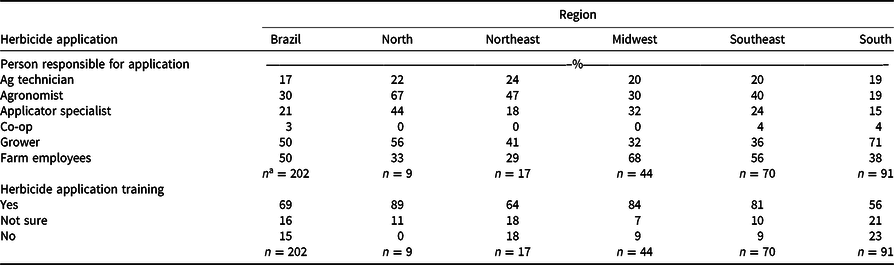
The OTM of dicamba or 2,4-D leading to injury in sensitive vegetation is currently a major issue in the United States (Knezevic et al. Reference Knezevic, Osipitan and Scott2018; Kniss Reference Kniss2018; Soltani et al. Reference Soltani, Oliveira, Alves, Werle, Norsworthy, Sprague, Young, Reynolds, Brown and Sikkema2020). Studies have documented that dicamba concentration in the air following application increased with temperature (Jones et al. Reference Jones, Norsworthy, Barber, Gbur and Kruger2019; Mueller and Steckel Reference Mueller and Steckel2019a). In Brazil, climatic conditions vary from tropical (with or without a dry season) to subtropical, with annual temperatures commonly >30 C during soybean and cotton POST spray season (Alvares et al. Reference Alvares, Stape, Sentelhas, de Moraes Gonçalves and Sparovek2013). In addition, dicamba- or 2,4-D-sensitive crops such as grape (Vitis vinifera L.), vegetables, orchards, soybean, cotton, and common bean (Phaseolus vulgaris L.) are commonly grown in Brazil. Micro-rates of dicamba or 2,4-D may cause visible injury on non-AR soybean (Osipitan et al. Reference Osipitan, Scott and Knezevic2019), grape (Mohseni-Moghadam et al. Reference Mohseni-Moghadam, Wolfe, Dami and Doohan2016), and tomato (Solanum lycopersicum L.) (Knezevic et al. Reference Knezevic, Osipitan and Scott2018). With AR crops, 2,4-D and dicamba herbicides are likely to be sprayed in large areas, which increases the chances of OTM onto sensitive vegetation. In Brazil, there are still no published data regarding potential OTM of newly sprayed dicamba and minimal information regarding 2,4-D–choline formulations (Kalsing et al. Reference Kalsing, Rossi, Lucio, Zobioli, Cunha and Minozzi2018). Further studies are needed to evaluate the impact of spraying large areas with dicamba and 2,4-D choline under tropical conditions. With the introduction of synthetic AR crops in Brazil, spraying dicamba and 2,4-D may require restrictions and extra herbicide applicator training similar to what has happened in the United States. Although it is not required in the country, nearly 70% of survey respondents indicated that applicators received some form of training (Table 6).
Herbicide application information in Brazil according to the 2018 Cropping Systems Weed Management Survey.

a n is the number of respondents.
Limitations for Weed Management
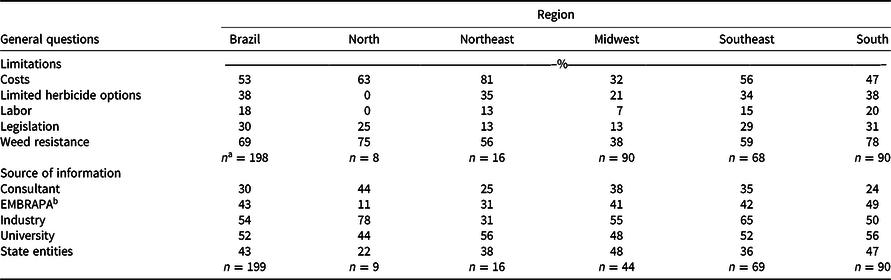
As highlighted in our survey, HR weeds are a major constraint on crop management in Brazil (Table 7). Although Brazil has fewer documented cases of HR weeds when compared to Australia, Canada, and the United States (Heap Reference Heap2020), the upcoming AR crop technologies do not address the current HR-grass weed problems in the country. Managing HR weeds in Brazil may require additional adoption of nonchemical strategies or introduction of new herbicide SOAs that are effective on grass species. Brazilian growers already carry out multiple effective nonchemical strategies, such as cover crops, crop diversity, crop succession in season, and no-till (Table 5). A new nonchemical weed control strategy, harvest seed weed control (Walsh et al. Reference Walsh, Broster, Schwartz-Lazaro, Norsworthy, Davis, Tidemann, Beckie, Lyon, Soni, Neve and Bagavathiannan2018), is a valuable tool for minimizing HR weeds, but to our knowledge is still neither available nor evaluated/studied in Brazil. Nonetheless, the evolution of HR-grass weed species and absence of new effective technologies are threatening the sustainability of Brazilian agricultural production.
General questions regarding weed management strategies in Brazil according to the 2018 Cropping Systems Weed Management Survey.

a Number of respondents.
b Brazilian Agricultural Research Corporation.
Survey respondents reported industry as the main source of information for crop and weed management in Brazil (Table 7). Despite being quite valuable, industry information can be biased toward portfolios. In contrast, sources of unbiased information from basic and applied research are public institutions, including universities, state extension agencies, and EMBRAPA (Brazilian Agricultural Research Corporation). Therefore, there is a need for an increase on collaborative work on basic and applied research in Brazil arising from the upcoming weed herbicide resistance challenges and the introduction of technologies that are novel and complex to adopt, which will demand research and education for proper and effective adoption.
The survey results presented herein highlight the current status and the difference in cropping systems and weed management practices adopted across Brazil. Our survey shows the trends in conservation agricultural practices and advances the knowledge regarding current weed management strategies in Brazilian agriculture. Brazilian stakeholders are progressive in the sense of adopting conservation agricultural practices and new technologies. However, introduction of new technologies focused on the United States (e.g., synthetic AR crops) for weed management may not address the major weed problems in Brazil but potentially generate a new challenge, OTM of herbicides into sensitive vegetation. Therefore, we urge that academics, growers, industry, and policy makers (1) expand monitoring of HR weeds, (2) increase research on nonchemical weed management strategies, and (3) increase investments in public databases, surveys, as well as basic and applied research, so as to support decisions regarding the introduction and adoption of novel agricultural technologies.
Acknowledgments
This survey received no specific grant from any funding agency, commercial, or not-for-profit sectors. The authors would like to thank all respondents for participating in the survey and Dr. Dênis Mariano for developing Figure 1. No conflicts of interest have been declared.