

The use of natural clays for many applications, mainly in the clay ceramic industry, is of major importance for the development of the natural raw materials sector (Jemaï et al., Reference Jemaï, Karoui-Yaakoub, Sdiri, Ben Salah, Azouzi and Duplay2015). Fired bricks made from clays are among the oldest masonry materials used in construction and are still the most used and significant products in the building industry. This aspect is due to the availability of clay materials, their durability, mechanical, physical, thermal and acoustic properties, their weather resistance and cultural aspects, among others characteristics (Deboucha & Hashim, Reference Deboucha and Hashim2011; Shakir et al., Reference Shakir and Mohammed2013; Ukwatta et al., Reference Ukwatta, Mohajerani, Setunge and Eshtiaghi2015; Coletti et al., Reference Coletti, Cultrone, Maritan and Mazzoli2016; Kazmi et al., Reference Kazmi, Abbas, Saleem, Munir and Khitab2016; Muñoz et al., Reference Muñoz, Morales, Letelier and Mendívil2016; Viani et al., Reference Viani, Sotiriadis, Len, Šašek and Ševčík2016).
Population growth and the migration of people to urban areas have created a huge gap between the demand for and supply of affordable housing. Therefore, fired clay bricks have an estimated annual global production of 1.4 billion units. These are some of the most adaptable masonry units due to their physical properties; production and consumption continue to grow (Zhang, Reference Zhang2013; Abdul Kadir & Mohajerani, Reference Abdul Kadir and Mohajerani2015; Murmu & Patel, Reference Murmu and Patel2018).
The state of Santa Catarina (94,998 km2) is located on a vast area of the ancient Gondwanaland, overlying the crystalline shield of the southern Brazilian region. The region shows well-defined differences in its geological units. Crystalline rocks form the deposition base and the Palaeozoic and Mesozoic sediments are truncated by palaeoplanes. The crystalline rocks are no longer disturbed by orogenic movements, so they lie in horizontal or slightly dipping layers (Maack, Reference Maack2001). The region is rich in small and in homogeneous clay deposits.
The main raw materials for traditional ceramic products are clays which, due to their many impurities, may incur financial losses for the manufacturers due to the formation of defective products, which in Brazil vary from 2 to 10% of total production, and in some cases may even exceed this larger amount. These losses relate to the physicochemical characteristics of the raw materials, the manufacturing technology and the quality-control processes adopted in the industry, among other factors (Gouveia & Sposto, Reference Gouveia and Sposto2009). The lack of characterization of the clays used for ceramic manufacture can have an impact on the financial status, even during the forming step and extending into thermal processing (drying and firing). In Brazil, the clay ceramic industry uses ~10.3 million tons of clay per month, mainly for the production of tiles and blocks for the construction industry (Savazzini-Reis et al., Reference Savazzini-Reis, Della Sagrillo, de Oliveira, Teixeira and Valenzuela-Diaz2017). The southern region of Santa Catarina, Brazil, hosts the largest clay ceramic centre in the state, accounting for ~2.5% of the country's production of clay products (Zaccaron et al., Reference Zaccaron, Galatto, Nandi and Fernandes2014).
The nature of the clays available for consumption determines the precise type of equipment and technology that is best suited for a given production process. Finally, geological knowledge may help in the search for new areas of clays with adequate properties that may benefit the manufacturing process (National Research Council, 2002). Knowing the physicochemical and mineralogical properties of the clays used as raw materials in the manufacture of ceramic materials may help in the blending process and to minimize losses during the forming and heat treatment (drying and firing).
The present study aimed to determine the suitability of various clays and argillites from the southern region of Santa Catarina, Brazil, in the manufacture of clay ceramics. The clay materials were characterized regarding their chemical composition (X-ray fluorescence; XRF), mineralogy (X-ray diffraction; XRD), particle-size distribution (laser diffraction) and residue (sieve analysis), thermal behaviour (differential scanning calorimetry/thermogravimetry; DSC/TG), plasticity (Pfefferkorn method) and technological properties (apparent density, porosity, water absorption, shrinkage after drying and firing and strength after drying and firing).
Materials and methods
Geological settings of the study region
The area where the raw materials were extracted is located in the south-eastern portion of the state of Santa Catarina, Brazil, where the sedimentary and volcanic rocks that form the sequence of the eastern border of the Paraná Basin and the unconsolidated sediments that form the Coastal Plain or form the current alluvial deposits crop out. The regional crystalline basement is composed of post-tectonic late granite rocks (da Silva & Leites, Reference da Silva and Leites2000).
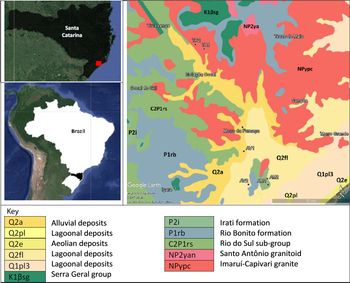
In this part of the State, there is a tendency for geological alteration from Serra Geral to the coastal region. In the inland lies the Serra do Rio do Rastro, in which the well-known White Column was defined (White, Reference White1988). In the coastal region, there is also a large variety of sand, silt and clay deposits related to marine and continental processes. A geological map of the region where the studied clays were extracted is shown in Fig. 1.
The geographical location of the study area (Wildner et al., Reference Wildner, Camozzato, Toniolo, Binotto, Iglesias and Laux2014).

The coastal region (yellow colourations in Fig. 1) is mainly composed of Quaternary deposits. Going inland, towards the Serra do Rio do Rastro, the formations of the Paraná Basin crop out. The latter is an intracratonic basin filled with sedimentary and volcanic rocks, developed between the Ordovician and the Cretaceous. In the Criciúma sheet, a topographical chart mapped by the Brazilian Geological Service (SPRM) (code SH.22-X-B), the ridge sequences vary in age from the Permian to the Cretaceous (Silva & Leites, Reference Silva and Leites2000).
Sample preparation and characterization techniques
Four clays and two argillites were studied. The argillites are located in a small outcrop of the Rio do Sul Formation, deposited on the granite base of the Imaruí-Capivari Formation. Two clays are highlighted geologically in recent sedimentary deposits (Cenozoic Era, Quaternary), influenced by the glacial–eustatic oscillation of the sea level. Two other clays are placed in a ‘testimony hill’, also located in the Rio do Sul Formation (Fig. 1).
The clays were labelled AV1, AV2, AM1 and AM2, and the argillites were labelled TA1 and TA2. Approximately 100 kg were collected from each sample at five different locations and the samples were submitted to quartering (Tan, Reference Tan2005). After homogenization, the samples were dried at 45 ± 5°C until a constant mass was achieved. The clays were disaggregated with a laboratory roller mill (Bertan) and the argillites were milled with a hammer mill (Servitech CT-058) for 5 min.
For characterization, the raw materials were disaggregated in a porcelain mortar and then passed through a 200 American Standard Test Sieve Series (ASTM) mesh (74 μm) sieve. Chemical analysis of the samples was performed with XRF spectrometry on a Bruker (S2 Ranger) XRF spectrometer using pressed powder pellets. The loss on ignition (LOI) of the samples was determined after calcination at 1000°C for 3 h. The phase (mineralogical) analysis was performed using XRD on a Bruker (D2 Phaser) diffractometer. The settings were: Cu-Kα1 radiation (λ = 1.5406 Å), 30 kV and 30 mA, scanning range 3–80°2θ and 2° min–1 scanning rate. The crystalline phase content (%) was determined using the Rietveld method. The analysis was performed using Match! 3 software and using the Crystallography Open Database.
The DSC/TG analysis was performed in a Netzsch 409 Jupiter F3 system, with a heating rate of 10°C min–1 from room temperature to 1000°C in synthetic air. The particle-size distribution was determined by laser diffractometry with a CILAS 1064 instrument in the range 0.04–500 μm over a period of 60 s using sodium salt (Disperlan LP/G, Lamberti Brasil) as a dispersant. The residue (i.e. the non-silty/clayey material) retained in a 325 ASTM mesh (44 μm) sieve was collected using a series of sieves.
The plasticity of the samples was determined using the plastic deformation method according to Amorós et al. (Reference Amorós, Javier, Vilches, Javier, Ten, Fuster and Solana1998) with a plasticity meter (Natreb), where the index is defined as the amount of water in which the test sample experiences a shrinkage of 33% of its initial height, which in this case was 40 mm. Therefore, the Pfefferkorn plasticity index is the percentage of moisture when the final height of the sample is 28 mm (Amarós et al., 1998; Andrade et al., Reference Andrade, Al-Qureshi and Hotza2011).
Once the ideal working moisture of the clays was determined, the raw materials that were already dehydrated were hydrated again and placed into plastic bags for 24 h for homogenization. In sequence, the samples were laminated in a roller mill to prepare the raw materials for forming, which was carried out by extrusion using a vacuum extruder (Servitech CT-083) under 760 mmHg. The samples were prepared as 25 mm × 40 mm × 55 mm hollow bricks. The green extruded samples were dried at 110 ± 10°C for 24 h. Finally, the samples were fired in a muffle furnace (Jung J200) at a heating rate of 1.5°C min–1 up to 900°C for 120 min. The dimensions and mass of the samples after extrusion, drying and firing were determined using a calliper (0.1 mm) and a scale (0.1 g) to obtain their drying shrinkage and loss of weight after each processing step.
The apparent density of the samples was determined using the Archimedes principle. The water absorption test was performed according to the technical standard NBR 15270 (ABNT 2017a, 2017b). The mechanical compressive strength test was performed in a Universal Testing Machine (EMIC DL 20000) at a loading rate of 100 N s–1. The samples were prepared according to the technical standard NBR 15270 (ABNT 2017a, 2017b).
Results and discussion
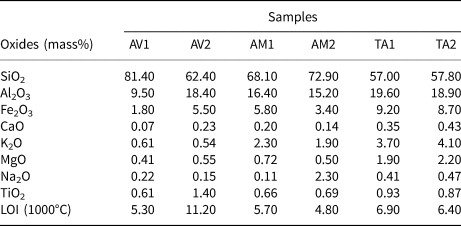
The chemical compositions of the clays and argillites expressed as the percentage of their respective oxides are shown in Table 1.
Chemical compositions of the clays and argillites determined using XRF spectroscopy.

All clays and argillites consist mainly of SiO2, which is commonly found in the raw materials used for clay ceramics in Brazil. Sample AV1 shows a very large amount of SiO2 (81.4%). In contrast, clays AV2, AM1 and AM2 contain 62.4%, 68.1% and 72.9% SiO2, respectively, being within the range that is usually found in the raw materials used for the manufacture of clay ceramic products (Nandi et al., Reference Nandi, Zaccaron, Fernandes, Dagostin and Bernadin2014; Zaccaron et al., Reference Zaccaron, Galatto, Nandi and Fernandes2014; Tsozué et al., Reference Tsozué, Nzeugang, Mache, Loweh and Fagel2017). The argillites (TA1 and TA2) have smaller SiO2 contents than clays (~57%) due to their different mineralogy.
The network-forming oxides (SiO2 + Al2O3) constitute up to 80% of the clay samples and 75% of the argillites. They are the main components of a ceramic body (Tiffo et al., Reference Tiffo, Elimbi, Manga and Tchamba2015). Iron oxide (Fe2O3) gives a reddish colour to the ceramic products for masonry (Dondi et al., Reference Dondi, Raimondo and Zanelli2014; Pardo et al., Reference Pardo, Jordan and Montero2018). The Fe2O3 and TiO2, which are chromophore oxides (Vakalova & Revva, Reference Vakalova and Revva2020), correspond to 2.5–7.0% of the clay samples and 10% of the argillites. The alkaline and alkaline earth oxides (CaO, MgO, K2O and Na2O) facilitate sintering of the ceramic materials (Tsozué et al., Reference Tsozué, Nzeugang, Mache, Loweh and Fagel2017), as they are mineralizers. They constitute 1.3–4.8% of the clay samples and 6.4–7.6% of the argillites.
The LOI is attributed to silicate dehydroxylation reactions, organic matter combustion and carbonate decomposition (Eliche-Quesada et al., Reference Eliche-Quesada, Sandalio-Pérez, Martínez-Martínez, Pérez-Villarejo and Sánchez-Soto2018). The LOI values of the AV1, AM1 and AM2 clays are 5.3%, 5.7% and 4.8%, and those of the TA1 and TA2 argillites are 6.9% and 6.4%, respectively. The AV2 clay has a larger LOI, probably due to the large amount of organic matter, which is a very common feature in flooded pit clays with greater plasticity. The larger LOI may cause the greater porosity of the ceramic material after sintering.
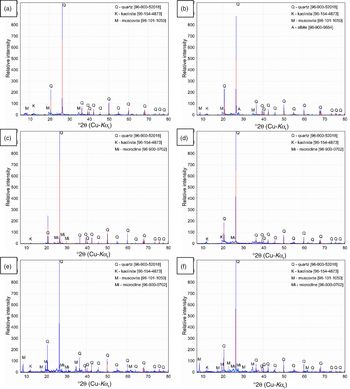
The mineralogical compositions of all of the samples except for AV1 and AV2 (Fig. 2) consist mainly of quartz (55–83%), kaolinite (3–12%) and muscovite (7–20%). The AV1 and AV2 samples are muscovite-free. Albite (8%) and microcline (2–20%) are present in all of the samples except AM1.
Mineralogical analysis of the clays and argillites determined using XRD.

The chemical composition of the raw material (Table 1) is in accord with the mineralogical composition (Fig. 2). The crystalline phase content (%) of the samples, determined using the Rietveld method, is 66.8% for AM1, 78.2% for AM2, 68.4% for TA1, 74.3% for TA2 and 85% for AV1 and AV2, respectively.
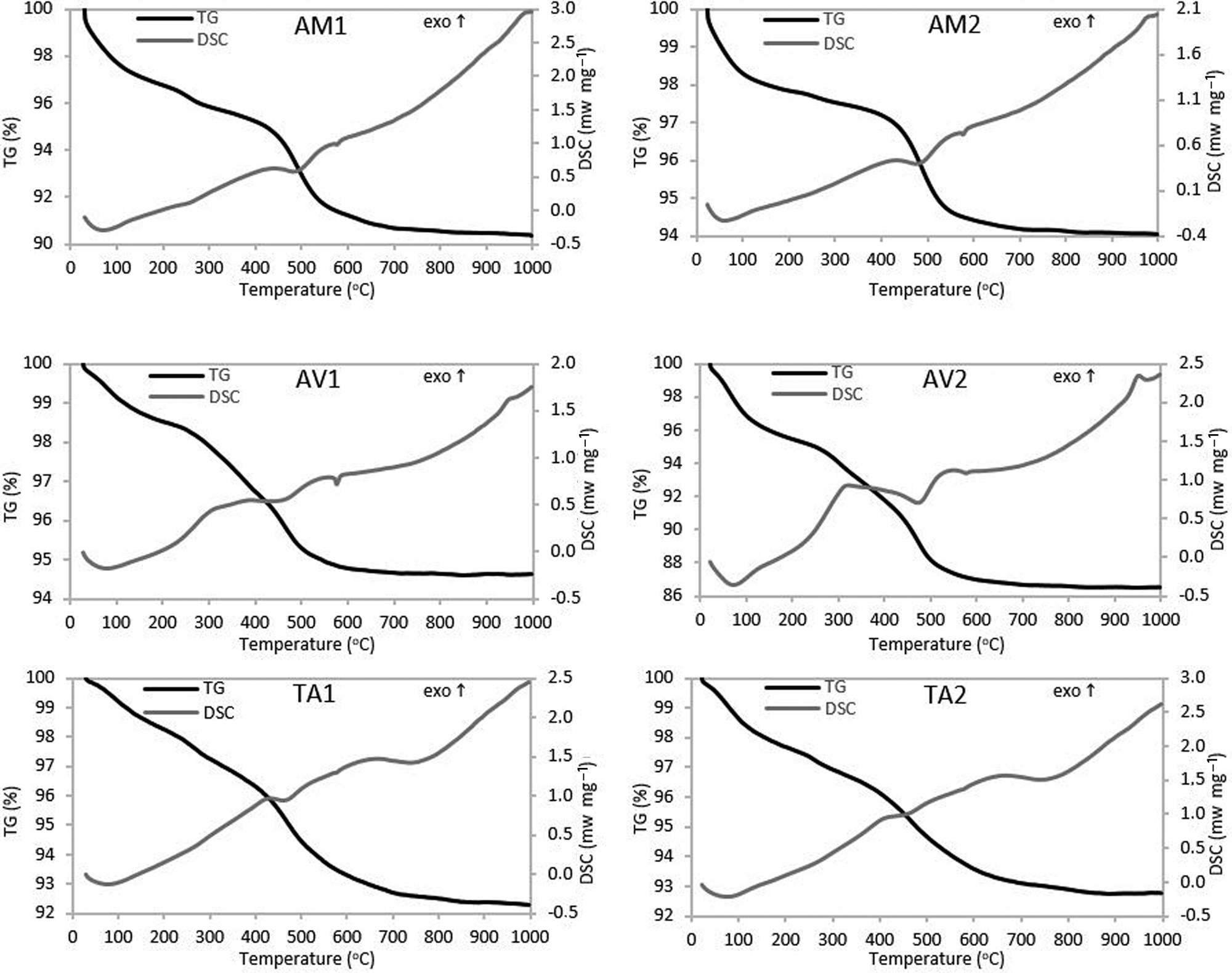
The raw materials have comparable thermal behaviour. They are characterized by four endothermic events and one exothermic event (Fig. 3). The first endotherm occurs at <200°C, corresponding to the evaporation of the water that is physically adsorbed on the mineral particles. The TG analysis shows a mass loss at <100°C corresponding to water evaporation (Nieto et al., Reference Nieto, Abad and Azañón2008). The AV2 clay shows the most significant mass loss (4.5%). At >100°C, the water loss is almost complete and kaolinite and mica begin to dehydroxylate (Nieto et al., Reference Nieto, Abad and Azañón2008).
Thermal analysis of clays and argillites determined using DSC/TG.

The thermal decomposition in the temperature range of 300–800°C is due mainly to the dehydroxylation (release of OH structural groups) of clay minerals (Escalera et al., Reference Escalera, Tegman, Antti and Odén2014; de Almeida Azzi et al., Reference de Almeida Azzi, Osacký, Uhlík, Čaplovičová, Zanardo and Madejová2016). In this temperature range, three events occur, starting with the second endothermic event between 300°C and 500°C, related to the amount of crystalline water and showing greater loss of mass due to kaolinite dehydroxylation. This event is more intense for plastic clays such as AV2, suggesting greater plasticity due to the presence of muscovite, but mainly due to the minor amount of quartz. The mass loss is greater (12%) in this temperature range.
The third endothermic event, between 570°C and 580°C, is related to the allotropic transformation of quartz (Galán-Arboledas et al., Reference Galán-Arboledas, Cotes-Palomino, Bueno and Martínez-García2017; Barreto & da Costa, Reference Barreto and da Costa2018), and the fourth endothermic event, in the range 700–800°C, may be related to the dehydroxylation of the mica (illite/muscovite) phase (Trindade et al., Reference Trindade, Dias, Coroado and Rocha2009). The last exothermic event at ~900°C is probably related to the formation of mullite (Becker et al., Reference Becker, Jiusti, Minatto, Delavi, Montedo and de Noni2017; de Oliveira Henriques et al., Reference de Oliveira Henriques, Pedrassani, Klitzke, Mariano, Vargas and Vieira2017; de Sousa et al., Reference de Sousa, Salomão and Arantes2017; Wang et al., Reference Wang, Zhu, Sun, Ji, Liu and Wang2017).
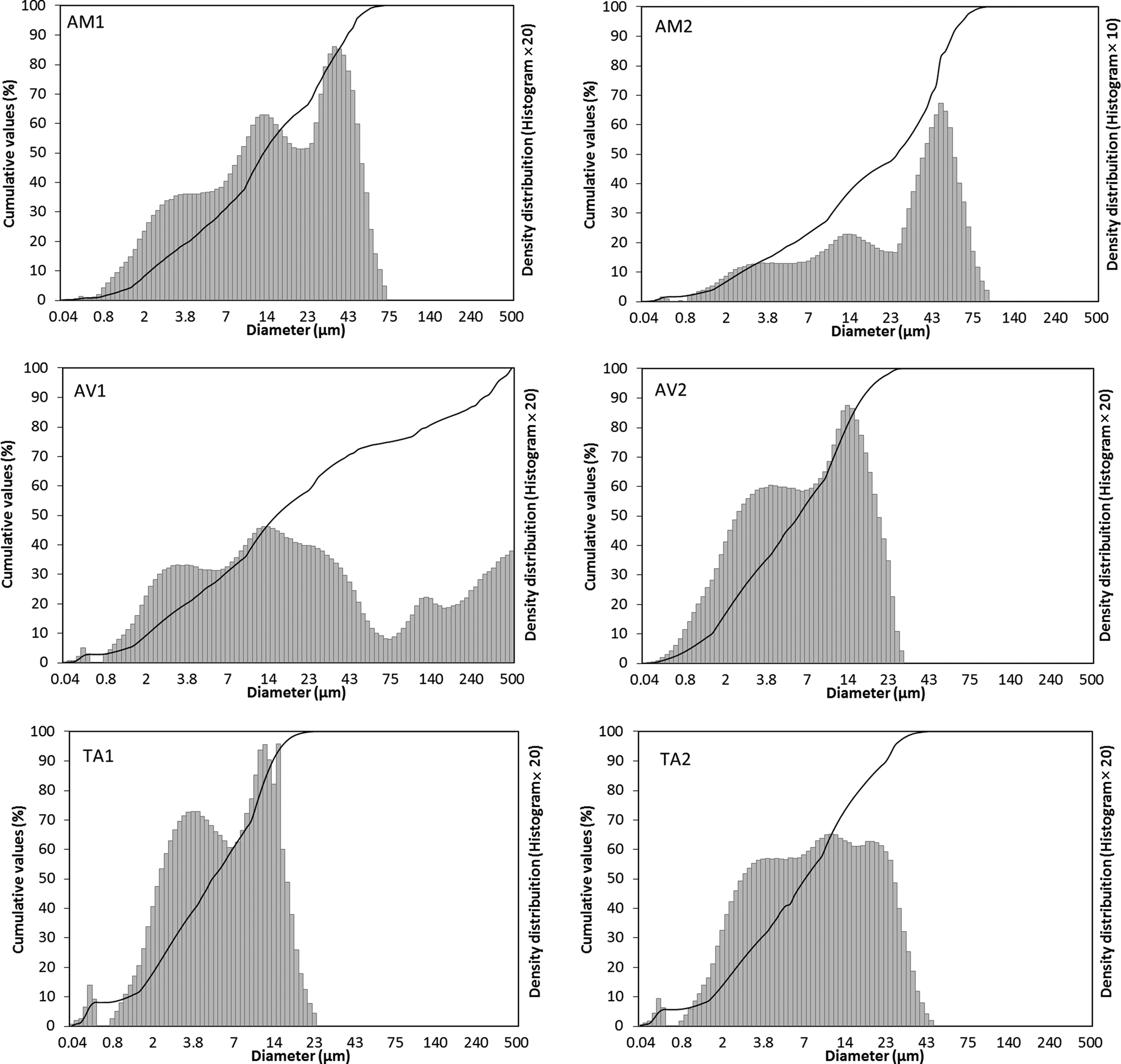
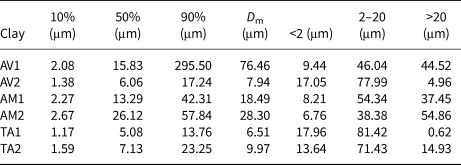
The samples show a multimodal particle-size distribution (Fig. 4). The multimodal behaviour of non-spherical particles, with respect to packing density, is the same as that of spherical particles, but with lower density values (Mütze, Reference Mütze2016; Wang et al., Reference Wang, Li, Yu, Li, Xu and Qiao2017). The particle-size distribution of the raw materials in the accumulated fractions of 10%, 50% and 90% and their average particle size (D m) are shown in Table 2. The amounts of residue (coarse material) retained at the 325 ASTM mesh sieve are presented in Table 3.
Particle-size distribution of the clays and argillites determined by laser diffraction.

Cumulative fractions (10%, 50%, 90%) and average particle diameters of the clays and argillites determined using the laser diffraction technique.

Residue retained at the 325 ASTM mesh of the clays and argillites determined using sieving technique.

Sample TA1 shows a smaller average diameter and thus a smaller particle-size distribution compared to the other raw materials, followed by samples AV2 and TA2. However, TA1 and TA2 were processed by milling. The AV1 clay shows a larger size, with an average particle size of >70 μm and with some particles >200 μm. Samples AM1, AM2 and AV1 show ~40% of the particles being >20 μm and have average particle sizes of 18.5, 28.3 and 76.5 μm, respectively.
Regarding the residue of the raw materials retained in the 325 ASTM mesh (Table 3), AV1 shows 57% residue, corresponding to the large SiO2 content (Table 1). Sample AV2 shows a small amount of residue (8%), which is in agreement with the typical characteristics of pure clay minerals. The AM1 and AM2 clays show intermediate residue values which are more common among sandy clays. Although the TA1 and TA2 argillites show residue values which are very similar to those of the AM1 and AM2 clays, they were milled previously. Because argillites are harder clays, traditional preparation methods for clay products are not suitable for fragmentation/comminution.
Plasticity is an important rheological property of raw materials for traditional ceramics, because it shows the possibility of forming ceramic bodies by applying pressure (Bormans, Reference Bormans2004; Meseguer et al., Reference Meseguer, Pardo, Jordan, Sanfeliu and González2010). The mineralogical composition of clays and the particle-size distribution influence this property directly. The plasticity of clays is related to the morphology of the plate-like clay-mineral particles that slide over each other when water is added, acting as a lubricant. As the water content of clay increases, plasticity increases to a maximum, which depends on the nature of the clay (Arsenović et al., Reference Arsenović, Pezo, Radojević and Stanković2013).
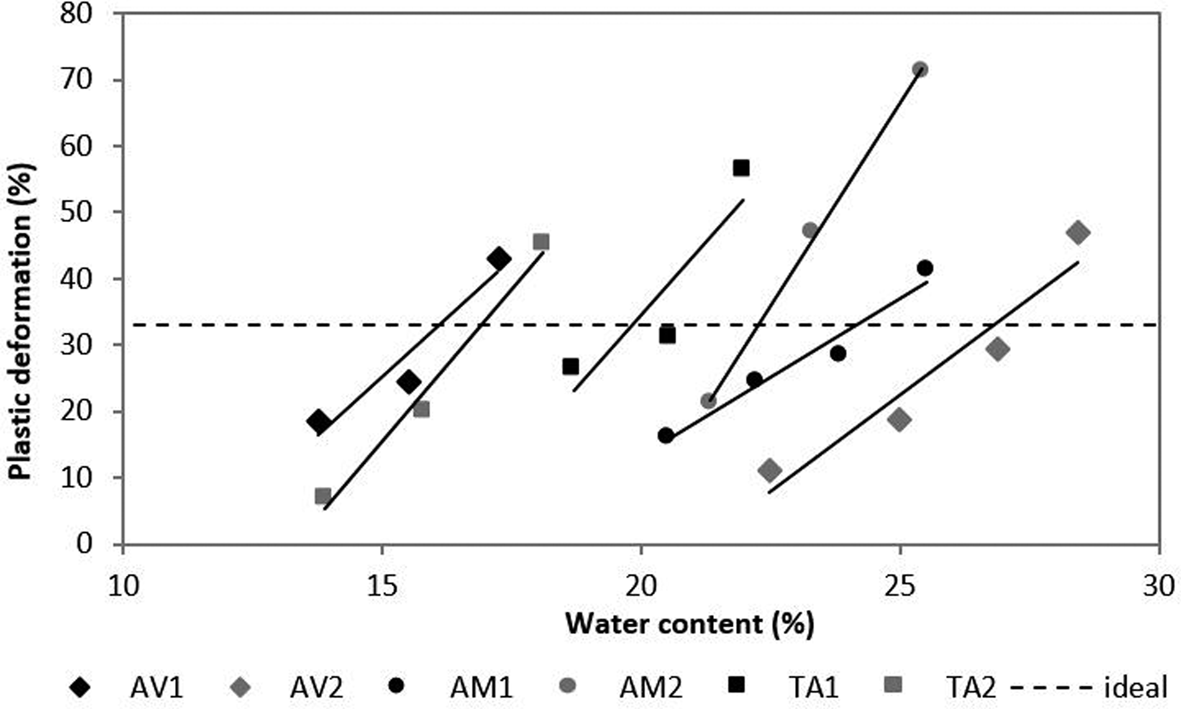
A plastic deformation of 33% is the standard percentage for an optimized water content index for forming samples by extrusion, which was used in this work (Fig. 5). The clays and argillites show the following water contents for optimum extrusion: 16% for AV1, 26% for AV2, 24% for AM1, 22% for AM2, 20% for TA1 and 17% for TA2.
Plasticity index for the clays and argillites determined using the Pfefferkorn method.

The plastic behaviour of clays can be determined by the plasticity index; more plastic clays need a greater water content to reach their optimum workability point (Arsenović et al., Reference Arsenović, Radojević, Jakšić and Pezo2015). In this context, the raw materials in this study are classified according to their plasticity index as AV2 > AM1 > AM2 > TA1 > TA2 > AV1 (more plastic > less plastic).
During the drying process, the water content that was used for extruding the clay paste is lost from the capillaries through a complex thermodynamic process. This loss of water causes shrinkage of the ceramic article, therefore changing its size due to the dehydration of the clay minerals. An excessive shrinkage of the ceramic may cause problems with sizing of the finished product; hence, it is critical to control shrinkage at this stage. The linear drying shrinkage is the dimensional variation that the ceramic artefact undergoes when it loses colloidal and residual water during drying.
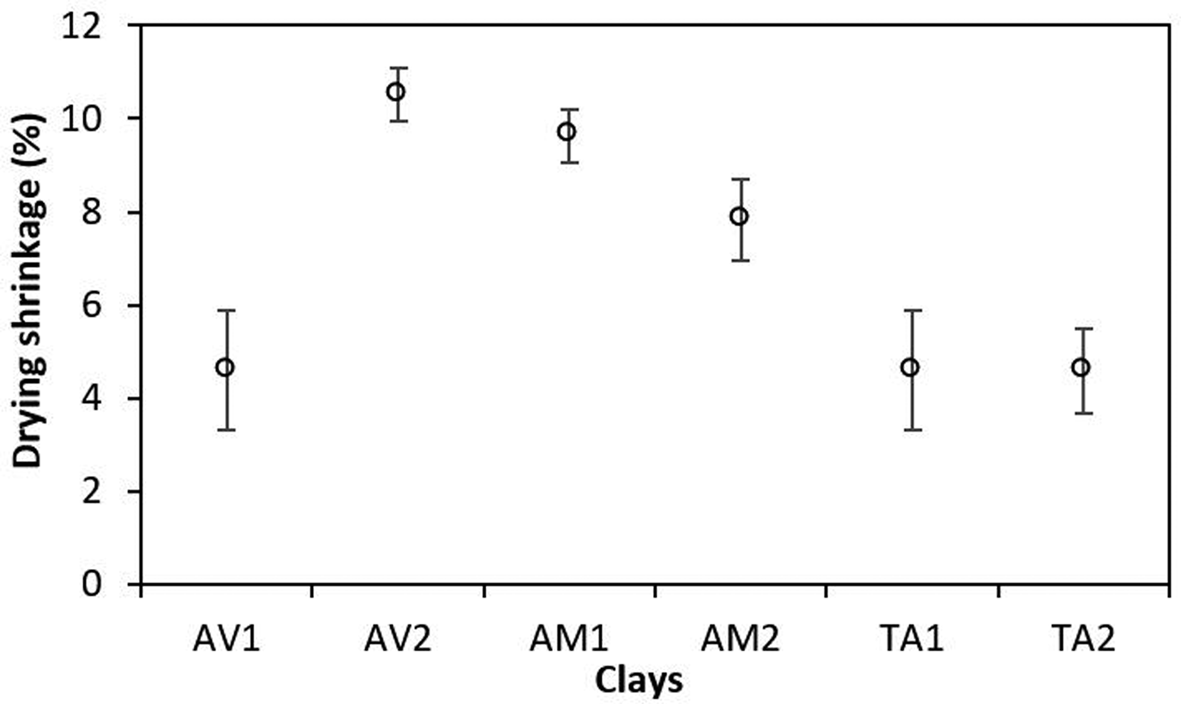
The clays AV2, AM1 and AM2 have drying shrinkages >7%: the AV2 clay shows 10.5% shrinkage, followed by AM1 with 9.6% and AM2 with 7.8% (Fig. 6). The remaining raw materials (AV1, TA1 and TA2) show values close to 4.5%. Clays and clayey materials (such as argillites) with low plasticity are considered non-plastic raw materials by the ceramic industry and, in general, they contain large amounts of free silica (mainly quartz). In general, clays that have a small percentage of linear shrinkage during drying are less sensitive to thermal processes (de Oliveira, Reference de Oliveira2011).
Shrinkage (%) after drying at 110°C for the clays and argillites.

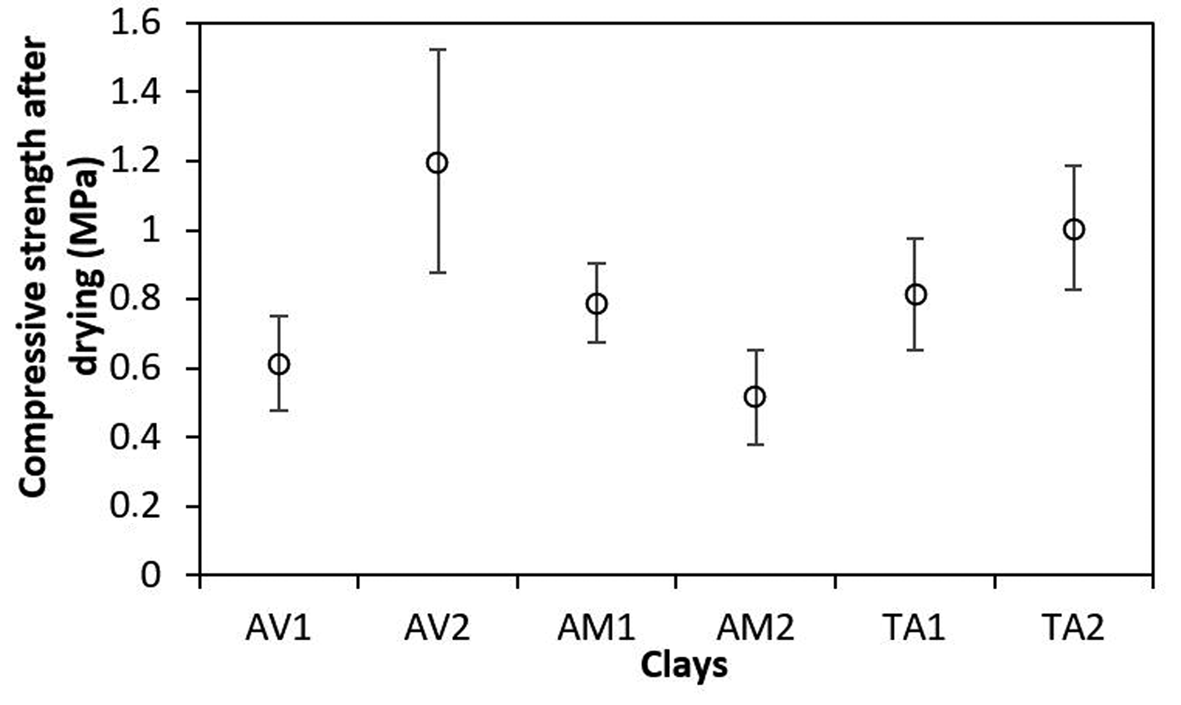
The green ceramic specimens must have sufficient strength to prevent fracture or cracking during handling and drying (Yang et al., Reference Yang, Laars, Kaushik, Mueller, Sigmund, Somiya, Aldinger, Spriggs, Uchino, Koumoto and Kaneno2003). The compressive strength of the ceramic products after drying is due to the packing of the clay particles resulting from the plasticity of the clay paste during the forming processes (Celik, Reference Celik2010). The compressive strength values after drying of the clays and argillites are shown in Fig. 7. As this test is not standardized, the results are compared with each other. The AV2 sample shows high compressive strength (1.2 MPa), followed by TA2 (1.0 MPa). Samples AM1 and TA1 show 0.8 MPa compressive strength, while samples AV1 and AM2 have compressive strength values of 0.6 and 0.5 MPa, respectively.
Compressive strength (MPa) after drying at 110°C for the clays and argillites.

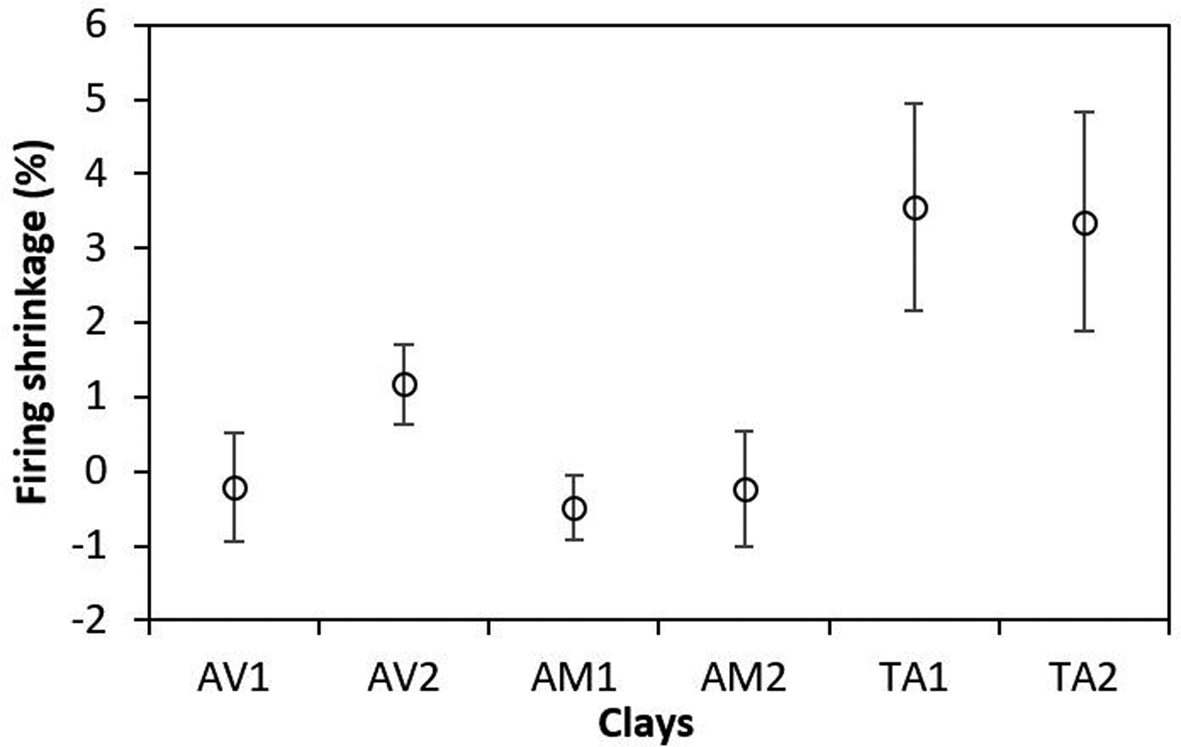
In the firing process, the clay materials undergo several reactions. From 700°C, SiO2 and Al2O3 react with flux oxides (Na2O, K2O, MgO, CaO and Fe2O3 in some cases), forming complex aluminosilicates (de Oliveira, Reference de Oliveira2011). Other phenomena can be observed during firing, causing a dimensional change in the sample through expansion or contraction (Facincani, Reference Facincani1992). The clays AV1, AM1 and AM2 show negative average values of shrinkage of –0.2%, –0.5% and –0.2%, respectively (Fig. 8), suggesting that there is expansion of the samples after firing. An excessive amount of clay minerals results in shrinkage at high temperature, such as for AV2, with a shrinkage value of 1.2%. The TA1 and TA2 samples have significant shrinkage at firing (3.6% and 3.4%, respectively), possibly due to the larger amount of flux oxides (mainly K2O) present in the samples (Table 1), which enables the formation of a liquid phase and leads to increased density after sintering (Facincani, Reference Facincani1992).
Shrinkage (%) after firing at 900°C for the clays and argillites.

Water absorption occurs through the intrusion of water in the pores due to capillary forces when the sample is immersed in water, causing an increase in mass. The water absorption test (NBR 15270-2; ABNT, 2017b) establishes minimum and maximum limits (between 8% and 25%), so that the final product meets the standard. High water absorption rates may be related to high porosity and low density, which may reduce the strength of the product. A moisture content greater than that established by technical standards (ABNT, 2017b) may disrupt a clay ceramic construction system, even reducing the strength of the system (Sathiparan & Rumeshkumar, Reference Sathiparan and Rumeshkumar2018).
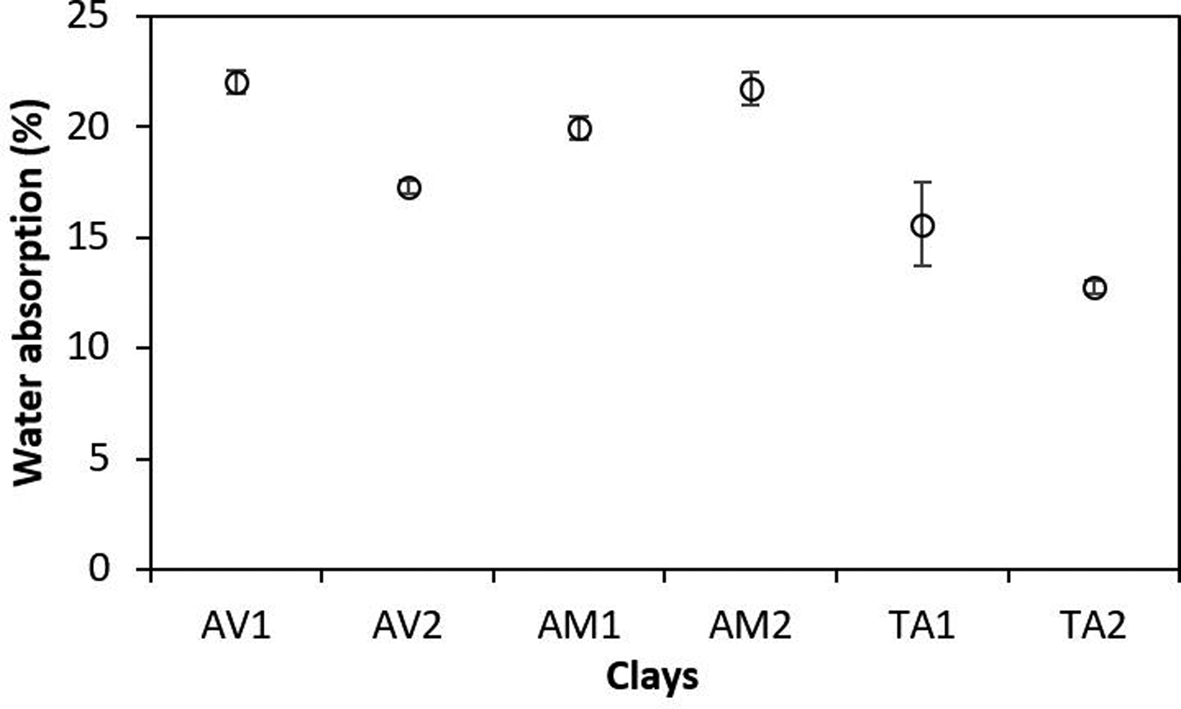
All clays are within the standard water absorption interval (ABNT, 2017b) of 8–25% (Fig. 9). Clays AV1 and AM2 show 22% water absorption, perhaps due to the large amount of residue detected in these raw materials, which does not allow for good packing during the forming process, therefore resulting in greater porosity of the samples (Aouba et al., Reference Aouba, Bories, Coutand, Perrin and Lemercier2016). Sample AM1 shows a water absorption value of ~20%, which is similar to the previous clays, but this clay shows better packing, as well as showing a large amount of residue, as with AV1 and AM2 (Table 3), resulting in the development of larger pores after firing. Clay AV2, with the smallest SiO2 content, has 17% water absorption, which is a common feature in plastic clays, as it shows a lower residue (free SiO2) and a greater amount of clay minerals, leading to the formation of small pores during firing due to their small particle sizes, resulting in better packing during drying and better sintering during firing (Aouba et al., Reference Aouba, Bories, Coutand, Perrin and Lemercier2016). The argillites TA1 and TA2 show water absorption values of 15.6% and 12.7%, respectively. Argillites are processed (milled/ground) materials, and therefore they have greater amounts of small particles (<2 μm) that facilitate packing during extrusion. In addition, they are formed by flux materials that help with the formation of the liquid phase during firing, resulting in improved densification of the ceramic product.
Water absorption (%) after firing for the clays and argillites.

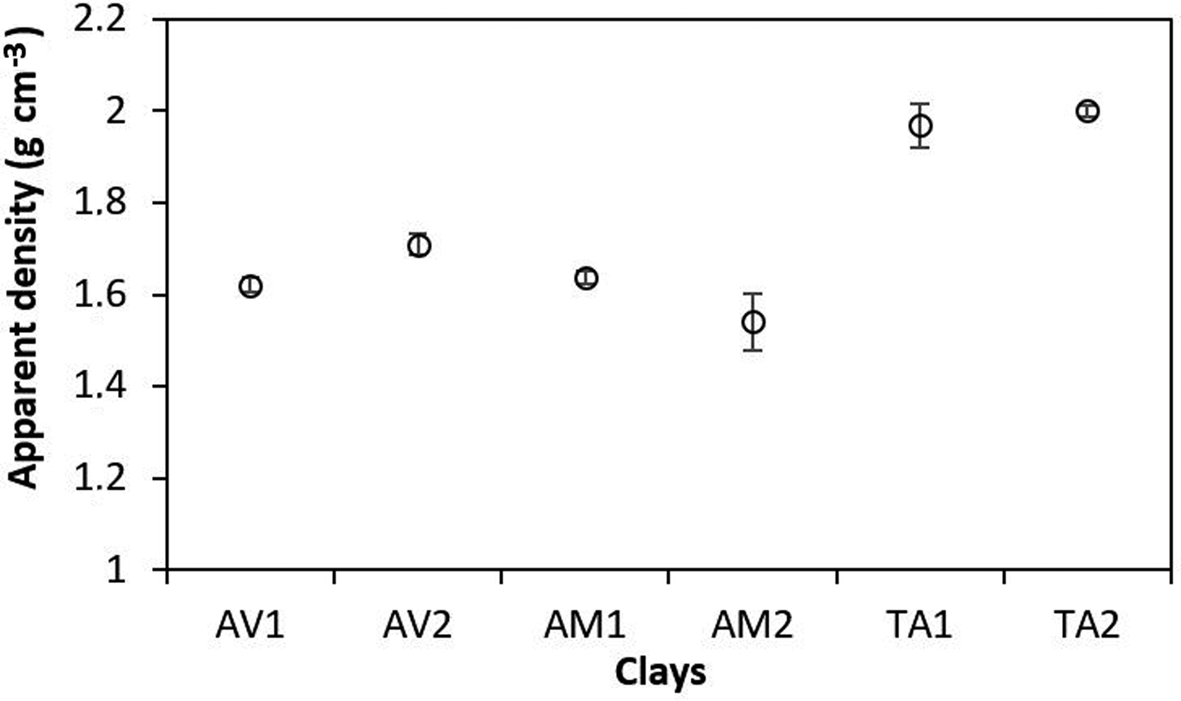
The clays have densities of between 1.5 and 1.7 g cm–3 and the argillites show an apparent density of 2.0 g cm–3 (Fig. 10). Argillites (or claystones) tend to form a liquid phase during sintering, filling the pores and resulting in greater densification of the final product.
Apparent density (g cm–3) after firing for the clays and argillites.

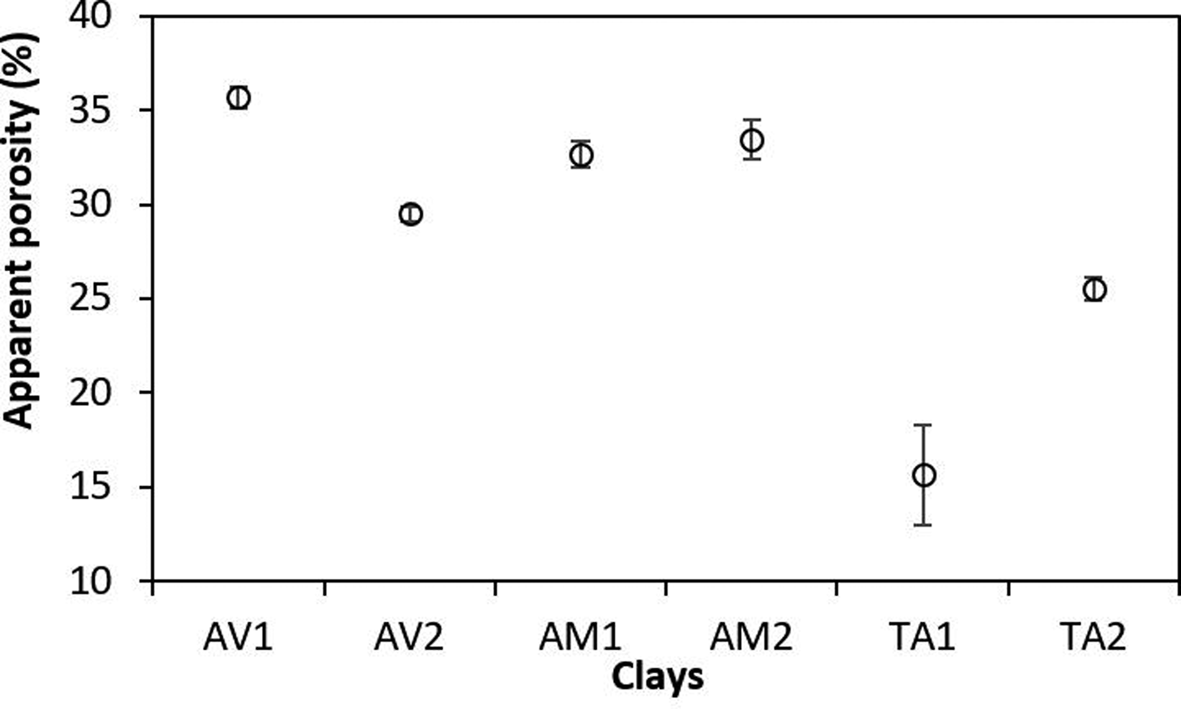
The AV2 sample has the greatest firing shrinkage (1.18%) among all of the clays, resulting in greater densification and lower apparent porosity after firing (29.5%), and consequently lower water absorption (17.3%) (Fig. 11). On the other hand, the argillites (claystones), which show >3% shrinkage after firing, display greater densification (~2 g cm–3) and lower apparent porosity (<25.5%).
Apparent porosity (%) after firing for the clays and argillites.

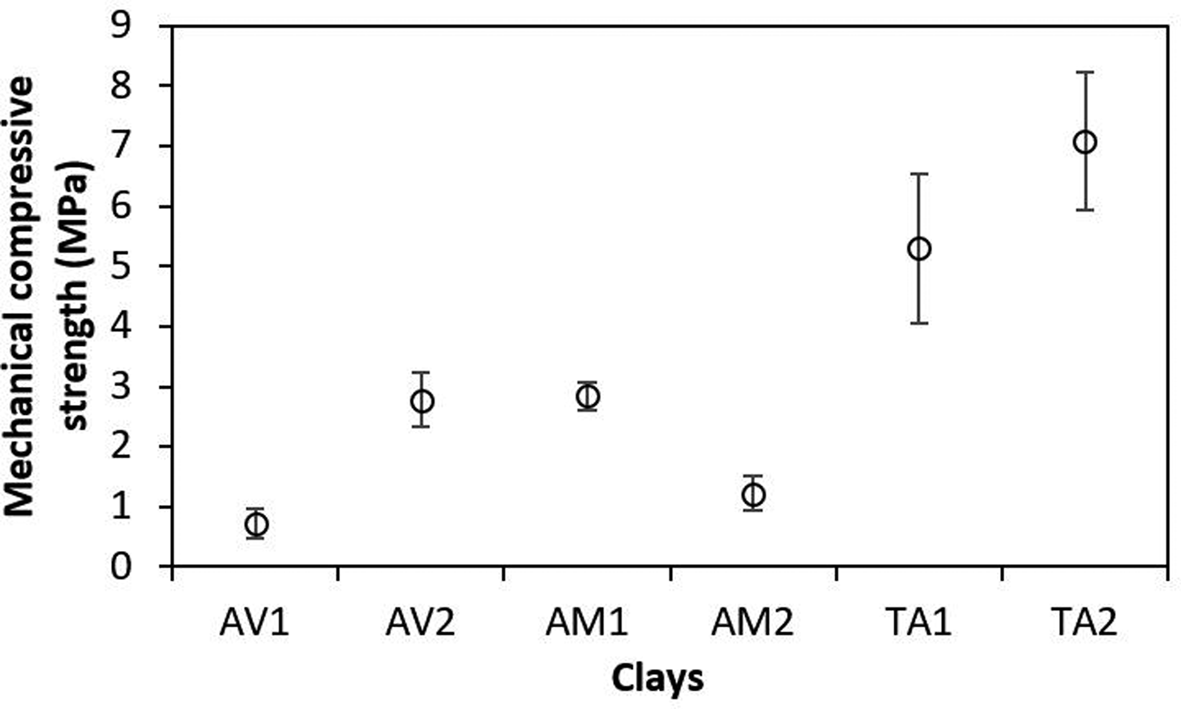
The compressive strength (Fig. 12) of the fired products is linked directly to their water absorption, which is related to the volume of pores in the sample, and it results from the lower densification during the forming, drying and sintering processes. Clay ceramics display their worst performance when in contact with moisture, probably due to moisture expansion (Vasić & Vasić, Reference Vasić and Vasić2011). Therefore, it is recommended to use a wet piece of clay (post-immersion) for the compression strength test (ABNT, 2017a).
Compressive strength (MPa) after firing at 900°C for the clays and argillites.

The clays AV1 and AM2 do not meet the standards, showing compressive strength values of 0.7 and 1.2 MPa, respectively, after firing. These clays have greater average particle sizes (76.46 and 28.30 μm, respectively) and greater residue contents (57.1% and 29.8%, respectively), showing that the packing during forming was not adequate because of their coarser size and the presence of an excess of quartz. By default, the minimum compressive strength value required is 1.5 MPa. The remaining raw materials of AV2 and AM1 both have compressive strength values of 2.8 MPa, and the claystones (TA1 and TA2) have compressive strength values of 5.3 and 7.1 MPa, respectively, therefore meeting the specifications of the standard.
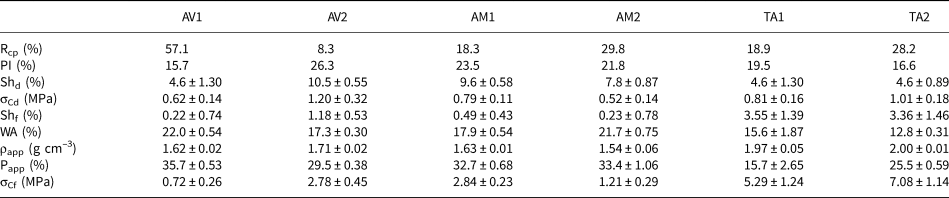
Finally, the results for residue (at 325 mesh), plasticity index, drying shrinkage, compressive strength after drying, firing shrinkage, water absorption, apparent density, apparent porosity and compressive strength after firing are listed in Table 4, with their standard deviations, for comparison.
Results for residue (at 325 mesh, Rcp), plasticity index (PI), drying shrinkage (Shd), compressive strength after drying (σCd), firing shrinkage (Shf), water absorption (WA), apparent density (ρapp), apparent porosity (Papp) and compressive strength after firing (σCf) (± SD).

Clay AV1 shows a large amount of residue (57.1%) at the 325 ASTM mesh, mainly quartz, resulting in low plasticity and low strength, either after drying (0.6 MPa) or after firing (0.7 MPa). However, the excess quartz helped to achieve a small proportion of drying shrinkage (4.6%) and therefore better dimensional control of the samples. The same clay, AV1, shows greater apparent porosity (35.7%) and, as a result, greater water absorption (22%). Consequently, clay AV1 can be used for blending with more plastic clays for use in clay ceramic manufacturing. When comparing clay AV1 with AV2, the latter shows a small amount of residue (8.3%), and therefore a greater amount of clay minerals in its composition. The high water content of this clay for extrusion (26.3%) implies a greater need for water to reach the workability point, which is characteristic of plastic clays. The high shrinkage after drying (10.5%) and firing (1.2%) and the high strength after drying (1.2 MPa) and firing (2.8 MPa) show that AV2 is a plastic clay with good packing during extrusion. It also melts, forming a liquid phase during firing and resulting in low water absorption (17.3%). However, for dimensional control and minimization of the need for water during the forming process, it is necessary to blend it with sandy clays.
Clays AM1 and AM2 have very similar characteristics, with 18.3% and 29.8% residue amounts, respectively. The optimized water contents of both clays were 23.5% and 21.8%, respectively, which shows the need for more water during the forming process, which is a common characteristic of clay minerals. The drying shrinkage values were 9.6% and 7.8% for AM1 and AM2, respectively, being indicative of adequate plasticity. The strength after drying (0.8 MPa for AM1 and 0.5 MPa for AM2) is linked to the average particle sizes of both clays (18.49 μm for AM1 and 38.30 μm for AM2), resulting in poor packing after extrusion, but helping in the drying process.
The sedimentary rocks – argillites – named TA1 and TA2 show residue amounts between 18.9% and 28.2%, values that are close to those of the AM1 and AM2 clays. The residue is not ‘natural’ because both argillites were ground; therefore, their residue was obtained after the milling process. The optimized water contents for extrusion of 18.5% for TA1 and 16.6% for TA2 are such because they are poorly plastic materials, so a large water content is not required for workability. Both argillites show adequate strength after drying (between 0.8 and 1.0 MPa, respectively) as a result of their smaller average particle sizes (between 6.51 and 9.97 μm, respectively), resulting from the comminution.
Conclusions
Four clays and two argillites from the southern region of Santa Catarina State, Brazil, were studied, and their chemical, mineralogical, thermal and morphological characteristics were determined, as well as their applicability in the production of ceramic bricks.
All of the clays and argillites studied might be used as blends in the manufacture of ceramic bricks due to their physicochemical characteristics. Clays with plastic properties (AV2) help to increase densification during the forming process, providing improved dry resistance. Clays with sandy properties (AV1, AM2 and AM2) assist in the drying process, helping in the flow of moisture, largely due to the quartz content in their compositions. The argillite samples (TA1 and TA2), due to their non-plastic nature, do not to interact with moisture, decreasing the dry properties of the ceramic products, mainly the plasticity index and residue at the 325 mesh. However, due to their large alkaline and alkaline earth oxide contents, they are mineralizing agents, improving performance after firing.
The clay samples studied have shown the necessary technological characteristics for their use as raw materials in the production of ceramic bricks. The present study may help, therefore, in the supply of high-quality raw materials for ceramic industries in this region focusing on the manufacture of high-quality ceramic products.
Finally, the study shows a complete characterization of four clays and two argillites (claystones) that are adequate for the manufacturing of clay ceramics mainly after blending. Future research will use a mixture design to find an optimized formulation for minimal loss during processing, minimizing production costs and making better use of the natural resources.
Financial support
The authors thanks CAPES (Brazil) for the scholarship provided to Alexandre Zaccaron. This work was funded by the Coordination of Superior Level Staff Improvement and by Universidade do Extremo Sul Catarinense.
Conflict of interests
The authors declare that they have no conflict of interest.
Data availability
Data will be made available upon request.