



%20--%3e%3c!DOCTYPE%20svg%20PUBLIC%20'-//W3C//DTD%20SVG%201.0//EN'%20'http://www.w3.org/TR/2001/REC-SVG-20010904/DTD/svg10.dtd'%3e%3csvg%20version='1.0'%20id='Layer_1'%20xmlns='http://www.w3.org/2000/svg'%20xmlns:xlink='http://www.w3.org/1999/xlink'%20x='0px'%20y='0px'%20width='64px'%20height='64px'%20viewBox='5.5%20-3.5%2064%2064'%20enable-background='new%205.5%20-3.5%2064%2064'%20xml:space='preserve'%3e%3cg%3e%3ccircle%20fill='%23FFFFFF'%20fill-opacity='0'%20cx='37.785'%20cy='28.501'%20r='28.836'/%3e%3cpath%20fill='%23595959'%20d='M37.441-3.5c8.951,0,16.572,3.125,22.857,9.372c3.008,3.009,5.295,6.448,6.857,10.314%20c1.561,3.867,2.344,7.971,2.344,12.314c0,4.381-0.773,8.486-2.314,12.313c-1.543,3.828-3.82,7.21-6.828,10.143%20c-3.123,3.085-6.666,5.448-10.629,7.086c-3.961,1.638-8.057,2.457-12.285,2.457s-8.276-0.808-12.143-2.429%20c-3.866-1.618-7.333-3.961-10.4-7.027c-3.067-3.066-5.4-6.524-7-10.372S5.5,32.767,5.5,28.5c0-4.229,0.809-8.295,2.428-12.2%20c1.619-3.905,3.972-7.4,7.057-10.486C21.08-0.394,28.565-3.5,37.441-3.5z%20M37.557,2.272c-7.314,0-13.467,2.553-18.458,7.657%20c-2.515,2.553-4.448,5.419-5.8,8.6c-1.354,3.181-2.029,6.505-2.029,9.972c0,3.429,0.675,6.734,2.029,9.913%20c1.353,3.183,3.285,6.021,5.8,8.516c2.514,2.496,5.351,4.399,8.515,5.715c3.161,1.314,6.476,1.971,9.943,1.971%20c3.428,0,6.75-0.665,9.973-1.999c3.219-1.335,6.121-3.257,8.713-5.771c4.99-4.876,7.484-10.99,7.484-18.344%20c0-3.543-0.648-6.895-1.943-10.057c-1.293-3.162-3.18-5.98-5.654-8.458C50.984,4.844,44.795,2.272,37.557,2.272z%20M37.156,23.187%20l-4.287,2.229c-0.458-0.951-1.019-1.619-1.685-2c-0.667-0.38-1.286-0.571-1.858-0.571c-2.856,0-4.286,1.885-4.286,5.657%20c0,1.714,0.362,3.084,1.085,4.113c0.724,1.029,1.791,1.544,3.201,1.544c1.867,0,3.181-0.915,3.944-2.743l3.942,2%20c-0.838,1.563-2,2.791-3.486,3.686c-1.484,0.896-3.123,1.343-4.914,1.343c-2.857,0-5.163-0.875-6.915-2.629%20c-1.752-1.752-2.628-4.19-2.628-7.313c0-3.048,0.886-5.466,2.657-7.257c1.771-1.79,4.009-2.686,6.715-2.686%20C32.604,18.558,35.441,20.101,37.156,23.187z%20M55.613,23.187l-4.229,2.229c-0.457-0.951-1.02-1.619-1.686-2%20c-0.668-0.38-1.307-0.571-1.914-0.571c-2.857,0-4.287,1.885-4.287,5.657c0,1.714,0.363,3.084,1.086,4.113%20c0.723,1.029,1.789,1.544,3.201,1.544c1.865,0,3.18-0.915,3.941-2.743l4,2c-0.875,1.563-2.057,2.791-3.541,3.686%20c-1.486,0.896-3.105,1.343-4.857,1.343c-2.896,0-5.209-0.875-6.941-2.629c-1.736-1.752-2.602-4.19-2.602-7.313%20c0-3.048,0.885-5.466,2.658-7.257c1.77-1.79,4.008-2.686,6.713-2.686C51.117,18.558,53.938,20.101,55.613,23.187z'/%3e%3c/g%3e%3c/svg%3e)
%20--%3e%3c!DOCTYPE%20svg%20PUBLIC%20'-//W3C//DTD%20SVG%201.0//EN'%20'http://www.w3.org/TR/2001/REC-SVG-20010904/DTD/svg10.dtd'%3e%3csvg%20version='1.0'%20id='Layer_1'%20xmlns='http://www.w3.org/2000/svg'%20xmlns:xlink='http://www.w3.org/1999/xlink'%20x='0px'%20y='0px'%20width='64px'%20height='64px'%20viewBox='5.5%20-3.5%2064%2064'%20enable-background='new%205.5%20-3.5%2064%2064'%20xml:space='preserve'%3e%3cg%3e%3ccircle%20fill='%23FFFFFF'%20fill-opacity='0'%20cx='37.637'%20cy='28.806'%20r='28.276'/%3e%3cg%3e%3cpath%20fill='%23595959'%20d='M37.443-3.5c8.988,0,16.57,3.085,22.742,9.257C66.393,11.967,69.5,19.548,69.5,28.5c0,8.991-3.049,16.476-9.145,22.456%20C53.879,57.319,46.242,60.5,37.443,60.5c-8.649,0-16.153-3.144-22.514-9.43C8.644,44.784,5.5,37.262,5.5,28.5%20c0-8.761,3.144-16.342,9.429-22.742C21.101-0.415,28.604-3.5,37.443-3.5z%20M37.557,2.272c-7.276,0-13.428,2.553-18.457,7.657%20c-5.22,5.334-7.829,11.525-7.829,18.572c0,7.086,2.59,13.22,7.77,18.398c5.181,5.182,11.352,7.771,18.514,7.771%20c7.123,0,13.334-2.607,18.629-7.828c5.029-4.838,7.543-10.952,7.543-18.343c0-7.276-2.553-13.465-7.656-18.571%20C50.967,4.824,44.795,2.272,37.557,2.272z%20M46.129,20.557v13.085h-3.656v15.542h-9.944V33.643h-3.656V20.557%20c0-0.572,0.2-1.057,0.599-1.457c0.401-0.399,0.887-0.6,1.457-0.6h13.144c0.533,0,1.01,0.2,1.428,0.6%20C45.918,19.5,46.129,19.986,46.129,20.557z%20M33.042,12.329c0-3.008,1.485-4.514,4.458-4.514s4.457,1.504,4.457,4.514%20c0,2.971-1.486,4.457-4.457,4.457S33.042,15.3,33.042,12.329z'/%3e%3c/g%3e%3c/g%3e%3c/svg%3e)
Introduction
Surgical site infections (SSIs) are among the most common healthcare-associated infections and are associated with increased morbidity, prolonged hospital stays, high readmission rates, and healthcare costs.Reference Anderson, Podgorny and Berríos-Torres1–Reference Nordin, Sales, Besner, Levitt, Wood and Kenney6 Despite approximately 3.9 million pediatric procedures performed annually,Reference Rabbitts and Groenewald7 SSI risk models and prevention strategies are largely extrapolated from adult populations. Given the significant impacts of SSIs, defining pediatric-specific risk factors remains an important area of ongoing investigation.
Pediatric SSIs are currently monitored using the Centers for Disease Control and Prevention’s (CDC) National Healthcare Safety Network (NHSN) standardized infection ratio (SIR); however, this model relies on adult-derived risk factors such as advanced age, elevated body mass index (BMI), diabetes mellitus, and American Society of Anesthesiology (ASA) physical status scores which have not been validated for use in pediatric populations.Reference Horan, Andrus and Dudeck8–Reference Jones11 Adult-derived SIR risk models may not adequately capture pediatric SSI risk. Several studies have explored the role of socioeconomic and demographic factors as potential contributors to pediatric-specific risk; however, these findings have not yet led to modifications of existing risk models. One study found that African American children had a higher risk of SSI and postoperative mortality than white children,Reference Nafiu, Mpody, Kim, Uffman and Tobias12,Reference Akbilgic, Langham and Davis13 with other studies pointing to differences in access to care, income, and provider communication as potential drivers of disparity.Reference Stone, LaPar, Kane, Rasmussen, McGahren and Rodgers14,Reference Livingston and Fairlie15 Additional factors such as insurance status, language spoken, and geographic location may also contribute to risk, but have not been thoroughly studied in this context.
Pediatric gastrointestinal (GI) procedures warrant particular focus because they consistently demonstrate the highest SSI rates among pediatric surgical procedures.Reference Feng, Sidhwa, Cameron, Glass and Rangel16 GI procedures such as appendectomy, small bowel, and colon surgeries carry an inherent risk of operative field contamination with substantial bacterial burden,Reference Horan, Andrus and Dudeck8 placing them at a higher baseline risk for SSIs. Strategies employed to reduce SSI include prevention bundles—standardized preoperative antibiotic prophylaxis with appropriate timing, chlorhexidine-based skin antisepsis, maintenance of perioperative normothermia and glycemic control, adherence to sterile operative technique, and postoperative measures such as dressing and linen changes.Reference Anderson, Podgorny and Berríos-Torres1,Reference Tanner, Norrie and Melen17–23 However, their effectiveness in pediatric GI surgery remains uncertain.
At Lucile Packard Children’s Hospital (LPCH), established SSI surveillance has revealed consistently elevated SIRs for these procedures, prompting concern from both the Infection Prevention and Control team and hospital leadership. This local trend mirrors national data showing persistently high SIRs in pediatric GI procedures across major US hospitals.Reference Mathew, Salinas, Hsu, Jin, Rhee and Lee24
This retrospective study explored patient-level risk factors for pediatric GI SSIs and the applicability of adult SIR models to pediatric procedures. The findings provide one of the first comprehensive assessments of pediatric GI SSI risk and may inform targeted prevention strategies and address disparities. Research in this area directly affects patient outcomes, healthcare costs, and the development of risk-adjusted quality metrics that account for the unique characteristics of pediatric GI surgical patients.
Methods
Study design and participants
This study included pediatric patients (birth to 21 years) who underwent GI surgical procedures at LPCH between January 2019 and December 2022. These included appendix, gastric, small bowel, colonic, and exploratory laparotomy procedures; no SSI cases involving rectal procedures were identified during the study period. Cases were defined as patients who developed an SSI within 30 days of surgery meeting NHSN reportable criteria9 and confirmed through interrater review by trained infection preventionists at our institution. Controls were patients who underwent the same procedures but did not develop an SSI.
Cases and controls were retrospectively matched 1:2 to reduce confounding and maximize statistical power while maintaining feasibility within a predefined study time line. The matching criteria included age at the time of surgery, NHSN procedure category (Supplemental Table 1), surgical year (defined as the year beginning on the date of surgery), and prematurity status. For those younger than one year of age at the time of the procedure, matching criteria accounted for prematurity, defined as a gestational age of less than 37 weeks. Prematurity was subsequently categorized based on World Health Organization classifications: extremely preterm (<28 weeks), very preterm (28 to <32 weeks), and moderate-to-late preterm (32 to <37 weeks).25 Growth and nutritional status were classified by BMI, with underweight defined as being at or below the 5th percentile and overweight as being at or above the 95th percentile. To evaluate BMI in premature infants, we applied the Fenton growth chart up to 50 weeks corrected age,Reference Fenton and Kim26 and subsequently transitioned to the CDC growth chart for continued monitoring.
Among the controls, eight patients were immunocompromised: two receiving chemotherapy and radiation, one with a history of bone marrow transplant and five solid organ transplant recipients. Both controls and cases included patients with inflammatory bowel disease (Crohn’s disease or Ulcerative colitis) and were receiving biologic therapy or high-dose corticosteroids at the time of the procedure. For all patients, we identified comorbidities, including prematurity (<37 weeks gestation), genetic conditions, diabetes mellitus, and GI comorbidities, such as Hirschsprung’s disease, or short gut syndrome.
Pre, intra-, and postoperative preventive measures
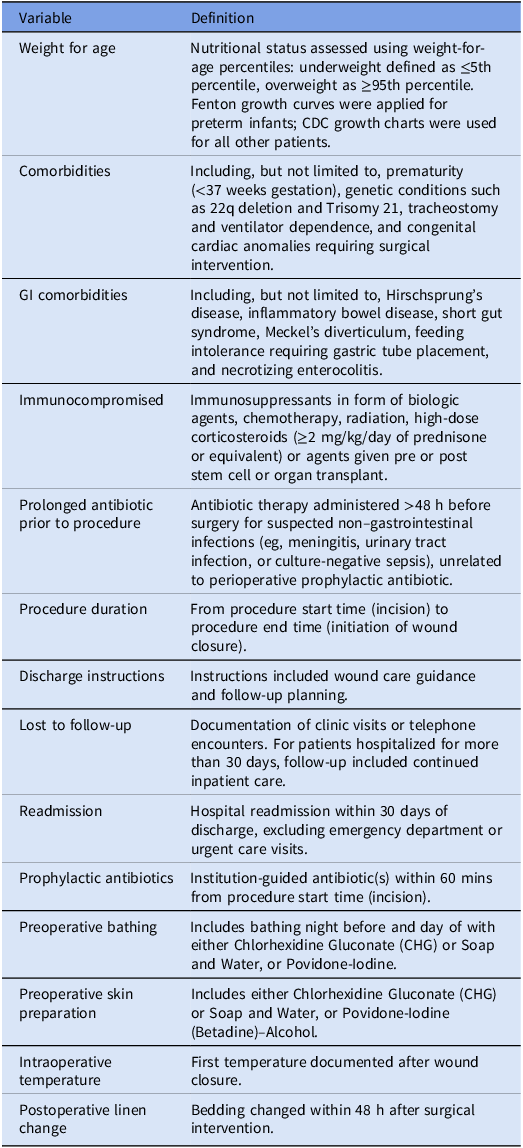
Manual chart review captured key SSI prevention bundle elements, including preoperative antibiotic prophylaxis, preoperative bathing, skin antisepsis, intraoperative temperature management, and postoperative linen changes (Table 1). Antibiotic prophylaxis followed institutional guidelines that are based on consensus guidelinesReference Berríos-Torres, Umscheid and Bratzler27– 29: parenteral antibiotics included ceftriaxone plus metronidazole for appendectomy, cefoxitin for colon or small bowel obstruction and cefazolin for all other GI procedures. All procedures were eligible for prophylaxis; broader-spectrum agents (eg, meropenem or piperacillin–tazobactam) given for other indications were considered appropriate, including alternatives for documented beta-lactam allergies. Prophylactic antibiotics was classified as inappropriate if administered >60 minutes before incision or if the agent fell outside institutional guidelines. Intraoperative temperature was defined as the first measurement recorded immediately after wound closure, the most consistently documented time point.
Selected variables and definitions used for chart review

Social Vulnerability Index
To assess the potential influence of community-level social determinants on SSIs, we utilized CDC’s Social Vulnerability Index (SVI).30 The SVI provides a composite measure of social vulnerability at the US county level, incorporating 15 variables across four key domains: socioeconomic status, household composition and disability, minority status and language, and housing type, and transportation.30 Each pediatric patient in our cohort was linked to a corresponding county-level SVI score using their 5-digit residential ZIP code.30 Although the SVI was not reported at the ZIP code level, ZIP codes were mapped to counties using publicly available tools to facilitate this connection. Since our data set included 2019–2022, the 2022 CDC SVI data set was used. The SVI values range from 0 to 1, with higher scores indicating greater social vulnerability. A histogram was plotted to show the distribution of SVI scores across the study population (eg, residential census tracts) among the four themes.
Data collection
Data were extracted using a combination of the cohort discovery tool within the Stanford Research Repository (STARR),31 and an Epic®-based dashboard. To ensure data accuracy, all extracted variables were manually validated through electronic medical record review by the primary author. Missing or incomplete data were included in the analyses. This study was approved by the institutional review board of Stanford University, and all study data were stored and managed using an encrypted REDCap® database hosted at Stanford University.
Statistical analysis
Descriptive statistics were used to summarize the study population. Continuous variables are reported as means and standard deviations, while categorical variables are summarized as frequencies and percentages. Age at the time of surgery was categorized into five groups: neonates (≤30 days), infants (>30 days to ≤1 year), toddlers (>1 to ≤2 years), children (>2 to ≤12 years), and adolescents (>12 to ≤21 years). Weight-for-age was classified as underweight (≤5th percentile) or overweight (≥95th percentile) for the analysis. The languages were categorized as English, Spanish, and Other, which included Mandarin, Cantonese, Farsi, Arabic, Mixteco Alto, Mixteco Bajo, and Triqui Bajo. Comparisons between case and control groups were conducted using appropriate statistical tests: analysis of variance (ANOVA) for continuous variables and either Fisher’s exact test (for categorical variables with expected cell counts <10) or the χ2 test (for those with higher cell counts). To explore associations between potential predictor variables and the outcome of SSI, bivariate conditional logistic regression analyses were performed using the clm function from the survival package in R. Variables with a P-value ≤ .05 in univariate analysis were selected for inclusion in the multivariate model.
A multivariate conditional logistic regression model was then constructed to evaluate the independent associations of these variables with SSI (outcome), adjusting for age at the time of surgery, prematurity status, type of procedure, and surgical year (defined as the year beginning on the date of surgery). adjusted matched odds ratios (aORs), and the corresponding 95% confidence intervals (CIs) were derived from the final model. All analyses were conducted using R version 2024.12.0+467. This study adhered to the STROBE (Strengthening the Reporting of Observational Studies in Epidemiology) guidelines for reporting observational research.
Results
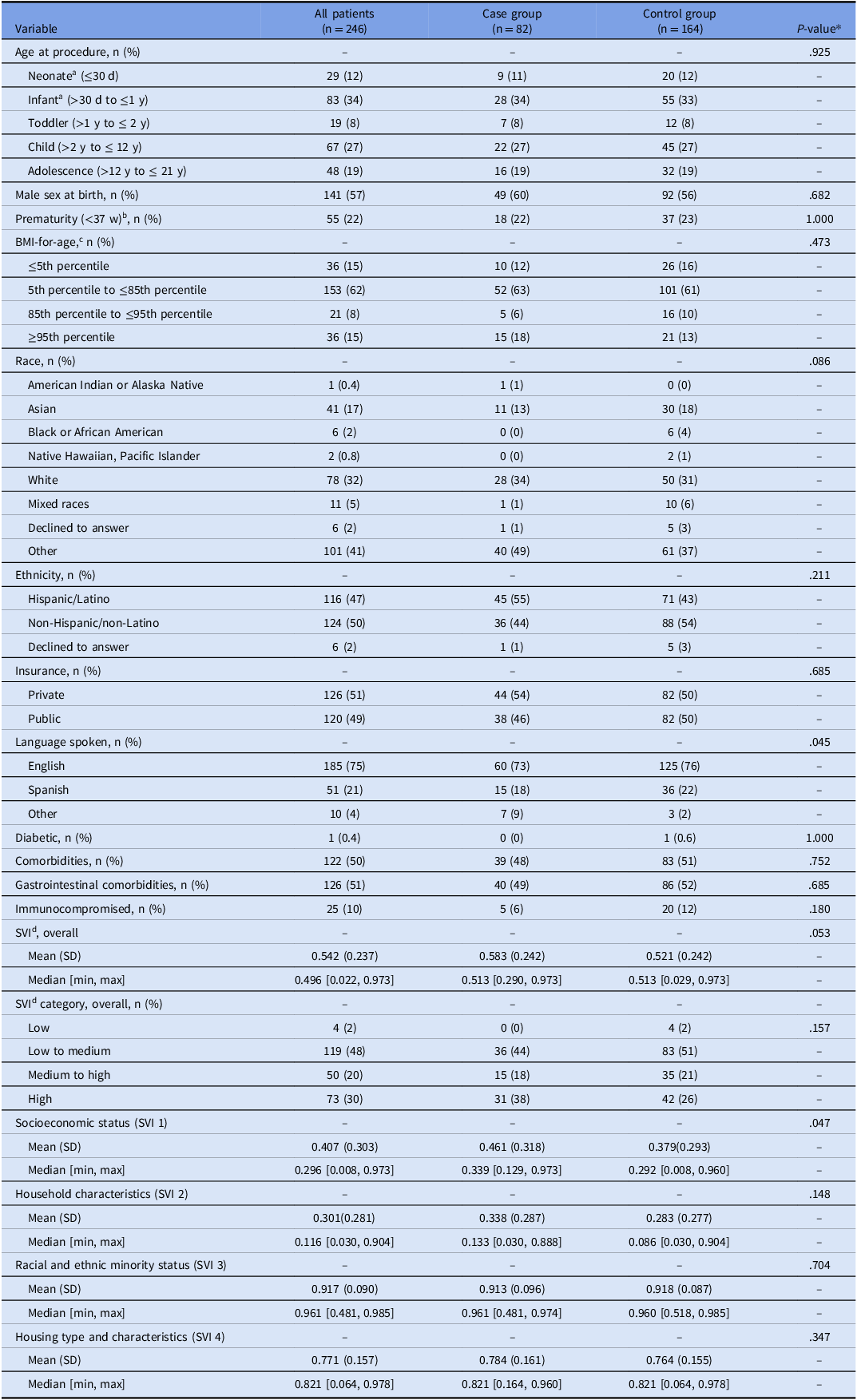
Patient characteristics (Table 2)
A total of 246 pediatric patients were included in the analysis, comprising 82 cases and 164 matched controls. The cases included 17 appendectomies, 19 colon surgeries, 18 gastric procedures, 17 small bowel surgeries, and 11 exploratory laparotomies. Infants (>30 days to ≤1 year) represented the largest age group in both cohorts, and the distribution of male sex was similar between cases and controls (60% vs 56%, P = .682). Language distribution differed between cohorts (P = .045), with a higher proportion of “other” languages among cases (9% vs 2%). Diabetes mellitus was uncommon (one in controls; none in cases; P = 1.000). SVI category distribution was similar between groups (P = .157), although a greater proportion of cases resided in high-vulnerability areas (38% vs 26%).
Patient demographics and univariate and bivariate analysis of 246 patients with and without surgical site infection

Note. SD, standard deviation; SVI, Social Vulnerability Index.
* Continuous variables: ANOVA; categorical variables: Fisher’s exact test (cell counts <10) or χ2 test.
a Corrected for gestation age if premature <37 weeks.
b Matched based on World Health Organization (WHO) classifications: extremely preterm (<28 weeks), very preterm (28 to <32 weeks), and moderate-to-late preterm (32 to <37 weeks).
c Growth assessments based on CDC growth curves for patients not classified as premature. Fenton growth curve used for those born preterm. 25,Reference Fenton and Kim26
d CDC’s 2022 Social Vulnerability Index by US County.
Levels of vulnerability: Low (0.0–0.25), Low–Medium (0.2501–0.50), Medium–High (0.5001–0.75), High (0.7501–1.0).
Procedural characteristics (Table 3)
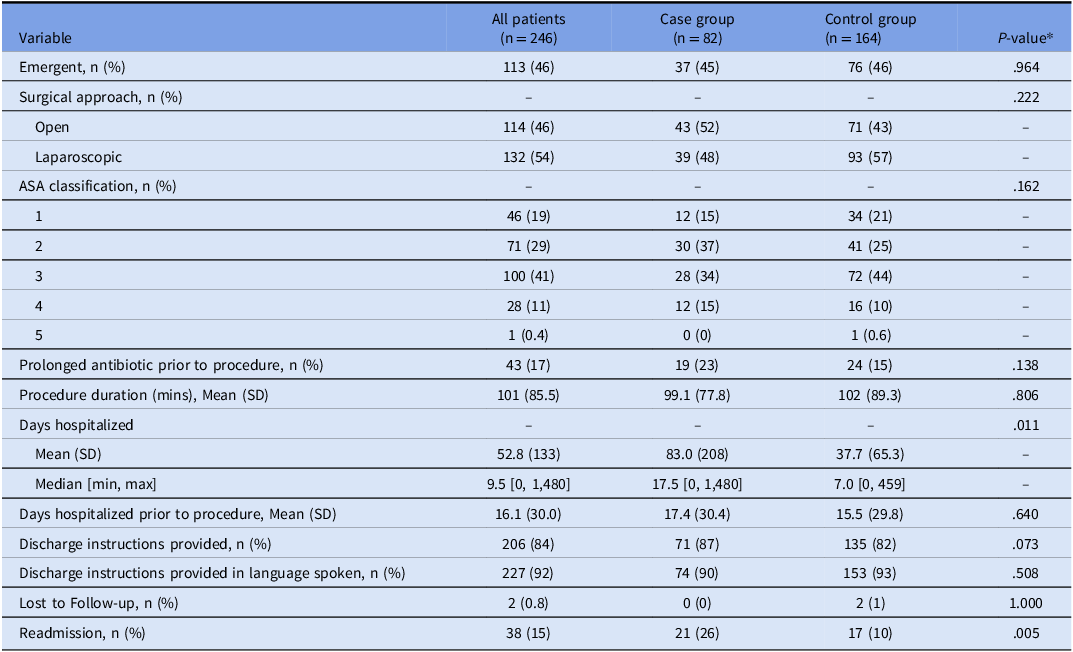
Wound class distribution showed that 27% of cases and 12% of controls were documented as clean. Given the unexpected finding of complex GI procedures classified as clean, wound class was excluded from all analyses due to concerns about misclassification. Emergent procedures were similarly distributed between cohorts. Most procedures were laparoscopic (54%), though open approaches were more common among cases (52% vs 43%). Prolonged antibiotic prior to procedure was more common in cases (23% vs 15%). Discharge instructions and loss to follow-up were similar between groups. Cases had longer hospital stays (83.0 vs 37.7 days, P = .011) and higher readmission rates (26% vs 10%, P = .005).
Procedural characteristics and univariate and bivariate analysis of 246 patients with andwithout surgical site infection

Note. ASA, American Society of Anesthesiologists; SD, standard Deviation.
* Continuous variables: ANOVA; categorical variables: Fisher’s exact test (cell counts <10) or χ2 test. Bolded values were to signify statistically significant values.
Pre, intra-, and postoperative preventive measures (Table 4)
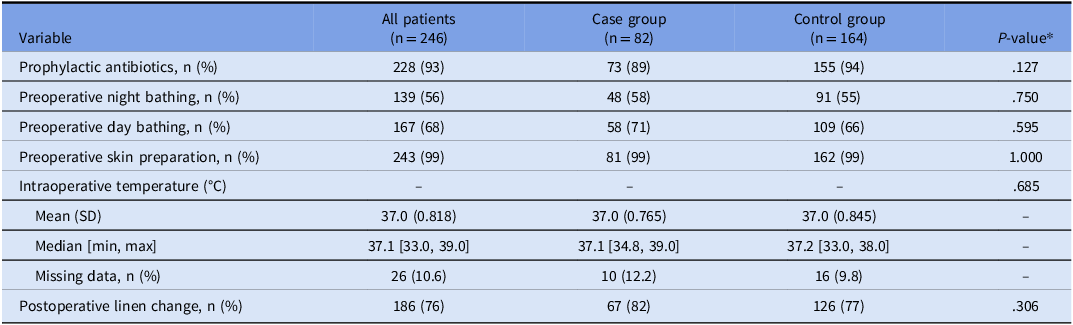
Prophylactic antibiotic use was high in both groups (89% in cases vs 94% in controls, P = .127). There were comparable rates of preoperative preparation; nighttime Chlorhexidine Gluconate (CHG) bathing (58% in cases vs 55% in controls, P = .750), same-day bathing (71% vs 66%, P = .595), and preoperative skin preparation (99% in both groups, P = 1.000).
Preventive measures and univariate and bivariate analysis of 246 patients with and without surgical site infection

Note. SD, Standard deviation.
* Continuous variables: ANOVA; categorical variables: Fisher’s exact test (cell counts <10) or χ2 test.
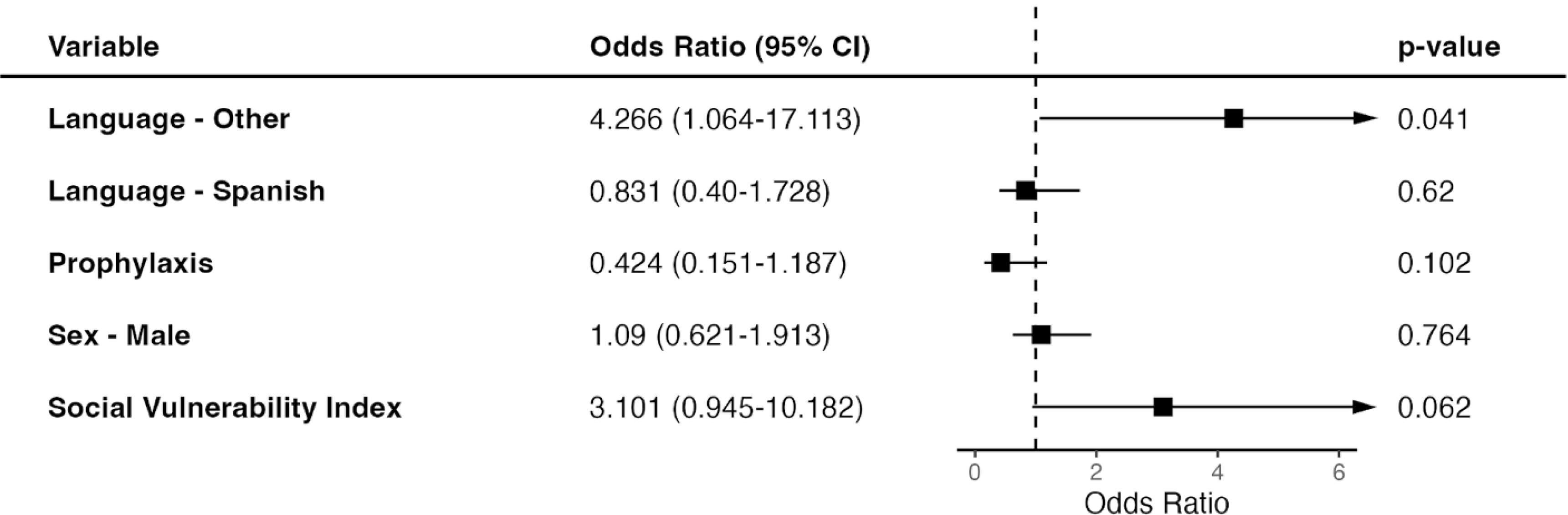
Multivariate analysis (Figure 1)
The only variable that reached statistical significance was primary language categorized as neither English nor Spanish (“Other”), which was associated with an aOR of 4.26 (95% CI, 1.06–17.11; P = .041).
Multivariate conditional logistic regression analysis of risk factors associated with surgical site infection. OR, odds ratio; CI, confidence interval.
* Adjusted model controlling for matched variables: age at the time of surgery, NHSN procedure category and year, and premature status.

Social Vulnerability Index (Figure 2)
A majority of the cohort were categorized within the low to medium SVI ranges; however, a slightly higher proportion of cases compared to controls were classified in the high SVI category. Histogram distributions demonstrated substantial overlap between cases and controls across SVI themes and measures. Notably, the overall cohort exhibited higher values within the minority status and language vulnerability domain.
Histograms of Social Vulnerability Index scores overall and by domain in the study population (n = 246). CDC’s 2022 Social Vulnerability Index by US County. SVI Theme 1: Socioeconomic Status; SVI Theme 2: Household Composition & Disability; SVI Theme 3: Minority Status & Language; SVI Theme 4: Housing Type & Transportation. Levels of vulnerability: Low (0.0–0.25), Low–Medium (0.2501–0.50), Medium–High (0.5001–0.75), High (0.7501–1.0).

Discussion
Our concerns align with emerging literature suggesting adult-derived SIR models may inadequately capture pediatric-specific risk factors, now with recent efforts exploring approaches to improve SSI risk prediction.Reference Chan, Pletcher, Balakrishnan, Hswen and Scheffler32 The lack of published validation studies evaluating the current SIR performance in pediatric populations prompted us to question the generalizability of adult-derived NHSN SIR risk models to pediatric GI procedures. Adult-based variables such as ASA classification, obesity, and diabetes mellitus were not associated with SSI risk in our cohort, consistent with prior literature suggesting that ASA classification may be suboptimal for pediatric risk stratification.Reference Ferrari, Leahy and Staffa33 Diabetes mellitus was rare in this cohort, and overall may be less prevalent in children than adults further limiting its predictive utility. Additionally, although male sex has been identified as an SSI risk factor in adult abdominal surgery,Reference Cai, Wang, Wang and Zhou34 no such association was observed in our pediatric population.
Although prior studies identify patient-level and procedural SSI risk factors (eg, operative duration and antibiotic use),Reference Bucher, Guth and Elward35 we observed no significant associations in our cohort.
Although immunocompromised patients (specifically prior solid organ transplant or bone marrow transplant recipients) were included in the control but not the case group, a sensitivity analysis excluding these patients from the control group (n = 9) resulted in minimal changes to effect estimates and no meaningful differences in statistical significance or overall interpretation. Consistent with prior literature, SSI was associated with longer hospital stays and higher readmission rates, underscoring the need for improved pediatric risk stratification. We evaluated social determinants of health, an underexplored area in pediatric SSI research. The difference in SVI between groups approached but did not reach statistical significance and further study is needed to better understand the relationship between SVI and SSI. Growing literature suggests that community-level disadvantages can negatively affect clinical outcomes by limiting access to timely care, and recovery resources.Reference Kind, Jencks and Brock36,Reference Coombs, Meriwether, Caringi and Newcomer37 Patients with SSI were fourfold more likely to speak a language other than English or Spanish and although causality cannot be inferred, language barriers may compromise perioperative communication and recognition of early complications. Pediatric SSI data on non–English, non-Spanish (“Other”) language speakers are limited, though emerging literature suggests higher surgical risk, with interpreter use as an important moderating factor.Reference Chicoine, Greenberg, Barry, Dick and Cockrell38 Spanish-speaking patients did not demonstrate increased SSI risk (aOR 0.83; 95% CI 0.40–1.72; P = .62), possibly reflecting greater availability of Spanish-language services compared with less commonly spoken languages. Although interpreter services are available at our institution, their use during individual encounters could not be assessed. These findings underscore the need for accessible multilingual support for patients undergoing high-risk surgical procedures. The composite “Other” language category represents diverse language groups, potentially masking differences between communities.
No validated pediatric-specific SIR model is currently available. Pediatric institutions should therefore interpret these adult-based SIRs cautiously and supplement them with procedure-specific internal analyses that incorporate pediatric-relevant variables.
Limitations
This study has several limitations. First, this single-center study may limit generalizability. Although cases and controls were carefully matched and multivariate adjustments were performed, residual confounding cannot be excluded. Second, the retrospective design introduced challenges in data abstraction, as key information was fragmented across our electronic medical records. However, manual chart review minimized missing data, with the only notable gaps observed in intraoperative temperature documentation. Third, the misclassification of wound class precluded use of this variable in our analyses. Although wound classification has been reported to be a limited predictor of pediatric SSI risk in GI procedures,Reference Oyetunji, Gonzalez, Gonzalez, Nwomeh and St Peter39,Reference Maizlin, Redden, Beierle, Chen and Russell40 its exclusion may still have affected the analysis. Fourth, regarding NHSN procedure category matching, while these categories include multiple subprocedures defined by procedure coding system (PCS) Internal Classification of Diseases (ICD-10) and Current Procedural Terminology (CPT) codes, we did not match at this level of detail; however, subprocedure representation was balanced between cohorts (eg, gastrostomy tube–only: 7 cases vs 13 controls). Notably, SSI risk stratification and identification within NHSN is defined at the procedure category name and not individual codes. Fifth, although the SVI is validated for population-level public health research, its role in predicting pediatric surgical outcomes remains uncertain, and few alternative population-level measures are currently available for healthcare epidemiology research. Sixth, the sample size may have limited the detection of smaller, clinically meaningful associations. Finally, although the study period overlapped with the COVID-19 pandemic, GI surgical volumes remained comparable to prepandemic levels.
Next steps
To build on these findings, future research should include a multicenter study across large pediatric hospitals to validate the identified risk factors. Expanding the sample size and incorporating varied institutional practices will help enhance the generalizability of the results and support the development of a pediatric-specific SSI risk-stratification model. In addition, further study of the association between SVI and SSI is needed. Examining individual SVI components may help clarify how specific dimensions of social vulnerability influence pediatric surgical outcomes.
Supplementary material
The supplementary material for this article can be found at https://doi.org/10.1017/ice.2026.10502.
Acknowledgments
None.
Financial support
V.K. received grant support from the Maternal and Child Health Research Institute at Stanford Medicine, the Elizabeth and Russell Siegelman Endowed Postdoctoral Fellowship (June 2023–June 2025), and the Fellows Award funded by the Graduate Medical Education at Stanford Medicine.
Competing interests
All authors declare that they have no conflicts of interest relevant to this study.
Artificial Intelligence (AI)-assisted technology
AI was not used for any part of the study or writing submission.


 Open access

