Exposure to stressful life experiences affects key stress-mediating systems, most notably, the hypothalamic–pituitary–adrenal (HPA) axis (Doom & Gunnar, Reference Doom and Gunnar2013). Acute stressors typically activate the HPA axis, which launches a cascade of adaptive hormonal and behavioral responses that allow organisms to respond to threats and challenges effectively. Despite its short-term adaptive value, chronic or frequent activation of the HPA axis can lead to hypo- or hyperactive reactivity, which has often been interpreted as dysregulation (McEwen, Reference McEwen, McCann, Lipton, Sternberg, Chrousos, Gold and Smith1998). Although dysregulation may occur in response to an accumulation of activations throughout life, it has been hypothesized that there are sensitive periods in the first few years of life when stressor exposure will have a more profound and longer-lasting effect on the regulation of the HPA axis (Koss & Gunnar, Reference Koss and Gunnar2018; Lupien, McEwen, Gunnar, & Heim, Reference Lupien, McEwen, Gunnar and Heim2009). At present, we know little about the relative effects of stress exposure during different developmental periods due to the paucity of prospective, longitudinal studies that have examined exposure to life stress at multiple points of development.
The HPA axis orchestrates a neuroendocrine response to threats or challenges by mobilizing energetic resources throughout the body (Gunnar, Doom, & Esposito, Reference Gunnar, Doom, Esposito and Lamb2015). Cortisol is the primary end product of the HPA axis in primates, including humans. Cortisol levels have a diurnal rhythm in that they are at peak levels around the time of morning awakening, decline throughout the day, and reach a nadir about 30 min after the onset of nighttime sleep. However, when individuals experience acute stressors, the HPA axis increases the level of circulating cortisol in the bloodstream relative to typical diurnal levels. As a result, cortisol typically spikes in response to an acutely stressful event and then recovers to baseline levels.
Cortisol reactivity to stress is a widely studied physiological phenomenon. Healthy individuals typically show a spike in cortisol that peaks around 25 min after the onset of an acute stressor and then returns to baseline as cortisol is cleared from circulation, with a half-life of 60–70 min (Gunnar & Quevedo, Reference Gunnar and Quevedo2007). Importantly, deviations from this typical response pattern come in two forms: hyperreactivity and hyporeactivity. Hyperactivation appears to be the result of impairment in negative feedback regulation such that the system remains elevated for a prolonged period once activated. Hypoactivation, or blunting of the system, appears to be due to increases in negative feedback regulation (Young, Lopez, Murphy-Weinberg, Watson, & Akil, Reference Young, Lopez, Murphy-Weinberg, Watson and Akil2003) and/or down-regulation of the response to corticotropin-releasing hormone at the pituitary level (Fries, Hesse, Hellhammer, & Hellhammer, Reference Fries, Hesse, Hellhammer and Hellhammer2005; Sanchez et al., Reference Sanchez, Mccormack, Grand, Fulks, Graff and Maestripieri2010). In either case, the system has adjusted to frequent or prolonged activation, which may be beneficial for coping with chronic stress but may have a cost in terms of subsequent health and well-being (Carpenter et al., Reference Carpenter, Carvalho, Tyrka, Wier, Mello, Mello and Price2007; Ouellet-Morin et al., Reference Ouellet-Morin, Robitaille, Langevin, Cantave, Brendgen and Lupien2018).
The association between childhood stress and salivary cortisol reactivity has demonstrated different directionality based on a number of factors including the timing of stress exposure, timing of the cortisol reactivity measurement, type and severity of stress, and presence of psychopathology. In adolescents, the association between childhood stress and cortisol reactivity is especially complex. Although a comprehensive review of these studies is beyond the scope of this paper, a few relevant studies are highlighted below. The maltreatment literature suggests that adolescents who were abused produce greater levels of cortisol for more prolonged periods in response to acute stress than nonmaltreated adolescents do, but this is only the case when they have mild to moderate depression (Harkness, Stewart, & Wynne-Edwards, Reference Harkness, Stewart and Wynne-Edwards2011). Similarly, concentrated neighborhood disadvantage is associated with higher cortisol reactivity and a steeper recovery but only in boys (Hackman, Betancourt, Brodsky, Hurt, & Farah, Reference Hackman, Betancourt, Brodsky, Hurt and Farah2012). One study reported that greater prenatal and early postnatal stress was associated with higher cortisol reactivity in adolescents, while stress at other points was not (Bosch et al., Reference Bosch, Riese, Reijneveld, Bakker, Verhulst, Ormel and Oldehinkel2012). Conversely, individuals with moderate to severe depression showed blunted cortisol reactivity regardless of whether they had experienced maltreatment (Harkness et al., Reference Harkness, Stewart and Wynne-Edwards2011). Another study demonstrated that retrospective self-reports of maltreatment were associated with attenuated cortisol responses in adolescence, which were not associated with psychiatric symptoms (MacMillan et al., Reference MacMillan, Georgiades, Duku, Shea, Steiner, Niec and Schmidt2009). Thus, results regarding the association between stress and cortisol reactivity in adolescents are mixed and often dependent on moderating factors.
In adults, most studies on child trauma and adult salivary cortisol reactivity report blunted cortisol reactivity with greater childhood trauma (for a meta-analysis, see Bunea, Szentágotai-Tătar, & Miu, Reference Bunea, Szentágotai-Tătar and Miu2017). For example, retrospective reports of child maltreatment in adulthood are associated with blunted cortisol responses to the Trier Social Stress Test (TSST; Carpenter et al., Reference Carpenter, Carvalho, Tyrka, Wier, Mello, Mello and Price2007). Childhood physical abuse measured retrospectively in adult women was also associated with blunting of the cortisol response to stress (Carpenter, Shattuck, Tyrka, Geracioti, & Price, Reference Carpenter, Shattuck, Tyrka, Geracioti and Price2011). A study of college women found that those who were exposed to two or more types of violence during childhood showed lower cortisol reactivity to the TSST than women who had no experiences of violence did (Christie & Matthews, Reference Christie and Matthews2018). Another study confirmed a negative association between childhood trauma and cortisol reactivity in adulthood, with evidence of epigenetic alterations as a mediator of this association (Houtepen et al., Reference Houtepen, Vinkers, Carrillo-Roa, Hiemstra, van Lier, Meeus and Boks2016). Importantly, several other studies have demonstrated that individuals who are exposed to more normative life stress and adversity also show blunted cortisol reactivity (Goldman-Mellor, Hamer, & Steptoe, Reference Goldman-Mellor, Hamer and Steptoe2012; Lovallo, Reference Lovallo2013; Taylor, Lerner, Sage, Lehman, & Seeman, Reference Taylor, Lerner, Sage, Lehman and Seeman2004).
Notable exceptions include a study that demonstrated that more severe self-reported child maltreatment experiences in adult males were associated with heightened cortisol reactivity to stress (Ouellet-Morin et al., Reference Ouellet-Morin, Robitaille, Langevin, Cantave, Brendgen and Lupien2018). There may be differences by types of childhood stressor, as one study found that being separated from both parents during childhood due to World War II was likewise associated with enhanced cortisol responses to stress in adulthood (Pesonen et al., Reference Pesonen, Räikkönen, Feldt, Heinonen, Osmond, Phillips and Kajantie2010). It may be that isolated stress experiences, even if severe, may enhance cortisol reactivity in adulthood, whereas more chronic stress experiences such as maltreatment and poverty could attenuate cortisol responses to stress. The timing of stress exposure has been associated with different profiles of cortisol reactivity in adolescents (Bosch et al., Reference Bosch, Riese, Reijneveld, Bakker, Verhulst, Ormel and Oldehinkel2012). There is also evidence in children that both previous stress experiences and current context jointly influence current cortisol reactivity (Jaffee et al., Reference Jaffee, McFarquhar, Stevens, Ouellet-Morin, Melhuish and Belsky2015). However, very few studies have examined prospective associations between stress that is measured beginning in childhood and cortisol reactivity that is measured in adulthood. A recent meta-analysis suggests that there is poor agreement between prospective and retrospective reports of adverse childhood experiences, calling into question studies that have attempted to isolate the timing of childhood stressors from retrospective reports (Reuben et al., Reference Reuben, Moffitt, Caspi, Belsky, Harrington, Schroeder and Danese2016). Even fewer studies are able to address the question of how prospectively measured timing of stress from childhood to adulthood is associated with cortisol reactivity as opposed to baseline levels or diurnal patterns. Prospective studies are needed to verify the current literature and ensure that these previous findings are not due to errors in retrospective reporting such as difficulties with memory or current emotion and psychopathology biasing reports of childhood stress.
Despite decades of research, one central challenge has been delineating a priori which form of dysregulation should emerge in response to stress exposure. Because dysregulation has been rather loosely defined as deviations from the typical acute stress response, models that predict cortisol dysregulation often anticipate either hyper- or hyporeactivity. Three major models address the connection between exposure to life stress and HPA dysregulation. The first, known as the cumulative stress model, assumes that repeated or chronic activation of the HPA axis over long periods of time dysregulates cortisol reactivity (Juster, McEwen, & Lupien, Reference Juster, McEwen and Lupien2010; Karatsoreos & McEwen, Reference Karatsoreos and McEwen2013; McEwen, Reference McEwen, McCann, Lipton, Sternberg, Chrousos, Gold and Smith1998, Reference McEwen2008). Dysregulation that is caused by persistent activation of the HPA system can produce alterations in the brain. The cumulative stress model acknowledges the possibility that certain sensitive periods during development could more strongly affect dysregulation later in life, but it is relatively agnostic regarding the timing of chronic stress exposure. Instead, the cumulative model focuses on the total accumulation of stress across the lifespan as the key variable that leads to HPA dysregulation. Therefore, the model predicts that higher levels of accumulated stress across the lifespan should predict HPA dysregulation in response to acute stressors later in life, but it does not anticipate its form.
The second model, termed the biological embedding model (Berens, Jensen, & Nelson, Reference Berens, Jensen and Nelson2017; Hertzman, Reference Hertzman, Adler, Marmot, McEwen and Stewart1999; Lupien et al., Reference Lupien, McEwen, Gunnar and Heim2009; Miller, Chen, & Parker, Reference Miller, Chen and Parker2011; Power & Hertzman, Reference Power and Hertzman1997; Shonkoff, Boyce, & McEwen, Reference Shonkoff, Boyce and McEwen2009), assumes that stress that is experienced during the sensitive period of early childhood should have the most influence on HPA functioning. The reason is that key biological systems, including the HPA axis, undergo significant developmental change during early childhood and render stress physiology especially vulnerable to external influences such as life stress. Accordingly, high levels of stress that are experienced during early childhood might have a “programming effect” on HPA-axis functioning that endures into adulthood. Although the biological embedding model makes a more specific claim that early childhood stress rather than total amount of stress should predict HPA dysregulation in adulthood, it does not anticipate the form of dysregulation.
The third model, the sensitization model (Daskalakis, Bagot, Parker, Vinkers, & de Kloet, Reference Daskalakis, Bagot, Parker, Vinkers and de Kloet2013), is an extension of the biological embedding model. The sensitization model also implicates early childhood as a critical developmental period during which life stress should be strongly influential. However, the sensitization model assumes that early life experiences condition the way in which the HPA responds to stress later in life. More specifically, the sensitization model anticipates that HPA functioning should depend on the level of early life stress exposure and the level of current life stress. Dysregulated patterns of cortisol reactivity, for example, should primarily be observed in individuals who have experienced higher levels of early life stress, but this should be the case only when they are also experiencing higher levels of current life stress. According to this model, HPA dysregulation that is rooted in greater childhood life stress exposure should not be detectable unless current life stress exposure is also high. Stated another way, the biological embedding model predicts a main effect of early life stress predicting patterns of dysregulated HPA functioning in adulthood, whereas the sensitization model predicts an interaction between early life stress and current life stress. Like the biological embedding model, the sensitization model makes more explicit claims about how the developmental timing of life stress exposure should result in HPA dysregulation, but it does not make claims about its specific form. Thus, both hyperreactivity and hyporeactivity are plausible outcomes.
Although the cumulative, biological embedding, and sensitization models all link life stress exposure with HPA dysregulation in adulthood, none clearly anticipates the form of dysregulation. Accordingly, a major goal of this research was to conduct a theoretically guided analysis to compare the predictive validity of each model and track any potential effects to identify the specific form of dysregulation that is associated with them. To do so, we conducted two sets of exploratory analyses, one primary and the other secondary. Our primary analyses examined and compared the cumulative stress, biological embedding, and sensitization models. Our secondary analyses explored the effects of stress exposure during other developmental periods, including middle childhood, adolescence, and early adulthood to test for the presence of sensitive periods during which life stress has significant and perhaps stronger effects on adult HPA reactivity. We tested all of the models by using prospective, longitudinal data from the Minnesota Longitudinal Study of Risk and Adaptation (MLSRA; Sroufe, Egeland, Carlson, & Collins, Reference Sroufe, Egeland, Carlson and Collins2005), which measured life stress 19 times between birth and age 37 years. Past work from the MLSRA that has investigated how the timing of life stress affects biological functioning and health has found effects that are consistent with the biological embedding and sensitization models. For example, high early life stress is associated with earlier menarche in girls (Sung et al., Reference Sung, SImpson, Griskevicius, Kuo, Schlomer and Belsky2016) and early and current stress statistically interact to predict more dysregulated diurnal cortisol patterns (Young et al., Reference Young, Farrell, Carlson, Englund, Miller, Gunnar, Roisman and Simpson2019). High early life stress is also associated with higher body mass index in adulthood, more physical symptoms/illnesses, and lower ratings of overall physical health in this sample (Farrell, Simpson, Carlson, Englund, & Sung, Reference Farrell, Simpson, Carlson, Englund and Sung2017). To build on these past findings, we administered a modified form of the TSST when MLSRA participants were 37 years old and collected saliva samples to measure each participant's cortisol reactivity.
Method
Participants
In 1975 and 1976, 267 pregnant women were recruited for the Minnesota Longitudinal Study of Risk and Adaptation (MLSRA; Sroufe, Egeland, Carlson, & Collins, Reference Sroufe, Egeland, Carlson and Collins2005). All of the mothers were living below the poverty line and were receiving health care services from a public health clinic. The children of these mothers were the target participants for the study.
For the current analyses, we focused on all of the participants for whom we had nonmissing salivary cortisol and early life stress data, who were not pregnant, and who were not taking corticosteroids. One hundred and twenty participants completed our 37-year assessment, but only 116 participants had nonmissing salivary cortisol data. Of these participants, two reported being pregnant at the time of the assessment and were excluded and two others reported being on corticosteroids and were also excluded. This resulted in a final sample of 112 participants (65 females and 47 males). Three of the participants in the analytic sample were missing one saliva sample, but no participants had more than one sample missing. All 112 participants also had nonmissing data for all of the covariates, life stress scores, and cortisol. For the middle childhood analysis, two participants did not have life stress scores, and for the adolescence analysis, eight participants did not have life stress scores. Within the sample, 71 participants were White, 12 were African American, 24 were multiracial, and 5 were of another racial background. On average, the mothers had completed 12 years of education (SD = 1.48 years). This subsample had proportionally fewer females than the original sample did (42% in the current sample, 55% in the original sample, d = 0.31, p = .024), but it did not differ from the original sample in terms of race or maternal education.
Procedure
Session Timeline
At age 37, participants came into the lab for the 37-year assessment session. Upon scheduling, they were told to avoid eating large meals or consuming caffeine 2 hr prior to the session. The sessions were scheduled according to each participant's availability, so the time of day during which the sessions were conducted varied across participants. However, time of day was statistically controlled for in all of the analyses (see Data analytic approach).
The timeline of the session is shown in Figure 1. The participants arrived at the lab and immediately rinsed out their mouth with water. After 10 min, they were taught how to provide saliva samples via the passive drool method and provided their first saliva sample. After the first sample, the participants completed a set of questionnaires for 20 min, including a daily diary, and then they provided the 2nd saliva sample. Next, the interviewer introduced and explained the modified TSST procedure. The TSST, which consisted of a public speaking and mental arithmatic task, is described in more detail below. Directly following the task (after 20 min had passed since the second saliva sample), the participants provided a third saliva sample. Following the third sample, they completed another set of questionnaires, and after 20 more min they provided a fourth sample. Finally, after completing the next set of questionnaires and after another 20 min passed, the participants provided the fifth and final saliva sample of the study.
Visual depiction of the session timeline.

Stress Paradigm
The participants completed a modified version of the Trier Social Stress Test (TSST; Kirschbaum, Pirke, & Hellhammer, Reference Kirschbaum, Pirke and Hellhammer1993). In a typical TSST, participants must complete a challenging impromptu task, such as making a speech, in front of two businesslike, unfamiliar, and unresponsive judges while being filmed. In the modified TSST, the participants completed an impromptu speech and a mental arithmetic task in front of a camera and one interviewer, who the participant had met and interacted with for 30 min before the onset of the TSST. The participants were told that a set of raters would evaluate their performances at some point. These modifications, which reduced several of elements of the TSST that are known to enhance social evaluation, were imposed out of concern for participant retention in this long-running longitudinal study. Prior to the TSST, the participants provided their consent and completed three questionnaires, which allowed them to relax after arriving to the lab before the start of the stress task.
For the speech task, the participants were told that they were to give a speech for a mock interview for a job of their choice in front of both the camera and the interviewer. Specifically, they were instructed to “give a convincing 5-min speech on why you are the best person for your current job or a prior job, if you were to apply for it again right now.” Prior to giving the speech, the participants were given 5 min to write down notes for their speech, but they were not allowed to use them during the speech. Directly after the 5-min speech, the participants completed a 5-min mental arithmetic task. They were instructed to count backwards by 13 from 9,500. If the participants answered incorrectly at any point, they were instructed to start over again at 9,500. If they answered correctly several times in a row, they were instructed to “go faster.” Interviewers were instructed to maintain neutral affect throughout both tasks.
Measures
Salivary Cortisol
The participants provided saliva samples throughout the session by passively drooling through a straw into labeled vials. As cortisol takes approximately 20 min to reach its peak in saliva (Kirschbaum & Hellhammer, Reference Kirschbaum and Hellhammer1994), each sample assessed cortisol release 20 min prior to when it was collected (Figure 1). All of the samples were stored in an industrial freezer at −20°C. The samples were then shipped to the University of Trier, Germany for assaying by using time-resolved fluorescence immunoassay (dissociation-enhanced lanthanide fluorescent immunoassay). All of the samples were assayed in duplicate and averaged. The intra- and interassay coefficients of variation were less than 10%.
Cortisol Daily Diary
In the first block of surveys, each participant completed a daily diary reporting the following information: time of wake-up, medication usage, distressing events experienced that day, sleeping behavior, and the meals they ate that day.
Life Stress
At previous lab sessions that had occurred when the participants were 12, 18, 30, 42, 48, 54, 64 months postnatal; grades 1–3; grade 6; and ages 16 and 17 years, their mothers completed the Life Events Schedule (LES; Cochrane & Robertson, Reference Cochrane and Robertson1973; Egeland, Breitenbucher, & Rosenberg, Reference Egeland, Breitenbucher and Rosenberg1980). At ages 23, 26, 32, 34, and 37 years, the same interview was given to the participants. The LES was designed to ask the mothers (and later in life the participants) about stressful events that affected them since the last interview or over the past year if more than a year had passed between assessments. The LES probed participants about a wide array of stressful events including financial trouble (e.g., job changes, income shortages, debt), relationship stress (e.g., family members or partners drinking heavily, partners moving in or out, separations and break-ups), and physical danger and/or mortality (e.g., death of a family member, family members severely ill, getting into physical fights) among other stressful events (up to 41 specific questions total; the number of questions varied slightly across assessments). Mother and participant responses to each interview question were rated by trained coders for the level of disruption that each event caused on a scale ranging from 0 (no disruption) to 3 (severe disruption). More information regarding the LES can be found at the following URL (Note that the site is best suited for a laptop screen or desktop computer screen rather than a tablet or phone: https://esy-shiny-apps.shinyapps.io/MLSRA-Life-Events-Tool/).
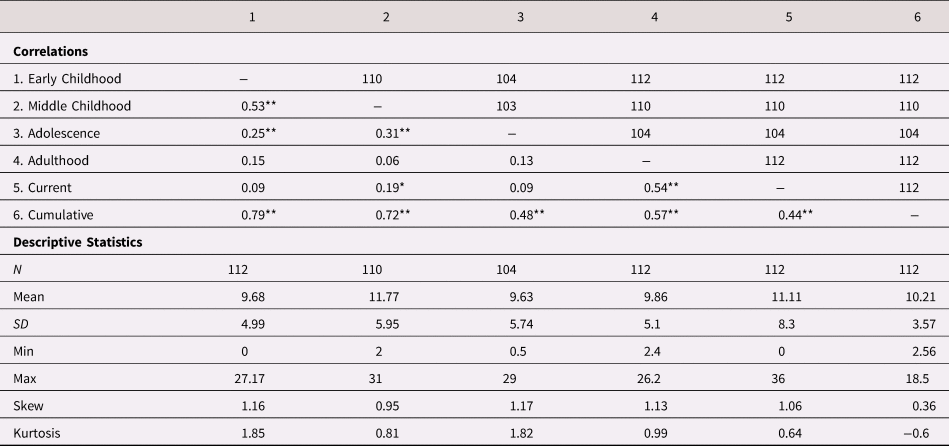
To index life stress at each assessment period, the sum of all of the coded responses was calculated. These scores were then grouped into four developmental periods and averaged Footnote 1: early life stress (1–5 years, seven assessments, α = 0.84), middle childhood stress (grades 1, 2, 3, and 6, four assessments, α = 0.7), adolescent stress (ages 16 and 17, two assessments, α = 0.66), and early adult stress (age 23 to age 34, five assessments, α = 0.78). Current life stress was indexed by LES scores at age 37 years (when the cortisol reactivity was assessed). To examine the cumulative stress model, we summed all of the coded responses across all of the developmental periods (1 to 37 years, 19 assessments, α = 0.83). Table 1 shows the bivariate correlations among the LES scores for each developmental period.
Bivariate associations and descriptive statistics for life stress at each period

Note: Early = early life stress (12 months–64 months); Middle = middle childhood stress (grades 1–3 and grade 6); Adolescence = adolescent life stress (ages 16 and 17 years); Adult = adult life stress (ages 23–34 years); Current = current life stress (age 37 years); Cumulative = cumulative life stress; *p < .05 **p < .01 ***p < .001.
Control Variables
In our analyses, we controlled for the influence of the following covariatesFootnote 2: time since awakening, gender (coded male = −1, female = 1), race/ethnicity (White/non-Hispanic = −1, otherwise = 1), and the number of medications the participant was taking at age 37Footnote 3 that could affect their cortisol reactivity (see Granger, Hibel, Fortunato, & Kapelewski, Reference Granger, Hibel, Fortunato and Kapelewski2009).
Results
Data Analytic Approach
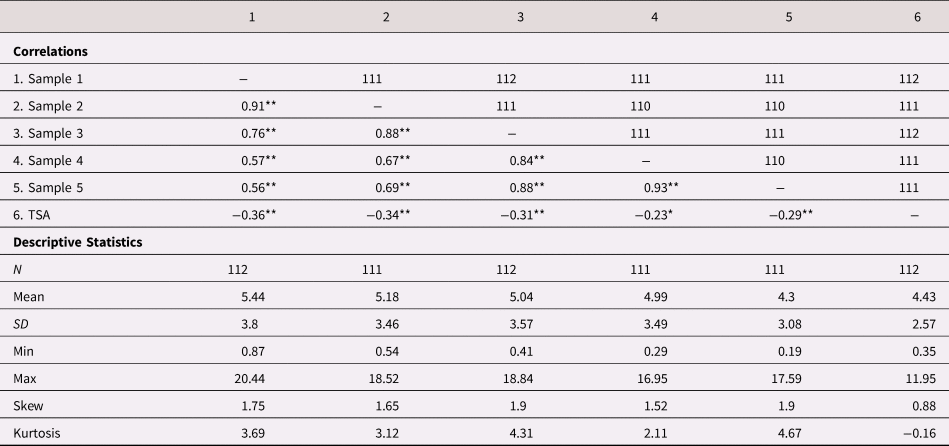
The key outcome variable for of the all analyses was cortisol reactivity to the TSST. Prior to conducting our primary analyses, all of the cortisol data were analyzed and inspected in order to detect outliers (see Supplement for details). The cortisol values that were ≥ 4 SDs from the mean were winsorized (i.e. replaced with next highest cortisol value within each sample distribution). We also checked the distributions of each sample for skewness (see the raw cortisol descriptive statistics in Table 2). Because of the high degree of skewness, all of the cortisol samples were log10 transformed in order to satisfy the assumptions that are imposed by the statistical models that we used.
Bivariate associations and descriptive statistics for raw TSST cortisol samples and TSA

Note: TSA = time since awakening for the first cortisol sample; *p < .05 **p < .01 ***p < .001.
A multilevel modeling approach was used to analyze cortisol reactivity across the five cortisol samples that were collected during the TSST procedure (see Procedure). The analyses were conducted in R by using the package lme4 (Bates, Mächler, Bolker, & Walker, Reference Bates, Mächler, Bolker and Walker2015). Because the assessments were conducted variably across the day (assessments were conducted in the morning, afternoon, and evening) and because cortisol has a strong circadian rhythm, we computed a time-since-awakening (TSA) variable for each participant and cortisol sample to account for variation due to diurnal rhythm.
We estimated two random effects: (a) a random intercept and slope based on the computed TSA (centered) to control for the overall effect of time of assessment (e.g., circadian rhythm effects) and (b) a random intercept and slope based on each cortisol sample code (centered at sample 3, coded as −2, 1, 0, 1, and 2 for the five samples, each 20 min apart) indexing the TSST cortisol sample. We then entered the fixed effects of TSA to control for the slope effects of time-of-day on the cortisol values. In addition, we computed a linear and quadratic term for the TSST cortisol sample code to model monotonic and curvilinear trends in cortisol reactivity across the five cortisol samples.
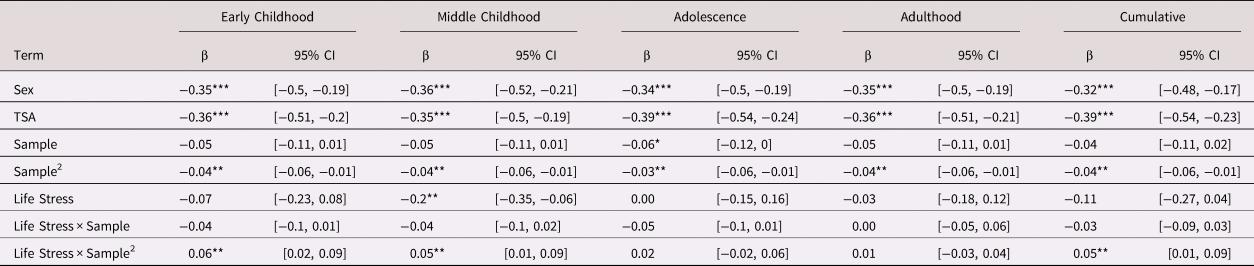
We also entered all of the control variables as fixed effects. They included sex, race/ethnicity, TSA, and the number of medications currently being used. Across all of the models, there were no effects of medication use or race/ethnicty. However, there were main effects for sex and TSA (see Tables 3 and 4). The main effects for sex in all of the models indicated that male participants (sex assigned at birth) had higher intercept levels of cortisol. In addition, for the assessments that were conducted closer to when the participants awakened (smaller TSA values), overall cortisol levels were significantly higher than they were for the assessments that were conducted later in the day (higher TSA values), which is consistent with the strong circadian rhythym that is associated with cortisol release. TSA did not interact with the linear or quadratic TSST term and therefore did not predict cortisol reactivity.
Mixed model results for primary and secondary exploratory analyses

Note: All of the estimates are standardized beta weights with corresponding 95% confidence intervals. The results for the primary analyses are reported in the Early Childhood and Cumulative columns. The results for secondary analyses are reported in the Middle Childhood, Adolescence, and Adulthood columns. TSA = time since awakening; sample = TSST sample code, Life Stress = life stress score for each model; *p < .05 **p < .01 ***p < .001.
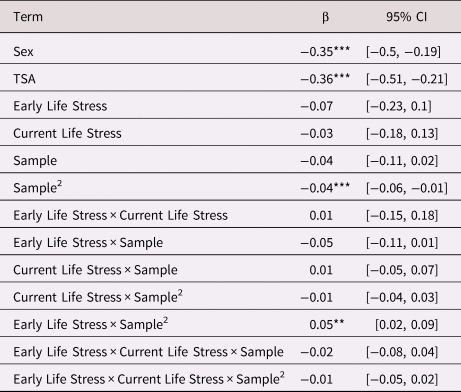
Mixed model results for the sensitization model

Note: All of the estimates are standardized beta weights with corresponding 95% confidence intervals. TSA = time since awakening; sample = TSST sample code; *p < .05 **p < .01 ***p < .001.
Primary Analyses
Base model
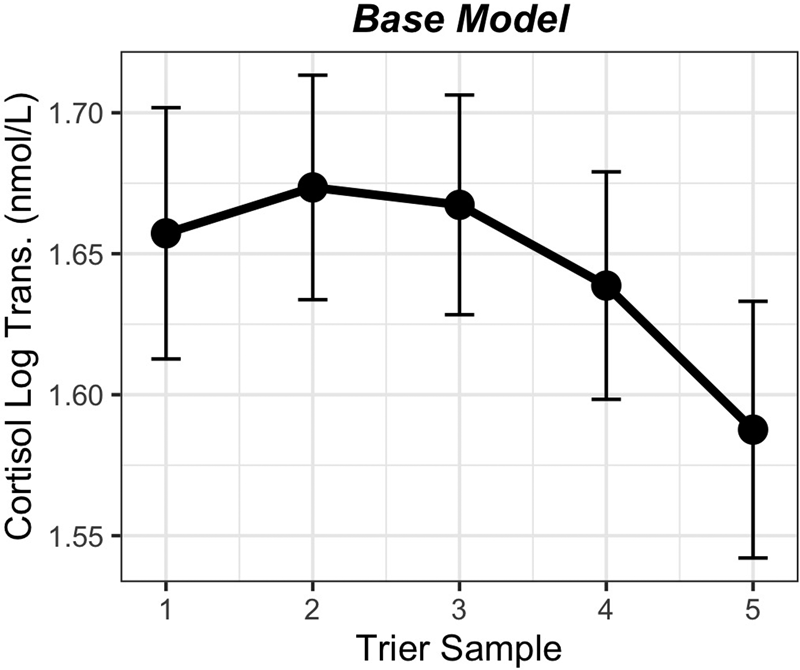
First, we ran an analysis with our set of control variables and Trier-sample terms (both linear and quadratic) without life stress. This analysis can be thought of as a base model or average effect of the TSST on cortisol. Similar to all of the other models, there was a significant quadratic effect for the Trier sample (see Figure 2). This mean curvilinear effect suggests that there was a cortisol response on average, but it was modest in size.
Visualization of the effect of the Trier sample on cortisol reactivity.

Cumulative stress
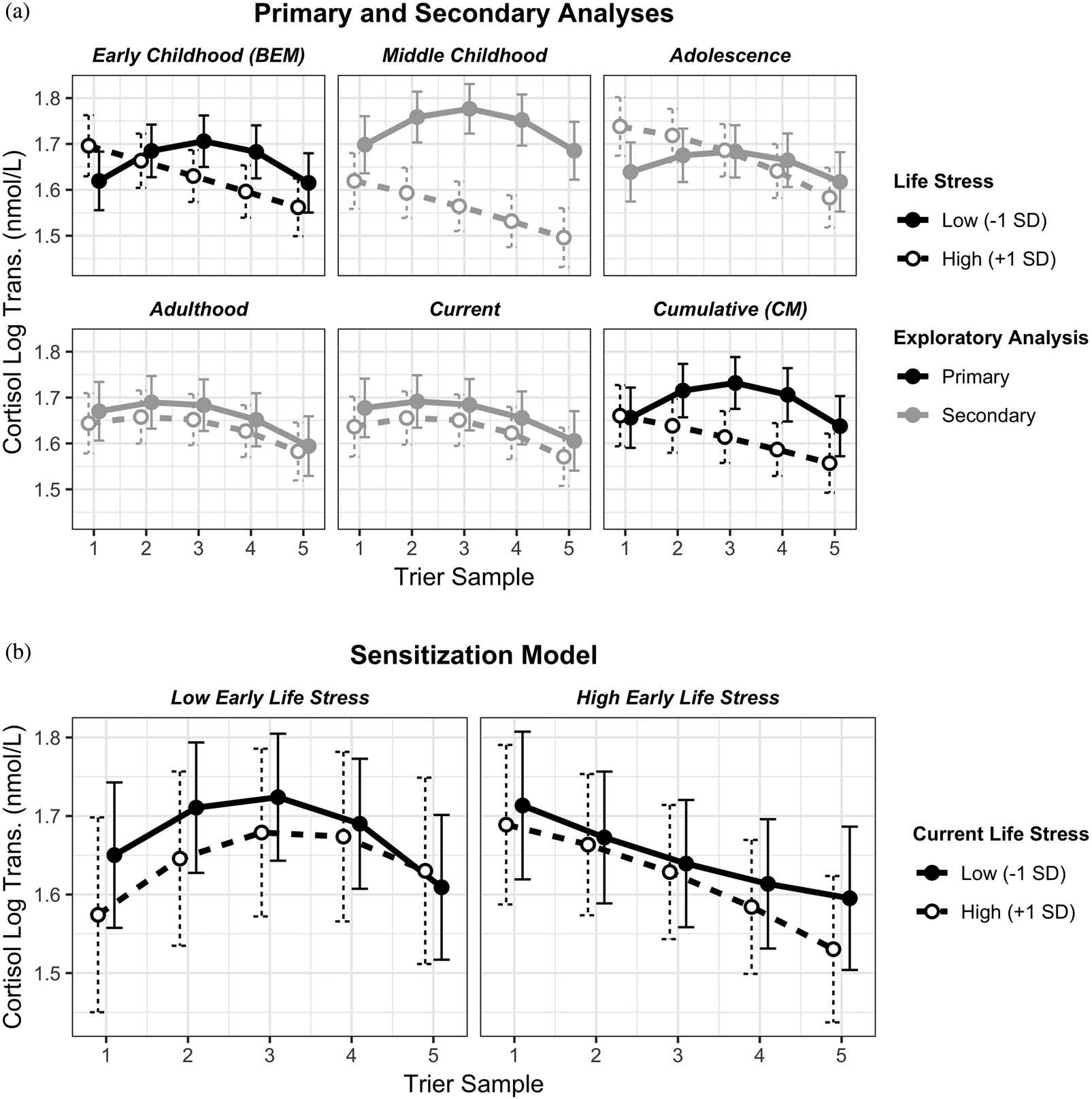
The cumulative stress model predicts that stress across the lifetime accumulates, eventually resulting in dysregulation in cortisol reactivity in adulthood. Thus, according to this model, individuals who are exposed to more stress across their entire lives (summed across ages 0–37 years) should be most likely to exhibit dysregulated patterns of cortisol reactivity in response to the TSST. Therefore, we entered the fixed effect of accumulated life stress and the interaction between total life stress and the TSST cortisol sample to determine whether total stress moderated cortisol reactivity to the TSST. There was no main effect for the linear term for the TSST cortisol sample, but there was a quadratic effect for TSST sample (see Table 3). In addition, there were no main effects for cumulative life stress on the cortisol intercept and no interaction with the linear TSST-sample term. However, cumulative life stress interacted with the quadratic TSST-sample term, revealing that the cortisol responses depended on both levels of cumulative life stress and TSST sample (see Table 3). Figure 3a depicts the effects of high (+1 SD) and low (−1 SD) cumulative stress on cortisol reactivity across the TSST procedure. Among participants who were exposed to lower cumulative life stress, cortisol rose (as expected) in response to the TSST paradigm, showing a prototypical curvilinear rise and subsequent recovery following the TSST. However, participants who were exposed to higher cumulative life stress showed cortisol hyporeactivity to the TSST, as indicated by a negative linear slope across the task (see Figure 3a).
(a) Interaction plots for all effects for each of the models tested in both the primary and secondary analyses. The panels are arranged in chronological order from left to right and top to bottom, starting with early life stress (BEM) and ending with the cumulative life stress effects. The panels with black lines depict the effects from the primary analyses. The panels with light gray lines depict effects from the secondary analyses. The solid points and lines reflect effects for low life stress, and empty points with dotted lines reflect high life stress (the panel titles indicate the life stress period). (b) Visual depiction of the sensitization model. The left panel plots the effect of high versus low current life stress for individuals who were exposed to low levels of early life stress. The right panel plots the effect of high versus low current life stress for individuals who were exposed to high levels of early life stress.

Biological embedding
The biological embedding model anticipates that exposure to high levels of life stress in early childhood should be most predictive of dysregulated cortisol reactivity in adulthood. To examine this possibility, we entered the main effect for early life stress and the interaction between early life stress and the linear and quadratic terms for the TSST cortisol sample. Once again, there were no main effects for either the linear term for TSST sample or early life stress, but there was a quadratic TSST sample effect (see Table 3). There was also no interaction between early life stress and the linear term for TSST sample. However, there was an interaction between early life stress and the quadratic term for TSST sample (see Table 3). Similar to the cumulative model, when early life stress is lower (−1 SD), cortisol shows the typical curvilinear spike and recovery across the TSST (see Figure 3a). However, among participants who were exposed to higher early life stress (+1 SD), cortisol reactivity shows a hyporesponsive pattern that is characterized by a negative linear slope across the TSST (see Figure 3a).
Sensitization
The sensitization model proposes that the effect of high levels of early life stress on cortisol reactivity should emerge only when current life stress is also high. That is, it predicts that individuals who are exposed to higher levels of stress early in life and currently experiencing higher stress in adulthood should exhibit a more dysregulated adult pattern of cortisol reactivity. To test this model, we entered two three-way interactions. The first included early life stress, current stress, and the linear term for TSST sample; the second included early life stress, current stress, and the quadratic term for TSST sample as well as all of the lower-order two-way interactions and main effects. There was no main effect for the linear term for TSST sample, early life stress, or current life stress, but there was an effect for the quadratic term for TSST sample (see Table 4). Moreover, there were no two-way interactions between the linear term for TSST sample and current life stress, the quadratic term for TSST sample and current life stress, or early life stress and the linear term for TSST sample. However, there was a significant two-way interaction between early life stress and the quadratic term for TSST sample, consistent with the biological embedding model (see Table 4). Specifically, individuals who were exposed to lower early life stress showed the typical curvilinear spike and recovery cortisol response across the TSST (see Figure 3b). For individuals who were exposed to higher levels of early life stress, however, cortisol reactivity showed a hyporesponsive pattern. Finally, there were no 3-way interactions (see Figure 3b for a visual depiction of the sensitization model).
Biological embedding versus cumulative stress
Thus far, our analyses have suggested that individuals who are exposed to either high levels of cumulative life stress or high levels of early life stress tend to exhibit a hyporesponsive cortisol reactivity to the TSST in adulthood. However, it remains unclear whether the biological embedding and cumulative stress findings reflect distinct effects. More specifically, the score for cumulative life stress that was modeled in the cumulative stress model includes the variance from early life stress that is modeled in the biological embedding model. Thus, one possible explanation for our findings is that early life stress is driving the effects found in both models.
To disambiguate the effects of cumulative and early life stress, we tested the effects of early life stress and cumulative life stress in the same model. We used the same analytic approach as was used in all of the previous analyses with two key differences. First, we recalculated cumulative life stress to include all of the life stress scores except those that overlapped with the early life stress variable. Thus, cumulative life stress reflected all stress exposure after age 5 years. Second, we simultaneously tested the interaction between early life stress and the linear and quadratic terms for TSST as well as the interaction between cumulative life stress and the linear and quadratic terms for TSST. All of the relevant lower-order terms were also entered into the model. This model specification directly pits the effect of cumulative life stress against the effect of early life stress. If cumulative stress exerts effects that are unique beyond those from early life stress, the quadratic slope effects for both early life stress and cumulative life stress should remain significant. However, if early life stress was driving the cumulative stress effects that were revealed in our previous analysis, only the early life stress quadratic slope effect should remain significant.
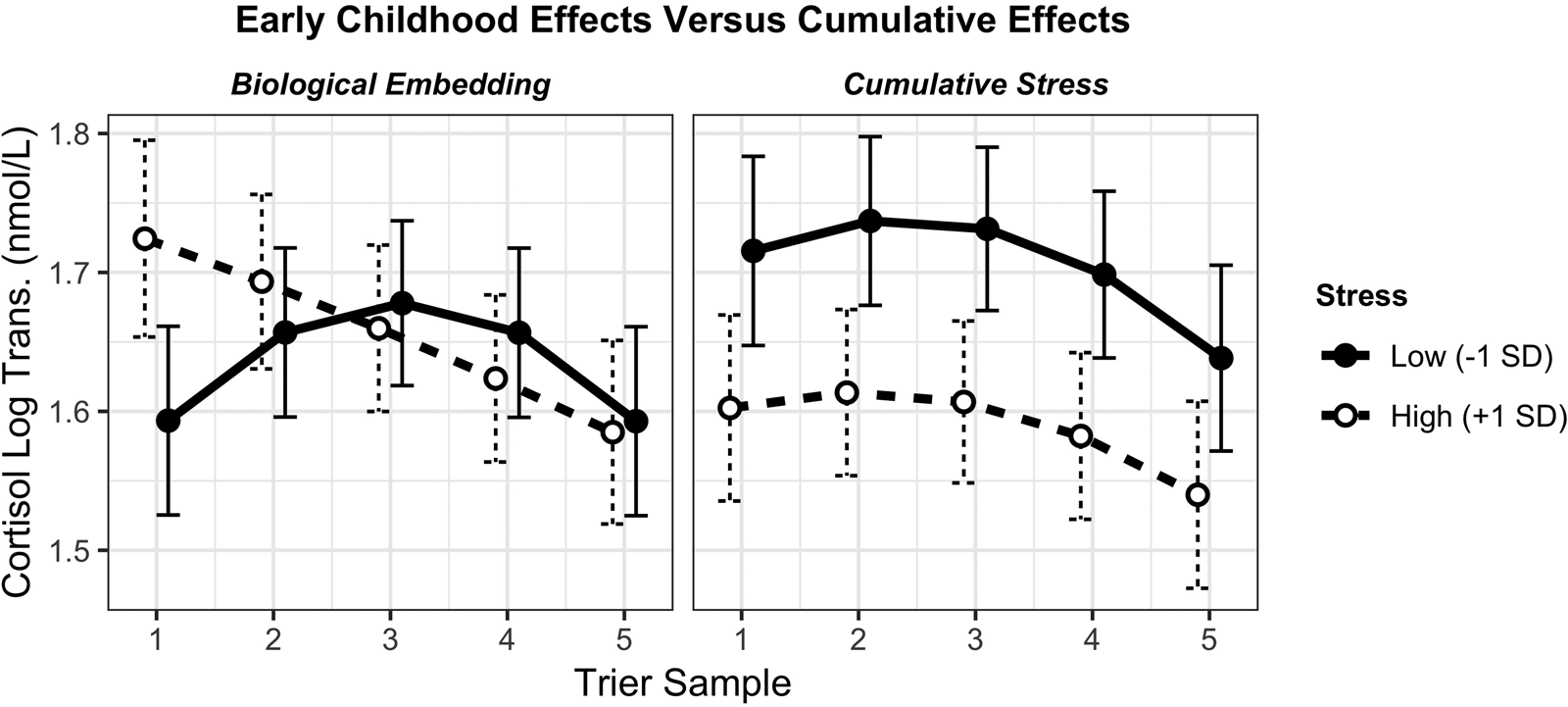
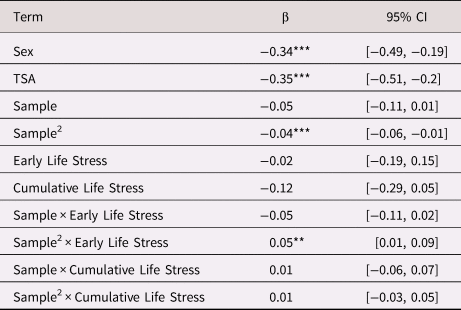
Similar to our all of our previous analyses, there were no intercept effects for early life stress or cumulative life stress. There was no linear TSST sample effect. However, there was a quadratic effect for TSST sample (see Table 5). Critically, there were no linear or quadratic interactions between cumulative life stress from 5 years on and TSST sample (see Table 5). For early life stress, there was no linear interaction with TSST sample, but there remained a significant quadratic interaction with TSST sample (see Table 5), suggesting that the original cumulative stress findings are driven by early life stress variance. Figure 4 visually depicts the cumulative stress and biological embedding effects that were obtained from this competitive model (i.e., each controlling for the other). Individuals who were exposed to high levels of early life stress exhibited a hyporesponsive pattern, whereas individuals who were exposed to low levels of early life stress showed a more normative reactivity pattern. Individuals who were exposed to high and low cumulative life stress (not including early life stress) showed similar cortisol reactivity profiles (see Figure 4).
Interaction plot comparing the biological embedding and cumulative stress models. The left panel shows the effect of scoring high versus low on early life stress, controlling for the effects of cumulative life stress. The right panel shows the effect of scoring high versus low on cumulative life stress, controlling for the effects of early life stress. The solid points and lines indicate low life stress (early life stress for the biological embedding model; cumulative for the cumulative stress model), and the open points with dotted lines reflect high life stress.

Results for biological embedding compared with cumulative stress in the same model

Note: All of the estimates are standardized beta weights with corresponding 95% confidence intervals. Cumulative stress in this model refers to the effect of all life stress assessments except assessments in early childhood (i.e., the first 5 years of life). TSA = time since awakening; sample = TSST sample code; *p < .05 **p < .01 ***p < .001
Secondary Analyses
In the secondary analyses, we examined the effects of stress exposure across three additional developmental periods: middle childhood, adolescence, and early adulthood. We used the same analytic approach as we did for our primary analyses to test the effect of life stress across these three developmental periods on adult HPA reactivity.
Middle childhood
The first secondary exploratory analysis examined the effect of life stress exposure during middle childhood (grades 1–3 and grade 6). We entered the main effect for middle childhood life stress and the interaction between middle childhood stress and the linear and quadratic terms for the TSST cortisol sample. There was a main effect of middle childhood stress, indicating that higher levels of middle childhood stress resulted in lower intercept levels of cortisol. There was no linear effect for TSST sample but there was an effect for the quadratic term for TSST sample. There was no interaction between middle childhood life stress and the linear term for TSST sample, but there was an interaction between middle childhood life stress and the quadratic term for TSST sample (see Table 3). Similar to the cumulative stress and biological embedding models, when middle childhood life stress is lower (−1 SD), cortisol shows the typical curvilinear spike and recovery across the TSST (see Figure 3a). However, among participants who were exposed to higher middle childhood life stress (+1 SD), cortisol reactivity showed a blunted slope across the TSST (see Figure 3a).
Adolescence
Next, we tested the effect of life stress that was experienced in adolescence (ages 16 and 17 years) on cortisol reactivity at age 37. This model revealed main effects for both the linear and quadratic terms for TSST sample. However, there was no main effect for adolescent life stress or interaction between adolescent life stress and the linear or quadratic terms for TSST sample (see Table 3 and Figure 3a).
Adulthood
Finally, we tested the effect of life stress in early adulthood (age 23–34 years) on cortisol reactivity at age 37 years. There were no effects for adulthood stress or the linear term for TSST sample. There was an effect for the quadratic term for TSST sample, but there was no interaction between adulthood stress and the linear or quadratic terms for TSST sample (see Table 3 and Figure 3a).
Discussion
We examined three theoretically important models that link developmental exposures to life stress and HPA dysregulation: the cumulative stress model (which predicts effects for stress summed across the lifespan), the biological embedding model (which predicts effects for early life stress), and the sensitization model (which predicts an early by current life stress interaction effect). The primary analyses revealed that both cumulative and early life stress led to blunted cortisol reactivity profiles, supporting the cumulative and biological embedding models. However, we did not find interactive effects of early stress and current stress (although significant early life stress effects remained in the model), and thus we found no support for the sensitization model. The secondary analyses revealed that greater stress in middle childhood also predicted blunted cortisol patterns, but stress during adolescence and adulthood did not. Importantly, life stress was reported by mothers during adolescence. Because this period, unlike earlier developmental periods, is marked by increasing independence and time spent away from home, it is possible that our life stress measure did not capture important stressors that occur during adolescence (e.g., relationship breakups), which may account for the null findings.
These findings are consistent with research that has examined the effects of life stress on the developing brain. For example, early stress can affect the structure and function of key brain areas that regulate the anticipation of and reaction to stressors (Herman et al., Reference Herman, McKlveen, Ghosal, Kopp, Wulsin, Makinson and Myers2016). In particular, high levels of exposure to stress hormones can directly affect the brain areas that have a relatively high density of glucocorticoid receptors, such as the amygdala, hippocampus, and prefrontal cortex, which play a key role in activating and modulating the HPA axis and its response to stress (Gold et al., Reference Gold, Sheridan, Peverill, Busso, Lambert, Alves and McLaughlin2016; Hanson et al., Reference Hanson, Nacewicz, Sutterer, Cayo, Schaefer, Rudolph and Davidson2015; Herman et al., Reference Herman, McKlveen, Ghosal, Kopp, Wulsin, Makinson and Myers2016). Although we cannot make causal claims with our study design, our findings are consistent with a growing literature in humans and in animal models that suggests that early life stress plays a unique role in shaping HPA functioning. Our prospective study design also allowed us to compare the biological embedding and cumulative stress models by testing whether early versus cumulative life stress was a better predictor of adult cortisol reactivity. Although the cumulative life stress and early life stress variables shared significant variance, our analyses teasing apart early and cumulative life stress suggested that early life stress drove the cumulative life stress effects.
Our findings are also consistent with the larger cortisol reactivity literature that links exposure to adversity and HPA functioning. For example, Bunea et al. (Reference Bunea, Szentágotai-Tătar and Miu2017) reported a sizeable meta-analytic association between early life stress and blunted cortisol responses, suggesting a robust relationship between early life adversity and blunted cortisol patterns across a variety of study designs. Taken together, it seems that blunted cortisol responses are more commonly obtained than hyperreactive cortisol responses are, at least in the context of life stress and adversity exposure early in life. Notably, however, the current findings deviate from work that has examined HPA functioning within the same longitudinal sample. In particular, Young et al. (Reference Young, Farrell, Carlson, Englund, Miller, Gunnar, Roisman and Simpson2019) used the same theoretical framework and life stress assessments to study the influence of life stress exposure across the lifespan on diurnal cortisol profiles, and more specifically, diurnal rhythms that are known to affect health outcomes. Their findings did not support the cumulative stress or the biological embedding model. Instead, the sensitization model was most predictive of flattened diurnal cortisol profiles. That is, individuals who were exposed to high levels of early life stress and high current life stress exhibited the greatest flattening of diurnal cortisol patterns (Young et al., Reference Young, Farrell, Carlson, Englund, Miller, Gunnar, Roisman and Simpson2019).
This inconsistency suggests that current life stress may be more predictive of diurnal cortisol patterns than of cortisol reactivity in adulthood. One possible explanation for this discrepancy is that chronic current life stress may have a more global effect on the brain and body, affecting sleep patterns, eating patterns, and stress levels over the course of days, weeks, or months, leading to the flattening of diurnal cortisol patterns, with potential negative implications for mental and physical health. In addition, the brain systems that regulate chronic stress and acute stress are distinct (Herman et al., Reference Herman, McKlveen, Ghosal, Kopp, Wulsin, Makinson and Myers2016). Thus, diurnal cortisol functioning may reflect exposure to current chronic stress, whereas acute cortisol reactivity is primarily regulated by exposure to early life stress that then affects the neural mechanisms that trigger acute stress responses. Furthermore, the diurnal cortisol samples were collected by participants at home. Although the participants were given detailed instructions and we had various checks to ensure their compliance with the sampling instructions and to screen out deviant samples, inevitably there will be increased error in diurnal cortisol sampling compared with the carefully supervised cortisol reactivity sampling protocol. This could also explain the differences in the pattern of results between the two types of HPA-axis functioning.
Despite this inconsistency, both the current research and the Young et al. (Reference Young, Farrell, Carlson, Englund, Miller, Gunnar, Roisman and Simpson2019) diurnal cortisol findings identified early childhood stress as a key variable that links stress exposure to HPA functioning. Even though current life stress appears to affect diurnal cortisol functioning, early life stress may play a key role in moderating this effect. It is also important to note that cortisol reactivity and diurnal cortisol rhythm are considered to be distinct aspects of HPA physiology, despite sharing common neuroendocrine architecture, so it is not particularly surprising that the timing of stress may influence these aspects of HPA function differently. Nonetheless, future research is needed to further disentangle and differentiate biological embedding and sensitization effects.
Our study is limited in several important ways. First, despite having a relatively larger sample size than did many studies in the cortisol reactivity literature, our study is underpowered. This is especially true for studying more complicated models that involve three-way interactions, such as the sensitization model. Second, we used a modified version of the TSST, which may have reduced the aversive nature of the original version of the paradigm. As a consequence, it is possible that some participants did not experience the task as being stressful, which could have led to a flat cortisol response. Although not inherently problematic, this scenario is qualitatively different than the HPA axis failing to activate in response to a truly stressful event. Although we cannot distinguish between these two possible interpretations, our findings suggest that, for some participants (particularly individuals who were exposed to low levels of early life stress), the task did elicit a cortisol response, and we do not have a strong theoretical reason to believe that the task would have been less psychologically stressful for individuals who were exposed to high versus low levels of life stress. Third, our life stress measure was designed to capture normative stressors and not extreme stress such as maltreatment. On one hand, this fact limits our ability to compare our findings with those of studies that have examined more extreme forms of trauma and corresponding cortisol reactivity. On the other hand, it is noteworthy that exposure to normal levels of stress leads to similar cortisol reactivity patterns as does exposure to more extreme life stress. Fourth, we measured cortisol reactivity at a single developmental point (at age 37 years), which restricts our ability to understand the influence of life stress at other points and prevents us from accounting for the effects of stress responses earlier in life. Fifth, although we statistically controlled for the time of day in all of our models, we did not standardize when the TSST was administered. Because cortisol has a strong diurnal rhythm, it is possible that time of day affected our results in unanticipated ways. A final limitation is that, although we observed an association between life stress exposure and cortisol reactivity, we cannot rule out the role of genetic variation and other unmeasured confounds in producing our findings. Furthermore, the MLSRA is an at-risk sample, which may restrict the generalizability of our effects to other types of samples. Finally, our study was exploratory by design due to limited theoretical clarity and heterogeneity. Therefore, our findings will ideally be replicated in the context of a confirmatory, preregistered study.
Despite these important limitations, the unique longitudinal design of the current study, which assessed life stress across 19 points across the lifespan, enabled us to test and compare important theoretical models regarding stress exposure and cortisol reactivity. This study design offered a unique opportunity to compare retrospective cross-sectional studies to prospective longitudinal findings. In addition, we tightly controlled saliva sampling to assess cortisol, which allowed us to examine prospective life stress data and more rigorously assess its associations with stress reactivity. Although our study used a social stressor to elicit cortisol responses, such responses may be distinct from stressors that threaten one's physical integrity (Slavich, Reference Slavich2018). For example, social stressors may show blunted cortisol responses among individuals who are exposed to high levels of early life stress, but these individuals may show stronger reactions to tasks that elicit mild physical pain, such as the cold pressor task. Future research needs to test the ways in which different types of threat modulate the stress response among individuals that are exposed to early life stress.
In summary, our goal was to leverage life stress data across the lifespan to compare the cumulative stress, biological embedding, and sensitization models with respect to their hypothesized associations between life stress and cortisol reactivity. In addition, we sought to explore the form of dysregulation that each model might predict. We found evidence supporting the cumulative and biological embedding models such that early life stress and cumulative life stress led to blunted cortisol responses. However, when directly comparing early versus cumulative life stress, early stress was more predictive of blunted cortisol reactivity patterns. We also found in follow-up analyses that middle childhood uniquely predicted blunted cortisol patterns. Our findings suggest that early life is a key developmental period during which HPA functioning is calibrated, affecting its functioning across the lifespan. In addition, the current study adds theoretical clarity to the question of cortisol hypo- and hyperreactivity in relation to life stress exposure. Thus, future research is poised to further understand the role of HPA hyporeactivity and its relation to both life stress and other adversity as well as its implications for mental and physical health outcomes.