





Introduction
The close bond between humans and their companion animals, particularly dogs and cats, highlights the importance of managing the health issues that accompany this relationship (Esch and Petersen, Reference Esch and Petersen2013; Traub et al., Reference Traub, Robertson, Irwin, Mencke and Thompson2002). Among these concerns, gastrointestinal nematodes (GINs) represent a persistent and significant threat to the health and welfare of companion animals. In addition, vector-borne helminths such as Dirofilaria immitis (canine heartworm) pose a major clinical and epidemiological challenge, particularly in endemic regions. In dogs, helminth infections are associated with reduced performance, weight loss, and compromised health and welfare (Perry and Randolph, Reference Perry and Randolph1999). The pathological impact varies by parasite species: GINs cause damage through direct tissue injury, malabsorption, and immunopathology, whereas cardiopulmonary parasites such as D. immitis induce vascular and pulmonary pathology. Clinical manifestations therefore range from gastrointestinal signs, including anorexia, diarrhoea, anaemia, and oedema, to more severe cardiopulmonary complications, which may be life-threatening, particularly in young or immunocompromised animals (Raza et al., Reference Raza, Rand, Qamar, Jabbar and Kopp2018; Thompson, Reference Thompson1999). Beyond their veterinary impact, many of these parasites are zoonotic, posing serious risks to human health. Canine helminths, such as Toxocara canis and Ancylostoma caninum, are responsible for diseases including visceral and ocular larval migrans, cutaneous larval migrans, and eosinophilic enteritis (Morelli et al., Reference Morelli, Diakou, Di Cesare, Colombo and Traversa2021). Thus, effective parasite control in companion animals is crucial not only for animal health but also from a One Health perspective. Although protozoan parasites shared between dogs and humans including Giardia spp. and Cryptosporidium spp. are also of zoonotic relevance (Barr and Bowman, Reference Barr and Bowman1994; Robertson and Thompson, Reference Robertson and Thompson2002), this review focuses exclusively on helminth infections, particularly nematodes and cestodes, and the emerging issue of anthelmintic resistance (AR) in canine parasites.
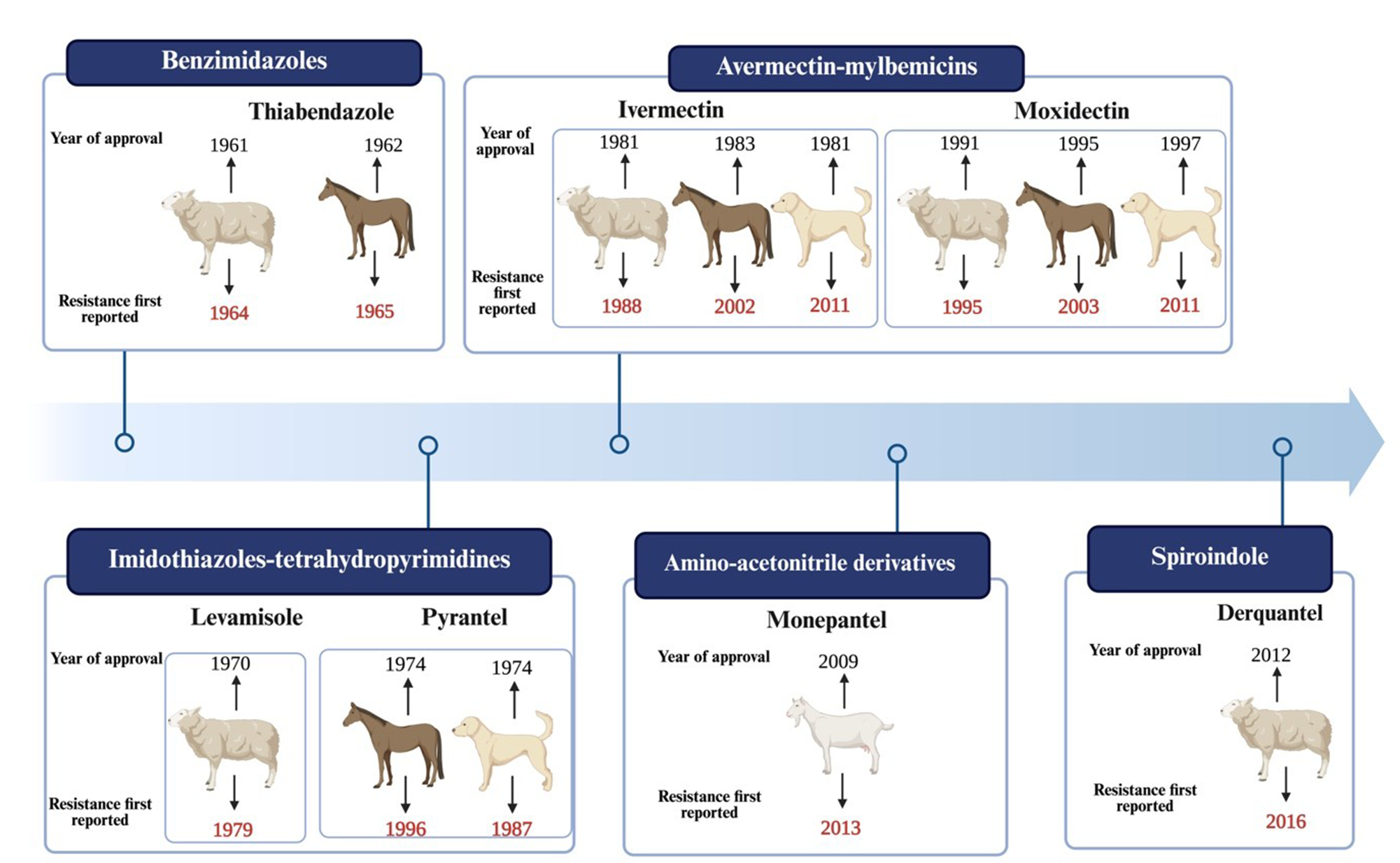
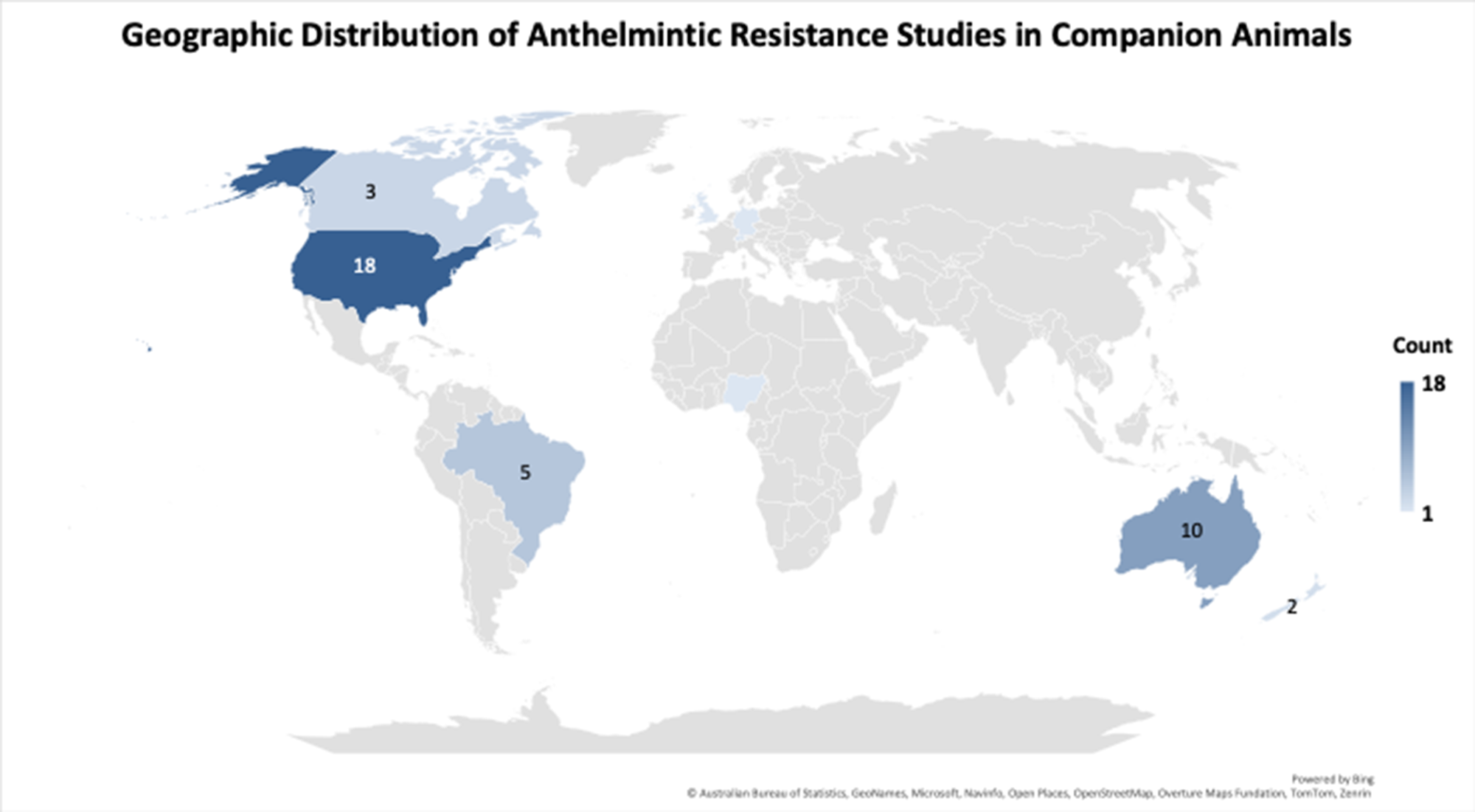
Control of parasitic nematodes in dogs has long relied on prophylactic and therapeutic use of anthelmintics. However, uncontrolled and excessive use of these drugs has led to the emergence of AR, defined as the heritable ability of parasites to survive doses of drugs that would normally be effective (Jabbar et al., Reference Jabbar, Iqbal, Kerboeuf, Muhammad, Khan and Afaq2006; Kohler, Reference Kohler2001). Resistance has now been documented across all major anthelmintic classes, including benzimidazoles (BZs), imidazothiazoles/tetrahydropyrimidines, and macrocyclic lactones (MLs; Kaplan, Reference Kaplan2004). Initially documented in livestock species (Fig. 1), AR has now been increasingly reported in canine parasites, particularly A. caninum, which has shown multidrug resistance (MDR) to BZs, MLs, and tetrahydropyrimidines (Jackson et al., Reference Jackson, Lance, Townsend and Stewart1987; Jimenez Castro et al., Reference Jimenez Castro, Venkatesan, Redman, Chen, Malatesta, Huff, Zuluaga Salazar, Avramenko, Gilleard and Kaplan2021; Kopp et al., Reference Kopp, Kotze, Mccarthy and Coleman2007). Geographically, most canine AR cases have been reported in the United States and Australia, with emerging reports from other countries (Fig. 2). In the United States, MDR in A. caninum is now recognized as a consequence of prolonged and intensive exposure to multiple anthelmintic classes, particularly in high-transmission environments such as greyhound breeding and racing facilities, where frequent and repeated treatments have created strong selection pressure (Geary et al., Reference Geary, Drake, Gilleard, Chelladurai, Castro, Kaplan, Marsh, Reinemeyer and Verocai2025). The emergence of MDR in A. caninum, now confirmed in pet dogs across North America, represents a critical turning point for parasite management (Geary et al., Reference Geary, Drake, Gilleard, Chelladurai, Castro, Kaplan, Marsh, Reinemeyer and Verocai2025). Similarly, studies in Australia have documented reduced efficacy of pyrantel and BZ against canine hookworms (Abdullah et al., Reference Abdullah, Stocker, Kang, Scott, Hayward, Jaensch, Ward, Jones, Kotze and Šlapeta2025; Jackson et al., Reference Jackson, Lance, Townsend and Stewart1987; Kopp et al., Reference Kopp, Kotze, Mccarthy and Coleman2007). These findings suggest a global pattern, though underreporting in some regions may underestimate the proper scope. From a One Health perspective, the development and spread of AR in companion animals has broad implications. Beyond compromising the health and welfare of dogs and cats, resistant parasites may increase environmental contamination and exposure risk, potentially complicating the treatment and control of zoonotic infections in both veterinary and human medicine. This is especially concerning in urban and peri-urban settings, where human–pet interactions are frequent and close (Traversa, Reference Traversa2012).
Timeline of anthelmintic drug approvals and the first reports of resistance in different species. Each panel shows the year of approval (top) and the year when resistance was first documented (bottom, in red) for the major classes of anthelmintics: benzimidazoles, macrocyclic lactones, imidothiazoles–tetrahydropyrimidines, amino-acetonitrile derivatives, and spiroindoles. Icons represent the animal species in which resistance was first detected.

Figure 1 Long description
The image shows a timeline of anthelmintic drug approvals and the first reports of resistance in different species. The top section lists the year of approval for each drug, while the bottom section indicates the year resistance was first documented. The categories include benzimidazoles, avermectin-milbemycins, imidothiazoles-tetrahydropyrimidines, amino-acetonitrile derivatives and spiroindoles. Icons represent the animal species where resistance was first detected. For benzimidazoles, thiabendazole was approved in 1961 with resistance reported in 1964. Avermectin-milbemycins include ivermectin approved in 1981 with resistance in 1988 and moxidectin approved in 1997 with resistance in 2003. Imidothiazoles-tetrahydropyrimidines include levamisole approved in 1970 with resistance in 1979 and pyrantel approved in 1972 with resistance in 1987. Amino-acetonitrile derivatives include monepantel approved in 2009 with resistance in 2013. Spiroindoles include derquantel approved in 2012 with resistance in 2016.
Geographic distribution of studies reporting anthelmintic resistance in dogs. Colour intensity indicates the number of studies per country (range: 1–18). Top reporting countries include the United States (18 studies), Australia (10), Brazil (5), Canada (3), and New Zealand (2).

Figure 2 Long description
A world map illustrating the geographic distribution of studies reporting anthelmintic resistance in companion animals. The map uses color intensity to indicate the number of studies per country, ranging from 1 to 18. The United States is highlighted with 18 studies, Australia with 10 studies, Brazil with 5 studies, Canada with 3 studies and New Zealand with 2 studies. The map provides a visual representation of the concentration of research in these countries.
In dogs, the diagnosis of AR in field conditions remains particularly challenging. Traditional faecal egg count reduction tests (FECRT), while widely used in livestock, are less validated for canine use due to variable egg shedding and smaller sample sizes. In addition, the presence of pre-patent infections, especially common with A. caninum, and rapid re-infection from contaminated environments can substantially confound FECRT interpretation and mask true drug efficacy. Despite these challenges, it is critical to distinguish true AR from apparent treatment failures that may result from factors such as poor owner compliance, incorrect dosing, or the use of substandard drug formulations. Misinterpretation may delay effective interventions or contribute to the further selection of resistant strains (Charleston, Reference Charleston1981; Prichard, Reference Prichard1980). Thus, there is a critical need for validated, reproducible methods to detect AR in dogs and for surveillance programs that monitor drug efficacy over time. Recent advances in molecular diagnostics have substantially improved the detection and monitoring of AR in canine parasites. The detection of resistance-associated genetic variation, such as single-nucleotide polymorphisms (SNPs) in the target receptor gene, is achieved through allele-specific polymerase chain reaction (PCR) or deep amplicon sequencing, which allows sensitive measurement of resistance allele frequencies and provides early insight into the emergence and spread of resistance (Avramenko et al., Reference Avramenko, Redman, Melville, Bartley, Wit, Queiroz, Bartley and Gilleard2019).
Two recent reviews have highlighted the growing importance of AR in companion animal parasites. Krämer et al. (Reference Krämer, Baneth, Dantas-Torres, Hamer, Lappin, Otranto, Roura, Sager, Schunack, Scorza, Traub, Geary and Cantacessi2025) provided a broad synthesis of resistance across parasites of dogs and cats, while Geary et al. (Reference Geary, Drake, Gilleard, Chelladurai, Castro, Kaplan, Marsh, Reinemeyer and Verocai2025) focused specifically on multidrug-resistant A. caninum and identified key research priorities. Building on these contributions, the present review integrates phenotypic, molecular, and diagnostic evidence across major canine helminths, with particular emphasis on clinical detection, geographic patterns, and practical implications for parasite control. Specifically, this review aims to provide a comprehensive overview of AR in dogs by summarizing current knowledge on prevalence and geographic distribution, examining mechanisms underlying resistance development, evaluating available diagnostic methodologies, and outlining evidence-based strategies to mitigate further spread.
Emergence and prevalence of AR in dogs
AR in dogs is increasingly recognized as a significant concern in veterinary medicine and public health. While AR has been extensively studied and documented in ruminants and equines across all three major anthelmintic classes (Fig. 1), its emergence in dogs has received comparatively less attention until recently. Early studies focused predominantly on livestock, with a rich body of literature reporting resistance in parasites of ruminants and horses (Baiak et al., Reference Baiak, Lehnen and Da Rocha2018; Cai et al., Reference Cai, Wu, Wu, Gao, Zhu and Li2024; Fissiha and Kinde, Reference Fissiha and Kinde2021). However, over the past two decades, and especially since 2010, an increasing number of reports have documented AR in companion animal parasites, most notably A. caninum and D. immitis in dogs.
A. caninum: The leading model for AR in dogs
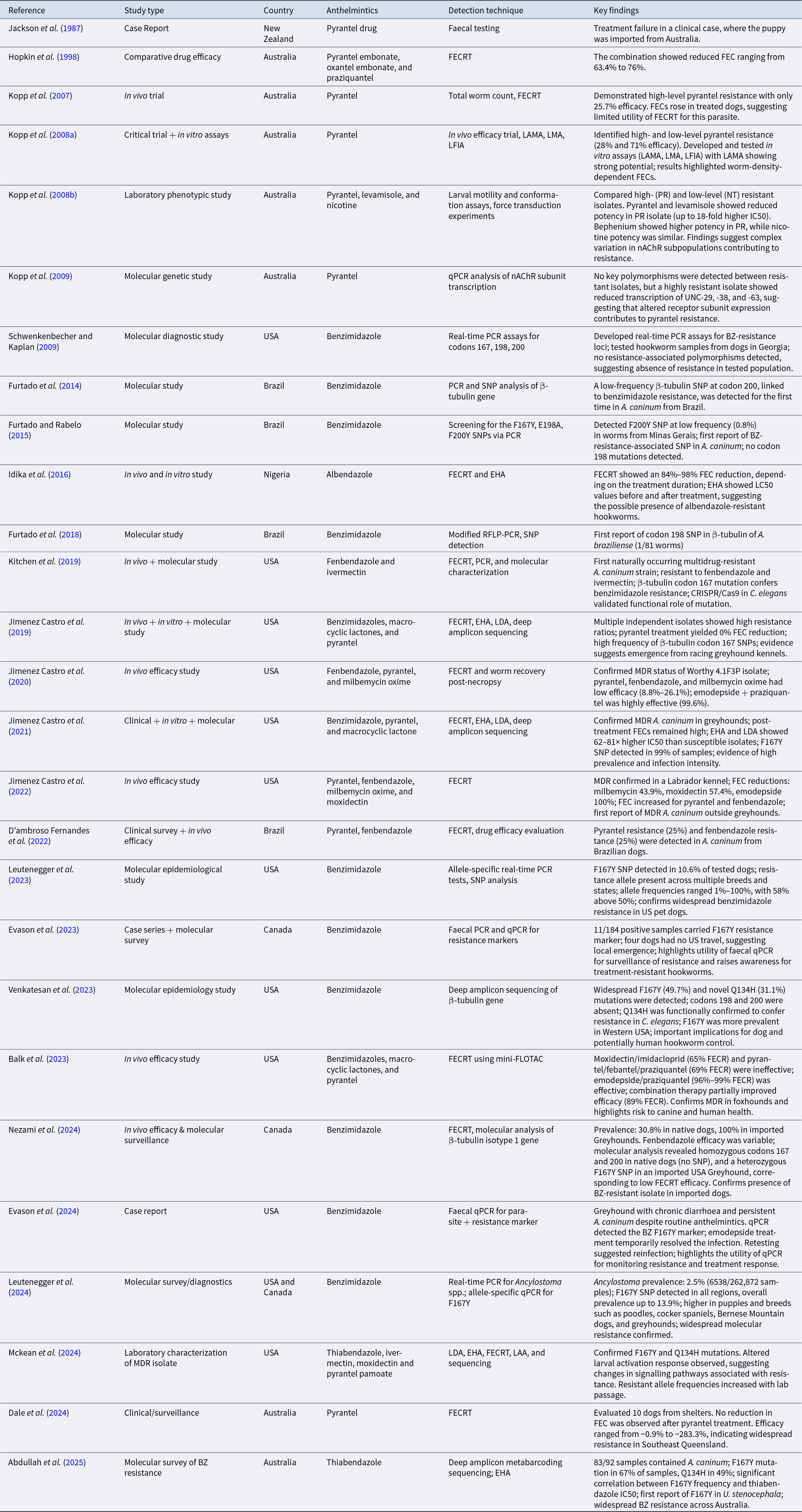
Reports of AR in A. caninum have become increasingly frequent and geographically widespread, especially over the last decade (Table 1). Resistance has now been documented against the three main drug classes used in canine helminth control: BZs, MLs, and tetrahydropyrimidines (Abdullah et al., Reference Abdullah, Stocker, Kang, Scott, Hayward, Jaensch, Ward, Jones, Kotze and Šlapeta2025; Jimenez Castro et al., Reference Jimenez Castro, Venkatesan, Redman, Chen, Malatesta, Huff, Zuluaga Salazar, Avramenko, Gilleard and Kaplan2021; Sönmez et al., Reference Sönmez, Madak, Karaer and Sarimehmetoğlu2025). This resistance has been confirmed through both phenotypic methods, such as FECRT, egg hatch assays (EHAs), and larval development assays (LDAs), as well as molecular approaches, including allele-specific real-time PCR and deep amplicon sequencing targeting β-tubulin isotype-1 gene mutations (Abdullah et al., Reference Abdullah, Stocker, Kang, Scott, Hayward, Jaensch, Ward, Jones, Kotze and Šlapeta2025; Jimenez Castro et al., Reference Jimenez Castro, Willcox, Rochani, Richmond, Martinez, Lozoya, Savard and Leutenegger2025; Kopp et al., Reference Kopp, Coleman, Mccarthy and Kotze2008a, Reference Kopp, Kotze, Mccarthy and Coleman2007; Venkatesan et al., Reference Venkatesan, Jimenez Castro, Morosetti, Horvath, Chen, Redman, Dunn, Collins, Fraser, Andersen, Kaplan and Gilleard2023).
A summary of in vitro and in vivo studies reporting phenotypic and molecular evidence of anthelmintic resistance in canine hookworms

Table 1 Long description
The table provides a comprehensive overview of studies examining anthelmintic resistance in canine hookworms, focusing on different drugs, study types, and detection methods across multiple countries. Key findings include high resistance to pyrantel in Australia, with efficacy as low as 25.7%, and the detection of benzimidazole resistance markers like the F167Y SNP in the USA and Brazil. Comparative studies reveal multidrug resistance in strains from racing greyhounds and other breeds, with some studies confirming resistance through molecular techniques such as PCR and sequencing. The data suggest a growing trend of resistance, particularly in regions like the USA and Australia, with implications for treatment efficacy and the need for alternative therapies. The table highlights the complexity of resistance mechanisms, including genetic mutations and altered receptor expressions, highlighting the importance of ongoing surveillance and research.
FECRT, faecal egg count reduction test; EHA, egg hatch assay; LDA, larval development assay; LAMA, larval arrested morphology assay; LMA, larval motility assay; LFIA, larval feeding inhibition assay; LAA, larval activation assay; PCR, polymerase chain reaction; RFLP-PCR, restriction fragment length polymerase chain reaction
In Australia-Pacific, resistance was first documented in the late 1980s with reduced efficacy of pyrantel pamoate and oxantel pamoate combinations (Jackson et al., Reference Jackson, Lance, Townsend and Stewart1987). Subsequent research demonstrated further decline in efficacy with common combination therapies such as pyrantel–oxantel–praziquantel and pyrantel embonate (Hopkin et al., Reference Hopkin, Gyr and Schimmel1998; Kopp et al., Reference Kopp, Kotze, Mccarthy and Coleman2007). Recent studies have confirmed the growing prevalence of AR in A. caninum within Australia. Field evidence has shown treatment failure with commonly used drug combinations, including pyrantel, oxantel embonate, and praziquantel (Dale et al., Reference Dale, Xu, Kopp, Jones, Kotze and Abdullah2024). Molecular surveillance has further supported these findings, with resistance-associated mutations detected at multiple loci of the β-tubulin isotype-1 gene (Abdullah et al., Reference Abdullah, Stocker, Kang, Scott, Hayward, Jaensch, Ward, Jones, Kotze and Šlapeta2025). These developments highlight an urgent need for routine efficacy monitoring and for implementing resistance mitigation strategies in canine populations.
In the United States, AR in A. caninum is now considered endemic in some canine populations, particularly greyhounds and shelter dogs. Recent epidemiological studies highlighted breed-associated differences in hookworm infection dynamics. Greyhounds were found to be approximately 15 times more likely to test positive for A. caninum than other breeds, with a significantly longer time to achieve negative test results (Burton et al., Reference Burton, Hegarty and Couto2024). While overall hookworm prevalence across all breeds has remained stable between 2019 and 2023, the authors indicated that the persistence of infections in greyhounds strongly suggests the involvement of multidrug-resistant A. caninum strains. Isolates with the F167Y mutation in the β-tubulin gene have been repeatedly identified, often associated with reduced efficacy of fenbendazole, pyrantel, milbemycin oxime, and moxidectin (Jimenez Castro et al., Reference Jimenez Castro, Howell, Schaefer, Avramenko, Gilleard and Kaplan2019, Reference Jimenez Castro, Mansour, Charles, Hostetler, Settje, Kulke and Kaplan2020, Reference Jimenez Castro, Venkatesan, Redman, Chen, Malatesta, Huff, Zuluaga Salazar, Avramenko, Gilleard and Kaplan2021; Leutenegger et al., Reference Leutenegger, Lozoya, Tereski, Savard, Ogeer and Lallier2023). The identification of additional mutations, such as Q134H, further highlights the complexity of resistance mechanisms (Venkatesan et al., Reference Venkatesan, Jimenez Castro, Morosetti, Horvath, Chen, Redman, Dunn, Collins, Fraser, Andersen, Kaplan and Gilleard2023). MDR in these populations has made treatment increasingly challenging, raising serious concerns among clinicians and public health authorities.
AR has also been reported in other parts of the world. As in Brazil, resistance has been detected using both molecular and phenotypic approaches. For example, SNP at codon 200 of the β-tubulin gene was first reported by Furtado et al. (Reference Furtado, Bello, Dos Santos, Carvalho and Rabelo2014), and subsequent field trials revealed suboptimal efficacy of pyrantel and fenbendazole, though some combination therapies (e.g., milbemycin oxime + praziquantel) retained acceptable efficacy (D’ambroso Fernandes et al., Reference D’ambroso Fernandes, Rojas Guerra, Segabinazzi Ries, Felipetto Cargnelutti, Sangioni and Silveira Flores Vogel2022). Surveillance studies in Canada have confirmed the distribution of A. caninum with the F167Y mutation among both imported and domestic dogs. Notably, higher prevalence rates were reported in specific breeds such as greyhounds, Bernese Mountain dogs, and poodles (Evason et al., Reference Evason, Debess, Culwell, Ogeer and Leutenegger2024, Reference Evason, Weese, Polansky and Leutenegger2023; Leutenegger et al., Reference Leutenegger, Evason, Willcox, Rochani, Richmond, Meeks, Lozoya, Tereski, Loo, Mitchell, Andrews and Savard2024; Nezami et al., Reference Nezami, Otis, Boyer, Blanchard, Moreau, Pelletier, Martel-Pelletier, Godoy and Troncy2024). These findings indicate not only geographic variation but also suggest a breed- or management-level contribution to resistance selection and spread.
The emergence of AR in canine hookworms carries implications that extend well beyond veterinary practice. Ongoing environmental contamination, the parasite’s zoonotic potential, and the decreasing efficacy of available treatments collectively emphasize a growing One Health concern. While direct evidence of zoonotic transfer of resistant alleles is lacking, the primary public health risk lies in increased environmental exposure to resistant infective larvae following treatment failure in dogs. Such exposure may result in human cutaneous or enteric hookworm infections that are more difficult to treat with standard anthelmintic regimens, particularly in regions where canine and human infections are endemic (Bowman et al., Reference Bowman, Montgomery, Zajac, Eberhard and Kazacos2010; Prociv, Reference Prociv and Croese1996; Raza et al., Reference Raza, Rand, Qamar, Jabbar and Kopp2018). In response to this emerging threat, accurate diagnostics and surveillance must be prioritized. Molecular tools now enable early detection of resistance-associated alleles before clinical failure becomes evident, offering critical opportunities for intervention (Avramenko et al., Reference Avramenko, Redman, Melville, Bartley, Wit, Queiroz, Bartley and Gilleard2019; Leutenegger et al., Reference Leutenegger, Lozoya, Tereski, Savard, Ogeer and Lallier2023). Given the likelihood of global dissemination, coordinated international monitoring and judicious anthelmintic use will be essential to mitigate the development and spread of resistance in A. caninum.
D. immitis: Macrocyclic lactone resistance
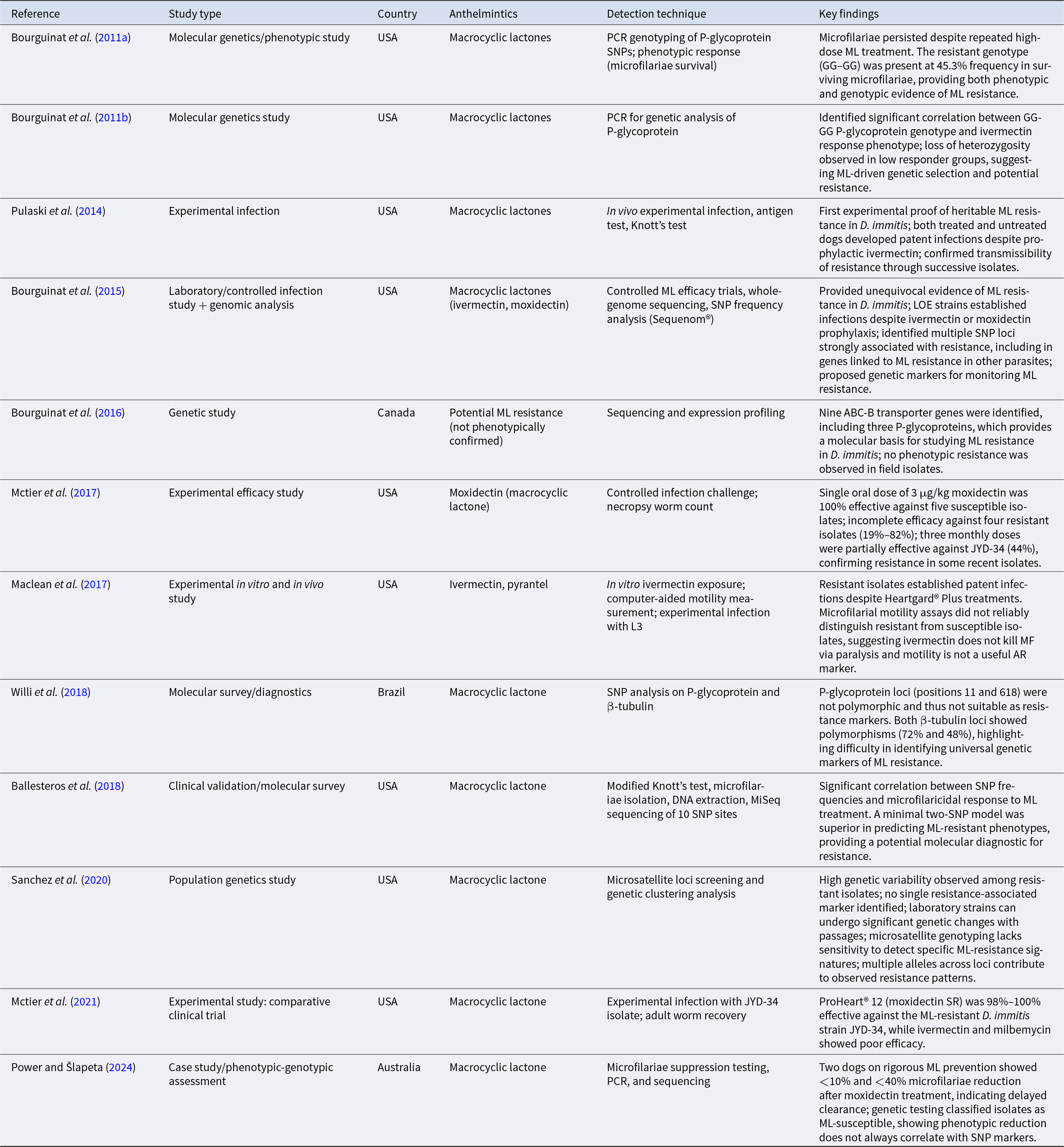
Resistance to MLs in D. immitis, the parasite responsible for canine heartworm disease, has emerged progressively (Table 2) and is now firmly established as a regionally significant challenge in parts of the United States. Early concerns were raised through post-marketing surveillance data submitted to the US Food and Drug Administration, which documented an increasing number of ‘loss of effectiveness’ (LOE) reports associated with ML heartworm preventives. These reports, which were uncommon before 2000, escalated sharply between 2000 and 2003, particularly in the southern United States (Hampshire, Reference Hampshire2005). While most early LOE cases were attributed to non-compliance or improper use, the geographic clustering and a high number of reports warranted further investigation. By 2011, clinical and experimental data had provided the first definitive evidence of ML resistance in D. immitis. Bourguinat et al. (Reference Bourguinat, Keller, Bhan, Peregrine, Geary and Prichard2011a) reported treatment failure in dogs administered high-dose ivermectin or moxidectin, characterized by persistent microfilaraemia, which suggested a loss of expected microfilaricidal efficacy. These observations were crucial in shifting the discussion from anecdotal failure to genuine resistance. Around the same time, experimental infections using the MP3 (Miss Piggy 3) isolate revealed LOE of several commercial ML preventives, with worm reduction rates ranging from 94.5% to 99.7% (Blagburn et al., Reference Blagburn, Dillon, Arther, Butler and Newton2011; Snyder et al., Reference Snyder, Wiseman, Cruthers and Slone2011). Although high, these efficacy rates were still below the expected threshold for products initially registered as providing complete protection, raising concerns about low-level resistance.
Epidemiological and molecular studies on macrocyclic lactone resistance in Dirofilaria immitis

Table 2 Long description
The table summarizes studies on macrocyclic lactone resistance in Dirofilaria immitis, highlighting research from the USA, Canada, Brazil, and Australia. Key findings include the persistence of microfilariae despite treatment, genetic markers associated with resistance, and the efficacy of different anthelmintics. Notable studies show a significant correlation between specific genotypes and resistance, while others identify genetic variability without a single resistance marker. Experimental infections confirm heritable resistance, and some treatments show reduced efficacy against resistant strains. The data suggest that while genetic markers can indicate resistance, phenotypic responses may vary, complicating the identification of universal resistance markers.
The ML resistance was confirmed through controlled efficacy trials involving two additional US isolates: Td2008-2 and Jd2009-2. In these studies, preventive efficacy was significantly reduced to 31% and 71.4% with ivermectin and as low as 6.5% with a sustained-release moxidectin formulation, administered 180 days before infection (Bourguinat et al., Reference Bourguinat, Lee, Lizundia, Blagburn, Liotta, Kraus, Keller, Epe, Letourneau, Kleinman, Paterson, Gomez, Montoya-Alonso, Smith, Bhan, Peregrine, Carmichael, Drake, Schenker, Kaminsky, Bowman, Geary and Prichard2015). Notably, these phenotypic findings were accompanied by genetic analyses that demonstrated distinct profiles compared to susceptible isolates and aligned with the genotypes observed in LOE samples. In 2018, Ballesteros et al. (Reference Ballesteros, Pulaski, Bourguinat, Keller, Prichard and Geary2018) validated a strong correlation between specific SNPs and the phenotypic failure of MLs to reduce microfilaraemia in infected dogs, supporting the use of these markers, particularly a refined 2-SNP model, as a promising tool for the clinical identification of ML-resistant D. immitis strains. A recent epidemiological study in Southeast Missouri, an area previously underrepresented in resistance surveys, found that over 94% of D. immitis isolates from infected dogs carried genotypes associated with ML resistance, highlighting a potential northern expansion of resistant populations beyond the traditionally affected Mississippi Delta region (Fisher et al., Reference Fisher, Keller and Prichard2024). While most cases lacked full treatment histories, genotype-phenotype correlation in two dogs supported the presence of true resistance, emphasizing the need for revised control strategies in emerging hotspots.
Beyond North America, emerging reports suggest global spread, likely associated with dog importation and international movement. In Brazil, Willi et al. (Reference Willi, Labarthe, D’escoffier, Paiva, De Miranda, Mendes-De-Almeida and Zaverucha Do Valle2018) identified cases of persistent microfilaraemia despite ML treatment, with genetic screening revealing high-frequency β-tubulin SNPs, though not the P-glycoprotein mutations typically implicated in US cases. These findings imply that ML resistance may be evolving independently in different regions, driven by local selection pressures.
In 2024, the first confirmed European case of ML-resistant D. immitis was reported in a dog imported from the United States (Traversa et al., Reference Traversa, Diakou, Colombo, Kumar, Long, Chaintoutis, Venco, Betti Miller and Prichard2024). The isolate carried known resistance-associated genotypes, highlighting the risk of transboundary movement of resistant parasites. Around the same time, an Australian case was documented, showing delayed clearance of microfilariae following routine ML treatment, although no known resistance markers were detected (Power and Šlapeta, Reference Power and Šlapeta2024). Surprisingly, the two dogs demonstrated reductions of <10% and <40% in circulating microfilariae 7 days after moxidectin treatment. This raised concerns about the possibility of novel or region-specific resistance mechanisms that remain undetected by existing molecular tools.
The increasing evidence confirms that ML resistance in D. immitis has transitioned from an isolated phenomenon to a recognized clinical and epidemiological challenge. Although melarsomine dihydrochloride, the adulticidal drug used to treat heartworm disease, remains effective due to its distinct mechanism of action, the loss of preventive efficacy poses serious implications for disease control, especially in endemic areas. The presence of large refugia in unprotected domestic dogs and wild canids may currently mitigate the spread of resistance alleles (Wolstenholme et al., Reference Wolstenholme, Evans, Jimenez and Moorhead2015); however, increasing global movement and reliance on a narrow class of preventive drugs necessitate a more proactive, surveillance-driven response.
Resistance in cestodes: Dipylidium caninum and praziquantel failure
Although less commonly reported, emerging resistance to praziquantel in Dipylidium caninum, a cestode of zoonotic relevance, is increasingly recognized. A retrospective study conducted between 2016 and 2018 in the United States reported persistent infections despite repeated praziquantel and epsiprantel treatment, resolving only after treatment with nitroscanate or a combination (pyrantel/praziquantel/oxantel) product, thereby raising suspicions of resistance (Jesudoss Chelladurai et al., Reference Jesudoss Chelladurai, Kifleyohannes, Scott and Brewer2018). Similarly, a clinical case study reported that both praziquantel and epsiprantel failed to eliminate D. caninum in a dog with ongoing proglottid shedding, despite effective flea control. Definitive elimination was achieved after a single dose of nitroscanate, and capsule endoscopy provided visual confirmation of anthelmintic efficacy (Loftus et al., Reference Loftus, Acevedo, Bowman, Liotta, Wu and Zhu2022). Most recently, the first European case of apparent praziquantel and epsiprantel resistance was reported in a dog imported to Switzerland from Spain. The infection, confirmed via morphological and molecular identification, was persistent despite multiple treatment protocols and resolved only after a high-dose, 5-day course of oral mebendazole, with no recurrence over a 10-month follow-up (Oehm et al., Reference Oehm, Reiter, Binz and Schnyder2024). These cases, although limited in number, signal the emergence of AR in D. caninum and highlight the therapeutic challenges posed by limited treatment alternatives.
Drivers of AR in dogs
AR in dogs is primarily driven by frequent, often prophylactic, administration of antiparasitic drugs without prior parasitological confirmation of infection. Routine deworming protocols, often administered monthly or quarterly, are frequently guided by risk management strategies rather than by confirmed diagnostic evidence. This approach is especially common in high-income regions, where veterinary recommendations and client compliance intersect with commercial interests. This blanket approach to parasite control can exert substantial selection pressure on helminth populations, accelerating the emergence of resistant strains (Von Samson-Himmelstjerna et al., Reference Von Samson-Himmelstjerna, Thompson, Krücken, Grant, Bowman, Schnyder and Deplazes2021).
The use of fixed-dose combination products containing multiple anthelmintic classes further contributes to the selection of resistance when used indiscriminately. While rational combination therapy, where all drug components are necessary and effective, is often intended to broaden the spectrum and delay the development of resistance, the routine or prophylactic use of such products when only a single component is required poses a significant concern. In these situations, non-target parasites may be unnecessarily exposed to sub-lethal drug concentrations, potentially favouring the survival of partially resistant genotypes and contributing to the emergence of MDR (Bartram et al., Reference Bartram, Leathwick, Taylor, Geurden and Maeder2012).
Due to zoonotic concerns, dogs are treated regularly without testing for the presence of parasites. This contrasts with best-practice recommendations, which advocate for routine faecal egg count testing to guide targeted therapy. In Australia, intensive deworming regimens have contributed to a marked reduction in T. canis prevalence among urban dogs (Bugg et al., Reference Bugg, Robertson, Elliot and Thompson1999). However, these same practices may have unintentionally created strong selection pressure on resistant A. caninum strains, particularly in environments characterized by greyhound breeding and high-frequency anthelmintic use (Abdullah et al., Reference Abdullah, Stocker, Kang, Scott, Hayward, Jaensch, Ward, Jones, Kotze and Šlapeta2025).
Despite these concerns, the speed of AR development in dogs has been slower than in ruminants. This variation likely reflects fundamental epidemiological and biological differences between the systems. Compared to livestock, dogs are generally exposed to fewer treatments across their lifetimes, and are managed in more individualized husbandry settings, and harbour smaller parasite populations with lower genetic diversity (Von Samson-Himmelstjerna et al., Reference Von Samson-Himmelstjerna, Thompson, Krücken, Grant, Bowman, Schnyder and Deplazes2021). These factors reduce the probability that resistant alleles will emerge and spread rapidly. In contrast, the large population sizes, intensive grazing systems, and high treatment frequencies in ruminant industries create an ideal environment for the evolution and dissemination of resistance. However, increasing reports of multidrug-resistant canine hookworms and ML resistance in heartworm in the United States (Geary et al., Reference Geary, Drake, Gilleard, Chelladurai, Castro, Kaplan, Marsh, Reinemeyer and Verocai2025) highlight that companion animal parasitology is not exempt from this threat, emphasizing the urgent need for more systematic surveillance and research.
Mechanisms of AR
Generally, resistance mechanisms fall into three categories: (1) target site modifications, which alter drug-receptor binding affinity; (2) increased drug efflux through overexpression of transporter proteins, such as P-glycoproteins; and (3) enhanced metabolic detoxification. These mechanisms differ in prevalence and significance depending on the drug class and helminth species involved (James et al., Reference James, Hudson and Davey2009).
BZ resistance
BZs act by binding to β-tubulin, disrupting microtubule polymerization and impairing essential cellular processes. Resistance arises primarily from point mutations in the β-tubulin isotype-1 gene, especially at codons 167, 198, and 200. These mutations reduce drug-binding affinity and are well-established markers of BZ resistance in ruminants (Hodgkinson et al., Reference Hodgkinson, Clark, Kaplan, Lake and Matthews2008; Kwa et al., Reference Kwa, Veenstra and Roos1994). In A. caninum, widespread resistance to BZs has been documented in the United States, particularly in greyhounds. This resistance has been associated with a single nucleotide polymorphism at F167Y (TTC > TAC) in 14.4% and 99% of A. caninum-positive faecal samples (Jimenez Castro et al., Reference Jimenez Castro, Venkatesan, Redman, Chen, Malatesta, Huff, Zuluaga Salazar, Avramenko, Gilleard and Kaplan2021), while another study reported the F167Y and Q134H mutations in 49.7% and 31.1% of samples, respectively (Venkatesan et al., Reference Venkatesan, Jimenez Castro, Morosetti, Horvath, Chen, Redman, Dunn, Collins, Fraser, Andersen, Kaplan and Gilleard2023). Additionally, both isotype-1 β-tubulin mutations, Q134H and F167Y, were observed in the Australian A. caninum population at frequencies of 49% and 67%, respectively (Abdullah et al., Reference Abdullah, Stocker, Kang, Scott, Hayward, Jaensch, Ward, Jones, Kotze and Šlapeta2025). Importantly, in contrast to ruminant nematodes, where BZs resistance is commonly associated with mutations at codons 198 and 200 of the β-tubulin gene, these canonical substitutions were notably absent in A. caninum populations across both continents. Instead, resistance in this species is predominantly associated with the F167Y mutation, highlighting a distinct, species-specific resistance pathway with important implications for molecular diagnostics and resistance surveillance in canine hookworms.
Imidazothiazole and tetrahydropyrimidine resistance
Drugs such as pyrantel and levamisole, which act as nicotinic acetylcholine receptor (nAChR) agonists, activate nAChRs on the muscle cells of parasites, causing spastic paralysis. A central mechanism underpinning resistance involves altered expression or composition of nAChR subunits, which modifies drug binding or receptor sensitivity (Evans and Martin, Reference Evans and Martin1996). Molecular studies on pyrantel-resistant A. caninum isolates have demonstrated a significant reduction in the expression of key nAChR subunit genes (Kopp et al., Reference Kopp, Coleman, Traub, Mccarthy and Kotze2009), particularly UNC-29, UNC-38, and UNC-63, which are strongly implicated in pyrantel resistance in nematodes. Experimental investigations comparing isolates with low-level (NT) and high-level (PR) pyrantel resistance revealed up to an 18-fold decrease in pyrantel potency in PR larvae, alongside reduced responsiveness to levamisole and nicotine (Kopp et al., Reference Kopp, Coleman, Mccarthy and Kotze2008b). Interestingly, the PR isolate displayed increased sensitivity to bephenium, a selective agonist for a distinct nAChR subtype, suggesting that resistance may arise from a shift in the relative abundance or functionality of different nAChR subpopulations rather than a uniform reduction in receptor expression. Functional assays in adult worms supported these findings, showing reduced potency of pyrantel, levamisole, and nicotine in the PR isolate, while the response to bephenium remained unchanged (Kopp et al., Reference Kopp, Coleman, Mccarthy and Kotze2008b). These results suggest a complex pharmacological landscape of nAChRs in A. caninum, with resistance potentially mediated by both quantitative and qualitative alterations in receptor subtype expression. Such mechanistic complexity highlights the limitations of relying solely on standard pyrantel-based deworming protocols and highlights the need for molecular diagnostics to detect resistant populations before clinical failure occurs.
Macrocyclic lactone resistance
MLs including ivermectin and moxidectin, function by activating glutamate-gated chloride channels (GluCls), leading to neuronal hyperpolarization and paralysis. Mutations in GluCl subunits reduce ML binding and are implicated in resistance in several nematode species (Kotze et al., Reference Kotze, Ruffell, Knox and Kelly2014; Martin, Reference Martin1996). Resistance to MLs has been reported in D. immitis and is increasingly recognized as a clinical challenge in veterinary medicine. The genetic basis of ML resistance is multifactorial but is frequently associated with SNPs in genes encoding the GluCl receptor subunits and other transport-related proteins. In D. immitis, multiple studies have confirmed the presence of SNPs strongly correlated with phenotypic resistance. Bourguinat et al. (Reference Bourguinat, Lee, Lizundia, Blagburn, Liotta, Kraus, Keller, Epe, Letourneau, Kleinman, Paterson, Gomez, Montoya-Alonso, Smith, Bhan, Peregrine, Carmichael, Drake, Schenker, Kaminsky, Bowman, Geary and Prichard2015) identified a subset of SNP loci that appear to be promising markers for predicting ML resistance, including SNPs in genes associated with ML resistance in other parasites. Later research clinically validated a panel of 10 SNPs capable of distinguishing resistant from susceptible genotypes in field samples from the southern United States (Ballesteros et al., Reference Ballesteros, Pulaski, Bourguinat, Keller, Prichard and Geary2018).
Importantly, ML formulations differ in their efficacy against resistant D. immitis isolates. While reduced effectiveness has been reported for several oral and topical preventatives, the long-acting injectable moxidectin formulation (ProHeart® 12) has demonstrated relatively high efficacy against certain ML-resistant strains, including JYD-34 (Mctier et al., Reference Mctier, Holzmer, Kryda, Mahabir, Mccall, Trombley and Maeder2021). This observation highlights the critical role of formulation-specific pharmacokinetics and exposure profiles when managing heartworm infections in regions where resistance is suspected or confirmed.
Efflux mechanisms involving P-glycoproteins (P-gps) have also been associated with ML resistance. Overexpression of P-gps enhances drug elimination and decreases intracellular drug concentrations (Bygarski et al., Reference Bygarski, Prichard and Ardelli2014; Raza et al., Reference Raza, Williams and Abeer2023). Overexpression of P-gps has been shown to contribute to AR across multiple helminth species. In D. immitis, Mani et al. (Reference Mani, Bourguinat and Prichard2017) demonstrated upregulation of specific P-gp genes in ivermectin-resistant isolates compared to susceptible controls. Additionally, SNPs in the P-gp gene Dim-pgp-11 were identified and proposed as potential markers of resistance (Mani et al., Reference Mani, Bourguinat, Keller, Ashraf, Blagburn and Prichard2016). Similarly, T. canis larvae exhibit tolerance to MLs at least partially mediated by functional P-gps. The authors reported that ivermectin alone was insufficient to induce larval paralysis; however, co-treatment with verapamil, a known P-gp inhibitor, restored drug efficacy by inducing paralysis, thereby highlighting the protective role of P-gps in drug efflux (Jesudoss Chelladurai et al., Reference Jesudoss Chelladurai, Martin, Vardaxis, Reinemeyer, Vijayapalani, Robertson and Brewer2023). The study also identified 13 distinct P-gp genes in T. canis, with at least eight expressed in the somatic larvae, suggesting a nematode-specific pharmacological adaptation. Interestingly, ML treatment did not significantly upregulate P-gp gene expression, indicating that constitutive expression, rather than inducible overexpression, may underpin ML tolerance in this species.
Altogether, the evolution of AR in dogs reflects the complex interplay of genetic adaptations and pharmacological stressors. Continued surveillance and molecular characterization are essential to inform resistance management strategies and preserve therapeutic efficacy.
Detection of AR
Different in vivo and in vitro assays have been developed to identify AR in various nematodes, but each has limitations in terms of reproducibility, sensitivity, and their usefulness in field conditions (Coles et al., Reference Coles, Jackson, Pomroy, Prichard, Von Samson-Himmelstjerna, Silvestre, Taylor and Vercruysse2006). Furthermore, few in vitro tests have been used in dog and human hookworms (Kopp et al., Reference Kopp, Coleman, Mccarthy and Kotze2008a; Kotze et al., Reference Kotze, Clifford, O’grady, Behnke and Mccarthy2004, Reference Kotze, Coleman, Mai and Mccarthy2005), while the majority of studies used these assays to identify AR were conducted on horses and livestock (Coles et al., Reference Coles, Jackson, Pomroy, Prichard, Von Samson-Himmelstjerna, Silvestre, Taylor and Vercruysse2006).
In vivo tests for the detection of AR
Faecal egg count reduction test
The FECRT remains the most widely used field-based method for detecting AR, particularly in livestock. It assesses the efficacy of an anthelmintic by measuring the percentage reduction in faecal egg output following treatment (Coles et al., Reference Coles, Bauer, Borgsteede, Geerts, Klei, Taylor and Waller1992, Reference Coles, Jackson, Pomroy, Prichard, Von Samson-Himmelstjerna, Silvestre, Taylor and Vercruysse2006; Taylor et al., Reference Taylor, Hunt and Goodyear2002). Resistance is generally suspected when the reduction in egg counts falls below 95%, and confirmed when resistant genotypes comprise more than 25% of the parasite population (Martin et al., Reference Martin, Anderson and Jarrett1989). Although originally standardized for ruminants, FECRT has been adapted for use in dogs to monitor resistance in GINs such as A. caninum (Jimenez Castro et al., Reference Jimenez Castro, Howell, Schaefer, Avramenko, Gilleard and Kaplan2019, Reference Jimenez Castro, Mansour, Charles, Hostetler, Settje, Kulke and Kaplan2020, Reference Jimenez Castro, Willcox, Rochani, Richmond, Martinez, Lozoya, Savard and Leutenegger2025). More recently, FECRT showed no reduction in FEC in any of the 10 dogs following pyrantel treatment, with drug efficacies ranging from −0.9% to −283.3% in Southeast Queensland, Australia (Dale et al., Reference Dale, Xu, Kopp, Jones, Kotze and Abdullah2024).
However, the interpretation of FECRT results in canine hookworm infections requires caution. A. caninum females may alter egg production in response to changes in intestinal worm burden, meaning that post-treatment faecal egg counts may not always reflect proportional reductions in adult worm numbers (Kopp et al., Reference Kopp, Kotze, Mccarthy and Coleman2007; Krupp, Reference Krupp1961). As a result, FECRT can sometimes underestimate or biologically complicate the assessment of treatment efficacy, even though it remains a valuable tool for resistance surveillance. Additional variables, such as sample quality, parasite species, and host immune status, can also affect test outcomes (reviewed by Morgan et al., Reference Morgan, Lanusse, Rinaldi, Charlier and Vercruysse2022). In addition, variation in faecal egg count methodologies, including differences in analytical sensitivity and quantification limits between techniques, can further influence FECRT outcomes and complicate comparisons across studies. Logistical challenges, such as difficulties in administering treatment and collecting post-treatment faecal samples in pet dogs, further constrain its use in companion animal settings compared with production animals.
Critical and controlled anthelmintic efficacy tests
The principle of these tests is to evaluate parasite burden before and after treatment to determine drug efficacy. In critical efficacy testing, parasites expelled in faeces are collected within 4 days after anthelmintic administration, followed by the euthanasia of animals and the manual recovery of worms from the gastrointestinal tract. The advantage of critical efficacy testing is that it requires fewer animals, as each animal serves as its own control. In controlled efficacy testing, animals are divided into treated and untreated control groups, allowing for a comparative analysis of worm burdens and faecal egg count reduction. Due to the requirement to euthanize the recruited animals at the endpoint, critical efficacy tests raise ethical and welfare concerns, rendering them unsuitable for routine use in dogs. Additionally, these trials are labour-intensive, time-consuming, and expensive (Johansen, Reference Johansen1989; Kopp et al., Reference Kopp, Kotze, Mccarthy, Traub and Coleman2008c). Given these limitations, such methods are not considered practical or ethically acceptable for detecting AR in dogs and cats under clinical or field conditions. Emerging approaches, such as capsule endoscopy, have been explored for the direct visualization of intestinal parasites; however, their application remains limited to individual cases and is not yet practical for routine resistance detection or large-scale studies (Loftus et al., Reference Loftus, Acevedo, Bowman, Liotta, Wu and Zhu2022).
In vitro tests for the detection of AR
Egg hatch assay
The EHA remains a reliable and affordable tool for detecting BZ resistance in canine hookworms and other nematodes. Le Jambre (Reference Le Jambre1976) first described the EHA for identifying BZ resistance in ruminant nematodes, which was later modified by Coles et al. (Reference Coles, Bauer, Borgsteede, Geerts, Klei, Taylor and Waller1992). The EHA was adapted and refined to exhibit a dose-dependent relationship for human hookworms (Kotze et al., Reference Kotze, Coleman, Mai and Mccarthy2005). The EHA was standardized to evaluate the efficacy of levamisole and albendazole, as well as extracts of several natural ingredients, against Uncinaria stenocephala (canine hookworm) in dogs in northern Europe (Geisshirt et al., Reference Geisshirt, Bonde, Marcussen, Mejer and Williams2023). In addition, Jimenez Castro etet al. (2019) demonstrated that EHA was capable of identifying BZ resistance, with resistance ratios ranging from 6.0 to>100 across various isolates of A. caninum. Similarly, EHA conducted on a subset of A. caninum samples demonstrated a significant association between increased IC₅₀ for thiabendazole and the presence of the F167Y β-tubulin mutation, with markedly higher IC₅₀ values observed in samples with mutation frequencies exceeding 75% (Abdullah et al., Reference Abdullah, Stocker, Kang, Scott, Hayward, Jaensch, Ward, Jones, Kotze and Šlapeta2025). Moreover, EHA demonstrated distinct IC50 values for albendazole, pyrantel, and niclosamide, with the lowest IC50 value of 29.19 μg/mL for niclosamide (Ofori et al., Reference Ofori, Amissah-Reynolds, Gyamfi, Addo, Nyarko, Agyei, Dwomoh and Ayemugah2025). These findings confirm the utility of EHA as a sensitive in vitro tool for early detection of BZ resistance in canine hookworms, particularly when in vivo efficacy testing is impractical.
Larval development assay
The LDA is a valuable in vitro method for detecting AR by assessing the ability of nematode eggs to develop into infective third-stage larvae (L3) in the presence of varying concentrations of anthelmintics. Although more labour-intensive and time-consuming than the EHA, the LDA enables simultaneous evaluation of resistance across multiple drug classes, including BZs, tetrahydropyrimidines (e.g., pyrantel), and MLs (Kotze et al., Reference Kotze, Stein and Dobson1999; Taylor et al., Reference Taylor, Hunt and Goodyear2002), and detection of high and low levels of resistance to an anthelmintic within the same nematode strain (Raza et al., Reference Raza, Lamb, Chambers, Hunt and Kotze2016). Although originally developed for livestock parasites, the LDA has been successfully adapted for use against canine hookworms. Kopp et al. (Reference Kopp, Coleman, Mccarthy and Kotze2008a) demonstrated its utility in detecting pyrantel resistance in A. caninum, confirming reduced drug sensitivity under controlled laboratory conditions. More recently, Jimenez Castro et al. (Reference Jimenez Castro, Howell, Schaefer, Avramenko, Gilleard and Kaplan2019) utilized the LDA to phenotypically assess BZ and ML resistance in A. caninum isolates from greyhound dogs with persistent infections. Their study showed significantly higher IC₅₀ values in resistant isolates compared to susceptible strains, confirming the LDA’s role in characterizing MDR patterns in canine nematodes. Given its capacity to detect resistance at early stages (even when 10% of parasites are resistant), often before clinical failure becomes evident, the LDA is a promising diagnostic tool for companion animal parasites. In contrast, the LDA proved unsuitable for U. stenocephala (Geisshirt et al., Reference Geisshirt, Bonde, Marcussen, Mejer and Williams2023), as only a minimal proportion of larvae in the negative control wells progressed to the L3 stage, despite multiple optimization attempts. Therefore, parasite-specific assay standardization and broader clinical validation are required before routine implementation in veterinary practice.
Larval motility assay
The larval motility assay (LMA) serves as a practical in vitro tool for assessing resistance to several classes of anthelmintics, including MLs, levamisole, and morantel (Conder and Campbell, Reference Conder and Campbell1995). However, its effectiveness can be constrained by challenges in reliably distinguishing between resistant and susceptible isolates. Experimental studies involving A. caninum, A. ceylanicum, Necator americanus, and Strongyloides spp. have shown that different helminths exhibit distinct, dose-dependent motility responses when exposed to anthelmintics (Kotze et al., Reference Kotze, Clifford, O’grady, Behnke and Mccarthy2004). The assay has proven particularly useful in identifying pyrantel resistance in canine hookworms (Kopp et al., Reference Kopp, Coleman, Mccarthy and Kotze2008a; Kotze et al., Reference Kotze, Clifford, O’grady, Behnke and Mccarthy2004), highlighting its relevance in veterinary diagnostics. However, inconsistencies in motility patterns and the difficulty in translating in vitro results to clinical efficacy remain key limitations. Continued efforts to refine assay protocols and integrate molecular techniques could enhance its diagnostic value in monitoring AR in dog parasites.
Larval arrested morphology assay
The larval arrested morphology assay evaluates the effects of anthelmintic drugs on the morphology and posture of parasitic larvae. This assay was validated for dog hookworms by utilizing isolates that are both susceptible and resistant to pyrantel (Kopp et al., Reference Kopp, Coleman, Mccarthy and Kotze2008a). In control (drug-free) wells, the conformation of larvae is straight; they do not deviate or twist. As pyrantel concentrations increase, the severity of kinking (deviations) rises, and at very high levels, some larvae are coiled. The ability to detect average resistance to susceptible worms ratio was significantly higher than the LMA and the larval migration assay, which makes larval arrested morphology assay more sensitive in detecting pyrantel-resistant hookworms (Kopp et al., Reference Kopp, Coleman, Mccarthy and Kotze2008a).
Larval migration assay
A larval migration assay was developed by modifying the worm motility assay to detect sheep nematodes resistant to ivermectin (Kotze et al., Reference Kotze, Le Jambre and O’grady2006). Infective stage larvae (L3) are exposed to various dilutions of ivermectin for 24 hours and then allowed to migrate through agar and a filter mesh system for 48 hours. The assay was able to detect 10% resistant worms for Haemonchus contortus, but it proved ineffective for the other two nematodes (Trichostrongylus colubriformis and Ostertagia circumcincta). Although effective for detecting resistance in some species such as H. contortus, LMA was previously found unreliable for A. caninum due to the larvae’s low migratory activity, potentially linked to their quiescent behaviour (Kopp et al., Reference Kopp, Coleman, Mccarthy and Kotze2008a). A modified larval migration assay using 1.6% agar as a medium for larval movement was recently standardized to evaluate the antiparasitic activity of natural plant products (Geisshirt et al., Reference Geisshirt, Bonde, Marcussen, Mejer and Williams2023). The agar-based system may circumvent issues such as larval quiescence and provide a reliable platform for AR screening in canine hookworms. Importantly, this modification achieved >90% larval migration in untreated controls, validating its robustness for canine hookworm, U. stenocephala. Although this agar-based larval migration inhibition assay has been validated for U. stenocephala, it has not yet been formally adapted or evaluated using A. caninum field or resistant isolates. Nevertheless, its successful application in U. stenocephala suggests potential for future adaptation as a screening tool for AR in other canine hookworm species. The assay’s ability to detect dose-dependent responses to both synthetic anthelmintics (e.g., levamisole) and natural compounds (e.g., seaweed extracts) highlights its dual utility for resistance surveillance and the discovery of novel anthelmintics.
Molecular approaches for detecting AR
Molecular diagnostics have transformed the detection of AR by enabling the precise identification of genetic mutations associated with reduced drug susceptibility. PCR-based techniques remain among the most widely used tools, particularly for detecting BZ resistance. These assays typically target point mutations in the β-tubulin isotype-1 gene at codons 167, 198, and 200, which are associated with resistance in various nematodes. In A. caninum, real-time and conventional PCR methods have confirmed widespread presence of the F167Y mutation, a hallmark of BZ resistance, across numerous US states (Jimenez Castro et al., Reference Jimenez Castro, Mansour, Charles, Hostetler, Settje, Kulke and Kaplan2020, Reference Jimenez Castro, Venkatesan, Redman, Chen, Malatesta, Huff, Zuluaga Salazar, Avramenko, Gilleard and Kaplan2021, Reference Jimenez Castro, Willcox, Rochani, Richmond, Martinez, Lozoya, Savard and Leutenegger2025; Venkatesan et al., Reference Venkatesan, Jimenez Castro, Morosetti, Horvath, Chen, Redman, Dunn, Collins, Fraser, Andersen, Kaplan and Gilleard2023), Brazil (Furtado et al., Reference Furtado, Bello, Dos Santos, Carvalho and Rabelo2014) and Australia (Abdullah et al., Reference Abdullah, Stocker, Kang, Scott, Hayward, Jaensch, Ward, Jones, Kotze and Šlapeta2025). Similar molecular tools have been used to screen for resistance in D. immitis, with a particular focus on SNPs in P-glycoprotein (P-gp) genes, which play a role in ML resistance (Bourguinat et al., Reference Bourguinat, Lee, Lizundia, Blagburn, Liotta, Kraus, Keller, Epe, Letourneau, Kleinman, Paterson, Gomez, Montoya-Alonso, Smith, Bhan, Peregrine, Carmichael, Drake, Schenker, Kaminsky, Bowman, Geary and Prichard2015; Pulaski et al., Reference Pulaski, Malone, Bourguinat, Prichard, Geary, Ward, Klei, Guidry, Smith, Delcambre, Bova, Pepping, Carmichael, Schenker and Pariaut2014).
The application of next-generation sequencing has further enhanced resolution in resistance detection, offering detailed insights into the allele frequencies of resistance-conferring mutations within parasite populations (Avramenko et al., Reference Avramenko, Redman, Melville, Bartley, Wit, Queiroz, Bartley and Gilleard2019a). Amplicon sequencing of β-tubulin genes has been effectively applied to track BZ resistance in A. caninum, while whole-genome sequencing has identified candidate mutations in D. immitis associated with ML resistance, particularly in genes encoding P-gps and ligand-gated ion channels (Ballesteros et al., Reference Ballesteros, Pulaski, Bourguinat, Keller, Prichard and Geary2018; Jimenez Castro et al., Reference Jimenez Castro, Howell, Schaefer, Avramenko, Gilleard and Kaplan2019; Lau et al., Reference Lau, Mcleod, Collaery, Peou, Tran, Liang and Šlapeta2021). These approaches enable the early detection of emerging resistance, while also supporting epidemiological surveillance and the development of more targeted treatment strategies. As sequencing technologies become increasingly accessible, their integration into routine diagnostics holds promise for improving the monitoring and management of drug-resistant helminths in companion animal medicine.
Conclusions
This review highlights the growing challenge of AR in canine parasites, with implications for both animal and human health, particularly given the close human–animal bond and the potential for zoonotic transmission. Despite growing evidence of AR in dogs, the global prevalence is likely underestimated. A recent position paper and a comprehensive review have highlighted the urgency of this issue (Geary et al., Reference Geary, Drake, Gilleard, Chelladurai, Castro, Kaplan, Marsh, Reinemeyer and Verocai2025; Krämer et al., Reference Krämer, Baneth, Dantas-Torres, Hamer, Lappin, Otranto, Roura, Sager, Schunack, Scorza, Traub, Geary and Cantacessi2025); however, continued integration of diagnostic, mechanistic, and epidemiological evidence remains essential to guide effective parasite control in dogs. Unlike in livestock, standardized diagnostic protocols such as FECRT and molecular surveillance are rarely applied in routine small animal practice. The absence of evidence is not evidence of absence; a lack of routine testing may mask widespread resistance.
The widespread, often indiscriminate, prophylactic use of broad-spectrum anthelmintics, without prior parasitological diagnosis, will contribute to escalating drug pressure and the selection of resistant helminth populations. As the discovery of novel anthelmintic classes remains limited, sustainable parasite control in the future will require integrated strategies that emphasize evidence-based treatment, regular diagnostic surveillance, and reduced reliance on routine prophylaxis. Post-treatment faecal monitoring, including faecal egg count or molecular assays, should follow standardized protocols such as those recommended by the World Association for the Advancement of Veterinary Parasitology, with sampling conducted at appropriate post-treatment intervals (typically 14 days for hookworms) and using sensitive flotation techniques to ensure reliable assessment of drug efficacy and resistance.
In addition to pharmacological interventions, non-chemical strategies should be prioritized as part of sustainable, long-term control programs for canine parasites. Vaccines against canine hookworms have shown protective effects in animal models, reducing worm burdens, egg shedding, and, especially, blood loss, and are viewed as a promising complement, not a replacement for anthelmintic drugs (Fujiwara et al., Reference Fujiwara, Zhan, Mendez, Loukas, Bueno, Wang, Plieskatt, Oksov, Lustigman, Bottazzi, Hotez and Bethony2007; Loukas et al., Reference Loukas, Bethony, Mendez, Fujiwara, Goud, Ranjit, Zhan, Jones, Bottazzi and Hotez2005). These experimental vaccines are still in early-stage of development and are not yet available for routine veterinary use. Other important measures include improved hygiene and sanitation in high-risk environments such as kennels and shelters, as well as enhanced public education to reduce environmental contamination and the risk of reinfection. Finally, targeted research is urgently needed to better understand the prevalence, mechanisms, and transmission dynamics of AR in dogs and to inform the development of rational, species-specific control programs.
Author contributions
A.R. conceived the main idea. A.A.S., A.R., and M.Y.Z. conducted the comprehensive literature review and summarized scientific findings. A.A.S. and A.R. wrote the initial draft. A.R., A.A.S., and M.Y.Z. prepared the illustrations and tables. A.A.S., G.F., S.A., and A.R. edited the final manuscript.
Funding statement
A.A.S. received the Witter Research Fellowship from the College of Veterinary Medicine at Michigan State University. Ghayoor Fatima is a recipient of the Research Training Program Domestic Scholarship at the University of New England. The Fulbright Program provided financial support to M.Y.Z., and the College of Veterinary Medicine at Michigan State University also offered financial assistance to M.Y.Z.
Competing interest
The authors declare that they have no competing interests.
Declaration of Generative AI technologies in the writing process
During the preparation of this manuscript, the authors used ChatGPT (OpenAI) to improve the clarity and readability of the text. All scientific content, including the conceptualization, interpretation of the literature, and conclusions, was developed independently by the authors. The authors have critically reviewed and edited all sections of the manuscript and accept full responsibility for the accuracy, integrity, and originality of the work.

 Open access

