Introduction
The degradation of coastal ecosystem functioning and the loss of important habitats, as a result of human activities and climate change, are widely recognized (e.g. Bianchi & Morri, Reference Bianchi and Morri2000; Lotze et al., Reference Lotze, Lenihan, Bourque, Bradbury, Cooke, Kay, Kidwell, Kirby, Peterson and Jackson2006). Coastal rocky habitats are among the most productive systems, characterized by a high biodiversity, primarily due to their structural heterogeneity (Bianchi et al., Reference Bianchi, Pronzato, Cattaneo-Vietti, Benedetti-Cecchi, Morri, Pansini, Chemello, Milazzo, Fraschetti, Terlizzi, Peirano, Salvati, Benzoni, Calcinai, Cerrano, Bavestrello, Gambi and Dappiano2004; Guidetti et al., Reference Guidetti, Bianchi, Chiantore, Schiaparelli, Morri and Cattaneo-Vietti2004). They are important fishing grounds, as they host species of great commercial value, and they are highly valued for recreational diving (Bianchi et al., Reference Bianchi, Pronzato, Cattaneo-Vietti, Benedetti-Cecchi, Morri, Pansini, Chemello, Milazzo, Fraschetti, Terlizzi, Peirano, Salvati, Benzoni, Calcinai, Cerrano, Bavestrello, Gambi and Dappiano2004). They are, however, also rapidly degrading as a consequence of human activities (Airoldi et al., Reference Airoldi, Connell, Beck and Wahl2009), and despite their importance they are much less studied than soft substrates, as the complexity of this environment often requires scuba diving for a manual collection of samples (Hiscock, Reference Hiscock, Baker and Wolff1987; Karalis et al., Reference Karalis, Antoniadou and Chintiroglou2003; Bianchi et al., Reference Bianchi, Pronzato, Cattaneo-Vietti, Benedetti-Cecchi, Morri, Pansini, Chemello, Milazzo, Fraschetti, Terlizzi, Peirano, Salvati, Benzoni, Calcinai, Cerrano, Bavestrello, Gambi and Dappiano2004; Antoniadou & Chintiroglou, Reference Antoniadou and Chintiroglou2005; Chintiroglou et al., Reference Chintiroglou, Antoniadou, Vafidis and Koutsoubas2005). This is also reflected by the existence of a wide variety of samplers for the study of soft substrates, such as box samplers and corers, grabs, dredges and trawls (Eleftheriou & McIntyre, Reference Eleftheriou and McIntyre2005), while, in contrast, methods for sampling hard substrates are limited and their efficiency is much less known (Gibbons & Griffiths, Reference Gibbons and Griffiths1988; Bianchi et al., Reference Bianchi, Pronzato, Cattaneo-Vietti, Benedetti-Cecchi, Morri, Pansini, Chemello, Milazzo, Fraschetti, Terlizzi, Peirano, Salvati, Benzoni, Calcinai, Cerrano, Bavestrello, Gambi and Dappiano2004).
The choice of the sampling method is a challenge as it should be as effective as possible in terms of qualitative and quantitative collection of samples (Kikuchi et al., Reference Kikuchi, Fonseca-Gessner and Shimizu2006). Hard bottom sampling methods can be either non-destructive (e.g. visual census) or destructive. The destructive methods are carried out in three successive steps: (a) blocking a surface, usually by means of a rectangle frame with soft material on the side which is attached on the surface and a net on its back, (b) surface scraping with a spatula or a similar tool and (c) collection of the scraped sample, either manually or with a suction device. Surface scraping is a widely known sampling method for collecting benthic organisms but there is evidence of escape ability of the mobile organisms (Abbiati, Reference Abbiati1991). The first use of a suction device for the collection of benthic organisms was by Brett (Reference Brett1964). Subsequently, several variations of suction devices have been developed (e.g. Hiscock & Hoare, Reference Hiscock and Hoare1973; Elliott & Tullett, Reference Elliott and Tullett1983; Rostron, Reference Rostron, Davies, Baxter, Bradley, Connor, Khan, Murray, Sanderson, Turnbull and Vincent2001) which included modifications related to the convenience of handling, the targeted organisms and the habitat type. Finally, two types of suction devices have prevailed, differing in how the suction effect is created: through a water pump or through compressed air (Drake and Elliott, Reference Drake and Elliott1982; Hiscock, Reference Hiscock, Baker and Wolff1987).
Despite the development of various sampling methods, few studies have been carried out to compare their efficiency. These studies focus on the collection ability and not on the damage caused to the organisms by each of these methods (e.g. Emery, Reference Emery1968; Gale & Thompson, Reference Gale and Thompson1975; Tanner et al., Reference Tanner, Hawkes and Lebednic1977; Brooks, Reference Brooks1994; Metaxas & Scheibling, Reference Metaxas and Scheibling1994). Most studies on the damaging effect of sampling devices investigate fishing gears and their effects on benthic organisms (e.g. Hall-Spencer et al., Reference Hall-Spencer, Froglia, Atkinson and Moore1999; Bergmann et al., Reference Bergmann, Beare and Moore2001; Jennings et al., Reference Jennings, Pinnegar, Polunin and Warr2001; Pranovi et al., Reference Pranovi, Raicevich, Franceschini, Torricelli and Giovanardi2001).
The present study attempts to fill the aforementioned gap by testing three different sampling methods for hard substrates. Two of these are commonly used for the sampling of benthic organisms in hard substrates: simple surface scraping and manual sample collection, and surface scraping and the use of a suction device connected to a compressed air tank. The third method is a manually operated suction device developed recently by the Hellenic Center for Marine Research (HCMR) (Chatzigeorgiou et al., Reference Chatzigeorgiou, Dailianis, Faulwetter and Pettas2012).
We quantify the effectiveness of the three different sampling methods for macrofaunal and meiofaunal assemblages and assess the severity of organismal damage caused by each method, thus contributing to the effectiveness of hard substrate studies. Our null hypothesis, therefore, is that there are no differences in the capacity of the three sampling methods, concerning (a) the collection of macrofaunal and meiofaunal assemblages and (b) the organismal damage caused by each sampling method.
Materials and methods
Collection of samples
Samples were taken in December 2012, on a single sampling site located at the North coast of Crete (Alykes, Eastern Mediterranean, 35°24′52″N 24°59′18″E). The sampling area is characterized by a continuous hard bottom substrate with dense algal coverage (Cystoseira spp., Sargassum sp., Jania rubens), moderate wave exposure and no records of significant anthropogenic impact.
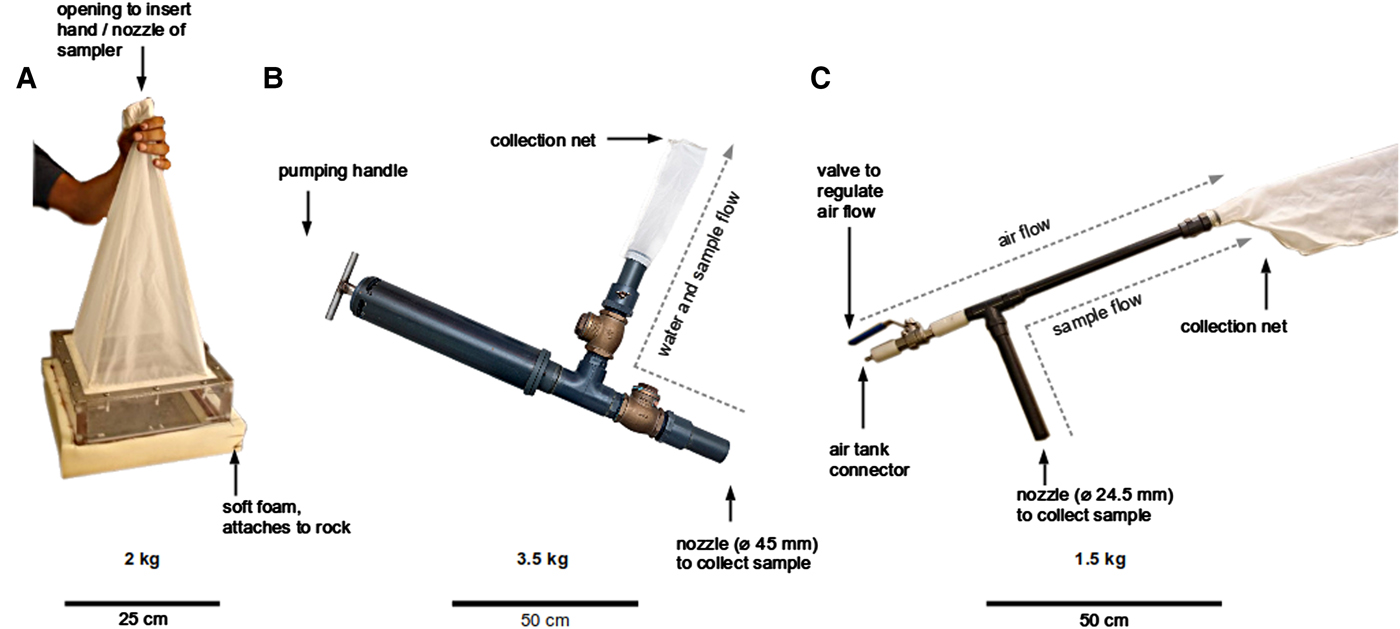
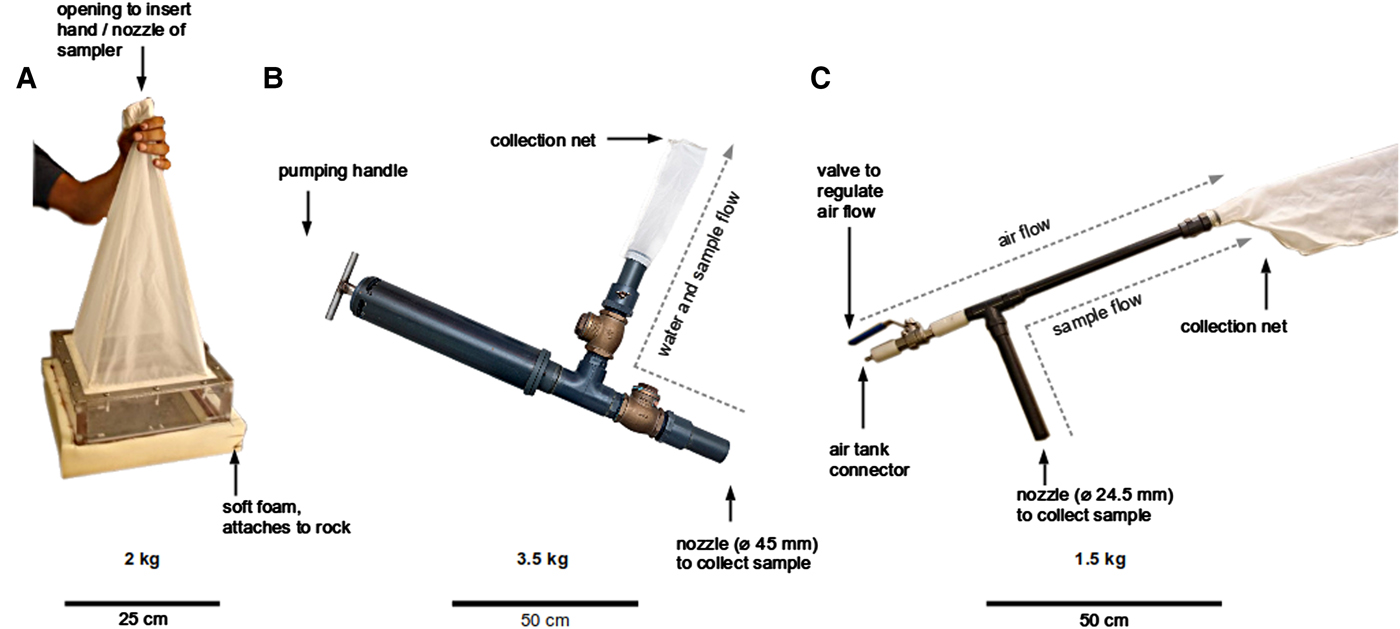
In total, eight replicate units per method were collected, randomly, by scuba divers going in a random direction and for a random distance at 12 m depth and sampled using each of the following sampling methods (Figure 1): (a) scraping and manual collection of the sample (hereafter referred to as ‘FRAME’), (b) scraping and use of a Manually Operated Suction Sampler (hereafter referred to as ‘MANOSS’, described in detail in Chatzigeorgiou et al., Reference Chatzigeorgiou, Dailianis, Faulwetter and Pettas2012) and (c) scraping and use of an airlift sampler (hereafter referred to as ‘SUCTION’). For all methods, a plexiglass frame (25 × 25 cm) with a 63 µm mesh size net was attached to the rock and the framed surface was scraped. With the FRAME method, the scraped material was collected into the attached net by the diver by hand and subsequently the net was removed and placed into a plastic bag. The scraped material of the MANOSS and SUCTION methods were collected by placing the nozzle of the respective collecting device into the opening of the net attached to the frame and sucking the sample into a collecting bag (63 µm mesh size). The suction was achieved by means of a manually operated suction sampler with a hand operated plunger (MANOSS) and an airlift sampler connected with an air tank (SUCTION). Samples were subsequently washed through two sieves with mesh sizes of 500 and 63 µm to separate macro- and meiobenthic organisms and fixed in 4% formalin buffered in filtered (63 µm) seawater. More details about the sampling methods can be found in Chatzigeorgiou et al. (Reference Chatzigeorgiou, Dailianis, Faulwetter and Pettas2012).
Illustration of the three different sampling methods: (A) FRAME, (B) MANOSS and (C) SUCTION.
Laboratory procedures
The eight replicate units collected for each sampling method were analysed for both meio- and macrofauna. Macrofauna samples were washed to remove the remaining formalin and were stored in 70% ethanol. All specimens were identified to the lowest possible taxonomic level.
Meiofaunal samples were washed through a 63 µm mesh to remove any material with a size below 63 µm and meiofaunal organisms were extracted through centrifugation with Ludox (1.15 specific gravity) as a flotation medium (de Jonge & Bouwman, Reference de Jonge and Bouwman1977). Centrifugation was repeated two more times, as this is considered sufficient for the extraction of ~97% of the organisms (Austen & Warwick, Reference Austen and Warwick1989). Finally, the treated samples were stained in rose bengal (1 g l−1) and specimens were sorted and identified to major taxonomic groups under a stereoscopic microscope.
Traits analysis
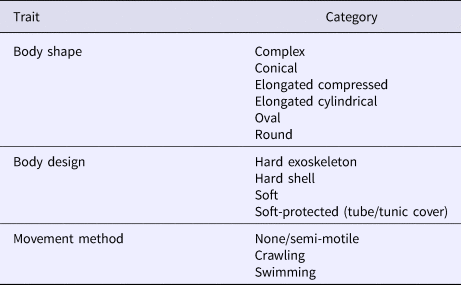
Three biological traits describing body shape, body design and movement method were selected to potentially identify specific characteristics of macrofaunal species related to sampling selectivity and to the susceptibility to damage induced by each sampling method. The selected traits were subdivided into 13 categories (Table 1), describing the species’ geometric shape, their ability to escape and their fragility which may lead to difficulties during the identification procedure.
Biological traits and the relative categories

All trait categories were scored as presence or absence (1 or 0, respectively) for each species and they were weighted according to their abundances. Missing information for trait categories at the species level was derived from congeners.
Trait analysis was not performed on meiofaunal assemblages since individuals were identified to major taxa.
Assessment of damage
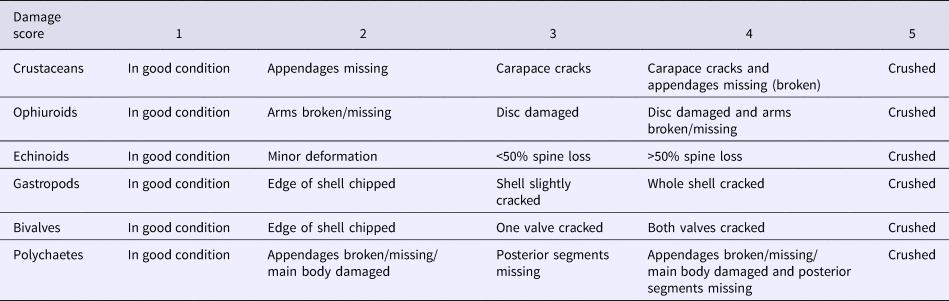
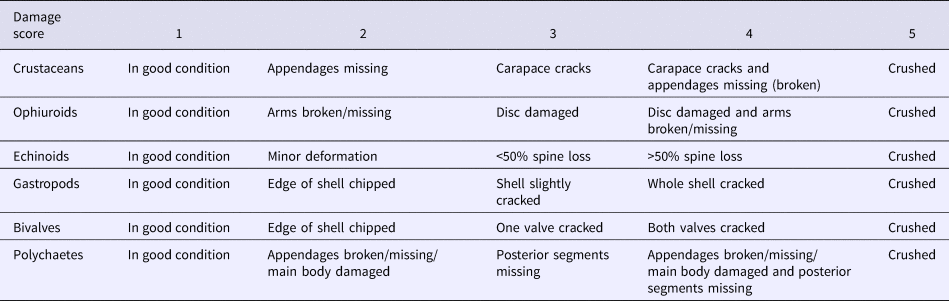
Damage may occur to the morphological integrity of benthic organisms through the scraping phase (all samplers) in addition with water flow (in case of MANOSS) and air decompression (in case of SUCTION) as the air that mixes with the water and sampled material is likely to cause damage to the sampled material. To assess the impact of each sampling method on any damage caused to the macrofaunal organisms, a five-point scale of damage was developed for each taxonomic group (Table 2). Damage scores were defined to assess: (a) the impact of each method on the ‘identifiability’ of the individual to species level and (b) the severity of the damage in terms of mechanical force provoked by each sampling method. A Mean Damage Index (MDI) was calculated for each species, major phyla and trait categories as described by Jenkins et al. (Reference Jenkins, Beukers-Stewart and Brand2001), using the following formula:
 $$\displaystyle{{\mathop \sum \nolimits_{i{\rm = 1}}^{i{\rm = 5}} n_ii} \over {\rm N}}$$
where n i = number of individuals of damage score i, and N = total number of individuals.
Damage scores for macrofauna, adapted from Bergmann et al. (Reference Bergmann, Beare and Moore2001); Jenkins et al. (Reference Jenkins, Beukers-Stewart and Brand2001); Veale et al. (Reference Veale, Hill, Hawkins and Brand2001); Pranovi et al. (Reference Pranovi, Raicevich, Franceschini, Torricelli and Giovanardi2001); Guyonnet et al. (Reference Guyonnet, Grall and Vincent2008)
Damage on meiofauna specimens could not be assessed due to their small size.
Statistical analyses
Since the assumptions of parametric ANOVA were violated, non-parametric Kruskal–Wallis tests (Kruskal & Wallis, Reference Kruskal and Wallis1952) were used in order to assess potential differences between the selectivity of the sampling methods based on: (a) macrofaunal diversity, expressed either as species richness, the Margalef index (Margalef, Reference Margalef1958) or the Shannon–Wiener index (Shannon & Weaver, Reference Shannon and Weaver1963); (b) the abundance (number of individuals) of the most dominant macrofaunal species; (c) the abundance of the trait categories; and (d) the meiofaunal densities (in individuals per 10 cm2) for each replicate. Regarding the abundance of the most dominant macrofaunal species, the Kruskal–Wallis test was restricted to the most dominant species to avoid potential variation by rare species. For their selection, species’ abundance values were ranked and plotted based on the total abundance across all samples; a break-off point was chosen where the curve showed a sudden increase in abundance values. This break-off point was then used as a threshold to exclude rare species.
Non-parametric Kruskal–Wallis tests were also performed in order to assess potential differences between the damage caused by the sampling methods based on the Mean Damage Index (MDI) of: (a) the total macrofaunal species, (b) the major phyla and (c) the trait categories for each replicate.
Mann–Whitney U tests were used as post-hoc pairwise comparisons between the sampling methods with a Bonferroni correction lowering the level of significance to 0.017.
To compare multivariate patterns of species distribution between the different sampling methods, abundance values were square-root transformed and the Bray–Curtis coefficient (Bray & Curtis, Reference Bray and Curtis1957) was calculated between all possible pairs of samples. The produced dissimilarity matrices were displayed using non-metric Multidimensional Scaling (nMDS) (Clarke & Warwick, Reference Clarke and Warwick1994). An Analysis of Similarities (ANOSIM; Clarke, Reference Clarke1993) was carried out to test for differences between the sampling methods.
All statistical analyses were performed using the software packages PRIMER (v. 6.1.3, PRIMER-E Ltd) (Clarke & Gorley, Reference Clarke and Gorley2006) and SPSS (v. 23, IBM SPSS).
Results
Assessment of sampling methods selectivity in macrofaunal assemblages
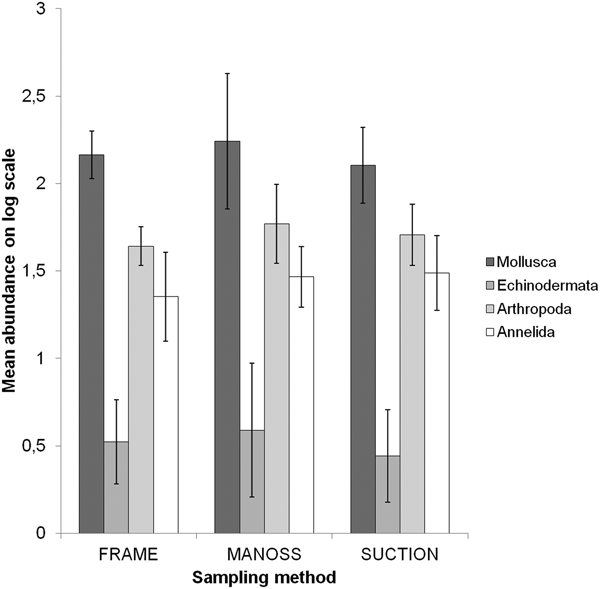
In total, 6651 individuals were analysed, consisting of 169 species (FRAME: 91 species, MANOSS: 120 species, SUCTION: 117 species). Mollusca, dominated by Gastropoda, were the most abundant group in all sampling methods, followed by Arthropoda, Annelida and Echinodermata (Figure 2).
Mean abundance ± SD of the major macrofaunal phyla on log scale, for each sampling method.

Table 3 summarizes the mean values of abundances, species number, species richness (Margalef index) and Shannon–Wiener index for each sampling method. No significant differences were observed between the sampling methods in terms of diversity indices or abundances. However, the MANOSS method captured significantly more species than the FRAME method (Mann–Whitney test; U = 8.5, P = 0.013), while the SUCTION method did not show any significant differences compared with the other two methods.
Mean values of abundance, species number, species richness (Margalef) and Shannon–Wiener with their standard deviation (SD) for each sampling method

Kruskal–Wallis results are shown between the different sampling methods. Significant results are marked in bold (P < 0.05).
In general, no significant differences were detected between the different sampling methods regarding the macrofaunal abundances of the most dominant species, as shown Supplementary Table S1. The nMDS plot (not shown here) based on macrofauna species abundances did not reveal any clear pattern and showed a high stress value of >0.2. Accordingly, the ANOSIM test did not detect any significant differences in community structure between the different sampling methods (Supplementary Table S2; R = −0.002; P > 0.05).
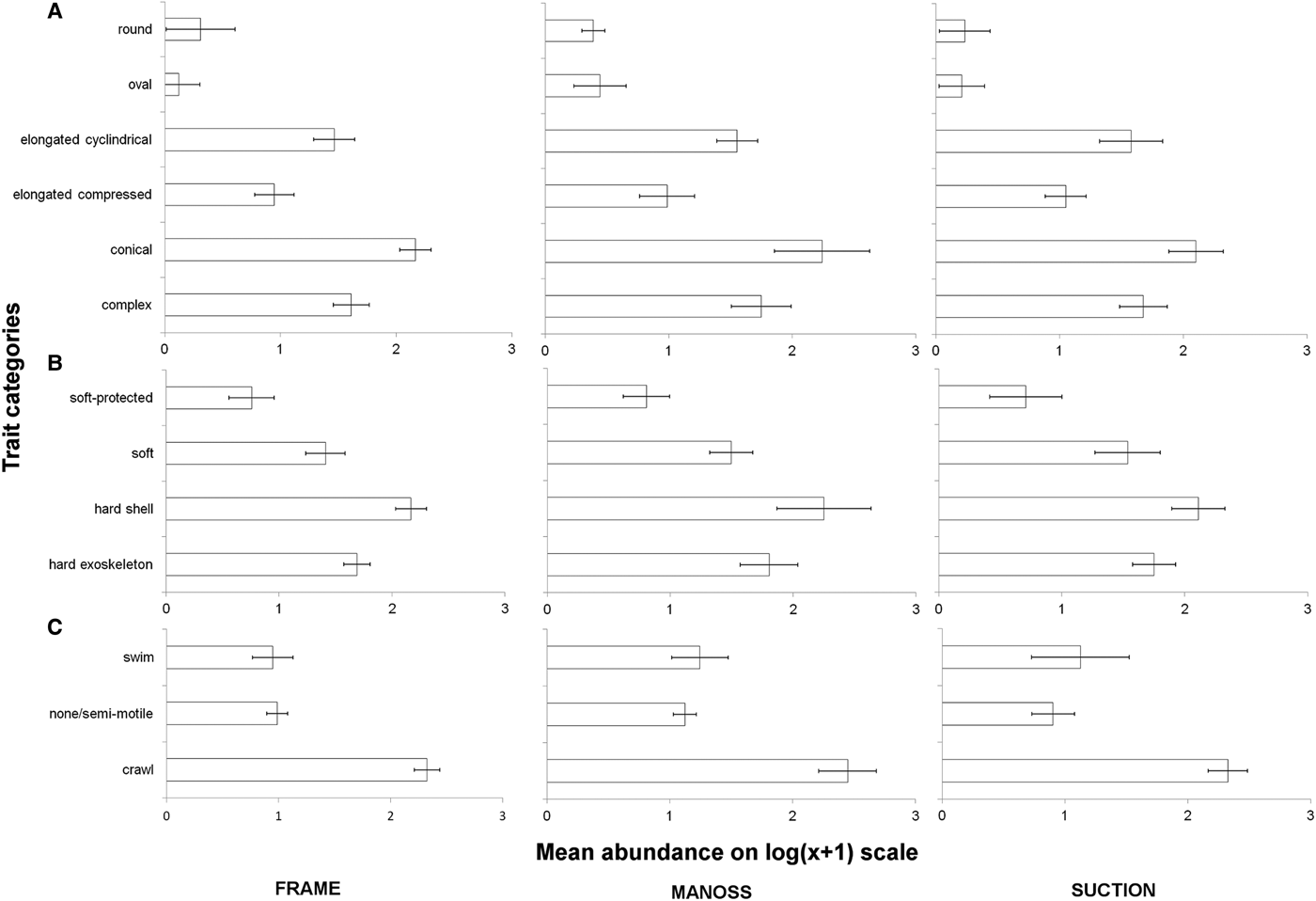
Regarding traits, the most abundant characteristic for body shape, body design and movement method were conical shape, hard shell and crawling movement behaviour, respectively (Figure 3). However, no significant differences were observed between the different sampling methods for each trait category, except for the oval shape (Kruskal–Wallis; H = 8.162, P = 0.017) where organisms with this characteristic were significantly more abundant in the MANOSS method compared with the FRAME method (Mann–Whitney test; U = 7.5, P = 0.007).
Mean abundance ± SD on log(x + 1) scale of the each trait category of (A) body shape, (B) body design and (C) movement method, for each sampling method.

Assessment of damage caused by sampling methods
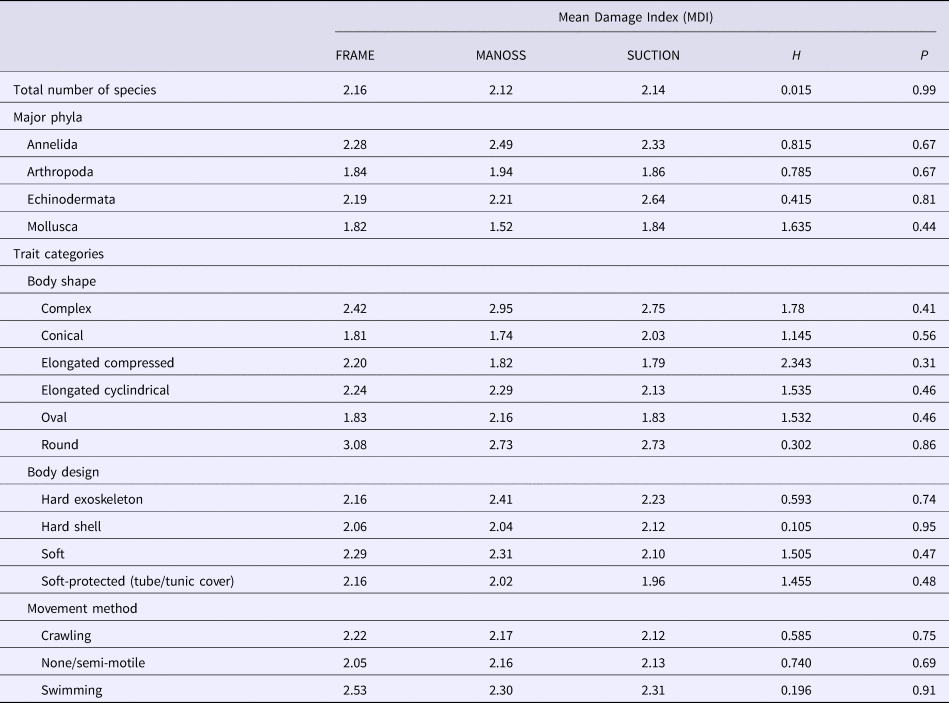
Concerning the damage caused by the different sampling methods among the most dominant species, most species were preserved intact (damage score 1) or with minor or moderate damage (damage scores 2, 3), with the exception of some very fragile polychaete species (Supplementary Table S3). No significant differences between the sampling methods were observed in the MDI of the total number of species, nor within the major phyla or different trait categories (Table 4).
The Mean Damage Index (MDI) of the total number of species, the major phyla and the trait categories for each sampling method (ranging from 1 to 5; for definition of the score values see Table 2)

Kruskal–Wallis results are shown between the different sampling methods.
Percentages of identified and unidentified (due to damage) organisms were estimated in order to assess the damage effect on the identifiability of the organisms. More than 95% of the individuals were identified to species level for all sampling methods (FRAME: 96.88%; MANOSS: 97.09%; SUCTION: 96.54%). No significant differences were observed between the sampling methods regarding the number of identified and unidentified organisms.
Sampling methods efficiency in meiofaunal assemblages
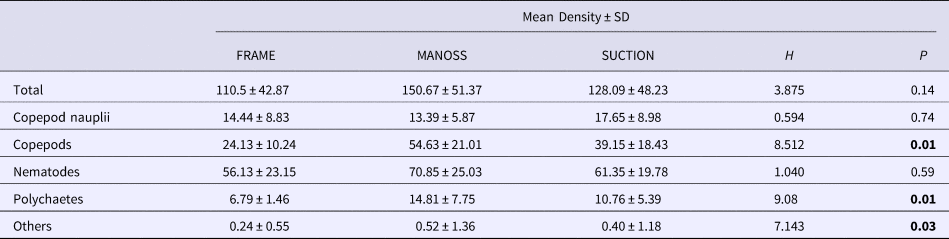
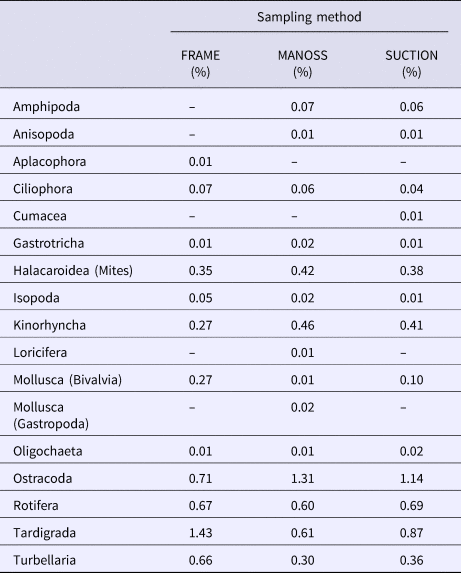
In total, 21 major meiofaunal groups were identified, out of which four presented higher densities for all three different sampling methods (Table 5). More specifically, nematodes, copepods, copepod nauplii and polychaetes represented the 95.82 ± 0.3% of the total meiofauna while the remaining percentage (4.18 ± 0.3%, ‘Others’) included 17 meiofaunal groups (Table 6) with low densities. Significant differences were detected between the different sampling methods regarding the meiofaunal densities of only copepods, polychaetes and ‘others’ (Table 5), which revealed significantly higher densities in MANOSS samples than in FRAME samples (Mann–Whitney test; copepods: U = 5, P = 0.005; polychaetes: U = 5, P = 0.005; others: U = 8.5, P = 0.014). However, no significant differences were observed between the sampling methods regarding the total meiofaunal and nematode densities (Table 5).
Mean values of meiofaunal densities (ind. 10 cm−2) with their standard deviation (SD) for each sampling method and taxonomic group are presented

Kruskal–Wallis results are shown between the different sampling methods. Significant results are marked in bold (P < 0.05).
Contribution of the 4.18 ± 0.3% of meiofaunal taxa to the total density of each sampling method

The nMDS plot (not shown here) of the meiofaunal densities similarity matrix, illustrated no discrimination for the community structure of the different sampling methods. The value of the ANOSIM test supported the hypothesis that there are no significant differences between the community structure of the sampling methodologies (Supplementary Table S2; R = 0.06; P > 0.05).
Discussion
Sampling efficiency in macrofaunal assemblages
Mollusca, specifically Gastropoda, were the most abundant taxonomic group (>50%) followed by Arthropoda (~20%) and Annelida (10–15%) in each sampling method. This contribution pattern of the major phyla seems to be common in hard bottom areas in the Eastern Mediterranean Sea according to related biodiversity studies (Antoniadou & Chintiroglou, Reference Antoniadou and Chintiroglou2005; Antoniadou et al., Reference Antoniadou, Koutsoubas and Chintiroglou2005). In general, no significant differences were detected between the different sampling methods regarding the macrofaunal abundances of the most dominant species and the diversity indices; in addition, the sampling methods presented a similar pattern regarding the community structure indicating similar sampling efficiency. However, the MANOSS method captured significantly more species than the FRAME method, indicating a potential loss of species that can easily escape from the scraping procedure, while the SUCTION method showed an intermediate efficiency. This may be related to the collection of the sample by hand in the FRAME method where loss of the scraped material is more likely to happen than when using a suction device. Furthermore, according to Abbiati (Reference Abbiati1991), mobile fauna can more easily escape from the sampling net during the scraping method, therefore this procedure is more effective for flora and sessile organisms. However, no significant differences were observed between the different sampling methods for the mobility traits, indicating that the loss of species is a mechanical characteristic of the FRAME method.
The sampling selectivity and the fragility of the organisms may be influenced by specific biological traits. For example, the existence of protective shells could reduce the severity of damage by sampling methods (Bergmann et al., Reference Bergmann, Beare and Moore2001) and the movement method could influence the sampling selectivity, as fast swimmers can more easily escape from the sampling methods in comparison to species with a low mobility (Sutherland, Reference Sutherland2006). All methods exhibited a similar distribution of biological traits, with the most representative trait categories being the conical shape, hard shell and crawling behaviour. These categories are mostly found in gastropods which were the most abundant taxonomic group. Furthermore, no significant differences were observed between the different sampling methods for each trait category, except for the oval shape where organisms with this characteristic were significantly more abundant in the MANOSS method compared with the FRAME method. However, these differences may be related to random effects as the oval shape is represented by organisms with low abundances.
In a study by Pranovi et al. (Reference Pranovi, Raicevich, Franceschini, Torricelli and Giovanardi2001), the percentages of damage induced by the studied gears were related to the morphology (with or without appendages), the body structure (hard or soft tissues) and the size of the organisms. Several indices have been used for the assessment of damage of macrofaunal organisms, mostly for assessing the impact of different fishing gears (e.g. Mensink et al., Reference Mensink, Fischer, Cadee, Ten Hallers-Tjabbes and Boon2000; Bergmann et al., Reference Bergmann, Beare and Moore2001; Jenkins et al., Reference Jenkins, Beukers-Stewart and Brand2001; Moschino et al., Reference Moschino, Deppieri and Marin2003). In the present study, no significant differences were observed in terms of MDI between the sampling methods for the most dominant species, the major phyla and the different trait categories as the observed damage may not be related to the sampling methods but to procedures common to all methods: scraping, washing, sieving and sorting (Bianchi et al., Reference Bianchi, Pronzato, Cattaneo-Vietti, Benedetti-Cecchi, Morri, Pansini, Chemello, Milazzo, Fraschetti, Terlizzi, Peirano, Salvati, Benzoni, Calcinai, Cerrano, Bavestrello, Gambi and Dappiano2004; Eleftheriou & McIntyre, Reference Eleftheriou and McIntyre2005).
Sampling efficiency in meiofaunal assemblages
Hard bottom areas are dominated by nematodes and copepods (Danovaro & Fraschetti, Reference Danovaro and Fraschetti2002; Fraschetti et al., Reference Fraschetti, Gambi, Giangrande, Musco, Terlizzi and Danovaro2006), a pattern which was also observed in the hard substrate meiofauna assemblages captured by the three different sampling methods. Different sampling efficiency of the major meiofaunal groups was observed between the three sampling methods. Specifically, significant differences were detected regarding the meiofaunal densities of copepods, polychaetes and the rarer (‘Others’) groups which revealed significantly higher densities in the MANOSS method compared with the FRAME method, with the SUCTION method again presenting an intermediate efficiency. The low densities of copepods and polychaetes in the meiofaunal samples collected with the FRAME method could be attributed to their relatively high mobility. High mobility can facilitate an easier escape from the collection net (Carleton & Hamner, Reference Carleton and Hamner1987; Abbiati, Reference Abbiati1991). Several epibenthic taxa are known to show an emergence behaviour, i.e. they are able to temporarily move into the hyperbenthos for a variety of reasons (e.g. predation, escape behaviour, foraging) (Alldredge & King, Reference Alldredge and King1985; Decho, Reference Decho1986; Armonies, Reference Armonies1988; Mees & Jones, Reference Mees and Jones1997; Giere, Reference Giere2009). Sample collection potentially acts as a threat for these organisms, activating this emergence behaviour and resulting in lower densities of these taxonomic groups in the samples.
Conclusions
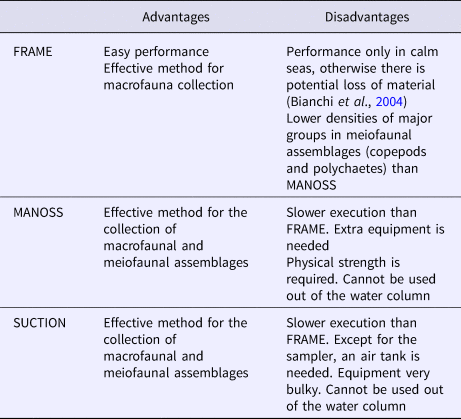
In Table 7, the advantages and disadvantages of the three different sampling methods are summarized. In general, the sampling methods do not differ in their efficiency of collecting macrofaunal assemblages with the exception of the MANOSS method which collects more species than the FRAME method. In addition, the MANOSS method showed a higher sampling efficiency in meiofaunal assemblages compared with the FRAME method. However, the selection of a sampling method in order to carry out a biodiversity study in hard substrates should also take into account the scope of the study, the efficiency of the sampling method required, as well as the technical characteristics of the method during its execution. For example, if the focus is to capture the entire diversity of the community, then the MANOSS method shows a clear advantage as it captures more species. Similarly, if the strength of the operating person is an issue, then the SUCTION method is equally effective as it performs similarly to MANOSS with the small price of losing some of the macrofaunal species. We conclude that ‘simple’ methods such as the FRAME method could be an effective and easy way for macrofauna collection, but a meiofaunal study requires a more advanced method such as MANOSS. Further studies, focusing on the comparison of the sampling methods on several hard substrates, in terms of region and type of substrate (e.g. artificial, ‘trottoir’) are necessary to establish a standardized sampling protocol for the macro- and meiobenthic assemblages in hard substrates.
Summary of the basic advantages and disadvantages of the three different sampling methods

Supplementary material
The supplementary material for this article can be found at https://doi.org/10.1017/S0025315418000863.
Acknowledgements
The authors would like to thank Dr Thanos Dailianis (Institute of Marine Biology, Biotechnology and Aquaculture, Hellenic Centre for Marine Research, Greece) for his assistance during the sampling procedure, Mr Manolis Pettas (Hellenic Centre for Marine Research, Greece) for the construction of suction devices and Nikos Sekeris (Hellenic Centre for Marine Research, Greece) for the construction of sampling nets. The authors would also like to thank the two anonymous reviewers for providing comments and suggestions that improved the manuscript.
Financial support
This research received no specific grant from any funding agency, commercial, or not-for-profit sectors.