Introduction
Major depressive disorder (MDD) is a leading contributor to the global burden of disease and the number one cause of years lost due to disability worldwide.1, 2 The diagnostic criteria for MDD include significant impairment in psychosocial and occupational functioning,Reference Greer, Kurian and Trivedi3, 4 and treatment guidelines stress the importance of addressing both depressive symptoms and functional impairment.Reference Gelenberg, Freeman and Markowitz5, Reference Lam, McIntosh and Wang6 Returning the patient to pre-illness function is a critical goal in the treatment of MDD.Reference Gelenberg, Freeman and Markowitz5, Reference Lam, McIntosh and Wang6
Treating MDD with urgency may be the best path to bringing patients to full functional recovery.Reference Habert, Katzman and Oluboka7, Reference Oluboka, Katzman and Habert8 Although some antidepressant medications have been associated with higher remission rates than others, fewer than 50% of patients remit with any given drug.Reference Machado, Iskedjian, Ruiz and Einarson9 In clinical practice, trials with two or more antidepressant drugs (switch or augmentation) are often needed in order to achieve remission.Reference Rush, Trivedi and Wisniewski10 Delays in effective treatment are associated with poorer outcomes, longer time to remission, and an increased risk of chronicity,Reference Gormley, O’Leary and Costello11–Reference Ghio, Gotelli, Marcenaro, Amore and Natta14 as well as with potential long-term adverse effects on brain structure and function.Reference Oluboka, Katzman and Habert8, Reference Moylan, Maes, Wray and Berk15 Consequently, clinicians should rapidly optimize treatment in patients diagnosed with MDD to ensure that they receive adequate treatment with the least possible delay.Reference Habert, Katzman and Oluboka7, Reference Oluboka, Katzman and Habert8 Clinicians can monitor patient progress using measurement-based care and adjust treatment promptly if needed.Reference Kennedy, Lam and McIntyre16
Results of analyses show that improvement in depression symptoms within 2–4 weeks of starting an antidepressant predicts response and remissionReference Habert, Katzman and Oluboka7 and, importantly, that failure to show early improvement predicts poor treatment outcomes.Reference Soares, Fayyad and Guico-Pabia17 The predictive value of lack of early improvement (i.e., negative predictive value (NPV)) has been demonstrated across antidepressant drug classes in patients treated with tricyclic antidepressants, selective serotonin reuptake inhibitors, serotonin–norepinephrine reuptake inhibitors, and new-generation antidepressants.Reference Habert, Katzman and Oluboka7 Thus, adjustments to medication regimen, starting with dose optimization, should be considered as early as 2 weeks after initiation of treatment.Reference Habert, Katzman and Oluboka7
Desvenlafaxine is a serotonin–norepinephrine reuptake inhibitor that has demonstrated efficacy for treating adults with MDD in multiple randomized controlled trials.Reference DeMartinis, Yeung, Entsuah and Manley18–Reference Dunlop, Reddy, Yang, Lubaczewski, Focht and Guico-Pabia24 A series of analyses have been conducted to examine the predictive value of early improvement of depressive symptoms on other treatment outcomes using data from placebo-controlled trials of desvenlafaxine for the treatment of MDD.Reference Soares, Fayyad and Guico-Pabia17, Reference Soares, Endicott, Boucher, Fayyad and Guico-Pabia25, Reference Lam, Endicott, Hsu, Fayyad, Guico-Pabia and Boucher26 In addition to confirming an effect of early symptom improvement on the probability of achieving response and remission from depression,Reference Soares, Fayyad and Guico-Pabia17 analyses have demonstrated that early depressive symptom improvement could also predict later functional outcomes in MDD patients treated with desvenlafaxine 50 mg or placebo.Reference Soares, Endicott, Boucher, Fayyad and Guico-Pabia25, Reference Lam, Endicott, Hsu, Fayyad, Guico-Pabia and Boucher26 Week-2 improvements (depressive symptoms in one studyReference Lam, Endicott, Hsu, Fayyad, Guico-Pabia and Boucher26 and functional improvement in a pooled analysisReference Soares, Endicott, Boucher, Fayyad and Guico-Pabia25) were significant predictors of functional outcomes (Sheehan Disability ScaleReference Sheehan, Rush, Pincus and First27 [SDS] score, functional response, or functional remission) at study end (week 8 or week 12). The current analysis was conducted to expand upon those earlier findings by including data from patients treated with a higher desvenlafaxine dose (100 mg), and examining the predictive value of early improvement in function for later functional outcomes. The objectives of this pooled, post-hoc analysis were first, to determine the optimal threshold for early (week 2) functional improvement, which best predicts treatment success at week 8 using receiver operating characteristic (ROC) analysis and second, to evaluate the effect of week-2 functional improvement on week-8 functional response or remission in patients treated with desvenlafaxine 50 mg, 100 mg, or placebo.
Methods
Data set
Data were pooled from eight double-blind, placebo-controlled studies of desvenlafaxine for the treatment of MDD (Appendix Table 1).Reference DeMartinis, Yeung, Entsuah and Manley18–Reference Dunlop, Reddy, Yang, Lubaczewski, Focht and Guico-Pabia24, Reference Liebowitz, Tourian, Hwang and Mele28 The data set included all phase-3 or phase-4, double-blind, placebo-controlled, fixed-dose MDD trials conducted by the sponsor (Pfizer Inc) that had a desvenlafaxine 50- and/or 100-mg dose arm and included baseline and post-baseline SDS assessments. All studies included in the analysis were conducted in accordance with the ethical principles that have their origin in the Declaration of Helsinki and were consistent with principles of good clinical practice and applicable regulatory requirements in each participating country. Study protocols and any amendments received institutional review board or independent ethics committee approval, and written informed consent was obtained before study procedures were performed.
Study design
The studies included in the analysis were similar in design. All studies were short-term, multicenter, randomized, double-blind, placebo-controlled trials. Six studies were 8 weeks in duration, one study was 10 weeks long,Reference Clayton, Kornstein and Dunlop23 and one was 12 weeks.Reference Dunlop, Reddy, Yang, Lubaczewski, Focht and Guico-Pabia24 The primary endpoint was reported at week 8 in seven studies; one study had a 12-week primary endpoint.Reference Dunlop, Reddy, Yang, Lubaczewski, Focht and Guico-Pabia24 The primary efficacy outcome in each study was change from baseline in 17-item Hamilton Rating Scale for DepressionReference Hamilton29 (HAM-D17) total score. Enrolled patients were randomly assigned to receive placebo or a fixed dose of desvenlafaxine (10, 25, 50, 100, 200, or 400 mg) in each study; one study also included a duloxetine 60-mg/d arm.Reference Tourian, Padmanabhan, Groark, Brisard and Farrington21 Only data from placebo and desvenlafaxine 50- and 100-mg/d treatment arms were included in the current analysis.
Patients
All studies enrolled adult male and female outpatients, aged 18 years or older, except one study, which enrolled perimenopausal and postmenopausal women 40–70 years of age.Reference Clayton, Kornstein and Dunlop23 All enrolled patients had a diagnosis of MDD based on the Diagnostic and Statistical Manual of Mental Disorders, Fourth Edition (DSM-IV)30 or the DSM-IV text revision31 with depressive symptoms of at least 30 days duration. Participants had a minimum baseline HAM-D17 total score of 20 (six studies) or Montgomery–Åsberg Depression Rating ScaleReference Montgomery and Asberg32 (MADRS) score of 25 (two studies). One study had baseline function criteria for enrollment (gainful employment and a SDS total score of ≥10 at screening and baselineReference Dunlop, Reddy, Yang, Lubaczewski, Focht and Guico-Pabia24).
All studies excluded patients with a lifetime diagnosis of bipolar or psychotic disorder, or other comorbid psychiatric disorders (except generalized anxiety disorder, panic disorder, or social anxiety disorder, not considered primary), clinically important abnormalities on screening physical examinations, including vital signs and electrocardiograms, significant risk of suicide, and current psychoactive substance abuse or dependence.
Assessments
The SDS is a validated tool for assessing functional impairment, improvement in function with treatment, and functional remission.Reference Sheehan, Rush, Pincus and First27, Reference Sheehan, Harnett-Sheehan, Spann, Thompson and Prakash33 The SDS total score, the sum of the three item scores (work, social, and family disability),Reference Sheehan and Sheehan34 was derived for a patient only if all three item scores were non-missing. If any SDS item score was missing, SDS total score was set to missing. Early functional improvement thresholds were determined based on percentage change from baseline in SDS total score at week 2. Four efficacy outcomes of interest were established: (1) functional response, defined as SDS total score of 12 or lessReference Sheehan and Sheehan34 with at least 50% reduction from baseline in SDS total score; (2) functional/depression response, defined as SDS total score of 12 or less with at least 50% reduction from baseline in SDS total score and at least 50% improvement from baseline in HAM-D17 total score; (3) functional remission, based on SDS total score less than 7Reference Soares, Endicott, Boucher, Fayyad and Guico-Pabia25; and (4) functional/depression remission, requiring SDS total score less than 7 and HAM-D17 total score of 7 or less.Reference Soares, Endicott, Boucher, Fayyad and Guico-Pabia25
Statistical analysis
The full analysis set included all patients who received at least one dose of study drug. Patients with a baseline SDS total score of 12 or less or with missing SDS data at week 2 were excluded from the predictor analysis. If SDS or HAM-D17 total scores were missing at week 8, the last (non-missing post-baseline) observation was carried forward (LOCF).
An ROC analysis was conducted to determine optimal thresholds of functional improvement at week 2 for predicting treatment success.Reference Gallop35 Optimal improvement thresholds were determined using logistic regression models with treatment success as the outcome variable and percentage change from baseline in SDS total score at week 2 as the independent variable. Analyses were conducted separately for each of the four definitions of treatment success, by treatment group and overall. Sensitivity, specificity, NPV, and positive predictive value (PPV) were calculated for each threshold value.
The predictive value of week-2 functional improvement for week-8 treatment success was analyzed using logistic regression models that included early improvement (yes or no), study, treatment, baseline SDS total score, and the interaction of treatment and early improvement as independent variables. Treatment success rates (i.e., the percentage of patients who achieved treatment success for each of the four definitions of treatment success) were presented for patients who met versus those that did not meet the respective week-2 improvement threshold (i.e., patients with vs without early functional improvement), by treatment group. Adjusted odds ratios (ORs) and 95% confidence intervals (CI) for achieving treatment success at week 8 for patients with versus without early improvement were presented.
Results
Patients
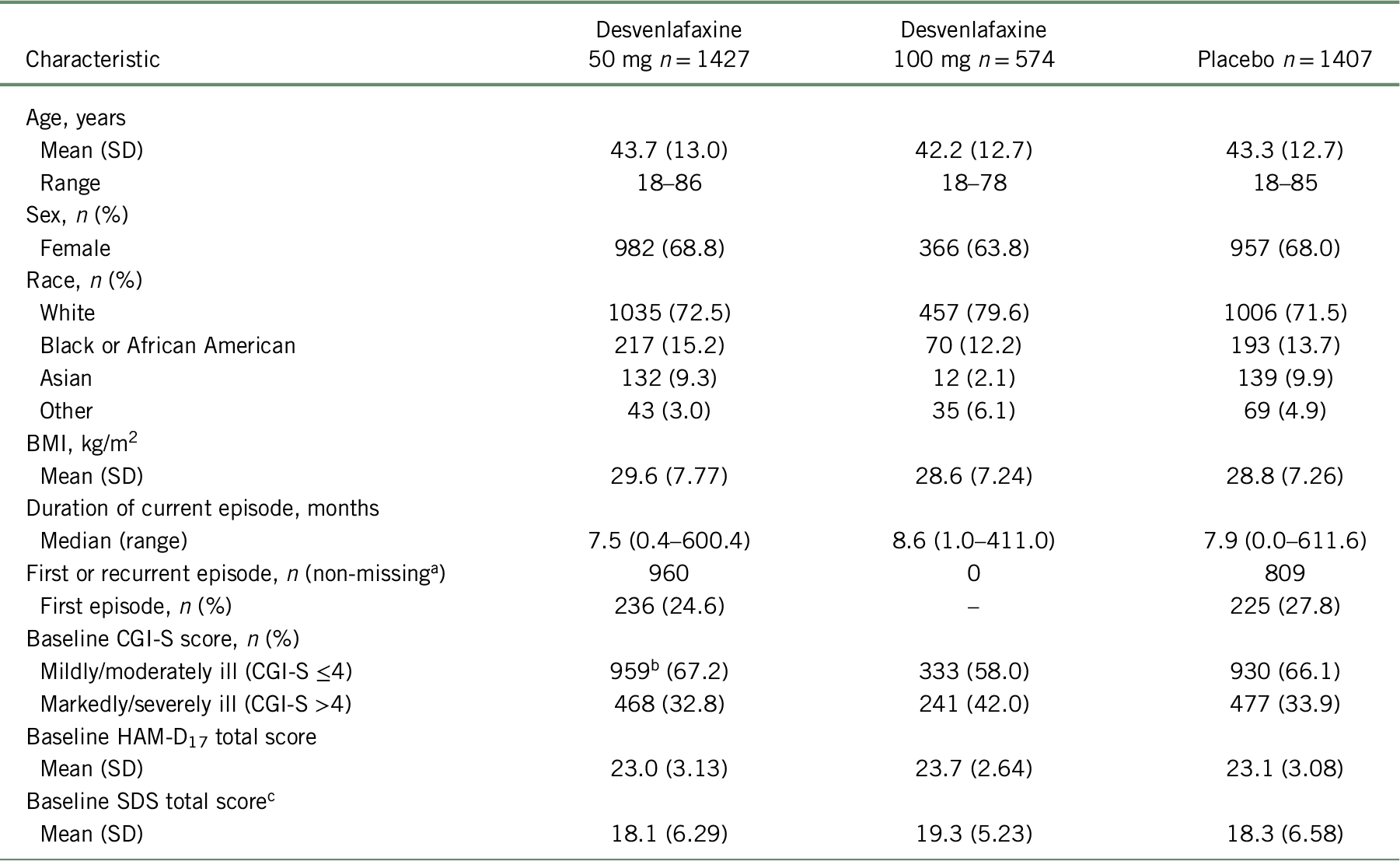
Full analysis set for the eight pooled studies included 3408 patients who were administered desvenlafaxine 50 or 100 mg or placebo (Table 1). Of those, 2455 patients (desvenlafaxine 50 mg, n = 1010; desvenlafaxine 100 mg, n = 433; placebo, n = 1012) had an SDS total score greater than 12 at baseline and non-missing SDS data at week 2 and were included in function analyses. The majority of patients were women and 73% were white. At baseline, 65% of patients were mildly or moderately ill and 35% were markedly or severely ill, based on Clinical Global Impression–Severity score (Table 1). Median duration of the current depressive episode was 7.5 months, 8.6 months, and 7.9 months for the desvenlafaxine 50 mg, 100 mg, and placebo groups, respectively. Of the patients for whom the data on number of episodes were collected, 26% (461/1769) were in their first depressive episode (Table 1). Baseline mean HAM-D17 total scores were 23.0, 23.7, and 23.1 for desvenlafaxine 50 mg, desvenlafaxine 100 mg, and placebo treatment groups, respectively. Mean (standard deviation [SD]) baseline SDS total scores were 20.4 (4.22), 20.6 (4.03), and 20.6 (4.36), respectively, for patients in the desvenlafaxine 50-, 100-mg, and placebo groups in the full analysis set.
Patient demographics and baseline characteristics: intent-to-treat population

Notes: BMI = body mass index; CGI-S = Clinical Global Impression–Severity; HAM-D17 = 17-item Hamilton Rating Scale for Depression; SD = standard deviation; SDS = Sheehan Disability Scale.
a First or recurrent episode was collected in four of the eight studies, and in none of the studies that included a desvenlafaxine 100-mg arm.
b Includes two patients with CGI-S score = 1 (Normal, not at all ill).
c SDS total score was defined as the sum of the three SDS item scores, and it was only derived if patients had non-missing values for all three items. If any SDS items were missing, SDS total score was set to missing. The number of patients who contributed to the mean (SD) baseline SDS total score was 1348, 560, and 1320 for the desvenlafaxine 50 mg, desvenlafaxine 100 mg, and placebo groups, respectively.
Functional improvement, full analysis set
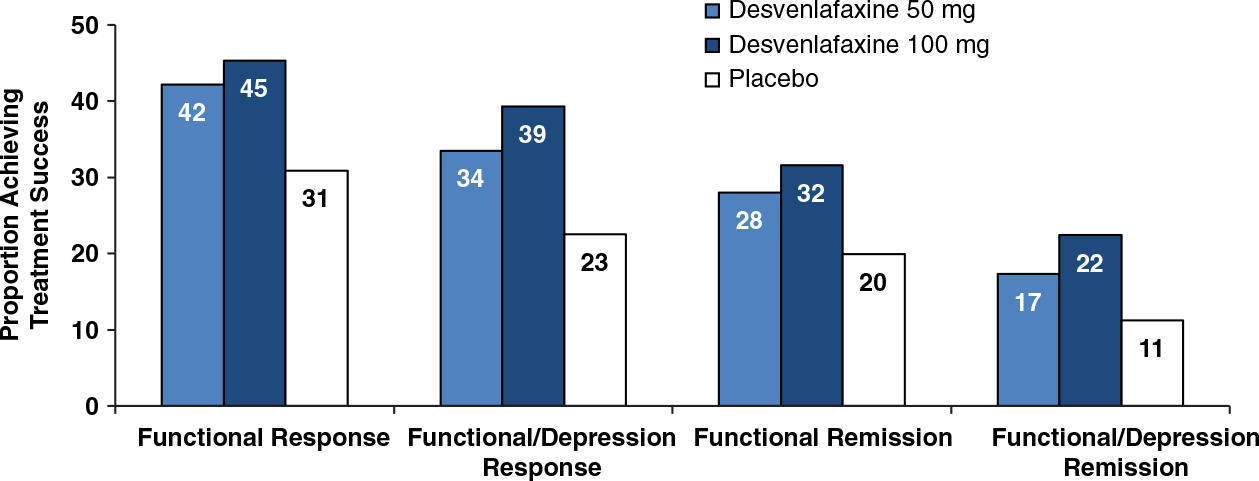
Overall, mean improvement from baseline in SDS total score at week 2 (observed) was −5.0 (24.3%) for the desvenlafaxine 50-mg group, −4.3 (21.0%) for the desvenlafaxine 100-mg group, and −3.7 (17.6%) for the placebo group. At week 8 (LOCF), mean (SD) change from baseline in SDS total scores were −8.0 (7.38), −8.6 (7.82), and −6.2 (7.54), respectively, for the three treatment groups. Figure 1 shows the percentages of patients who achieved each degree of treatment success at week 8 (LOCF) by treatment group.
Percentage of patients who achieved treatment success at week 8 (LOCF) by treatment group.

Optimal early functional improvement thresholds
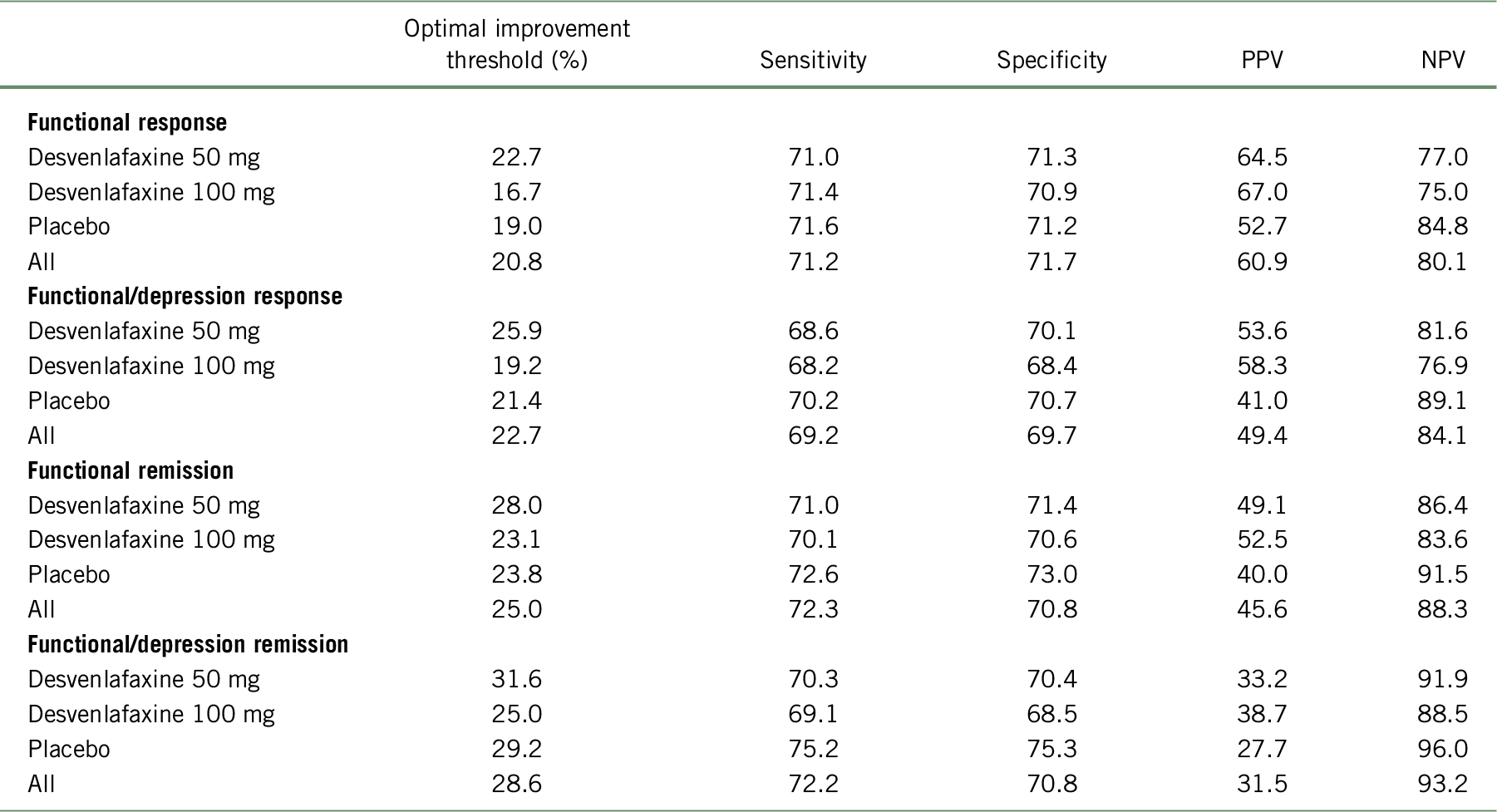
Optimal early functional improvement thresholds for predicting week-8 treatment success ranged from 17% to 32% across treatment groups and the four definitions of success. Threshold values and associated sensitivity, specificity, PPV, and NPV for each treatment and definition of treatment success are listed in Table 2. Early improvement thresholds were higher for more stringent definitions of treatment success. Optimal thresholds for predicting functional response, functional/depression response, functional remission, and functional/depression remission in the analysis of all treatments combined were 21%, 23%, 25%, and 29%, respectively. For each definition of treatment success, the optimal early improvement threshold was lowest for patients treated with desvenlafaxine 100 mg/d and highest for those treated with desvenlafaxine 50 mg/d (Table 2). The percentage of patients who met optimal early improvement thresholds determined for the four definitions of treatment success ranged from 40% to 50% in the desvenlafaxine 50-mg group, from 36% to 44% in the desvenlafaxine 100-mg group, and from 31% to 40% in the placebo group.
Operating characteristics of improvement in SDS total score at week 2 to predict later treatment success

Notes: HAM-D17 = 17-Item Hamilton Rating Scale for Depression; NPV = negative predictive value; PPV = positive predictive value; SDS = Sheehan Disability Scale.
Functional response: SDS total score ≤12 and ≥50% improvement in SDS.
Functional/depression response: SDS total score ≤12 and ≥50% improvement in both SDS and HAM-D17.
Functional remission: SDS total score <7.
Functional/depression remission: SDS total score <7 and HAM-D17 ≤7.
NPV exceeded PPV for all treatments and for all definitions of treatment success (Table 2), indicating that failure to achieve early functional improvement was more informative about later treatment success than was the achievement of early functional improvement. NPV increased with increasingly stringent definitions of treatment success, from 80.1 to 93.2 for all treatments combined, whereas PPV decreased from 60.9 to 31.5. Sensitivity and specificity ranged from 68% to 75% for individual treatments.
Predictors of treatment success
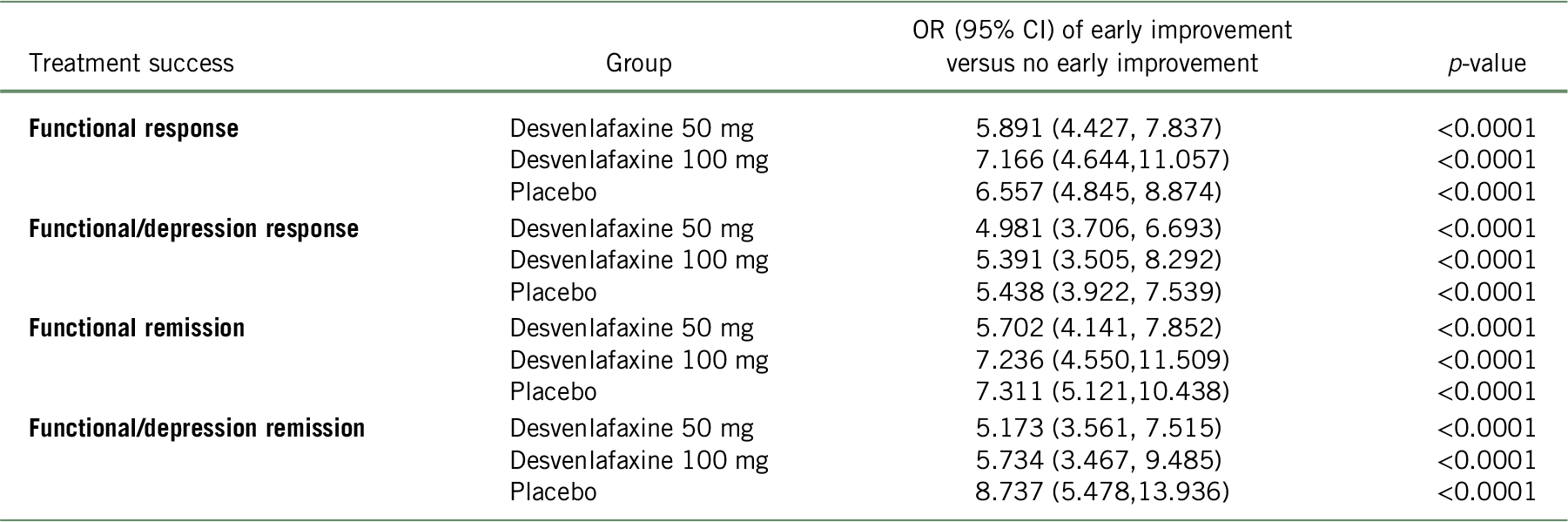
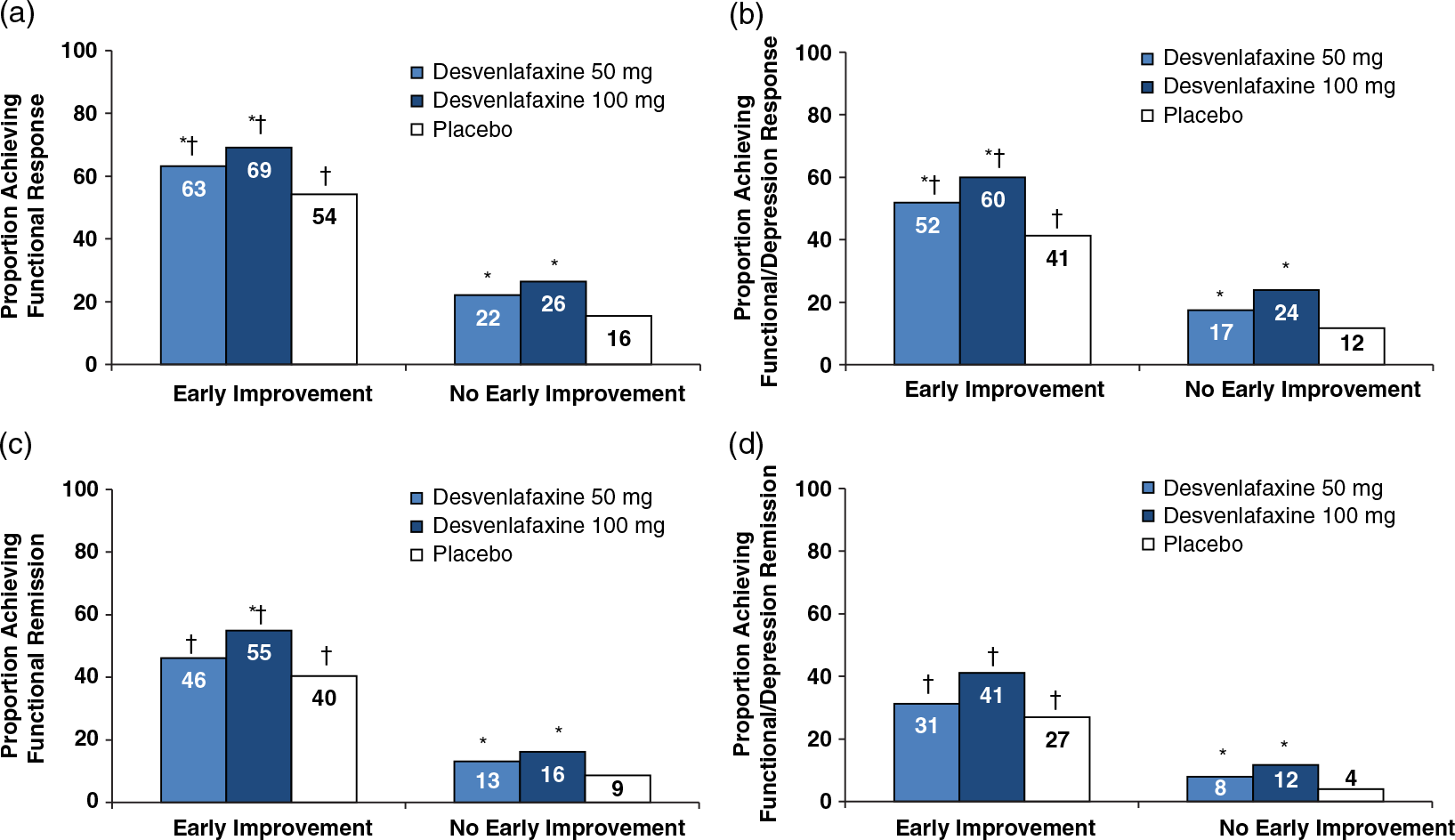
Early functional improvement was a highly significant predictor of treatment success for each treatment group and for all definitions of success. The interaction between treatment group and early functional improvement was not significant for any definition of treatment success; treatment success rates were greater for patients who met early improvement thresholds compared with those who did not, regardless of treatment (Figure 2). ORs for the effect of early improvement on later treatment success ranged from 4.981 to 8.737 (all p values <0.0001; Table 3). Rates of treatment success were higher for desvenlafaxine 50 and 100 mg versus placebo both among patients who showed early functional improvement and among those who did not (Figure 2). Functional and functional/depression response rates were significantly higher with desvenlafaxine 50 or 100 mg versus placebo in patients with or without early improvement. Rates of functional remission and functional/depression remission were significantly higher for desvenlafaxine 50 or 100 mg versus placebo in patients without early improvement; among patients who met early improvement thresholds, rates of functional remission were significantly higher for desvenlafaxine 100 mg versus placebo (Figure 2).
Logistic regression predicting treatment success at week 8 (LOCF) based on early improvement with desvenlafaxine 50 mg/d or 100 mg/d or placebo

Notes: CI = confidence intervals; HAM-D = Hamilton Rating Scale for Depression; LOCF = last observation carried forward; OR = odds ratio; SDS = Sheehan Disability Scale.
Functional response: SDS total score ≤12 and ≥50% improvement in SDS.
Functional/depression response: SDS total score ≤12 and ≥50% improvement in both SDS and HAM-D17.
Functional remission: SDS total score <7.
Functional/depression remission: SDS total score <7 and HAM-D17 ≤7.
Percentage of patients who achieved treatment success at week 8 (LOCF) for patients with versus without early improvement by treatment group. *p < 0.05 versus placebo. †p < 0.0001 early improvement versus no early improvement.

Discussion
Results from this expanded analysis of data from clinical trials of desvenlafaxine for the treatment of MDD support previous findings that early improvement in measures of function predicts later functional or functional/depression outcomes in patients treated with desvenlafaxineReference Soares, Endicott, Boucher, Fayyad and Guico-Pabia25, Reference Lam, Endicott, Hsu, Fayyad, Guico-Pabia and Boucher26 or other drugs.Reference Gorwood, Vaiva, Corruble, Llorca, Bayle and Courtet36 Early improvement was highly predictive of treatment success for patients treated with desvenlafaxine 50 mg/d, desvenlafaxine 100 mg/d, or placebo (all p < 0.0001). As in the previous analysis of pooled desvenlafaxine data,Reference Soares, Endicott, Boucher, Fayyad and Guico-Pabia25 NPV exceeded PPV for all four definitions of treatment success, indicating that failure to meet the functional improvement threshold was a better predictor of outcome – that the patient is unlikely to achieve treatment success – than is meeting the threshold. These findings are consistent with the body of research on early improvement in depressive symptoms.Reference Habert, Katzman and Oluboka7, Reference Oluboka, Katzman and Habert8 They underscore the need to monitor both depression symptoms and function during the treatment of MDD,Reference Kennedy, Lam and McIntyre16 and support treatment guideline recommendations to consider treatment adjustment, starting with dose optimization, if patients do not show evidence of functional improvement after the first few weeks of pharmacotherapy.Reference Gelenberg, Freeman and Markowitz5, Reference Kennedy, Lam and McIntyre16 Patients who do show 2-week improvement in function should also be followed closely: even among desvenlafaxine-treated patients who met early improvement thresholds, approximately 35% failed to show a functional response at week 8 (LOCF) and over 50% did not achieve functional remission.
The current results also expand upon the previous analysis, which explored the predictive value of early functional improvement on treatment success in patients receiving the 50-mg/d desvenlafaxine dose or placebo from seven studies.Reference Soares, Endicott, Boucher, Fayyad and Guico-Pabia25 The previous analysis examined the predictive effect of treatment, demographic and clinical characteristics (age, gender, weight, duration of current episode, and baseline scale scores), and early functional improvement on functional or functional/depression outcomes at week 8, and only treatment and early improvement predicted all levels of treatment success. The current analysis included data from patients treated with desvenlafaxine 100 mg/d in three studies that were also included in the previous analysis, plus placebo and desvenlafaxine 100-mg data from an additional study that did not have a desvenlafaxine 50-mg arm. The effect of an interaction between treatment and achievement of early improvement on later treatment success was not statistically significant for any definition of treatment success, and the overall effect of early improvement on treatment success was highly significant, indicating that early functional improvement is highly predictive of later functional recovery regardless of whether the patient received desvenlafaxine 50 mg/d, desvenlafaxine 100 mg/d, or placebo.
Some differences between the desvenlafaxine dose groups were noted, however. The optimal threshold for early improvement was numerically lower for the 100 mg versus 50 mg desvenlafaxine dose for all four definitions of treatment success, indicating that a smaller degree of improvement from baseline in SDS total score at week 2 was needed to predict positive treatment outcomes for the higher desvenlafaxine dose. Also, among patients with early improvement, treatment with 100 mg desvenlafaxine – but not 50 mg – was associated with significantly higher functional remission rates compared with placebo (and functional/depression remission rates approached significance). Full functional recovery can lag behind symptom remission,Reference Sheehan, Harnett-Sheehan, Spann, Thompson and Prakash33 and many patients may require a treatment duration longer than the 8 weeks assessed in the current analysis to achieve functional remission. Thus, it is possible that the functional remission rate for desvenlafaxine 50 mg might have separated from placebo had duration of treatment been longer. The significant effect of desvenlafaxine 100 mg, together with the lower optimal early improvement thresholds for this group, also suggests that an early dose increase may be beneficial. Clinical guidelines recommend dose optimization if greater than 20%–30% improvement is not observed after 2–4 weeks of treatment, as well as for those patients who respond to treatment but fail to achieve remission.Reference Kennedy, Lam and McIntyre16 Because all studies pooled for this analysis were fixed-dose trials, some patients who may have benefitted from an early increase to 100 mg/d remained on 50 mg/d throughout treatment. In order for patients to achieve full functional recovery, including both functional and depression remission, dose optimization early in treatment may be critical.Reference Habert, Katzman and Oluboka7, Reference Oluboka, Katzman and Habert8 The recommended therapeutic dose for desvenlafaxine is 50 mg/d.37 Efficacy has been demonstrated for higher doses, and a 100-mg dosage form is available, but no additional benefit at doses greater than 50 mg has been observed in clinical trials.Reference Thase, Kornstein, Germain, Jiang, Guico-Pabia and Ninan38 However, those findings were based on mean results from fixed-dose design studies. The effect of dose changes on treatment efficacy has not been examined in individual MDD patients treated with desvenlafaxine, and it is possible that in real-world settings, increasing the dose would be beneficial to patients. Further studies are needed to confirm this hypothesis and evaluating individual symptom trajectories in flexible-dose design studies could help at least in part address this critical issue.
The lack of a significant treatment by early improvement interaction indicates that early functional improvement is similarly predictive in patients treated with active drug or placebo. In the studies included in this analysis, a placebo response observed early in treatment was likely to endure, and indeed, early placebo responders were likely to go on to achieve functional response or remission. In early work focused on understanding placebo effects, placebo response was thought to be characterized by improvement that occurred within the first 1 or 2 weeks of treatment but did not persist, in contrast to a delayed but persistent true drug response.Reference Quitkin, McGrath, Stewart, Taylor and Klein39–Reference Quitkin, Taylor and Kremer41 However, more recent analyses have demonstrated both that antidepressant drug responses can be measured within the first 2 weeks of treatment initiation and that placebo responses can persist over the course of treatment.Reference Posternak and Zimmerman42–Reference Khan, Redding and Brown44 The results of the current analysis are consistent with the findings of Tokuoka and colleagues, who analyzed pooled data from placebo-controlled duloxetine trials; in that analysis the trajectory of improvement for eventual remitters did not differ significantly for patients treated with duloxetine versus placebo for 8 weeks of treatment.Reference Tokuoka, Takahashi and Ozeki45 Differences in improvement trajectories with antidepressant and placebo treatment are unlikely to emerge at later time points. In meta-analyses of antidepressant trials using treatment durations of 8 weeks or greater, little difference in trajectory of improvement was observed after 8 weeks in patients receiving active drug versus placebo.Reference Henssler, Kurschus, Franklin, Bschor and Baethge46, Reference Henssler, Kurschus, Franklin, Bschor and Baethge47 The likelihood of achieving remission (in previously unremitted patients) did not differ for antidepressant versus placebo treatment at 5–8 weeks or 8–12 weeks,Reference Henssler, Kurschus, Franklin, Bschor and Baethge46 and the standardized mean difference between antidepressant and placebo remained consistent over 8–24 weeks.Reference Henssler, Kurschus, Franklin, Bschor and Baethge47
Several limitations of the current analysis should be noted. First, this was a post-hoc analysis of data from studies that were not designed to examine the effect of early improvement on later outcomes, and although the SDS was administered in each study, none of the studies were designed to assess functional outcomes as a primary objective. The studies were similar in design, but differences between studies in the number of treatment arms, for example, or the duration of treatment, may have contributed to variability in the data and affected observed results. In addition, the results of this analysis were based on patients who met the eligibility criteria for enrollment in the pooled studies. The findings may or may not generalize to patients excluded by those criteria, including those with comorbid psychiatric conditions or with significant risk of suicide.
Clinical implications
Returning the patient to pre-illness function is a critical goal in the treatment of MDD.Reference Gelenberg, Freeman and Markowitz5, Reference Lam, McIntosh and Wang6 In MDD patients treated with desvenlafaxine 50- or 100-mg doses or placebo, early improvement in function is predictive of later positive functional outcomes. Patients who do not show early improvement in function are likely to require a treatment adjustment in order to return to pre-illness function. These results support a measurement-based care approach that includes monitoring of function at baseline and during therapy in order to rapidly optimize treatment for the best chance of restoring the patient to pre-illness function.Reference Kudlow, McIntyre and Lam48 Limiting the length of a trial of an ineffective treatment reduces the burden of illness on the patient and may improve long-term function.Reference Habert, Katzman and Oluboka7, Reference Oluboka, Katzman and Habert8
Supplementary material
To view supplementary material for this article, please visit https://doi.org/10.1017/S1092852919000828.
Disclosures
Claudio N. Soares is a consultant for Lundbeck, Bayer, Pfizer, and Sunovion. He has received research grants from the Ontario Brain Institute (OBI) and the Ontario’s Ministry of Research, Innovation and Science.
Dalia Wajsbrot is an employee of Pfizer Inc, and holds stocks and stock options.
Matthieu Boucher was an employee of Pfizer Inc, at the time of this study.