Introduction
HIV testing has been expanding throughout the generalized HIV epidemics of sub-Saharan Africa for over a decade. Among other implications, testing may affect the contraceptive practices of those who learn their HIV status. Whether and how HIV testing affects condom and non-barrier contraceptive use is a key determinant of future HIV transmission. Condom use reduces both the horizontal and vertical transmission of HIV. Likewise, the use of non-barrier contraceptive methods reduces vertical transmission, while certain hormonal methods may increase the risk of horizontal transmission (Polis & Curtis, Reference Polis and Curtis2013).
Existing studies on the topic are predominately clinic-based, which was highly appropriate for the way HIV testing was initially offered in the region. Along with the recent expansion of testing, however, the ways in which testing are offered and the populations getting tested are shifting. Testing used to be limited to those who were already suffering from advanced stages of the disease (i.e. at TB clinics), or who self-selected to attend voluntary counselling and testing (VCT) clinics. Increasingly, however, it is being offered at routine health care visits, or through mobile clinics, youth clubs, places of employment and in homes (Bassett et al., Reference Bassett, Giddy, Nkera, Wang, Losina and Lu2007; Grabbe et al., Reference Grabbe, Menzies, Taegtmeyer, Emukule, Angala and Mwega2010; Maheswaran et al., Reference Maheswaran, Thulare, Stanistreet, Tanser and Newell2012; Wettstein et al., Reference Wettstein, Mugglin, Egger, Blaser, Salazar and Estill2012; WHO, 2012).
This paper uses panel data from a population-based study of young women in southern Malawi to examine the effects of receiving an HIV test on subsequent contraceptive practices. The phrase ‘contraceptive practices’ as employed in this paper includes the use of condoms, non-barrier contraceptive methods (i.e. pills, injectables, implants, intrauterine devices (IUDs) and sterilization) and abstinence, because, used properly, they are all effective methods of preventing pregnancy. Although condoms are frequently used to prevent HIV transmission, they are also used to prevent pregnancy. Indeed, among women in the study sample who used condoms, pregnancy prevention was more frequently offered as the reason for use than was prevention of sexually transmitted infections.
This paper moves beyond existing studies in several important ways. First, it examines the implications of positive and negative HIV tests, both of which can influence reproductive behaviour and HIV transmission. Although most studies focus on those who test positive, even in the generalized epidemics of sub-Saharan Africa a negative result is more common and people who test negative represent the population at risk for future infection. Second, this paper considers the role of women’s prior perceptions of their HIV status and explores whether testing ‘surprises’ have greater behavioural implications than tests that simply confirm perceptions. Third, this paper examines these questions within a population-based sample in which HIV testing was randomly offered to subsets of respondents, a sample whose behavioural responses to learning their HIV status more accurately reflect how today’s testing protocols may influence reproductive patterns. Fourth, the analysis considers the role of abstinence, which is a reliable form of protection against pregnancy and both vertical and horizontal HIV transmission, but rarely has been assessed in studies of HIV testing and contraceptive practices. Finally, this paper considers the relative importance of respondents’ own HIV status and that of their partners. For women in relationships, perceptions of a partner’s HIV status may have as much or more sway on contraceptive practices, particularly for barrier methods used to prevent both HIV infection and pregnancy.
Background
HIV testing and contraceptive practices
Studies from across sub-Saharan Africa have generally found that condom use increases following a positive HIV test (Allen et al., Reference Allen, Tice, Van de Perre, Serufilira, Hudes and Nsengumuremyi1992, Reference Allen, Serufilira, Gruber, Kegeles, Van de Perre, Carael and Coates1993, Reference Allen, Meinzen-Derr, Kautzman, Zulu, Trask and Fideli2003; Sherr et al., Reference Sherr, Lopman, Kakowa, Dube, Chawira and Nyamukapa2007; Denison et al., Reference Denison, O’Reilly, Schmid, Kennedy and Sweat2008). The increase in condom use may be motivated, in part, by post-test counselling, which frequently emphasizes the importance of using condoms, even among seroconcordant HIV-positive couples (Hayford & Agadjanian, Reference Hayford and Agadjanian2010; Church et al., Reference Church, Wringe, Fakudze, Kikuvi, Nhlabatsi and Masuku2014). Because HIV programmes are not well-integrated with family planning programmes in sub-Saharan Africa (see Askew & Berer, Reference Askew and Berer2003), counsellors are more likely to advise condom use to prevent HIV transmission than to recommend more effective contraceptive methods that could help avert unwanted pregnancies and the vertical transmission of HIV (Crankshaw et al., Reference Crankshaw, Mindry, Munthree, Letsoalo and Maharaj2014). Nonetheless, condoms are often viewed unfavourably by married couples (Chimbiri, Reference Chimbiri2007; Tavory & Swidler, Reference Tavory and Swidler2009), so women in stable relationships may prefer non-barrier contraceptive methods if they are primarily concerned with preventing pregnancy.
The evidence for whether HIV testing affects the use of non-barrier methods (i.e. pills, injectables, implants, IUDs and sterilization) is mixed. Some studies have found no discernable effect of testing on the use of non-barrier contraceptive methods (Allen et al., Reference Allen, Serufilira, Gruber, Kegeles, Van de Perre, Carael and Coates1993; Lutalo et al., Reference Lutalo, Kidugavu, Wawer, Serwadda, Zabin and Gray2000), while others suggest that a positive HIV test might increase use. For example, Hoffman and colleagues (Reference Hoffman, Martinson, Powers, Chilongozi, Msiska and Kachipapa2008) found that women who tested positive significantly increased their use of non-barrier contraception after HIV testing. Similarly, Balkus and colleagues (Reference Balkus, Bosire, John-Stewart, Mbori-Ngacha, Schiff and Wamalwa2007) reported high initiation of hormonal contraception among HIV-positive women who recently had given birth. Both of these studies, however, are limited by their lack of a comparison HIV-negative group. Additionally, much of the literature in this area focuses on postpartum women, a select group that is likely to increase their use of non-barrier contraception relative to the antenatal period regardless of HIV testing.
Abstinence is an effective way to avoid pregnancy and limit exposure to HIV, but it is rarely examined directly in studies of HIV testing and contraceptive practices. There is, however, limited research on whether HIV testing is associated with relationship dissolution, which would lead to abstinence unless a woman was involved in multiple partnerships or quickly began a new one. Allen and colleagues (Reference Allen, Serufilira, Gruber, Kegeles, Van de Perre, Carael and Coates1993) found that in the two years following HIV testing, women who tested positive were significantly more likely to be single and to have sex less frequently than women who tested negative. Some research suggests that disclosing one’s positive HIV status to a partner can provoke the end of a relationship, but others have found no such effect (see Passin et al., Reference Passin, Kim, Hutchinson, Crepaz, Herbst and Lyles2006, for a review). Sherr and colleagues (Reference Sherr, Lopman, Kakowa, Dube, Chawira and Nyamukapa2007) found that three years after HIV testing, women who tested positive reported reducing their number of sexual partners whereas women who tested negative reported engaging in riskier sexual behaviours by increasing both their number of sexual partners and concurrent partnerships in the past year. In contrast, a review analysis of seven studies conducted in Africa and Asia from 1990 to 2005 found no significant effect of VCT on the number of sexual partners (Denison et al., Reference Denison, O’Reilly, Schmid, Kennedy and Sweat2008).
Perception of HIV status
Recent research has highlighted the importance of accounting for individuals’ prior perceptions of their HIV status when examining changes following HIV testing. This is particularly important in contexts with high HIV prevalence, such as Malawi, where negative tests may often come as a surprise because people commonly overestimate their likelihood of infection (Anglewicz & Kohler, Reference Anglewicz and Kohler2009). For example, in Yeatman’s (Reference Yeatman2009a) study of HIV testing and fertility preferences in Malawi, the effect of an HIV test on changes in preferences was limited to tests that disconfirmed respondents’ prior perceptions of their status. Specifically, when respondents’ negative or positive tests confirmed their prior beliefs about their status, their preferences did not change. However, when respondents’ test results conflicted with their prior perceptions, they changed their preferences: in a pronatal direction for a surprise negative result and in an antinatal direction for a surprise positive one (Yeatman, Reference Yeatman2009a). In another study from Malawi, Baird and colleagues (2014) found that HIV testing only influenced behaviours when the test result was unexpected. Following a surprise HIV-positive test, respondents were more likely to be diagnosed with a sexually transmitted infection, and following a surprise negative test respondents experienced improvements in educational achievement test scores. Similarly, Gong’s (Reference Gong2014) research from urban Kenya and Tanzania found that respondents who were surprised by their HIV-positive test result increased their risky sexual behaviour, whereas those who were surprised by their negative result decreased such behaviour. Together, these findings suggest that understanding how HIV tests influence behaviour necessitates attention to individuals’ perceptions of their status before the test.
Mechanisms influencing contraceptive practices following an HIV test
HIV testing might affect contraceptive practices via two primary mechanisms. It could affect the use of condoms, non-barrier contraceptive methods and abstinence by altering fertility preferences or concerns about vertical or horizontal transmission.
Changes in fertility preferences
Most evidence points to a positive HIV test prompting a reduction in the desire for future children (Cooper et al., Reference Cooper, Harries, Myer, Orner and Bracken2007; Hoffman et al., Reference Hoffman, Martinson, Powers, Chilongozi, Msiska and Kachipapa2008; Taulo et al., Reference Taulo, Berry, Tsui, Makanani, Kafulafula and Li2009; Yeatman, Reference Yeatman2009b), particularly if the result is a surprise (Yeatman, Reference Yeatman2009a). This suggests that a positive test result might spur an increase in condom or non-barrier contraceptive use to avoid pregnancy. Alternatively, women who are surprised to test negative might want to have a child sooner because of the confirmation that they are healthy (Yeatman, Reference Yeatman2009a), and decrease their use of condoms or non-barrier contraception. Nevertheless, changes in fertility preferences after HIV testing need not necessarily translate into changes in behaviour. A study from Malawi found lower fertility desires among couples in which both partners were positive, but no difference in their contraceptive practices (including condoms and hormonal methods) following HIV testing (Dube et al., Reference Dube, Baschieri, Cleland, Floyd, Molesworth and Parrott2012).
Changes in concerns about transmission
Women who test HIV positive might experience heightened concerns about vertical and horizontal transmission (e.g. Cooper et al., Reference Cooper, Harries, Myer, Orner and Bracken2007), which could affect their use of condoms and non-barrier contraceptive methods as well as their likelihood of abstinence. For women who test positive, concerns about the possibility of horizontal transmission to one’s partner or re-infection may lead to increases in condom use, while concerns about vertical transmission to future children may result in increases in condom use, non-barrier contraceptive use, or abstinence in order to avoid pregnancy. Non-barrier contraception and condom use might decrease following a negative HIV test if women relax their concerns about horizontal and vertical transmission, and thus pregnancy. This might be particularly relevant for women who previously perceived themselves as HIV positive and are therefore surprised by their negative test result.
A woman’s perception that she and her partner have discordant statuses following HIV testing is likely to intensify her concern about horizontal transmission and prompt an increase in condom use. For example, research from Zambia found an increase in condom use after HIV testing among discordant couples but little change in condom use among HIV-negative and concordant couples (Allen et al., Reference Allen, Meinzen-Derr, Kautzman, Zulu, Trask and Fideli2003).
Heightened concern about horizontal transmission following HIV testing might also result in relationship dissolution. For example, studies have found that individuals manage their risk of infection by ending relationships in which they suspect their partner might be HIV positive (Schatz, Reference Schatz2005; Reniers, Reference Reniers2008). Thus, women who are surprised to learn they are negative might be motivated to end a relationship that put them at risk in order to avoid transmission of HIV. Relationship instability following HIV testing might therefore lead to short- or long-term abstinence (elective or otherwise) and, accordingly, a reduction in condom or non-barrier contraceptive use.
Finally, women in sexual relationships who experience changes in concerns about transmission after HIV testing are likely to modify their coital frequency and concomitant contraceptive practices. Short of abstinence, coital frequency could decline if a woman’s concerns about horizontal and vertical transmission increase due to a positive test result or if she perceives her partner to be positive whereas she tests negative. Reductions in coital frequency are likely to be paired with shifts in condoms or non-barrier contraceptive use due to declines in the perceived risk of pregnancy.
Study setting
Malawi is an appropriate context in which to study HIV testing and contraceptive behavioural changes because it is characterized by high HIV prevalence (11% of reproductive-age individuals) and a high total fertility rate (5.7 births per woman) with 44% of births reported as unintended (MDHS et al., 2011). According to the Malawi Demographic and Health Survey 2011, modern contraceptive use in Malawi – defined as the use of condoms, injectables, pills, implants, IUDs or sterilization – has risen over the past decade: the contraceptive prevalence rate among married women is 46% (42% using modern methods, 4% traditional methods), up from 33% in 2004. Modern contraceptive use is more common in urban areas (54% compared with 45% in rural areas) and increases with age: 29% among women aged 15–19 compared with 54% among women aged 35–39. Among all women using modern contraceptives, the most widely used methods are injectables (26%), followed by sterilization (10%), pills (3%) and male condoms (2%). The use of modern contraception is higher amongst unmarried sexually active women (46%) than married women (42%) in Malawi (MDHS et al., 2011).
Methods
Data
The study uses data from Tsogolo la Thanzi (TLT), a population-based panel study of young adults living in and around the town of Balaka in southern Malawi. Tsogolo la Thanzi was designed to examine how young adults navigate transitions to marriage and childbearing while managing their high risk of HIV infection. The TLT sample was drawn from a simple random sample using a complete household listing of people living within a 7 km radius of Balaka town centre. The current study uses data from the 1505 women between the ages of 15 and 25 who participated in the TLT baseline interview (97% response rate). Tsogolo la Thanzi interviewed women eight times between 2009 and 2011, with each interview spaced approximately four months apart. Interviews took place at the TLT research centre in private rooms.
Dependent variables
The dependent variables are condom use, non-barrier contraceptive use and abstinence. At each interview women are asked about their ongoing sexual relationships and allowed to report on up to three partners (current or new since the previous survey). Relationship-specific condom use is measured for the last three sexual encounters with each of up to three current partners. Based on this measure, two indicators of condom use are developed: (i) any condom use during the last three sexual encounters (with any partner) within the last month, and (ii) consistent condom use, or using condoms at each of the last three sexual encounters with each reported partner in the last month. Non-barrier contraceptive use is measured as any hormonal method (injectable, pill, implant), IUD or sterilization (respondent or her partner) used by women in ongoing sexual relationships. Sterilization is rare in this young sample: only two women were sterilized prior to Wave 1; women with sterilizations remain in the analysis because they are still able to alter their use of condoms and abstinence after HIV testing. Women are coded as using abstinence if they are not involved in any sexual relationships.
Independent variables
The design of TLT included the randomized offer of HIV testing and counselling. At enrolment, respondents were randomly assigned to one of three experimental groups: the first group was offered HIV testing at each wave, the second group was offered testing at Waves 4 and 8, and the final group was offered testing only at Wave 8. After respondents tested positive, they were not re-tested. At each wave, eligible respondents were offered HIV testing and counselling after completing the survey. Testing and counselling for the study was done by TLT interviewers, all of whom had completed the Malawi Ministry of Health standard training to become HIV testing counsellors (HTC). Thus, in theory, the guidance offered in counselling should have been identical to that offered in local VCT centres and antenatal clinics that offer testing; however, in practice the structure of TLT testing and counselling is likely to have afforded counsellors more time with clients than do local testing clinics.
As discussed above, this study examines HIV test results conditioned on prior perceptions. Tsogolo la Thanzi measures perceptions of HIV status through an interactive probabilistic technique that assesses respondents’ perceived likelihood of HIV infection. In short, following a detailed introduction, an interviewer places 10 beans on a table and asks the respondent to indicate with beans the likelihood that she is HIV positive (see Delavande & Kohler, Reference Delavande and Kohler2009, and Trinitapoli & Yeatman, Reference Trinitapoli and Yeatman2011, for descriptions of the technique and its validity in rural Malawi). Valid responses span from 0 to 10, where 0 represents certain negative and 10 represents certain positive. At baseline, 62% of respondents reported that they were certain they were HIV negative (0 beans).
A respondent’s perceived HIV status reported immediately prior to the HIV test is combined with her HIV test result to generate four key, dichotomous independent variables.
-
(1) Respondents who report some likelihood of infection (1–10 beans) and subsequently test HIV negative at their first TLT test are classified as ‘surprised HIV negative’ (n=334). Given that the majority of respondents indicated no likelihood of infection at the baseline interview (0 beans), the placing of even a single bean indicates a degree of uncertainty about one’s HIV status. Respondents are limited to one surprise HIV-negative test during the study because of the likelihood that any effect of a surprise negative test will be strongest at the first such test and to allow the effect of tests on contraceptive practices to be picked up over all subsequent waves.
-
(2) Respondents who report no likelihood of infection (0 beans) and subsequently test negative are considered ‘confirmed HIV negative’ (n=441).
-
(3) Respondents who indicate either no likelihood or some likelihood that they are HIV positive (0–9 beans) and subsequently test positive (n=59), and respondents who are documented to seroconvert by Wave 7 (n=11), are classified as ‘surprised HIV positive’ (n=70). Respondents who seroconvert during the study may be included in multiple testing/perception categories over time (e.g. surprised negative then surprised positive) because they contribute more than one HIV test result to the analyses.
-
(4) Respondents who indicate they are certain they are HIV positive before testing at TLT (10 beans) and test positive are considered ‘confirmed HIV positive’ (n=19).
Earlier analyses explored other possible categorizations and cut-points for women’s prior perceptions combined with their HIV test result, but the ones described above were chosen for their conceptual and analytic ease and the demonstrated consequence of any level of uncertainty about HIV status on reproductive preferences (Trinitapoli & Yeatman, Reference Trinitapoli and Yeatman2011). The findings did not change substantially when different cut-points were used. All key independent variables are lagged so that the HIV test result combined with prior perception from one wave is tested for an effect on condoms, non-barrier contraceptive use and abstinence at subsequent waves.
Two main time-varying mechanisms – fertility preferences and concerns about transmission – that are likely to influence the use of condoms, non-barrier contraceptive methods and abstinence following HIV testing are included in models. Fertility preferences are measured using a dichotomous indicator of whether a woman would like to have a child now or whether she would like to postpone a birth by two or more years. Concerns about transmission are assessed in three ways. Two dichotomous indicators of relationship status are included: (a) whether women are married or living with a partner; and (b) whether women are in more than one ongoing sexual relationship. Coital frequency is an ordinal variable ranging from ‘not having sex’ to having sex ‘4 or more times per week’. Also included is an indicator of a woman’s perception of the likelihood that her partner is HIV positive, which is measured using a Likert scale ranging from ‘no likelihood’ to ‘I know he is [positive]’.
Several control variables associated with reproductive preferences and behaviour are also measured. A dichotomous measure of current school enrolment is included because research has shown that being enrolled in school is often associated with a desire to delay a pregnancy that might jeopardize one’s academic future (Frye, Reference Frye2012). An indicator of interview wave is included in order to control for increases in non-barrier contraceptive methods or condom use or decreases in abstinence that may occur as a result of maturation. Pregnancy is measured by self-report and included because of the obvious negative relationship between being pregnant and the use of condoms or non-barrier contraceptive methods to prevent pregnancy. The analysis also controls for a birth that occurs between interviews because condoms or non-barrier contraceptive use might increase in the postpartum period regardless of HIV testing. In this study, practising abstinence is defined by women not being in a sexual relationship; therefore, models predicting a change in abstinence following HIV testing do not include indicators for relationship status, coital frequency, a woman’s perceived likelihood of her partner’s HIV status or her number of sexual partners.
Sample
All person-waves (n=10,596) of data from the 1505 women in the TLT baseline sample are pooled. The analysis includes 864 testing events from 853 women who were tested prior to Wave 8 and returned for a subsequent interview. All waves following a positive HIV test are classified as positive and all waves following a negative HIV test are classified as negative unless a woman seroconverts, in which case all waves following serconversion are coded as surprised positive. This allows for the effects of testing to be picked up over all subsequent waves and not simply the wave immediately following the HIV test.
Analytic strategy
The analysis uses fixed-effects logistic regression models to test for changes in the use of condoms, non-barrier contraceptive methods and abstinence following an HIV test. Hausman tests strongly prefer fixed-effects over random-effects models (p<0.001) because the data violate the assumption that individual-level error is uncorrelated with observed covariates (Hausman, Reference Hausman1978). Fixed-effects models account for the structure of the panel data and the lack of independence of multiple observations (up to eight) from the same individual. A weakness of fixed-effects logit models is that they use data inefficiently by excluding cases in which there is no change in the dependent variable (Allison, Reference Allison2009). This means that the size of the analytic sample decreases when women do not alter a specific contraceptive practice over the course of the study. Additionally, because fixed-effects models specifically focus on estimating the effects of changes in variables, respondents who are not tested prior to Wave 8 do not contribute directly to estimates of the effects of testing. Nonetheless, these cases are included because they improve the precision of estimates of other variables in the models. Despite these limitations, fixed-effects models control for any observed or unobserved time-invariant variables that exist across respondents and may influence the outcome variables (Allison, Reference Allison1994), thus greatly reducing the possibility of omitted variable bias. Additionally, the models examine within-person differences in contraceptive practices before and after HIV testing, and consequently their strengths outweigh their weaknesses.
A series of models investigating each dependent variable are presented below. The first model includes HIV status and perceptions of status (confirmed positive, surprised positive, confirmed negative, surprised negative) and wave fixed effects. These models measure the main effects of an HIV test on changes in condoms, non-barrier contraceptive use and abstinence. The second model investigating each dependent variable includes all mechanisms that might mediate the relationship between HIV testing and changes in contraceptive practices and all control variables.
Results
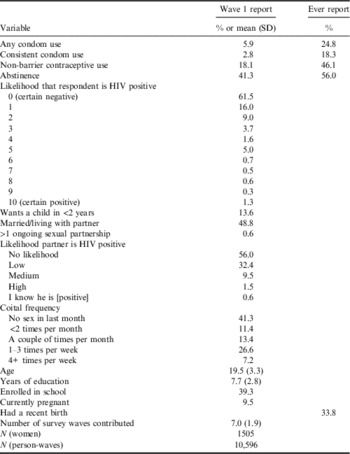
Table 1 includes descriptive statistics measured at Wave 1 for the sample of young Malawian women. The average age of respondents is 19.5 years and the mean number of survey waves contributed during the study is seven. Around 59% of the women in the sample are in an ongoing sexual relationship at Wave 1 (not shown) and almost half (49%) are married. Less than 1% of women report more than one ongoing sexual relationship. The average number of years of education is 7.7, or just below completed primary, and 39% of women are enrolled in school. Approximately 14% of women report they would like to have a child as soon as possible and 10% are currently pregnant. Thirty-four per cent of respondents have a child at some point during the study. Among sexually active respondents the modal frequency of intercourse is 1–3 times per week. The majority of women believe their partner is HIV negative: 56% report there is no likelihood that their partner is infected and 32% believe their partner is at a low risk of infection. Most women perceive themselves to be at a low risk of infection as well. At baseline, 62% of women report they are certain they are HIV negative (0 beans), 37% are uncertain about their HIV status and believe they are at some risk of being positive (1–9 beans) and 1% report they are certain they are HIV positive (10 beans). The modal category for women who believe they are at some risk of current infection is reporting 1 bean (16% of respondents).
Descriptive statistics of Malawian women aged 15–25 at baseline interview, TLT 2009–2011

Turning to the dependent variables described in Table 1, at Wave 1 approximately 6% of women report using condoms at least once during their last three sexual encounters during the past month with any current partner, whereas 3% report using condoms consistently over the last three encounters with all current partners. However, substantially more women report using condoms at some point during the study: around a quarter of respondents report using condoms at least once during their previous three sexual encounters and 18% report using condoms consistently. For non-barrier contraceptive methods, around 18% of women report their use at Wave 1 and 46% report their use at some point during the study. Abstinence is common among the young women in the sample: 41% report that they are not in a sexual relationship at Wave 1, and more than half (56%) report abstinence at some point during TLT.
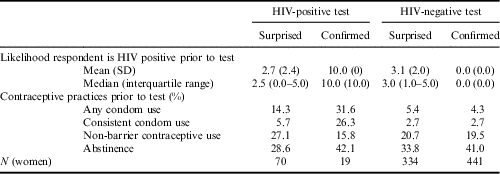
Table 2 provides information about the four key predictor variables that combine women’s HIV test results with prior perceptions of their status (surprised positive, surprised negative, confirmed positive and confirmed negative). During the course of the study, approximately 5% (70/1505) of women were surprised to test HIV positive. One per cent (19) of respondents received a positive test result that confirmed a prior perception that they were positive. Comparatively, 22% (334) of respondents were surprised to learn they were HIV negative and 29% (441) received a confirmatory negative test result at some point during the study. On average, women who were surprised to learn of their HIV test result (whether positive or negative) reported that their likelihood of being HIV positive prior to the test was a 3 (in beans). In other words, women who were surprised to test positive and those who were surprised to test negative reported the same level of uncertainty (on average) about their HIV status prior to the test.
HIV status, perception of status and contraceptive practices of Malawian women aged 15–25, TLT 2009–2011
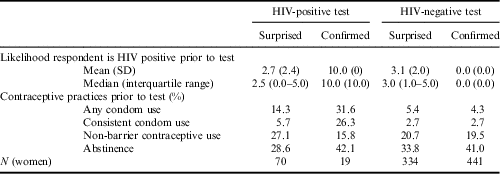
Contraceptive practices varied prior to the TLT HIV test by women’s subsequent test results and prior perceptions (Table 2). Most notably, a higher proportion of women who were certain they were HIV positive before testing (10 beans) reported using condoms than any other group (32% used condoms at all and 26% used condoms consistently, compared with 14% and 6%, respectively, among women who were surprised by their positive test result). Additionally, abstinence seems to be associated with certainty about one’s HIV status: around 42% of women who were certain they were positive and 41% of women who were certain they were negative were not in a sexual relationship at the wave they were tested for HIV.
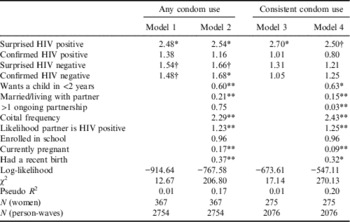
Table 3 presents odds ratios from fixed-effects logistic regression models predicting any condom use (Panel 1) and consistent condom use (Panel 2) at the last three sexual encounters. Both a surprise HIV-positive test and an HIV-negative test (whether a surprise or confirmatory) significantly increased the odds that a respondent used condoms (marginally significant for women who tested negative). When the potential mechanisms were added in Model 2, the associations between surprise test results (positive and negative) and an increase in condom use remained significant, while the positive effect of a confirmatory negative test on an increase in condom use increased in significance (p<0.05). Several mechanisms significantly reduced women’s odds of using condoms: desiring to have a child sooner, getting married or living with a partner, becoming pregnant and having a birth since the last survey. There was a strong positive association between having sex more frequently and using condoms. Additionally, an increase in the perceived risk that one’s partner was HIV positive had a strong positive association with increased condom use.
Odds ratios from fixed-effects logistic regression models predicting condom use after HIV testing, Malawian women aged 15–25, TLT 2009–2011

Note: Models include fixed effects for study Waves 1–8.
**p<0.01; *p<0.05; †p<0.10.
Turning to Panel 2, Models 3–4 examine the predictors of a change from no use or some condom use to consistent condom use at the last three sexual encounters (with all current partners). Similar to the results for any condom use, Model 3 shows that women who were surprised to test positive experienced a significant increase in their odds of using condoms consistently (p<0.05). Model 4 includes mechanisms that may influence changes in consistent condom use. Most of the added variables have similar relationships as those identified in the models predicting any condom use, with one notable exception. The negative association between having more than one sexual partner and consistent condom use was significant in this model (p<0.01). The inclusion of the mechanisms that might be on the pathway between the test result and changes in condom use (especially a woman’s perception of her partner’s HIV status as identified in stepwise models, not shown) weakened the effect of a woman’s surprise HIV-positive test result so that it was only marginally significant (p<0.10).
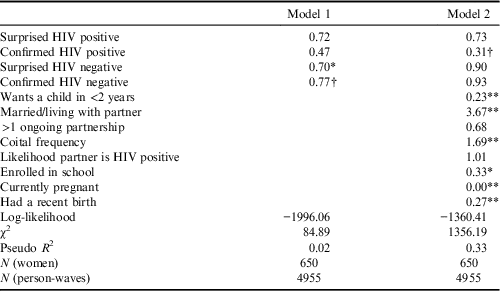
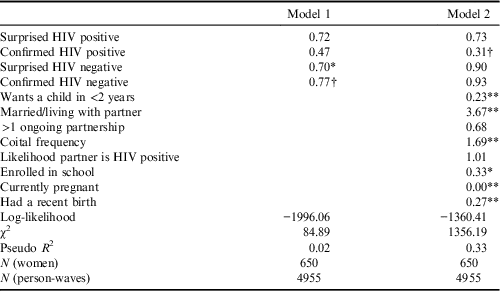
Table 4 provides results for models predicting changes in the use of non-barrier contraceptive methods following HIV testing. Model 1 shows that women who were surprised to test negative were significantly less likely to use non-barrier contraceptive methods after HIV testing (p<0.05). Women whose negative tests confirmed their prior perceptions were also less likely to use non-barrier methods following an HIV test, although this finding was of borderline significance (p<0.10). Several mechanisms (Model 2) were significantly associated with changes in non-barrier contraceptive use. Women who enrolled in school, became pregnant, recently had a new birth, or desired to have a child sooner were significantly less likely to use non-barrier contraception after HIV testing. Getting married or living with a partner was positively associated with the use of non-barrier contraceptive methods. Additionally, an increase in coital frequency was associated with increased use of non-barrier contraceptive methods. In contrast to the condom results, an increase in the perceived likelihood that one’s partner was HIV positive was not associated with changes in non-barrier contraceptive use. After including the mechanisms in Model 2, the negative association between a confirmatory HIV-positive test result and a lower likelihood of non-barrier contraceptive use reached marginal significance (p<0.10). Additionally, the associations between testing negative (surprise or confirmatory) and a lower likelihood of using non-barrier contraceptive methods lost statistical significance. This suggests that mechanisms such as changes in the desired timing of the next birth, getting married (or divorced) and increases in coital frequency, are on the causal pathway linking a negative test result with reductions in the use of non-barrier methods.
Odds ratios from fixed-effects logistic regression models predicting non-barrier contraceptive use after HIV testing, Malawian women aged 15–25, TLT 2009–2011
Note: Models include fixed effects for study Waves 1–8.
**p<0.01; *p<0.05; †p<0.10.
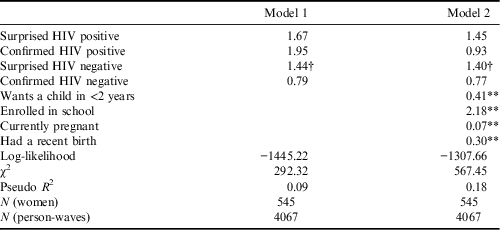
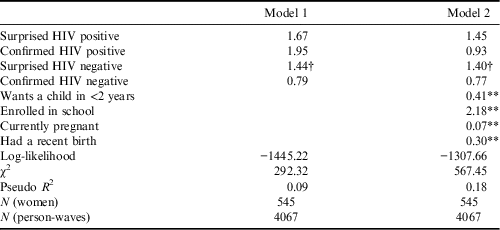
Table 5 presents results from models predicting changes in abstinence among women after HIV testing. Model 1 shows that receiving a surprise negative test result was associated with an increase in the odds of practising abstinence (marginal significance, p<0.10). A confirmatory HIV negative test result did not have the same effect and actually trended in the opposite direction. Model 2 shows that enrolling in school significantly increased the odds that a woman would practise abstinence, whereas desiring to have a child sooner, becoming pregnant and having a recent birth significantly decreased the odds of practising abstinence. After adding the mechanisms in Model 2, the association between a surprise negative text and abstinence retained its borderline significance.
Odds ratios from fixed-effects logistic regression models predicting abstinence after HIV testing, Malawian women aged 15–25, TLT 2009–2011
Note: Models include fixed effects for study Waves 1–8.
**p<0.01; †p<0.10.
Discussion
This study found that young Malawian women frequently changed their contraceptive practices following HIV testing. Women who were surprised to learn they were HIV positive were significantly more likely to start using condoms and to employ condoms consistently after receiving their test result. Additionally, women whose negative test was a surprise and those whose negative test simply confirmed their prior perceptions of their status were also somewhat more likely to increase condom use after receiving their test result. These results suggest that the TLT HIV testing and counselling efforts were effective at encouraging condom use by women who received HIV testing, especially among those who were surprised to test positive. The study’s results from a population-based sample of young women are generally consistent with studies of HIV testing and counselling that have found some secondary preventative effect (increased condom use among people who test positive); however, in contrast to previous clinic-based research (e.g. Weinhardt et al., Reference Weinhardt, Carey, Johnson and Bickham1999; Sherr et al., Reference Sherr, Lopman, Kakowa, Dube, Chawira and Nyamukapa2007), the current study also found increased condom use among women who tested negative regardless of their perceptions of their HIV status prior to the test. Nonetheless, the observed increase was in any condom use and not in consistent condom use, which may not necessarily indicate a reduction in risk behaviour if occasional condom use is coupled with risky partnerships.
The study additionally found that following an HIV-negative test women were less likely to use non-barrier contraceptive methods. The relationship was particularly strong among women who were surprised by their negative test result and these same women were more likely to be abstinent in the period following their test, which may explain their lower use of non-barrier methods. The significant relationships between a negative test result and changes in non-barrier contraceptive methods and abstinence were mediated by mechanisms such as fertility preferences, relationship status and recent reproductive experiences (pregnancy and birth). Supplemental analyses (not shown) found that women who received a surprise negative test were significantly less likely to be in a sexual relationship after their test and women whose negative test confirmed their perception that they were HIV negative were significantly more likely to want to speed up their childbearing following the test. Taken together, these findings suggest divergent mechanisms linking an HIV-negative test to reduced use of non-barrier contraceptive methods: a woman whose negative test confirms her prior perception of her status may go ahead and have a child while she has confirmation of her health, while a woman who is surprised by her negative result may end the relationship she thought had put her at risk. Additionally, for those women who were surprised by their negative status but nonetheless stayed in their relationships, the findings indicate that they might be more diligent about protecting themselves by using condoms.
This study also examined how changes in a woman’s perception of her partner’s HIV status affected her contraceptive practices. The results indicate that just as a respondent’s HIV-positive test is associated with increased condom use, so is an increase in the perception that her partner is HIV positive. This suggests that both partners’ HIV statuses influence the likelihood of condom use within relationships, and that couple-based testing and counselling services may be a useful way to increase condom use in couples where one or both partners test positive.
An important aspect of the current study is the inclusion of a random sample of young unmarried women who moved into and out of sexual relationships during the course of the study. Such a sample has rarely been used in previous research on HIV testing and changes in contraceptive practices and yet is likely to better approximate the types of women who will increasingly get tested for HIV through newer and alternative means, such as home-based testing or testing in schools. Nonetheless, this study is limited by the small sample of women who felt certain they were HIV-positive prior to the test (n=19). This limits the ability to draw conclusions about this group and to incorporate interaction effects examining potentially different roles of mechanisms for women receiving a surprise or confirmatory HIV test result.
This study builds on recent research that has found that prior perceptions of HIV status are important to consider when trying to assess for behavioural changes following HIV testing (Yeatman, Reference Yeatman2009a; Baird et al., Reference Baird, Gong, McIntosh and Ozler2014; Gong, Reference Gong2014). This paper extends these studies by examining the effect of an HIV test result in tandem with prior perceptions of HIV status on women’s post-test contraceptive practices. Researchers and policymakers interested in the effects of HIV testing on contraceptive practices and on other sexual or non-sexual outcomes should bear in mind that for many individuals, especially under expanding models of opt-out testing, a test result may offer little new information from which to expect a behaviour change. This is evident in our finding that women who were certain they were positive before the test – ostensibly because they previously received a positive test result elsewhere – reported no change in contraceptive practices after HIV testing. In other words, it is likely that these women had already modified their contraceptive behaviours accordingly (as suggested by their use of condoms prior to the test) and thus evinced no change in use because their test result simply confirmed what they already knew. In contrast, women who were uncertain about their HIV status prior to the test and thus were surprised to test positive significantly increased their condom use, an association that was robust to the inclusion of mechanisms that are also likely to affect contraceptive practices. This suggests that a surprise test has a direct effect on women’s condom use, reinforcing the importance of uncertainty for understanding behavioural changes following HIV testing.
Further, this study showed that a negative HIV test result can have multiple effects on reproductive behaviour. The findings suggest that some of the increase in condom use and the reduction in non-barrier contraceptive use following an HIV-negative test may be driven by changes in fertility preferences or reduced sexual exposure associated with the test result. To the extent that a negative test leads to reduced use of condoms or non-barrier contraceptive methods because of a desire to get pregnant, as long as the decision is made with knowledge of a woman’s own and her partner’s status, it has little implication for vertical transmission of HIV. However, if this same HIV-negative woman has incomplete knowledge of her partner’s status, reducing the use of condoms or non-barrier contraceptive methods to have a child sooner could put her at risk of both horizontal and vertical transmission if her partner is positive.
Broadly, the study’s results indicate that HIV testing can have real implications for contraceptive behaviours, emphasizing further need to integrate family planning with HIV testing and counselling services and to expand couple-based testing and counselling services in sub-Saharan Africa. The finding that women who received a confirmatory HIV-positive test result were less likely to use non-barrier contraceptive methods suggests that these women may be at a higher risk of unintended pregnancy if they are not employing condoms perfectly with every sexual partner. These findings provide an impetus for researchers interested in the effects of HIV testing on behaviour to take individuals’ prior perceptions of their HIV status into account because of the likelihood that perceptions will be important for how individuals react to their test result and whether and how they change their behaviour in response. Both positive and negative HIV test results are likely to motivate individuals to reassess their sexual and reproductive preferences and alter their contraceptive practices. For women who test negative, abstinence may serve as a new strategy of protection against HIV infection and/or pregnancy. For women who test positive, the test result can lead to increased condom use, especially when it offers new information.
Acknowledgments
Tsogolo la Thanzi is a research project designed by Jenny Trinitapoli and Sara Yeatman and funded by grants R01-HD058366 and R01-HD077873 from the National Institute of Child Health and Human Development. Details are available online at: http://projects.pop.psu.edu/tlt. An earlier version of this paper was presented at the 2014 Annual Meetings of the Population Association of America in Boston, MA, USA.