

Your alarm was set to pm. The car wouldn't start. You spilt your coffee.
You have three work presentations in which to disguise your coffee stained sleeve. The kids need picking up.
Your partner was retrenched. ‘What's for dinner?’
‘Stress’ is a concept with which many parents are familiar. According to Lazarus (Reference Lazarus1966), stress is defined as a mismatch between the perceived demands of a given situation and the individual's assessment of their resources to deal with it. Research suggests that parents today are experiencing significantly higher levels of stress than they did 20 years ago (Gardner, Collishaw, Maughan, & Scott, Reference Gardner, Collishaw, Maughan and Scott2009). They have been termed ‘Generation Squeeze’ (Kershaw & Anderson, Reference Kershaw and Anderson2011), in which parents are trying to fulfill the sociocultural expectation of managing everyday tasks while raising flourishing children (Gleed, Reference Gleed2008).
In light of an apparent rise in parental stress and mental health concerns (Gardner et al., Reference Gardner, Collishaw, Maughan and Scott2009), facilitating productive coping responses within this population appears a worthwhile avenue for psychological intervention. Targeting the coping responses of this cohort is additionally advantageous as research suggests children learn various coping behaviours from their parents (Compas, Worsham, & Ey, Reference Compas, Worsham, Ey, La Greca, Siegel, Wallender and Walker1992; Deans, Frydenberg, & Liang, Reference Deans, Frydenberg and Liang2012). While children do not necessarily imitate their parents’ coping practices (due to coping with different circumstances and being at different stages of development), they learn coping options through observation of their parents’ practices.
Coping: Theory, Structure, and Styles
Coping is defined as cognitive and behavioural efforts made by an individual that aim to manage internal or external demands that are appraised as exceeding their resources (Lazarus & Folkman, Reference Lazarus and Folkman1984). Thus, stress is not the direct result of environmental factors, but mediated by the person's perceptions across two levels: (1) assessment of whether a situation is one of stress, harm, loss, or challenge (primary appraisal); and (2) assessment of whether one has the resources to cope with this threat (secondary appraisal).
Coping Structure and Styles
Coping can be divided into three levels of behaviour (Frydenberg & Lewis, Reference Frydenberg and Lewis2002a). The first and most descriptive level is coping actions, which include what we feel, think and do in response to stress. These may be grouped into coping strategies, which define a related set of actions (e.g., worry) and constitute the second level of coping behaviour. The third level is known as coping styles, which are groupings of empirically and/or conceptually related strategies.
Coping styles aim to provide a more global account of coping into which all coping actions and strategies can be grouped. The most frequently cited grouping is that by Lazarus and Folkman (Reference Lazarus and Folkman1984): problem-focused versus emotion-focused; that is, channelling efforts to tackle the problem or stressful situation versus trying to reduce the negative emotional responses associated with stress. Alternatively, coping strategies could be grouped into productive versus nonproductive coping (Frydenberg & Lewis, Reference Frydenberg and Lewis1993, Reference Frydenberg and Lewis1997, Reference Frydenberg and Lewis2002a). Productive strategies refer to coping efforts (either emotion-focused or problem-focused) that are generally helpful in dealing with a problem (e.g., problem solving, seeking social support, physical recreation), whereas nonproductive strategies appear largely unhelpful in dealing with stress (e.g., self-blame, worry and tension reduction; Frydenberg & Lewis, Reference Frydenberg and Lewis2014). This distinction is supported by studies that have found a significant positive correlation between productive coping strategies and higher self-esteem, higher internal locus of control deeper learning, and greater wellbeing (Frydenberg & Lewis, Reference Frydenberg and Lewis2011), and a significant negative association between nonproductive coping strategies and the inverse of the above. Some of the poorest personal outcomes are associated with the self-blame coping strategy (Lewis & Frydenberg, Reference Lewis, Frydenberg and Frydenberg2004). When trying to assist individuals to improve their coping skills, literature highlights the need to increase the use of productive strategies while simultaneously decreasing the use of nonproductive strategies (Frydenberg & Lewis, Reference Frydenberg and Lewis2002a). Coping strategies should be categorised and interpreted with caution, with considerable reference given to the individual and the context where possible, as coping strategies cannot be classified as universally adaptive or maladaptive across all situations (Matthews, Zeidner, & Roberts, Reference Matthews, Zeidner and Roberts2004).
Parent Coping
Parent Coping Outcomes
Parenting can be a stressful endeavour, particularly with the economic, environmental and social pressures of today (Grolnick & Seal, Reference Grolnick and Seal2008; Halpenny, Nixon, & Watson, Reference Halpenny, Nixon and Watson2010; Kershaw & Anderson, Reference Kershaw and Anderson2011). Nevertheless, consistent with the broader body of coping research, studies show that an increase in productive coping strategies increases a variety of positive outcomes for parents. For example, research has found a positive association between productive coping strategies and fewer depressive symptoms in parents of children with diabetes (Blankfeld & Holahan, Reference Blankfeld and Holahan1996), developmental disabilities (Dabrowski & Pisula, Reference Dabrowski and Pisula2010), and a range of special health care needs (Churchill, Villareale, Monaghan, Sharp, & Kieckhefer, Reference Churchill, Villareale, Monaghan, Sharp and Kieckhefer2010). Use of productive coping strategies such as social support, family cohesion and problem-focused coping have been linked with reduced stress in parents whose children suffer from epilepsy (Rodenburg, Meijer, Dekovic, & Aldenkamp, Reference Rodenburg, Meijer, Deković and Aldenkamp2007), as well as in parents of typically developing children (Dabrowski & Pisula, Reference Dabrowski and Pisula2010).
Research has also found a link between nonproductive coping strategies and negative parent outcomes. In a nonclinical large sample of Australian parents with children aged 5 years or under, nonproductive coping strategies such as self-blame and disengagement were related to greater parental fatigue (Cooklin, Giallo, & Rose, Reference Cooklin, Giallo and Rose2011). This fatigue was in turn related to greater parental stress, increased irritability in parent-child communication and lower parental competence. Together, these findings suggest that increased use of productive coping strategies and decreased used of nonproductive coping strategies among the parent population is beneficial, across a variety of parent wellbeing indicators.
Influence of Parent Coping on Children
The influence of parenting styles and parent coping strategies on children's coping is an area that has garnered considerable attention. Research has shown parenting practices and parent-child relationships to be predictive — to some degree — of child coping strategies. For example, parental warmth and support is a predictor of problem-solving coping strategies in children (Wolfradt, Hempel, & Miles, Reference Wolfradt, Hempel and Miles2003). Another study shows that authoritative parenting from a mother has been found to predict child disclosure, which in turn predicts positive coping strategies (i.e., seeking social support and self-reliance/problem solving) (Almas, Grusec, & Tackett, Reference Almas, Grusec and Tackett2011). Aligned with these findings, increased relationship quality in mother-child relationships is predictive of greater coping efficacy and active coping in children (Velez, Wolchik, Tein, & Sandler, Reference Velez, Wolchik, Tein and Sandler2011), while lack of attachment and perceived parental rejection is related to an elevated risk of nonproductive coping styles (Bamberg, Toumbourou, Blyth, & Forer, Reference Bamberg, Toumbourou, Blyth and Forer2001; Meesters & Muris, Reference Meesters and Muris2004, respectively). Fathers’ coping strategies have been found to exert an influence on child coping, with father coping strategies predictive of their sons’ aggression levels at school (Foster, Reese-Weber, & Kahn, Reference Foster, Reese-Weber and Kahn2007). The main avenues through which parents appear to have an effect on their children's coping include parent modelling of coping strategies, as well as the language used to give insight into their emotional experiences and coping responses (Cassano, Perry-Parrish, & Zeman, Reference Cassano, Perry-Parrish and Zeman2007; Deans, Frydenberg, & Liang, Reference Deans, Frydenberg and Liang2012). While the exact nature of the relationship between parent behaviours and child coping remains to be delineated (see Nikkerud & Frydenberg, Reference Nikkerud and Frydenberg2011), theory and research suggest that parenting is an important contributory element in shaping child coping. As such, increasing productive coping and decreasing nonproductive coping in parents benefits not only parent wellbeing indicators, but potentially, child wellbeing too.
Factors Influencing Coping: Gender and Partner Support
A range of individual differences and environmental factors influence how people cope. These include interpretation of events (Folkman, Lazarus, Dunkel-Schetter, DeLongis, & Gruen, Reference Folkman, Lazarus, Dunkel-Schetter, DeLongis and Gruen1986), thinking styles (Zhang, Reference Zhang2004), core self-evaluations (Kammeyer-Mueller, Judge, & Scott, Reference Kammeyer-Mueller, Judge and Scott2009), view of the self within the environment (Lazarus, Coyne, & Folkman, Reference Lazarus, Coyne, Folkman and Neufeld1982), culture (Frydenberg et al., Reference Frydenberg, Lewis, Kennedy, Ardila, Frindte and Hannoun2003), family environment (Compas et al., Reference Compas, Worsham, Ey, La Greca, Siegel, Wallender and Walker1992), gender (Frydenberg & Lewis, Reference Frydenberg and Lewis2002b) and types of resources available (McKenzie, Frydenberg, & Poole, Reference McKenzie, Frydenberg and Poole2004). Findings for coping differences in gender are mixed, with some studies indicating no meaningful differences (Hamilton & Faggot, Reference Hamilton and Fagot1988), while some suggest males use more problem-solving strategies (Folkman & Lazarus, Reference Folkman and Lazarus1980) and females use more nonproductive strategies (Frydenberg & Lewis, Reference Frydenberg and Lewis2002b), social support (Frydenberg & Lewis, Reference Frydenberg and Lewis1991) and emotion-oriented coping (Matud, Reference Matud2004; Ptacek, Smith, & Zanas, Reference Ptacek, Smith and Zanas2006). Having social support as a coping resource is also significantly positively associated with productive coping styles, and significantly negatively associated with nonproductive coping styles (McKenzie et al., Reference McKenzie, Frydenberg and Poole2004). When considering how best to facilitate productive coping skills in parents and limit nonproductive coping, consideration of gender and partner attendance is of interest. This has not been looked at in previous evaluative research on FC (Gulliford, Deans, Frydenberg, & Liang, Reference Gulliford, Deans, Frydenberg and Liang2015)
Wellbeing and Coping
Subjective wellbeing (henceforth termed ‘wellbeing’) is commonly referred to as one's subjective experience of happiness, pleasure, contentment, life satisfaction, positive emotions, and/or a meaningful life (Diener, Napa Scollon, & Lucas, Reference Diener, Napa Scollon and Lucas2003; Seligman & Csikszentmihalyi, Reference Seligman and Csikszentmihalyi2000). The relationship between coping and wellbeing is well established in the literature — specifically, coping strategies predict levels of wellbeing. For example, in a sample of young people (n = 405), problem-focused coping significantly positively predicted wellbeing, while emotion-focused coping negatively predicted wellbeing, though to a lesser degree (Mayordomo-Rodrıguez, Melendez-Moral, Viguer-Segui, & Sales-Galan, Reference Mayordomo-Rodriques, Melendez-Moral, Viguer-Segui and Sales-Galan2014). This trend of findings extends to the workplace setting, where Cheng, Mauno and Lee (Reference Cheng, Mauno and Lee2014) found that more engaged coping strategies reduced the negative effects of job insecurity on employee wellbeing, and with children, whereby increased knowledge of coping strategies was linked with greater positive affect (one component of wellbeing) (Fiorelli & Russ, Reference Fiorelli and Russ2012). This body of research thus positions use of productive coping strategies as positively associated with wellbeing, and nonproductive coping strategies as negatively associated with wellbeing.
Teaching Parents Coping Skills
Improving Parent Coping: Social Emotional Parenting Programs
A popular medium for improving parent wellbeing is social emotional parenting programs (e.g., ‘Tuning into Kids’; Havighurst, Wilson, Harley, & Prior, Reference Havighurst, Wilson, Harley and Prior2009; and ‘Cool Little Kids’; Bayer et al., Reference Bayer, Rapee, Hiscock, Ukomunne, Mihalopoulos, Clifford and Wake2011). These programs are often delivered within a positive parenting framework, where an emphasis on parental warmth, acceptance, effective communication and behavioural management strategies aims to develop confident, caring and balanced parenting (The Positive Parenting Network of Australia, 2013; Sanders, Reference Sanders2008). The ultimate goal of these programs is to develop the child's social and emotional competencies through addressing parent-specific variables (e.g., communication practices and parent behaviours). In so doing, these programs aim to indirectly improve parent coping. However, until recently, no parenting program has been offered that explicitly and comprehensively focused on improving parent coping. When seeking to improve coping, an explicit focus is important as it provides a common language for understanding coping responses, and provides a basis for parent reflection on their coping behaviours. This lack of direct focus in parenting programs is mirrored in evaluation measures, where coping scales have scarcely been employed.
Families Coping
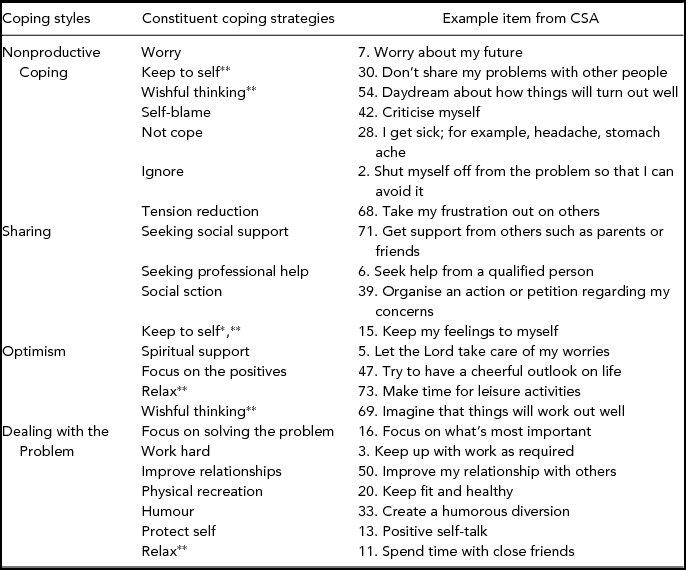
In an attempt to address this gap in the social emotional parenting programs on offer, Frydenberg (Reference Frydenberg2015) designed ‘Families Coping’ (FC) — a 10-hour universal social emotional parenting program within the framework of positive parenting. This program is based on the transaction model of stress and coping (Lazarus & Folkman, Reference Lazarus and Folkman1984) and draws upon research on parent and child coping (Frydenberg, Deans, & Liang, Reference Frydenberg, Deans and Liang2014). As well as explicitly addressing coping models and behaviours, it employs the Coping Scale for Adults (CSA; Frydenberg & Lewis, Reference Frydenberg and Lewis1997 — refer to Table 1 for details) as a reflective learning tool at the beginning of the program and upon completion of the program. FC has undergone pilot evaluation across parent and child coping and wellbeing measures, as well as qualitative analysis of parents’ experience throughout the program (Gulliford et al., Reference Gulliford, Deans, Frydenberg and Liang2015). This pilot study evaluated coping and wellbeing changes with 14 parents (3 fathers and 11 mothers) who completed a minimum of three sessions, with children aged from 3.25 years to 4.92 years. These findings showed a significant decrease in nonproductive parent coping, and a nonsignificant increase in productive parent coping and wellbeing. Results from this study also indicate significant increases in the use of coping strategies, such as improved relationships, seeking relaxing diversions and physical recreation; and significant decreases in worry, tension, self-blame, and keeping to self (Gulliford et al., Reference Gulliford, Deans, Frydenberg and Liang2015).
Coping Strategies that Constitute the Four Coping Styles, With Example Items (Frydenberg & Lewis, Reference Frydenberg and Lewis1997)

The aim of this study was to establish whether parents who experience FC benefit from increased parent use of productive coping strategies, decreased nonproductive coping strategies, and increased parent wellbeing, within a positive parenting framework. Using a combined data set from two studies conducted in 2013 and 2014, it was also of interest to investigate the relative utility of the program for groups within the sample (i.e., male versus female, partnered attendance versus single attendance), as averaging results of program evaluation across participant groups can mask important effects (Rossi, Lipsey, & Freeman, Reference Rossi, Lipsey and Freeman2004).
Method
Participants
The data set combined two groups of parents of preschool-aged children from an Early Learning Centre (ELC) in inner-metropolitan Melbourne in 2013 (14 parents: 3 fathers, 11 mothers) and 2014 (9 parents: 2 fathers, 7 mothers) who undertook the FC parenting program and attended a minimum of three out of five sessions. Program attrition and/or final session absence included parents travelling to conferences and taking care of sick children. The final combined sample totalled 23 parents (5 fathers, 18 mothers). The ages of children in the final sample ranged from 3:3 years to 14:0 years (M = 4:8, SD = 2:8); and 10 families had additional children, aged between 1:2 years and 12:0 years (M = 6:0, SD = 3:10). Parent dyads represented 47.8% of the final sample.
The Program
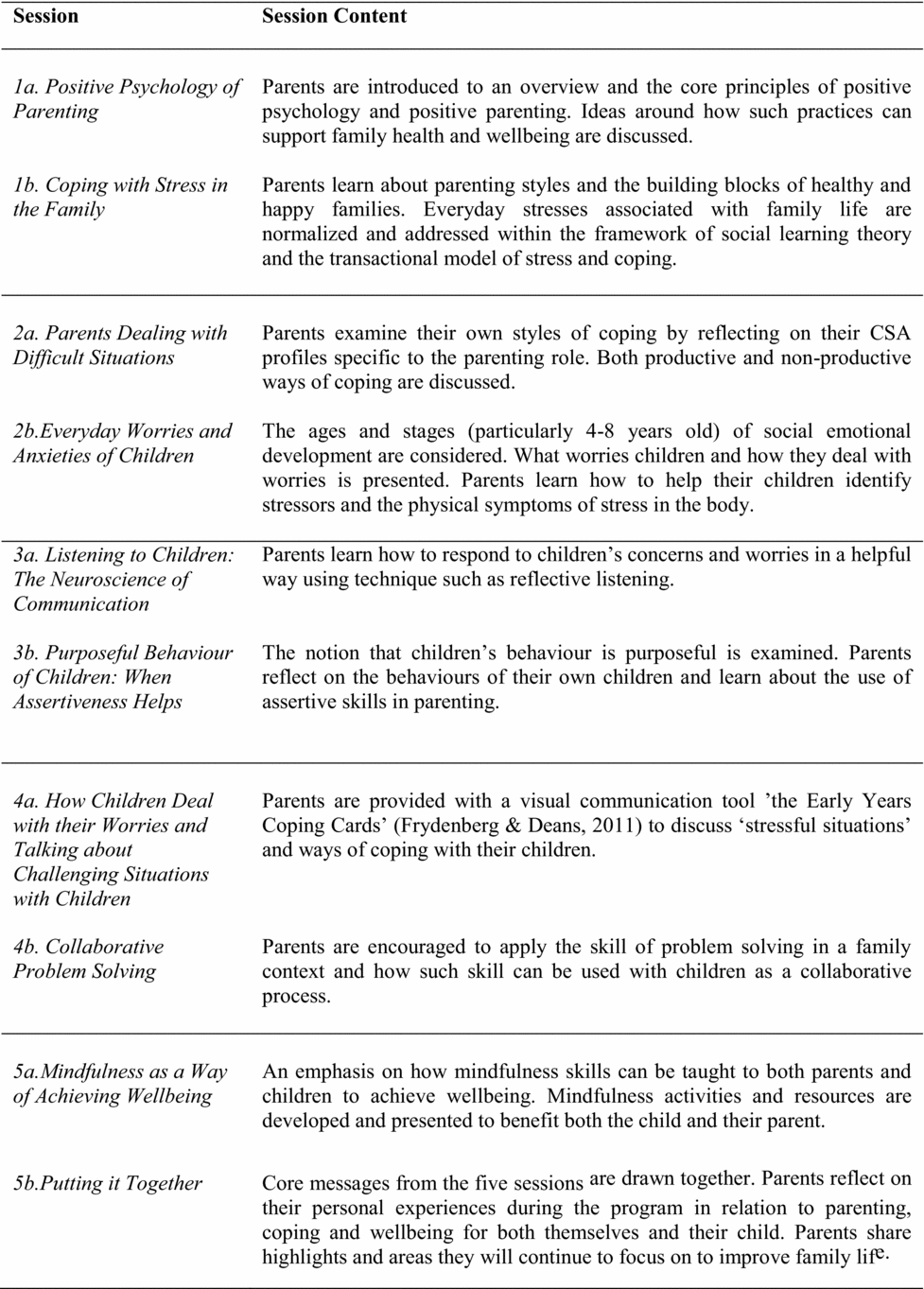
FC (Frydenberg, Reference Frydenberg2015) is a five-session, group-based universal parenting program based upon positive parenting principles with a specific focus for each session (see Figure 1 for an overview of session content), that together aim to achieve two central goals: (1) enhancing parent communication skills; and (2) providing psychoeducation and strategies for parents to increase their productive coping skills, decrease their nonproductive coping skills, and discuss coping concepts and strategies with their children. Core session content is delivered by a trained session facilitator through direct instruction, as well as through the use of workbooks and facilitation of parent role-plays and discussions. Parents were encouraged to share their own experiences and difficulties associated with parenting.
Overview of Session Content in Families Coping (FC; adapted from Gulliford, Deans, Frydenberg, & Liang, Reference Gulliford, Deans, Frydenberg and Liang2015).
Measures
During the first and last session of FC, a research booklet was distributed to each participant to individually complete the measures in a paper and pencil format. This booklet contained a program intake form and post-program evaluation form. The program intake form included family demographics, the Coping Scale for Adults (CSA; Frydenberg & Lewis, Reference Frydenberg and Lewis1997), and a parent wellbeing measure. The post-program evaluation form included an open-ended question on coping and wellbeing change, the CSA, and a parent wellbeing measure. These questionnaires were utilised as part of the program content. Partner attendance (rather than status) was recorded by the researcher.
Parent coping
Parents completed Frydenberg and Lewis’ (Reference Frydenberg and Lewis1997) 74-item CSA-Specific Long Form before and immediately after the program to select how often they use a particular coping response during times of stress or worry in the context of parenting. Answers are recorded on a Likert scale ranging from 1 (doesn't apply/don't do it) to 5 (used a great deal). Individual items are summed and averaged to reveal 19 conceptually and empirically distinct coping strategies that are then further summed and averaged to provide four composites (or ‘styles’): Nonproductive Coping and productive coping (Sharing, Optimism and Dealing with the Problem; see Table 1 for coping styles, their constituent 19 coping strategies, and example items). In this research, the four styles are drawn upon as the primary measures of coping. Reference is made to the 19 coping strategies in order to gain further insight into the nature of change within the styles.
As well as being a widely-used research tool, the CSA was well suited to FC as it enables adults to reflect on their coping strategies in particular contexts (Frydenberg & Lewis, Reference Frydenberg and Lewis2014), and as part of the program it stimulates group discussions around coping, provides sufficient information to undertake self-directed change, and enables the widest range of coping behaviours to be considered (Frydenberg & Lewis, Reference Frydenberg and Lewis2002a).
Parent (subjective) wellbeing
Parents rated their wellbeing in relation to parenting pre- and post-program. A single-item measure was employed, whereby parents were asked ‘How do you feel about your general wellbeing in relation to parenting on a scale of 1–10’ (1 = extremely poor general wellbeing, 10 = extremely good general wellbeing). Single-item measures of subjective wellbeing have demonstrated reliability and validity (see Diener et al., Reference Diener, Napa Scollon and Lucas2003).
Procedure
Ethics approval was obtained from the University of Melbourne and endorsement for the program was given by the Director of the ELC. Parents were informed about FC via the ELC's newsletter and pigeon-hole invitations. Parents participating were provided with a Plain Language Statement and an Informed Consent Form at the commencement of the program. Participants were informed that their participation in the research component of the program was voluntary and would not impact upon their involvement in the program. Parents were also encouraged to speak to the principal researcher if they felt they needed individualised support.
Design
The study employed a repeated measures design, whereby participants completed the CSA and wellbeing measure pre-program (Time 1) and again post-program (Time 2). The study also employed a concurrent mixed-methods design in order to enhance interpretation of findings (Onwuegbuzie & Leech, Reference Onwuegbuzie and Leech2004) and provide greater depth of information than is offered by one method alone (Braun & Clarke, Reference Braun and Clarke2006).
In accordance with the study's research questions, coping and wellbeing variables were examined at the whole group level (N = 23), and between two different groupings: gender (5 males, 18 females) and partner attendance (12 single attenders, 11 partnered attenders; see Figure 2). Qualitative data was drawn upon to extend findings across each of these groupings.
Schematic representation of research design. Diagram outlines sample groupings, while boxes to the left show corresponding research questions and methodological approach.
Analysis
Quantitative data
Quantitative data were analysed using the IBM Statistical Package for the Social Sciences (SPSS) Version 21.0. Paired-samples t tests were conducted for coping strategy pairs across time. A one-way repeated measures multiple analysis of variance (RM-MANOVA) was employed to simultaneously examine the change of the dependent variables: the four coping styles (Nonproductive Coping, Sharing, Optimism, and Dealing with the Problem) and Wellbeing, between the two time points (Time 1 and Time 2). To examine whether gender or partner attendance significantly affected change in coping and wellbeing, gender and partner attendance were entered as grouping variables into the RM-MANOVA and their interactions with time were examined. Data were examined to ensure no serious violations to the RM-MANOVA assumptions (Pallant, Reference Pallant2011).
Qualitative data
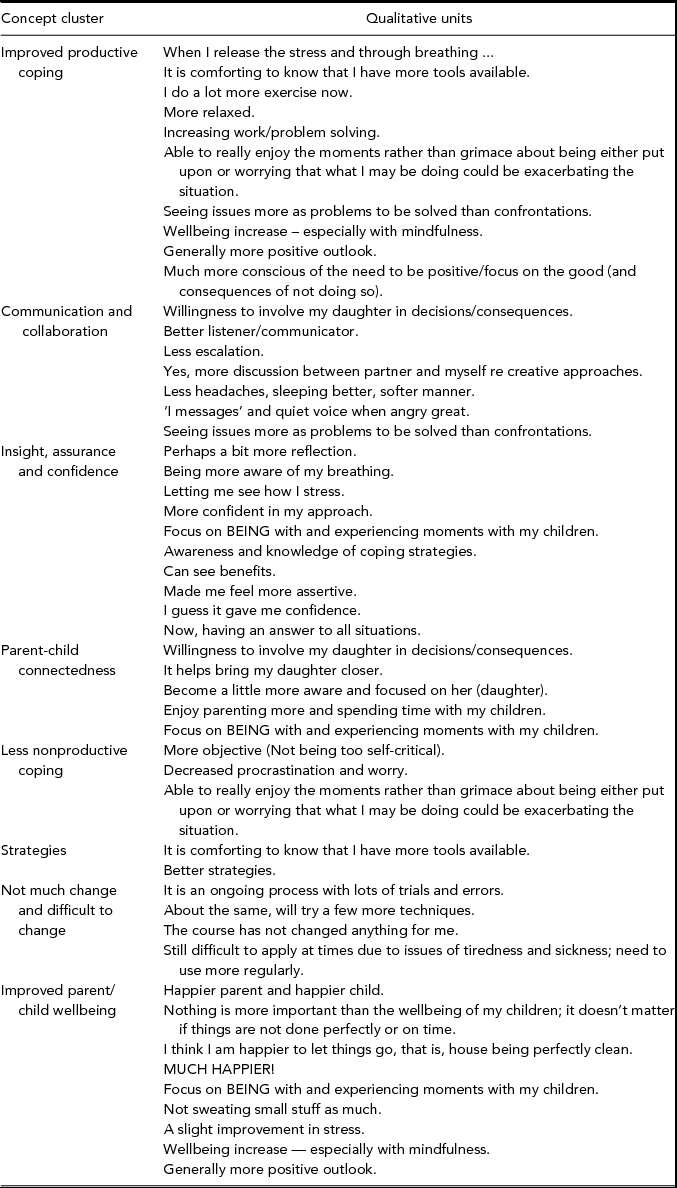
Qualitative data were analysed via a modified application of concept mapping (Jackson & Trochim, Reference Jackson and Trochim2002), in accordance with Gulliford et al.’s (Reference Gulliford, Deans, Frydenberg and Liang2015) approach of sorting single-phrase units into piles according to similarity of concept (see Table 7 for single-phrase units sorted into concept clusters). All qualitative data from 2013 and 2014 were re-sorted with considerations given to Gulliford et al.’s (Reference Gulliford, Deans, Frydenberg and Liang2015) original cluster groupings by two independent raters. Interrater reliability was 84% agreement — an acceptable level (Neuendorf, Reference Neuendorf2002). The percentage of parents who contributed to a cluster was calculated to establish the concept's representativeness among the group. Results were grouped for the total sample, according to gender, and according to partner attendance.
Thematic Clusters and Corresponding Parent Statements for Coping and Wellbeing Question
Results
Data Cleaning
All data were inspected for accuracy of entry as well as for missing values. Little's Missing Completely at Random (MCAR) test was conducted on the missing data from two participants (one item each) and it revealed that data were missing completely at random, χ² (294) = 0, p = 1.00. The two values were replaced with the average variable score as there was no discernable pattern for missing data (Schafer & Graham, Reference Schafer and Graham2002).
Descriptive Statistics
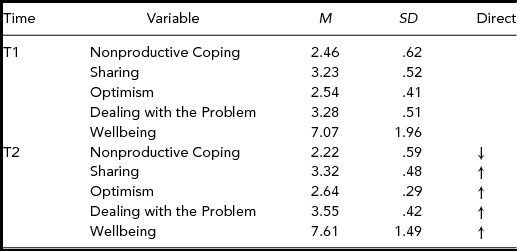
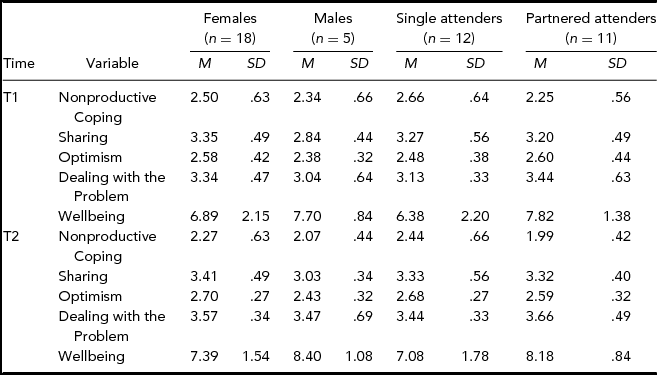
Preliminary information on the basic trends of the data and insight into the unique ‘baseline’ coping and wellbeing conditions of the total sample and the two groupings (gender and partner attendance) are presented in Tables 2 and 3.
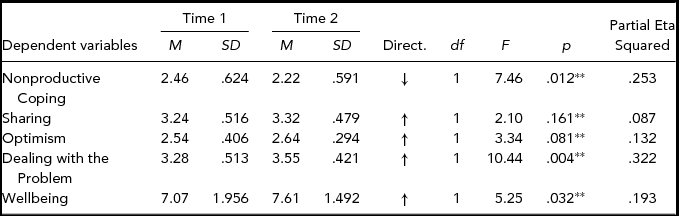
Means, Standard Deviations and Direction of Change for Dependent Variables Across Time 1 and Time 2 (N = 23)
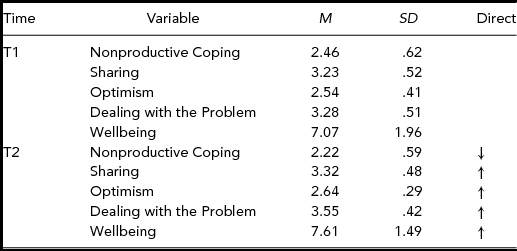
Means, Standard Deviations and Direction of Change for Dependent Variables Across Time 1 and Time 2 for Female vs. Male and Single Attenders vs. Partnered Attenders (N = 23)
Quantitative Analyses
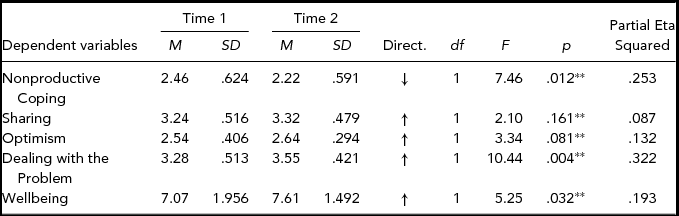
There was a statistically significant difference between Time 1 and Time 2 on the combined dependent variables, F(5, 18) = 2.966, p = .040; Pillai's trace = .452; partial eta squared = .452. When the results for the dependent variables were considered separately, three reached significance using an alpha level of .05: Nonproductive Coping (significant decrease), Dealing with the Problem (significant increase) and Wellbeing (significant increase; see Table 4).
Univariate Results from RM-MANOVA Across all Dependent Variables
Note: *p < .05, **p < .01.
These results indicate that Nonproductive Coping, Dealing with the Problem, and Wellbeing significantly changed as a function of time. Importantly, the effect size statistic (partial eta squared) for these three variables was large to very large (i.e., ≥.14; Cohen, Reference Cohen1988). This indicates that 25.3% of the change in Nonproductive Coping is explained by time, 32.2% of the change in Dealing with the Problem is explained by time, and 19.3% of the change in Wellbeing is explained by time.
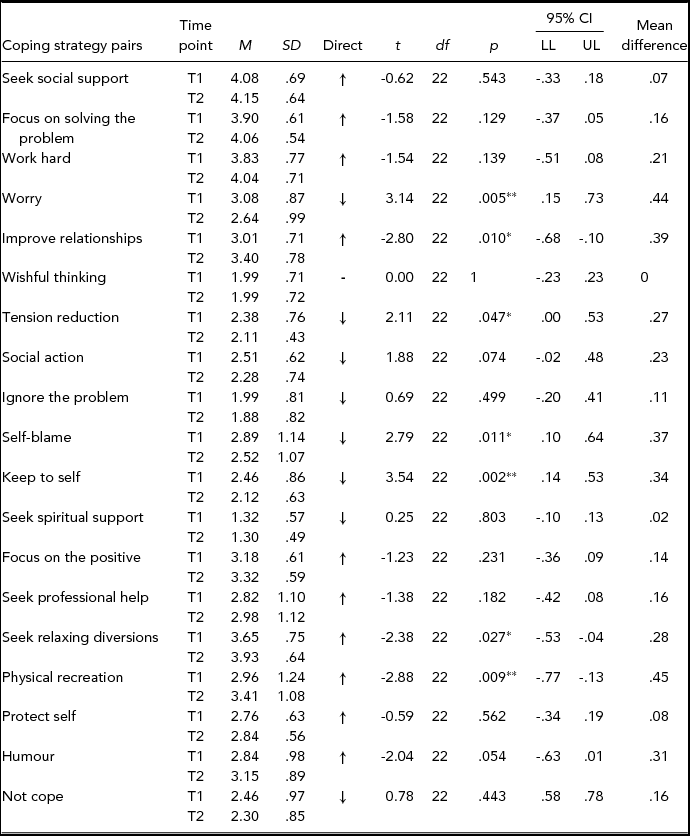
When considering the specific coping strategies that made the largest contributions to the decrease in Nonproductive Coping, four were identified: keeping to self (M1: 2.46, M2: 2.12), self-blame (M1: 2.89, M2: 2.52), tension reduction (M1: 2.38, M2: 2.11) and worry (M1: 3.08, M2: 2.64; see Table 5Footnote 1). The coping strategies that primarily contributed to an increase in Dealing with the Problem were increases in physical recreation (M1: 2.96, M2: 3.41), improving relationships (M1: 3.01, M2: 3.40) and seeking relaxing diversions (M1: 3.65, M2: 3.93).
Comparing Coping Strategy Pairs Across Time: Results from Paired-Samples t Tests
Note: *p < .05, **p < .01.
Exploratory Analyses
Gender
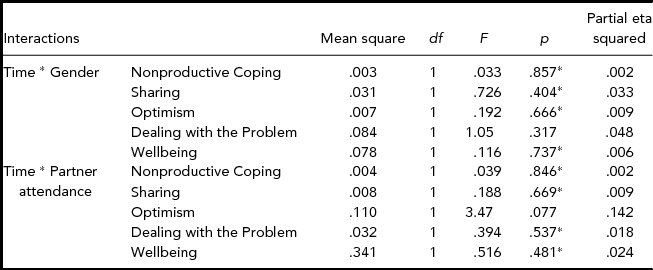
Within-subjects results from the RM-MANOVA revealed no significant interaction between gender and time across the five dependent variables (see Table 6). The dependent variable that showed the greatest degree of change variability when considering gender was Dealing with the Problem, where males increased more than females (though not to a statistically significant degree; see Figure 3). Specifically, while males had a lower combined average on Dealing with the Problem than females pre-program, the difference was lessened post-program.
RM-MANOVA Within-Subjects Effects Between Time and Gender, and Time and Partner Attendance
Interaction between Dealing with the Problem and Gender.
Partner attendance
Within-subjects results from the RM-MANOVA revealed no significant interaction between partner attendance and time across the five dependent variables (see Table 6). The dependent variable that showed the greatest degree of change variability when considering partner attendance was Optimism, where single attenders employed Optimism coping strategies less frequently than partnered attenders pre-program, but the difference was reversed post-program, with single attenders employing Optimism strategies more frequently than partnered attenders (see Figure 4). For example, single attendees generally increased their use of item 69, ‘Imagine things will turn out all right’ (M1: 2.33, M2: 2.83), more than the partnered attendees (M1: 2.27, M2: 2.00), who reduced that strategy.
Interaction between Optimism and Partner Attendance.
Qualitative Analyses
Total sample coping and wellbeing change
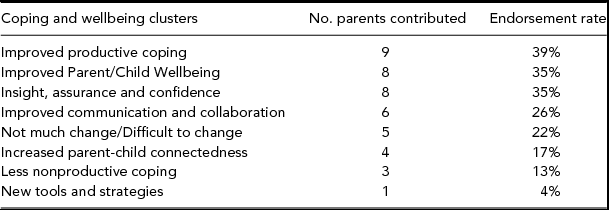
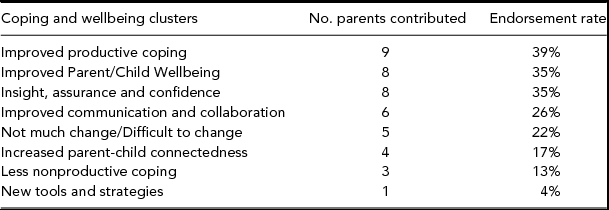
Almost half of the parents recorded improved productive coping (see Table 8 for the thematic clusters extracted from the total sample, including the number of parents who contributed to each cluster and the corresponding endorsement rate among parents). When looking at the specific productive coping strategies, increased physical recreation, relaxation, problem solving and a positive outlook were common themes. The majority of these coping strategies belong in the Dealing with the Problem coping style, consistent with the significant statistical increase found in Dealing with the Problem. Fewer parents recorded decreases in nonproductive coping (13%). This is somewhat inconsistent with the significant decrease in Nonproductive Coping identified. Over a third of parents reported increases in their wellbeing, or their child's wellbeing, as a result of FC. This is consistent with the significant increase in Wellbeing reported by parents. Together, these results are mostly consistent with the statistical coping and wellbeing changes, and suggest participant awareness of change.
Thematic Clusters from Parents’ Open-Ended Responses on Coping and Wellbeing Change Across Total Sample (N = 23)
Gender
Coping and wellbeing change
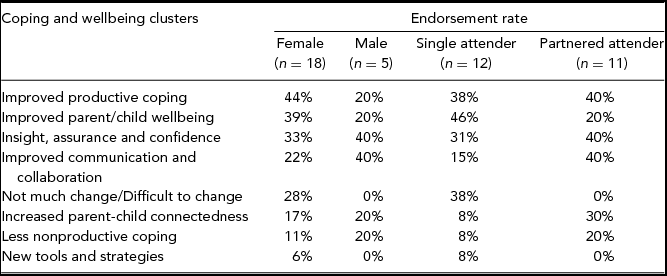
Women endorsed improvements in productive coping twice as much as men (see Table 9). As previously mentioned, the majority of productive coping strategies qualitatively reported belonged to the Dealing with the Problem coping style (see Table 9). This trend was not statistically significant in the quantitative findings. Males qualitatively endorsed decreasing in nonproductive coping skills twice as much as females, though this difference was not detected statistically. Females endorsed improvement in wellbeing twice as much as males, though no statistically significant difference was found. Higher endorsement of improved coping and wellbeing among females was matched with 28% endorsement of no change or minimal change — a category to which males did not contribute. Overall, females reported more dramatic effects of the program (both positive and negative), while males reported more conservatively, and yet showed greater numeric change (at least in the areas of Dealing with the Problem).
Thematic Clusters from Parents’ Open-Ended Responses on Coping and Wellbeing Change by Gender and by Partner Attendance (N = 23)
Partner Attendance
Coping and wellbeing change
Single and partnered attenders reported similar improvements in productive coping (see Table 9). This is consistent with the nonsignificant statistical finding. A negligible difference was found between the two groups in lessening nonproductive coping. Single attenders reported improved wellbeing twice as much as partnered attenders, though this was not reflected in statistical findings. Interestingly, no partnered participant recorded no change or minimal change, while two in five single attenders reported limited benefits.
Discussion
This study sought to extend preliminary research on the utility of FC, a social-emotional parenting program that aims to improve parent coping behaviours (Frydenberg, Reference Frydenberg2015). Parents significantly increased in one productive coping style (Dealing with the Problem) and significantly decreased in Nonproductive Coping upon completion of FC. The corresponding large effect size associated with these changes further supports that the change was meaningful. Parents’ self-reported wellbeing also significantly increased post-program. Over a third of parents endorsed wellbeing improvement in their qualitative responses, while others reported improved insights, connectedness and coping behaviours that may indirectly endorse improved wellbeing. This indicates that many parents could identify meaningful increases in happiness, positivity and feeling more settled in their parenting role. This is consistent with the changes observed in coping, with research showing a positive association between productive coping and wellbeing (Cheng et al., Reference Cheng, Mauno and Lee2014; Chu-Lien Chao, Reference Chu-Lien Chao2011; Frydenberg & Lewis, Reference Frydenberg and Lewis2011; Mayordomo-Rodrıguez et al., 2014), and a negative association between nonproductive coping and wellbeing (Chu-Lien Chao, Reference Chu-Lien Chao2011; Gustems-Carnicer & Calderon, Reference Gustems-Carnicer and Calderon2013).
In terms of the role of gender, males were found to increase in Dealing with the Problem more than females (though not to a statistically significant degree), with an improved score that was comparable to that of females. One reason might be that FC provides sufficient information and insight to move participants from moderate employment of problem-solving strategies (~3/5) to moderately high employment of problem-solving strategies (~3.5/5). Caution is required when interpreting these results due to the limited male sample (n = 5) and lack of qualitative support, combined with the uncharacteristic gender differences in problem-solving coping strategies (Folkman & Lazarus, Reference Folkman and Lazarus1980; Matud, Reference Matud2004; Ptacek et al., Reference Ptacek, Smith and Zanas2006).
FC appeared mutually beneficial for single attenders and partnered attenders in terms of coping and wellbeing change. While one productive coping strategy — Optimism — saw single attenders improve somewhat more than partnered attenders, the minimal absolute change and limited qualitative information requires further investigation. As noted, when looking at item use it would seem that single attendees in this sample felt a little more optimistic about the future post-program in that they might have gone home to share with their partner the new skills, while those attending in pairs were already ‘in it together’ and did not have that future-related optimism to the same extent. One qualitative difference of note is that none of the partnered attenders reported no change or minimal change in coping and wellbeing, yet 38% of single attenders perceived less change and more difficulty integrating the course material into daily life. This may reflect single attenders’ higher hopes for change than partnered attenders. Indeed, single attenders scored on average 1.5 points lower on wellbeing than partnered attenders upon program commencement, which might indicate greater desire for change. This finding could also reflect the benefits of having a partner when trying to integrate new parenting approaches.
A limitation of this study is the lack of control group or comparison group. With multicomponent programs, it is a difficult task to identify which components produce the positive results. A lack of comparison group compounds the difficulty in identifying which aspects of FC produced positive change, and thus which aspects should be maintained, emphasised and integrated into other parenting resources. As a result of this limitation, endorsement of the utility of FC remains directed at the program as a whole, with more precise endorsement of program components yet to be established.
The major limitation of any study of this nature is that it is site specific and the findings need to be considered in light of limitations. Nevertheless, despite limitations, data of this scale can provide useful information on a program such as FC in ways that will help prospective instructors and participants to make informed choices and decisions when they are confronted with the many programs that are currently on offer.
Conclusion
This single site trial, with a combined sample from two cohorts, provided an opportunity to consider the FC program from the perspective of participants at both the quantitative and qualitative level with regard to parents’ coping and wellbeing. An additional feature of this study was the comparison between single attendees and those who were partnered in the program, and between male and female participants. This study's findings indicate that both types of attendance (i.e., single and partnered), as well as both gender groups, benefitted in much the same way. However, the anecdotal evidence suggested that some parents who were partnered used the opportunity to discuss the session over dinner (i.e., for a ‘date night’). This approach seems conducive to deepening understanding of program content. However, it could similarly be conjectured that single attendees had less stress in organising child care when they attended the sessions and were able to share their experience with their partner on returning home. To focus more comprehensively on these aspects of participation, and their potential effect on participant learning and change, it is recommended that a case study format — with both post-session and post-program data — be undertaken to assess more reliably how parents saw the benefits of both participation and program content.
Together, these findings place FC as a program that can achieve meaningful improvements in parent coping and wellbeing. With the time pressures, financial pressures, social pressures, and increasing school competitiveness faced by today's parents, a program that can provide some fundamental skills for adapting to these daily challenges appears an extremely important addition to the parenting programs currently on offer. Not only do these benefits extend to parents, but the significant body of research linking parent coping and wellbeing with child coping and wellbeing (see Nikkerud & Frydenberg, Reference Nikkerud and Frydenberg2011, for a review) suggests benefits for children as well. Of further value, FC is designed with reference to parents’ increasingly busy schedules. That it can assist parents in achieving meaningful coping and wellbeing changes in a short amount of time (one session per week over a 5-week period) speaks to the feasibility of this program. This is an important factor when considering widespread program implementation, and an important element for the educational and developmental psychologist to consider as they keep abreast of effective, evidence-based programs to recommend to clients.
Acknowledgments
The authors would like to acknowledge the support of the Early Learning Centre at The University of Melbourne staff and administration team in their contribution to the coordination of the Families Coping parenting programme and provision of the research setting.
Financial Support
This research received no specific grant from any funding agency, commercial, or not-for-profit sectors.
Conflicts of Interest
There is one identified potential conflict of interest: Jan Deans is both third author and Director of the University of Melbourne Early Learning Centre, where the research was completed. To overcome any possible impact of the identified unequal power relations between Jan Deans and the parents, a number of strategies were implemented, so as to ensure no conflicts existed.
Ethical Standards
The authors assert that all procedures contributing to this work comply with the ethical standards of the relevant national and institutional committees on human experimentation and with the Helsinki Declaration of 1975, as revised in 2008.
Disclaimer
This manuscript is an original work that has not been submitted to nor published anywhere else.