Introduction
The genus Contracaecum belongs to parasitic nematodes of the family Anisakidae. In their life cycle, adult Contracaecum spp. inhabit the stomach of marine mammals (e.g. seals) or piscivorous birds (e.g. cormorants and pelicans), while larval stages infect a broad range of invertebrates (e.g. coelenterates, ctenophores, gastropods, cephalopods, polychaetes, copepods, mysids, amphipods, euphasiids, decapods, echinoderms and chaetognaths) and fish as their intermediate/paratenic hosts (Anderson, Reference Anderson2000). Their presence and specific identification is important in terms of seafood safety and public health, as humans may enter the life cycle accidentally after consuming infected seafood (Shamsi & Butcher, Reference Shamsi and Butcher2011); therefore, there have been several studies in other countries investigating the occurrence, specific identity and life cycle of these parasites (e.g. Mattiucci et al., Reference Mattiucci, Paoletti, Olivero-Verbel, Baldiris, Arroyo-Salgado, Garbin, Navone and Nascetti2008; Garbin et al., Reference Garbin, Mattiucci, Paoletti, Diaz, Nascetti and Navone2013). Although 18 species of Contracaecum have been reported in Australia (Shamsi, Reference Shamsi2014), our knowledge of the life cycle of these species and their geographical distribution is very poor. There are very few publications on the specific identification of larval stages of Contracaecum species in Australia or worldwide. In Australia, there are only two papers describing larval stages of Contracaecum. Cannon (1977) described and illustrated two distinct larval types, Contracaecum types I and II, from marine fishes in south-eastern Queensland waters. Since specific identification of Contracaecum larvae is not possible based solely on morphological description, there is no certainty about specific identification of the Contracaecum larval types described by Cannon (Reference Cannon1977). Later Shamsi et al. (Reference Shamsi, Gasser and Beveridge2011) used a combined morphological and molecular approach, based on sequence data of well-identified adults and Contracaecum larval types in Australia, and described an additional Contracaecum larval type (III). They showed that Contracaecum larval type I, found in mullet (Mugil cephalus) and hardyhead (family Atherinidae), comprises more than one species, including C. multipapillatum and C. pyripapillatum, respectively. Both these species infect Australian pelicans when adult. Contracaecum multipapillatum is known to be able to infect mammals as well (Vidalmartinez et al., Reference Vidalmartinez, Osoriosarabia and Overstreet1994). In Shamsi et al. (Reference Shamsi, Gasser and Beveridge2011) Contracaecum larval type II was found in Australian mackerel and identified as C. ogmorhini sensu lato. Adult forms of this species are found in fur seals. Contracaecum larval type III was found in flathead and identified as C. rudolphii D. Members of C. rudolphii infect cormorants in the adult stage. Although this study (Shamsi et al., Reference Shamsi, Gasser and Beveridge2011) somewhat clarifies the life cycle of four species of Contracaecum spp. in Australia, there are still at least 14 other species for which the whereabouts of the larval stages in fish is unknown.
Following the first reported case of human anisakidosis in Australia, which was due to infection with a Contracaecum larval type after consuming South Australian mackerel (Shamsi & Butcher, Reference Shamsi and Butcher2011), there is a high level of interest in the taxonomy, and understanding the life cycle and biology, of these parasites, in order to reduce the risk of human infection and to protect public health. Here we describe an additional Contracaecum larval type and provide molecular evidence for its specific identification.
Materials and methods
Parasite collection
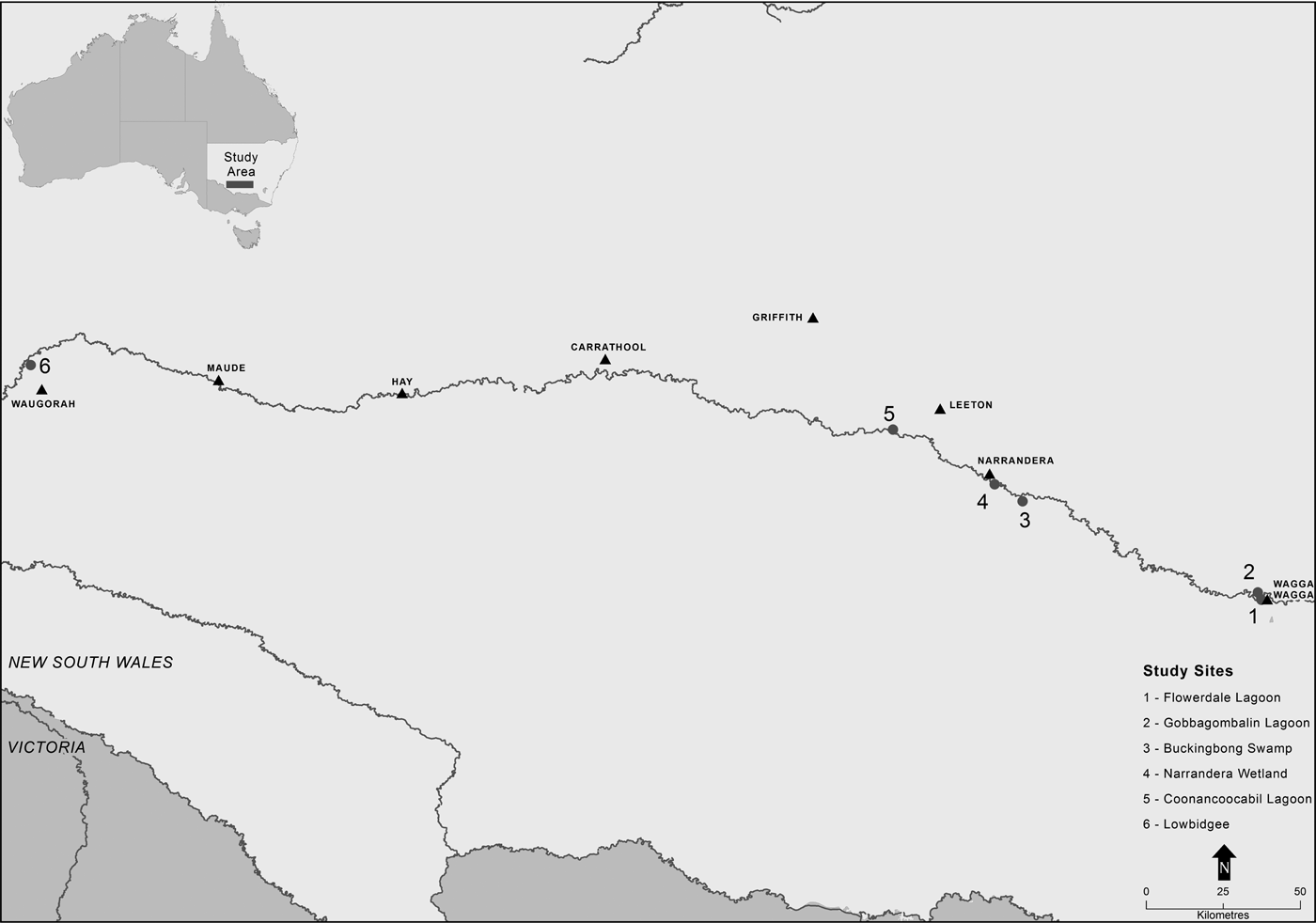
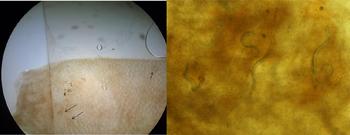
Sixty carp (Cyprinus carpio) were collected from various locations across New South Wales (NSW) (fig. 1). The fish were thoroughly examined for parasitic infection according to standard protocols (Shamsi & Suthar, Reference Shamsi and Suthar2016, see section 2.2 Routine Methode). Nematode larvae were found accidentally when the microscope was left on with a piece of intestinal tissue under it. On return, emerging larvae from the intestinal tissue were found and the Petri dish containing the tissue was filled with fine nematode larvae. Further detailed examination showed that minute dark patches on the intestinal tissue were tiny cysts, approximately 0.12 mm in size. These cysts were visible only if the intestine was cut and flattened, and pressed between two slides (fig. 2). Nematode larvae started to emerge from cysts after a few minutes as the intestinal tissue was being examined under a stereoscope (fig. 2), possibly due to the heat from the light source.
Site map depicting six selected wetlands along the Murrumbidgee River.

Left: intestinal tissue of a carp (under a dissecting microscope), spread out to detect cysts (arrows) of approximately 0.12 mm diameter. Right: emerged larvae (under a compound microscope).

Larvae were collected and preserved in 70% ethanol. Nematode parasites were transferred to lactophenol for morphological examination. They were then illustrated using a drawing tube. All measurements are given in millimetres, unless stated otherwise. Mean measurements are given, followed by the range in parentheses. Representative specimens have been deposited in the South Australian Museum, Adelaide (SAM) under accession numbers AHC 47907 and AHC 47908.
Molecular analyses
Genomic DNA was isolated by sodium dodecyl sulphate/proteinase K treatment, column-purified (Wizard™ DNA Clean-Up, (Promega, Madison, Wisconsin, USA) and eluted into 45 μl of water. The internal transcribed spacer 2 (ITS-2) region of rDNA was amplified using primer sets SS2 (5′-TTGCAGACACATTGAGCACT-3′ (forward)) and NC2 (5′-TTAGTTTCTTTTCCTCCGCT-3′ (reverse)). The polymerase chain reaction (PCR) (in a volume of 50 μl) was performed in 10 mm Tris–HCl, pH 8.4, 50 mm KCl, 3mm MgCl2, 250 μm of each deoxynucleoside triphosphate (dNTP), 50 pmol of each primer and 1.5 U Taq polymerase (Promega) in a thermocycler (94°C for 5 min; followed by 30 cycles of 94°C for 30 s, 52°C for 30 s, 72°C for 30 s; then extension for 5 min at 72°C).
An aliquot (5 μl) of each amplicon was examined on a 1.5% w/v agarose gel, stained with Gel red and photographed. Selected amplicons were sequenced using the same primer sets as PCR reactions. ITS-2 sequences were aligned using the computer program Clustal-X (Thompson et al., Reference Thompson, Gibson, Plewniac, Jeanmougin and Higgins1997) and then adjusted manually. Polymorphic nucleotide positions were designated using International Union of Pure and Applied Chemistry (IUPAC) codes. Sequences of the specimens found in the present study were deposited in EMBL (European Molecular Biology Laboratory) and compared with other sequences available in GenBank.
Results
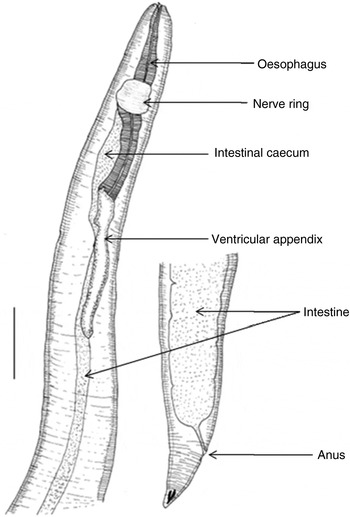
Numerous nematode larvae were found encysted within the intestinal tissue of two carp, both collected from Coonancoocabil Lagoon, Murrumbidgee Valley National Park, New South Wales, Australia. Morphological examination showed that these larvae are similar, belong to the genus Contracaecum (fig. 3) and are distinct from previously known Contracaecum larval types. The distinct morphotype has been designated type IV.
Morphological details Contracaecum larval type IV found in the present study (scale bar 50 μm).

Description of morphotype
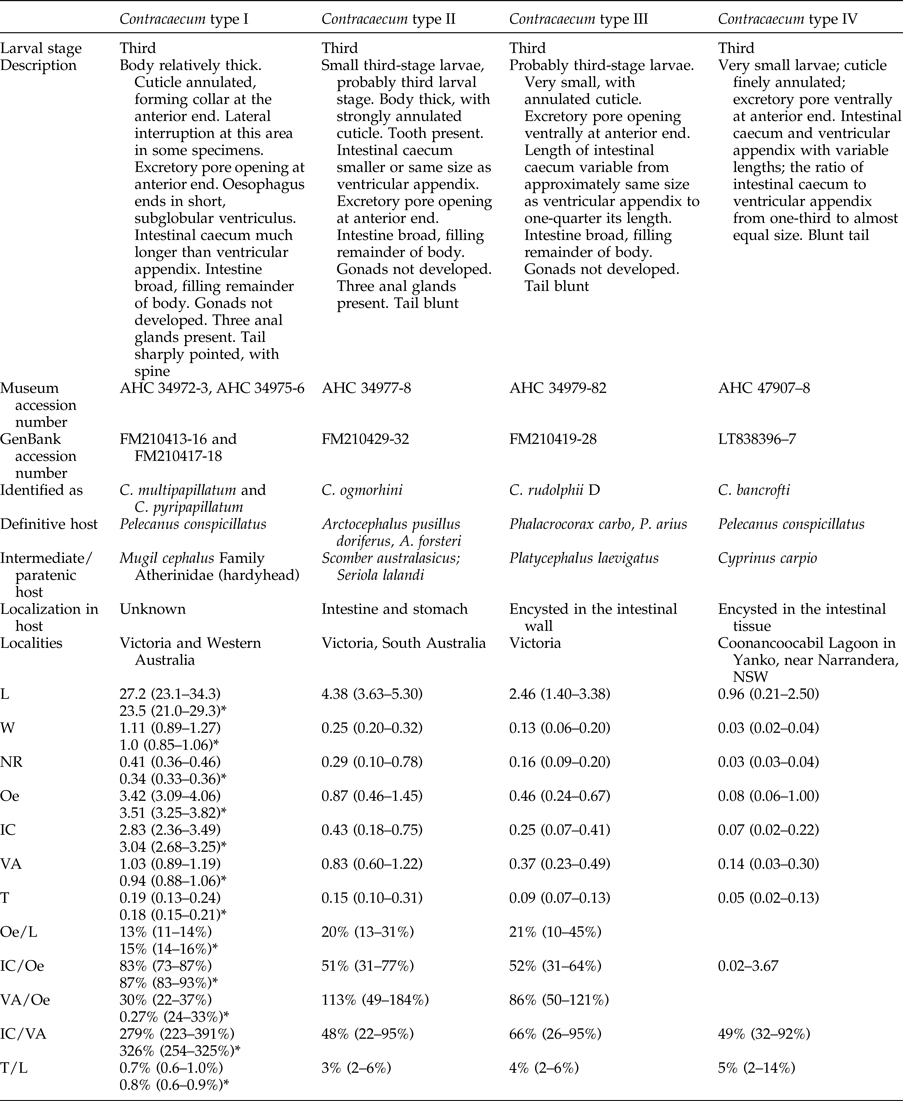
Very small larvae; third stage of development; cuticle finely annulated; excretory pore ventrally at anterior end. Intestinal caecum and ventricular appendix with variable lengths; the ratio of intestinal caecum to ventricular appendix from one-third to almost equal size; blunt tail. Total body length 0.96 (0.21–2.50; n = 24); ventricular appendix 0.14 (0.03–0.30; n = 15); intestinal caecum 0.07 (0.02–0.22; n = 15); tail 0.05 (0.02–0.13; n = 24); ratio of intestinal caecum to ventricular appendix 0.49 (0.32–0.92; n = 15); ratio of tail to total body length 0.05 (0.02–0.14; n = 24).
Molecular analysis
Since all larvae had similar morphotypes, were from the same host species and all ITS-2 amplicons showed the same size on the agarose gel, two representatives were selected randomly for sequencing the ITS-2 region of rDNA. The ITS-2 sequences of the larvae in the present study were identical and 289 bp long (GenBank accession numbers LT838396 and LT838397). The ITS-2 sequences of the larvae found in the present study were identical with previously deposited sequences in GenBank, accession number FM177880, identified as Contracaecum bancrofti.
Discussion
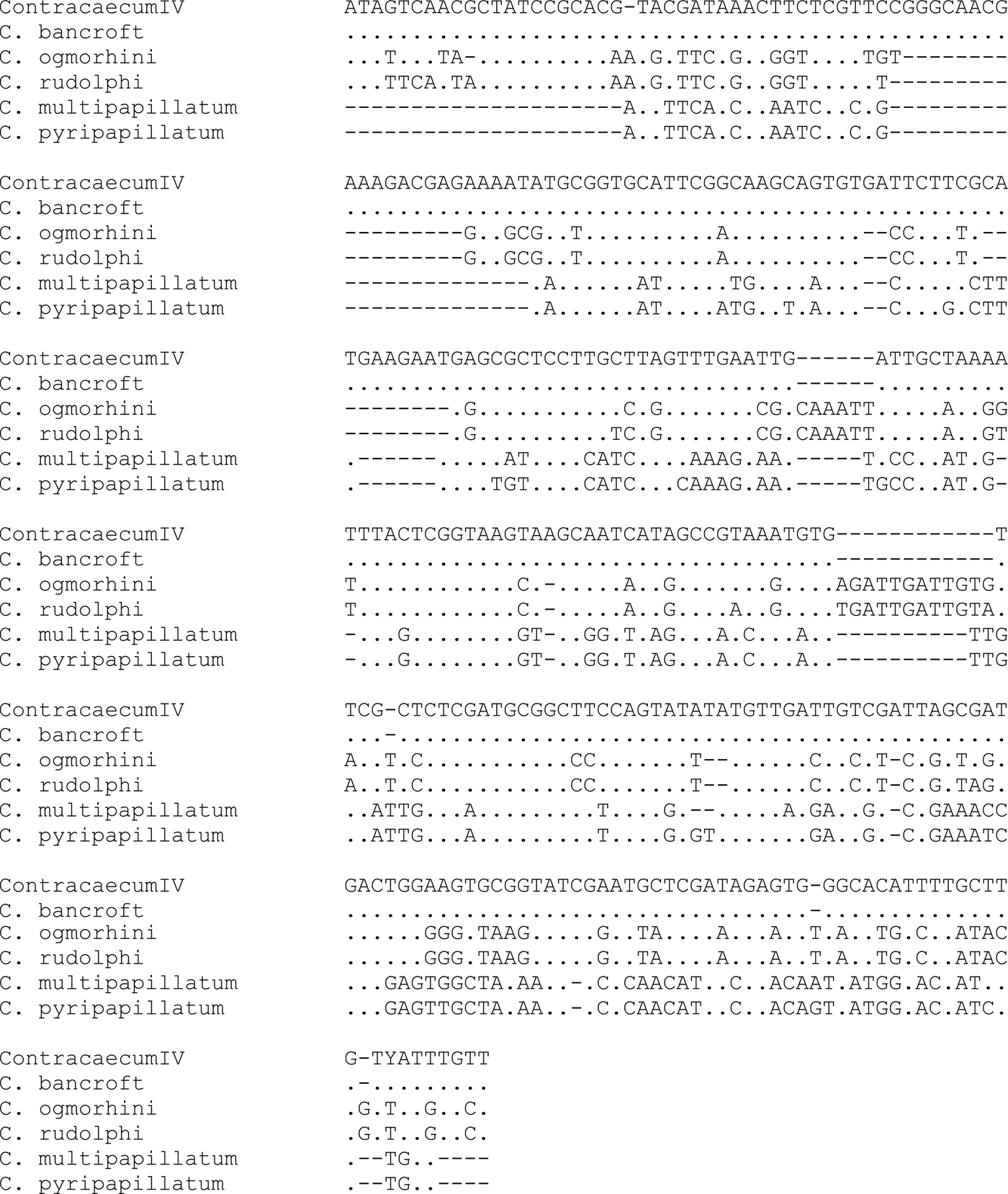
This is the first description, genetic characterization and specific identification of Contracaecum larval type IV. Since the discovery of Contracaecum larval type IV was accidental, due to its response to microscope heat, the prevalence of the parasite in carp is not known and should be higher than that found in the present study (i.e. >2 out of 60 fish examined). Morphologically this larval type is distinct from previously described Contracaecum larval types I–III (table 1) in Australia. Contracaecum larval type IV is clearly distinct from type I based on the significantly bigger body size and longer length of the intestinal caecum in the latter. Contracaecum larval type IV is distinct from type II based on the total body length and ventricular appendix being significantly longer and the tail being shorter in the latter. The closest morphotype to type IV is Contracaecum larval type III. Also, Contracaecum larval types III and IV are both found within intestinal tissue of the fish host, one in a marine fish and the other in a freshwater fish. Currently the only difference seems to be that Contracaecum larval type IV has a shorter body length (table 1). However, types III and IV are genetically very distinct. Alignment of the ITS-2 sequences of all Contracaecum larval types showed that they are very different (fig. 4). Alignment of the ITS-2 sequences of the specimens in the present study with those of Contracaecum spp. in GenBank showed that Contracaecum larval type IV has an identical ITS-2 sequence to that of C. bancrofti.
Alignment of the ITS-2 sequences of the Contracaecum larval types I–IV and adult Contracaecum bancrofti. GenBank accession numbers are as follows: adult C. bancrofti, FM177880; Contracaecum larval type I (= C. multipapillatum), FM210416; Contracaecum larval type I (= C. pyripapillatum), FM210418; Contracaecum larval type II (= C. ogmorhini), FM210429; Contracaecum larval type III (= C. rudolphii D), FM210428; and Contracaecum larval type IV (present study), LT838396-7.

Comparison of the Contracaecum larval type found in the present study (type IV) with the previous study (types I–III; Shamsi et al., 2011).

*In these cells, measurements at top and bottom are related to larvae from mullets and hardyhead, respectively. Abbreviations are as follows: L, total body length; W, body width; NR, nerve ring; Oe, oesophagus; IC, intestinal caecum; VA, ventricular appendix; T, tail.
Contracaecum bancrofti is a species of interest to researchers for several reasons. The morphology of the post-cloacal papillae in the adult specimens, one of the important taxonomically characteristic features, differs from that of all other Contracaecum species by being double papillae (Shamsi et al., Reference Shamsi, Norman, Gasser and Beveridge2009). The species was first described in Australia by the team of Johnston & Mawson (Reference Johnston and Mawson1941), but later it was considered invalid (Mawson et al., Reference Mawson, Angel and Edmonds1986) although no details were provided. Later Shamsi et al. (Reference Shamsi, Norman, Gasser and Beveridge2009) employed a combined morphological and molecular approach and confirmed the taxonomic status of the species. Like other Australian iconic species, C. bancrofti is a species unique to Australia and plays its role in the country's rich biodiversity. Adult C. bancrofti seem to have a broad distribution and have been reported from the Australian pelican (another species of bird found only in Australia) in Peron Island in Northern Territory, Thompson River and Burnett River in Queensland, Sydney Zoological Gardens in New South Wales, Geelong and Healesville in Victoria and Morgan in South Australia. Despite the relatively high abundance and prevalence of the parasite, finding the larval stages was accidental in the present study. A mass infection (>500 larvae), similar to that of the present study, was also reported previously in crucian carp in north-eastern Poland, where small larvae of C. rudolphii B were present in the intestinal wall, in the mesentery and in the vicinity of the liver (Szostakowska & Fagerholm, Reference Szostakowska and Fagerholm2007). The small size of the cysts, along with their transparency against adjacent tissue, may be the main factors for overlooking the parasite when examining fish. It is noteworthy that, despite many research projects on the impacts of exotic fish species in Australian freshwater systems, there is almost no study aimed at parasitism in exotic fish species and their impacts on endemic fish species. Despite their great significance, parasites and their impacts have not been considered by biologists, environmental scientists and other authorities in conservational plans for Australian freshwater systems.
Nematodes belonging to the genus Contracaecum are highly important for several reasons, particularly in Australia. From a public health point of view, their ability to emerge from tissues, where they are encapsulated, after the fish is caught and when it is dead increases the likelihood of their posing a risk to humans (Smith & Wootten, Reference Smith and Wootten1975). Even though intestinal tissue is not a popular item for seafood lovers, parasite larvae can migrate to other organs, such as the flesh of the fish, where they can be ingested by consumers. The disease caused by anisakid nematodes, including Contracaecum larvae, can be very severe (Desowitz, Reference Desowitz1986; Smith, Reference Smith1999). The infection of humans with a Contracaecum larval type has been confirmed in Australia (Shamsi & Butcher, Reference Shamsi and Butcher2011). In the present study, this potentially highly dangerous parasite was found in carp, a fish that has started to find its way on to Australian tables, not only due to increased immigration from countries where carp is farmed as a food fish (for example in China and Iran) but also due to encouraging alternative forms of removal of a pest fish from Australian waterways (Bells, 2012).
Another important aspect of our finding is the locality where carp were found to be infected with Contracaecum larvae. Coonancoocabil Lagoon, in Yanco, is a new location for this parasite. Coonancoocabil Lagoon is located in the Murrumbidgee Valley National Park and is a highly managed conservation area with native fish in wetlands, some of them being endangered species. Moreover, several fish farms and hatcheries are located in the adjacent area. Infection of a highly resilient invasive fish species, such as carp, with zoonotic Contracaecum larvae raises an alarm for the aquaculture industry. Contracaecum larval types are known to be of low host specificity. Since adult parasites infect the Australian pelican, which is commonly found in the region, it is logical to assume that there should be several other fish species harbouring this parasite in their intestinal tissue, or elsewhere, which raises a number of questions. For example, what is the health impact of these larvae on the function of a vital organ such as the intestines? Are infected fish as capable of obtaining nutrients as uninfected fish? What is the prevalence of the parasite in Australian freshwater fish, including farmed and endangered species? Clearly there are huge gaps in our knowledge which must be addressed if sustainable management of our aquatic resources is the focus of the relevant authorities.
Financial support
This study was partially funded by the School of Animal and Veterinary Sciences, Charles Sturt University.
Conflict of interest
None.