Introduction
For many years, the delimitation of genera in the lichenized fungi was based on morphological, anatomical and chemical characters, and in the last three decades a number of genera were described in Parmeliaceae using these features (e.g. Hale Reference Hale1974a , Reference Hale b , Reference Hale1976, Reference Hale1984, Reference Hale1986a , Reference Hale b ; Culberson & Culberson Reference Culberson and Culberson1981; Krog Reference Krog1982; Elix et al. Reference Elix, Johnston and Verdon1986; Elix & Hale Reference Elix and Hale1987; Henssen Reference Henssen1991, Reference Henssen1992; Kurokawa Reference Kurokawa1991; Elix Reference Elix1993a ). However, more recently the delimitation of these genera has been re-evaluated based mainly on molecular phylogenies (e.g. Blanco et al. Reference Blanco, Crespo, Elix, Hawksworth and Lumbsch2004a , Reference Blanco, Crespo, Divakar, Esslinger, Hawksworth and Lumbsch b , Reference Blanco, Crespo, Divakar, Elix and Lumbsch2005; Divakar et al. Reference Divakar, Crespo, Blanco and Lumbsch2006; Thell et al. Reference Thell, Feuerer, Elix and Kärnefelt2006; Wirtz et al. Reference Wirtz, Printzen, Sancho and Lumbsch2006; Amo de Paz et al. Reference Amo de Paz, Lumbsch, Cubas, Elix and Crespo2010; Crespo et al. Reference Crespo, Kauff, Divakar, del Prado, Perez-Ortega, de Paz, Ferencova, Blanco, Roca-Valiente and Núñez-Zapata2010b ). Phylogenetic studies showed that some genera, circumscribed on the basis of a few morphological and/or chemical characters, were polyphyletic and that some of the smaller monophyletic groups tended to have distinct distribution patterns (Crespo et al. Reference Crespo, Ferencova, Perez-Ortega, Elix and Divakar2010a , Reference Crespo, Kauff, Divakar, del Prado, Perez-Ortega, de Paz, Ferencova, Blanco, Roca-Valiente and Núñez-Zapata b ; Divakar et al. Reference Divakar, Lumbsch, Ferencova, del Prado and Crespo2010). These studies also revealed examples of previously undetected morphological characters of phylogenetic or taxonomic significance (del Prado et al. Reference del Prado, Ferencova, Armas-Crespo, de Paz, Cubas and Crespo2007; Crespo et al. Reference Crespo, Ferencova, Perez-Ortega, Elix and Divakar2010a , Reference Crespo, Kauff, Divakar, del Prado, Perez-Ortega, de Paz, Ferencova, Blanco, Roca-Valiente and Núñez-Zapata b ), or allowed segregation of new genera using both molecular and morphological data (Blanco et al. Reference Blanco, Crespo, Divakar, Esslinger, Hawksworth and Lumbsch2004b ).
Parmelia was described by Acharius (Reference Acharius1803) in a very broad sense, encompassing a large number of foliose lichens with lecanorine apothecia, including such diverse genera as Cetraria, Lobaria, Parmelia s. lat., Physcia, and Xanthoria. By the end of the 19th century, Parmelia began to assume its modern circumscription, being described as a foliose rhizinate genus with laminal apothecia and simple spores (Fries Reference Fries1861). The controversial history of Parmelia with segregation into new genera, followed by synonymization of some of them, is discussed in Hale (Reference Hale1987) and Crespo et al. (Reference Crespo, Divakar and Hawksworth2011). Hale (Reference Hale1987) included in Parmelia s. str. a small assemblage of 38 species, typified by P. saxatilis, and 12 new species were later added (Elix Reference Elix1993b , Reference Elix2007; Kurokawa Reference Kurokawa1994; Elix & Kantvilas Reference Elix and Kantvilas1995; Calvelo & Adler Reference Calvelo and Adler1999; Feuerer & Thell Reference Feuerer and Thell2002; Divakar et al. Reference Divakar, Upreti, Sinha and Elix2003, Reference Divakar, Molina, Lumbsch and Crespo2005; Molina et al. Reference Molina, Crespo, Blanco, Lumbsch and Hawksworth2004, Reference Molina, del Prado, Divakar, Sánchez-Mata and Crespo2011a , Reference Molina, Divakar, Millanes, Sánchez, del Prado, Hawksworth and Crespo b ). In its present delimitation, Parmelia is a widespread genus with three centres of diversification (Hale Reference Hale1987), one in boreal-temperate Europe and North America, a second one in eastern Asia and the third one in Australasia.
Parmelia belongs to the major ‘parmelioid’ clade within the large and widely distributed family Parmeliaceae. Parmelioid lichens can be distinguished by their mainly foliose thalli (rarely subcrustose, subfruticose, peltate and umbilicate), the rhizinate lower surface, laminal cupulate apothecia, Lecanora-type asci, and simple ellipsoid hyaline ascospores (Blanco et al. Reference Blanco, Crespo, Ree and Lumbsch2006; Crespo et al. Reference Crespo, Lumbsch, Mattsson, Blanco, Divakar, Articus, Wiklund, Bawingan and Wedin2007, Reference Crespo, Kauff, Divakar, del Prado, Perez-Ortega, de Paz, Ferencova, Blanco, Roca-Valiente and Núñez-Zapata2010b ). The Parmelia species are characterized by adnate, sublinear to subirregular lobes without cilia; an upper surface with effigurate pseudocyphellae, lower surface black, rhizinate (rhizines simple, furcate or squarrosely branched); 8 simple spores per ascus; conidia cylindrical or weakly bifusiform, less than 8·0 µm long; with atranorin and chloratranorin in the cortex (Hale Reference Hale1987).
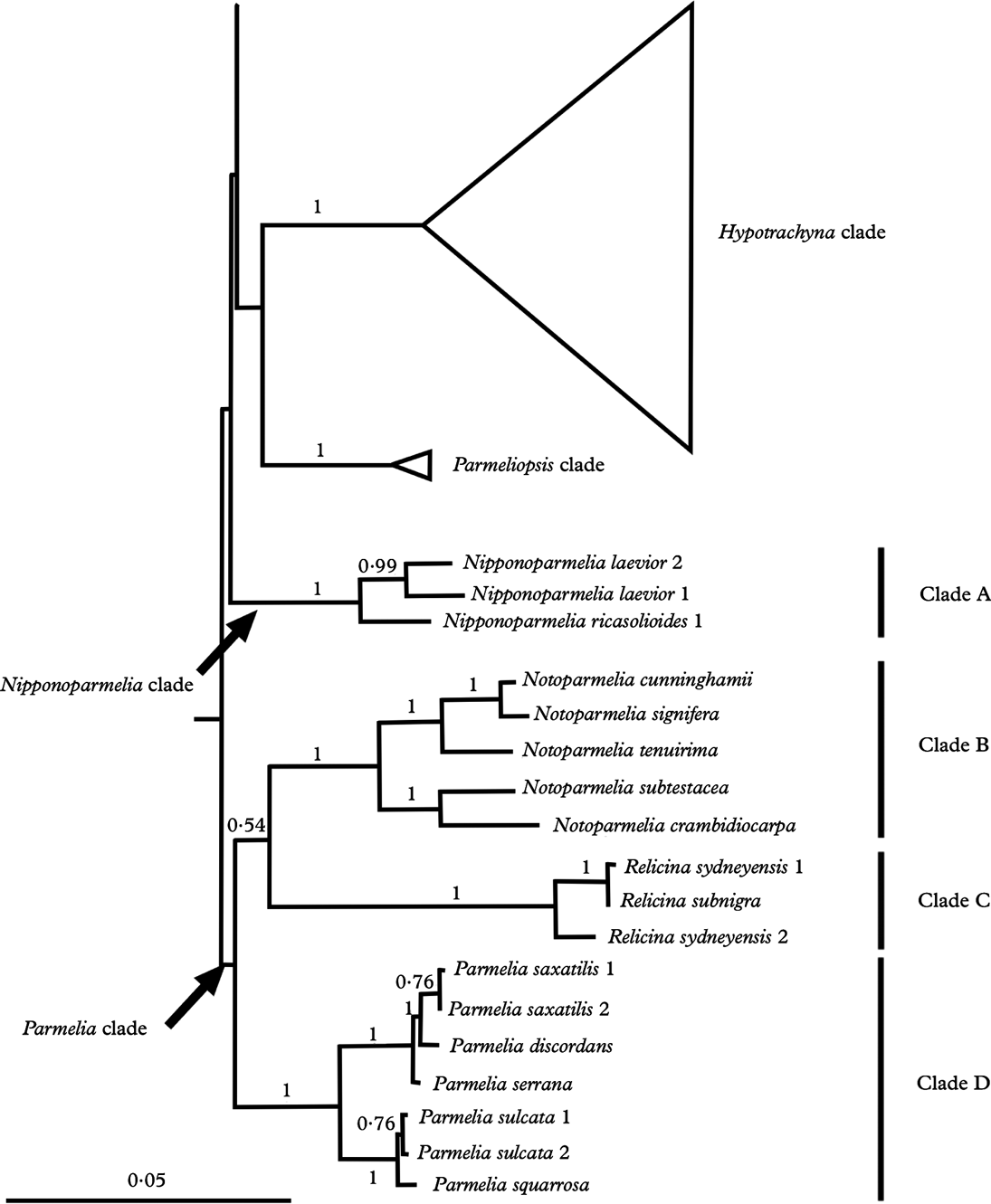
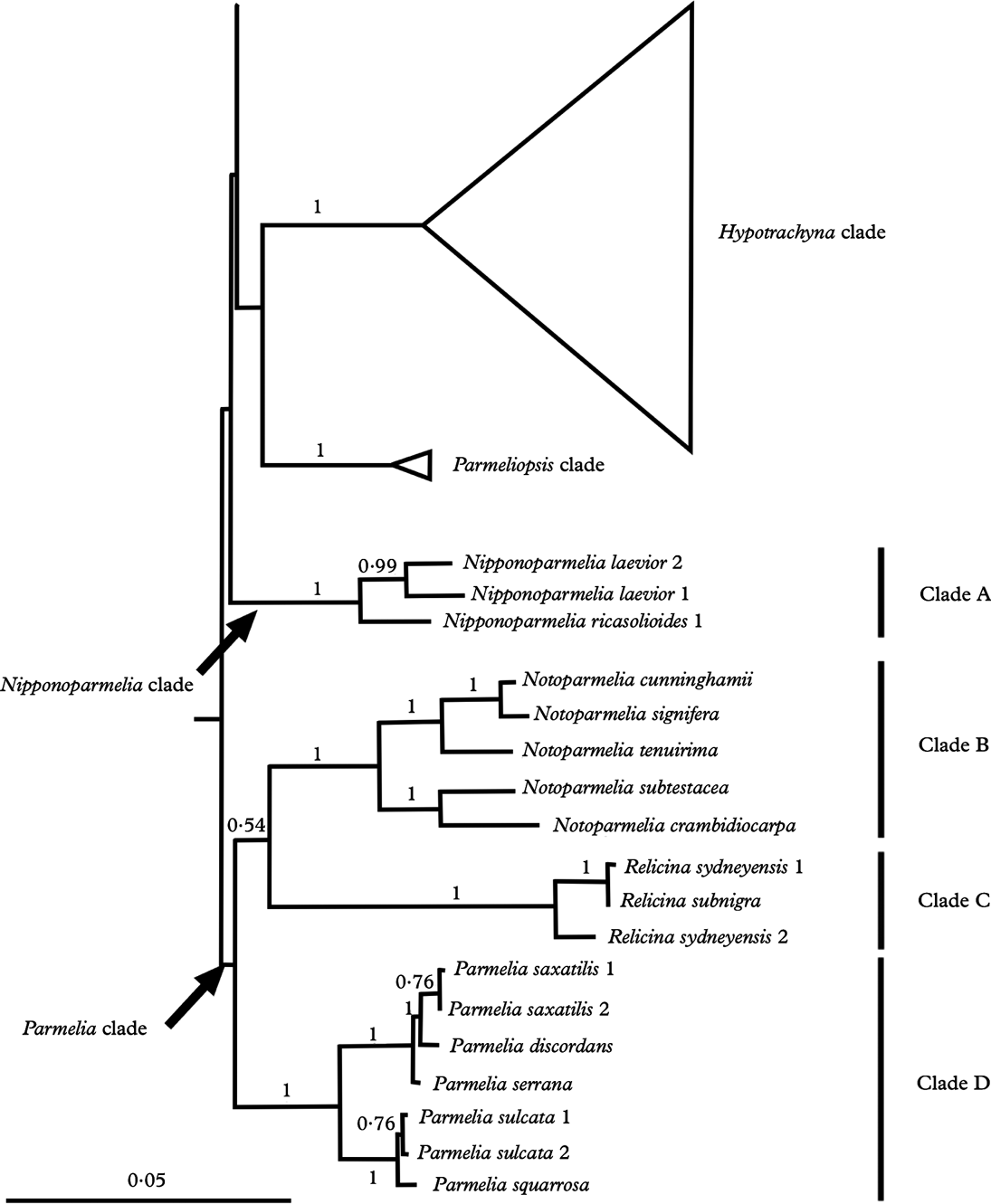
In a comprehensive molecular study based on a multi-locus dataset of parmelioid lichens (Crespo et al. Reference Crespo, Kauff, Divakar, del Prado, Perez-Ortega, de Paz, Ferencova, Blanco, Roca-Valiente and Núñez-Zapata2010b ), the genus Parmelia was shown to split into three separate clades: A, B and D (Fig. 1). The first of these, the Nipponoparmelia clade (clade A), contains East Asian species (Nipponoparmelia laevior and N. ricasolioides) that differ morphologically from other Parmelia species by having small punctate pseudocyphellae on the lobe edges. This group of species, previously organized by Kurokawa (Reference Kurokawa1994) in the small subgenus Nipponoparmelia, was elevated to generic rank (Crespo et al. Reference Crespo, Kauff, Divakar, del Prado, Perez-Ortega, de Paz, Ferencova, Blanco, Roca-Valiente and Núñez-Zapata2010b ). A second group of predominantly Australasian species (Parmelia subtestacea, P. crambidiocarpa, P. tenuirima, P. cunninghamii and P. signifera) forms a well-supported clade (clade B) but no distinct morphological characteristics were found. A monophyletic clade C, composed of the genera Relicina and Relicinopsis, is sister group of the Australasian species of clade B, although with very low statistical support. The third group of Parmelia (clade D) contains mostly temperate species (P. saxatilis, P. discordans, P. serrana, P. sulcata and P. squarrosa), with a centre of distribution in the Northern Hemisphere (Crespo et al. Reference Crespo, Kauff, Divakar, del Prado, Perez-Ortega, de Paz, Ferencova, Blanco, Roca-Valiente and Núñez-Zapata2010b ).
Simplified tree showing the splitting of the genus Parmelia into three independent monophyletic lineages A, B and D (based on Fig. 1 in Crespo et al. Reference Crespo, Kauff, Divakar, del Prado, Perez-Ortega, de Paz, Ferencova, Blanco, Roca-Valiente and Núñez-Zapata2010b ; phylogram obtained from a Maximum likelihood analysis of the 3GENE dataset, showing the phylogenetic relationships among Parmeliaceae).
In a general survey of the morphology and anatomy of the reproductive structures in Parmeliaceae, Ferencova (Reference Ferencova2012) found greater variability than expected, and promising features that could help in the morphological characterization of the genera. Five types of ascospores, based on their size and form together with the thickness of their spore wall, were established for parmelioid lichens: type I, small ascospores (5·0–10·0 µm long) with a thin spore wall (<600 nm); type II, medium-sized ascospores (10·0–15·0 µm long) with a thin to medium spore wall (<1·0 µm); type III, medium to large ascospores (10·0–20·0 µm long) with a thick spore wall (1·0–2·0 µm); type IV, very large ascospores (>20·0 µm long) with a very thick spore wall (>2 µm); and type V, large to very large ascospores (>15·0 µm long) with a thin to medium spore wall (<1·0 µm). In addition, different types of internal organization of the apothecium were found and described, differing mainly in the anatomy of the proper exciple.
The present study aims to find good diagnostic morphological and anatomical characters to circumscribe the monophyletic lineage of Australasian species (clade B) found in the assemblage of Parmelia, with special emphasis on ascomata anatomy and ascospore type.
Materials and Methods
Taxon sampling
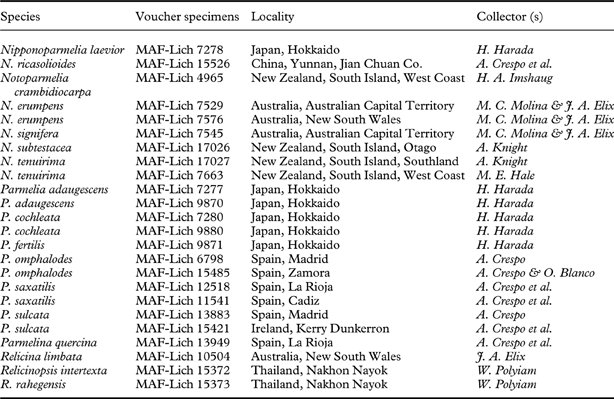
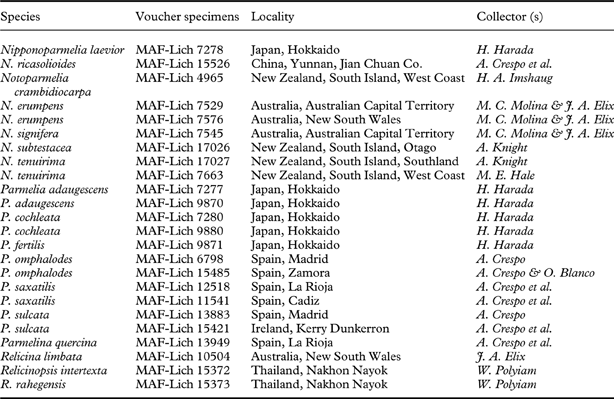
In the present study, we investigated 23 fertile specimens from the Parmelia and Nipponoparmelia clades (Crespo et al. Reference Crespo, Kauff, Divakar, del Prado, Perez-Ortega, de Paz, Ferencova, Blanco, Roca-Valiente and Núñez-Zapata2010b ). The sampling included two Nipponoparmelia species (N. laevior and N. ricasolioides) that form clade A; four (P. subtestacea, P. crambidiocarpa, P. tenuirima, P. signifera) of the five species included in the Australasian clade B plus P. erumpens; three species (Relicina limbata, Relicinopsis intertexta and R. rahegensis) closely related to species of clade C; and six Parmelia species (Parmelia adaugescens, P. cochleata, P. fertilis, P. omphalodes, P. saxatilis and P. sulcata), two of them (P. saxatilis and P. sulcata) included in clade D of the molecular phylogeny (Crespo et al. Reference Crespo, Kauff, Divakar, del Prado, Perez-Ortega, de Paz, Ferencova, Blanco, Roca-Valiente and Núñez-Zapata2010b ). One Parmelina species (P. quercina) was included for comparison. Details of the material studied (locality and collection data) are summarized in Table 1. In addition, we considered the descriptions of all species of the Parmelia assemblage, in particular the Australasian species, found in the bibliography (Hale Reference Hale1987; Elix Reference Elix1993a , Reference Elix2007; Elix & Kantvilas Reference Elix and Kantvilas1995) to complement our own observations.
Fertile specimens used in this study, with their location and collection details.
Morphological studies
Vertical sections through the central part of three apothecia per specimen were cut with a razor blade under the dissecting microscope (Leica Wild M 8) and mounted in water and lactophenol cotton-blue (Panreac, Barcelona). The structure of the sections and morphology of the ascospores were observed and photographed with a light microscope (Nikon Eclipse 80i; Nikon, Badhoevedrop, Netherlands) using Nomarski differential interference contrast optics. The length and breadth of ascospores, and the thickness of their wall, were measured in 30–50 ascospores per specimen. Mean values of the ascospore size and ratio between length and breadth (Q) were calculated. Thallus morphology of the specimens was studied using a dissecting microscope for the assessment of lobe shape, width and other vegetative features.
Results
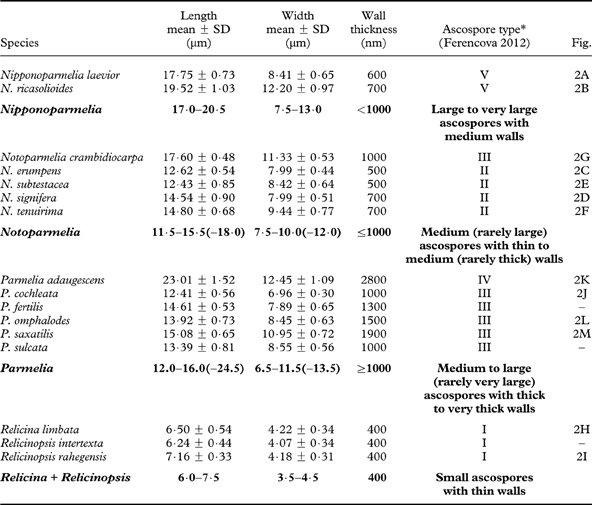
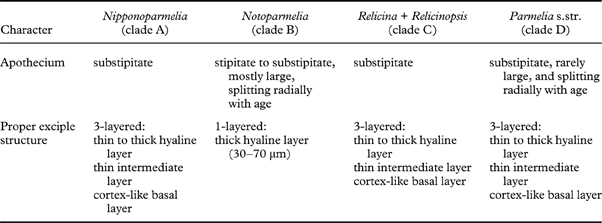
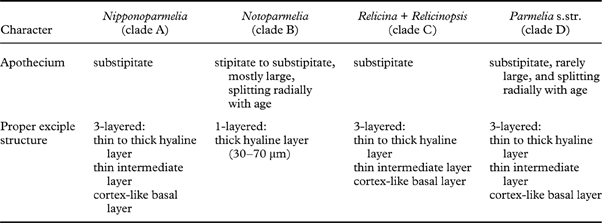
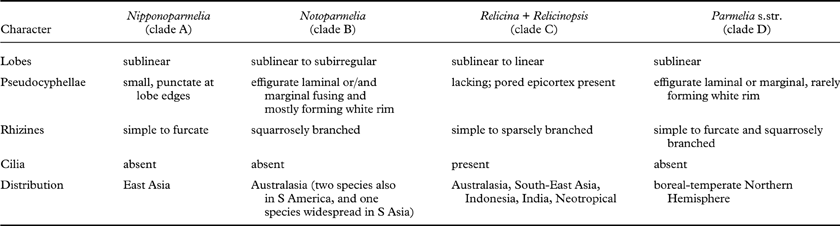
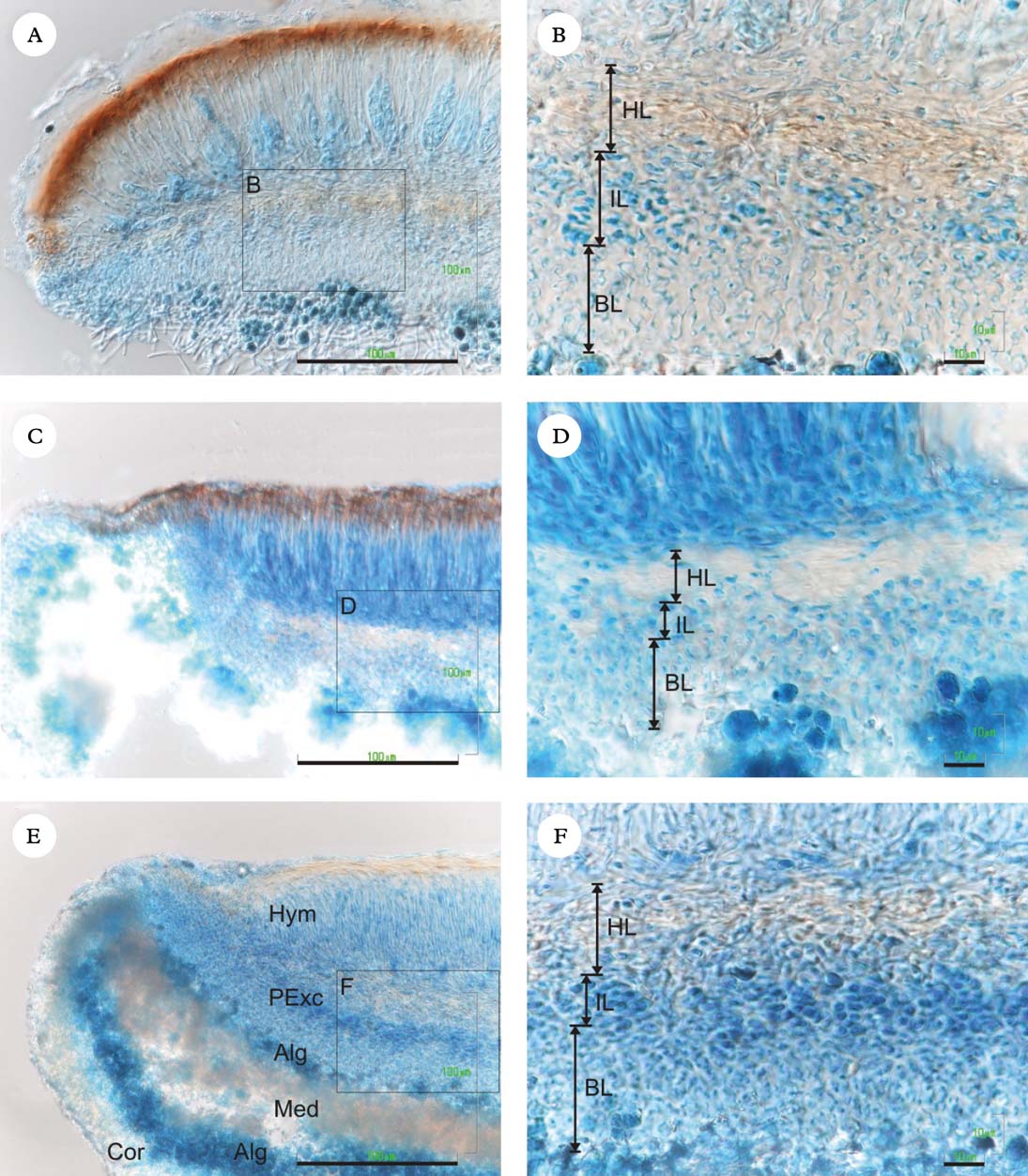
The ascospore morphology, together with apothecium morphology and anatomy of fertile specimens of Nipponoparmelia (clade A) and three minor clades (B, C and D) of the Parmelia clade (Fig. 1), were investigated. The new diagnostic reproductive features based on ascospore type (defined by spore size and spore wall thickness) and structure of the proper exciple are summarized in Tables 2 and 3. These features, combined with the morphological diagnostic characters currently known (Table 4), allow us to clearly separate the four clades. The species of the four clades can be distinguished by a combination of features such as lobe morphology, rhizine type, pseudocyphella structure, ascospore type (Fig. 2) and structure of the proper exciple (Figs 3 & 4). Chemistry, conidiospore features and ascospore ratio Q overlap and do not help to distinguish these monophyletic groups.
Ascospore dimensions and ascospore type in the species studied, and overall range of dimensions for each genus.
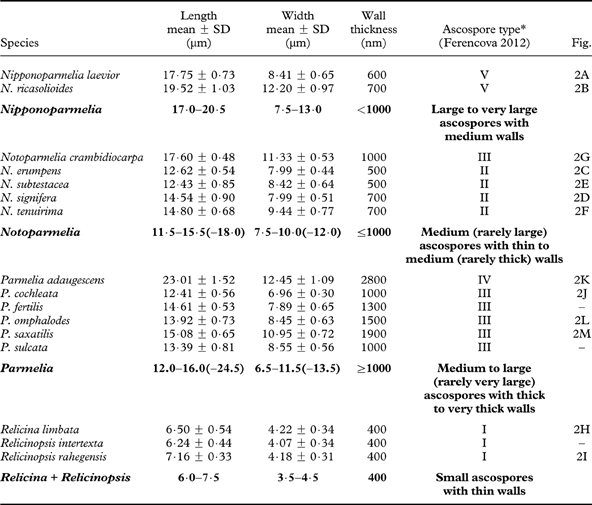
* see Introduction
Main apothecium features in Nipponoparmelia, Notoparmelia, “Relicina + Relicinopsis” and Parmelia s. str. clades.
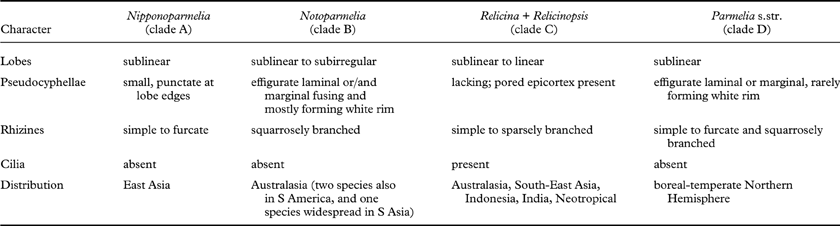
Main macromorphological characters and geographical distribution of Nipponoparmelia, Notoparmelia, “Relicina + Relicinopsis” and Parmelia s. str., based on our observations and bibliographic references (Hale Reference Hale1975, Reference Hale1987; Elix Reference Elix1993a , Reference Elix2007; Kurokawa Reference Kurokawa1994; Elix & Kantvilas Reference Elix and Kantvilas1995).
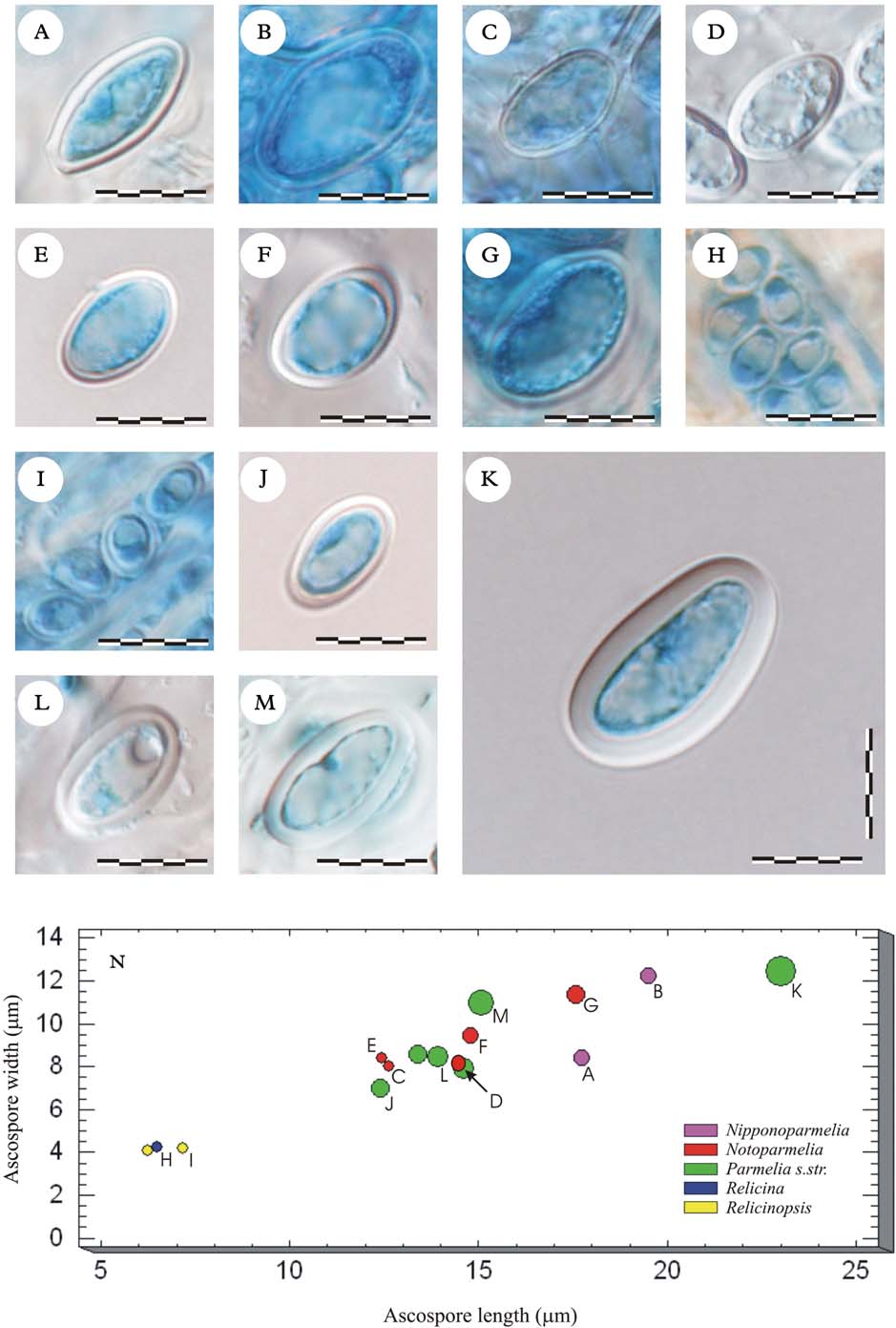
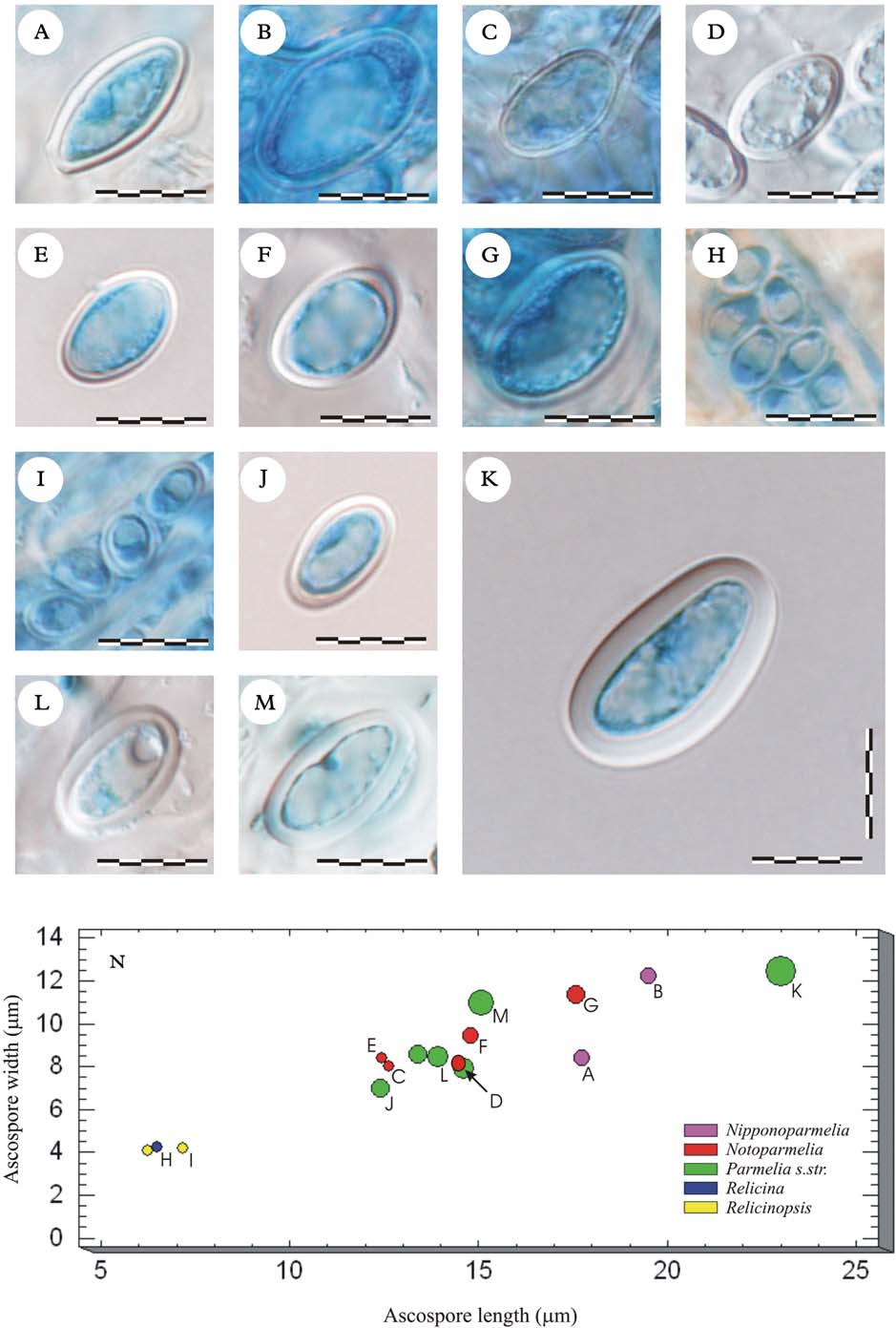
Ascospore morphology. A, Nipponoparmelia laevior; B, N. ricasolioides; C, Notoparmelia erumpens; D, N. signifera; E, N. subtestacea; F, N. tenuirima; G, N. crambidiocarpa; H, Relicina limbata; I, Relicinopsis rahegensis; J, Parmelia cochleata; K, P. adaugescens; L, P. omphalodes; M, P. saxatilis. Bar=10 µm. The relation between ascospore length and ascospore width in the species belonging to clades Parmelia and Nipponoparmelia is shown in the box below. The diameter of the circle reflects the relative thickness of the spore wall.
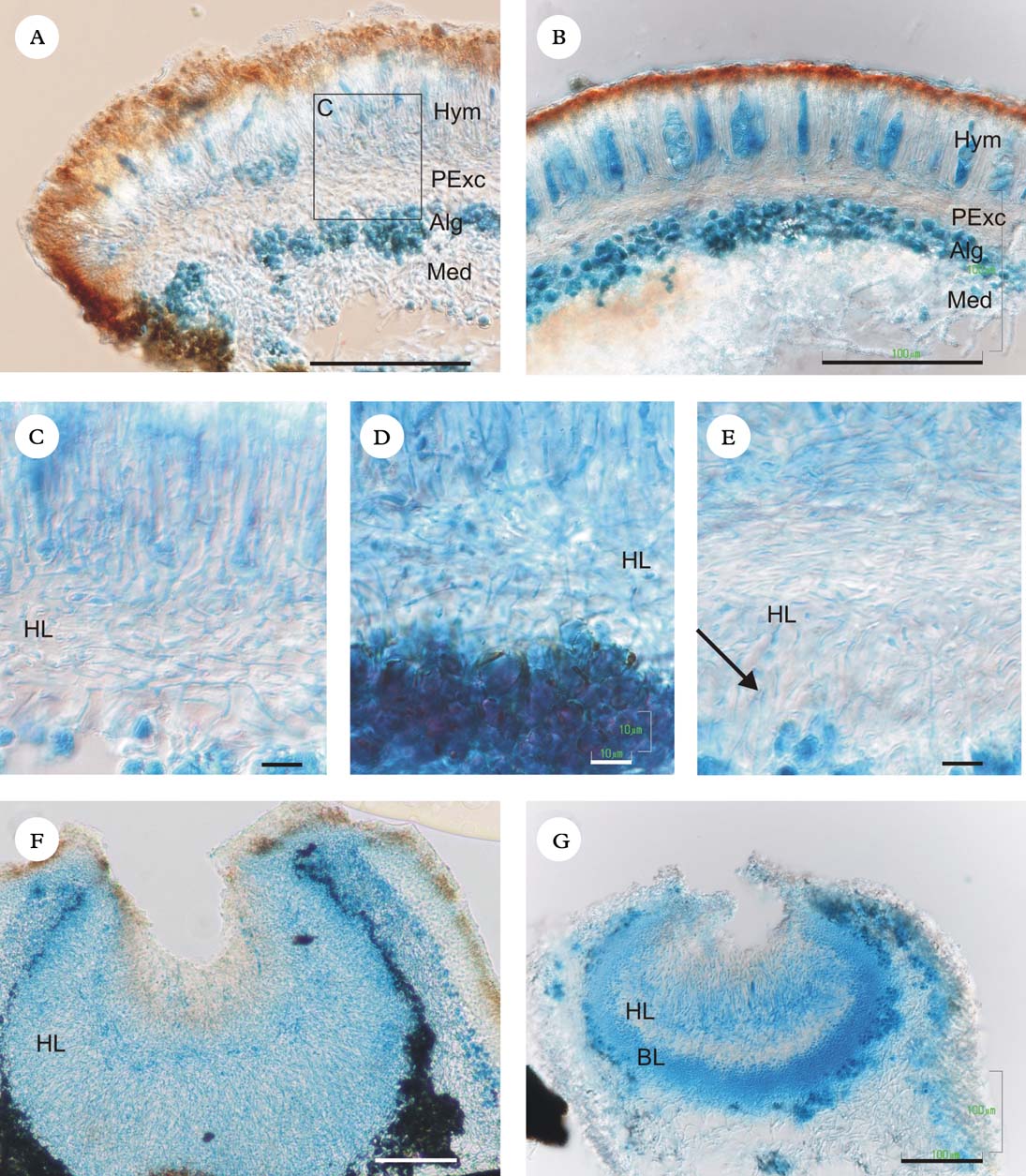
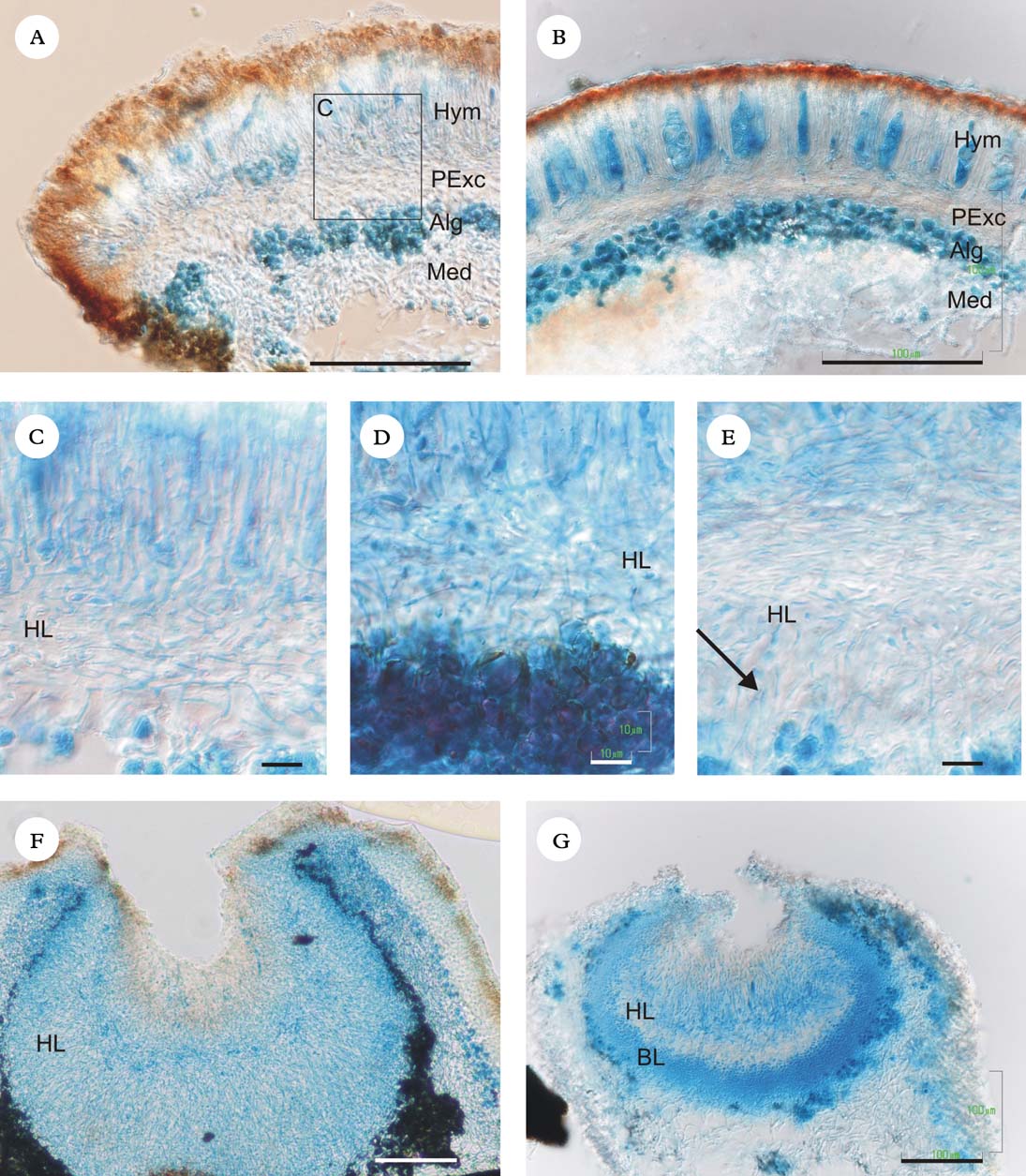
A & B, cross-section through the apothecium of Notoparmelia species; C–E, details showing the cupulate proper exciple F & G, early ontogenic stage of the apothecium. A & C, Notoparmelia signifera; B, N. erumpens; D, N. tenuirima; E, N. subtestacea; F, Notoparmelia tenuirima; G, Parmelina quercina. Alg=algal layer; BL=basal layer; HL=hyaline layer; Hym=hymenium; Med=medulla; PExc=cupulate proper exciple. Scales: A, B, F & G=100 µm; C–E: 10 µm.
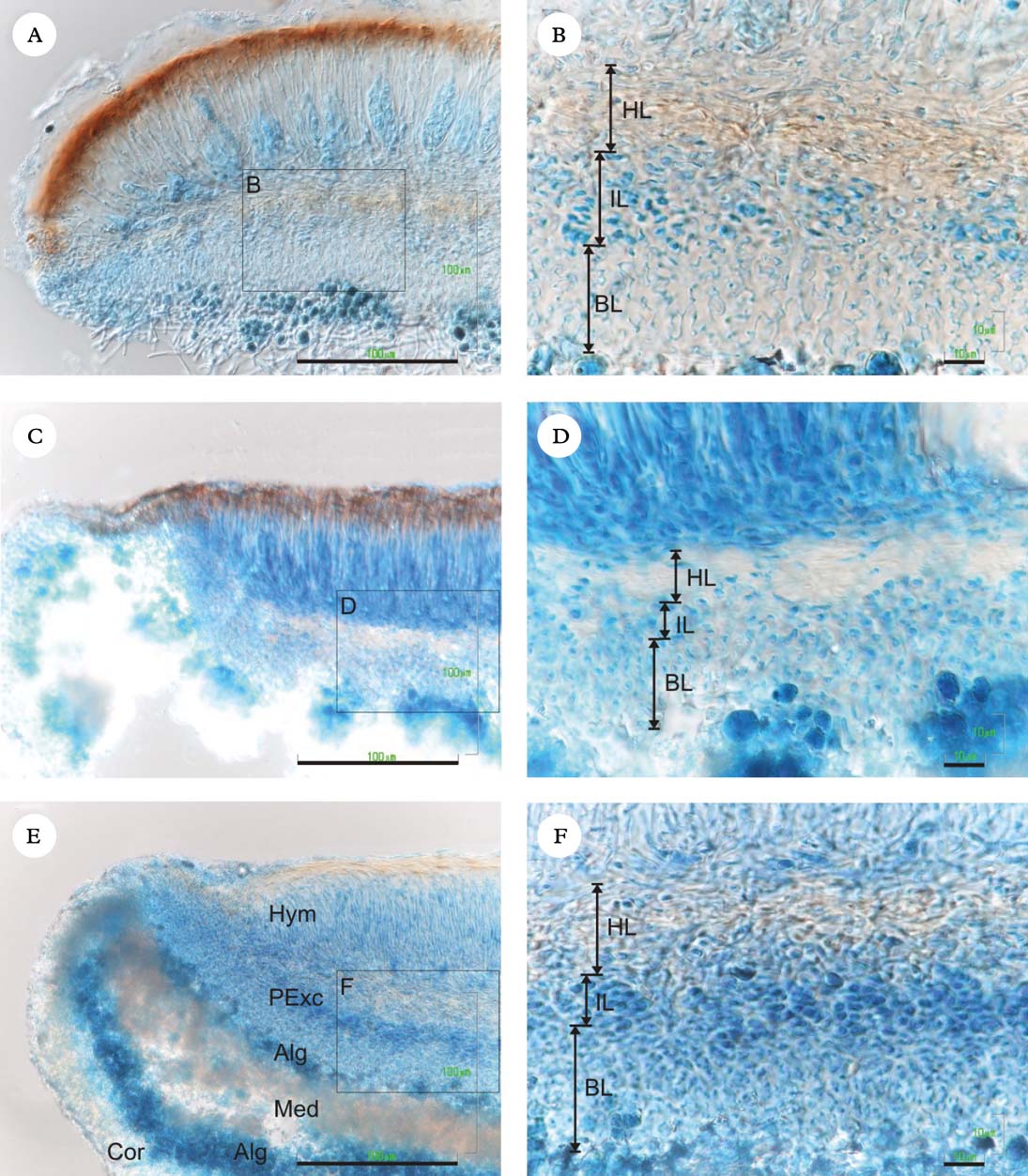
A, C & E, cross-sections through the apothecia of Nipponoparmelia, Relicina and Parmelia s. str.; B, D & F, details showing three-layered cupulate proper exciple. A & B, Nipponoparmelia laevior; C & D, Relicina limbata; E & F, Parmelia adaugescens. Alg=algal layer, Cor=cortex, Hym=hymenium, Med=medulla, PExc=cupulate proper exciple composed of hyaline layer (HL), intermediate layer (IL) and cortex-like basal layer (BL). Scales: A, C & E=100 µm; B, D & F=10 µm.
Clade B is described here as a new genus, Notoparmelia. The species included in this clade, and all the Australasian species morphologically closely related (formerly included in Parmelia) are combined in this new genus.
Ascospores
The ascospore features in the Nipponoparmelia and Parmelia clades are shown in Table 2 and represented in Fig. 2.
The ascospores of Nipponoparmelia laevior and N. ricasolioides fit ascospore type V as described for parmelioid lichens (Ferencova Reference Ferencova2012). They are large to very large (17·0–20·5×7·5–13·0 µm) with medium spore wall thickness (600–800 nm) (Fig. 2A & B). They are ellipsoidal in N. ricasolioides (Q=1·61) and elongated in N. laevior (Q=2·12).
Notoparmelia erumpens, N. tenuirima, N. signifera and N. subtestacea have ascospores of type II, medium-sized (11·5–15·5×7·5–10·0 µm), broadly ellipsoidal to ellipsoidal (Q=1·48–1·83), and with a thin to medium spore wall (500–700 nm) (Fig. 2C–F). Notoparmelia crambidiocarpa ascospores (Fig. 2G) fit type III because they are large (17·0–18·0×11·0–12·0 µm) and ellipsoidal (Q=1·56), with a thick wall (1000 nm). Another eleven species reported by Hale (Reference Hale1987), Elix (Reference Elix1993a , Reference Elix2007) and Elix & Kantvilas (Reference Elix and Kantvilas1995), which possibly form part of this group because of the morphology and distribution pattern (restricted to Australia and/or New Zealand), were not studied here because of the lack of fertile material, or of any material at all. According to the data provided by those authors, they also have ascospores of type II, medium-sized with a thin to medium spore wall.
Ascospores of Relicina limbata (Fig. 2H), Relicinopsis intertexta and R. rahegensis (Fig. 2I) are of type I, small (6·0–7·5×3·5–4·5 µm) with a thin spore wall (400 nm). All the species from both genera have been reported to have small ascospores, corresponding to type I (Hale Reference Hale1975; Elix et al. Reference Elix, Johnston and Verdon1986).
Parmelia cochleata (Fig. 2J), P. fertilis, P. omphalodes (Fig. 2L), P. saxatilis (Fig. 2M) and P. sulcata have ascospores of type III; they are medium to large (12·0–16·0×6·5–11·5 µm), broadly ellipsoidal to ellipsoidal (Q=1·38–1·86) with a thick spore wall (1000–1800 nm). Parmelia adaugescens (Fig. 2K) has ascospores of type IV, very large (21·0–24·5×11·5–13·5 µm), ellipsoidal (Q=1·80) with a very thick wall (2500–3500 nm). Other species which possibly form part of this group because of the morphological features and distribution pattern (Hale Reference Hale1987; Calvelo & Adler Reference Calvelo and Adler1999; Feuerer & Thell Reference Feuerer and Thell2002; Divakar et al. Reference Divakar, Upreti, Sinha and Elix2003) were not studied here due to the lack of fertile material. After Hale's description, most of them present ascospores of types III and IV, except two species with ascospores of type I (P. meiophora and P. submutata).
Anatomy of the apothecium
The most important character found here, and unique for the Australasian clade B, Notoparmelia, is the internal structure of the apothecium (Table 3). Notoparmelia spp. have large apothecia with the disc usually splitting radially. The proper exciple of those apothecia is formed by a thick cupulate hyaline layer (HL), composed of large hyphae embedded in an abundant polysaccharide matrix (Fig. 3A–E) and surrounded directly by a continuous algal layer. The hyphae of the thick hyaline layer do not show any organization or stratification: they are large and without any clear branching pattern, apparently connecting the subhymenium with the medulla (Fig. 3C–E). In Notoparmelia tenuirima, some kind of stratification can be observed and the hyphae in the lower part of the hyaline layer change direction and are vertically orientated (Fig. 3E).
In all other species studied here (clades A, C and D), the fungal hyphae connecting the subhymenium and the medulla (i.e. the hyphae of the proper exciple) form three clearly differentiated layers (Fig. 4): the thin hyaline layer (HL), the intermediate layer (IL) and the cortex-like basal layer (BL). Differences in the thickness and anatomy of these layers can be observed between different genera (Fig. 4B, D & F) but are not discussed here. In contrast, clade B completely lacks the three-layered organization of the proper exciple present in all other species of clades A, C and D (Fig. 4B, D & F), and in the rest of the Parmeliaceae studied (data not shown).
The structure of the proper exciple reflects the organization of the apothecium at the early ontogenetic stages. In the Notoparmelia species (clade B), the hyphae between the ascogenous hyphae and the thalline tissue of the young apothecia (Fig. 3F) are radially oriented, and, as mentioned above, the mature apothecium (Fig. 3A, B) has the proper exciple formed by a single layer. In comparison, in all other parmelioid species the developing proper exciple at the same ontogenetic stage is subdivided into an upper hyaline layer and a lower part composed of densely packed hyphae (Fig. 3G). Finally, the mature apothecia of species from clades A (Nipponoparmelia, Fig. 4A), C (“Relicina & Relicinopsis”, Fig. 4C) and D (Parmelia s. str., Fig. 4E) have a three-layered proper exciple, due to the later differentiation of the lower part into an intermediate layer and a cortex-like basal layer.
Thallus morphology
Both species of Nipponoparmelia (clade A) present circular pseudocyphellae along the lobe margins which were not found in any other species studied here. Relicina and Relicinopsis (clade C) are morphologically very different to all other species included in the present study. They present cilia in the lobe margins and lack any pseudocyphellae. No major differences were found in thallus morphology between Notoparmelia (clade B) and Parmelia s. str. (clade D). Although some features are typical for clade B (e.g. squarrose rhizines), they can also be found in some species of clade D. No single macromorphological character is suitable for differentiating between these two clades. A summary of the main macromorphological features that characterize the clades is shown in Table 4.
Taxonomy
Notoparmelia A. Crespo, Ferencova & Divakar gen. nov.
MycoBank No.: MB 805031
Thallus foliose, adnate to loosely adnate, irregularly lobate, lobes 2·0–7·0 mm wide; apices rounded. Pseudocyphellae usually effigurate. Rhizines squarrosely branched. Apothecia substipitate to stipitate; splitting radially with age; cupulate proper exciple hyaline and 1-layered, lacking differentiation into three layers as other parmelioids. Ascospores ellipsoid, spore wall less than 1 µm thick. Distribution in Australasia.
Type species: Notoparmelia signifera
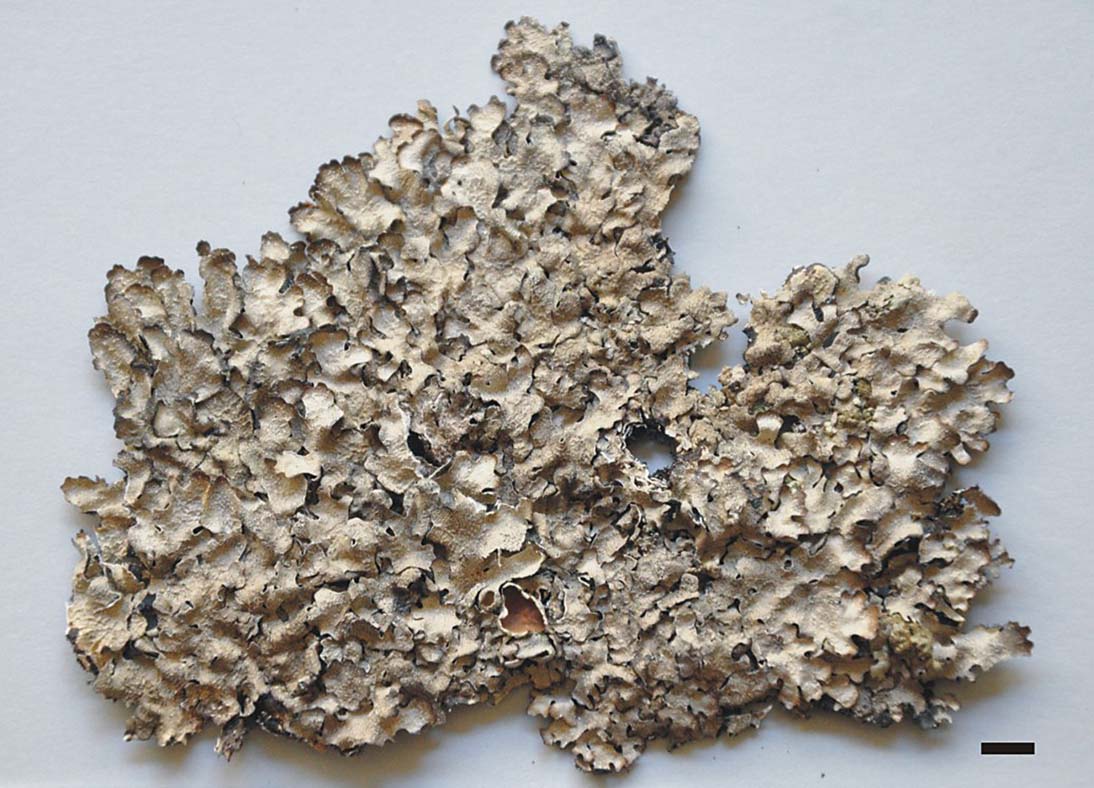
(Fig. 5)
Notoparmelia signifera. A, habit. Scale=1 cm.
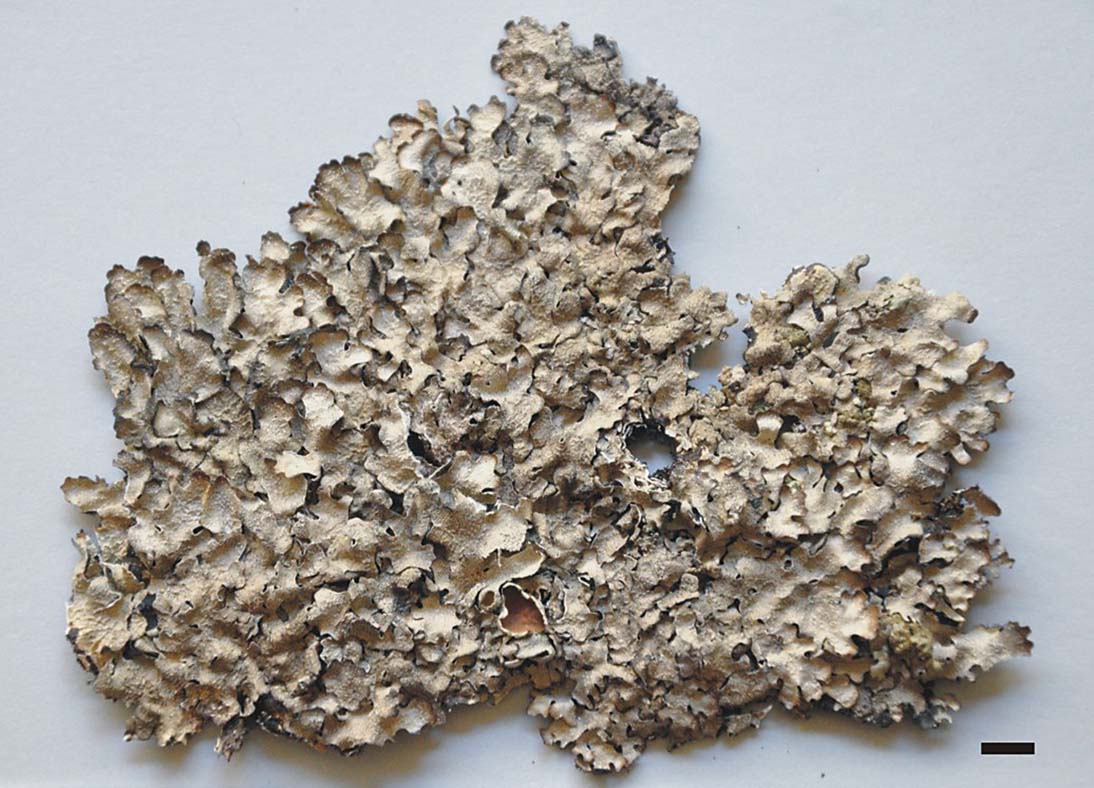
Thallus foliose, adnate to loosely adnate, irregularly lobate. Lobes flat, narrow, sublinear to subirregular; apices rounded, lacking cilia. Upper surface whitish to mineral grey, greenish grey to grey-green, sometimes with brownish tips to the lobes, the pseudocyphellae usually effigurate, sometimes fusing into the continuous white rim around the lobe margins, with or without soredia and isidia. Medulla white, loosely packed. Lower surface flat, smooth, black or black with brown papillate marginal zone. Rhizines short, squarrosely branched. Ascomata apothecial, laminal, substipitate to stipitate; disc imperforate or rarely perforate, concave, dark to pale brown, splitting radially with age; thalline margin usually pseudocyphellate; cupulate proper exciple consisting of hyaline layer, (30–)40–60(–70) µm thick surrounded by continuous algal layer. Asci elongate, clavate, Lecanora-type, apically thickened, without an internal apical beak, 8-spored. Ascospores medium to large, broadly ellipsoid to ellipsoid, (11·0–)11·5–15·5(–18·0)×(7·0–)7·5–10·0(–12·0) µm; spore wall thin to medium, (400–)600–700(–1000) nm.
Conidiomata pycnidial, immersed, laminal. Conidia cylindrical to weakly bifusiform (5·0–)5·5–7·0×1 µm long.
Chemistry
Cortex containing atranorin and chloratranorin; medulla containing orcinol depsidones (lobaric acid), β-orcinol depsidones (salazinic, consalazinic, protocetraric and fumarprotocetraric acids), aliphatic acids (protolichesterinic acid), echinocarpic acid and unidentified fatty acid.
Etymology
The epithet refers to the Southern Hemisphere distribution (nǒto- in Greek meaning southern, south), and the species superficially resembling Parmelia.
Remarks
Notoparmelia is characterized by the following combination of characters: sublinear to subirregular lobes with rounded apices, short, squarrose rhizines, substipitate to stipitate large apothecia usually splitting radially with age and having the proper exciple formed only by one layer without stratification (stratified proper exciple in Parmelia s. str. with the basal cortex-like structure), and medium to large broadly ellipsoid ascospores ranging from (11·0–)11·5–16·5(–18·0)×(7·0–)7·5–10·0(–12·0) µm with thin to medium walls, less than 1 µm (more than 1 µm in Parmelia s. str.). The genus includes 16 species that grow on bark and rocks in southern and eastern Australia, Tasmania and New Zealand. Two species (N. cunninghamii and N. protosulcata) also occur in South America, and one species (N. erumpens) also occurs in South Africa and is more widespread in East Asia. Species clustered in this genus are mainly distributed in the Southern Hemisphere.
New combinations
We make the following 16 new combinations:
Notoparmelia crambidiocarpa (Zahlbr.) A. Crespo, Ferencova & Divakar comb. nov.
MycoBank No.: MB 805032
Parmelia crambidiocarpa Zahlbr., Lichenes Novae Zelandiae 104: 109 (1941).
Notoparmelia crowii (Elix) A. Crespo, Ferencova & Divakar comb. nov.
MycoBank No.: MB 805033
Parmelia crowii Elix, Mycotaxon 47: 116 (1993a).
Notoparmelia cunninghamii (Cromb.) A. Crespo, Ferencova & Divakar comb. nov.
MycoBank No.: MB 805034
Parmelia cunninghamii Cromb., Journal of the Linnean Society of London 15: 228 (1876).
Parmelia brownii C. W. Dodge, Nova Hedwigia 19: 449 (1970).
Notoparmelia erumpens (Kurok.) A. Crespo, Ferencova & Divakar comb. nov.
MycoBank No.: MB 805036
Parmelia tenuirima f. corallina Müll. Arg., Flora 66: 46 (1883).
Parmelia erumpens Kurok., Journal of Japanese Botany 44: no.74 (1969).
Notoparmelia norcrambidiocarpa (Hale) A. Crespo, Ferencova & Divakar comb. nov.
MycoBank No.: MB 805037
Parmelia norcrambidiocarpa Hale, Smithsonian Contr. Bot. 66: 31 (1987).
Notoparmelia nortestacea (Elix) A. Crespo, Ferencova & Divakar comb. nov.
MycoBank No.: MB 805038
Parmelia nortestacea Elix, Biblioth. Lichenol. 95: 203 (2007).
Notoparmelia novae-zelandiae (Hale) A. Crespo, Ferencova & Divakar comb. nov.
MycoBank No.: MB 805039
Parmelia novae-zelandiae Hale, Smithsonian Contr. Bot. 66: 31 (1987).
Notoparmelia queenslandensis (Hale) A. Crespo, Ferencova & Divakar comb. nov.
MycoBank No.: MB 805041
Parmelia queenslandensis Hale, Smithsonian Contr. Bot. 66: 36 (1987).
Notoparmelia protosulcata (Hale) A. Crespo, Ferencova & Divakar comb. nov.
MycoBank No.: MB 805042
Parmelia protosulcata Hale, Mycotaxon 16: 162 (1982).
Notoparmelia pseudotenuirima (Gyeln.) A. Crespo, Ferencova & Divakar comb. nov.
MycoBank No.: MB 805043
Parmelia tenuirima f. isidiosa Müll. Arg., Bull. Herb. Bossier 4: 90 (1896).
Parmelia pseudotenuirima Gyeln., Repertorrium Specierum Novarum Regni Vegetabilis 29: 289 (1931).
Notoparmelia salcrambidiocarpa (Hale) A. Crespo, Ferencova & Divakar comb. nov.
MycoBank No.: MB 805044
Parmelia salcrambidiocarpa Hale, Smithsonian Contr. Bot. 66: 38 (1987).
Notoparmelia signifera (Nyl.) A. Crespo, Ferencova & Divakar comb. nov.
MycoBank No.: MB 805046
Parmelia signifera Nyl., Lichenes Novae Zelandiae: 25 (1888).
Parmelia saxatilis f. signifera (Nyl.) Müll. Arg., Compte-Rendu Société Royale Belgique 31: 30 (1892).
Notoparmelia subtestacea (Hale) A. Crespo, Ferencova & Divakar comb. nov.
MycoBank No.: MB 805048
Parmelia subtestacea Hale, Smithsonian Contr. Bot. 66: 45 (1987).
Notoparmelia tarkinensis (Elix & Kantvilas) A. Crespo, Ferencova & Divakar comb. nov.
MycoBank No.: MB 805050
Parmelia tarkinensis Elix & Kantvilas, Pap. Proc. R. Soc. Tasm. 129: 65 (1995).
Notoparmelia tenuirima (Hook. f. & Taylor) A. Crespo, Ferencova & Divakar comb. nov.
MycoBank No.: MB 805051
Parmelia tenuirima Hook. f. & Taylor, Hooker's London Journal of Botany 3: 645 (1844).
Parmelia tenuiscypha Taylor, Hooker's London Journal of Botany 6: 175 (1847).
Parmelia tenuirima var. platyna Zahlbr., Lichenes Novae Zelandiae 104: 108 (1941).
Notoparmelia testacea (Stirt.) A. Crespo, Ferencova & Divakar comb. nov.
MycoBank No.: MB 805053
Parmelia testacea Stirt., Scottish Naturalist 4: 203 (1878).
Parmelia tenuirima * P. rudior Nyl., Lichenes Novae Zelandiae: 25 (1888).
Parmelia tenuirima var. erimis Nyl., Lichenes Novae Zelandiae: 25 (1888).
Parmelia rudior (Nyl.) Zahlbr., Catalogus lichenum universalis 6: 198 (1929).
Parmelia erimis (Nyl.) Hillmann, Hedwigia 78: 259 (1939).
Parmelia signifera f. pallidior Zahlbr., Lichenes Novae Zelandiae 104: 107 (1941).
Notoparmelia
This newly described genus includes a group of Australasian species previously placed in Parmelia s. str. (Hale Reference Hale1987) that differ morphologically from other species in this genus by having thinner spore walls and a proper exciple that is reduced to one layer without zonation and composed exclusively of loosely branched large hyphae embedded in an abundant polysaccharide matrix. The proper exciple is surrounded by a continuous algal layer.
Discussion
Notoparmelia, the new genus described here, has been previously shown to form an independent monophyletic lineage of Parmelia (Crespo et al. Reference Crespo, Kauff, Divakar, del Prado, Perez-Ortega, de Paz, Ferencova, Blanco, Roca-Valiente and Núñez-Zapata2010b ). Although the different distribution pattern of the group was noted (Hale Reference Hale1987; Crespo et al. Reference Crespo, Kauff, Divakar, del Prado, Perez-Ortega, de Paz, Ferencova, Blanco, Roca-Valiente and Núñez-Zapata2010b ), no macromorphological features were known to separate these Australasian species from the rest of Parmelia. Here, we offer some overlooked reproductive features that are typical for this lineage, confirming once again the usefulness of the micromorphological and anatomical characters for genus delimitation in Parmeliaceae (e.g. del Prado et al. Reference del Prado, Ferencova, Armas-Crespo, de Paz, Cubas and Crespo2007; Crespo et al. Reference Crespo, Ferencova, Perez-Ortega, Elix and Divakar2010a ; Divakar et al. Reference Divakar, Lumbsch, Ferencova, del Prado and Crespo2010).
Relicina and Relicinopsis (clade C) form the sister group of Notoparmelia (clade B), although with very low support (Crespo et al. Reference Crespo, Kauff, Divakar, del Prado, Perez-Ortega, de Paz, Ferencova, Blanco, Roca-Valiente and Núñez-Zapata2010b ). Both groups are sympatric in part of their area (Australasia) but, independent of their relationship, they are morphologically so different (see Table 4) that they cannot be misidentified. In addition to macromorphological traits (presence/absence of pseudocyphellae and cilia, type of rhizines), the micromorphological differences (anatomy of proper exciple and ascospore type) are also very clear (Figs 2, 3, 4C & D; Tables 2 & 3).
Nipponoparmelia (clade A) contains four species with a special type of circular marginal pseudocyphella, distinct from those of other Parmelia species (Crespo et al. Reference Crespo, Kauff, Divakar, del Prado, Perez-Ortega, de Paz, Ferencova, Blanco, Roca-Valiente and Núñez-Zapata2010b ). Usually it presents simple to furcate rhizines. Also, the type of ascospores of the species studied differs from the rest of Parmelia studied, being of type V (i.e. large ascospores with medium spore wall thickness) (Fig. 2A & B). Moreover, the anatomy of the proper exciple is three-layered in Nipponoparmelia (Fig. 4A & B) and so very different to the one-layered proper exciple of Notoparmelia (Fig. 3A–E).
On the other hand, Notoparmelia (clade B) and Parmelia s. str. (clade D) are similar in most of the macromorphological features but in spite of this apparent homogeneity, they differ in fine morphological details, especially the ascospore type (Table 2) and ascoma anatomy (Table 3). The range of their ascospore size overlaps but they differ in the thickness of the spore wall (Table 2, Fig. 2). Parmelia s. str. has ascospores of type III and IV, medium to very large, with spore walls more than 1 µm thick (Fig. 2J–M), while Notoparmelia has ascospores of type II, medium-sized, with the spore wall of thin to medium thickness, less than 1 µm (Fig. 2C–F), with the exception of N. crambidiocarpa (Fig. 2G) which has ascospores of type III (large ascospores with ±1 µm thick spore wall).
The main distinctive, previously overlooked, character that distinguishes Notoparmelia from Parmelia s. str. is the internal structure of the apothecia (Figs 3 & 4). Hale (Reference Hale1987) noted that Australasian species of Parmelia have large apothecia with the disc splitting radially with age, and a usually broken and inward folded margin. The reason for these features was never investigated and we offer the hypothesis that these features are probably a consequence of the internal structure of the apothecium. As shown in the results, the proper exciple of Notoparmelia is formed exclusively by the thick cupulate hyaline layer, composed of large hyphae without a clear orientation and embedded in an abundant polysaccharide matrix. This is a unique feature that is exceptional in Parmeliaceae (although present also in the unrelated genus Platismatia, Ferencova Reference Ferencova2012). The proper exciple of the Notoparmelia apothecium does not show the characteristic stratification of all other Parmeliaceae; it lacks the intermediate layer and cortex-like basal layer. The latter is thought to function as a supportive and protective tissue because its composition is similar to the cortical tissue. It is formed by short-branched and interconnected hyphae that probably act as a skeleton which prevents the disruption of the apothecia during changing hydration states. The hydrophilic polysaccharide matrix in which the hyphae are embedded may allow maintenance of the integrity of the whole structure of the apothecia. Why the species of Notoparmelia do not present such an organization of the proper exciple is unknown.
Moreover, the geographical areas of the three groups previously included in Parmelia are different. Nipponoparmelia is distributed in East Asia. Notoparmelia is restricted to the Southern Hemisphere, with the centre of distribution in Australia and New Zealand, two species also in South America (N. cunninghamii and N. protosulcata), and one also widespread in South-East Asia (N. erumpens). It should be noted that these three more extended species are sorediate. Parmelia s. str. is centred in boreal-temperate Northern Hemisphere areas, although some species are distributed worldwide (Hale Reference Hale1987; Molina et al. Reference Molina, Crespo, Blanco, Lumbsch and Hawksworth2004).
The new genus Notoparmelia has been shown to form two monophyletic groups (see Crespo et al. Reference Crespo, Kauff, Divakar, del Prado, Perez-Ortega, de Paz, Ferencova, Blanco, Roca-Valiente and Núñez-Zapata2010b ). The first one contains two corticolous species (N. crambidiocarpa and N. subtestacea), with sublinear to subirregular lobes with an almost continuous white rim around the lobe margins formed by pseudocyphellae. Both species have been examined in the present study and they show the one-layered proper exciple characteristic for the genus. Two species, N. norcrambidiocarpa and N. salcrambidiocarpa, were described by Hale (Reference Hale1987) as morphologically identical (whitish grey thalli with the dense rhizines projecting a mat around lobe margins) to N. crambidiocarpa. Their differences are related to ascospore size, chemistry and distribution pattern. Due to the lack of fertile material it was not possible to study their apothecial anatomy but, as pointed out by Hale (Reference Hale1987), they have ascospores that fit type II similar to the rest of Notoparmelia and, thus, we included both species in the new genus. The case of N. subtestacea and N. nortestacea is similar. Both species were described by Hale (Reference Hale1987) and Elix (Reference Elix2007), respectively, as morphologically identical (pale greenish to grey thalli with roundish marginal secondary lobes and lower surface black with distinct bare to papillate brown zone around the margins) but differing in chemical pattern from N. testacea. Both were reported to have ascospores that fit into the same ascospore type II (Hale Reference Hale1987; Elix Reference Elix2007), and so we also included them in the new genus Notoparmelia.
The second monophyletic group of Notoparmelia is composed of three species, N. signifera, N. cunninghamii and N. tenuirima (see Crespo et al. Reference Crespo, Kauff, Divakar, del Prado, Perez-Ortega, de Paz, Ferencova, Blanco, Roca-Valiente and Núñez-Zapata2010b ), which morphologically share small effigurate pseudocyphellae. Two of them, N. signifera and N. tenuirima, show the one-layered proper exciple characteristic for the genus and ascospores of type II. The isidiate counterpart of N. tenuirima, N. pseudotenuirima (Hale Reference Hale1987), was not studied due to the lack of material, but is included in the new genus because it was reported to have ascospores of type II (Hale Reference Hale1987). Similarly, five other species N. crowii (Elix Reference Elix1993a ), N. novae-zelandiae (Hale Reference Hale1987), N. protosulcata (Hale Reference Hale1982), N. queenslandensis (Hale Reference Hale1987) and N. tarkinensis (Elix & Kantvilas Reference Elix and Kantvilas1995), originally described as Parmelia species, are included in Notoparmelia because they share morphological traits, distribution area and ascospore type with the rest of Notoparmelia species.
More extensive sampling including other species is required to confirm that the molecular based phylogenetic topology parallels the morphological traits, to refine the species concept in this genus and to further confirm the position of all mentioned species within this genus.
Conclusions
The structure of the proper exciple is an important character for Parmeliaceae (Crespo et al. Reference Crespo, Ferencova, Perez-Ortega, Elix and Divakar2010a ; Divakar et al. Reference Divakar, Lumbsch, Ferencova, del Prado and Crespo2010) that has been neglected in systematic studies due to the frequent absence of ascomata in samples. Our results corroborate the segregation of Nipponoparmelia based on molecular and morphological vegetative data (Crespo et al. Reference Crespo, Kauff, Divakar, del Prado, Perez-Ortega, de Paz, Ferencova, Blanco, Roca-Valiente and Núñez-Zapata2010b ), and indicate that the two monophyletic groups formed by Parmelia species clearly differ in anatomical characteristics of the proper exciple, ascospore type and geography. Based on these correlated features, we have proposed the segregation of Parmelia into two genera. Since the type species (P. saxatilis) is included in clade D, it is considered as Parmelia s. str. and clade B (Australasian Parmelia) is described as a new genus, Notoparmelia.
This project was supported by the institutional funds of UCM-Banco Santander to research group SYSTEMOL and by the Spanish Ministerio de Educación y Ciencia (CGL2010-21646), to which Z. F. is also grateful for the FPU grant (CGL2007- 64652).