Introduction
Soils play a significant role in the Antarctic environment, its evolution and sustainability. The soil cover and soil properties of the Antarctic region have been investigated with regard to taxonomy and genesis, chemistry and pollution, micromorphology, and organic matter quality and composition. The severe conditions in which the soil and biota exist result in the formation of weakly developed organic soils and specific soil covers, with Cryosols, Leptosols and Regoliths dominating (Bockheim et al. Reference Bockheim2015). The ecosystems of the western region of the Antarctic Peninsula are strongly influenced by both the periglacial conditions and proximity to the ocean. Compared to the eastern side of the peninsula and continental parts of the Antarctic, the climate in this region is relatively warm and humid, affecting the thickness of the active layer and soil thermal regime. This region of the Antarctic Peninsula coastal zone is known as the Maritime Antarctic. Here, the terrestrial ecosystems are characterized by relatively high pedo- and biodiversity. One of the specific pedological features of this region’s ecosystems is the relatively long period of soil biological activity, which in some years reaches up to 100 days per year. The other one is the accumulation of guano and related compounds in proximity to penguin rookeries and near the feeding and nesting sites of other birds. All these factors lead to increased soil diversity, which in turn plays a key role in biodiversity. The temperature and humidity conditions of the Maritime Antarctic differ from those in other parts of the Antarctic continent; therefore, the soils of this region are the most vertically developed, as well as more weathered and differentiated. The most investigated area in West Antarctica in terms of pedological alterations of the solum is King George Island, particularly the Fildes Peninsula. The soil diversity and genesis have been described in relation to environmental conditions (Bolter Reference Bolter2001), and the soils of King George Island are considered to be the most developed in the whole of the Antarctic Peninsula (Simas et al. Reference Simas, Schaeffer, Michel, Francelimo and Bockheim2015). This is why they are of special interest in terms of evaluating their physical characteristics.
Due to the diversity of its soils, the Fildes Peninsula is also the focus of many microbiological studies, using both culture-based and culture-independent methods (Foong et al. Reference Foong, Ling and González2010, Wang et al. Reference Wang, Zhang, Zhang, Wang, He, Ding, Zhang, Liu, Ran and Zang2015, González-Rocha et al. Reference González-Rocha, Muñoz-Cartes, Canales-Aguirre, Lima, Domínguez-Yévenes, Bello-Toledo and Hernández2017). This region is characterized by the most diverse soil bacterial communities because of high levels of soil organic matter and relatively rich vegetation. According to previous studies, these communities are dominated by several bacterial phyla, such as Proteobacteria, Actinobacteria, Bacteroidetes, Cyanobacteria, Proteobacteria, Verrucomicrobia, Thermotogae, Cyanobacteria, Fibrobacteres, Deinococcus-Thermus and Chlorobi, among others (Foong et al. Reference Foong, Ling and González2010, Pan et al. Reference Pan, Wang, Zhang, Cai, He and Yang2013, Bottos et al. Reference Bottos, Scarrow, Archer, McDonald and Cary2014, Wang et al. Reference Wang, Zhang, Zhang, Wang, He, Ding, Zhang, Liu, Ran and Zang2015). Moreover, several studies have shown that the vegetated and unvegetated areas are completely different in terms of their phylotype composition (Teixeira et al. Reference Teixeira, Peixoto, Cury, Sul, Pellizari, Tiedje and Rosado2010). The rhizosphere soils of King George Island are dominated by Firmicutes, Actinobacteria and Proteobacteria, whereas the unvegetated areas have a substantially lower proportion of Firmicutes bacteria (Teixeira et al. Reference Teixeira, Peixoto, Cury, Sul, Pellizari, Tiedje and Rosado2010).
Despite the considerable scientific interest in the Fildes Peninsula region, microbiological studies are still lacking in terms of general consideration of the taxonomic composition and functional profile of the soil microbial communities. Some studies have reported that the Antarctic soil microbiome is unique (Teixeira et al. Reference Teixeira, Peixoto, Cury, Sul, Pellizari, Tiedje and Rosado2010), whereas others consider Antarctic microbial communities to be closely related to those found elsewhere (Fierer & Jackson Reference Fierer and Jackson2006, Foong et al. Reference Foong, Ling and González2010).
In addition to these fundamental questions, the problem of human-associated contamination of the Antarctic soils is also important. Modern pyrosequencing techniques allow identification not only of culturable bacteria in the Antarctic environments, but also of the wide spectra of unculturable bacteria associated with humans. This type of study is being conducted by Chinese, Brazilian, Polish and other research groups (Hughes Reference Hughes2014), while Russian Antarctic stations have yet to be investigated with next-generation sequencing techniques. In this respect, this research appears to be the first glimpse into the diversity of soil prokaryotic communities (bacterial and archaeal) inhabiting different regions of King George Island in the vicinity of Bellingshausen Station.
Soil samples were collected during the 61st Russian Antarctic Expedition in 2016. Pyrosequencing of the 16 S rRNA gene was utilized to investigate the taxonomic composition of the microbiome at three different sites representing human-impacted soils and soils undergoing different stages of deglaciation.
Materials and methods
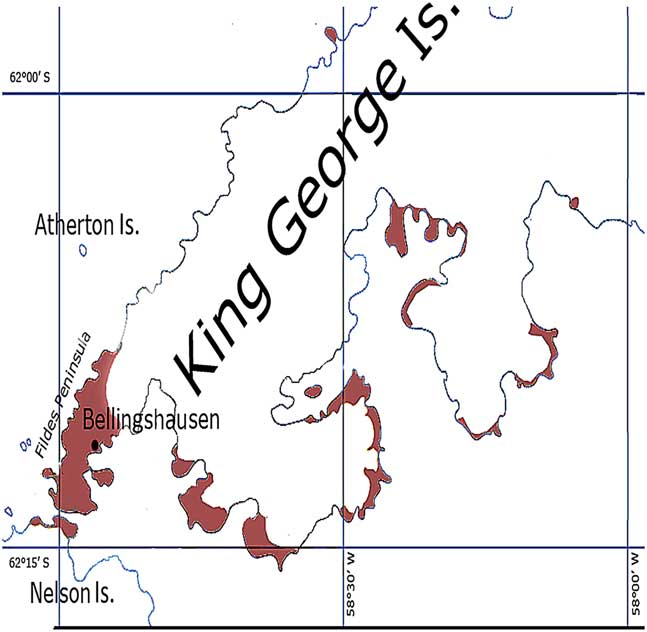
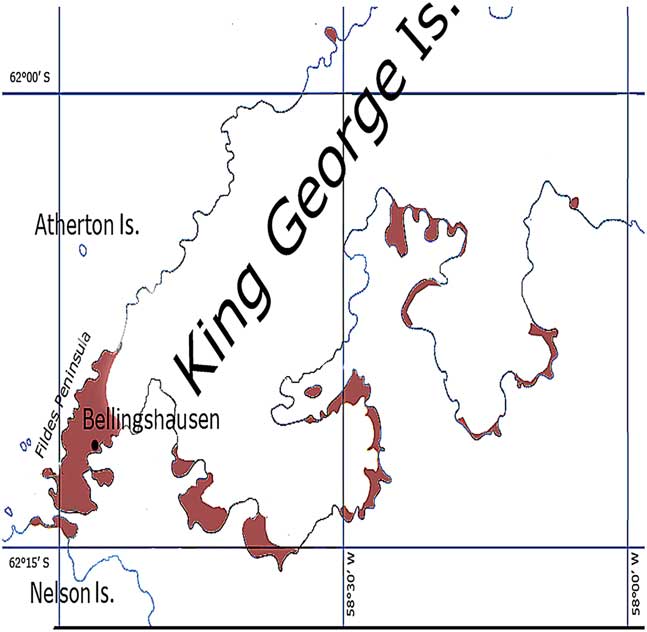
This study focused on investigating the soils of King George Island (Fildes Peninsula) and Nelson Island using data collected during the 61st Russian Antarctic expedition in 2016. The area of study is located on the Southern Shetland Islands (62°11'58.9''S 58°59'49.0''W) and includes three key plots (Fig. 1). The mean altitude of the area under study was 5–25 m a.s.l.
Study areas on King George and Nelson islands. Brown shading indicates ice-free areas.
The soils investigated are in the sub-Antarctic maritime zone. Bellingshausen Station (62°12'S 58°58'W, 40 m a.s.l.) is situated on the Fildes Peninsula where andesites, basalts and tuffs represent the soil-forming rocks, whereas maritime sands and gravels cover the coastal areas. The periglacial plots are occupied by moraines and some fluvioglacial materials (Peter et al. Reference Peter, Buesser, Mustafa and Pfeiffer2008). The average annual air temperature is -2.8 °C, and in summer (January and February) the average monthly temperature rises to 0.7–0.8 °C; the soil surface temperatures are actually considerably higher when free from ice and snow. The total annual precipitation reaches 729 mm, with the number of days with precipitation ranging from 22 to 30 days per month. The mean wind velocity is c. 9.3 m s-1 (Peter et al. Reference Peter, Buesser, Mustafa and Pfeiffer2008), with a maximum of c. 28 m s-1. The diversity of vegetation on the Fildes Peninsula is relatively high in comparison with other Antarctic regions, with monospecitic plant communities as well as mixed communities being common for both the coastal and plateau portions of the peninsula. The plant communities on King George Island are the most developed and diverse in the Antarctic. There are also areas of former penguin rookeries, rocks affected by gulls (Larus dominicanus Lichtenstein), and fresh moraines in the periglacial region. Disturbance of the soil surface is typical for the areas where stations are located, especially at waste disposal sites in the vicinity of station facilities. These disturbances can affect not only the soil stratification and solid phase composition, but also the thawing depth and general solum stratification.
The following surface soil samples were collected: 1) Enitsol, which has only the primary features of the soil formation process, located in fresh moraine in the deglaciated zone of the Collins Glacier, 2) Cryosol, formed in the periglacial soil region with approximately 30-year old moraine hills, 3) Anthropic Lithosol, located near the building named ‘Meteohouse’ at Bellingshausen Station (Fig. 1). Soil names were assigned according to the World Reference Base, 2014 (http://www.fao.org/soils-portal/soil-survey/soil-classification/world-reference-base/en/). Soil samples (50 g) were collected from five points at each site by the ‘envelope method’ (four points in the corners of the square and one in the centre). All samples were homogenized, and five subsamples of 0.2 g each were used for the DNA extractions.
Following the manufacturer’s instructions, DNA was extracted from the 0.2 g soil samples using the PowerSoil DNA Isolation Kit (Mobio Laboratories, Solana Beach, CA, USA), which included a bead-beating step. The samples were homogenized twice using a Precellys 24 tissue homogenizer (Bertin Corp, USA) for 30 s at 6.5 m s-1. The purity and quantity of the DNA were tested by electrophoresis in 0.5× TAE buffer on 1% agarose gels. DNA concentrations were measured at 260 nm using a SPECTROStar Nano microplate reader (BMG Labtech, Ortenberg, Germany). The average DNA yield was 2–5 μg at concentrations of 10–50 ng μL-1. The purified DNA templates were amplified with the universal multiplex primers F515 5′-GTGCCAGCMGCCGCGGTAA-3′ and R806 5′-GGACTACVSGGGTATCTAAT-3′ (Bates et al. Reference Bates, Berg-Lyons, Caporaso, Walters, Knight and Fierer2011), which target the variable V4 region of bacterial and archaeal 16 S rRNA genes. Each multiplex primer contained the adapter, a 4 bp key (TCAG), a 10 bp barcode, and the primer sequences. The amplified product was expected to be 400 bp long. The purification, pooling and pyrosequencing of the amplicons were performed with specified reagents according to the manufacturer’s instructions (Roche, Branford, USA). Pyrosequencing was performed with a Roche 454 GS Junior system in the Core Centrum ‘Genomic Technologies, Proteomics and Cell Biology’ (All-Russia Research Institute for Agricultural Microbiology).
The raw sequences were processed using QIIME v1.8.0 software (Caporaso et al. Reference Caporaso, Kuczynski, Stombaugh, Bittinger, Bushman, Costello and Fierer2010). To reduce the number of sequencing errors, the multiplexed readings were first filtered for quality and then grouped according to barcode sequence. Sequences were omitted from the analysis if they were<200 bp, had a quality score of<25, or contained uncorrectable barcodes, primers, ambiguous characters, or homopolymers ≥ 8 bp long. All non-bacterial ribosomal sequences and chimeras were also removed from the database. The chimeras were removed using the Chimera slayer algorithm incorporated into QIIME. In total, 17 311 sequences were obtained, with an average of 1923 sequences per library. The dataset was then normalized, resulting in 1100 sequences per sample. The minimum, maximum and median lengths of the sequences were 200, 355 and 313 bp, respectively. Similar sequences were clustered into operational taxonomic units (OTUs) with a minimum identity of 97% using the de novo algorithm. A representative set of sequences was chosen by selecting the most abundant sequence from each OTU. The representative sequences from each OTU were then classified using the Ribosomal Database Project (RDP) Naïve Bayesian rRNA Classifier tool (Wang et al. Reference Wang, Garrity, Tiedje and Cole2007) with a confidence level of 80% and the Greengenes database (DeSantis et al. Reference DeSantis, Hugenholtz, Larsen, Rojas, Brodie, Keller, Huber, Dalevi, Hu and Andersen2006), and aligned using the PyNast algorithm. The aligned sequences were used to build a distance matrix (distance threshold of 0.1) and the phylogenetic tree necessary for downstream analysis.
Alpha and beta diversity analyses were performed to compare the microbial communities. To estimate the alpha diversity, indices for richness (observed species, Chao I) and evenness (PD whole tree, Shannon evenness, Simpson index) were calculated, with the observed differences confirmed by t-tests. For beta diversity, weighted UniFrac metrics were used to calculate the amount of dissimilarity (distance) between the bacterial communities being compared. The results are presented in a principal coordinate analysis (PCA) using QIIME. All estimates were calculated for the normalized data (normalization was performed on the smallest number of sequences present in the sample). The environmental parameters affecting the structure of the soil microbiomes were identified by a Mantel test with 999 permutations using the unweighted UniFrac distance matrices for the samples.
The abundances of the OTUs were compared between samples by calculating the median relative change for groups of replicates, with a positive median signifying an increased abundance and a negative median indicating a decline in abundance. A basic permutation test was used to infer significance, and a jack-knife-like resampling approach was applied for testing the stability of the median estimates.
The RDP and GenBank databases were searched to provide more accurate taxonomic diagnoses for the OTUs with significant differences. The GenBank search was performed using the Nucleotide Blast service. The environmental characteristics of the GenBank records (particularly the Antarctic habitats) were scrutinized before including a result in the table. In other cases, however, the most abundant records with the best matches were chosen. For the RDP database analysis, the RDP-classifier was used with the confidence threshold (95%) set at the maximum.
Results
The main physico-chemical characteristics were measured for all soil samples (Table I). Sample 1, an Entisol, was from a relatively fresh moraine from the deglaciated zone of Collins Glacier. Deglaciation occurred c. 7 years prior to sampling, so the suggested time of soil colonization by the organisms was estimated to be 6–7 years.
Physico-chemical parameters of soil samples from the study areas.

Sample 2, a Cryosol, was from a well-developed moraine in a periglacial zone in 30-year-old moraine. The plot was colonized by mosses and lichens and featured evidence of cryogenic processes.
Sample 3, Anthropic Lithosol, was from near Bellingshausen Station, by a pathway connecting the local airport with the Russian and Chilean stations, and affected by tourist traffic daily, with mechanical impacts and the removal and replacement of soil occurring during the summer (December–February). All the soils are acidic with relatively low pH levels, and they are poorly enriched with the main biogenic elements. The soil textures were classified as clay (Samples 1 and 2) and coarse sandy loam (Sample 3).
To evaluate the alpha diversity of the soil microbiomes, several indices for species richness and evenness were calculated (Table II). The values of Good’s coverage estimator ranged from 0.86% to 0.88%, meaning c. 12–14% of the OTUs were probably not covered during the sequencing effort. The microbiome of the Anthropic Lithosol differed significantly from those of the other two soils, having the lowest species richness, phylogenetic diversity, and Shannon Index. The soil samples from the fresh and old moraines (Samples 1 and 2) showed no significant differences in microbial biodiversity.
Alpha-diversity parameters of microbiomes of soil samples from the study areas.

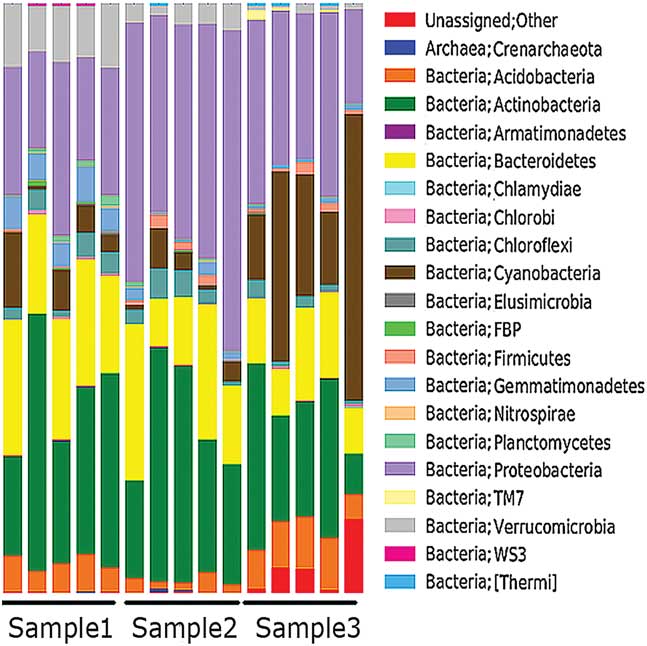
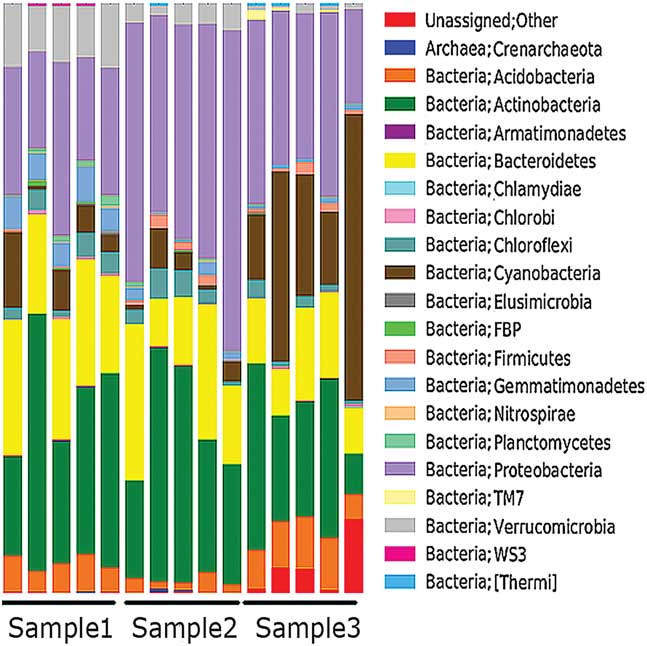
The taxonomic analysis of the soil microbiomes revealed 20 bacterial and archaeal phyla, among which Proteobacteria (29.6%), Actinobacteria (25.3%), Bacteroidetes (15.8%), Cyanobacteria (11.2%), Acidobacteria (4.9%) and Verrucomicrobia (4.5%) constituted the majority (> 96% of sequences in the amplicon libraries, Fig. 2). Archaea were represented by the phylum Crenarchaeota and were found only in all five replicates of the old moraine soil samples (Sample 2), of which they constituted<0.2% (Fig. 2).
Phylogenetic diversity of bacteria and archaea at the phylum level. Relative abundances of taxa are shown for five replicates of the analysed soil samples (Sample 1: Enitsol samples (fresh moraine), Sample 2: Cryosol samples (old moraine), Sample 3: Antropic Lithosol samples, Bellingshausen Station).
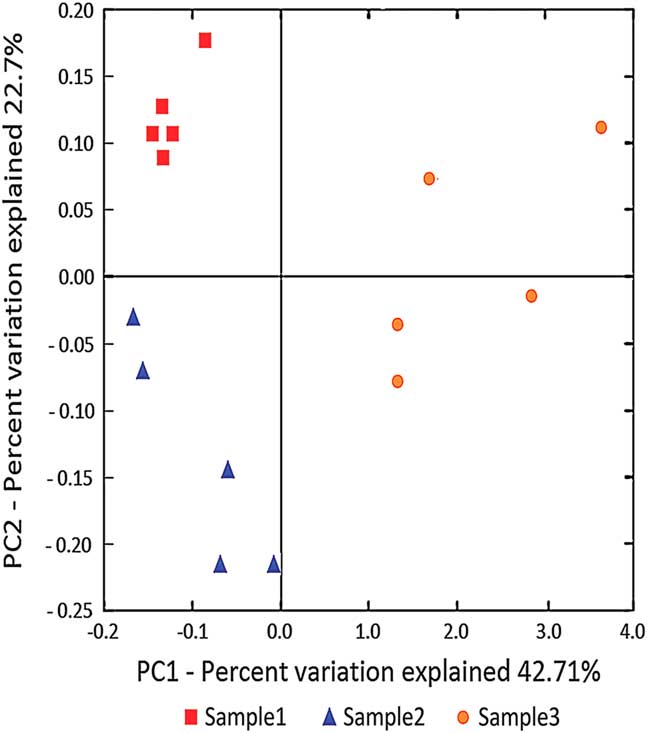
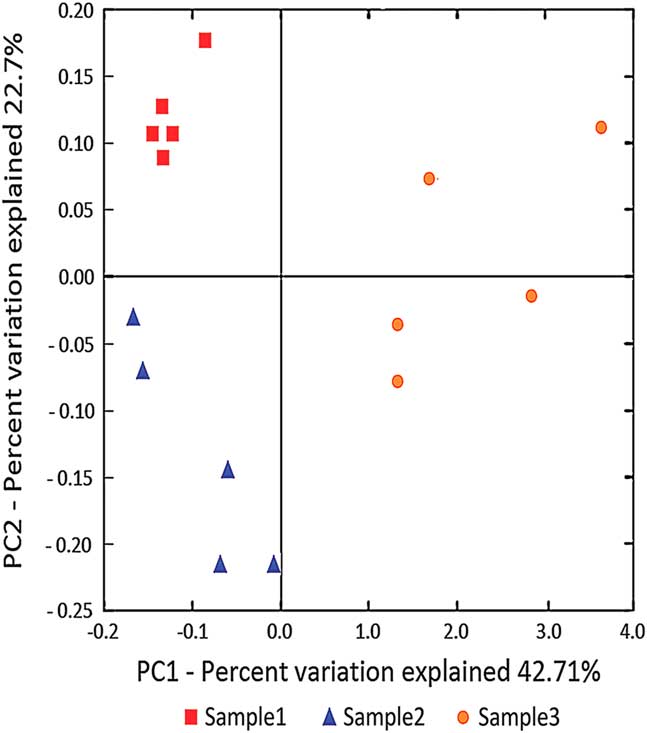
Although the microbial composition of Samples 1 and 2 had the same bacterial phyla, they formed separate dense clusters on the PCA plot (Fig. 3), predicting there would be pronounced differences in the community structure at the lowest taxonomic levels. The cluster corresponding to the human-affected soil (Sample 3) tended to be less condensed, but was still well separated from the intact soil samples (Fig. 3).
PCoA analysis of weighted UniFrac distance matrix representing β-diversity of the prokaryotic communities. PC1, PC2 and PC3 are the main coordinate axes of the multidimensional space, with the values of the explained variance (percentage). Five replicates of the analysed soil samples (Sample 1: Enitsol samples (fresh moraine), Sample 2: Cryosol samples (old moraine), Sample 3: Antropic Lithosol samples, Bellingshausen Station) are shown.
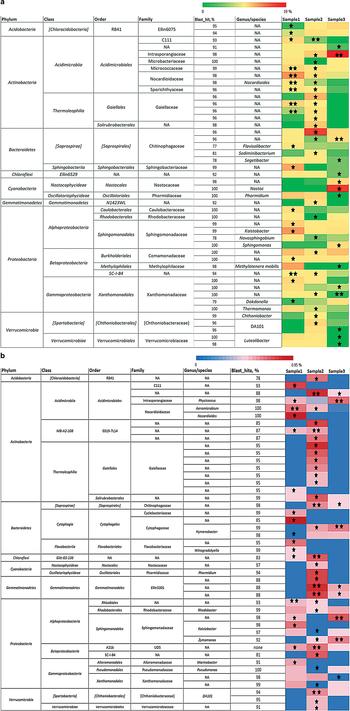
The observed differences in the structures of the microbiomes can be explained by the fluctuations in their taxonomic structures at the family, genus and species levels. Figure 4 illustrates only the observed significant differences (P<0.05); for information on the abundance of the dominant microbial taxa in the samples see Fig. S1 found at http://dx.doi.org/).
a. Significant differences in the frequencies of the dominant taxa (> 1% of the prokaryotic community) between soil samples. Relative abundances of taxa are shown for five replicates of the analysed soil samples (Sample 1: Enitsol samples (fresh moraine), Sample 2: Cryosol samples (old moraine), Sample 3: Antropic Lithosol samples, Bellingshausen Station). b. Significant differences in the frequencies of the minor taxa (< 1% of the prokaryotic community) between soil samples. Relative abundances of taxa are shown for five replicates of the analysed soil samples (Sample 1: Enitsol samples (fresh moraine), Sample 2: Cryosol samples (old moraine), Sample 3: Antropic Lithosol samples, Bellingshausen Station). Asterisks indicate significant difference (P<0.05) in relative abundance of bacterial taxa.
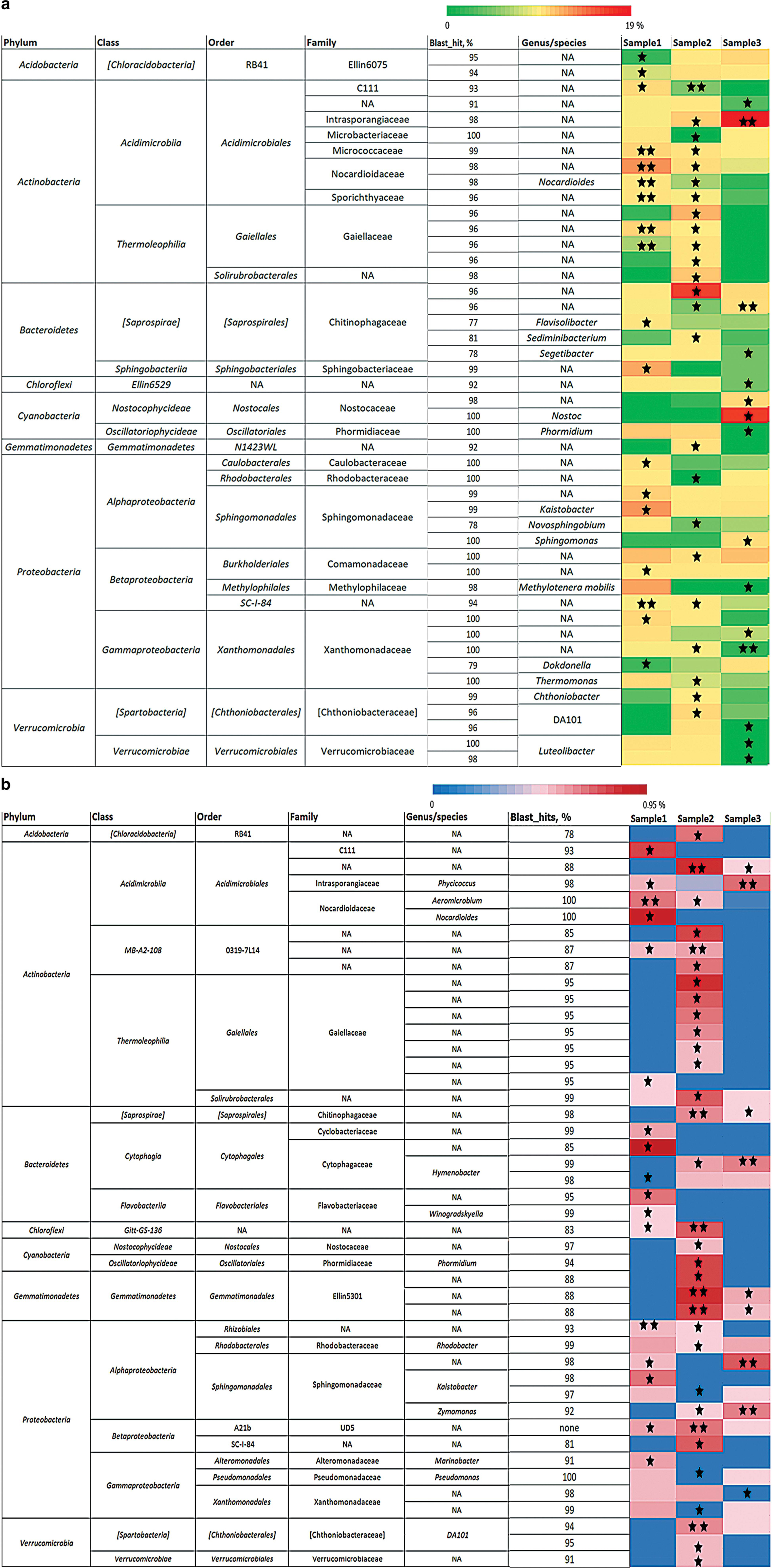
The main differences in the taxonomic structure of the soil microbiomes were observed in the phyla Cyanobacteria and Actinobacteria. The soil from Bellingshausen Station (Sample 3) differed considerably from the other two soil varieties. These microbiomes were enriched with cyanobacteria, belonging solely to the genus Nostoc (15.05%), and actinobacteria, belonging to the family Intrasporangiaceae and presumably classified as Janibacter sp. (Table S1 found at http://dx.doi.org/). The biodiversity of the actinobacteria was relatively higher in the moraine Samples 1 and 2 compared to Sample 3. These soils also contained a large number of oscillatoriales of the genus Phormidium.
The deglaciation history of the soil samples had a small, but still significant impact on the soil bacterial diversity. The early stages of deglaciation were characterized by the dominance of bacteria belonging to the Xanthomonadaceae, Sphingomonadaceae and Nocardioidaceae families, whereas the later stages were enriched with Chthoniobacteriaceae and bacteria from the orders N1423WL and Solirubrobacteriales (Fig. 4а). Gaiellaceae and Chitinophagaceae bacteria were found in both stages of deglaciation and demonstrated only genus-level differences.
The minor components of the prokaryotic community dominated in the old moraine, Sample 2 (Fig. 4b). Among them were the newly explored bacterial groups Acidobacteria (RB41), Actinobacteria (0319-7L14), Gemmatimonadetes (Ellin5301), Betaproteobacteria (SC-I-84) and Verrucomicrobia (DA101). These were in addition to the bacteria also found in the abundant portion of the microbial community (Fig. 4a & b), e.g. Gaiellaceae, Nostocaceae and Phormidiaceae.
The OTUs that significantly differed between the samples underwent further taxonomic identification using the RDP and GenBank databases (Table S1). Only the OTUs that had more than 98% identity to the nearest homologous sequence in GenBank (the sequences with known taxonomic names were used) were included in the analysis. A substantial proportion of these OTUs were homologous to species found elsewhere in marine, Antarctic or Arctic habitats. In particular, a non-identified member of the family Microbacteriaceae had the best GenBank database match with Marisediminicola antarctica, collected from the coastal area of the Chinese Antarctic Zhongshan Station. Other OTUs also had database homologues found in a wide range of Antarctic habitats, among which were sediments of Lake Hodgson, McMurdo Dry Valleys, the Ukrainian Antarctic Station ‘Akademik Vernadsky’, the glacial foreland in the Larsemann Hills in East Antarctica, the Victoria Upper Glacier, the deglaciated lakes of James Ross Island, and King George Island.
Most of the identified bacteria belonged to the phyla Actinobacteria (Janibacter hoylei, Marisediminicola antarctica, Arthrobacter flavus, Nocardioides sp., Phycicoccus jejuensis, Aeromicrobium tamlense, Angustibacter luteus), Bacteroidetes (Hymenobacter glaciei, Subsaxibacter arcticus), Cyanobacteria (Hassalia sp., Anabaena sp., Nostoc sp., Phormidium autumnale) and Verrucomicrobia (Luteolibacter sp.). With the exception of the cyanobacteria and some actinobacteria (particularly Janibacter hoylei), these OTUs dominated in the moraine Samples 1 and 2 (Table S1).
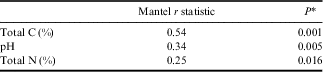
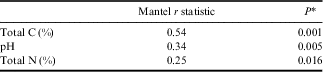
To evaluate the main chemical factors affecting the microbial biodiversity, Mantel tests with 999 permutations (P=0.001) were performed for the total carbon and nitrogen contents of the soil as well as for the soil pH. These results suggest that the fluctuations in the taxonomic structure of the soil microbial communities can be explained by the total carbon content, and to a lesser extent by the soil pH value. The total nitrogen content had only trend-correlation effects on the microbial diversity (P=c. 0.1, Table III).
Correlation between taxonomic structure of microbial communities in three soil samples and several environmental parameters.
* Number of permutations=999
Discussion
The soil samples from Bellingshausen Station (Sample 3) had the most pronounced differences in bacterial diversity among the three study sites. These differences resulted in relatively low richness and evenness indices, and lower phylogenetic diversity. The low values of Faith’s index (Table II) can be explained by the dominance of Nostoc, which formed up to 15% of the microbial community in the Bellingshausen Station samples. This result agrees with previous findings on the damaging impacts of human activity on microbial diversity in Antarctic soils (Chong et al. Reference Chong, Tan, Wong, Riddle and Tan2009, Pan et al. Reference Pan, Wang, Zhang, Cai, He and Yang2013). Thus, it appears that mature soil cannot be formed at Bellingshausen Station because of the constant impact of transport and human activity.
The taxonomic composition of the primarily Antarctic soils at the phylum level is probably the same as that of, for example, the previously investigated soils of various regions in Eurasia (Janssen Reference Janssen2006, Fierer et al. Reference Fierer, Leff, Adams, Nielsen, Bates, Lauber, Owens, Gilbert, Wall and Caporaso2012), with the exception of the relatively high abundance of bacteria from the phyla Bacteroidetes and Cyanobacteria. The dominance of Cyanobacteria in Antarctic soils has been discussed in a number of studies (Bottos et al. Reference Bottos, Scarrow, Archer, McDonald and Cary2014) and appears to be a result of the low carbon and nitrogen content. With their ability to fix nitrogen, these bacteria may be the ecosystem-forming species in Antarctic soils.
Compared to the microbial profiles of other soils, Antarctic soils have the smallest proportion of archaea. It is likely that this study does not provide complete and accurate identification of the existing archaeal diversity. According to other comprehensive studies (Richter et al. Reference Richter, Herbold, Lee, McDonald, Barrett and Cary2014), archaea occur frequently in Antarctic soils; therefore, the main reason for the low archaeal abundance and diversity is the primer bias. A set of universal primers designed by Bates and colleagues, which were used previously to describe soil archaeal diversity in several ecosystems (Bates et al. Reference Bates, Berg-Lyons, Caporaso, Walters, Knight and Fierer2011), were applied. With its extremophile features, Antarctic soil can contain unique archaeal groups. Moreover, the systematics of archaea has changed greatly in the past decade (e.g. the archaeal ‘TACK’ superphylum was discovered), and therefore the primer set for archaea should be revised accordingly. However, the low proportion of archaea belonging to the phylum Crenarchaeota (0.1% on average) can probably be explained by the chemical conditions of the soil. Soil Crenarchaeota have previously been reported to be involved in the nitrogen cycle (Weidler et al. Reference Weidler, Gerbl and Stan-Lotter2008), so their decreased abundance in Antarctic soils could be attributable to the lack of reduced nitrogen compounds.
The PCA analysis (Fig. 3) revealed that at the lowest taxonomic levels all the soil samples had a unique microbial composition and were inhabited by specific bacterial genera that can be used as ecological indicators of soil formation and disturbance processes. The soil disturbed by human activity (Sample 3) featured changes in the cyanobacterial composition, such as a reduction in the proportion of bacteria from the genus Phormidium, which were substituted by Nostoc. Although the proportion of cyanobacteria decreased in the transition from the Bellingshausen Station samples (Sample 3) to the moraines (Samples 1 and 2), these bacteria formed an essential part (up to 3%, on average) of the microbiomes of soils from Ecology Glacier. These results correspond to previous data showing that at the early stages of deglaciation, as well as at the stages where mosses, lichens, and even plants are present, Phormidium, Nostoc and other Oscillatoria-like bacteria form the majority of the soil microbial communities in Antarctic ecosystems (Bottos et al. Reference Bottos, Scarrow, Archer, McDonald and Cary2014).
The family Intrasporangiaceae deserves particular attention. One of the OTUs belonging to this group increased to 19% in Sample 3. Using the GenBank database, it was suggested to be closely related to Janibacter hoylei, which has previously been observed in cryotubes at elevations of 21–41 km over India and is therefore considered to be a ‘stratosphere bacterium’ (Shivaji et al. Reference Shivaji, Chaturvedi, Begum, Pindi, Manorama, Padmanaban, Shouche, Pawar, Vaishampayan, Dutt and Datta2009). Later work detected Janibacter spp. in Antarctic seawater and the soils of Ecology Glacier (Zdanowski et al. Reference Zdanowski, Zmuda-Baranowska, Borsuk, Światecki, Górniak, Wolicka, Jankowska and Grzesiak2013), but they have never been associated with human settlements. A case of bacteraemia potentially associated with these bacteria was reported by Lim et al. (Reference Lim, Kweon, Kim, Kim and Lee2017), so it may be assumed that Janibacter hoylei is a human pathogen. Considering this, future research should pay special attention to the Intrasporangiaceae as a probable source of new human-borne bacteria that could be introduced to the Antarctic ecosystems.
The differences in the microbial composition of the old and fresh moraine Samples 1 and 2 can principally be explained by the total carbon content (model R2=c. 0.54, model P<0.001, Table III). These changes are probably associated with the succession stages, with the early stages dominated by copiotrophic bacteria (e.g. from the family Nocardioidaceae), and the later stages enriched with bacteria capable of degrading complex organic compounds, and thus involved in soil formation processes (e.g. Chthoniobacteriaceae and Chitinophagaceae). According to current research, these bacteria, particularly Chthoniobacter, are typically found in different Antarctic regions, including the Fildes Peninsula (Wang et al. Reference Wang, Zhang, Zhang, Wang, He, Ding, Zhang, Liu, Ran and Zang2015) and the glacial foreland of Larsemann Hills (Yan et al. Reference Yan, Ma, Shi, Li, Sun, Xiao and Zhang2017).
Chitinophagaceae are usually associated with the degradation of complex organic polymers in soil, including cellulose and chitin (Larsbrink et al. Reference Larsbrink, Zhu, Kharade, Kwiatkowski, Eijsink, Koropatkin, McBride and Pope2016), and thus point to the activation of soil-forming processes. These bacteria are typical of soils in temperate regions (De Gannes et al. Reference De Gannes, Bekele, Dipchansingh, Wuddivira, De Cairies, Boman and Hickey2016), but have also been found in Antarctic environments (Chong et al. Reference Chong, Pearce, Convey, Yew and Tan2012, Niederberger et al. Reference Niederberger, Sohm, Gunderson, Parker, Tirindelli, Capone, Carpenter and Cary2015).
The analysis of the OTUs showed significant differences between the moraine (Samples 1 and 2) and Bellingshausen Station (Sample 3) samples in the amount of bacteria reported from different marine (e.g. deep-sea sediments) and cold-climate environments (e.g. Antarctic, Arctic, subarctic, and permafrost). Some of these bacteria are reportedly Antarctic endemics, such as Marisediminicola antarctica, which was also found in East Antarctica (6 9°22'13''S 76 °21'41''E) at the Chinese Antarctic Zhongshan Station (Li et al. Reference Li, Yu, Luo and Zeng2010), and Hymenobacter glaciei, reported in the Fildes Peninsula of King George Island (González-Rocha et al. Reference González-Rocha, Muñoz-Cartes, Canales-Aguirre, Lima, Domínguez-Yévenes, Bello-Toledo and Hernández2017).
Another group of special interest is the marine bacteria, particularly those found in the deep-sea environment. It is known that the deep-sea waters of the Southern Ocean can be an important reservoir of microbial dispersal around Antarctica (Vincent Reference Vincent2000). Some of the bacterial groups in the analysed samples can be attributed to this ecosystem, including the families Gaiellaceae, Sporichthyaceae and Rhodobacteraceae and the genera Phycicoccus, Aeromicrobium, Luteimonas and Hassalia (Table S1).
The next group comprises the psychrotolerant and psychrophilic bacteria that can be found in cold-climate environments, not only in Antarctica but also in other regions, such as Polymorphobacter fuscus, which have been found in permafrost (Jia et al. Reference Jia, Feng, Zheng, Han, Hou, Lu and Lv2015) and Antarctic rock environments (Fukuda et al. Reference Fukuda, Chino, Araki, Kondo, Imanaka, Kanai, Atomi and Imanaka2014). Similar tendencies have been mentioned for Subsaxibacter (Bowman & Nichols Reference Bowman and Nichols2005), Polaromonas (Wang et al. Reference Wang, Zhang, Zhang, Wang, He, Ding, Zhang, Liu, Ran and Zang2015), Phormidium autumnale (Strunecký et al. Reference Strunecký, Elster and Komárek2012) and Nocardioides glacieisoli (Liu et al. Reference Liu, Liu, Zhang, Zhou and Xin2015).
The remaining contribution to the biodiversity was by cosmopolitan species. Among them were Sphingomonas flava, Acidovorax konjaci, Luteolibacter sp., DA101, Chthoniobacter sp., Pseudomonas sp., and those in the cyanobacterial genera. Some of these bacteria are plant-associated, belonging to the plant growth-promoting rhizobacteria (e.g. Sphingomonas and Pseudomonas spp.) or plant-pathogenic bacteria such as Acidovorax konjaci (Myung et al. Reference Myung, Lee, Jeong, Moon, Lee and Shim2007). Some bacterial groups remained unidentified at the genus and even the family and order levels, so they may contribute to the previously mentioned groups after further investigation.
It is important to mention the lack of an informative identification of the nucleotide sequences using the GenBank and RDP databases as well as the main Greengenes database, the standard tool for 16 S amplicon library analysis (DeSantis et al. Reference DeSantis, Hugenholtz, Larsen, Rojas, Brodie, Keller, Huber, Dalevi, Hu and Andersen2006). This was due to the multivariate and sometimes erroneous hits of the deposited data as well as the existing variance in 16 S rRNA sequences between species, and even within single genomes. Nevertheless, regarding the taxonomy diagnoses included in the supplementary data, it may be concluded that the soil samples presented in this research contain both endemic and cosmopolitan bacterial species.
Conclusions
This is the first study to use 454 pyrosequencing to investigate the prokaryotic diversity in the soils at Bellingshausen Station and the surrounding areas of Ecology Glacier. The bacterial composition had many of the common characteristics reported previously from pyrosequencing studies of Antarctic soils, such as the dominance of Proteobacteria, Actinobacteria, Bacteroidetes and Verrucomicrobia bacteria in the communities. However, it also possessed unique features such as a high percentage of unclassified bacteria and Cyanobacteria in the human-disturbed areas.
Thus, the main trends in forming the soil microbiome of Antarctic soils in the Fildes Peninsula region have been partially identified. This bacterial community is characterized both by endemic and cosmopolitan taxa. Some of these bacteria have been found previously in different regions of the Antarctic continent (e.g. Marisediminicola antarctica, Hymenobacter glaciei, Nocardioides glacieisoli and Polymorphobacter fuscus), whereas others (especially the unidentified species from newly discovered bacterial divisions such as Ellin6075, C111, Chitinophagaceae, Chthoniobacteriaceae, SC-I-84, Gaiellaceae, Ellin5301 and UD5) lacked known homologues in the databases, meaning this is probably the first time they were found on the Antarctic continent. Special attention should be given to the human impact on Antarctic soils, as an increase in Janibacter sp. was seen in the Bellingshausen Station soil samples. This bacterium has been recorded previously in seawaters and in Ecology Glacier on the Antarctic Peninsula, but it has never been associated with human activity. Thus, special attention should be given to Intrasporangiaceae bacteria as potential human-borne contaminants in Antarctic environments.
Acknowledgements
This work was supported by the Russian Scientific Foundation projects 17-16-01030, ‘Soil biota dynamics in chronoseries of post-technogenic landscapes: analyses of soil ecological effectiveness of ecosystems restoration’ (soil sampling, agrochemical analysis, preparation of the manuscript), and 14-26-00094 P, ‘Analysis of the soil microbiomes’ genetic and evolutionary potential for increasing plant productivity and soil fertility’ (molecular analysis, pyrosequencing, bioinformatics). The authors are grateful for the constructive comments and suggestions provided by the two anonymous reviewers, which significantly improved the paper.
Author contributions
E.V. Pershina analysed data and prepared the manuscript; E.A. Ivanova extracted DNA from the soil samples, analysed data and deposited the data in the SRA database; E.V. Abacumov collected the soil samples and prepared the manuscript; E.E. Andronov performed the pyrosequencing of the 16 S rRNA gene amplicon libraries.
Details of data deposit
All sequences were deposited to the Sequence Read Archive (SRA) database (https://www.ncbi.nlm.nih.gov/sra) and supplied with individual names, from SAMN06320241 to SAMN06320255.
Supplemental material
One supplemental table and one figure will be found at www.journals.cambridge.org/jid_ANS.