Introduction
Advances in diagnostic and treatment modalities have substantially improved survival among individuals with CHD; consequently, long-term outcomes beyond cardiac health, including psychosocial outcomes and quality of life, have gained increasing importance. Reference Stout, Daniels and Aboulhosn1,Reference Brida and Gatzoulis2 Children with CHD may experience physical limitations, neurodevelopmental difficulties, impaired social functioning, and psychological challenges. Reference Brosig, Bear and Wolfe3–Reference O’Connor, Cassedy and Wray5 Life satisfaction is an important indicator of subjective well-being that reflects an individual’s overall evaluation of their life and may be influenced by psychological status, social relationships, and family support in addition to the presence of chronic illness. Reference Blackwell, Elliott and Ganiban6 Although difficulties in physical and psychosocial health-related quality of life have been reported among children with CHD, research specifically addressing life satisfaction, which reflects children’s overall subjective evaluation of their lives, remains limited. Reference Amedro, Dorka and Moniotte7,Reference Mamasoula, Pennington, Adesanya and Rankin8 Furthermore, given that child and parent reports may differ, assessing life satisfaction through children’s own reports is particularly important. Reference Hall, Donza and McGinn9
CHD is a long-term health condition that affects not only the child but also the entire family. Diagnosis, hospitalisations, treatment processes, and uncertainty regarding the child’s health may cause parental stress, anxiety, and concerns about the future, while long-term caregiving responsibilities may affect parents’ quality of life and parenting roles. Reference Dandy, Wittkowski and Murray10–Reference Wang, Ma and Yang13 Such ongoing psychological burden may contribute to parental burnout. Parental burnout is characterised by intense exhaustion related to the parenting role, emotional distancing from one’s child, and a sense of reduced parental efficacy. Reference Roskam, Brianda and Mikolajczak14,Reference Mikolajczak, Brianda, Avalosse and Roskam15 High psychological burden and risk of burnout have been reported among parents of children with chronic illnesses, Reference Cici and Özdemir16,Reference Wauters, Vervoort and Dhondt17 whereas research specifically focusing on CHD has primarily addressed parental quality of life and psychological experiences. Reference Dandy, Wittkowski and Murray10
The psychosocial well-being of children and their parents may be interrelated within the family system; among children with chronic illnesses, family functioning has been associated with psychological health and quality of life. A meta-analysis of children with chronic physical conditions, including CHD, diabetes, cancer, and other chronic conditions, found significant associations between family functioning and children’s psychological health and quality of life. Reference Leeman, Crandell, Lee, Bai, Sandelowski and Knafl18 Life satisfaction reflects children’s overall subjective evaluation of their lives, whereas parental burnout captures exhaustion specifically associated with the parenting role. The rationale for examining these constructs together also arose from clinical observations concerning children with CHD and their parents during ongoing care and follow-up. Considering the child’s overall appraisal of life alongside the parent’s experience of exhaustion in the parenting role raised the question of whether two perspectives were associated. This question was motivated by clinical experience and the complementary nature of the constructs rather than by an established theoretical model predicting a direct association. Although psychosocial difficulties have been documented among children with CHD, Reference Finkel, Sun and Jackson4 the specific association between children’s own life satisfaction and parental burnout remains insufficiently understood. Previous research has also indicated that psychosocial and quality-of-life outcomes among children with CHD may vary according to clinical and sociodemographic characteristics. Clinical factors such as disease severity, treatment history, and medical burden, as well as sociodemographic factors such as family socioeconomic status and parental educational attainment, have been associated with quality-of-life and psychosocial outcomes in children with CHD. Reference Davey, Sinha, Lee, Gauthier and Flores19–Reference Drakouli, Petsios, Giannakopoulou, Patiraki, Voutoufianaki and Matziou22 Although existing research has examined family functioning or child and parent psychosocial outcomes separately, the specific association between children’s life satisfaction and parental burnout has received limited attention. Therefore, examining children’s life satisfaction and parental burnout together may provide a more specific understanding of how children’s global subjective well-being and parents’ experiences of the parenting role are associated within families managing CHD. The primary aim of this study was to assess life satisfaction in children with CHD and to examine its relationship with parental burnout. A secondary aim was to investigate whether life satisfaction and parental burnout differed according to selected sociodemographic and clinical characteristics of the children and their parents. We hypothesised that lower life satisfaction among children with CHD would be associated with higher levels of parental burnout. The analyses examining differences in life satisfaction and parental burnout according to sociodemographic and clinical characteristics were considered secondary and exploratory; no directional hypotheses were specified for these analyses. These characteristics included the child’s sex, time since diagnosis, previous hospitalisation, reason for hospitalisation, length of hospital stay, sibling with CHD, accompanying parent, parental age, education, and income status.
Methods
Study design and participants
This descriptive and correlational cross-sectional study was in the paediatric cardiology outpatient clinic of a state hospital in İstanbul, Türkiye, conducted between November 2023 and February 2024. The study population consisted of children with CHD and their parents attending the outpatient clinic during the study period.
The required sample size was calculated using the formula for a known population described by Salant and Dillman. Based on hospital records, approximately 600 children had attended the paediatric cardiology outpatient clinic in 2022. Assuming a 95% confidence level, a probability of 0.50, and a margin of error of 5%, the minimum required sample size was calculated as 234. The study was completed with 234 child–parent dyads. Detailed records of the number of eligible participants who declined participation or were excluded after screening were not retained and therefore could not be reported.
Children were eligible if they were between 8 and 13 years of age, had a diagnosis of CHD, regardless of CHD type or severity, and both the child and parent were able to understand and speak Turkish at a native level, as the study instruments were administered in Turkish. The 8–13-year age range was selected because the Satisfaction with Life Scale adapted for Children was developed and validated for children in this age group. Reference Gadermann, Schonert-Reichl and Zumbo23 Participation was voluntary for both children and parents. Children and parents with visual, hearing, speech, or cognitive or intellectual impairments that could interfere with completing the study forms were excluded. For children, these conditions were identified through review of available clinical records and direct inquiry with the parent. For parents, they were identified through direct inquiry during the initial information session. Examples included visual impairment that prevented reading the study forms, hearing impairment that interfered with understanding verbal explanations, speech impairment that prevented effective communication, and cognitive or intellectual impairment that interfered with understanding the study information or questionnaire items.
Procedure
Data were collected through face-to-face interviews with eligible children and their parents during outpatient clinic visits. A consecutive sampling approach was used, and recruitment continued until the target sample size was reached. Parents and children who met the inclusion criteria were informed about the purpose and procedures of the study, and those who agreed to participate were enrolled. Verbal assent was obtained from children, and written and verbal informed consent was obtained from parents.
Parents completed the Information Form and the Parental Burnout Assessment, whereas children completed the Satisfaction with Life Scale adapted for Children. All questionnaires were completed in a suitable area of the outpatient clinic and required approximately 20–25 minutes for each child–parent dyad.
The study was approved by the Maltepe University Ethics Committee (Date: 21/12/2023; No: 2023/22-01). Institutional permission was obtained from the İstanbul Provincial Health Directorate (Date: 26/02/2024; No: 2024/3). Permission to use the Turkish versions of the study scales was obtained from the researchers who conducted their validity and reliability studies.
Measures
Data were collected using an Information Form, the Satisfaction with Life Scale adapted for Children, and the Parental Burnout Assessment.
The Information Form was developed by the researchers based on the literature and consisted of 14 items in two sections. The first section included questions on the child’s sociodemographic and disease-related characteristics, including age, sex, time since diagnosis, previous hospitalisation, reason for hospitalisation, length of hospital stay, presence of a sibling with CHD, and number of siblings. The second section included questions on parental sociodemographic and family-related characteristics, including age, educational level, income status, family type, the person responsible for the child’s care, and the parent accompanying the child during hospitalisation.
Satisfaction with Life Scale adapted for Children is a 5-item, 5-point Likert-type scale designed for children aged 8–13 years and has a single-factor structure. Total scores range from 5 to 25, with higher scores indicating higher life satisfaction. Reference Gadermann, Schonert-Reichl and Zumbo23 In the Turkish validity and reliability study, the Cronbach’s alpha coefficient was reported as 0.79. Reference Altay and Ekşi24 In the present study, Cronbach’s alpha was 0.86. The Satisfaction with Life Scale adapted for Children assesses global life satisfaction rather than disease-specific health-related quality of life. Its use in children with chronic health conditions has supported its application for assessing subjective well-being in this population. Reference Caruso, Grolnick, Mueller, Kaczynski, Chang and Lebel25 Therefore, the Satisfaction with Life Scale adapted for Children was selected in the present study to assess children’s general life satisfaction rather than CHD-specific quality of life.
The Parental Burnout Assessment was developed to assess burnout related to the parenting role. The scale consists of 23 items rated on a 7-point Likert scale ranging from 0 (“never”) to 6 (“every day”). The scale comprises four subscales: exhaustion in parental role, contrast in parental self, feelings of being fed up, and emotional distancing. Total scores range from 0 to 138, with higher scores indicating higher parental burnout. Reference Roskam, Brianda and Mikolajczak14 In the Turkish adaptation study, the Cronbach’s alpha coefficient for the total scale was 0.90. Reference Arikan, Üstündağ-Budak, Akgün, Mikolajczak and Roskam26 In the present study, Cronbach’s alpha for the total scale was 0.84. The Parental Burnout Assessment focuses on burnout related to the parental role, Reference Roskam, Brianda and Mikolajczak14 whereas illness-specific measures such as the Paediatric Inventory for Parents assess stress related to caring for a child with an illness. Reference Streisand, Braniecki, Tercyak and Kazak27 Therefore, the Parental Burnout Assessment was selected in the present study because our aim was to assess general parental burnout rather than CHD-specific caregiving stress.
Statistical analysis
Data were analysed using IBM SPSS Statistics for Windows, version 22.0 (IBM Corp., Armonk, NY, USA). Descriptive statistics were used to summarise participant characteristics and study variables and are presented as frequency, percentage, mean, and standard deviation. Normality was assessed using skewness and kurtosis values, which indicated that the study variables were normally distributed.
Relationships between children’s life satisfaction and parental burnout were examined using Pearson correlation analysis. Differences in scale scores according to sociodemographic and clinical characteristics were evaluated using the independent samples t-test and one-way analysis of variance. When overall group differences were significant, post hoc comparisons were performed using Tukey or LSD tests, as appropriate. A p value of <0.05 was considered statistically significant.
Results
Participant characteristics
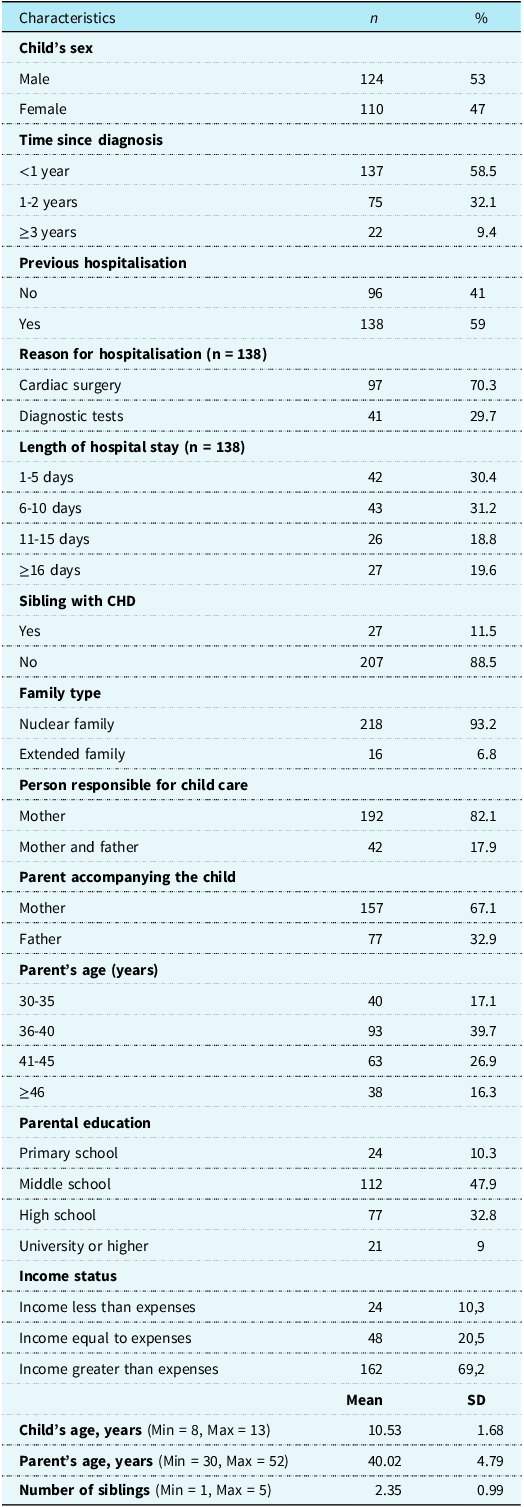
A total of 234 children with CHD and one of their parents participated in the study. The mean age of the children was 10.53 ± 1.68 years (range 8–13 years), and 53.0% were male. More than half of the children (58.5%) had been diagnosed within the previous year, and 59.0% had a history of hospitalisation, most commonly for cardiac surgery (70.3%). Mothers accompanied the child in 67.1% of cases. Most children lived in nuclear families (93.2%), and the mother was identified as the person responsible for the child’s care in 82.1% of families. The mean number of siblings was 2.35 ± 0.99 (range 1–5). The mean parental age was 40.02 ± 4.79 years, and most parents had a middle school education (47.9%). Participant characteristics are presented in Table 1.
Participant characteristics (n = 234)

Table 1. Long description
The table presents characteristics of 234 children with CHD and their parents. It has 21 rows and 4 columns. The columns are labeled Characteristics, n, and %. The table includes data on the child’s sex, time since diagnosis, previous hospitalization, reason for hospitalization, length of hospital stay, sibling with CHD, family type, person responsible for child care, parent accompanying the child, parent’s age, parental education, income status, child’s age, parent’s age, and number of siblings. Each row provides specific details under these categories. For example, the child’s sex is divided into male and female with respective counts and percentages. The table also includes data on the time since diagnosis, previous hospitalization, reason for hospitalization, length of hospital stay, sibling with CHD, family type, person responsible for child care, parent accompanying the child, parent’s age, parental education, income status, child’s age, parent’s age, and number of siblings.
CHD, congenital heart disease; Min, minimum; Max, maximum; SD, standart deviation.
Children’s life satisfaction and parental burnout
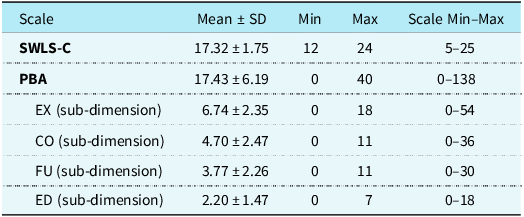
The mean Satisfaction with Life Scale adapted for Children score was 17.32 ± 1.75. The mean total Parental Burnout Assessment score was 17.43 ± 6.19. Mean scores for the parental burnout subscales were 6.74 ± 2.35 for exhaustion in the parental role, 4.70 ± 2.47 for contrast in parental self, 3.77 ± 2.26 for feelings of being fed up, and 2.20 ± 1.47 for emotional distancing (Table 2). No established normative reference values or clinical cut-off scores are available for either the Satisfaction with Life Scale adapted for Children or the Parental Burnout Assessment; therefore, the observed scores could not be compared with population norms.
Children’s life satisfaction and parental burnout scores (n = 234)

Table 2. Long description
A table comparing children’s life satisfaction and parental burnout scores. The table has 6 rows and 5 columns. The columns are labeled Scale, Mean ± SD, Min, Max, and Scale Min–Max. The rows are labeled SWLS-C, PBA, EX (sub-dimension), CO (sub-dimension), FU (sub-dimension), and ED (sub-dimension). Row 1: SWLS-C, 17.32 ± 1.75, 12, 24, 5–25. Row 2: PBA, 17.43 ± 6.19, 0, 40, 0–138. Row 3: EX (sub-dimension), 6.74 ± 2.35, 0, 18, 0–54. Row 4: CO (sub-dimension), 4.70 ± 2.47, 0, 11, 0–36. Row 5: FU (sub-dimension), 3.77 ± 2.26, 0, 11, 0–30. Row 6: ED (sub-dimension), 2.20 ± 1.47, 0, 7, 0–18.
(SWLS-C = satisfaction with life scale adapted for children; PBA = parental burnout assessment; EX = exhaustion in parental role; CO = contrast in parental self; FU = feelings of being fed up; ED = emotional distancing; Min = minimum; Max = maximum; SD = standart deviation).
Differences in children’s life satisfaction according to participant characteristics
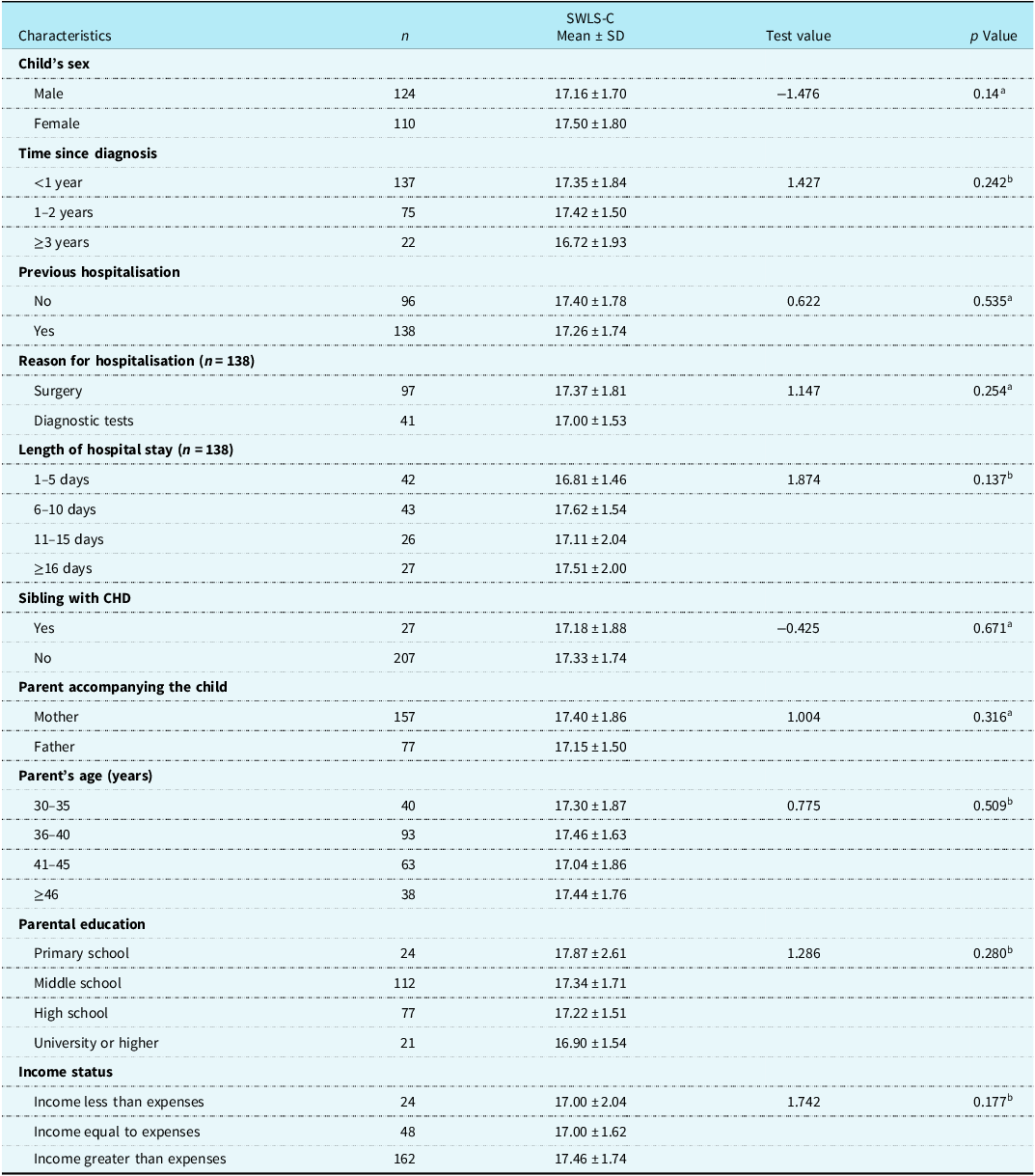
Children’s life satisfaction scores did not differ significantly according to child characteristics (sex, time since diagnosis, previous hospitalisation, reason for hospitalisation, length of hospital stay, or sibling with CHD) or according to parent and family characteristics (accompanying parent, parental age, educational level, or income status) (all p > 0.05) (Table 3).
Differences in children’s life satisfaction scores according to child, parent, and family characteristics (n = 234)

Table 3. Long description
The table presents data on children’s life satisfaction scores (SWLS-C) based on various characteristics. It includes 13 rows and 5 columns. The columns are labeled Characteristics, n, SWLS-C Mean ± SD, Test value, and p Value. The rows are grouped by child’s sex, time since diagnosis, previous hospitalization, reason for hospitalization, length of hospital stay, sibling with CHD, parent accompanying the child, parent’s age, parental education, and income status. Each row provides the number of participants (n), the mean and standard deviation of life satisfaction scores, the test value, and the p-value for statistical significance. Notable trends include the comparison of life satisfaction scores across different categories such as male and female children, various times since diagnosis, and different lengths of hospital stay.
(CHD = congenital heart disease; SWLS-C = satisfaction with life scale adapted for children; SD = standart deviation).
a Independent samples t-test.
b One-way analysis of variance (ANOVA).
Differences in parental burnout according to participant characteristics
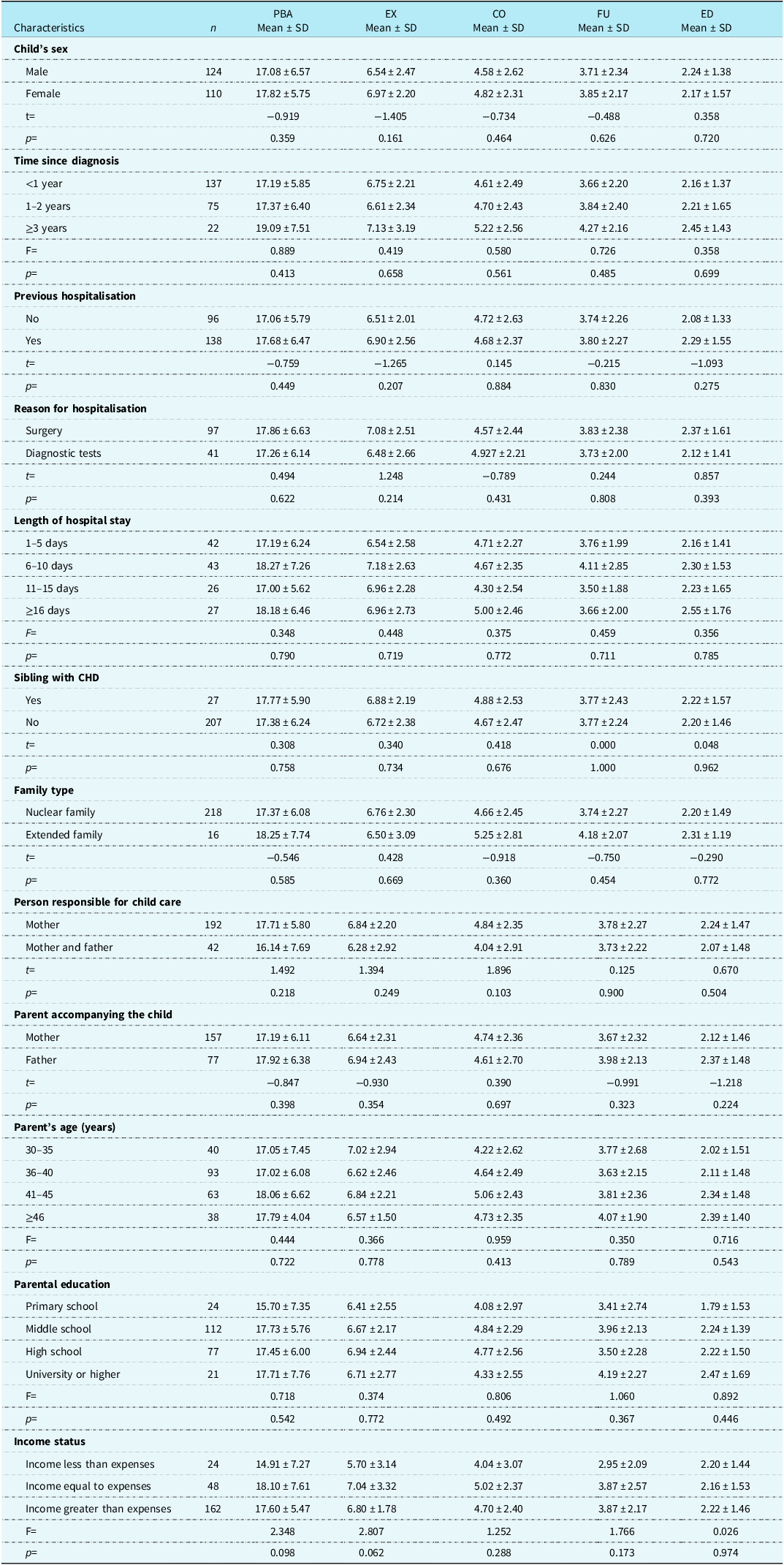
Similarly, no statistically significant differences were found in parental burnout total or subscale scores according to child characteristics (sex, time since diagnosis, previous hospitalisation, reason for hospitalisation, length of hospital stay, or sibling with CHD) or according to parent and family characteristics (accompanying parent, family type, person responsible for the child’s care, parental age, educational level, or income status) (all p > 0.05) (Table 4).
Differences in parental burnout total and subscale scores according to child, parent, and family characteristics (n = 234)

Table 4. Long description
The table presents differences in parental burnout total and subscale scores based on child, parent, and family characteristics. It includes data for 234 participants. The table has 23 rows and 10 columns. Column headers are PBA Mean ± SD, EX Mean ± SD, CO Mean ± SD, FU Mean ± SD, and ED Mean±SD. Row labels include Child’s sex (Male, Female), Time since diagnosis (<1 year, 1-2 years, ≥3 years), Previous hospitalisation (No, Yes), Reason for hospitalisation (Surgery, Diagnostic tests), Length of hospital stay (<6 days, 6-10 days, 11-15 days, ≥16 days), Sibling with CHD (Yes, No), Family type (Nuclear family, Extended family), Person responsible for child care (Mother, Father and mother, Father), Parent accompanying the child (Mother, Father), Parent’s age (30-35, 36-40, 41-45, ≥46), Parental education (Primary school, Middle school, High school, University or higher), and Income status (Income less than expenses, Income equal to expenses, Income greater than expenses). Each row provides mean and standard deviation values for PBA, EX, CO, FU, and ED scores. Notable trends and specific values are visible within the table.
(CHD = congenital heart disease; PBA = parental burnout assessment; EX = exhaustion in parental role; CO = contrast in parental self; FU = feelings of being fed up; ED = emotional distancing; SD = standart deviation).
Association between children’s life satisfaction and parental burnout
Pearson correlation analysis showed no statistically significant association between children’s life satisfaction and total parental burnout scores (r = −0.087, p = 0.185). Likewise, no significant correlations were found between children’s life satisfaction and the parental burnout subscales, including exhaustion in the parental role (r = −0.009, p = 0.890), contrast in parental self (r = 0.006, p = 0.923), feelings of being fed up (r = −0.121, p = 0.064), and emotional distancing (r = −0.097, p = 0.137).
Discussion
Children’s life satisfaction
Life satisfaction is an important indicator of subjective well-being that reflects an individual’s subjective satisfaction with their life as a whole. During childhood, life satisfaction is influenced not only by health status but also by multidimensional factors such as family relationships, school and social life, psychological adjustment, and daily life experiences. In children with CHD, health-related quality of life has been reported to be associated not only with clinical characteristics of the disease but also with psychological and behavioural factors. Reference Liu, Chaou, Lo, Chung and Hwang28,Reference Sertçelik, Alkan, Yalın Sapmaz, Coşkun and Eser29 Furthermore, the psychosocial effects of CHD on children and their families cannot be explained by a single clinical variable, and family functioning and parents’ psychosocial status should also be considered. Reference Sood, Lisanti and Woolf-King30,Reference Jaschinski, Knetsch and Parzer31
Studies directly assessing life satisfaction in children with CHD are limited. However, studies examining health-related quality of life indicate that CHD may affect children’s physical and psychosocial well-being. Abassi et al. reported that parent-reported quality of life was lower among children with CHD than among healthy peers and that disease severity and invasive cardiac procedures were associated with some dimensions of quality of life. Reference Abassi, Huguet and Picot32 Similarly, Sertçelik et al. demonstrated that disease symptoms and emotional and behavioural problems were associated with certain aspects of quality of life in children with CHD. Reference Sertçelik, Alkan, Yalın Sapmaz, Coşkun and Eser29 These findings suggest that CHD may affect specific physical and psychosocial domains of children’s lives.
However, quality of life and life satisfaction are distinct concepts. Health-related quality of life primarily assesses the effects of disease on physical, psychological, and social functioning, whereas life satisfaction reflects an individual’s overall evaluation of their life. Therefore, difficulties in certain domains of quality of life among children with CHD do not necessarily indicate low life satisfaction. In our study, the moderate level of life satisfaction may suggest that despite disease-related challenges, children may maintain a positive overall evaluation of their lives by considering other domains, such as family, school, and social relationships.
The absence of significant differences in life satisfaction according to the clinical and sociodemographic characteristics examined in our study can also be interpreted in this context. Disease duration or hospitalisation experiences alone may not determine a child’s overall evaluation of their life. Given that the psychosocial outcomes of CHD may be influenced by family and individual adjustment processes in addition to clinical characteristics, Reference Sood, Lisanti and Woolf-King30,Reference Jaschinski, Knetsch and Parzer31 factors such as social support, family relationships, and psychological adjustment may be more important in explaining children’s life satisfaction.
Parental burnout
Parental burnout is a condition that may arise when long-term parenting demands exceed available coping resources and is characterised by physical and emotional exhaustion, emotional distancing from the parenting role, and reduced fulfilment in parenting. Among parents of children with chronic illnesses, caregiving responsibilities, healthcare appointments, and uncertainty about the child’s future may increase psychosocial burden. Indeed, parental burnout in parents of children with chronic illnesses has been associated with adverse psychological outcomes such as anxiety, depression, and sleep problems. Reference Wauters, Vervoort and Dhondt17 In addition, greater family resilience has been shown to be associated with lower parental burnout, suggesting that burnout may be related not only to disease burden but also to parents’ coping resources and protective family factors. Reference Cici and Özdemir16
Although studies directly assessing parental burnout among parents of children with CHD are limited, evidence indicates that these parents may experience caregiving burden and psychosocial difficulties. A study conducted in Türkiye reported that a greater number of disease-related symptoms in children with CHD was associated with increased parental caregiving burden, which in turn negatively affected some dimensions of parents’ quality of life. Reference Streisand, Braniecki, Tercyak and Kazak27 However, caregiving burden, stress, and parental burnout are not synonymous; social support, family resilience, and effective coping resources may limit the development of burnout despite caregiving demands.
In our study, the mean Parental Burnout Assessment score of parents was 17.43 ± 6.19, indicating a generally low level of burnout. This finding is noteworthy when compared with studies reporting psychological burden and burnout among parents of children with chronic illnesses. Reference Wauters, Vervoort and Dhondt17 The relatively low level of burnout may be related to the potential protective effects of existing social and family resources or other coping resources. However, as these factors were not directly assessed in our study, this explanation should be considered only as a possible interpretation.
In our study, parental burnout did not differ according to the clinical and sociodemographic characteristics examined, which may be related to the multidimensional nature of burnout. In particular, the absence of an association between hospitalisation status or length of hospitalisation and burnout suggests that parental burden may not be explained solely by hospitalisation experiences. In CHD, parental burden may also arise from non-hospital-based processes, including regular follow-up visits, monitoring of symptoms, daily caregiving needs, and uncertainty regarding the child’s future. Reference Cici and Özdemir16,Reference Bektaş, Kır, Yıldız, Genç, Bektaş and Ünal33 Therefore, future studies should evaluate disease severity, current symptom burden, caregiving burden, social support, and family resilience alongside hospitalisation history as well as family structure and caregiving context, including the number of children in the family, caregiver partnered status, and distribution of caregiving responsibilities, to better understand the determinants of parental burnout.
Association between children’s life satisfaction and parental burnout
The relationship between children’s life satisfaction and parental burnout is based on the premise that the psychosocial functioning of children and parents may influence each other within the family environment. While the care needs of children with chronic illnesses may affect parents’ psychological well-being, parental psychological burden may also influence family interactions and the support provided to children. Indeed, parental burnout has been associated with psychological well-being among parents of children with chronic illnesses, while parental mental health and family functioning have been identified as important areas of assessment in families of children with CHD. Reference Wauters, Vervoort and Dhondt17,Reference Sood, Lisanti and Woolf-King30 However, studies directly examining the relationship between parental burnout and children’s life satisfaction remain limited.
Because the Parental Burnout Assessment captures general parental burnout rather than CHD-specific caregiving burden, family-level factors may be important for understanding parental burnout in families of children with CHD. In the present study, family-related characteristics included the family type, number of siblings, and the person responsible for the child’s care. Although family type and the person responsible for the child’s care were examined in relation to parental burnout, other factors, such as caregiver partnered status and social support, may also be relevant to parental burnout and the family environment in which children’s subjective well-being develops. Therefore, future studies should consider these factors alongside illness-related caregiving stress to better contextualise parental burnout in families of children with CHD.
In our study, total parental burnout was negatively, but very weakly and not significantly, associated with children’s life satisfaction (r = −0.087, p = 0.185). This finding indicates a slight tendency toward lower life satisfaction with increasing parental burnout; however, this association was not supported statistically in the present sample. Therefore, the finding should not be interpreted as evidence that parental burnout does not affect children’s life satisfaction, but rather that no significant association was identified between the two variables in this sample.
One possible explanation for the absence of a significant association is that life satisfaction is a broad indicator of subjective well-being, reflecting children’s overall evaluation of their lives. Although parental burnout may be associated with family functioning or certain psychosocial outcomes in children, these effects may not directly translate into children’s overall evaluation of their lives. Indeed, quality of life among children with CHD has been associated with psychological and behavioural characteristics, highlighting the multidimensional nature of their psychosocial experiences. Reference Liu, Chaou, Lo, Chung and Hwang28,Reference Sertçelik, Alkan, Yalın Sapmaz, Coşkun and Eser29
In addition, the generally low level of parental burnout observed in our study may have limited the ability to detect an association between the variables. Although none of the burnout subscales was significantly associated with life satisfaction, the negative association between the feelings of being fed up subscale and life satisfaction was somewhat more pronounced than those observed for the other dimensions (r = −0.121, p = 0.064). However, this association was not statistically significant and should therefore be considered only as a potential trend warranting further investigation in larger samples.
In comparison with population-based data, the mean Satisfaction with Life Scale adapted for Children score in our study was 17.32 ± 1.75, corresponding to an item mean of approximately 3.46 on the 1–5 response scale. This was lower than the mean Satisfaction with Life Scale adapted for Children scores reported in two large population-based studies of children in British Columbia, Canada, which reported mean scores of 4.1 ± 0.8 among 20,119 children and 4.10 ± 0.84 among 27,121 fourth-grade children, respectively. Reference Oberle, Ji, Magee, Guhn, Schonert-Reichl and Gadermann34,Reference Emerson, Mâsse, Ark, Schonert-Reichl and Guhn35, Although direct comparisons should be interpreted cautiously because of differences in study populations, age groups, and settings, the lower score observed in our sample suggests that children with CHD may experience lower life satisfaction than children in population-based samples. This finding may also indicate that some children with CHD retain adaptive resources that support their subjective well-being despite disease-related challenges. Such adaptive processes could be relevant to parental well-being, but resilience was not directly assessed in the present study and therefore cannot be inferred from these findings.
From a clinical perspective, although no significant association was identified between children’s life satisfaction and parental burnout in this study, both constructs may warrant specific attention in psychosocial care for children with CHD and their families. To support children’s life satisfaction, paediatric healthcare professionals may assess and facilitate opportunities for age-appropriate participation in school, peer, recreational, and other meaningful activities and identify modifiable barriers to such participation. For parents, screening for parenting-related exhaustion and emotional distancing may help identify those at risk of parental burnout. Practical support could include brief psychoeducational and coping-skills interventions and assistance in sharing caregiving responsibilities with partners or other family members. For parents experiencing substantial caregiving burden, referral to available respite or community-based support services may also be considered. Future intervention studies should examine whether targeted strategies addressing children’s participation and well-being or parental exhaustion and caregiving burden can improve these outcomes. Longitudinal studies are also needed to determine whether changes in children’s life satisfaction and parental burnout are related over time and to identify factors that may contribute to these changes.
Limitations
One of the important strengths of the study is that children’s life satisfaction was assessed directly through child self-report and examined together with parental burnout. However, the single-centre and cross-sectional design limits causal inferences. The inclusion of only children aged 8–13 years also limits the generalisability of the findings to other age groups. In addition, the lack of assessment of detailed clinical characteristics, such as disease severity, cardiac function, residual lesions, and surgical history, as well as potential determinants such as social support, family functioning, and psychological resilience, limits the comprehensive interpretation of the findings. In addition, the Parental Burnout Assessment assesses parental burnout rather than the caregiving experiences specific to CHD; therefore, it may not fully capture the unique caregiving experiences of parents raising a child with CHD.
Conclusion
In conclusion, children with CHD had moderate levels of life satisfaction, while parents’ Parental Burnout Assessment scores indicated generally low levels of parental burnout. Neither children’s life satisfaction nor parental burnout differed significantly according to the clinical, sociodemographic, or family characteristics examined, and no significant association was found between parental burnout and children’s life satisfaction. These findings suggest that the subjective well-being of children with CHD and the psychosocial status of their parents should not be assessed solely on the basis of disease-related or sociodemographic characteristics. Therefore, routine assessment of children’s life satisfaction and parents’ psychosocial well-being during paediatric cardiology follow-up is recommended, with referral to appropriate psychosocial support services when needs are identified. Future longitudinal and multicentre studies should examine the potential effects of social support, family functioning, caregiving burden, psychological resilience, and CHD severity on children’s life satisfaction and parental burnout.
Acknowledgements
The authors would like to thank all parents who took the time to participate in this research.
Financial support
None.
Competing interests
The authors declare none.
Ethical standard
For the study, ethics committee approval was obtained from the Non-Invasive Research Ethics Committee of the Maltepe University (date: 21/12/2023; decision number: 2023/22-01). Institutional permission was obtained from the İstanbul Provincial Health Directorate (Date: 26/02/2024; No: 2024/3). Permission to use the Turkish versions of the study scales was obtained from the researchers who conducted their validity and reliability studies. All study procedures were conducted according to the principles of the World Medical Association Declaration of Helsinki.