


The period from 1848 to 1905 is often called the “Golden Age of Automata.” This is because of the general proliferation of automata during the period; whereas in the eighteenth century, each automaton was a unique, carefully made handcrafted art object (like those of Jacques de Vaucanson and the Jaquet-Droz family), in the nineteenth century an increased output of parts allowed nineteenth-century automata makers to create more products to sell. As a result, automata became both more affordable and widely available. Automata makers had a team of expert artisans who worked for them and each step of the construction involved detailed care and attention.1 In the case of the Golden Age of Automata, French automata makers were highly influenced by popular performers of the period and reproduced their performances in commissioned toys. While a number of everyday figures were the subjects of automata, such as nursemaids, girls, cooks, flower sellers, boys being reprimanded by their teachers, and gentlemen smoking, often automata makers mimetically rendered their subjects from popular performers of the day, such as the automata based on Little Tich, Loïe Fuller, and Wild Buffalo Bill Cody, all of which will be discussed in this chapter. In my book Automata and Mimesis on the Stage of Theatre History (2011), I wrote extensively about the connections between mimesis (or representation and imitation) and automata and the direct connection these performing objects have with the mimetic faculty. In his essay “Notes on the Mimetic Faculty,” Walter Benjamin defined the mimetic faculty as the compulsion “to become and behave as something else.”2 This mimetic desire drives every aspect of our education from language learning to performative behavior. We learn by copying. The creators of Golden Age Automata copied the popular performers of the day and made these bespoke performing objects available for wealthy middle-class people to own as delightful imitations of their favorite performers. The commodity being purchased was social status, via ownership and appreciation of a highly crafted (and expensive) device, which allowed the owner to share in the prestige of the performer and craftsmen, as well as imitate the social status of those able to afford such luxury goods and entertaining curiosities.
As ideal commodity fetishes, automata functioned as central figures in the bourgeois drawing room. Expert automata collectors Christian and Sharon Bailly write in their book The Golden Age of Automata:
The automaton brought a decorative note and a touch of gaiety to the drawing room. This room, richly draped with velvets and filled with a profusion of knick-knacks, the place where visitors were received and guests were entertained, formed the center of social life. The automaton was perfectly at home in this ornate decor; its artistic character, its elegant movements, the richness of its costume, made it the ideal ornament of the nineteenth-century drawing room.3
As a performing object and conversation piece for the drawing room, these ornamental automata were not intended for children directly, but “for the wealthy customer who, while desiring to give an expensive present to a mother, finds it convenient to use her child as a pretext.”4 Automata became the ultimate commodity fetish objects; this is a moment where the collecting of automata changed and a well-off middle-class family could own a unique automaton that performed for them in their drawing room. We might imagine a family gathered around an automaton, marveling at the spectacle of its performance.
What we see in the transformation of popular performers into automata is the reflection of popular desires and fears, and the gradual commodification of performance into a “take home” version, much like today’s action figures. However, what becomes clear in the exploration of these automata is the way that they contributed to what Tony Bennett calls “the exhibitionary complex” and a general movement toward a commodity culture. The spectacle of new technological advances, gas lighting, and popular performances prevalent throughout the Universal Expositions all helped to promote the power/knowledge complex of “an exhibitionary complex.” The exhibitionary complex is a key component of the historical beginnings of the contemporary museum. The restricted access and private ownership of the Kunstkammern (art cabinets) and other royal art collections of early modern Europe dramatically changed into museums owned by and open to the public. Bennett has argued that these institutions were “administered by the state for the benefit of an extended general public” as a form of voluntary self-regulation and that Universal Expositions were key to developing this museum-oriented “exhibitionary complex”:5
The institutions comprising “the exhibitionary complex” … were involved in the transfer of objects and bodies from the enclosed and private domains in which they had previously been displayed (but to a restricted public) into progressively more open and public arenas where, through the representations to which they were subjected, they formed vehicles for inscribing and broadcasting the message of power (but of a different type) throughout society.6
By organizing the spectacle and controlling the spectators and the behaviors of a carefully ordered crowd, the Universal Expositions could control masses of people under the patriotic sponsorship of the national state apparatus. The expositions demonstrated the tools and toys of progress and civilization, all of which are bound up with ideas of imperialism, progress, science, art, modernization, capitalism and empire. Early world’s fairs also served not only to give audiences a sense of nationalistic pride, but also to educate the working classes on decorum and proper behavior in a large public forum by placing them on equal footing with the middle classes.7 They thereby served as a cultural unifier of ambition and aspiration through shared wonder and awe at public spectacles of “progress.”
For both urbanites and tourists, the city of Paris itself was transformed into a spectacle, a commodity fetish to be experienced through the pleasure of the gaze and the power of purchasing during the Universal Expositions. Above all else, the expositions were celebrations of the reified products of the spectator’s labor or “places of pilgrimage,” according to Benjamin, “to the fetish Commodity.”8 Among these numerous fetish commodities were automata and mechanical toys. The Universal Expositions gave a great boost to toymakers, bringing them together in large numbers and giving them an immense, captive audience. Important figures who might normally have given no thought to toys were entertained by the spectacular automata displays they saw on official visits to the exhibitions. Christian and Sharon Bailly cite a commentator on the 1867 Universal Exposition, who remarked: “Among the collection of toys on exhibition at the entrance to Class 46 are to be seen senators, deputies, and conseilles d’etat in official dress paying their respects like simple mortals with none of the heavy responsibilities of state, to shiny cardboard dolls no less sparkling than their own embroidered uniforms.”9 Automata were key figures in the International Expositions, and mimetically copied performers were at the very height of fashion.
Both Jane Goodall and Linda Austin have written about performers imitating automata, but much less has been said about the mimetic inversion of this phenomena: automata imitating performers.10 The overwhelming majority of Golden Age automata created by the houses of Roullet et Decamps and Leopold Lambert are popular performers.11 Acrobats, magicians, and clowns captivated crowds in the circus, while the music halls and cafe concerts were celebrated as popular entertainments. Many of these popular performers were captured in the figures of automata: Circus acts, clowns, acrobats, and jugglers were rendered as automata. The most popular subject was the circus, as can be seen in figures like the “Lady Magician with Three Surprises” by Jean Roullet (1880). The Magician’s porcelain head is bisque, commissioned from the doll maker Pierre-François Jumeau, and she wears an elaborate magician’s costume of red silk with matching silk headdress and soutache embroidery. Her right hand holds a magic wand and waves side to side, up and down, and then taps three times on the flowerpots and the large gold die to reveal a monkey whose mouth moves, a clown who sticks out his tongue, and a cherubic bisque-headed baby who blows kisses.12
In the section of Capital (1867) on “The Fetishism of the Commodity and its Secret,” Karl Marx (1818–1883) borrows the concept of fetishism from anthropology to refer to the power of commodities, which have a mysterious life of their own:
A commodity appears at first sight an extremely obvious, trivial thing. But its analysis brings out that it is a very strange thing, abounding in metaphysical subtleties and theological niceties. So far as it is a use-value, there is nothing mysterious about it, whether we consider it from the point of view that from its properties it satisfies human needs, or that it first takes on these properties as the product of human labor. It is absolutely clear that, by his activity, man changes the forms of the materials in nature in such a way as to make them useful to him. The form of wood, for instance, is altered if a table is made out of it. Nevertheless the table continues to be wood, an ordinary, sensuous thing. But as soon as it emerges as a commodity it changes into a thing which transcends sensuousness. It not only stands with its feet on the ground, but, in relation to all other commodities, it stands on its head, and evolves out of its wooden brain grotesque ideas, far more wonderful than if it were dancing of its own free will.13
Using language markedly similar to that used to describe the Freudian uncanny to explain the commodity fetish, Marx demonstrates that the psychic life of objects far exceeds their use-value. Since a commodity object no longer simply has utility (use-value), it comes to be regarded as though it were an autonomous being endowed with life. For Marx, a definite social relation exists between humans and labor, which assumes a fantastic relationship when commodities are produced for purposes of exchange in the market. The exchange purpose is aptly labeled “exchange-value” and refers to the mysterious value given to a commodity that exceeds its use-value (utility). A commodity, in this case our dancing table full of grotesque thoughts, becomes a “mystical thing” because it acquires a “social” character produced by individuals carrying out their work alone solely for the purposes of exchange. The commodity object is strangely alive. “If commodities could speak,” Marx tells us, “they would say this: our use-value may interest men, but it does not belong to us as objects.”14 In other words, the use-value or utility of a commodity is not a property inherent in the object; it is produced by social values. Instead, “what does belong to us as objects” is not commodity but “our value. Our own intercourse as commodities proves it. We relate to each other merely as exchange-values.”15 This exchange-value is produced through each object’s relationship to one another within the marketplace: A person is rich, but a pearl or diamond has value. In the case of the Golden Age Automata, which are mimetic replicas of popular performers of the day, the commodity fetish extends beyond the object and into the phantasmatic realms of celebrity. Owning an automaton of a celebrity means that the consumer, by extension, is part of celebrity culture. The celebrity automaton offers status by way of association. The consumer has a unique object that performs solely at their whim. Owners could marvel at something that was unique and made by clever people. By owning an automaton, the consumer is connecting with the status of the makers and the performers on which the automaton is modeled.
In the “Portrait of a Lady Juggler,” also by Jean Roullet (1880), the subject is a circus performer in a brightly colored, harlequin-patterned silk kimono with an orientalist fan that she waves in order to get the audience’s attention. Upon a metal rod attached “to her torso, she carefully balances a miniature version of herself above her head: this little figure spins on tiptoe while shaking the tiny tambourine he carries.”16 Other circus figures include the acrobatic clown dressed in a yellow, sequined suit who carefully balances himself in a handstand while lifting a chair, and a red-headed gluttonous clown who licks his pastry, sticks his tongue out at the crowd, and slaps his thigh while his body shakes with laughter.
The French have celebrated clowns since the advent of commedia, and they were enormously popular subjects for automata. Perhaps this is because of clowns’ association with French Enlightenment notions of Universal Man as a kind of Fool. For an inexpensive admission fee, one could participate in progress and cleverness simply by being there in its presence, and by association with its presence, as a subjective expression of Universal Man, thereby lay claim to one’s own cleverness and status in “the order of things” in virtue of being a member of the human species. People were particularly fond of the Pierrot clown, the favorite stock figure of French pantomime, with his sad white grease-painted face, and his classic loose black-and-white clown costume with a matching pointed hat. Gustav Vichy, one of the finest Parisian automata makers, was particularly well known for his Pierrot clowns. In “Pierrot Serenading the Moon” by Vichy (c. 1890), the classic Pierrot sings and plays the mandolin for his favorite audience of one, the moon. The two almost seem to flirt, as Pierrot sticks his tongue out at the moon and the moon winks back at Pierrot. In “Petit Pierrot,” by Leopold Lambert, the clown strums his mandolin with concentration. He wears the classic Pierrot costume of ivory crepe with black pompoms, “he nods his head up and down while strumming the mandolin, his eyes open and close in a dream manner,” and he taps his foot in time to the music.17
But it wasn’t just generic circus performers who captivated the imaginations of automata makers. The makers also created automata based on specific popular performers of the day. In keeping with the clowns, let us move on to the famous music hall clown, Little Tich. Little Tich was the stage name of English comedian Henry Relph (1868–1928), who was billed as “the funniest man in the world.”18 He made a virtue of his shortness at only 4'6" tall, and the slang word “tichy,” meaning very small or tiny, comes from his name. Little Tich was perhaps best known for his physical comedy, particularly his “big boot dance,” involving him balancing haphazardly on gigantic boots. He would position himself carefully above his tall boots, which were 28 inches tall and thus half his height. When he did this act, he would grow substantially (and comically) in height.19 As Mary Tich, Little Tich’s daughter describes it, his act involved
a showpiece of acrobatic strength and skill as well as comic timing. He leans over to take a bow, so very far forward that it seems certain that he will topple over into the orchestra pit; he doesn’t, but he hits his forehead on the stage in a near horizontal position, then raises himself to the upright position again, straight-legged with magical rapidity. Then finally he reaches the longed-for consummation of the “dance.” Slowly, winking knowingly at the house as if he were inviting them to share in another of his minor debacles, Little Tich rises up on the toes of his elongated wooden feet. Defying the laws of gravity for a moment of delicate balance – a giant nearly seven feet tall.20
Tich’s dynamic physical comedy was celebrated by many excited crowds throughout the world. As a variety artist, Little Tich worked successfully in the United States and Europe, especially in France where he performed at L’Olympia theatre and the famous Folies Bergère music hall to such acclaim that in 1910 he was made an officer of the Academie française for his service to French theatre.21 The desire to celebrate Little Tich is clearly at work in the automaton designed by the house of Roullet et Decamps in roughly 1910 (see Figure 1.1). The 30-inch tall Little Tich automaton sports the performer’s ginger hair, a charming Victorian-era suit, and a bowler hat. The automaton leans forward precariously at an angle over his gigantic boots while he doffs his bowler hat for the crowd. One of these rare automata is pictured below. It was recently repaired by the House of Automata in Forres, Scotland, and shown on the television show The Restorers (Season 5, Episode 4) and is thought to be one of five remaining in the world.22
Little Tich automaton repaired by the House of Automata in Forres, Scotland

Little Tich was not the only popular performer who found fame and fortune at the Folies Bergère. Nala Damajanti, the Hindu Snake Charmer, was probably the model for an automaton called “The Snake Charmer” by Roullet et Decamps (c. 1900). Made during the height of the orientalist fascination with the so-called exotic women of the East, when the danse du ventre (belly dance) was all the rage, “The Snake Charmer” embodies the automaton as fetish object; she is an eroticized automaton. In her left hand she clasps a snake, and in her right hand she holds a trumpet. With her curvy hips and sensuous movements, including various swivel joints to allow articulation of hands, feet, and hips, she moves rhythmically to one of the four tunes the automaton’s music box plays. The snake also slithers around her. Roullet et Decamps originally intended to exhibit “The Snake Charmer” in the nude until Madame Decamps expressed her moral outrage.23 In response to this, “The Snake Charmer” was then given a more modest costume of metallic gilt with green faux emeralds. Other models for “The Snake Charmer” might have been Miss Paula, the Amphibian Woman, who trained crocodiles and snakes, and performed in next to nothing. Christian Bailly also speculates that the novelist Collette’s repeat performances as the titular heroine Salome in Oscar Wilde’s play, a role that she famously played bare-breasted, might have inspired the creation of this automaton.
The innovative American modern dancer Loïe Fuller (1862–1928) was famous for creating a serpentine dance in which she draped herself in yards of billowy fabrics and used magic lanterns to project lighting all over herself while dancing. Fuller’s avant-garde dance involved yards and yards of gossamer fabric that she manipulated by rods and wands attached to her arms. The fabric swirled and spiraled around her while she danced and colored lights were projected onto the fabric. Fuller brought her serpentine dance to the music hall Folies Bergère in 1892–1893, where she attracted unprecedented crowds and became one of the city’s most beloved celebrities.24 She was able to create different shapes out of her fabric: a butterfly, a snake, a flower, or flames. Fuller is often credited with forming a new movement-based dance expression, and “also for encouraging an early sense of the avant-garde in film and theatre through her experiments in lighting, set design, costuming, and special effects.”25 Often called the mother of modern dance, Fuller’s dances preceded those of Isadora Duncan. Fuller always promoted her stage dancing with electricity as a kind of science commingled with high art. Accompanied by a large orchestra, Loïe regularly performed three dances: “La Serpentine,” “La Violette,” and “Le Papillon.” Through her unique combination of motion and light, Loïe became the newly “modern woman” who embodied the decorative style of Art Nouveau and her dance became the example of the Art Nouveau choreography, which ultimately made Loïe an icon of the Art Nouveau movement. She was celebrated by Henri de Toulouse-Lautrec in over sixty prints in 1893, which depict her manipulating her billowing silk gown into fabulous shapes. In 1900 Fuller built her own theatre at the Paris Universal Exposition, with a sculpture by Pierre Roche in her image above the entryway. Of all the famous female entertainers in 1900 Art Nouveau Paris, including Sarah Bernhardt, Cléo de Mérode, Caroline Otero, Liane de Pougy, and Émilienne d’Alençon, only Loïe had her own pavilion at the exposition.26 In fact, Loïe’s name was associated with revolution – particularly the novelty of electric lighting – and the popularity of the Palace of Electricity embodied the same kind of fluid energy that was synonymous with her dances.27 Patrizia Veroli has argued that because Fuller “conceptualized her dance as the animation of a tableau vivant, as a form-producing mechanism that is set in motion and then stopped, the public had to remain in doubt as to whether the form dancing in front of them was a woman or a machine.”28 Perhaps audiences saw Fuller as a kind of automaton dancer, but they certainly connected her movements to a technologized body. Enthusiasm over electricity exposed the public to the spectacle of electricity and prepared them for the coming technological revolution. When leaving Fuller’s theatre spectators could commemorate their experience by buying commodities of their beloved dancing star: bronze lamps, statuettes, or ashtrays in her image. The Loïe craze extended to fashion, and department stores like Bonmarché as well as the Louvre sold Loïe Fuller skirts, hats, ribbons, shoes, and petticoats. Thus, the Loïe Fuller automata represent a veritable craze that swept through fin-de-siècle Paris. The Lambert automaton of Loïe (c. 1910) depicted her wearing a long, white lace skirt and having blinking eyes (complete with Loïe’s long eyelashes). It signals an interest in her costuming and demonstrates an idealized image of her en pointe. But pointe shoes were not something Loïe actually ever wore in performance; she was often barefoot. The automaton of Fuller is clearly idealized as the prototypical, popular ballet dancer, despite the fact that she danced barefoot.29 Another automaton design of Loïe Fuller from the Bailly collection shows her swathed in fabric and dancing with a smiling moon.30 Dancing with the moon was normally the province of the clown Pierrot, and this indicates that Fuller was an idealized figure. As the “modern woman” of Art Nouveau, Fuller was a model of innovation, so it makes sense that she would be a popular figure for automata. Just as Loïe Fuller could market her own image at the Paris Universal Exposition in 1900 with statues and ashtrays, so too did her automata represent an idealized commodity version or souvenir of herself.
Loïe actually began her career working for another American pop culture icon who was also a brilliant self-publicist: William F. “Wild Buffalo Bill” Cody (1846–1917). He too would be commemorated and fetishized as an automaton. With his long yellow moustache and perpetually lit cigarette, Buffalo Bill was the living embodiment of the hypermasculinity of the American cowboy. His spectacular performances transformed history into power/ knowledge through the great myth of the American West. “As the ‘Knight of the Plains,’ the ‘Last of the Plainsmen,’ or the ‘Last of the Great Scouts,’ Cody was the nostalgic symbol for the ‘disappearing’ west of the buffalo, pioneer, hunter, and cattle trails in the new age of the railroad, the settler and the mining company.”31 Staging frontier dime novel plots in the dramaturgy of melodrama, Buffalo Bill’s show ignored political issues of the day like land exploitation, farmers’ rights, and the rights of Native Americans in favor of high heroics and spectacular entertainment.
Buffalo Bill’s Wild West Show appealed not only to Americans, but was also wildly popular with the French, especially during his performances at the Universal Exposition of 1889.32 During their six-month stay in Paris, members of Buffalo Bill’s Wild West Show narrated a series of different spectacular “epochs” of American history: beginning with Indian dancers, moving onto the Pilgrims, the settlement of the Great Plains, life on a cattle ranch, attacks on a settler’s cabin, buffalo hunts, and demonstrations of marksmanship by Annie Oakley and Cody himself. Directed by Steele MacKaye, these epochs offered a claim of authenticity, but ultimately Cody’s Wild West Show was a nineteenth-century precursor to the spectacular narrative of “the struggle between civilization and savagery that Hollywood would later perfect.”33 Preying on the French love of wide-open spaces, the narrative of the Wild West Show also reinforced dominant notions of colonial entitlement and the subjugation of the colonial other: Both of which were present throughout the Universal Expositions.
Our study ends with the advent of electrical automata. At the turn of the twentieth century, electrical automata were the future and the cutting edge of all mechanical toys. The delicate, hand-wound clockwork Golden Age automata would be a thing of the past, replaced by new, long-running electrical automata.34 By the 1890s, electrical automata appeared in answer to commercial demands. In the effort to attract consumers, the automaton became an ideal advertising object. The innovator of the electrical advertising automata was Jean Marie Phalibois, and such automata made up a large percentage of his production. In 1905, “these are described as ‘animated figurines for window displays driven either by electricity or clockwork motor, figures and groups of all sizes.’”35 The demand for advertising automata was soon so great that Phalibois began making almost nothing else. He quickly became the manufacturer of the figurines for Phoenix washing powder, “Valda” lozenges, and “Star” razors. An automaton placed in a display window drew the eyes of people in the street; its movements could be adapted to display any product.36 As Christian and Sharon Bailly write in The Golden Age of Automata:
At first the automata used for advertising were no different from the mechanical pieces that had been popular as drawing-room ornaments. A typical one might be a little girl with a porcelain head, holding a handkerchief in one hand and in the other a bottle of toilet-water from which seems to pour a few drops. The name of the toilet-water, the essential element, is written in gold letters on the automaton’s velvet covered base.37
The beautiful little girl with the delicate bisque porcelain face and dressed in pale-green velvet with ribbons samples the toilet water with a look of pleasure in her eyes. The little automaton instills the brand name of the perfume into the spectator’s mind.
In another advertising automaton, a well-groomed salesman in a fashionable brown suit demonstrates the wonder of an electric light bulb using the gestures of a carnival barker. His sign tells the viewer, “It’s possible, but it’s certainly not the case that the Z lightbulb is the most robust, the most luminous, and the most current of electric lamps.”38 The salesman demonstrates the product, as the light bulb in his hand turns on and off.
A woman in a fashionable red dress and coat admires herself in the mirror wearing a luxurious hat with elaborate pink feathers. She adjusts the hat with her left hand, as though in a private moment in her front hallway, making her preparations to go out the front door, or perhaps studying herself in a milliner’s shop. This is perhaps the most interesting automaton in terms of mimesis, because the automaton displays her mirrored image. It suggests that she is human, because she can recognize herself in the mirror. We see her looking at herself, powdering her nose, adjusting her hat, and as we gaze at her, she gazes at herself. Despite the fact that she is an automaton and cannot see, this looking is familiar – all of us regularly check our appearances before leaving home, or when trying on a hat. We can identify with the automaton’s moment of self-conscious vanity. What is being mimicked here is the woman’s private preparation for the public realm. So, what is being manufactured in this spectacle is both a feeling of solidarity with all women in this shared reflection, but also a reflection of how a woman has to make herself into a doll, and thereby an automaton, in order to be sufficiently glamorous for public presentation. In this respect, the automaton and mirror present a reflection of the shared struggle of women, being something for the gaze of others. Here advertising works by selling the normalization of a public (and therefore objective) performance as an object as a way of resolving subjective and private feelings of inadequacy about one’s appearance. So, it is not that the woman wants to be the automaton, but that she sees herself in the automaton and therefore gains some private sense of freedom from it, by not being it.
“The triumph of advertising in the culture industry,” says Theodor Adorno, is made possible by “the compulsive mimesis of the consumers onto the cultural commodities, even as they see through them.”39 As the consumer identified with the little automaton – not exactly willingly suspending disbelief, but also not rejecting the charm of the moving object in a sort of “I know it is advertising, but why not buy the hat anyway?” Thus, these electrical advertising automata were double-commodity fetish objects: They represented, created, and produced objects of desire. Automata grew larger in size to fill display windows. “Their gestures also changed – it became common to see automata tap on a store window with a cane, or wave a large sign containing certain information about a product.”40 With attention-getting tricks and the wonders of electricity to bolster their performances, the new advertising automata signaled the growing importance of consumer power in the landscape of commodities. It is important initially that these Golden Age commodity fetish automata were unusual and rare as this increased their value in the eyes of the public; however, these later mass-produced electrical automata were equally desirable, because for the previous generation they were scarce and expensive, and thus owning an automaton meant they were in possession of something once seen as totally unique.
Ultimately, Golden Age automata are predominantly mimetic representations of popular performers of the day, from circus clowns and magicians to actual named performers. The International Expositions used the “exhibitionary complex” to promote nationalism and bourgeois values, and automata that represented performers were a key part of this society of the spectacle. Owning an automaton gave the consumer a chance to take home an object that would allow them to commemorate a special performance and use it to impress guests in their home by demonstrating their appreciation and ownership of the object. The commodity being sold here is status by association – the cleverness of the object, as a manufacturer’s device, alongside the cleverness of the performer, as an object of spectacle – connects the viewer and owner with the culture from which such objects emerge, thereby making them key participants in a greater vision of human achievement and civilization itself. This status by association is a key part of what is sold, and from which such objects, through projection, gain their exchange-value as objects of commodity fetishism. The commodity fetish of a celebrity automaton also allowed the consumer to “own” a piece of the celebrity, and by extension, their glamour. While electrical automata changed the industry, these automata were still desirable commodity fetishes, because of their scarcity for the previous generation, which gave the objects a legacy of uniqueness. But just as automata mimicked performers, so too did performers mimic automata in ballets like Coppélia (1870) and operas like Les Contes d’Hoffmann (1881), both of which are still performed in our contemporary moment. The Golden Age automata show us that the compulsion to copy performance is the mimetic faculty at work, and the consumer’s desire to be associated with such copied performances affords the opportunity to mimic a vision of participating in the performance of progress, civilization, and oneness with human achievement, skill, intelligence, and status.
Black androids fill the Victorian era. They perform in London galleries and Parisian arcades. They populate German catalogs, Broadway window displays, and the parlors of Manhattan saloons. They haunt the corners of drawing rooms in wealthy Philadelphia manor houses. Newspapers loved them. At scientific conferences, they were harbingers of the future. Even the lesser of them staked their claims in plantation vitrines and upscale collectors’ catalogs. In their day, these were objects of desire and amusement: People wanted them, wanted to own them, would pay for the pleasure of watching them perform their mimicries. To this day they are trafficked in the thousands across the Internet, in online auction houses and niche Facebook groups. Yet for all their ubiquity, all their durability as resonant cultural artifacts, our histories of science and technology have made these Victorian Black androids mostly invisible.1 Why?
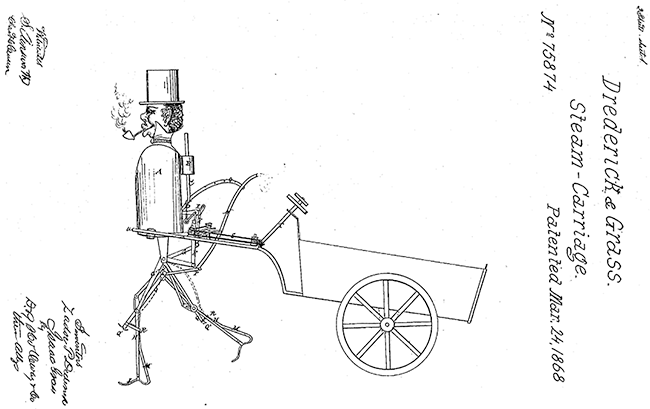
Take one example from postbellum Victorian America: On March 24, 1868, the United States Patent Office issued patent 75,874 – “Improvement in Steam Carriage” – arguably the earliest android patent in US history (Figure 2.1). The document describes a larger-than-life automaton (the eventual prototype was almost eight feet tall), designed as a replacement for draft horses. Its torso enclosed a steam engine powering “a system of levers, which, in imitation of the action of the legs of a man … are made to walk over the ground, and draw a vehicle attached thereto.”2 The steam engine itself, the authors conceded, was nothing new. The real and novel basis for the patent was the ambulatory mechanism at its core.3 But the figure’s most striking feature, the one that draws our non-Victorian eyes immediately and holds them there, is the head – wearing a top hat, framed by a starched collar, smoking a crude pipe, and caricaturing a Black man.
US Patent 75,874, “Improvement in Steam Carriage,” March 24, 1868
How do we explain this? What is a caricature of Black male gentility and dandyism doing in a patent for an “improved steam carriage” not even three years after the end of the US Civil War? Two bodies of scholarship present possible answers.
The first speculative explanation comes from the history of science. In one of the few engagements of historians of science with Black androids, Norton Wise has suggested that automata in the Victorian period became women, along with a host of “uncanny or exotic figures: talented children, blacks, acrobats, monkeys, magicians, and others,” because of the links between the perceived inferiority of these subjects and the mechanisms at their core.4 Victorian scientists, Wise speculates, saw the repetitive mimesis of mechanisms – the term most closely linked with automata during this period – as inferior to the dynamic, productive energies of engines and motive power.5 Enforced through political economy, Darwinian evolutionary theory, and brain physiology, Wise argues, this association of mechanism with inferiority deepened between 1811 and 1898, linking it first and most importantly with femininity, but soon shaping characterizations of Blackness and animality. “With such deep roots in some of the most successful sciences of the century, the gender stereotype acquired something like the status of an unquestionable fact of nature, a solid rock of truth rather than a malleable ideology. If this interpretation is correct,” Wise ventures, “it helps to explain why so many android automata of the nineteenth century were either gendered female or represented blacks, acrobats, magicians, and other uncanny characters.”6 Add the Steam Man to that list. Case closed.
Or is it? Another explanation from literary and cultural studies points in the opposite direction – one that seems better suited to the laboring machine of the patent than to the objects adorning Victorian drawing rooms. Instead of stemming from the prejudices of Victorian scientific theory, this scholarship traces the Black androids to popular anxieties around white mastery, Black servitude, and the connections between race and machines in Reconstruction-era America. Here, the Steam Man communicated a widespread hope for continued white domination; one that equated idealized slaves with machines before the Civil War, and quelled white fears of reverse enslavement afterwards.7 Taylor Evans, building on these insights and drawing from Saidiya Hartman’s discussion of the “afterlives of slavery,” has suggested that the Civil War did not abolish white mastery but rather transformed it, shifting the norms of mastery from Black bodies to industrial machines.8 The Steam Man patent signaled this new projection. The genre of dime-store novels it inspired – The Steam Man of the Prairies and others – carried that projection through the American science fiction that followed.9 Together, patent and novels formed an “urtext” for “racial, scientific, and technological discourses in the United States following the Civil War,” shaping US modernity and technoculture to this day.10
Both these explanations for Black androids privilege a specific vision of historical reconstruction that involves recovering the historical “truths” of the dominant culture – its scientific theories, its literary genres, its cultural perceptions – in order to reconstruct the white supremacist logics that produced the machines. As a result, these are essentially accounts about whiteness. Wise’s account, for instance, takes the whiteness of Victorian women androids for granted, treating issues of Blackness as derivative – as if central questions about Black androids can be answered by focusing on white female automata; as if gender is the answer to questions about race.11 Evans’s approach slips back and forth between patent, artifact, and literary genre to illuminate imperiled and renewed visions of white mastery, but goes no further. In chasing after those specific historical “truths” of these racist objects, these histories reproduce the “sovereign gaze of the regimes” they study, not as an accident, but as a scholarly goal.12 As Marisa Fuentes suggests in another context, this reproduces both the historical silences embodied in the artifacts, as well as “the lived inequities of our subjects and the discourses that served to distort them.”13 And it sets aside, as either irrelevant or as someone else’s problem, the specific and contemporary histories of the people these objects were designed to (mis)represent.14 Why remain here, then, among the dime-store novelists, natural philosophers, tinkerers, and engineers, rehearsing their narratives of Black inferiority? How else might we understand Victorian automata “as a reservoir of embodied meanings”?15 And what might that mean for our histories of these objects?
In this chapter, we argue that a counterhistory of the Black androids requires us to look elsewhere for our explanations, to read differently, and to imagine other possibilities for the worlds that the Victorian Black androids represent. We start from the premise that, precisely because they were deeply racist objects, Black androids were designed to distract, mislead, and conceal. The function of their racism – like all racism – was to obscure other, arguably more important, historical truths.16 Using the technologies of the period – steam, clockwork, electricity – the machines’ surface appearances portrayed Black people in pastoral, leisurely, and nontechnological roles, supporting the myth that technology is opposed to Blackness.17 Beneath the androids’ surface, however, those same technologies played central roles in Black life, work, and self-understanding during the period.18 Like the histories of blackface minstrelsy of which they were a part, “they are a distorted mirror, reflecting displacements, and condensations and discontinuities.”19 Precisely because of what they labored to hide, we cannot dismiss these androids as sideshows to the real spectacles of gender and mechanical philosophy or renewed white mastery. Investigating them means treating the automata themselves as actors and agents in a form of distraction that sought to mask another reality: the assertion of a Black technological self in nineteenth-century America, one that threatened the projects of American chattel slavery, Southern secession, and Reconstruction-era segregation. In what follows, then, we progressively turn the Steam Man inside out, starting with an account of the context of its creation and eventually turning to what it labored to hide – a portal into the counterhistories of Victorian-era Black America.
The Vanishing History of the Black Androids
Developing new historical techniques that critically engage the space of the archive has been the work of many recent scholars.20 The histories of Black androids are a rich site for grappling with these methodologies. In many cases we lack sources where the people represented by these machines speak in their own voices. Working with such archives, we face the necessity of relying on a constellation of secondary sources, often sources that themselves constitute the very vehicles through which racist institutions and people attempted to impose the terms of Black subjectivity – patents, police reports, prison records, or newspaper articles. But Black androids have been subject to another kind of historiographical silencing, one in which the very constitution of racialized automata as objects of historical research has precluded the possibility of conceiving the kinds of histories we explore here. A brief excursus will illustrate what we mean.
In her pathbreaking essay “Hegel and Haiti,” Susan Buck-Morss offers a critique of one canonical work of early modern Dutch history, Simon Schama’s The Embarrassment of Riches. She points out that, despite the central role that the trafficking in enslaved Africans played in the generation of those same titular riches, Schama includes no discussion of slaves or slavery in his 600-page text.21 This omission exists despite the regular appearance of Black people in the principal works of Dutch “Golden Age” painting, many of which appear in Schama’s book.
Writing the history of early modern Dutch society without taking notice of the Black people whose unique histories were instrumental in shaping it, constitutes, for Buck-Morss, a “partial blindness among seas of perspicacity.”22 It involves making the history of Black people, enslaved or free, in Africa or the Caribbean or Europe or the Americas, incidental to our historical understanding, and therefore marginal within history itself. These people, as Marisa Fuentes makes clear in another context, lived “lives that were just as important as those of more visible and literate people in this period, who most consistently left an abundance of documentary material.”23 It also involves seeing their appearance in Dutch art as mere historical accidents, departures, or deviations from the history that is “really” of interest. It is a failure to recognize the complex questions around Black historical agency and its involvement in the trajectory of Dutch culture, and of Western modernity more generally. It is not enough to say that Hals painted a Black child in his Portrait of a Dutch Family simply because the child was there.24 To learn anything significant at all about Dutch culture, we must ask: Why was the child there to be painted?
We reproduce exactly this partial blindness when we read Black androids as if they have nothing to do with either real Black Victorians or their rich participations in the history of technology. To collapse Black automata into the descriptor “female or otherwise exotic” is to remain unsighted to the absolute centrality of those specifically Black lives and experiences that helped create the conditions under which racialized machines of this kind were able to arise. This, too, is an insight shared with Buck-Morss, who identifies the universalist project of the Black “Jacobins” in postrevolutionary Haiti as a realization of Enlightenment principles more complete than those accomplished in the major centers of “enlightened” European thought. “If we have become accustomed to different narratives, ones that place colonial events on the margins of European history, we have been seriously misled,” she writes.25
What accounts for this failure to see, for these misleading gaps in the historical imagination? For Buck-Morss, academic scholarship itself imposes limits on the kinds of histories that can be conceived; specialization, enculturation, and the construction of disciplinary boundaries make certain kinds of historical or theoretical conjunctions unthinkable.26 Her project, in uncovering the link between the Haitian Revolution and Hegelian philosophy, was to reimagine what the “and” might mean in the phrase “Hegel and Haiti,” to reconstitute a transnational history of philosophy in which Haitian history and the history of African slavery constitute formative forces. An important part of our own project is to remind historians that there is a meaningful, intractable, and, in the phrase “Blackness and technology,” a connector that is signified by racialized automata even despite, and perhaps even because of the fact that such automata were constructed to deny it.27 We argue for the blurring if not outright dismantling of the disciplinary bounds that subordinate Black androids to the periphery of a more mainstream history of automata, or that use them only to explain the views of a dominant culture, and that therefore keep Black history and the history of technology firmly segregated. If we have become accustomed to narratives in which Black androids are merely marginal or anecdotal in a larger history of automata centered around white inventors, scientific racism, machinists, and Europeanized mechanism, we also have been very seriously misled.
The Black Androids
Our research indicates that, throughout the modern period, the appearance of Black androids followed an important trend – their production spiked at moments of Black liberation: slave revolts, abolitionist movements, emancipation.28 The spikes in the production of Black androids mirror the rise in scientific racism and the ossifying categories of race during the Victorian period.29 The actions that Black androids were designed to perform are largely frivolous. They are fruit sellers, magicians, idle smokers, singers, fortune tellers, and musicians.30 Rather than signaling a link between the inferiority of mechanism and the inferiority of Black peoples, these machines were complex expressions of anxiety, control, envy, desire, and denigration during perceived moments of Black autonomy – instances of African-diasporic peoples asserting themselves historically and inserting themselves even more fully into the consciousness of the West. An automaton clock in the figure of Toussaint Louverture – created in France and now displayed in Australia – for instance, mocked the leader of the Haitian Revolution at a time when the young nation expressed a double independence.31 The patent for the Steam Man, like the famous fiction stories it would inspire, was issued in early 1868, at the height of Reconstruction.32 Congress had only recently abolished the Black Codes in the South – a set of laws attempting to control Black labor and mobility after emancipation, restricting their occupations to farmers or servants. As one judge in Mobile, Alabama, would put it, they sought to “confine the negro to the soil.”33 In this context, the Steam Man is an image of harnessed Black labor and restricted Black mobility after the Civil War. But it is also much more than that.
The Steam Man sits oddly within the larger collection of Victorian Black androids – a laboring Black android rather than a decorative object; a Black automaton with a steam engine at its heart, but a mechanism at its core; and the product of an enterprising amateur American imagination in an age of cranks and hucksters, hustlers and frauds. Its inventors seem like obscure and novice charlatans with no obvious connections to Darwinian theory, brain physiology, or political economy.34 The device was originally conceived by Zadoc P. Dederick, a local patternmaker in Newark, New Jersey. Newspapers of the time and his death certificate list him as twenty-two years old.35 Apparently, the idea of an automaton was already old for the young Dederick. Six years earlier (he would have been sixteen), Dederick had reportedly “conceived the novel idea of constructing a man that should receive its vitality from a perpetual motion machine.”36 His co-inventor, Isaac Grass, was even younger: Likely born in 1852 in Bavaria, he probably arrived from Georgia in the 1860s, where his two sisters were born, and, in 1868, was probably living on Washington Street, the site of his family’s dry goods business, Grass & Rosenbaum.37 Grass disappears from the story almost immediately. We have no other record of him. Dederick soon leaves (or flees) New Jersey after the failed demonstrations of his prototype – constructed (in secret) with another friend and made “white” for its debut – and lives out his life in Texas.38
Although the Steam Man patent may seem like an obscure curiosity, it expressed central preoccupations of Reconstruction-era America. Zadoc Pratt Dederick was named after Zadock Pratt, the founder of Prattsville, NY, local patrician, and staunch advocate of patent reform. In April 1844, Dederick’s namesake would propose publishing all “important” US patents – a total of 13,523 – and distributing them “to every town in the country,” so that inventors would know the state of the art.39 Dederick, then, from his earliest childhood was immersed in a culture in which patents and patent illustrations were regarded as integral components of the dissemination of technological progress and not merely as pro forma documents marking intellectual property. In other words, for Dederick, the patent was a communicative and promotional document and not simply a record.40 The caricature that features in the Steam Man patent was Dederick’s active projection of a technological future in which Reconstruction-era racial ideologies and machinism converged.41
The patent took a particularly prominent path to filing. The Newark City Directory from 1868 lists a solicitor of patents, one Reverend Horace Harris, at 288 Broad Street, mere blocks from Dederick’s home and work.42 It also lists at least three patent attorneys operating in nearby New York City, including Munn & Co., editors of Scientific American, which would soon feature stories on android steam men.43 Dederick and Grass used none of these. Rather than passing through the hands of an obscure Newark agent, or a prominent New York firm, the patent received the official sanction and support of the most prominent patent attorneys in the country at the time. A close analysis of the text in the lower right-hand side of the image indicates that Dederick and Grass enlisted the services of the firm of “D.P. Holloway & Co., their attys [attorneys].” David Pierson Holloway had been appointed Commissioner of the US Patent Office under Lincoln at the start of the Civil War. After concluding his duties, he started his own firm in Washington DC. One of the services Holloway’s offices would have offered was help in drafting the accompanying patent drawings, including the figure of the Black android.
Ultimately, though, explaining the Steam Man requires us to look beyond the narrow world of patents to the history of the Reconstruction era. Mid-nineteenth-century New Jersey was particularly reactionary among the Northern states. Although the tangled pathways of the Underground Railroad threaded their way through Bordentown, Princeton, and New Brunswick, the state’s commercial interests allied it with the South, particularly through the leather trades in which Dederick worked as a patternmaker in the saddle and harness shop of E. S. Osborne & Co. at 105 River Street.44 New Jersey was the last Northern state to abolish slavery.45 Partly stoked by white fear that emancipated slaves would compete for Northern jobs, the state was one of the few jurisdictions in the North to sanction the 1850 Fugitive Slave Act, making the mobility of free Blacks suspect and the operation of the Underground Railroad especially dangerous. It was quick to contribute regiments during the Civil War, but it was also the only Northern state that Lincoln did not carry in the 1860 election (he would lose there again in 1864). Pro-Southern sentiment, support for Southern secession, and opposition to emancipation ran strong throughout the war and afterwards. New Jersey initially refused to ratify the 13th amendment in March 1865, ensuring that the amendment entered the US Constitution without the state’s support.46 The rising resistance to the Reconstruction Amendments and the freedoms they granted Black Americans would crest in 1868, when Republicans lost control of the state legislature and the incoming Democrats rescinded the 14th amendment and opposed the ratification of the 15th.47
Rather than providing a material expression for abstract notions of mechanism and initially gendered inferiority, the Steam Man patent was part of a theater of race and technology in Victorian New Jersey. Most histories of the Steam Man ignore the intensely local history of the patent, as well as the immediate social context of Newark.48 Although few slaves lived in antebellum Newark, the city had been built partly from slaveholding fortunes. Following emancipation and in the early years of Reconstruction, it saw increasing involvement of nominally free Black labor alongside increasing mechanical labor.49 Prospects and assertions of Black freedom often met with violent opposition. In the late 1830s, Newark’s first two mayors, supported by the state legislature, worked with the Newark Colonization Society to expel or deport the city’s Black citizens to Africa, Haiti, or Latin America.50 In the New York City Draft Riots, which spread to Newark in July 1863, white workers targeted Black residents as scapegoats for conscription.51 After the war, Black workers began challenging white European immigrants arriving in Newark for work in skilled trades. The Steam Man patent was created in one of these immigrant communities – the large German community that had begun settling there in the eighteenth century, and that included three generations of the Dederick family, but also the groups that had fled the 1848 revolutions, including the family of Isaac Grass.52 The subsequent history of the Steam Man suggested that its associations with German heritage were still a liability in 1868. The Newark Daily sarcastically cast Dederick’s android as a product of the
astuteness of a German machinist, who has doubtlessly infused into the brain of his gentleman some of the sublimest ideas of his transcendental Fatherland, which will thus be promulgated through the land at the rate of sixty miles an hour, defying all our religious instructions, superseding our clergy and forcing them to shut up their churches for mere lack of vital force to contend with this monster. Something must be done to strangle this creature at the outset, before he leaves Crump’s Garden.53
As Kara Swanson has noted, patents formed instruments of belonging, asserting citizenship through utility and usefulness.54 As Black workers in the 1860s fought their way into labor unions, or formed their own, and as white immigrant labor looked to limit Black prospects to unskilled work, or domestic and service trades, the patent was a way to reassert the white Americanness of its authors and the Blackness of the common threat.55 At a moment of increasing Black industrial involvement and prospects of nominally free labor, the Steam Man – a Black android harnessed to a cart, performing the work of a horse, and controlled by its white passengers – represented a vision about the “proper,” preindustrial role of Black labor in the United States.56
But the specifics of the depiction can only be understood through another phenomenon that gripped Newark and the Northeast in this moment – the wild popularity of blackface minstrelsy.57 As Eric Lott notes in his classic study Love and Theft, the functions of blackface minstrelsy were complex. It embodied “a nearly insupportable fascination and a self-protective derision with respect to black people and their cultural practices.” That conjunction made blackface, “less a sign of absolute white power and control than of panic, anxiety, terror, and pleasure.”58 The android patent drew, in particular, on one of blackface’s two main characters – the Black Northern dandy. Although often caricaturing Southern plantation life, blackface had originated in the Northeast three decades earlier, where its popularity was closely tied to the declining position of junior artisans like Dederick. The genre’s other central figure – Jim Crow – made his first appearance in the Bowery Theatre, in the Lower East Side of Manhattan, in November 1832.59 Through these two principal caricatures – the dandy and the rag-clad simpleton – blackface expressed a white vision of Black authenticity. Jim Crow stood for “the authentic, free African American of the North, a character uncorrupted by manners, affectation, education, or any type of self- control.”60 Its inventor, Thomas Rice, was a failed carpenter turned theater performer, who “came out of two cultures: that of the declining mass of junior artisans and that of the urban theater.”61 The counterpart to Rice’s invention was created by George Washington Dixon, who had even closer ties to New York’s artisan class. Dixon was the editor of a small pro-worker newspaper who, in the early 1830s, began performing blackface as the character Zip Coon. Whereas Jim Crow represented “authenticity,” dressing in rags, Dixon’s character dressed in top hat, starched collar, and frills, put on airs, sounded educated, and represented the hated figure of the fop or dandy. Working-class audiences loved the character because of the rage they felt for it.62 Race aside, the dandy represented the educated young men who arrived in Northern cities looking to profit from the same industrialization that degraded former artisans. As Brian Roberts notes, Zip Coon provided a “racial cover” for this rage. By 1834, the character rivaled Jim Crow “as blackface’s most representative and well-known character.” Together, the two figures argued for “authentic” Blackness as preindustrial, uneducated, and unrefined. They also represented an unrestrained, preindustrial, authentic self that white audiences could both mourn and deride.63
Seeing the patent through the popular culture of blackface recasts the connections between its surface appearance and its mechanics. Drawing on the work of Sylvia Wynter and C. L. R. James, Louis Chude-Sokei sees the plantation system as the place that first forged a relationship between Blacks and machines through the figure of the slave as mindless automaton, a figure whom he believes would provide the birth of blackface minstrelsy.64 Rather than a straightforward sympathy, though, the patent reveals the complex tensions and anxieties that surrounded race and machines in Reconstruction-era America. Blackface minstrelsy both embodied and intervened in Jacksonian racial politics: “Underwritten by envy as well as repulsion, sympathetic identification as well as fear, the minstrel show continually transgressed the color line even as it made possible the formation of a self-consciously white working class.”65 Under the guise of mockery and low humor, minstrelsy masked the significance of the Black culture it refracted and distorted. The Steam Man, in drawing on its conventions, also masked and distorted the intersections of Blackness and technology proliferating around the time of the Civil War.
Read as part of an archive for a counterhistory of Blackness and technology rather than simply an embodiment of prejudice, the patent drawing points to a contemporary fugitive technology of Black steam. In her study of antebellum American science, Britt Rusert charts the history of Black American fugitive science: “a dynamic and diverse archive of engagements with, critiques of, and responses to racial science.”66 Carried out by a wide array of actors – professional and nonprofessional scientists, amateurs, dabblers, and eccentrics, across an array of fields – fugitive science extended far beyond the scientific practices of former slaves or of fugitives in the act of escape. The term points to “a history of science on the move in the antebellum period, a furtive, subterranean history of experiments and practices that both linked racial science to abolitionism across the Atlantic and mobilized popular science in more fleeting acts of resistance.”67
Intersecting with and beyond Black science, technologies formed a critical locus for a set of practices, experiences, and understandings of Black selfhood in this period – a constellation gestured to, but obscured in, official records like the Steam Man patent. Paralleling Tiago Saraiva’s invocation of Black science, the focus on Black fugitive technologies is not an attempt to recover consoling narratives of Black invention or traditional critical accounts of technology and racism. It is instead a way of foregrounding specific forms of knowledge and practice that historically enacted Black subjectivities.68 The legal structures of mid-nineteenth-century America created conditions that excluded this equation of technology and Blackness from professional and official forms of recognition, including patents.69 But precisely because of their efforts to deny these deep associations, and because of the anxiety those associations created for white Americans, the documents attest to the technological practices that surrounded and supported Black selfhood in this period – an interiority to which the Steam Man, as metaphor, inadvertently points.
In the years surrounding the Civil War, steam was integral to Black mobility and a circumscribed freedom that operated within, helped create, and worked to exploit the “rival geographies” beyond the surveillance of the plantation.70 As Thomas Buchanan has noted, the steamship and the river economy it supported “was a breach in the South’s carefully constructed system of racial control,” offering possibilities of independence and escape.71 It made possible the emergence of a class of Black rivermen, free and enslaved – embodied in the figure of the “rascal” – who lived by their wits, combining toughness and strength with an adaptability and a flamboyance that often invoked the dandy.72 The abolitionist, novelist, playwright, and historian William Wells Brown, for instance, escaped slavery in 1834 while working on a steamboat on the Ohio River.73 The practice of slaves escaping from steamships became so common that slave owners increasingly sued steamboat companies to recover their “losses.”74 The tightening of steamboat passenger identification and changes in the geographic definition of “runaway” slaves paralleled an increase in steamboat escapes on the Mississippi river.75 Frederick Douglass’s celebrated flight from Maryland in 1838 involved a succession of steam technologies and a spectacular evasion of their surveillance regimes: a steam train from Baltimore with forged papers (borrowed from a free Black sailor), a steam ferry to cross the Susquehanna River, another steam train through Delaware to Wilmington, and a steamship to Philadelphia, before an overland journey to the safe house of the New York abolitionist David Ruggles. In mid-1852, just over five years before the Newark patent appeared, the steamship pilot Robert Smalls and a crew of six fellow slaves further elevated these practices. Not far from Fort Sumter, they commandeered their ship – the Confederate sidewheel steamer, the Planter – rendezvoused with a group of ten more enslaved men, women, and children, evaded recognition by the Confederate night watch on the wharves, and delivered the ship to the Union fleet anchored outside Charleston Harbor.76 The official records – “runaway” slave notices, arrest warrants, court transcripts, and legal judgments – passed over the symbolic place of these technologies in acts of self-liberation, and the technical knowledge they often demanded. But these records everywhere implicated steam technology as a site linking machines with practices of Black freedom and mobility – links that the Steam Man would both mock and attest to – as well as the growing white anxiety around those technologies’ roles as instruments of that freedom.
These instances and practices point to a broader and deeper history of the Black technological self in Victorian America, one that steam technologies built upon, one that threatened the project of American chattel slavery, and one that the Steam Man would again unintentionally signal. As early as 1831, slaves in Petersburg, Virginia, for instance, had developed a practice of exploiting their limited freedom to circulate in the spaces beyond their plantations, negotiating work as “mechanics” – blacksmiths, wheelwrights, wagonmakers, brickmasons, carpenters, plasterers, painters, and shoemakers – while paying their masters a portion of their earnings.77 The practice was widespread enough that white mechanics petitioned for a law prohibiting slaves from working as mechanics at all, “unless under the immediate control and superintendence of some white man.” Their rationale – that white mechanics felt “degraded” in laboring alongside slaves; that even the prospect repelled whites from the trades; and that this was the “true” reason that Southern manufactures languished – was significant for what it admitted: the growing centrality of Black technical labor to Southern industry and the anxiety about an emerging Black technological selfhood, independent of white oversight.78
Steam technologies amplified the possibilities and opportunities of these practices, as well as the attempts to hem them in. Around 1846, at the age of sixteen, Benjamin Boardley improvised a working model of a steam engine using scattered materials, including a gun barrel, pewter, and a section of round steel. Keeping a portion of his earnings, Boardley soon became a helper at the US Naval Academy’s Department of Natural and Experimental Philosophy in Annapolis, Maryland, preparing chemical demonstrations. His status as a slave meant he was unable to patent his own steam engine, so he sold it to a midshipman, used the proceeds to build an engine large enough to drive the first steam-powered sloop of war, and raised funds to pay for his own freedom.79 Against those activities and the ones to follow, protests and petitions to outlaw Black mechanics would continue through the rest of the nineteenth century.
On the eve of the Civil War, over the course of two days in June 1858, this history of Black fugitive technology merged tellingly with the history of American patents. An article in The Republican Banner on June 12 claimed that the rise of Black mechanics in the South held “ruinous consequences to the institution of slavery,” threatening the very project of Southern secession.80 At the center of the article’s multiple and tortured assertions about the inferiority of the Black mechanical arts was an admission that Black mechanics represented a sphere of Black “ascendancy,” and that the practice of training them endangered the category of (white) “mechanical genius.” Two days earlier, on June 10, the United States Attorney General, Jeremiah S. Black, had issued an opinion entitled Invention of a Slave. The case involved a Black mechanic, Ned, who, as a blacksmith in Pike County, Mississippi, had invented a novel machine – a double-plow and cotton scraper. A local slave owner and lawyer had sought to patent the device himself, claiming the “fruits of the mind” of the Black mechanic, and threatening Ned if he contacted the Patent Office directly.81 As Kara Swanson has shown, the case embodied a conundrum: “Acknowledging Ned’s abilities through the grant of a patent to his invention, even if the patent were granted to [the slave owner], would undermine the fragile construct of white supremacy by recognizing that Ned had conceived and created a novel machine that no white man had previously devised.”82 In three sentences, the Attorney General concurred with the opinion of the Commissioner of Patents on the case, finding that all inventions by African Americans, enslaved or free, were unpatentable – a decision that relied on the infamous Dred Scott decision.83 The postwar Reconstruction Amendments would render Invention of a Slave obsolete; but not until 1866, when Dederick was already busy elaborating his vision of the Steam Man. Dederick’s illustration, with its minstrel-based mockery and its artisan-infused anxieties, was of a piece with the protests and petitions to outlaw Black mechanics that would continue through the remainder of the nineteenth century. And yet, just barely beneath the surface, through its prejudices and contradictions, the patent also testified that a history of Black fugitive technologies might, after all, appear in the official documents of the US Patent Office and its first automaton.
Conclusion
This chapter has been an attempt to suggest why the Black androids have only rarely figured in histories of Victorian automata. And it has aimed to demonstrate the value of reading the artifacts of racialized automata in a way that produces counterhistories of the objects – accounts that run against their surface mythologies. Saidiya Hartman, quoting Nella Larsen, calls on scholars to focus on the “disturbing factor,” the one that unsettles the usual discourses and histories, and that gestures toward something different, if only one could follow it.84 The Steam Man patent is one of those disturbing factors: a caricature of Black male gentility and dandyism inserted, not even three years after the US Civil War, where we would never expect it. Rather than dismiss that appearance as an anomaly – a side act to the main event of white automata, their white inventors, and the white technological cultures in which they were trafficked – we have argued for turning the image inside out, to explore what it suggests about Black Victorian America.
That method is critical for histories of the Black androids more generally, because of the way, as Tina Campt has explained in a different context, it “ruptures the sovereign gaze of the regimes that created them by refusing the very terms of … subjection they were engineered to produce.”85 That act of rupture should be at the heart of our accounts of these objects. It is not enough to treat Black androids as mute embodiments of the scientific racism at work in Victorian natural philosophy. As with that racism itself, our scholarship needs to focus on the histories that these objects labored to obscure and erase.
The Steam Man’s links between Blackness and steam technology, fugitivity, and the self suggest much larger questions than ones we can broach in this chapter. We find Black androids across five centuries and six continents. In the Victorian era, they appear not only in the United States, but also in France in the hundreds, the source of great fortune for French machinists such as Gustave Vichy, Jean Roulet, and Henry Phalibois. They appear in Germany, where they are built by figures such as Adolph Mueller, and in the Netherlands, by Cornelis Jacobus van Oeckelen. And they crop up in London: at an exhibition in Covent Garden. It is one thing to observe that this period was also one of renegotiation and transformation of race relations: in France, in the wake of the 1845 Mackau Laws and subsequent abolition of the slave trade in 1848; in Germany, in light of the rush to colonize portions of Africa; in the Netherlands, as the emancipation of enslaved Black people in Suriname, the Antilles, and the Dutch East Indies proceeded with inconsistency and contestation; and in the United Kingdom with the rise of scientific racism and racial social Darwinism.86 One could read these automata as expressions of white anxieties over different encounters with Black subjectivity. But to read these automata this way is to regard them as telling truth – a truth about whiteness. What if, however, we read them as telling lies – lies about Black people, their creativity, and their close relationships with the very technics that these automata relied upon? What other histories of Black technological life might be written through these objects? And how much richer, and more complete, would our android histories be if we took them on their own terms?
Since their inception in the middle of the twentieth century, digital technologies developed from big machines accessed only by small groups of scientists and corporative experts to “personal” devices providing opportunities for interaction to large masses of users. As a wide range of hardware and software interfaces were introduced, allowing users to employ and engage with digital machines, the field of human–computer interaction (HCI) tackled the pragmatic and theoretical implications of this change. This chapter takes up the theories and practical toolbox developed in this context to ask new kinds of questions about the history of automata in the nineteenth century. As automata were offered to public spectacle and, to some extent, consumption, commentators discussed the reactions of the “users” and observers of these devices, creating a body of theoretical reflections that can be read as HCI ante litteram.1 By considering cultural texts and artifacts that contributed to debates about “human–automata interaction,” I will mobilize later debates in HCI and artificial intelligence (AI) to reconsider the ways in which Victorians discussed and/or imagined how people reacted to automata exhibiting the appearance of intelligent behavior.
There is a wealth of research bringing into dialogue the history of nineteenth-century automata with histories of computing and AI. Historians of AI routinely point to automata as a precedent for the development of this field and its aspiration of creating a “thinking machine.”2 Some have drawn parallels between clockwork writing automata and natural language-processing software that produce journalistic or literary texts, or between humanlike automata and robots.3 Amazon’s reclamation of the Mechanical Turk to name their microwork platform has also attracted attention with regard to the politics of labor of contemporary capitalism and the Western-centric orientation of both Victorian automata and contemporary AI.4 While these works provide a useful reference point for this chapter, their main focus has been to reconstruct the longer trajectory of the dreams of AI and artificial life. Less attention, however, has been given to the fact that automata also anticipated dynamics of interaction between humans and computers. At the same time, existing histories of automata have rarely focused on the specific problem of the interaction between automata and users. Rather than locating a prehistory of HCI within histories of automata, or reading the past with the lens of the present, my hope is to unveil how some issues that today fall under the label of HCI were envisioned, albeit through different concepts, frames, and contexts, before the invention of computers.
The difference between automata and digital computers is undisputable. Automata mechanized and reproduced movement, thereby providing the appearance of human- or animal-like behaviors. Computers instead produce numerical calculations, which are mobilized to execute complex tasks, including logical operations and other activities that are considered evidence of intelligence when carried out by humans. Automata are analog while modern computing is (predominantly) digital. Yet there is at least one crucial element of continuity between the two. Across at least two centuries, first automata and then computers stimulated and supported the dream of creating machines that imitate or reproduce human characteristics and skills. While automata and computers, in this sense, differ markedly in terms of the technologies used and their functioning, they are more similar in terms of how people have perceived, interpreted, and conceptualized them. The connection between automata and computers is to be found, in other words, in the eye of the beholder and not in the internal character of these machines. For this reason, considering the element of interaction, which shapes how users and audiences make sense of a technology, is especially important to interrogate and understand the cultural trajectory of automata.
The chapter is organized in three parts, each considering an issue that is relevant to the history of both automata and HCI. The first section interrogates the key concept of interaction and how it can be reframed for the case of automata (and for some threads in the history of computing, too) in terms of responsiveness. The second section explores the role of games: Just as digital games were instrumental in sparking innovation in interface design and HCI, human–automata interactions were significantly shaped by the use of games as environments where humans entered in interaction with automata. Finally, the third section tackles the issue of spectacle, interrogating the implications of the fact that automata were often conceived and created with the purpose of being offered to audiences in theaters and exhibition rooms.
1 Of Interaction and Responsiveness
Although HCI emerged as a specific area in computer science only in the 1980s, its subject – the interface or points of contact between human users and computer systems – encompasses the entire history of computing. The first electronic digital computers that emerged during and after World War II provided relatively scarce opportunities for interaction. They were colossal machines owned by public institutions or big private companies, and one needed to manipulate them at the hardware level of wiring and circuitry in order to “program” them to complete an operation.5 From the late 1950s and 1960s, more concerted efforts were made to develop hardware and software interfaces that allowed for more engagement on the part of users.6 Much of these efforts were framed in a paradigm that pointed to the metaphor of symbiosis as the objective for successful interaction: The coupling of humans and computers under the auspices of new interface systems, so the argument went, would open possibilities that exceeded the abilities of humans and computers in isolation.7 The strategies and means that were developed to achieve this symbiosis are manifold: from devices such as the keyboard, the joystick or the mouse to the graphic interfaces of operating systems like Windows or iOS, or the maps and menus used to navigate the fictional environment of a videogame.8
In literature about nineteenth-century automata, the concept of interaction is rarely employed. Jessica Riskin privileges the word “responsiveness” to underline the reactive and restless character of early automata.9 Yet commentators in the nineteenth century intuited that the possibility of interacting with the machine was to be a decisive characteristic for automata. Mechanical engineer Robert Willis, for instance, proposed a distinction between three different classes of automata based on their pattern of engagement with human observers and users.10 The first class comprised those mechanisms whose movements result from the mechanism alone, without any feedback from the external world. These included, for instance, mechanisms attached to clocks whereby the movement was activated by the passage of time alone, with no possibility of interaction.11 The second class comprised those automata that were also moved by mechanisms, but were “enabled to change the regular order and succession of their movements, according to existing circumstances; and hence, in some measure, to assume the character of living beings.”12 Finally, the third class included those automata that appeared to function exclusively through mechanisms, but were in fact wholly or partly controlled by a human agent. Also, in this case an element of interaction was present, since specific tools were included to control the movement, but this was concealed from observers in order to exaggerate the performativity of the machine itself.
The typology divided and organized automata on the ground of their dynamics of interaction with human users. Yet the primary focus of the typology proposed by Willis was not the outcome of this interaction. Emphasis was, instead, put on the appearance of life that characterized automata and the effect of wonder that this appearance stimulated in observers. The responsiveness of automata was meant to recall the ability of animals and humans to react to the environment and to others’ actions, thereby instilling wonder in the audience.13 This is evident also in numerous reports reflecting on the reactions of audiences to the exhibition of automata. A writing automaton brought to the stage by magicians John Nevil Maskelyne and George Alfred Cooke in the late nineteenth century, for instance, was praised for its capacity to react to prompts from the audiences, which stimulated more admiration (as well as an amount of skepticism regarding the authenticity of the feat) if compared to other automata that wrote a fixed number of texts.14 Similarly the Magician, an automaton built in London at the beginning of the same century by Swiss mechanician Henri Maillardet, invited members of the public to select one of the available questions, which were inscribed in oval medallions, to which he would provide an appropriate answer; the effect that the mechanism produced on its audience was enhanced by the fact that it reacted to their prompts, even though the answers had been prepared in advance.15
Interestingly, for all the difference in the vocabulary used, the “responsiveness” of automata involved some of the dynamics through which interaction is defined in the HCI milieu.16 Computer scientists and programmers who worked on the development of interactive systems began very early on to reflect on how people respond to observing or using machines that display the appearance of intelligent behavior, much like nineteenth-century automata stimulated commentators to reflect on how people reacted to these machines.17 Responsiveness, they noted, was often mistaken for intelligence by observers and users who did not understand the deep functioning of computers, to the point that, as AI pioneer Marvin Minsky ironically observed in 1962, “intelligence can be measured only with respect to the ignorance or lack of understanding of the observer.”18
Through the issue of responsiveness, moreover, one can envisage a filiation between the cultural project of Victorian automata and that of cybernetics. An interdisciplinary field that emerged in the middle of the twentieth century, cybernetics was based on the persuasion that biological life is regulated by the principle of feedback, by which observed actions are taken as inputs to activate further actions. Proponents of cybernetics believed that such feedback, which could be reproduced mechanically, could be mobilized to explain and reproduce the deep functioning of both living organisms and machines. In a similar fashion, as Riskin points out, responsive automata “implied that sensation, the way in which living creatures respond to the world, could be understood in mechanical terms.”19 In the second half of the twentieth century, some of the pioneers of the emerging computing technology used automata to demonstrate at a practical level the widely held assumption that there was a substantial similarity between living beings and artifacts programmed to respond to stimulations and the environment. Claude Shannon, for instance, created a range of simple devices that demonstrated that simple mechanical systems could navigate complex environments by responding to external prompts, while the Biological Computer Laboratory of Heinz von Foerster explored the boundaries between mechanical responsiveness and life.20 These clever mechanisms remind one of philosophical toys that, throughout the nineteenth century, aimed at entertaining and educating their users; these included optical devices, like the phenakistiscope that created an illusion of movement, but also the small automata or “mechanical toys” that were widely commercialized for domestic consumption.21
The concepts of interaction and responsiveness, in summary, demonstrate that a connection or, to use the vocabulary of cybernetics, a feedback loop can be traced between the concept of interaction in HCI and the notion of responsiveness in the history of automata. Despite the fact that the notion of interaction was not used explicitly to discuss automata, interaction was in practice incorporated into nineteenth-century automata and its implications were often discussed by those who witnessed the performances of mechanical attractions exhibiting the appearance of life. Similarly, responsiveness did not figure in the key conceptual toolbox that inaugurated the emergence of HCI systems under the auspices of the symbiosis metaphor; yet some of the reactions observed when automata demonstrated responsive behavior characterize early perceptions of computers too, as audiences and users tended to overstate the apparent similarity between digital computers and the human mind.
2 Games and Playfulness
According to a widespread prejudice, games and playful activities are “just for fun”: They do not bring significant technical innovations or societal change and should be deemed distinct from serious scientific inquiry and experiment. Yet throughout history games have frequently been an engine for innovation and change.22 With regard to the history of computing, games encouraged researchers and developers to envision new pathways of interactions between humans and machines. Chess and other table games, for instance, made possible a confrontation between humans and computers that required turn taking, an important element in human communication that was later implemented into the interface design of a range of applications, from early operating systems to chatbots and voice assistants. Later, digital games opened the way for experimenting with hardware and software interface systems involving the use of other human senses, such as sight and touch.23 After the 1960s, when time-sharing technologies and minicomputers made it possible for individual users to access computer resources, play was one of the first forms of interaction to be implemented. Games, moreover, were among the first programs coded by early “hackers” experimenting with the new machines.24 As Brenda Laurel puts it, the first programmers of digital games realized that the computer’s potential lay not “in its ability to perform calculations but in its capacity to represent action in which humans could participate.”25
Histories of HCI, in summary, show that games are a key gateway for experimenting with human–machine interactions. The rules of a game create the foundation not only for entertainment but also for the establishment of a controlled system where machines and humans can interact and communicate with each other. Game studies scholars thus argue that the division between humans and machines in videogames is “completely artificial – both the machine and the operator work together in a cybernetic relationship to effect the various actions of the video game in its entirety.”26 Within the frame of the game, the computer can be identified by human users as a potential player and, therefore, as an agent within the game’s design. This has consequences on the relationship between human and computer players, which are in principle indistinguishable within the boundaries of that game.27
It can be revealing, in this regard, to consider the role of games in automata from the perspective that games later assumed for HCI. The most famous and influential example of the applications of automata to games was the Mechanical Turk, an automaton that (apparently) performed the extraordinary feat of playing chess against human players in Europe and the United States in the eighteenth and nineteenth centuries. The Turk anticipated a tradition of spectacular confrontations between human and mechanical players that reverberates to the present day.28 Its appeal was not only due to the level of intelligence that playing chess was assumed to involve, but also to the dynamics of exchange between human and mechanical components that the controlled system of chess allowed.
Although the debate surrounding the Turk focused primarily on the issue of deception, commentators took into account the interactive dimension as well. Much of Edgar Allan Poe’s famous exposé of the Turk as a trick, for instance, pointed to issues that relate to the circumstances of interaction that the exhibition of the chess automaton entailed. Poe reflects, for instance, on how a machine and a human would differ in their approach to a game, pointing out that it would be impossible for a machine to adapt to the uncertainty of the moves of human players: “Now even granting (what should not be granted) that the movements of the Automaton Chess-Player were in themselves determinate, they would be necessarily interrupted and disarranged by the indeterminate will of his antagonist.”29 Following this same logic, others reflected on the necessity for rules that ensured a fairer confrontation between the machine and the human player.30 Such observations echo early discussions within computer sciences on how the machine needs to adapt to the behavior of humans in order to facilitate interactions. The principle of every computer interface, in fact, is to build a common ground where the interaction between users and computers can happen, and such ground can be created only by bringing machines closer to the functioning of human sensoria, body, and intellect.31
Poe gave particular attention to the timing through which the chess automaton proceeded to make its moves. He noted that moves were not made at regular intervals of time but accommodated themselves to the moves of the antagonist.32 This, according to Poe, proved that the Turk was not a “pure” machine, but a human player masquerading as automaton. This observation links to an issue that has always been central to HCI: the relationships and differences between human understandings of time and computer time. As media archeologist Wolfgang Ernst points out, the time of computers proceeds on completely different principles than the time of humans. It is based on the clock cycle, a unit of time that signals how long the computer takes to complete the smallest unit of its operations, which in modern computing equates to extremely tiny fractions of a second – a time that is thus unmanageable and even difficult to imagine for humans.33 One of the problems that HCI faced since its origins was to create software interfaces that allowed humans to use computers seamlessly, without perceiving the disconnection between their and the device’s time. One of these systems was time sharing, which creates the illusion that the computer is handling different operations at the same time, while in fact it is just alternating between multiple tasks.34
Poe’s point about the Turk adapting to the discontinuity of the human player was meant to provide evidence it was a fraud. A human–automata interaction perspective, however, stimulates us to consider the extent to which the mechanism adapts to the timing of the human, becoming seamless and potentially also invisible to the user. In HCI, this is reflected in computers sometimes being made to respond more slowly than they could, to pass as human or simply not to upset users who are not accustomed to computer-powered speed. Due to the calculating power of modern machines, for example, a state-of-the-art chatbot can reply to a human query in a fraction of second. In theory, answering queries so rapidly should be regarded as evidence of skillfulness and thus (artificial) intelligence. However, because such speed is impossible for humans, chatbots are often programmed to take more time than they would need to provide an answer, so that they can simulate more effectively the conversation of human users.35 In Large Language Models such as ChatGPT, for instance, the system’s responses appear word by word, as they would be if typed by an operator, even if this does not reflect the actual functioning and speed of the software.
Another interesting aspect in the display of the Mechanical Turk was the role of the exhibiter. Moving from the automaton’s board to another board on which the human player played her or his moves, the exhibiter acted as a proxy to enable the interaction between the automaton and the human player.36 Interestingly, something similar happened in the late twentieth-century challenge between the computer program Deep Blue and chess grandmaster Kasparov and in the more recent confrontation between Google’s AlphaGo and Korean Go master Lee Sedol. Also, in those cases, it was necessary for a human to make the moves on behalf of the machine: At the chessboard sat not just the human player but also another human impersonating a machine and moving the pieces on its behalf, as if to remind one that something (a body) was after all missing from the powerful calculators. With regard to this, what complicated the performance of the Turk is the fact that the automaton indeed had a body – or at least, a physical representation of it – in the form of a mechanical puppet, racialized as a “Turk,” that performed actual operations and moves during the game. The exhibiter went from the Turk’s chessboard to its opponent’s, his movements signing not only the specter of fraud (as Poe underlined), but also the specter of incommunicability between the human and the machine, unable to share the same playing field.
The Turk was the most famous, but not, by any means, the only automaton that played with the thin borders between playfulness, technology, and innovation. Alongside Poe’s exposé, other reports underlined the playfulness of automata and their relationship with games and toys.37 As mentioned, moreover, automata made the way into the houses of Victorians in the shape of mechanical toys, reproducing the appearance of human behaviors, including movement and voice.38 As one writer pointed out, however, their association with play did not imply “that these automata are useless curiosities.”39 Like philosophical toys, automata served as a field where present and possible future interactions with machines were tested and presented to the public. The entertaining character of games, moreover, went hand in hand with the third and final aspect of human–automata interaction examined in this chapter: the spectacular dimension of automata.
3 Exhibition and Spectacle
Since their emergence in the mid-twentieth century, computers participated in the long-standing tradition of exhibiting technological achievements within a spectacular frame.40 Public events in which the potential of computing was the center of public-facing demonstrations traversed the entire history of modern computing, from the exhibition of early computers as mechanical brains to IBM’s Watson competing in the TV quiz Jeopardy!, from the transformation of the Turing Test into a public contest at the Loebner Prize to the human–machine duels won by Deep Blue and AlphaGo.41 Today researchers, companies, and entrepreneurs continue to make substantial efforts to emphasize the capability and achievements of digital computers and related technologies through spectacular means: In robotics, for instance, carefully staged demonstrations of the anthropomorphic robot Sophia have been organized in public venues and broadcasted on TV, and Boston Dynamics’ videos of dancing robots circulate widely online.42
Nineteenth-century automata do more than share this culture of technological spectacle: While usually computers are produced primarily to perform some tasks although they might be adapted to spectacular demonstrations, automata were often created and circulated specifically to entertain their users and audiences. Automata were, therefore, built with the eyes of the beholder in mind, and this deeply informed their design and their performances, as well as the public reception. The “user” to which these machines adapted was more often a spectator than an interacting user in the strictest sense of the word.
As a result, automata that provided little or no possibility for interaction were nevertheless constructed so that they could create an impression of engagement among the audience. An automaton that played music, described in an 1863 article in the New York Times, was for instance programmed so that it glanced and bowed at the audience.43 Also, the Turk occasionally moved its head and arms, as if commenting upon one of the chess moves in the game.44 These gestures are reminiscent of recent explorations in HCI and especially in social robotics, where theatrical movements have been incorporated into the design of autonomous machines to make them more pleasing to their users.45
The idea behind this work (and behind the domain of social robotics in general) is that the behavior of the machines impacts how users perceive them. It follows that social robotics, and, in general, all AI technologies programmed to communicate and interact with humans, incorporate an element of deception, since their design can activate specific kinds of responses, including empathy and socially minded behavior. AI and robots are in this regard indeed the modern equivalent of the Mechanical Turk and other “fake” automata: In contrast to the Turk, they might really be able to play chess, but they will still invite users and audiences to overstate their ability in areas such as empathy, creativity, or sentience.46
In the nineteenth century, audiences’ interactions with automata were often described as stimulating emotional reactions such as astonishment or fear, and commentators frequently evoked the cultural proximity between automata and magic.47 In fact, stage magicians such as Jean-Eugène Robert-Houdin and John Nevil Maskelyne built and exhibited automata in their shows.48 The spectacular power of automata was seen as originating in the spectator’s uncertainty about the technological process that allowed these machines to move and act, much like how, in a spectacle of stage magic, the nature of the trick is hidden from the audience, inspiring their curiosity.49
The gullibility of the audience was also a matter of substantial reflection. Many dismissed the public’s engagement with the Turk as evidence of their lack of critical sophistication.50 Others, however, gave a more nuanced interpretation: They realized that automata were objects that allowed one to investigate and explore the limits and potential of trickery, illusion, and fraud, in continuity with a newly emerging industrial show business that programmatically explored audiences’ desire to discover if an attraction was authentic or not.51 Some reports on automata, indeed, underlined that people enjoy being deceived, and that this taste for deception “is a principle of human nature.”52
Another key element in the spectacular exhibition of automata was the subtle play between hiding and revealing the mechanisms inside the machine. Much has been written about modern computers as “black boxes,” that is, technologies whose actions and outcomes are apparent, while the mechanisms that lead to these outcomes remain opaque to their users.53 In spectacular events that included automata, a significant component of the show revolved around the act of “opening up” the automata’s black box to show their inner mechanisms.54 In cases such as the Turk, however, this was a theatrical act more than an authentic effort to show the functioning of the machine: The vision of the complex mechanisms, whose exact functioning remained mysterious, was meant not to educate the audience but to inspire their wonder toward the machine. The tradition of magic is, again, relevant in this regard: Stage magicians usually do not reveal the nature of their tricks, but they might suggest that these are of a technological nature, thereby evoking the sensational character of modern technology and its association with magic.55
It is not surprising, in this sense, that the nineteenth-century literature on automata largely consists of exposés of their trickery or of attempts to illuminate their inner functioning.56 Similarly to the exposés that debunked the trickery of spiritualist mediums in the Victorian age, making spiritualism a subject of public controversies and boosting its impact on the public imagination, this body of literature did not so much reduce the public fascination with automata as enhance and support it.57 “The faith-inducing dramaturgy of technology,” as Mark Sussman called it, exploited not just faith but also willingness to find out if there was a trick, and how this trick functioned as a technology in itself.58 The fact that the automaton chess player became “an object of intense curiosity,” as Poe put it, was therefore related to its status of technological novelty as well as to the uncertainty about this status.59
4 Conclusion
In histories of AI, automata are commonly indicated as progenitors of the field. Given AI’s obsession with the dream of recreating the human mind by mechanical means, it is unsurprising that the relationship between automata and modern computers is usually discussed in such terms. Yet the case of automata shows arguably more about the way humans react to machines exhibiting intelligent behavior, than about the functioning of these machines and their relationship with the human. The “human–automata interaction” perspective that I developed in this chapter places emphasis on the role of users and audiences. It was their enthusiasm about seeing a machine move and behave like a human, their faith or their skepticism regarding the machine’s performance, their curiosity to understand how it worked, that drew large masses of people to demonstrations and exhibitions of automata in the nineteenth century and beyond.
Elsewhere, I have argued that a similar perspective is essential to understand the impact of contemporary AI. Whenever AI technologies interact with users, in fact, the outcome of this interaction is given by the functioning of the machine as well as by the contribution of the user, who adds their interpretation and perception to what is happening. Voice assistants such as Alexa and Siri, for instance, work well for the many users who have adopted them, not just because their hardware and software are sophisticated and efficient, but also because specific design choices have been made to facilitate their integration in everyday life and environments, starting from their humanlike, gendered voice.60 Automata provide a prehistory and an archeology of these dynamics: As I have shown, long before the introduction of digital computing, automata stimulated reflections and discussions of how users reacted to machines.
Each section of this chapter has moved back and forth between the histories of automata and of HCI. Such an unusual approach is based on the persuasion that investigating “human–automata interaction” entails more than just finding a precedent or a prehistory for HCI. More than pre- or posthistories, this chapter attempts (in cybernetic fashion) a feedback loop between moments and areas in the history of technologies that are rarely examined in conjunction with each other. We may learn a few things about HCI through the study of automata, and we may learn a few things about automata through the study of HCI.
In conclusion, human–automata interaction reminds us that the impact of technology is never due to technology alone, but also to its integration in social and cultural environments. As every practitioner of HCI knows well, technologies that enter into contact with human users need to be adapted and prepared for them. The construction of automata was not different: They were built with their users and audiences in mind; they were invented to be seen, admired, sometimes manipulated by humans. Their history is a history of how ingenious mechanisms were conceived and put together, but also of how their ideation and construction moved from reflections and anticipations of how people would perceive, react, and interact with them. The science of automata, in other words, was always located at the interface between the human and the machine.
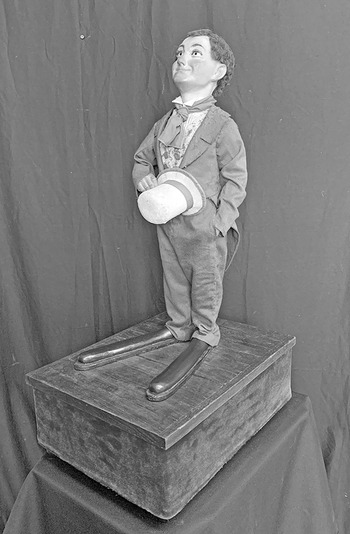
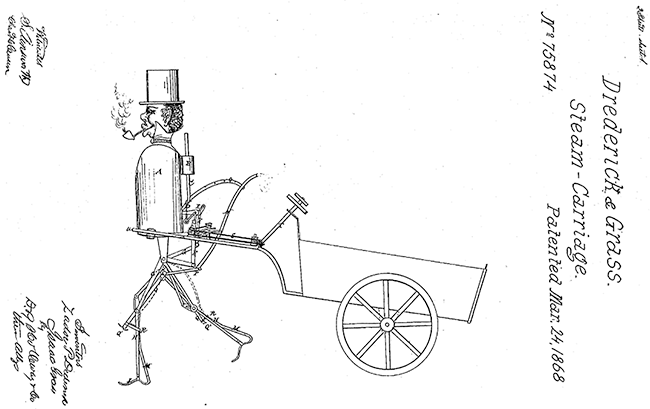

 Open access