Introduction
Until recently, ageing in industrialised wage-based societies implied that most seniors were relinquished to the private sphere, on the margins of so-called key productive and collective roles (Guillemard Reference Guillemard2002; Lefrançois Reference Lefrançois, Arcand and Hébert2007; Lesemann Reference Lesemann2007). Gradually, this gerontological paradigm has shifted, most notably at the policy level. Occidental societies moved away from protection-based approaches – which consider older people as vulnerable beings (Harvard School of Public Health 2004; Hick Reference Hick2005) – and gradually replaced them with discourses that value the social participation of seniors (Geiss Reference Geiss2007; Minkler and Holstein Reference Minkler and Holstein2008; Villez Reference Villez1997; Zedlewski and Butrica Reference Zedlewski and Butrica2007). Here, the challenge is both to define what social participation is and how we can act upon it.
In the first case, it has to be stated that although the concept of social participation evokes an impression of familiarity, it is also exceedingly polysemous. In fact, when reading the existing literature on the social participation of seniors, one quickly realises that its definition varies significantly from one author to the next (Bennett Reference Bennett2005; Bukov, Mass and Lamper Reference Bukov, Mass and Lamper2002). Recently, authors provided an inventory and content analysis of definitions (N = 43) of social participation in older adults found in the scientific literature, mainly in the fields of gerontology and rehabilitation (Levasseur et al. Reference Levasseur, Richard, Gauvin and Raymond2010). They showed that definitions mostly focused on the person's involvement in activities providing interactions with others in society or the community. Depending on the main goal of these social activities, six proximal to distal levels of involvement of the individual with others were identified: (a) doing an activity in preparation for connecting with others, (b) being with others, (c) interacting with others without doing a specific activity with them, (d) doing an activity with others, (e) helping others, and (f) contributing to society. At the same time, these results confirm that no consensus exists on the definition of social participation. Investigators are thus invited to identify a specific definition of social participation when designing and conducting their research.
In the second case, it can be said that no study has systemised knowledge about how the will to promote seniors' social participation translates into social policies and programmes. However, if we consider that encouraging seniors to engage in social participation is appropriate, it follows that an integrated and critical analysis of the programmes targeting this type of social participation is needed. This paper aims to fill this scientific gap by presenting an original typology of the methods employed by evaluated programmes in order to foster the social participation of older people.
Origin and paradoxes of an emerging dominant discourse
In the Western world, what is referred to as ‘old age’ has been radically redefined over time. From an improbable experience – due to a short life expectancy – to a widespread reality – as medicine and other processes have prolonged life in industrial societies – ‘old age’ became an institutionalised entity in the 20th century with the advent of the notion of ‘retirement’ (Moody Reference Moody2006). This last concept expresses meanings and behaviours that were closely associated with ageing throughout most of the past century: being an old person was synonymous with withdrawing from most productive roles. Some of the first sociological theories on ageing echoed this notion. For example, both the theory of social disengagement (Cumming and Henry Reference Cumming and Henry1961) and the theory of modernisation (Cowgill Reference Cowgill and Gubrium1974) applied the tools of functionalism to explain the exclusion of older individuals in modern societies (Fennell, Phillipson and Evers Reference Fennell, Phillipson and Evers1988). The first social policies directed towards older individuals mirrored this viewpoint. Meant to be protective and caring, these policies established various mechanisms that ensured their withdrawal from the labour market and the replacement of their income sources (Crespo Reference Crespo2004; Hick Reference Hick2005).
Nonetheless, the incapacity of these theoretical perspectives to empirically demonstrate their assertions (Lefrançois Reference Lefrançois, Arcand and Hébert2007) as well as the multiplication and fragmentation of retirement practices (Guillemard Reference Guillemard2002; Lesemann Reference Lesemann2007) created the need for non-deterministic theoretical responses (Atchley and Barush Reference Atchley and Barush2004). New approaches were fashioned and many theoretical paths were taken: activity theory (Lemon, Bengston and Peterson Reference Lemon, Bengston and Peterson1972), socio-environmental theory (Gubrium Reference Gubrium and Bell1976), critical gerontology (Phillipson and Walker Reference Phillipson, Walker and Gregorio1987), and lifecourse theory (George Reference George1993), to name just a few. In spite of their often contradictory standpoints, all these theories share a similar view of older people as social actors involved, on a daily basis, in significant experiences and struggles (Hooyman Reference Hooyman and Kaye2004). Consequently, models of ageing, as well as social policies, showed an emerging inclination towards participation. Wishing ageing to be successful (Rowe and Kahn Reference Rowe and Kahn1998), active (World Health Organization 2002), productive (Bass and Caro Reference Bass, Caro, Morrow-Howell, Hinterlong and Sherraden2001), and healthy (Bryant, Corbett and Kutner Reference Bryant, Corbett and Kutner2001) necessarily entails considering social participation as a key aspect of social policy. This perspective is certainly congruous with the public debates occurring in societies which must cope with the social and economic implications of rapid demographic ageing, in particular with the extended duration of pension and retirement years (United Nations Organisation, 2007).
Although social participation figures as a relatively new concept in the gerontological field, it has long been a central component of community intervention. In this regard, social participation is viewed as a valuable asset to democratic societies (Shragge Reference Shragge2006); even when its effects on the health of individuals or on the trajectory of societal ageing are not taken into account. This understanding prompts us to ask: when considering social participation, is society ‘really interested in the active and democratic participation of citizens in the hands-on organisation of their communities’ (Archambault Reference Archambault2000: 8, author's translation)? Efforts aimed at fostering the social participation of seniors should go well beyond stimulating their social connectivity or organising recreational activities and gatherings; they rather ought to be considered as a tool for the creation of – as well as the result of – a more just society (Gervais Reference Gervais2000). The conditions in which community intervention is undertaken, whether in institutional settings or within NGOs, can however influence and even distort such ideals. Often presented as a new strategy for revitalising social development (Lamoureux Reference Lamoureux2000), social participation is not necessarily accompanied by political or democratic content when programmes aimed at promoting it are subjected to governmental logics of recognition and funding (Fecteau Reference Lachapelle and Bourque2006; Lachapelle and Bourque Reference Lachapelle and Bourque2008).
Furthermore, a paradox exists between the generalisation of social participation – seen as an adaptation strategy to demographic trends (Zedlewski and Butrica Reference Zedlewski and Butrica2007) – and the uncriticised consensus surrounding this new participative standard for the ageing trajectory of every individual (Minkler and Holstein Reference Minkler and Holstein2008). This paradox does not help to solve the dilemmas surrounding the legitimacy of the social participation of seniors nor does it suggest ways to encourage it. For example, although the value of social participation is widely recognised (World Health Organization 2007), this recognition nevertheless coexists with a widespread popularity of retirement-leisure models (Guillemard Reference Guillemard2002) as well as with the ongoing – and even increasing – challenges of loneliness and exclusion that plague the life of seniors (Age Concern 2008). It is also known that socio-economic (Erlinghagen and Hank Reference Erlinghagen and Hank2006; Harwood, Pound and Ebrahim Reference Harwood, Pound and Ebrahim2005; Perren, Arber and Davidson Reference Perren, Arber and Davidson2003; Wilson and Musick Reference Wilson and Musick1997) and health disparities (Boneham and Sixsmith Reference Boneham and Sixsmith2006; Caro and Bass Reference Caro and Bass1997; Choi Reference Choi2003) greatly influence the possibilities and opportunities for social participation of the older population.
This historical and critical stance towards seniors' social participation is crucial when analysing the potential for guidance provided by the typology for policy and practice. They are also invaluable to the identification of the conditions needed for success on the road to more effective and inclusive programmes targeting the participation of older people.
Methodological path
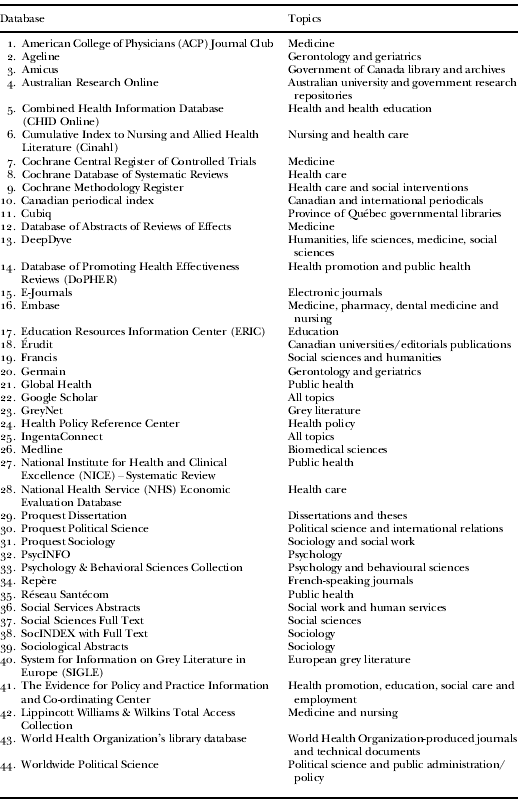
We studied 32 social programmesFootnote 1 created to foster the social participation of seniors. The concept of social programme can be construed as ‘an organized, planned and usually ongoing effort designated to ameliorate a social problem or improve social conditions’ (Rossi, Lipsey and Freeman Reference Rossi, Lipsey and Freeman2004: 434). These programmes were identified through a literature review which spanned more than 40 years (1970–2011) and which explored over 40 databases covering aspects of both health and social sciences (Table 1).
Databases explored by the literature review

In addition to the concept of ‘social participation’, other synonymous key words – such as ‘social engagement’ and ‘citizenship’ – were used during the enquiry. As for the concept of ‘social programme’, the following key words were used: ‘action’, ‘program’, ‘program evaluation’, ‘project’ and ‘community project’.
The enquiry allowed the identification of 11,070 papers. We used the PICO (Population, Intervention, Comparison, Outcome) method to establish criteria for inclusion of the articles. This method leads to design a criteria guideline suited both to the proper goals of the research and to scientific evidence. We retained papers satisfying these four conditions:
• Population: programmes targeting an older people population (age criteria as defined in each study).
• Intervention: programmes had to support or promote social participation by means of activities maintaining or improving one or several of these issues: social functioning, networking, friendship, social skills, social interactions, social contribution, collective voicing, social roles, social activities, feelings of belonging and inclusion.
• Comparison: programmes had to have been evaluated by means of a clearly described process of appraisal of a before/after comparison; the nature of the evaluation method was not a criterion for inclusion, but it was used for analytical purposes.
• Outcome: programmes had to evaluate results associated with social participation, as defined in the ‘intervention’ section.
After the screening process, 54 papers remained. The following exclusion criteria were then applied in order to further refine the inquiry results and to ensure their relevance:
• The socio-cultural context of the intervention is found to be unsuitable for the applicability of our study (e.g. a programme rooted in rural Brazil).
• The topic or the population targeted is too specific considering the global scope of our study (e.g. the subject of the paper is bereavement or the palliative care milieu).
• Older people count as a minority within the intervention group (e.g. a programme led amongst people living with a psychiatric condition, of which a small number are seniors).
• The evaluative methodology is inadequately described or justified (e.g. the analytic procedures are not specified).
• There is no outcome linked to social participation or related concepts in spite of what is announced in the abstract (e.g. the outcomes displayed refer only to cognitive function).
Finally, 32 papers were retained after these selection procedures.
The analysis was conducted using a qualitative analysis method based on conceptual categories (Paillé and Mucchielli Reference Paillé and Mucchielli2003). This method was chosen because it dovetailed both our fieldwork-grounded and theorising goals. We first analysed the data in order to extract empirical descriptions. An analytical framework allowed us to examine each programme with scrutiny in regards to: the way social participation was defined and addressed; the sample targeted; the activities developed and put into action; the setting of the programme; the evaluative design privileged; the results obtained. Second, we used the extracted data to undertake the framing of conceptual categories. These categories can be defined as concise textual productions intended to facilitate the identification of phenomena through the conceptual reading of the research data. In the present study, the challenge was to structure conceptual categories so that they could incorporate the various ways in which the desire to foster the social participation of seniors had been actualised. Ultimately, we created a five-category typology that incorporates all 23 studied programmes.
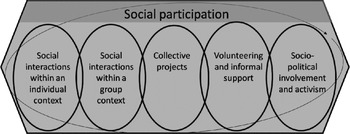
In conjunction with the search for congruity between the collected data and the study analysis (Strauss and Corbin Reference Strauss, Corbin, Denzin and Lincoln1994), we enhanced the validity of our results by virtue of three different strategies. To increase reliability, our multidisciplinary research team undertook a periodical ‘inquiry audit’ (Lincoln and Guba Reference Lincoln and Guba1985) throughout the research process. All members of the team examined the coherence of both the research process and the results. For example, this reflexive body examined various models of graphical representation of the results before opting for a five-category ‘fan’. To reinforce credibility, we used a triangulation process with several analysts (Patton Reference Patton1990) at the end of the first analytical wave. Researchers, professors and fieldworkers from Europe and Canada reviewed and commented on the results, which helped us clarify the definitions and criteria used for the five typological categories. Finally, in order to ensure transferability, we carried out numerous knowledge transfer actions as well as activities that integrated a feedback-gathering process about the applicability (Patton Reference Patton1990) of the typology for policy, research and fieldwork.
Results
Some seniors receive home visits from volunteers who come to keep them company. Others take part in a series of group classes on ‘successful ageing’. Retirees join neighbourhood walking clubs or work as volunteers with school children. Older women get together to write songs denouncing injustices and then take advantage of public events to make their voices heard. The literature reveals that these are only a few among the many avenues taken to promote the social participation of seniors. As these examples show, the scope of programmes is decidedly very wide, kaleidoscopic, and is marked by a great diversity of points of view and interpretations of the concept of social participation.
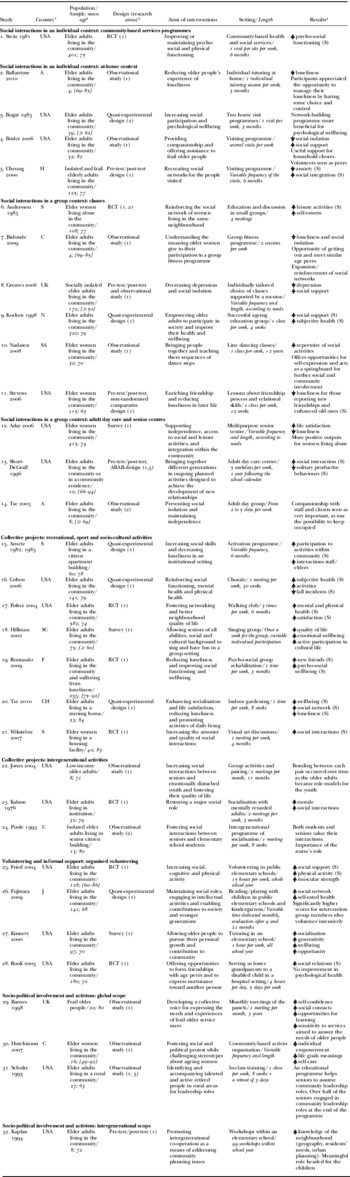
This section presents the typology of social programmes used to promote the social participation of seniors. The categorisation is embedded in an analysis of the various characteristics of the programmes, namely the type of social situations, interactions and relationships they were enabling or fostering as a way to improve social participation (e.g. a pairing context), as well as the activities they propose to reach these purposes (to track the same example, informal discussion within the pairing context). The typology presents five categories: (a) social interaction in an individual context; (b) social interaction in a group context; (c) collective projects; (d) volunteering and informal support; (e) socio-political involvement and activism (Figure 1). Additional data are provided in Table 2.
Typology of social programmes promoting the social participation of seniors.

Review of the included studies

Notes: RCT: randomised controlled trial. 1. A: Australia; C: Canada; CH: China; F: Finland; H: Hong Kong; J: Japan; N: The Netherlands; SC: Scotland; S: Sweden; SA: South Africa; UK: United Kingdom; USA: United States of America. 2. [ ]: age range or minimum age required, when mean age is not available. 3. (1): impact/effectiveness; (2): process of service delivery; (3): services provided. 4.  : increased;
 : decreased; (S): statistically significant result. (5) ABAB design: alternates treatment and non-treatment.
Before describing the different categories that constitute this typology, its purpose must first be explained. This categorisation is meant to be used as a convenient and practical tool by all stakeholders interested in the various social programmes available to promote seniors' social participation. It is not meant to categorise the way such participation is understood. Categories are not intended to be entirely exclusive of one another; overlapping is possible and even desirable. Indeed, programmes that combine various types of interventions may well be considered to be better suited to the diverse characteristics and needs of seniors. Furthermore, this typology is meant to be dynamic and intends to contribute to the ongoing dialogue between researchers, practitioners, managers, and citizens. Furthermore, as ways of thinking evolve and experiences pertaining to the social participation of seniors multiply, the typology can be enhanced by adding, changing, or removing approaches.
Social interaction in an individual context
This first group of programmes targets seniors who are afflicted by social isolation and/or feelings of loneliness. They aim to provide this category of older people with access to services relevant to their situation and that have the potential to include them in a supportive network. In other words, these programmes act as bridges to social connectivity. They all share similar intervention processes: they identify seniors who would benefit from the intervention within the community; they contact them and build relationships of trust; they get seniors involved in a therapeutic or social relationship.
Some programmes are categorised as community-based programmes, while others are grouped under the heading at-home programmes. Although they both reach a similar clientele, the methods they use to reach this clientele and the services they provide differ.
The community-based services programmes seek to reach seniors where they live or spend time to offer them health and social services. In turn, these services become a means to broaden their social network. The Service Workers' Action Team or SWAT programme (Stein et al. Reference Stein, Linn and Weiner1981) is a team of health and social services professionals that patrols seniors' living environments, thanks to a mini-motor home, and provides them with personalised medical and psycho-social services. This programme was evaluated through a randomised controlled trial (RCT) design.
In the case of the four at-home programmes, seniors are invited to play another role. They are both the hosts and the main contributors to meetings focused on interactive performance. This subcategory comprises three home-visiting programmes. In the Volunteer Networking Program (Cheung and Ngan Reference Cheung and Ngan2000), volunteers visit seniors not only to keep them company, but they also try to help them build, or rebuild, their social networks. They also increase seniors' awareness and use of services designed for them. Volunteers receive training on their roles and responsibilities, as well as on the process of ageing, the array of services available for seniors, etc. This programme was evaluated through a pre-test/post-test design. In the Friendly Visitor Program (Bogat and Jason Reference Bogat and Jason1983), two types of home visits are offered. The first is relationship-oriented and emphasises empathy and concern, while the second focuses on encouraging and reinforcing involvement in the community. A quasi-experimental design was used to evaluate this programme. Finally, in the Senior Companion (Butler Reference Butler2006), visiting volunteers provide seniors with companionship and help them with household chores. The results were evaluated through an observational design.
The at-home category also includes a tutoring programme aimed at enabling seniors to use a networking website in order to lessen feelings of loneliness and social isolation. The results of this Internet Social Networking Website programme (Ballantyne et al. Reference Ballantyne, Trenwith, Zubrinich and Corlis2010) were evaluated through an observational design.
Two programmes had statistically significant benefits on the social participation and health of seniors who participated. One enhanced social functioning and social participation (SWAT), and the other reduced anxiety while cultivating social integration (Volunteer Networking Program). These programmes are innovative because of the way they locate vulnerable seniors, and because of the methods they use to make contact with them. In the SWAT programme, even though the main interventions are oriented toward individuals, the fact that seniors get together around the motor home on a weekly basis, waiting to receive their individualised services, generates a favourable context for social interactions among neighbours. In the Volunteer Networking Program, volunteers act as mediators between the seniors they visit and their neighbourhood, providing information about community-based services and activities.
In the case of the Friendly Visitor Program, no correlation was found between the intervention and its results in terms of social participation. The evaluation only established that a network-building visiting programme should be more beneficial for psychological wellbeing than a social interaction one.
Regarding the two at-home interventions analysed through an observational design, the evaluations show conclusively positive results with regard to reduced loneliness as well as social isolation. Both also illustrate that the accompanying process helps seniors to maintain or improve their level of independence.
Social interaction in a group context
While the programmes of the previous category make use of pairing, the programmes in this second category involve group activities. However, participants do not share a clearly identified common project. The goal is rather to provide seniors with tools to help them adapt to ageing, while socialisation and social involvement become complementary objectives.
Social interaction within a group context therefore refers to programmes where seniors are grouped in order to build up their knowledge or skills as well as to acquire information on lifestyle changes. Although individuals are the main targets here, connecting with peers to whom they can relate may generate social interactions that help to break isolation or promote the development of social networks. In every case, the pretext for bringing people together draws explicitly on a certain model of active and healthy ageing.
The first subgroup of social programmes is made up of classes devised to encourage behavioural changes in keeping with the idea of ‘successful’ or ‘active’ ageing. Most are short-term initiatives lasting between four and twelve sessions. In the Successful Aging Course (Kocken and Voorham Reference Kocken and Voorham1998), a group of about 20 seniors attend four meetings. The goal is to make them aware of certain risk factors with respect to their health, and to help them change their lifestyles accordingly. In the Aging and Loneliness Project (Andersson Reference Andersson1985) and the Friendship Enrichment Program (Stevens, Martina and Westerhof Reference Stevens, Martina and Westerhof2006) the goal is to establish or improve social networks thanks to shared leisure or linkage activities. In the case of the Group Fitness programme (Bidonde, Goodwin and Drinkwater Reference Bidonde, Goodwin and Drinkwater2009) and the Line Dancing programme (Nadasen Reference Nadasen2008), participation duration was not restricted. Older women could attend as many, or as few, classes as they wanted to. Two weekly sessions of group fitness are offered in the first programme, whereas the line dancing programme was offered once a week. Finally, the Upstream Healthy Living Centre (Greaves and Farbus Reference Greaves and Farbus2006) helps seniors find group activities and classes closely related to their passions and interests thanks to an individually tailored intervention carried out by a mentor.
Adult day care and senior centres, the second programme subgroup, aim to strengthen the social skills and quality of life of the elderly, often considered as frail, by offering a supportive setting where participants spend several hours a week. The purpose of the Adult Day Group programme (Tse and Howie Reference Tse and Howie2005), the first programme listed in this subgroup, is to help maintain seniors in their homes by organising group activities that promote their functional abilities. The second programme, the Senior Center (Aday, Kehoe and Farney Reference Aday, Kehoe and Farney2006), offers a wide array of hobbies and activities within a social environment that offers numerous opportunities for socialisation. The third programme, an Intergenerational Program set in an adult day care centre (Short-DeGRaff and Diamond Reference Short-DeGraff and Diamond1996), offers senior participants the possibility to join three- or four-year-old children in play activities (dressing-up, puzzles, etc.) that can be set up in different locations of the house. However, if the elders' participation is suggested, it is never required.
The designs employed to evaluate class programmes vary: RTC (Aging and Loneliness Project), quasi-experimental (Successful Aging Course), pre-test/post-test (Friendship Enrichment Program), pre-test/post-test and observational design (Upstream Healthy Living Centre), and observational study design (Group Fitness and Line Dancing). The favourable outcomes are abundant and diversified. In all these cases, increased social interactions, social activity or support was measured, as was physical and mental health-related benefits (e.g. improvement of perceived health and blood pressure, decrease in loneliness and depressive symptoms). Three class programmes (Aging and Loneliness Project, Successful Aging and Friendship Enrichment Program) showed statistically significant benefits, despite the short duration of the interventions (from one to three months).
By tackling various facets of the ageing process, attending classes appears to be a good way for seniors to acquire new knowledge, while stimulating social connectivity and improving their health status. However, a word of caution must be given about classes that directly target social linkage or companionship (Aging and Loneliness Project, Successful Aging and Friendship Enrichment Program). First, not everyone will feel at ease with this kind of programme and some people would certainly prefer indirect approaches that offer participation in a shared project as a pretext for social networking. Second, an academic focus could be unfitting for people who do not master the language, or who have little schooling. In this respect, programmes like the Group Fitness or the Upstream Healthy Living Centre might represent judicious alternatives, the former because it proposes a more ‘freestyle’ approach, and the latter because the interventions are individually tailored to suit every senior's personal interests.
The Adult Day Group and the Senior Center programmes were evaluated with an observational design, while the Intergenerational Program was evaluated with a pre-test/post-test approach. In the first case, results underline two conditions that have to be met in order to encourage the social participation of the centres' users. On one hand, staff should act in ways that respect the experiences and culture of seniors, thus avoiding infantilising patterns. On the other hand, staff have to keep in mind that for seniors, the centre is much more than a place that provides entertainment or keeps them occupied; it represents a living environment that holds meaning and enables reciprocities. In the second case, the wide sample used (400 women) allowed the collection of very reliable data about the perceptions older women have of senior centres. The services offered by the centre appear to help diminish feelings of loneliness whilst improving the participants' level of satisfaction with their life. Finally, in the third case, a ‘freestyle’ approach vis-à-vis connectivity between adult day care members and young visitors seems again to be rewarding for social interactions and individual wellbeing.
Collective projects
The third category of programmes that seek to foster the social participation of older people incorporates the largest number as well as the greatest diversity of programmes. In addition to bringing participants together in community initiatives, the common denominator of these programmes is the way they lead participants to play a decisive role as members of a group. The activities could be said to have an expressive orientation in the sense that their goal is to create a common ground where each member contributes something to the others, while satisfying his or her own personal needs (Bickel Reference Bickel2003; Erlinghagen and Hank Reference Erlinghagen and Hank2006; Young and Glasgow Reference Young and Glasgow1998). Instrumental activities, more specifically aimed at meeting community needs, characterise the last two categories of programmes.
The first subcategory in this section includes recreational, sport, and socio-cultural activities. These programmes propose activities that are both original and multidimensional. In the Visual Art Discussion programme (Wikström Reference Wikström2007), a group of 20 women meet on a weekly basis to discuss freely well-known works of art, while in the Creativity and Aging Study (Cohen et al. Reference Cohen, Perlstein, Chapline, Kelly, Firth and Simmens2006) and the Singing Group programme (Hillman Reference Hillman2002), seniors participate in a choir. For its part, the Social Activation Program (Arnetz et al. Reference Arnetz, Theorell, Levi, Kallner and Eneroth1983), which takes place within a senior citizen apartment building, brings together residents sharing specific interests (botanic, history, etc.) to build thematic projects. In the Psychosocial Group Rehabilitation programme (Routasalo et al. Reference Routasalo, Tilvis, Kautiainen and Pitkala2009), senior participants are involved in artistic activities, therapeutic writing, and group discussions. Finally, the Senior Health and Physical Exercise (SHAPE) Project (Fisher and Fuzhong Reference Fisher and Fuzhong2004) organises walking clubs that schedule three training sessions a week for seniors living in the same neighbourhood, while the Indoor Gardening Program (Tse Reference Tse2010) allows seniors living in a residential facility to initiate and take care of an indoor garden.
The second subcategory of collective activities consists of intergenerational activities aimed at bringing together seniors and people from other age groups, giving them the opportunity to develop meaningful relationships. In the Intergenerational Group programme (Jones, Herrick and York Reference Jones, Herrick and York2004), troubled teens and seniors living in poverty meet twice a month to talk and share leisure or art activities. In the Mutual Association for Self-Help (MASH) programme (Kalson Reference Kalson1976) and the Community Intergenerational Program (Poole and Gooding Reference Poole and Gooding1993), institutionalised seniors meet on a weekly basis with mentally retarded adults in the first case, and with school children in the second, to chat and do craftwork activities together.
Six of the seven recreational, sport, and socio-cultural programmes were evaluated with an RCT or a quasi-experimental design (Visual Art Discussion, Creativity and Aging Study, Social Activation, Psychosocial Group Rehabilitation, SHAPE and Indoor Gardening). All show statistically significant benefits for at least one dimension of social participation (increase in social networks and friendships, decrease in loneliness) while also presenting evidence of benefits for both health and wellbeing. For its part, the Singing Group was evaluated through a survey. The results show an increase in quality of life and emotional wellbeing. They further indicate that participants actively participate in cultural life.
The two intergenerational projects involving school children or teenagers (Intergenerational Group and Community Intergenerational Program) were evaluated using an observational design. The indicators focused on the perceived benefits for the participants, on the nature of the interactions, as well as on the conditions to support group cohesion. The third intergenerational programme, MASH, was evaluated with a RCT design. The evaluations' indicators showed no difference between the experimental and the control group. However, the seniors participating in the experimental group showed a statistically significant behavioural change regarding their attitude towards the mentally retarded.
Despite the globally positive outcomes of intergenerational interventions, it appears that bringing two generations together within the framework of communicative activities is not as straightforward as it might seem. In the MASH programme, it was reported that individual personality and perceptions influence heavily on the group process. In fact, the degree of allegiance to the collective process varies from one member to another, and can even vary for a single person throughout the intervention. In the Intergenerational Group, it was observed that bonding was rendered more difficult because of the mutual prejudice that exists between seniors and teenagers. As we will see in the following section, this kind of problem was not reported in the evaluations of intergenerational programmes where seniors play the role of mentors.
Volunteering and informal support
This type of programme is aimed at giving support to seniors who wish to become involved as volunteers in a helping or mentoring role. It should be pointed out that, for the most part, literature concerning the social participation of seniors is centred on this approach. Volunteering is often equated to social involvement, whether it is organised (carried out as part of a structured organisation) or unorganised (with no link to a structured organisation).
All programmes identified in this section, however, fall into the category of organised volunteering. They all involve intergenerational projects that bring seniors together with school-aged or sick children. Unlike the intergenerational activities discussed in the previous section, seniors become the children's mentors rather than mere companions. This involvement is often perceived as a means to improve the physical, psychological, and social wellbeing of the elderly volunteers.
Three programmes take place in an educational setting. In the Experience Corps Baltimore Model (Fried et al. Reference Fried, Carlson, Freedman, Frick, Glass, Hill, McGill, Rebock, Seeman, Tielsch, Wasik, Tielsch and Waszeger2004), seniors commit 15 hours per week to projects aimed at supporting the academic progress of elementary school children, including improving reading skills and school attendance. In the Research of Productivity by Intergenerational Sympathy (REPRINTS) Program (Fujiwara et al. Reference Fujiwara, Sakuma, Ohba, Nishi, Lee, Watanabe, Kousa, Yoshida, Fukaya, Yajima, Amano, Kureta, Ishii, Uchida and Shinkai2009), seniors read picture books to children in public kindergartens and elementary school; the time invested in these activities varies for each volunteer. In the Intergenerational Tutoring Program (Kinnevy and Morrow-Howell Reference Kinnevy and Morrow-Howell2000), seniors are asked to contribute one hour weekly to help children with schoolwork. It should be noticed that, in the first two programmes, seniors are integrated in the school environment, in teams of six to ten volunteers; whereas in the third programme, volunteer mentorship takes place outside school walls, and complements the regular school day schedule. In all three programmes, in-person training activities and volunteer meetings are central features. They all aim to encourage experience-sharing, problem-solving, and relationship-building.
For its part, the fourth volunteering programme, the Foster Grandparent Program (Rook and Sorkin Reference Rook and Sorkin2003), recruits seniors so that they can provide care and emotional support for hospitalised children dealing with severe developmental disorders at a rate of 20 hours every week. Volunteers receive or initiate monthly supportive phone calls with staff members or fellow volunteers.
Comparing the results of the social programmes grouped in the other sub-categories is rendered difficult by the heterogeneity of their evaluative designs. One programme was evaluated through a quasi-experimental design (REPRINTS) and two with RCTs (Experience Corps Baltimore and Foster Grandparent). These three evaluations show contradictory results. In the case of the Experience Corps Baltimore Program and REPRINTS Program, multiple benefits for social, mental and physical health were found, as was a very high level of satisfaction. Conversely, the outputs for the Foster Grandparent Program were much more mitigated: increase in social interactions was not shown to be accompanied by improvement in psychological health or other measured variables. This might suggest that the relationships developed in the hospital setting were not entirely positive. We could question the important gap between the results emanating from these programmes, despite the fact that they all present an extensive weekly commitment, and offer coaching and supervision facilities as well as bonding opportunities for volunteers. One of the explanations might be found in the roles and responsibilities of volunteers. In the school settings, seniors are invited to engage in projects that they implement mainly by themselves and for which they receive comprehensive training, thus furthering skill development, self-confidence and social recognition. Volunteers working in the hospital setting, on the other hand, take care of severely disabled children. This work entails performing a large number of demanding or repetitive tasks on a daily basis. These duties are further carried out in a highly specialised and compartmentalised context, without the assistance of informal support from other volunteers.
Finally, the last programme in this section was evaluated with the help of a survey (Intergenerational Tutoring Program). Results show that a very high proportion of volunteers consider that their involvement significantly contributes to their wellbeing, and offers many health benefits.
Socio-political involvement and activism
This fifth and last group of programmes in our typology of seniors' social participation encompasses programmes that encourage seniors to get involved in social and political action. These programmes differ from volunteer work since their aim is to get seniors to become agents of social change on a collective rather than an individual level.
The first subcategory includes programmes with an intergenerational scope, such as the Long Island City 2000 Project (Kaplan Reference Kaplan1994). This urban planning project brings together seniors with school-aged children in order to discuss the future of their neighbourhoods and influence the municipal decision-making process on this subject.
The other subcategory has a global scope and consists of programmes where seniors get involved in democratic decision-making structures in order to explicitly seek social change and the construction of a fairer and more inclusive society. In the Fife User Panels Project (Barnes and Bennett Reference Barnes and Bennett1998), panels are organised so that frail seniors can talk about their experiences regarding health-care services and make recommendations to political decision makers. The Leadership Enhancement for the Active Retired (LEAR) programme (Schultz and Galbraith 1993) is a training model that builds upon the leadership skills and expertise of retired seniors who are willing to share their time and talents for the benefit of their community. And in the Raging Grannies group (Hutchinson and Wexler Reference Hutchinson and Wexler2007), older women actively participate in social and political protest through collective song writing, singing and acting.
All these global scope activism experiences were evaluated through observational studies. The results share a common conclusion: this type of process has a considerable impact on both individual and civic empowerment. Participants noticed significant personal changes linked to their involvement: improved self-care, increase in self-esteem, discovery of opportunities to experiment safely with new social roles, increase in the number of social contacts, etc. Furthermore, these three programmes can be used by all seniors, not only those who benefit from the best health status. For instance, the Fife User Panels Project succeeded in recruiting and mobilising frail seniors thanks to careful adjustments made in respect of their needs and rights.
For its part, the Long Island City 2000 Project was evaluated with a pre-test/post-test design. An increase was measured in the knowledge and social involvement engagement of seniors regarding neighbourhood issues, such as better understanding of residents' needs or of the process of urban planning. At the same time, the conclusions of the evaluation point to the difficulties in creating efficient interconnections between the interests and concerns of seniors and those of children on the subject of social change.
Discussion
Given the diversity of approaches used for encouraging seniors' social participation, as well as of that of the evaluative designs used and outcomes displayed for each programme reviewed, it appears difficult to create a list of best practices even though this goal would have represented a significant breakthrough for gerontology. However, six transversal conditions favourable to seniors' social participation can be identified. Three principles are related to the ways the lifestyle, identity and agency of seniors are taken into account within the interventions. First, it is recommended that proximity approaches be employed to recruit participants in their own living environments, while building on community-based partnerships. Second, it is essential to conceive activities that acknowledge and respect the interests, needs, experiences and culture of seniors, as well as the existing diversity within this population group. Third, interventions must represent a supportive frame for seniors' agency, in the sense that they should support the development of meaningful social relationships and roles, which also means they ought to allow a symbolic and temporal space for personal and collective change.
Three additional principles refer to the organisational and structural aspects of the programmes. First of all, seniors must be true actors in the projects targeting their social participation. They should participate in the planning, realisation and evaluation of programmes, and this, not only at the level of instrumental tasks, but also as full-fledged partners of the decision-making process. Then, organisations' staff ought to be trained for practices that favour democratic and participative management, while banishing patronising and authoritarian approaches. Finally, it seems fundamental to give programmes a sufficient span, six months as a minimum, to allow for the development of feelings of belonging as well as of significant relationships.
Converting the complexity of social participation to social policy represents an important challenge when effectiveness or pre-determined outcomes are in play. Furthermore, each of the typology's five categories could assist policy makers, professionals, community workers or seniors who wish to get involved in this field. Some categories cover a substantial number of interventions, offering various examples of programmes with considerable positive outcomes. This is the case for the Social interactions within a group context and the Collective projects categories. For these categories, the typology offers ideas, directions, knowledge, know-how, and creates an authentic and critical guide for action-taking. For other categories, such as Socio-political involvement and activism, guidance does not seem to be as easily discernible. Nevertheless, it appears that, in second analysis, the philosophical arguments guiding these programmes are highly compatible with a more qualitative, flexible and critical stance towards social participation. The programmes grouped under the activism label therefore reflect that kind of rapport to social realities and processes, and might inspire a more democratic and participative intervention path.
Since only evaluated programmes were kept for analysis, it could be said that the selection criteria of the social programmes constitutes a limit to this research. This methodological choice considerably restricted the number of social programmes that could be considered for analysis. For instance, most community organisations that draw on or promote the participation of seniors do not have the resources necessary to provide a thorough and formal evaluation of their programmes. In that sense, they abstain from most research projects. However, it is hoped that innovative and relevant approaches that have a bearing on seniors' social participation originate in less formal settings and stem from community-based initiatives. A second research phase should explore these types of programmes in order to develop the field's knowledge about them, while offering support and assistance to programme managers in their efforts aimed to develop adapted evaluation initiatives. Such a step would also create an opportunity for testing the theorisation presented in this paper and adapt it to a broader reality, if needed.
Conclusion
To our knowledge, the typology presented in this article is the first attempt to organise the cumulated empirical knowledge and experiences on the topic of how to promote the social participation of seniors. But the typology is not only an original contribution to the gerontological field; it has the potential to accurately guide policy, evaluative research, and socio-political activism.
Regarding policy, the typology offers more than a range of inspiring programmes and positive outcomes. Our results shed light on the fact that encouraging social participation encompasses concerns for agency and structure, identity and interaction. Above all, it appears that participation could and should be both a goal and a means. This implies working with seniors in a collaborative way in order to design and achieve effective programmes. Aren't older people themselves the main stakeholders in the very debates and decisions aimed at altering the ways they contribute to society? In that sense, the typology could provide a strong theoretical support for discussion and decision-making since it provides an accessible and user-friendly framework: where do we position our view of social participation within the typology? Do we prioritise one kind of intervention over another, and why?
In relation to evaluative research, the literature review demonstrated that programmes targeting seniors' social participation are under-evaluated. From now on, the typology proposed could be used as a blueprint upon which researchers could build evaluation designs and indicators. Consequently, this new tool could be the starting point for integrating experiences and approaches that would constitute an interesting and original contribution to the field of older people's social participation, but that have not yet been evaluated. However, the typology is seen more as a ‘work-in-progress’ tool than as a model; subsequent evaluative research will surely enrich and even modify it.
Finally, in terms of community organisation, this work invites the coupling of two objectives: to encourage seniors' social participation whilst balancing this encouragement with critical counterweights: for example, understanding the diversity of ageing aspirations for the older population while acknowledging the disparities existing in their socio-economic life conditions. For instance, it has to be recognised that most programmes are designed for retired people, while we know that frequently, low-income seniors cannot afford to retire. As well, we ought to be aware that potential disparities related to race, disability, gender, etc., are rarely considered by the programmes, as if access to participation was equally distributed. Between the participative motifs of contemporaneous discourses concerning seniors and the real possibilities that social participation brings for enhanced individual wellbeing and collective equity and solidarity, there is space for experimentation that could rely on good practices while pushing for continued innovations, for example by undertaking participatory action research processes.