Health and Physical Activity among Older South Asian Immigrants
South Asians are now the most populous minority group in Canada (Statistics Canada, 2012) and, like their counterparts in the United Kingdom (Lawton, Ahmad, Hanna, Douglas, & Hallowell, Reference Lawton, Ahmad, Hanna, Douglas and Hallowell2006), are especially susceptible to chronic conditions such as cardiovascular disease and Type 2 diabetes and its complications (Adhikari & Sanou, Reference Adhikari and Sanou2012; Foulds, Bredin, & Warburton, Reference Foulds, Bredin and Warburton2012). For example, relative to Caucasians, South Asian men in Canada are more than 4 times likely to have diabetes and women almost 3¼ times more likely to have diabetes (Adhikari & Sanou, Reference Adhikari and Sanou2012). In Canada, most late-life immigrants have historically been sponsored by their adult children and arrive from South Asian countries such as India, Pakistan, Bangladesh, and Sri Lanka (WelcomeBC, 2010). The health status of these sponsored parents is poorer than that of their Canadian-born age peers (Gee, Kobayashi, & Prus, Reference Gee, Kobayashi and Prus2004). Extremely low levels of physical activity among South Asian immigrants have been identified as a risk factor for the chronic conditions from which they suffer (Fischbacher, Hunt, & Alexander, Reference Fischbacher, Hunt and Alexander2004; Foulds et al., Reference Foulds, Bredin and Warburton2012; Hayes et al., Reference Hayes, White, Unwin, Bhopal, Fischbacher and Harland2002; Lawton et al., Reference Lawton, Ahmad, Hanna, Douglas and Hallowell2006). Researchers report that levels of physical activity are especially low among women and the elderly. Increasing the physical activity levels of South Asian immigrants, particularly older adults, should thus be central to health promotion efforts aimed at reducing the burden of chronic disease in Canada (Adhikari & Sanou, Reference Adhikari and Sanou2012; Foulds et al., Reference Foulds, Bredin and Warburton2012).
In some South Asian immigrant populations, low levels of physical activity and other forms of risk modification can be explained by a combination of comparatively low levels of knowledge about the chronic conditions and their risk factors, lack of accessible information and advice, religious and cultural beliefs about health, illness and aging, and the lack of accessible recreational areas and facilities (Daniel & Wilbur, Reference Daniel and Wilbur2011; Horne & Tierney, Reference Horne and Tierney2012; Macaden & Clarke, Reference Macaden and Clarke2006; Patel, Phillips-Caesar, & Boutin-Foster, Reference Patel, Phillips-Caesar and Boutin-Foster2012; Webster, Thompson, & Mayou, Reference Webster, Thompson and Mayou2002). Daniel and Wilbur (Reference Daniel and Wilbur2011) found that within South Asian communities, recent immigrants – particularly women from India with poor health and low levels of acculturation – had the lowest levels of physical activity. Research literature suggests that cultural beliefs that can translate into barriers include perceptions of gender roles and body image, misconceptions about physical activity, cultural identity and priorities (such as patriarchal protection and early preparation for marriage), and traditional beliefs concerning health and illness – all of which make it difficult for many South Asians to change behaviors and lifestyles that increase their risk of morbidity and high mortality associated with cardiovascular disease (Patel et al., Reference Patel, Phillips-Caesar and Boutin-Foster2012; Weerasinghe & Numer, Reference Weerasinghe and Numer2011).
Some older immigrant South Asian women have nonetheless found that later life events, retirement, and widowhood afford them the freedom to renegotiate and reconstruct their late-life styles to be more physically and socially active through ethnocultural social networks they have built after migration (Weerasinghe & Numer, Reference Weerasinghe and Numer2011). Thus while the root causes of limited physical activity found among South Asian immigrant populations are multiple and complex, research indicates that health and social policies and programs that address these barriers and promote social inclusion as well as physical activity can influence activity levels and, ultimately, health outcomes.
Case Study: The S4AC Project
Our case study focused on the Seniors Support Services for South Asian Community (S4AC) project. Developed to encourage the substantial population of South Asian seniors in a suburban neighbourhood to use extant recreation and seniors’ facilities where they were seriously under-represented, the project entailed collaboration between the United Way (an embedded funder), the municipality, and a local registered non-profit agency offering a wide range of services and programs to immigrant and refugee communities. The initial focus of the project was on improving access to existing facilities to encourage exercise among South Asian seniors. Over time, program facilitators realized that a complementary approach was needed to address persistent access barriers.
Theoretical Framework
Behavioral risk factors and individual health behaviors typically receive far more attention in the literature on health outcomes and access than do structural or systemic barriers and issues that create health inequities and inequitable access for such populations (Rogers, Gately, Kennedy, & Sanders, Reference Rogers, Gately, Kennedy and Sanders2009). Another tendency noted in the literature on immigrants is the analytical overemphasis on culture to explain adverse health outcomes and difficulty in accessing services and information, which effectively shifts the burden of responsibility onto those in need of care (Brotman, Reference Brotman2003; Forbat, Reference Forbat2004; Koehn, Reference Koehn2009; Koehn et al., Reference Koehn, McCleary, Garcia, Spence, Jarvis and Drummond2012; Koehn, Neysmith, Kobayashi, & Khamisa, Reference Koehn, Neysmith, Kobayashi and Khamisa2013). People are “othered” in this way, both by academics and health care providers, when their behaviours are explained in terms of abstracted and ahistorical overgeneralizations applied to “categories” (based on age, ethnicity, sexual preference, gender, etc.) that are in fact considerably more complex (Johnson et al., Reference Johnson, Bottorff, Browne, Grewal, Hilton and Clarke2004). One of the ways in which we can counter othering is to understand behavior in terms of the compounding effects of intersections of identity in the context of the oppressions that people have experienced throughout the life course (Hankivsky, Reference Hankivsky2011; Warner, Reference Warner2008). Adhikari and Sanou (Reference Adhikari and Sanou2012) similarly advocated that we pay more heed to structural and contextual determinants that influence both the morbidity of chronic conditions among marginalized populations as well as their access to appropriate support.
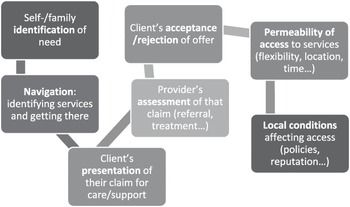
Increasingly, the candidacy framework (Dixon-Woods et al., Reference Dixon-Woods, Cavers, Agarwal, Annandale, Arthur and Harvey2006) is recognized as valuable for understanding the complex process of accessing care in disadvantaged populations across diverse health care domains (Bristow et al., Reference Bristow, Edwards, Funnel, Fisher, Gask and Dowrick2011; Garrett et al., Reference Garrett, Gask, Hays, Cherrington, Bundy and Dickens2012; Hunter et al., Reference Hunter, Chew-Graham, Langer, Stenhoff, Drinkwater and Guthrie2013; Klassen, Smith, Shariff-Marco, & Juon, Reference Klassen, Smith, Shariff-Marco and Juon2008; Koehn, Reference Koehn2009; Kovandžić et al., Reference Kovandžić, Chew-Graham, Reeve, Edwards, Peters and Edge2011; Mackenzie et al., Reference Mackenzie, Reid, Turner, Wang, Clarke and Sridharan2012; Peiris et al., Reference Peiris, Brown, Howard, Rickards, Tonkin and Ring2012). This framework speaks to a person’s dynamic and continually negotiated sense of legitimacy in using health care (Klassen et al., Reference Klassen, Smith, Shariff-Marco and Juon2008) and, as we argue in this article, the information and supports needed to maintain health and well-being. The authors of a meta-ethnography of literature on the experiences of British South Asians with chronic conditions maintained that using the candidacy framework to understand access represents a shift away from behavioural models towards an understanding of human activity that is “emergent, contingent and co-constructed” in nature (Garrett et al., Reference Garrett, Gask, Hays, Cherrington, Bundy and Dickens2012, p. 151). The framework’s dimensions illuminate inequities in health and health care “by tying seemingly individual behaviors in utilization to socially patterned influences” (Klassen et al., Reference Klassen, Smith, Shariff-Marco and Juon2008). The framework identifies seven dimensions of access (Figure 1): the first five can be viewed as transition points at which a person’s candidacy for care must be iteratively negotiated; the sixth and seventh capture the organizational and environmental contexts relative to which the negotiations take place.
Seven dimensions of candidacy for access to health and social services (Dixon-Woods et al., Reference Dixon-Woods, Cavers, Agarwal, Annandale, Arthur and Harvey2006)

The candidacy framework thus pays heed to structural determinants and interrogates the co-construction of a person’s access journey that takes into account intersections of identity at the micro, meso, and macro levels of analysis. Here, we explore the use of the framework for understanding access to health promotion programs that are typically delivered in a community context. Data gathered in relation to the S4AC project provides us with examples of both the success and failure to facilitate access at various transition points.
Methods
Initially, we received funding from the LiVWELL project (http://livwellresearch.ca/) at Simon Fraser University to explore if and how the project enhanced the capacity of immigrant South Asian senior participants to “self-manage” their chronic conditions (to be reported in a subsequent peer-reviewed article by the same authors). These funds were leveraged to secure additional funds from the S4AC project funder, the United Way of the Lower Mainland, to conduct a process evaluation of the S4AC programs. In line with Chinman, Imm, and Wandersman (Reference Chinman, Imm and Wandersman2004), we sought to understand characteristics of the program and program participants and the quality of program components from both staff and participant perspectives. The findings reported here were gleaned from data collected for these two complementary research agendas.
Consistent with the critical interpretive epistemology of the candidacy framework, which “recognises both the validity of all knowledge and its co-construction and the operation of symbolic power in relationships” (Koehn, Reference Koehn2009, p. 588), our data collection focused on the “lived experiences” (Schwandt, Reference Schwandt, Denzin and Lincoln1994) of staff and participants in relation to the S4AC project. Our qualitative case study approach included participant observation, individual interviews, and focus group methods, which in combination helped us to understand how different stakeholders constructed their experience and power dynamics – based on social determinants of health such as gender, socioeconomic status, and timing of migration – at play among them (Koehn et al., Reference Koehn, Neysmith, Kobayashi and Khamisa2013; Schwandt, Reference Schwandt, Denzin and Lincoln1994). Participating community organizations were interested in evaluating the S4AC project, which assured their buy-in. This in turn facilitated access to the sites, staff, and participants.
Participant Observation
We conducted eight hours of participant observation at the two sites, which are distinct in their organization and the participants they attract. The Punjabi-speaking research assistant (RA) took field notes on the nature of the activity and/or content of information provided as well as the interactions between staff and seniors and between the seniors themselves. This exercise provided us with a contextual backdrop against which to interpret staff and participant interview data.
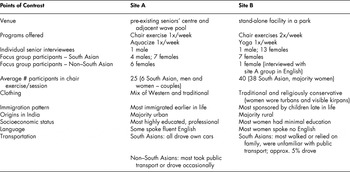
Programs were delivered at two sites. The project was initiated in 2008 at Site A, which is a pre-existing seniors’ centre and wave pool that was already populated with non–South Asian patrons. Programming at Site B, a stand-alone facility, was added in 2009. At Site A, chair exercises were offered once a week. Membership also included weekly aquacize classes at the adjacent wave pool. Seniors from a variety of ethnocultural backgrounds participated in these classes, which were integrated into the centre’s program and infrastructure. The stand-alone facility in which Site B classes were held is located within a park. Groups could book this space through the municipality for classes and singular events. Participants attended chair exercises twice a week and yoga once a week. While non–South Asians were welcome to join these classes, they were primarily composed of Punjabi-speaking older adults (see Table 1).
A comparative overview of features of venues and participants: Site A vs. Site B

Individual Interviews – Staff and Seniors
Semi-structured individual interviews were held in English with eight staff from participating partner organizations who had been involved in planning and/or implementing the S4AC project for at least a year. Interviewees were recruited by e-mail or in-person by our RA. Staff participated on work time, and contracted workers (i.e., fitness instructors) were compensated for their time by the municipal project partner.
The 15 senior interviewees had been participating in any of the S4AC exercise programs for at least three months, were of South Asian origin, and had self-reported diagnoses of two or more chronic conditions from a list of the most common chronic conditions experienced by British Columbians (BC Ministry of Health, 2011). The physical and mental chronic health conditions reported by the interviewees included diabetes, hypertension, high cholesterol, arthritis, “heart conditions”, asthma, thyroid problems, anxiety, and depression.
The RA’s presence as a participant observer of the programs enabled her to develop rapport with the senior participants and to describe our project to them. Project information and consent forms were translated into Punjabi by a professional translator. Forms in either Punjabi or English were distributed to all senior participants in the S4AC programs so that participants could take them home to read them carefully and/or have them read to them by someone they trust (some potential participants were not literate in their own language). The bilingual RA provided clarification at their next class, if needed. Eligible and interested participants were invited to identify themselves to the RA. All individual senior interviewees and the majority of focus group interviewees were recruited in this manner.
An effort was made to include participants from both sites, but only one Site A participant had the requisite diagnoses of chronic conditions. Our sample is also female-biased (n = 13); while we aimed to recruit a balance of men and women, the majority of participants at Site B were women (see Table 1). Interviews were conducted in Punjabi and digitally recorded. Participants were compensated for their time with a small honorarium.
Focus Groups – Seniors
Recruitment criteria for the focus groups were more inclusive: interviewees included any senior participant who was currently or had previously been attending an S4AC program for three months or more. Three focus groups included 25 participants, of which seven no longer attended programs. Past participants were recruited through snowball sampling from seniors who were still attending the S4AC programs. They were included so that we could gain an understanding of the barriers to their participation. Current participants were recruited in the same way as individual interviewees.
Two focus groups with South Asian participants were held in Punjabi: one at Site A (seven women and four men), and another at Site B (seven women) (see Table 1). We did not invite the minority of male participants at Site B to the focus group based on our previous experience with Punjabis from more traditional and rural backgrounds wherein we found that the voices of women were silenced in mixed gender groups (Benisovich & King, Reference Benisovich and King2003; Koehn, Jarvis, Sandhra, Bains, & Addison, Reference Koehn, Jarvis, Sandhra, Bains and Addison2014). However, based on our observations of their interactions with one another, we felt we did not need to segregate the relatively well-educated and acculturated South Asian seniors at Site A. A third focus group was held in English at Site A with seven non–South Asian women. Their inclusion ensured that all participants’ voices were represented in the program evaluation. It also helped us to understand the relationships among South Asian and non–South Asian participants, to identify differences in their perceptions of their relationships with the sites and staff members, and to delineate the characteristics of participants at each site. All focus group interviews were digitally recorded. Senior focus group participants also produced opportunity maps (Hawe, Shiell, & Riley, Reference Hawe, Shiell and Riley2009) that indicated their relationship to each of the sites, staff, any old friends with whom they originally came to the programs, and new friends that they had made through the programs.
Data Analysis
All of the individual interviews, focus groups, and observational field-notes were transcribed and then coded using qualitative analysis software, Atlas.ti 5.2.0 (http://atlasti.com/). Where applicable, interviews were simultaneously translated (Punjabi to English) and transcribed by the interviewer to ensure that the context was not lost (Smith, Chen, & Liu, Reference Smith, Chen and Liu2008). This contextualized meaning is central to an interpretivist stance (Denzin, Reference Denzin, Denzin and Lincoln1994). To ensure the trustworthiness of our interpretations of the data (Carter & Little, Reference Carter and Little2007; Denzin, Reference Denzin, Denzin and Lincoln1994), we hosted a member-checking event that included 42 interviewees and other participants in the S4AC programs from both sites. The participants in this event affirmed the verisimilitude of the collective stories that we derived from the participants’ combined narratives to their own lives. Coding was an iterative and dynamic process (Huberman & Miles, Reference Huberman, Miles, Denzin and Lincoln1994). Data collection and analysis occurred concurrently, and some of the codes were revised based on the new data. Codes and sub-codes were then examined for emerging themes. These themes were discussed with team members and with the S4AC project hosts.
Inevitably, the themes also reflected our critical agenda of bringing to light structural dimensions that facilitated or impeded access to the programs and the participants’ experiences of them. We considered imbalances of power apparent in both the interview narratives and our observations between program participants and others including staff and family members (Kincheloe & McLaren, Reference Kincheloe, McLaren, Denzin and Lincoln1994). Similarly we adopted McCall’s (Reference McCall2005) “intracategorical complexity” approach to understanding intersections within a single social group at a neglected point of intersection of multiple master categories. Specifically, we were aware of the need to distinguish older Punjabi immigrants relative to their migration histories (including both the length of time they had been here and whether they came as economic or family class immigrants) (Koehn, Spencer, & Hwang, Reference Koehn, Spencer, Hwang, Durst and MacLean2010). In so doing, we mitigated the essentializing of ethnic identities that the development of programs for “South Asians” or even “Punjabis” inadvertently reproduces.
Ethics
Approval was received from the Research Ethics Board of Simon Fraser University. Pseudonyms have been assigned to all of the individual interviewees to protect their identity. The South Asian seniors were given Punjabi surnames and addressed with a title of Mr. or Mrs. according to their gender, whereas staff interviewees were allocated anglophone first names.
Participant Characteristics: Receivers and Providers of the S4AC Program
Seniors
Combining data from focus groups, individual interviews, and our observations deepened our understanding of the characteristics of participants in the two groups. Approximately 100 senior participants were registered in both programs at the time of our study; most were South Asian, the original target population, but the program has since been opened to seniors of diverse backgrounds. From our observations, the chair exercises at Site A attracted an average of 25 participants, of which six to eight (mostly couples) were South Asian. Most of the South Asian participants also attended the aquacize class at the adjacent wave pool. At Site B, all but two of the approximately 40 regular attendees were South Asian (see Table 1). Of these, only four or five were men. The age range of seniors participating in the S4AC programs was broad, as reflected in our individual interviewee sample of 15: their ages ranged from 53 to 87, with the majority aged between 65 and 74.
Although the South Asian participants were predominantly Punjabi Sikhs from India, there were many differences among them, and these differences distinguish the two sites, as summarized in Table 1.
Most notably, Site B participants, particularly women, were more religiously conservative as evidenced by religious symbols, such as turbans and kirpans (ceremonial daggers), which were part of their daily attire. Seniors at Site B were typically sponsored by sons or daughters who had come to Canada before them. They usually lived with the sponsor’s family, and they often had other children living in Canada. If they were sponsored by a daughter, they more often lived alone or with a son who may have been sponsored along with them.
Some of our one-to-one interviewees had lived in Canada for fewer than 10 years and were therefore still legally dependent on their children who had sponsored their immigration; however, the majority had been in Canada for more than 10 years. Most of the female interviewees from Site B said they came from farming families in India in which their responsibility was to do chores inside the home. Some of the seniors had been previously or were at the time involved in part-time or seasonal farming work in Canada. They typically helped their older children with household chores and most were or had been engaged in taking care of young children. Most female interviewees had little or no formal education, whereas both male participants (one each from Sites A and B) were well-educated and fluent in English. Overall, most of the participants had already retired; some, but not all, participants had control of their own finances.
Both male and female South Asian participants at Site A, most of whom came with their spouses, were from urban backgrounds. Compared to the Site B participants, they were relatively well-educated, professional, and could speak English well. All had worked and aged in Canada. Overall, this group was more acculturated, active, and healthier than the group at Site B.
Staff
Frontline workers employed by the municipality were physical instructors, while those from the community agency provided language assistance and other supports (including psychological counseling) for the immigrant South Asian seniors in a culturally appropriate manner. They were also responsible for outreach work and recruitment of South Asian senior participants in the program. All but two staff had some post-secondary education ranging from diplomas to graduate-level degrees.
All of the community agency staff involved in the program had originally migrated from Punjab, India, and could speak Punjabi. They also had previous experience of working with ethnocultural minorities in Canada, including South Asian immigrants. Most did not share the lived experience of growing up in rural Punjab with the majority of the South Asian seniors registered in the S4AC programs, although one of the frontline workers had past experiences of working with seniors in the field of adult literacy in rural Punjab. Overall, however, the Punjabi-speaking community agency staff understood the needs and sociocultural realities of seniors migrating to Canada from rural Punjab. None of the municipality staff could speak Punjabi, but they had previous work experience and/or training that equipped them to work with seniors in Canada.
Benefits Perceived by Senior Participants and Staff
In order to describe the program from the perspectives of senior participants and staff, we have summarized the findings relative to the different benefits perceived. Naturally, the themes identified are overlapping components of the same picture and as such cannot be viewed as discrete elements. Within this framework, we have also depicted the challenges to accessing such benefits prior to the inception of the S4AC project, and for some, within the context of the programs offered.
Physical and Mental Health
The main skills participants gained from the programs were the exercise moves taught in the chair exercise, yoga classes, or aquacize classes. In addition to attending the classes between one to three times a week, some of the participants stated that they also practiced some of the exercises at home. Self-reported physical benefits included reduced hypertension and the medications needed to control it, improved digestion, flexibility and strength, weight control, and balance. For example, participants told us:
We have better flexibility of joints now, we can move little better now. … we feel good. Body feels lighter, weight doesn’t increase so we like it. (Mrs. Badyal)
After the accident, I lost my balance; I would always have fear of falling but now I have overcome that. Now I don’t have any fear because my legs and arms [body] have gained strength. (Mrs. Chahal)
Exercise is the skill that I have learned which is very useful. Body becomes flexible and you can do your chores. Before this I couldn’t bend down or do much chores but now even when I am at home I do little bit of exercise while sitting on the chair. (Mr. Hans)
Attending an organized group encouraged participants to do the exercise regularly and also gave them the opportunity to meet with their friends and neighbours. These opportunities to connect with others and get out of the house also had a positive impact on the seniors’ mental well-being:
Their mental health also improved because they got a chance to meet their age fellows…. I have also seen that people who were depressed before, they would come full of enthusiasm, I would tell them it’s snowing don’t come, you will fall but still they would come with special shoes and umbrella … They would talk so much to each other that I was thinking of getting a whistle to get their attention. (Selena, S4AC project staffer)
Many participants, like Mrs. Achara, felt that the exercise itself had a positive effect on their stress levels and overall well-being: “I feel better than before, my mind is also settled. They show us different moves that help to ease the nerves.”
Enhancing Social Networks
Participation in a group exercise program also broke the isolation experienced by many immigrant South Asian seniors and provided a supportive environment where they were not only able to exercise, but also shared their experiences of and approaches to self-care with one another. This opportunity to engage in meaningful socialization was especially important to Mrs. Deshwal:
I would stay inside the home, never come out, now I have to come here so I like it. I wake up in the morning, take bath, get my grandson ready, make food and then come here. Before this, I would sit in front of the TV and do nothing. Now I enjoy this time here.
All of the senior interviewees said that they had a “good time” coming to the program because they met with their old friends and family members, and also made new friends. South Asian focus group participants at the two sites reported knowing on average 7 to 12 times more people coming into the program then did the non–South Asian focus group interviewees who were primarily lonely widows seeking social engagement through Site A’s Seniors’ Centre (Table 2). The existing social networks of South Asian participants were used productively by community agency staff to reach out to isolated immigrant seniors and to recruit new participants into the program.
Connections with staff and friends by focus group

a This average is skewed by one individual who reported 13 new friends; she was clearly the exception to the norm which is reflected by the figure in parentheses (i.e., the average of all responses except for this individual).
Providing/Receiving Health Information
In addition to teaching exercise skills, the program also attempted to provide health-related and other information to the participants. Efforts were made to invite a Punjabi-speaking expert on different topics; otherwise, community agency staff provided interpretation into Punjabi. The mental health counselor assigned to the program also organized a workshop on depression. Community agency staff additionally provided oral and written information in Punjabi on topics such as falls prevention and nutrition. Most senior interviewees, however, said that they had not received much health information, although participants in the Site A focus groups recalled receiving information regularly after the exercise classes when the program first started up.
Most participants expressed a strong desire to receive such information, but indicated that the most suitable means of doing so would be through more informal and relational processes with their fellow participants, such as field trips and tours to different places. S4AC’s Selena explained that the staff had arranged a couple of field trips to the Sikh temple (gurdwara) and a South Asian grocery store that brought the seniors at both program sites together. These field trips were highly appreciated and desired by the seniors, and most interviewees, especially women at Site B, expressed a keen interest in more opportunities of this nature. Importantly, the seniors felt that more informal and interactive ways for them to learn about new issues and resources for self-care could be integrated into such events. Many remarked, however, that their adult children were usually too busy to take the time off to cater to their social needs.
The participants also spoke to the value of learning from their peers: simply by coming to the program and talking to others provided them with valuable information about their health and the services available.
[B]y coming here, you talk to people, you get some information. Otherwise you would be sitting home, doing nothing. … I have learned that [I should] come outside and mingle with others. If you don’t go out of your home, what will you learn? (Mrs. Deshwal)
We learn new things, even if we cannot read we get some information. We share in our homes too about this information. Like I didn’t know about breast cancer; some of the other women knew about it. They say screening is done yearly and then after two years and if it is more needed they do it regularly too. I have to get it done yet. (Mrs. Bhatti)
This mode of transmission can overcome health literacy barriers, although it may not be completely reliable.
Gaining Confidence and Enhancing Self-care
Nancy, another S4AC worker, told us that one of the main goals of the S4AC program was to teach the senior participants the importance of self-care, a concept often ignored among South Asian elderly women who usually put the care of their family members ahead of their own needs. Program staff sought to empower the seniors by increasing their confidence and independence. One strategy was to make them aware of “their rights, access to services, [making them] familiar with the services and teaching them how to use bus service.” (George, S4AC project staffer)
Self-care of mental health and emotional well-being was also promoted by Karen, the mental health counsellor from the community agency, who attended each site for one hour a week. When Karen conducted a mental health screening of program participants, she diagnosed four women as highly depressed and referred them to their family physician. S4AC staffer Laurel also noted that having some chronic conditions might hinder the active engagement of seniors with their community, even with health promotion activities. This disengagement has further negative implications for seniors’ mental well-being. Laurel felt that the improved ability of senior participants to engage in and recognize the importance of self-care, based on their participation in the S4AC program, helped them to engage more actively and meaningfully with their family and community. For example, although most senior participants at Site B said that they had never taken an aquacize class, many of them became keen to try it, and suggested that S4AC program staff should arrange to take them to the pool. Testing their limits in this safe environment gave many of the women the courage to expand their horizons in other ways:
It is true that I have gained confidence after coming here. I wasn’t able to cross the [traffic] lights [laughing with embarrassment]; now I know how to cross them … I never went far away from my home; I have never taken bus alone. I am living in this area for the past 20 years but never came to this park alone. My grandchildren used to tell me “Bi Ji let’s go for walk to the park” but I wouldn’t come. But now from the last two years I am coming to this program, it feels good. (Mrs. Bhatti)
I used to have fear from white people that they do this, that but not [anymore]; after coming here it’s better. We come together for the exercise … so we are together. (Mrs. Achara)
Some seniors expressed a need to justify their participation in the program to family members who relied on them to provide childcare and perform household duties. The first step in overcoming these objections was acknowledging their own need for self-care and claiming some independence. While the women did not neglect the needs of their family members, they asserted their own right to reorganize how things were done to ensure their participation in the classes. As Mrs. Lakra laughingly put it:
Now we want to come every day. Sometimes my family stops me, that “you have to gossip there so what’s the use of going” but I fight with them and come here.
As a result, the value of “self-care” and “independence” was re-framed by many of the seniors as a benefit not only to themselves but also to their families.
Yah with this program there is a lot of difference. Like when we had to take our garbage out [for garbage collection] we had to tell our tenants in the basement to help us; now we can do it ourselves and we consider every work as an exercise. We do home chores at our own place and when we go to see our daughters, we can help them as well. Our confidence has increased; it has [positive] impact on morale. (Mr. Hans)
Community support staff were well aware of the need to promote this mutual benefit to family members upon whom the participation of the senior often depended, based on their need for permission or for a ride to the class.
Facilitating Access and Retention
These accounts reveal much about the importance of health promotion programs and refute claims that older immigrants, particularly South Asian women, do not want to exercise (Daniel & Wilbur, Reference Daniel and Wilbur2011). In our member-checking session, the biggest complaint was that there were not more classes offered. Yet engagement of Punjabi seniors in extant programs has failed, and the ability of the S4AC project to retain Punjabi participants at Site A, the pre-existing seniors’ centre, and wave pool, was limited to a very specific sub-group of Punjabi-speaking older adults.
Narrow understandings of access have led those offering health promotion interventions to devise limited solutions to the barriers that underserved populations experience. Accordingly, we next demonstrate how application of the candidacy framework can facilitate a better understanding of the dynamics that create barriers to accessing health promotion interventions and support at each of the micro, meso, and macro levels of analysis (Garrett et al., Reference Garrett, Gask, Hays, Cherrington, Bundy and Dickens2012; Mackenzie et al., Reference Mackenzie, Reid, Turner, Wang, Clarke and Sridharan2012).
Self-/Family Identification of the Need to Engage in Self-Care
The first step in gaining access to health promotion interventions, such as the S4AC programs, is determining that a person needs to engage in self-care and deserves to be supported in their efforts to do so. This ability is profoundly influenced by the interdependent nature of the family unit, wherein family members prioritize the mutual exchange of support, which in turn confers respect. These culturally influenced beliefs combine with the increased dependency on family members that the migration experience and sponsorship regulations engender (Koehn et al., Reference Koehn, Spencer, Hwang, Durst and MacLean2010; McLaren, Reference McLaren2006). In our study, women in particular, but especially those from less educated, more religiously conservative, rural backgrounds, were most likely to put the needs of the family before their own:
Generally [South Asian] seniors have grandchildren in their homes, they can’t leave them alone; they have to look after them because their children go to work. So they have to look after both the kitchen and grandchildren. (Mrs. Chahal)
Whereas some families encouraged seniors to take advantage of opportunities for self-care, such as that provided by the S4AC program, others discouraged such engagement for fear that it would limit the senior’s availability to perform household and childcare duties:
[M]ost of us are so engaged with home and home chores that we cannot come here. Like, I have a woman in my neighbourhood, I keep telling her to come with me but she says that she has to make hot lunch for her husband until 12 in the noon so she can’t come. Many don’t have any babysitter so that’s why they can’t come. (Mrs. Jaswal)
The provision of childcare is thus essential to ensure the participation of many older South Asian grandparents in the S4AC program. During the temporary withdrawal of this service at Site B, our interviewees told us that many of their friends were unable to attend, as did those in the Site B focus group who no longer participated in the program. Mrs. Kehal told us:
A babysitter used to come but she doesn’t come anymore so it’s a problem. We used to have many women who would bring kids with them; now there is no babysitter so where would they leave their kids, so they don’t come anymore. They say we don’t have funds, etc.
The fact that many of the senior participants at Site B had been brought to the program by other members of their extended families brings to light the important influence of South Asian social networks, particularly family members, with respect to their identification of their need and their right to engage in self-care. S4AC staffer George explained that project staffers told the seniors’ adult children that the program would help their parents “to be healthy and happy and still look after their grandchildren, and that’s why we are providing child-minding services.”
Navigation
Once the decision to seek care is made, people must invest a great deal of effort and resources to find their way to and through the health and social-care systems. The ability to do so depends, to a great extent, on their access to informal supports, such as family members who most often provide transportation, translation, and interpretation services. Face-to-face outreach was especially important to the success of recruitment into the S4AC program, particularly for the Site B participants. While posters in community spaces and newspaper or web-based advertisements may attract English-speaking immigrant older adults who have worked and aged in Canada, this form of information dissemination will not reach more marginalized older immigrants such as the female participants at Site B.
Limited in their knowledge of even their immediate surroundings, many of these women were not literate in Punjabi and spoke no English. They had no access to information other than that gained from family members and friends, nor did they have the confidence to venture out on their own into unfamiliar territory where they were afraid they might be the targets of racism: “I never came alone here, now I can come. I can go to places … I can go alone now. I used to get scared of white people before but not anymore” said Mrs. Bhatti.
South Asian immigrant seniors, particularly widows, are often isolated because their adult children who work are usually too busy, and the seniors, especially women, do not have anywhere to go. Along with many other participants at Site B, Mrs. Badyal wanted to “go out to see the world.” She said, “We can’t say this to our children, we feel shy. My son takes my daughter-in-law for outing, they have their own family; we don’t feel comfortable with them either.” A lack of English-speaking skills and transportation facilities along with their childcare and household responsibilities also contributed to their isolation and impeded their participation in health-promoting programs.
In recognition of the multiple factors that conspired to make women more susceptible to isolation, S4AC staff decided to put additional energy into recruiting them into the program. The community agency staff responsible for outreach and recruitment organized “a lot of information sessions with them through outreach and our [S4AC] workers” in order to address “the barrier of fear and [the fact] that they are not familiar with the resources, with the seniors’ centre” (George, S4AC project staffer). Such outreach work required a Punjabi-speaking staffer, Selena, to connect and bond in a culturally appropriate manner with the seniors in the gurdwara and at the school grounds where grandparents dropped off their grandchildren. Selena would register them on the spot and/or offer free try-out sessions to reduce the risk involved. The program was also promoted on Punjabi radio talk shows that typically reach women in their homes. Radio is accessible even for people who are neither literate nor connected with other organizations where materials are typically circulated. Notably, however, the fact that outreach staff were Punjabi-speaking and focused on Punjabi institutions and media outlets for recruitment limited access to seniors from other South Asian communities with sizable populations in the area – for example, Pakistani, Bangladeshi, and Sri Lankan communities.
Now that the programs have been established, recruitment occurs more organically at Site B as participants inform others, and the situation of the exercise site in a park frequented by Punjabi seniors encourages walk-ins. Registration of South Asian seniors at Site A, which is embedded in an existing seniors centre, has nonetheless fallen dramatically since the original recruitment drive. Those who have remained are longer-term immigrants of urban origins who speak at least some English. Outreach to other community members like them who are more likely to feel confident enough to integrate in this way could use different, less-intensive strategies that take advantage of their higher literacy levels.
Most of the women in the Site B group had little or no experience taking the bus, and certainly would not do so on their own. Karen, an S4AC staffer, told us, “out of that group [at Site B] we had over 50 members, and about 18 or 20 of them had never taken a bus themselves; they didn’t know how to use the tickets … So [I] and the other support worker … would go with them and show them how to use the bus tickets.”
Offering the program in a location within walking distance of their homes was extremely important to most. Others commented that they were reliant on the goodwill of their family members to transport them to the classes, which limited the frequency with which they could attend: “Many people live far away, some cannot walk; they cannot come. They can only come if someone from their family drops them off” (Mrs. Bhatti). From our participant observations and focus groups, we noted that a very small proportion (5%) arrived in their own cars at Site B. By contrast, all of the South Asian focus group participants at Site A drove themselves to the classes.
Although participants in our non–South Asian seniors’ focus group knew how to take a bus or drive, they still identified transportation as the biggest barrier to their participation in the S4AC and other programs. Providing seniors with bus tickets will not address the problem for those challenged by limited mobility, strength, English language skills, or a combination thereof. Many seniors suggested that arrangements for a bus dedicated to the program would be ideal.
Establishing the Right to Participate in the Program
For both immigrants and older people in general, the process of presenting well in order to demonstrate the authenticity and legitimacy of a claim to care, support, or – as in this case – health promotion services is complex. Language and cultural incongruence between the service recipient and provider clearly limits the ability of the recipient to make a credible claim. Given the efforts made by the S4AC staff to ensure that the program was as accessible as possible, potential participants had to expend minimal effort to secure a place in the program. Community agency staff who were fluent in Punjabi helped them to register, explained what they were doing and how it benefitted them, and worked with the fitness instructors to ensure that exercises could be tailored to specific participants. Punjabi-speaking staff member Selena explained how many seniors
have a lot of hesitation when they have to go somewhere so it is the duty of the worker when the new member comes to sit with them, give them company, do exercise with them like a role model, talk to them lightly so that they shouldn’t feel they are somewhere [strange].
The onus of responsibility for presenting a credible claim for support was thus removed from those least able to speak for themselves.
Acceptance/Rejection of Offer of Support
Offers of support may be rejected by those in need for many reasons. These include differences in the perception of the program’s utility between service provider and recipient, cultural taboos or stigma, the fact that the supports recommended are not feasible, due – for example – to competing demands on time, such as the need to provide care for a grandchild or spouse, among others. The design and delivery of the S4AC program reflects an understanding of the interdependence in typical South Asian families. For example, the timing of program delivery was selected with the seniors’ family and childcare responsibilities in mind, which encouraged their participation:
In South Asian communities they take care of their grandchildren, some of them are in school, some of them are with them all day so especially we have to be really careful about the timing as well. Most of them would like to be done in the class by 2:00 [PM] or 2:30 because then they have to pick up their grandchildren so we don’t want to interfere with their schedules. (Nancy, S4AC project staffer)
To address the language and cultural barriers faced by the seniors in accessing programs and services, the S4AC project offered ethnolinguistic congruence of service delivery with the clientele. This was accomplished by employing Punjabi-speaking staff who interpreted what the fitness instructors were saying and modeled what they were doing. This support proved to be much more important at Site B than at Site A.
Additional accommodations to create a culturally supportive environment included allowing women to wear outfits of their choice for exercise and swimming. Most of the women at Site B did in fact wear traditional outfits (shalwar-kamiz) during exercise, and some at Site A wore either shalwar kamiz, or at least tights and T-shirts when participating in aquacize. However, some staff observed that participation in the S4AC program, which provided a comfortable and safe environment, helped some South Asian participants to gradually adapt and integrate with the mainstream culture in this regard. Some therefore adapted to wearing track suits and runners during exercise and a few even wore swimsuits to the aquacize classes.
The S4AC program staff also said that they provided chai (South Asian-style tea) and South Asian snacks after the exercise classes. This was easier to accomplish at Site B, which includes a kitchen, than at Site A, where efforts by community agency staff to have Indian food added to the menu of the staffed kitchen were ultimately unsuccessful.
The cost of a program can also result in rejection of an offer by seniors with limited means. To reduce this likelihood, the S4AC partners agreed that the program should be offered at a low cost in order to encourage the South Asian seniors’ participation. Annual memberships of around C$20 were paid at both sites; an additional C$0.25/class was charged at Site A.
The most dramatic rejection of the services offered was evident at Site A. Although the S4AC staff were initially successful in attracting large numbers of South Asians to the programs (around 70), this number dropped off to six to eight individuals. As we discuss in the following section, the integration challenge that Site A represented was not an offer that more marginalized South Asian seniors were willing or able to accept.
Systemic Issues – Suitable Options
In considering the ways in which organizations impede or facilitate access to care or support, Dixon-Woods et al. (Reference Dixon-Woods, Cavers, Agarwal, Annandale, Arthur and Harvey2006) used the metaphor of a membrane – a more porous or permeable membrane is akin to more accessible care or support. Services that have low “permeability” (e.g., require referrals, have limited access hours, have low cultural congruence with users) require the mobilization of many resources (such as language skills, transportation, health literacy, knowledge of the system, time, etc.) of which older immigrants are typically in short supply (Koehn, Reference Koehn2009). Conversely, those with more resources, such as English language skills, familiarity with Canadian systems, previous interactions with “white” Canadians, transportation of their own, or the skills to use public transit, and possibly spouses to accompany them, are able to make use of services offered in less-permeable organizations, such as the Seniors Centre and wave pool that comprise Site A. These sites were previously not utilized by South Asians.
An important goal of the initial program was to integrate this population into the existing service structure. The three to four South Asian couples who continued to attend the Site A programs possessed sufficient resources to negotiate the barriers they encountered. These included an unfamiliarity with exercise (most especially swimming), racist attitudes held by some (though certainly not all) members of the seniors’ centre, and an unwillingness on the part of the board of directors who controlled the centre to accommodate a request by some of the South Asian men for space in which to play a card game that they enjoyed. By contrast, participation in Site B’s stand-alone facility did not require such resources; this site was therefore much more permeable for seniors who had less experience with Canadian society and English language than the Site A participants. Non–South Asians were free to join the group, but they did so as the minority in relation to the South Asian majority who attended these classes. These ethnospecific classes also engendered more social connections among participants who then shared information, enjoyed the time they spent together, and provided mutual support.
Local Conditions Affecting Access
Local conditions that influenced the production of candidacy ranged from geographic proximity to services to provincial policies, the effects of which could be profound. Participants in our stakeholder forum that gave rise to this research project strongly emphasized the importance of working closely with local and ethnocultural communities (including immigrant societies) and building community capacity in order to increase community awareness and develop affordable, effective, and sustainable supports (Koehn, Jarvis, & Kobayashi, Reference Koehn, Jarvis and Kobayashi2011).
The S4AC program, supported financially by the United Way and logistically through the partnership between the municipality and the community agency, is an important means of linking marginalized South Asian seniors to the city’s services. Our research has clearly shown that linkages of this nature, which are not currently in place in other municipalities, are essential to promote access to the most marginalized immigrant seniors not only to exercise but to other components such as social support and the confidence to engage in self-care. The potential of the S4AC program to link seniors to services and information has not yet been fully realized, in large part because the program was not designed with this aim in mind. As it matures, the feedback from the seniors collected for this research project can be fruitfully incorporated into programming so as to enhance the experiential learning and linkage opportunities that they desire. Health authorities and others in the public health domain can leverage this eagerness to learn and the access that such programs provide to “hard to reach” populations to disseminate information about health and wellness. The mode of delivery and content should nonetheless be mindful of the multiple barriers to access and the expressed desire for experiential learning conveyed by our South Asian interviewees.
Conclusion
Our research confirmed that the S4AC program has successfully delivered exercise classes and enhanced the skill set of the South Asian older adults attending the program. Knowledge and skills that have been introduced or enhanced include exercise techniques, social participation, an understanding of the importance of “self” care (albeit reframed in terms of the interdependent “self” within the family), and information from fellow participants and staff about other programs and treatments. Being physically stronger and having the courage to participate in a program that speaks first to their own needs, while still benefitting the family, has also empowered many of the participants, particularly the women, to expand their horizons.
Study participants were primarily Punjabi-speaking older immigrants from India, who should be viewed as two sub-groups with distinct capacities and needs: (1) people who immigrated earlier in life and have aged in Canada and/or arrived in Canada with strong English language skills and urban experience (Site A); and (2) late-in-life immigrants who are typically sponsored by their children, have little or no English language skills and have spent most of their lives in rural settings (Site B). The capacities and needs of each are distinct and require separate consideration when planning outreach and programming. There is no one-size-fits-all solution and programs must be delivered in consultation with specific target communities in order to best meet their needs.
Although we included a non–South Asian focus group, the issues faced by this population were not the focus of this study. The composition of this group was distinct (older, more disabled), and they were more likely to come to programs independently, in large part because they did not face the barriers described for the South Asian older adults. One exception was their need for transportation to get to programs and, like their South Asian peers, they appreciated the lower cost of the S4AC offerings.
Application of the candidacy framework to the data was instrumental in our recognition of the different ways in which older Punjabi-speaking participants were challenged at many levels to align the resources available to them to the programs offered in order to be able and willing to participate. These include knowledge of programs and their benefits to health, familiarity with physical activity and clothing appropriate to the purpose, family support, transportation, language skills, monetary constraints, and perhaps most critically, the confidence to venture out of the home and try new things in unfamiliar organizational and physical environments, in which they sometimes encounter racism. In line with Mackenzie et al. (Reference Mackenzie, Reid, Turner, Wang, Clarke and Sridharan2012), we argue that understanding access as an iterative journey of negotiation propels us beyond ambiguous, static, and homogenizing views of immigrant, or even South Asian, older adults that labels such as “hard-to-reach” endow. The distinct sub-populations of Punjabi senior participants that emerged in response to the different contexts of program delivery at Sites A and B is testament to the prominent role of service configuration in providing “opportunities or disincentives” that “operate dynamically” with the “material life circumstances” and “socially constructed norms” of potential participants to create or deter access (Mackenzie, Reference Mackenzie, Reid, Turner, Wang, Clarke and Sridharan2012, p. 529). The compounding effects of intersections of identity rooted in socioeconomic status, gender, type of migration and age on access to health promotion programs are also evident in this comparison of the two sites.