Introduction
Spain is the primary producer of stone and pip fruits (EUROSTAT, 2019) in the European Union, and the production of peaches and nectarines (Prunus persica L. Batsch) and apples (Malus domestica Borkh) are concentrated in the North East (MAPA, 2020). Fruit production can be affected by aphids, which are considered a significant pest of peach, nectarine and apple orchards under temperate and Mediterranean climates (Barbagallo et al., Reference Barbagallo, Cocuzza, Cravedi, Komazaki, van Emden and Harrington2017), whereas thrips inflict damage to nectarines (González et al., Reference González, Alvarado, Verlanga, Serrano and de la Rosa1994). Myzus persicae Sulzer and Hyalopterus spp. in peach and Eriosoma lanigerum Hausmann and Dysaphis plantaginea Passerini (Hemiptera: Aphididae) in apple are the most common aphids that attack stone and pome fruit trees (Barbagallo et al., Reference Barbagallo, Cocuzza, Cravedi, Komazaki, van Emden and Harrington2017). Frankliniella occidentalis Pergande (Thysanoptera: Thripidae) is the main thrips species of nectarines in Spain and other Mediterranean countries, where it causes feeding damage to flowers and ripe fruits (Teulon et al., Reference Teulon, Davidson, Nielsen, Butler, Bosch, Riudavets and Castañé2018). Aphids and thrips are present in the field early in the season. M. persicae, Hyalopterus spp. and D. plantaginea overwinter as eggs on trees (Barbagallo et al., Reference Barbagallo, Cocuzza, Cravedi, Komazaki, van Emden and Harrington2017). Conversely, E. lanigerum overwinters as adults either on the roots or within the canopy of apple trees (Lordan et al., Reference Lordan, Alegre, Gatius, Sarasúa and Alins2014). Thrips hibernate in the weed flowers that are present around or within the fruit orchards (Trdan et al., Reference Trdan, Andjus, Raspudic and Kac2005), and they fly to the flowers of the nectarine trees during blooming.
To date, aphids and thrips in fruit orchards are mostly managed with insecticides (Penvern et al., Reference Penvern, Bellon, Fauriel and Sauphanor2010). The social concern for healthier food provision and more sustainable agriculture has led to the search for healthy and environmentally friendly tools for pest management. The intensification of agriculture has promoted the simplification of agroecosystems, and the subsequent removal of non-crop habitats has caused a decline in biodiversity (Gurr et al., Reference Gurr, Wratten and Altieri2004). Hence, there has been an increasing interest in restoring biodiversity and in conservation biological control (CBC) by modifying the environment or existing practices to protect and enhance specific natural enemies to reduce the effect of pests (Eilenberg et al., Reference Eilenberg, Hajek and Lomer2001). Dedryver et al. (Reference Dedryver, Le Ralec and Fabre2010) suggested that CBC was the best option for biological control of aphids in open field crops. That is why it is crucial to determine with confidence which natural enemies to promote. The studies by Rodríguez-Gasol et al. (Reference Rodríguez-Gasol, Avilla, Aparicio, Arnó, Gabarra, Riudavets, Alegre, Lordan and Alins2019) and Aparicio et al. (Reference Aparicio, Gabarra, Riudavets, Starý, Tomanović, Kocić, Pujade Villar, Ferrer Suay, Cuesta Porta and Arnó2019) reported on several species of Braconidae and one of Aphelinidae that parasitized several aphid pests in fruit orchards in the same area as the current study, and on hyperparasitoids from the Pteromalidae, Encyrtidae and Figitidae families. By contrast, only one species, Ceranisus menes (Walker) (Hymenoptera: Eulophidae), parasitizes F. occidentalis in Mediterranean agroecosystems, although this species only plays a minor role in thrips control (Loomans, Reference Loomans2006). In Spain, several predatory groups (Coccinellidae, Chrysopidae, Anthocoridae, Syrphidae and Aeolothripidae) have also been recorded from peach and apple orchards (Miñarro et al., Reference Miñarro, Hemptinne and Dapena2005; Davidson et al., Reference Davidson, Nielsen, Butler, Castañé, Alomar, Riudavets and Teulon2014; Rodríguez-Gasol et al., Reference Rodríguez-Gasol, Avilla, Aparicio, Arnó, Gabarra, Riudavets, Alegre, Lordan and Alins2019; Aparicio et al., Reference Aparicio, Riudavets, Gabarra, Agustí, Rodríguez-Gasol, Alins, Blasco-Moreno and Arnó2021).
One of the most commonly adopted measures to enhance the presence of natural enemies close to crops is the increase of plant biodiversity in flower strips, ground covers and field edges, among others. Plants can provide various food sources for adult parasitoids and insect predators, including floral nectar, extrafloral nectar, honeydew, pollen and seeds (Wäckers, Reference Wäckers, Wäckers, van Rijn and Bruin2005; Araj and Wratten, Reference Araj and Wratten2015), and they can also provide suitable habitat for alternative hosts and prey. Wäckers (Reference Wäckers, Wäckers, van Rijn and Bruin2005) reviewed the effect of nectar on parasitoids and predators and discussed its role as a survival food when the host or prey is not available and its role in increasing fitness when they are available. Several studies have addressed the selection and field testing of companion plants to enhance biological control in orchards. For example, in apples, Gontijo et al. (Reference Gontijo, Beers and Snyder2013) demonstrated the efficacy of Lobularia maritima L. (Brassicaceae) at increasing populations of generalist predators and at reducing attacks from D. plantaginea. Cahenzli et al. (Reference Cahenzli, Sigsgaard, Daniel, Herz, Jamar, Kelderer, Jacobsen, Kruczyńska, Matray, Porcel, Sekrecka, Świergiel, Tasin, Telfser and Pfiffner2019) in field experiments conducted in seven European countries demonstrated the positive effect of sown perennial flower strips with selected dicotyledon and grass species compared to spontaneous vegetation in the control of aphids in apple orchards. Fitzgerald and Solomon (Reference Fitzgerald and Solomon2004) and Winkler et al. (Reference Winkler, Helsen and Devkota2007) observed that the presence of flowers increased the densities of anthocorids and contributed to the control of Cacopsylla pyri L. (Hemiptera: Psyllidae). In Chinese peach orchards, Wan et al. (Reference Wan, Ji, Gu, Jiang, Wu and Li2014a, Reference Wan, Ji, Gu and Jiang2014b) demonstrated that a ground cover of Trifolium repens L. (Fabaceae) enhanced the diversity of generalist predators in tree canopies and decreased the incidence of aphids and Grapholita molesta (Busck) (Lepidoptera: Tortricidae).
The selection of appropriate plant species for target natural enemies is a crucial issue to enhance their populations effectively. Shanker et al. (Reference Shanker, Mohan, Sampathkumar, Lydia and Katti2013) argued that the selection of plants from their own agroecological system increased the potential for establishment of natural enemies. Similarly, several studies have screened other plants such as weeds that are not conventionally used as insectary plants (Wäckers, Reference Wäckers2004; Araj and Wratten, Reference Araj and Wratten2015; Jado et al., Reference Jado, Araj, Irmaileh and Shields2018; Araj et al., Reference Araj, Shields and Wratten2019). Another selection criterion is the bloom period to ensure the presence of flower-food resources before the pest population starts to build up. However, food availability is not only a question of timing but also one of attractiveness and flower architecture, which might constrain nectar accessibility (Wäckers, Reference Wäckers, Wäckers, van Rijn and Bruin2005). Moreover, the selection of candidate plants must take into account their role as a potential reservoir of pests or diseases detrimental to the crop (Bugg and Waddington, Reference Bugg and Waddington1994).
Considering this background, our study aimed to identify candidate plant species to be included in ecological infrastructure tailored to promote aphid and thrips CBC in fruit orchards in the study area early in the season when these pests are most damaging. To achieve that we (1) determined the flowering period of the most common herbaceous plants spontaneously present near fruit orchards in the North East of Spain, (2) identified the predominant functional groups of natural enemies present on these plant species and (3) evaluated the nectar availability of the different plant species in terms of floral architecture and natural enemy morphology.
Materials and methods
Survey of flowering plants and natural enemies
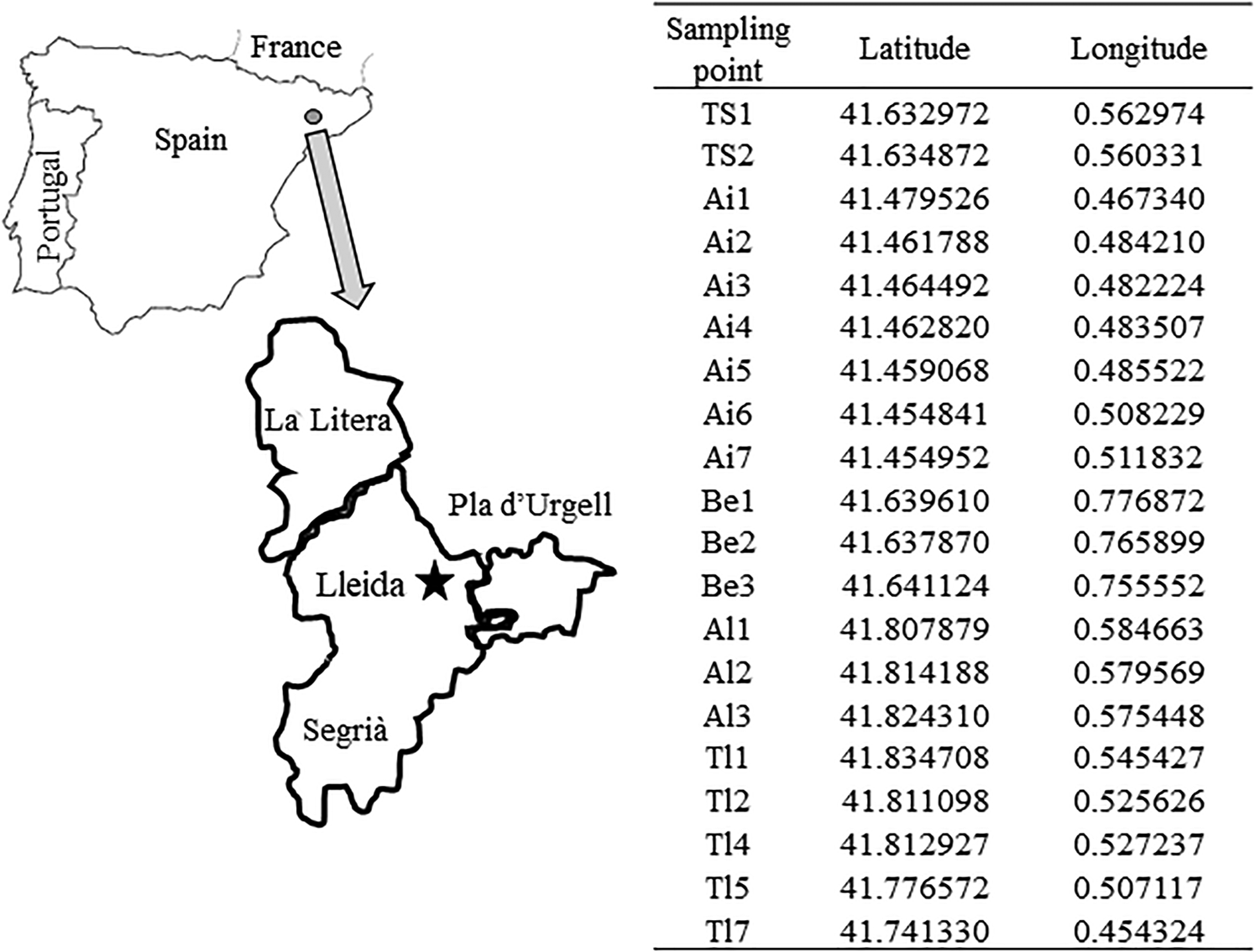
The survey was conducted from early March (week 11) to the third week of May 2017 (week 21) at 20 sampling sites in the Segrià, Pla d'Urgell and La Litera counties (North East of Spain), which has an area of approximately 20,000 ha of apple and peach orchards (DARP, 2020; Gobierno de Aragón, 2020). The sites were selected to be representative of the orchard vegetation and were within an area of approximately 400 km2 (fig. 1). All sites were visited fortnightly, and plant species in full-bloom were recorded. At each sampling site and date, one sample was taken. It consisted of beating separately three bunches of flowers of each plant species in bloom on a 30 × 17 cm2 white plastic tray. The number of hymenopteran parasitoids, Coccinellidae, Chrysopidae, Anthocoridae, Aeolothripidae, aphids and phytophagous thrips (hereafter thrips) in the tray were recorded. The average number of individuals of the different functional groups per tray was calculated for each sampling site, date and flower species. Hymenopteran parasitoids and Anthocoridae and Aeolothripidae specimens were collected with an aspirator and kept in 70% alcohol for identification. Parasitoids were identified when possible at the family level using the taxonomic keys of Grissell and Schauff (Reference Grissell and Schauff1990) and Hanson and Gauld (Reference Hanson and Gauld2006). Parasitoids that could not be identified were grouped as Other Parasitica. Braconidae were identified at the species level by Aparicio. Anthocoridae were identified using Péricart (Reference Péricart1972) and Aeolothripidae with the taxonomy keys of Alavi and Minaei (Reference Alavi and Minaei2018). The number of aphids and other thrips per tray was also recorded (but were not identified at the species level).
Coordinates of the 20 sampling points of the study located in Segrià, Pla d'Urgell and La Litera (North East of Spain). For reference, coordinates of the city of Lleida are 41.62026 and 0.61976.

Accessibility to nectar
Flowers of the different species were collected and placed in an ice chest cooler and transported to the laboratory, where they were inspected for the presence of nectaries. Plants were classified as harboring extrafloral or floral nectaries (unprotected or protected). Of the flowers with protected nectaries, nectar presentation was observed and classified as fully exposed or protected inside the flower. For species with nectar protected inside the flower, 20 fully open flowers of each plant species were photographed twice: one for width and one for depth measurements of the corolla under a Stereo Microscope Carl Zeiss stemi 2000C. Measurements were made with the use of ImageJ software (Rueden et al., Reference Rueden, Schindelin, Hiner, DeZonia, Walter, Arena and Eliceiri2017).
Similarly, measurements were made on the width of the head and the thorax of several natural enemies of aphids and thrips already sighted in the study area (Aparicio et al., Reference Winkler, Wäckers, Kaufman, Larraz and van Lenteren2019, Reference Aparicio, Riudavets, Gabarra, Agustí, Rodríguez-Gasol, Alins, Blasco-Moreno and Arnó2021; Rodríguez-Gasol et al., Reference Rodríguez-Gasol, Avilla, Aparicio, Arnó, Gabarra, Riudavets, Alegre, Lordan and Alins2019), including: Aphidius matricariae Haliday, Aphidius ervi Haliday, Lysiphlebus testaceipes Cresson, (Hymenoptera: Braconidae), Aphelinus abdominalis Dalman, Aphelinus mali Haldemann, (Hymenoptera: Aphelinidae), Aphidoletes aphidimyza Rondani (Diptera: Cecidomyiidae), Orius majusculus Reuter (Hemiptera: Anthocoridae) and Aeolothrips intermedius Bagnall (Thysanoptera: Aeolothripidae). O. majusculus were obtained from the colony kept in the IRTA laboratory. A. mali and A. intermedius were collected in the field, and the other species were purchased from AgroBio S.L. (Almería, Spain). Ten females and ten males randomly selected from each species were used.
Data analysis
The mean number of individuals from each parasitoid and predator family for all the sampling dates and sites was used to calculate the Shannon's diversity index (H′) for each plant species: ${H}^{\prime} = \sum\nolimits_{i = 1}^S {-( P_i \times \ln P_i) }$ , where Pi is the proportion of the mean number of individuals of family i vs. the mean number of individuals of all the natural enemies recorded in this plant species, and S is the number of families encountered. This index was calculated using the Paleontological Statistics Software Package for Education and Data Analysis (PAST) (Hammer et al., Reference Hammer, Harper and Ryan2001). For males and females of the selected natural enemies, the Student's t test (P < 0.05) was used to test whether the thorax was wider than the head.
Results
Survey of flowering plants and natural enemies
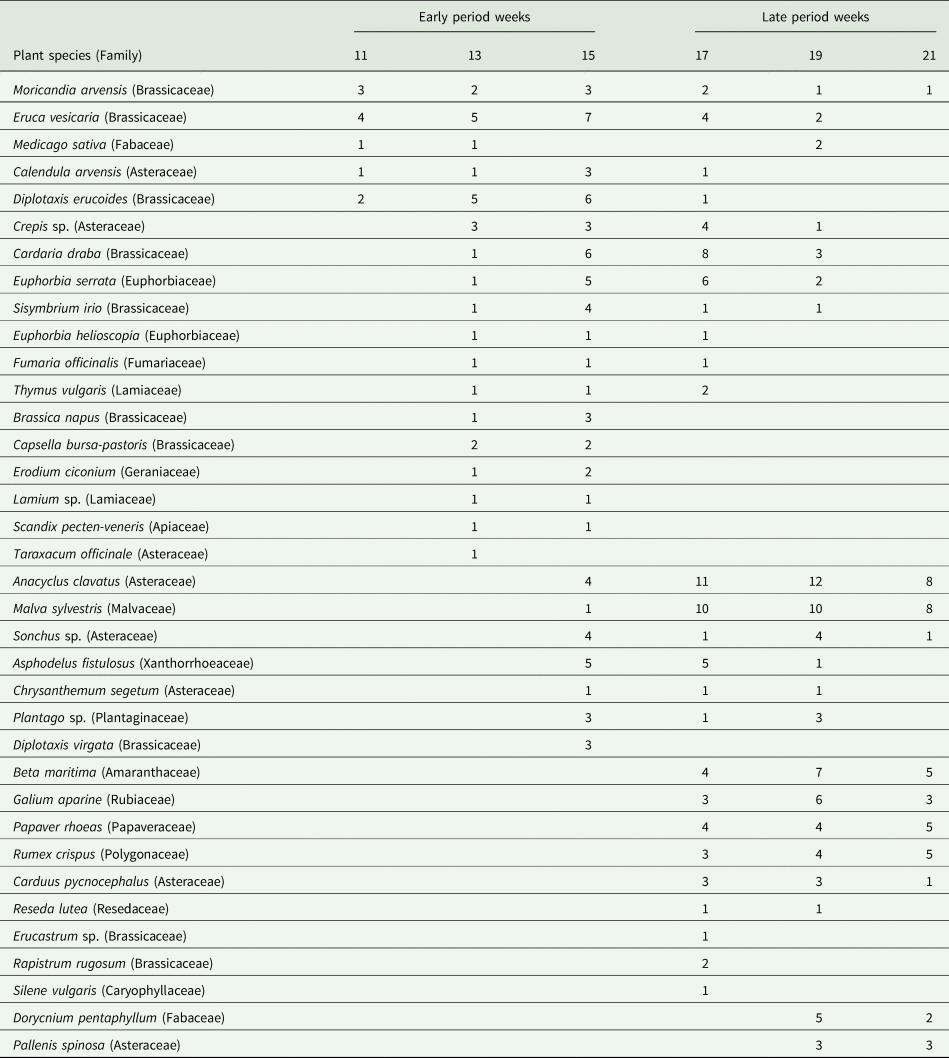
A total of 36 spontaneous growing herbaceous species belonging to 17 families were found to be blooming during the sampling period in the close surroundings of the fruit tree orchards in Lleida (table 1). Many blooming plants belonged to Brassicaceae and Asteraceae (ten and eight species, respectively), whereas Fabaceae, Euphorbiaceae and Lamiaceae had only two species each in bloom. The remaining 12 families included only one species. Of these plants, 25 were early flowering plants (weeks 11–15) and 11 species started to bloom later (weeks 17–21). Among the early flowering plants, five of them were already in bloom in week 11 (early March) when the sampling started. Of these, Eruca vesicaria (L.) Cav., Diplotaxis erucoides (L.) DC and Moricandia arvensis (L.) DC were the most widely distributed as can be inferred by the higher numbers of sampling sites where they were found. Additionally, E. vesicaria and M. arvensis had an extended flowering period that lasted until weeks 19 and 21, respectively. Cardaria draba (L.) Desv, Euphorbia serrata (L.) S.G. Gmel., Crepis sp. L. and Sisymbrium irio L. extended their flowering period from week 13 to week 19. Of those plant species that started to bloom later, Anacyclus clavatus (Desf.) Pers. and Malva sylvestris L. bloomed from week 15 to week 21 and were present in many sampling sites. Of the plants that bloomed by week 17, Beta maritima L., Galium aparine L., Papaver rhoeas L. and Rumex crispus L. were the most prevalent.
Number of sample sites where each of the plant species was recorded in full bloom during the sampling weeks

Twenty sampling sites were visited on each sampling date. Plant species are ordered from early to late and from longest to shortest flowering period.
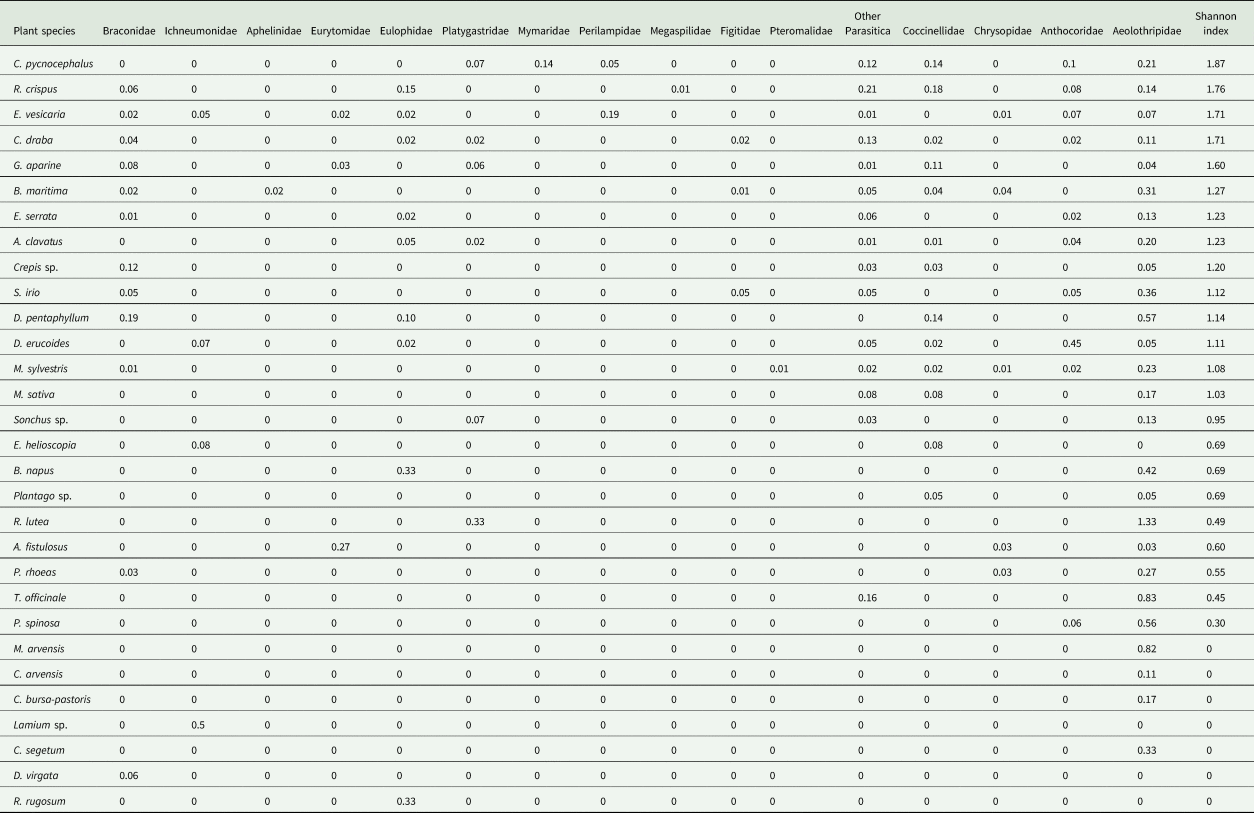
Natural enemies were collected from 30 plant species and accounted for 145 parasitoid and 285 predator individuals (table 2). No natural enemies were recruited from six plant species: namely, Fumaria officinalis L., Thymus vulgaris L., Erodium ciconium (L. et Juslin) L'Hér., Scandix pecten-veneris L., Erucastrum sp. (DC.) C. Presl and Silene vulgaris (Moench) Garcke, and were therefore not included in table 2 or further analysis. No parasitoids were found in association with M. arvensis, Calendula arvensis L., Capsella bursa-pastoris (L.) Medik., Chrysanthemum segetum L., Plantago sp. L. and Pallenis spinosa (L.) Cass. On the other hand, no predators were recruited from Lamium sp. L., Diplotaxis virgata (Cav.) DC. and Rapistrum rugosum (L.) All. The Shannon biodiversity indexes were higher than 1.5 for the following five species – Carduus pycnocephalus L., R. crispus, E. vesicaria, C. draba and G. aparine – with values reaching up to 1.87.
Abundance of natural enemies (mean number of individuals over all sampling sites and dates) and value of Shannon's diversity index for each plant species

Plant species are ordered from higher to lower Shannon index.
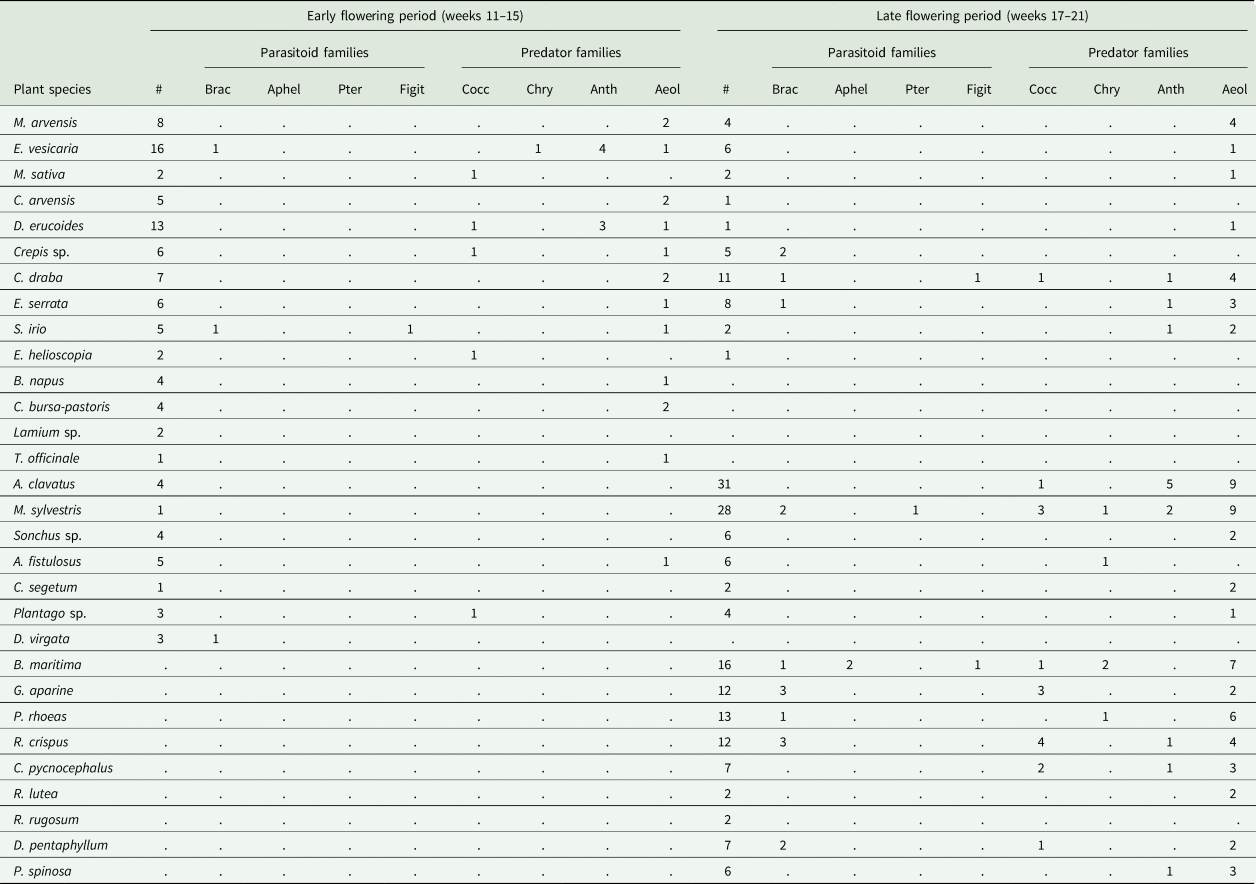
Table 3 depicts the number of samples in which families of natural enemies known to be associated with aphids or thrips were found. The number of plant species where the presence of Braconidae and Aphelinidae families were recorded increased from three to nine from the first sampling period (weeks 11–15) to the second sampling period (weeks 17–21), as did the number of samples with at least one individual (from 4 to 21). Of the 30 recruited parasitoids that belonged to the abovementioned families, 28 were identified as Braconidae and two as Aphelinidae. Among the Braconidae, 24 individuals were classified as belonging to the Aphidiinae subfamily: ten A. matricariae, five Binodoxys angelicae Haliday (Hymenoptera: Braconidae), four Aphidius sp., three A. ervi and two Aphidius colemani Dalman (Hymenoptera: Braconidae). Moreover, three Figitidae and one Pteromalidae, known as hyperparasitoids of aphids, were recruited during the sampling. Aeolothripidae were the most prevalent predators in both sampling periods. They were reported from 12 and 20 plant species and in 17 and 35% of the samples, in the first and second sampling periods, respectively. Out of the 205 Aeolothripidae individuals collected in the samples, 88 were identified at the species level. Half of them corresponded to A. intermedius, and the other half to Aeolothrips tenuicornis Bagnall (Thysanoptera: Aeolothripidae). Other predators were much less widespread, making up less than 10% of the samples. Concerning the 41 individuals belonging to Anthocoridae, Orius spp. was the most abundant genus. A sample of 26 individuals was identified at the species level: 20 O. majusculus and six Orius laevigatus Fieber. Additionally, 33 ladybirds and six lacewings were recruited. During the samplings, aphids or phytophagous thrips were found in all the flowering plants with potential natural enemies, except in Lamium sp. For all plant species, the average values of aphids and thrips was highly variable depending on the sampling sites and dates. Pooling together all sampling sites and dates, Medicago sativa L. hosted the highest number of aphids (11.2 ± 10.3) and Brassica napus L. the highest number of thrips (10.2 ± 1.9).
Total number of samples (#) and samples with presence of target families that include important natural enemies of aphids and thrips during the early and late flowering periods

Parasitoids: Braconidae (Brac), Aphelinidae (Aphel), Pteromalidae (Pter) and Figitidae (Figit). Predators: Coccinellidae (Cocc), Chrysopidae (Chry), Anthocoridae (Anth) and Aeolothripidae (Aeol). For an easier table reading, zeros have been replaced by points. Plant species are ordered from early to late and from the longest to shortest flowering period.
Accessibility to nectar
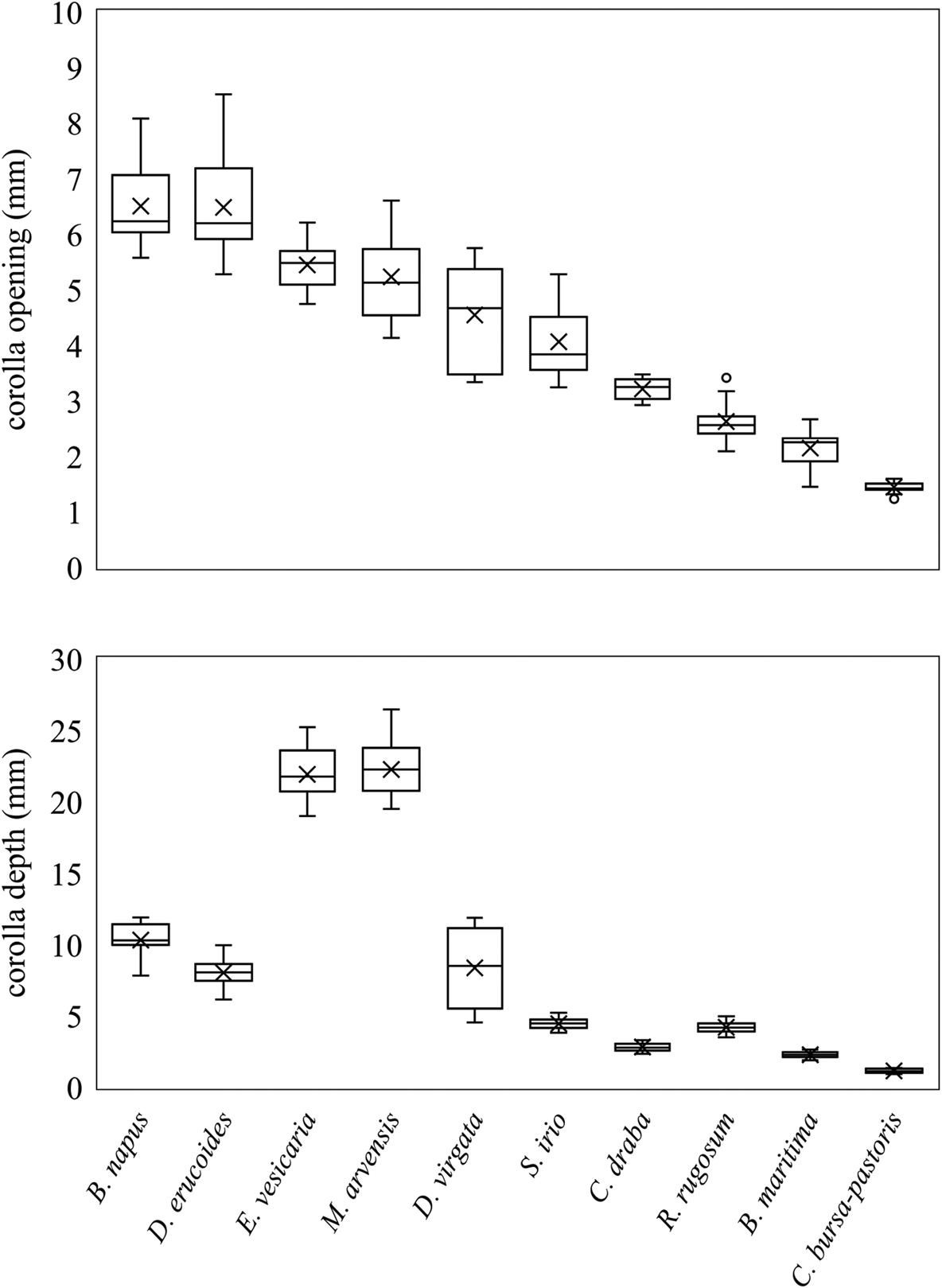
No nectaries were observed in three out of the 36 plant species sampled (P. rhoeas, Plantago sp. and R. crispus), and four species presented extrafloral nectaries (Dorycnium pentaphyllum Scop., M. sativa, Euphorbia helioscopia L. and E. serrata). Unprotected floral nectaries were only recorded in G. aparine, whereas all the remaining plants had more or less protected nectaries. Additionally, nectar was observed on the outer surface of the flower as an exudate in M. sylvestris, Asphodelus fistulosus L. and Lamium sp., although nectaries were classified as partially protected. Similarly, nectar exudates were also present outside the florets of some Asteraceae with protected nectaries (A. clavatus, Crepis sp., C. pycnocephalus, Taraxacum officinale (L.) Wiggers and Sonchus sp. L.). For the Asteraceae species (C. arvensis, C. segetum and P. spinosa) and for the Resedaceae species (Reseda lutea L.), nectar exudate was not observed. In the other ten species belonging to Brassicaceae and Amaranthaceae, nectaries were protected or partially protected, and nectar was not observed on the surface of the flower, and the width and depth of their corolla were measured (fig. 2). The narrowest corolla opening was measured in C. bursa-pastoris (1.22–1.59 mm), whereas B. napus (5.56–8.07 mm) and D. erucoides (5.27–8.51) had the widest corolla opening. C. bursa-pastoris also had the shallowest corolla (with a mean of 1.11 mm), and M. arvensis and E. vesicaria presented the deepest (with means of 22.23 and 21.89 mm, respectively).
Box plot of flower corolla opening and depth measures of the ten plant species that have their nectaries partially protected. In the X-axis, plant species are ordered from widest to narrowest corolla opening.

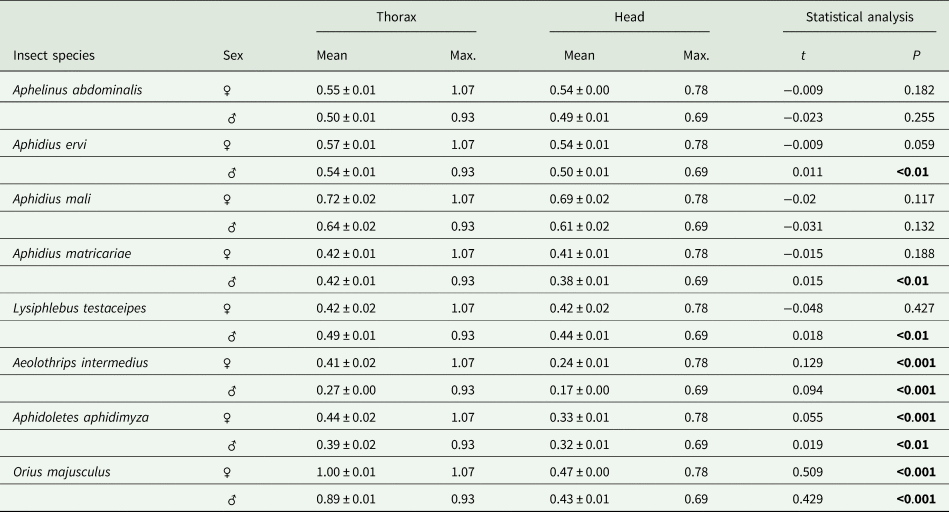
Table 4 depicts the values of head and thorax width for female and male parasitoids and predators, which in all cases were less than 1.22 mm (the narrowest corolla opening). For the three measured predators, the thorax was always significantly wider than the head. For the parasitoids, the thorax of the female was not significantly wider than the head. By contrast, the thorax of males was significantly wider than their head for A. ervi, L. testaceipes and A. matricariae.
Mean (±SE) and maximum (Max.) size (mm) of thorax and head width of selected insect species (n = 10)

Bold values indicate significant differences.
Discussion and conclusions
In our study, 36 plant species were found blooming during the sampling period, providing a continuous flowering period that might ensure food resources for natural enemies from early March to late May . Target pests in our study were aphids and thrips that start inflicting damage from early spring. Therefore, plants flowering in late winter and early spring are needed. An early establishment of wildflowers on crop margins will provide benefits to various groups of insects as a significant number of natural enemies disperse outside the refuge and colonize adjacent crops before and during the initial accumulation of the pest population (Corbett and Rosenheim, Reference Corbett and Rosenheim1996). Many of the early flowering plants close to fruit orchards belonged to Brassicaceae and Asteraceae families, which was in agreement with data reported by Alins et al. (Reference Alins, Lordan, Rodriguez-Gasol, Belmonte, de Linares, Alegre, Arnó, Avilla and Sarasúa2019) from the same area. In fact, from the five species that were found in bloom at the beginning of the sampling, three were Brassicaceae (M. arvensis, E. vesicaria and D. erucoides) and one was Asteraceae (C. arvensis). These species bloom early when temperatures are still low and can keep on flowering up to the first summer months (Alins et al., Reference Alins, Lordan, Rodriguez-Gasol, Belmonte, de Linares, Alegre, Arnó, Avilla and Sarasúa2019). Species of Brassicaceae and Asteraceae have also been included in several seed mixtures used either in flower margins or ground covers in orchards (e.g., Pfiffner et al., Reference Pfiffner, Cahenzli, Steinemann, Jamar, Bjørn, Porcel, Tasin, Telfser, Kelderer, Lisek and Sigsgaard2019).
Only five plant species had Shannon's diversity index values between 1.5 and 3.5, which comprise the common values of this index (Magurran, Reference Magurran2004), and another ten had values slightly above or equal to 1. Therefore, diversity of target natural enemies, collected during the samplings of the flowering plants can be considered in general low. Values were probably influenced either by the sampling period (March–May) when temperatures are still low in the area, a condition that reduces insect activity, and by the method used (beating), which only allows the evaluation of the insects present at a given time. It can be assumed that greater diversity of natural enemies in naturally occurring plants close to the crop may play a crucial role in maintaining ecosystem services and would lead to better pest control (Bàrberi et al., Reference Bàrberi, Burgio, Dinelli, Moonen, Otto, Vazzana and Zanin2010; Balzan et al., Reference Balzan, Bocci and Moonen2014). Therefore, these 15 plants with Shannon indexes higher than 1 can become functional allies to attract beneficial species to the orchards.
Records of natural enemies on plant species can be used as a proxy for plant attraction (Thomson et al., Reference Thomson, Sharley and Hoffmann2007) and enables comparisons among them to select candidates to congregate and provide resources to the natural enemies of interest. Target natural enemies that can be useful to control aphids and thrips were found in a large number of the sampled plant species, which could indicate their potential to contribute to the establishment of these natural enemies in fruit orchards. Regarding parasitoids, Braconidae was the earliest in the season and the most widely distributed (found on more plant species and more samples), with A. matricariae being the most abundant. This is a positive result since this species is by far the main parasitoid species attacking M. persicae and D. plantaginea in the surveyed area (Aparicio et al., Reference Aparicio, Gabarra, Riudavets, Starý, Tomanović, Kocić, Pujade Villar, Ferrer Suay, Cuesta Porta and Arnó2019; Rodríguez-Gasol et al., Reference Rodríguez-Gasol, Avilla, Aparicio, Arnó, Gabarra, Riudavets, Alegre, Lordan and Alins2019). Other aphid parasitoids mentioned in these two studies (A. colemani and A. ervi) were also found during the present samplings visiting flowers at the border of orchards. Finally, B. angelicae has also been reported to parasitize D. plantaginea and M. persicae (Kavallieratos et al., Reference Kavallieratos, Tomanovic, Stary, Athanassiou, Sarlis, Petrovic, Niketic and Veroniki2004; Dassonville et al., Reference Dassonville, Thiellemans and Gosset2013). By contrast, individuals from the Aphelinidae family were detected only in two samples of B. maritima. It is worth noting that A. mali, the main parasitoid of E. lanigerum in the area sampled (Lordan et al., Reference Lordan, Alegre, Gatius, Sarasúa and Alins2014; Rodríguez-Gasol et al., Reference Rodríguez-Gasol, Avilla, Aparicio, Arnó, Gabarra, Riudavets, Alegre, Lordan and Alins2019), belongs to this family.
Predatory, Aeolothripidae were recruited from more plant species and a higher number of samples. The high abundance of Aeolothripidae may be biased by the sampling method used since predatory thrips spend most of their life cycle in flowers, feeding on prey and pollen (Bournier et al., Reference Bournier, Lacasa and Pivot1978). Pizzol et al. (Reference Pizzol, Reynaud, Bresch, Rabasse, Biondi, Desneux, Parolin and Poncet2017) reported the presence of several species of Aeolothrips in many naturally occurring plants, including many of the ones sampled in the current study. Other predators reported in our survey (i.e., Coccinellidae, Chrysopidae and Anthocoridae) were by far much less abundant and widespread but also present in the early flowering period. They are frequent visitors of flowers when searching for pollen and nectar to complement their diets, especially when prey is scarce (Wäckers, Reference Wäckers, Wäckers, van Rijn and Bruin2005).
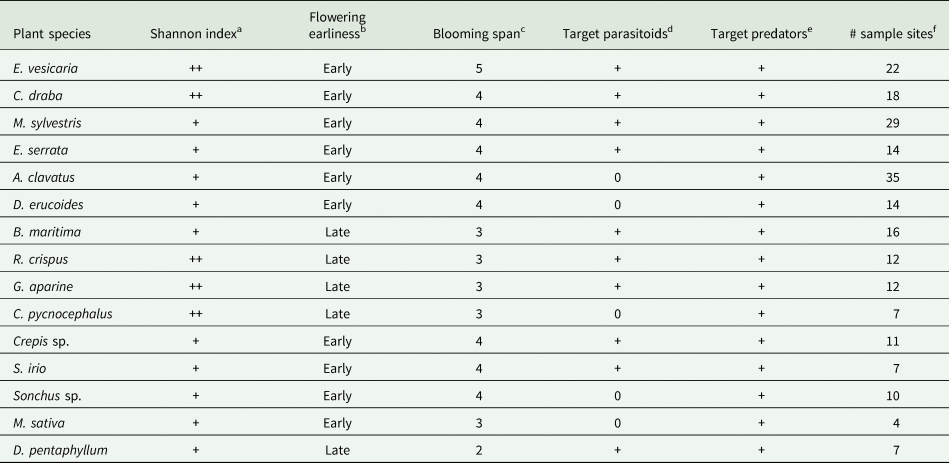
The criteria considered to select appropriate plant species to enhance target natural enemies are summarized in table 5. Four plant species arose as the most promising candidates (i.e., E. vesicaria, C. draba, E. serrata and M. sylvestris). They had a high diversity index, and their blooming started early in the season and lasted for several sampling weeks. Furthermore, they attracted the target natural enemies of aphids and thrips and were widely distributed. Additionally, A. clavatus and D. erucoides demonstrated similar characteristics although parasitoids were not recruited from them. Out of these species, three of them belonged to Brassicaceae. Numerous studies demonstrate the benefits of the Brassicaceae for natural enemies (Araj et al., Reference Araj, Shields and Wratten2019; Badenes-Pérez, Reference Badenes-Pérez2019). Their nectar favored the longevity and fertility of parasitoids, such as Diadegma insulare Cresson (Hymenoptera: Ichneumonidae), and Cotesia marginiventris Cresson and Diaeretiella rapae Mcintosh (Hymenoptera: Braconidae) (Idris and Grafius, Reference Idris and Grafius1997; Johanowicz and Mitchell, Reference Johanowicz and Mitchell2000; Araj and Wratten, Reference Araj and Wratten2015).
Summary of criteria used to select flowering species from those present in sampled area

(a) Only flowering plants with Shannon index higher or equal to 1 are listed. Two categories of the index were defined: H ≥ 1.5 (++), 1.5 > H ≥ 1(+). (b) Flowering earliness refers to the period when blooming started: early (weeks 11–15) and late (weeks 17–21). (c) Blooming span stands for the number of sampling weeks when the plant was found in bloom. (d & e) The presence of target parasitoids belonging to Braconidae and Aphelinidae families and predators are identified with +. (f) # sample sites indicate the total number of sites across the whole sampling where the plant was recorded in bloom.
According to our results, the six selected plant species (E. vesicaria, C. draba, M. sylvestris, E. serrata, A. clavatus and D. erucoides) have nectar available to natural enemies. Comparison of the measures of flowers on the first three mentioned species (Brassicaceae) with measures of insects proved that their floral architecture should not be an impediment for tested target natural enemies to access nectar. For E. serrata, Papp (Reference Papp2004) already mentioned the presence of extrafloral nectaries, and an open corolla was reported by Comba et al. (Reference Comba, Corbet, Hunt and Warren1999) for M. sylvestris. Finally, in the current study, nectar exudates were observed outside the florets for A. clavatus.
Measurements of the flower and the width of insect heads and thorax have been used on numerous occasions to evaluate the accessibility of flower nectar to insects (e.g., Patt et al., Reference Patt, Hamilton and Lashomb1997; Nave et al., Reference Nave, Gonçalves, Crespí, Campos and Torres2016; Villa et al., Reference Villa, Santos, Mexia, Bento and Pereira2017). However, all sampled nectar-producing plants during the study had nectar easily available for all tested natural enemies, suggesting that comparison of measures of insects and flowers would not be a useful criterion for the selection of plants able to promote natural enemy populations. Additionally, for some insects, neither the thorax nor the head would be valid measures to evaluate the capability of an insect to penetrate the flower. Adults of the predator A. aphidimyza cannot access the nectaries at the bottom of the open flowers of L. maritima not due to their head or thorax width but due to their wide leg span (Aparicio et al., Reference Aparicio, Gabarra and Arnó2018). Winkler et al. (Reference Winkler, Wäckers, Kaufman, Larraz and van Lenteren2009) also stated that the ability to feed does not only depend on floral architecture and insect size, but also on other factors, such as searching behavior. Furthermore, the availability of nectar does not guarantee that the insects feed on nectar. Other factors, such as the morphology of insect mouthparts, gustatory response to these sugar and capacity to digest and metabolize them, could affect the exploitation of nectar (Wäckers, Reference Wäckers2004, Reference Wäckers, Wäckers, van Rijn and Bruin2005).
In conclusion, 36 plant species were found blooming during the sampling period (from early March to late May), which provided an array of flowers that attracted several families of natural enemies and which might ensure food resources for them. Among them, six species arose as candidates to enhance a complex of predators and parasitoids targeting aphids and thrips: E. vesicaria, C. draba, M. sylvestris, E. serrata, A. clavatus and D. erucoides. It is worth to note that, according to our results, these six species are not important refugee of aphids and thrips, and to our knowledge, or of other key pests in orchards such as Tortricidae. This selection does not exclude other potential candidates being included in ecological infrastructure for specific needs. For example, B. maritima could be of special interest in apple orchards since it was the only species recruited from Aphelinidae. Little is reported in the literature regarding the effects of such plant species on the biology of natural enemies. D. erucoides increases the longevity and parasitism rate of A. colemani on M. persicae (Jado et al., Reference Jado, Araj, Irmaileh and Shields2018), and it also increases the longevity, egg load, fecundity and the parasitism rate of Eretmocerus mundus Mercet (Hymenoptera: Aphelinidae) on Bemisia tabaci (Gennadius) (Hemiptera: Aleyrodidae) and of D. rapae on Brevicoryne brassicae (L.) (Hemiptera: Aphididae) (Araj and Wratten, Reference Araj and Wratten2015; Araj et al., Reference Araj, Shields and Wratten2019). M. sylvestris increases the survival of females of Elasmus flabellatus Fonscolombe (Hymenoptera: Eulophidae), a major parasitoid of Prays oleae Bernard (Lepidoptera: Praydidae), compared to other candidate flowers (Villa et al., Reference Villa, Santos, Mexia, Bento and Pereira2017), and of Episyrphus balteatus De Geer (Diptera: Syrphidae) (Pinheiro et al., Reference Pinheiro, Torres, Raimundo and Santos2013), an important aphid predator widely present in apple and peach orchards in the studied area (Rodríguez-Gasol et al., Reference Rodríguez-Gasol, Avilla, Aparicio, Arnó, Gabarra, Riudavets, Alegre, Lordan and Alins2019). Therefore, further studies are needed to determine the benefits of such flower rewards on several fitness parameters before verifying their contribution to the biological control of aphids and thrips in fruit orchards.
Acknowledgements
This research was supported by the Spanish Ministry of Economy and Competitiveness (Project AGL2016-77373-C2-1-R and PID2019-107030RB-C21) and the CERCA Programme/Generalitat de Catalunya. BECAL-PY funded the PhD grant of C. Denis. We are in debt to the colleagues who helped with insect identification: namely, Dr Valmir Antonio Costa (Instituto Biológico of Campinas, Brazil) for identifying parasitoids at the family level; Dr Yahana Aparicio (IRTA, Spain) for identification of Aphidiinae species; and Dr Alfredo Lacasa (IMIDA, Spain) for identification of Aeolothripidae species. We also wish to express our gratitude to our colleagues in IRTA: Dr Oscar Alomar for reviewing an early version of the manuscript and Pili Hernández and Victor Muñoz for their technical support.