Since the late 1980s and Elaine Showalter's influential Sexual Anarchy, it has become axiomatic to read Bram Stoker's Reference Stoker and Hindle1897 novel Dracula as a text that responds to anxieties of degeneration through metaphors of infection (184). Given the obvious sexual nature of the threat represented by the vampire, critics have focused on syphilis as the text's most immediate disease of reference. They have identified many important correspondences between Stoker's text and racialized fears of decline through blood and bloodlines, drawing connections between Stoker's own possible demise from syphilis, the history of contagious diseases legislation, and the scandal surrounding Ibsen's Ghosts (1882). But, as Martin Willis has noted, there continues to be “a need to reassess Dracula within the contexts of disease theories that allows for a more historically rigorous analysis of the novel” (302).
There are many possible approaches to such a re-evaluation of Stoker's famous work, despite the risk they carry of depoliticizing feminist, queer, and postcolonial engagements with the novel by shifting away from what Christopher Craft terms “errant erotic impulses and compensatory anxieties” (71). Willis himself advocates a kind of surface reading, arguing that “Dracula’s engagement with disease is so very apparent in the novel. . .that there is a critical desire to reach beyond its seeming superficiality to uncover the metonymic and metaphorical ‘meanings’ of disease in alternative medical practices and debates” (302).
My approach continues to historicize the novel's treatment of disease and science but insists that such historicization has deep implications in terms of both politics and genre. I argue that Stoker's dialogue with an emerging awareness of parasitic infection, especially malaria, and its relationship to blood in the 1890s serves as a focalizer for the different theories and types of infection that Stoker marshals, including syphilis and tuberculosis.Footnote 1 Parasitism highlights a mode of contagion that not only integrated itself into the bodies of its victims and the body politic as a whole, but also enabled a seemingly permanent bodily transformation and a seemingly endless process of replication that was all the more threatening – and all the more exciting – to readers because it did not necessarily involve finality. Dracula's own longevity, as well as the way in which he is and is not the person he was before his transformation, bears witness to this phenomenon, which destabilizes the self but, in so doing, replaces it with a more stable alternative self. The parasite, in short, not only resides within the body, but also alters its relationship to the outside world.
Because the study of parasites was so closely linked to the Empire and to the establishment of the discipline of tropical medicine during this period (with the School of Tropical Medicine in London being founded in 1899), this approach makes the novel's imperial dimension even more significant. For instance, in his influential 1897 British Medical Journal article “Remarks on the Possibility of the Acclimatisation of Europeans in Tropical Regions,” Italian scientist Louis (Luigi) Westenra Sambon actually calls colonization a form of parasitism (66). Sambon – who later taught at the London School of Tropical Medicine and whose name suggests a possible origin for Lucy Westenra's – reminds readers, “If colonisation in the past has proved to be a work of mere destruction, it is not a reason to suppose that it must be so in the future,” adding, “we must not forget that every attempt at colonisation is a campaign not only against man, but against a host of minute living organisms far more fearful” (66).
Malaria, in particular, was imbricated in discourses of healthy and unhealthy geography that directly feed the antagonistic distinctions between East and West through which the novel operates.Footnote 2 At the time Dracula was published, malarial transmission was both mysterious, implicated in older (but still extant) disease theories of miasma, and suspected of being mosquito-borne. Miasmas themselves were strongly associated with distant or non-British space, which had yet to be subject to the hygenizing processes of draining and clearing that marked British and imperial environments. Germ theory, by contrast, saw individuals, rather than geographies as a determining factor in the spread of infection (Edmond 113). Stoker capitalizes on the ambiguity between different disease models to heighten the narrative tension around infection and its origins. The novel shows how both people and geographies are potentially mobile, which is why Dracula must transport not only himself but also his land when he moves from Transylvania to Purfleet.
Because many of the major breakthroughs in understanding parasitic infection involved a study of animal vectors – such as the Anopheles mosquito, with its long proboscis – this approach also bolsters queer readings of the text that consider men's desire to be penetrated and, simultaneously, their fear of the ramifications of penetration. The effect is to enhance the connection between blood-sucking and homosexuality as complementary forms of “perversion of appetite” (Symonds 1). Through a symbolic fertilization process that mimics penetration by spermatozoa, parasitic transmission is simultaneously through ejaculatory injection and a drawing of vital fluid from the passive victim's body. Infection is therefore a perverse process of male creation.
Finally, situating Dracula in terms of emerging medical interest in parasites as the cause of human disease provides an additional explanation for the efficacy of Stoker's formula of science and the supernatural as a powerful emotive for imperial anxieties about decline and reverse colonization;Footnote 3 for its investment in the idea of the bounded nation as a defense against immigration (especially that of Jews, who were often likened to parasites); and for its reliance on a model requiring an Anglo-American/Northern European alliance to control colonization and to govern geopolitics.
I also argue that Stoker's interest in malaria, with its emphasis on host-parasite relationships and its shape-shifting protozoa engaged in a varied cycle of reproduction, serves as a metaphor for the very form of the novel in a number of ways. First, his use of bricolage and multiple strains of narration – techniques that would become familiar patterns of modernist writing – partly mimics the relationship between amoeba and host. In much the same way that Michael Tratner argues that modernist writers were influenced by sociopolitical concepts of the collective, this essay suggests that the ideas of temporal cycles, morphological changes, infection and propagation suggested by protozoan disease provide a template for fin-de-siècle and modernist writers’ diegetic and formal experiments with time, space, and motion. Second, malaria elucidates the relationship between science, popular culture, and the reading public by clarifying how developments in medicine could be – and were – refracted in narrative in order to raise tensions and sustain suspense. Finally, malaria offers a way of understanding how the text functions as a body of writing to be acted on by agents that are ostensibly both internal and external to it – agents that actively blur the distinction between different narrative forms (the novel, the newspaper, the medical report, the diary, etc.) and in so doing actively perform vampirism on these genres so as to co-opt them.Footnote 4
Textual parasitism reframes literary-critical discussion of the novel in the related areas of form and context at the fin de siècle. Parasitic relations dominate not only the plots of a number of bestselling 1890s novels, but also their relationships to other texts and genres. This parasitism emerges primarily in works of popular fiction in part because their popularity makes it more natural for them to channel cultural anxieties through tropes of monstrosity, vampirism, infection, mesmerism, and exotic alterity. Parasitic relations also fulfill this function in part because their aesthetic practice places less emphasis on notions of originality and credibility than their more elite cousins.
The Parasitic Parameters of Genre
Many critics have commented on the sources – historical and literary – that Stoker uses in designing his novel. For example, Craft notes:
In Dracula, Stoker borrows from Mary Shelley's Frankenstein, Robert Louis Stevenson's Dr. Jekyll and Mr. Hyde, and Le Fanu's Carmilla a narrative strategy characterized by a predictable, if variable, triple rhythm. Each of these texts first invites or admits a monster, then entertains and is entertained by monstrosity for some extended duration, until in its closing pages it expels and repudiates the monster and all the disruption that he/she/it brings. (71–72)
What has been less noticed, however, is the way in which these borrowings replicate models of infection. Indeed, Craft's “rhythm” could equally be described as one of contact with monstrosity, infection by monstrosity, and recovery from monstrosity. The value of this pattern – and its resonances in the novel's build-up, climax, and dénouement – lies in its greater violence, both with respect to source texts and with respect to textual events. Parasitism presupposes a hostile relationship with literary hosts and means that the resulting work is itself monstrous. The infection is also carried across a community of readers, who themselves are transformed through the act of reading. These forces make the parasitic text an open text, subjected in turn to further replication or parasitism. (This factor helps explain why Dracula has spawned such diverse offspring – some of which, like Stephanie Meyers's Twilight series, retain its conservative sexual and racial impulses, while others, such as Anne Rice's The Vampire Diaries, harbor more radical potential.) Parasitism's association with vectors, which obliquely link together different types of bodies, also suggests a paradigm of intertextuality that does not assume generic conformity. In Dracula, this paradigm manifests itself in two ways: first, through the fact that borrowings occur from multiple genres, rather than being restricted to fiction or even the “literary,” and second through a technique of narrative construction that invites the reader to find vectors between the different registers of information – diaries, newspaper clippings, witness statements, telegrams, and the like – that Stoker uses to craft his tale.
Like the parasite, Dracula draws blood from a range of non-fictional and fictional progenitors, including the adventure tale, the penny dreadful, the mystery novel, and sensation fiction. For instance, Stoker cribs some elements of the novel's structure from Wilkie Collins's The Moonstone (1868), which also solves a mystery through multiple narrative strands often reported in the form of testimony. The unconventional medical practitioner – Ezra Jennings in The Moonstone and Van Helsing in Dracula – is central to the resolution of the narrative. Dracula also reiterates mystery fiction's conviction that the conventional police are inept or otherwise unable to solve crimes, and that a group of individuals only loosely connected to the profession of detection needs to be constituted in its place. This contention was a standard feature not only of Collins's work, but also of Arthur Conan Doyle's Sherlock Holmes stories.
Other elements are sucked from sensation fiction's repertoire of melodrama and emotional excess. These include an interest in hysteria and monomania, evinced most powerfully in the characterization of Renfield, but also in that of Mina and Lucy's mother. Sensation's stock element of bigamy also informs readers’ perceptions of Lucy's multiple suitors. However, Lucy's punishment for imagined promiscuity differs from that of a character like Lady Audley in that she must be bled of her sexual excess through vampiric attack. Thus, on a diegetic level, the parasitic trope functions as a way to drain women of their sexuality in what is a clear repudiation of the New Woman.
From the adventure tale, Stoker pulls the notion of the quest, with its ritual ending in heterosexual romance and procreation, as well as the concept that this type of novel should be part travelogue and should engage in ethnological explication. This latter aspect is most apparent in the early pages of the work when Jonathan Harker travels to Transylvania to meet the count and gives detailed descriptions of the manners and customs of the peoples he encounters. In this sense, Stoker taps in to a longstanding tradition in popular fiction of devaluing originality and allowing material from published travel literature to be absorbed seamlessly into the fictional text.Footnote 5 However, whereas this parasitic relationship to other literary genres might have been unremarkable in the first half of the nineteenth century, by the 1890s, it was no naive act. From the more popular end of the literary spectrum, Stoker's caricature of the vampire, his skepticism about the efficacy of the police, and his deployment of melodramatic convention all feed off the boys' fiction produced by such publications as the Boy's Own Paper and the Illustrated Police News.
My characterization of these textual moves as parasitic might suggest a negative attitude towards Stoker's engagement with the novel as genre. It is not necessarily a compliment to say that vampirism and parasitism are the hallmarks of Dracula’s experimentation with form. Similarly, when scholars discuss literature of the period that is more aesthetically appreciated – such as Joseph Conrad's Heart of Darkness (Reference Manson1898) and Robert Louis Stevenson's “The Beach of Falesà” (1892) – they see some of these same moves as gesturing towards modernism, rather than parasitism. Nevertheless, I want to reclaim the parasitic in this instance for a number of reasons: First, I believe this foregrounding of the parasitic relationship is an important feature of fin-de-siècle literature more broadly, especially in popular literature. As such, it speaks to obvious anxieties about such issues as women's roles and changing geopolitical relations (vide reverse colonization, damaging imperial skirmishes in places like the Sudan, and renewed imperial self-doubt), but it does so through metaphors of transfer and exchange that link together thematic and narrative procedures. To cite a few examples: George Du Maurier's Reference Manson1894 Trilby focuses on the parasitic relationship between the title character and the hypnotist Svengali; Svengali's control over Trilby finds echoes in the hypnotic tension between Mina and Dracula that forms a central part of the efforts to track and exterminate the vampire. Richard Marsh's The Beetle, published just after Dracula, also features shape-shifting, mesmerism, and a parasitic, Orientalized alien.Footnote 6 The Beetle shares with Dracula an interest in beings who defy the strictures of time – i.e., whose life spans are not limited in the same way as those of ordinary mortals. This resistance to aging (or longevity through reincarnation) is also the hallmark of Ayesha, the parasitic protagonist of H. Rider Haggard's She (1887), and features in several prequels and sequels, such as Ayesha: The Return of She (1905).
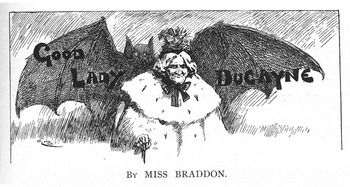
Closer to home, three roughly contemporary vampire tales confirm parasitism's utility in allowing popular writers to articulate gender and racial sentiments through an aesthetics of terror. Like Dracula, Mary Elizabeth Braddon's Reference Braddon1896 “Good Lady Ducayne” links mosquitoes, transfusion, and the undead. Again, vampirism is associated with the inappropriate transgression of women's roles and the desire to defy the processes of aging. Like Dracula, “Good Lady Ducayne” invokes questions of class exploitation, with a wealthy woman literally feeding off of and enervating a member of the servant classes. Protagonist Bella Rolleston is hired as a companion to a centenarian whose doctor secretly bleeds her in order to keep his patron alive by transfusing her with Bella's fresh, young blood. Dr Parravicini wards off Bella's questions about mysterious wounds and dreams of whirring by telling her she is susceptible to mosquitoes and informing her that she has “bad skin for healing, and that the poison acts more virulently with me than with most people” (196). Although mosquitoes are not the true cause of Bella's malaise, this reference to poison cements the connection in the reader's mind between the withdrawal of blood and the inauguration of social sickness. It also highlights what readers will soon come to understand, that Bella's neurasthenic enervation is neither of psychological origin nor rooted in personal idleness caused by her transformation from working-class girl into rich woman's companion, but stems from external forces. The story's Continental setting and its nefarious Italian doctor, reminiscent of Collins's Count Fosco in The Woman in White (1860), add a racial twist to this scenario. “Good Lady Ducayne” makes little mention of a vampire, except when Bella's future husband is shown the “mosquito” bites on her body and remarks, “What a vampire!” (193). However, the illustration preceding the original Strand magazine edition shows old Lady Ducayne in the foreground with a huge bat spreading its wings behind her and the story's title superimposed on top of the wings (185; Figure 8).
The opening image of the Strand edition of Mary Elizabeth Braddon's “Good Lady Ducayne” (Feb. Reference Braddon1896: 184). Courtesy of the University of Warwick Library.

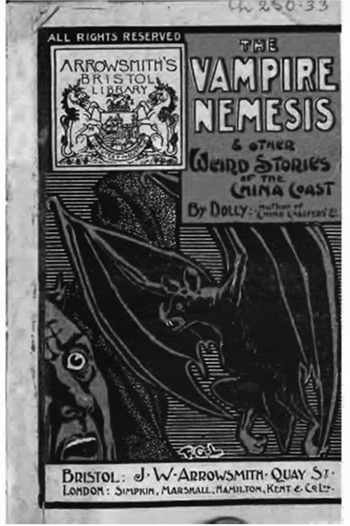
A similar picture graces the cover of the Arrowsmith Library's edition of The Vampire Nemesis and Other Weird Stories of the China Coast (1905) by Dolly (Leonard D'Oliver; Figure 9). The black, white, and red lithograph is dominated by an enormous bat with the face of its victim partly showing in the corner. Dolly's title story, originally published in the Anglo-Chinese press, is set in the British concession in Ningpo (Ningbo). It does not figure the bat as infection. Instead, the vampire serves as the vengeance incarnate for protagonist Fergusson's mistreatment of Matthews, a “half-caste” subordinate, and his mixed-race wife “May,” both of whom die through contact with him. (Fergusson steals May for his mistress.) In an interesting twist on the fiend of “Yellow Peril” literature, subsequent events lead Fergusson to believe that Matthews's soul has transmigrated into a vampire bat, which pursues retribution. Matthew's own hybridity, and hence his racial instability, underlies this potential for reincarnation and shift of form.
The cover of the Arrowsmith Bristol Library edition of Leonard D'Oliver's The Vampire Nemesis (Bristol: J. W. Arrowsmith, 1905). Internet Archive.

Like many of the other narratives discussed above, enervation is a key plot feature. In this case, Matthews becomes addicted to opium smoking, with all its associations of feminization and degeneration; he later tries to murder Fergusson, then commits suicide. Enervation also provides a means for Fergusson to attempt to evade responsibility for May's murder, after he has mistreated and tortured her in a drunken rage. At that moment, the “Thing” appears and begins “sucking her life's blood” (21). Fergusson later awakes from a stupor to find his mistress dead, with “a tiny puncture under her ear, just on the jugular vein, with a little globule of blood no bigger than a bead exuding from it; but the pillow was bathed in blood, soaked through and through” (22). It is as if Matthews has reclaimed what belongs to him through an erotically charged vampirism. The vampire nemesis eventually pursues Fergusson and leads him to his death.
Like Dracula, “The Vampire Nemesis” ostensibly eschews the supernatural but seeks to reconcile unconventional spiritual beliefs with the rational and scientific world. (Marie Corelli's 1895 Sorrows of Satan does this, as well.) “I make no doubt but that all could be readily explained away on grounds purely natural by one who had been a calm observer of the facts, if facts they were” (7), avers the narrator, Ward, who is Fergusson's best friend. These terms are strikingly similar to the statement at the beginning of Stoker's novel that the narrative has been structured so that “a history almost at variance with the possibilities of latter-day belief may stand forth as simple fact” (6). Such truth claims were standard practice in Victorian novels, but here the vampire serves the specific function of transforming the occult into the rationally plausible. Again as in Dracula, the mobility of geography enables the paradox of the vampire's mode of operation; the vampire is able to transcend the geography that supposedly contains him. “We are not in South America now. . .and there are no vampires in China,” Ward asserts, to which Fergusson replies, “Nevertheless. . .it was a vampire” (24). Stoker similarly draws connections across non-British geographical space when the character of Quincey Morris compares Dracula to the vampire bats he has encountered in South America.
Among the common traits that link “The Vampire Nemesis” to the other examples of fin-de-siècle popular fiction discussed here are the Orientalization or exoticization of threatening alterity, the instability of physical form, and the importance of blood as the transmitter of heritage. These traits are also prominent in Florence Marryat's The Blood of a Vampire (Reference Maryatt and Hammack1897). Once more, the vampire is a racially hybrid figure, signally associated with a history of insanity, who carries the “fatal heritage that made her a terror and a curse to her fellow-creatures” (213). Race and parasitism are necessarily intertwined, for Harriet Brandt is afflicted with “the curse of black blood and of the vampire's blood which kills everything which it caresses” (188; ch. 15). This Biblically inflected notion of the curse again legitimates itself through medical science; it is an elderly doctor with experience of the Caribbean, from which Harriet hails, who has the role of explaining her vampirism to the reader and to Harriet herself. A New Womanly figure, Harriet is the possessor of unnatural appetites, both physical and sexual – she is “the epitome of lust,” according to one character (86; ch. 7). She is voracious both at table and in her friendships. Early in the novel, she seems to be one of those “young unsophisticated girls” who “had taken unaccountable affections for members of their own sex” (27; ch. 3). She induces neurasthenia, if not death, in members of her circle because she is a person who “must draw from their neighbours, sometimes making excessive demands on their vitality – sapping their physical strength, and feeding upon them, as it were, until they are perfectly exhausted and unable to resist disease” (195; ch. 16). Here, Marryat explicitly ties Harriet's parasitism to disease. She not only draws strength out of a victim's body, but she also paves the way for a kind of secondary infection.
Yet Harriet's vampirism is not self-willed; she enervates and drives to extinction those whom she befriends through her mere presence. (Unwilling vampirism is also a feature of Dracula, where the vampire's bite gifts characters with uncontrollable impulses to infect others.) The realization of her parasitic effect on those she loves and her husband's death lead her to suicide so that, in the novel's final line, she can “go to a world where the curse of heredity” may be “mercifully wiped out” (227; ch. 28). Thus Marryat's plot elucidates what the dangers of contact – with alterity, with gender inconformity, and with excessive desire – are in directly parasitic terms. At one point, she even has another character claim that Harriet is an example of “[c]ases of persons who actually feed upon the lives of others, as the deadly upas tree sucks the life of its victim, by lulling him into a sleep from which he never wakens!” (95; ch. 8).
What all of these fin-de-siècle narratives have in common, then, is the not very surprising deployment of tropes of infection to carry their discussions of cultural threats to British integrity. British integrity is itself conceptualized in terms of what Laura Otis calls the imperial immune system. What makes the narratives specifically fin-de-siècle, however, is the way in which they relate this immune system directly to questions of energy and vitality. Beyond popular fiction, energy and vitality were issues that rose to great prominence during this period not only among writers such as Vernon Lee, but also among scientists and sexologists. Parasitism in particular fits this cultural frame because it gives power to outside agents – agents that not only breach the immune system but also integrate themselves with their hosts in unsettling ways. At the same time, parasitism as a literary mechanism ironically lends the texts a crucial vitality, titillating through the horror and terror of potential individual and collective enervation. The close, historicizing reading that follows examines these processes in action. It details how Dracula instances the conduits between science and popular culture and their significance to a textual politics of the Victorian social body at a moment of imperial uncertainty.
Foreign Bodies and Ordered Selfishness
The diseases underpinning the culture in which Dracula was conceived and disseminated include not just malaria and syphilis, but also cancer (thought by some to be caused by protozoa and by many to be infectious), cholera – another “Asiatic,” liquid-borne disease that, during the nineteenth century, repeatedly affected Britain's imperial core through the London water system – leprosy, and other insect-related or parasitic diseases like yellow fever, filariasis, and dengue that, while perhaps irrelevant to the health of the nation writ small, were still of crucial concern to the empire at large.Footnote 7 Plague, too, is also crucial, as it was ravaging India in 1896–97; Stoker had two brothers working in India during this period.Footnote 8
However, malaria, then as now, was seen as the leading cause of death in the tropics – especially in the regions of Africa where Britain was scrambling to acquire territory in the 1890s.Footnote 9 A large percentage of British troops in Africa and Asia were also afflicted with the disease. Then as now, malaria may have failed to grab as much attention as more spectacular, sexually transmitted diseases, but it was emphatically not a disease that was off the cultural map. As Edwin Klebs and Corrado Tommasi-Crudeli noted in the late 1880s, “Even where its intensity is not such as to cause a great annual mortality, [malaria] induces a progressive decadence of race, which no other endemic is capable of,” adding, “The preservation of society from injurious influences so grave is therefore a socio-economic problem of the first order” (1–2).
Reading Stoker's work through malaria clarifies the novel's depiction, in cultural terms, of parasite-host relations, blood-based disease transmission, and cures based on a combination of traditional knowledge and the tools of science and reason. With its incubation period, its alternate and extended periods of activity and dormancy, and its hot and cold stages, malaria almost exactly matches the symptomology of vampiric infection. Anaemia, like that suffered by the female victims of Stoker's vampire, is a common effect of the disease;Footnote 10 so are the sorts of delusions and paroxysms that afflict the maniac Renfield, who is described in Seward's diary as having a “sanguine temperament” (83; ch. 5). Remittance and intermittence – where periods of better and worse health, or lucidity and insanity, alternate – are also key characteristics of the active phase of the illness, just as they are of Lucy and Mina's slow deterioration in the novel. Moreover, contemporary descriptions of malaria, in conjunction with other diseases of the period, also highlight the fact that the word degeneration – a term of immense cultural relevance during the late Victorian period – originates not simply in racial science, but also in medicine, where it might be used to describe the deterioration of a patient's condition or changes in a patient's cells during the course of an illness. This other, overlapping usage of the notion of degeneration may explain some of the efficacy of the connection between disease and individual and imperial decline that the novel seeks to arouse, and which it refracts, in part, through an idea of medical science. Klebs and Tommasi-Crudeli's assertion that malaria incites progressive racial degeneration is particularly apt when applied to Dracula and its reliance on the notion of evolutionary or anachronistic time.Footnote 11 Like similar ideas about hereditary syphilis, it links together the text's employment of medical, evolutionary, and Orientalist discourse. The novel therefore relies on an accretion of medical malaise associated with various domestic and imperial ailments that give its vampiric threat greater resonance.
Dracula was published only months before Ronald Ross of the Indian Medical Service conclusively proved mosquitoes to be the vector of malarial transmission (in a study published in December 1897) and four years after Patrick Manson first formulated the mosquito-malaria hypothesis (in the British Medical Journal in 1894), although the initial idea of the connection between mosquitoes and malaria dates to the early 1880s.Footnote 12 By 1896, Ross was supporting Manson's theory of mosquito-involvement based on his studies in Secunderabad in work he published in the British Medical Journal.Footnote 13 Mosquitoes were also known to transmit filariasis to humans by this period, while Carlos Finlay had proposed that they were responsible for transmitting yellow fever in 1881; the connection between the “voracious” tsetse fly and “fly disease” was also becoming known.Footnote 14 “The rôle of the mosquito is beginning to be recognised; that of the tsetse is now established, and, possibly, ere long, other bloodsuckers will be found to possess similar properties, either as active agents in the biological cycle of disease germs, as in the case of the mosquito, or as media for the conveyance from one human being or from one animal to another, as in the case of the tsetse fly,” noted the British Medical Journal in 1896 (“The Tsetse Fly” 1220). The neurological phase of so-called African sleeping sickness (or “Negro Lethargy”) caused by infection through the tsetse fly, incidentally, can be characterized by sleeping during the day and insomnia at night, much like vampiric infection. Patients also refuse food, much as Mina does after she has been forced to ingest Dracula's blood. The early stages of the disease also cause symptoms of mania, which the Victorians likened to general paralysis of the insane.Footnote 15
The novel's interest in garlic as a means to keep away the vampire is also suggestive of the relationship between insects and disease. Critics have variously interpreted Van Helsing's prescription of wild garlic flowers to ward off the vampire's visits to Lucy's room. Some sources known to have been used by Stoker identify garlic as a folk treatment.Footnote 16 Meanwhile, in his analysis of the novel's disease context, Willis sees the garlic as part of Van Helsing's introduction of germ theory into a novel earlier characterized by concepts of miasma (312–13): “Surrounded by garlic flowers, a metonymy for antiseptic that combats the metaphor of vampirism as microbe, Lucy is well protected from the microbial infection that vampirism represents” (313). There are good grounds for making this argument, not the least being that Van Helsing insists on importing the garlic from a greenhouse in Haarlem. This fact is suggestive of garlic's induction into the doctor's pharmacopeia, of sterile/laboratory growing conditions to ensure its purity and efficacy, and, of course, of the scientific method underlying the “grim purpose” for placing the substance in Lucy's room (171). Yet there is also a more obvious explanation for this scene. Rubbing the garlic around the windows and hanging the flowers around Lucy's neck is suggestive of insect prophylaxis. Garlic, a substance antithetical to the British diet in the late Victorian era and generally considered to be noxious, here functions as a repellent. Such a use of garlic makes its appearance in a known source of Stoker's: Thomas Joseph Pettigrew's On Superstitions Connected with the History and Practice of Medicine and Surgery. Discussing Luis Navarrete's visit to the Philippine Islands, the book notes that a commemoration of St. George was made to keep scorpions away when sleeping. “The bed was also rubbed with garlic, which doubtless was the efficacious part of the remedy” (78).Footnote 17 It keeps away the vermin that is the vampire. Indeed, some medical texts of the period suggested the use of garlic to forestall malarial infection.Footnote 18 The bulb was also used in agriculture to keep insects away from crops (what today is called the “garlic barrier”) and was placed with grain to ward off rats.Footnote 19 Thus repelling the vampire with unsavory fumes again knits together the medical and social contexts of the novel.
If conclusive evidence of the mosquito's role in spreading malaria and other diseases was only just emerging at the time Stoker's novel appeared, nevertheless speculation on such connections was often in the air during this period. In an 1883 article entitled “Insects and Disease: Mosquitoes and Malaria” that appeared in the journal Popular Science Monthly, for instance, Professor A. F. King stated, “Viewed in light of our modern ‘germ theory’ of disease, the punctures of proboscidian insects, like those of Pasteur's needles, deserve consideration, as a probable means by which bacteria and other germs may be inoculated into human bodies, so as to infect the blood and give rise to specific fevers” (644).
King's comment offers an important window into the way in which Stoker's novel sees vampirism both as a draining of bodily and spiritual content (as the mosquito sucks the blood from its victim) and as an injection of dangerous, evil, and potentially infectious agents (as the mosquito implants the parasite, which then replicates itself in the blood of the individual). This is the conundrum that underlies the vampire kiss, which relies on the parallel processes of drawing something from the body and introducing something else into it. The text does little to clarify how Lucy and Mina are actually “turned” from the living into the un-dead (in other words, from humans into “hosts”), nor is there the suggestion that a certain concentration of an infectious agent is necessary to effect this transformation. Yet it is clear that, as with tuberculosis (another commonly identified disease referent in Dracula), repeated exposure is required, and that this exposure is seen as a mode of insemination. The suggestion of insemination is bolstered by the vampire's two elongated teeth, which bear a more than passing resemblance to the proboscises of the mosquito described above by King, proboscises which “puncture” the skin just as Dracula's fangs do. That King compares these proboscises to the hypodermic needle – similarly used to puncture, draw from, and infuse into the body – and speaks of a process of inoculation is equally predictive of the tensions the novel describes between external and internal sites of embodiment, conceived metaphorically in explicitly broad terms.
By the 1890s, work on the Continent had allowed scientists to be more secure than King was as to the cause of malaria. Studies of slides of blood taken from infected patients had confirmed that malaria was a parasite, rather than a bacterium, and accurate diagnosis became possible. Indeed, the New Sydenham Society released a translation of French doctor Alphonse Laveran's key book Paludisme in 1893, and by the time Stoker's novel began circulating, there was scientific consensus that a parasite was the cause of malarial fevers. Laveran had also suggested the possibility of the mosquito's involvement in malaria.
It is important to note that late Victorian terminology regarding the insects involved in parasitic infection differs from today's standard usage of the word “mosquito.” Medical literature of the period often refers to these insects as “gnats,” and the concept of what constituted a fly was more elastic than it now is. This fact bears a relevance to Renfield's habit of consuming flies during the early period of his insanity in that it explicitly associates him with vectors of blood-borne infection, and thus with the vampire. Renfield's periodic bouts of lucidity and psychosis are also in some ways consistent with fever-induced delirium (which Seward, as an alienist, might potentially misdiagnose as insanity). Such an interpretation of the character of Renfield's madness also implicitly draws connections between him and Harker, whose experience in Transylvania leaves him with a “brain fever” that recurs later in the novel during the hunt for Dracula. Recurrence and intermittency are often the hallmarks of parasitic infections like malaria.
With malaria in mind – though brain malaria is the deadliest form of the disease! – I will now turn to Stoker's novel to trace the way in which certain strands of the narrative may reiterate ideas about the strains of the disease.Footnote 20 Dracula himself is associated both with the miasmas of earlier conceptions of illness and with the newly transcendent germ theories of infection, two sometimes contradictory systems which were being reconciled by science in the 1890s. This reconciliation occurs in medicine's emerging understanding of the infectious agents or vectors (like insects) present in the miasmas themselves. Malaria, a word which means “bad air” in Italian, encapsulates these two modes of medical practice (as does the French term paludisme, from the word for marsh, palus). In fact, medical texts of the time, such as the 1893 Hygiene and Diseases of Warm Climates, even refer to the malaria parasite as the miasma vivum that causes the disease (Davidson 114). Prior to the discovery of the mosquito connection, medical researchers theorized that pathogenic microorganisms were present in marsh air; they spoke of “malarial mists” rising up from the soil. In the eighteenth century, as Ronald Ross noted in a lecture in 1900, “Morton, Lancisi, Pringle and others observed the connection of the disease with stagnant water and low-lying ground, and first emitted the theory – which in one form or another has found general acceptance up to the present date – that the fever is due to a miasm which rises from the soil or water of malarious localities” (Malaria and Mosquitoes 1).
Dracula is linked to the miasma in several ways. First, Dracula's home is associated with special and peculiar geological features, the air after crossing the Borgo Pass being described as a separate “atmosphere” and “heavy” (8–9; ch. 1).Footnote 21 Second, the swirling particles out of which Dracula's female companions emerge (intending to prey on Harker during his visit to Transylvania) are as suggestive of teeming insects and floating pathogens as they are of the Biblical creation myth.Footnote 22 As such, Dracula is an embodiment, in a single figure, of the multiple organisms necessary for parasitic infection. [Ross's Instructions for the Prevention of Malarial Fever, first published in 1899, opens with the statement that 250 million to 1 billion parasites are needed to produce an attack of fever (3).] In this sense, too, he is an emblem of a threatening alternative sort of collective to the nation, able to flourish within its bounds and transform them.Footnote 23
Third, the mist which surrounds Dracula's ship during its voyage from the Black Sea to the north of England is a literal instantiation of this infectious miasma; it accompanies Dracula on his voyage and fells the ship's crew. Dracula enshrouds himself in this mist when he arrives in Yorkshire. The fictitious publication the Dailygraph remarks on the “oppressive stillness” of the air that precedes Dracula's landing at Whitby, and describes the mist from the ship as “so damp and cold that it needed but little effort of the imagination to think that the spirits of those lost at sea were touching their living brethren with the clammy hands of death” (76; ch. 7). Many critics have noted that as part of the novel's rabidly anti-feminist stance, Lucy is punished for her immoderate desires and New Womanly “looseness,” aberrations that result in her sleepwalking in Whitby on the night in which Dracula first attacks her. Yet this sleepwalking scene is also marked by miasma; in effect, the unconventional behavior for which she must be punished is what leads her directly to a place where infection resides in the form of “bad” night air and exposes her to its ravages.
Similarly the “night soil” in which Dracula must rest and which he carries with him from the East is a marker of his anachronistic relationship to the modern urban environment and his threat to industrialized Britain's sense of the hygienic self. Dracula's association with soil has rightly been tied to ideas of death, rottenness, plague, and the perversion of tropes of growth and planting. And soil, because of its connections with death and decay, obviously has a direct correlation with disease. It is soil that often harbors pathogenic organisms, and foreign and colonial earth was potentially the most lethal of all.
Nevertheless, there may be a specific linkage here to malaria, a disease that nineteenth-century scientists saw as “intimately connected with the soil”; as “generated only in connection with the soil” (Hygiene 130); “it is said to ‘hug the ground’ or ‘love the ground’” (King 649). That Dracula must carry his soil with him in order to survive has justly been considered an elaboration of the “blood and soil” discourse that underlies many modern conceptions of nation and citizenship, but a tandem way of understanding this representation is to see Dracula as literally carrying the unhealthy miasma with him to places where a natural miasma no longer survives. Here, it is significant that late nineteenth-century science considered malaria to be primarily a rural or tropical disease; even if those involved in public health did not understand mosquito breeding to be the necessary precondition for malarial infection, they did know that the disease was less prevalent in urban and industrialized areas and in areas of the empire where progress had cleared away marshes and stagnant water for modern forms of agriculture. Indeed, medical texts predating the confirmation of the mosquito's role in the transmission vector repeatedly cite the draining of wetlands as a generally successful sanitation measure in various parts of the world. That Dracula chooses a decrepit and abandoned house in Purfleet as his base near London again links together notions of decay and degeneration with those of the stagnant and malignant atmosphere that medicine had long identified with the spread of disease.Footnote 24
Another way in which malaria and the vampire seem to complement each other is in their similar relationship with time. Malaria, like other mosquito-born illnesses, has something of a time cycle. As any traveler today will know, it is a threat which wakes at dusk and comes out at night, much like Dracula. Or, as King puts it, “Malaria is most dangerous when the sun is down, and it seems almost inert during the day” (649) – “inert” being an apt term for Dracula's daytime behavior, as well. While this pattern conforms to the marsh and mist theories of contagion, in that miasmas are primarily a function of night, the specific parasitic element common to the novel and contemporaneous speculations on the etiology of malaria is relevant. Moreover, the cycle of malaria – which, like many other epidemic diseases, was supposedly introduced to England from more temperate parts of the world – is tied to a calendar that we see reproduced in Dracula: infection occurs principally in late summer or autumn, but subsides in winter. And it is in winter that the vampire retreats to his lair, where he can be hunted down and exterminated. Significantly, it is in summer that Mina and her friends return to Transylvania at the end of the novel to commemorate their personal history. It is tempting to think about the relationship between a disease cycle like this one and ideas about the British Empire bringing the light of progress to benighted peoples, or introducing an endless summer to its colonies. In this context, the motto that the sun never sets on the British Empire takes on new and particularly salutary meanings for the Victorians.
Malaria is also an illness that is defined by change or transformation; the amoeba that causes the disease changes shape and function according to cycles that the vampire may be said to mimic. Thus there is a clear parallel between Dracula's ability to change form – from bat to wolf to vampire – and his parasitical function, as understood according to contemporary medical terminology. Indeed, shape-shifting was one of the factors that initially posed difficulties in the identification of malaria as a parasitic infection, and as a mosquito-borne one, as well. Spores and flagella only appeared at certain points in the life cycle, there were discrepancies in samples taken from mosquitoes and humans, and characteristic formations disappeared quickly once outside the body because the protozoa died. Like a parasite, Dracula's vulnerability to outside forces is determined by his shape, and transformation is key to his survival.
At the same time, malaria is a disease that, like the vampire attack, is inherently sexual in that the parasite reproduces within and through the blood of the host. Thus the blood itself becomes a locus for perverse sexual congress. Victorian cultists might have imagined fairies and other benign creatures reproducing within the body under conditions of perpetual orgasm;Footnote 25 parasitic infection proposed a much more sinister sort of insemination.Footnote 26 Conceiving of Dracula as parasite therefore complements criticism of the novel that sees the multiple transfusions that Lucy receives in terms of sex and theorizes Dracula's actions in terms of sexual aggression. As critics have noted, both the vampiric inoculation and the transfusions used to counter it – which leave Lucy with “four men's blood in her poor veins” (247; ch. 14) – conjure up polygamy and polyandry, and thus sexual transgression. But they also raise the specter of miscegenation, typically defined for the Victorians as “mixed blood.” From inside the bloodstream, the parasite perverts on multiple levels by changing the locus of reproduction and by replicating Otherness within it.
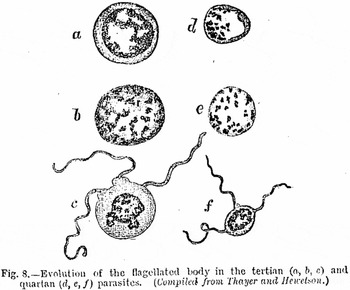
Contemporary medical discourse suggests that such an understanding of the function of the parasite did exist at the fin de siècle. “The sudden rises of temperature which occur in this disease [malaria], and which are often accompanied by shivering (ague), are due to the parasites scattering their spores in the blood-fluid,” noted Ross in his Instructions for the Prevention of Malaria Fever. “The parasites grow up together and scatter their spores, or ‘eggs,’ simultaneously” (3). Intermittent fevers were therefore caused by waves of parasites achieving maturity, then reproducing. Moreover, late nineteenth-century comments by scientists on their observation of the parasite in blood samples often noted the flagella that appeared at certain stages of the organism's development; this emphasis underscores a sexually oriented etiology in that it literally focuses the gaze on the parasite as an image of sperm (Figure 10). Indeed, flagella were often described as the parasite in a reproductive phase; by 1900, Ross was referring to them as microgametes – that is, “bodies of the nature of spermatozoa” (Malaria and Mosquitoes 7). They came to be a key means of diagnosing the infection, since the “motile filaments” developed after blood had been drawn to enable the parasites to pass into the stomach cavity of the mosquito.
An image from the 1898 edition of Patrick Manson's Tropical Diseases (London: Cassell: 13), suggestive of the pictorial analogy between the malaria parasite and sperm. Internet Archive.

Dracula's uncorporeal status – his lack of a shadow – has been variously interpreted by critics. Franco Moretti, for instance, sees this as indicative of Dracula's position vis-à-vis alienated labor and capital (91). Yet it is also suggestive of the transparency of the parasite or bacillus. Parasites were generally immediately noticeable in blood taken from patients, but this identification was often dependent on the quantity, type, and moment in the protozoa's life cycle. Stained with a substance such as methylene blue, however, they were more easily visible on a microscope slide. And if Dracula is the negation of individual liberty, monopoly as foreign threat, the malarial parasite, too, remains in and retains its hold over the body for the lifespan of its victims.
Finally, if the (malarial) parasite is taken to be the alien growing within the subject, this lens provides another way to understand the perversion of maternal roles that characterizes women who are transformed by the vampire kiss, with the parasite literally replacing the child inside the body. Parasitism thus provides Stoker with a potent metaphor for the dissolution of the distinction between self and other within and through the body – a key component of the titillating danger of difference through which Dracula operates.
A number of critics have speculated on the reason behind the inclusion of an American, and specifically a Texan, named Quincey Morris in Stoker's novel. These include Texas oil, Anglo-American alliances and rivalries, and notions of rugged masculinity. Yet an additional reason may have to do with the discovery of another parasite-borne disease: Texas cattle fever, which had decimated ranchers’ herds since the 1860s. In 1893, Theobald Smith and Fred Lucius Kilborne published pathology research indicating that the disease was caused by a blood parasite and transmitted by ticks. The association of Texas with parasitic infection gives a new valence to Moretti's well-known reading of Quincey Morris as a vampire (94–97). What is also curious is that the parasite that Smith and Kilborne found to cause Texas cattle disease had been discovered in 1885 by a Romanian scientist, Victor Babeş, a pioneering bacteriologist of the late nineteenth century.Footnote 27
Morris himself is directly linked to the vampiric infection of livestock through his comments on the vampire bats he has encountered in the Pampas. However, it is necessary to draw a distinction between how both Morris and Van Helsing describe these bats and the vampire's mode of sucking and inoculation. Both characters emphasize that the bats open a vein, leading to the uncontrolled bleeding and death of the victim. With Dracula, however, the wound is repeatedly marked as small – almost unnoticeable – and the process subject to repetition. Thus the analogy between Dracula and the vampire bat also points to a distinction between the human and the animal and hints at the more subtle mode of attack needed when preying on a higher life form.
Stoker may or may not have been aware of the particulars of medical etiologies surrounding malaria, though three of his brothers were doctors (Richard, William Thornley, and George), and two (Richard and Thomas) were serving in India at the time of Ross's discoveries; William Thornley Stoker was also president of the Royal College of Surgeons in Ireland from 1894–96.Footnote 28 Nonetheless Dracula is a text that operates around the axis of medical knowledge and its ability or inability to solve or resolve issues of individual and social importance. However, despite the novel's intense investment in blood and circulation – with its semi-parodic articulation of the mantra “The blood is the life” – it is noteworthy that at no point does Van Helsing subject the blood of Dracula's victims to a laboratory evaluation (although Seward does examine some accidentally spilled blood for signs of anemia).Footnote 29 This “oversight” on Van Helsing's part is in keeping with what many critics have seen as the connection between vampiric infection and hysteria.Footnote 30 Physical testing is therefore superfluous because the cause of the illness is not pathogenic. Yet given that the Dutch doctor does believe there is a malign force at work, and given the increasing extremity of its physical manifestations, Van Helsing's lack of interest in testing Lucy's blood testifies to the unconventionality of his treatment of Dracula's victims, that is, his combination of allopathic practice with other means of cure. Such evaluations of blood were already standard to the diagnosis of diseases like malaria, which uniquely pigments red blood cells with melanin. And medical texts such as Laveran's formulaically describe how to take a blood sample from a patient's finger and how to prepare slides for analysis.
In a true doctor's surgery at the end of the nineteenth century, Van Helsing's and Seward's failure to use the microscope to explore the pathogenic properties of the patients’ blood would be inexcusable, yet there is no suggestion in Stoker's novel that either man is a poor doctor. Instead, they simply refuse to accept that the origins of a physical illness that causes such horrible character changes (as opposed to a mental illness, like that which ostensibly afflicts Renfield) could reside within the body – and especially within the body of a woman. In fact, their dismissal of internal causes makes the very surprising external cause they postulate – vampiric infection – all the more believable.
Thus what is most significant about Van Helsing's means of treating the vampire infection is that aside from transfusion – which is merely a means of gaining time and which does not fundamentally alter the constitution of the patients – they are all topical or outside of the body of the victims. The garlic, the cross, and the wafer, for instance, all combat the exterior threat that the vampire poses, rather than his internalization within the women's bodies. In short, Van Helsing sees the surface of the body, the skin, as a membrane of resistance, protecting the patient from external threat and maintaining the integrity of the self unless or until penetrated.
Even the final destruction of Dracula and the sisters, which restores Mina to health and rids her of the mark of Cain on her forehead, relies on action outside the body. Significantly, Dracula himself does not bleed when he is killed. Mina describes him as “just like a waxen image” (484; ch. 27), as if he were desiccated, his entire circulatory system emptied of blood. Moreover, in dying, Dracula turns to dust in a “moment of final dissolution” – dissolution being a word that by its very nature associates itself with fluid – in a motif that reflects his true age. In this regard, his demise resembles that of Ayesha in Haggard's She, who shrinks and shrivels like parchment as she dies, and Dorian Gray in Oscar Wilde's The Picture of Dorian Gray (1890), who withers and wrinkles at his death. Dracula therefore may be said to have no biological interiority, just as he has no real soul or reflection.
Van Helsing's method of cure is in stark contrast to orthodox medicine of the period, with its emphasis on infusion and ingestion as modes of treatment. Thus it is Dracula who ironically mimics the practices of conventional medicine, with his reliance on bloodletting and infusion, as does his amanuensis, Renfield, when he looks to ingestion as a way to transform his body into one like his master's. Dracula's acts of bloodletting in particular figure the vampire as the doctor's double, whereas it is Van Helsing's refusal to draw anything from the body that marks his unconventional union of medicine, religion, and law.
Stoker prepares the reader for Dracula's role as a perverse doctor once he pitches up in England much earlier in the novel, during Harker's visit to Transylvania. When Harker first sees the sleeping Dracula, he likens him to “a filthy leech, exhausted with his repletion” (71; ch. 4). It is an interesting description, given the leech's role as a parasite that acts on the body's surface, but also its history as an instrument for the medical practice of bleeding. Bleeding – drawing strength from the body – is both an outdated medical procedure and the direct antithesis to the procedures Van Helsing will use to counteract the vampire – adding strength to the body through blood transfusion or protecting against the loss of strength through the sapping of bodily fluids. Dracula thus is connected to a medical past that bolsters his connection to the unsettling historical past that imperialism has brought into contact with the modern world.Footnote 31 Van Helsing, by contrast, will need to reconcile scientific method with superstition, ancient and eccentric medical knowledge, and religious praxis to effectively counter his nemesis's actions.
Above all, Van Helsing's course of treatment reinforces the metaphor of an external threat to the wellbeing of nation and empire – of Dracula as the outsider, the reverse colonizer, the invader who hides in the bloodstream of virtue and disrupts imperial domesticity. This emphasis on Dracula's outcast status is central to the novel's xenophobic message, just as the success of locating and destroying the source of the infection in Transylvania mirrors the slum clearances, marsh drainages, and other sanitation works occurring in the late Victorian period in order to externally eradicate those epidemics prevalent in urban Britain and across the Empire by eliminating the habitats that nurtured them. This discourse engrafts the notion of a hereditary taint – the Dracula “blood” that the Count so proudly extols to Harker at the novel's start – onto geographic models of pathology; Transylvania, itself the site of a “whirlpool of European races” (42), represents something akin to the “tropical” in the emerging field of tropical medicine. Dracula's threat therefore resonates on various registers with different chords of medical pathology: inheritance, geographic/climatic determinism, germ theory, parasitology, and sexually transmitted disease among them.
Yet the novel's most ironic twist comes in the notion of how the body politic might rid itself of that which threatens it: by surrounding it and, in effect, isolating it, which is, of course, what happens when the Crew of Light place circles of communion wafer around Dracula and his companions in order to contain them and keep them from drawing their victims to them so that they can be eliminated. Early on in the novel, Stoker foreshadows this method of dealing with the dangerous when Seward describes Lucy's mother's devotion to her daughter's recovery in the following terms: “It is something like the way dame Nature gathers round a foreign body an envelope of some insensitive tissue which can protect from evil that which it would otherwise harm by contact. If this be an ordered selfishness, then we should pause before we condemn any one for the vice of egoism, for there may be deeper roots for its causes than we have knowledge of” (112; ch. 10). The notion of harm by contact and of ordered selfishness can, of course, be tied to the text's articulation of the threat of the foreign and perhaps a Little England model of retrenchment for the protection of the British species. Read in terms of medicine, Lucy's mother narrates the body's means of dealing with the invasion of a foreign object, such as a splinter or thorn. Stoker's description also resonates with emerging medical opinion about the action of antibodies. In fact, scientist Emil von Behring (whose name bears some resemblance to Van Helsing's) had begun publishing his findings on serum therapy in 1891 (based on the idea that the blood serum of someone recovering from disease contained antitoxins).Footnote 32 In 1896, Paul Ehrlich proposed the first comprehensive theory of antibodies, the so-called side-chain theory, according to which antibodies attacked antigens within the body. It is another instance of Stoker parlaying not simply social, but also medical notions of invasion and defense into this most popular of texts. The medical notion of enveloping here functions as a kind of imperial immune response.
The idea of antibodies also helps resolve Stoker's problematic relationship with the American character Quincey Morris. Several critics have seen Morris's presence in the novel in relation to appeals for Anglo-Saxon union (itself typical of fin-de-siècle adventure tales, such as those about the Boxer Rebellion in China) and a fictional representation of the “Greater Britain” proposed by Charles Dilke, among others (Hughes 100).Footnote 33 When, in the novel's postscript, Mina and Jonathan name their child after him, “the American becomes once again reassuringly British.”Footnote 34 This, too, is a kind of enveloping, like an antibody that, in this instance, disables the threat of American competition.
Yet there are other crucial ways to understand Stoker's passage about Dame Nature. Read in terms of gender, Stoker's vision of Mother Nature as engaged in cocooning dangerous alterity highlights the novel's assumption that nature itself is feminine and that the role of procreation and nurturing belongs to woman. Read retrospectively in terms of character, these words are replete with echoes of Dracula's and Renfield's terrible monomania, expressive of an egotism which, unlike that of Lucy's mother, has no deeper goal or noble object in view. Read in terms of verisimilitude, the comment recalls the alternate truth claims which open and close the novel – the preface which states that everything is true and in order and the concluding “Note” which invites and then dismisses the reader's disbelief. Above all, in a novel that so famously pits internal against external, domestic against foreign, and self against other, this image of Dame Nature's envelope is a picture of the construction of narrative that provides an alternative to the model of parasitism. For it is the “ordered selfishness” of the process of composition that defines the act of narration, and it is the words that make up the narrative that envelope and ultimately eradicate the very foreign body that is the novel's subject and central figure.