There seems to be broad agreement these days that ongoing progress in our understanding of neurobiological systems and processes will be crucial to a thorough understanding of serious behavior problems including persistent antisocial behavior. Inspired in part by the latest round of revisions to the major diagnostic classification systems in use worldwide, the Diagnostic and Statistical Manual of Mental Disorders, Fourth Edition (DSM-IV; American Psychiatric Association, 2000) and the International Classification of Diseases, Tenth Revision (ICD-10; World Health Organization, 2004), calls have intensified for more neurobiologically based approaches to conceptualizing, studying, and treating behavior disorders (Hyman, Reference Hyman2007; Insel & Scolnick, Reference Insel and Scolnick2006; Sanislow et al., Reference Sanislow, Pine, Quinn, Kozak, Garvey and Heinssen2010). However, a number of challenges exist to understanding behavioral pathology (or so-called psychiatric disorders) in neuroscientific terms. One of the most significant is that entities like conduct disorder, antisocial personality disorder, and psychopathy represent complex targets for neurobiological study: they manifest in diverse ways clinically (phenotypically) and they show frequent overlap (comorbidity) with one another and with other disorders rather than occurring in isolation. A further challenge is the essential measurement gap that exists between diagnostic phenotypes operationalized in the domain of behavioral observation or self-report and neurobiological systems or processes operationalized in the domain of brain or other physiological activity. Yet another has to do with the psychometric limitations of single-session/single-task neuroscience procedures as a basis for individual differences assessment (Vul, Harris, Winkielman, & Pashler, Reference Vul, Harris, Winkielman and Pashler2009).
In this work we propose that neuroscientific conceptualization and understanding of forms of antisocial deviance conceived of as “disorders” can be advanced by focusing programmatic efforts on neurobehavioral trait constructs, that is, individual difference constructs with direct referents in neurobiology as well as behavior (Depue & Iacono, Reference Depue and Iacono1989). As concrete examples, we highlight inhibitory control and defensive reactivity as two neurobehavioral constructs of relevance to an understanding of antisocial behavior. Variations in inhibitory control are posited to reflect individual differences in the functioning of brain systems that operate to guide and inhibit behavior and regulate affective response in the service of distal goals. The behavioral phenotype corresponding to this dispositional construct has alternately been labeled effortful control (Kochanska, Murray, & Harlan, Reference Kochanska, Murray and Harlan2000; Rothbart, Sheese, & Posner, Reference Rothbart, Sheese and Posner2007), disinhibition (Patrick, Fowles, & Krueger, Reference Patrick, Fowles and Krueger2009; Patterson & Newman, Reference Patterson and Newman1993; Sher & Trull, Reference Sher and Trull1994), or externalizing (Achenbach & Edelbrock, Reference Achenbach and Edelbrock1978; Krueger et al., Reference Krueger, Hicks, Patrick, Carlson, Iacono and McGue2002; Krueger, Markon, Patrick, Benning, & Kramer, Reference Krueger, Markon, Patrick, Benning and Kramer2007). Variations in fear and fearlessness are posited to reflect individual differences in the sensitivity of the brain's defensive motivational system. The behavioral phenotype corresponding to this construct has been labeled fearful temperament (Goldsmith & Campos, Reference Goldsmith and Campos1990; Kochanska, Reference Kochanska1993, Reference Kochanska1997; Rothbart, Ahadi, Hershey, & Fisher, Reference Rothbart, Ahadi, Hershey and Fisher2001; Rothbart & Bates, Reference Rothbart, Bates, Damon and Eisenberg1998) or trait fear (Kramer, Patrick, Krueger, & Gasperi, 2012; Vaidyanathan, Patrick, & Bernat, Reference Vaidyanathan, Patrick and Bernat2009).
We propose that constructs of this type can provide a concrete basis for linking physiological systems to measurable deviations in behavior and thereby serve as important referents for a neurobiological account of dispositional factors relevant to antisocial deviance. Clearly, we are not the first to call for research on constructs of this type as a foundation for understanding the role of neurobiology in clinical problems (see, e.g., Cloninger, Reference Cloninger1987; Depue & Iacono, Reference Depue and Iacono1989; Gould & Gottesman, Reference Gould and Gottesman2003; Gray, Reference Gray1975, Reference Gray and Madden1991; Kochanska, Reference Kochanska1997; Rothbart, Reference Rothbart1981). However, extrapolating beyond this, our perspective is that existing approaches to defining and measuring constructs of these types at differing points across the life span, and conceptions of clinical problems themselves, should be allowed to shift and evolve in response to insights gained through efforts to connect clinical phenomena to biology using neurobehavioral constructs as referents. It is important for progress along these lines to include a reevaluation of some problematic assumptions underlying traditional neuroscientifically oriented research on antisocial behavior. One is the basic “disease model” assumption that conditions such as conduct disorder, antisocial personality, or psychopathy represent coherent physical entities, analogous to discrete medical diseases, whose observable symptoms can be traced to a coherent underlying biological disturbance. In psychopathy, for example, multiple lines of evidence indicate that this putative syndrome is not a unitary condition but rather encompasses distinguishable symptomatic facets with contrasting external correlates (Patrick et al., Reference Patrick, Fowles and Krueger2009; Skeem, Polaschek, Patrick, & Lilienfeld, Reference Skeem, Polaschek, Patrick and Lilienfeld2011), such that even individuals who are rated high on all facets appear heterogeneous in terms of trait dispositions (e.g., Hicks, Markon, Patrick, Krueger, & Newman, Reference Hicks, Markon, Patrick, Krueger and Newman2004; Skeem, Johnson, Andershed, Kerr, & Eno Louden, Reference Skeem, Johansson, Andershed, Kerr and Eno Louden2007) and physiological or behavioral response patterns (e.g., Newman, Schmitt, & Voss, Reference Newman, Schmitt and Voss1997; Sutton, Vitale, & Newman, Reference Sutton, Vitale and Newman2002). Further, high psychopathy scores tend to be associated with higher rates (or symptoms) of other diagnosable conditions such as conduct disorder, attention-deficit/hyperactivity disorder (ADHD), personality disorders of differing types, and alcohol and drug abuse. As a result, differences in brain reactivity observed for high-psychopathy individuals in experimental studies may in some cases reflect processes associated with (or common) to disorders of other types rather than processes specific to psychopathy.
A second key assumption in neuroscientific studies of antisocial deviance is that of correspondence across levels of conceptualization and measurement (Cacioppo & Berntson, Reference Cacioppo and Berntson1992), namely, that some direct biological counterpart exists to the constellation of behavioral features we call the “disorder” (e.g., conduct disorder, antisocial personality disorder, psychopathy), such that measurable aspects of brain circuitry can be directly “mapped” to this behavioral entity. However, brain circuits and behavioral disorders represent differing constructs in separate domains of measurement. As Campbell and Fiske (Reference Campbell and Fiske1959) pointed out many years ago, even indicators of the same construct derived from differing domains of measurement can be expected to correlate with one another only moderately, at best. Thus, the degree of association one would expect to find between a reliable behavioral measure of a diagnostic condition (e.g., antisocial personality disorder) and a reliable brain-based measure of that condition would be somewhere around 0.4 or 0.5. However, measures of brain reactivity (e.g., amygdala activation) in single-session experimental tasks (e.g., aversive differential conditioning) represent putative indices of unknown reliability in most cases (Vul et al., Reference Vul, Harris, Winkielman and Pashler2009) of hypothetical constructs (e.g., fear), not measures of some specific diagnostic condition such as psychopathy. From this standpoint, the relationship level one would expect to see between a well-established measure of some specific disorder and a brain-based index of some emotional or cognitive process is necessarily quite low, perhaps around the level one might expect to see between a sample of behavior on a single occasion and a reliable personality trait measure (i.e., probably below the level one would be able to detect reliably in samples of 10 or 20 participants; cf. Mischel, Reference Mischel1968).
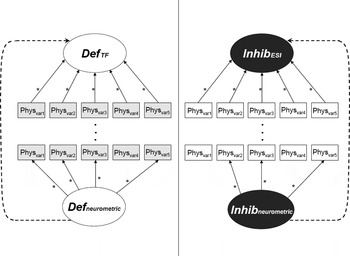
How might this state of affairs be improved? We highlight here a research strategy we term the psychoneurometric approach. Psychoneurometrics can be defined as the systematic development of neurobiologically based trait measures using psychological (i.e., traditional psychometric) phenotypes as referents. As applied to the study of antisocial behavior problems, the goal of this approach is to establish direct neurophysiological measures of dispositional constructs relevant to problems of this kind that have advantageous psychometric properties. Rather than targeting traits from particular models of personality or discrete diagnostic entities (e.g., as defined in the Diagnostic and Statistical Manual of Mental Disorders [DSM]), the psychoneurometric approach targets relevant neurobehavioral trait constructs (i.e., those with direct referents in neurobiology as well as behavior). Established ratings-based or behavioral measures of these target constructs serve as initial referents for the identification of reliable indicators in the physiological domain. As illustrated below, observed convergences among differing neurophysiological indicators can provide insights into the nature of brain variations that underlie individual difference constructs of interest. This information in turn can be used to refine psychological conceptualizations (and ratings-based or behavioral operationalizations) of the target constructs, as well as clinical problems with which they are associated.
In the sections that follow, we review empirical research directed at investigating two neurobehavioral constructs: inhibitory control and defensive reactivity. We highlight these constructs because of their well-established relevance to antisocial behavior at differing ages and because empirical demonstrations are available of how these constructs can be indexed physiologically as well as psychologically and behaviorally. We describe psychometric, behavioral, and neurobiological conceptions of these traits; empirical data linking them to differing impulse control disorders (spanning Axis I and Axis II) within the DSM; and available evidence regarding neurophysiological correlates of these individual difference constructs in both adults and children. Finally, we provide an illustration of the psychoneurometric approach drawing on multiple known electrocortical indicators of externalizing proneness.
Psychological Conceptions of Inhibitory Control and Defensive Reactivity
Inhibitory control
The existence of a broad dimension of human variation encompassing tendencies toward behavioral restraint versus disinhibition has been recognized since the earliest days of psychology. For example, William James (1890/Reference James1983) noted that “there is a type of character in which impulses seem to discharge so promptly into movements that inhibitions get no time to arise” (p. 1144). Along these lines, contemporary theorists in the personality and psychopathology areas have identified individual difference constructs ranging from “ego control” (Block & Block, Reference Block, Block and Collins1980) to “constraint” (Tellegen, Reference Tellegen, Tuma and Maser1985) to “novelty seeking” (Cloninger, Reference Cloninger1987) to “syndromes of disinhibition” (Gorenstein & Newman, Reference Gorenstein and Newman1980). The concept of behavioral restraint versus impulsivity is also featured prominently in developmental theories of temperament (e.g., Buss & Plomin, Reference Buss and Plomin1975; Kochanska, Reference Kochanska1997; Rothbart & Ahadi, Reference Rothbart and Ahadi1994) and in models dealing with individual difference factors that contribute to delinquent and antisocial behavior (e.g., Gottfredson & Hirschi, Reference Gottfredson and Hirschi1990; Moffitt, Reference Moffitt1993; Patterson, Reid, & Dishion, Reference Patterson, Reid and Dishion1992).
Regarding the psychological bases of impulse control problems, Patterson and Newman (Reference Patterson and Newman1993) proposed a four-stage model of inhibitory processing to account for the behavior of individuals with impulse control problems. These authors posited that the processing deviation most relevant to general disinhibitory tendencies (also known as general externalizing proneness; Krueger et al., Reference Krueger, Hicks, Patrick, Carlson, Iacono and McGue2002, Reference Krueger, Markon, Patrick, Benning and Kramer2007) entails impairments at Stages 3 and 4 of this model. Stage 3 represents the phase of processing at which the occurrence of a conflictual event normally prompts a shift from an ongoing, goal-oriented response set to a passive, information-gathering set. According to Patterson and Newman, impairments at this processing stage have implications both for inhibition of immediate ongoing behavior at Stage 3 and for the formation or strengthening of associative representations crucial to prospective reflection (i.e., inclination to anticipate potential consequences of one's actions) at Stage 4. Patterson and Newman posited that this mechanism is crucial to an understanding of disinhibited behavior associated with syndromes including antisocial/psychopathic behavior, substance dependence (i.e., early-onset alcoholism), and ADHD.
Defensive (fear) reactivity
The emotional state of fear has been conceptualized in terms of the reactivity of the brain's defensive motivational system, which functions to prime evasive action in the presence of threat cues (Davis, Reference Davis and Aggleton1992; Fanselow, Reference Fanselow1994; Lang, Reference Lang1995; LeDoux, Reference LeDoux1995). The idea of constitutional differences in general fearfulness fits with biological–evolutionary thinking, in that variations in defensive reactivity would be expected to contribute to adaptation across environmental contexts involving more or less resource availability in relation to potential dangers (Lykken, Reference Lykken1995). Individual differences in fear have also been emphasized in theories of temperament. Timidity (i.e., lack of approach and presence of withdrawal) in novel situations, as well as arousal in response to novel stimuli, and social reticence are central to Kagan's (Reference Kagan1994) concept of behavioral inhibition (BI) in children, which he viewed as a trait risk factor for the development of anxiety-related problems. Elsewhere, Kochanska (Reference Kochanska1997) has emphasized variations in dispositional fear as an important moderator of the effect of socialization processes on conscience development in children, an effect mediated by the influence of fearfulness on guilt after transgressions (Kochanska, Gross, Lin, & Nichols, Reference Kochanska, Gross, Lin and Nichols2002). With regard to antisocial deviance, Frick and colleagues (e.g., Frick & Marsee, Reference Frick, Marsee and Patrick2006; Frick & White, Reference Frick and White2008) have theorized a role for fearless temperament in deficient conscience development associated with psychopathy, and empirical work (e.g., Côté, Tremblay, Nagin, Zoccolillo, & Vitaro, Reference Cote, Tremblay, Nagin, Zoccolillo and Vitaro2002) has demonstrated that teacher ratings of low fear are predictive of later externalizing problems.
Others have focused on placing fear proneness within broader structural models of temperament, often as part of a higher-order Negative Emotionality (NE) factor that typically also includes dispositional anger and sadness proneness (Shiner, Reference Shiner1998). Goldsmith and Campos (Reference Goldsmith, Campos, Emde and Harmon1982) posited fearfulness as one of five basic dimensions of temperament, and Buss and Plomin (Reference Buss and Plomin1984) identified fear as one of two basic trait expressions of negative emotional reactivity (the other being anger) that emerge within the first year of life. Measures derived from Rothbart's model of temperament (i.e., the Infant Behavior Questionnaire; Rothbart, Reference Rothbart1981) and the Child Behavior Questionnaire (Rothbart et al., Reference Rothbart, Ahadi, Hershey and Fisher2001) include subscales of NE tapping individual differences in fearfulness (“distress to novelty” and “fear,” respectively). Prominent additive genetic contributions have been demonstrated for both scales (Goldsmith, Buss, & Lemery, Reference Goldsmith, Buss and Lemery1997; Goldsmith, Lemery, Buss, & Campos, Reference Goldsmith, Lemery, Buss and Campos1999).
The content domain of dispositional fear, and the extent to which it has primarily been treated as a lower-order manifestation of a more general distress-proneness dimension (NE) or in the form of narrower constructs such as BI or shyness has varied somewhat across measures and conceptualizations. Various models derived from parent rating methods have emphasized differing manifestations of trait fear within the broader domain of NE (e.g., specific fears of situations or animals vs. social anxiety/social reticence); thus, each may be emphasizing somewhat different components of a trait fear system. However, even conceptions that focus on narrower constructs, such as BI or shyness, appear to represent complex configurations of traits. BI includes elements of both high NE and low positive emotionality (PE; Laptook et al., Reference Laptook, Klein, Durbin, Hayden, Olino and Carlson2008); shy behavior can reflect high anxiety (social–evaluative shyness), isolation emerging from peer rejection, or low social interest (Asendorpf, Reference Asendorpf1993). In order to provide a more coherent target for linkage with neurobiological constructs, it will be important to understand the nature and structure of dimensions underlying trait fear proneness, taking into account developmentally appropriate manifestations of fear, including social reticence, social–evaluative anxiety, worry/anticipatory anxiety, punishment concerns, object fear, and physical caution.
Rating- and Behaviorally Based Measurement of Inhibitory Control and Defensive Reactivity
Adults
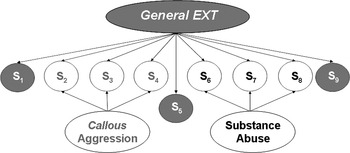
The domain of disinhibitory (or externalizing) problems and traits has been conceptualized in terms of a broad dispositional continuum spanning normal-range personality traits through to severe pathological symptoms, with differing behavior problems reflecting alternative expressions (facets) of general disinhibitory proneness (Krueger et al., Reference Krueger, Hicks, Patrick, Carlson, Iacono and McGue2002). Using traditional and newer item-analytic methods (item response modeling, exploratory factor analysis, hierarchical cluster analysis), Krueger et al. (Reference Krueger, Markon, Patrick, Benning and Kramer2007) developed a comprehensive self-report rating instrument, the Externalizing Spectrum Inventory (ESI), for organizing and assessing this problem/trait domain. The ESI includes 23 unidimensional construct scales designed to index differing facets of this domain, including varying forms of impulsiveness; differing types of aggression (physical, relational, and destructive), irresponsibility; rebelliousness; excitement seeking; blame externalization; and alcohol, drug, and marijuana use or problems. Confirmatory factor analyses of the 23 ESI facet scales revealed optimal fit for a bifactor model in which all scales loaded substantially (0.45 or higher) on an overarching externalizing factor, with residual variance in selected subscales loading additionally on one of two subordinate factors reflecting callous aggressiveness and substance abuse (see Figure 1).
A schematic of the best fitting confirmatory bifactor model of the Externalizing Spectrum Inventory (ESI; Krueger et al., Reference Krueger, Markon, Patrick, Benning and Kramer2007). The model is represented schematically because the 23 subscales of the ESI included in the model are too numerous to depict effectively in full. EXT, externalizing; S, scale, where the subscript numbers represent differing subscales. The model depiction shows that some of the ESI subscales (irresponsibility, problematic impulsivity, theft, impatient urgency, planful control, dependability, blame externalization) load exclusively on the general Externalizing factor; other subscales, besides loading on the general Externalizing factor, also load on the callous aggression subfactor of the model (relational aggression, empathy, destructive aggression, excitement seeking, physical aggression, rebelliousness, honesty) or the substance abuse subfactor (marijuana use, drug use, marijuana problems, alcohol use, drug problems, alcohol problems).

These findings are consistent with the idea that a common dispositional factor contributes to a broad array of impulse control problems and affiliated traits (e.g., Achenbach & Edelbrock, Reference Achenbach and Edelbrock1978; Krueger, Caspi, Moffitt, & Silva, Reference Krueger, Caspi, Moffitt and Silva1998). This disinhibitory-externalizing factor has a prominent heritable basis (e.g., Kendler, Prescott, Myers, & Neale, Reference Kendler, Prescott, Myers and Neale2003; Krueger et al., Reference Krueger, Hicks, Patrick, Carlson, Iacono and McGue2002; Young, Stallings, Corley, Krauter, & Hewitt, 2001). In addition, the results of the ESI modeling work indicate that this general disinhibitory propensity intersects with two coherent problem domains: one involving callous–aggressive tendencies and the other proclivity to excessive substance use. These domains can be viewed as distinct behavioral expressions of externalizing deviancy, attributable in part (i.e., more so for some individuals than others) to deficient inhibitory control, but also reflecting influences separate from externalizing proneness. With regard to antisocial behavior, the Callous-Aggression factor in the ESI model is of particular interest, in that it serves as a link to conceptions of psychopathy. The ESI scales that serve as indicators of the callous-aggression subfactor (in particular, lack of empathy, relational and destructive aggression, rebelliousness, excitement seeking, and dishonesty) are thematically similar to the behavioral symptoms and correlates of callous unemotionality as described in the child literature on psychopathy (Frick & Marsee, Reference Frick, Marsee and Patrick2006; Frick & White, Reference Frick and White2008). More directly, research with adult offenders (Venables & Patrick, Reference Venables and Patrick2012) indicates that variance in the ESI Callous-Aggression factor is not attributable to general disinhibition correlates with core affective-interpersonal features of psychopathy as assessed by the Psychopathy Checklist—Revised (PCL-R; Hare, Reference Hare2003).
Regarding the construct of defensive reactivity, differing approaches to measuring trait fear in the adult literature reflect differing perspectives on the nature and scope of the construct. For example, Cloninger (Reference Cloninger1987) conceived of fearfulness in terms of a broad trait of “harm avoidance” encompassing elements of worry, fatigability, social fear (shyness), and lack of tolerance for risk and uncertainty (see also Waller, Lilienfeld, Tellegen, & Lykken, Reference Waller, Lilienfeld, Tellegen and Lykken1991). By contrast, harm avoidance in Tellegen's (Reference Tellegen1982; Tellegen & Waller, Reference Tellegen, Waller, Boyle, Matthews and Saklofske2008) three-factor model of personality refers to a narrower trait entailing preference for safe but unstimulating activities over risky activities, which is akin to the “thrill and adventure seeking” component of Zuckerman's (Reference Zuckerman1979) well-known sensation-seeking model. In a recent conceptual–empirical review, Sylvers, Lilienfeld, and LaPrairie (Reference Sylvers, Lilienfeld and LaPrairie2011) concluded that trait fear and trait anxiety are distinguishable constructs, with the latter connected more closely to the broad dimension of NE, but that empirical relations between the two can vary depending on how trait fear is operationalized. In particular, self-report measures that focus on levels of experienced fear generally in relation to assorted objects and situations correlate more substantially with measures of trait anxiety (and NE more broadly) than measures that focus on avoidance versus preference for risky or dangerous situations.
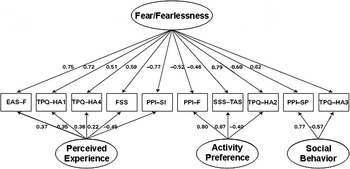
To help resolve questions about how best to conceptualize and measure defensive (fear) reactivity as a trait construct and to clarify etiologic sources contributing to the variance in self-rating measures of dispositional fear, Kramer et al. (2012) undertook phenotypic and biometric modeling analyses of data for a number of fear and fearlessness scales in a large sample of identical and fraternal adult twins (N = 2,511). Scale measures included the Fear Survey Schedule (FSS; Arrindell, Emmelkamp, & van der Ende, Reference Arrindell, Emmelkamp and van der Ende1984); the fearfulness subscale of the Buss–Plomin (Reference Buss and Plomin1984) Emotionality, Activity, and Sociability Temperament Inventory (EAS-fear); the four facet scales of harm avoidance (fear of uncertainty, shyness with strangers, anticipatory worry, fatigability) from Cloninger's (Reference Cloninger1987) Tridimensional Personality Questionnaire; the thrill–adventure seeking subscale of Zuckerman's (Reference Zuckerman1979) Sensation Seeking Scale; and the three subscales (fearlessness, stress immunity, social potency) composing the Fearless Dominance factor (Benning, Patrick, Hicks, Blonigen, & Krueger, Reference Benning, Patrick, Hicks, Blonigen and Krueger2003) of the Psychopathic Personality Inventory (PPI; Lilienfeld & Andrews, Reference Lilienfeld and Andrews1996). A notable feature of these differing scales is that most have been shown to predict individual variations in aversive startle potentiation (cf. Vaidyanathan, Patrick, & Cuthbert, Reference Vaidyanathan, Patrick and Cuthbert2009). In parallel with findings for the externalizing domain, confirmatory factor analyses of the phenotypic variance in these measures revealed the best fit for a bifactor model in which (a) all scale measures loaded appreciably (either positively or negatively, depending on polarity) on a broad common factor, labeled trait fear, and (b) residual variance in particular subscales (i.e., score variability not attributable to the general factor) loaded on subordinate factors reflecting distinguishable domains of fear expression (i.e., experiential, activity preference, social; see Figure 2). Biometric analyses revealed that additive genetic influence accounted for 51% of the variance in the general fear/fearlessness factor and 35% to 55% of the variance in the subordinate factors, with the remainder of variance in each of the factors attributable primarily to nonshared environmental influence.
Standardized parameter estimates for the best fitting confirmatory bifactor model of established measures of fear and fearlessness in the domain of self-report (cf. Kramer et al., 2012). EAS-F, Emotionality, Activity, and Sociability Fearfulness Scale; TPQ-HA, Tridimensional Personality Questionnaire Harm Avoidance Scale; TPQ-HA1, TPQ-HA anticipatory worry and pessimism subscale; TPQ-HA4, TPQ-HA fatigability and aesthenia subscale; FSS, Fear Survey Schedule; PPI, Psychopathic Personality Inventory; PPI-SI, PPI Stress Immunity Scale; PPI-F, PPI Fearlessness Scale; SSS-TAS, Sensation Seeking Scale thrill and adventure seeking subscale; TPQ-HA2, TPQ fear of uncertainty subscale; PPI-SP, PPI Social Potency Scale; TPQ-HA3, TPQ shyness with strangers subscale.

The findings of this study indicate that a general trait dimension accounts for appreciable variance in multiple scale measures of fear/fearlessness, with some scales serving as low-pole indicators of this dimension and others as high-fear indicators. Beyond their relations with the general fear factor, certain scales also exhibited loadings on distinguishable subfactors. Scales loading on the first subfactor were those indexing perceived experience of negative emotion in relation to threatening or stressful objects or situations. Those loading on the second consisted of scales tapping preference for activities entailing danger, risk, or novelty. Scales loading on the third subfactor consisted of those indexing a bold/outgoing versus timid/avoidant interpersonal style. That is, the subfactors appear to reflect differing domains or contexts in which fear can be expressed or evaluated. The results of this structural analysis parallel recent findings for differing behavioral indices of fear in children (discussed in the next section) and suggest that trait fear, when defined as the variable in common among scales that predict physiological defensive reactivity in the form of aversive startle potentiation, encompasses phobic fear (e.g., FSS) as well as (reverse) harm avoidance (e.g., PPI–fearlessness), along with social timidity/boldness. This perspective may help to reconcile persisting debates about whether dispositional fear should be operationalized in terms of perceived experience of fear or in terms of reported preference for uncertainty/risk versus familiarity (cf. Sylvers et al., Reference Sylvers, Lilienfeld and LaPrairie2011) and/or social assertiveness (Kagan & Snidman, 1997). That is, within the framework of the Kramer et al. (2012) structural model, these differing domains serve as alternative points of reference for self-evaluations of fear/fearlessness.
Children
Developmental researchers have used a broad range of observational and/or laboratory strategies to assess individual differences in fear proneness, inhibitory control, and other traits using developmentally sensitive stimuli and measurement techniques. Most research reports have focused on a small number of traits and/or tasks, often using only a single task to tap a trait of interest. For trait fear, these efforts have focused on fearfulness in response to relatively circumscribed tasks tapping one element of fear, often of novel objects, maternal separation, or strangers. Similarly, studies of inhibitory control have sometimes used one to two tasks to assess responses such as delay of gratification or inhibition of motor responses. Other researchers have employed tasks focusing on motor slowing, inhibition of dominant behaviors, and patience in response to delays as indicators of effortful control (e.g., Kochanksa, Murray, Jacques, Koenig, & Vandegeest, Reference Kochanska, Murray, Jacques, Koenig and Vandegeest1996) or measures from cognitive psychology designed to tap executive functioning skills (e.g., Diamond & Taylor, Reference Diamond and Taylor1996; Hongwanishkul, Happaney, Lee, & Zelazo, Reference Hongwanishkul, Happaney, Lee and Zelazo2005). However, broader assessment systems have also been developed (e.g., the Laboratory Temperament Assessment Battery; Goldsmith, Reilly, Lemery, Longley, & Prescott, Reference Goldsmith, Reilly, Lemery, Longley and Prescott1995) that employ multiple tasks to tap a range of traits using a variety of stimuli and situations presumed to be motivationally salient for each trait. The use of multiple tasks allows for formal psychometric evaluation of the measurement properties of the lab tasks, produces more reliable estimates of individual differences in traits, and enables consideration of subdomains within traits (Durbin, Reference Durbin2010).
Laboratory task paradigms may be particularly useful for building bottom-up models of core dimensions underlying fear proneness. They have significant incremental advantages beyond parent rating measures (Durbin, Reference Durbin2010) because (a) they circumvent biases in parent report associated with parental psychopathology (e.g., Durbin & Wilson, in press; Richters, Reference Richters1992); (b) parents may lack access to information about their child's level of fear proneness, because fear is a low base rate emotion, and parents typically strive to reduce their child's exposure to threatening stimuli; and (c) lab paradigms define constructs of interest at the level of specific, observable patterns of behavior (rather than inferences about the child's subjective state), allowing for closer comparison with constructs assessed in the animal literature such as freezing, withdrawal, and exploration. Thus, they provide an important link to neuroscience on the biological bases of fearful temperament in other species.
Recent research by Durbin and colleagues (Durbin, Reference Durbin2010; Durbin, Hayden, Klein, & Olino, Reference Durbin, Hayden, Klein and Olino2007; Durbin, Klein, Hayden, Buckley, & Moerk, Reference Durbin, Klein, Hayden, Buckley and Moerk2005; Hayden, Klein, Durbin, & Olino, Reference Hayden, Klein, Durbin and Olino2006; Olino, Klein, Dyson, Rose, & Durbin, Reference Olino, Klein, Dyson, Rose and Durbin2010) has used a variety of tasks drawn from the Laboratory Temperament Assessment Battery or other research groups together with newly devised tasks to cover a range of manifestations of traits related to fear proneness and inhibitory control. Tasks used for assessing fear proneness (trait fear) in children include contact with stranger tasks, performance tasks involving presentation of negative feedback or in which concerns about social scrutiny are heightened, exposure to typically fear-eliciting stimuli (e.g., scary objects, animals) or ambiguous/novel stimuli, or instructed engagement in acts that tend to elicit physical caution (such as walking across a balance beam). Procedures for assessing inhibitory control include tasks involving turn-taking, delay of gratification, and temptation to engage in impulsive behavior. Findings from this work suggest that laboratory measures are useful for making finer discriminations among temperamental dimensions. First, lab measures of trait fear can be differentiated from individual differences in other negative emotions (e.g., Dyson, Olino, Durbin, Goldsmith, & Klein, in press). Second, as in the adult literature, trait fear, as assessed using laboratory tasks, is multidimensional. In a sample of over 210 3- to 6-year-olds, Durbin et al. (Reference Durbin, Mendelsohn and Wilson2012) found that whereas degree of coded fear exhibited strong coherence across 10 separate task procedures (α = 0.77), tasks designed to index social fears (reticence, evaluation concerns) correlated only modestly with those measuring object fear, physical caution, or context-inappropriate fears. Third, mirroring findings for self-rating measures of trait fear and disinhibition in adults (see next section below), individual differences in fear and inhibitory control measures were effectively independent (r = .04). A subset of the children from this study (n = 67–119) were followed 6 and 12 months later when they were assessed for behavior problems through parent and teacher ratings. Baseline fear was modestly (but significantly) associated with mother-reported internalizing problems at both follow-up assessment points; and low inhibitory control modestly (but significantly) predicted higher externalizing problems as reported by fathers, mothers, and teachers. Individual differences in traits coded from these tasks have also been linked to teacher- and parent-reported internalizing and externalizing problems (Dougherty et al., Reference Dougherty, Bufferd, Carlson, Dyson, Olino and Durbin2011; Hayden, Klein, & Durbin, Reference Hayden, Klein and Durbin2005) and family history of mood disorders (Durbin et al., Reference Durbin, Klein, Hayden, Buckley and Moerk2005; Olino et al., Reference Olino, Klein, Dyson, Rose and Durbin2010).
The ability of lab tasks to make distinctions among different trait dimensions may be particularly important for understanding their associations with psychopathological dimensions. As in the adult literature, differing perspectives regarding the nature and scope of dispositional fear are evident in the child literature. For example, the counterpart to the inhibited child in Kagan's theory is the uninhibited or “low reactive” child, characterized as nonfearful, venturous in novel situations, and socially assertive (Kagan, Reference Kagan1994; Kagan & Snidman, Reference Kagan and Snidman1999). These children are sometimes referred to as “exuberant” (e.g., Degnan et al., Reference Degnan, Hane, Henderson, Moas, Reeb-Sutherland and Fox2011; Pfeifer, Goldsmith, Davidson, & Rickman, Reference Pfeifer, Goldsmith, Davidson and Rickman2002; Stifter, Putnam, & Jahromi, Reference Stifter, Putnam and Jahromi2008), a designation that clouds the distinction between low fear and high positive emotionality/surgency. It remains unclear whether links between exuberance and higher externalizing problems (e.g., Degnan et al., Reference Degnan, Hane, Henderson, Moas, Reeb-Sutherland and Fox2011; Schwartz, Snidman, & Kagan, Reference Schwartz, Snidman and Kagan1996; Stifter et al., Reference Stifter, Putnam and Jahromi2008) are driven by fearlessness (low negative reactivity to threat or novelty) or by high PE (positive affect and approach), because measurement strategies defining exuberant or uninhibited children have often included both expressions of trait fear and trait PE without exploring which of these two dimensions is responsible for the external correlates of the complex exuberant phenotype.
Trait Variations in Inhibitory Control and Defensive Reactivity: Relevance to Antisocial Behavior Problems
Antisocial behavior, substance-related problems, and personality disorders in adults
As described above, the ESI (Krueger et al., Reference Krueger, Markon, Patrick, Benning and Kramer2007) was developed to operationalize a hierarchical model of impulse control problems and affiliated traits. Overall scores on the ESI can be viewed as indexing a general lack of inhibitory control that is associated with problems of various types, including impulsive–aggressive behavior and substance-related problems.
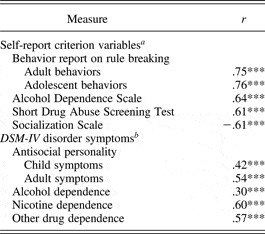
We have conducted recent investigations to examine diagnostic correlates of high levels of general externalizing proneness as indexed by overall scores on abbreviated screening versions of the ESI,Footnote 1 which correlate very highly (>.95) with scores on the full (415-item) ESI. Table 1 (top) shows for a sample of undergraduate participants (N = 97) the correlations between overall scores on a 100-item version of the ESI and criterion variables consisting of self-rating measures of antisocial deviance (Behavior Report on Rule-Breaking; Nye & Short, Reference Nye and Short1957), alcohol dependence (Alcohol Dependence Scale; Skinner & Allen, Reference Skinner and Allen1982), drug abuse (Short Drug Abuse Screening Test; Skinner, Reference Skinner1982), and adherence to societal norms (Socialization Scale; Gough, Reference Gough1960). Table 1 also presents for a sample consisting of 168 incarcerated male offenders the correlations between scores on a 159-item version of the ESI and symptoms of differing DSM-IV impulse control disorders assessed by clinical interview. Uniformly robust correlations are evident between general externalizing proneness as indexed by ESI total scores and relevant self-rating and interview-based criterion measures.
Correlations of externalizing scores with criterion variables assessed by self-report and symptoms of differing DSM-IV impulse control disorders assessed by clinical interview

aThe sample for self-report criterion variables consists of 92 male and female university students recruited from undergraduate classes (Hall et al., Reference Hall, Bernat and Patrick2007).
bThe sample for DSM-IV symptom variables consists of 162 adult male offenders recruited from a state correctional facility (Venables & Patrick, 2012). Externalizing scores for the student and offender samples consist of scores on 100- and 159-item versions, respectively, of the Externalizing Spectrum Inventory (Krueger et al., Reference Krueger, Markon, Patrick, Benning and Kramer2007).
***p < .001.
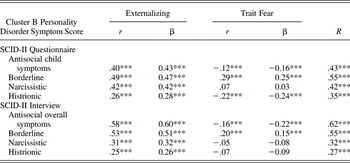
The construct of inhibitory control, along with that of defensive reactivity, has clear conceptual relevance to other personality disorders in the DSM besides antisocial personality disorder, particularly other disorders in Cluster B that are marked by behavioral impulsiveness and shallow or dysregulated emotion. The findings in Table 2, which were based on data from a mixed gender sample of adults recruited from the community (N = 476), provide empirical confirmation of such linkages. The participants in this sample were assessed for externalizing proneness using the 100-item ESI and for trait fear using a 55-item screening inventory consisting of items from the various fear and fearlessness inventories examined by Kramer et al. (2012) that provide for effective estimation (r > .9) of scores on the general factor from their fear/fearlessness model.Footnote 2 Mirroring findings for children, the correlation between trait fear scores and ESI disinhibition scores in this sample was very low (r = .1). Participants were also assessed for symptoms of DSM-IV Cluster B personality disorders using both the Screening Questionnaire for the Structured Clinical Interview for DSM-IV Axis II disorders (First, Spitzer, Gibbon, & Williams, Reference First, Spitzer, Gibbon and Williams1997) and the interview module for Cluster B. Consistent with expectation, externalizing scores showed robust positive associations with symptoms of all personality disorders in Cluster B, whether assessed by self-report questionnaire or diagnostic interview. In addition, trait fear showed a robust positive association, specifically with borderline personality symptoms, and a significant negative relationship with antisocial personality disorder whether assessed by questionnaire or interview. As discussed further below, evidence for a role of fearlessness in antisocial deviance is even stronger when it comes to the syndrome of psychopathy, in which disinhibited behavior is accompanied by distinct affective-interpersonal features (cf. Frick & Marsee, Reference Frick, Marsee and Patrick2006; Patrick & Bernat, Reference Patrick, Bernat, Berntson and Cacioppo2009).
Correlations of externalizing and trait fear scores with symptoms of DSM-IV Cluster B personality disorders assessed using the SCID-II Screening Questionnaire and the SCID-II Diagnostic Interview

Note: The sample consists of 476 adults (246 women, 230 men) recruited from the community. Trait fear scores refer to total scores on a 55-item inventory composed of items from various established self-report measures of fear and fearlessness (cf. Vizueta et al., Reference Vizueta, Patrick, Jiang, Thomas and He2012), externalizing scores refer to overall scores on a 100-item version of the Externalizing Spectrum Inventory (cf. Hall et al., Reference Hall, Bernat and Patrick2007), r is the zero-order correlation of personality disorder variable with externalizing or trait fear scores, β is the beta coefficient for prediction of personality variable by externalizing or trait fear when scores on both were included together in a regression model, and R is the multiple regression coefficient for prediction of personality variable by externalizing and trait fear when scores on both were included together in a regression model. For antisocial personality, data for the Structured Clinical Interview for DSM-IV (SCID-II) Screening Questionnaire consist of child symptoms only because items pertaining to the adult symptoms are not included in this measure.
***p < .001.
Conduct disorder and other impulse-related problems in children
Low levels of inhibitory control have been linked to externalizing and in some cases internalizing problem behaviors in children (Eisenberg et al., Reference Eisenberg, Gershoff, Fabes, Shepard, Cumberland and Losoya2001, Reference Eisenberg, Valiente, Spinrad, Cumberland, Liew and Reiser2009; Lemery, Essex, & Snider, Reference Lemery, Essex and Snider2002; Stifter et al., Reference Stifter, Putnam and Jahromi2008). Low inhibitory control is associated with a range of externalizing disorders, including ADHD (e.g., Martel & Nigg, Reference Martel and Nigg2006), conduct disorder (Nigg, Reference Nigg2003), and substance use disorders (Iacono, Malone, & McGue, Reference Iacono, Malone and McGue2008). Similar findings have been reported for dimensional measures of externalizing symptoms (e.g., Eisenberg et al., Reference Eisenberg, Fabes, Guthrie, Murphy, Maszk and Holmgren1996; Olson, Sameroff, Kerr, Lopez, & Wellman, Reference Olson, Sameroff, Kerr, Lopez and Wellman2005; Ormel et al., Reference Ormel, Oldehinkel, Ferdinand, Hartman, DeWinter and Veenstra2005; Stifter et al., Reference Stifter, Putnam and Jahromi2008), although others have reported nonlinear associations of inhibitory control with behavior problems (e.g, Murray & Kochanska, Reference Murray and Kochanska2002). Moreover, low inhibitory control has also been linked to low empathy (Valiente et al., Reference Valiente, Eisenberg, Fabes, Shepard, Cumberland and Losoya2004) and deficient moral behavior (Kochanska, Murray, & Coy, Reference Kochanska, Murray and Coy1997).
Criminal psychopathy
In his classic volume The Mask of Sanity (Reference Cleckley1976), Cleckley characterized psychopathy as a dualistic syndrome: psychopathic individuals present as personable, carefree, and emotionally resilient, but they exhibit severe behavioral problems that bring them into repeated conflict with society. The dominant assessment instrument in contemporary psychopathy research, Hare's (Reference Hare1991, Reference Hare2003) PCL-R, was developed to identify individuals fitting Cleckley's clinical description within correctional or forensic settings. Although the PCL-R was developed to measure psychopathy as a unitary construct, structural analyses have shown that it contains distinctive subgroups of items (factors) that, although correlated, nonetheless show diverging relations with external criterion variables. Most published research has focused on the original two-factor model (Hare et al., Reference Hare, Harpur, Hakstian, Forth, Hart and Newman1990; Harpur, Hakstian, & Hare, Reference Harpur, Hakstian and Hare1988), in which PCL-R Factor 1 comprises the interpersonal and affective features of psychopathy and Factor 2 encompasses the antisocial deviance features. Higher Factor 1 scores are associated with higher narcissism and Machiavellianism (Hare, Reference Hare1991; Harpur, Hare, & Hakstian, Reference Harpur, Hare and Hakstian1989) and lower empathy (Hare, Reference Hare2003). Factor 1, particularly its variance that is separate from Factor 2, shows positive relations with measures of social dominance (Harpur et al., Reference Harpur, Hare and Hakstian1989; Verona et al., Reference Verona, Patrick and Joiner2001), and in some studies, with achievement (Verona, Patrick, & Joiner, Reference Verona, Patrick and Joiner2001) and trait positive affect (Patrick, Reference Patrick1994). In contrast, PCL-R Factor 2 shows associations mainly with indicators of deviancy, including aggression, impulsivity, and general sensation seeking; child and adult symptoms of DSM antisocial personality disorder; and criminal history variables such as onset and frequency of offending and alcohol and drug dependence.
A two-process theory of psychopathy has been formulated to account for the distinctive components of psychopathy evident in the PCL-R (Fowles & Dindo, Reference Fowles, Dindo and Patrick2006; Patrick, Reference Patrick, Herve and Yuille2007; Patrick & Lang, Reference Patrick, Lang, Dawson, Schell and Bohmelt1999). Paralleling ideas about alternative pathways to antisocial behavior in younger samples (Frick & Marsee, Reference Frick, Marsee and Patrick2006; Frick & White, Reference Frick and White2008), the two-process model focuses on the neurobehavioral constructs of defensive reactivity and inhibitory control emphasized here. The affective–interpersonal features of psychopathy associated with PCL-R Factor 1 are theorized to reflect in part a lack of normal defensive reactivity, whereas the behavioral deviance features associated with Factor 2 are theorized to reflect impairments in inhibitory control systems. Consistent with this, as discussed further in the next section, individuals high in affective–interpersonal features of psychopathy show reduced potentiation of startle during aversive cuing (e.g., Patrick, Reference Patrick1994; Patrick, Bradley, & Lang, Reference Patrick, Bradley and Lang1993) and reduced amygdala reactivity to fearful face stimuli (Blair, Reference Blair and Patrick2006; Marsh et al., Reference Marsh, Finger, Mitchell, Reid, Sims and Kosson2008). With regard to Factor 2, scores on this component of the PCL-R show a close association with the broad externalizing factor of psychopathology (Patrick, Hicks, Krueger, & Lang, Reference Patrick, Hicks, Krueger and Lang2005) and selectively predict enhanced errors of commission in a well-established conflict task (Molto, Poy, Segarra, Pastor, & Montanes, Reference Molto, Poy, Segarra, Pastor and Montanes2007) as well as reductions in oddball P300 response (Venables, Reich, Bernat, Hall, & Patrick, Reference Venables, Reich, Bernat, Hall and Patrick2008).
From the perspective of this model, a clearer understanding of etiological mechanisms underlying psychopathy can be gained by directly assessing individuals on psychometric dimensions of trait fear and externalizing and investigating deviations in cognitive and affective processing associated with differing positions along these dimensions using physiological measures (Patrick & Bernat, Reference Patrick, Bernat, Berntson and Cacioppo2009). Research of this kind can both draw on and inform parallel work focusing on the roles of trait fear and externalizing and their neurobiological counterparts (defensive reactivity, inhibitory control) in disorders of impulse control and pathologic personality as defined within the DSM.
Neurobiological Bases and Physiological Correlates
Inhibitory control
The hierarchical model of the externalizing spectrum (Krueger et al., Reference Krueger, Hicks, Patrick, Carlson, Iacono and McGue2002, Reference Krueger, Markon, Patrick, Benning and Kramer2007) conceives of problems and traits in this spectrum as arising from differing sources of influence. One source consists of a general propensity toward impulsive/unrestrained behavior and affective dysregulation that appears highly heritable (Krueger et al., Reference Krueger, Hicks, Patrick, Carlson, Iacono and McGue2002; Young et al., Reference Young, Stallings, Corley, Krauter and Hewitt2000). This general propensity, which can be viewed as the negative end of a trait continuum of inhibitory control, is not identifiable with any specific externalizing disorder but rather accounts for variance in multiple disorders of this type. A second source of influence entails proclivities toward callous exploitativeness or self-medication that give rise to more antisocial–aggressive or substance-related expressions of externalizing proneness (Krueger et al., Reference Krueger, Markon, Patrick, Benning and Kramer2007; Venables & Patrick, Reference Venables and Patrick2012). A third source of influence consists of disorder-specific factors contributing to unique symptomatic features of individual externalizing disorders.
What brain systems and processes underlie general proneness to impulse control problems reflected in the broad factor of the externalizing spectrum model? Several lines of evidence point to anterior brain structures, including the prefrontal cortex (PFC) and anterior cingulate cortex (ACC), as playing crucial roles (Davidson, Putnam, & Larson, Reference Davidson, Putnam and Larson2000; Rothbart et al., Reference Rothbart, Sheese and Posner2007). Lesions of frontal brain regions are known to result in impulsive, externalizing behavior (Blumer & Benson, Reference Blumer, Benson, Benson and Blumer1975; Damasio, Tranel, & Damasio, Reference Damasio, Tranel and Damasio1990) and individuals exhibiting or at risk for impulse control problems show deficits on neuropsychological tests of frontal lobe function (Barkley, Reference Barkley1997; Morgan & Lilienfeld, Reference Morgan and Lilienfeld2000; Peterson & Pihl, Reference Peterson and Pihl1990; Tarter, Alterman, & Edwards, Reference Tarter, Alterman and Edwards1985). The PFC in particular is theorized to be important for top-down processing, that is, the guidance of behavior by internal goal representations in novel or dynamic situations where reliance on immediate stimulus cues alone is likely to produce undesired outcomes (e.g., Cohen & Servan-Schreiber, Reference Cohen and Servan-Schreiber1992; Miller, Reference Miller1999; Wise, Murray, & Gerfen, Reference Wise, Murray and Gerfen1996). By maintaining patterns of activation corresponding to goals and strategies required to achieve them, the PFC provides biasing signals to other brain regions, which serve to prime sensory–attentional, associative, and motor processes that support the performance of a designated task (Miller & Cohen, Reference Miller and Cohen2001).
Subdivisions of the PFC appear to play differing roles in the guidance of behavior. The dorsolateral PFC, which has close connections with sensory association cortices and projects to differing premotor and motor areas in the medial and lateral frontal lobes, operates to encode the relations between stimulus events and thereby represent rules (mappings) required to perform complex tasks. It is particularly important for active processes that involve top-down (cognitive) control of behavioral responses (cf. Petrides, Reference Petrides2000). Ventromedial and orbitofrontal regions of the PFC (collectively termed orbitomedial PFC; Blumer & Benson, Reference Blumer, Benson, Benson and Blumer1975) connect more directly and extensively with medial temporal limbic structures (including the amygdala, hippocampus and associated neocortex, and hypothalamus) and appear to play a greater role in the anticipation of affective consequences of behavior (Bechara, Damasio, Tranel, & Damasio, Reference Bechara, Damasio, Tranel and Damasio1997; Wagar & Thagard, Reference Wagar and Thagard2004), in the unlearning of stimulus–reward associations (i.e., reversal learning; Dias, Robbins, & Roberts, Reference Dias, Robbins and Roberts1996; Rolls, Reference Rolls2000), and in the regulation of emotional reactivity and expression (Damasio et al., Reference Damasio, Tranel and Damasio1990; Davidson et al., Reference Davidson, Putnam and Larson2000).
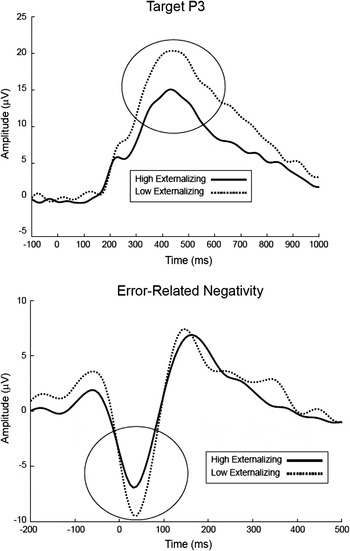
Whereas our understanding of executive control circuits in the brain has advanced dramatically through basic animal and human neuroscience research, existing knowledge regarding neural mechanisms and correlates of disinhibition-related traits remains quite rudimentary. The best established physiological indicator of proneness to externalizing problems is reduced amplitude of the P3 response, which is a positive brain potential, maximal over parietal scalp regions, that follows the occurrence of infrequent, attended targets in a stimulus sequence. Reduced P3 amplitude has been observed in relation to various specific impulse control problems (Iacono, Carlson, Taylor, Elkins, & McGue, Reference Iacono, Carlson, Taylor, Elkins and McGue1999; Iacono et al., Reference Iacono, Malone and McGue2008), and it is associated with risk for the development of such problems (Begleiter, Porjesz, Bihari, & Kissin, Reference Begleiter, Porjesz, Bihari and Kissin1984; Brigham, Herning, & Moss, Reference Brigham, Herning and Moss1995; Iacono, Carlson, Malone, & McGue, Reference Iacono, Carlson, Malone and McGue2002). Following up on these observations, research has established that reduced P3 is an indicator of the broad externalizing factor that these disorders share (Patrick et al., Reference Patrick, Bernat, Malone, Iacono, Krueger and McGue2006); Figure 3 (top) illustrates this relationship in terms of P3 data for high and low externalizing groups defined on the basis of an abbreviated (20-item) scale developed to index the ESI general externalizing factor. Moreover, subsequent work has demonstrated that the relationship between P3 and general externalizing proneness primarily reflects common genetic influence (Hicks et al., Reference Hicks, Bernat, Malone, Iacono, Patrick and Krueger2007).
(Top) The average event-related potential waveforms (with P3 component circled) for target stimuli in a visual oddball procedure for participants scoring above and below the median on a measure of general externalizing proneness in a mixed-gender sample of 46 community participants. The externalizing measure consisted of scores on a subset of 20 items (cf. Patrick et al., Reference Patrick, Kramer, Krueger and Markon2012) from the Externalizing Spectrum Inventory (Krueger et al., Reference Krueger, Markon, Patrick, Benning and Kramer2007) that effectively index the general factor of the model depicted in Figure 2; gender-specific medians were used to define subgroups. (Bottom) The average event-related potential waveforms (with error-related negativity component circled) for incorrect response trials of a letter-based flanker task for high and low externalizing subgroups of the same sample (N = 46) defined in the same manner.

Although valuable, the known relationship between P3 and proneness to impulse control problems does not in itself help to clarify our understanding of the neural bases of externalizing vulnerability. The reason is that the functional significance of the P3 remains unclear, and likely dependent on context (Coles & Rugg, Reference Coles, Rugg, Rugg and Coles1995), and the brain sources of the P3 are broadly distributed rather than traceable to a specific region or coherent circuit (Kiehl, Laurens, Duty, Forster, & Liddle, Reference Kiehl, Laurens, Duty, Forster and Liddle2001). Stronger clues as to mechanisms stand to be gained from brain potential responses with clearer functional meaning and better-defined neural sources. One such response is the error-related negativity (ERN), an event-related potential (ERP) response that occurs following errors in performance and that is known to arise from the ACC (Agam et al., Reference Agam, Hämäläinen, Leeb, Dyckman, Friedman and Isom2011; Mars et al., Reference Mars, Coles, Grol, Holroyd, Nieuwenhuis and Hulstijn2005; Miltner, Braun, & Coles, Reference Miltner, Braun and Coles1997). The ACC is theorized to invoke the control functions of the PFC as needed to support task performance by detecting errors as they occur (Gehring, Coles, Meyers, & Donchin, Reference Gehring, Coles, Meyer, Donchin, Karmos, Molnar, Csepe, Czigler and Desmedt1995; Scheffers, Coles, Bernstein, Gehring, & Donelhin, Reference Scheffers, Coles, Bernstein, Gehring and Donchin1996), by monitoring conflict among competing response tendencies (Carter et al., Reference Carter, Braver, Barch, Botvinick, Noll and Cohen1998), or by estimating error likelihood at the time a response is called for (Brown & Braver, Reference Brown and Braver2005). Impairments in ACC function would thus be expected to interfere with the ability to inhibit prepotent behavioral responses, to mediate between conflicting action tendencies, and to avoid repetition of errors. Following up on prior demonstrations of reduced ERN in relation to disinhibitory personality traits (Dikman & Allen, Reference Dikman and Allen2000; Pailing & Segalowitz, Reference Pailing and Segalowitz2004), Hall et al. (Reference Hall, Bernat and Patrick2007) reported evidence of reduced ERN response following performance errors in a flanker task for individuals high in externalizing proneness as indexed by the ESI; Figure 3 (bottom) depicts this result. By contrast, increased ERN response has reliably been demonstrated in adult participants with anxiety-related problems (cf. Vaidyanathan, Nelson, & Patrick, Reference Vaidyanathan, Nelson and Patrick2011; Weinberg, Riesel, & Hajcak, Reference Weinberg, Riesel and Hajcak2012).
Consistent with the adult literature, the P3 response has been widely studied as a correlate of and risk factor for disinhibitory problems, including substance-related disorders, in children. Children and adolescents at risk for and suffering from externalizing problems demonstrate reduced P3 amplitude (Begleiter et al., Reference Begleiter, Porjesz, Bihari and Kissin1984; Berman, Whipple, Fitch, & Noble, Reference Berman, Whipple, Fitch and Noble1993; Hill & Shen, Reference Hill and Shen2002). Rule-breaking boys also demonstrate diminished P3 amplitude (Bauer & Hesselbrock, Reference Bauer and Hesselbrock1999). Children and adolescents diagnosed with ADHD consistently show reduced P3 as well (e.g., Jonkman et al., Reference Jonkman, Kemner, Verbaten, Koelega, Camfferman and van der Gaag1997). Thus, as in older populations, reduced P3 appears to be a robust indicator of disinhibition across a number of externalizing groups. One important avenue for future research will be to further explore the association between P3 and disinhibition in younger children, because much of the research to date has been conducted in late childhood and adolescent samples.
Reduced ERN is also associated with disinhibitory problems in children. Children diagnosed with ADHD show reduced ERN amplitude at ages ranging from 8 to 15 (Albrecht et al., Reference Albrecht, Brandeis, Uebel, Heinrich, Mueller and Hasselhorn2008; van Meel, Heslenfeld, Oosterlaan, & Sergeant, Reference van Meel, Heslenfeld, Oosterlaan and Sergeant2007). In contrast, enhanced ERN has been reported in pediatric anxiety disorders, including obsessive–compulsive disorder (Hajcak, Franklin, Foa, & Simons, Reference Hajcak, Franklin, Foa and Simons2008) and generalized anxiety disorder (Ladouceur, Dahl, Birmaher, Axelson, & Ryan, Reference Ladouceur, Dahl, Birmaher, Axelson and Ryan2006), among children ranging in age from 8 to 17 years. Paralleling the adult literature then, the ERN appears reduced for externalizing problems and enhanced for anxiety-related problems in children, indicating developmental continuity of altered ERN magnitude as an indicator of psychopathology. It is therefore of interest to speculate that, in the context of inhibitory control, enhanced ERN in internalizing samples might index overinvestment of frontally mediated inhibitory processes (Eysenck & Derakshan, Reference Eysenck and Derakshan2011; Moser, Moran, & Jendrusina, Reference Moser, Moran and Jendrusina2012). However, virtually no research has been conducted to date examining the ERN as an indicator of psychopathology in very young children. One recent study by Brooker, Buss, and Dennis (Reference Brooker, Buss and Dennis2011), however, reported observable ERNs in children as young as 4 years, supporting its potential use as an indicator of inhibitory control in younger samples.
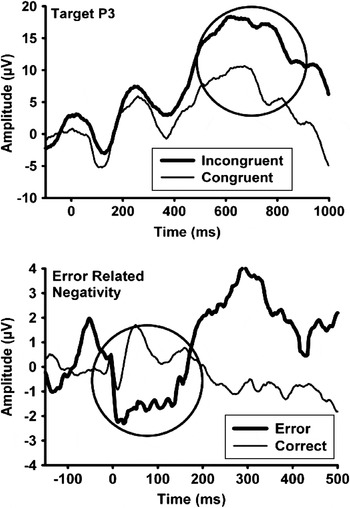
Extending the work of Brooker et al. (Reference Brooker, Buss and Dennis2011), the third author has recently begun a developmental investigation of the associations of the P300 and ERN with inhibitory control assessed through behavioral tasks (cf. Durbin, Reference Durbin2010) in very young children. Figure 4 depicts the values for an initial sample of seven children (ages 3–5) of the average P3 and ERN responses for subcategories of stimuli and responses, respectively, within a developmentally appropriate version of the well-known flanker task (Eriksen & Eriksen, Reference Eriksen and Eriksen1974) that utilizes yellow cartoon fish displayed on a blue, oceanlike background as stimuli. This “fish flanker” task has been successfully used with children as young as 4 years of age (Rueda, Posner, Rothbart, & Davis-Stover, Reference Rueda, Posner, Rothbart and Davis-Stober2004). It can be seen from the figure that children in this age range show an expected stimulus type effect for the P3 (Figure 4 top), with amplitude enhanced for incongruent as compared to congruent stimuli, and an expected enhancement of ERN for incorrect relative to correct responses (bottom). These results demonstrate promise for the measurement of these ERPs in very young children and ultimately for their potential as indicators of inhibitory control deficits that may confer risk for later psychopathology.
(Top) The average event-related potential waveforms (with P3 component circled) for congruent and incongruent stimulus trials of an age appropriate “fish flanker” task in a mixed-gender sample of children aged 3–5 (n = 7). (Bottom) The average event-related potential waveforms (with error-related negativity component circled) for incorrect (error) and correct trials of the same task in the same sample (n = 7).

In summary, evidence to date points to dysfunctions in anterior brain circuitry, including the PFC and brain regions with which it interacts (such as the ACC), as a substrate for deficient inhibitory control. The consequence of an underlying weakness in this circuitry would be a propensity to act on the basis of salient cues in the immediate environment rather than on the basis of internal representations of goals and plans (cf. Miller & Cohen, Reference Miller and Cohen2001) or, as described by Patterson and Newman (Reference Patterson and Newman1993), an impairment in the natural inclination to shift from an ongoing response set to a reflective “wait and see” orientation in the face of conflict. Dysfunction in the PFC/ACC systems would also compromise an individual's ability to anticipate and cope proactively with obstacles and weaken the capacity to regulate immediate affective responses that have the potential to be counterproductive (Davidson et al., Reference Davidson, Putnam and Larson2000; Rothbart & Sheese, Reference Rothbart, Sheese and Gross2006). Brain measures of postperceptual processing or performance monitoring that covary with disinhibition proneness, such the P3 and ERN, may be indicative of dysfunction in these executive control circuits. There is also evidence that neuropsychological tests sensitive to frontal brain dysfunction may serve as effective indicators of externalizing pronenesss (Barkley, Reference Barkley1997; Morgan & Lilienfeld, Reference Morgan and Lilienfeld2000; Peterson & Pihl, Reference Peterson and Pihl1990; Tarter et al., Reference Tarter, Alterman and Edwards1985).
Defensive (fear) reactivity
As noted, the emotional state of fear is presumed to reflect activation of the brain's defensive motivational system. The amygdala in particular has been described as a core component of the cue-specific defensive (fear) system in mammals (Davis, Reference Davis and Aggleton1992; Fanselow, Reference Fanselow1994; LeDoux, Reference LeDoux1995). Research with human adults has revealed a genetic basis to individual differences in fear conditioning (Hettema, Anna, Neale, Kendler, & Fredrikson, Reference Hettema, Anna, Neale, Kendler and Fredrikson2003) and demonstrated associations between specific gene alleles and variations in the reactivity of the amygdala to fear stimuli (e.g., Hariri et al., Reference Hariri, Mattay, Tessitore, Kolachana, Fera and Goldman2002). Young children meeting Kagan's description of disinhibited temperament show reduced amygdala reactivity to novel human faces as adults compared with individuals classified as inhibited (Schwartz, Wright, Shin, Kagan, & Rauch, Reference Schwartz, Wright, Shin, Kagan and Rauch2003).
However, it is important to note that the amygdala comprises only one element of the circuitry that underlies defensive motivational processing and activation. For example, the bed nucleus of the stria terminalis shares close connections with the amygdala and has been hypothesized to form part of an extended amygdala system that governs more enduring (tonic) activation in relation to strong or persistent stressors (Davis, Walker, & Lee, Reference Davis, Walker and Lee1997). The evidence for differential roles of the amygdala in cue-specific fear and of the extended amygdala in tonic anxiety/distress provides a point of reference for thinking about the relationship of dispositional fear/fearlessness to internalizing psychopathology (Patrick & Bernat, Reference Patrick, Bernat, Krueger and Tackett2006; Rosen & Schulkin, Reference Rosen and Schulkin1998). Paralleling the distinction between fear and anxiety systems in the brain, contemporary perspectives on internalizing psychopathology in adults (Sellbom, Ben-Porath, & Bagby, Reference Sellbom, Ben-Porath and Bagby2008; Watson, Reference Watson2005; see also Krueger, Reference Krueger1999) recognize a distinction between fear disorders (specific phobia, social phobia, panic disorder, agoraphobia) and distress disorders (generalized anxiety disorder, posttraumatic stress disorder, dysthymic disorder, major depression). Whereas fear disorders are marked by the presence of salient physiological hyperarousal in relation to specific objects/situations or perturbing physical sensations, distress disorders are marked by the presence of pervasive, “free floating” negative affect and dysphoria. From this standpoint, the construct of dispositional fear/fearlessness, which reflects variations in situationally bound fear as opposed to nonspecific distress, appears most directly relevant to the fear subdomain of internalizing psychopathology. However, it has been theorized that high levels of dispositional fear increase susceptibility to dysregulation of the extended amygdala as a function of severe or repeated stressful experiences (Rosen & Schulkin, Reference Rosen and Schulkin1998); consistent with this, recent research points to elevated rates of certain distress disorders (in particular posttraumatic stress disorder and depression, which are known to be precipitated or amplified by stressful life events) in individuals exhibiting high levels of fear disorder symptomatology (Vaidyanthan, Patrick, & Iacono, Reference Vaidyanathan, Patrick and Iacono2011).
A further important point is that the amygdala and affiliated structures (e.g., bed nucleus of the stria terminalis) interact with higher brain structures that govern processes such as directed attention, declarative memory, and response inhibition (Davidson et al., Reference Davidson, Putnam and Larson2000; LeDoux, Reference LeDoux1995). Thus, excessive or deficient levels of negative emotional reactivity can reflect deviations in the functioning of other brain structures besides the amygdala or extended amygdala (cf. Curtin, Patrick, Lang, Cacioppo, & Birbaumer, Reference Curtin, Patrick, Lang, Cacioppo and Birbaumer2001; Patrick & Lang, Reference Patrick, Lang, Dawson, Schell and Bohmelt1999). Further, the amygdala does not appear to function strictly as a fear activation system. There is evidence for its involvement in the detection of unfamiliar stimuli more generally, in the prioritization of attention to stimuli in the environment, and in the activation of positive as well as negative emotion (Lang, Bradley, & Cuthbert, Reference Lang, Bradley, Cuthbert, Lang, Simons and Balaban1997). Thus, deviations in amygdala functioning may be associated with abnormalities in other types of processing aside from fear.
One methodology that has been used to assess defensive reactivity to aversive stimuli is potentiation of the startle reflex to a sudden noise probe, measured via the whole-body “jump” reaction in animals or via the eyeblink response in humans. Davis and colleagues (e.g., Davis, Reference Davis1989; Davis, Falls, Campeau, & Kim, Reference Davis, Falls, Campeau and Kim1993) established that the mechanism for fear-potentiated startle in animals is a projection from the central nucleus of the amygdala to the nucleus reticularis pontis caudalis, the brainstem junction of the startle circuit. In humans, the noise-elicited blink startle response is reliably enhanced during viewing of aversive pictures compared to neutral pictures (Lang, Reference Lang1995; Lang, Bradley, & Cuthbert, Reference Lang, Bradley and Cuthbert1990). This effect occurs most strongly for direct threat scenes (e.g., aimed weapons, menacing attackers) and to some degree for vicarious aversive scenes involving physical injury or aggression (Bradley, Codispoti, Cuthbert, & Lang, Reference Bradley, Codispoti, Cuthbert and Lang2001; Levenston, Patrick, Bradley, & Lang, Reference Levenston, Patrick, Bradley and Lang2000). Increased startle potentiation during viewing of fear-relevant scenes has been demonstrated in individuals with phobic disorders (e.g., Hamm, Cuthbert, Globish, & Vaitl, Reference Hamm, Cuthbert, Globisch and Vaitl1997; Vrana, Constantine, & Westman, Reference Vrana, Constantine and Westman1992), whereas deficient fear-potentiated startle is reliably observed in incarcerated offenders diagnosed with psychopathy (e.g., Patrick et al., Reference Patrick, Bradley and Lang1993; Sutton et al., Reference Sutton, Vitale and Newman2002; Vaidyanathan, Hall, Patrick, & Bernat, Reference Vaidyanathan, Hall, Patrick and Bernat2011). These results are consistent with the idea that psychopathy entails a deficiency in the type of cue-specific defensive reactivity that characterizes specific phobia (Fowles & Dindo, Reference Fowles and Dindo2009; Lykken, Reference Lykken1995; Patrick, Reference Patrick, Herve and Yuille2007; Vaidyanathan, Patrick, & Cuthbert, Reference Vaidyanathan, Patrick and Cuthbert2009).
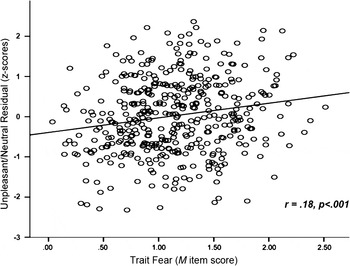
Individual differences in startle reflex potentiation during aversive cuing also covary with scores on various self-rating measures of fear, fearlessness, and psychopathy, including the differing scale measures used in the aforementioned modeling analyses by Kramer et al. (2012). Vaidyanathan, Patrick, and Bernat (Reference Vaidyanathan, Patrick and Bernat2009) tested the hypothesis that aversive startle potentiation represents a continuous physiological indicator of this underlying fear/fearlessness dimension in a college sample (N = 88) administered the FSS, the EAS-fear and thrill-adventure seeking subscale of the Sensation Seeking Scale and the subscales comprising Tridimensional Personality Questionnaire Hard Avoidance and PPI Fearless Dominance factor. Participants were tested in an affect-startle procedure that included differing categories of aversive pictures (threat, injury, other attack) along with pleasant and neutral pictures. A robust linear relationship was found (in the overall sample, and for men and women separately) between a composite of scores on the various fear/fearlessness measures and startle modulation for threat pictures in particular: the stimulus category, as noted earlier, that is most directly fear relevant and produces the most reliable potentiation of startle. As a follow-up to this work, Kramer et al. (2012) incorporated the psychometric and physiological data from Vaidyanthan et al. into the fear/fearlessness model for their larger twin sample; they demonstrated that startle potentiation for threat scenes cohered selectively with the general fear factor (loading estimate = 0.35), such that model fit declined if startle potentiation was specified as loading solely or additionally on any of the subfactors. These results indicate that aversive startle potentiation represents a physiological indicator of the psychometric trait fear dimension, and they support the idea that these two variables (startle potentiation, trait fear) represent indices of a common neurobehavioral trait construct (i.e., reactivity of the brain's defensive motivational system).
Developmental studies of blink startle potentiation provide some support for its use as a neurobehavioral indicator of fear across the life span, although its measurement in younger children (<10 years of age) has been more difficult to achieve. In particular, measuring aversive startle potentiation in young children has posed unique challenges related to the selection of age appropriate stimuli. Moreover, eliciting startle in younger children is difficult because of the smaller sizes of muscles around their eyes and challenges in testing that result in higher attrition rates (Balaban & Berg, Reference Balaban, Berg, McMaster and Brock2007). With children and adolescents above age 10, studies have successfully demonstrated enhanced startle magnitude during aversive stimulus presentation (Grillon, Dierker, & Merikangas, Reference Grillon, Dierker and Merikangas1997, Reference Grillon, Dierker and Merikangas1998) as seen with the adult literature. Studies in younger children, however, are mixed with regard to elicitation of aversive startle potentiation (McManis, Bradley, Cuthbert, & Lang, Reference McManis, Bradley, Cuthbert and Lang1995; Waters & Ornitz, Reference Waters and Ornitz2005). One possible explanation for these mixed effects may be that aversive stimuli selected for use with children are not sufficiently potent to activate the defensive system (Grillon et al., Reference Grillon, Merikangas, Dierker, Snidman, Arriaga and Kagan1999). In response to this concern, Quevedo, Smith, Donzella, Schunk, and Gunnar (Reference Quevedo, Smith, Donzella, Schunk and Gunnar2010) developed a task using age appropriate film clips that was successful in producing comparable aversive startle potentiation across a wide age range, from early childhood (3 years of age) to adulthood (M age = 22 years). This work suggests that stimulus selection is important to the assessment of aversive startle potentiation in younger samples and that the film clip paradigm may prove useful for investigating fear-related individual differences across the life span.
With respect to individual differences in aversive startle potentiation in younger samples, there is evidence that children of parents with fear- or anxiety-related disorders demonstrate enhanced aversive startle potentiation (Grillon et al., Reference Grillon, Dierker and Merikangas1998; Waters, Craske, et al., Reference Waters, Craske, Bergman, Naliboff, Negoro and Ornitz2008). This enhanced startle potentiation may be at least somewhat gender specific, with greater enhancement evident for females at risk for anxiety-related problems (Grillon et al., Reference Grillon, Dierker and Merikangas1998). Conversely, van Goozen, Snoek, Matthys, van Rossum, and van Engeland (Reference van Goozen, Snoek, Matthys, van Rossum and van Engeland2004) found that children (ages 7–12) with disruptive behavior disorders showed blunted startle reactivity to aversive auditory stimuli and to noise probes during unpleasant pictures; in addition, dimensional measures of delinquency in this study were negatively associated with startle reactivity in relation to negative stimuli. Inasmuch as delinquent children are characterized by diminished levels of fear, this result appears consistent with the above-mentioned evidence from adult research demonstrating that aversive startle potentiation is indicative of a bipolar fear/fearlessness dimension. It is notable that some studies of younger children have found that baseline startle response, quantified as reactivity to noise probes delivered during intervals between foreground stimuli, relates more strongly to parent ratings of child anxiousness than aversive startle potentiation (Grillon et al., Reference Grillon, Dierker and Merikangas1997; Quevedo et al., Reference Quevedo, Smith, Donzella, Schunk and Gunnar2010; Waters, Neumann, Henry, Crask, & Ornitz, Reference Waters, Neumann, Henry, Craske and Ornitz2008). These contrasting findings in younger children may be attributable to reliance on observer ratings of anxiousness as opposed to behavioral response measures of fear and perhaps to a focus on current expression of anxiety symptoms as opposed to underlying propensity for fear- or distress-related problems conferred by parental history (cf. Rosen & Schulkin, Reference Rosen and Schulkin1998; see also Vaidyanathan, Patrick, & Cuthbert, Reference Vaidyanathan, Patrick and Cuthbert2009). Future studies are therefore needed that assess dispositional fear more directly and specifically along the lines of recent studies described above that have used batteries of ecologically valid laboratory tasks.
As discussed further in sections below, multiple physiological indicators of trait fear will be required to establish a direct physiological index of individual differences in defensive reactivity with satisfactory psychometric properties. The existing literature points to a number of other potential indicators in addition to startle potentiation. One of these is brain reactivity to affective face stimuli. In particular, there is evidence that emotional faces, most notably fearful expressions, reliably activate the amygdala in humans (e.g., Morris et al., Reference Morris, Frith, Perrett, Rowland, Young and Calder1996; Whalen, Reference Whalen1998), and adults high in trait negative affect show enhanced amygdala reactivity to fear faces (e.g., Bishop, Duncan, & Lawrence, Reference Bishop, Duncan and Lawrence2004). Killgore and Yurgelum-Todd (Reference Killgore and Yurgelum-Todd2005) have shown that children and adolescents (mean age = 12 years) high in social anxiety exhibit stronger amygdala activation during fearful face perception. It is interesting that enhanced reactivity to fearful expressions in this study was not associated with all anxiety measures but instead was most closely associated with social fears, suggesting that augmented amygdala reactivity to fear face stimuli in children may be specific to fear-related traits/symptoms. At the other end of the spectrum, research on youth with conduct problems has demonstrated reduced amygdala reactivity (Jones, Laurens, Herba, Barker, & Viding, Reference Jones, Laurens, Herba, Barker and Viding2009; Marsh et al., Reference Marsh, Finger, Mitchell, Reid, Sims and Kosson2008) to fear faces specifically in children with callous–unemotional traits, akin to the emotional–interpersonal features of psychopathy in adulthood, which have been linked to deficits in fear-potentiated startle (Patrick et al., Reference Patrick, Bradley and Lang1993; Sutton et al., Reference Sutton, Vitale and Newman2002; Vaidyanathan, Hall, et al., Reference Vaidyanathan, Hall, Patrick and Bernat2011) and in amygdala reactivity to visual affective stimuli (Birbaumer et al., Reference Birbaumer, Veit, Lotze, Erb, Hermann and Grodd2005; Gordon, Baird, & End, Reference Gordon, Baird and End2004). However, in view of other work indicating that amygdala damage does not invariably result in impaired recognition of fear faces (Adolphs et al., Reference Adolphs, Tranel, Hamann, Young, Calder and Phelps1999) and that the amygdala plays a role in the processing of positive and negative emotional events (Sabatinelli, Bradley, Fitzsimmons, & Lang, Reference Sabatinelli, Bradley, Fitzsimmons and Lang2005), further research is needed to establish whether individual differences in brain reactivity to fearful expressions reflect trait variations in fear tied specifically to the amygdala or broader variations in affective sensitivity involving structures other than the amygdala.
There is also evidence that certain brain ERP responses to aversive events may covary with dispositional fear and fearlessness. For example, one study by Drislane, Vaidyanathan, and Patrick (Reference Drislane, Vaidyanathan and Patrick2012) found reduced overall amplitude of the midlatency P3 ERP response to abrupt startling noise probes presented unexpectedly in the context of picture viewing in offenders high in PCL-R psychopathy. This attenuation of “probe P3” response (cf. Schupp, Cuthbert, Bradley, Birbaumer, & Lang, Reference Schupp, Cuthbert, Bradley, Birbaumer and Lang1997), which the authors interpreted as a reduced “cortical call-to-arms” (Graham, Reference Graham, Kimmel, van Olst and Orlebeke1979; Herbert, Kissler, Junghoefer, Peyk, & Rockstroh, Reference Herbert, Kissler, Junghoefer, Peyk and Rockstroh2006), was associated specifically with the core affective–interpersonal features of psychopathy, which are the features that appear to be most related to deficient fear (Benning, Patrick, & Iacono, Reference Benning, Patrick and Iacono2005; Gordon et al., Reference Gordon, Baird and End2004; Patrick, Reference Patrick1994; Drislane, Lucy, Yancey, Vaidyanathan & Patrick, Reference Vaidyanathan, Hall, Patrick and Bernat2011). In other recent work, Drislane et al. (Reference Drislane, Lucy, Yancey, Vaidyanathan and Patrick2012) examined variations in amplitude of the probe P3 response in relation to trait fear scores in adult twins from the community. Participants (N = 456) comprised a subset of twins included in the fear modeling analyses by Kramer et al. (2012), with trait fear assessed using an item-based scale measure (Vizueta et al., Reference Vizueta, Patrick, Jiang, Thomas and He2012) designed to index the general fear/fearlessness factor from their model. Higher levels of trait fear in this sample were associated with increased overall amplitude of P3 response to noise probes presented during picture viewing and with increased inhibition of probe P3 during viewing of unpleasant as compared to neutral pictures (see Figure 5), signifying enhanced dedication of attentional resources to processing of aversive scenes by high-fear individuals. It is notable that both of these response parameters (overall amplitude, inhibition for unpleasant neutral scenes) showed higher intertwin concordance for identical compared to fraternal twins, indicating a heritable component to each.
A scatterplot of the relationship within a sample of male and female adults from the community (N = 456) between trait fear scores and probe P3 inhibition for unpleasant compared to neutral picture stimuli. Trait Fear scores (x axis) reflect average scores on items (scored 0–3) of a 55-item inventory (cf. Vizueta et al., Reference Vizueta, Patrick, Jiang, Thomas and He2012) developed to index the general fear/fearlessness factor of the model depicted in Figure 1 (cf. Kramer et al., 2012). Probe P3 refers to the amplitude of P3 brain response to sudden startling noises presented during viewing of picture stimuli; P3 inhibition values (y axis) reflect residuals of unpleasant P3 amplitude scores regressed on neutral amplitude scores, such that higher values reflect greater inhibition of probe P3 during viewing of aversive compared to neutral scenes.

Along with measures of brain reactivity to fearful faces and other aversive stimuli, differing parameters of autonomic response may also prove useful as indicators of dispositional fear. A classic finding in the adult criminal psychopathy literature consists of reduced electrodermal activation in relation to conditioned fear cues (Lykken, Reference Lykken1957) and during cued anticipation of noxious events (Hare, Reference Hare, Hare and Schalling1978). More recent work has demonstrated parallel effects for nonincarcerated adults identified as high in affective–interpersonal features of psychopathy (Benning et al., Reference Benning, Patrick and Iacono2005; Dindo & Fowles, Reference Dindo and Fowles2011; Flor, Birbaumer, Hermann, Ziegler, & Patrick, Reference Flor, Birbaumer, Hermann, Ziegler and Patrick2002). Studies with children have reported fear- and psychopathy-related differences more in relation to tonic levels of autonomic activity. For example, in a sample of preschool children, Fowles, Kochanska, and Murray (Reference Fowles, Kochanska and Murray2000) found that temperamental fearfulness assessed through behavioral testing was associated with heightened skin conductance levels during the latter phases of testing. By contrast, reduced autonomic activity (i.e., reduced heart rate and increased heart rate variability) has consistently been reported among children and adolescents exhibiting antisocial and criminal activity (for a review, see Raine, Reference Raine2002).
Resting cerebral hemispheric asymmetry may provide yet another physiological indicator of fear proneness in children as well as adults, although work remains to be done to clarify whether distinct patterns of asymmetry characterize fear as compared to general distress or negative affectivity consistently across the life span. A consistent finding in the developmental literature is that infants and children characterized by anxious and withdrawn temperaments show greater right frontal activation (Fox, Reference Fox1991, Reference Fox1994; Fox et al., Reference Fox, Rubin, Calkins, Marshall, Coplan and Porges1995; Theall-Honey & Schmidt, Reference Theall-Honey and Schmidt2006). The opposite pattern of frontal asymmetry (i.e., greater relative left frontal EEG activity) measured in infancy appears to be a predictor of later externalizing behaviors (Smith & Bell, Reference Smith and Bell2010), consistent with the adult literature linking left frontal activity to aggression (Carver & Harmon-Jones, Reference Carver and Harmon-Jones2009). Thus, greater left frontal activity may index enhanced approach-related tendencies such as fearlessness and boldness in children. In contrast, research with adults (Heller & Nitschke, Reference Heller and Nitschke1998) has demonstrated a pattern of enhanced left frontal activation in relation to anxious apprehension (characteristic of worry or distress). However, this asymmetry pattern may reflect activation of differing underlying brain regions than those associated with aggression or externalizing tendencies (Engels et al., Reference Engels, Heller, Mohanty, Herrington, Banich and Webb2007). Finally, enhanced right posterior asymmetry has also been linked to NE (fear, sadness, and anger) in children as young as 3 years old, consistent with the involvement of parietal brain regions in vigilance and threat processing (Shankman et al., Reference Shankman, Klein, Torpey, Olino, Dyson and Kim2011). In line with this, research with adults (cf. Heller & Nitschke, Reference Heller and Nitschke1998) indicates that anxious arousal (characteristic of panic and fear) is associated in particular with enhanced right parietal brain activation.
Toward a Psychoneurometrics of Psychopathology: An Illustration
Although the evidence discussed to this point indicates that psychometric measures of dispositional defensive reactivity (i.e., trait fear) and inhibitory control (i.e., externalizing proneness), including self-rating or interview-based measures in adults and informant-rating or behavioral response measures in children, can help to bridge psychopathologic phenotypes with neurobiological measures, our aim here is not to suggest that these psychometric variables should replace traditional diagnostic entities as referents for neurobiological studies of psychopathology. Rather, alongside continuing neuroscientific studies of established diagnostic syndromes, we seek to encourage systematic investigation of the neurophysiological correlates of these psychometric phenotypes as a step toward the development of direct brain-based measures of neurobehavioral trait constructs. This can be accomplished by routinely including precise psychometric measures of these target constructs in brain measurement studies involving moderate to large total subject numbers in order to identify reliable neurophysiological correlates of these constructs. Once multiple physiological indicators of these constructs have been identified, studies incorporating multiple known indicators (in the context of common as well as differing task procedures) can be conducted in order to map convergences and divergences among indicators.
To provide a concrete illustration of this approach, Nelson, Patrick, and Bernat (Reference Nelson, Patrick and Bernat2011) undertook analyses of the relations among multiple electrocortical (ERP) indicators of externalizing proneness recorded from 88 participants in three different task procedures: a three-stimulus oddball P3 task, an ERN flanker task, and a choice-feedback task (cf. Gehring & Willoughby, Reference Gehring and Willoughby2002). Participants were assessed for externalizing proneness using the aforementioned 100-item screening version of the ESI. The ERP indicators included one response measure from the choice-feedback task (i.e., amplitude of P3 response to gain/loss feedback cues that occurred following choices), two measures from the flanker task (i.e., amplitude of P3 response to flanker target stimuli, amplitude of ERN response following incorrect responses to flanker stimuli), and two measures from the oddball task (i.e., amplitude of P3 response to infrequent target and novel stimuli). The three ERP measures from the choice-feedback and flanker tasks, all of which showed significant negative associations with ESI externalizing scores (rs = −.24 to −.37), were used to construct an ERP-based composite index of externalizing; the two measures from the oddball task were reserved as criterion variables for validation analyses.
Besides showing negative relations with externalizing proneness, the three ERP measures from the choice-feedback and flanker tasks correlated significantly with one another (rs = .24–.27), such that when entered into a factor analysis, a single common factor emerged that accounted for appreciable variance in each. Further, when these three brain response measures were entered together with ESI externalizing scores into a follow-up factor analysis, the analysis again yielded evidence of a single dominant factor on which ESI-100 scores loaded to a comparable degree (r = –.60) with the three ERP measures (.44–.60). The single common factor emerging from this analysis can be interpreted as a predominantly neurophysiological (ERP-based) externalizing factor on which the self-report based ESI measure also loaded. This result has important implications. It indicates that variations in inhibitory control can be assessed in terms of a composite physiological dimension. Given evidence for the high heritability of general externalizing proneness (Krueger et al., Reference Krueger, Hicks, Patrick, Carlson, Iacono and McGue2002; Young et al., Reference Young, Stallings, Corley, Krauter and Hewitt2000) together with data indicating that associations of externalizing with brain response measures such as P3 are mediated by shared genetic influences (e.g., Hicks et al., Reference Hicks, Bernat, Malone, Iacono, Patrick and Krueger2007), this finding points to the possibility that scores on a physiologically defined dimension of inhibitory control might be used in future research as a basis for selecting at-risk individuals for neuroimaging and genetic studies of impulse control disorders.
As discussed at the outset, the phenomenon of method variance (cf. Campbell & Fiske, Reference Campbell and Fiske1959) poses a fundamental challenge to efforts to “map” physiological response variables onto rating or behavioral measures of psychological constructs. The psychoneurometric approach addresses this challenge by treating differing neurophysiological indicators as “items” to be aggregated into a composite “scale” for indexing the psychological construct of interest in the domain of physiology. As a demonstration of the effectiveness of this approach for bridging the measurement gap between physiological and nonphysiological methods of assessment, Nelson et al. (Reference Nelson, Patrick and Bernat2011) reported correlations between scores on the factor from their initial ERP-based analysis and separate criterion measures of externalizing proneness in domains of self-ratings and physiological response. The self-rating measures consisted of the inventories of antisocial behavior, substance problems, and socialization shown in the top part of Table 1; the physiological criteria were the P3 amplitude measures for the two categories of infrequent stimuli (target, novel) in the oddball task procedure. Validity coefficients for the prediction of self-rating criterion variables from scores on the ERP-based factor ranged from –.31 for alcohol dependence to .16 for socialization (M = |.20|). Validity coefficients for the prediction of physiological criterion variables (target and novel stimulus P3, respectively) from scores on the ERP-based factor were .68 and .69. These results illustrate how relationships with externalizing-related criterion variables in the domain of physiology can be amplified by utilizing a composite physiological index of externalizing proneness as the basis for prediction.
The process of identifying reliable physiological indicators of neurobehavioral constructs such as inhibitory control and defensive reactivity can be facilitated by the use of common referent measures of these constructs by multiple investigators. As described in earlier sections, psychometrically effective measures of these constructs, derived from quantitative models of relevant content domains, are available for use with adults. Refinement of behaviorally based measures for indexing these constructs in children and determination of their relations across time with counterpart measures at later ages will provide the basis for identifying developmentally stable physiological indicators of these constructs and/or earlier physiological indicators that predict alternative indicators later in life. As documented in the work of Nelson et al. (Reference Nelson, Patrick and Bernat2011), differing brain response indicators of externalizing proneness as indexed by the ESI have already been identified, including ERN amplitude and alternative variants of P3 response in differing tasks. Our work to date on correlates of the broad self-rating based dimension of trait fear point to startle reflex potentiation and noise-probe P3 amplitude as two physiological indicators of this dimension. In addition, as noted in the Neurobiological Bases and Physiological Correlates Section, the available literature points to varying other candidate physiological indicators as well. Further, as discussed in the final section below, the psychoneurometric approach can potentially be applied to other dimensional psychometric phenotypes of relevance to antisocial behavior problems, including the callous-aggression and addiction proneness subfactors that link particular subsets of problems and traits within the externalizing spectrum (Krueger et al., Reference Krueger, Markon, Patrick, Benning and Kramer2007).
Figure 6 provides a schematic illustration of the neuropsychometric approach. As depicted in the figure, the approach entails (a) systematic efforts to identify reliable physiological correlates of a relevant behavioral phenotype within one or more psychologically meaningful task contexts, followed by (b) efforts to evaluate the structure of these physiological indicators (in particular, the variance in each that intersects with the behavioral phenotype of interest; cf. Iacono, Reference Iacono1991), both with the aim of refining physiological measurement of the neurobehavioral construct of interest and clarifying the psychological meaning of physiological indicators derived from varying tasks. This is followed by efforts to (c) update conceptualization of the target neurobehavioral construct to accommodate insights gained from the structural analysis of physiological indicators (while retaining linkages to psychopathology), (d) revise behavioral operationalization of the target construct to incorporate the revised conceptualization, and (e) implement new or modified task protocols designed to increase convergence between revised behavioral phenotypes and physiological response measures within those tasks. This process continues iteratively to the point where a coherent array of physiological tasks/measures exists for operationalizing the targeted neurobehavioral construct in a precise and reliable manner.
A schematic of the psychoneurometric approach as applied to target constructs of defensive reactivity (Def) and inhibitory control (Inhib). The first step in the approach entails identifying reliable physiological indicators (Physvar1, Physvar2, etc.) of the target constructs operationalized psychometrically as trait fear (Def TF) and externalizing (Inhib ESI). The next step entails mapping of interrelations among physiological indicators of each construct, in order to (a) establish statistically reliable neurometric measures of defensive reactivity (Def neurometric) and inhibitory control (Inhib neurometric) constructs and (b) acquire understanding of brain circuits/processes associated with individual differences in defensive reactivity and inhibitory control. Knowledge gained about the convergence of multiple physiological indicators from differing behavioral tasks and brain mechanisms underlying this convergence in turn feeds back into conceptualization and psychometric and measurement of these target constructs (large curved arrows on left and right sides of figure). This process continues iteratively until a coherent set of neurometric tasks or measures exists for assessing each target construct reliably and effectively.

Conclusions and Future Directions
Research aimed at clarifying the role of neurobiological systems and processes in clinical disorders, including conditions marked by impulsive or predatory antisocial behavior, has been identified as a high priority by authorities in the mental health field. However, there is growing recognition that existing conceptions of psychopathology will need to be reformulated to make them more amenable to biological analysis (Hyman, Reference Hyman2007). Toward this end, we propose a psychoneurometric approach to the study of clinical disorders that includes a number of notable features. First, it addresses the issue of diagnostic comorbidity by focusing on broad dispositional variables that differing disorders share while acknowledging the role of specific etiologic contributors to individual disorders. Second, it addresses the conceptual gap between diagnostic phenotypes and biological systems by placing investigative emphasis on neurobehavioral trait constructs rather than disorders. Third, as illustrated in Figure 6, the psychoneurometric approach provides a means by which quantitative-statistical methods can be used to construct reliable neurophysiological composite measures of target trait constructs through reference to established psychometric or behavioral measures of the same constructs. Fourth, it provides a two-way path along which behavioral conceptions can guide efforts to identify clinically relevant neurobiological circuits or processes and reciprocally along which knowledge gained about relevant neurobiological circuits/processes can feed back into behavioral conceptions of clinical disorders.
The first step in a psychoneurometric approach to the study of clinical problems will entail moderate to large sample studies directed at establishing reliable neurobiological indicators (including verification of candidates suggested by available published work) of constructs such as trait fear and disinhibition/externalizing. For reasons of practicality, we encourage the use of lower-cost methodologies such as EEG/ERP or visceral–somatic measures (e.g., skin conductance, startle blink) that are widely accessible to investigators in the field. Research along these lines can both inform and draw upon smaller-scale investigative efforts using costlier methods such as neuroimaging to clarify brain sources underlying the relationships of interest. Regarding localization of neural sources, the precision with which underlying sources can be estimated from surface EEG activity can be enhanced by recording from multiple scalp sites and referencing the surface activity to brain images acquired using magnetic resonance imaging (e.g., Ding et al., Reference Ding, Wilke, Xu, Xu, van Drongelen and Kohrman2007).
Here, we focused on neurobehavioral constructs of inhibitory control and defensive reactivity that can be studied developmentally and longitudinally, both in terms of their relations with psychopathology and with neurobiology. Although we have made the case that these constructs are likely to be crucial to a neurobiological understanding of antisocial behavior in various forms, we acknowledge that other trait constructs (along with diverse situational factors) will likely be important as well. One example is the dispositional variable of callous unemotionality (Frick & Marsee, Reference Frick, Marsee and Patrick2006), also known as callous aggressiveness (Venables & Patrick, Reference Venables and Patrick2012), antagonism (Lynam & Derefinko, Reference Lynam, Derefinko and Patrick2006), or “meanness” (Patrick et al., Reference Patrick, Fowles and Krueger2009), which appears distinct from externalizing proneness or dispositional defensive reactivity (Krueger et al., Reference Krueger, Markon, Patrick, Benning and Kramer2007; Patrick et al., Reference Patrick, Fowles and Krueger2009). Growing evidence for the importance of this variable has led to revisions being proposed to the criteria for both conduct disorder and antisocial personality disorder in the upcoming fifth edition of the DSM (American Psychiatric Association, 2011) to more effectively differentiate callous unemotionality/antagonism from impulsive conduct/disinhibition. Further systematic research will need to be undertaken to establish whether some clearly definable neurobehavioral construct, distinct from inhibitory control or defensive reactivity (e.g., low dispositional nurturance; Patrick et al., Reference Patrick, Fowles and Krueger2009), can serve as a referent for development of a psychoneurometric index of callous unemotionality.
The current approach also has important treatment implications. In particular, it provides a framework for generating and testing more targeted interventions aimed at addressing underlying brain processing differences directly, in contrast to relying on extant treatment packages for diffuse disorder categories (e.g., behavioral or motivational therapy for antisocial personality disorder; Patrick & Nelson, in press). The framework provided here is transdiagnostic, shifting the focus from disorders to traits, and thus has applications to treatment across disorders. Furthermore, our approach calls for use of multiple measures of physiology and behavior as indicators of treatment outcome. Because of the dimensional approach taken, such interventions could be preventative for those at risk, as well as ameliorative for clinical patients with active impairments.
Of particular relevance to the inhibitory control dimension as described here is the growing body of research from the past decade investigating the efficacy of cognitive training/remediation programs designed to improve cognitive functions and reduce symptoms. Such programs have been developed for ADHD (e.g., Tamm et al., Reference Tamm, Hughes, Ames, Pickering, Silver and Stavinoha2010), substance abuse (Vocci, Reference Vocci2008), depression (Siegle, Ghinassi, & Thase, Reference Siegle, Ghinassi and Thase2007), and schizophrenia (Vinogradov, Fisher, & de Villers-Sidani, Reference Vinogradov, Fisher and de Villers-Sidani2012), all of which entail poor inhibitory control. Examining the effects of these programs on deficits in inhibitory control, operationalized as general externalizing proneness rather than in terms of specific disorders, represents an exciting avenue for future research. Moreover, pharmacological agents with mechanisms of action designed to target specific neurobehavioral functions like inhibitory control offer additional promise (cf. Vocci, Reference Vocci2008). With regard to defensive reactivity, attention bias modification procedures that encourage the processing of emotionally neutral versus threatening stimuli have been developed for fear disorders like social phobia (e.g., Amir et al., Reference Amir, Beard, Taylor, Klumpp, Elias and Burns2009). Applying this modification procedure to individuals at differing extremes along the dimension of trait fear represents an exciting direction for future research. For example, a particularly intriguing avenue for future work would entail adapting the attention modification procedures used with fearful individuals to promote enhancement of affective processing and reactivity in fearless individuals. Along this line, some evidence exists that fear processing deficits associated with psychopathy can be ameliorated through manipulations of attentional focus (Baskin-Sommers, Curtin, & Newman, Reference Baskin-Sommers, Curtin and Newman2011; Dadds et al., Reference Dadds, Perry, Hawes, Merz, Riddell and Haines2006). Finally, research directed at clarifying the normative development of these and other neurobehavioral trait constructs could help to identify critical periods of development in which intervention or prevention strategies can produce optimal impact in terms of modifying underlying trait dispositions or their associations with psychopathology risk.
In closing, we emphasize that the methodological approach we proposed is intended as a complement to, rather as a substitute for, other available research strategies. Specifically, we view the psychoneurometric approach as a paradigm for linking clinical disorders to neurobiological systems, rather than as a prescription for a specific program of research. Along with advancing our knowledge of brain systems and processes relevant to antisocial and other behavior problems, we believe this approach offers a feasible means for developing reliable physiological composite measures of trait constructs relevant to psychopathology. Neurophysiological trait measures of this type are likely to prove valuable as selection criteria for neuroimaging and genetic investigations of individuals at biological risk for the development of behavior disorders.