In the summer of 1918, army chaplain and temperance reformer Daniel Poling provided American readers with a vivid account of his experiences with U.S. forces on France's Western Front:
It is three o'clock in the morning, and [the men] have just marched four miles through shell-obliterated or mud and snow filled trenches… . They have had the distinction of experiencing the first extensive gassing directed against American troops, and of repelling the first general raid over an American front… . They are covered with mud, all but dead for lack of sleep, chilled to the bone, but uncomplaining. Some of them have fallen repeatedly on the way out, and their faces are as black as their boots. They lean against the counters and tables of the Y.M.C.A. hut and silently drink the red-hot tea and eat the cookies and crackers.
More arresting than the description of American soldiers in trench warfare is the image of those men consuming tea and cookies upon returning from the battlefront. This absurd scene of war-tested men eating fare more appropriate to a church social was deliberate, however. Poling's “eyewitness” report for the Outlook was a response to rumors, widely circulated months earlier, that American soldiers and sailors overseas had been unable to resist the lure of alcohol and commercialized vice. He insisted that such stories were “absolutely false.” And he observed that by crediting such “charges of evil living” brought against men taken from “our colleges, our churches, our offices, our factories, and our farms,” Americans only “indict[ed] ourselves” as a nation.Footnote 2
During World War I, the American government undertook a broad-scale effort to suppress drinking and illicit sexual activity among its servicemen at home and overseas. The installation of “hot drink stations,” which served coffee, tea, bouillon, and cookies to U.S. troops on the front lines, was just one element of this vast campaign.Footnote 3 It was an endeavor, policymakers frequently boasted, that was unprecedented in its scope and mission: to prevent the exposure of men in uniform to vices that might compromise their physical or moral health. The United States was not alone in its efforts to protect its soldiers and sailors from the threat of vice during the war. Its allies in Great Britain and France also sought to control the sexual behavior of the men in their armed forces in order to prevent their servicemen from being incapacitated by venereal disease and to limit their sexual contact with civilian young women. Officials in the United States were motivated by the same concerns, but the American campaign was profoundly more far-reaching. French and British approaches to limiting the spread of venereal disease accepted that soldiers would be sexually active, understood prostitutes and promiscuous women to be the source of this contagion, and attempted to regulate soldiers' contact with such women. By contrast, American policymakers sought not just to prevent disease, but to remake the moral character of the men it had drafted by protecting them from the twin threats of alcohol and illicit sex. Under the auspices of the War Department's Commission on Training Camp Activities, these officials viewed the war as an opportunity to engineer ideal soldiers who would become ideal citizens in peacetime. As Poling's commentary indicates, however, once soldiers' sexual behavior and the national character were linked, the moral failures of America's fighting force would stand as a measure of the unfitness of its citizenry.
The government's effort to combat venereal disease and immoral behavior during World War I has been well documented by historians. Many studies focus on the wartime campaign to eliminate prostitution and suppress sexual encounters between soldiers and “charity girls,” or civilian women who sought sexual liaisons with men in uniform.Footnote 4 Others examine the broader attempt to remake the beliefs and ideals of the men who had been drafted.Footnote 5 Generally speaking, scholars have understood the American effort to uphold the morality of its servicemen as the culmination of Progressive Era crusades against prostitution and venereal disease, as well as a broader program of social engineering that implemented the reformist, middle-class ideals of progressive wartime policymakers.
Yet these accounts cannot fully explain why the sexual behavior of soldiers mattered so much more deeply to American citizens and government officials than to Europeans or why controlling access to the saloon and brothel became the centerpiece of the American government's wartime experiment in re-educating the body politic. The United States' allies were equally desirous to maintain a disease-free fighting force. While they endeavored to regulate the sexual activities of their servicemen, however, they did not engage in moral uplift. During the war, the Europeans themselves ascribed the motivations of U.S. policymakers to a prudish moralism that was uniquely American. “The United States is the most aggressively moral nation on earth,” observed London's Saturday Review, blithely dismissing American efforts to save the “souls” of its soldiers by protecting them from vice: “liquor and women—voilà les ennemis!” It concluded, smugly, that it was the United States' relative inexperience on the world's stage that accounted for its policies: “America is very young,” it asserted. “This is her first adventure overseas, and the mothers are acutely concerned about their boys.”Footnote 6 But such an explanation profoundly underestimated the United States' established presence as an imperial power on the eve of the First World War. By 1917, the U.S. military occupied the nation's colonial possessions in the Philippines, Cuba, Puerto Rico, and Haiti. Moreover, America's “mothers” were part of a powerful social purity movement with international ties—a movement that sought to reform relations between the sexes and end prostitution by holding men accountable to the same moral standard as women. Indeed, in the two decades prior to the war, purity reformers had repeatedly linked the sexual morality of U.S. servicemen to questions about national character and the capacity of American citizens for self-governance.Footnote 7
This essay examines the policy of moral regulation during World War I not simply as an extension of progressivism, but in the context of the U.S. military's vital role in early twentieth-century American imperialism. This broader perspective reshapes our understanding of domestic wartime policies aimed at altering the moral conduct of American soldiers, situating them within a longer history of controversies about drink and sexual vice in the military. It reveals not only the power of the social purity movement to influence the military's approach toward alcohol and illicit sex, but also the extent to which soldiers' sexual behavior was bound up with broader debates around the issues of American empire, national character, and civic identity. Anxieties about racial purity and fears of racial mixing were central to the controversies that emerged over the sexual behavior of soldiers stationed in the Philippines and Puerto Rico. But as Americans debated the racial consequences of empire, they simultaneously grappled with questions about the racial heterogeneity of their domestic populace. On the eve of U.S. entry into the war, there was widespread skepticism—particularly among the middle class and native born—that the American “melting pot” could assimilate the latest waves of newcomers, as many recent immigrants were seen as fundamentally unfit for citizenship and self-government. American fears about the moral corruption of U.S. servicemen stationed among “natives” abroad were, to a striking degree, mirrored in the anxieties of U.S. officials and the public over racial, ethnic, and class mixing among drafted men in the training camps at home. The American program of wartime re-education, then, was more than an attempt to impose middle-class values on conscripted men. Rather, officials hoped to shore up deepening rifts between classes, ethnicities, religions, and regions and fortify the ideal of American citizenship. In short, officials hoped that the war would not only “make the world safe for democracy,” but also keep America safe from the democratic process.
For the generation of progressive policymakers who staffed the War Department and whose worldview was shaped by and aligned with the social purity movement, sexual self-control was central to that democratic process. They understood intellectual sobriety and moral restraint as the foundation of male political capacity and self-governance. Imposing a high standard of sexual morality on a racially heterogeneous fighting force thus became the focus of their project to remake the democratic polity, and they solicited the assistance of purity reformers in that cause. Even as government officials demanded the steadfast moral resolve of men in uniform, however, they drew upon a maternalist ideology, with roots in social purity, which infantilized servicemen, and sought to protect them from vice. Paradoxically, then, the government's efforts to remake and uphold soldiers' morality in the face of their potential inadequacies, as men and citizens, produced policies that presumed soldiers' vulnerability to immoral influences.
Battling Vice: Purity Reform and Empire
From the outset of World War I, War Department officials widely publicized their crusade against the dual threats of drinking and illicit sexual activity among the nation's men in uniform. It was a commonplace of such propaganda that the government's effort to protect the moral and physical health of its servicemen was exceptional in both its goals and scope. “The United States is doing something that no other nation has done—going after the evil before its effects are felt,” declared William H. Zinsser, chairman of the War Department's Social Hygiene division.Footnote 8 Officials alternately framed their campaign as a pragmatic effort to combat venereal disease and the fulfillment of a moral obligation to the nation's draftees. Almost from the moment the war began, the morality of the conscripts became the object of intense scrutiny and debate. In the months after the draft was announced, citizens wrote to President Woodrow Wilson, the secretaries of war and the navy, and other government officials expressing their concern for the moral health of their sons should they be called to service. As one mother reportedly pleaded, “I could bear it if my boy came back a cripple, … but I would rather he died in the trenches than to have him come back with an incurable disease or one that would taint his children and his children's children for generations.”Footnote 9 Popular middle-class periodicals such as the Independent and the Outlook rushed “special correspondents” to the training camps to investigate the moral conditions surrounding the draftees and answer parents' questions “in the fullest possible detail.”Footnote 10 Readers who had been unconcerned about the moral status of the men in training were no doubt disturbed by articles that contended, “If you have a boy in camp, your sharpest anxiety will be not for his food or his comfort or the ordinary details of his life, but for his safety from those insidious dangers …, terribly reinforced by the circumstances of military life, [that] are waiting to taint body and soul.”Footnote 11 In this context of burgeoning public distress over the moral tenor of the camps, War Department officials portrayed their campaign as the fulfillment of an implicit bargain they had made with draftees and their families. “A man might volunteer for service and ruin his chance with vicious surroundings,” explained Raymond Fosdick, chairman of the newly formed Commission on Training Camp Activities. “When conscription comes into play, however, the Government itself must assume the responsibility for eliminating these evils.”Footnote 12
The notion that the draft itself had triggered an unprecedented crusade by the government against drink and sexual vice was misleading, however. If military officials had never before undertaken a plan of this magnitude to protect soldiers from the “evils” of alcohol and illicit sex, neither was this the first time they had enacted policies that were intended to limit soldiers' exposure to disease and immoral influences. After the Spanish-American War of 1898, the United States sustained military occupations overseas, as it endeavored to subdue and maintain its possession of Cuba, the Philippines, and Puerto Rico (and, by 1915, Haiti). Over the next two decades, controversies emerged repeatedly over the issues of alcohol use, disease, and sexual immorality among U.S. servicemen stationed in these territories.Footnote 13 In these years, military regulations typically aimed to suppress the rate of venereal disease among soldiers. However, we can see in the enactment of these policies and the controversies that ensued, the growing power and influence of the social purity movement.
As early as 1906, for instance, the military began to experiment with issuing chemical prophylaxis packets, or K-Packets, that could be self-administered by soldiers if they had exposed themselves to venereal disease. K-Packets incited protest among purity reformers, who charged that the kits were tantamount to licensing sexual immorality among servicemen. The Army Medical Corps, however, considered them to be an effective weapon in lowering rates of venereal disease.Footnote 14 Similarly contentious was the military's regulation of prostitution in the Philippines starting in 1898 and in Puerto Rico beginning in 1905. In both instances, the government-sponsored inspection and certification of prostitutes as “safe” for congress with U.S. servicemen elicited petitions, letters, and publicity from the Women's Christian Temperance Union (WCTU), one of the most powerful advocates of the social purity cause.Footnote 15 The WCTU was also instrumental in lobbying Congress to shut down military canteens that served alcohol in the Philippines, although critics charged that such closures merely drove soldiers to unregulated saloons off-base, where they were more likely to encounter prostitutes and risk exposure to disease.Footnote 16 In all of these cases, purity reformers brought pressure to bear—sometimes successfully—against government policies that disregarded the integrity of soldiers' behavior in favor of suppressing disease and maintaining military morale.
For the purity movement, the stakes of regulating the morality of U.S. troops stationed abroad were both practical and ideological. The WCTU, for example, had extensive ties to British activists who opposed the regulation of prostitution in colonial India. When American reformers contested policies like the military's inspection of prostitutes in the Philippines, they understood themselves to be holding the line against the spread of regulated vice to the mainland United States.Footnote 17 On a deeper level, however, social purity reformers and their allies connected the sexual morality of U.S. servicemen to the character of the nation, and the legitimacy of the imperial enterprise. Soldiers who exposed themselves to disease and licentiousness in the nation's far-flung territories risked contaminating, in literal and figurative terms, the body politic at home. Central to this rhetoric of pollution was the powerful specter of cross-racial sexual liaisons between white U.S. servicemen and “native” women. As Kristin Hoganson has shown, anti-imperialists successfully drew upon this imagery of racial degeneration and moral decay in their campaign to extract the United States from the Philippine War.Footnote 18
On the eve of the Great War, then, the government had a record—increasingly influenced by social purity forces—of attempting to regulate drink and vice within the armed forces. Perhaps more importantly, public debates about those policies, and the dangers of imperialism for a democracy, had entangled the sexual behavior of American servicemen with the issue of racial purity and questions about the capacity of the nation for virtuous self-governance.
The Training Camps as Democratic Experiment
If the government's campaign to control soldiers' access to alcohol and prostitutes was not in and of itself unique to World War I, it was unprecedented in its aims and scope. In part, policymakers were motivated by the public's expression of concern over the moral environment of the training camps. The average citizen had developed a better understanding of the problems of commercialized vice and venereal disease in the years before the war due to the efforts of the social purity and sex hygiene movements.Footnote 19 YMCA physician and social hygienist Max J. Exner recognized that the behavior of the nation's servicemen was the subject of the public's “deepening social conscience.” “There is an insistent demand that as the nation is giving its best young manhood for … the cause of human liberty,” he observed, “that the character-integrity of our troops shall be conserved.” New York's Evening Post put the average citizen's expectations more plainly: “Now that war has removed the barriers of publicity and quickened the question [of camp-life morality] in the public mind, the fight is on for a telling victory before American boys are transported to European battlefields.”Footnote 20
Military officials' outlook on questions of sexual morality had likewise been shaped by the ideology of social purity. Raymond Fosdick, who would become chairman of the War Department's Commission on Training Camp Activities, was a lawyer and veteran of the social settlement movement. One year before the start of the war, when the National Guard unsuccessfully attempted to apprehend Pancho Villa at the Texas-Mexico border, Fosdick and the YMCA's Exner were sent by the War Department to investigate the moral environment surrounding military encampments there. The YMCA's report confirmed high rates of venereal disease among the troops, despite efforts by military officers to combat the problem by requiring the inspection of prostitutes, and encouraging soldiers to undergo chemical prophylactic treatment after every sexual exposure.Footnote 21 Fosdick and other investigators attributed those rates of infection to the saloons and brothels that proliferated around the camps. “Before the troops arrived at the Mexican border,” testified one observer, “human vultures and vampires had preceded them to lie in wait for the boys and young men.”Footnote 22 The experience at the Mexican border was formative for Fosdick, who was disturbed not only by the swift spread of disease among servicemen, but their moral corruption. As a principal architect of the military's plan to combat venereal disease during World War I, he urged Secretary of War Newton Baker to institute a policy that combined repression with moral uplift. As he pledged to the WCTU's Union Signal, “I should like to see our army as clean and virile as Oliver Cromwell's was.”Footnote 23
Officials were also spurred to act by alarming reports from Europe, charging that there were “more men out of action through the ravages of venereal disease than from all other causes combined.” Rumors circulated that the equivalent of sixty Austrian divisions—over one million men—had been thus disabled.Footnote 24 Faced with the debilitating effects of venereal infection on their fighting forces, French and British authorities were comparatively pragmatic in their belief that little could be done to restrict the sexual behavior of their servicemen. As U.S. military authorities had done in the Philippines and elsewhere, the Europeans aimed the regulatory power of their states at prostitutes. The French relied on their system of maisons tolerées, or state-run brothels, where prostitutes were inspected and certified as “disease-free” by physicians. The British revived a disciplinary apparatus under the 1914 Defence of Realm Act that forcibly examined and imprisoned women who infected soldiers and sailors.Footnote 25
When compared with its European allies, however, the U.S. government's approach to suppressing venereal disease among its armed forced was profoundly more far-reaching. Like France and Britain, the United States arrested, forcibly examined, and incarcerated women in order to control the spread of disease to servicemen.Footnote 26 But in contrast to the Allies overseas, the United States' moral agenda required its men in uniform to refuse both alcohol and extramarital sexual activity. At the War Department's urging, Congress passed Sections 12 and 13 of the Selective Service Act, which forbade the sale of alcohol to men in uniform and authorized the establishment of five-mile (later ten-mile) “moral zones” around military encampments in which the sale of alcohol and the “setting up or keeping of houses of ill-fame” were prohibited.Footnote 27 In addition to establishing moral zones, the War Department sought to eliminate prostitution itself in cities hosting training camps. Determined that the neighborhoods around the camps would not be “places of temptation and peril” to the new recruits, Secretary Baker brought the full pressure of his federally backed power to bear on local authorities. Under the threat that camps would be removed from those cities that could not secure “clean conditions,” over 120 red light districts—many of which had, in essence, regulated prostitution through municipal zoning ordinances—were eliminated by the end of the war.Footnote 28
The centerpiece of the War Department's battle against drink and vice, however, was Fosdick's Commission on Training Camp Activities (CTCA). Its explicit charge was to fight the temptations of the saloon and brothel through instruction and distraction. As the New York Times somewhat pedantically explained, “The aim will be, in following out the later principles of psychology, to withdraw, so far as possible, the attention of the soldier from the rigid restrictions of the [moral] zones.” The CTCA provided recruits with “red-blooded forms of recreation” such as athletics, motion pictures, live entertainment, sing-alongs, and chaperoned parties with local girls that would, according to Fosdick, “absorb the surplus energies of the soldiers in their hours of relaxation.” In addition, it embarked on a sex education campaign that promoted a progressive ideal of muscular morality.Footnote 29 Policymakers intended the CTCA to do more than divert soldiers from the lure of alcohol and illicit sex, however. They viewed the training camps as sites of a broader educational mission. Officials pledged that the camps would forge not only a new type of soldier, but a new type of postwar citizen as well. Baker famously called for the War Department to construct around the draftees “an invisible armor” made up of “a [new] set of social habits, … a new soldier state of mind,” replacing “those of their homes and communities,” that would carry them through the war in Europe and beyond.Footnote 30 The training camps, Baker and other officials contended, should be imagined as “national universities for war purposes,” that would mold the conscripts into ideal citizens. They aimed, in Fosdick's words, “to return [the soldier] finally to his home a better man than when he left it.”Footnote 31
At the heart of this policy was a civilizing project that linked temperance and moral purity to the capacity of citizens to self-govern—one that was akin to the efforts by American officials, purity reformers, and missionaries in the nation's colonies to “uplift” natives in order to fit them for self-rule. For military officials and the public alike, the nation's drafted soldiers were viewed as the objects of an assimilationist project that contained both promise and peril. They symbolized the nation's “democratic experiment” writ small—a randomly culled cross-section of men whose failures, moral and otherwise, would manifest the inadequacies of the citizenry. Many cultural critics and government officials welcomed the mass conscription of a broad swath of young men not simply as a means to democratically distribute the burden of national defense, but as an event that would “heat up the [nation's] melting pot” so that “the various ingredients fuse into one homogenous mass.” In the five years prior to the war, proponents of the Plattsburg military preparedness movement had contended that universal military training would break down the barriers of race, ethnicity, class, and religion. Compulsory military service, it was argued, would counter the effects of a “too selfish industrialism” by placing “the son of the millionaire and the son of the porter side by side in the same camp,” substituting “a spirit of co-operation for a spirit of competition.” Perhaps more importantly, it would “make [into] real Americans” immigrants and their children who clustered in “racial areas,” attended “race schools,” and were “fed upon a dialectic press.”Footnote 32 As historian Matthew Jacobson has argued, Americans in the early twentieth century generally thought not in terms of “culturally based ‘ethnicities,’” but rather “biologically based ‘races.’” The masses of eastern and southern European immigrants who had become such a conspicuous presence in the nation's cities since the 1890s were understood as “both white, and racially distinct from other whites.” On the eve of the nation's entry into war, then, American concerns about ethnic difference and assimilability ran much deeper than issues of mere language or social custom. Middle-class and native-born Americans questioned new immigrants' basic fitness for democratic citizenship. Thus the hope that military service would, as the progressive organ the Outlook anticipated, “surpass both college and public school in its democratic unifying influence,” belied a deeper sense of uncertainty that recent immigrants and their descendants would remain, in both the training camps and the nation at large, the potentially inassimilable “sediment of the melting pot.”Footnote 33
Notwithstanding the language of “race,” African Americans remained conspicuously outside the boundaries of this assimilationist project. While many African American leaders believed that service in a war “to make the world safe for democracy” would further the cause of racial equality at home, government officials such as Representative Julius Kahn, chairman of the Military Affairs Committee, emphasized that race relations would remain unchanged after the war. In contrast to the language of uplift and transformation aimed at conscripted immigrants, Kahn assured whites that the black soldier would be “taught obedience and respect for law and order in the army and will not be a disturbing factor after his return.”Footnote 34 The exclusion of African Americans was fundamental, not exceptional, to the constitution of a unified national identity. Politically, the government's willingness to segregate black draftees within the training camps, and to assign their units disproportionately to labor battalions rather than combat divisions, helped to unify the North and South at a critical moment of nation building. Ideologically, segregating African American draftees from native-born whites and immigrants within the training camps helped to submerge the “racial” differences among these latter groups and consolidate their common “whiteness.”Footnote 35
Fosdick, government officials, and cultural critics conceived of the training camps as the sites in which a unified postwar identity would be forged. As one enthusiast declared, the mechanism of the draft would enable “Uncle Sam” to “send back to their families and communities … millions of men infinitely better qualified physically, mentally, and morally for the duties of citizenship in a democracy than they were when called to the colors.”Footnote 36 Ideally these servicemen would embody the nation's interests abroad and crystallize its identity at home, but their failures—to properly assimilate themselves to middle-class American values, or to personify the highest moral ideals—would also manifest the inadequacies of the populace.
Sexual Purity and a “Heterogeneous” Nation
Government officials generally described the threats to soldiers' moral well-being as existing outside the training camps in the form of the saloon and the brothel. In the minds of some wartime commentators, however, it was the training camp itself—particularly its diverse mix of American men—that stood as the first test of the draftees' moral mettle. Joseph Odell, a Presbyterian minister and the Outlook's special correspondent to the camps, characterized the “heterogeneous mob” of draftees—that “welter of dissimilar, divergent, and dangerous units of humanity”—as “a perilous venture for democracy.” His description of the collection of men assembled by the draft echoed more ominously the sentiments of those who had touted the benefits of conscription before the war began: “A callow youth from the farm sat next at mess to the habitué of the Tenderloin, mother's darling from the suburb bunked beside the gunman from the underworld, the exclusive fraternity man from the exclusive college stood at attention between two grimy immigrants who could speak no English.”Footnote 37
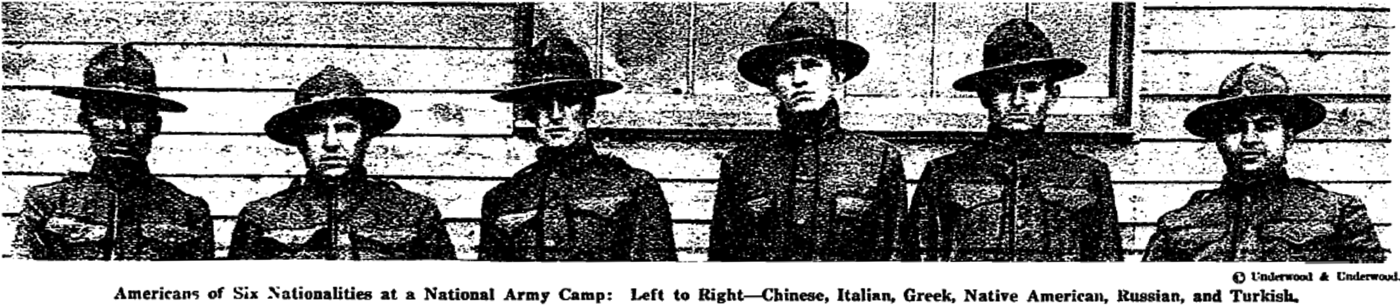
Odell's equation of rakes and gangsters with immigrants was not accidental; it bespoke a more widespread fear that the training camps contained an indiscriminate mix of races and classes. Journalist Hilton Howell Railey, writing in the New York Evening Post, agreed that the moral threat to draftees lay just as much within the camps as without them: “The terrific pull-down of the military camp … cannot easily be exaggerated. When large, heterogeneous bodies of men live under conditions of enforced intimacy as in an army mobilization, an unnatural state exists. There is a psychological tendency of leveling down to the lower element, a factor which greatly increases the moral strain on the recruit.”Footnote 38 The YMCA's Exner also invoked the coded language of “heterogeneity” when he described the problem posed by the camps. He warned of the “powerful tendency in the military camp” to “[level] down to the lower element” and noted that “wherever a heterogeneous body of men is gathered together under conditions of enforced intimacy” the “coarser element” would prevail.Footnote 39 Such references to “heterogeneity” bespoke a tangle of anxieties that linked sexual purity with racial purity, and moral virtue with civic virtue. Observers such as Exner were concerned not simply that the presence of a “rougher element” in the camps would corrupt the values of conscripted churchgoers and college boys. Rather, their invocation of “heterogeneity” linked the nation's ethnic and racial diversity to its potential for moral degradation. Such connections were often made implicitly. A New York Times article on the campaign against sexual immorality in the training camps was illustrated, without explanation, by an image of soldiers of “six nationalities” (figure 1).
The threat from within: soldiers of “Six Nationalities” illustrate the challenge of “Making Vice Unpopular in Camp.” New York Times, December 16, 1917.

Even as government propagandists pledged that the man in uniform was safer in the camps than in “any city,” because his “boon companions” would not be “idlers, street loafers, and [men] with no higher ambition than to squander money in low amusements,” other news stories called attention to the camps' “queer combination of tentmates”—including, in this instance, two Chinese laundrymen and an Irish gangster. As Minneapolis's Bellman observed, “in any large body of men brought together indiscriminately, a certain proportion … will be found to be immoral.”Footnote 40
In the face of such concerns, and in the service of its own mission of re-education, the CTCA undertook practical measures to assimilate and uplift new recruits. Immigrants, who comprised about 18 percent of the draftees, were an obvious target of Americanization efforts. Many reportedly could not speak English and thus could not understand their commanding officers. One oft-repeated story that evidenced the nation's anxiety about unassimilated immigrants told of a sergeant who sneezed while calling the roll, causing six Slavic recruits to answer, “Here.” The CTCA provided English lessons to nonspeakers, teaching them to write and recite phrases such as “I am a soldier of America,” “I am fighting for democracy,” and “Democracy is the rule of the people.”Footnote 41
The effort to instill draftees with “American” middle-class habits and beliefs was not limited to the foreign born, however. The government also sought to counteract the provincialism of native-born, rural whites. Fosdick described conscripted men from the backwoods of Appalachia “who, when they reached the cantonment, thought they had arrived in France!” Men who had received little or no formal education were taught reading, writing, and basic math skills.Footnote 42 The hygienic habits of the “hill country recruit” were replaced with modern ideals of cleanliness. National Geographic, the preeminent review of armchair imperialism, entered the training camps to describe the process of civilizing the backwoods draftee to its urbane readership:
In this age of universal hot and cold running water in all cities, one is prone to forget that in some of the rural districts the old-fashioned Saturday night weekly bath is still the custom; and, if any other more urgent matter displaces the bath hour, ablutions are postponed a week… . Contact with other clean, smart set-up soldiers teaches the new recruit the desirable results… . The men quickly come to understand the virtue of keeping themselves and their homes free from dirt, and it is certain they will carry this knowledge back to their home communities when their period of soldiering is over.Footnote 43
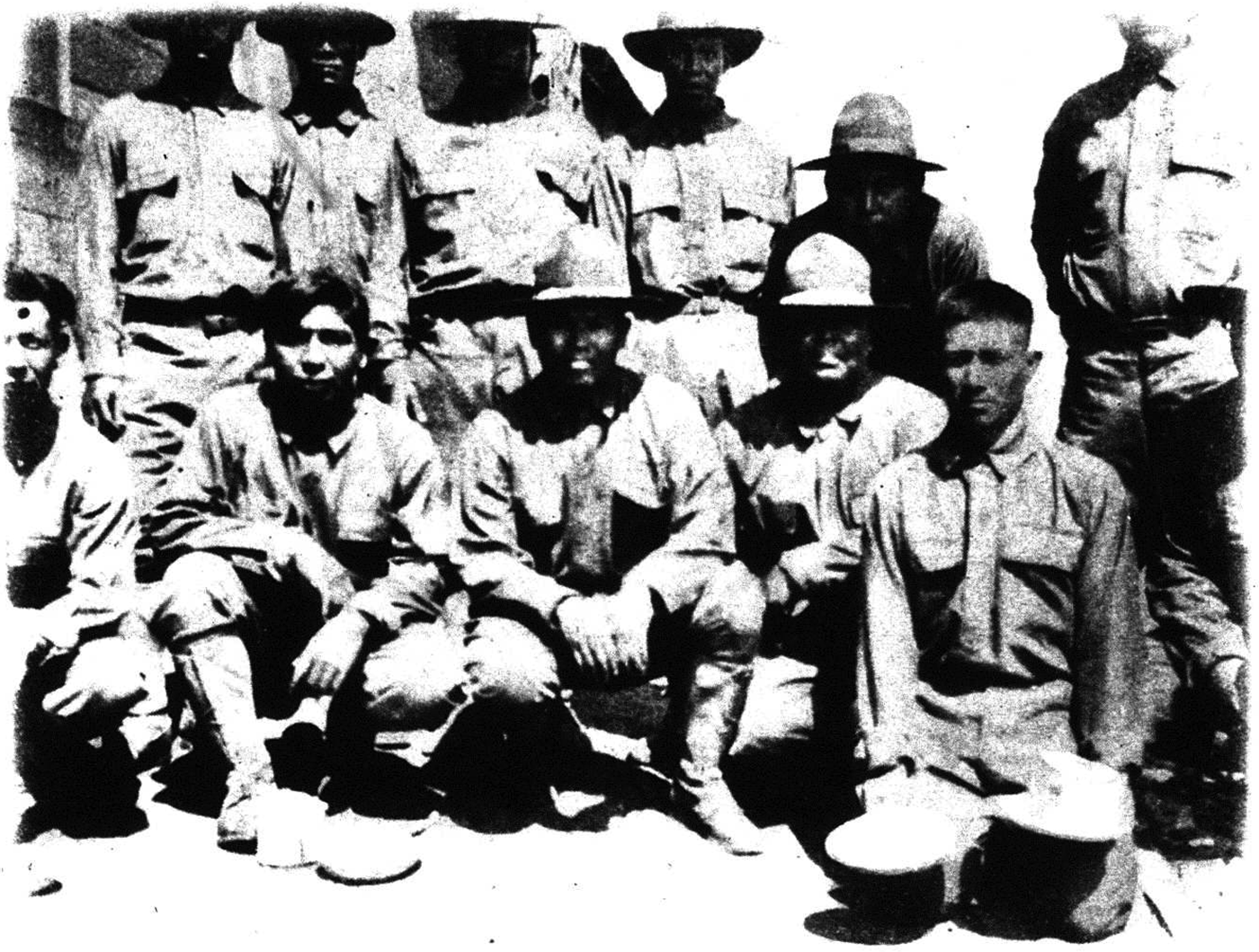
Popular magazines confirmed to the American public that the process of “wiping out” undesirable customs in order to “lift the masses” would be part of the government's payment of debt to the conscripts and the nation for their service and sacrifice in time of war.Footnote 44 One article contended that after the war there would many fewer idlers and criminals, and, as if by way of proof, pictured a group of Native American men in uniform with the caption “Eleven Seminole Indians Turned Infantrymen” (figure 2). Supporters of the government's policy argued that American soldiers would be “better citizens for having served their country,” for they would receive “an education such as not one in a hundred would have obtained in civil life.”Footnote 45
“Eleven Seminole Indians Turned Infantrymen.” Evidence of the training camps' mission to assimilate and uplift. Bellman, October 27, 1917.
The center of the CTCA's campaign to Americanize the men in training remained, however, its mission of moral uplift. At a moment when the older values of male self-mastery and continence were giving way a newer masculine ideal that celebrated sexual self-assertion and virility, the government's sex education program sought to blend the appeal of masculine prowess with the virtue of manly self-restraint, linking sexual self-control with the capacity for civic self-governance.Footnote 46Keeping Fit to Fight, the CTCA's most widely distributed sex education pamphlet, insisted that “will-power and courage go together,” and assured the men in training that “if you and your comrades use the ‘I'll-be-damned-if-I-do’ will-power against sexual desire, venereal diseases in the army will be conquered.” Friend or Enemy, a pamphlet distributed to soldiers through the YMCA, concurred, in more vivid language, that the struggle for sexual self-restraint was “the most supreme fight of [a man's] life” that would “test his manhood, his courage, his heroism, more severely than the plunge into the carnage of the modern battle at its worst.”Footnote 47 It warned men in the camps, “Do not go with the fellows [to a brothel] ‘just to see what is going on,’ … Set yourself like flint against smutty stories and lewd conversation.” Like Keeping Fit to Fight, it urged a steadfast resolve against sexual impulses, for “the man who trusts the outcome of every moral struggle to the moods and circumstances of the hour is sure to fall.”Footnote 48
Both pamphlets made it clear that soldiers who engaged in extramarital sexual activity not only risked exposure to disease, but compromised their civic obligations during the war and after. Keeping Fit to Fight described the soldier who engaged prostitutes or amateurs as a “moral shirker” who willingly risked his health and “the man-power of [his] company.“ The pamphlet warned that servicemen who contracted a disease could face military court martial. But the CTCA's sex education program did not focus on disease alone. Keeping Fit to Fight also contended that “going down the line [visiting a brothel] or having intercourse with women outside of marriage” would “unfit” a man—even if he remained in good health—“for his highest efficiency as citizen, husband, and father.” Friend or Enemy likewise identified sexual self-control as the central component of a man's personal integrity. It was “the brick and mortar of the character of a real man,” it asserted. The pamphlet linked male sexual continence more broadly to the maintenance of “the social order,” holding that “illicit relations strike at the heart of the home—the institution upon which society is built.” Soldiers who engaged in extramarital sexual activity thus compromised not only the war effort, but their own morality and the nation's way of life.Footnote 49
Even as the CTCA exhorted servicemen to embrace character-building self-denial against the lure of liquor and sex, however, it instituted a series of policies to ensure that few men would be forced to test their moral mettle. In addition to controlling commercialized vice around the camps through legislation and political pressure, the CTCA attempted to limit interactions between draftees on leave and young women in the surrounding communities. Sex education materials warned soldiers to shun both prostitutes and “charity girls.” But as the Los Angeles Times acknowledged in August 1917, “girls have the war fever, and it expresses itself in silly loitering around [the camps] within earshot of the bugle calls.”Footnote 50 To safeguard servicemen from girls lured by khaki, the military enlisted the help of the YWCA to construct “Hostess Houses” in every training camp. Modeled after a staid parlor or living room, Hostess Houses served as locations where recruits could meet visiting family and friends and spend their hours on leave in wholesome entertainment. The houses, often staffed by women active in social purity circles, buffered interactions between incoming female visitors and soldiers. In many camps, explained Fosdick, these female staffers would “meet every arriving train” and interrogate every woman who claimed to be a sister, cousin, or girlfriend of a draftee to ensure that “no woman is left to wander aimlessly around” the town or cantonment. “Every facility for comfort will be provided,” confirmed the Los Angeles Times, “but the ladies will be kept out of the wilds of the camp proper.”Footnote 51
For those recruits who fell short of the demand for sexual abstinence, the CTCA viewed chemical prophylaxis as a final line of defense against the threat of venereal disease. “If, in a moment of weakness, you should fall for a prostitute,” advised the pamphlet Keeping Fit to Fight, “the next best course is to report immediately … for early (prophylactic) treatment.”Footnote 52 The army had been using chemical prophylaxis since 1910. Even at the Mexican border, it had been proven over 98 percent effective at preventing new venereal cases in those units where its use was strictly enforced by officers. Other studies within the military put the effectiveness rate as high as 99.6 percent.Footnote 53 Yet making prophylaxis the cornerstone of the military's fight against venereal disease would have undermined the CTCA's moral mission. Despite a warning in Keeping Fit to Fight that a soldier's failure to obtain prophylaxis in a timely manner could result in court martial, treatment was not as stringently enforced on the home front as it was in France for the American Expeditionary Forces (AEF). As historian Allan Brandt has shown, only 3.4 percent of men in the AEF were admitted to sick leave as the result of a venereal infection (even though only an estimated 30 percent practiced continence), but the rate was almost four times higher for men stationed at home in the training camps.Footnote 54
In a telling exception, African American draftees were virtually excluded from the CTCA's moral campaign of education and recreation, even while many army physicians and officers assumed that all black recruits were venereally infected. At some camps, every black serviceman was treated with chemical prophylaxis upon his return from leave, “irrespective of whether he was married or single or whether he had been exposed [to infection] or not,” a practice premised on stereotypes of black male hypersexuality and immorality.Footnote 55 Indeed, provision for the care, education, and recreation of African American recruits was often absent, inadequate, or premised on racist assumptions. Arthur B. Spingarn, a captain in the Sanitary Corps and civil rights advocate, complained of the military's approach to the problem of venereal disease among black soldiers: “It is impossible to discuss the negro scientifically with men whose sole armory of facts and ideas consists of isolated anecdotes beginning, ‘I knew a negro once,’ but it seems to be perfectly proper in discussing negro problems to generalize about 12,000,000 people from a single instance.”Footnote 56 The compulsory prophylactic treatment of all black draftees in some camps, and the less-consistent enforcement of prophylaxis among their white counterparts, signaled the extent to which African Americans were excluded from the government's vision of a moral and unified nation.
“Soldier Lads” and Moral Safeguarding
The military's enactment of policies that sought to protect all servicemen from their baser natures demonstrated the extent to which it feared that not just African Americans, but others among the “heterogeneous mix” of soldiers at large, were impervious to moral uplift. The creation of moral zones and Hostess Houses, the removal of red light districts from camp towns, and even reliance on chemical prophylaxis (however lax stateside), were more than simply a pragmatic acknowledgment that some soldiers would be unable to resist temptation. These actions demonstrated policymakers' implicit belief that many American servicemen lacked the steadfast character that would enable them to resist immoral influences. Where British soldiers were praised by their countrymen for their stoicism in the face of modern warfare, and French national rhetoric linked the sexual prowess of its servicemen with military might, American soldiers were often portrayed by policymakers and the popular press as adolescents who were completely vulnerable to the influences of their environment.Footnote 57
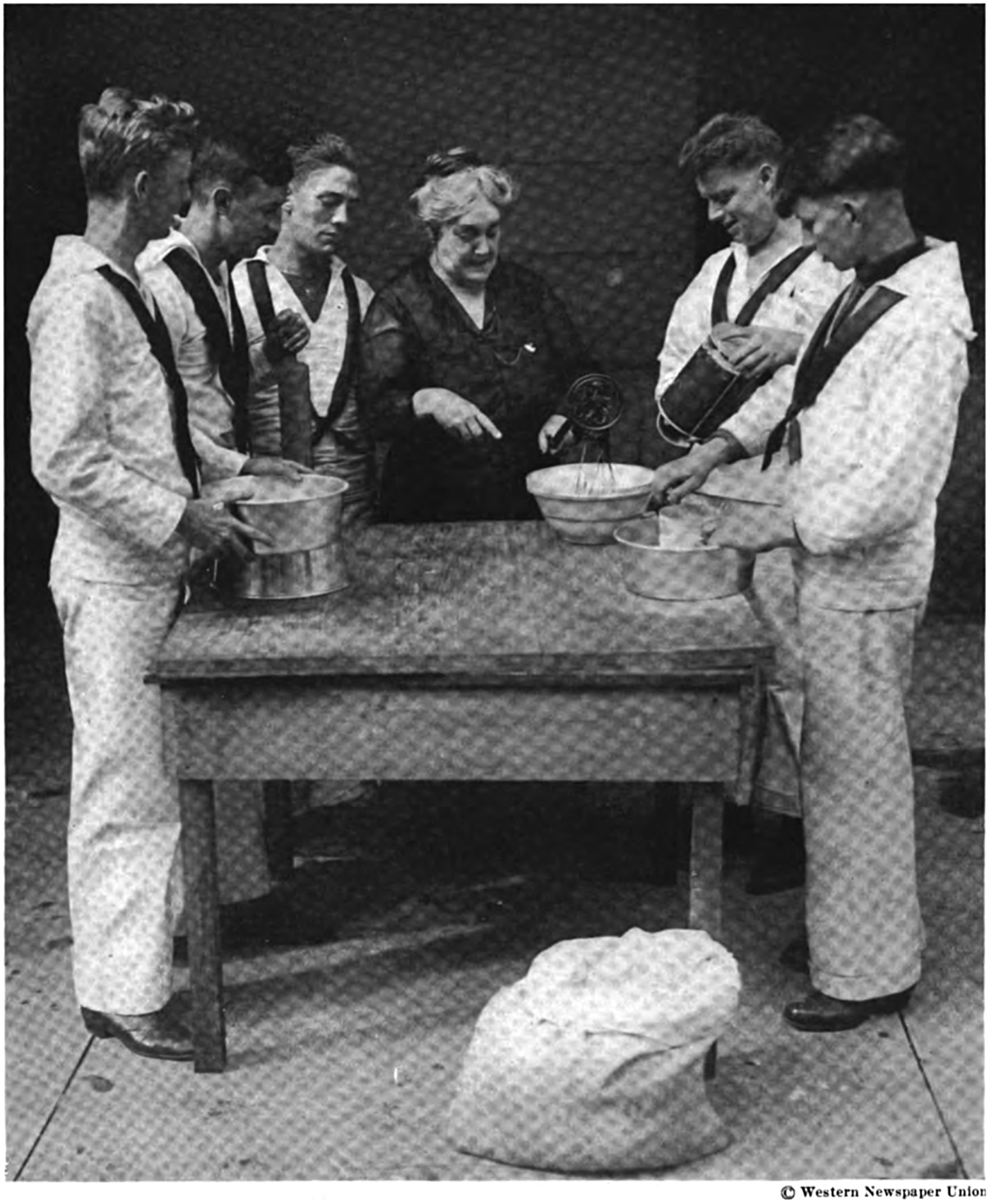
Just as military officials approached the problem of sexual vice through the lens of social purity ideals, the vision of the solider as a vulnerable adolescent was an outgrowth of social purity's maternalist ideology. Certainly, policymakers' emphasis on the youth and vulnerability of soldiers helped to counter the public's historically negative perceptions of military life. Conceptualizing the men in uniform as “our boys” meant that the nation's fighting force was not “a thing apart” from civilian life, but, as many urged, “made up of our own sons.”Footnote 58 But military officials and the public alike understood the nation's mothers to have a privileged interest in the sexual morality of the men in uniform. Newspaper and magazine articles often invoked or directly addressed “American mothers” when they reported on the moral conditions of the training camps. And young drafted men were understood to be especially vulnerable to immoral influences when they were separated from the stabilizing influences of mothers and home life (figure 3).Footnote 59
In response to expressions of public concern that drafted young men would be left morally adrift in the training camps without the influence of women, articles such as this one, in a Methodist missionary review, featured sailors learning to “bake pies and cook jellies that rival grandmother's.” “The Navy Learns to Make Pies,” World Outlook, April 1918.
On a practical level, the link between maternalism and morality provided a point of entry for purity reformers—often women—to take part in the military's campaign against drink and vice. Through cooperative partnerships with the War Department, organizations such as the WCTU and the YWCA entered the training camps to conduct educational programs and staff the Hostess Houses. They also joined with professionally trained social workers to engage in “protective work” with young women in training-camp communities who might be drawn to interact with the soldiers. Fosdick praised the presence of such women in the camps. He contended that through the Hostess Houses, soldiers were “learning how much they like pink. The Hostess House is keeping alive a love of finer things that are sometimes easily lost.” The Union Signal, however, viewed purity reformers' mission in the camps in more instrumental terms. Praising the WCTU's promotion of temperance materials to servicemen, it predicted that “having become convinced of the wisdom of abstaining [from alcohol] during their career as soldiers, they will also see the necessity of continuing to leave drink alone after they come back from war and take responsible places in the affairs of our country.”Footnote 60
Beyond its basis in maternalism, however, conceiving of the soldiers as adolescents authorized the War Department's goal of remaking its recruits into ideal citizens. Secretary Baker described them as “young men” at “that plastic and generous period of life” when their moral characters were not fully formed. Two decades earlier, in the Spanish-American War, Theodore Roosevelt's college-aged Rough Riders had been perceived as mature men. As Kristin Hoganson has detailed, soldiering during that war had been viewed, in and of itself, as evidence of a young man's physical and moral maturity. Yet servicemen in the First World War under the age of thirty were described as “youths,” and often portrayed in infantilized or feminized terms.Footnote 61 While descriptions of men preparing to fight a war traditionally emphasize their strength and vigor, one CTCA officer described each recruit as “a tree uprooted from the soil [who] represents an attempt to create a human orchid.” Like a delicate flower, his moral growth depended upon the energy of his caretakers. The YMCA's Max Exner characterized the troops as “big, husky soldier children,” whose “virility” was softened by their “sentimentality.” A journalist's report from a training camp described officers “brooding over their men like a hen over her fluffy chicks,” and recounted that the “soldiers [became] romping children” during organized athletics. Such language demonstrates the striking degree to which military officials characterized men in uniform as childlike, vulnerable, and malleable—and, consequently, in need of the government's protection.Footnote 62
Despite the CTCA's own sex education program, which taught servicemen that continence was the outcome of a manly struggle against baser passions, these descriptions characterized the man in uniform as morally coreless—utterly susceptible to the caprices of his surrounding environment. Few conceived of the draftee as a mature young man with a rock-solid core of values. Instead, his moral foundations were described as situational, and easily swept away given the “unfamiliar surroundings” and “overwhelming temptation to indulgence” of camp life.Footnote 63 Officials in the CTCA, as well as many civilian observers, stressed that “the soldier or sailor will take a community as he finds it,” and follow the “path of least resistance” in determining how to spend his leisure hours. What draftees did on leave, they argued, would depend “very largely on what and whom they meet,” for invariably they would “meet the community in the spirit in which the community” met them.Footnote 64 The portrait of the soldier as an impressionable lad who required the moral protection of the government and the civilian community against the corruption of urban life was reminiscent of older descriptions of young women who traveled to cities looking for work. The social critic H. L. Mencken complained that the war had brought the nation's “uplifters … more noisily to the front than ever before.” A year before they had “concentrate[d] the stupendous power of their rectitude” upon “the poor working girl, may God defend her! But now it is the fair young soldier.”Footnote 65
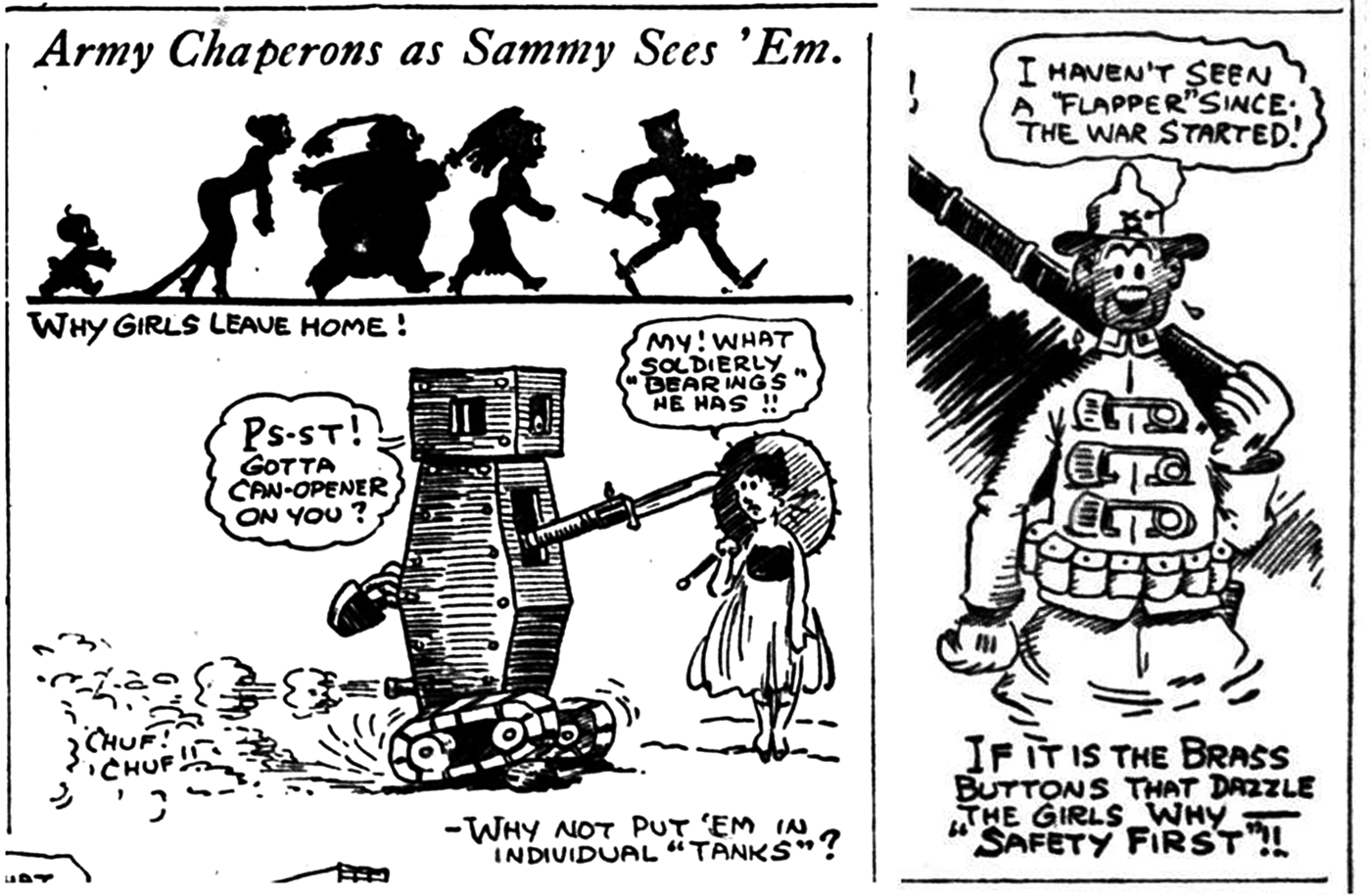
Some observers resisted the characterization of American soldiers as defenseless against immoral temptations. When prominent Ladies' Home Journal editor Edward Bok condemned the “uncontrolled solicitation of our boys by women in the London streets,” he was refuted not only by Britons, but also by William C. Edgar, editor of Minneapolis's Bellman. “No American soldier accustomed to walk the streets of his own large cities after dark needs to be accompanied by a guardian in the streets of London,” Edgar insisted. “The American soldier who would fall a prey” to the “toothless and bedraggled charms” of such women, he argued, would defy the protection of even “the most stringent police regulations.”Footnote 66 Perhaps more significantly, servicemen themselves occasionally disputed the presumption that they required such safeguarding, particularly when it came in the form of Hostess House staffers, whom they regarded as “chaperons.” When two YWCA workers arrived at a cantonment in Arcadia, California, there were protests from the men stationed there. As the Los Angeles Times reported, the men saw the presence of such women as a “slur” on their morals, and “resented [them] bitterly.” In a separate editorial, the Times itself described the work of YWCA staffers in Hostess Houses as “moral censorship,” opining that “every man who goes into the army … is old enough and wise enough to look after his own moral welfare.”Footnote 67 A cartoonist for the paper mocked the notion that soldiers required the protection of YWCA workers from young women who were drawn to men in uniform (figure 4).
These cartoons ridiculed both the popular rhetoric that young women were “lured by the uniform,” and the efforts of the military to “safeguard” the morals of soldiers. Los Angeles Times, August 26, 1917.
Within months of the start of the war, however, stories had already begun to circulate about illicit sexual encounters between servicemen and young civilian women in military camp towns. The Atlanta Constitution and the Los Angeles Times both published articles about missing and runaway girls who had “yielded to the lure of khaki.” “Country girls have read of the excitement and bustle … of the thousand and one blood-stirring incidents of war preparation,” wrote the social reformer Belle Moskowitz in the Constitution. “Scores of them have yielded to the temptation to be witnesses of these stirring events.” The Times put the problem more plainly: “the young flapper … is foolish and hypnotized by khaki.” In January 1918, both the Ladies' Home Journal and Good Housekeeping—national magazines with a combined circulation nearing two million—ran editorials on the issue of sexual liaisons between soldiers and young women. Likewise, rumors circulated widely that soldiers stationed overseas were routinely found inebriated, “staggering in the streets.”Footnote 68 These tales of drunken immorality and sexual indulgence among servicemen did more than imperil the military's efforts to maintain an upstanding, disease-free fighting force. The conscripted soldier represented the body politic in World War I, and his moral failures implicated the capacity of a heterogeneous nation to appropriately self-govern.
Stories such as these had prompted the Outlook to send Daniel Poling to France to investigate the moral conduct of soldiers stationed abroad. But government officials did more than rely on men such as Poling to refute these accounts. As historian Mary Odem has detailed, the War Department began to take more aggressive steps against young women who had sex with soldiers, shifting from the practice of “protective work” toward a more punitive stance. As rumor and innuendo about the immoral behavior of American servicemen circulated more widely in January 1918, the government began to direct local health boards to apprehend, examine, and detain “all persons reasonably suspected” of harboring a venereal infection.Footnote 69 Infected individuals—in practice, young women—were isolated, either in hospitals or detention homes, and treated until they were certified to be free of disease. Once she had recuperated, a girl could be charged and tried for prostitution or promiscuity, and if convicted she faced a lengthy sentence in a detention home or reformatory. Under policies supported by the Department of Justice, young women and girls were forcibly examined and deprived of legal counsel, leaving them unable to post bail or obtain writs of habeas corpus. Their detention while undergoing medical treatment was considered a “quarantine” that was, in most states, ruled to be a valid exercise of police powers.Footnote 70 Judges routinely considered whether a woman had venereal disease at the time of her arrest when determining her sentence.Footnote 71 By the war's end, over 30,000 girls and young women had been apprehended and examined, and 18,063 were detained for up to one year.Footnote 72
Identifying women as the source of venereal contagion and instituting policies to forcibly examine and imprison them was not uniquely American. The United States' allies in Europe and elsewhere undertook similar measures to combat disease and restrict the behavior of young women deemed by authorities to be immoral. In France, sexual liaisons between soldiers and civilian women complicated the definition of “prostitution” and thus unsettled French confidence in the nation's well-known system of regulated brothels. Britons not only deplored the supposedly immoral behavior of its working-class girls who sought connections with men in khaki, but also feared the spread of promiscuity to “respectable” young women. Moreover, “khaki fever” in Britain provoked racial anxieties and threatened to undermine imperial rule when young white women sought liaisons with nonwhite colonial troops. In these nations, military authorities increased their surveillance and regulation of young women on the grounds that they posed a menace to men in uniform.Footnote 73 But in Europe, the soldiers who had partaken in these illicit sexual encounters were not viewed as innocents. Rising casualty rates, especially in France and Britain, were accompanied by the recognition that venereal disease was spreading rapidly in civilian communities, particularly among married women. British Member of Parliament Edith Picton-Turbervill warned of the “growing disinclination amongst respectable girls to enter the married state, lest they should be infected by their husbands” who had served in the military. Allied policymakers, fearful of declining birthrates in the wake of a devastating war, increasingly condemned servicemen who spread disease.Footnote 74
In the United States, by contrast, military officials and civilian observers described American servicemen who succumbed to the lure of drink and vice as naïve, adolescent victims of feminine guile. They were, in the words of one official, “lonely, embarrassed lad[s]” who had fallen prey to “the dangerous allurements of the big city with its warm snuggeries, … its proffer of lips and arms painted and powdered.”Footnote 75 Coverage in the popular press of soldiers' moral failings emphasized their lack of culpability—often in contrast to the young women with whom they were found. If journalists had fretted at the outset of the war over the implications of placing gangsters and farm boys side by side in the training camps, they were careful to portray soldiers as “guileless” when faced with evidence of their transgressions. New York Times coverage of a dance hall raid contrasted the uniformed “boys” found “helplessly drunk” with their companions—“girls … in tights” who employed “sickening” profanity. A Los Angeles Times article on “improper” activities among soldiers in Pasadena quoted city mothers calling for young girls to be more closely monitored “for the sake of the soldier lads.”Footnote 76 Emphasizing the man in uniform's supposed youth and inexperience shored up anxieties about fractious diversity in the training camps and beyond. Moreover, it authorized a home-front policy that incarcerated thousands of young women in camps towns in the name of safeguarding the soldier from sexual corruption.
Conclusion
“The soldier has become a child,” wrote the social critic Frank Tannenbaum in the spring of 1919, drawing on his experience as a conscript. “Military discipline is the force which created him.” Tannenbaum described his fellow servicemen evincing “the same playfulness, indifference, [and] carelessness of consequences … that are characteristic of children. Like children they take no … interest in the serious and important things of life.” In his estimation, they demonstrated “excitement and interest” in only “two things—gambling and women.” He rejected the “talk in some quarters” that “made a moral saint of the American soldier,” averring that “the soldier is very much more unmoral than when he entered the army.” Even though the government's campaign against vice had driven prostitutes from the streets, the sex trade had “prevailed,” and solicitation was “now in the hands of young boys” who “accosted” passersby in camp towns. Tannenbaum bemoaned both the “deteriorating [moral] influences of camp life” and the loss of “self-expression” that made the man in uniform “an obedient unthinking instrument of another's will.”Footnote 77
Tannenbaum leveled his critique at military discipline, which he viewed as antithetical to democratic ideals. But the regimented and uniform structure of life in the training camps had been touted at the start of the war as a mechanism of democracy that would forge ties across divisions of race, class, and religion. More importantly, officials believed that the moral discipline instilled by the camps would promote the values of continence and sobriety in a diverse generation of men, fitting them for citizenship in a democracy. If Tannenbaum's critique had the ring of truth to it, the childlike qualities of his fellow servicemen were due less to the well-ordered life of the camps, and more to policymakers' implicit belief that men whose morals they had pledged to “safeguard” were morally coreless. Government officials' understanding of the conscripted soldier as an adolescent, whose beliefs and values were still inchoate, authorized the War Department's experiment in social engineering. Simultaneously, however, this understanding engendered policies that conceived of the soldier as morally vulnerable and in need of safeguarding. Policymakers thus frustrated their own stated goals of instilling in the nation's servicemen the independent character, self-control, and maturity that, for previous generations, had been considered hallmarks of the self-governing citizen.
It was no accident that the image of the “soldier lad” put forth by military officials found its roots in the social purity movement. If soldiers were “boys” in need of moral guidance, who better to supervise them than the nation's “mothers?” Female reformers in organizations like the WCTU, and progressive men such as Fosdick, agreed that women had a critical role to play in safeguarding soldiers from drink and vice. But conceptualizing men in uniform as vulnerable adolescents did more than authorize female purity reformers' participation in the war effort, or align their interests with those of a powerful wartime state. It decoupled the long-standing ideological link between soldiering and full civic participation at the very moment that the movement for woman's suffrage was gaining power. The martial ideal of citizenship had bound male strength and physical prowess to political capacity, making the case for women's exclusion from full political participation by virtue their comparative weakness. War “made men” and citizens, it was argued, because warlike qualities were necessary to navigate the corrupt sphere of politics, and because independent self-governance needed the guarantee of force behind it. The vision of the “soldier lad,” by contrast, fused virility to vulnerability. In the eyes of policymakers during World War I, the soldier's physical capability on the battlefield did not yield the attributes of mature manhood or independent citizenship: steadfast character and self-control. Instead, the serviceman embodied a contradiction. In the words of one writer in the Union Signal, he combined the “strength of manhood” with the “sincerity of the child.” As suffragists picketed the White House protesting women's exclusion from full democratic participation, and purity reformers contended that “they, too, battled” on behalf of their nation with war work, it may have been the image of the “boy in uniform” who best made the case for fully endowing women with the privileges of self-governance.Footnote 78