


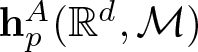
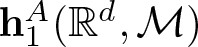





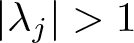


1. Introduction
1.1. Background and motivation
It is well known that the real-variable theory of Hardy-type spaces and their dual spaces has been extensively developed and plays a fundamental role in harmonic analysis and partial differential equations (see, e.g., [Reference Coifman and Weiss11, Reference Fan12, Reference Fefferman and Stein14, Reference Grafakos16, Reference Hong, Junge and Parcet18, Reference Stein and Weiss38, Reference Tang39]). Motivated by noncommutative martingale inequalities (see, e.g., [Reference Hong, Ma and Wang21, Reference Hong and Mei22, Reference Junge and Xu29, Reference Junge and Xu30, Reference Pisier and Xu37]) and the Littlewood–Paley–Stein theory of quantum Markov semigroups (see, e.g., [Reference Cadilhac, Conde–Alonso and Parcet7, Reference Hong and Jing17, Reference Junge and Mei25, Reference Junge and Mei26, Reference Junge, Merdy and Xu28]), Mei [Reference Mei35] initiated in 2006 the study of semicommutative Hardy spaces on  ${{{\mathbb R}}^d}$ via operator-valued Lusin area integrals associated with the Poisson kernel. Since then, these spaces have inspired great interest. In 2013, Hong et al. [Reference Hong and Yin23] established wavelet characterizations of these spaces. In 2016, Xia et al. [Reference Xia, Xiong and Xu44] obtained more general square function characterizations, showing that the Poisson kernel may be replaced by a broad class of admissible test functions. For further developments on operator-valued function spaces, we refer the reader to [Reference Cano–Mármol and Ricard10, Reference Hong, Lai and Xu19, Reference Hong, Liu and Mei20, Reference Junge, Mei, Parcet and Xia27, Reference Xia and Xiong43, Reference Xia, Xiong and Xu44].
In the commutative setting, the theory of Hardy spaces is a fundamental topic in harmonic analysis and functional analysis. To study the  $L_p({{{\mathbb R}}^d})$-boundedness of pseudo-differential operators, Goldberg [Reference Goldberg15] developed the theory of local Hardy spaces
 $h_p({{{\mathbb R}}^d})$, which may be regarded as a local or inhomogeneous version of the classical Hardy space
 $H_p({{{\mathbb R}}^d})$. In particular, Goldberg showed that, when
 $p=1$, pseudo-differential operators are not bounded on the classical Hardy space
 $H_1({{{\mathbb R}}^d})$, whereas they are bounded on the local Hardy space
 $h_1({{{\mathbb R}}^d})$ under suitable assumptions. Thus, the local Hardy space
 $h_1({{{\mathbb R}}^d})$ provides an appropriate substitute for the global Hardy space
 $H_1({{{\mathbb R}}^d})$ in this context. Subsequently, Xia et al. [Reference Xia and Xiong42] introduced and studied the local Hardy space
 $h_p({{{\mathbb R}}^d},{\mathcal M})$ in the semicommutative setting, where
 ${\mathcal M}$ is a semifinite von Neumann algebra. For further developments concerning local Hardy-type function spaces, we refer the reader to [Reference Xia and Xiong41, Reference Xia and Xiong43].
On the other hand, extending classical function spaces arising in harmonic analysis on  ${{{\mathbb R}}^d}$ to other domains and anisotropic settings is an important topic. For instance, in the 1970s, Calderón and Torchinsky [Reference Calderón8, Reference Calderón and Torchinsky9] studied parabolic Hardy spaces and established real-variable characterizations of these spaces. In 2003, Bownik [Reference Bownik3] investigated anisotropic Hardy spaces
 $H_A^p({{{\mathbb R}}^d})$ for
 $p\in(0,\infty)$ associated with a general expansive matrix
 $A$ on
 ${{{\mathbb R}}^d}$, thereby generalizing parabolic Hardy spaces. In the noncommutative setting, Wang [Reference Wang40] studied operator-valued anisotropic Hardy spaces and their dual spaces on
 ${{{\mathbb R}}^d}$, extending Bownik’s theory to the noncommutative framework. However, the theory of local anisotropic Hardy spaces has not yet been developed in the operator-valued setting. For more information on the theory of anisotropic Hardy-type spaces, we refer the reader to [Reference Bownik4–Reference Bownik, Li, Yang and Zhou6, Reference Li, Bownik and Yang31–Reference Liu, Yang and Yuan33].
Motivated by these previous works and by the goal of further studying Calderón–Zygmund theory, in this paper, we will develop the theory of local Hardy spaces associated with anisotropic dilations in the noncommutative setting.
The norms of the local Hardy spaces considered in this paper are defined, in part, in terms of truncated Lusin area functions. We note that several techniques used in the analysis of these spaces are inspired by the works of Mei [Reference Mei35] and Xia et al. [Reference Xia, Xiong and Xu44]. However, the local nature of the spaces under consideration requires substantial and highly non-trivial modifications of those arguments. Indeed, due to the truncation, we retain only the  $L_p$-norms of the Lusin area functions on the strip
 ${\mathbb R}^d\times\{{\mathbb Z}\backslash{\mathbb N}\}$. With the convention
 $\mathbb N=\{0,1,2,\ldots\}$, the index set
 $\mathbb Z\backslash\mathbb N$ consists of the negative scales only. Thus the local square function retains only small-scale information, while the missing nonnegative scales are compensated by the low-frequency term
 $f*\phi$. Consequently, information at sufficiently large dyadic scales is no longer available. This loss of information gives rise to several substantial difficulties that have no counterpart in the non-local setting. In particular, the duality theory becomes more involved, since the contributions from small-scale and large-scale balls must be handled separately. It is worth emphasizing that the classical real-variable methods are not directly applicable in the present framework. There is an additional obstruction inherent to the noncommutative setting: although the spatial variable is still classical, operator-valued functions do not possess a scalar lattice structure. Consequently, pointwise supremum, level-set decompositions and maximal-function arguments cannot be used in the same way as in the scalar case. For instance, a satisfactory noncommutative analogue of the maximal function method is not available in the present context, whereas the corresponding classical method plays a central and frequently used role. Therefore, we are forced to exploit the noncommutative methods arising from Mei’s seminal work [Reference Mei35], together with several key tools from recent developments in noncommutative analysis; see, for example, [Reference Junge24, Reference Junge and Mei26, Reference Junge and Xu30, Reference Lust–Piquard and Pisier34, Reference Mei35, Reference Pisier and Xu37]. These methods and tools allow us to overcome the main technical obstacles in the proof of our main results.
1.2. Organization
This article is organized as follows.
In Section 2, we first recall some notation and definitions concerning anisotropic dilations and noncommutative  $L_p$-spaces. We then introduce operator-valued anisotropic local
 $\mathrm{bmo}$ spaces and operator-valued anisotropic local Hardy spaces via the anisotropic local Lusin area function. It is worth pointing out that the Poisson kernel used in the definitions of local Hardy spaces in previous works can be replaced by admissible Schwartz functions satisfying an anisotropic local Calderón reproducing formula. We also characterize the operator-valued anisotropic local
 $\mathrm{bmo}$ space
 $\mathrm{bmo}_A({{{\mathbb R}}^d},{\mathcal M})$ in terms of operator-valued Carleson measures.
The purpose of Sections 3 and 4 is to identify the duals of operator-valued anisotropic local Hardy spaces with suitable anisotropic local bmo-type spaces.
Section 5 is concerned with the interpolation theory for local Hardy and bmo spaces.
In Section 6, we present applications of the duality and interpolation results. More precisely, we establish an atomic decomposition theorem for the operator-valued anisotropic local Hardy space  $\mathbf{h}^A_1({{{\mathbb R}}^d},{\mathcal M})$. We also develop a local version of noncommutative Calderón–Zygmund theory on the local Hardy space
 $\mathbf{h}_1^A(\mathbb{R}^d,\mathcal{M})$. These results extend the corresponding scalar theory to the noncommutative setting.
1.3. Notation
Finally, we make some conventions on notation. Let  ${\mathbb N}:=\{0,1,2,\ldots\}$. We also write
 ${\mathbb Z}_-:={\mathbb Z}\backslash{\mathbb N}:=\{-1,-2,\ldots\}$. For any
 $\alpha:=(\alpha_1,\ldots,\alpha_d)\in{\mathbb N}^d$, let
 $|\alpha|:=\alpha_1+\cdots+\alpha_d$ and
 \begin{equation*}\partial^\alpha:=
\left(\frac{\partial}{\partial x_1}\right)^{\alpha_1}\cdots
\left(\frac{\partial}{\partial x_d}\right)^{\alpha_d}.\end{equation*}
Throughout the whole paper, we denote by  $C$ a positive constant which is independent of the main parameters, but it may vary from line to line. For any
 $p\in[1,\,\infty]$, let
 $p'$ denote the conjugate index of
 $p$, which satisfies
 $\frac{1}{p}+\frac{1}{p'}=1$. The symbol
 $D\lesssim F$ means that
 $D\le
CF$. If
 $D\lesssim F$ and
 $F\lesssim D$, we then write
 $D\sim F$. Let
 ${\mathrm{I}}_{d\times d}$ denote the
 $d\times d$ unit matrix, and
 $\mathbf{0}_d$ the origin of
 ${\mathbb R}^d$. For a set
 $E \subset {{{\mathbb R}}^d}$, we write
 $E^\complement:={{{\mathbb R}}^d}\backslash E$, denote by
 $|E|$ the
 $d$-dimensional Lebesgue measure of
 $E$, and denote by
 $\mathbf{1}_E$ its characteristic function. Denote by
 ${\mathcal S}({{{\mathbb R}}^d})$ the space of all Schwartz functions.
2. Preliminaries
In this section, let us recall some basic definitions and properties of noncommutative  $L_p$-spaces and anisotropic dilations, and introduce the operator-valued anisotropic local Hardy spaces and bmo spaces.
2.1. Noncommutative  $L_p$-spaces

In this subsection, we will recall the definition of (Hilbert space-valued) noncommutative  $L_p$-spaces. Let
 ${\mathcal M}$ be a von Neumann algebra equipped with a normal semifinite faithful trace
 $\tau$. Let
 $S_{{\mathcal M}}^+$ be the set of all positive
 $x\in{\mathcal M}$ such that
 \begin{equation*}\tau(s(x)) \lt \infty,\end{equation*}
where  $s(x)$ denotes the support of
 $x$, that is, the least projection
 $e\in{\mathcal M}$ such that
 \begin{equation*}exe=x,\end{equation*}
where  $|x|:=(x^*x)^{\frac12}$. Let
 $S_{\mathcal M}$ be the linear span of
 $S_{{\mathcal M}}^+$. For any
 $p\in[1,\,\infty)$, we define
 \begin{equation*}\|x\|_{L_p({\mathcal M})}=[\tau|x|^p]^{\frac1p}, \ \ \ x\in S_{\mathcal M}.\end{equation*}
The completion of the set  $(S_{\mathcal M}, \|\cdot\|_{L_p({\mathcal M})})$ is denoted by
 $L_p({\mathcal M})$. It is the noncommutative
 $L_p$-space associated with the noncommutative measure space
 $({\mathcal M},\,\tau)$. For convenience, we usually set
 $L_{\infty}({\mathcal M})={\mathcal M}$ equipped with the operator norm
 $\|\cdot\|_{{\mathcal M}}$.
Let us recall the Hilbert space-valued noncommutative  $L_p$-space. Let
 $(\Omega,\,d\mu)$ be a measure space and
 $f$ be a
 $S_{{\mathcal M}}$-valued simple function as follows:
 \begin{equation*}f=\sum_{j=1}^Jm_j\otimes\mathbf{1}_{E_j},\end{equation*}
where  $m_j\in S_{{\mathcal M}}$ and
 $E_j$’s are measurable disjoint subsets of
 $\Omega$ with
 $\mu(E_j) \lt \infty$. Define
 \begin{align*}\|f\|_{L_p({\mathcal M};\,L^c_2(\Omega))}&:=\left\|\left(\int_{\Omega}f^*f\right)^{\frac12}\right\|_{L_p({\mathcal M})} \ \
\mathrm{and}\\
\|f\|_{L_p({\mathcal M};\,L^r_2(\Omega))}&:=\left\|\left(\int_{\Omega}ff^*\right)^{\frac12}\right\|_{L_p({\mathcal M})}.\end{align*}
Define the Hilbert space-valued noncommutative  $L_p$-space
 $L_p({\mathcal M};\,L^c_2(\Omega))$ (resp.
 $L_p({\mathcal M};\,L^r_2(\Omega))$) to be the completion of the space of all
 $S_{{\mathcal M}}$-valued simple functions with finite
 $L_p({\mathcal M};\,L^c_2(\Omega))$ (resp.
 $L_p({\mathcal M};\,L^r_2(\Omega))$) norm.
In the current paper, we consider the tensor von Neumann algebra  ${L_{\infty}(\mathbb{R}^d)\overline{\otimes}\mathcal{M}}$ equipped with the tensor trace
 $\tau\otimes\int_{{{{\mathbb R}}^d}}\,dx$. The noncommutative
 $L_p$-spaces associated with
 ${L_{\infty}(\mathbb{R}^d)\overline{\otimes}\mathcal{M}}$ are indeed vector-valued
 $L_p$-spaces (cf. [Reference Pisier36]):
 \begin{equation*}L_p({L_{\infty}(\mathbb{R}^d)\overline{\otimes}\mathcal{M}})=L_p({{{\mathbb R}}^d};L_p({\mathcal M})),\end{equation*}
for  $p\in[1,\infty)$.
Moreover, we need the following Cauchy–Schwarz type inequality about operator-valued functions, see [Reference Mei35].
Lemma 2.1. Let  $(\Omega,\,\mu)$ be a measure space. Then
 \begin{equation}
\left|\int_{\Omega}f(x)g(x)\,d\mu(x)\right|^2\leq\int_{\Omega}|f(x)|^2\,d\mu\int_{\Omega}|g(x)|^2\,d\mu,
\end{equation}
where  $f:\Omega\rightarrow \mathbb{C}$ and
 $g:\Omega\rightarrow{\mathcal M}$ are functions such that all members of the above inequality make sense.
In addition, we also need the operator-valued version of the Plancherel formula.
Lemma 2.2. Let  $f,\,g\in L_2({{{\mathbb R}}^d})\otimes L_2({\mathcal M})$. Then we have
 \begin{equation}
\int_{{{{\mathbb R}}^d}}f(x)g^*(x)\,dx=\int_{{{{\mathbb R}}^d}}\widehat{f}(x)(\widehat{g}(x))^*\,dx,
\end{equation}
where  $\widehat{f}$ and
 $\widehat{g}$ denote the Fourier transform of
 $f$ and
 $g$.
2.2. Anisotropic dilations on
${{{\mathbb R}}^d}$

Firstly, we recall the definition of expansive dilations on  ${{{\mathbb R}}^d}$, which is introduced by Bownik (cf. [Reference Bownik3]). A real
 $d\times d$ matrix
 $A$ is called an expansive dilation (or a dilation), if
 $\min_{\lambda\in{\sigma}(A)}|\lambda| \gt 1$, where
 ${\sigma}(A)$ denotes the set of all eigenvalues of
 $A$. Let
 $\lambda_-$ and
 $\lambda_+$ be two positive numbers such that
 \begin{equation*}1 \lt \lambda_- \lt \min\{|\lambda|:\ \lambda\in{\sigma}(A)\}\le\max\{|\lambda|:\
\lambda\in{\sigma}(A)\} \lt \lambda_+.\end{equation*}
For a fixed dilation  $A$, there exist
 $r\in(1,\,\infty)$ and
 $\Delta:=\{x\in{{{\mathbb R}}^d}:\,|Px| \lt 1\}$, where
 $P$ is some non-degenerate
 $d\times d$ matrix, such that
 $\Delta\subset r\Delta\subset A\Delta.$ For simplicity, we can assume that
 $|\Delta|=1$. For
 $k\in {\mathbb Z}$, let
 $B_k:=A^k\Delta$. Then
 $B_k$ is open, and
 \begin{equation*}B_k\subset
rB_k\subset B_{k+1}, \ \ |B_k|=|\det A|^k.\end{equation*}
An ellipsoid  $x+B_k$ for some
 $x\in{{{\mathbb R}}^d}$ and
 $k\in{\mathbb Z}$ is called a dilated ball. Define
 \begin{equation}
\mathfrak{B}:=\{x+B_k:\ x\in {{{\mathbb R}}^d},\,k\in{\mathbb Z}\},
\end{equation}
 \begin{equation}
\mathfrak{B}_1:=\{x+B_k:\ x\in {{{\mathbb R}}^d},\,k\in{\mathbb Z}\backslash{\mathbb N}\} \ \ \mathrm{and} \ \
\mathfrak{B}_2:=\{x+B_k:\ x\in {{{\mathbb R}}^d},\,k\in{\mathbb N}\}.
\end{equation}
Throughout the whole paper, let  $\sigma$ be the smallest integer such that
 $2B_0\subset A^\sigma B_0$. Then, for all
 $k,\,j\in{\mathbb Z}$ with
 $k\le j$, it holds true that
 \begin{equation}
B_k+B_j\subset B_{j+{\sigma}},
\end{equation}
 \begin{equation}
B_k+(B_{k+{\sigma}})^\complement\subset
(B_k)^\complement,
\end{equation}
where  $E+F$ denotes the algebraic sum
 $\{x+y:\ x\in E,\,y\in F\}$ of sets
 $E,\, F\subset {{{\mathbb R}}^d}$.
Definition 2.3. A quasi-norm, associated with dilation  $A$, is a Borel measurable mapping
 $\rho_{A}:{\mathbb R}^{d}\to [0,\infty)$, for simplicity, denoted by
 $\rho$, satisfying
(i)
$\rho(x) \gt 0$ for all
$x \in {{{\mathbb R}}^d}\setminus\{\mathbf{0}_{d}\}$, here and hereafter,
$\mathbf{0}_d$ denotes the origin of
${{{\mathbb R}}^d}$;(ii)
$\rho(Ax)= |\det A|\rho(x)$ for any
$x\in {\mathbb R}^{d}$;(iii)
$ \rho(x+y)\le C_A\left[\rho(x)+\rho(y)\right]$ for all
$x,\, y\in {\mathbb R}^{d}$, where
$C_A\in[1,\,\infty)$ is a constant independent of
$x$ and
$y$.


(i) In the standard dyadic case
$A:=2{{\rm I}_{d\times d}}$,
$\rho(x):=|x|^d$ for all
$x\in{{{\mathbb R}}^d}$ is an example of homogeneous quasi-norm associated with
$A$, here and hereafter,
${\rm I}_{d\times d}$ denotes the
$d\times d$ unit matrix,
$|\cdot|$ always denotes the Euclidean norm in
${{{\mathbb R}}^d}$.(ii) From [Reference Bownik3, Lemma 3.2], we find that there exists a positive constant
$C$ such that, for all
$x\in{{{\mathbb R}}^d}$,
(2.7)where\begin{align}
&\frac{1}{C}[\rho(x)]^{\zeta_-}\leq|x|\leq C[\rho(x)]^{\zeta_+},\ \ \mathrm{if}\ \ \rho(x)\geq1, \nonumber\\
&\frac{1}{C}[\rho(x)]^{\zeta_+}\leq|x|\leq C[\rho(x)]^{\zeta_-},\ \ \mathrm{if}\ \ \rho(x) \lt 1,\end{align}
$\zeta_+:=\frac{\ln\lambda_+}{\ln |\det A|}$ and
$\zeta_-:=\frac{\ln\lambda_-}{\ln |\det A|}$.(iii) Bownik proved that all homogeneous quasi-norms associated with a given dilation
$A$ are equivalent, see [Reference Bownik3, Lemma 2.4]. Therefore, in what follows, for a given dilation
$A$, for simplicity, we always use the step homogeneous quasi-norm
$\rho$ defined by setting, for all
$x\in{{{\mathbb R}}^d}$,
\begin{equation*}
\rho(x):=\sum_{k\in{\mathbb Z}}|\det A|^k\mathbf{1}_{B_{k+1}\setminus B_k}(x)\ {\rm
if} \ x\ne \mathbf{0}_d, {\mathrm {or\ else} }\ \rho(\mathbf{0}_d):=0.
\end{equation*}By (2.5), we can deduce that, for all
$x,\,y\in{{{\mathbb R}}^d}$,
\begin{equation*}\rho(x+y)\le
|\det A|^{\sigma}\left(\max\left\{\rho(x),\,\rho(y)\right\}\right)\le |\det A|^{\sigma}[\rho(x)+\rho(y)].\end{equation*}


2.3. Operator-valued local Hardy and bmo spaces associated with anisotropic dilations
In this subsection, we will introduce the definitions of anisotropic local Hardy and bmo spaces.
A  $C^\infty({{{\mathbb R}}^d})$ function
 $\varphi$ is said to belong to the Schwartz class
 ${\mathcal S}({{{\mathbb R}}^d})$ if, for any
 $\ell\in{\mathbb N}$ and multi-index
 $\alpha\in{\mathbb N}^d$,
 $\|\varphi\|_{\alpha,\ell}:={\sup}_{x\in{{{\mathbb R}}^d}}[\rho(x)]^\ell|\partial^{\alpha}\varphi(x)| \lt \infty$.
Let  $\varphi,\phi\in{\mathcal S}({{{\mathbb R}}^d})$ be two admissible Schwartz functions satisfying,
 \begin{equation}
\int_{{{{\mathbb R}}^d}}\varphi(x)\,dx=0
\end{equation}
and, for any  $\xi\in{{{\mathbb R}}^d}$,
 \begin{equation}
\sum_{j=-\infty}^{-1}\left|\widehat{\varphi}((A^{T})^j\xi)\right|^2+\left|\widehat{\phi}(\xi)\right|^2=1,
\end{equation}
where  $\widehat{\varphi}$ and
 $\widehat{\phi}$ denote the Fourier transform of
 $\varphi$ and
 $\phi$, respectively, and
 $A^T$ is the transpose of the matrix
 $A$. Throughout the whole paper, if there are no special instructions, every
 $(\varphi,\phi)$ always satisfies (2.8) and (2.9).
Remark 2.5. Note that we assume that  $\varphi, \phi$ are two real-valued functions just for the sake of simplicity of computation in the proof of the main results. Moreover, we should point out that such
 $(\varphi,\phi)$ can be constructed by repeating the proof of [Reference Bownik and Ho5, Lemma 3.6].
In what follows, for  $\varphi\in {\mathcal S}({{{\mathbb R}}^d})$,
 $k\in{\mathbb Z}$ and
 $x\in{{{\mathbb R}}^d}$, let
 $\varphi_k(x):= |\det A|^{-k}\varphi(A^{-k}x).$ For any
 $S_{{\mathcal M}}$-valued simple function
 $f$, the anisotropic local Lusin area functions of
 $f$ are defined by
 \begin{equation*}\mathcal{S}_{A,\varphi}^c(f)(x):=\left(\sum_{k=-\infty}^{-1}|\det A|^{-k}\int_{x+B_k}|f\ast\varphi_k(y)|^2\,dy\right)^{\frac12}\end{equation*}
and
 \begin{equation*}\mathcal{S}_{A,\varphi}^r(f)(x):=\left(\sum_{k=-\infty}^{-1}|\det A|^{-k}\int_{x+B_k}|(f\ast\varphi_k(y))^{\ast}|^2\,dy\right)^{\frac12}.\end{equation*}
We define the  $ \mathbf{h}_p^{A,c}({{{\mathbb R}}^d},{\mathcal M})$,
 $ \mathbf{h}_p^{A,r}({{{\mathbb R}}^d},{\mathcal M})$ norms of
 $f$ by
 \begin{equation*}\|f\|_{ \mathbf{h}_p^{A,c}({{{\mathbb R}}^d},{\mathcal M})}:=
\left\|\mathcal{S}_{A,\varphi}^c(f)\right\|_{L_p(L_{\infty}({{{\mathbb R}}^d})\overline{\otimes}{\mathcal M})}
+\left\|f*\phi\right\|_{L_p(L_{\infty}({{{\mathbb R}}^d})\overline{\otimes}{\mathcal M})}.\end{equation*}
and
 \begin{equation*}\|f\|_{\mathbf{h}_p^{A,r}({{{\mathbb R}}^d},{\mathcal M})}:=
\left\|\mathcal{S}_{A,\varphi}^r(f)\right\|_{L_p(L_{\infty}({{{\mathbb R}}^d})\overline{\otimes}{\mathcal M})}
+\left\|f*\phi\right\|_{L_p(L_{\infty}({{{\mathbb R}}^d})\overline{\otimes}{\mathcal M})}.\end{equation*}
We define the anisotropic column local Hardy space  $ \mathbf{h}_p^{A,c}({{{\mathbb R}}^d},{\mathcal M})$ (resp. anisotropic row local Hardy space
 $\mathbf{h}_p^{A,r}({{{\mathbb R}}^d},{\mathcal M})$) to be the completion of the set of all
 $S_{{\mathcal M}}$-valued simple functions with finite
 $ \mathbf{h}_p^{A,c}({{{\mathbb R}}^d},{\mathcal M})$ (resp.
 $\mathbf{h}_p^{A,r}({{{\mathbb R}}^d},{\mathcal M})$) norm.
Define the anisotropic local mixture space  $\mathbf{h}^A_p({{{\mathbb R}}^d},{\mathcal M})$ as follows: if
 $p\in[1,\,2)$,
 \begin{equation*}\mathbf{h}_p^A({{{\mathbb R}}^d},{\mathcal M}):= \mathbf{h}^{A,c}_p({{{\mathbb R}}^d},{\mathcal M})+ \mathbf{h}^{A,r}_p({{{\mathbb R}}^d},{\mathcal M})\end{equation*}
equipped with the sum norm
 \begin{align*}
\|f\|_{\mathbf{h}^A_p({{{\mathbb R}}^d},{\mathcal M})}&:=\inf\left\{\|g\|_{ \mathbf{h}^{A,c}_p({{{\mathbb R}}^d},{\mathcal M})}+
\|h\|_{ \mathbf{h}^{A,r}_p({{{\mathbb R}}^d},{\mathcal M})}:\right.\\
&\left.f=g+h,\,
g\in \mathbf{h}^{A,c}_p({{{\mathbb R}}^d},{\mathcal M}),\,h\in \mathbf{h}^{A,r}_p({{{\mathbb R}}^d},{\mathcal M})\right\},
\end{align*}
where the infimum is taken over all the decompositions of  $f$ as above. If
 $p\in[2,\,\infty)$, define
 \begin{equation*}\mathbf{h}_p^A({{{\mathbb R}}^d},{\mathcal M}):=\mathbf{h}_{p}^{A,c}({{{\mathbb R}}^d},{\mathcal M})\cap\mathbf{h}_{p}^{A,r}({{{\mathbb R}}^d},{\mathcal M})\end{equation*}
equipped with the intersection norm
 \begin{equation*}\|f\|_{\mathbf{h}_p^A({{{\mathbb R}}^d},{\mathcal M})}:=\max\left\{\|f\|_{\mathbf{h}_{p}^{A,c}({{{\mathbb R}}^d},{\mathcal M})},\,
\|f\|_{\mathbf{h}_{p}^{A,r}({{{\mathbb R}}^d},{\mathcal M})}\right\}.\end{equation*}
(i) Notice that, in the isotropic setting, i.e., when
$A=2\mathrm{I}_{d\times d}$, these spaces reduce to the operator-valued local Hardy space
$\mathbf{h}_p({{{\mathbb R}}^d},{\mathcal M})$ studied in [Reference Xia and Xiong42]. Furthermore, when
${\mathcal M}:=\mathbb{C}$, it coincides with the classical local Hardy spaces introduced by Goldberg in [Reference Goldberg15].(ii) We should point out that, when
${\mathcal M}:=\mathbb{C}$, these spaces reduce to the anisotropic local Hardy space
$\mathbf{h}^A_p({{{\mathbb R}}^d})$ studied in [Reference Betancor and Damian2], where
$p\in[1,\infty)$. In fact, this is because of the conclusion that the
$\mathbf{h}_p^A({{{\mathbb R}}^d})(1\leq p \lt \infty)$ (cf. [Reference Betancor and Damian2]), defined by maximal functions, can be characterized by Lusin area functions.


To study the duality theory of local Hardy spaces, we now introduce the operator-valued anisotropic local bmo space  $ \mathrm{bmo}_A({{{\mathbb R}}^d},{\mathcal M})$. In what follows, for any set
 $B\subset{{{\mathbb R}}^d}$ and function
 $g$ with values in
 ${\mathcal M}$, define
 \begin{equation*}g_B:=\unicode{x02A0F}_Bg(x)\,dx:=\frac{1}{|B|}\int_Bg(x)\,dx.\end{equation*}
Definition 2.7. Let  $A$ be a dilation, and
 $\mathfrak{B}_1$,
 $\mathfrak{B}_2$ be as in (2.4). The anisotropic column local bmo space
 $ \mathrm{bmo}_A^c({{{\mathbb R}}^d},{\mathcal M})$ is defined as
 \begin{eqnarray*}
\mathrm{bmo}_A^c({{{\mathbb R}}^d},{\mathcal M}):=\left\{g\in L_{\infty}({\mathcal M};\,L_2^c({{{\mathbb R}}^d},\,\frac{dx}{1+[\rho(x)]^2})):\|g\|_{\mathrm{bmo}_A^c({{{\mathbb R}}^d},{\mathcal M})} \lt \infty\right\},
\end{eqnarray*}
where
 \begin{align*}
\|g\|_{\mathrm{bmo}_A^c({{{\mathbb R}}^d},{\mathcal M})}:
& =\max\left\{\sup_{B\in\mathfrak{B}_1}\left\|\left(
\unicode{x02A0F}_{\!\!\!\!B}|g(y)-g_{B}|^2\,dy\right)^{\frac12}\right\|_{{\mathcal M}},\right.\\
& \left.\sup_{B\in\mathfrak{B}_2}\left\|\left(
\unicode{x02A0F}_{\!\!\!\!B}|g(y)|^2\,dy\right)^{\frac12}\right\|_{{\mathcal M}}\right\}.
\end{align*}
Similarly, we define the anisotropic row local bmo space  $ \mathrm{bmo}_A^r({{{\mathbb R}}^d},{\mathcal M})$ as the space of
 $g$ such that
 $g^{\ast}\in \mathrm{bmo}_A^c({{{\mathbb R}}^d},{\mathcal M})$ with the norm
 $\|g\|_{\mathrm{bmo}_A^r({{{\mathbb R}}^d},{\mathcal M})}:=\|g^{\ast}\|_{\mathrm{bmo}_A^c({{{\mathbb R}}^d},{\mathcal M})}$, and
 \begin{equation*} \mathrm{bmo}_A({{{\mathbb R}}^d},{\mathcal M}):= \mathrm{bmo}_A^c({{{\mathbb R}}^d},{\mathcal M})\cap \mathrm{bmo}_A^r({{{\mathbb R}}^d},{\mathcal M})\end{equation*}
with the norm
 \begin{equation*}\|g\|_{\mathrm{bmo}_A({{{\mathbb R}}^d},{\mathcal M})}:=\max\left\{\|g\|_{\mathrm{bmo}_A^c({{{\mathbb R}}^d},{\mathcal M})},\,
\|g\|_{\mathrm{bmo}_A^r({{{\mathbb R}}^d},{\mathcal M})}\right\}.\end{equation*}
Remark 2.8. Let  $A$ be a dilation on
 ${{{\mathbb R}}^d}$.
(i) In the isotropic setting, i.e., when
$A := 2\mathrm{I}_{d \times d}$, the space
$\mathrm{bmo}_A^c(\mathbb{R}^d, \mathcal{M})$ reduces to
$\mathrm{bmo}^c(\mathbb{R}^d, \mathcal{M})$ studied in [Reference Xia and Xiong42]. Similarly,
$\mathrm{bmo}_A^r(\mathbb{R}^d, \mathcal{M})$ and
$\mathrm{bmo}_A(\mathbb{R}^d, \mathcal{M})$ also reduce to their isotropic counterparts.(ii) In the commutative setting, i.e., when
$\mathcal{M}:=\mathbb{C}$, these spaces reduce to the anisotropic local
$\mathrm{bmo}$ space
$\mathrm{bmo}_A(\mathbb{R}^d)$ studied in [Reference Betancor and Damian2].(iii) We should clarify the interpretation of Definition 2.7. Set
$
W_c:=L_\infty(\mathcal M;L_2^c(\mathbb R^d,\frac{dx}{1+\rho(x)^2})).
$ The space
$W_c$ is understood as a column Hilbert-valued noncommutative
$L_\infty$-space. In general, it should not be identified with a Bochner space of strongly measurable functions from
$\mathbb R^d$ into
$\mathcal M$. Consequently, for a general element
$g\in W_c$, the symbols
$g_B$ and the quantities
may not be meaningful a priori as literal Bochner integrals.
\begin{equation*}
\left\|\left(\unicode{x02A0F}_B |g(y)-g_B|^2\,dy\right)^{\frac 12}\right\|_{\mathcal M}
\end{equation*}Fortunately, following the construction of Cano-Mármol and Ricard [Reference Cano–Mármol and Ricard10], we interpret these expressions through the weak-
$*$ continuous extensions to
$W_c$ of the corresponding Hilbert-space maps. More precisely, for every
$B\in\mathfrak B_1\cup\mathfrak B_2$, let
$R_B$ denote the weak-
$*$ extension of the normalized restriction map to
$B$, and let
$a_B$ denote the weak-
$*$ extension of the averaging map over
$B$. Then the local oscillation term in Definition 2.7 is understood as
and the large-scale term as
\begin{equation*}
\left\|\left(\unicode{x02A0F}_B |g(y)-g_B|^2\,dy\right)^{\frac 12}\right\|_{\mathcal M}
:=
\|R_B({\rm Id}-a_B)g\|_{W_c},
\qquad B\in\mathfrak B_1,
\end{equation*}
\begin{equation*}
\left\|\left(\unicode{x02A0F}_B |g(y)|^2\,dy\right)^{\frac 12}\right\|_{\mathcal M}
:=
\|R_B g\|_{W_c},
\qquad B\in\mathfrak B_2.
\end{equation*}For elements represented by strongly measurable
$\mathcal M$-valued functions, this convention agrees with the displayed integral formulas. The row spaces are interpreted in the same way by applying the above convention to
$g^*$. The same convention will be used below for the global BMO spaces.


The following is a basic property of bmo spaces, which implies that the aforementioned bmo spaces are Banach spaces.
Proposition 2.9. Let  $g\in \mathrm{bmo}_A^c({{{\mathbb R}}^d},{\mathcal M})$. Then there exists a positive constant
 $C$ such that
 \begin{equation*}\|g\|_{L_{\infty}({\mathcal M};\,L_2^c({{{\mathbb R}}^d},\,\frac{dx}{1+[\rho(x)]^2}))}\leq C\|g\|_{\mathrm{bmo}_A^c({{{\mathbb R}}^d},{\mathcal M})}.\end{equation*}
Similarly, this inequality also holds in  $\mathrm{bmo}_{A}^r({{{\mathbb R}}^d},{\mathcal M})$ and
 $ \mathrm{bmo}_A({{{\mathbb R}}^d},{\mathcal M})$.
Proof. Let  $g\in \mathrm{bmo}_A^c({{{\mathbb R}}^d},{\mathcal M})$. Then we have
 \begin{align*}
\|g\|_{L_{\infty}({\mathcal M};\,L_2^c({{{\mathbb R}}^d},\,\frac{dx}{1+[\rho(x)]^2}))}^2
&=\left\|\int_{{{{\mathbb R}}^d}}|g(x)|^2\frac{dx}{1+[\rho(x)]^2}\right\|_{{\mathcal M}}\\
&\leq\left\|\int_{B_{\sigma}}|g(x)|^2\frac{dx}{1+[\rho(x)]^2}\right\|_{{\mathcal M}}\\
& \quad+\left\|\int_{(B_{\sigma})^{\complement}}|g(x)|^2\frac{dx}{1+[\rho(x)]^2}\right\|_{{\mathcal M}}\\
&=:\mathrm{I}_1+\mathrm{I}_2.
\end{align*}
For the term  $\mathrm{I}_1$, by the definition of operator-valued anisotropic local bmo space
 $\mathrm{bmo}_A^c({{{\mathbb R}}^d},{\mathcal M})$, we obtain
 \begin{align*}
\mathrm{I}_1\lesssim\left\|\unicode{x02A0F}_{\!\!\!\!B_{\sigma}}|g(x)|^2\,dx\right\|_{{\mathcal M}}
\lesssim\sup_{B\in\mathfrak{B}_2}\left\|\unicode{x02A0F}_{\!\!\!\!B}|g(x)|^2\,dx\right\|_{{\mathcal M}}\lesssim\|g\|_{\mathrm{bmo}_A^c({{{\mathbb R}}^d},{\mathcal M})}^2.
\end{align*}
For the term  $\mathrm{I}_2$, we have
 \begin{align*}
\mathrm{I}_2&=\left\|\sum_{j=0}^{\infty}\int_{B_{\sigma+j+1}\backslash B_{\sigma+j}}
|g(x)|^2\frac{dx}{1+[\rho(x)]^2}\right\|_{{\mathcal M}}\\
&\lesssim\sum_{j=1}^{\infty}|\det A|^{-j}\left\|\unicode{x02A0F}_{\!\!\!\!B_{\sigma+j+1}}
|g(x)|^2\,{dx}\right\|_{{\mathcal M}}\\
&\lesssim\sup_{B\in\mathfrak{B}_2}\left\|\unicode{x02A0F}_{\!\!\!\!B}
|g(x)|^2\,{dx}\right\|_{{\mathcal M}}
\lesssim\|g\|_{\mathrm{bmo}_A^c({{{\mathbb R}}^d},{\mathcal M})}^2.
\end{align*}
By the estimates of  $\mathrm{I}_1$ and
 $\mathrm{I}_2$, we further have
 \begin{equation*}\|g\|_{L_{\infty}({\mathcal M};\,L_2^c({{{\mathbb R}}^d},\,\frac{dx}{1+[\rho(x)]^2}))}\lesssim
\|g\|_{\mathrm{bmo}_A^c({{{\mathbb R}}^d},{\mathcal M})}.\end{equation*}
Proposition 2.10. The space  $\mathrm{bmo}_A^c(\mathbb R^d,\mathcal M)$ is a Banach space.
Proof. Set  $
W_c:=L_\infty\big(\mathcal M;L_2^c(\mathbb R^d,\frac{1}{1+\rho(x)^2}\,dx)\big).
$ For every
 $B\in\mathfrak B$, put
 $
X_B^c:=L_\infty(\mathcal M;
L_2^c(B,\frac{dy}{|B|})).
$ Let
 $R_B:W_c\to X_B^c$ denote the weak-
 $*$ continuous extension of the normalized restriction map to
 $B$. Since
 $B$ is bounded, there exists
 $c_B \gt 0$ such that
 $\frac{1}{1+\rho(x)^2}\ge c_B$ for all
 $x\in B$. Hence
 \begin{equation*}
\|R_B h\|_{X_B^c}
\le |B|^{-\frac 12}c_B^{-\frac 12}\|h\|_{W_c},
\qquad h\in W_c.
\end{equation*}
Thus  $R_B$ is bounded. For
 $B\in\mathfrak B_1$, let
 $P_B$ be the orthogonal projection on
 $L_2(B,dy/|B|)$ onto the constants and set
 $
D_B=(I-P_B)R_B.
$ Then
 $D_B:W_c\to X_B^c$ is bounded. With the convention introduced in [Reference Cano–Mármol and Ricard10] or Remark 2.8(iii), we have
 \begin{equation*}
\|g\|_{\mathrm{bmo}_A^c({{{\mathbb R}}^d},{\mathcal M})}
=
\max\left\{
\sup_{B\in\mathfrak B_1}\|D_Bg\|_{X_B^c},
\sup_{B\in\mathfrak B_2}\|R_Bg\|_{X_B^c}
\right\}.
\end{equation*}
Let  $(g_n)_{n\ge1}$ be a Cauchy sequence in
 $\mathrm{bmo}_A^c(\mathbb R^d,\mathcal M)$. By Proposition 2.9, we obtain
 $
\|g_n\|_{W_c}\lesssim \|g_n\|_{\mathrm{bmo}_A^c({{{\mathbb R}}^d},{\mathcal M})},
$ so
 $\{g_n\}_n$ is Cauchy in
 $W_c$. Since
 $W_c$ is complete, there exists
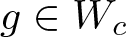 $g\in W_c$ such that
 $
g_n\rightarrow g$ in
 $W_c.$ We first show that
 $g\in\mathrm{bmo}_A^c(\mathbb R^d,\mathcal M)$. Since
 $\{g_n\}_n$ is Cauchy in
 $\mathrm{bmo}_A^c({{{\mathbb R}}^d},{\mathcal M})$, it is bounded in that norm; choose
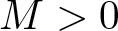 $M \gt 0$ such that
 \begin{equation*}
\sup_{n\ge1}\|g_n\|_{\mathrm{bmo}_A^c({{{\mathbb R}}^d},{\mathcal M})}\le M.
\end{equation*}
Fix  $B\in\mathfrak B_1$. Since
 $D_B$ is bounded from
 $W_c$ into
 $X_B^c$,
 $
D_Bg_n\longrightarrow D_Bg$ in
 $X_B^c.$ Therefore
 \begin{equation*}
\|D_Bg\|_{X_B^c}
=
\lim_{n\to\infty}\|D_Bg_n\|_{X_B^c}
\le M.
\end{equation*}
Taking the supremum over  $B\in\mathfrak B_1$, we get
 \begin{equation*}
\sup_{B\in\mathfrak B_1}\|D_Bg\|_{X_B^c}\le M.
\end{equation*}
Similarly, for every  $B\in\mathfrak B_2$, the boundedness of
 $R_B$ gives
 $R_Bg_n\longrightarrow R_Bg$ in
 $X_B^c,$ and hence
 \begin{equation*}
\sup_{B\in\mathfrak B_2}\|R_Bg\|_{X_B^c}\le M.
\end{equation*}
Therefore, we have  $
g\in \mathrm{bmo}_A^c(\mathbb R^d,\mathcal M).
$
It remains to show convergence in the  $\mathrm{bmo}_A^c$-norm. Let
 $\varepsilon \gt 0$. Choose
 $N$ such that, whenever
 $m,n\ge N$,
 \begin{equation*}
\|g_n-g_m\|_{\mathrm{bmo}_A^c({{{\mathbb R}}^d},{\mathcal M})} \lt \varepsilon .
\end{equation*}
Fix  $n\ge N$. For every
 $B\in\mathfrak B_1$, since
 $g_m\to g$ in
 $W_c$ and
 $D_B$ is bounded, we have
 $
D_B(g_n-g_m)\longrightarrow D_B(g_n-g)
$ in
 $X_B^c.$ Hence
 \begin{equation*}
\|D_B(g_n-g)\|_{X_B^c}
=
\lim_{m\to\infty}\|D_B(g_n-g_m)\|_{X_B^c}
\le \varepsilon .
\end{equation*}
Taking the supremum over  $B\in\mathfrak B_1$, we obtain
 \begin{equation*}
\sup_{B\in\mathfrak B_1}\|D_B(g_n-g)\|_{X_B^c}
\le \varepsilon .
\end{equation*}
The same argument with  $R_B$ gives
 \begin{equation*}
\sup_{B\in\mathfrak B_2}\|R_B(g_n-g)\|_{X_B^c}
\le \varepsilon .
\end{equation*}
Therefore
 \begin{equation*}
\|g_n-g\|_{\mathrm{bmo}_A^c({{{\mathbb R}}^d},{\mathcal M})}\le \varepsilon,
\qquad n\ge N.
\end{equation*}
Thus  $g_n\to g$ in
 $\mathrm{bmo}_A^c(\mathbb R^d,\mathcal M)$, and
 $\mathrm{bmo}_A^c(\mathbb R^d,\mathcal M)$ is complete.
Next, we discuss the relationship between local bmo spaces and global BMO spaces. Let us recall the definition of global BMO spaces [Reference Wang40]. For a more precise definition, see [Reference Cano–Mármol and Ricard10]; we omit the details here.
Definition 2.11. Let  $A$ be a dilation and
 $\mathfrak{B}$ be as in (2.3). The anisotropic column BMO space
 ${\rm BMO}_{A}^{c}({{{\mathbb R}}^d},{\mathcal M})$ is defined as
 \begin{eqnarray*}
{\rm BMO}_{A}^{c}({{{\mathbb R}}^d},{\mathcal M}):=\left\{g\in L_{\infty}({\mathcal M};\,L_2^c({{{\mathbb R}}^d},\,\frac{dx}{1+[\rho(x)]^2})):
\|g\|_{{\rm BMO}_{A}^{c}({{{\mathbb R}}^d},{\mathcal M})} \lt \infty\right\},
\end{eqnarray*}
where
 \begin{equation*}\|g\|_{{\rm BMO}_{A}^{c}({{{\mathbb R}}^d},{\mathcal M})}:=\sup_{B\in\mathfrak{B}}\left\|\left(
\unicode{x02A0F}_{\!\!\!\!B}|g(y)-g_{B}|^2\,dy\right)^{\frac12}\right\|_{{\mathcal M}}.\end{equation*}
Similarly, we define the anisotropic row  $\mathrm{BMO}$ space
 ${\rm BMO}_{A}^{r}({{{\mathbb R}}^d},{\mathcal M})$ as the space of
 $g$ such that
 $g^{\ast}\in{\rm BMO}_{A}^{c}({{{\mathbb R}}^d},{\mathcal M})$ with the norm
 $\|g\|_{{\rm BMO}_{A}^{r}({{{\mathbb R}}^d},{\mathcal M})}:=\|g^{\ast}\|_{{\rm BMO}_{A}^{c}({{{\mathbb R}}^d},{\mathcal M})}$, and
 \begin{equation*}{\rm BMO}_{A}({{{\mathbb R}}^d},{\mathcal M}):={\rm BMO}_{A}^{c}({{{\mathbb R}}^d},{\mathcal M})\cap{\rm BMO}_{A}^{r}({{{\mathbb R}}^d},{\mathcal M})\end{equation*}
with the norm
 \begin{equation*}\|g\|_{{\rm BMO}_{A}({{{\mathbb R}}^d},{\mathcal M})}:=\max\left\{\|g\|_{{\rm BMO}_{A}^{c}({{{\mathbb R}}^d},{\mathcal M})},\,
\|g\|_{{\rm BMO}_{A}^{r}({{{\mathbb R}}^d},{\mathcal M})}\right\}.\end{equation*}
Remark 2.12. We should point out that the global BMO spaces in Definition 2.11 are understood modulo constant  $\mathcal M$-valued functions. This expression will be convenient for abstract questions. Indeed, the quantity
 \begin{equation*}
\sup_{B\in\mathfrak B}
\left\|
\left(\unicode{x02A0F}_B |g(y)-g_B|^2\,dy\right)^{\frac12}
\right\|_{\mathcal M}
\end{equation*}
is only a seminorm on the corresponding ambient mixed space, and it vanishes on every constant function  $x\mapsto a$,
 $a\in\mathcal M$. Thus, if
 \begin{equation*}
\mathcal{C}_{\mathcal M}:=\{x\mapsto a:\ a\in\mathcal M\},
\end{equation*}
then  ${\rm BMO}_A^c(\mathbb R^d,\mathcal M)$ is identified with the quotient of the seminormed space of all admissible representatives by
 $ \mathcal{C}_{\mathcal M}$. In what follows, we write
 $[g]$ for the equivalence class of
 $g$. The row and two-sided global BMO spaces are interpreted in the same way.
Proposition 2.13. Let  $A$ be a dilation. Then we have
 \begin{equation*}\mathrm{bmo}_A^c({{{\mathbb R}}^d},{\mathcal M})\subset{\rm BMO}_A^c({{{\mathbb R}}^d},{\mathcal M}).\end{equation*}
Moreover, there exists a positive constant  $C$ such that, for any
 $g\in\mathrm{bmo}_A^c({{{\mathbb R}}^d},{\mathcal M})$,
 \begin{equation*}\|g\|_{{\rm BMO}_A^c({{{\mathbb R}}^d},{\mathcal M})}\leq C\|g\|_{\mathrm{bmo}_A^c({{{\mathbb R}}^d},{\mathcal M})}.\end{equation*}
Similarly, this inequality also holds in  $\mathrm{bmo}_{A}^r({{{\mathbb R}}^d},{\mathcal M})$ and
 $ \mathrm{bmo}_A({{{\mathbb R}}^d},{\mathcal M})$.
Proof. Let  $g\in\mathrm{bmo}_A^c({{{\mathbb R}}^d},{\mathcal M})$. By the definitions of
 $\mathrm{bmo}_A^c({{{\mathbb R}}^d},{\mathcal M})$ and
 ${\rm BMO}_A^c({{{\mathbb R}}^d},{\mathcal M})$, we only need to show that, for any
 $B\in\mathfrak{B}_2$,
 \begin{equation*}\left\|\left(\unicode{x02A0F}_{\!\!\!\!B}|g(x)-g_B|^2\,dx\right)^{\frac12}\right\|_{{\mathcal M}}\lesssim
\left\|\left(\unicode{x02A0F}_{\!\!\!\!B}|g(x)|^2\,dx\right)^{\frac12}\right\|_{{\mathcal M}}.\end{equation*}
From the triangle inequality and (2.1), we deduce that, for any  $B\in\mathfrak{B}_2$,
 \begin{align*}
\left\|\left(\unicode{x02A0F}_{\!\!\!\!B}|g(x)-g_B|^2\,dx\right)^{\frac12}\right\|_{{\mathcal M}}
&\lesssim
\left\|\left(\unicode{x02A0F}_{\!\!\!\!B}|g(x)|^2\,dx\right)^{\frac12}\right\|_{{\mathcal M}}\\
&\quad +\|g_B\|_{{\mathcal M}}
\lesssim\left\|\left(\unicode{x02A0F}_{\!\!\!\!B}|g(x)|^2\,dx\right)^{\frac12}\right\|_{{\mathcal M}},
\end{align*}
which implies our desired result.
Remark 2.14. Notice that, Proposition 2.13 should be understood as asserting a bounded embedding into the corresponding quotient space modulo constants, that is, the map
 \begin{equation*}
\mathrm{bmo}_A^c(\mathbb R^d,\mathcal M)
\longrightarrow
{\rm BMO}_A^c(\mathbb R^d,\mathcal M),
\qquad
g\mapsto [g],
\end{equation*}
is bounded. This is the convention used below. For simplicity, we keep the notation  ${\rm BMO}_A^c(\mathbb R^d,\mathcal M)$.
2.4. Carleson measure characterization of
$ \mathrm{bmo}_A^c({{{\mathbb R}}^d},{\mathcal M})$

In this subsection, we will establish the relation between local Carleson measures and local bmo spaces. In what follows, for any set  $X\subset{{{\mathbb R}}^d}$, we denote by
 $T(X)$ the tent over
 $X$, defined by
 \begin{equation*}T(X):=\{(y,\,k)\in{{{\mathbb R}}^d}\times\{{\mathbb Z}\backslash{\mathbb N}\}:y+B_k\subset X\}.\end{equation*}
For convenience, we define
 \begin{equation*}\int_{(y,\,i)\in E\times F}f(y,\,i)\,dyd\sigma(i):=
\sum_{i\in F}\int_{E}f(y,\,i)\,dy,\end{equation*}
where  $E\times F\subset{{{\mathbb R}}^d}\times\{{\mathbb Z}\backslash{\mathbb N}\}$.
Definition 2.15. Let  $A$ be a dilation and
 $\mathfrak{B}_1$ be as in (2.4). We say that a
 ${\mathcal M}$-valued measure
 $d\mu$ on
 ${{{\mathbb R}}^d}\times\{{\mathbb Z}\backslash{\mathbb N}\}$ is an local anisotropic Carleson measure if
 \begin{eqnarray*}
\|d\mu\|_{\mathbf{C}}:=\sup_{B\in\mathfrak{B}_1}\left\|\frac{1}{|B|}\int_{(x,\,k)\in T(B)}d\mu(x,\,k)\right\|_{{\mathcal M}} \lt \infty,
\end{eqnarray*}
where the supremum is taken over all dilated balls 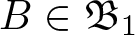 $B\in\mathfrak{B}_1$ and
 $T(B)$ is the tent over
 $B$.
Lemma 2.16. Let  $g\in \mathrm{bmo}_A^c({{{\mathbb R}}^d},{\mathcal M})$ and
 $\varphi$,
 $\phi$ satisfy (2.8) and (2.9). Then
 $d\mu_g=|g\ast\varphi_k(x)|^2\,dxd\sigma(k)$ is an
 ${\mathcal M}$-valued local anisotropic Carleson measure on
 ${{{\mathbb R}}^d}\times\{{\mathbb Z}\backslash{\mathbb N}\}$, and
 $g\ast\phi\in L_{\infty}({L_{\infty}(\mathbb{R}^d)\overline{\otimes}\mathcal{M}})$. Moreover, there exists a positive constant
 $C$ such that
 \begin{equation*}\left\|d\mu_g\right\|_{\mathbf{C}}+\left\|g*\phi\right\|_{L_{\infty}(L_\infty({{{\mathbb R}}^d})\overline{\otimes}{\mathcal M})
}^2\leq C\|g\|_{\mathrm{bmo}_A^c({{{\mathbb R}}^d},{\mathcal M})}^2.\end{equation*}
Proof. Let  $g\in \mathrm{bmo}_A^c({{{\mathbb R}}^d},{\mathcal M})$ and
 $x_0+B_{k_0}\in\mathfrak{B}_1$ with
 $x_0\in{{{\mathbb R}}^d},\,k_0\in{\mathbb Z}\backslash{\mathbb N}$. Then we write
 \begin{align*}
g&=(g-g_{x_0+B_{k_0+2\sigma}})\mathbf{1}_{x_0+B_{k_0+2\sigma}}
+(g-g_{x_0+B_{k_0+2\sigma}})\mathbf{1}_{(x_0+B_{k_0+2\sigma})^{\complement}}\\
&\quad +g_{x_0+B_{k_0+2\sigma}}
=:g_1+g_2+g_3.
\end{align*}
For  $g_3$, it follows from the vanishing moment that, for any
 $k\in{\mathbb Z}\backslash{\mathbb N}$,
 $g_3\ast\varphi_k=0.$ Therefore, for any
 $k\in{\mathbb Z}\backslash{\mathbb N}$, we know that
 $g\ast\varphi_k=g_1\ast\varphi_k+g_2\ast\varphi_k.$ Let
 $d\mu_{g_1}:=|g_1\ast\varphi_k(x)|^2\,dxd\sigma(k)$,
 $d\mu_{g_2}:=|g_2\ast\varphi_k(x)|^2\,dxd\sigma(k).$ Then we further have
 \begin{equation*}\left\|d\mu_g\right\|_{\mathbf{C}}\lesssim \left\|d\mu_{g_1}\right\|_{\mathbf{C}}
+\left\|d\mu_{g_2}\right\|_{\mathbf{C}}.\end{equation*}
For the term  $\|d\mu_{g_1}\|_{\mathbf{C}}$, from (2.2), (2.9) and Proposition 2.13, we conclude that
 \begin{align*}
&\left\||\det A|^{-k_0}\int_{(x,\,k)\in T(x_0+B_{k_0})}|g_1\ast\varphi_k(x)|^2\,dxd\sigma(k)\right\|_{{\mathcal M}}\\
&\quad \leq|\det A|^{-k_0}\left\|\sum_{k=-\infty}^{-1}\int_{{{{\mathbb R}}^d}}|g_1\ast\varphi_k(x)|^2\,dx\right\|_{{\mathcal M}}\\
&\quad =|\det A|^{-k_0}\left\|\sum_{k=-\infty}^{-1}\int_{{{{\mathbb R}}^d}}|\widehat{g_1}(\xi)|^2|\widehat{\varphi_k}(\xi)|^2
\,d\xi\right\|_{{\mathcal M}}\\
&\quad \leq|\det A|^{-k_0}\left\|\sum_{k=-\infty}^{-1}\int_{{{{\mathbb R}}^d}}|\widehat{g_1}(\xi)|^2|\widehat{\varphi}
((A^T)^k\xi)|^2\,d\xi\right\|_{{\mathcal M}}\\
&\quad \leq|\det A|^{-k_0}\left\|\int_{x_0+B_{k_0+2\sigma}}|g_1(x)|^2\,dx\right\|_{{\mathcal M}}\\
&\quad =|\det A|^{-k_0}\left\|\int_{x_0+B_{k_0+2\sigma}}\left|g(x)-g_{x_0+B_{k_0+2\sigma}}\right|^2\,dx\right\|_{{\mathcal M}}
\lesssim\|g\|_{\mathrm{bmo}_A^c({{{\mathbb R}}^d},{\mathcal M})}^2,
\end{align*}
this implies that  $\|d\mu_{g_1}\|_{\mathbf{C}}\lesssim\|g\|_{\mathrm{bmo}_A^c({{{\mathbb R}}^d},{\mathcal M})}^2.$
For any  $j\in{\mathbb Z}$, set
 \begin{equation*}U_j(x_0+B_{k_0+2\sigma}):=x_0+(B_{k_0+j+2\sigma+1} \backslash B_{k_0+j+2\sigma}).\end{equation*}
Since  $\varphi\in{\mathcal S}({{{\mathbb R}}^d})$, we choose some
 $N\in{\mathbb N}$ to be fixed later, by (2.1) and Proposition 2.13, we deduce that, for any
 $x\in x_0+B_{k_0}$ and
 $k\in{\mathbb Z}\backslash{\mathbb N}$,
 \begin{align}
|g_2\ast\varphi_k(x)|^2&=|\det A|^{-2k}\left|\int_{(x_0+B_{k_0+2\sigma})^{\complement}}
g_2(y)\varphi(A^{-k}(x-y))\,dy\right|^2\nonumber\\
&\leq |\det A|^{-2k}\int_{(x_0+B_{k_0+2\sigma})^{\complement}}
\left|\varphi(A^{-k}(x-y))\right|^2\left[\rho(y-x_0)\right]^2\,dy\nonumber\\
&\quad\times\int_{(x_0+B_{k_0+2\sigma})^{\complement}}\left|g_2(y)\right|^2\left[\rho(y-x_0)\right]^{-2}\,dy\nonumber\\
&\lesssim |\det A|^{-2k}\sum_{j=0}^{\infty}\int_{U_j(x_0+B_{k_0+2\sigma})}
\frac{\left[\rho(y-x_0)\right]^2}{\left[1+\rho(A^{-k}(x-y))\right]^{2N}}\,dy\nonumber\\
&\quad\times\sum_{j=0}^{\infty}|\det A|^{-2(k_0+j+2\sigma)}\int_{U_j(x_0+B_{k_0+2\sigma})}
\left|g(y)-g_{x_0+B_{k_0+2\sigma}}\right|^2\,dy\nonumber\\
&\lesssim |\det A|^{-2k-{k_0}}\|g\|_{\mathrm{bmo}_A^c({{{\mathbb R}}^d},{\mathcal M})}^2\nonumber\\
&\quad\times\sum_{j=0}^{\infty}\int_{U_j(x_0+B_{k_0+2\sigma})}
\frac{\left[\rho(y-x_0)\right]^2}{\left[1+\rho(A^{-k}(x-y))\right]^{2N}}\,dy.\end{align}
If  $x\in x_0+B_{k_0}$,
 $y\in(x_0+B_{k_0+j+2\sigma})^{\complement}$, it follows from (2.6) that
 \begin{align*}
& x-y\in x_0+B_{k_0}-(x_0+B_{k_0+j+2\sigma})^{\complement}
\subset B_{k_0}+(B_{k_0+j+2\sigma})^{\complement}\\
&\quad \subset B_{k_0+j+\sigma}+(B_{k_0+j+2\sigma})^{\complement}
\subset(B_{k_0+j+\sigma})^{\complement}.
\end{align*}
Therefore, for any  $k\in{\mathbb Z}\backslash{\mathbb N}$,
 \begin{equation}
A^{-k}(x-y)\in A^{-k}(B_{k_0+j+\sigma})^{\complement}=(B_{k_0-k+j+\sigma})^{\complement}.
\end{equation}
From (2.10) and (2.11), we conclude that
 \begin{align}
&|g_2\ast\varphi_k(x)|^2\nonumber\\
&\quad \lesssim |\det A|^{-2k-{k_0}}\|g\|_{\mathrm{bmo}_A^c({{{\mathbb R}}^d},{\mathcal M})}^2
\sum_{j=0}^{\infty}\int_{U_j(x_0+B_{k_0+2\sigma})}
\frac{|\det A|^{2(k_0+j+2\sigma)}}{|\det A|^{2N(k_0-k+j+\sigma)}}\,dy\nonumber\\
&\quad \lesssim |\det A|^{(2N-2)k+(2-2N)k_0}\sum_{j=0}^{\infty}|\det A|^{(3-2N)j}\ \|g\|_{\mathrm{bmo}_A^c({{{\mathbb R}}^d},{\mathcal M})}^2.\end{align}
Take an integer  $N\in{\mathbb N}$ such that
 $N \gt \frac{3}{2}$, then we deduce that
 \begin{align*}
\left|g_2\ast\varphi_k(x)\right|^2
&\lesssim |\det A|^{(2-2N)(k_0-k)}\|g\|_{\mathrm{bmo}_A^c({{{\mathbb R}}^d},{\mathcal M})}^2.
\end{align*}
From this, we conclude that
 \begin{align*}
&\left\|\int_{(x,\,k)\in T(x_0+B_{k_0})}|g_2\ast\varphi_k(x)|^2\,dxd\sigma(k)\right\|_{{\mathcal M}}\\
&\quad\leq\left\|\sum_{k=-\infty}^{k_0+\sigma}\int_{x_0+B_{k_0}}|g_2\ast\varphi_k(x)|^2\,dx\right\|_{{\mathcal M}}
\lesssim|\det A|^{k_0}\|g\|_{\mathrm{bmo}_A^c({{{\mathbb R}}^d},{\mathcal M})}^2,
\end{align*}
which further implies that  $\|d\mu_{g_2}\|_{\mathbf{C}}\lesssim\|g\|_{\mathrm{bmo}_A^c({{{\mathbb R}}^d},{\mathcal M})}^2.$
Next, we estimate  $\|g*\phi\|_{L_{\infty}({{{\mathbb R}}^d})\overline{\otimes}{\mathcal M}}$. By (2.1), we obtain that, for any
 $x\in{{{\mathbb R}}^d}$,
 \begin{align*}
\|g*\phi(x)\|_{{\mathcal M}}&=\left\|\int_{{{{\mathbb R}}^d}}g(y)\phi(x-y)\,dy\right\|_{{\mathcal M}}\\
&\leq\left\|\int_{x+B_1}g(y)\phi(x-y)\,dy\right\|_{{\mathcal M}}+\left\|\int_{(x+B_1)^{\complement}}g(y)\phi(x-y)\,dy\right\|_{{\mathcal M}}\\
&\lesssim\left\|\left(\unicode{x02A0F}_{\!\!\!\!x+B_1}|g(y)|^2\,dy\right)^{\frac12}\right\|_{{\mathcal M}} +\sum_{j=0}^{\infty}
\left\|\int_{x+B_{j+2}\backslash B_{j+1}}g(y)\phi(x-y)\,dy\right\|_{{\mathcal M}}\\
&\lesssim\sup_{B\in\mathfrak{B}_2}\left\|\left(\unicode{x02A0F}_{\!\!\!\!B}
|g(x)|^2\,{dx}\right)^{\frac12}\right\|_{{\mathcal M}}
\lesssim\|g\|_{\mathrm{bmo}_A^c({{{\mathbb R}}^d},{\mathcal M})}.
\end{align*}
This completes the proof of Lemma 2.16.
3. The duality of operator-valued local Hardy spaces
$\mathbf{h}_p^A({{{\mathbb R}}^d},{\mathcal M})$ for
$p\in[1,\,2)$


In this section, we will describe the dual space of  $\mathbf{h}_p^A({{{\mathbb R}}^d},{\mathcal M})$ as a noncommutative bmo-type space
 $L_{p'}\mathrm{mo}_A({{{\mathbb R}}^d},{\mathcal M})$, where
 $p\in[1,\,2)$ and
 $p'$ denotes the conjugate index of
 $p$. To establish the main result, we first recall some definitions and lemmas.
In what follows, for any function  $f$ on
 ${{{\mathbb R}}^d}\times\{{\mathbb Z}\backslash{\mathbb N}\}$, let
 $\widetilde{\Gamma}_x:=\{(y,\,i)\in{{{\mathbb R}}^d}\times\{{\mathbb Z}\backslash{\mathbb N}\}:y\in x+B_i\}$ with
 $x\in{{{\mathbb R}}^d}$, then we define
 \begin{equation*}\int_{\widetilde{\Gamma}_x}f(y,\,i)\,dyd\sigma(i):=
\sum_{i\in {\mathbb Z}\backslash{\mathbb N}}\int_{x+B_i}f(y,\,i)\,dy.\end{equation*}
Let  $L_p(L_{\infty}({{{\mathbb R}}^d})\overline{\otimes}{\mathcal M};\,L_2^c(\widetilde{\Gamma}_x,\,dyd\sigma(i))) \oplus_p L_p(L_{\infty}({{{\mathbb R}}^d})\overline{\otimes}{\mathcal M})$ denote the
 $\ell_p$-direct sum of the Banach spaces
 $L_p(L_{\infty}({{{\mathbb R}}^d})\overline{\otimes}{\mathcal M};\,L_2^c(\widetilde{\Gamma}_x,\,dyd\sigma(i)))$ and
 $L_p(L_{\infty}({{{\mathbb R}}^d})\overline{\otimes}{\mathcal M})$, equipped with the norm
 \begin{align*}
&\|(f_1,f_2)\|_{L_p(L_{\infty}({{{\mathbb R}}^d})\overline{\otimes}{\mathcal M};\,L_2^c(\widetilde{\Gamma}_x,
\,dyd\sigma(i)))\oplus_p L_p(L_{\infty}({{{\mathbb R}}^d})\overline{\otimes}{\mathcal M})}\\
&\quad:=\left(\|f_1\|_{L_p(L_{\infty}({{{\mathbb R}}^d})\overline{\otimes}{\mathcal M};\,L_2^c
(\widetilde{\Gamma}_x,\,dyd\sigma(i)))}^p+\|f_2\|_{L_p(L_{\infty}({{{\mathbb R}}^d})\overline{\otimes}{\mathcal M})}^p\right)^{\frac1p},\end{align*}
where  $f_1\in L_p(L_{\infty}({{{\mathbb R}}^d})\overline{\otimes}{\mathcal M};\,L_2^c(\widetilde{\Gamma}_x,\,dyd\sigma(i)))$ and
 $f_2\in L_p(L_{\infty}({{{\mathbb R}}^d})\overline{\otimes}{\mathcal M})$. Then we can embed
 $ \mathbf{h}_p^{A,c}({{{\mathbb R}}^d},{\mathcal M})$ into a large space
 $L_p(L_{\infty}({{{\mathbb R}}^d})\overline{\otimes}{\mathcal M};\,L_2^c(\widetilde{\Gamma}_x,\,dyd\sigma(i))) \oplus_p L_p(L_{\infty}({{{\mathbb R}}^d})\overline{\otimes}{\mathcal M})$, which is related to the two maps as follows.
Definition 3.1. Let  $p\in[1,\,\infty)$. The map
 $\Phi$ is defined from
 $ \mathbf{h}^{A,c}_p({{{\mathbb R}}^d},{\mathcal M})$ to
 $L_{p}(L_{\infty}({{{\mathbb R}}^d})\overline{\otimes}{\mathcal M};\,L_2^c(\widetilde{\Gamma}_x,$
 $\,dyd\sigma(k)))\oplus_p L_p(L_{\infty}({{{\mathbb R}}^d})\overline{\otimes}{\mathcal M})$ by
 \begin{equation*}\Phi(f)(x,\,y,\,k):=\left(\frac{f\ast\varphi_k(y)}{|\det A|^{\frac k2}}\mathbf{1}_{x+B_k}(y),\,
f*\phi(x)\right).\end{equation*}
For any  $g=(g_1,\,g_2)$ such that
 $g_1\in S_{L_{\infty}({{{\mathbb R}}^d})\overline{\otimes}{\mathcal M}}$,
 $g_2$ is an
 $ S_{L_{\infty}({{{\mathbb R}}^d})\overline{\otimes}{\mathcal M}}$-valued simple function, the map
 $\Psi$ is defined by
 \begin{align*}\Psi(g)(z)&:=\int_{{{{\mathbb R}}^d}}\sum_{k=-\infty}^{-1}|\det A|^{-\frac k2}
\int_{x+B_k}\overline{\varphi_k(y-z)}g_1(x,\,y,\,k)\,dydx\\
&\quad+\int_{{{{\mathbb R}}^d}}\overline{\phi(x-z)}g_2(x)\,dx.\end{align*}
Lemma 3.2. The map  $\Psi$ extends to a bounded map from the space
 $L_{\infty}\\ (L_{\infty}({{{\mathbb R}}^d})\overline{\otimes}{\mathcal M};\,L_2^c(\widetilde{\Gamma}_x,\,dyd\sigma(k)))$
 $\oplus_{\infty} L_{\infty}(L_{\infty}({{{\mathbb R}}^d})\overline{\otimes}{\mathcal M})$ to the space
 $\mathrm{bmo}^c_A({{{\mathbb R}}^d},{\mathcal M})$.
Proof. Let  $g:=(g_1,g_2)\in L_{\infty}(L_{\infty}({{{\mathbb R}}^d})\overline{\otimes}{\mathcal M};\,L_2^c(\widetilde{\Gamma}_x,\,dxd\sigma(k)))\oplus_{\infty} L_{\infty}\\ (L_{\infty}({{{\mathbb R}}^d})\overline{\otimes}{\mathcal M})$. Next, we show that
 \begin{equation*}\left\|\Psi(g)\right\|_{\mathrm{bmo}_{A}^c({{{\mathbb R}}^d},\,{\mathcal M})}\lesssim\|g\|_
{L_{\infty}(L_{\infty}({{{\mathbb R}}^d})\overline{\otimes}{\mathcal M};\,L_2^c(\widetilde{\Gamma}_x,\,dxd\sigma(k)))\oplus_{\infty} L_{\infty}(L_{\infty}({{{\mathbb R}}^d})\overline{\otimes}{\mathcal M})}.\end{equation*}
To do this, we only need to prove that, for any  $B\in\mathfrak{B}_1$ and some constant
 $C_B$,
 \begin{align}
&\left\|\left(
\unicode{x02A0F}_{\!\!\!\!B}|\Psi(g)(z)-C_{B}|^2\,dz\right)^{\frac12}\right\|_{{\mathcal M}}\nonumber\\
&\quad\lesssim\|g\|_
{L_{\infty}(L_{\infty}({{{\mathbb R}}^d})\overline{\otimes}{\mathcal M};\,L_2^c(\widetilde{\Gamma}_x,\,dxd\sigma(k)))\oplus_{\infty} L_{\infty}(L_{\infty}({{{\mathbb R}}^d})\overline{\otimes}{\mathcal M})},
\end{align}
and for any  $B\in\mathfrak{B}_2$,
 \begin{align}
&\left\|\left(
\unicode{x02A0F}_{\!\!\!\!B}|\Psi(g)(z)|^2\,dz\right)^{\frac12}\right\|_{{\mathcal M}}\nonumber\\
&\quad\lesssim\|g\|_
{L_{\infty}(L_{\infty}({{{\mathbb R}}^d})\overline{\otimes}{\mathcal M};\,L_2^c(\widetilde{\Gamma}_x,\,dxd\sigma(k)))\oplus_{\infty} L_{\infty}(L_{\infty}({{{\mathbb R}}^d})\overline{\otimes}{\mathcal M})}.
\end{align}
Let  $x_0+B_{k_0}\in\mathfrak{B}$ with
 $x_0\in{{{\mathbb R}}^d}$ and
 $k_0\in{\mathbb Z}\backslash{\mathbb N}$. Then we can write
 \begin{align*}
g_1(x,\,y,\,k)&=g_1(x,\,y,\,k)\mathbf{1}_{x_0+B_{k_0+4\sigma}}(x)+g_1(x,\,y,\,k)
\mathbf{1}_{(x_0+B_{k_0+4\sigma})^{\complement}}(x)\\
&=:g_{11}(x,\,y,\,k)+g_{12}(x,\,y,\,k).
\end{align*}
Set
 \begin{equation*}C_{x_0+B_{k_0}}:=\int_{{{{\mathbb R}}^d}}\sum_{k=-\infty}^{-1}|\det A|^{-\frac{k}{2}}\int_{x+B_k}
g_{12}(x,\,y,\,k)\unicode{x02A0F}_{\!\!\!\!x_0+B_{k_0}}\varphi_k(y-z)\,dzdydx.\end{equation*}
Then
 \begin{align*}
& \unicode{x02A0F}_{\!\!\!\!x_0+B_{k_0}}\left|\Psi(g)(z)-C_{x_0+B_{k_0}}\right|^2\,dz\\
&\quad \leq 2|\det A|^{-k_0}\int_{x_0+B_{k_0}}\left|\int_{(x_0+B_{k_0+4\sigma})^{\complement}}\sum_{k=-\infty}^{-1}|\det A|^{-\frac{k}{2}}\right.\\
&\qquad\left.\times\int_{x+B_k}g_{12}(x,\,y,\,k)
\left[\varphi_k(y-z)-Q_{x_0+B_{k_0}}\right]\,dydx\right|^2\,dz\\
&\qquad +2|\det A|^{-k_0}\int_{x_0+B_{k_0}}\left|\int_{{{{\mathbb R}}^d}}\sum_{k=-\infty}^{-1}|\det A|^{-\frac{k}{2}}\right.\\
&\qquad\left.\times\int_{x+B_k}g_{11}(x,\,y,\,k)
\varphi_k(y-z)\,dydx\right|^2\,dz\\
&\qquad +\unicode{x02A0F}_{\!\!\!\!x_0+B_{k_0}}\left|\int_{{{{\mathbb R}}^d}}\overline{\phi(x-z)}g_2(x)\,dx\right|^2\,dz\\
&=:\mathrm{II}_1+\mathrm{II}_2+\mathrm{II}_3,
\end{align*}
where  $Q_{x_0+B_{k_0}}:=\unicode{x02A0F}_{x_0+B_{k_0}}\varphi_k(y-z)\,dz$.
To deal with  $\mathrm{II}_1$ and
 $\mathrm{II}_2$, by using the duality theory of noncommutative
 $L_p$-spaces, the Cauchy–Schwarz inequality, the fact that
 $L_2(L_{\infty}({{{\mathbb R}}^d})\overline{\otimes}{\mathcal M})=\mathbf{h}_2^{A,c}({{{\mathbb R}}^d},{\mathcal M})$, (2.1), and an estimate similar to that in [Reference Wang40, Lemma 3.5], we obtain
 \begin{align*}
\left\|\mathrm{II}_2\right\|_{{\mathcal M}}
&\lesssim
\|g_1\|_{L_{\infty}(L_{\infty}({{{\mathbb R}}^d})\overline{\otimes}{\mathcal M};\,L^c_2(\widetilde{\Gamma}_x,
\,dyd\sigma(k)))}^2
\ \ \mathrm{and}\\
\quad\left\|\mathrm{II}_{1}\right\|_{{\mathcal M}}&\lesssim\|g_1\|
_{L_{\infty}(L_{\infty}({{{\mathbb R}}^d})\overline{\otimes}{\mathcal M};\,L^c_2(\widetilde{\Gamma}_x,\,dyd\sigma(k))}^2.
\end{align*}
For the last term  $\mathrm{II}_3$, by (2.1), we obtain
 \begin{align*}
\left\|\mathrm{II}_3\right\|_{{\mathcal M}}&=\left\|\unicode{x02A0F}_{\!\!\!\!x_0+B_{k_0}}\left|\int_{{{{\mathbb R}}^d}}\overline{\phi(x-z)}g_2(x)
\,dx\right|^2\,dz\right\|_{{\mathcal M}}
\lesssim\left\|g_2\right\|_{L_{\infty}(L_{\infty}({{{\mathbb R}}^d})\overline{\otimes}{\mathcal M})}^2,
\end{align*}
which, together with the estimates of  $\mathrm{II}_1$ and
 $\mathrm{II}_2$, implies (3.13).
Next, we prove (3.14). Let  $x_0+B_{k_0}\in\mathfrak{B}$ with
 $x_0\in{{{\mathbb R}}^d}$ and
 $k_0\in{\mathbb N}$. Then we can write
 \begin{align*}
&\unicode{x02A0F}_{\!\!\!\!x_0+B_{k_0}}\left|\Psi(g)(z)\right|^2\,dz\\
&\quad\leq 2|\det A|^{-k_0}\int_{x_0+B_{k_0}}\left|\int_{{{{\mathbb R}}^d}}\sum_{k=-\infty}^{-1}|\det A|^{-\frac{k}{2}}\right.\\
&\qquad\left.\times\int_{x+B_k}g_1(x,\,y,\,k)
\varphi_k(y-z)\,dydx\right|^2\,dz\\
&\qquad +2\unicode{x02A0F}_{\!\!\!\!x_0+B_{k_0}}\left|\int_{{{{\mathbb R}}^d}}\overline{\phi(x-z)}g_2(x)\,dx\right|^2\,dz\\
\quad =&:\mathrm{III}_1+\mathrm{III}_2,
\end{align*}
To deal with  $\mathrm{III}_1$, set
 \begin{equation*}g_1(x,\,y,\,k):=g_1(x,\,y,\,k)\mathbf{1}_{x_0+B_{k_0+2\sigma}}(x)+g_1(x,\,y,\,k)
\mathbf{1}_{(x_0+B_{k_0+2\sigma})^{\complement}}(x).\end{equation*}
From this and a similar argument of  $\mathrm{II}_1$ and
 $\mathrm{II}_2$, we can deduce that, for
 $x_0\in{{{\mathbb R}}^d}$,
 $k_0\in{\mathbb N}$,
 \begin{align*}
&\left\|\mathrm{III}_{1}\right\|_{{\mathcal M}}\thicksim
|\det A|^{-k_0}\\
&\qquad\times\left\|\int_{x_0+B_{k_0}}\left|\int_{{{{\mathbb R}}^d}}\sum_{k=-\infty}^{-1}|\det A|^{-\frac{k}{2}}\int_{x+B_k}g_1(x,\,y,\,k)
\varphi_k(y-z)\,dydx\right|^2\,dz\right\|_{{\mathcal M}}\\
&\quad\lesssim\|g_1\|
_{L_{\infty}(L_{\infty}({{{\mathbb R}}^d})\overline{\otimes}{\mathcal M};\,L^c_2(\widetilde{\Gamma}_x,\,dyd\sigma(k))}^2.
\end{align*}
For the term  $\mathrm{III}_2$, from (2.1), we can conclude that, for
 $x_0\in{{{\mathbb R}}^d}$,
 $k_0\in{\mathbb N}$,
 \begin{align*}
\left\|\mathrm{III}_2\right\|_{{\mathcal M}}&=\left\|\unicode{x02A0F}_{\!\!\!\!x_0+B_{k_0}}\left|\int_{{{{\mathbb R}}^d}}\overline{\phi(x-z)}g_2(x)
\,dx\right|^2\,dz\right\|_{{\mathcal M}}\\
&\lesssim\unicode{x02A0F}_{\!\!\!\!x_0+B_{k_0}}\int_{{{{\mathbb R}}^d}}\left|\overline{\phi(x-z)}\right|^2\,dxdz
\left\|\int_{{{{\mathbb R}}^d}}\left|g_2(x)\right|^2\,dx\right\|_{{\mathcal M}}\\
&\lesssim\left\|\int_{{{{\mathbb R}}^d}}\left|g_2(x)
\right|^2\,dx\right\|_{{\mathcal M}}
\lesssim\left\|g_2\right\|_{L_{\infty}(L_{\infty}({{{\mathbb R}}^d})\overline{\otimes}{\mathcal M})}^2.
\end{align*}
The above estimates imply (3.14). Therefore, we complete the proof of Lemma 3.2.
Proposition 3.3. Let  $p\in[1,\,\infty)$. Then we have, for any
 $f\in \mathbf{h}^{A,c}_p({{{\mathbb R}}^d},{\mathcal M})$,
 \begin{equation*}\Psi\Phi(f)=f.\end{equation*}
Proof. From the Fubini theorem and (2.9), we conclude that, for any  $S_{{\mathcal M}}$-valued simple function
 $g$,
 \begin{align*}
&\int_{{{{\mathbb R}}^d}}\Psi\Phi(f)(z)g^*(z)\,dz\\
&\quad =\int_{{{{\mathbb R}}^d}}\int_{{{{\mathbb R}}^d}}\sum_{k=-\infty}^{-1}\int_{x+B_k}|\det A|^{-k}f\ast\varphi_k(y) \overline{\varphi_k(y-z)}dydxg^*(z)\,dz\\
&\qquad+\int_{{{{\mathbb R}}^d}}\int_{{{{\mathbb R}}^d}}f*\phi(x)\overline{\phi(x-z)}g(z)^*\,dxdz\\
&\quad=\int_{{{{\mathbb R}}^d}}\sum_{k=-\infty}^{-1}\int_{x+B_k}|\det A|^{-k}f\ast\varphi_k(y)(g\ast\varphi_k(y))^*\,dydx\\
&\qquad+\int_{{{{\mathbb R}}^d}}\phi*f(x)(\phi*g)^*(x)\,dx
=\int_{{{{\mathbb R}}^d}}f(z)g^*(z)\,dz.
\end{align*}
Therefore,  $\Psi\Phi(f)=f.$
Next, we recall the definition of noncommutative maximal norm.
Definition 3.4. Let  $p\in(0,\,\infty]$ and
 $x=\{x_i\}_{i\in{\mathbb N}}$ be a sequence of elements in
 $L_p({\mathcal M})$. Define
 \begin{equation*}\left\|x\right\|_{L_p({\mathcal M};\,\ell_{\infty})}:=\inf_{x_i=ay_ib}\left\{\|a\|_{L_{2p}({\mathcal M})}
\|b\|_{L_{2p}({\mathcal M})}\sup_{i\in{\mathbb N}}\|y_i\|_{{\mathcal M}}\right\},\end{equation*}
where the infimum is taken over all  $a,\,b\in L_{2p}({\mathcal M})$ and
 $\{y_i\}_{i\in{\mathbb N}}\subset{\mathcal M}$ such that
 $x_i=ay_ib.$
As usual,  $\|x\|_{L_p({\mathcal M};\,\ell_{\infty})}$ is conventionally denoted by
 $\left\|\sup_{i\in{\mathbb N}}^{+}x_i\right\|_{L_p({\mathcal M})}$. However, it is important to note that
 $\sup_{i\in{\mathbb N}}^+x_i$ is purely symbolic, as the supremum does not exist in the usual sense in the noncommutative setting.
Remark 3.5. If  $p\in(1,\,\infty]$ and
 $\{x_i\}_{i\in{\mathbb Z}}$ is a sequence of positive operators, then we have
 \begin{equation}
\left\|\sup_{i\in{\mathbb Z}}^{\ \ \ \ \ +}x_i\right\|_{L_p({\mathcal M})}=\sup\{\sum_{i\in{\mathbb Z}}\tau(x_iy_i):
y_i\in L_{p'}({\mathcal M}),\,y_i\geq0,\,\left\|\sum_{i\in{\mathbb Z}}y_i\right\|_{L_{p'}({\mathcal M})}\leq1\},
\end{equation}
where it was proved by Junge (cf. [Reference Junge24]).
Definition 3.6. Let  $q\in(2,\,\infty]$. We define the local
 $\mathrm{bmo}$-type space
 $L_q\mathrm{mo}^c_A({{{\mathbb R}}^d},{\mathcal M})$ to be the set of all
 $f\in L_{q}({\mathcal M};\,L_2^c({{{\mathbb R}}^d},\,\frac{dx}{1+[\rho(x)]^2}))$ such that
 \begin{align*}
&\|f\|_{L_q\mathrm{mo}_{A}^c({{{\mathbb R}}^d},{\mathcal M})}\\
&\quad:=\left[\left\|\sup_{k\in{\mathbb Z}\backslash {\mathbb N}}^{\ \ \ \ \ +}\unicode{x02A0F}_{\!\!\!\!x+B_k}\left|f(y)-f_{x+B_k}\right|^2\,dy\right\|
_{L_{\frac{q}{2}}(L_{\infty}({{{\mathbb R}}^d})\overline{\otimes}{\mathcal M})}^{\frac{q}{2}}\right.\\
&\qquad\left.+\left\|\sup_{k\in{\mathbb N}}^{\ \ \ \ \ +}\unicode{x02A0F}_{\!\!\!\!x+B_k}\left|f(y)\right|^2\,dy\right\|
_{L_{\frac{q}{2}}(L_{\infty}({{{\mathbb R}}^d})\overline{\otimes}{\mathcal M})}^{\frac{q}{2}}\right]^{\frac{1}{q}} \lt \infty.
\end{align*}
Remark 3.7. We should point out that, when  $q:=\infty$, the local bmo-type space
 $L_{\infty}\mathrm{mo}^c_A({{{\mathbb R}}^d},{\mathcal M})$ coincides with the local bmo space
 $\mathrm{bmo}^c_A({{{\mathbb R}}^d},{\mathcal M})$, which is introduced in Section 2.
Proposition 3.8. Let  $2 \lt q \lt \infty$. Then
 $L_q\mathrm{mo}_A^c({{{\mathbb R}}^d},{\mathcal M})$ is a Banach space.
Proof. Set  $
p=\frac q2 \gt 1.
$ For simplicity, for
 $k\in{\mathbb Z}\backslash{\mathbb N}$, define
 \begin{equation*}
A_k(f)(x)
:=
\unicode{x02A0F}_{\!\!\!\!x+B_k}|f(y)-f_{x+B_k}|^2\,dy,
\end{equation*}
and, for  $k\in{\mathbb N}$, define
 \begin{equation*}
D_k(f)(x)
:=
\unicode{x02A0F}_{\!\!\!\!x+B_k}|f(y)|^2\,dy.
\end{equation*}
Then the norm in the definition of  $L_q\mathrm{mo}_A^c({{{\mathbb R}}^d},{\mathcal M})$ can be written as
 \begin{equation*}
\begin{aligned}
\|f\|_{L_q\mathrm{mo}_A^c({{{\mathbb R}}^d},{\mathcal M})}
=
\left[
\left\|
\sup_{k\in{\mathbb Z}\setminus{\mathbb N}}^{\ \ \ \ \ +}A_k(f)
\right\|_{L_p(L_\infty({{{\mathbb R}}^d})\overline{\otimes}{\mathcal M})}^p
+
\left\|
\sup_{k\in{\mathbb N}}^{\ \ \ \ \ +}D_k(f)
\right\|_{L_p(L_\infty({{{\mathbb R}}^d})\overline{\otimes}{\mathcal M})}^p
\right]^{\frac 1q}.
\end{aligned}
\end{equation*}
By the definition of  $L_p({L_{\infty}(\mathbb{R}^d)\overline{\otimes}\mathcal{M}};\ell_{\infty})$, it is easy to check that this expression defines a norm.
Next, we prove a useful embedding estimate. By (2.5), if  $i\leq j$, then
 $
B_i+B_j\subset B_{j+{\sigma}}.
$ Thus, for arbitrary
 $i,j\in{\mathbb Z}$,
 $
B_i+B_j\subset B_{\max\{i,j\}+{\sigma}}.
$ In particular, the quasi-triangle inequality for
 $\rho$ gives
 \begin{equation*}
\rho(y)\lesssim 1+\rho(x)
\qquad\text{and}\qquad
\rho(x)\lesssim 1+\rho(y),
\qquad x\in y+B_1.
\end{equation*}
Consequently,
 \begin{equation*}
\frac1{1+\rho(y)^2}
\lesssim
\frac1{1+\rho(x)^2},
\qquad x\in y+B_1.
\end{equation*}
Averaging over  $y+B_1$, we obtain
 \begin{equation*}
\frac1{1+\rho(y)^2}
\lesssim
\unicode{x02A0F}_{\!\!\!\!y-B_1}\frac1{1+\rho(x)^2}\,dx .
\end{equation*}
Therefore,
 \begin{equation*}
\begin{aligned}
\int_{{{{\mathbb R}}^d}}|f(y)|^2\frac1{1+\rho(y)^2}\,dy
&\lesssim
\int_{{{{\mathbb R}}^d}}|f(y)|^2
\unicode{x02A0F}_{\!\!\!\!y-B_1}\frac1{1+\rho(x)^2}\,dx\,dy\\
&=\int_{{{{\mathbb R}}^d}}
\unicode{x02A0F}_{\!\!\!\!x+B_1}|f(y)|^2\,dy
\frac1{1+\rho(x)^2}\,dx\\
& =\int_{{{{\mathbb R}}^d}}D_1(f)(x)\frac1{1+\rho(x)^2}\,dx .
\end{aligned}
\end{equation*}
Hence
 \begin{equation*}
\begin{aligned}
\|f\|_{L_q({\mathcal M};L_2^c({{{\mathbb R}}^d},\frac1{1+\rho(x)^2}\,dx))}^2
&=
\left\|
\int_{{{{\mathbb R}}^d}}|f(y)|^2\frac1{1+\rho(y)^2}\,dy
\right\|_{L_p({\mathcal M})}\\
&\lesssim
\left\|
\int_{{{{\mathbb R}}^d}}D_1(f)(x)\frac1{1+\rho(x)^2}\,dx
\right\|_{L_p({\mathcal M})}.
\end{aligned}
\end{equation*}
By the Minkowski integral inequality and the Hölder inequality, we obtain
 \begin{equation*}
\begin{aligned}
\left\|
\int_{{{{\mathbb R}}^d}}D_1(f)(x)\frac1{1+\rho(x)^2}\,dx
\right\|_{L_p({\mathcal M})}&
\leq
\int_{{{{\mathbb R}}^d}}
\|D_1(f)(x)\|_{L_p({\mathcal M})}\frac1{1+\rho(x)^2}\,dx\\
&\leq
\left\|\frac1{1+\rho(\cdot)^2}\right\|_{L_{p'}({{{\mathbb R}}^d})}
\|D_1(f)\|_{L_p(L_\infty({{{\mathbb R}}^d})\overline{\otimes}{\mathcal M})}.
\end{aligned}
\end{equation*}
Here  $p'=p/(p-1)$. Moreover,
 $\frac1{1+\rho(\cdot)^2}\in L_{p'}({{{\mathbb R}}^d})$. Indeed, since
 $\rho(x)=|\det A|^j$ on
 $B_{j+1}\backslash B_j$, we have
 \begin{equation*}
\begin{aligned}
\int_{{{{\mathbb R}}^d}}\left[\frac1{1+\rho(x)^2}\right]^{p'}\,dx
&\leq
|B_0|
+
\sum_{j=0}^{\infty}
\int_{B_{j+1}\setminus B_j}
\left[\frac{1}{1+\rho(x)^2}\right]^{p'}dx\\
&\lesssim
1+
\sum_{j=0}^{\infty}
|\det A|^j|\det A|^{-2p'j} \lt \infty,
\end{aligned}
\end{equation*}
because  $2p' \gt 1$. Consequently,
 \begin{equation*}
\begin{aligned}
\|f\|_{L_q({\mathcal M};L_2^c({{{\mathbb R}}^d},\frac1{1+\rho(x)^2}\,dx))}
&\lesssim
\|D_1(f)\|_{L_p(L_\infty({{{\mathbb R}}^d})\overline{\otimes}{\mathcal M})}^{\frac12}\\
&\leq
\left\|
\sup_{k\in{\mathbb N}}^{\ \ \ \ \ +}D_k(f)
\right\|_{L_p(L_\infty({{{\mathbb R}}^d})\overline{\otimes}{\mathcal M})}^{\frac12} \leq
\|f\|_{L_q\mathrm{mo}_A^c({{{\mathbb R}}^d},{\mathcal M})}.
\end{aligned}
\end{equation*}
Thus
 \begin{equation*}
L_q\mathrm{mo}_A^c({{{\mathbb R}}^d},{\mathcal M})
\hookrightarrow
L_q({\mathcal M};L_2^c({{{\mathbb R}}^d},\frac1{1+\rho(x)^2}\,dx))
\end{equation*}
continuously.
Now let  $\{f_n\}_{n\geq1}$ be a Cauchy sequence in
 $L_q\mathrm{mo}_A^c({{{\mathbb R}}^d},{\mathcal M})$. By the embedding estimate above, we know that
 $\{f_n\}$ is Cauchy in
 $
L_q({\mathcal M};L_2^c({{{\mathbb R}}^d},\frac1{1+\rho(x)^2}\,dx)).
$ Since this space is complete, there exists
 $
f\in L_q({\mathcal M};L_2^c({{{\mathbb R}}^d},\frac1{1+\rho(x)^2}\,dx))
$ such that
 $
f_n\to f$ in
 $L_q({\mathcal M};L_2^c({{{\mathbb R}}^d},\frac1{1+\rho(x)^2}\,dx)).
$ Since
 $\frac1{1+\rho(\cdot)^2}$ is bounded from below on every bounded subset of
 ${{{\mathbb R}}^d}$, this convergence implies local convergence in the column
 $L_q$-space.
Next, we claim that  $f_n\to f$ in
 $L_q\mathrm{mo}_A^c({{{\mathbb R}}^d},{\mathcal M})$ as
 $n\rightarrow\infty$. Let
 $\varepsilon \gt 0$. Since
 $\{f_n\}$ is Cauchy in
 $L_q\mathrm{mo}_A^c({{{\mathbb R}}^d},{\mathcal M})$, there exists
 $N\in{\mathbb N}$ such that
 \begin{equation*}
\|f_n-f_m\|_{L_q\mathrm{mo}_A^c({{{\mathbb R}}^d},{\mathcal M})} \lt \varepsilon,
\qquad m,n\geq N.
\end{equation*}
Fix  $n\geq N$ and write
 $
h_m=f_n-f_m,
$
 $
h=f_n-f.
$ Then
 \begin{equation*}
h_m\to h
\quad\text{in}\quad
L_q({\mathcal M};L_2^c({{{\mathbb R}}^d},\frac1{1+\rho(x)^2}\,dx)),
\end{equation*}
and hence locally in the column  $L_q$-space.
Now we justify the convergence of the local oscillation terms. For  $k\in{\mathbb Z}$, define
 \begin{equation*}
T_k u(x):=\unicode{x02A0F}_{\!\!\!\!x+B_k}u(y)\,dy.
\end{equation*}
Then
 \begin{equation*}
D_k(u)=T_k(|u|^2),
\qquad
A_k(u)=T_k(|u|^2)-|T_ku|^2.
\end{equation*}
Let  $E\subset{{{\mathbb R}}^d}$ be bounded and fix
 $k\in{\mathbb Z}$. Put
 $
K=E+B_k.
$ Since
 $h_m\to h$ locally in the column
 $L_q$-space, we have
 \begin{equation*}
\|h_m-h\|_{L_q({\mathcal M};L_2^c(K))}\to0.
\end{equation*}
For  $u\in L_q({\mathcal M};L_2^c(K))$ and
 $x\in E$, since
 $x+B_k\subset K$, we have
 \begin{equation*}
D_k(u)(x)
=
\unicode{x02A0F}_{\!\!\!\!x+B_k}|u(y)|^2\,dy
\leq
|B_k|^{-1}\int_K |u(y)|^2\,dy.
\end{equation*}
Thus
 \begin{equation*}
\|D_k(u)\|_{L_p(L_\infty(E)\overline{\otimes}{\mathcal M})}
\leq
|E|^{\frac1p}|B_k|^{-1}\|u\|_{L_q({\mathcal M};L_2^c(K))}^2.
\end{equation*}
Moreover, for  $v,w\in L_q({\mathcal M};L_2^c(K))$, the Cauchy–Schwarz inequality gives
 \begin{align*}
&\left\|
x\mapsto
\unicode{x02A0F}_{\!\!\!\!x+B_k}v(y)^*w(y)\,dy
\right\|_{L_p(L_\infty(E)\overline{\otimes}{\mathcal M})}\\
&\quad\leq
|E|^{\frac1p}|B_k|^{-1}
\|v\|_{L_q({\mathcal M};L_2^c(K))}\|w\|_{L_q({\mathcal M};L_2^c(K))}.
\end{align*}
Let  $
v_m=h_m-h.
$ Since
 $v_m\to0$ in
 $L_q({\mathcal M};L_2^c(K))$ and
 $\{h_m\}$ is bounded in this local column norm, we get
 \begin{equation*}
\begin{aligned}
&D_k(h_m)-D_k(h)\\
&\quad=\unicode{x02A0F}_{\!\!\!\!x+B_k}\big(v_m(y)^*h_m(y)+h(y)^*v_m(y)\big)\,dy
\longrightarrow0 \ \mathrm{in} \ L_p(L_\infty(E)\overline{\otimes}{\mathcal M}).
\end{aligned}
\end{equation*}
Next, by Kadison’s inequality for the positive unital averaging map  $T_k$, we have
 \begin{equation*}
|T_ku(x)|^2\leq D_k(u)(x),
\qquad x\in E.
\end{equation*}
Consequently,
 \begin{equation*}
\|T_ku\|_{L_q(L_\infty(E)\overline{\otimes}{\mathcal M})}
\leq
|E|^{\frac1q}|B_k|^{-\frac12}\|u\|_{L_q({\mathcal M};L_2^c(K))}.
\end{equation*}
Therefore,  $
T_kh_m\to T_kh$ in
 $L_q(L_\infty(E)\overline{\otimes}{\mathcal M}).
$ Since
 \begin{equation*}
|T_kh_m|^2-|T_kh|^2
=
(T_kv_m)^*T_kh_m+(T_kh)^*T_kv_m,
\end{equation*}
the noncommutative Hölder inequality gives  $
|T_kh_m|^2\to |T_kh|^2$ in
 $
L_p(L_\infty(E)\overline{\otimes}{\mathcal M}).
$ Using
 $
A_k(u)=D_k(u)-|T_ku|^2,
$ we conclude that, for every fixed
 $k\in{\mathbb Z}$,
 \begin{equation*}
D_k(h_m)\to D_k(h),
\qquad
A_k(h_m)\to A_k(h)
\end{equation*}
in  $L_p(L_\infty(E)\overline{\otimes}{\mathcal M})$, hence locally in measure.
Now we use the Fatou property of noncommutative vector-valued  $L_p$-spaces. Let
 $F\subset{\mathbb Z}\backslash{\mathbb N}$ be finite and let
 $E_j=B_j$,
 $j\in{\mathbb N}$. Since
 $A_k(h_m)\to A_k(h)$ locally in measure, the Fatou property of the finite-index vector-valued space
 $
L_p(L_\infty(E_j)\overline{\otimes}{\mathcal M};\ell_\infty^F)
$ gives
 \begin{equation*}
\left\|
\sup_{k\in F}^{\ \ \ \ \ +}A_k(h)
\right\|_{L_p(L_\infty(E_j)\overline{\otimes}{\mathcal M})}
\leq
\liminf_{m\to\infty}
\left\|
\sup_{k\in F}^{\ \ \ \ \ +}A_k(h_m)
\right\|_{L_p(L_\infty(E_j)\overline{\otimes}{\mathcal M})}.
\end{equation*}
Since restriction to  $E_j$ is contractive,
 \begin{equation*}
\left\|
\sup_{k\in F}^{\ \ \ \ \ +}A_k(h_m)
\right\|_{L_p(L_\infty(E_j)\overline{\otimes}{\mathcal M})}
\leq
\left\|
\sup_{k\in{\mathbb Z}\setminus{\mathbb N}}^{\ \ \ \ \ +}A_k(h_m)
\right\|_{L_p(L_\infty({{{\mathbb R}}^d})\overline{\otimes}{\mathcal M})}.
\end{equation*}
Letting  $j\to\infty$ and using again the Fatou property, we obtain
 \begin{equation*}
\left\|
\sup_{k\in F}^{\ \ \ \ \ +}A_k(h)
\right\|_{L_p(L_\infty({{{\mathbb R}}^d})\overline{\otimes}{\mathcal M})}
\leq
\liminf_{m\to\infty}
\left\|
\sup_{k\in{\mathbb Z}\backslash{\mathbb N}}^{\ \ \ \ \ +}A_k(h_m)
\right\|_{L_p(L_\infty({{{\mathbb R}}^d})\overline{\otimes}{\mathcal M})}.
\end{equation*}
Taking the supremum over all finite subsets  $F\subset{\mathbb Z}\backslash{\mathbb N}$ yields
 \begin{equation*}
\left\|
\sup_{k\in{\mathbb Z}\backslash{\mathbb N}}^{\ \ \ \ \ +}A_k(h)
\right\|_{L_p(L_\infty({{{\mathbb R}}^d})\overline{\otimes}{\mathcal M})}
\leq
\liminf_{m\to\infty}
\left\|
\sup_{k\in{\mathbb Z}\backslash{\mathbb N}}^{\ \ \ \ \ +}A_k(h_m)
\right\|_{L_p(L_\infty({{{\mathbb R}}^d})\overline{\otimes}{\mathcal M})}.
\end{equation*}
The same argument applied to the family  $\{D_k\}_{k\in{\mathbb N}}$ gives
 \begin{equation*}
\left\|
\sup_{k\in{\mathbb N}}^{\ \ \ \ \ +}D_k(h)
\right\|_{L_p(L_\infty({{{\mathbb R}}^d})\overline{\otimes}{\mathcal M})}
\leq
\liminf_{m\to\infty}
\left\|
\sup_{k\in{\mathbb N}}^{\ \ \ \ \ +}D_k(h_m)
\right\|_{L_p(L_\infty({{{\mathbb R}}^d})\overline{\otimes}{\mathcal M})}.
\end{equation*}
Consequently,
 \begin{equation*}
\|h\|_{L_q\mathrm{mo}_A^c({{{\mathbb R}}^d},{\mathcal M})}
\leq
\liminf_{m\to\infty}
\|h_m\|_{L_q\mathrm{mo}_A^c({{{\mathbb R}}^d},{\mathcal M})}
\leq
\varepsilon.
\end{equation*}
That is,
 \begin{equation*}
\|f_n-f\|_{L_q\mathrm{mo}_A^c({{{\mathbb R}}^d},{\mathcal M})}
\leq
\varepsilon,
\qquad n\geq N.
\end{equation*}
Thus
 \begin{equation*}
f_n\to f
\quad\text{in}\quad
L_q\mathrm{mo}_A^c({{{\mathbb R}}^d},{\mathcal M}).
\end{equation*}
In particular, since  $f_n\in L_q\mathrm{mo}_A^c({{{\mathbb R}}^d},{\mathcal M})$ and
 $f=f_n-(f_n-f)$ for any fixed
 $n\geq N$, we obtain
 $
f\in L_q\mathrm{mo}_A^c({{{\mathbb R}}^d},{\mathcal M}).
$ This proves that
 $L_q\mathrm{mo}_A^c({{{\mathbb R}}^d},{\mathcal M})$ is a Banach space.
Lemma 3.9. Let  $q\in(2,\infty)$ and
 $g\in L_q\mathrm{mo}_A^c({{{\mathbb R}}^d},{\mathcal M})$, and
 $\varphi$,
 $\phi$ satisfy (2.8) and (2.9). Then there exists a positive constant
 $C$ such that
 \begin{align*}
&\left\|\sup_{k\in{\mathbb Z}\backslash{\mathbb N}}^{\ \ \ \ \ +}\frac{1}{|x+B_k|}\int_{(y,\,i)\in T(x+B_k)}|g\ast\varphi_i(y)|^2\,dyd\sigma(i)\right\|_{L_{\frac{q}{2}}({L_{\infty}(\mathbb{R}^d)\overline{\otimes}\mathcal{M}})}\\
&\qquad+\left\|g*\phi\right\|_{L_{q}
(L_\infty({{{\mathbb R}}^d})\overline{\otimes}{\mathcal M})
}^2\\
&\quad \leq C\|g\|_{L_q\mathrm{mo}_A^c({{{\mathbb R}}^d},{\mathcal M})}^2.
\end{align*}
Proof. Let  $g\in L_q\mathrm{mo}_A^c({{{\mathbb R}}^d},{\mathcal M})$. For
 $k\in{\mathbb N}$ and
 $x\in{\mathbb R}^d$, put
 $
D_k(g)(x)
=
\unicode{x02A0F}_{x+B_k}|g(z)|^2\,dz .
$ From Lemma 2.16 and [Reference Wang40, Lemma 4.3], we can deduce that
 \begin{align*}
&\left\|
\sup_{k\in\mathbb Z\backslash{\mathbb N}}^{\ \ +}
\frac1{|x+B_k|}
\int_{(y,i)\in T(x+B_k)}
|g*\varphi_i(y)|^2\,dy\,d\sigma(i)
\right\|_{L_{\frac q2}(L_{\infty}({\mathbb R}^d)\overline{\otimes}{\mathcal M})}\\
&\lesssim
\|g\|_{L_q\mathrm{mo}_A^c(\mathbb R^d,\mathcal M)}^2 .
\end{align*}
It remains to estimate the low-frequency term  $g*\phi$. Since
 $\phi\in\mathcal S(\mathbb R^d)$, for every sufficiently large
 $N$,
 $
|\phi(u)|\lesssim (1+\rho(u))^{-N}.
$ By the Cauchy–Schwarz inequality, we obtain
 \begin{equation*}
|g*\phi(x)|^2
\le
\|\phi\|_{L_1(\mathbb R^d)}
\int_{\mathbb R^d}|\phi(x-y)|\,|g(y)|^2\,dy .
\end{equation*}
Decomposing  $\mathbb R^d$ into the annuli
 $x+B_0$ and
 $x+B_{j+1}\backslash B_j$,
 $j\ge0$, we get
 \begin{equation*}
\begin{aligned}
|g*\phi(x)|^2
\lesssim
\sum_{j=0}^{\infty}
|\det A|^{-Nj}
\int_{x+B_{j+1}}|g(y)|^2\,dy
\lesssim
\sum_{j=0}^{\infty}
|\det A|^{-(N-1)j}
D_{j+1}(g)(x).
\end{aligned}
\end{equation*}
Thus,
 \begin{equation*}
\begin{aligned}
\|g*\phi\|_{L_q(L_{\infty}({\mathbb R}^d)\overline{\otimes}{\mathcal M})}^2
&=\left\||g*\phi|^2\right\|_{L_{\frac q2}(L_{\infty}({\mathbb R}^d)\overline{\otimes}{\mathcal M})}\\
&\lesssim
\sum_{j=0}^{\infty}
|\det A|^{-(N-1)j}
\left\|D_{j+1}(g)\right\|_{L_{\frac q2}(L_{\infty}({\mathbb R}^d)\overline{\otimes}{\mathcal M})} \\
&\lesssim
\left\|
\sup_{m\in{\mathbb N}}^{\ \ +}
D_m(g)
\right\|_{L_{\frac q2}(L_{\infty}({\mathbb R}^d)\overline{\otimes}{\mathcal M})} \le
\|g\|_{L_q\mathrm{mo}_A^c(\mathbb R^d,\mathcal M)}^2 .
\end{aligned}
\end{equation*}
Combining the two estimates proves the lemma.
Now we establish the main duality theorem and give its proof.
Theorem 3.10. Let 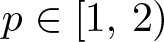 $p\in[1,\,2)$,
 $p'$ be the conjugate index of
 $p$, and
 $A$ be a dilation on
 ${{{\mathbb R}}^d}$. Then we have
 \begin{equation*}\left(\mathbf{h}_p^{A,c}({{{\mathbb R}}^d},{\mathcal M})\right)^{\ast}= L_{p'}\mathrm{mo}_A^c({{{\mathbb R}}^d},{\mathcal M})\end{equation*}
in the following sense:
(i) Every
$g\in L_{p'}\mathrm{mo}_A^c({{{\mathbb R}}^d},{\mathcal M})$ defines a continuous linear functional
$\mathcal{L}_g$ on
$ \mathbf{h}_p^{A,c}({{{\mathbb R}}^d},{\mathcal M})$ by
\begin{equation*}\mathcal{L}_g(f):=\tau\otimes\int_{{{{\mathbb R}}^d}}f(x)g^{*}(x)\,dx,\ \ \ \mathrm{for\ any} \ S_{{\mathcal M}}\mathrm{-valued\ simple\ function}\ f;\end{equation*}(ii) For any
$\mathcal{L}\in( \mathbf{h}_p^{A,c}({{{\mathbb R}}^d},{\mathcal M}))^{*}$, there exists some
$g\in L_{p'}\mathrm{mo}_A^c({{{\mathbb R}}^d},{\mathcal M})$ such that
$\mathcal{L}=\mathcal{L}_g$.


Moreover, there exists a universal positive constant  $C$ such that
 \begin{equation*}C^{-1}\|g\|_{L_{p'}\mathrm{mo}_A^c({{{\mathbb R}}^d},{\mathcal M})}
\leq\|\mathcal{L}_g\|_{( \mathbf{h}_p^{A,c}({{{\mathbb R}}^d},{\mathcal M}))^{*}}\leq C\|g\|_{L_{p'}\mathrm{mo}_A^c({{{\mathbb R}}^d},{\mathcal M})}.\end{equation*}
Similarly, the duality holds true for  $\mathbf{h}^{A,r}_p({{{\mathbb R}}^d},{\mathcal M})$ and
 $L_{p'}\mathrm{mo}_{A}^r({{{\mathbb R}}^d},{\mathcal M})$,
 $\mathbf{h}^{A}_p({{{\mathbb R}}^d},{\mathcal M})$ and
 $L_{p'}\mathrm{mo}_A({{{\mathbb R}}^d},{\mathcal M})$ with equivalent norms.
Remark 3.11. When  $p=1$, this result is the local noncommutative version of Fefferman–Stein’s duality theory:
 \begin{equation*}\left(\mathbf{h}_1^{A,c}({{{\mathbb R}}^d},{\mathcal M})\right)^{\ast}= \mathrm{bmo}_A^c({{{\mathbb R}}^d},{\mathcal M}).\end{equation*}
Moreover, this result also holds true for row and mixture spaces.
To prove Theorem 3.10, we need some technical lemmas as follows. Let  $\mathcal{Q}$ be the collection of all dilated cubes
 \begin{equation}
\mathcal{Q}:=\{Q_m^j=A^j([0,\,1)^d+m):j\in{\mathbb Z},\,m\in{\mathbb Z}^d\}
\end{equation}
adapted to the action of a dilated  $A$. Let
 $x_{Q_m^j}$ denote the centre of
 $Q_m^j$ and
 $x_{Q_m^j}:=A^j(m+(\frac{1}{2},\,\frac{1}{2},\cdots,\frac{1}{2}))$ with
 $j\in{\mathbb Z}$ and
 $m\in{\mathbb Z}^d$. Then, for any
 $j\in{\mathbb Z}$,
 $Q_m^j$ is a net partition of
 ${{{\mathbb R}}^d}$. Moreover, we can also find that
 \begin{equation*}x+B_k=B_{\rho}(x,\,|\det A|^k):=\left\{y\in{{{\mathbb R}}^d}:\rho(y-x) \lt |\det A|^k\right\}\end{equation*}
with  $x\in{{{\mathbb R}}^d}$ and
 $k\in{\mathbb Z}$. In what follows, we sometimes use
 $B_{\rho}(x,\,|\det A|^k)$ instead of
 $x+B_k$.
Lemma 3.12. ([Reference Bownik4, Lemma 2.9])
Let  $A$ be a dilation on
 ${{{\mathbb R}}^d}$. Then there exists a positive constant
 $\alpha:=\alpha(A,\,d)$ such that, for any
 $Q_m^j\in\mathcal{Q}$ with
 $j\in{\mathbb Z},\,m\in{\mathbb Z}^d$,
 \begin{equation*}x_{Q_m^j}+B_{j-\alpha}\subset Q_m^j\subset x+B_{j+\alpha},\end{equation*}
where  $x\in Q_m^j$ and
 $x_{Q_m^j}$ is the centre of the dilated cube
 $Q_m^j$.
By an argument similar to the proof of Lemma 3.2, we can obtain the following lemma, the details being omitted here.
Lemma 3.13. Let  $p\in(2,\,\infty)$. Then the map
 $\Psi$ extends to a bounded map from
 $
L_{p}\bigl(L_{\infty}({{{\mathbb R}}^d})\overline{\otimes}{\mathcal M};$
 $
L_2^c(\widetilde{\Gamma}_x,\,dyd\sigma(k))\bigr)
\oplus_{p}
L_{p}(L_{\infty}({{{\mathbb R}}^d})\overline{\otimes}{\mathcal M})
$ to
 $L_p\mathrm{mo}_A^c({{{\mathbb R}}^d},{\mathcal M})$. More precisely, there exists a constant
 $C \gt 0$ such that, for any
 $g\in L_{p}\bigl(L_{\infty}({{{\mathbb R}}^d})\overline{\otimes}{\mathcal M};\,
L_2^c(\widetilde{\Gamma}_x,\,dyd\sigma(k))\bigr)
\oplus_{p}
L_{p}(L_{\infty}({{{\mathbb R}}^d})\overline{\otimes}{\mathcal M})$,
 \begin{equation*}
\|\Psi(g)\|_{L_p\mathrm{mo}_A^c({{{\mathbb R}}^d},{\mathcal M})}
\leq C
\|g\|_{
L_{p}(L_{\infty}({{{\mathbb R}}^d})\overline{\otimes}{\mathcal M};\,
L_2^c(\widetilde{\Gamma}_x,\,dyd\sigma(k)))
\oplus_p
L_p(L_{\infty}({{{\mathbb R}}^d})\overline{\otimes}{\mathcal M})} .
\end{equation*}
Proof. For any  $f\in L_p\mathrm{mo}_A^{c}({{{\mathbb R}}^d},\,{\mathcal M})$, we know that
 \begin{align*}
\|f\|_{L_p\mathrm{mo}_A^{c}({{{\mathbb R}}^d},\,{\mathcal M})}^p&=\left\|
\sup^{\ \ \ \ +}_{k\in{\mathbb Z}\backslash{\mathbb N}}\unicode{x02A0F}_{\!\!\!\!x+B_k}\left|f(y)-f_{x+B_k}\right|
^2\,dy\right\|_{L_{\frac{p}{2}}(L_{\infty}({{{\mathbb R}}^d})\overline{\otimes}{\mathcal M})}^{\frac p2}\\
&\quad+\left\|\sup^{\ \ \ \ +}_{k\in{\mathbb N}}\unicode{x02A0F}_{\!\!\!\!x+B_k}\left|f(y)\right|
^2\,dy\right\|_{L_{\frac{p}{2}}(L_{\infty}({{{\mathbb R}}^d})\overline{\otimes}{\mathcal M})}^{\frac p2}.
\end{align*}
Then, it suffices to show that for any  $g:=(g_1,g_2)\in L_{p}(L_{\infty}({{{\mathbb R}}^d})\overline{\otimes}{\mathcal M};\,
L_2^c(\widetilde{\Gamma}_x,\\ \,dyd\sigma(k)))
\oplus_p
L_p(L_{\infty}({{{\mathbb R}}^d})\overline{\otimes}{\mathcal M})$,
 \begin{align}
&\left\|\sup^{\ \ \ \ +}_{k\in\mathbb{Z}\backslash{\mathbb N}}\unicode{x02A0F}_{\!\!\!\!x+B_k}
\left|\Psi(g)(z)-C_{x+B_k}\right|^2\,dz\right\|_{L_{\frac{p}{2}}
(L_{\infty}({{{\mathbb R}}^d})\overline{\otimes}{\mathcal M})}^{\frac p2}\nonumber\\
&\quad\lesssim \|g\|_{L_{p}(L_{\infty}({{{\mathbb R}}^d})\overline{\otimes}{\mathcal M};\,
L_2^c(\widetilde{\Gamma}_x,\,dyd\sigma(k)))
\oplus_p
L_p(L_{\infty}({{{\mathbb R}}^d})\overline{\otimes}{\mathcal M})}^p.
\end{align}
and
 \begin{align}
&\left\|\sup^{\ \ \ \ +}_{k\in{\mathbb N}}\unicode{x02A0F}_{\!\!\!\!x+B_k}
\left|\Psi(g)(z)\right|^2\,dz\right\|_{L_{\frac{p}{2}}(L_{\infty}({{{\mathbb R}}^d})\overline{\otimes}{\mathcal M})}
^{\frac p2}\nonumber\\
&\quad\lesssim \|g\|_{L_{p}(L_{\infty}({{{\mathbb R}}^d})\overline{\otimes}{\mathcal M};\,
L_2^c(\widetilde{\Gamma}_x,\,dyd\sigma(k)))
\oplus_p
L_p(L_{\infty}({{{\mathbb R}}^d})\overline{\otimes}{\mathcal M})}^p,
\end{align}
where  $C_{x+B_k}$ is a constant depending on
 $x+B_k$. To show these inequalities, we write
 \begin{align*}
g_1(x,\,y,\,i)&=g_1(x,\,y,\,i)\mathbf{1}_{\omega+B_{k+4\sigma}}(x)
+g_1(x,\,y,\,i)
\mathbf{1}_{(\omega+B_{k+4\sigma})^{\complement}}(x)\\
&=:g_{11}(x,\,y,\,i)+g_{12}(x,\,y,\,i).
\end{align*}
To estimate (3.17), we only need to show the  $L_{\frac{p}{2}}(L_{\infty}({{{\mathbb R}}^d})\overline{\otimes}{\mathcal M};\,\ell_\infty)$-norm of expressions
 \begin{align}
\unicode{x02A0F}_{\!\!\!\!\omega+B_k}
&\left|\int_{(\omega+B_{k+4\sigma})^{\complement}}\sum_{i=-\infty}^{-1}|\det A|^{-\frac i2}\right.\nonumber\\
&\left.\times \int_{x+B_i}g_{12}(x,\,y,\,i)\left[\varphi_i(y-z)-Q_{x+B_k}(y)\right]\,dydx\right|^2\,dz
\end{align}
and
 \begin{align}
\unicode{x02A0F}_{\!\!\!\!\omega+B_k}\left|\int_{{{{\mathbb R}}^d}}\sum_{i=-\infty}^{-1}|\det A|^{-\frac i2}\right.
\left.\int_{x+B_i}g_{11}(x,\,y,\,i)
\overline{\varphi_i(y-z)}\,dydx\right|^2\,dz
\end{align}
are dominated by  $\|g_1\|_{L_{p}(L_{\infty}({{{\mathbb R}}^d})\overline{\otimes}{\mathcal M};\,L_2^c(\widetilde{\Gamma}_x,\,dyd\sigma(i)))}^2$, where
 $Q_{B}(y):=\unicode{x02A0F}_{\!\!B}\varphi_i(y-z)\,dz$ for
 $y\in{{{\mathbb R}}^d}$, and
 \begin{equation}
\unicode{x02A0F}_{\!\!\!\!\omega+B_k}\left|\int_{{{{\mathbb R}}^d}}\overline{\phi(x-z)}g_2(x)\,dx\right|^2\,dz
\end{equation}
are dominated by  $\|g_2\|_{L_{p}(L_{\infty}({{{\mathbb R}}^d})\overline{\otimes}{\mathcal M})}^2$.
To estimate the  $L_{\frac{p}{2}}(L_{\infty}({{{\mathbb R}}^d})\overline{\otimes}{\mathcal M};\,\ell_\infty)$-norm of (3.19), choose
 $N_0 \gt \frac52$, it is easy to deduce that if
 $z\in \omega+B_{k}$, then
 \begin{align*}
&\left|
\int_{(\omega+B_{k+4\sigma})
^{\complement}}
\sum_{i=-\infty}^{-1}|\det A|^{-\frac i2}\int_{x+B_i}g_{12}(x,\,y,\,i)
\left[\varphi_i(y-z)-Q_{\omega+B_k}(y)\right]\,dydx\right|^2\\
&\quad\lesssim|\det A|^{-\frac k2}\int_{(\omega+B_{k+4\sigma})^{\complement}}[\rho(x-z)]^{\frac32}
\unicode{x02A0F}_{\!\!\!\!\omega+B_k}\\
&\qquad\times\sum_{i=-\infty}^{-1}|\det A|^{-i}\int_{x+B_i}
\left|\varphi_i(y-z)-\varphi_i(y-s)\right|^2
\,dyds\\
&\qquad\times\sum_{i=-\infty}^{-1}\int_{x+B_i}|g_{12}(x,\,y,\,i)|^2\,dydx\\
&\quad\lesssim \sum_{j=k}^{\infty}|\det A|^{-j}|\det A|^{(k-j)(N_0-\frac52)}\\
&\qquad\times\int_{(\omega+B_{j+4\sigma+1})\backslash (\omega+B_{j+4\sigma})}
\sum_{i=-\infty}^{-1}\int_{x+B_i}|g_{12}(x,\,y,\,i)|^2\,dydx,
\end{align*}
where the last inequality is a variant of the combination of Lemma 3.2 with a slight modification that the  $L_{\infty}(L_{\infty}({{{\mathbb R}}^d})\overline{\otimes}{\mathcal M};\,L_2^c(\widetilde{\Gamma}_x,\,dyd\sigma(i)))$-norm of
 $g$ is not taken outside. Next, we shall use a duality argument to estimate the
 $L_{\frac{p}{2}}(L_{\infty}({{{\mathbb R}}^d})\overline{\otimes}{\mathcal M};\,\ell_\infty)$-norm of the right-hand side. To this end, we take a sequence of positive elements
 $\{a_k\}_{k\in\mathbb{Z}\backslash{\mathbb N}}\in L_{(\frac{p}{2})'}(L_{\infty}({{{\mathbb R}}^d})\overline{\otimes}{\mathcal M})$ such that
 $\|\sum_k a_k\|_{L_{(\frac{p}{2})'}(L_{\infty}({{{\mathbb R}}^d})\overline{\otimes}{\mathcal M})}=1$. Then, we use Hölder’s inequality and the noncommutative Hardy–Littlewood maximal inequality to see that
 \begin{align*}
&\tau\int_{{\mathbb R}^d}\sum_{k=-\infty}^{-1} \sum_{j=k}^{\infty}|\det A|^{(k-j)(N_0-\frac52)}\unicode{x02A0F}_{\!\!\!\!\omega+B_{j+4\sigma+1}}\\
&\qquad\times\sum_{i=-\infty}^{-1}\int_{x+B_i}|g_{12}(x,\,y,\,i)|^2\,dydxa_k(\omega)d\omega\\
&\quad=\tau \int_{{\mathbb R}^d}\sum_{i=-\infty}^{-1}\int_{x+B_i}|g_{12}(x,\,y,\,i)|^2\,dy\sum_{j\in{\mathbb Z}} \unicode{x02A0F}_{\!\!\!\!\omega+B_{j+4\sigma+1}}\\
&\qquad\times\sum_{k=-\infty}^{\min\{j,-1\}}|\det A|^{(k-j)(N_0-\frac52)}a_k(\omega)d\omega dx\\
&\quad\leq \|g_1\|_{L_{p}(L_{\infty}({{{\mathbb R}}^d})\overline{\otimes}{\mathcal M};\,L_2^c(\widetilde{\Gamma}_x,\,dyd\sigma(i)))}^2
\left\|\sum_{j\in{\mathbb Z}}\unicode{x02A0F}_{\!\!\!\!x+B_{j+4\sigma+1}}\right.\\
&\qquad\left.\times\sum_{k=-\infty}^{\min\{j,-1\}}|\det A|^{(k-j)(N_0-\frac52)}a_k(\omega)d\omega
\right\|_{L_{(\frac{p}{2})'}(L_{\infty}({{{\mathbb R}}^d})\overline{\otimes}{\mathcal M})}\\
&\quad\lesssim \|g_1\|_{L_{p}(L_{\infty}({{{\mathbb R}}^d})\overline{\otimes}{\mathcal M};\,L_2^c(\widetilde{\Gamma}_x,\,dyd\sigma(i)))}^2\\
&\qquad\times\left\|\sum_{k=-\infty}^{-1}\sum_{j=k}^{\infty}|\det A|^{(k-j)
(N_0-\frac52)}a_k\right\|_{L_{(\frac{p}{2})'}(L_{\infty}({{{\mathbb R}}^d})\overline{\otimes}{\mathcal M})} \\
&\quad\lesssim \|g_1\|_{L_{p}(L_{\infty}({{{\mathbb R}}^d})\overline{\otimes}{\mathcal M};\,L_2^c(\widetilde{\Gamma}_x,\,dyd\sigma(i)))}^2.
\end{align*}
By taking the supremum in the above inequality over all  $\{a_k\}_{k\in\mathbb{Z}\backslash{\mathbb N}}$ satisfying the stated properties, we conclude that the
 $L_{\frac{p}{2}}(L_{\infty}({{{\mathbb R}}^d})\overline{\otimes}{\mathcal M};\,\ell_\infty)$-norm of (3.19) is dominated by
 $\|g_1\|_{L_{p}(L_{\infty}({{{\mathbb R}}^d})\overline{\otimes}{\mathcal M};\,L_2^c(\widetilde{\Gamma}_x,\,dyd\sigma(i)))}^2$.
To estimate the  $L_{\frac{p}{2}}(L_{\infty}({{{\mathbb R}}^d})\overline{\otimes}{\mathcal M};\,\ell_\infty)$-norm of (3.20), we shall use the duality argument again. To this end, we take a sequence of positive elements
 $\{b_k\}_{k\in\mathbb{Z}\backslash{\mathbb N}}\in L_{(\frac{p}{2})'}(L_{\infty}({{{\mathbb R}}^d})\overline{\otimes}{\mathcal M})$ such that
 $\|\sum_{k\in{\mathbb Z}\backslash{\mathbb N}} b_k\|_{L_{(\frac{p}{2})'}(L_{\infty}({{{\mathbb R}}^d})\overline{\otimes}{\mathcal M})}=1$. Note that
 \begin{align}
&\tau\int_{{\mathbb R}^d}\sum_{k=-\infty}^{-1}\unicode{x02A0F}_{\!\!\!\!\omega+B_k}
\left|\int_{{\mathbb R}^d}\sum_{i=-\infty}^{-1}|\det A|^{-\frac i2}\right.\nonumber\\
&\qquad\times\left.\int_{x+B_i}g_{11}(x,\,y,\,i)
\overline{\varphi_i(y-z)}\,dydx
\right|^2dz\,b_k(\omega)d\omega\nonumber\\
&\quad\leq\sum_{k=-\infty}^{-1}
\int_{{{{\mathbb R}}^d}}|\det A|^{-k}
\left\|\int_{\omega+B_{k+4\sigma+1}}
\sum_{i=-\infty}^{-1}|\det A|^{-\frac i2}\right.\nonumber\\
&\left.\qquad\times\int_{x+B_i}
g_1(x,\,y,\,i)b_k(\omega)^{\frac12}
\overline{\varphi_i(y-\cdot)}\,dy
dx\right\|_{L_2(L_{\infty}({{{\mathbb R}}^d})\overline{\otimes}{\mathcal M})}^2\,d\omega.\end{align}
To estimate the  $L_2(L_{\infty}({{{\mathbb R}}^d})\overline{\otimes}{\mathcal M})$-norm in the above expression, we use the duality again, Cauchy–Schwarz inequality to deduce that
 \begin{align}
&\left\|\int_{\omega+B_{k+4\sigma+1}}\sum_{i=-\infty}^{-1}|\det A|^{-\frac i2}\int_{x+B_i}g_1(x,\,y,\,i)b_k(\omega)^{\frac12}
\overline{\varphi_i(y-z)}\,dydx\right\|
_{L_2(L_{\infty}({{{\mathbb R}}^d})\overline{\otimes}{\mathcal M})}^2\nonumber\\
&\quad=\sup\limits_{\|h\|_{L_2(L_{\infty}({{{\mathbb R}}^d})\overline{\otimes}{\mathcal M})}=1}
\left|\tau\int_{{\mathbb R}^d}\int_{\omega+B_{k+4\sigma+1}}\sum_{i=-\infty}^{-1}|\det A|^{-\frac i2}\right.\nonumber\\
&\qquad\left.\times\int_{x+B_i}
g_1(x,\,y,\,i)b_k(\omega)^{\frac12}
\overline{\varphi_i(y-z)}\,dydxh(z)dz\right|^2 \nonumber\\
&\quad=\sup\limits_{\|h\|_{L_2(L_{\infty}({{{\mathbb R}}^d})\overline{\otimes}{\mathcal M})=1}}
\left|\tau\int_{\omega+B_{k+4\sigma+1}}\sum_{i=-\infty}^{-1}|\det A|^{-\frac i2}\right.\nonumber\\
&\qquad\left.\times\int_{x+B_i}
g_1(x,\,y,\,i)b_k(\omega)^{\frac12}
(h*\varphi_i(y))^*\,dydx\right|^2\nonumber\\
&\quad\lesssim \tau\int_{\omega+B_{k+4\sigma+1}}\sum_{i=-\infty}^{-1}\int_{x+B_i}|g_1(x,\,y,\,i)|^2b_k(\omega)\,
dydx.\end{align}
Substituting the inequality (3.23) into (3.22), we conclude that
 \begin{align*}
&\tau\int_{{\mathbb R}^d}\sum_{k=-\infty}^{-1}\unicode{x02A0F}_{\!\!\!\!\omega+B_k}\left|\int_{{\mathbb R}^d}
\sum_{i=-\infty}^{-1}|\det A|^{-\frac i2}\right.\\
&\qquad\left.\times\int_{x+B_i}g_{11}(x,\,y,\,i)
\overline{\varphi_i(y-z)}\,dydx\right|^2dz
\,b_k(\omega)d\omega\nonumber\\
&\quad\lesssim \tau
\int_{{\mathbb R}^d}\sum_{i=-\infty}^{-1}\int_{x+B_i}|g_{11}(x,\,y,\,i)|^2dyd\sigma(i)
\sum_{k=-\infty}^{-1}\unicode{x02A0F}_{\!\!\!\!x+B_{k+4\sigma+1}}b_k(\omega)d\omega
dx\\
&\quad\lesssim \|g_1\|_{L_{p}(L_{\infty}({{{\mathbb R}}^d})\overline{\otimes}{\mathcal M};\,L_2^c(\widetilde{\Gamma}_x,\,dyd\sigma(i)))}^2 \left\|\sum_{k=-\infty}^{-1}\unicode{x02A0F}_{\!\!\!\!x+B_{k+4\sigma+1}}
b_k(\omega)d\omega\right\|_{L_{(\frac{p}{2})'}(L_{\infty}({{{\mathbb R}}^d})\overline{\otimes}{\mathcal M})}\\
&\quad\lesssim \|g_1\|_{L_{p}(L_{\infty}({{{\mathbb R}}^d})\overline{\otimes}{\mathcal M};\,L_2^c(\widetilde{\Gamma}_x,\,dyd\sigma(i)))}^2\left\|\sum_{k=-\infty}^{-1}b_k
\right\|_{L_{(\frac{p}{2})'}(L_{\infty}({{{\mathbb R}}^d})\overline{\otimes}{\mathcal M})}\\
&\quad\lesssim \|g_1\|_{L_{p}(L_{\infty}({{{\mathbb R}}^d})\overline{\otimes}{\mathcal M};\,L_2^c(\widetilde{\Gamma}_x,\,dyd\sigma(i)))}^2.
\end{align*}
By taking the supremum in the above inequality over all  $\{b_k\}_{k\in\mathbb{Z}\backslash{\mathbb N}}$ satisfying the stated properties, we conclude that the
 $L_{\frac{p}{2}}(L_{\infty}({{{\mathbb R}}^d})\overline{\otimes}{\mathcal M};\,\ell_\infty)$-norm of (3.20) is dominated by
 $\|g_1\|_{L_{p}(L_{\infty}({{{\mathbb R}}^d})\overline{\otimes}{\mathcal M};\,L_2^c(\widetilde{\Gamma}_x,\,dyd\sigma(i)))}^2$.
It remains to estimate (3.21). Put
 \begin{equation*}
A_k(\omega)=\unicode{x02A0F}_{\!\!\!\!\omega+B_k}\left|\int_{{{{\mathbb R}}^d}}\overline{\phi(x-z)}g_2(x)\,dx\right|^2\,dz ,
\quad k\in{\mathbb Z}\backslash{\mathbb N} .
\end{equation*}
By the Cauchy–Schwarz inequality, we obtain
 \begin{equation*}
\left|\int_{{{{\mathbb R}}^d}}\overline{\phi(x-z)}g_2(x)\,dx\right|^2
\le
\|\phi\|_{L_1({{{\mathbb R}}^d})}\int_{{{{\mathbb R}}^d}}|\phi(x-z)|\,|g_2(x)|^2\,dx .
\end{equation*}
Since  $k\in{\mathbb Z}\backslash{\mathbb N}$, we have
 $B_k\subset B_0$. Define
 \begin{equation*}
\eta(u)=\sup_{v\in B_0}|\phi(u-v)| .
\end{equation*}
Then  $\eta\in L_1({{{\mathbb R}}^d})$, and
 \begin{equation*}
\unicode{x02A0F}_{\!\!\!\!\omega+B_k}|\phi(x-z)|\,dz
\le
\eta(x-\omega).
\end{equation*}
Hence, for all  $k\in{\mathbb Z}\backslash{\mathbb N}$,
 \begin{equation*}
A_k(\omega)
\le
\|\phi\|_{L_1({{{\mathbb R}}^d})}
\int_{{{{\mathbb R}}^d}}\eta(x-\omega)|g_2(x)|^2\,dx
=:\|\phi\|_{L_1({{{\mathbb R}}^d})} G(\omega).
\end{equation*}
Therefore, using the positive domination in  $L_{\frac p2}(L_{\infty}({{{\mathbb R}}^d})\overline{\otimes}{\mathcal M};\ell_\infty)$,
 \begin{align*}
\left\|\sup_{k\in{\mathbb Z}\backslash{\mathbb N}}^{\ \ \ \ +}A_k
\right\|_{L_{\frac p2}(L_{\infty}({{{\mathbb R}}^d})\overline{\otimes}{\mathcal M})}
&\le
\|\phi\|_{L_1({{{\mathbb R}}^d})}\|G\|_{L_{\frac p2}(L_{\infty}({{{\mathbb R}}^d})\overline{\otimes}{\mathcal M})}\\
&\le
\|\eta\|_{L_1({{{\mathbb R}}^d})}
\left\|\left|g_2\right|^2\right\|_{L_{\frac p2}(L_{\infty}({{{\mathbb R}}^d})\overline{\otimes}{\mathcal M})}\\
&\lesssim
\|g_2\|_{L_p(L_{\infty}({{{\mathbb R}}^d})\overline{\otimes}{\mathcal M})}^2.
\end{align*}
Consequently,
 \begin{equation*}
\left\|
\sup_{k\in{\mathbb Z}\backslash{\mathbb N}}^{\ \ \ \ +}
\unicode{x02A0F}_{\!\!\!\!\omega+B_k}
\left|
\int_{{{{\mathbb R}}^d}}\overline{\phi(x-z)}g_2(x)\,dx
\right|^2dz
\right\|_{L_{\frac p2}(L_{\infty}({{{\mathbb R}}^d})\overline{\otimes}{\mathcal M})}
\lesssim
\|g_2\|_{L_p(L_{\infty}({{{\mathbb R}}^d})\overline{\otimes}{\mathcal M})}^2.
\end{equation*}
This finishes the proof of (3.17).
Next, we prove (3.18). Write
 \begin{equation*}
\Psi(g)=\Psi_1(g_1)+\Psi_2(g_2),
\end{equation*}
where
 \begin{align*}
\Psi_1(g_1)(z)&:=\int_{\mathbb R^d}\sum_{i=-\infty}^{-1}|\det A|^{-\frac i2}\int_{x+B_i}\overline{\varphi_i(y-z)}g_1(x,y,i)\,dy\,dx\ \ \mathrm{and}\\
\Psi_2(g_2)(z)&:=\int_{\mathbb R^d}\overline{\phi(x-z)}g_2(x)\,dx .
\end{align*}
Since  $
|\Psi(g)|^2
\lesssim
|\Psi_1(g_1)|^2+|\Psi_2(g_2)|^2,
$ it is enough to estimate the two terms separately.
First we deal with the term containing  $g_1$. Let
 $
\{a_k\}_{k\in{\mathbb N}}
\subset
L_{(\frac p2)'}(L_\infty(\mathbb R^d)\overline\otimes\mathcal M)
$ be a sequence of positive elements such that
 $
\|\sum_{k\in{\mathbb N}}a_k\|_{L_{(\frac p2)'}(L_{\infty}({{{\mathbb R}}^d})\overline{\otimes}{\mathcal M})}\le 1.
$ By the duality of
 $L_{\frac p2}(L_\infty(\mathbb R^d)\overline\otimes\mathcal M;\ell_\infty)$, it suffices to estimate
 \begin{equation*}
\Lambda
=
\tau\int_{\mathbb R^d}
\sum_{k\in{\mathbb N}}
\unicode{x02A0F}_{\!\!\!\!\omega+B_k}
|\Psi_1(g_1)(z)|^2\,dz\,
a_k(\omega)\,d\omega .
\end{equation*}
Arguing as in the proof of (3.17), namely using  $L_2$-duality, the Cauchy–Schwarz inequality, the
 $L_2$-boundedness of the local square function, and the noncommutative Hardy–Littlewood maximal inequality, we obtain
 \begin{equation*}
\begin{aligned}
\Lambda&\lesssim\tau\int_{\mathbb R^d}\sum_{i=-\infty}^{-1}\int_{x+B_i}|g_1(x,y,i)|^2\,dy\sum_{k\in{\mathbb N}}
\unicode{x02A0F}_{\!\!\!\!x+B_{k+C_\sigma}}a_k(\omega)\,d\omega\,dx \\
&\le\left\|\sum_{i=-\infty}^{-1}\int_{x+B_i}|g_1(x,y,i)|^2\,dy\right\|_{L_{\frac p2}(L_{\infty}({{{\mathbb R}}^d})\overline{\otimes}{\mathcal M})}\\
&\quad\times\left\|\sum_{k\in{\mathbb N}}\unicode{x02A0F}_{\!\!\!\!x+B_{k+C_\sigma}}a_k(\omega)\,d\omega
\right\|_{L_{(\frac p2)'}(L_{\infty}({{{\mathbb R}}^d})\overline{\otimes}{\mathcal M})} \\
&\lesssim\|g_1\|_{L_p(L_\infty(\mathbb R^d)\overline\otimes\mathcal M;
L_2^c(\widetilde\Gamma_x))}^2\left\|\sum_{k\in{\mathbb N}}a_k\right\|_{L_{(\frac p2)'}(L_{\infty}({{{\mathbb R}}^d})\overline{\otimes}{\mathcal M})} \\
&\lesssim\|g_1\|_{L_p(L_\infty(\mathbb R^d)\overline\otimes\mathcal M;
L_2^c(\widetilde\Gamma_x))}^2 .
\end{aligned}
\end{equation*}
Taking the supremum over all such positive sequences  $\{a_k\}$, we get
 \begin{equation*}
\left\|
\sup_{k\in{\mathbb N}}^{\ \ \ \ +}
\unicode{x02A0F}_{\!\!\!\!\omega+B_k}|\Psi_1(g_1)(z)|^2\,dz
\right\|_{L_{\frac p2}(L_{\infty}({{{\mathbb R}}^d})\overline{\otimes}{\mathcal M})}
\lesssim
\|g_1\|_{L_p(L_\infty(\mathbb R^d)\overline\otimes\mathcal M;
L_2^c(\widetilde\Gamma_x))}^2 .
\end{equation*}
It remains to estimate the term containing  $g_2$. Set
 \begin{equation*}
F_2(z)=\Psi_2(g_2)(z)=\widetilde{\phi}*g_2(z),
\qquad
\widetilde{\phi}(z)=\overline{\phi(-z)}.
\end{equation*}
By the anisotropic noncommutative Hardy–Littlewood maximal inequality, we obtain
 \begin{align*}
&\left\|
\sup_{k\in{\mathbb N}}^{\ \ \ \ +}
\unicode{x02A0F}_{\!\!\!\!\omega+B_k}|F_2(z)|^2\,dz
\right\|_{L_{\frac p2}(L_{\infty}({{{\mathbb R}}^d})\overline{\otimes}{\mathcal M})}\\
&\quad\lesssim
\left\||F_2|^2\right\|_{L_{\frac p2}(L_{\infty}({{{\mathbb R}}^d})\overline{\otimes}{\mathcal M})}
=
\|F_2\|_{L_p(L_{\infty}({{{\mathbb R}}^d})\overline{\otimes}{\mathcal M})}^2 .
\end{align*}
Since  $\phi\in\mathcal S(\mathbb R^d)\subset L_1(\mathbb R^d)$, it follows that
 \begin{equation*}
\|F_2\|_{L_p(L_{\infty}({{{\mathbb R}}^d})\overline{\otimes}{\mathcal M})}
\le
\|\phi\|_{L_1({{{\mathbb R}}^d})}\|g_2\|_{L_p(L_{\infty}({{{\mathbb R}}^d})\overline{\otimes}{\mathcal M})}.
\end{equation*}
Consequently,
 \begin{equation*}
\left\|
\sup_{k\in{\mathbb N}}^{\ \ \ \ +}
\unicode{x02A0F}_{\!\!\!\!\omega+B_k}|\Psi_2(g_2)(z)|^2\,dz
\right\|_{L_{\frac p2}(L_{\infty}({{{\mathbb R}}^d})\overline{\otimes}{\mathcal M})}
\lesssim
\|g_2\|_{L_p(L_{\infty}({{{\mathbb R}}^d})\overline{\otimes}{\mathcal M})}^2 .
\end{equation*}
Combining the preceding two estimates gives
 \begin{align*}
&\left\|
\sup_{k\in{\mathbb N}}^{\ \ \ \ +}
\unicode{x02A0F}_{\!\!\!\!\omega+B_k}|\Psi(g)(z)|^2\,dz
\right\|_{L_{\frac p2}(L_{\infty}({{{\mathbb R}}^d})\overline{\otimes}{\mathcal M})}^{\frac12}\\
&\quad\lesssim
\|g\|_{
L_p(L_\infty(\mathbb R^d)\overline\otimes\mathcal M;
L_2^c(\widetilde\Gamma_x))
\oplus_p
L_p(L_\infty(\mathbb R^d)\overline\otimes\mathcal M)} .
\end{align*}
This proves (3.18).
Proof of Theorem 3.10
Let  $p\in[1,\,2)$ and
 $p'$ be the conjugate index of
 $p$. For convenience, we divide the proof into the following two steps:
Step 1. In this step, we will show
 \begin{equation*}L_{p'}\mathrm{mo}_A^c({{{\mathbb R}}^d},{\mathcal M})\subset\left(\mathbf{h}_p^{A,c}({{{\mathbb R}}^d},{\mathcal M})\right)^{\ast}.\end{equation*}
Since  $S_{{\mathcal M}}$-valued simple functions are dense in
 $ \mathbf{h}_p^{A,c}({{{\mathbb R}}^d},{\mathcal M})$, by approximation, we only need to show that, for any
 $S_{{\mathcal M}}$-valued simple function
 $f$,
 $g\in L_{p'}\mathrm{mo}_A^c({{{\mathbb R}}^d},{\mathcal M})$,
 \begin{equation*}\left|{\mathcal L}_g(f)\right|\leq\|f\|_{ \mathbf{h}_p^{A,c}({{{\mathbb R}}^d},{\mathcal M})}\|g\|_{L_{p'}\mathrm{mo}_A^c({{{\mathbb R}}^d},{\mathcal M})}.\end{equation*}
Let  $f$ be a
 $S_{{\mathcal M}}$-valued simple function and
 $g\in L_{p'}\mathrm{mo}_A^c({{{\mathbb R}}^d},{\mathcal M})$. Then, by (2.2) and the Fubini theorem, we get
 \begin{align}
\left|{\mathcal L}_g(f)\right|&=\left|\tau\otimes\int_{{{{\mathbb R}}^d}}f(x)g^{*}(x)\,dx\right|\nonumber\\
&=C\left|\tau\otimes\int_{{{{\mathbb R}}^d}}\sum_{i=-\infty}^{-1}|\det A|^{-i}\int_{B_{\rho}(x,\,
\frac{|\det A|^i}{2})}f\ast\varphi_i(y)(g\ast\varphi_i(y))^{*}\,dydx\right.\nonumber\\
&\quad+\left.\tau\otimes\int_{{{{\mathbb R}}^d}}f*\phi(x)(g*\phi(x))^*
\,dx\right|\nonumber\\
&=:\mathrm{I}+\mathrm{II}.
\end{align}
For the term  $\mathrm{II}$, by the Hölder inequality and Lemmas 2.16 and 3.9, we obtain
 \begin{align*}
&\left|\tau\otimes\int_{{{{\mathbb R}}^d}}f*\phi(x)(g*\phi(x))^*
\,dx\right|\\
&
\quad\leq\|f*\phi\|_{L_p({L_{\infty}(\mathbb{R}^d)\overline{\otimes}\mathcal{M}})}\|g*\phi\|_{L_{p'}({L_{\infty}(\mathbb{R}^d)\overline{\otimes}\mathcal{M}})}\\
&\quad\lesssim\|f*\phi\|_{L_p({L_{\infty}(\mathbb{R}^d)\overline{\otimes}\mathcal{M}})}\|g\|_{L_{p'}\mathrm{mo}_A^c({{{\mathbb R}}^d},{\mathcal M})}.
\end{align*}
The estimate of the term  $\mathrm{I}$ is harder. To deal with it, for
 $x\in{{{\mathbb R}}^d}$ and
 $i\in{\mathbb Z}\backslash{\mathbb N}$, define
 \begin{align*}
\mathcal{S}_{A,\varphi}^c(f)(x,\,i):=\left(\sum_{k= i+\sigma}^{-1}|\det A| ^{-k}\int_{B_{\rho}(x,\,|\det A|^{k-\sigma}-\frac{|\det A|^i}{2})}|f\ast\varphi_k(y)|^2\,dy\right)^{\frac12}
\end{align*}
and
 \begin{align*}
\widetilde{\mathcal{S}}_{A,\varphi}^c(f)(x,\,i):=\left(\sum_{k= i+\sigma}^{-1}|\det A|^{-k}\int_{B_{\rho}(x,\,\frac{|\det A|^{k-\sigma}}{2})}|f\ast\varphi_k(y)|^2\,dy\right)^{\frac12}.
\end{align*}
From the above two definitions, we see that  $\mathcal{S}_{A,\varphi}^c(f)(x,\,i)$ and
 $\widetilde{\mathcal{S}}_{A,\varphi}^c(f)(x,\,i)$ are decreasing in
 $i$. Moreover, it is easy to obtain that, for any
 $(x,\,i)\in{{{\mathbb R}}^d} \times{\mathbb Z}\backslash{\mathbb N}$,
 \begin{align*}
&\widetilde{\mathcal{S}}_{A,\varphi}^c(f)(x,\,-\infty)\leq \mathcal{S}_{A,\varphi}^c(f)(x), \ \ \mathcal{S}_{A,\varphi}^c(f)(x,\,0)=0 \ \ \mathrm{and}\\
&\widetilde{\mathcal{S}}_{A,\varphi}^c(f)(x,\,i)\leq \mathcal{S}_{A,\varphi}^c(f)(x,\,i).\end{align*}
In what follows, we denote  $\mathcal{S}_{A,\varphi}^c(f)(x,\,i)$ and
 $\widetilde{{\mathcal S}}_{A,\varphi}^c(f)(x,\,i)$ simply by
 $\mathcal{S}(x,\,i)$ and
 $\widetilde{\mathcal{S}}(x,\,i)$, respectively. By approximation, we can assume that
 $\tau$ is finite and
 $\mathcal{S}(x,\,i)$,
 $\widetilde{\mathcal{S}}(x,\,i)$ are invertible in
 ${\mathcal M}$ for any
 $(x,\,i)\in{{{\mathbb R}}^d} \times{\mathbb Z}\backslash{\mathbb N}$. In fact, whenever negative powers of square functions occur, we first replace
 ${\mathcal S}_{A,\varphi}^c$ and
 $\widetilde {{\mathcal S}}_{A,\varphi}^c$ by
 \begin{equation*}
{\mathcal S}_\varepsilon=\left[({\mathcal S}_{A,\varphi}^c)^2(x,i)+\varepsilon I\right]^{\frac 12} \ \ \mathrm{and} \ \
\widetilde {{\mathcal S}}_\varepsilon=\left[(\widetilde {{\mathcal S}}_{A,\varphi}^c)^2(x,i)+\varepsilon I\right]^{\frac 12}.
\end{equation*}
These operators are strictly positive, so all negative powers are defined by functional calculus. The required estimates are first proved uniformly in  $\varepsilon \gt 0$, and then we let
 $\varepsilon\downarrow0$, using the normality of the trace.
From (3.24) and the Cauchy–Schwarz inequality, we conclude that
 \begin{align*}
\mathrm{I}&\leq C\left(\tau\otimes\int_{{{{\mathbb R}}^d}}\sum_{i=-\infty}^{-1}{\mathcal S}^{p-2}(x,\,i)|\det A|^{-i}\int_{B_{\rho}(x,\,\frac{|\det A|^i}{2})}|f
\ast\varphi_i(y)|^2\,dydx\right)^{\frac12}\\
&\ \ \ \ \times\left(\tau\otimes\int_{{{{\mathbb R}}^d}}\sum_{i=-\infty}^{-1}{\mathcal S}^{2-p}(x,\,i)|\det A|^{-i}\int_{B_{\rho}
(x,\,\frac{|\det A|^i}{2})}|g\ast\varphi_i(y)|^2\,dydx\right)^{\frac12}\\
&=:\mathrm{I}_1\cdot\mathrm{I}_2.
\end{align*}
Fix  $x\in{{{\mathbb R}}^d}$ and
 $i\in{\mathbb Z}\backslash{\mathbb N}$, we have
 $\widetilde{\mathcal{S}}(x,\,i)\leq \mathcal{S}(x,\,i)$. Thus we can deduce that
 $\mathcal{S}^{-1}(x,\,i)\leq\widetilde{\mathcal{S}}^{-1}(x,\,i)$ with
 $(x,\,i)\in{{{\mathbb R}}^d} \times{\mathbb Z}\backslash {\mathbb N}$. Furthermore, for the term
 $\mathrm{I}_1$, by the fact that
 $0\leq2-p \lt 1$, and the property of
 $\tau$, we have
 \begin{align*}
(\mathrm{I}_1)^2&\leq\tau\otimes\int_{{{{\mathbb R}}^d}}\sum_{i=-\infty}^{-1}\widetilde{{\mathcal S}}^{p-2}(x,\,i)|\det A|^{-i}\int_{B_{\rho}(x,\,\frac{|\det A|^i}{2})}|f
\ast\varphi_i(y)|^2\,dydx\\
&\thicksim\tau\otimes\int_{{{{\mathbb R}}^d}}\sum_{i=-\infty}^{-1}\widetilde{{\mathcal S}}^{p-2}(x,\,i)
\left[\widetilde{{\mathcal S}}^2(x,\,i)-\widetilde{{\mathcal S}}^2(x,\,i+1)\right]\,dx\\
&=\tau\otimes\int_{{{{\mathbb R}}^d}}\sum_{i=-\infty}^{-1}\left[\widetilde{{\mathcal S}}^p(x,\,i)
-\widetilde{{\mathcal S}}^{p-1}(x,\,i)\widetilde{{\mathcal S}}(x,\,i+1)+
\widetilde{{\mathcal S}}^{p-1}(x,\,i)\widetilde{{\mathcal S}}(x,\,i+1)\right.\nonumber\\
&\quad-\left.\widetilde{{\mathcal S}}^{p-2}(x,\,i)
\widetilde{{\mathcal S}}^2(x,\,i+1)\right]\,dx\\
&=\tau\otimes\int_{{{{\mathbb R}}^d}}\sum_{i=-\infty}^{-1}\widetilde{{\mathcal S}}^{p-1}(x,\,i)
\left[\widetilde{{\mathcal S}}(x,\,i)-\widetilde{{\mathcal S}}(x,\,i+1)\right]\,dx\\
&\ \ \ \ \ +
\tau\otimes\int_{{{{\mathbb R}}^d}}\sum_{i=-\infty}^{-1}\widetilde{{\mathcal S}}^{p-2}(x,\,i)\widetilde{{\mathcal S}}(x,\,i+1)
\left[\widetilde{{\mathcal S}}(x,\,i)
-\widetilde{{\mathcal S}}(x,\,i+1)\right]\,dx\\
&=:\mathrm{I}_{11}+\mathrm{I}_{12}.
\end{align*}
By the fact that  $\widetilde{{\mathcal S}}(x,\,i)\leq\widetilde{{\mathcal S}}(x,\,-\infty)\leq {\mathcal S}_{A,\varphi}^c(f)(x)$ and
 $\widetilde{{\mathcal S}}(x,\,0)=0$ with
 $x\in{{{\mathbb R}}^d}$, and
 $0\leq p-1 \lt 1$, we have
 \begin{align*}
\mathrm{I}_{11}&=\tau\otimes\int_{{{{\mathbb R}}^d}}\sum_{i=-\infty}^{-1}\widetilde{{\mathcal S}}^{p-1}(x,\,i)\left[\widetilde{{\mathcal S}}(x,\,i)
-\widetilde{{\mathcal S}}(x,\,i+1)\right]\,dx\\
&\leq\tau\otimes\int_{{{{\mathbb R}}^d}}\widetilde{{\mathcal S}}^{p-1}(x,\,-\infty)\sum_{i=-\infty}^{-1}\left[\widetilde{{\mathcal S}}(x,\,i)
-\widetilde{{\mathcal S}}(x,\,i+1)\right]\,dx\\
&\leq\tau\otimes\int_{{{{\mathbb R}}^d}}\widetilde{{\mathcal S}}^{p-1}(x,\,-\infty)\widetilde{{\mathcal S}}(x,\,-\infty)\,dx
\leq\left\|{\mathcal S}_{A,\varphi}^c(f)\right\|_{L_p({L_{\infty}(\mathbb{R}^d)\overline{\otimes}\mathcal{M}})}^p.
\end{align*}
For the term  $\mathrm{I}_{12}$, by the noncommutative Hölder inequality and the property of
 $\tau$, we obtain
 \begin{align}
\mathrm{I}_{12}&=\tau\otimes\int_{{{{\mathbb R}}^d}}\sum_{i=-\infty}^{-1}\left[\widetilde{{\mathcal S}}(x,\,i)\right]^{p-2}
\widetilde{{\mathcal S}}(x,\,i+1)\left[\widetilde{{\mathcal S}}(x,\,i)-\widetilde{{\mathcal S}}(x,\,i+1)\right]\,dx\nonumber\\
&=\tau\otimes\int_{{{{\mathbb R}}^d}}\sum_{i=-\infty}^{-1}\left[\widetilde{{\mathcal S}}(x,\,-\infty)\right]^{\frac{1-p}{2}}
\left[\widetilde{{\mathcal S}}(x,\,i)\right]^{p-2}
\widetilde{{\mathcal S}}(x,\,i+1)\left[\widetilde{{\mathcal S}}(x,\,-\infty)\right]^{\frac{1-p}{2}}\nonumber\\
&\ \ \ \ \times\left[\widetilde{{\mathcal S}}(x,\,-\infty)\right]^{\frac{p-1}{2}}
\left[\widetilde{{\mathcal S}}(x,\,i)-\widetilde{{\mathcal S}}(x,\,i+1)\right]
\left[\widetilde{{\mathcal S}}(x,\,-\infty)\right]^{\frac{p-1}{2}}\,dx\nonumber\\
&\leq\tau\otimes\int_{{{{\mathbb R}}^d}}\sum_{i=-\infty}^{-1}\left\|\left[\widetilde{{\mathcal S}}(x,\,-\infty)\right]
^{\frac{1-p}{2}}\right.\nonumber\\
&\quad\times\left.\left[\widetilde{{\mathcal S}}(x,\,i)\right]^{p-2}
\widetilde{{\mathcal S}}(x,\,i+1)\left[\widetilde{{\mathcal S}}(x,\,-\infty)\right]
^{\frac{1-p}{2}}\right\|_{L_{\infty}({{{\mathbb R}}^d})\overline{\otimes}{\mathcal M}}\nonumber\\
&\ \ \ \ \times\left[\widetilde{{\mathcal S}}(x,\,-\infty)\right]^{\frac{p-1}{2}}
\left[\widetilde{{\mathcal S}}(x,\,i)-\widetilde{{\mathcal S}}(x,\,i+1)\right]
\left[\widetilde{{\mathcal S}}(x,\,-\infty)\right]^{\frac{p-1}{2}}\,dx.\end{align}
Using the fact that  $\widetilde{{\mathcal S}}(x,\,i+1)\leq \widetilde{{\mathcal S}}(x,\,i)$ with
 $x\in{{{\mathbb R}}^d}$ and
 $i\in{\mathbb Z}\backslash{\mathbb N}$, we have
 \begin{align*}
&\left\|\left[\widetilde{{\mathcal S}}(x,\,-\infty)\right]^{\frac{1-p}{2}}\left[\widetilde{{\mathcal S}}(x,\,i)\right]^{p-2}
\widetilde{{\mathcal S}}(x,\,i+1)\left[\widetilde{{\mathcal S}}(x,\,-\infty)\right]^{\frac{1-p}{2}}
\right\|_{L_{\infty}({{{\mathbb R}}^d})\overline{\otimes}{\mathcal M}}\\
&\quad=\left\|\left[\widetilde{{\mathcal S}}(x,\,-\infty)\right]^{\frac{1-p}{2}}\left[\widetilde{{\mathcal S}}(x,\,i)\right]
^{\frac{p-1}{2}}
\left[\widetilde{{\mathcal S}}(x,\,i)\right]^{\frac{p-3}{2}}\left[\widetilde{{\mathcal S}}(x,\,i+1)\right]^{\frac{3-p}{2}}\right.\\
&\qquad\times\left.\left[\widetilde{{\mathcal S}}(x,\,i+1)\right]^{\frac{p-1}{2}}
\left[\widetilde{{\mathcal S}}(x,\,-\infty)\right]^{\frac{1-p}{2}}\right\|_{L_{\infty}({{{\mathbb R}}^d})\overline{\otimes}{\mathcal M}}\\
&\quad\leq\left\|\left[\widetilde{{\mathcal S}}(x,\,-\infty)\right]^{\frac{1-p}{2}}\left[\widetilde{{\mathcal S}}(x,\,i)\right]
^{\frac{p-1}{2}}\right\|_{L_{\infty}({{{\mathbb R}}^d})\overline{\otimes}{\mathcal M}}\\
&\qquad\times\left\|\left[\widetilde{{\mathcal S}}(x,\,i)\right]^{\frac{p-3}{2}}\left[\widetilde{{\mathcal S}}(x,\,i+1)\right]^{\frac{3-p}{2}}
\right\|_{L_{\infty}({{{\mathbb R}}^d})\overline{\otimes}{\mathcal M}}\\
&\qquad\times\left\|\left[\widetilde{{\mathcal S}}(x,\,i+1)\right]^{\frac{p-1}{2}}
\left[\widetilde{{\mathcal S}}(x,\,-\infty)\right]^{\frac{1-p}{2}}\right\|_{L_{\infty}({{{\mathbb R}}^d})\overline{\otimes}{\mathcal M}}
\leq1.
\end{align*}
Indeed, each of the three factors on the right-hand side is a contraction. Here we only consider the first one:
 \begin{align*}
&\left\|\left[\widetilde{{\mathcal S}}(x,\,-\infty)\right]^{\frac{1-p}{2}}\left[\widetilde{{\mathcal S}}(x,\,i)\right]
^{\frac{p-1}{2}}\right\|_{L_{\infty}({{{\mathbb R}}^d})\overline{\otimes}{\mathcal M}}\\
&\quad=\left\|\left[\widetilde{{\mathcal S}}(x,\,-\infty)\right]^{\frac{1-p}{2}}\left[\widetilde{{\mathcal S}}(x,\,i)\right]
^{\frac{p-1}{2}}\left\{\left[\widetilde{{\mathcal S}}(x,\,-\infty)\right]^{\frac{1-p}{2}}\left[\widetilde{{\mathcal S}}(x,\,i)\right]
^{\frac{p-1}{2}}\right\}^*\right\|_{L_{\infty}({{{\mathbb R}}^d})\overline{\otimes}{\mathcal M}}^{\frac12}\\
&\quad=\left\|\left[\widetilde{{\mathcal S}}(x,\,-\infty)\right]^{\frac{1-p}{2}}\left[\widetilde{{\mathcal S}}(x,\,i)\right]
^{p-1}\left[\widetilde{{\mathcal S}}(x,\,-\infty)\right]^{\frac{1-p}{2}}
\right\|_{L_{\infty}({{{\mathbb R}}^d})\overline{\otimes}{\mathcal M}}^{\frac12}\leq1.
\end{align*}
The last equality is deduced by  $\widetilde{{\mathcal S}}(x,\,i)\leq\widetilde{{\mathcal S}}(x,\,-\infty)$ with
 $x\in{{{\mathbb R}}^d}$ and
 $i\in{\mathbb Z}\backslash{\mathbb N}$. From this and (3.25), we deduce that
 \begin{align*}
\mathrm{I}_{12}&\leq\tau\otimes\int_{{{{\mathbb R}}^d}}\sum_{i=-\infty}^{-1}\left[\widetilde{{\mathcal S}}(x,\,-\infty)\right]^{p-1}
\left[\widetilde{{\mathcal S}}(x,\,i)-\widetilde{{\mathcal S}}(x,\,i+1)\right]\,dx\\
&=\tau\otimes\int_{{{{\mathbb R}}^d}}\left[\widetilde{{\mathcal S}}(x,\,-\infty)\right]^{p}\,dx
\leq\left\|{\mathcal S}_{A,\varphi}^c(f)\right\|_{L_p({L_{\infty}(\mathbb{R}^d)\overline{\otimes}\mathcal{M}})}^p,
\end{align*}
which, together with the estimate  $\mathrm{I}_{11}$, further implies that
 \begin{equation*}(\mathrm{I}_{1})^2\lesssim\left\|\mathcal{S}_{A,\varphi}^c(f)\right\|_{L_p({L_{\infty}(\mathbb{R}^d)\overline{\otimes}\mathcal{M}})}^p.\end{equation*}
Now, we deal with the term  $\mathrm{I}_{2}$. In what follows, let
 $\beta$ be the minimum integer such that
 $2\leq |\det A|^{\beta}$ and
 $2\beta \gt \sigma$, and
 $\alpha$ be as in Lemma 3.12. Therefore,
 \begin{align}
(\mathrm{I}_{2})^2&\leq C\tau\otimes\int_{{{{\mathbb R}}^d}}\sum_{j=-\infty}^{-\alpha-2\beta-2}\sum_{i=j+\alpha+2\beta
}
^{j+\alpha+2\beta+1}\left[\mathcal{S}(x,\,i)\right]^{2-p}|\det A|^{-i}\nonumber\\
&\quad\times\int_{B_{\rho}(x,\,\frac{|\det A|^i}{2})}|g\ast\varphi_i(y)|^2\,dydx\nonumber\\
&=C\tau\sum_{m\in{\mathbb Z}^d}\sum_{j=-\infty}^{-\alpha-2\beta-2}\int_{Q_m^j}
\sum_{i=j+\alpha+2\beta}
^{j+\alpha+2\beta+1}\left[\mathcal{S}(x,\,i)\right]^{2-p}|\det A|^{-i}\nonumber\\
&\quad\times\int_{B_{\rho}(x,\,\frac{|\det A|^i}{2})}|g\ast\varphi_i(y)|^2\,dydx,\end{align}
where  $Q_m^j\in\mathcal{Q}$ and
 $\mathcal{Q}$ is as in (3.16).
Let
 \begin{align*}\mathbb{S}(x,\,j):&=\left(\sum_{k= j+\alpha+2\beta}^{-1}|\det A|^{-k}\right.\\
&\quad\times\left.\int_{B_{\rho}(x_{Q_m^j},\,|\det A|^k-|\det A|^{j+\alpha+\sigma})}
|f\ast\varphi_k(y)|^2\,dy\right)^{1/2},\ \ \ x\in Q_m^j.\end{align*}
It follows from Lemma 3.12 that
 \begin{align*}
&B_{\rho}(x,\,|\det A|^{k-\sigma}-{|\det A|^i}/{2})\subset
B_{\rho}(x_{Q_m^j},\,|\det A|^k\\
&\quad-|\det A|^{j+\alpha+\sigma}),\ \ \
\mathrm{for}\ \mathrm{any}\ x\in Q_m^j, \ i\geq j+\alpha+2\beta.
\end{align*}
From this and the definitions of  $\mathcal{S}(x,\,i)$ and
 $\mathbb{S}(x,\,j)$, we conclude that
 \begin{align*}
{\mathcal S}(x,\,i)\leq \mathbb{S}(x,\,j),\ \ \
\mathrm{for}\ \mathrm{any}\ x\in Q_m^j \ \mathrm{and}\ i\geq j+\alpha+2\beta.
\end{align*}
Then, by (3.26), we find that
 \begin{align}
(\mathrm{I}_{2})^2&\leq C\tau\sum_{m\in{\mathbb Z}^d}\sum_{j=-\infty}^{-\alpha-2\beta-2}\int_{Q_m^j}\left[\mathbb{S}(x,\,j)\right]^{2-p}
\sum_{i=j+\alpha+2\beta}
^{j+\alpha+2\beta+1}|\det A|^{-i}\nonumber\\
&\quad\times\int_{B_{\rho}(x,\,\frac{|\det A|^i}{2})}
|g\ast\varphi_i(y)|^2\,dydx\nonumber\\
&=C\tau\otimes\int_{{{{\mathbb R}}^d}}\sum_{j=-\infty}^{-\alpha-2\beta-2}\left[\mathbb{S}(x,\,j)\right]^{2-p}
\sum_{i=j+\alpha+2\beta}
^{j+\alpha+2\beta+1}|\det A|^{-i}\nonumber\\
&\quad\times\int_{B_{\rho}(x,\,\frac{|\det A|^i}{2})}
|g\ast\varphi_i(y)|^2\,dydx.\end{align}
For convenience, let  $\mathbb{W}(x,\,l):=\mathbb{S}^{2-p}(x,\,l)-\mathbb{S}^{2-p}(x,\,l+1)$ with
 $x\in{{{\mathbb R}}^d}$ and
 $l\in{\mathbb Z}\backslash{\mathbb N}$. Then, from (3.27) and the fact that
 $\mathbb{S}(x,\,l+1)$ is decreasing about
 $l$, and
 $\mathbb{W}(x,\,l)$ is constant on
 $Q_m^l$ for any
 $m\in{\mathbb Z}^d$, we deduce that
 \begin{align*}
(\mathrm{I}_{2})^2&\leq C\tau\otimes\int_{{\mathbb R}^d}\sum_{j=-\infty}^{-\alpha-2\beta-2}\sum_{l\geq j}\mathbb{W}(x,\,l)
\sum_{i=j+\alpha+2\beta}
^{j+\alpha+2\beta+1}|\det A|^{-i}\nonumber\\
&\quad\times\int_{B_{\rho}(x,\,\frac{|\det A|^i}{2})}
|g\ast\varphi_i(y)|^2\,dydx\nonumber\\
&=C\tau\otimes\int_{{{{\mathbb R}}^d}}\sum_{l=-\infty}^{-\alpha-2\beta-2}\mathbb{W}(x,\,l)\sum_{j\leq l}
\sum_{i=j+\alpha+2\beta}
^{j+\alpha+2\beta+1}|\det A|^{-i}\nonumber\\
&\quad\times\int_{B_{\rho}(x,\,\frac{|\det A|^i}{2})}
|g\ast\varphi_i(y)|^2\,dydx\nonumber\\
&\leq C\tau\otimes\int_{{{{\mathbb R}}^d}}\sum_{l=-\infty}^{-\alpha-2\beta-2}\mathbb{W}(x,\,l)
\sum_{i=-\infty}
^{l+\alpha+2\beta+1}|\det A|^{-i}\nonumber\\
&\quad\times\int_{B_{\rho}(x,\,\frac{|\det A|^i}{2})}
|g\ast\varphi_i(y)|^2\,dydx\nonumber\\
&=C\tau\sum_{m\in{\mathbb Z}^d}\sum_{l=-\infty}^{-\alpha-2\beta-2}\mathbb{W}(x_{Q_m^l},\,l)\int_{Q_m^l}
\sum_{i=-\infty}
^{l+\alpha+2\beta+1}|\det A|^{-i}\nonumber\\
&\quad\times\int_{B_{\rho}(x,\,\frac{|\det A|^i}{2})}
|g\ast\varphi_i(y)|^2\,dydx\nonumber\\
&\leq C\tau\sum_{m\in{\mathbb Z}^d}\sum_{l=-\infty}^{-\alpha-2\beta-2}\mathbb{W}(x_{Q_m^l},\,l)
\sum_{i=-\infty}
^{l+\alpha+2\beta+1}\nonumber\\
&\quad\times\int_{B_{\rho}(x_{Q_m^l},\,|\det A|^{l+\alpha+2\beta+1})}
|g\ast\varphi_i(y)|^2\,dy.
\end{align*}
From this, the fact that  $\mathbb{W}(x,\,l)$ is a constant on the dilated cube
 $Q_m^l$ for any
 $m\in{\mathbb Z}^d$, (3.15) and Lemma 3.9, we conclude that
 \begin{align*}
(\mathrm{I}_{2})^2
&\leq C\tau\sum_{l=-\infty}^{-\alpha-2\beta-2}\sum_{m\in{\mathbb Z}^d}\int_{Q_m^l}\mathbb{W}(x,\,l)\,|\det A|^{-l-\alpha-2\beta-1}
\nonumber\\
&\quad\times\sum_{i=-\infty}
^{l+\alpha+2\beta+1}\int_{B_{\rho}(x_{Q_m^l},\,|\det A|^{l+\alpha+2\beta+1})}
|g\ast\varphi_i(y)|^2\,dydx\nonumber\\\\
&=C\tau\sum_{l=-\infty}^{-\alpha-2\beta-2}\int_{{{{\mathbb R}}^d}}\mathbb{W}(x,\,l)\,|\det A|^{-l-\alpha-2\beta-1}\nonumber\\
&\quad\times\sum_{i=-\infty}
^{l+\alpha+2\beta+1}\int_{B_{\rho}(x_{Q_m^l},\,|\det A|^{l+\alpha+2\beta+1})}
|g\ast\varphi_i(y)|^2\,dydx\nonumber\\
&\leq C\left\|\sum_{l=-\infty}^{-\alpha-2\beta-2}\mathbb{W}(\cdot,\,l)\right\|_{L_{(\frac{p'}{2})'}(L_{\infty}({{{\mathbb R}}^d})\overline{\otimes}{\mathcal M})}
\left\|\sup_{l\in{\mathbb Z}, l\leq-\alpha-2\beta-2}^{\ \ \ \ \ +}|\det A|^{-l-\alpha-2\beta}\right.\nonumber\\
&\quad\times\left.\sum_{i=-\infty}
^{l+\alpha+2\beta+1}\int_{B_{\rho}(x_{Q_m^l},\,|\det A|^{l+\alpha+2\beta+1})}
|g\ast\varphi_i(y)|^2\,dy\right\|_{L_{\frac{p'}{2}}(L_{\infty}({{{\mathbb R}}^d})\overline{\otimes}{\mathcal M})}\\
&\leq C\left\|\mathbb{S}^{2-p}(\cdot,\,-\infty)\right\|_{L_{(\frac{p'}{2})'}(L_{\infty}({{{\mathbb R}}^d})
\overline{\otimes}{\mathcal M})}
\|g\|_{L_{p'}\mathrm{mo}_A^c({{{\mathbb R}}^d},\,{\mathcal M})}^2\\
&\leq C\|f\|_{\mathbf{h}_p^{A,c}({{{\mathbb R}}^d},\,{\mathcal M})}
^{2-p}\|g\|_{L_{p'}\mathrm{mo}_A^c({{{\mathbb R}}^d},\,{\mathcal M})}^2,
\end{align*}
which, combined with the estimate of the term  $\mathrm{I}_1$, implies that
 \begin{align*}
\left|{\mathcal L}_g(f)\right|&\leq C\left(\left\|{\mathcal S}_{A,\varphi}^c(f)\right\|_{L_p({L_{\infty}(\mathbb{R}^d)\overline{\otimes}\mathcal{M}})}+
\|f*\phi\|_{L_p({L_{\infty}(\mathbb{R}^d)\overline{\otimes}\mathcal{M}})}\right)\|g\|_{L_{p'}\mathrm{mo}_A^c({{{\mathbb R}}^d},{\mathcal M})}\\
&=C \|f\|_{\mathbf{h}_p^{A,c}({{{\mathbb R}}^d},{\mathcal M})}\|g\|_{L_{p'}\mathrm{mo}_A^c({{{\mathbb R}}^d},{\mathcal M})},
\end{align*}
this further implies the desired result.
Step 2. In this step, we will show
 \begin{equation*}\left(\mathbf{h}_p^{A,c}({{{\mathbb R}}^d},{\mathcal M})\right)^{\ast}\subset L_{p'}\mathrm{mo}_A^c({{{\mathbb R}}^d},{\mathcal M}).\end{equation*}
Let  ${\mathcal L}\in( \mathbf{h}_p^{A,c}({{{\mathbb R}}^d},{\mathcal M}))^{\ast}$. We only need to demonstrate that there exists an operator-valued function
 $g\in L_{p'}\mathrm{mo}_A^c({{{\mathbb R}}^d},{\mathcal M})$ such that
 \begin{align*}
{\mathcal L}(f)={\mathcal L}_g(f)=\tau\otimes\int_{{{{\mathbb R}}^d}}f(x)g^{\ast}(x)\,dx.
\end{align*}
By the definition of the map  $\Phi$ in Definition 3.1 and the Hahn-Banach theorem, we deduce that
 ${\mathcal L}$ can be extended to a bounded linear functional on
 $L_{p}(L_{\infty}({{{\mathbb R}}^d})\overline{\otimes}{\mathcal M};L_2^c(\widetilde{\Gamma}_x,\,dyd\sigma(k)))\!\oplus_p\!
L_{p}(L_{\infty}({{{\mathbb R}}^d})\overline{\otimes}{\mathcal M})$ of the same norm. Then, by
 \begin{align*}
&\left(L_{p}(L_{\infty}({{{\mathbb R}}^d})\overline{\otimes}{\mathcal M};\,L_2^c(\widetilde{\Gamma}_x,\,dyd\sigma(k)))\oplus_p
L_{p}(L_{\infty}({{{\mathbb R}}^d})\overline{\otimes}{\mathcal M})\right)^{\ast}\\
&\quad=L_{p'}(L_{\infty}({{{\mathbb R}}^d})\overline{\otimes}{\mathcal M};\,L_2^c(\widetilde{\Gamma}_x,
\,dyd\sigma(k)))\oplus_{p'}
L_{p'}(L_{\infty}({{{\mathbb R}}^d})\overline{\otimes}{\mathcal M}),
\end{align*}
we can find that there exists  $h=(h_1,\,h_2)\in L_{p'}(L_{\infty}({{{\mathbb R}}^d})\overline{\otimes}{\mathcal M};\,L_2^c(\widetilde{\Gamma}_x,\,dyd\sigma(k))) \oplus_{p'}
L_{p'}(L_{\infty}({{{\mathbb R}}^d})\overline{\otimes}{\mathcal M})$ such that
 \begin{align*}
\|h\|_{L_{p'}(L_{\infty}({{{\mathbb R}}^d})\overline{\otimes}{\mathcal M};\,L_2^c(\widetilde{\Gamma}_x,\,dyd\sigma(k)))
\oplus_{p'}
L_{p'}(L_{\infty}({{{\mathbb R}}^d})\overline{\otimes}{\mathcal M})}
=\|{\mathcal L}\|_{( \mathbf{h}_p^{A,c}({{{\mathbb R}}^d},{\mathcal M}))^{\ast}}
\end{align*}
and
 \begin{align*}
{\mathcal L}(f)&=\tau\otimes\int_{{{{\mathbb R}}^d}}\sum_{k=-\infty}^{-1}\int_{x+B_k}
\frac{f\ast\varphi_k(y)}{|\det A|^{\frac k2}}h_1^{\ast}(x,\,y,\,k)\,dydx
+\tau\otimes\int_{{{{\mathbb R}}^d}}f*\phi(z)h_2^*(z)\,dz\\
&=\tau\otimes\int_{{{{\mathbb R}}^d}}f(z)(\Psi(h))^{\ast}(z)\,dz
=\tau\otimes\int_{{{{\mathbb R}}^d}}f(z)g^{\ast}(z)\,dz,
\end{align*}
where  $g:=\Psi(h)$ and
 $\Psi$ is as in Definition 3.1. It follows from Lemmas 3.2 and 3.13 that, there exists
 $g\in L_{p'}\mathrm{mo}_A^c({{{\mathbb R}}^d},{\mathcal M})$ such that
 \begin{align*}
\|g\|_{L_{p'}\mathrm{mo}_A^c({{{\mathbb R}}^d},{\mathcal M})}
&=\|\Psi(h)\|_{L_{p'}\mathrm{mo}_A^c({{{\mathbb R}}^d},{\mathcal M})}\\
&\leq C
\|h\|_{L_{p'}(L_{\infty}({{{\mathbb R}}^d})\overline{\otimes}{\mathcal M},\,L_2^c(\widetilde{\Gamma}_x,
\,dyd\sigma(k)))\oplus_{p'}
L_{p'}(L_{\infty}({{{\mathbb R}}^d})\overline{\otimes}{\mathcal M})}.
\end{align*}
This completes the proof of Theorem 3.10.
Corollary 3.14. Let  $A$ be a dilation on
 ${{{\mathbb R}}^d}$ and
 $\varphi$,
 $\phi$ satisfy (2.8) and (2.9). Then
 $g\in \mathrm{bmo}_A^c({{{\mathbb R}}^d},{\mathcal M})$ iff
 $d\mu_g=
|g*\varphi_k(x)|^2\,dxd\sigma(k)$ is a
 ${\mathcal M}$-valued anisotropic Carleson measure on
 ${{{\mathbb R}}^d}\times\{{\mathbb Z}\backslash{\mathbb N}\}$, and
 $g*\phi\in{L_{\infty}(L_\infty({{{\mathbb R}}^d})\overline{\otimes}{\mathcal M})}$. Moreover,
 \begin{equation*}\|g\|_{\mathrm{bmo}_A^c({{{\mathbb R}}^d},{\mathcal M})}^2\thicksim\|d\mu_g\|_{\mathbf{C}}+
\|g*\phi\|_{L_{\infty}(L_\infty({{{\mathbb R}}^d})\overline{\otimes}{\mathcal M})}^2.\end{equation*}
Proof. From Lemma 2.16, we only need to show the reverse inequality. By the proof of Theorem 3.10, we see that, if  $d\mu_g=
|g*\varphi_k(x)|^2\,dxd\sigma(k)$ is a
 ${\mathcal M}$-valued anisotropic Carleson measure on
 ${{{\mathbb R}}^d}\times\{{\mathbb Z}\backslash{\mathbb N}\}$, then
 $g$ defines a continuous linear functional on
 $S_{{\mathcal M}}$-valued simple functions by
 \begin{align*}
{\mathcal L}_g&=\tau\otimes\int_{{{{\mathbb R}}^d}}f(x)g^{*}(x)\,dx\ \ \ \mathrm{and} \ \ \ \left\|{\mathcal L}_g\right\|^2
&\lesssim \|d\mu_g\|_{\mathbf{C}}+\|g*\phi\|_{L_{\infty}(L_\infty({{{\mathbb R}}^d})\overline{\otimes}{\mathcal M})}^2.\end{align*}
Therefore, by Theorem 3.10, we know that there exists  $\widetilde{g}\in \mathrm{bmo}_A^c({{{\mathbb R}}^d},{\mathcal M})$ such that
 \begin{align*}
\|\widetilde{g}\|_{\mathrm{bmo}_A^c({{{\mathbb R}}^d},{\mathcal M})}^2=\left\|{\mathcal L}_g\right\|^2\lesssim \|d\mu_g\|_{\mathbf{C}}+
\|g*\phi\|_{L_{\infty}(L_\infty({{{\mathbb R}}^d})\overline{\otimes}{\mathcal M})}^2
\end{align*}
and
 \begin{align*}
\tau\otimes\int_{{{{\mathbb R}}^d}}f(x)g^{*}(x)\,dx=\tau\otimes\int_{{{{\mathbb R}}^d}}f(x)\widetilde{g}^{*}(x)\,dx.
\end{align*}
Therefore,  $g=\widetilde{g}$ and
 $g\in \mathrm{bmo}_A^c({{{\mathbb R}}^d},{\mathcal M})$ with
 $\|g\|_{\mathrm{bmo}_A^c({{{\mathbb R}}^d},{\mathcal M})}^2\lesssim \|d\mu_g\|_{\mathbf{C}}+
\|g*\phi\|_{L_{\infty}(L_\infty({{{\mathbb R}}^d})\overline{\otimes}{\mathcal M})}^2$.
Corollary 3.15. Let  $q\in(2,\,\infty)$ and
 $\varphi$,
 $\phi$ satisfy (2.8) and (2.9). Then
 $g\in L_q\mathrm{mo}_A^c({{{\mathbb R}}^d},{\mathcal M})$ iff the measure
 $d\mu_g=
|g*\varphi_i(y)|^2\,dyd\sigma(i)$ on
 ${{{\mathbb R}}^d}\times({\mathbb Z}\backslash{\mathbb N})$ satisfies the Carleson condition, and
 \begin{align*}
&\left\|\sup_{k\in{\mathbb Z}\backslash{\mathbb N}}^{\ \ \ \ +}\frac{1}{|x+B_k|}\int_{(y,\,i)\in T(x+B_k)}|g\ast\varphi_i(y)|^2\,dyd\sigma(i)\right\|_{L_{\frac{q}{2}}({L_{\infty}(\mathbb{R}^d)\overline{\otimes}\mathcal{M}})}^{\frac12}\\
&\quad+\left\|g*\phi\right\|_{L_{q}
(L_\infty({{{\mathbb R}}^d})\overline{\otimes}{\mathcal M})
}
\thicksim \|g\|_{L_q\mathrm{mo}_A^c({{{\mathbb R}}^d},{\mathcal M})}.
\end{align*}
Proof. From Lemma 3.9, we only need to show the last inequality. By the proof of Theorem 3.10, we know that, if  $d\mu_g=
|g*\varphi_i(y)|^2\,dyd\sigma(i)$ satisfies the Carleson condition on
 ${{{\mathbb R}}^d}\times{\mathbb Z}\backslash{\mathbb N}$, then
 $g$ defines a continuous linear functional on
 $S_{{\mathcal M}}$-valued simple functions by
 \begin{equation*}{\mathcal L}_g(f)=\tau\otimes\int_{{{{\mathbb R}}^d}}f(x)g^{*}(x)\,dx\end{equation*}
and
 \begin{align*}\left\|{\mathcal L}_g\right\|^2
\lesssim&\left\|\sup_{k\in{\mathbb Z}\backslash{\mathbb N}}^{\ \ \ \ \ +}\frac{1}{|x+B_k|}\int_{(y,\,i)\in T(x+B_k)}|g\ast\varphi_i(y)|^2\,dyd\sigma(i)\right\|_{L_{\frac{q}{2}}({L_{\infty}(\mathbb{R}^d)\overline{\otimes}\mathcal{M}})}\\
&\quad+\left\|g*\phi\right\|_{L_{q}
(L_\infty({{{\mathbb R}}^d})\overline{\otimes}{\mathcal M})
}^2.\end{align*}
Therefore, by Theorem 3.10, we know that there exists  $\widetilde{g}\in L_q\mathrm{mo}_A^c({{{\mathbb R}}^d},\,{\mathcal M})$ such that
 \begin{align*}
&\|\widetilde{g}\|_{L_q\mathrm{mo}_A^c({{{\mathbb R}}^d},\,{\mathcal M})}^2
\thicksim\left\|{\mathcal L}_g\right\|^2\\
&\quad\lesssim \left\|\sup_{k\in{\mathbb Z}\backslash{\mathbb N}}^{\ \ \ \ \ +}\frac{1}{|x+B_k|}\int_{(y,\,i)\in T(x+B_k)}|g\ast\varphi_i(y)|^2\,dyd\sigma(i)\right\|_{L_{\frac{q}{2}}({L_{\infty}(\mathbb{R}^d)\overline{\otimes}\mathcal{M}})}\\
&\qquad+\left\|g*\phi\right\|_{L_{q}
(L_\infty({{{\mathbb R}}^d})\overline{\otimes}{\mathcal M})
}^2
\end{align*}
and
 \begin{align*}
\tau\otimes\int_{{{{\mathbb R}}^d}}f(x)g^{*}(x)\,dx=\tau\otimes\int_{{{{\mathbb R}}^d}}f(x)\widetilde{g}^{*}(x)\,dx.
\end{align*}
Therefore,  $g=\widetilde{g}\in L_q\mathrm{mo}_A^c({{{\mathbb R}}^d},\,{\mathcal M})$ and
 \begin{align*}
&\|g\|_{L_q\mathrm{mo}_A^c({{{\mathbb R}}^d},\,{\mathcal M})}^2\\
&\quad\lesssim \left\|\sup_{k\in{\mathbb Z}\backslash{\mathbb N}}^{\ \ \ \ \ +}\frac{1}{|x+B_k|}\int_{(y,\,i)\in T(x+B_k)}|g\ast\varphi_i(y)|^2\,dyd\sigma(i)\right\|_{L_{\frac{q}{2}}({L_{\infty}(\mathbb{R}^d)\overline{\otimes}\mathcal{M}})}\\
&\qquad+\left\|g*\phi\right\|_{L_{q}
(L_\infty({{{\mathbb R}}^d})\overline{\otimes}{\mathcal M})
}^2.\end{align*}
This completes the proof of Corollary 3.15.
4. The relationship between
$\mathbf{h}_p^A({{{\mathbb R}}^d},{\mathcal M})$ and
$L_p\mathrm{mo}_A({{{\mathbb R}}^d},{\mathcal M})$ for
$p\in(2,\,\infty)$


In this section, we will establish the equivalence of  $L_p\mathrm{mo}_A({{{\mathbb R}}^d},{\mathcal M}) $ and
 $\mathbf{h}^A_{p}({{{\mathbb R}}^d},{\mathcal M})$ for
 $p\in(2,\,\infty)$.
Theorem 4.1. Let  $p\in(2,\,\infty)$. Then
 \begin{equation*}\mathbf{h}_p^{A,c}({{{\mathbb R}}^d},{\mathcal M})=L_p\mathrm{mo}_A^c({{{\mathbb R}}^d},{\mathcal M})\end{equation*}
with equivalent norms. Similar results also hold true for row and mixture spaces.
To do this, we define the following local tent space  $\mathbf{T}^{\mathrm{loc},c}_p({{{\mathbb R}}^d}\times{\mathbb Z}\backslash{\mathbb N}, {\mathcal M})$.
Definition 4.2. For any  $f\in L_p({\mathcal M}; L^c_2({{{\mathbb R}}^d}\times{\mathbb Z}\backslash{\mathbb N}))$ and
 $x\in{{{\mathbb R}}^d}$, denote
 \begin{equation*}\mathcal{A}^{\mathrm{loc},c}(f)(x):=\left(\sum_{k=-\infty}^{-1}|\det A|^{-k}\int_{x+B_k}|f(y,\,k)|^2\,dy\right)^{\frac12}.\end{equation*}
For  $p\in(1,\,\infty)$, the local tent space
 $\mathbf{T}^{\mathrm{loc},c}_p({{{\mathbb R}}^d}\times{\mathbb Z}\backslash{\mathbb N}, {\mathcal M})$ is defined by setting
 \begin{equation*}\mathbf{T}^{\mathrm{loc},c}_p({{{\mathbb R}}^d}\times{\mathbb Z}\backslash{\mathbb N}, {\mathcal M}):=\left\{f\in L_p({\mathcal M}; L^c_2({{{\mathbb R}}^d}\times{\mathbb Z}\backslash{\mathbb N}))
:\|f\|_{\mathbf{T}^{\mathrm{loc},c}_p({{{\mathbb R}}^d}\times{\mathbb Z}\backslash{\mathbb N},\, {\mathcal M})} \lt \infty\right\},
\end{equation*}
where  $\|f\|_{\mathbf{T}^{\mathrm{loc},c}_p({{{\mathbb R}}^d}\times{\mathbb Z}\backslash{\mathbb N},\, {\mathcal M})}:=\left\|\mathcal{A}^{\mathrm{loc},c}(f)\right\|_{L_p(L_{\infty}({{{\mathbb R}}^d})\overline{\otimes}{\mathcal M})}.$
Proof of Theorem 4.1
By Theorem 3.10, we only need to show that  $\mathbf{h}_p^{A,c}({{{\mathbb R}}^d},{\mathcal M})\subset (\mathbf{h}_{p'}^{A,c}({{{\mathbb R}}^d},{\mathcal M}))^*$. Let
 $g\in\mathbf{h}_p^{A,c}({{{\mathbb R}}^d},{\mathcal M})$. From the Hölder inequality, we conclude that, for any
 $f\in\mathbf{h}_{p'}^{A,c}({{{\mathbb R}}^d},{\mathcal M})$ with
 $\|f\|_{\mathbf{h}_{p'}^{A,c}({{{\mathbb R}}^d},{\mathcal M})}\leq1$,
 \begin{align*}
\left|\tau\otimes\int_{{{{\mathbb R}}^d}}f^{\ast}(x)g(x)\,dx\right|
&\thicksim
\left|\tau\otimes\int_{{{{\mathbb R}}^d}}\sum_{i\in{\mathbb Z}\backslash{\mathbb N}}|\det A|^{-i}\int_{x+B_i}g*\varphi_i(y)(f*\varphi_i(y))^{*}\,dydx\right|\\
&\ \ \ \ +
\left|\tau\otimes\int_{{{{\mathbb R}}^d}}g*\phi(x)(f*\phi(x))^{*}\,dx\right|\\
&\lesssim
\left[\tau\otimes\int_{{{{\mathbb R}}^d}}\left(\sum_{i\in{\mathbb Z}\backslash{\mathbb N}}|\det A|^{-i}\int_{x+B_i}\left|f*\varphi_i(y)\right|^2\,dy\right)^{\frac{p'}{2}}dx\right]^{\frac{1}{p'}}\\
&\ \ \ \times\left[\tau\otimes\int_{{{{\mathbb R}}^d}}\left(\sum_{i\in{\mathbb Z}\backslash{\mathbb N}}|\det A|^{-i}\int_{x+B_i}\left|g*\varphi_i(y)\right|^2\,dy\right)^{\frac{p}{2}}dx\right]^{\frac{1}{p}}\\
&\ \ \ \ +\left\|g*\phi\right\|_{L_p({L_{\infty}(\mathbb{R}^d)\overline{\otimes}\mathcal{M}})}\left\|f*\phi\right\|_{L_{p'}({L_{\infty}(\mathbb{R}^d)\overline{\otimes}\mathcal{M}})}\\
&\thicksim\|f\|_{\mathbf{h}_{p'}^{A,c}({{{\mathbb R}}^d},{\mathcal M})}\|g\|_{\mathbf{h}_{p}^{A,c}({{{\mathbb R}}^d},{\mathcal M})}
\lesssim\|g\|_{\mathbf{h}_{p}^{A,c}({{{\mathbb R}}^d},{\mathcal M})},
\end{align*}
which implies that  $\mathbf{h}_p^{A,c}({{{\mathbb R}}^d},{\mathcal M})\subset (\mathbf{h}_{p'}^{A,c}({{{\mathbb R}}^d},{\mathcal M}))^*$.
Next, we prove that  $L_p\mathrm{mo}_A^c({{{\mathbb R}}^d},{\mathcal M})\subset\mathbf{h}_p^{A,c}({{{\mathbb R}}^d},{\mathcal M})$. We claim that, for any
 $p\in(2,\,\infty)$ and
 $g\in L_p\mathrm{mo}_A^c({{{\mathbb R}}^d},{\mathcal M})$,
 $g$ can induce a continuous linear functional
 ${\mathcal L}_g$ on
 $\mathbf{T}^{\mathrm{loc},c}_{p'}({{{\mathbb R}}^d}\times{\mathbb Z}\backslash{\mathbb N},{\mathcal M})\oplus_{p'}L_{p'}({L_{\infty}(\mathbb{R}^d)\overline{\otimes}\mathcal{M}})$. In fact, for any
 $f=(f_1,\,f_2)\in\mathbf{T}^{\mathrm{loc},c}_{p'}({{{\mathbb R}}^d}\times{\mathbb Z}\backslash{\mathbb N},\, {\mathcal M})\oplus_{p'}L_{p'}({L_{\infty}(\mathbb{R}^d)\overline{\otimes}\mathcal{M}})$, we define
 \begin{equation}
{\mathcal L}_g(f):=\tau\otimes\int_{{{{\mathbb R}}^d}}\sum_{k=-\infty}^{-1}f_1(y,\,k)(g\ast\varphi_k(y))^*\,dy
+\tau\otimes\int_{{{{\mathbb R}}^d}}f_2(y)(g\ast\phi(y))^*\,dy.
\end{equation}
Then, we can deduce that
 \begin{equation}
\|g\|_{\mathbf{h}_p^{A,c}({{{\mathbb R}}^d},\, {\mathcal M})}\lesssim\|{\mathcal L}_g\|
\lesssim\|g\|_{L_p\mathrm{mo}_A^c({{{\mathbb R}}^d},{\mathcal M})}.
\end{equation}
To prove this, we define
 \begin{equation*}\mathcal{A}^{\mathrm{loc},c}(f)(x,\,k):=\left(\sum_{i= k+\sigma}^{-1}|\det A|^{-i}\int_{B_{\rho}(x,\,|\det A|^{i-\sigma}-\frac{|\det A|^k}{2})}|f(y,\,i)|^2\,dy\right)^{\frac12}\end{equation*}
and
 \begin{equation*}\widetilde{\mathcal{A}}^{\mathrm{loc},c}(f)(x,\,k):=\left(\sum_{i= k+\sigma}^{-1}|\det A|^{-i}\int_{B_{\rho}(x,\,\frac{|\det A|^{i-\sigma}}{2})}|f(y,\,i)|^2\,dy\right)^{\frac12}.\end{equation*}
By approximation, we assume that  $\mathcal{A}^{\mathrm{loc},c}(f)(x,\,k)$ is invertible for any
 $(x,\,k)\in{{{\mathbb R}}^d}\times{\mathbb Z}\backslash{\mathbb N}$. Then, by the Cauchy–Schwarz inequality, we have
 \begin{align*}
\left|{\mathcal L}_g(f)\right|^2&=\left|\tau\otimes\int_{{{{\mathbb R}}^d}}\sum_{k=-\infty}^{-1}f_1(y,\,k)(g\ast\varphi_k(y))^*\,dy
+\tau\otimes\int_{{{{\mathbb R}}^d}}f_2(y)(g\ast\phi(y))^*\,dy
\right|^2\\
&\leq C\tau\otimes\int_{{{{\mathbb R}}^d}}\sum_{k=-\infty}^{-1}\left[\mathcal{A}^{\mathrm{loc},c}(f_1)(x,\,k)\right]^{p'-2}|\det A|^{-k}\\
&\quad\times\int_{B_{\rho}(x,\,\frac{|\det A|^k}{2})}
|f_1(y,\,k)|^2\,dydx\\
&\quad\times\tau\otimes\int_{{{{\mathbb R}}^d}}\sum_{k=-\infty}^{-1}\left[\mathcal{A}^{\mathrm{loc},c}(f_1)(x,\,k)\right]^{2-p'}|\det A|^{-k}\\
&\quad\times\int_{B_{\rho}(x,\,\frac{|\det A|^k}{2})}
|g\ast\varphi_k(y)|^2\,dydx\\
&\quad+\left\|f_2\right\|_{L_{p'}({L_{\infty}(\mathbb{R}^d)\overline{\otimes}\mathcal{M}})}^2\left\|g\ast\phi\right\|_{L_{p}({L_{\infty}(\mathbb{R}^d)\overline{\otimes}\mathcal{M}})}^2\\
&=:C(\mathrm{P}_1\cdot\mathrm{P}_2)+\left\|f_2\right\|_{L_{p'}({L_{\infty}(\mathbb{R}^d)\overline{\otimes}\mathcal{M}})}^2\left\|g\ast\phi\right\|_{L_p({L_{\infty}(\mathbb{R}^d)\overline{\otimes}\mathcal{M}})}^2,
\end{align*}
where
 \begin{align*}
\mathrm{P}_1=\tau\otimes\int_{{{{\mathbb R}}^d}}\sum_{k=-\infty}^{-1}\left[\mathcal{A}^{\mathrm{loc},c}(f_1)(x,\,k)\right]^{p'-2}|\det A|^{-k}
\int_{B_{\rho}(x,\,\frac{|\det A|^k}{2})}
|f_1(y,\,k)|^2\,dydx
\end{align*}
and
 \begin{align*}
\mathrm{P}_2=\tau\otimes\int_{{{{\mathbb R}}^d}}\sum_{k=-\infty}^{-1}\left[\mathcal{A}^{\mathrm{loc},c}(f_1)(x,\,k)\right]^{2-p'}|\det A|^{-k}
\int_{B_{\rho}(x,\,\frac{|\det A|^k}{2})}
|g\ast\varphi_k(y)|^2\,dydx.
\end{align*}
By estimates similar to those for  $\mathrm{I}$ and
 $\mathrm{II}$ in the proof of Theorem 3.10, respectively, we conclude that
 \begin{equation*}
\mathrm{P}_1\lesssim\|f_1\|_{\mathbf{T}_{p'}^{\mathrm{loc},c}({{{\mathbb R}}^d}\times{\mathbb Z}\backslash{\mathbb N}, {\mathcal M})}^{p'} \ \ \
\mathrm{and} \ \ \
\mathrm{P}_2\lesssim\|f_1\|_{\mathbf{T}_{p'}^{\mathrm{loc},c}({{{\mathbb R}}^d}\times{\mathbb Z}\backslash{\mathbb N}, {\mathcal M})}^{2-p'}\|g\|
_{L_p\mathrm{mo}_A^c({{{\mathbb R}}^d},{\mathcal M})}^2.\end{equation*}
From this, we deduce that
 \begin{equation}
\left|{\mathcal L}_g(f)\right|\lesssim\left(\|f_1\|_{\mathbf{T}_{p'}^{\mathrm{loc},c}({{{\mathbb R}}^d}\times{\mathbb Z}\backslash{\mathbb N}, {\mathcal M})}+\|f_2\|_{L_{p'}({L_{\infty}(\mathbb{R}^d)\overline{\otimes}\mathcal{M}})}\right)\|g\|_{L_{p}\mathrm{mo}_A^c({{{\mathbb R}}^d},{\mathcal M})}.
\end{equation}
Now we show that  $\|g\|_{\mathbf{h}_p^{A,c}({{{\mathbb R}}^d},{\mathcal M})}\lesssim\|{\mathcal L}_g\|$. By the definition of
 $\mathbf{T}_{p'}^{\mathrm{loc},c}({{{\mathbb R}}^d}\times{\mathbb Z}\backslash{\mathbb N}, {\mathcal M})$, we can identify
 $\mathbf{T}_{p'}^{\mathrm{loc},c}({{{\mathbb R}}^d}\times{\mathbb Z}\backslash{\mathbb N}, {\mathcal M})$ as a subspace of
 $L_{p'}(L_{\infty}({{{\mathbb R}}^d})\overline{\otimes}{\mathcal M};\,L_2^c({{{\mathbb R}}^d}\times{\mathbb Z}\backslash{\mathbb N}))$ via the following map:
 \begin{align*}
\widetilde{\Phi}:f(y,\,k)\mapsto |\det A|^{-\frac{k}{2}}f(y,\,k){\mathbf{1}}_{x+B_k}(y).
\end{align*}
Therefore, by the Hahn-Banach theorem, we know that  ${\mathcal L}_g$ can be extended to a continuous linear functional on
 $L_{p'}(L_{\infty}({{{\mathbb R}}^d})\overline{\otimes}{\mathcal M};\,L_2^c({{{\mathbb R}}^d}\times{\mathbb Z}\backslash{\mathbb N}))\oplus_{p'}L_{p'}({L_{\infty}(\mathbb{R}^d)\overline{\otimes}\mathcal{M}})$ of the same norm. Then, by the fact that
 \begin{equation*}\left(L_{p'}(L_{\infty}({{{\mathbb R}}^d})\overline{\otimes}{\mathcal M};\,L_2^c({{{\mathbb R}}^d}\times{\mathbb Z}\backslash{\mathbb N}))\right)^{*}
=L_p(L_{\infty}({{{\mathbb R}}^d})\overline{\otimes}{\mathcal M};\,L_2^c({{{\mathbb R}}^d}\times{\mathbb Z}\backslash{\mathbb N})),\end{equation*}
we obtain that there exists  $h=(h_1,h_2)\in L_p(L_{\infty}({{{\mathbb R}}^d})\overline{\otimes}{\mathcal M};\,L_2^c({{{\mathbb R}}^d}\times{\mathbb Z}\backslash{\mathbb N}))\oplus_{p}L_{p}({L_{\infty}(\mathbb{R}^d)\overline{\otimes}\mathcal{M}})$ such that
 \begin{equation*}\|h\|_{L_p(L_{\infty}({{{\mathbb R}}^d})\overline{\otimes}{\mathcal M};\,L_2^c({{{\mathbb R}}^d}\times{\mathbb Z}\backslash{\mathbb N}))\oplus_{p}L_{p}({L_{\infty}(\mathbb{R}^d)\overline{\otimes}\mathcal{M}})}
=\|{\mathcal L}_g\|\end{equation*}
and, for any  $f=(f_1,\,f_2)\in \mathbf{T}^{\mathrm{loc},c}_{p'}({{{\mathbb R}}^d}\times{\mathbb Z}\backslash{\mathbb N}, {\mathcal M})\oplus_{p'}L_{p'}({L_{\infty}(\mathbb{R}^d)\overline{\otimes}\mathcal{M}})$,
 \begin{align*}
{\mathcal L}_g(f)&=\tau\otimes\int_{{{{\mathbb R}}^d}}\sum_{k=-\infty}^{-1}|\det A|^{-\frac k2}\int_{x+B_k}f_1(y,\,k)h_1^{*}(x,\,y,\,k)\,dydx\\
&\quad+\tau\otimes\int_{{{{\mathbb R}}^d}}f_2(x)h^*_2(x)\,dx\\
&=\tau\otimes\int_{{{{\mathbb R}}^d}}\sum_{k=-\infty}^{-1}f_1(y,\,k)|\det A|^{-\frac k2}\int_{y+B_k}h_1^{*}(x,\,y,\,k)\,dxdy\\
&\quad+\tau\otimes\int_{{{{\mathbb R}}^d}}f_2(x)h^*_2(x)\,dx,
\end{align*}
which, combined with (4.28), yields that
 \begin{equation*}
g*\varphi_k(y)=|\det A|^{-\frac k2}\int_{y+B_k}h_1(x,\,y,\,k)\,dx
\ \ \
\mathrm{and} \ \ \
g*\phi(y)=h_2(y).\end{equation*}
Therefore, by (2.1), we have
 \begin{align}
\|g\|_{\mathbf{h}_p^{A,c}({{{\mathbb R}}^d},{\mathcal M})}
&=\left[\tau\otimes\int_{{{{\mathbb R}}^d}}\left(\sum_{k=-\infty}^{-1}|\det A|^{-k}\int_{z+B_k}\left||\det A|^{-\frac {k}{2}}\right.\right.\right.\nonumber\\
&\quad\left.\left.\left.\times\int_{y+B_k}h_1(x,\,y,\,k)\,dx\right|^2\,dy\right)^{\frac p2}\,dz\right]^{\frac 1p}
+\|h_2\|_{L_p({L_{\infty}(\mathbb{R}^d)\overline{\otimes}\mathcal{M}})}\nonumber\\
&\leq\left[\tau\otimes\int_{{{{\mathbb R}}^d}}\left(\sum_{k=-\infty}^{-1}|\det A|^{-k}\right.\right.\nonumber\\
&\quad\left.\left.\times\int_{z+B_k}
\int_{y+B_k}\left|h_1(x,\,y,\,k)\right|^2\,dxdy\right)^{\frac p2}\,dz\right]^{\frac1p}+\|h_2\|_{L_p({L_{\infty}(\mathbb{R}^d)\overline{\otimes}\mathcal{M}})}\nonumber\\
&\leq\left\|\sum_{k=-\infty}^{-1}|\det A|^{-k}\int_{{{{\mathbb R}}^d}}
\int_{z+B_{k+\sigma}}\left|h_1(x,\,y,\,k)\right|^2\,dxdy\right\|
_{L_{\frac{p}{2}}(L_{\infty}({{{\mathbb R}}^d})\overline{\otimes}{\mathcal M})}^{\frac12}\nonumber\\
&\quad+\|h_2\|_{L_p({L_{\infty}(\mathbb{R}^d)\overline{\otimes}\mathcal{M}})}.
\end{align}
By (3.15) and the Fubini theorem, we obtain that, for any positive  $a\in L_{\frac{p}{p-2}}(L_{\infty}({{{\mathbb R}}^d})\overline{\otimes}{\mathcal M})$ with
 $\|a\|_{L_{\frac{p}{p-2}}(L_{\infty}({{{\mathbb R}}^d})\overline{\otimes}{\mathcal M})}\leq1$,
 \begin{align*}
&\tau\otimes\int_{{{{\mathbb R}}^d}}\sum_{k=-\infty}^{-1}|\det A|^{-k}\int_{{{{\mathbb R}}^d}}
\int_{z+B_{k+\sigma}}\left|h_1(x,\,y,\,k)\right|^2\,dxdy\,a(z)\,dz\\
&\quad\quad=\tau\otimes\int_{{{{\mathbb R}}^d}}\sum_{k=-\infty}^{-1}\int_{{{{\mathbb R}}^d}}
\left|h_1(x,\,y,\,k)\right|^2\,dy\,|\det A|^{-k}\int_{x+B_{k+\sigma}}a(z)\,dzdx\\
&\quad\quad\leq\left\|\sum_{k=-\infty}^{-1}\int_{{{{\mathbb R}}^d}}
\left|h_1(x,\,y,\,k)\right|^2\,dy\right\|_{L_{\frac{p}{2}}(L_{\infty}({{{\mathbb R}}^d})\overline{\otimes}{\mathcal M})}\\
&\quad\quad\times\left\|\sup_{k\in{\mathbb Z}\backslash{\mathbb N}}^{\ \ \ \ \ +}|\det A|^{-k}\int_{x+B_{k+\sigma}}a(z)\,dz\right\|
_{L_{\frac{p}{p-2}}(L_{\infty}({{{\mathbb R}}^d})\overline{\otimes}{\mathcal M})}\\
&\quad\quad\leq C\left\|h_1\right\|_{L_{p}(L_{\infty}({{{\mathbb R}}^d})\overline{\otimes}{\mathcal M};\,L^c_2({{{\mathbb R}}^d}\times{\mathbb Z}\backslash{\mathbb N}))}^2.
\end{align*}
From this and (4.31), we conclude that
 \begin{equation*}\|g\|_{\mathbf{h}_p^{A,c}({{{\mathbb R}}^d},{\mathcal M})}
\lesssim\left\|h_1\right\|_{L_{p}(L_{\infty}({{{\mathbb R}}^d})\overline{\otimes}{\mathcal M};\,L^c_2({{{\mathbb R}}^d}\times{\mathbb Z}\backslash{\mathbb N}))}
+\left\|h_2\right\|_{L_p({L_{\infty}(\mathbb{R}^d)\overline{\otimes}\mathcal{M}})}
\thicksim\left\|{\mathcal L}_g\right\|,\end{equation*}
which, combined with (4.30), further implies that claim (4.29) holds true.
Finally, to complete the proof of  $\mathbf{h}_p^{A,c}({{{\mathbb R}}^d},{\mathcal M})=L_p\mathrm{mo}_A^c({{{\mathbb R}}^d},{\mathcal M})$, we only need to show that the set of
 $S_{{\mathcal M}}$-valued simple functions is dense in
 $L_p\mathrm{mo}_A^c({{{\mathbb R}}^d},{\mathcal M})$. Indeed, from the proof of Theorem 3.10, we see that, for any
 $g\in L_p\mathrm{mo}_A^c({{{\mathbb R}}^d},{\mathcal M})$, there exists
 $h=(h_1,h_2)\in L_p(L_{\infty}({{{\mathbb R}}^d})\overline{\otimes}{\mathcal M};
\,L_2^c({{{\mathbb R}}^d}\times{\mathbb Z}\backslash{\mathbb N}))\oplus_{p}L_{p}({L_{\infty}(\mathbb{R}^d)\overline{\otimes}\mathcal{M}})$ such that
 \begin{align*}
g&=\Psi(h)\ \mathrm{and} \ \|\Psi(h)\|_{L_p\mathrm{mo}_A^c({{{\mathbb R}}^d},{\mathcal M})} \lesssim\|h\|_{L_p(L_{\infty}({{{\mathbb R}}^d})\overline{\otimes}{\mathcal M};\,L_2^c({{{\mathbb R}}^d}\times{\mathbb Z}\backslash{\mathbb N}))
\oplus_{p}L_{p}({L_{\infty}(\mathbb{R}^d)\overline{\otimes}\mathcal{M}})}.\end{align*}
Choosing a sequence of  $S_{L_{\infty}({{{\mathbb R}}^d})\overline{\otimes}{\mathcal M}}$-valued simple functions
 $\{h_1^j\}_{j\in{\mathbb N}}$ and a sequence of
 $S_{{\mathcal M}}$-valued simple functions
 $\{h^j_2\}_{j\in{\mathbb N}}$ such that
 \begin{equation*}h_1^j\rightarrow h_1 \ \ \mathrm{in} \ \ L_p(L_{\infty}({{{\mathbb R}}^d})\overline{\otimes}{\mathcal M};\,L_2^c({{{\mathbb R}}^d}\times{\mathbb Z}\backslash{\mathbb N})), \ \mathrm{as} \ j\rightarrow\infty,\end{equation*}
and
 \begin{equation*}h_2^j\rightarrow h_2 \ \ \mathrm{in} \ \ L_p(L_{\infty}({{{\mathbb R}}^d})\overline{\otimes}{\mathcal M}), \ \mathrm{as} \ j\rightarrow\infty.\end{equation*}
Let  $g^j=\Psi(h^j)$, where
 $h^j:=(h_1^j,h_2^j)$. Then we know that
 $g^j$ belongs to a dense test function class, and
 \begin{equation*}g^j\rightarrow g\ \ \ \mathrm{in} \ \ L_p\mathrm{mo}_A^c({{{\mathbb R}}^d},{\mathcal M}),\ \ \mathrm{as} \ \ j\rightarrow\infty.\end{equation*}
This shows that the set of  $S_{{\mathcal M}}$-valued simple functions is dense in
 $L_p\mathrm{mo}_A^c({{{\mathbb R}}^d},{\mathcal M})$ and hence completes the proof of Theorem 4.1.
Proposition 4.3. Let  $p\in(1,\,\infty)$ and the map
 $\Psi$ be as in Definition 3.1. Then the map
 $\Psi$ is bounded from
 $L_{p}(L_{\infty}({{{\mathbb R}}^d})\overline{\otimes}{\mathcal M};\,L_2^c(\widetilde{\Gamma}_x,\,dyd\sigma(k)))
\oplus_{p}L_p({L_{\infty}(\mathbb{R}^d)\overline{\otimes}\mathcal{M}})$ to
 $\mathbf{h}^{A,c}_p({{{\mathbb R}}^d},{\mathcal M})$. Moreover, there exists a positive constant
 $C$ such that, for any
 $h\in L_{p}(L_{\infty}({{{\mathbb R}}^d})\overline{\otimes}{\mathcal M};\,L_2^c(\widetilde{\Gamma}_x,\,dyd\sigma(k)))
\oplus_{p}L_p({L_{\infty}(\mathbb{R}^d)\overline{\otimes}\mathcal{M}})$,
 \begin{equation*}\left\|\Psi(h)\right\|_{\mathbf{h}^{A,c}_p({{{\mathbb R}}^d},{\mathcal M})}\leq C\|h\|_{L_{p}(L_{\infty}({{{\mathbb R}}^d})\overline{\otimes}{\mathcal M};\,L_2^c(\widetilde{\Gamma}_x,\,dyd\sigma(k)))
\oplus_{p}L_p({L_{\infty}(\mathbb{R}^d)\overline{\otimes}\mathcal{M}})}.\end{equation*}
Proof. The case  $p\in[2,\infty)$ can be deduced by Lemma 3.13 and Theorem 4.1. For the case
 $p\in(1,2)$, from Theorems 3.10 and 4.1, and the Hölder inequality, we conclude that, for any
 $h=(h_1,h_2)\in L_{p}(L_{\infty}({{{\mathbb R}}^d})\overline{\otimes}{\mathcal M};\,L_2^c(\widetilde{\Gamma}_x,\,dyd\sigma(k)))
\oplus_{p}L_p({L_{\infty}(\mathbb{R}^d)\overline{\otimes}\mathcal{M}})$,
 \begin{align*}
&\left\|\Psi(h)\right\|_{\mathbf{h}^{A,c}_p({{{\mathbb R}}^d},{\mathcal M})}\\
&\quad=\sup_{\|g\|_{L_{p'}\mathrm{mo}_{A}^c({{{\mathbb R}}^d},{\mathcal M})}\leq1}\left|\tau\otimes\int_{{{{\mathbb R}}^d}}\Psi(h)(z)g^*(z)\,dz\right|\\
&\quad=\sup_{\|g\|_{\mathbf{h}^{A,c}_{p'}({{{\mathbb R}}^d},{\mathcal M})}\leq1}\left|\tau\otimes\int_{{{{\mathbb R}}^d}}\Psi(h)(z)g^*(z)\,dz\right|\\
&\quad\leq\sup_{\|g\|_{\mathbf{h}^{A,c}_{p'}({{{\mathbb R}}^d},{\mathcal M})}\leq1}\left|\tau\otimes\int_{{{{\mathbb R}}^d}}
\int_{{{{\mathbb R}}^d}}\sum_{k=-\infty}^{-1}|\det A|^{-\frac k2}\right.\\
&\qquad\times\left.\int_{x+B_k}h_1(x,\,y,\,k)\varphi_k(y-z)\,dydxg^*(z)\right|\\
&\qquad+\left|\tau\otimes\int_{{{{\mathbb R}}^d}}\int_{{{{\mathbb R}}^d}}h_2(x)\phi(x-z)\,g^*(z)\,dz\right|\\
&\quad=\sup_{\|g\|_{\mathbf{h}^{A,c}_{p'}({{{\mathbb R}}^d},{\mathcal M})}\leq1}\left|\tau
\otimes\int_{{{{\mathbb R}}^d}}\sum_{k=-\infty}^{-1}|\det A|^{-\frac k2}\int_{x+B_k}h_1(x,\,y,\,k)(g*\varphi_k(y))^*\,dydx\right|\\
&\qquad+\left|\tau\otimes\int_{{{{\mathbb R}}^d}}h_2(x)(g*\phi(x))^*\,dx\right|\\
&\quad\leq\|h\|_{L_{p}(L_{\infty}({{{\mathbb R}}^d})\overline{\otimes}{\mathcal M};\,L_2^c(\widetilde{\Gamma}_x,\,dyd\sigma(k)))\oplus_p L_p({L_{\infty}(\mathbb{R}^d)\overline{\otimes}\mathcal{M}})}.
\end{align*}
The above conclusion demonstrates that, for any  $p\in(1,\,\infty)$, the local Hardy space
 $\mathbf{h}^{A,c}_p({{{\mathbb R}}^d},{\mathcal M})$ is a complemented subspace of
 $L_{p}(L_{\infty}({{{\mathbb R}}^d})\overline{\otimes}{\mathcal M};\,L_2^c(\widetilde{\Gamma}_x,\,dyd\sigma(k)))\oplus_p L_p({L_{\infty}(\mathbb{R}^d)\overline{\otimes}\mathcal{M}})$. Therefore, we can immediately obtain the following duality theorem.
Theorem 4.4. Let  $p\in(1,\,\infty)$ and
 $p'$ be the conjugate index of
 $p$. Then
 \begin{equation*}\left(\mathbf{h}^{A,c}_p({{{\mathbb R}}^d},{\mathcal M})\right)^*=\mathbf{h}^{A,c}_{p'}({{{\mathbb R}}^d},{\mathcal M})\end{equation*}
with equivalent norms. Similar results also hold true for row and mixture spaces.
5. Interpolation
In this section, we will establish the interpolation theory of  $\mathbf{h}_1^A({{{\mathbb R}}^d},{\mathcal M})$ and
 $ \mathrm{bmo}_A({{{\mathbb R}}^d},{\mathcal M})$. To establish the main result, we first recall some definitions and auxiliary lemmas. The following is the definition of the operator-valued global anisotropic Hardy spaces, which is taken from [Reference Wang40].
Let  $\varphi\in{\mathcal S}({{{\mathbb R}}^d})$ be a real-valued function satisfying
 \begin{equation}
\int_{{{{\mathbb R}}^d}}\varphi(x)\,dx=0
\end{equation}
and, for any  $\xi\in{{{\mathbb R}}^d}\backslash \{{\textbf{0}}_d\}$,
 \begin{equation}
\sum_{j\in{\mathbb Z}}\left|\widehat{\varphi}((A^{T})^j\xi)\right|^2=1,
\end{equation}
where  $\widehat{\varphi}$ denotes the Fourier transform of
 $\varphi$ and
 $A^T$ is the transpose of
 $A$. For any
 $S_{{\mathcal M}}$-valued simple function
 $f$, the anisotropic Lusin area function of
 $f$ is defined by
 \begin{align*}
S_{A,\varphi}^c(f)(x)&:=\left(\sum_{k\in{\mathbb Z}}|\det A|^{-k}\int_{x+B_k}|f\ast\varphi_k(y)|^2\,dy\right)^{\frac12}\ \ \mathrm{and}\\
S_{A,\varphi}^r(f)(x)&:=S_{A,\varphi}^c(f^*)(x).\end{align*}
Let  $p\in[1,\,\infty)$. Define the
 $\textbf{H}_p^{A,c}({{{\mathbb R}}^d},{\mathcal M})$ norms of
 $f$ by
 \begin{align*}\|f\|_{\textbf{H}_p^{A,c}({{{\mathbb R}}^d},{\mathcal M})}&:=
\left\|S_{A,\varphi}^c(f)\right\|_{L_p(L_{\infty}({{{\mathbb R}}^d})\overline{\otimes}{\mathcal M})} \ \ \mathrm{and} \\ \ \ \|f\|_{\textbf{H}_p^{A,r}({{{\mathbb R}}^d},{\mathcal M})}
&:=\left\|S_{A,\varphi}^r(f)\right\|_{L_p(L_{\infty}({{{\mathbb R}}^d})\overline{\otimes}{\mathcal M})}.\end{align*}
Define the anisotropic column Hardy space  $\textbf{H}_p^{A,c}({{{\mathbb R}}^d},{\mathcal M})$ (resp. anisotropic row Hardy space
 $\textbf{H}_p^{A,r}({{{\mathbb R}}^d},{\mathcal M})$) to be the completion of the space of all
 $S_{{\mathcal M}}$-valued simple functions with finite
 $\textbf{H}_p^{A,c}({{{\mathbb R}}^d},{\mathcal M})$ (resp.
 $\textbf{H}_p^{A,r}({{{\mathbb R}}^d},{\mathcal M})$) norm.
Define the anisotropic mixture space  $\textbf{H}^p_A({{{\mathbb R}}^d},{\mathcal M})$ as follows: if
 $p\in[1,\,2)$,
 \begin{equation*}\textbf{H}_p^A({{{\mathbb R}}^d},{\mathcal M}):=\textbf{H}^{A,c}_p({{{\mathbb R}}^d},{\mathcal M})+\textbf{H}^{A,r}_p({{{\mathbb R}}^d},{\mathcal M})\end{equation*}
equipped with the sum norm
 \begin{align*}
\|f\|_{\textbf{H}_p^A({{{\mathbb R}}^d},{\mathcal M})}&:=\inf\left\{\|g\|_{\textbf{H}^{A,c}_p({{{\mathbb R}}^d},{\mathcal M})}+
\|h\|_{\textbf{H}^{A,r}_p({{{\mathbb R}}^d},{\mathcal M})}:\right.\\
& \quad\left. f=g+h,\,
g\in\textbf{H}^{A,c}_p({{{\mathbb R}}^d},{\mathcal M}),\,h\in\textbf{H}^{A,r}_p({{{\mathbb R}}^d},{\mathcal M})\right\}
\end{align*}
where the infimum is taken over all the decompositions of  $f$ as above. If
 $p\in[2,\,\infty)$, define
 \begin{equation*}\textbf{H}_p^A({{{\mathbb R}}^d},{\mathcal M}):=\textbf{H}^{A,c}_p({{{\mathbb R}}^d},{\mathcal M})\cap\textbf{H}^{A,r}_p({{{\mathbb R}}^d},{\mathcal M})\end{equation*}
equipped with the intersection norm
 \begin{equation*}\|f\|_{\textbf{H}_p^A({{{\mathbb R}}^d},{\mathcal M})}:=\max\left\{\|f\|_{\textbf{H}^{A,c}_p({{{\mathbb R}}^d},{\mathcal M})},\,
\|f\|_{\textbf{H}^{A,r}_p({{{\mathbb R}}^d},{\mathcal M})}\right\}.\end{equation*}
Next, we will demonstrate that, for any  $p\in(1,\,\infty)$ with
 $p\neq2$, the column local Hardy space
 $\mathbf{h}_p^{A,c}({{{\mathbb R}}^d},{\mathcal M})$ and column global Hardy space
 $\mathbf{H}_p^{A,c}({{{\mathbb R}}^d},{\mathcal M})$ are not equivalent. In addition, for the mixture spaces
 $\mathbf{H}_p^A({{{\mathbb R}}^d},{\mathcal M})$ and
 $\mathbf{h}_p^A({{{\mathbb R}}^d},{\mathcal M})$, we will obtain the same conclusion as in the commutative setting.
From the definitions of the column local Hardy space  $\mathbf{h}_p^{A,c}({{{\mathbb R}}^d},{\mathcal M})$ and column Hardy space
 $\mathbf{H}_p^{A,c}({{{\mathbb R}}^d},{\mathcal M})$, we immediately draw the following conclusion.
Remark 5.1. If  $p\in[1,\,2]$, then we have
 \begin{equation*}\left\|f*\phi\right\|_{L_p({L_{\infty}(\mathbb{R}^d)\overline{\otimes}\mathcal{M}})}\lesssim\|f\|_{L_p({L_{\infty}(\mathbb{R}^d)\overline{\otimes}\mathcal{M}})}\lesssim\|f\|_{\mathbf{H}_p^{A,c}({{{\mathbb R}}^d},{\mathcal M})},\end{equation*}
which implies that, when  $p\in[1,\,2]$,
 $\mathbf{H}_p^{A,c}({{{\mathbb R}}^d},{\mathcal M})\subset\mathbf{h}_p^{A,c}({{{\mathbb R}}^d},{\mathcal M})$. By taking the duality, we immediately obtain
 \begin{equation*}\mathbf{h}_{p'}^{A,c}({{{\mathbb R}}^d},{\mathcal M})\subset\mathbf{H}_{p'}^{A,c}({{{\mathbb R}}^d},{\mathcal M}),\end{equation*}
where  $p'\in(2,\,\infty)$.
From this, we can further deduce the following conclusion.
Theorem 5.2. Let  $p\in(1,\,\infty)$. Then we have
 \begin{equation*}\mathbf{h}_p^A({{{\mathbb R}}^d},{\mathcal M})=\mathbf{H}_p^A({{{\mathbb R}}^d},{\mathcal M})=L_p(L_{\infty}({{{\mathbb R}}^d})\overline{\otimes}{\mathcal M})\end{equation*}
with equivalent norms.
Proof. Since  $L_{\infty}(L_{\infty}({{{\mathbb R}}^d})\overline{\otimes}{\mathcal M})\subset\mathrm{bmo}_A^c({{{\mathbb R}}^d},{\mathcal M})$, by taking the duality, we immediately have the embedding relationship
 $\mathbf{h}_1^{A,c}({{{\mathbb R}}^d},{\mathcal M})\subset L_1(L_{\infty}({{{\mathbb R}}^d})\overline{\otimes}{\mathcal M})$. From the above conclusions and the interpolation, we conclude that
 \begin{equation*}\mathbf{h}_p^{A,c}({{{\mathbb R}}^d},{\mathcal M})\subset L_p(L_{\infty}({{{\mathbb R}}^d})\overline{\otimes}{\mathcal M}), \ \ \mathrm{if} \ \ p\in(1,\,2]\end{equation*}
and
 \begin{equation*}L_p(L_{\infty}({{{\mathbb R}}^d})\overline{\otimes}{\mathcal M})\subset\mathbf{h}_p^{A,c}({{{\mathbb R}}^d},{\mathcal M}), \ \ \mathrm{if} \ \ p\in(2,\,\infty).\end{equation*}
A similar result also holds true for the row space. Combining with Remark 5.1, we further have
 \begin{equation*}\mathbf{H}_p^A({{{\mathbb R}}^d},{\mathcal M})\subset\mathbf{h}_p^A({{{\mathbb R}}^d},{\mathcal M})\subset L_p(L_{\infty}({{{\mathbb R}}^d})\overline{\otimes}{\mathcal M}), \ \ \mathrm{if} \ \ p\in(1,\,2]\end{equation*}
and
 \begin{equation*}L_p(L_{\infty}({{{\mathbb R}}^d})\overline{\otimes}{\mathcal M})\subset\mathbf{h}_p^{A}({{{\mathbb R}}^d},{\mathcal M})\subset\mathbf{H}_p^A({{{\mathbb R}}^d},{\mathcal M}), \ \ \mathrm{if} \ \ p\in(2,\,\infty).\end{equation*}
From [Reference Wang40, Theorem 6.5], we know that
 \begin{equation*}\mathbf{H}_p^A({{{\mathbb R}}^d},{\mathcal M})=L_p(L_{\infty}({{{\mathbb R}}^d})\overline{\otimes}{\mathcal M}).\end{equation*}
Therefore, we can further deduce that
 \begin{equation*}\mathbf{h}_p^{A}({{{\mathbb R}}^d},{\mathcal M})=L_p(L_{\infty}({{{\mathbb R}}^d})\overline{\otimes}{\mathcal M})=\mathbf{H}_p^A({{{\mathbb R}}^d},{\mathcal M}), \ \ \mathrm{if} \ \ p\in(1,\,\infty).\end{equation*}
This finishes the proof of Theorem 5.2.
Next, we state and prove the main results of this section.
Theorem 5.3. Let  $p\in(1,\,\infty)$. Then we have
 \begin{equation*}\left[\mathrm{bmo}_A^c({{{\mathbb R}}^d},{\mathcal M}),\,\mathbf{h}^{A,c}_1({{{\mathbb R}}^d},{\mathcal M})\right]_{\frac{1}{p}}
=\mathbf{h}_{p}^{A,c}({{{\mathbb R}}^d},{\mathcal M}).\end{equation*}
Proof of Theorem 5.3
Let  $p\in(1,\,2)$ and
 $\frac1q=\frac{1-\theta}{p}+\theta$. Since the map
 $\Phi$ is an isomorphism from
 $\mathbf{h}_p^{A,c}({{{\mathbb R}}^d},{\mathcal M})$ to
 $L_p({L_{\infty}(\mathbb{R}^d)\overline{\otimes}\mathcal{M}};L_2^c(\widetilde{\Gamma}_x,dyd\sigma(k)))\oplus_p L_p({L_{\infty}(\mathbb{R}^d)\overline{\otimes}\mathcal{M}})$, we have
 \begin{equation*}\left[\mathbf{h}_p^{A,c}({{{\mathbb R}}^d},{\mathcal M}),\,\mathbf{h}^{A,c}_1({{{\mathbb R}}^d},{\mathcal M})\right]_{\theta}
\subset\mathbf{h}_{q}^{A,c}({{{\mathbb R}}^d},{\mathcal M}).\end{equation*}
By the duality theory, we obtain
 \begin{equation*}\mathbf{h}_{\frac{p'}{1-\theta}}^{A,c}({{{\mathbb R}}^d},{\mathcal M})
\subset\left[L_{p'}\mathrm{mo}^{c}_A({{{\mathbb R}}^d},{\mathcal M}),\,\mathrm{bmo}_A^c({{{\mathbb R}}^d},{\mathcal M})\right]_{\theta}.\end{equation*}
Therefore, we have
 \begin{equation*}
\left[\mathbf{h}_{p}^{A,c}({{{\mathbb R}}^d},{\mathcal M}),\,
\mathbf{h}_{1}^{A,c}({{{\mathbb R}}^d},{\mathcal M})\right]_{\theta}
=\mathbf{h}_{q}^{A,c}({{{\mathbb R}}^d},{\mathcal M}).
\end{equation*}
Taking the duality for the above equality, we have
 \begin{equation*} \left[\mathbf{h}_{p'}^{A,c}({{{\mathbb R}}^d},{\mathcal M}),\,
\mathrm{bmo}_A^c({{{\mathbb R}}^d},{\mathcal M})\right]_{\theta}
=\mathbf{h}_{\frac{p'}{1-\theta}}^{A,c}({{{\mathbb R}}^d},{\mathcal M}).
\end{equation*}
For the case  $1 \lt p_1,p_2 \lt \infty$, by the fact that, for
 $p\in(1,\,\infty)$,
 $\mathbf{h}_p^{A}({{{\mathbb R}}^d},{\mathcal M})$ is a complemented subspace of
 $L_p({L_{\infty}(\mathbb{R}^d)\overline{\otimes}\mathcal{M}};L_2^c(\widetilde{\Gamma}_x,dyd\sigma(k)))\oplus_p L_p({L_{\infty}(\mathbb{R}^d)\overline{\otimes}\mathcal{M}})$, we can deduce that, for any
 $1 \lt p_1,p_2 \lt \infty$,
 \begin{equation*} \left[\mathbf{h}_{p_1}^{A,c}({{{\mathbb R}}^d},{\mathcal M}),\,
\mathbf{h}_{p_2}^{A,c}({{{\mathbb R}}^d},{\mathcal M})\right]_{\theta}
=\mathbf{h}_{p}^{A,c}({{{\mathbb R}}^d},{\mathcal M}),
\end{equation*}
where  $\frac{1}{p}=\frac{1-\theta}{p_1}+\frac{\theta}{p_2}$. Combining the above conclusions with Wolff’s interpolation theorem, we can obtain the desired result.
The following theorem demonstrates that  $\mathbf{h}_1^A({{{\mathbb R}}^d},{\mathcal M})$ and
 $\mathrm{bmo}_A({{{\mathbb R}}^d},{\mathcal M})$ are also good endpoints of
 $L_p({L_{\infty}(\mathbb{R}^d)\overline{\otimes}\mathcal{M}}) $ for interpolations.
Theorem 5.4. Let  $p\in(1,\,\infty)$. Suppose that
 $X=L_{\infty}({L_{\infty}(\mathbb{R}^d)\overline{\otimes}\mathcal{M}})$ or
 $\mathrm{bmo}_A({{{\mathbb R}}^d},{\mathcal M})$, and
 $Y=L_1({L_{\infty}(\mathbb{R}^d)\overline{\otimes}\mathcal{M}})$ or
 $\mathbf{h}_1^A({{{\mathbb R}}^d},{\mathcal M})$, then we have
 \begin{equation*}\left[X,\,Y\right]_{\frac{1}{p}}
=L_{p}({L_{\infty}(\mathbb{R}^d)\overline{\otimes}\mathcal{M}})\end{equation*}
with equivalent norms.
Proof of Theorem 5.4
Let  $2 \lt q\leq p \lt \infty$. By an argument similar to the proof of Theorem 5.3, we have
 \begin{equation*}\left[L_q\mathrm{mo}_A({{{\mathbb R}}^d},{\mathcal M}),\,\mathrm{bmo}_A({{{\mathbb R}}^d},{\mathcal M})\right]_{1-\frac{q}{p}}
\subset L_{p}\mathrm{mo}_A({{{\mathbb R}}^d},{\mathcal M}),\end{equation*}
which, together with the duality theory, implies that
 \begin{equation*}\left[\mathbf{h}_{q'}^{A}({{{\mathbb R}}^d},{\mathcal M}),\,\mathbf{h}_1^{A}({{{\mathbb R}}^d},{\mathcal M})\right]_{1-\frac{q}{p}}
\supset \mathbf{h}_{p'}^A({{{\mathbb R}}^d},{\mathcal M})=L_{p'}({L_{\infty}(\mathbb{R}^d)\overline{\otimes}\mathcal{M}}).\end{equation*}
From Theorem 5.2 and the fact that  $\mathbf{h}_1^A({{{\mathbb R}}^d},{\mathcal M})\subset L_1({L_{\infty}(\mathbb{R}^d)\overline{\otimes}\mathcal{M}})$, we conclude that
 \begin{align*}
&L_{p'}({L_{\infty}(\mathbb{R}^d)\overline{\otimes}\mathcal{M}})\\
&\quad\subset\left[\mathbf{h}_{q'}^{A}({{{\mathbb R}}^d},{\mathcal M}),\,\mathbf{h}_1^{A}({{{\mathbb R}}^d},{\mathcal M})\right]_{1-\frac{q}{p}}
=\left[L_{q'}({L_{\infty}(\mathbb{R}^d)\overline{\otimes}\mathcal{M}}),\,\mathbf{h}_1^{A}({{{\mathbb R}}^d},{\mathcal M})\right]_{1-\frac{q}{p}}\\
&\quad\subset \left[L_{q'}({L_{\infty}(\mathbb{R}^d)\overline{\otimes}\mathcal{M}}),\,L_1({L_{\infty}(\mathbb{R}^d)\overline{\otimes}\mathcal{M}})\right]_{1-\frac{q}{p}}
=L_{p'}({L_{\infty}(\mathbb{R}^d)\overline{\otimes}\mathcal{M}}).
\end{align*}
Therefore, we have
 \begin{equation*}L_{p'}({L_{\infty}(\mathbb{R}^d)\overline{\otimes}\mathcal{M}})=\left[\mathbf{h}_{q'}^{A}({{{\mathbb R}}^d},{\mathcal M}),\,\mathbf{h}_1^{A}({{{\mathbb R}}^d},{\mathcal M})\right]_{1-\frac{q}{p}}.\end{equation*}
From this, the duality theory, Wolff’s interpolation theorem, and a similar argument, we can obtain our desired result.
At the end of this section, we will give some real interpolation results on local Hardy and bmo spaces.
Theorem 5.5. Let  $p\in(1,\,\infty)$.
(i) Then we have
with equivalent norms.
\begin{equation*}\left[\mathrm{bmo}_A^c({{{\mathbb R}}^d},{\mathcal M}),\,\mathbf{h}^{A,c}_1({{{\mathbb R}}^d},{\mathcal M})\right]_{\frac{1}{p},p}
=\mathbf{h}_{p}^{A,c}({{{\mathbb R}}^d},{\mathcal M})\end{equation*}(ii) If
$X=L_{\infty}({L_{\infty}(\mathbb{R}^d)\overline{\otimes}\mathcal{M}})$ or
$\mathrm{bmo}_A({{{\mathbb R}}^d},{\mathcal M})$, and
$Y=L_1({L_{\infty}(\mathbb{R}^d)\overline{\otimes}\mathcal{M}})$ or
$\mathbf{h}_1^A({{{\mathbb R}}^d},{\mathcal M})$, then we have
with equivalent norms.
\begin{equation*}\left[X,\,Y\right]_{\frac{1}{p},p}
=L_{p}({L_{\infty}(\mathbb{R}^d)\overline{\otimes}\mathcal{M}})\end{equation*}


Proof of Theorem 5.5
For any  $1 \lt p,\,u,\,s \lt \infty$ and
 $\eta\in(0,\,1)$ such that
 \begin{equation*}\frac{1}{p}=\frac{1-\eta}{u}+\frac{\eta}{s},\end{equation*}
by the fact that the space  $\mathbf{h}_p^{A,c}$ is a complemented subspace of
 $L_p({L_{\infty}(\mathbb{R}^d)\overline{\otimes}\mathcal{M}};L_2^c(\widetilde{\Gamma}_x,dyd\sigma(k)))\oplus_p L_p({L_{\infty}(\mathbb{R}^d)\overline{\otimes}\mathcal{M}})$ and a similar argument as above for the complex method, we obtain
 \begin{equation}
\left[\mathbf{h}_u^{A,c}({{{\mathbb R}}^d},{\mathcal M}),\,\mathbf{h}_s^{A,c}({{{\mathbb R}}^d},{\mathcal M})\right]_{\eta,\,p}
=\mathbf{h}_p^{A,c}({{{\mathbb R}}^d},\,{\mathcal M}).
\end{equation}
Let  $\theta:=\frac1p$,
 $0 \lt \theta_0 \lt \theta \lt \theta_1$. Then there exists a number
 $\eta\in(0,1)$ such that
 $\theta=(1-\eta)\theta_0+\eta\theta_1$. From this, [Reference Bergh and Löfström1, Theorem 4.7.2], Theorem 5.3 and (5.34), we deduce that
 \begin{align*}
&\left[\mathrm{bmo}_A^c({{{\mathbb R}}^d},{\mathcal M}),\,\mathbf{h}_1^{A,c}({{{\mathbb R}}^d},{\mathcal M})\right]_{\theta,\,p}\\
&\quad=\left[\left[\mathrm{bmo}^c_A({{{\mathbb R}}^d},{\mathcal M}),\,\mathbf{h}_1^{A,c}({{{\mathbb R}}^d},{\mathcal M})\right]_{\theta_0}
,\,\left[\mathrm{bmo}_A^c({{{\mathbb R}}^d},{\mathcal M}),\,\mathbf{h}_1^{A,c}({{{\mathbb R}}^d},{\mathcal M})\right]_{\theta_1}\right]
_{\eta,\,p}\\
&\quad=\left[\mathbf{h}_{\frac{1}{\theta_0}}^{A,c}({{{\mathbb R}}^d},{\mathcal M})
,\,\mathbf{h}_{\frac{1}{\theta_1}}^{A,c}({{{\mathbb R}}^d},{\mathcal M})\right]
_{\eta,\,p}
=\mathbf{h}_{p}^{A,c}({{{\mathbb R}}^d},{\mathcal M}),
\end{align*}
with equivalent norms.  ${\rm(ii)}$ can be proved in a similar way, the details are omitted here. Therefore, we finish the proof of Theorem 5.5.
6. Applications
In this section, as applications of the duality theory and interpolation theory of local Hardy and bmo spaces, we will establish an atomic decomposition for the local Hardy space  $\mathbf{h}^A_1({{{\mathbb R}}^d},{\mathcal M})$ and Hardy–Lebesgue estimates for Calderón–Zygmund operators.
6.1. The atomic decomposition of
$\mathbf{h}_1^A({{{\mathbb R}}^d},{\mathcal M})$

In this subsection, we will establish an atomic decomposition of local Hardy spaces.
Definition 6.1. Let  $A$ be a dilation on
 ${{{\mathbb R}}^d}$. An anisotropic local
 $\mathbf{h}_1^c$-atom is a function
 $a\in L_1({\mathcal M};\,L^c_2({{{\mathbb R}}^d}))$ satisfying
(i) (support)
${\rm supp}{} a:=\overline{\{x\in{{{\mathbb R}}^d}:a(x)\neq0\}}\subset B$, where
$B\in\mathfrak{B}$ and
$\mathfrak{B}$ is as in (2.3);(ii) (size)
$\|a\|_{L_1({\mathcal M};L_2^c({{{\mathbb R}}^d}))}:=\tau(\int_{B}|a(x)|^2dx)^{\frac12}\leq |B|^{-1/2}$;(iii) (vanishing moment)
$\int_B a(x)\, dx=0$, if
$B\in \mathfrak{B}_1$ and
$\mathfrak{B}_1$ is as in (2.4).


Definition 6.2. The anisotropic local atomic Hardy space  $\mathbf{h}_{1,\mathrm{at}}^{A,\,c}({{{\mathbb R}}^d},{\mathcal M})$ is defined to be the set of all
 $f$ admitting a representation of the form
 $
f=\sum_{j\in{\mathbb N}} \lambda_ja_j,
$ where
 $\{a_j\}_{j\in{\mathbb N}}$ is a sequence of local
 $\mathbf{h}_1^c$-atoms and
 $\{\lambda_j\}_{j\in{\mathbb N}}\subset\mathbb{C}$ is such that
 $\sum_{j\in{\mathbb N}} |\lambda_j| \lt \infty$.
Moreover, for any  $f\in \mathbf{h}_{1,\mathrm{at}}^{A,\,c}({{{\mathbb R}}^d},{\mathcal M})$, define
 \begin{align*}\|f\|_{\mathbf{h}_{1,\mathrm{at}}^{A,\,c}({{{\mathbb R}}^d},{\mathcal M})}
&:=\inf\left\{\sum_{j\in{\mathbb N}} \left|\lambda_j\right|:f=\sum_{j\in{\mathbb N}}\lambda_j a_j, a_j \ \mathrm{is \ an \ anisotropic}\right.\\
&\qquad\left.\mathbf{h}_1^c\mathrm{-atom}\ \mathrm{and}\ \lambda_j\in\mathbb{C}\vphantom{\sum_{j\in{\mathbb N}}}\right\},\end{align*}
where the infimum is taken over all the decompositions of  $f$ as above.
Remark 6.3. The anisotropic local atomic Hardy spaces  $\mathbf{h}_{1,\mathrm{at}}^{A,\,r}({{{\mathbb R}}^d},{\mathcal M})$ and
 $\mathbf{h}_{1,\mathrm{at}}^{A}({{{\mathbb R}}^d},{\mathcal M})$ can be defined in a similar way, the details are omitted here.
Theorem 6.4. Let  $A$ be a dilation on
 ${{{\mathbb R}}^d}$. Then we have
 \begin{equation*}\mathbf{h}^{A,c}_1({{{\mathbb R}}^d},{\mathcal M})=\mathbf{h}_{1,\mathrm{at}}^{A,\,c}({{{\mathbb R}}^d},{\mathcal M})\end{equation*}
with equivalent norms. Similarly,
 \begin{equation*}\mathbf{h}^{A,r}_1({{{\mathbb R}}^d},{\mathcal M})=\mathbf{h}_{1,\mathrm{at}}^{A,\,r}({{{\mathbb R}}^d},{\mathcal M})\ \ \mathrm{and} \ \
\mathbf{h}^{A}_1({{{\mathbb R}}^d},{\mathcal M})= \mathbf{h}_{1,\mathrm{at}}^{A}({{{\mathbb R}}^d},{\mathcal M})\end{equation*}
with equivalent norms.
Proof of Theorem 6.4
By the duality theory (see Theorem 3.10), we prove Theorem 6.4 in the following two steps:  $(\mathbf{h}_{A,\mathrm{at}}^{1,\,c}({{{\mathbb R}}^d},{\mathcal M}))^*\supset \mathrm{bmo}_A^c({{{\mathbb R}}^d},{\mathcal M})$ and
 $(\mathbf{h}_{A,\mathrm{at}}^{1,\,c}({{{\mathbb R}}^d},{\mathcal M}))^*\subset\mathrm{bmo}_A^c({{{\mathbb R}}^d},{\mathcal M})$.
Step 1. In this step, we show  $(\mathbf{h}_{1,\mathrm{at}}^{A,\,c}({{{\mathbb R}}^d},{\mathcal M}))^*\supset \mathrm{bmo}_A^c({{{\mathbb R}}^d},{\mathcal M})$. To do this, we only need to show that
 $\mathbf{h}_{1,\mathrm{at}}^{A,\,c}({{{\mathbb R}}^d},{\mathcal M})\subset \mathbf{h}_{1}^{A,\,c}({{{\mathbb R}}^d},{\mathcal M})$. For any
 $f\in \mathbf{h}_{1,\mathrm{at}}^{A,\,c}({{{\mathbb R}}^d},{\mathcal M})$, we know that there exist numbers
 $\{\lambda_j\}_{j\in\mathbb{N}}\subset\mathbb{C}$ and a sequence of local
 $\mathbf{h}_1^c$-atoms,
 $\{a_j\}_{j\in\mathbb{N}}$, supported, respectively, on
 $\{x_j+B_{\ell_j}\}_{j\in{\mathbb N}}\subset\mathfrak{B}$ such that
 \begin{equation*}f=\sum_{j\in{\mathbb N}} \lambda_{j}a_j \ \ \mathrm{with} \ \
\|f\|_{\mathbf{h}_{1,\mathrm{at}}^{A,\,c}({{{\mathbb R}}^d},{\mathcal M})}
\thicksim\sum_{j\in{\mathbb N}} |\lambda_j| \lt \infty.
\end{equation*}
Therefore, we only need to prove that, for any  $j\in{\mathbb N}$,
 $\left\|a_j\right\|_{\mathbf{h}_{1}^{A,\,c}({{{\mathbb R}}^d},{\mathcal M})}\lesssim1.$ Recall that the atomic decomposition of the Hardy space
 $\mathbf{H}_1^c({{{\mathbb R}}^d},{\mathcal M})$ has been established by Wang [Reference Wang40]. A
 $\mathbf{H}_1^c$-atom is an operator-valued function
 $a\in L_1({\mathcal M};L_2^c({{{\mathbb R}}^d}))$ such that,
• (support)
${\rm supp}{} a=\overline{\{x\in{{{\mathbb R}}^d}:a(x)\neq0\}}\subset B$, where
$B\in\mathfrak{B}$ and
$\mathfrak{B}$ is as in (2.3);• (size)
$\|a\|_{L_1({\mathcal M};\,L_2^c({{{\mathbb R}}^d}))}:=\tau(\int_{{{{\mathbb R}}^d}}|a(x)|^2dx)^{\frac12}\leq |B|^{-\frac12}$;• (vanishing moment)
$\int_{B} a(x)\, dx=0$, where
$B\in \mathfrak{B}$.


For any  $j\in{\mathbb N}$, if
 $\ell_j \lt 0$, then a local
 $\mathbf{h}_1^c$-atom
 $a_j$ is also a
 $\mathbf{H}_1^c$-atom; therefore, we have
 \begin{equation*}\left\|a_j\right\|_{\mathbf{h}_{1}^{A,\,c}({{{\mathbb R}}^d},{\mathcal M})}\lesssim\left\|a_j\right\|_{\textbf{H}_{1}^{A,\,c}({{{\mathbb R}}^d},{\mathcal M})}+\|a_j*\phi\|_{L_1({L_{\infty}(\mathbb{R}^d)\overline{\otimes}\mathcal{M}})}\lesssim1.\end{equation*}
If  $\ell_j\geq0$, then
 \begin{equation*}
\left\|a_j\right\|_{\mathbf{h}_{1}^{A,\,c}({{{\mathbb R}}^d},{\mathcal M})}
=
\left\|\mathcal{S}_{A,\varphi}^c(a_j)\right\|_{L_1({L_{\infty}(\mathbb{R}^d)\overline{\otimes}\mathcal{M}})}
+
\left\|a_j*\phi\right\|_{L_1({L_{\infty}(\mathbb{R}^d)\overline{\otimes}\mathcal{M}})}=:\mathrm{K}_1+\mathrm{K}_2.
\end{equation*}
We first estimate  $\mathrm K_1$. Decompose
 \begin{equation*}
\mathrm K_1
\le
\tau\int_{x_j+B_{\ell_j+2\sigma}}\mathcal{S}_{A,\varphi}^c(a_j)(x)\,dx
+
\tau\int_{(x_j+B_{\ell_j+2\sigma})^{\complement}}
\mathcal{S}_{A,\varphi}^c(a_j)(x)\,dx
=:\mathrm K_{1,1}+\mathrm K_{1,2}.
\end{equation*}
By the Cauchy–Schwarz inequality and the Plancherel formula,
 \begin{equation*}
\begin{aligned}
\mathrm K_{1,1}&\le|x_j+B_{\ell_j+2\sigma}|^{\frac 12}
\tau\left(\int_{{{{\mathbb R}}^d}}|\mathcal{S}_{A,\varphi}^c(a_j)(x)|^2\,dx\right)^{\frac 12}\nonumber\\
&=|x_j+B_{\ell_j+2\sigma}|^{\frac 12}\tau\left(\sum_{k=-\infty}^{-1}
\int_{{{{\mathbb R}}^d}}|a_j*\varphi_k(y)|^2\,dy\right)^{\frac 12}\nonumber\\
&\lesssim|x_j+B_{\ell_j}|^{\frac 12}\tau\left(\int_{x_j+B_{\ell_j}}|a_j(y)|^2\,dy\right)^{\frac 12}
\lesssim 1.
\end{aligned}
\end{equation*}
It remains to estimate  $\mathrm K_{1,2}$. Choose
 $N \gt 2$. Since
 $\varphi\in\mathcal S({{{\mathbb R}}^d})$, for every
 $k \lt 0$,
 \begin{equation*}
|\varphi_k(u)|
=
|\det A|^{-k}|\varphi(A^{-k}u)|
\lesssim
|\det A|^{-k}
\left(1+|\det A|^{-k}\rho(u)\right)^{-N}.
\end{equation*}
If  $x\in(x_j+B_{\ell_j+2\sigma})^{\complement}$,
 $z\in x+B_k$,
 $y\in x_j+B_{\ell_j}$, and
 $k \lt 0$, then, by (2.5) and (2.6), we obtain
 $
\rho(z-y) \gt rsim \rho(x-x_j).
$ Hence
 $
|\varphi_k(z-y)|
\lesssim
|\det A|^{k(N-1)}\rho(x-x_j)^{-N}.
$ Therefore, by the Cauchy–Schwarz inequality, we obtain
 \begin{equation*}
\begin{aligned}
\left|a_j*\varphi_k(z)\right|^2
&\le\left(\int_{x_j+B_{\ell_j}}|a_j(y)|^2\,dy\right)\int_{x_j+B_{\ell_j}}|\varphi_k(z-y)|^2\,dy \\
&\lesssim|x_j+B_{\ell_j}|\,|\det A|^{2k(N-1)}\rho(x-x_j)^{-2N}\left(\int_{x_j+B_{\ell_j}}|a_j(y)|^2\,dy\right).
\end{aligned}
\end{equation*}
Consequently,
 \begin{equation*}
\begin{aligned}
\mathcal{S}_{A,\varphi}^c(a_j)(x)&=\left(\sum_{k=-\infty}^{-1}|\det A|^{-k}\int_{x+B_k}|a_j*\varphi_k(z)|^2\,dz
\right)^{\frac 12}\\
&\lesssim|B_{\ell_j}|^{\frac 12}\rho(x-x_j)^{-N}\left(\int_{x_j+B_{\ell_j}}|a_j(y)|^2\,dy\right)^{\frac 12}
\end{aligned}
\end{equation*}
for all  $x\in(x_j+B_{\ell_j+2\sigma})^{\complement}$. Thus
 \begin{equation*}
\begin{aligned}
\mathrm K_{1,2}
&\lesssim
|x_j+B_{\ell_j}|^{\frac 12}
\tau\left(\int_{x_j+B_{\ell_j}}|a_j(y)|^2\,dy\right)^{\frac 12}
\int_{(x_j+B_{\ell_j+2\sigma})^{\complement}}
\rho(x-x_j)^{-N}\,dx \\
&\lesssim
|B_{\ell_j}|^{\frac 12}|x_j+B_{\ell_j}|^{-\frac 12}
\sum_{m=0}^{\infty}
|\det A|^{\ell_j+2\sigma+m}
|\det A|^{-N(\ell_j+2\sigma+m)} \\
&\lesssim
\sum_{m=0}^{\infty}
|\det A|^{-(N-1)(\ell_j+2\sigma+m)}
\lesssim 1 ,
\end{aligned}
\end{equation*}
because  $N \gt 2$ and
 $\ell_j\ge0$. Hence
 $
\mathrm K_1\lesssim1.
$
Finally, we estimate  $\mathrm K_2$. Since
 $\phi\in\mathcal S({{{\mathbb R}}^d})\subset L_1({{{\mathbb R}}^d})$, the convolution operator
 $f\mapsto f*\phi$ is bounded on
 $L_1({L_{\infty}(\mathbb{R}^d)\overline{\otimes}\mathcal{M}})$. Therefore,
 \begin{align*}
\mathrm K_2&=\left\|a_j*\phi\right\|_{L_1({L_{\infty}(\mathbb{R}^d)\overline{\otimes}\mathcal{M}})}
\le\|\phi\|_{L_1({{{\mathbb R}}^d})}\left\|a_j\right\|_{L_1({L_{\infty}(\mathbb{R}^d)\overline{\otimes}\mathcal{M}})}\\
&\lesssim|B_{\ell_j}|^{\frac 12}\tau\left(\int_{x_j+B_{\ell_j}}\left|a_j(y)\right|^2\,dy\right)^{\frac 12}
\lesssim1.
\end{align*}
Combining the estimates for  $\mathrm K_1$ and
 $\mathrm K_2$, we obtain
 $
\left\|a_j\right\|_{\mathbf h_1^{A,c}({{{\mathbb R}}^d},{\mathcal M})}
\lesssim1.
$
Step 2. In this step, we will show that  $(\mathbf{h}_{1,\mathrm{at}}^{A,\,c}({{{\mathbb R}}^d},{\mathcal M}))^*\subset\mathrm{bmo}_A^c({{{\mathbb R}}^d},{\mathcal M})$. Notice that every
 $\mathbf H_1^c$-atom is also a local
 $\mathbf h_1^c$-atom. By the atomic decomposition and the duality theory of
 $\textbf{H}_1^{A,c}({{{\mathbb R}}^d},{\mathcal M})$, we obtain that every
 $\mathcal L\in(\mathbf h_{1,\mathrm{at}}^{A,c}({{{\mathbb R}}^d},{\mathcal M}))^*$ is represented by a function
 $g\in{\rm BMO}_A^c({{{\mathbb R}}^d},{\mathcal M})$. For any
 $B\in\mathfrak{B}_2$, then we have
 \begin{equation*}L_1({\mathcal M};\,L^c_2(B))\subset \mathbf{h}_{1,\mathrm{at}}^{A,\,c}({{{\mathbb R}}^d},{\mathcal M}).\end{equation*}
In fact, if  $f\in L^0_1({\mathcal M};\,L^c_2(B))$, then
 $a:=\left|B\right|^{-\frac12}\|f\|_{L_1({\mathcal M};\,L^c_2(B))}^{-1}f$ is a local
 $\mathbf{h}_1^c$-atom supported on
 $B\in\mathfrak{B}_2$, and
 \begin{equation*}\|f\|_{\mathbf{h}_{1,\mathrm{at}}^{A,\,c}({{{\mathbb R}}^d},{\mathcal M})}
\leq\left|B\right|^{\frac12}\|f\|_{L_1({\mathcal M};\,L_2^c(B))}.\end{equation*}
Thus, for any  $B\in\mathfrak{B}_2$,
 $L_1({\mathcal M};\,L_2^c(B))\subset \mathbf{h}_{1,\mathrm{at}}^{A,\,c}({{{\mathbb R}}^d},{\mathcal M}).$ Therefore, for any
 ${\mathcal L}\in( \mathbf{h}_{1,\mathrm{at}}^{A,\,c}({{{\mathbb R}}^d},{\mathcal M}))^*$,
 ${\mathcal L}$ induces a continuous functional
 $g$ on
 $L_1({\mathcal M};\,L_2^c(B))$ with norm smaller than
 $|B|^{\frac12}\|{\mathcal L}\|_{( \mathbf{h}_{1,\mathrm{at}}^{A,\,c}({{{\mathbb R}}^d},{\mathcal M}))^*}$. Therefore,
 $g$ satisfies
 $g\in{\rm BMO}_A^c({{{\mathbb R}}^d},{\mathcal M})$ and
 \begin{equation*}
|B|^{-1/2}
\|g\mathbf{1}_B\|_{L_\infty(\mathcal M;L_2^c(B))}
\le
\|\mathcal L\|_{(\mathbf h_{1,\mathrm{at}}^{A,c})^*},
\qquad B\in\mathfrak B_2.
\end{equation*}
Then we have  $g\in \mathrm{bmo}_A^c({{{\mathbb R}}^d},{\mathcal M})$ and
 ${\mathcal L}(f)=\tau\otimes\int_{{{{\mathbb R}}^d}}f(x)g^*(x)\,dx,$ for any
 $f\in \mathbf{h}_{1,\mathrm{at}}^{A,\,c}({{{\mathbb R}}^d},{\mathcal M})$. Therefore, we have
 $(\mathbf{h}_{1,\mathrm{at}}^{A,\,c}({{{\mathbb R}}^d},{\mathcal M}))^*\subset\mathrm{bmo}_A^c({{{\mathbb R}}^d},{\mathcal M})$. Hence we finish the proof of Theorem 6.4.
6.2. A local version of noncommutative Calderón–Zygmund theory
In this subsection, we will establish Hardy–Lebesgue estimates for anisotropic Calderón–Zygmund operators. Notice that the usual Calderón–Zygmund operators are not necessarily bounded on  $\mathbf{h}_p^{A,c}({{{\mathbb R}}^d},{\mathcal M})$. Thus, we need to impose an extra decay at infinity on the kernel
 $\mathcal{K}$, see (6.35).
Let  $\delta\in (0,\,\frac{\ln \lambda_{+}}{\ln |\det A|}]$. A linear operator
 $\mathbf{T}$ is called a local anisotropic convolutional Calderón–Zygmund operator if its kernel
 $\mathcal{K}$ coincides with a locally integrable
 $\mathcal M$-valued function on
 ${{{\mathbb R}}^d}\backslash \{\mathbf{0}_d\}$, and satisfies the following conditions, for any
 $x,\,y\in \mathbb{R}^{d}$ with
 $\rho(x) \gt |\det A|^{2\sigma}\rho(y)$,
 \begin{equation*}\left\|\mathcal{K}(x-y)-\mathcal{K}(x)\right\|_{{\mathcal M}}
\leq C\frac{[\rho(y)]^{\delta}}{[\rho(x-y)]^{1+\delta}},\end{equation*}
and
 \begin{equation}
\|\mathcal{K}(x)\|_{{\mathcal M}}\leq C\frac{1}{\rho(x)^{1+\delta}}, \ \ \ \rho(x)\geq1.
\end{equation}
Let  $C_\mathrm{c}({\mathbb R}^d,S_{{\mathcal M}})$ denote the set of compactly supported
 $S_{{\mathcal M}}$-valued functions on
 ${\mathbb R}^d$. For any
 $f\in C_\mathrm{c}({\mathbb R}^d,S_{{\mathcal M}})$, define the local anisotropic convolutional left(right) Calderón–Zygmund operator by
 \begin{align*}
\mathbf{T}^c(f)(x)&:=\mathcal{K}*f(x)=\int_{{{{\mathbb R}}^d}}\mathcal{K}(x-y)f(y)\,dy,\\
\mathbf{T}^r(f)(x)&:=f*\mathcal{K}(x)=\int_{{{{\mathbb R}}^d}}f(y)\mathcal{K}(x-y)\,dy,\ \ \ x\neq y\in{{{\mathbb R}}^d}.\end{align*}
Theorem 6.5. Let  $\mathbf{T}^c$ be the anisotropic convolutional left Calderón–Zygmund operator on
 ${{{\mathbb R}}^d}$ satisfying
 \begin{equation}
\sup_{x\in{{{\mathbb R}}^d}}\left\|\widehat{\mathcal{K}}(x)\right\|_{{\mathcal M}} \lt \infty,
\end{equation}
where  $\widehat{\mathcal{K}}$ denotes the Fourier transform of
 $\mathcal{K}$. Then there exists a positive constant
 $C$ such that, for any
 $f\in C_\mathrm{c}({\mathbb R}^d,S_{{\mathcal M}})$,
 \begin{equation}
\|\mathbf{T}^c(f)\|_{\mathrm{bmo}_A^{c}({{{\mathbb R}}^d},\,{\mathcal M})}\leq C\, \|f\|_{L_{\infty}({L_{\infty}(\mathbb{R}^d)\overline{\otimes}\mathcal{M}})}.
\end{equation}
Moreover,  $\mathbf{T}^c$ is bounded from
 $L_p({L_{\infty}(\mathbb{R}^d)\overline{\otimes}\mathcal{M}})$ to
 $\mathbf{h}_p^{A,c}({{{\mathbb R}}^d},{\mathcal M})$ for
 $p\in[2,\infty)$;
 $\mathbf{T}^c$ is bounded from
 $\mathbf{h}_p^{A,c}({{{\mathbb R}}^d},{\mathcal M})$ to
 $L_p({L_{\infty}(\mathbb{R}^d)\overline{\otimes}\mathcal{M}})$ for
 $p\in(1,2]$.
Remark 6.6. The corresponding results for the local anisotropic right Calderón–Zygmund operator  $\mathbf T^r$ can be proved in a similar way, the details are omitted here.
In the isotropic case, namely when  $A=2\mathrm{I}_{d\times d}$ and
 $\rho(x)=|x|^d$ with
 $x\in{{{\mathbb R}}^d}$, we present the following example. Further examples include inhomogeneous Riesz transforms, derivatives of the heat semigroup, and so on.
Example 6.7. Let  $a\in\mathcal M$ and
 $
P(s)=c_d(1+|s|^2)^{-(d+1)/2}
$ be the Poisson kernel at time
 $1$, and define
 \begin{equation*}
K_j(s)
=
a\,\partial_jP(s)
=
-c_d(d+1)a\,\frac{s_j}{(1+|s|^2)^{(d+3)/2}},
\qquad j=1,\ldots,d.
\end{equation*}
Then the convolution operator
 \begin{equation*}
T_j^c f(x)=\int_{\mathbb R^d}K_j(x-y)f(y)\,dy
=a\,\partial_jP*f(x)
\end{equation*}
satisfies the above assumptions. Indeed,  $
\widehat{K_j}(\xi)=a\,\mathrm{i}\xi_j e^{-|\xi|},
$ and hence
 $
\sup_{\xi\in\mathbb R^d}
\|\widehat{K_j}(\xi)\|_{\mathcal M} \lt \infty.
$ Moreover, for
 $|s|\ge1$,
 \begin{equation*}
\left\|K_j(s)\right\|_{\mathcal M}
\lesssim
\frac{\|a\|_{\mathcal M}}{|s|^{d+2}},
\end{equation*}
so the size estimate holds. Finally, since
 \begin{equation*}
\left\|\nabla K_j(u)\right\|_{\mathcal M}
\lesssim
\frac{\|a\|_{\mathcal M}}{(1+|u|)^{d+2}},
\end{equation*}
the mean value theorem gives, whenever  $|s| \gt 2|t|$,
 \begin{equation*}
\left\|K_j(s-t)-K_j(s)\right\|_{\mathcal M}
\lesssim
\|a\|_{\mathcal M}
\frac{|t|}{|s-t|^{d+1}}.
\end{equation*}
Thus, in the isotropic case  $\rho(s)=|s|^d$, the above smoothness condition holds for every
 $0 \lt \delta\le 1/d$. The decay condition
 $\|K_j(s)\|_{\mathcal M}\lesssim \rho(s)^{-1-\delta}$ also holds for such
 $\delta$.
To prove Theorem 6.5, we shall use the following standard lemma. Its proof follows, for instance, from the standard complex interpolation argument in [Reference Fan, Hong and Wang13, Section 3.3] and Theorem 5.3, and the details are omitted here.
Lemma 6.8. Let  $T$ be a linear operator bounded on
 $L_2({L_{\infty}(\mathbb{R}^d)\overline{\otimes}\mathcal{M}})$. If there exists a positive constant
 $C$ such that, for any
 $f\in C_\mathrm{c}({\mathbb R}^d,S_{{\mathcal M}})$,
 \begin{align*}
\|\mathbf{T}^c(f)\|_{\mathrm{bmo}_A^{c}({{{\mathbb R}}^d},\,{\mathcal M})}\leq C\, \|f\|_{L_{\infty}({L_{\infty}(\mathbb{R}^d)\overline{\otimes}\mathcal{M}})}.
\end{align*}
Then  $\mathbf{T}^c$ is bounded from
 $L_p({L_{\infty}(\mathbb{R}^d)\overline{\otimes}\mathcal{M}})$ to
 $\mathbf{h}_p^{A,c}({{{\mathbb R}}^d},{\mathcal M})$ for
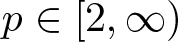 $p\in[2,\infty)$.
Proof of Theorem 6.5
Let  $f\in C_{\mathrm{c}}({{{\mathbb R}}^d},S_{{\mathcal M}})$ and
 $B\in\mathfrak{B}$. If
 $B\in\mathfrak B_1$, we assume that
 $B:=x_0+B_{k_0}\in\mathfrak{B}$ with
 $x_0\in{{{\mathbb R}}^d}$ and
 $k_0\in{\mathbb Z}\backslash{\mathbb N}$. Set
 $C_B=\int_{(x_0+B_{k_0+2{\sigma}})^\complement}
\mathcal K(x_0-y)f(y)\,dy\in\mathcal M$. We show that
 \begin{equation}
\left\|\unicode{x02A0F}_{\!\!\!\!B}\left|\mathbf{T}^c(f)(x)-C_{B}\right|^2\,dx\right\|_{{\mathcal M}}\lesssim \|f\|_{L_{\infty}({L_{\infty}(\mathbb{R}^d)\overline{\otimes}\mathcal{M}})}^2.
\end{equation}
Indeed, we have
 \begin{equation*}
\mathbf T^c f(x)-C_B
=
\mathbf T^c(f\mathbf 1_{x_0+B_{k_0+2{\sigma}}})(x)
+
\int_{(x_0+B_{k_0+2{\sigma}})^\complement}
\left[\mathcal K(x-y)-\mathcal K(x_0-y)\right]f(y)\,dy .
\end{equation*}
Set  $
f_1:=f\mathbf 1_{x_0+B_{k_0+2{\sigma}}}.
$ For the local part, by (2.2), (2.1) and (6.36), we have
 \begin{equation*}
\begin{split}
\left\|\unicode{x02A0F}_B |\mathbf T^c f_1(x)|^2\,dx\right\|_{{\mathcal M}}^{\frac12}
&\le|B|^{-\frac12}\left\|\int_{{{{\mathbb R}}^d}}|\mathbf T^c f_1(x)|^2\,dx\right\|_{{\mathcal M}}^{\frac12}\\
&=|B|^{-\frac12}\left\|\int_{{{{\mathbb R}}^d}}\left|\widehat{\mathcal K}(\xi)\widehat{f_1}(\xi)\right|^2\,d\xi
\right\|_{{\mathcal M}}^{\frac12} \\
&\le|B|^{-\frac12}\sup_{\xi\in{{{\mathbb R}}^d}}\left\|\widehat{\mathcal K}(\xi)\right\|_{{\mathcal M}}
\left\|\int_{{{{\mathbb R}}^d}}|\widehat{f_1}(\xi)|^2\,d\xi\right\|_{{\mathcal M}}^{\frac12}\\
&\lesssim|B|^{-\frac12}\left\|\int_{{{{\mathbb R}}^d}}|f_1(x)|^2\,dx\right\|_{{\mathcal M}}^{\frac12}\\
&\lesssim\|f\|_{L_{\infty}({L_{\infty}(\mathbb{R}^d)\overline{\otimes}\mathcal{M}})}.
\end{split}
\end{equation*}
Therefore,
 \begin{equation}
\left\|
\unicode{x02A0F}_{\!\!\!\!B} |\mathbf T^c f_1(x)|^2\,dx
\right\|_{{\mathcal M}}
\lesssim
\|f\|_{L_{\infty}({L_{\infty}(\mathbb{R}^d)\overline{\otimes}\mathcal{M}})}^2 .
\end{equation}
It remains to estimate the tail term. If  $x\in B$ and
 $y\in(x_0+B_{k_0+2{\sigma}})^\complement$, then the choice of
 $x_0+B_{k_0+2{\sigma}}$ implies that the smoothness condition for
 $\mathcal K$ is applicable to
 $\mathcal K(x-y)-\mathcal K(x_0-y)$. Thus
 \begin{equation*}
\left\|\mathcal K(x-y)-\mathcal K(x_0-y)\right\|_{{\mathcal M}}
\lesssim
\frac{[\rho(x-x_0)]^\delta}{[\rho(x-y)]^{1+\delta}} .
\end{equation*}
Hence
 \begin{align*}
&\sup_{x\in B}\left\|\int_{(x_0+B_{k_0+2{\sigma}})^\complement}\left[\mathcal K(x-y)-\mathcal K(x_0-y)\right]f(y)\,dy\right\|_{{\mathcal M}} \\
&\quad\le\|f\|_{L_{\infty}({L_{\infty}(\mathbb{R}^d)\overline{\otimes}\mathcal{M}})}\sup_{x\in B}
\int_{(x_0+B_{k_0+2{\sigma}})^\complement}\left\|\mathcal K(x-y)-\mathcal K(x_0-y)\right\|_{{\mathcal M}}\,dy\\
&\quad\lesssim\|f\|_{L_{\infty}({L_{\infty}(\mathbb{R}^d)\overline{\otimes}\mathcal{M}})}.
\end{align*}
Consequently,
 \begin{equation}
\left\|
\unicode{x02A0F}_{\!\!\!\!B}
\left|
\int_{(x_0+B_{k_0+2{\sigma}})^\complement}
\left[\mathcal K(x-y)-\mathcal K(x_0-y)\right]f(y)\,dy
\right|^2 dx
\right\|_{{\mathcal M}}
\lesssim
\|f\|_{L_{\infty}({L_{\infty}(\mathbb{R}^d)\overline{\otimes}\mathcal{M}})}^2 .
\end{equation}
Combining (6.39) and (6.40), we obtain
 \begin{equation*}
\left\|
\unicode{x02A0F}_{\!\!\!\!B}
\left|\mathbf T^c(f)(x)-C_B\right|^2\,dx
\right\|_{{\mathcal M}}
\lesssim
\|f\|_{L_{\infty}({L_{\infty}(\mathbb{R}^d)\overline{\otimes}\mathcal{M}})}^2.
\end{equation*}
This proves (6.38).
For any  $B:=x_0+B_{k_0}\in\mathfrak{B}_2$ with
 $x_0\in{{{\mathbb R}}^d}$ and
 $k_0\in{\mathbb N}$, and
 $f\in C_{\mathrm{c}}({{{\mathbb R}}^d},S_{{\mathcal M}})$, then we show that
 \begin{equation}
\left\|\unicode{x02A0F}_{\!\!\!\!B}\left|\mathbf{T}^c(f)(x)\right|^2\,dx\right\|_{{\mathcal M}}\lesssim \|f\|_{L_{\infty}({L_{\infty}(\mathbb{R}^d)\overline{\otimes}\mathcal{M}})}^2.
\end{equation}
Set  $
f_1=f\mathbf{1}_{x_0+B_{k_0+2\sigma}}$. Therefore, it is easy to see that
 \begin{align*}
&\left\|\unicode{x02A0F}_{\!\!\!\!x_0+B_{k_0}}\left|\mathbf{T}^c(f)(x)\right|^2\,dx\right\|_{{\mathcal M}}\\
&\quad\lesssim\quad\left\|\unicode{x02A0F}_{\!\!\!\!x_0+B_{k_0}}\left|\mathbf{T}^c(f\mathbf{1}_{x_0+B_{k_0+2\sigma}})(x)
\right|^2\,dx\right\|_{{\mathcal M}}\\
&\qquad+\left\|\unicode{x02A0F}_{\!\!\!\!x_0+B_{k_0}}\left|\int_{(x_0+B_{k_0+2{\sigma}})^\complement}
\mathcal K(x-y)f(y)\,dy\right|^2\,dx\right\|_{{\mathcal M}}.
\end{align*}
For the first term, from (2.2), (2.1) and (6.36), we can conclude that
 \begin{align*}
&\left\|\unicode{x02A0F}_{\!\!\!\!x_0+B_{k_0}}\left|\mathbf{T}^c(f\mathbf{1}_{x_0+B_{k_0+2\sigma}})(x)\right|^2\,dx\right\|_{{\mathcal M}}^{\frac12}\\
&\quad\leq|\det A|^{-\frac{k_0}{2}}\left\|\int_{{{{\mathbb R}}^d}}\left|\mathbf{T}^c(f\mathbf{1}_{x_0+B_{k_0+2\sigma}})(x)\right|^2\,dx\right\|_{{\mathcal M}}^{\frac12}\\
&\quad=|\det A|^{-\frac{k_0}{2}}\left\|\int_{{{{\mathbb R}}^d}}\left|\widehat{\mathcal{K}}(\xi)\widehat{f_1
}(\xi)\right|^2d\xi\right\|_{{\mathcal M}}^{\frac12}\\
&\quad\lesssim|\det A|^{-\frac{k_0}{2}}\left\|\int_{x_0+B_{k_0+2\sigma}}\left|f(x)\right|^2\,dx\right\|_{{\mathcal M}}^{\frac12}\\
&\quad\lesssim\|f\|_{L_{\infty}({L_{\infty}(\mathbb{R}^d)\overline{\otimes}\mathcal{M}})}.
\end{align*}
Since  $x\in x_0+B_{k_0}$ and
 $y\in (x_0+B_{k_0+2{\sigma}})^\complement$, the property (2.6) gives
 $
x-y\in (B_{k_0+{\sigma}})^\complement.
$ Hence, for the second term, using the size condition of
 $\mathcal K$, we have
 \begin{equation*}
\begin{aligned}
&\left\|\unicode{x02A0F}_{\!\!\!\!x_0+B_{k_0}}\left|\int_{(x_0+B_{k_0+2{\sigma}})^\complement}\mathcal K(x-y)f(y)\,dy\right|^2\,dx\right\|_{{\mathcal M}}^{\frac 12}\\
&\quad\le\left\{\unicode{x02A0F}_{\!\!\!\!x_0+B_{k_0}}\left(\int_{(x_0+B_{k_0+2{\sigma}})^\complement}
\|\mathcal K(x-y)\|_{{\mathcal M}}\,\|f(y)\|_{{\mathcal M}}\,dy\right)^{\!\!2}dx\right\}^{\!\frac 12} \\
&\quad\le \|f\|_{L_\infty({L_{\infty}(\mathbb{R}^d)\overline{\otimes}\mathcal{M}})}
\left\{\unicode{x02A0F}_{\!\!\!\!x_0+B_{k_0}}\left(\int_{(x_0+B_{k_0+2{\sigma}})^\complement}
\|\mathcal K(x-y)\|_{{\mathcal M}}\,dy\right)^{\!\!2}dx\right\}^{\!\frac 12} \\
&\quad\lesssim\|f\|_{L_\infty({L_{\infty}(\mathbb{R}^d)\overline{\otimes}\mathcal{M}})}
\int_{(B_{k_0+{\sigma}})^\complement}\frac{dz}{\rho(z)^{1+\delta}}\\
&\quad\lesssim\|f\|_{L_\infty({L_{\infty}(\mathbb{R}^d)\overline{\otimes}\mathcal{M}})}
\sum_{j=0}^{\infty}|\det A|^{-\delta(k_0+{\sigma}+j)}
\lesssim\|f\|_{L_\infty({L_{\infty}(\mathbb{R}^d)\overline{\otimes}\mathcal{M}})}.
\end{aligned}
\end{equation*}
which, together with the above estimates and (6.38), further implies (6.37).
From this, the  $L_2(L_{\infty}\overline{\otimes}{\mathcal M})$-boundedness of
 $\mathbf{T}^c$, Theorem 5.3 and a standard complex interpolation argument (see Lemma 6.8), we deduce that for every
 $p\in(2,\infty)$,
 \begin{equation*}\mathbf{T}^c:L_p({L_{\infty}(\mathbb{R}^d)\overline{\otimes}\mathcal{M}})\rightarrow\mathbf{h}_p^{A,c}({{{\mathbb R}}^d},\,{\mathcal M})\end{equation*}
is bounded. Furthermore, to obtain the range  $1 \lt p \lt 2$, we apply the preceding argument to
 $(\mathbf{T}^c)^*$. Indeed, a direct calculation shows that
 $(\mathbf{T}^c)^*$ is also a Calderón–Zygmund operator associated with
 $\mathcal{M}$-valued kernel
 $\widetilde{\mathcal{K}}(x-y):=\mathcal{K}(y-x)^*$, which satisfies the same size and smoothness conditions. Moreover,
 $(\mathbf{T}^c)^*$ also satisfies
 \begin{equation*}(\mathbf{T}^c)^*(f)=\int_{{{{\mathbb R}}^d}}\widetilde{\mathcal{K}}(x-y)f(y)\,dy,\end{equation*}
and  $\widetilde{\mathcal{K}}$ satisfies the same assumptions as
 $\mathcal{K}$. Hence, for every
 $q\in(2,\infty)$,
 \begin{equation*}
(\mathbf{T}^c)^*:L_q({L_{\infty}(\mathbb{R}^d)\overline{\otimes}\mathcal{M}})\longrightarrow \mathbf{h}_q^{A,c}({{{\mathbb R}}^d},{\mathcal M})
\end{equation*}
is bounded. By the duality theory, we conclude that for every  $1 \lt p \lt 2$,
 \begin{equation*}
\mathbf{T}^c: \mathbf{h}_p^{A,c}({{{\mathbb R}}^d},{\mathcal M})\longrightarrow L_p({L_{\infty}(\mathbb{R}^d)\overline{\otimes}\mathcal{M}})\end{equation*}
is bounded. This completes the proof of Theorem 6.5.
Remark 6.9. In this subsection,  $\mathbf{T}^c$ can also be extended to
 $L_{\infty}({L_{\infty}(\mathbb{R}^d)\overline{\otimes}\mathcal{M}})$ by a standard localized definition, see the proof of [Reference Xia and Xiong42, Lemma 4.1] for more details. Here, we restrict to
 $C_{\mathrm{c}}({{{\mathbb R}}^d},S_{{\mathcal M}})$ in order to avoid repetition.
Data availability
Data sharing is not applicable to this article, as no datasets were generated or analysed during the current study.
Acknowledgements
The authors would like to thank both referees for their very careful reading and for their many valuable comments, which have indeed improved the presentation of this article.
Funding statement
X. Liu was supported by the Joint Innovation Fund Project of Lanzhou Jiaotong University and Beijing Jiaotong University (No. LH2026013), and the Foundation for Innovative Fundamental Research Group Project of Gansu Province (No. 25JRRA805). W. Wang was supported by the China Postdoctoral Science Foundation (No. 2024M754159) and the Postdoctoral Fellowship Program of the CPSF (No. GZB20230961, GZC20261666).
Competing interests
The authors declare that they have no conflicts of interest.



