Introduction
Eotetranychus kankitus is a significant pest mite found in orchards primarily in the Oriental and Palearctic regions (Wang et al., Reference Wang, Ran and Duan2014). The mobile life stages of this mite feed on the surfaces of leaves and young terminal shoots by using their piercing-sucking mouthparts, causing mesophyll collapse and subsequent leaf drop (Zhou et al., Reference Zhou, Yue and Zou1999). Although E. kankitus is not as widely distributed as other pest mites like Panonychus citri and Phyllocoptruta oleivora, it causes more serious damage when it does appear (Li et al., Reference Li, Liu, Zhou, Tian, Zhang, Liu, Liu and Wang2017). Additionally, E. kankitus frequently co-occurs with P. citri or P. oleivora, forming in a pest complex that poses significant difficulties for orchard management (Li et al., Reference Li, Wang, Zhang and Liu2014; Zhou et al., Reference Zhou, Yue and Zou1999). Traditionally, acaricides have been used to control E. kankitus (Chen et al., Reference Chen, Jiang and Wang2023). However, the effectiveness of acaricides is limited due to the mite’s quick development of resistance, short life cycle, high reproductive rate, and parthenogenesis. Therefore, the development of biological control strategies is necessary to manage this mite.
One promising approach to managing E. kankitus is the use of entomopathogenic fungi as biological control agents. These fungi can infect spider mites, leading to their mortality and ultimately reducing their population densities (Shah and Pell, Reference Shah and Pell2003). Beauveria bassiana is distributed worldwide and can infect various pest species, including Lepidoptera, Hemiptera, Coleoptera, Diptera, and Acarina (Altinok et al., Reference Altinok, Altinok and Koca2019; Sohrabi et al., Reference Sohrabi, Jamali, Morammazi, Saber and Kamita2019; Wu et al., Reference Wu, Xie, Li, Xu and Lei2016a). According to earlier research, B. bassiana has potential in controlling pest mite species, such as Tetranychus urticae (Wu et al., Reference Wu, Xie, Li, Xu and Lei2016a), T. evansi (Wekesa et al., Reference Wekesa, Maniania, Knapp and Boga2005), P. oleivora (Alves et al., Reference Alves, Tamai, Rossi and Castiglioni2005), and P. citri (Shi and Feng, Reference Shi and Feng2006). However, there is limited research on the use of B. bassiana for controlling E. kankitus.
The effectiveness of biological control may be increased by employing multiple natural enemies (Chandler et al., Reference Chandler, Davidson and Jacobson2005). Research suggests that using natural enemies in cooperation with B. bassiana shows potential in controlling pests (Baverstock et al., Reference Baverstock, Roy and Pell2010; Castillo-Ramírez et al., Reference Castillo-Ramírez, Guzmán-Franco, Santillán-Galicia and Tamayo-Mejía2020; De Freitas et al., Reference De Freitas, Lira, Jumbo, Dos Santos, Rêgo and Teodoro2021; Lin et al., Reference Lin, Tanguay, Guertin, Todorova and Brodeur2017). For example, the combined use of B. bassiana and Stratiolaelaps scimitus increased control efficacy for Frankliniella occidentalis (Zhang et al., Reference Zhang, Wu, Reitz and Gao2021). Furthermore, natural enemies such as insects or mites, acting as vectors for B. bassiana conidia, also show potential in controlling pests. Diaphorina citri died after B. bassiana conidia were successfully delivered to it by Amblyseius swirskii or Neoseiulus cucumeris (Zhang et al., Reference Zhang, Sun, Lin, Lin, Chen, Ji, Zhang and Saito2015). Therefore, it is recommended to combine the use of entomopathogenic fungi with release of natural enemies as a potential strategy to improve the efficacy of controlling E. kankitus.
The predatory mite, N. barkeri, has been successfully used to suppress E. kankitus (Li et al., Reference Li, Liu, Zhou, Tian, Zhang, Liu, Liu and Wang2017). To optimise the efficiency of E. kankitus control, we explored the potential of combining the application of B. bassiana with the releases of N. barkeri. However, there is a potential risk that the fungus could harm the predatory mites, given that various insect and mite species are susceptible to B. bassiana. Previous research has shown that spraying B. bassiana on adult predatory mites resulted in approximately 43% mortality of predators (Numa Vergel et al., Reference Numa Vergel, Bustos, Rodríguez and Cantor2011). Additionally, several researchers have found negative effects on predator life cycles and predation parameters when B. bassiana was sprayed (Ullah and Lim, Reference Ullah and Lim2017) or when predators fed on B. bassiana-infected prey (Seiedy, Reference Seiedy2015; Seiedy et al., Reference Seiedy, Saboori and Allahyari2012a; Wu et al., Reference Wu, Gao, Xu, Wang, Li, Wang, Wang and Lei2015b). Therefore, evaluating the compatibility between B. bassiana and predatory mites is crucial for the success of integrated pest management (IPM) programs targeting the control of E. kankitus.
In this study, we evaluated the pathogenicity of five isolates of B. bassiana against E. kankitus. Subsequently, we assessed the direct lethal effects of different concentrations of the selected virulent isolates on both E. kankitus and N. barkeri by exposing the mites to B. bassiana. Additionally, we determined the habitat preference, predatory behaviour, fecundity, and offspring survival of N. barkeri in the presence of risks posed by B. bassiana.
Materials and methods
Rearing of entomopathogenic and mites
Five strains of B. bassiana (Bb02, Bb014, Bb025, Bb062, and Bb252) were obtained from the Biotechnology Centre of Southwest University and regularly cultivated on Potato Dextrose Agar plates at 25℃ in the dark for 14 days. Conidia were collected from the agar plates for the tests by flooding them in a sterile 0.05% Tween-80 solution, and their concentration was measured using a haemocytometer. The citrus yellow mites, E. kankitus, were cultivated on Citrus sinensis leaf discs (7 cm in diameter). These leaf discs were placed in Petri dishes (9 cm in diameter, 2 cm in depth) on water-soaked polyurethane mats. To prevent mites from escaping, the edges of the leaf discs were surrounded with wet cotton wool. The predatory mites, N. barkeri, were maintained in a plastic cylindrical container (15 cm in diameter, 8 cm in depth). A plastic lid covered the container, with a 5 cm diameter opening in the centre covered with stainless steel wire netting to provide ventilation. Spider mites were swept into the container twice per day using a brush to rear the predatory mites. All mites were kept in a climate chamber at a temperature of 25 ± 1 °C, relative humidity of 80 ± 5%, and a photoperiod of L16: D8 hours.
Seection of B. bassiana strains on E. kankitus
The pathogenicity of five B bassiana isolates on female E. kankitus was tested. Thirty E. kankitus females (one-day-old) were placed onto leaf discs and then sprayed with 1 mL of a 1 × 10⁷ conidia/mL fungal suspension using a spray tower. Eotetranychus kankitus sprayed with 0.05% Tween-80 solution served as the control. The mites treated with B. bassiana or Tween-80 were then transferred onto new leaf disc, respectively. Mortality was recorded daily for 9 days. Dead spider mites were transferred to a sterile Petri plate lined with wet filter paper at each observation. The plates were then covered with Parafilm® and maintained at 25°C in the dark. They were monitored daily for symptoms of mycosis. Spider mites showing visible mycelium growth on their body surface were considered to have died from fungal infection. Three replicates were performed for each B. bassiana isolate.
Efects of Bb025 on susceptibility of E. kankitus and N. barkeri
Based on the pathogenicity of five B. bassiana strains on E. kankitus, the strain Bb025 was selected for multiple concentration bioassays against both E. kankitus and N. barkeri. Thirty E. kankitus females (one-day-old) were sprayed with six different concentrations of Bb025 conidial suspension (1 × 10³, 1 × 10⁴, 1 × 10⁵, 1 × 10⁶, 1 × 10⁷, 1 × 10⁸ conidia/mL), while thirty N. barkeri females (one-day-old) were sprayed with two different concentrations (1 × 10⁷, 1 × 10⁸ conidia/mL). Tween-80 solution (0.05%) was sprayed on E. kankitus and N. barkeri as the control. The spraying method of B. bassiana and the method for determining the number of dead mites are described above. Each concentration was replicated three times, and mortality was recorded daily for 9 days.
Efect of Bb025 on habitat preference in E. kankitus and N. barkeri
Two leaflets of the same size (4 cm in diameter) were used in the experiment and placed upside down on a foam cube (14 cm in diameter, 1 cm in depth). The foam cube was then placed in Petri dishes (15 cm in diameter, 2.5 cm in depth) filled halfway with water. A wax bridge (4 × 0.5 cm) connected the leaflets (Walzer et al., Reference Walzer, Paulus and Schausberger2006). One of the leaflets was sprayed with 1 mL of a 1 × 10⁸ conidia/mL Bb025 conidial suspension, serving as the treatment group. The other leaflet was treated with 1 mL Tween-80 solution (0.05%), serving as the control group. For each choice, a single female was randomly selected and placed in the middle of the bridge. Patch selection was observed at 0, 15, 30, 45, 60, 90, and 120 minutes. One hundred individuals for each mite species (E. kankitus or N. barkeri) were tested, with each experimental unit and mite being used only once.
Efect of Bb025 on predatory behaviour of N. barkeri
Predatory mites may invest a significant amount of time and energy in self-grooming behaviours following treatment with B. bassiana, potentially reducing their ability to search for and feed on prey. Thus, we conducted an experiment to observe the movement and self-grooming behaviours of N. barkeri when inhabiting Bb025-treated citrus leaves and feeding on Bb025-treated E. kankitus. The experiment involved spraying leaf discs containing thirty E. kankitus eggs with a 1 mL Bb025 conidial suspension (1 × 10⁸ conidia/mL) as the treatment group, while leaf discs sprayed with Tween-80 (0.05%) served as the control group. After 10 minutes, a single N. barkeri female (starved for 24 hours) was introduced into each leaf disc, and their movement, self-grooming behaviour, and predatory tendencies towards E. kankitus eggs were observed and recorded over a 10-minute period. Additionally, the number of E. kankitus eggs consumed by N. barkeri was recorded after 2 hours of exposure to the leaf disc. A new leaf disc was used for each test, with nine mites tested individually.
Efect of Bb025 on fecundity and offspring survival of N. barkeri
To evaluate the safety of predators feeding on prey infected with Bb025, we determined the predatory capacity, fecundity, and offspring survival of N. barkeri. Females of N. barkeri (starved for 24 hours) were placed on a leaf disc. Then, thirty E. kankitus females, previously sprayed with a concentration of 1 × 10⁸ conidia/mL of Bb025, were offered to N. barker individuals daily at 3.5 days post-inoculation (corresponding to the LT50 value of E. kankitus). As a control group, thirty E. kankitus females sprayed with Tween-80 (0.05%) were provided to N. barker individuals at 3.5 days post-spray. The number of consumed prey and the number of eggs laid by N. barkeri were counted daily for 7 days. The eggs laid by N. barkeri were transferred daily to a new leaf disc, where both Bb025 and Tween-80 sprayed E. kankitus females were provided daily. The individuals were monitored daily, and the number of live individuals was recorded after 7 days. Each treatment was replicated six times.
Data analyses
All statistical analyses were performed using SPSS 26.0. Mortality data were corrected for natural mortality (Abbott, Reference Abbott1925), and then normalised using arcsine-transformed before conducting a one-way ANOVA. Probit analysis was used to estimate the lethal time to 50% mortality (LT50) and the lethal concentration causing 50% mortality (LC50). Preference data were analysed using a chi-squared test. The frequency of N. barkeri self-grooming, grooming time, moving time, frequency of predation tendencies, E. kankitus egg and female consumption by N. barkeri, total number of eggs laid by N. barkeri, and the total number of new generation individuals were analysed using an independent-sample t-test between the Bb025 and Tween-80-treated groups.
Results
Section of B. bassiana strains on E. kankitus
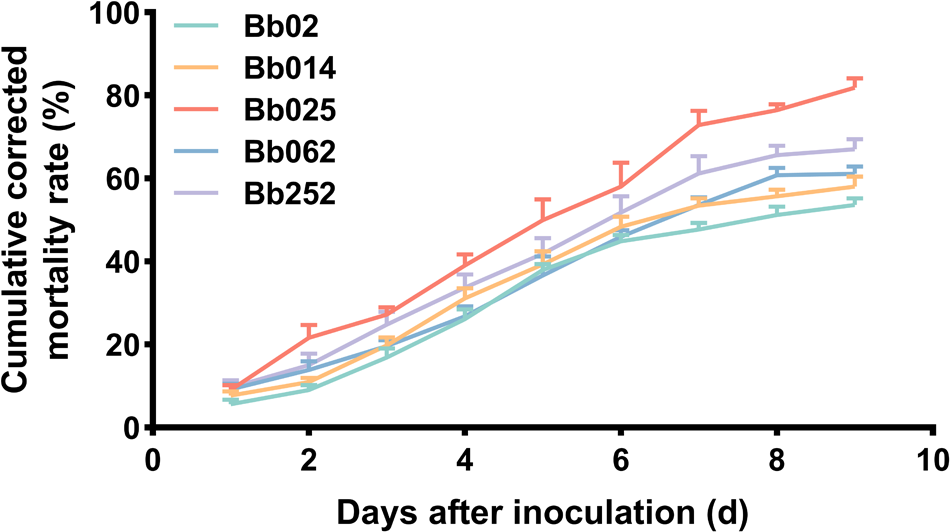
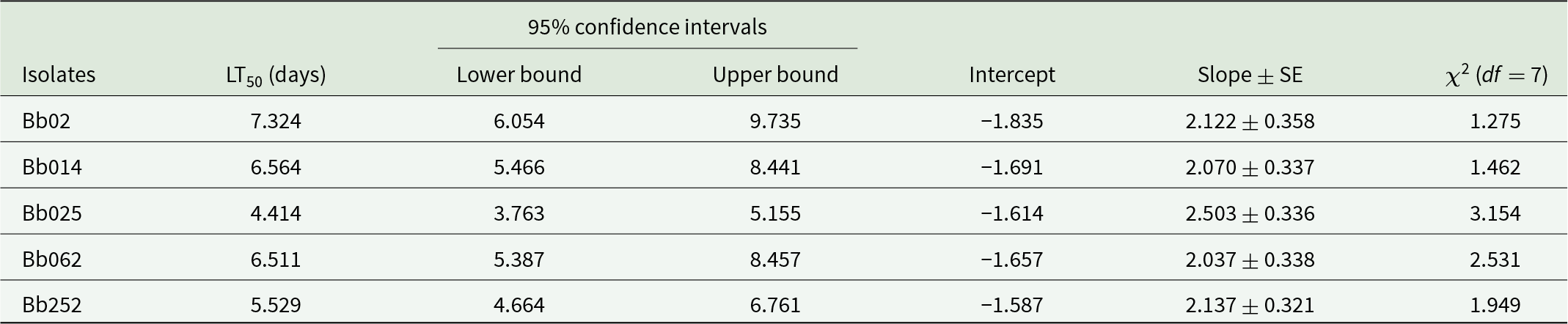
The pathogenicity of five B. bassiana isolates (1 × 10⁷ conidia/mL) was evaluated against the female of E. kankitus (Fig. 1 and Table 1). The five isolates were highly effective against E. kankitus, with mortality rates increasing over time. After 9 days, the cumulative corrected mortality rates of E. kankitus varied significantly among the five isolates (F = 26.720; df = 4, 10; P < 0.001), ranging from 53.611% to 81.899% (Fig. 1). The LT50 values against female E. kankitus for the five isolates ranged from 4.414 to 7.324 days (Table 1). Notably, the Bb025 isolate exhibited the highest effectiveness (Fig. 1), with an LT50 value of 4.414 days, which lower than that of the other B. bassiana isolates (Table 1).
Cumulative corrected mortality rate (mean ± SE) of Eotetranychus kankitus females caused by five isolates of B. bassiana, including Bb02, Bb014, Bb025, Bb062, and Bb252.

Lethal time (LT50) estimations of five B. bassiana in E. kankitus

Efects of Bb025 on susceptibility of E. kankitus and N. barkeri
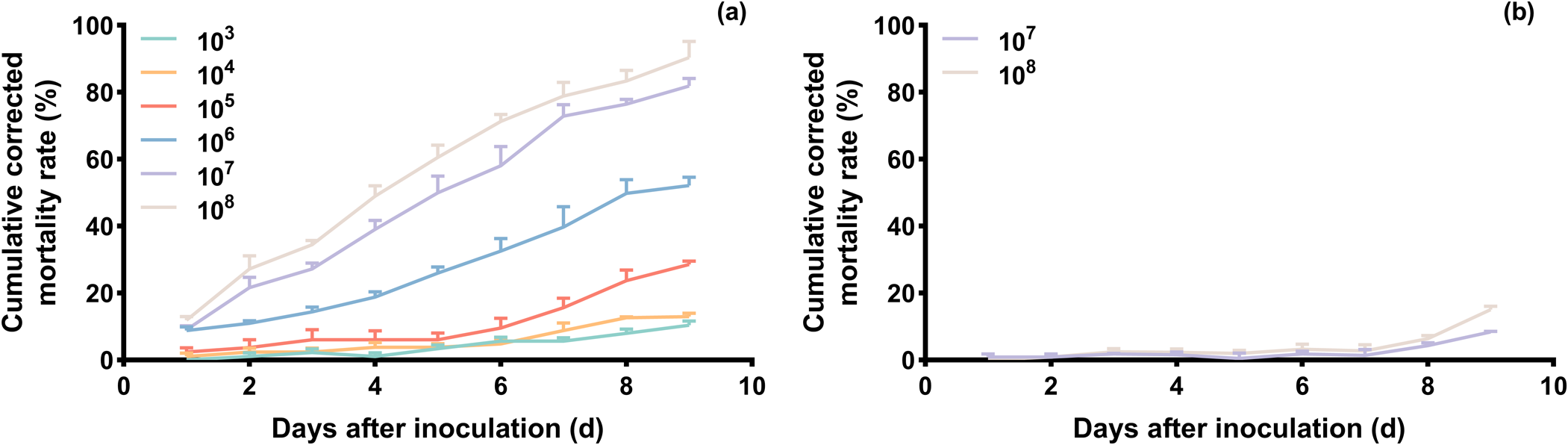
The mortality rates of E. kankitus varied among different conidial concentrations of Bb025 and increased with conidial concentrations. The 1 × 10⁸ conidia/mL Bb025 treatment consistently resulted in the highest mortality of E. kankitus during the test period, with a corrected mortality rate of 90.402% on the 9th day (Fig. 2a). The mortality of N. barkeri treated with 1 × 10⁸ conidia/mL Bb025 was comparable to that of the 1 × 10⁷ conidia/mL Bb025 treatment for the first eight days (Fig. 2b). However, after exposure to 1 × 10⁷ and 1 × 10⁸ conidia/mL Bb025 conidial suspension, the predatory mite’s corrected mortality rates were 8.385% and 15.036%, respectively, on the 9th day.
Cumulative corrected mortality rate (mean ± SE) of Eotetranychus kankitus (a) and Neoseiulus barkeri (b) females caused by Bb025 at different concentrations of conidia.

The Bb025 strain had a lower LC50 value of 3.488 × 10⁵ conidia/mL for E. kankitus. However, the LC50 value for the predatory mites could not be calculated because the mortality rate of N. barkeri remained low, even when exposed to higher concentrations of Bb025 (Table 2). Furthermore, E. kankitus had a lower LT50 value (3.581 days) compared to N. barkeri (22.773 days) when treated with a concentration of 1 × 10⁸ conidia/mL of Bb025 (Table 3).
Lethal concentration (LC50) estimations of B. bassiana isolate Bb025 on the E. kankitus and N. barkeri

1 E. k: E. kankitus.
2 N. b: N. barkeri.
3 The mortality rate of N. barkeri remained low when treated with higher concentrations of Bb025, making it impossible to calculate the LC50 value for the predatory mites in this study.
Lethal time (LT50) estimations of B. bassiana isolate Bb025 on the E. kankitus and N. barkeri

1 E. k: E. kankitus.
2 N. b: N. barkeri.
Efect of Bb025 on habitat preference in E. kankitus and N. barkeri
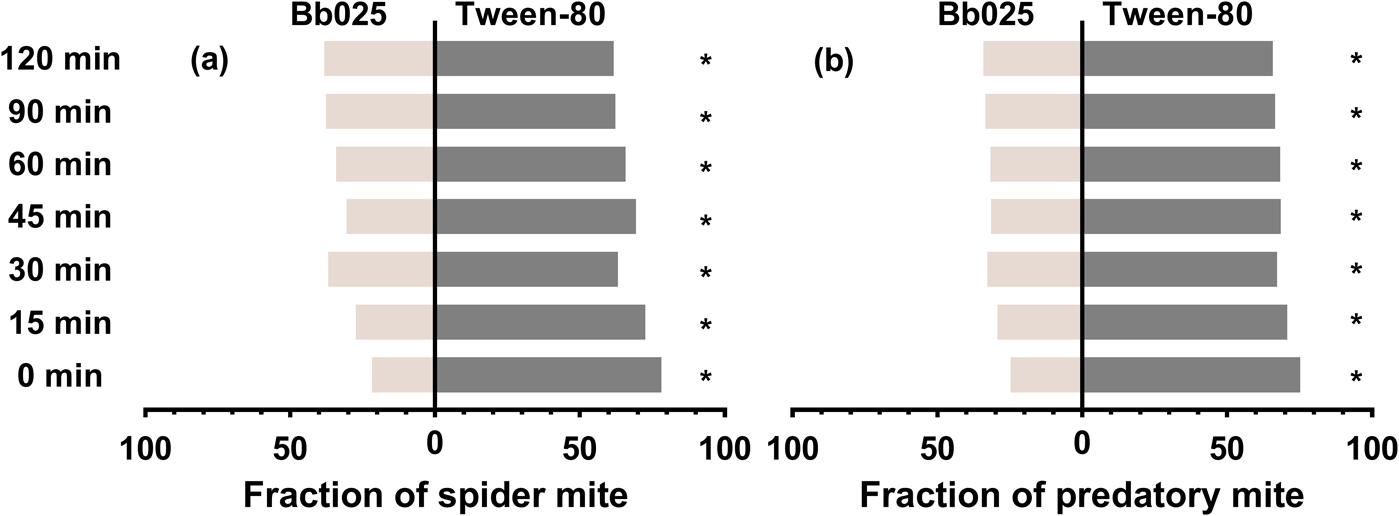
The citrus yellow mites, E. kankitus, exhibited a habitat preference for Tween-80-treated leaflets at different time points: 0, 15, 30, 45, 60, 90, and 120 minutes after treatment (Fig. 3a). A similar preference for Tween-80-treated leaflets was also observed in N. barkeri (Fig. 3b).
Preference of Eoteranchus kankitus (a) and Neoseiulus barkeri (b) to citrus leaflets inoculated with Bb025 (1 × 10⁸ conidia/mL) and 0.05% Tween-80. Data were analysed using a chi-squared test to evaluate differences in each choice experiment (P < 0.05). The asterisk indicates significant differences between Bb025 and Tween-80 treatments.

Efect of Bb025 on predatory behaviour of N. barkeri
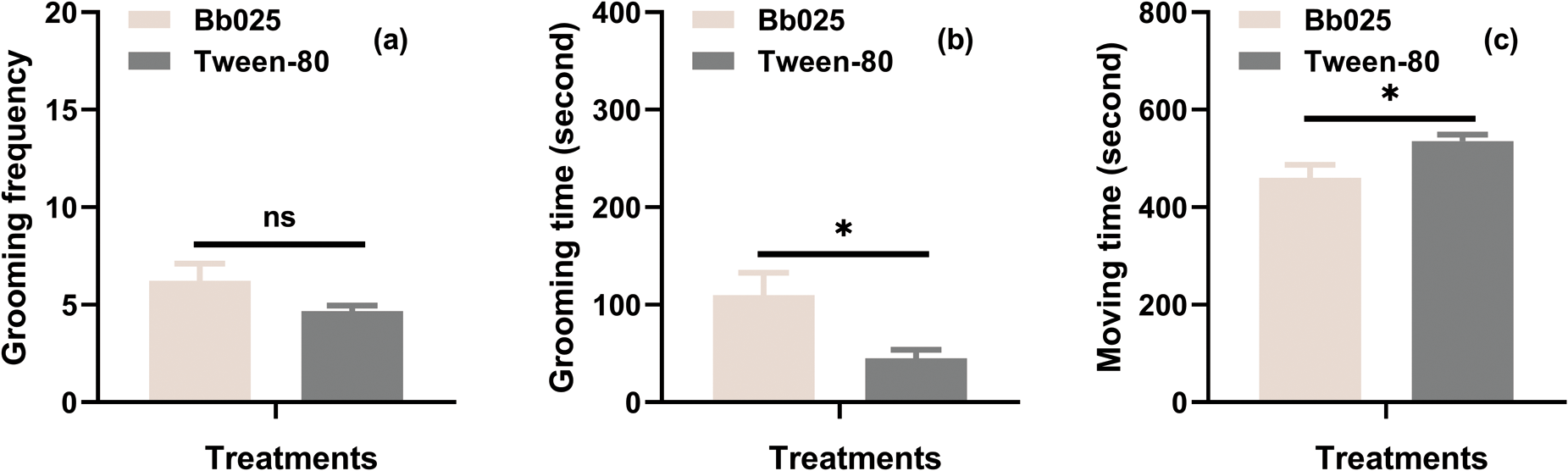
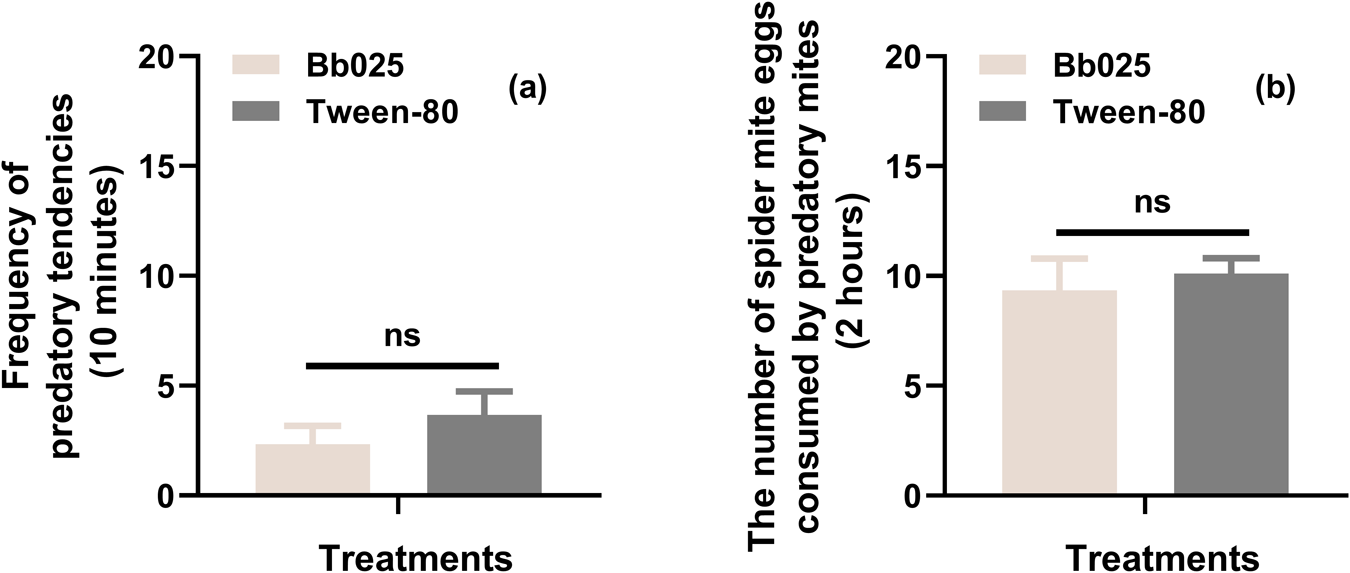
The predatory mites, N. barkeri, displayed various behaviours such as movement, remaining stationary, and self-grooming when exposed to citrus leaves sprayed with a concentration of 1 × 10⁸ conidia/mL of Bb025 or 0.05% Tween-80. No significant differences were observed in the frequency of self-grooming between N. barkeri on leaf discs sprayed with Bb025 and Tween-80 (t = 1.682, df = 16, P = 0.112) (Fig. 4a). However, N. barkeri spent significantly more time self-grooming on citrus leaves sprayed with Bb025 (109.889 seconds) compared to those sprayed with Tween-80 (45.111 seconds) (t = 2.631, df = 16, P = 0.018) (Fig. 4b). Furthermore, a significant difference was found in the time spent moving on citrus leaves sprayed with Bb025 and Tween-80 (460.111 seconds vs. 535.667 seconds) for N. barkeri (t = − 2.497, df = 16, P = 0.024) (Fig. 4c). Conversely, no significant differences were noted in the frequency of predatory tendencies (10 minutes, t = − 0.985, df = 16, P = 0.339) or in the number of E. kankitus eggs consumed by N. barkeri (2 hours, t = − 0.483, df = 16, P = 0.636) when preying on spider mites sprayed with Bb025 and Tween-80 (Fig. 5).
Grooming frequency (a), grooming time (b) and moving time (c) of Neoseiulus barkeri on citrus leaflets inoculated with Bb025 (1 × 10⁸ conidia/mL) and 0.05% Tween-80. The ‘ns’ and asterisk indicate no significant and significant differences, respectively, between Bb025 and Tween-80 treatments, based on an independent-samples t-test (P < 0.05).

Frequency of predatory tendencies of Neoseiulus barkeri towards Eoteranchus kankitus eggs over a 10-minute period (a) and the number of E. kankitus eggs consumed by N. barkeri within 2 hours (b) on citrus leaflets inoculated with Bb025 (1 × 10⁸ conidia/mL) and 0.05% Tween-80. The ‘ns’ indicates no significant differences between Bb025 and Tween-80 treatments, based on an independent-samples t-test (P < 0.05).

Efect of Bb025 on fecundity and offspring survival of N. barkeri
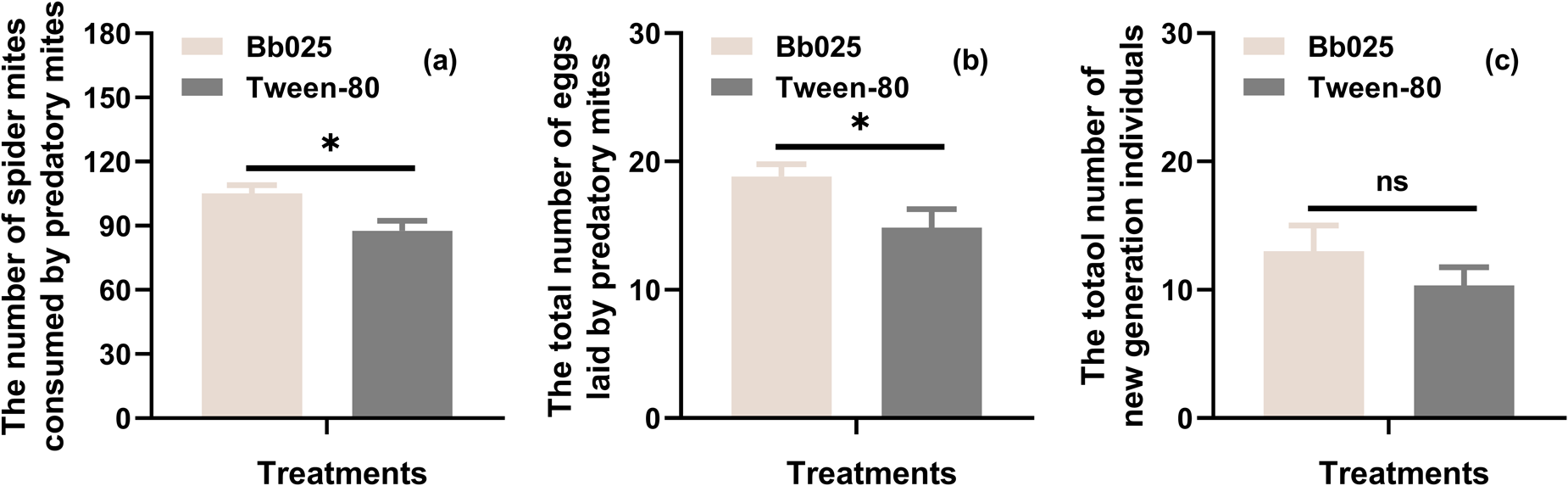
A higher number of E. kankitus females sprayed with Bb025 were consumed by N. barkeri compared to those treated with Tween-80 (t = − 2.818, df = 10, P = 0.018) (Fig. 6a). Additionally, the total number of eggs laid by N. barkeri was greater when fed on E. kankitus females sprayed with Bb025 compared to those sprayed with Tween-80 (18.833 vs. 13.000; t = − 2.637, df = 10, P = 0.025) (Fig. 6b). However, the total number of new generation individuals was 10.333 and 14.833 for N. barkeri female fed on E. kankitus sprayed with Bb025 and Tween-80, respectively, and these values were not significantly different (t = − 2.212, df = 10, P = 0.051) (Fig. 6c).
The number of Eoteranchus kankitus inoculated with Bb025 (1 × 10⁸ conidia/mL) and 0.05% Tween-80 that were consumed by Neoseiulus barkeri (a), along with the number of eggs laid by N. barkeri (b) and the number of new generation individuals of N. barkeri (c) after feeding on these treated E. kankitus. The ‘ns’ and asterisk indicate no significant and significant differences, respectively, between Bb025 and Tween-80 treatments, based on an independent-samples t-test (P < 0.05).

Discussion
In this study, a strain of B. bassiana (Bb025) was selected for its high virulence against E. kankitus and lower pathogenicity towards N. barkeri. Both E. kankitus and N. barkeri exhibited avoidance behaviour towards leaves infected with Bb025. Additionally, the predatory capacity of N. barkeri female was not influenced by the presence of Bb025, although N. barkeri spent significantly more time engaging in self-grooming behaviour on leaf discs sprayed with Bb025 conidia. Notably, the number of eggs laid by N. barkeri feeding on infected E. kankitus increased, but subsequent generation individuals of N. barkeri feeding on treated E. kankitus were affected. These findings provide the potential of a combined approach using Bb025 and N. barkeri for effective biological control of E. kankitus at appropriate intervals.
Lower LT50 values and higher mortality rates indicate that the pests were rapidly infected by the fungus, which are important characteristics for choosing fungal strains as potential biocontrol agents (Geroh et al., Reference Geroh, Gulati and Tehri2015; Wekesa et al., Reference Wekesa, Maniania, Knapp and Boga2005). In our study, the isolate of Bb025 showed lower LT50 values and a higher corrected mortality rate when targeting E. kankitus. These findings indicate that the fungal strain Bb025 has the potential to effectively control the population of E. kankitus. The fungal pathogenicity on pest populations is mainly influenced by dosage, and the mortality of pests often varies with conidial concentration (Krishnan et al., Reference Krishnan, Kaushik, Gulati and Sharma2012; Sarasan et al., Reference Sarasan, Kite, Sileshi and Stevenson2011). Our results also found that the application of Bb025 to control E. kankitus exhibited a clear concentration-dependent relationship, with higher fungal concentrations leading to increased mortality rates of E. kankitus. The maximum mortality rate observed was 90.402% in E. kankitus sprayed with 1 × 10⁸ conidia/mL Bb025. However, it is important to note that using higher concentrations of fungi can also result in the direct mortality of non-target natural enemies (Flexner et al., Reference Flexner, Lighthart and Croft1986). Castillo-Ramírez et al. (Reference Castillo-Ramírez, Guzmán-Franco, Santillán-Galicia and Tamayo-Mejía2020) reported that over 20% of N. californicus and Phytoseiulus persimilis died when infected with 1 × 10⁸ conidia/mL Bb88 during the 9-day experiment. In our study, the mortality rate of N. barkeri was found to be 15.036% when infected with 1 × 10⁸ conidia/mL Bb025, indicating that N. barkeri was susceptible to Bb025.
The pathogenicity of a fungus to a target insect is primarily caused by the penetration of the insect’s cuticle by conidia (Wu et al., Reference Wu, Guo, Xing, Gao, Xu and Lei2018a). Previous study demonstrated that germinated conidia of B. bassiana SZ-26 were unable to penetrate the cuticle of N. barkeri (Wu et al., Reference Wu, Gao, Zhang, Wang, Xu and Lei2014), and transmission electronic microscopy revealed that most SZ-26 B. bassiana conidia in the gut of the predatory mite dissolved within 24 h post-ingestion (Wu et al., Reference Wu, Zhang, Xu and Lei2016b). However, Niu et al. (Reference Niu, Nima, Li, Yang, Chen, Li and Liu2023) reported that Bb025 can invade through the depressions and pores of the N. barkeri body wall. Additionally, Bb025 was detected in N. barkeri tissue using a specific nested PCR technique (Supplementary Fig. S1). These findings further confirm that the strain Bb025 has lower pathogenicity for the predatory mites N. barkeri.
Citrus yellow mites, E. kankitus, significantly avoided leaves sprayed with Bb025, suggesting that the presence of Bb025 decreased the consumption of citrus leaves by E. kankitus. This finding is consistent with the research by Rondot and Reineke (Reference Rondot and Reineke2017), who found that the presence of endophytic entomopathogenic fungi influenced the host choice behaviour of adult black vine weevils, leading to the avoidance of colonised plants and a consequent decrease in pest consumption. Seiedy (Reference Seiedy2014) reported that the presence of fungi in the prey or its habitat can affect the behaviour of predators, such as preference, activity, and feeding. This response implies that predators can recognise dangerous conditions through odour (Wu et al., Reference Wu, Gao, Xu, Wang, Li, Wang, Wang and Lei2015b), and adjust their behaviour (Baverstock et al., Reference Baverstock, Alderson and Pell2005; Faraji et al., Reference Faraji, Janssen and Sabelis2001). In our study, the predator N. barkeri also showed avoidance behaviour towards plants treated with Bb025. Additionally, N. barkeri invested more time in self-grooming on leaf discs with Bb025 conidia, which reduced the time spent searching for prey. Surprisingly, this self-grooming behaviour did not influence the predation capacity of N. barkeri on E. kankitus. This indicates that N. barkeri may be capable of recognising the presence of Bb025 and responding with avoidance behaviour or post-contact responses. If contact with spores is unavoidable, the self-grooming behaviour may effectively remove most spores attached to N. barkeri. This selection and self-grooming behaviour potentially enhances the survival rate of the predator (Seiedy et al., Reference Seiedy, Saboori, Allahyari, Talaei-Hassanloui and Tork2012b).
Insects possess a selective advantage through their ability to detect and avoid fungal pathogens. According to Ríos-Moreno et al. (Reference Ríos-Moreno, Quesada-Moraga and Garrido-Jurado2018), Chrysoperla carnea larvae exhibited a preference for consuming healthy prey over those treated with Metarhizium brunneum. However, females of N. barkeri consumed more E. kankitus females infected with Bb025, laying more eggs compared to prey sprayed with Tween-80 in a no-choice test. This could be due to the decreased vitality of E. kankitus caused by fungal penetration, making them more vulnerable to predation by N. barkeri. These results are consistent with the findings of Wu et al.. (Reference Wu, Gao, Xu, Goettel and Lei2015a). Furthermore, the population of subsequent generation individuals that fed on infected E. kankitus was reduced, presumably due to the weakly sclerotised cuticle of N. barkeri juveniles (Koehler, Reference Koehler1999; Shipp et al., Reference Shipp, Zhang, Hunt and Ferguson2003). Thus, applying Bb025 and N. barkeri at short intervals may negatively impact the number of predatory mite offspring and hinder the establishment of predatory mites in the field.
Based on our findings, we suggest a combined approach using Bb025 and N. barkeri for E. kankitus control. Initially, spraying plants with Bb025 will decrease the density of E. kankitus due to the direct lethal effect of the Bb025 on E. kankitus in the sprayed areas. Additionally, the repelling effect of Bb025 on spider mites can help prevent the spread of E. kankitus from unsprayed to sprayed areas. Subsequently, releasing N. barkeri at appropriate intervals after spraying the fungus is recommended. These predatory mites can move to areas where Bb025 has not been sprayed, effectively controlling E. kankitus. Although N. barkeri may come into contact with the fungus while moving around and handling prey on the leaves, their grooming behaviour can help remove the conidia from their bodies (Wekesa et al., Reference Wekesa, Moraes, Knapp and Delalibera2007; Wu et al., Reference Wu, Xing, Sun, Xu, Meng and Lei2018b). Meanwhile, N. barkeri consumed more infected E. kankitus adults, resulting in lower population density of prey. It was found that B. bassiana had limited efficacy in suppressing the immature stages of spider mites (Wu et al., Reference Wu, Sarkar, Lv, Xu and Lei2020), indicating that N. barkeri and its offspring could provide continuous control for the immature stage of E. kankitus where B. bassiana failed to control. In conclusion, these findings suggest that using Bb025 strains of B. bassiana in combination with N. barkeri may be an effective approach for controlling E. kankitus on plants.
This integrated pest management strategy takes advantage of the strengths of both the entomopathogenic fungus and the predatory mites to address the pest problem more effectively. However, there is insufficient evidence to accurately forecast how the combined application of the two biocontrol agents will contribute to an additive suppression of the pest mite population. It will also be necessary to evaluate the combined effect of the two predators on E. kankitus in a more natural environment.
Supplementary material
The supplementary material for this article can be found at https://doi.org/10.1017/S0007485325000057.
Acknowledgements
The present research work was supported by National Key R&D Program of China (2023YFD1400600), the National Natural Science Foundation of China (32072483), the Fundamental Research Funds for the Central Universities (SWU-KQ22019), the Shuangcheng cooperative agreement research grant of Yibin (XNDX2022020014), China and the Key R&D Program of Tibet, China (XZ202301ZY0014N).
Competing interests
None.