INTRODUCTION
Emergence of Extramural Cemeteries in Neolithic Southeast Europe
Evidence of inhumation before the first half of the fifth millennium cal BC in southeast Europe—often otherwise known as the Late Neolithic—is regionally patchy. In Mesolithic burial practices, represented primarily by finds from sites in the Danube Gorges, people were laid mostly in supine extended positions (Borić Reference Borić2011, Reference Borić2016). With the appearance of Neolithic communities in southeast Europe from the middle of the seventh millennium cal BC onward, formal mortuary custom changed, placing the body in a flexed position on a lateral left or right side, a tradition considered to originate in the Near East (Bonsall Reference Bonsall2007:54; Borić Reference Borić2015). Burials from the seventh to late sixth millennia cal BC across southeast Europe—conventionally the Early and Middle Neolithic—have been found exclusively in settlements, normally in individual graves, and were generally unaccompanied by grave goods (Lichter Reference Lichter2001; Schuster et al. Reference Schuster, Kogălniceanu and Morintz2008). The very small number of burials known from the Early and Middle Neolithic indicates that this was definitely not the only, and was unlikely to have been the primary, form of mortuary practice (Bojadzhiev Reference Bojadzhiev2001; Lichter Reference Lichter2001; Kogălniceanu Reference Kogălniceanu2009; Borić Reference Borić2015).
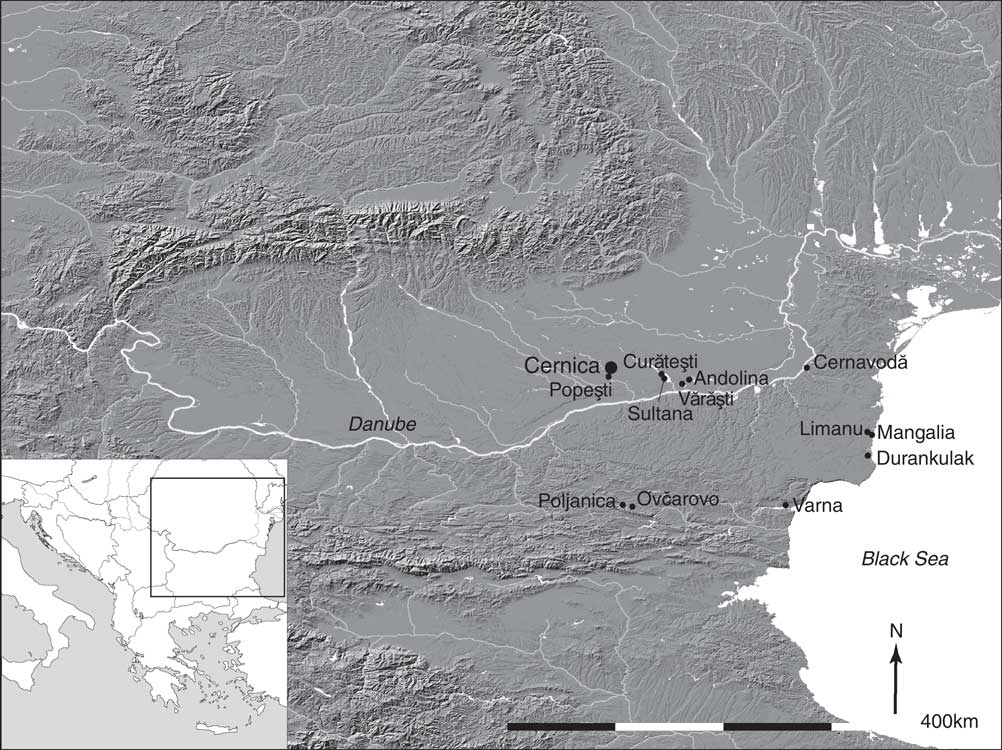
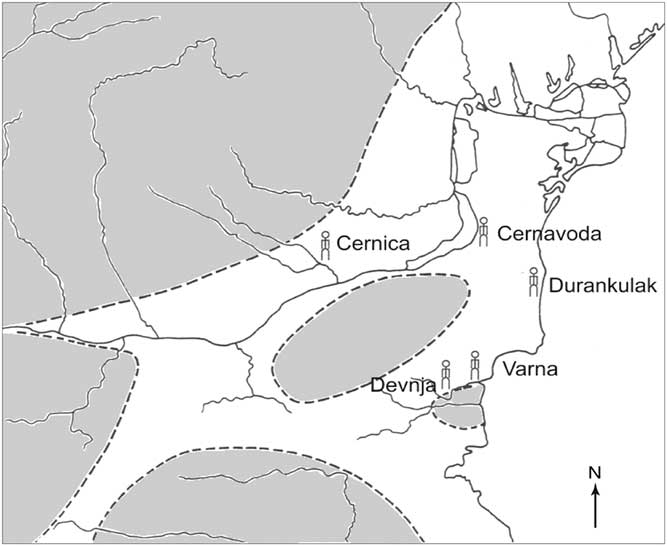
The Late Neolithic and Early Copper Age in the eastern Balkans saw the quite widespread emergence of large, extramural cemeteries in several contexts (Figure 1). In Muntenia (Kogălniceanu Reference Kogălniceanu2012; Lazăr Reference Lazăr2012), the sites of Cernica (Comşa and Cantacuzino Reference Comşa and Cantacuzino2001; Kogălniceanu Reference Kogălniceanu2005), Sultana-Valea Orbului (Şerbănescu Reference Şerbănescu2002; Şerbănescu et al. Reference Şerbănescu, Comşa and Mecu2007, Reference Şerbănescu, Nica, Comşa and Laurenţiu2008), Popeşti (Şerbănescu Reference Şerbănescu1999), Andolina (Comşa Reference Comşa1974a, Reference Comşa1974b), Vărăşti–Grădiştea Ulmilor / “Boian A” (Comşa Reference Comşa1974a; Kogălniceanu Reference Kogălniceanu2012 with bibliography) and Curăteşti (Şerbănescu and Soficaru Reference Şerbănescu and Soficaru2006; Şerbănescu and Cristache Reference Şerbănescu and Cristache2011) had varying numbers of burials: 378, 253, 16, 9, 14–18, and 20, respectively. In Dobrudza, the region situated between the Lower Danube and the Black Sea, Durankulak had around 600 Hamangia burials (Todorova Reference Todorova2002), and Cernavodă 556 (Morintz et al. Reference Morintz, Berciu and Diaconu1955; Berciu and Morintz Reference Berciu and Morintz1957, Reference Berciu and Morintz1959; Berciu et al. Reference Berciu, Morintz and Roman1959, Reference Berciu, Morintz, Ionescu and Roman1961; Necrasov et al. Reference Necrasov, Critescu, Botezatu and Miu1990). There are two more Hamangia cemeteries discovered in this area, at Mangalia and Limanu, unfortunately with little precise information (Kogălniceanu Reference Kogălniceanu2012 and references therein). In the Poljanica culture of northeast Bulgaria, somewhat smaller cemeteries were found adjacent to the sites of Poljanica, Radingrad, and Ovčarovo, with 25 (Todorova Reference Todorova1982), 21 (Todorova Reference Todorova1982), and 3 burials (Todorova et al. Reference Todorova, Vasilev, Januševič, Kovačeva and Vlev1983). The earlier practice of predominantly flexed burials continued in most of these cemeteries where only left-flexed burials were found. The burials at Cernica (and at other sites such as Cernavodă and Durankulak) differ, as the placement of the body in an extended supine position dominates, with the body lying on the back, with the face up, and with less than one-tenth of burials placed in right- or left-flexed positions. These cemeteries are also distinguished by being amongst the earliest—in terms of material culture—and the largest in terms of numbers of graves.
Location of Cernica and other late-6th and 5th-millennium cal BC cemeteries mentioned in the text.

The emergence of separate cemeteries for disposal of the dead represents a profound shift, with an emphasis on the repeated use of a specific space distinct from, though still often close to, settlements; there are potentially significant new relations between the living and the dead. It is the timing of this shift in southeast Europe that we aim to help to establish in this paper. We present the results of a recent project to radiocarbon date the cemetery of Cernica, as well as its adjacent settlement, found 50 m to its southwest. The project has used 25 dates from 21 burials to formally model the start, duration of use and end of the cemetery, and a further six dates were obtained for the settlement. Multi-isotope dietary signatures were also obtained.
Cernica Cemetery and Settlement
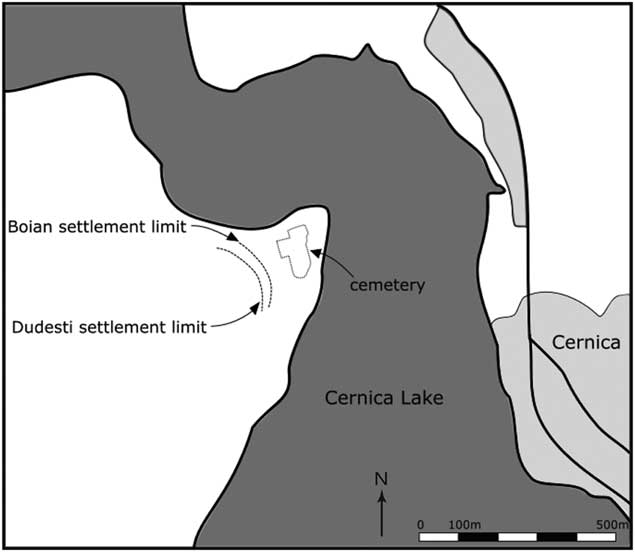
The cemetery at Cernica, 10 km southeast of Bucharest, was found during the excavation of a medieval monastery located on the shores of Lake Cernica (Comşa and Cantacuzino Reference Comşa and Cantacuzino2001; Kogălniceanu Reference Kogălniceanu2009). The lake was formed by the damming of the River Colentina in the 1960s and the cemetery is located on a former terrace of the Colentina, which now forms a projection into the lake. Settlement remains were also discovered in the area (Figure 2). The settlement is located southwest of the cemetery, farther inland. It was not investigated completely and its actual limits are not known as a forest prevented the excavation much farther to the southwest. Test pits were placed in the area of the forest and the results indicated that the settlement extended in a southwesterly direction. The research carried out in the settlement between 1961 and 1967 led to the identification of several layers, culturally attributed to the Dudeşti culture (last phase–Cernica) and Boian culture (first phase–Bolintineanu). Sporadic discoveries indicated also the presence of the second phase of the Boian culture (Goloviţa). A report up to 1968 indicated the discovery of 102 pits, of which 34 were attributed to the Dudeşti culture, 65 to the Boian culture–Bolintineanu phase and only three to the Boian culture–Goloviţa phase. Some of the pits were reported as having been used as habitation structures, but no further details are available at present (Cantacuzino and Morintz Reference Cantacuzino and Morintz1968:9–10).
Location of excavation area on Cernica Lake (adapted after Cantacuzino and Morintz Reference Cantacuzino and Morintz1968: Figure 1).

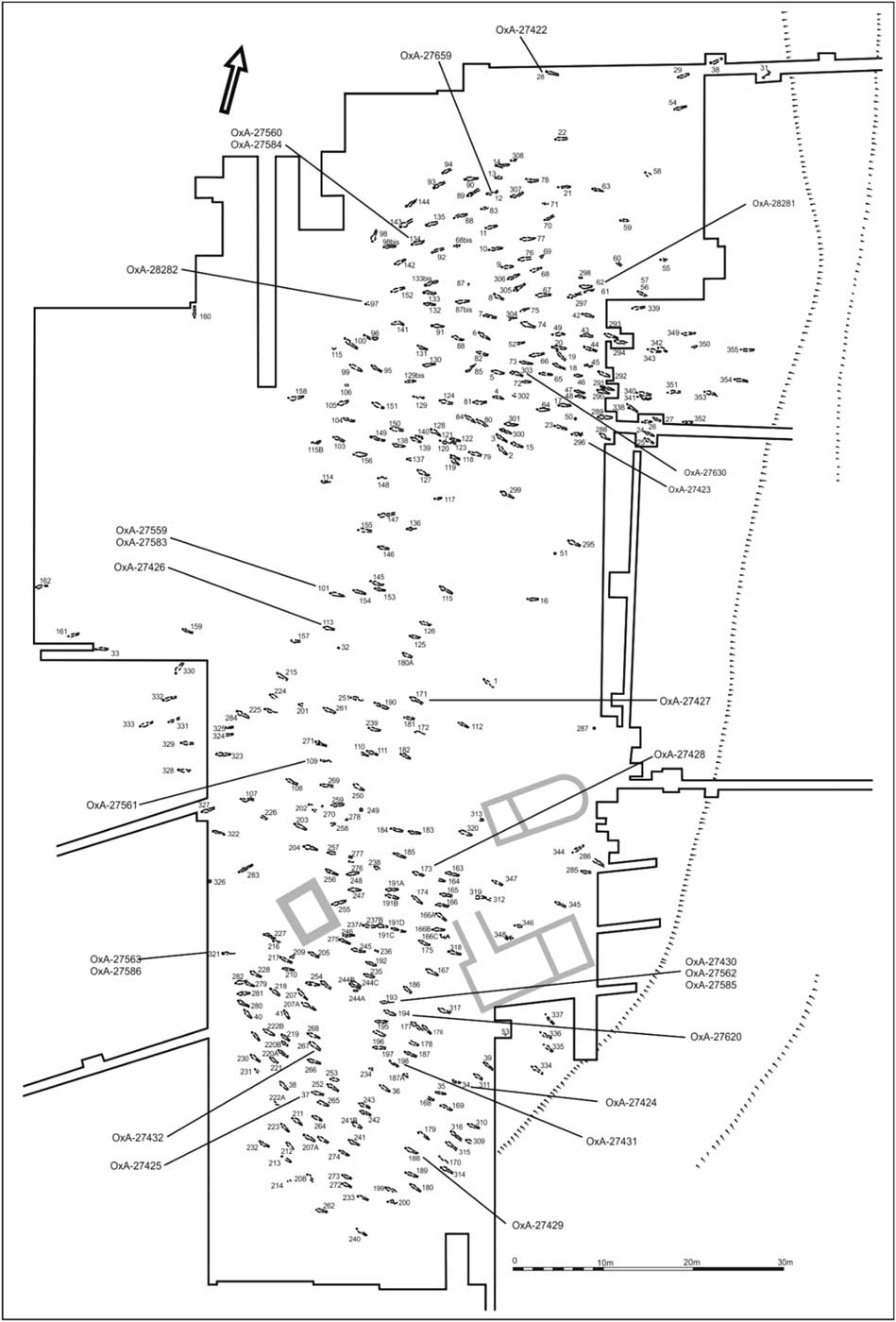
The cemetery and settlement were excavated by Gheorghe Cantacuzino and Sebastian Morintz from 1961 to 1974, uncovering a minimum of 378Footnote 1 burials from an area of roughly 4550 m2. The cemetery is formed of two main groups or clusters, north (with 174 burials) and south (204 burials), with some outliers to the east and west and in the centre, which could possibly be considered a separate group (Figure 3) (Ursulescu and Kogălniceanu Reference Ursulescu and Kogălniceanu2007). However, it seems more likely that these central burials are outliers from the northern and southern nuclei. There is nothing to indicate any specific practice relating exclusively to either nucleus, nor to tell us whether they were in use at the same time. Inconsistencies in the site records have been noted (Kogălniceanu Reference Kogălniceanu2009). The whereabouts of some of the grave goods from the cemetery have been elusive until recently, making sampling for dating of bone or antler artefacts from the graves impossible. However, recent archive work has been successful in relocating part of the assemblage, which has now been published (Ciocănel [Vintilă] Reference Ciocănel (Vintilă)2015; Mărgărit and Vintilă Reference Mărgărit and Vintilă2015).
Plan of Cernica cemetery, with sampled burials marked (redrawn after Comşa and Cantacuzino Reference Comşa and Cantacuzino2001:Plate 37).

The lack of ceramic finds (only five graves contained any pottery) makes the usual culture-historical assignations difficult. The cemetery appears to belong to the Late Neolithic Boian culture (Cantacuzino and Morintz Reference Cantacuzino and Morintz1963; Comşa Reference Comşa1975), though this has been disputed and an earlier date, prior to the start of the Boian culture, was proposed (Comşa Reference Comşa1992; Comşa and Cantacuzino Reference Comşa and Cantacuzino2001; Şerbănescu Reference Şerbănescu2015).
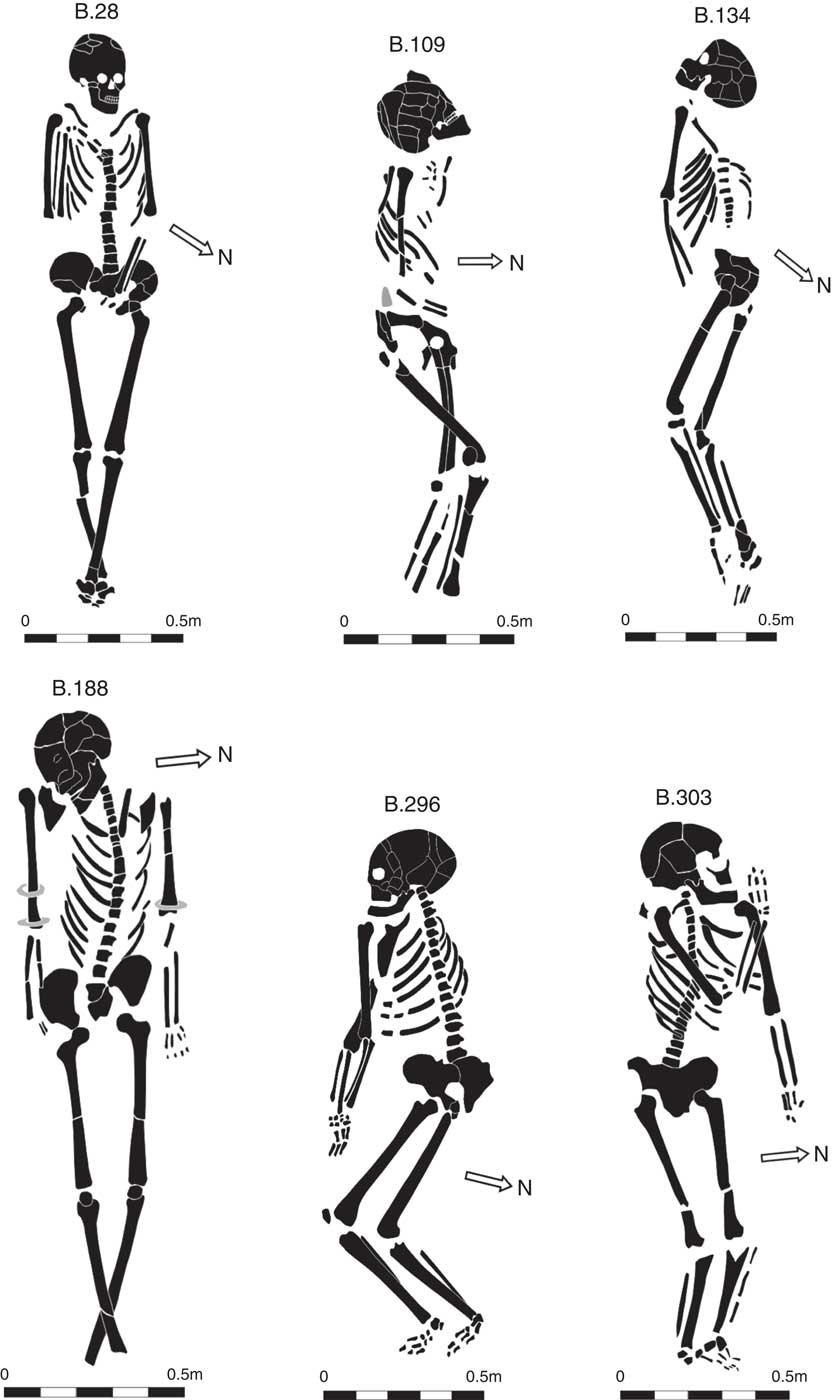
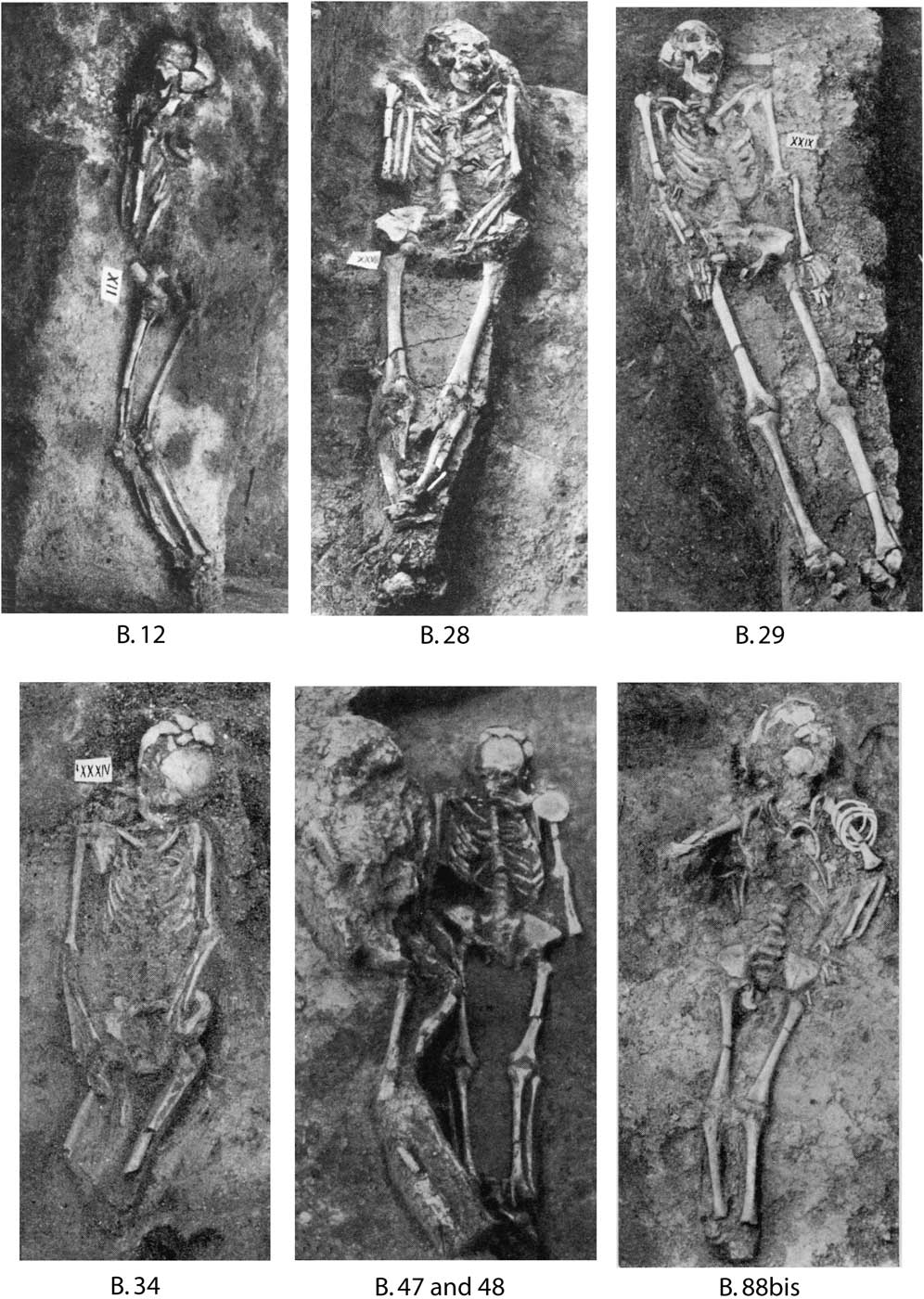
Very few stratigraphic relationships are present on the site. The suggestion (Comşa and Cantacuzino Reference Comşa and Cantacuzino2001) that the extended burials as a group could pre-date the flexed/crouched ones (Figure 4) was based on a few examples (Burials 47 and 48 [Figure 5]; Burials 139 and 140; Burials 153 and 145; Burials 191C and 191D) where an extended burial was cut or overlain by an individual in a flexed position (Comşa and Cantacuzino Reference Comşa and Cantacuzino2001). However, the documentary evidence indicates that in the case of Burials 139 and 140, the supine extended skeleton may have overlain the flexed one (Kogălniceanu Reference Kogălniceanu2009). There is currently no clear evidence to suggest that these two types of burial could not have been in use contemporaneously. Flexed/crouched burials number only 20 out of the total of 378, although the majority of these (15) would probably more accurately be described as flexed as the lower limbs at the knees are bent but not drawn up toward the chest. Some of these burials could also be described as extended supine with slightly flexed lower limbs. Their distribution across the site is even, and as such does not appear to represent a specific developmental phase. The orientation of both extended supine and left- and right-flexed burials from Cernica is mainly west–east.
Burials 28, 109, 134, 188, 296, and 303 at Cernica (redrawn after Comşa and Cantacuzino Reference Comşa and Cantacuzino2001:Plates III, XI, XIV, XIX, XXX, and XXXI).

Burials 12, 28, 29, 34, 47, 48, and 88bis at Cernica (after Ciocănel [Vintilă] Reference Ciocănel (Vintilă)2015).

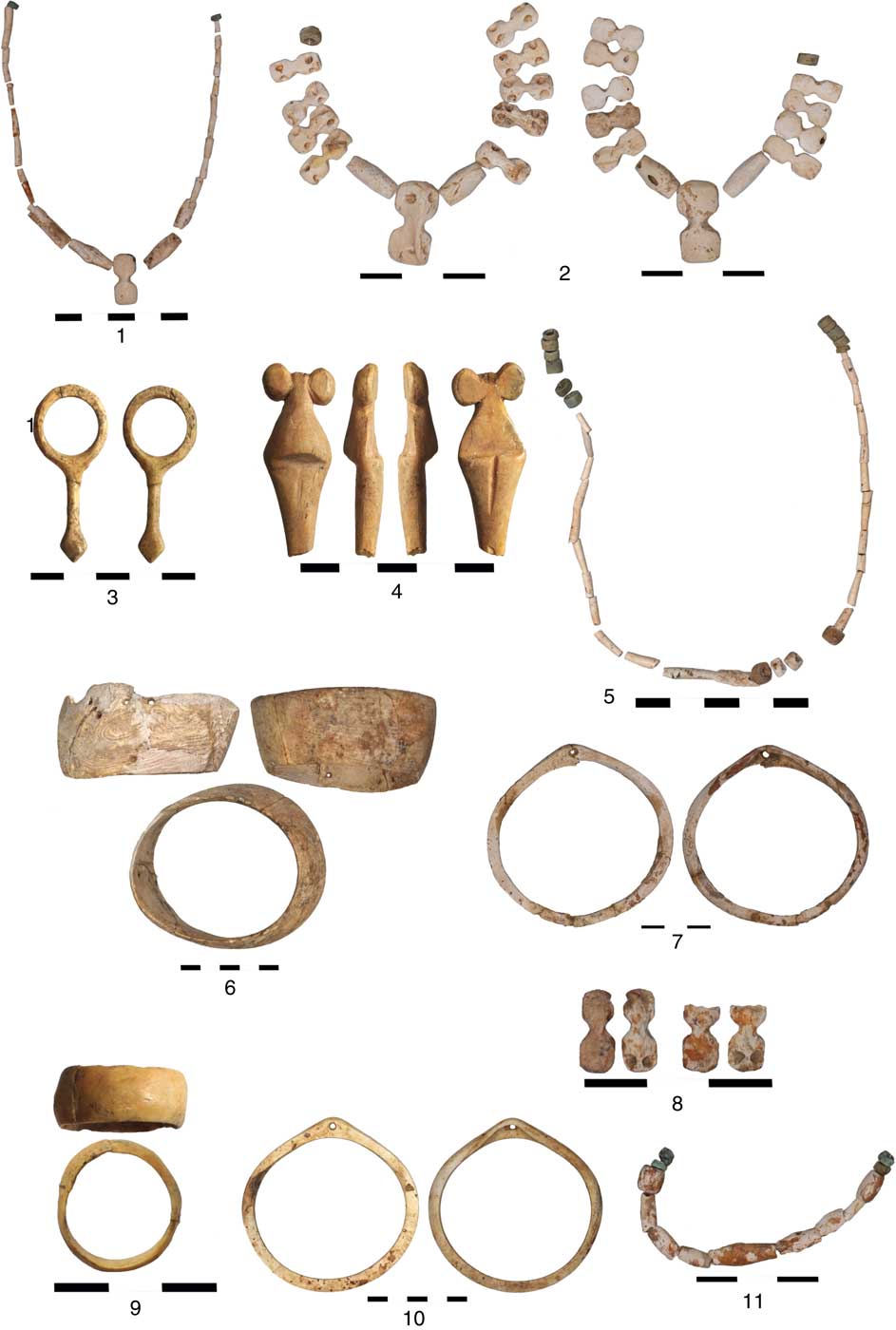
In some of the burials at Cernica, perforated red deer canines were found as ornaments, a practice considered to be part of older Palaeolithic and Mesolithic traditions (Borić Reference Borić2015). Burials 28, 34, 171, and 173, dated in this project (see below), all had red deer canines in the skull area, possibly from strings of beads. These were usually found along with other beads of Dentalium, Spondylus (Figure 6), malachite, or copper. Shell beads in bi-lobed or tri-lobed form (found in our dated Burials 34, 188, 194, and 292: Figure 5), along with the bone idol-pendant from our dated Burial 37 (Figure 6:3), have been considered typical of the Boian culture. A Spondylus armband was found in Burial 141 (Figure 6:6) (failed sample in this project) and Glycymeris armbands were in the dated Burials 188 and 267 (Figure 6:7, 6:9–10; see also Figures 4 and 5). While the small flint pieces (microliths) identified in some of the graves from the cemetery (in the undated Burials 84, 97, 156, 227, and 241A) are thought to be Dudeşti material culture (which precedes Boian), other artefacts are typical Boian (those already mentioned above, or the Spondylus valve placed on the pubis from the undated Burials 43, 266, and 314). Unfortunately, at this point, there is still very little known about the material culture of the Dudeşti taxonomic unit. Copper or malachite green beads found in our dated Burial 267 (Figure 6:11) and Burial 29 (failed sample) may represent some of the earliest uses of copper in Europe (cf. Borić Reference Borić2009; Rosenstock et al. Reference Rosenstock, Scharl and Schier2016).
Objects of personal adornment and grave offerings found in some of the dated burials from Cernica. 1: Burial 29, Spondylus beads; 2: Burial 34, Spondylus beads/pendants; 3: Burial 37, bone pendant; 4–5: Burial 101, bone figurine and a necklace of Dentalium and disk-shaped stone beads; 6: Burial 141, Spondylus armband; 7–8: Burial 188, Glycymeris armband and pendants; 9–11: Burial 267, Glycymeris armband, pendant and barrel-shaped beads.

Finds from the settlement indicate the presence of both Boian and late Dudeşti material. A single burial was found in the settlement, possibly dating to the Dudeşti culture (Schuster et al. Reference Schuster, Kogălniceanu and Morintz2008). However, the supine extended burial in question, Burial 356, has no stratigraphic information and had no grave goods (Comşa and Cantacuzino Reference Comşa and Cantacuzino2001). The bone was poorly preserved, no anthropological assessment has been made (Kogălniceanu Reference Kogălniceanu2009), nor was the material available for dating.
MATERIALS AND METHODS
Sample Selection
Samples for radiocarbon (14C) dating were chosen to try to represent the full spatial extent of the cemetery from both the northern and southern areas, burials of different positions, ages, sexes and types of grave goods. Although the excavation uncovered a number of inter-cutting burials, the relevant burials were not present in the archive and could not be sampled. The human skeletal remains appeared in generally good condition. However, some past conservation techniques included the use of burning celluloid around broken bones to fix breaks. When possible, samples were from elements that had not been subject to these techniques, or as far from the area of burning as possible. Some samples of mandible, maxillae and teeth had been glued, and again sampling avoided these conserved areas.
We identified animal bone from the settlement both to explore the potential for a 14C reservoir in human samples (e.g. Cook et al. Reference Cook, Bonsall, Hedges, McSweeney, Boroneanţ and Pettitt2001, Reference Cook, Bonsall, Pickard, McSweeney, Bartosiewicz and Boroneanţ2009), and whether the cemetery and settlement phases were contemporary. The archive contained very limited faunal material from the settlement, and three samples were identified from a Dudeşti period pit [10], and one from a Boian period feature [102].
Radiocarbon Measurement
14C measurements for this phase of work were made at the Oxford Radiocarbon Accelerator Unit (ORAU) using pretreatment, graphitization, and measurement by accelerator mass spectrometry (AMS) as outlined by Bronk Ramsey et al. (Reference Bronk Ramsey, Higham, Owen, Pike and Hedges2002, Reference Bronk Ramsey, Higham, Bowles and Hedges2004a, Reference Bronk Ramsey, Higham and Leach2004b).
Stable Isotope Considerations and Dietary Reconstruction for Potential Freshwater Offsets
Stable carbon and nitrogen measurements were produced by isotope-ratio mass spectrometry at the ORAU (Bronk Ramsey et al. Reference Bronk Ramsey, Higham, Owen, Pike and Hedges2002, Reference Bronk Ramsey, Higham, Bowles and Hedges2004a, Reference Bronk Ramsey, Higham and Leach2004b). Sulphur isotope measurement was conducted at the Department of Anthropology, University of British Columbia, on excess collagen produced at ORAU according to methods outlined by Nehlich et al. (Reference Nehlich, Borić, Stefanović and Richards2010). Work along the Danube has highlighted the importance of aquatic resources to Mesolithic and Neolithic populations (Bonsall et al. Reference Bonsall, Rosemary, McSweeney, Carolina, Douglass, Boroneanţ, Bartosiewicz, Robert and Chapman1997; Cook et al. Reference Cook, Bonsall, Hedges, McSweeney, Boroneanţ and Pettitt2001, Reference Cook, Bonsall, Hedges, McSweeney, Boroneanţ, Bartosiewicz and Pettitt2002, Reference Cook, Bonsall, Pickard, McSweeney, Bartosiewicz and Boroneanţ2009; Borić et al. Reference Borić, Grupe, Peters and Mikić2004; Borić and Miracle Reference Borić and Miracle2004; Nehlich et al. Reference Nehlich, Borić, Stefanović and Richards2010), while for the Copper Age cemetery at Varna, a low marine contribution in the diets of some individuals has been suggested (Higham et al. Reference Higham, Chapman, Slavchev, Gaydarska, Honch, Yordanov and Dimitrova2007:643; Higham et al. Reference Higham, Slavchev, Gaydarska and Chapman2018). Hence in this regional context it remains important to ascertain the presence or absence of aquatic reservoirs that may affect 14C dates. We therefore approached dietary reconstruction using two approaches of Bayesian modeling. The first applied a FRUITS Bayesian modeling approach to carbon and nitrogen stable isotopes only (Fernandes et al. Reference Fernandes, Millard, Brabec, Nadeau and Grootes2014). The second estimated the proportion of freshwater fish contributions from stable carbon, nitrogen and sulphur isotopes using FRUITS Bayesian modeling (further details are available in the online supplementary materials). We conclude that the existence of a freshwater reservoir effect at Cernica is unlikely and no correction of the obtained 14C measurements is required. However, because of the limited data for a freshwater reservoir effect in the Cernica Neolithic samples, our estimates for the chronology of the cemetery will necessarily remain somewhat provisional, and establishing a better dietary baseline must be a priority for future research in the region.
Dietary Offsets for Radiocarbon Dating
Quantification of marine or freshwater reservoir effects can be challenging (Hedges Reference Hedges2004). While extensive work has examined and mapped the variation in marine 14C reservoirs (cf. Reimer et al. Reference Reimer, Bard, Bayliss, Beck, Blackwell, Bronk Ramsey, Grootes, Guilderson, Haflidason, Hajdas, Hatté, Heaton, Hoffmann, Hogg, Hughen, Kaiser, Kromer, Manning, Niu, Reimer, Richards, Scott, Southon, Staff, Turney and van der Plicht2013; Sayle et al. Reference Sayle, Cook, Ascough, Gestsdóttir, Hamilton and McGovern2014, Reference Sayle, Hamilton, Gestsdóttir and Cook2016), freshwater reservoirs are more complicated. Approaches to identify diet-induced 14C offsets have included the dating of pairs of well-associated terrestrial animal bone and human bone (i.e. “perfect pairs”) to calculate the aquatic reservoir (see Bonsall et al. Reference Bonsall, Vasić, Boroneanț, Roksandic, Soficaru, McSweeney, Evatt, Aguraiuja, Pickard, Dimitrijević, Higham, Hamilton and Cook2015 for summary). This work has demonstrated variability in the actual 14C reservoir effect between and even within species from single bodies of freshwater (Keaveney and Reimer Reference Keaveney and Reimer2012; Keaveney et al. Reference Keaveney, Reimer and Foy2015).
For Cernica, no pairs of faunal material and human skeletal remains from sealed contexts were available. We have therefore presented the modeled results firstly without a freshwater reservoir correction as our preferred model based on our interpretation of the FRUITS results described above and in the online supplementary materials. In order to examine what effect a possible freshwater dietary offset would have on our dating results, we also present alternative modeling results on the basis of a dietary mixing model, applying an aquatic reservoir estimate (545 ± 70 14C yr) calculated for the Danube Gorges region by Bonsall et al. (Reference Bonsall, Vasić, Boroneanț, Roksandic, Soficaru, McSweeney, Evatt, Aguraiuja, Pickard, Dimitrijević, Higham, Hamilton and Cook2015:35) in IntCal13 with the offset proportional to the contribution of freshwater fish as indicated by the FRUITS results based on carbon and nitrogen values alone (model 1). We also have considered that the Danube Gorges reservoir may represent an overestimate of the potential aquatic reservoir effect at Cernica. The underlying geology of the Danube Gorges region is complex and in places is dominated by Cretaceous and Jurassic limestones as well as metamorphic and igneous rocks and flysch of different geological ages while loess of Pleistocene age covers the entire Romanian Plain (southern Romania) with a significant proportion of carbonates (Borić and Price Reference Borić and Price2013:Figure 1 and references therein). In addition, the Danube is a larger water body than the Colentina river system on which Cernica is located. The proportion of dissolved carbonates is therefore likely to be greater in the Danube Gorges, and the freshwater reservoir effect would consequently be greater.
Calibration of 14C dates
Results of the dating are first presented as conventional 14C ages (Stuiver and Polach Reference Stuiver and Polach1977) and are calibrated using OxCal v4.2 (Bronk Ramsey Reference Bronk Ramsey2009a). Calibrated 14C date ranges quoted in Table 1 are calculated using the intercept method (Stuiver and Reimer Reference Stuiver and Reimer1986).
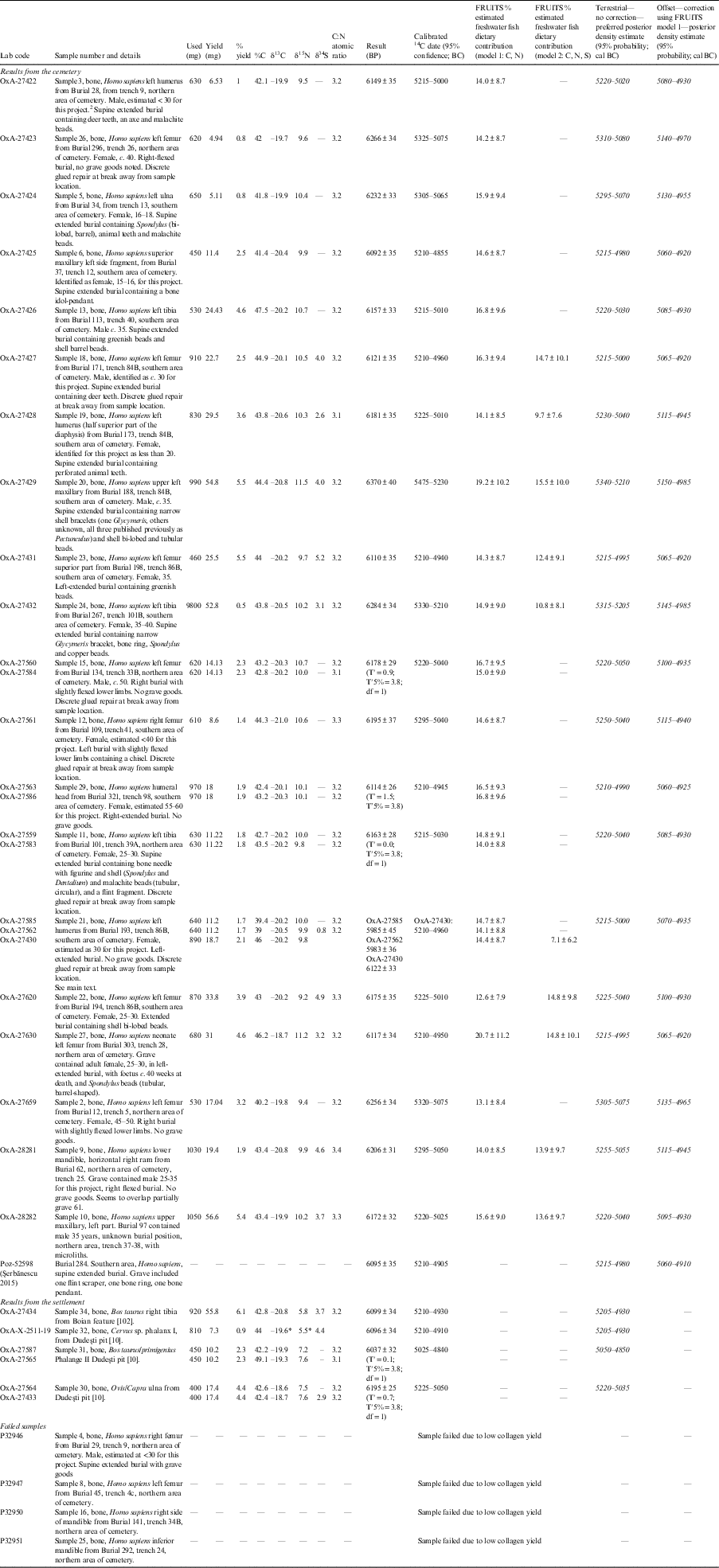
Dated samples from Cernica. The δ13C and δ15N values were measured at ORAU, the δ34S were measured using the protocol of Nehlich et al. (Reference Nehlich, Borić, Stefanović and Richards2010); see online supplement for more information. The Poznań measurement had an average freshwater dietary offset (24±14) applied in subsequent modeling.

The effect of possible dietary offsets on the dating results have then been calibrated using the atmospheric IntCal13 (Reimer et al. Reference Reimer, Bard, Bayliss, Beck, Blackwell, Bronk Ramsey, Grootes, Guilderson, Haflidason, Hajdas, Hatté, Heaton, Hoffmann, Hogg, Hughen, Kaiser, Kromer, Manning, Niu, Reimer, Richards, Scott, Southon, Staff, Turney and van der Plicht2013), and with the reservoir calculated for the Danube Gorges (cf. Bonsall et al. Reference Bonsall, Vasić, Boroneanț, Roksandic, Soficaru, McSweeney, Evatt, Aguraiuja, Pickard, Dimitrijević, Higham, Hamilton and Cook2015; 545±70 14C yr) using a model reflecting the proportion of freshwater contributions shown in Table 1 and illustrated in Figures 7 and 8. A freshwater contribution (12.7±9) derived from the sulphur, carbon and nitrogen average contribution calculated in the dietary reconstruction modeling (see online supplementary materials) has been applied to the result (Poz-52598) for which no stable carbon or nitrogen isotope data are extant.
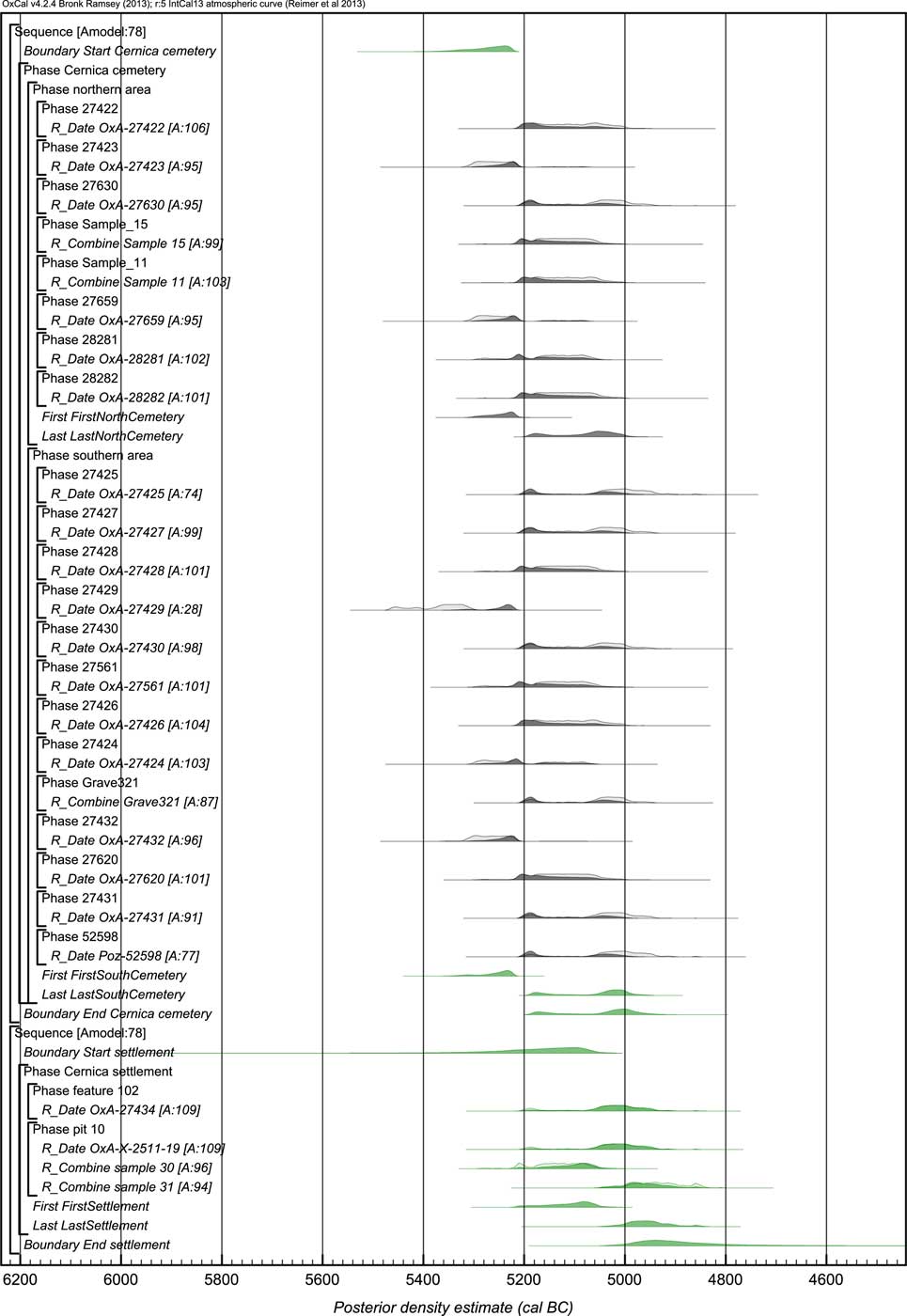
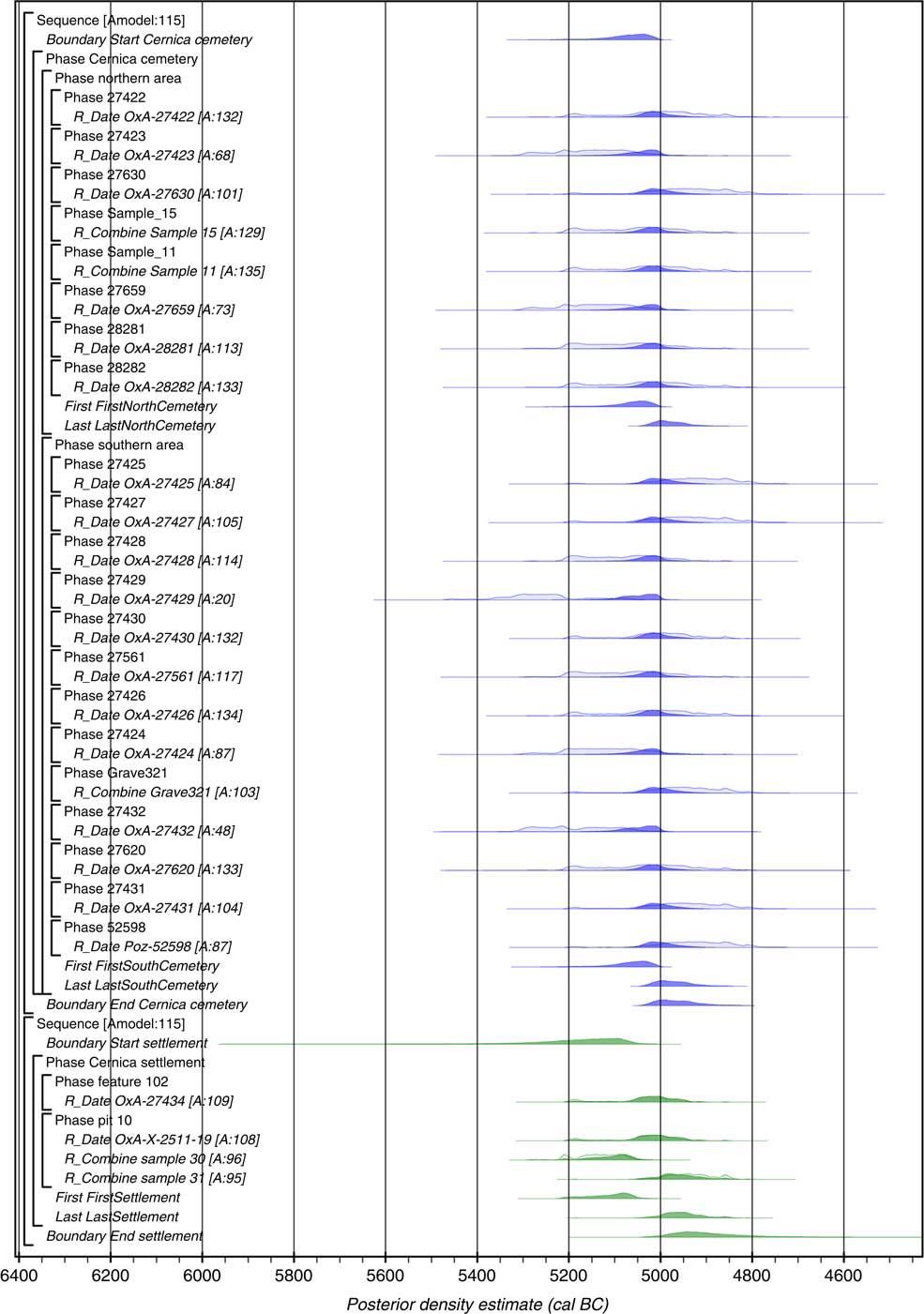
14C results from Cernica cemetery and settlement. These results have not been corrected for a diet-derived freshwater offset. For each 14C result two distributions are plotted. In outline are the calibrated 14C results; the green distributions are posterior density estimates, the outputs from the model using the terrestrial calibration curve. The OxCal CQL2 keywords and brackets define the model.

14C results from Cernica cemetery and settlement. These results have been corrected for a diet-derived freshwater offset as described in the text. For each 14C result two distributions are plotted. The distributions in green have been calculated using the IntCal13 terrestrial curve; the distributions in blue have been calculated using a mix of calibration curves reflecting the estimated freshwater resource consumption and a local offset as described in the text. The OxCal CQL2 keywords and brackets define the model.

Bayesian Chronological Modeling
A Bayesian analysis (Buck et al. Reference Buck, Cavanagh and Litton1996; Bronk Ramsey Reference Bronk Ramsey2009a) has been applied to the results from Cernica using OxCal v4.2. The algorithms applied can be derived from the brackets and OxCal Command Query Language 2 (CQL2) keywords. The outputs from this analysis are quoted in italics. A model for the uncorrected results is shown in Figure 7. This is our preferred model and ranges from it are quoted in the text. The same model corrected for the freshwater, diet-derived offset described above is shown in Figure 8. Differences in the two model outputs are shown in Tables 1 and 2.

RESULTS
There are 31 14C results from the Cernica cemetery and the associated settlement (Table 1). These were produced on samples from 21 individuals from the cemetery (25 dates), and 4 faunal samples (6 dates) from 2 features (pit [10] and feature [102]) from the settlement. As noted above, we have very limited “informative” prior information (Bayliss et al. Reference Bayliss, Bronk Ramsey, van der Plicht and Whittle2007) with which to constrain our data.
Three results (OxA-27585; -27562; -27430) on sample 21 are statistically inconsistent (T’=10.2; T’5%=6.0; df=2; Ward and Wilson Reference Ward and Wilson1978; cf. Bronk Ramsey Reference Bronk Ramsey2009b). OxA-27585 had a low target current and an offset in the δ13C values on the mass spectrometer and AMS. The low target current means that the standard error term is higher than usual, and the determination should be treated with caution. The autoduplicateFootnote 3 OxA-27562 had a noticeably low %C value on combustion. This is unusually low for collagen samples and may indicate a possible problem with the sample preparation for this AMS date. These results have not been included in the analysis (Figure 7), with only OxA-27430 included in the model. OxA-27630 was obtained on the remains of a neonate in Burial 303. The δ15N of 11.2‰ is slightly elevated but not by much compared to other burials in the series and hence probably does not reflect a nursing signal.
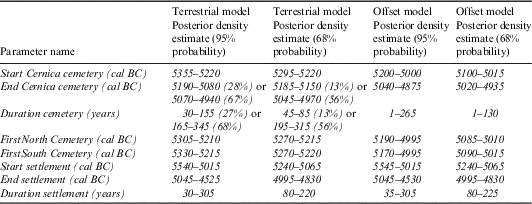
Key posterior density estimates are given in Table 2 providing the comparison between the terrestrial (no correction applied) and offset models (correction applied based on FRUITS results) (see online supplementary materials). According to the preferred terrestrial model, use of the cemetery began in 5355–5220 cal BC (95% probability; Terrestrial Start Cernica cemetery; Figure 7), probably in 5295–5220 cal BC (68% probability). It appears that both areas of the cemetery were in use at the same time, with the north area first used in 5305–5210 cal BC (95% probability; Terrestrial FirstNorthCemetery; Figure 7), probably in 5270–5215 cal BC (68% probability). The south cemetery was first in use in 5330–5215 cal BC (95% probability; Terrestrial FirstSouthCemetery; Figure 7), probably in 5270–5220 cal BC (68% probability). Use of the cemetery ceased in 5190–5080 cal BC (28% probability) or 5070–4940 (67% probability; Terrestrial End Cernica cemetery; Figure 7), probably in 5185–5150 cal BC (13% probability) or 5045–4970 (56% probability).
If the freshwater reservoir offset is applied, the cemetery began in 5200–5000 cal BC (95% probability; Offset Start Cernica cemetery; Figure 8), probably in 5100–5015 cal BC (68% probability). It appears that both areas of the cemetery were in use at the same time, with the north area first used in 5190–4995 cal BC (95% probability; Offset FirstNorthCemetery; Figure 8), probably in 5085–5010 cal BC (68% probability). The south cemetery was first in use in 5190–4995 cal BC (95% probability; Offset FirstSouthCemetery; Figure 8), probably in 5085–5010 cal BC (68% probability). Use of the cemetery ceased in 5040–4875 cal BC (95% probability; Offset End Cernica cemetery; Figure 8), probably in 5020–4935 cal BC (68% probability).
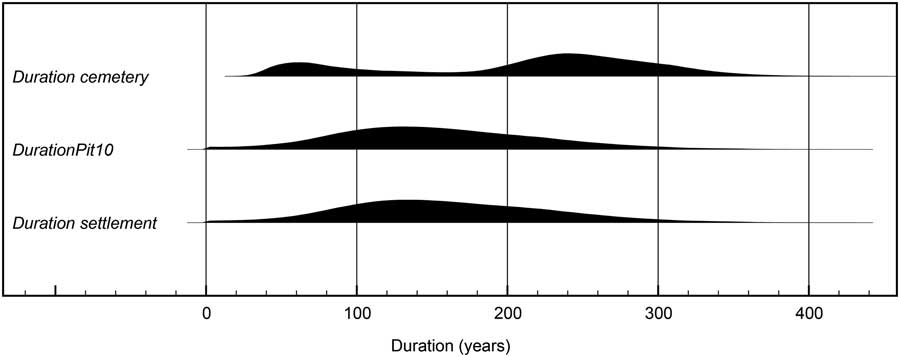
The estimates here suggest that the cemetery was in use, according to the terrestrial model, for 30–155 years (27% probability) or 165–345 (68% probability; Terrestrial Duration Cernica cemetery; Figure 9), probably for 45–85 years (13% probability), or, according to the offset model for 1–265 years (95% probability; Offset Duration Cernica cemetery; Figure 9), probably for 1–130 years (68% probability).
Posterior density estimates for the duration of different aspects of Cernica. The parent phases are respectively Cernica cemetery, pit 10, and settlement defined in the model in Figure 7.

From a Boian feature [102] from the settlement, a cow bone was dated, while three bones—from a deer, cow, and sheep—were dated from Dudeşti pit [10]. The results from the Dudeşti pit (OxA-X-2511; OxA-27433; OxA-27564; OxA-27565; OxA-27587) are not statistically consistent (T’=17.7; T’5%=9.5; df=4), with the results on sample 30, a sheep/goat ulna (OxA-27564 and OxA-27433), probably older than the other results from the feature. The faunal samples from the settlement were all articulating or paired with other material from the same animal, and the inconsistency of the results from this feature is therefore difficult to explain. An interpretation is that the earliest results on sample 30 represent residual material, which along with other articulating elements from this individual, were redeposited in a feature during later activity.
The results from these features give some idea of the settlement activity, and we estimate that according to both terrestrial and offset models the settlement started in 5540–5015 cal BC (95% probability; Start settlement; Figure 7), probably in 5240–5065 cal BC (68% probability), and ended in 5045–4525 cal BC (95% probability; End settlement; Figure 7), probably in 4995–4830 cal BC (68% probability). The very limited sample size from the settlement means that these estimates might well not be representative of the full duration of activity. The currently available evidence is estimated to have occurred over a duration of 30–305 years (95% probability; Duration settlement; Figure 9), probably over 80–225 years (68% probability).
Interestingly the results from the Dudeşti period pit (OxA-X-2511; OxA-27565; OxA-27587) and the result from the Boian period feature (OxA-27434) are statistically consistent (T’=2.4; T’5%=7.8; df=3) and could be of the same actual age. However, as we were only able to make one measurement on a Boian feature, we should be cautious about how representative this single measurement is of Boian period occupation.
From the available sample and according to both models, the start of activity associated with the settlement (Terrestrial Start settlement; Figure 7) overlaps with the current estimate for the start of use of the cemetery (Terrestrial Start cemetery; Figure 7).
Further work is required to explore the appropriateness of the Danube Gorges reservoir for the Cernica population. We think that given the similarity of the results on terrestrial herbivores, our model of the cemetery is unlikely to provide erroneously old estimates for burial. Also, there remains the potential that in the offset model we have applied too great a reservoir and that the cemetery might actually have been founded somewhat earlier—potentially more in keeping with the available dates for the settlement. For this reason, our preferred model is terrestrial with no reservoir offset applied. However, it is important to note that the difference in posterior density estimates between the two models does not greatly affect our overall conclusions.
DISCUSSION
Chronological Implications for the Regional Context of the Lower Danube Basin
Considering that the estimates for the start of the cemetery and settlement overlap and that the dated settlement features are dominantly assigned to the Dudeşti-Cernica phase based on the presence of typical pottery, we suggest that the cemetery, where diagnostic and sensitive chronological markers for a precise chronological attribution on the basis of material culture alone are often absent, started during this late Dudeşti phase and possibly continued into the early phase of the Boian culture, known as the Boian-Bolintineanu phase.
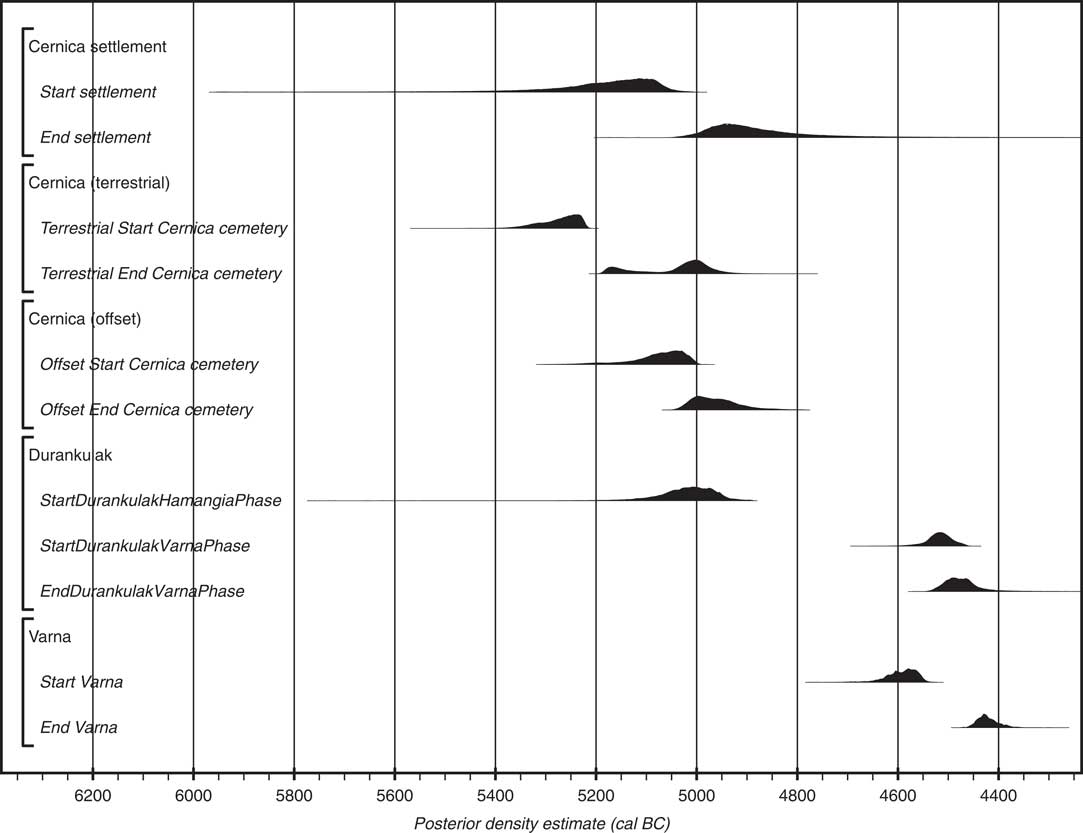
Previously, two other broadly contemporaneous cemetery sites from the Lower Danube area have been 14C dated: Durankulak (Honch et al. Reference Honch, Higham, Chapman, Gaydarska, Todorova, Slavchev and Dimitrova2013) and Varna I (Higham et al. Reference Higham, Chapman, Slavchev, Gaydarska, Honch, Yordanov and Dimitrova2007), both on the Black Sea coast. The dates for these cemeteries place them in the region’s Late Neolithic and Early Copper Age, with Durankulak having two cultural phases: the Hamangia phase (contemporaneous with the Boian), and the Varna phase (a regional variant of the Gumelnitsa culture that takes its name from the Varna I cemetery type site). The results from Durankulak and Varna are shown together with our two models for Cernica in Figure 10.

When the posteriors for the estimate for the start of activity associated with the Cernica cemetery and the estimate for the start of activity associated with the Hamangia phase of cemetery activity from Durankulak are compared, the start of activity at Durankulak occurred after the start of activity at the Cernica cemetery. The Durankulak Hamangia phase most probably began in the second half of the 51st century cal BC or the first half of the 50th century cal BC (68% probability), while the Cernica cemetery most probably was first used from the second half of the 54th or in the 53rd century cal BC (68% probability). Use of the Cernica cemetery, however, probably ceased (Terrestrial End_cemetery) before the end of the Hamangia phase and the start of the Varna phase at Durankulak (StartDurankulakVarnaPhase; Figure 10).
Other Regional Traditions in Burial Rites?
At Cernica, we have dated both the dominant extended supine inhumations (11 burials) as well as a range of variations of burials placed on either lateral right or left sides (9 burials). The chronological estimates for either of these two groupings are statistically indistinguishable and, for the moment, it is not possible to confirm earlier assumptions about the chronological distinction between these different body positions. In the latter group there are variations in the degree of flexion of lower limbs from those that are placed on either of the lateral sides as extended with no flexing (four dated burials), where only lower limbs were slightly flexed at the knees to those where femurs were flexed at the pelvis and legs at the knees. Hence different from many other burials in Neolithic southeast Europe, Cernica shows a strong tendency for extended burial position as the dominant norm even though some variations regarding the degree of flexion and preference for either lateral right or left sides can also be noted.
Two different burial traditions can be identified in the Late Neolithic of Muntenia, northeast Bulgaria and Dobrudza, not necessarily following the borders of the culture groups traditionally defined on the basis of pottery styles. The first is characterised by flexed inhumations, the majority of which were found placed on their left sides, and oriented east–west. The second tradition is typified by extended supine inhumations with the dominant orientation west–east (as at Cernica) or north–south (as in the majority of burials at the Hamangia culture cemetery of Durankulak). These elements, along with the presence of particular types of offerings or decorative items (such as red deer canines) in burials at Durankulak and Cernica, may suggest that regardless of the adoption of most of the common Neolithic materialities and practices (pottery, subsistence based on cultivation and domestic stock, and similar), there were areas in this part of the Balkans that might have adhered to much older Mesolithic rites, which included the use of perforated red deer canines as ornaments, the association of antler axes with male burials, and the placement of (wild) animal skulls to accompany the deceased (for a similar argument, see Todorova Reference Todorova2002:46–7).
Moreover, it has been noted that some of these new culture groups in the Dobrudza, Muntenia and the Black Sea coastal regions are the first Neolithic communities of their areas. The map (Figure 11) shows there are no overlaps between the distribution of extended supine burials during this later period and the presence of Early Neolithic communities in the region (cf. Lichter Reference Lichter2001:151–3). While the most recent research might have altered this pattern somewhat with the discovery of Early Neolithic sites around the area where Cernica is located, it still remains relevant for the region of Dobrudza. The only Mesolithic burials in the wider region of the eastern Balkans that were placed in extended supine positions, seen as a dominant Mesolithic burial rite for the whole of Europe (cf. Grünberg Reference Grünberg2000), were in the Danube Gorges (e.g. Borić Reference Borić2011, Reference Borić2016). In addition, the flint inventories of Dudeşti, early Boian, early Hamangia and Usoe cultures may also suggest certain Mesolithic traits (Gatsov Reference Gatsov1982; Păunescu Reference Păunescu1988). While these instances suggest a degree of hybrid cultural identities created in the course of the Middle–Late Neolithic in this region, they possibly also suggest strong differences reflected in the belief systems of particular communities that might have had different origin myths: one aligning itself with Neolithic descent from the east and the other with Mesolithic descent from the north and west (Borić Reference Borić2015).
Map showing areas with Neolithic and Copper Age cemeteries containing extended supine burials as possible indications of Mesolithic mortuary rites in Muntenia, northeast Bulgaria and Dobrudza; shaded areas indicate zones of primary Neolithization in these regions (adapted after Lichter Reference Lichter2001:Figure 71).

And yet, there remains the enigma regarding the invisibility of such “Mesolithic” traits in the archaeological record of this particular micro-region prior to the appearance of Cernica. While skeletal remains may not be in a sufficient state of preservation for an informative analysis of the characteristics of the population at Cernica solely based on osteological parameters, future aDNA analyses on this material could possibly provide indications about the genetic ancestry of the population that composes the cemetery, whether derived from hunter-gatherer or farming populations, or a mixture of the two. Recent aDNA work in reconstructing the genomic history of southeast Europe indicates that some degree of mixing between local forager population and farmers originating in northwest Anatolia took place precisely along the Danube River Valley. Many newly arrived Neolithic populations in the Balkans seem to have remained genetically separate from indigenous foragers for a long time (Mathieson et al. Reference Mathieson2018). However, the phenomenon of the “resurgence” of hunter-gatherer ancestry, which was previously reported in the Middle Neolithic of central Europe and Iberia (Brandt et al. Reference Brandt, Haak, Adler, Roth, Szécsényi-Nagy, Karimnia, Möller-Rieker, Meller, Ganslmeier, Friederich, Dresely, Nicklisch, Pickrell, Sirocko, Reich, Cooper and Alt2013; Haak et al. Reference Haak, Lazaridis, Patterson, Rohland, Mallick, Llamas, Brandt, Nordenfelt, Harney, Stewardson, Fu, Mittnik, Bánffy, Economou, Francken, Friederich, Pena, Hallgren, Khartanovich, Khokhlov, Kunst, Kuznetsov, Meller, Mochalov, Moiseyev, Nicklisch, Pichler, Risch, Guerra, Roth, Szécsényi-Nagy, Wahl, Meyer, Krause, Brown, Anthony, Cooper, Alt and Reich2015; Mathieson et al. Reference Mathieson2015), is now also reported for the Copper Age Balkans (Mathieson et al. Reference Mathieson2018). This could mean that more intensive mixing between forager and farmer populations occurred in various areas of Europe once indigenous foragers became fully “Neolithic”. However, we should not expect that knowing more about the genetic make-up of a population buried in this and other cemeteries will necessarily provide sufficient clues to the modalities and motivations of how particular cultural practices were being chosen, transformed and abandoned. Cultural traditions might have been adopted, modified or reinvented regardless of population continuities and discontinuities (cf. Wagner Reference Wagner1981).
Emerging Cemeteries and Social Relations
The emergence of the cemetery phenomenon, which this project has dated at Cernica to 5355–5215 cal BC (95% probability; Start cemetery; Figure 7) as one of the earliest securely dated examples, hints at new ways of thinking, not simply about the treatment of the dead, but also the role of the dead in society and the creation of community identity. While previously, in the Early and Middle Neolithic, the remains of the dead were found primarily within settlements, this new practice of establishing extramural cemeteries created a permanent, separate and visible place for the dead. Extramural cemeteries with rows of burials can be seen as a particular innovation in mortuary rites that seem to have emerged in the Lower Danube area most probably in the late 54th or 53rd century cal BC at Cernica and in the second half of the 51st century cal BC or the first half of the 50th century cal BC at Durankulak. This change in burial practice may also be representative of broader social and perhaps also demographic changes, in which the need for creating a permanent place for the dead can be linked to claims over land, establishment of place and/or creation of particular communities (e.g., Chapman Reference Chapman1996, Reference Chapman2000). In this context, such a build-up of long genealogies depended on “the proper combination of ancestral corpses and ancestral land” (Bloch and Perry Reference Bloch and Parry1982:7).
The settlement area at Cernica was not fully excavated, and for the moment we cannot make any reliable estimate about settlement size. The burials in the cemetery present a roughly even number of adult males and females with age ranges from infants to individuals of 60 years old. Such a distribution may be thought indicative of the inclusion of a whole population in cemetery burial. However, children are certainly under-represented at a time of presumably high child mortality (Kogălniceanu Reference Kogălniceanu2008). They at least are not all being buried in the cemetery area, and it is possible that for whatever reason certain adults were not, either. After all, for the preceding period the majority of the population are not visible at all in the archaeological record. It is difficult to make any statement therefore on whether the cemetery burials at Cernica are exclusively from the adjacent settlement, or whether most individuals from the settlement were buried there; we simply note the 378 burials, which at a rate of two or three burials a year might be a reasonable number for such a settlement size over the possible (though uncertain) period of use that is currently estimated at 30–155 years (27% probability) or 165–345 (68% probability) according to the terrestrial model.
Our results do not indicate any spatial pattern of chronological development of the cemetery. It seems that both the northern and southern areas of the cemetery were in use simultaneously, and if this is the case then we may see the two separate burial clusters as representing a social segmentation, which could be different families, clans or other groupings. If these burial nuclei represent some kind of kinship grouping, it is possible that the outliers from the main group, that is, those that lie between the two clusters and those to east and west, had different allegiances and affiliations (Ursulescu and Kogălniceanu Reference Ursulescu and Kogălniceanu2007).
So, what was the separation of the Cernica cemetery from the adjacent settlement all about for the collective that used it? Was it the first step in the process that John Chapman (Reference Chapman1996) identifies in later, Early Copper Age, practices, of establishing large extramural cemeteries? That was seen as a move motivated by the desires or needs of social actors to break away from rigid arrangements, as suggested by settlement layouts, by creating a novel arena of social power, with its own logic and space in which it was possible to express alternative discourses of power and self-expression. Or, alternatively, were the layout and rules in the mortuary domain closely following social arrangements in the place of the living? Can we see in these emerging burial grounds in the eastern Balkans a novel social space that can be equated with corporate lineages, with a cemetery serving a wider region and not only nearby contemporaneous settlements? Moreover, who composed this collective and what social dynamics contributed to the spread of the cemetery and the formation of distinct burial rows? Do burial rows signify ties based on kinship? Finally, what social structure held this collective together in the recurrent use of the same cemetery ground?
The current state of the evidence does not allow us to answer most of these questions with any degree of certainty. Some clarification could be achieved by future strontium isotope and aDNA analyses of the available skeletal evidence, better understanding of the social dynamics and the chronology of the adjacent settlement as well as by providing comparable datasets within the wider region. Similarly, more AMS dates for various burial groupings and rows within the cemetery would allow for a finer-tuned chronology of what Chapman (Reference Chapman2000) calls micro-traditions of mortuary rites.
On the face of the evidence, this cemetery primarily, if not exclusively, served the nearby settlement. The overall homogeneity of burial rites and the lack of status distinctions among the burials, apart from a few ornaments and some exotica, such as Spondylus, Glycymeris, Dentalium and copper or malachite would suggest elements of horizontal differentiation characteristic of a segmentary society with a largely egalitarian ethos. Funerals were, among other things, social and political events (Parker Pearson Reference Parker Pearson1999), but at Cernica, the key development appears to have been the formalization of a burial area, and it was inclusion in that, rather than differentiation within it, that seems to have mattered. Nor does differentiation appear to be seen in the settlements of the period. The appearance of the body in the grave could have said subtle things about the deceased individual’s personal identities through the inclusion of items which represented gender, age, descent group or social roles—the way personhood might have been constructed in this social and cultural milieu—but it seems that it was membership above all which was projected (Borić et al. Reference Borić, Harris, Miracle and Robb2013:53). On the other hand, in this particular instance, making a case for the argument that an alternative arena of social power was created away from the settlement would require a more competent understanding of the dynamics at the Cernica settlement itself and this can only be tested by future fieldwork.
ACKNOWLEDGMENTS
The dating reported here was made possible by NERC grant NF/2012/1/4, made to Alasdair Whittle on behalf of the Cardiff University PhD thesis of Susan Stratton (Reference Stratton2017) and in collaboration with Raluca Kogălniceanu, Seren Griffiths and Dušan Borić. We are grateful to the Oxford Radiocarbon Accelerator Unit for their help.
SUPPLEMENTARY MATERIAL
To view supplementary material for this article, please visit https://doi.org/10.1017/RDC.2018.34