Introduction
Cognition includes the ability to pay attention, remember, process information, solve problems, organize and reorganize information, communicate, and act upon information.Reference Medalia and Revheim 1 Test results of cognitive function in persons with schizophrenia are 1–2 standard deviations below the mean for healthy individuals as measured by standardized tests of cognition,Reference Green, Kern and Heaton 2 and cognitive functioning has been shown to predict whether persons with schizophrenia will meet functional goals.Reference Green 3 The cognitive symptoms most frequently cited as impacting functional outcome in schizophrenia include speed of processing, memory, attention, reasoning, and social cognition. Cognitive deficits of schizophrenia (CDS), also referred to as cognitive impairment in schizophrenia (CIS) and as cognitive symptoms, add significantly to illness burden, and at this time there are no FDA-approved medications for treating CDS. The results of work demonstrating that some agents added to ongoing antipsychotic pharmacotherapy improve cognition in schizophrenia offer new hope. Much of this work grew out of National Institute of Mental Health (NIMH)–sponsored meetings on the Measurement and Treatment Research to Improve Cognition in Schizophrenia (MATRICS). Early meetings led both to the development of the MATRICS Consensus Cognitive Battery (MCCB)Reference Marder and Fenton 4 and to the identification of promising neurochemical targets: D1-dopamine receptors in the prefrontal cortex (PFC), serotonin receptors in the PFC and anterior cingulate cortex, the glutamatergic excitatory synapse, nicotinic and muscarinic acetylcholine receptors, and the γ-aminobutyric acid (GABA) system.Reference Tamminga 5
Evidence supporting the efficacy of new agents for treating the cognitive deficits of schizophrenia (CDS)

A subsequent FDA-MATRICS consensus meeting identified 9 classes of agents showing particular promise: (1) D1-dopamine receptor agonists, (2) α-amino-3-hydroxy-5-methyl-4-isoxazolepropionate (AMPA) glutamatergic receptor agonists, (3) α2-adrenergic receptor agonists, (4) N-methyl-D-aspartate glutamatergic receptor (NMDAR) agonists, (5) metabotropic glutamate receptor agonists, (6) glycine reuptake inhibitors, (7) M1 muscarinic receptor agonists, (8) GABAA R subtype selective agonists, and (9) α-7 nicotinic agonists.Reference Marder 6
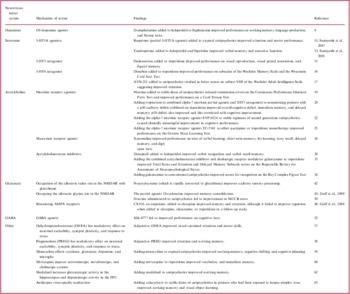
In this article, we will first discuss agents that have been found to improve CDS that can be categorized as affecting neurochemical systems originally identified by the MATRICS group. We will then discuss agents that improve cognition but where the mechanism of action is not readily ascribable to dopaminergic, serotoninergic, cholinergic, glutamatergic, or other mechanisms suggested by MATRICS (Table 1). In some instances, which we will indicate, agents presently categorized in the literature as affecting 1 system in fact have effects on more than 1 system, and this too will be discussed, since, in addition to compiling studies suggesting a role for agents in the pharmacotherapy of CDS, we wish to articulate in the text and illustrate in figures likely neurobiological mechanisms.
Pharmaceutical Agents
D1-dopamine agonists
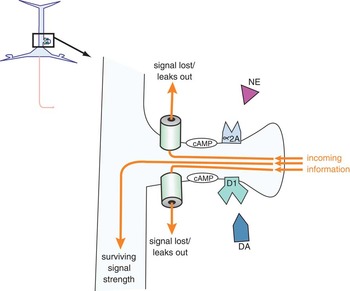
D1-dopamine receptors in the PFC (Figure 1) are known to play an important role in cognitive functioning in humans and in nonhuman primates, suggesting that D1 agonists might improve CDS.Reference Arnsten, Cai, Murphy and Goldman-Rakia 7 , Reference Goldman-Rakic, Muly and Williams 8 Barch and Carter,Reference Barch and Carter 9 in a placebo-controlled trial, showed that patients with schizophrenia who received 0.25 mg/kg of D-amphetamine (to release dopamine and thus to stimulate both D1 and D2 receptors) as an add-on to ongoing haloperidol or fluphenazine (to block D2 receptors, leaving new D1 stimulation) demonstrated improved performance on working memory, language production, and Stroop tasks. Since ongoing neuroleptic treatment blocks D2-dopamine receptors, this study suggests that stimulation of D1-dopamine receptors improves cognitive performance in schizophrenia. George etal Reference George, Molnar and Grenesko 10 were unable to demonstrate improved cognition after administering a single 20 mg subcutaneous dose of the D1-dopamine agonist dihydrexidine (DAR-0100), although, given that a single dose may be insufficient, additional studies are ongoing.
Actions of D1 receptors on signals in prefrontal cortex, within dendritic spines. The location of alpha 2A and D1 receptors on dendritic spines of cortical pyramidal neurons in the prefrontal cortex allows them to gate incoming signals. Both alpha 2A and D1 receptors are linked to the molecule cyclic adenosine monophosphate (or cAMP). The effects on cAMP from NE and DA binding at their respective receptors are opposite (inhibitory in the case of NE and excitatory in the case of DA). In either case, the cAMP molecule links the receptors to the hyperpolarization-activated cyclic nucleotide-gated (HCN) cation channels. When HCN channels are open, incoming signals leak out before they can be passed along. However, when these channels are closed, the incoming signal survives and can be directed down the neuron.

5-HT1A serotonin receptor agonists
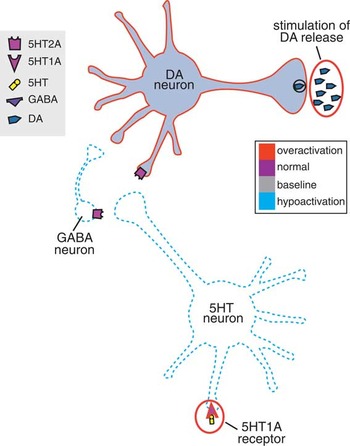
Presynaptic 5-HT1A receptors on serotonergic neurons regulate downstream release of dopamine (Figure 2). Sumiyoshi etal.Reference Sumiyoshi, Park and Jayathilake 11 assigned 73 patients receiving atypical antipsychotics to receive the 5HT1A partial agonist buspirone, 30 mg/day, or placebo. Significant improvement in the buspirone group was found on the Digit Symbol Substitution Test, a measure of attention and motor performance. In an open trial, Sumiyoshi etal Reference Sumiyoshi, Matsui and Nohara 12 administered the 5-HT1A partial agonist tandospirone, 30 mg/day, to 11 outpatients who were already stabilized on haloperidol and biperiden. The Wechsler Memory Scale—Revised (WMS-R) was administered at baseline and 4 weeks after addition of tandospirone. Eleven age-matched patients with schizophrenia not given tandospirone were also tested at baseline and after a 4-week interval, but assignment was neither random nor blind. Tandospirone add-on led to significant improvement in the Verbal but not the Visual Memory score of the WMS-R. In a subsequent randomized controlled trial (RCT), Sumiyoshi etal Reference Sumiyoshi, Matsui and Yamashita 13 assigned 26 patients with schizophrenia to adjunctive treatment with either 30 mg/day of tandospirone or placebo, and found improvement in executive function and verbal memory in the tandospirone group after 6 weeks.
Effects of 5HT1A Receptors on dopamine release. Presynaptic somatodendritic serotonin (5HT) 1A autoreceptors (at the bottom) enhance downstream dopamine (DA) release. When 5HT binds to these receptors, this inhibits downstream 5HT release; thus, 5HT is unable to inhibit DA release, and dopamine release is thus disinhibited, and therefore increased.

Meltzer etal Reference Meltzer, Li, Kaneda and Ichikawa 14 have hypothesized that certain antipsychotics (eg, aripiprazole, clozapine, and ziprasidone) improve cognition in part because they are partial 5-HT1A partial agonists, but RCTs are needed to test this. 5-HT1A partial agonists increase dopamine release (Figure 2), which in the PFC can improve cognition by theoretically stimulating D1 dopamine receptors, and we speculate that this, in part, may be one mechanism making these agents cognitive enhancers.
Serotonin receptor antagonists
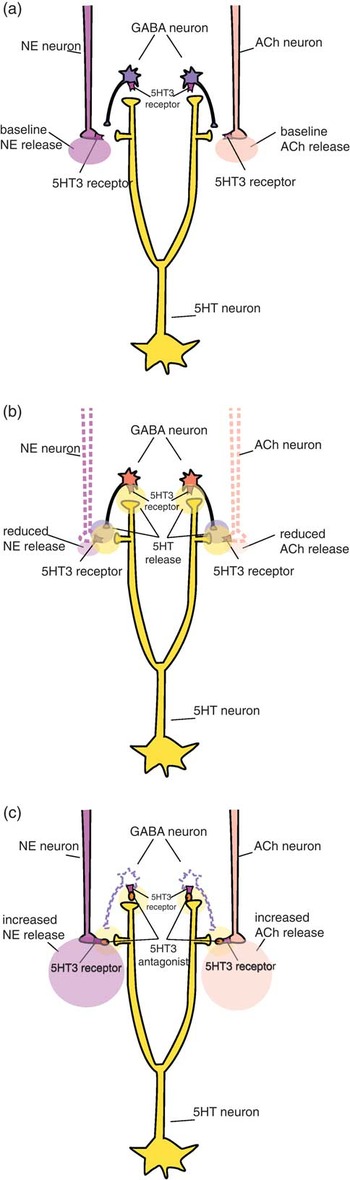
5-HT3 receptors inhibit the release of both norepinephrine and acetylcholine (Figure 3A). Thus, inhibition of 5-HT3 receptors can promote the release of norepinephrine and acetylcholine (Figure 3B). Akhondzadeh etal Reference Akhondzadeh, Mohammadi and Noroozian 15 conducted a 12-week, double-blind placebo-controlled trial of the 5-HT3 antagonist ondansetron, adding either ondansetron (8 mg/day) or placebo to risperidone in 30 stable patients. Administration of ondansetron significantly improved visual reproduction, visual paired association, and figural memory subtests of the WMS-R.
5HT3 antagonists increase norepinephrine and acetylcholine release. (A) Serotonergic neurons synapse with noradrenergic neurons, cholinergic neurons, and GABAergic interneurons, all of which contain serotonin 3 (5HT3) receptors. (B) When serotonin is released, it binds to 5HT3 receptors on GABAergic neurons, which release GABA onto noradrenergic and cholinergic neurons, thus reducing release of norepinephrine (NE) and acetylcholine (ACh), respectively. In addition, serotonin may bind to 5HT3 receptors on noradrenergic and cholinergic neurons, further reducing release of those neurotransmitters. (C) A 5HT3 antagonist binding at GABAergic neurons inhibits GABA release, which in turn disinhibits (or turns on) noradrenergic and cholinergic neurons, leading to release of norepinephrine and acetylcholine, respectively. Likewise, a 5HT3 antagonist binding directly at noradrenergic and cholinergic neurons prevents serotonin from binding there and inhibiting release of their neurotransmitters.

5-HT6 receptors are postsynaptic and may modulate release of neurotrophic factors and thus exhibit pro-cognitive effects. Morozova etal Reference Morozova, Beniashvili, Lepilkina and Rupchev 16 conducted a phase 2 double-blind placebo-controlled randomized trial of add-on treatment of the 5-HT6 antagonist dimebon. Fifty-six male subjects with paranoid schizophrenia were treated with risperidone, and after attaining stability for 4 weeks were randomly assigned to additionally receive either placebo or 20 mg/day of dimebon for 8 weeks. Symptom severity and cognition were evaluated at the time of randomization and 2 months later. Compared to the placebo group, subjects receiving dimebon demonstrated statistically significant improvement in performance on subtests of the Wechsler Memory Scale (WMS) and the Wisconsin Card Sort Test (WCST).
Morozova etal Reference Morozova, Lepilkina and Rupchev 17 randomly assigned 47 schizophrenic patients who were stabilized on antipsychotics to receive either placebo (n = 26) or the 5-HT6 antagonist AVN-211 (n = 21). One measure of attention, subtest VIII of the Wechsler Adult Intelligence Scale, showed significant improvement in the treatment group as compared to the placebo group.
A RCT of the 5-HT6 antagonist Lu AE58054 has been completed, but results are not presently available. 18
Nicotinic receptor agonists
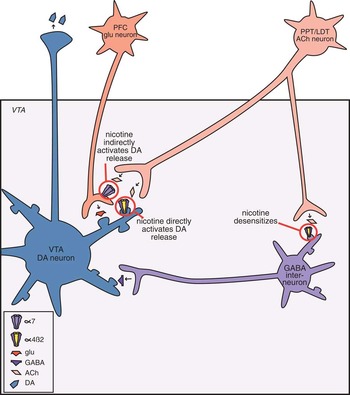
Nicotinic receptors enhance dopamine release (Figure 4). Barr etal Reference Barr, Culhave and Jubelt 19 conducted a randomized, double-blind, placebo-controlled, crossover study of the effects of nicotine on attention in nonsmokers with schizophrenia on stable doses of antipsychotics (n = 28) and in healthy controls (n = 32). Subjects received either a 14 mg transdermal nicotine or identical placebo patch, and a cognitive battery was conducted before and 3 hours after patch application. Nicotine significantly improved the performance of the Continuous Performance Test Identical Parts (CPT-IP) in subjects with schizophrenia and in healthy controls. It also reduced commission errors on the CPT-IP and improved performance on a Card Stroop task to a greater extent in persons with schizophrenia.
Actions of nicotine. Nicotine directly causes dopamine release in the nucleus accumbens by binding to α4β2-nicotinic postsynaptic receptors on dopamine neurons in the ventral tegmental area (VTA). In addition, nicotine binds to α7-nicotinic presynaptic receptors on glutamate neurons in the VTA, which in turn leads to dopamine release in the nucleus accumbens. Nicotine also seems to desensitize α4β2 postsynaptic receptors on GABA interneurons in the VTA; the reduction of GABA neurotransmission disinhibits mesolimbic dopamine neurons and thus is a third mechanism for enhancing dopamine release in the nucleus accumbens. PFC, prefrontal cortex; PPT/LDT, pedunculopontine tegmental and laterodorsal tegmental nuclei.

Zhang etal Reference Zhang, Liu and Hong 20 randomly assigned 40 nonsmoking patients with schizophrenia and p50 auditory gating deficit who were stabilized on risperidone to receive either placebo or the alpha-7 nicotinic receptor partial agonist tropisetron (a partial alpha-7 nicotinic agonist and a 5-HT3 antagonist) at 5 mg/day, 10 mg/day, or 20 mg/day for 10 days. While all 3 doses of tropisetron significantly improved overall cognitive deficits, the group receiving 10 mg/day demonstrated the greatest improvement for immediate memory index score, while the group receiving 20 mg/day showed the greatest improvement on delayed memory. P50 auditory gating deficit also improved, and this was significantly correlated with cognitive improvement. Since tropisetron is both a partial alpha-7 nicotinic agonist and a 5-HT3 antagonist,Reference Macor, Gurley and Lanthorn 21 these beneficial effects may be due to acetylcholine agonism or serotonin antagonism or both.
In a randomized placebo-controlled trial, Hufford etal Reference Hufford, Gawryl and Dgetluck 22 reported that both 0.3 mg/day and 1 mg/day of the oral alpha-7 nicotine receptor agonist EVP-6124 had clinically meaningful effects on cognitive performance when added to stable regimens of second-generation antipsychotics in 319 chronic schizophrenic patients for 3 months. Subjects were enrolled in the U.S., Russia, Ukraine, and Serbia. All subjects were assessed using the CogState computerized cognitive battery, while U.S. subjects were additionally tested on the MCCB.
Preclinical work by Radek etal Reference Radek, Kohlhaas, Rueter and Mohler 23 suggests a role for α4β2 nicotinic receptor agonists in treating cognitive deficits of schizophrenia, and a phase 2 RCT examining the α4β2 nicotinic receptor agonist ABT-126 is ongoing, but results are not yet available. 24
Lieberman etal Reference Lieberman, Dunbar and Segreti 25 randomized 185 outpatients receiving either quetiapine or risperidone to 12 weeks of either placebo or the alpha-7 nicotinic receptor agonist TC-5619 and found statistically significant improvement in the group receiving TC-5619 on the Groton Maze Learning Test.
Muscarinic receptor agonists
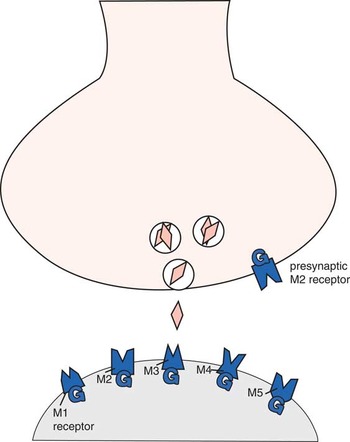
Muscarinic receptor subtypes in the prefrontal cortex and hippocampus may regulate cognition and memory (Figure 5). Shekhar etal Reference Shekhar, Potter and Lightfoot 26 administered the combined M1/M4 muscarinic receptor agonist xanomeline or placebo to 20 subjects with schizophrenia and compared performance on a cognitive battery at baseline and after 4 weeks. Significant improvement in verbal learning, short-term memory, list learning, story recall, delayed memory, and digit span tests was found in the subjects receiving xanomeline.
Muscarinic acetylcholine receptors. Acetylcholine neurotransmission can be regulated by G-protein linked muscarinic acetylcholine receptors, shown here. Muscarinic 1 (M1) receptors are postsynaptic and important for regulation of memory. Muscarinic 2 (M2) receptors exist both presynaptically as autoreceptors and postsynaptically. Other postsynaptic muscarinic receptors include M3, M4, and M5.

The case for muscarinic M1 receptors as cognitive enhancers in several central nervous system (CNS) disorders was recently reviewed by Scarr,Reference Scarr 27 but more controlled trials are needed with both M1 and M4 receptor agonists added to antipsychotics to better define their role in treating cognitive impairment in schizophrenia.
Acetylcholinesterase inhibitors
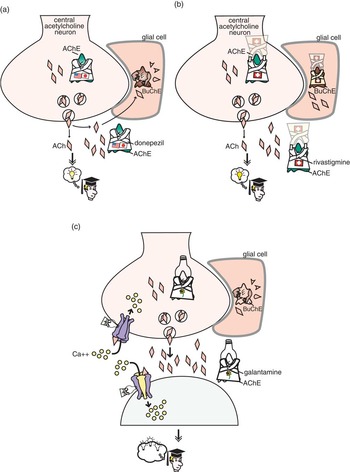
Inhibiting the acetylcholine-metabolizing enzymes acetylcholinesterase and butyrylcholinesterase (Figures 6A–6C) increases the levels of acetylcholine, leading to stimulation of both nicotinic (Figure 4) and muscarinic receptors (Figure 5), and therefore, pro-cognitive actions. Lee etal Reference Lee, Lee and Kim 28 enrolled 24 patients with schizophrenia who were stabilized on haloperidol and randomly assigned subjects to receive either the selective acetylcholinesterase inhibitor donepezil (5 mg/day) (Figure 6A) or placebo for 12 weeks. While the donepezil group compared to the placebo group showed only a trend on MMSE scores at week 12 (p = 0.56), verbal recognition and verbal recall memory improved significantly (p < 0.05). Most randomized placebo-controlled trials, however, find donepezil comparable to placebo, including the study by Freudenreich etal Reference Freudenreich, Herz and Deckersbach 29 in which donepezil or placebo was added for 8 weeks to ongoing antipsychotic treatment in 36 outpatients with schizophrenia, but neither donepezil or placebo led to changes in any measures of cognition or psychopathology; and the study by Kohler etal Reference Kohler, Martin and Kujawski 30 in which donepezil or placebo was added to antipsychotics for 16 weeks without any treatment effects on any cognitive functions or clinical symptoms.
(A) Donepezil actions. Donepezil inhibits the enzyme acetylcholinesterase (AChE), which is present both in the central nervous system (CNS) and peripherally. Central cholinergic neurons are important for regulation of memory; thus in the CNS, the boost of acetylcholine caused by AChE blockade contributes to improved cognitive functioning. (B) Rivastigmine actions. Rivastigmine inhibits the enzymes acetylcholinesterase (AChE) and butyrylcholinesterase (BuChE), which are present both in the central nervous system (CNS) and peripherally. Central cholinergic neurons are important for regulation of memory; thus in the CNS, the boost of acetylcholine caused by AChE blockade contributes to improve cognitive functioning. In particular, rivastigmine appears to be somewhat selective for AChE in the cortex and hippocampus—two regions important for memory—over other areas of the brain. Rivastigmine's blockade of BuChE in glia may also contribute to enhanced acetylcholine levels. (C) Galantamine actions. Galantamine inhibits the enzyme acetylcholinesterase (AChE). Galantamine is represented here by a straitjacket icon with a light bulb on top. The straitjacket has a daffodil on the front, since galantamine was originally extracted from daffodils; the light bulb represents a second mechanism of action of galantamine, namely positive allosteric modulation of nicotinic receptors. Galantamine is unique among cholinesterase inhibitors in that it is also a positive allosteric modulator (PAM) at nicotinic cholinergic receptors, which means it can boost the effects of acetylcholine at these receptors. Thus galantamine's second action as a PAM at nicotinic receptors could theoretically enhance its primary action as a cholinesterase inhibitor.

Sharma etal Reference Sharma, Reed, Aasen and Kumari 31 did not find improvement in cognition with adjunctive treatment with the dual acetylcholinesterase/butyrylcholinesterase inhibitor rivastigmine (Figure 6B) compared to placebo in a randomized, placebo-controlled, double-blind, 24-week study. Using a randomized crossover design, Chouinard etal Reference Chouinard, Stip and Poulin 32 found no improvement in any cognitive variables at 3 months or at 6 months when rivastigmine was added to antipsychotics in patients with schizophrenia and cognitive deficits.
In contrast to donepezil and rivastigmine, the dual action acetylcholinesterase inhibitor plus nicotinic receptor allosteric modulator galantamine (Figure 6C) appears to improve cognition in schizophrenia. Schubert etal Reference Schubert, Young and Hicks 33 randomized 16 patients with schizophrenia or schizoaffective disorder who were stabilized on risperidone to receive either galantamine (n = 8) or placebo (n = 8). The Repeatable Battery for Assessment of Neuropsychological Status (RBANS) showed that patients receiving galantamine experienced an overall improvement in cognitive performance, with the RBANS Total scale score demonstrating statistically significant improvement in the galantamine group as compared to the placebo group. Additionally the RBANS Attention and Delayed Memory subscale performance was robustly improved in patients receiving galantamine, normalizing cognitive performance in these domains. Lee etal Reference Lee, Lee, Lee and Kim 34 conducted a 12-week, double-blind, placebo-controlled trial of galantamine as adjunctive treatment to 24 patients with schizophrenia who were stabilized on conventional antipsychotics for at least 3 months at the time of enrollment. The score for recognition on the Rey Complex Figure Test improved significantly in patients receiving galantamine.
Galantamine may be more effective than donepezil and rivastigmine because, in addition to being an anticholinesterase inhibitor, it modulates the nicotinic cholinergic receptors, leading to an increase in acetylcholine release (Figure 6C).Reference Woodruff-Pak, Vogel and Wenk 35
Glutamatergic agents
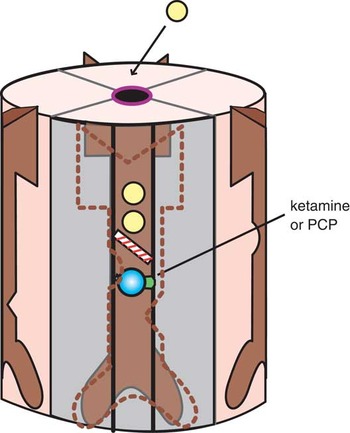
The clinical observations that would later lead to the glutamate hypofunction hypothesis of schizophrenia were made 50 years ago by Luby and colleagues,Reference Luby, Gottlieb, Cohen, Rosenbaum and Domino 36 , Reference Domino and Luby 37 who proposed that the N-methyl-d-aspartate (NMDA) glutamate receptor blocker phencyclidine (PCP) caused a transient psychosis in normal volunteers more like schizophrenia than that caused by lysergic acid diethylamide. Work by Javitt and colleaguesReference Javitt, Jotkowitz, Sircar and Zukin 38 , Reference Javitt and Zukin 39 demonstrated that PCP binding blocked the influx of calcium through excitatory channels gated by NMDA-glutamate receptors (NMDARs) (Figure 7). Subsequently, Javitt and ZukinReference Javitt and Zukin 40 proposed that phencyclidine psychosis, by creating hypoglutamatergia, caused a psychosis more like schizophrenia than that caused by amphetamine, since, while both amphetamine and PCP can cause positive symptoms, PCP psychosis is characterized by negative and cognitive symptoms as well.
The NMDAR has multiple allosteric sites, including a redox site that binds glutathione and a glycine site where both glycine and D-serine are agonists.
N-Acetylcysteine (NAC) is converted to glutathione, and when added to maintenance antipsychotic regimens, it resulted in a decrease in symptom severityReference Berk, Copolov and Dean 41 and auditory sensory processingReference Lavoie, Murray and Deppen 42 in patients with schizophrenia. Presumably, it is glutathione occupying the allosteric redox site that is the basis of this improvement, with NAC being a precursor glutathione.
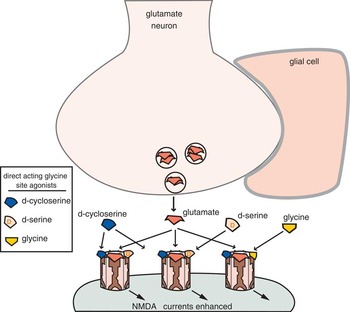
D-Cycloserine is a partial agonist at the glycine allosteric site (Figures 7 and 8). Goff etal Reference Goff, Cather and Gottlieb 43 randomized 38 outpatients with schizophrenia in a double-blind, parallel-group, placebo-controlled, 8-week add-on trial of once-weekly d-cycloserine (Figure 8), 50 mg, or placebo while continuing ongoing treatment with any antipsychotic except clozapine. As an exploratory analysis of memory consolidation, the Logical Memory Test (LMT) was administered at baseline, and after a single weekly dose of d-cycloserine, delayed thematic recall was significantly improved with a single dose of d-cycloserine as compared to placebo.
Site of action of PCP and ketamine. The anesthetic ketamine binds to the open channel conformation of the N-methyl-d-aspartate (NMDA) receptor. Specifically, it binds to a site within the calcium channel of this receptor, which is often termed the PCP site because it is also where phencyclidine (PCP) binds. Blockade of NMDA receptors may prevent the excitatory actions of glutamate.

Novel glutamatergic treatments for schizophrenia: direct acting glycine site agonists. NMDA (N-methyl-D-aspartate) receptors require the presence of both glutamate and a co-agonist at the glycine site in order to be fully active. Since schizophrenia may be linked to hypoactive NMDA receptors, agonists at the glycine co-agonist site may enhance NMDA functioning. Several agonists at this co-agonist site, including glycine, D-serine, and D-cycloserine, have been tested in schizophrenia and indeed show evidence that they can reduce negative and/or cognitive symptoms. Glycine agonists may thus be promising future treatments for negative and cognitive symptoms of schizophrenia without worsening positive symptoms.

Kantrowitz etal Reference Kantrowitz, Malhotra and Cornblatt 50 openly administered 30, 60, or 120 mg/kg/day of D-serine (Figure 8) to 42 antipsychotic-stabilized patients with schizophrenia or schizoaffective disorder and measured the outcome using the MATRICS. Only nonsignificant improvement was found in MATRICS scores at 30 mg/kg/day, while highly significant improvement was seen in patients receiving 60 mg/kg/day and 120 mg/kg/day. Plasma levels of D-serine were obtained and correlated with improved neuropsychological function.
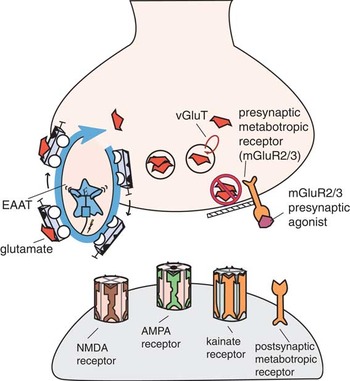
Mezler etal Reference Mezler, Geneste, Gault and Marek 44 reported efficacy without metabolic side effects for LY-2140023 (now called pomaglumetad methionil), a prodrug that becomes a metabotropic glutamate receptor agonist at the mGluR 2/3 presynaptic receptor (Figure 9), but subsequent clinical trials have failed to replicate efficacy.
Novel glutamatergic treatments for schizophrenia: presynaptic agonist. Presynaptic metabotropic glutamate receptors (mGluR2/3) act as autoreceptors to prevent glutamate release. Thus, stimulating these receptors could block glutamate release, and thereby decrease activity at postsynaptic glutamate receptors.

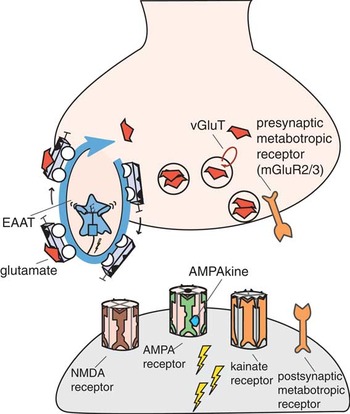
In addition to NMDARs, postsynaptic AMPA glutamate receptors (Figure 10) are a promising target, given that (1) in response to glutamate, AMPA receptor stimulation leads to increased influx of calcium in colocalized NMDAR-gated channelsReference Malinow and Malenka 45 ; and (2) postmortem studies find decreased AMPA receptor density in the hippocampus of persons with schizophrenia.Reference Meador-Woodruff and Healy 46 Goff etal Reference Goff, Leahy and Berman 47 added the ampakine CX516 or placebo to clozapine in a pilot trial, and found that CX516 add-on improved memory and attention. However, in a follow-up placebo-controlled trial, CX516 failed to improve cognition when added to clozapine, olanzapine, or risperidone.Reference Goff, Lamberti and Leon 48
Novel glutamatergic treatments for schizophrenia: AMPA positive modulator. Positive modulation at postsynaptic AMPA receptors could help regulate ion flow and neuronal depolarization in postsynaptic neurons, leading to appropriate NMDA receptor activation. Also shown post-synaptically are NMDA receptors, kainate receptors, and post-synaptic metabotropic receptors, all for glutamate. Shown pre-synaptically are the presynaptic reuptake pump for glutamate, the excitatory amino acid transporter (EAAT), the presynaptic metabotropic autoreceptor mGluR2/3, and the synaptic vesicle transporter for glutamate or vGluT.

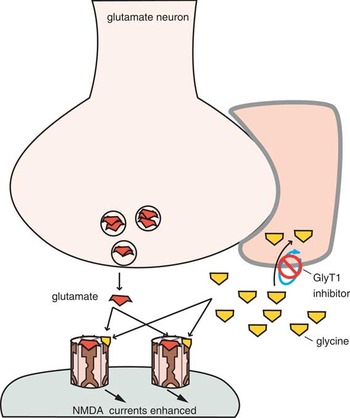
Bitopterin (registered as RO4917838 and as RG1678) is a selective glycine reuptake inhibitor (SGRI), blocking the glycine type 1 transporter (GlyT1) (Figure 11) in clinical trials for treatment of biomarkers associated with cognitive deficits, but results are not yet available. 49
Novel glutamatergic treatments for schizophrenia: glycine transporter on glial cells inhibited. The glycine transporter 1 (GlyT1) normally terminates the actions of glycine at NMDA receptors in the glutamate synapse by transporting the glycine back up into glial cells as a reuptake pump. Thus, inhibitors at GlyT1 would increase availability of synaptic glycine, enhancing activity at NMDA receptors. This is analogous to the actions of a selective serotonin reuptake inhibitor (SSRI) at serotonin synapses. GlyT1 inhibition could potentially improve cognitive and negative symptoms of schizophrenia by enhancing the availability of glycine at hypofunctioning NMDA receptors.

GABAergic agonists
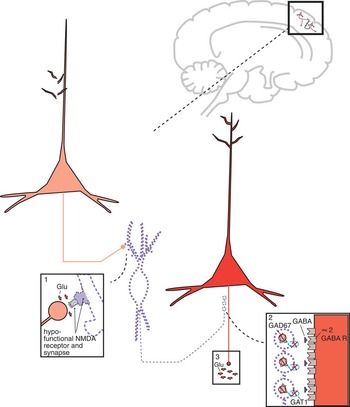
Certain GABA interneurons may have deficient functioning in prefrontal cortex in schizophrenia (Figure 12); thus replacing deficient GABA actions downstream on pyramidal neurons in prefrontal cortex may restore cognitive deficits. Menzies etal Reference Menzies, Ooi and Kamath 51 randomly assigned 11 patients with chronic schizophrenia to receive either 2 mg of oral lorazepam and a 0.9-mg intravenous flumazenil bolus followed by a flumazenil infusion of 0.0102 mg/minute compared with oral and intravenous placebo. Both groups were tested on a working memory task by personnel blind to assignment. Lorazepam impaired working memory performance, and flumazenil enhanced it.
Shown here is a cortical pyramidal neuron communicating via GABAergic interneurons in the presence of hypothetically hypofunctional NMDA receptors in schizophrenia. (1) Glutamate is released from an intracortical pyramidal neuron. However, the NMDA receptor that it would normally bind to is hypofunctional, preventing glutamate from exerting its effects at the receptor. (2) This prevents GABA release from the interneuron; thus, stimulation of alpha 2 GABA receptors on the axon of another glutamate neuron does not occur. (3) When GABA does not bind to the alpha 2 GABA receptors on its axon, the pyramidal neuron is no longer inhibited. Instead, it is disinhibited and overactive, releasing excessive glutamate into the cortex. Enhancing GABA action at this neuron would theoretically reduce the dysfunctional and excessive glutamate release, and improve symptoms of schizophrenia such as cognitive problems.

Lewis etal Reference Lewis, Cho and Carter 52 conducted a trial of the GABA agonist MK-0777, which is more selective for alpha 2 isoforms of the GABA receptor (Figure 12) on cognition. Fifteen male patients were randomly assigned to receive either MK-0777 (increased to 16 mg/day by the end of week 2) or placebo for 4 weeks in a double-blind, placebo-controlled, parallel group design. Compared with placebo, the group receiving MK-0777 demonstrated improved performance on the N-back, AX Continuous Performance Test, and Preparing to Overcome Prepotency tests.
Buchanan etal Reference Buchanan, Keefe and Lieberman 53 enrolled 60 persons with schizophrenia in a 4-week, multicenter, double-blind, placebo-controlled, randomized clinical trial. Participants were randomized to MK-0777 3 mg b.i.d. (n = 18), MK-0777 8 mg b.i.d. (n = 21), or placebo (n = 21). Cognition was assessed with the MCCB, AX-Continuous Performance Test, and N-Back. There were no significant group differences on the primary outcome measure or the MCCB composite score, while secondary analyses suggested that participants randomized to placebo performed significantly better on visual memory and reasoning/problem-solving tests than participants assigned to either MK-0777 dose.
Other agents
In addition to agents suggested by MATRICS, other agents affect cognition, including the existing antipsychotics themselves. While randomized controlled trialsReference Keefe, Bilder and Davis 54 suggest that both first- and second-generation antipsychotics improve cognition, both Keefe etal Reference Keefe, Sweeney and Hongbin 55 and Goldberg etal Reference Goldberg, Goldman and Burdick 56 caution that the improvement may be due to practice effects.
Rigorous data from RCTs is needed regarding differences between antipsychotics, but hypotheses can be proposed, such as that mentioned above regarding Meltzer etal,Reference Meltzer, Li, Kaneda and Ichikawa 14 who proposed that antipsychotics that are 5-HT1A partial agonists (aripiprazole, clozapine, and ziprasidone) may promote cognition. Antipsychotics that lack D1-dopamine antagonism (eg, aripiprazole and lurasidone) may, relative to antipsychotics that disrupt D1-dopamine activity, be preferable in treating cognitive symptoms. Again, it is interesting to hypothesize, but the data are not available to make definitive comparisons among antipsychotics regarding effects on cognition.
Based on reports that dehydroepiandrosterone (DHEA) was helpful with symptoms and medication side effects, Ritsner etal Reference Ritsner, Gibel, Ratner, Tsinovoy and Strous 57 randomized 55 patients with schizophrenia to receive either DHEA (200 mg/day) for 6 weeks followed by placebo for 6 weeks or to receive placebo for 6 weeks followed by placebo for 6 weeks. DHEA but not placebo was associated with a significant improvement in cognitive functions of visual sustained attention and visual and movements skills.
Ritsner etal,Reference Ritsner, Gibel and Shleifer 58 in an 8-week, double-blind, randomized, placebo-controlled trial, compared 30 mg/day of pregnenolone (PREG), 200 mg/day of PREG, 400 mg/day of DHEA, and placebo as adjunctive treatment in 58 schizophrenia and schizoaffective disorder. Only the subjects randomized to 30 mg/day of pregnenolone demonstrated clinically significant improvement in attention and working memory performance, as well as on positive symptom scores and extrapyramidal side effects.
Levkovitz etal Reference Levkovitz, Medlovich and Riskes 59 recruited and randomly assigned 54 early-phase schizophrenia patients to receive in a 2:1 ratio minocycline 200 mg/day or placebo within 2 weeks of being initiated on an atypical antipsychotic (risperidone, olanzapine, quetiapine, or clozapine). Clinical, cognitive, and functional assessments were conducted at baseline and after 6 months. Minocycline had a beneficial effect on executive function (working memory, cognitive shifting, and cognitive planning). Minocycline affects cytokines, glutamate, dopamine, and microglia, and it is not clear which of these underlying mechanisms explains improvement in executive functioning.
Cho etal Reference Cho, Yook and Kim 60 conducted an 8-week, double-blind clinical trial, randomly assigning 21 outpatients with schizophrenia who were stabilized with risperidone to receive the added 5HT3 antagonist, plus alpha 2 antagonist mirtazapine, which has additional actions blocking 5HT2A and H1 histamine receptors, or placebo. The mirtazapine group, in addition to showing an improvement in negative symptoms, demonstrated a statistically significant improvement in vocabulary and immediate memory. In a double-blind trial, Stenberg etal Reference Stenberg, Terevnikov and Joffe 61 randomized patients with difficult-to-treat schizophrenia to receive either mirtazapine (n = 19) or placebo (n = 18) for 6 weeks, and demonstrated improved performance in the mirtazapine group on Block Design and Stroop Dots, which is consistent with mirtazapine having beneficial effects on visuo-spatial functioning.
Scoriels etal Reference Scoriels, Jones and Sahakian 62 analyzed results from 9 randomized trials of the pro-dopaminergic agent modafanil in schizophrenia or related conditions, and found that working memory improved with modafanil administration. They suggest modafanil that increases dopaminergic activity in the PFC and downstream glutamatergic activity in the hippocampus, and may explain what they refer to as its “mnemonic enhancing properties.”
Prasad etal Reference Prasad, Eack and Keshavan 63 randomized subjects with schizophrenia who had been exposed to herpes simplex virus, type 1 (HSV1) to either add-on valacyclovir (n = 12) or placebo (n = 12) to stable doses of antipsychotics for 18 weeks. A computerized neurocognitive battery was administered at baseline and follow-up. The valacyclovir group showed statistically significant improvement in verbal memory, working memory, and visual object learning compared with the placebo group.
Discussion
We have reviewed studies suggesting that several pharmacological agents improve cognition in persons with schizophrenia. These include studies involving neurochemical systems identified by the MATRICS group, as well as agents where the mechanism of action is unclear. In reviewing studies of D1-dopamine enhancing agents, 5-HT1A partial agonists, 5-HT3 and 5-HT6 serotonin receptor antagonists, direct and indirect nicotinic and muscarinic receptor agonists, various glutamatergic agents, and GABAergic agonists, it is our impression that glutamatergic modulators and both nicotinic and muscarinic agonists appear to offer the most promise. However, all studies reviewed are preliminary and require replication in multicenter, double-blind, placebo-controlled trials, so it must be acknowledged that this impression is based on an existing and preliminary literature.
We have also provided, both in the text and in the figures, what appear to us to be the likely biochemical mechanisms underlying these effects, although, given that conclusions regarding efficacy must await rigorous replicated trials, these mechanisms are based on an evolving literature.
In choosing to summarize evidence on over 20 pharmacological agents tested up to 2013, as well as articulating and providing illustrations of hypothesized mechanisms, it became obvious that to additionally present negative studies or include an extensive methodological critique was beyond the scope of this review. Important cautionary remarks have been published elsewhere. Goff etal,Reference Goff, Hill and Barch 64 in a review of studies completed as of 2010, concluded that studies of putative cognitive enhancers all had methodological problems and advised caution until efficacy was demonstrated in large replicated trials.
A meta-analysis by Fioravanti etal,Reference Fioravanti, Bianchi and Cinti 65 which was based on data published as of March 2010, addresses the fundamental question of whether cognitive impairment exists in persons with schizophrenia, and lists several methodological flaws, including that underreporting of negative results inflates existing evidence for cognitive impairment in schizophrenia.
We are in complete agreement with these and other cautionary reports, and we also realize that definitive, large-scale, multicenter, replicated studies are needed. Despite these limitations, it is our opinion that (1) the growing literature on pharmacological amelioration of pre-existing cognitive impairment in schizophrenia will in time yield effective add-on agents; and (2) clinicians, advocates, and patients should be made aware that the search for new agents as add-on pharmacotherapy for cognitive symptoms in schizophrenia, while preliminary, is providing some promising evidence.
Finally, pharmacological treatment never occurs in a vacuum. Of the available psychosocial interventions, cognitive remediation has emerged as an effective treatment. Medalia etal,Reference Medalia, Opler and Opler 66 , Reference Medalia, Opler and Saperstein 67 both in this issue as a companion article to this one and elsewhere, review evidence for efficacy of cognitive remediation for schizophrenia and other psychotic disorders alone and in combination with pharmacotherapy.
Conclusion
Preliminary positive findings justify undertaking methodologically rigorous clinical trials of several agents as add-on agents in the treatment of cognitive symptoms in schizophrenia, and offer new hope to clinicians, advocates, and patients.
Disclosures
Lewis Opler has the following disclosures: MultiHealth Systems, Inc., co-author of the PANSS, royalties. Alice Medalia has the following disclosures: Dainippon Sumitomo Pharma, consultant, consulting fees; Dainippon Sumitomo Pharma, research, research support. Mark Opler has nothing to disclose. Stephen Stahl has the following disclosures: He is an adjunct professor of psychiatry at the University of California, San Diego School of Medicine, an honorary visiting senior fellow at the University of Cambridge in the UK, and Director of Psychopharmacology for the California Department of State Hospitals. Dr. Stahl receives research support from Avanir, CeNeRx, Forest, Genomind, Lilly, Janssen, Mylan, Mylan Specialty, Otsuka, Pamlab, Servier, Shire, Sunovion, and Takeda; is a consultant/advisor to Avanir, BioMarin, Depomed, Forest, Genentech, Genomind, GlaxoSmithKline, Jazz, Merck, Navigant, Novartis, Noveida, Neuronetics, Orexigen, Otsuka, Pamlab, Reviva, Roche, Shire, Sunovion, Taisho, Teva, and Trius; is on the speakers bureaus of Arbor Scientia, Genomind, Janssen, Lilly, Pamlab, Pfizer, Sunovion, and Takeda; and is a board member at Genomind and RCT Logic.