Background
The Syrian crisis has entered its ninth year and has left millions of Syrians suffering from major tragedies as it has affected all aspects of life. Around 11.1 million people need humanitarian assistance in Syria, and 2.7 million are dependent on humanitarian assistance. Moreover, over 5.5 million people have fled the country, 6 million have been internally displaced, and more than 80% of the remaining people in Syria live below the poverty line (‘United Nations Office for the Coordination of Humanitarian Affairs (UNOCHA) (2020) Syria crisis overview’). Higher rates of post-traumatic stress disorder (PTSD) were found in people who encountered a traumatic event from the war in Syria (Kakaje et al., Reference Kakaje, Zohbi, Aldeen, Makki, Alyousbashi and Alhaffar2020e). PTSD symptoms cause considerable impairment and can severely disrupt social, occupational, and educational performance and functioning. Furthermore, PTSD sufferers may develop somatoform complications that manifest as chronic pain, health deterioration, and greater susceptibility to medical problems, potentially resulting in increased numbers of medical disorders (National Collaborating Centre for Mental Health (UK), 2005). For instance, in Syria, it was found that war-related distress was correlated with allergic rhinitis and laryngopharyngeal reflux (Kakaje et al., Reference Kakaje, Alhalabi, Alyousbashi, Hamid and Hosam Aldeen2020b, Reference Kakaje, Alhalabi, Alyousbashi, Hamid and Mahmoud2020c).
Children depend on adults for their emotional needs such as empathy, care, and attention. Conflicts frequently disrupt children's attachments in various ways as these childrenmay lose their parents. Alternatively, children's parents may become emotionally unavailable whenthey are depressed, distracted, or overwhelmed from their responsibilities to protect the family and provide its essential needswhich eventually disrupts the emotional bonds (Santa Barbara, Reference Santa Barbara2006). Children who moved into refugee or displacement camps may suffer for years from catastrophic conditionswhile waiting to resume their normal life (Santa Barbara, Reference Santa Barbara2006).
There is a range of factors known to influence the development of mental disorders in children and adolescents. Socioeconomic status (SES) has been associated with mental disorders in adolescents, including disorders of mood, anxiety, substance, and behaviour, along with many others. Parent education is also a factor (McLaughlin, Costello, Leblanc, Sampson, & Kessler, Reference McLaughlin, Costello, Leblanc, Sampson and Kessler2012). Social support can aid in reducing the effect of trauma on individuals (Shang et al., Reference Shang, Kaniasty, Cowlishaw, Wade, Ma and Forbes2019). Furthermore, no higher genetic susceptibility to mental disorders was found inparental consanguinity (Hosseinpour, Reference Hosseinpour2016).
In addition, problematic anger has been identified not only as a common response to trauma and disaster, but also as a key factor in the development of subsequent mental disorders, such as PTSD (Asmundson, LeBouthillier, Parkerson, & Horswill, Reference Asmundson, LeBouthillier, Parkerson and Horswill2016; Forbes et al., Reference Forbes, Alkemade, Waters, Gibbs, Gallagher, Pattison and Bryant2015). Moreover, anger is associated with other adult personality disorders, substance abuse (Okuda et al., Reference Okuda, Picazo, Olfson, Hasin, Liu, Bernardi and Blanco2014), and paediatric personality disorders such as oppositional defiant and conduct disorders (American Psychiatric Association, 2013). Traumatic events and disasters have also been found to negatively affect school performance in the following year of a traumatic event. However,some studies demonstrate improvement after two years (Strøm, Schultz, Wentzel-Larsen, & Dyb, Reference Strøm, Schultz, Wentzel-Larsen and Dyb2016) while other studies show a continued lag in specific areas of academic performance for up to 5 years (Gibbs et al., Reference Gibbs, Nursey, Cook, Ireton, Alkemade, Roberts and Forbes2019).
While most studies have been concerned with Syrian refugees, only a few were concerned with the population still living in Syria (Alhaffar, Alawabdi, Barakat, & Kouchaji, Reference Alhaffar, Alawabdi, Barakat and Kouchaji2019; Bahaa Aldin Alhaffar et al., Reference Bahaa Aldin Alhaffar, Mustafa, Sabbagh, Yabrode, Shebib and Kouchaji2018; Kakaje et al., Reference Kakaje, Zohbi, Aldeen, Makki, Alyousbashi and Alhaffar2020e; Perkins, Ajeeb, Fadel, & Saleh, Reference Perkins, Ajeeb, Fadel and Saleh2018). Furthermore, these existing studies suffer from considerable limitations as the Syrian adult samples were limited to people who were online and were able to fill in the survey (Kakaje et al., Reference Kakaje, Zohbi, Aldeen, Makki, Alyousbashi and Alhaffar2020e). In addition, there have only been two studies on Syrian children; one of them mostly focused on oral health and PTSD (Bahaa Aldin Alhaffar et al., Reference Bahaa Aldin Alhaffar, Mustafa, Sabbagh, Yabrode, Shebib and Kouchaji2018) while the other study was on Syrian school students and was restricted to the provinces of Damascus and Latakia. It was also limited to 247 participants who were affected by war as 67.9% of the sample did not respond to war-related questions. Furthermore, that study included the age group of 8–15 years and students were mostly inelementary schools which is a different population than our study (Perkins et al., Reference Perkins, Ajeeb, Fadel and Saleh2018).
This study is on the population in Syria which has experienced multiple daily traumatic events from war and a deteriorating economy. It aims to evaluate PTSD, anger, social support, and health-related quality of life (HRQL) among children in year10 and higher in schools of Damascus who grew up during the war which started since their very first years of schools. We could not include younger students due to the abrupt disruption from coronavirus disease of 2019 (COVID-19). This study also aims to describe how war has affected daily life in areas such as smoking patterns, school performance, and daily habits.
Methods
Sampling
This is a cross-sectional study conducted in Syria from 1 March 2020 to 12 March 2020. Surveys in Arabic were distributed to public schools in Damascus which were divided into four areas: eastern, western, northern, and southern areas. Only participants who lived in Syria and attended its schools for the past nine years were enrolled. Schools were randomly chosen from each area while balancing gender distribution as most public schools are single-sex schools. Students were also randomly chosen from classes. Surveys were distributed in school classes to avoid the interference of family members with the answers. At least two skilled data collectors remained in the classes to assure anonymity and to explain if something was unclear to the student.
Only students in yearten or higher were enrolled regardless of age, and no surveys were distributed in the eastern region due to the unexpected lockdown from COVID-19. This study originally aimed to include younger students in yearseven and eight in addition to yearten and higher. However, the unexpected forced quarantine that lasted for 10 weeks made that impossible as all students were transferred to the next yearas they missed their second semester, and they would not come back to schools until the next school year.
Consent and approval for the study
Written consent was provided for data collection and for using and publishing the data. Written consent was taken from caregivers one week prior to the survey when the student was younger than 18 years old. It wasdirectly taken from the participants whenthey were 18 years or older. Confidentiality was assured and no identity-revealing questions were asked. Oral consent was also taken from the student on the day of data collection before giving the survey regardless of the age.
Our study protocol and ethical aspects were reviewed and approved by Damascus University, faculty of medicine ethical committee in Damascus, Syria. It was also approved by the vice president for the scientific affair of Damascus University, by the vice dean for scientific affairs of Damascus University faculty of medicine, and by the Ministry of Education of Syria.
Questionnaires
Socioeconomic status (SES)
SES was assessed through three criteria: (1) the educational level, (2) the profession of the individual who was the main source of income in the household, typically the father, and (3) the adequacy of monthly household income. SES was then divided into four different categories: lower, upper-lower, middle, and upper, using categorisations on factors of relevance in the Syrian community (Kakaje, Alhalabi, Alyousbashi, Ghareeb, & Hamid, Reference Kakaje, Alhalabi, Alyousbashi, Ghareeb and Hamid2020a; Kakaje et al., Reference Kakaje, Alhalabi, Alyousbashi, Hamid and Hosam Aldeen2020b, Reference Kakaje, Zohbi, Aldeen, Makki, Alyousbashi and Alhaffar2020e) as asking directly about salary is not culturally acceptable in the Syrian society, and there is a huge gap between the living expenses in Syria where it is much cheaper than other countries where most of the SES questionnaires were validated.
Health-related quality of life (HRQL)
An Arabic version of the self-reported short form 8 (SF-8) was used. SF-8 evaluates the general health, physical functioning, physical role, body pain, vitality, social functioning, mental health, and emotional role of participants (Aljurany, Reference Aljurany2013; Ware, Kosinski, Dewey, & Gandek, Reference Ware, Kosinski, Dewey and Gandek2001). SF-8 has eight items and is used in large populations to assess their general physical and mental health. It can also be used in a population affected by conflict. Items (1–4) measure the physical component summary (PCS), and items (5–8) measure the mental component summary (MCS). In this study, SF-8 was used as a scoring system to compare different groups without cut-off points similar to most studies.
Social support
An Arabic version of the multidimensional scale of perceived social support (R & Kazarian, Reference R and Kazarian2012; Zimet, Reference Zimet2016) was used to measure the social support that the individual received from their friends, family, and the significant other (R & Kazarian, Reference R and Kazarian2012; Zimet, Reference Zimet2016). Only one presentative question was used as the survey was meant to be short. The questions used were: ‘I get the emotional help & support I need from my family’, ‘I have a special person who is a real source of comfort to me’, and ‘I have friends with whom I can share my joys and sorrows’. Only scores were used for comparisons.
Post-traumatic stress disorder (PTSD)
An Arabic version of the children's impact of event scale (CRIES-13) was used. CRIES 13 is a self-reporting screening tool for PTSD that can be used in children aged eight years and older (Child Revised Impact of Events Scale, 2017; Perrin, Meiser-Stedman, & Smith, Reference Perrin, Meiser-Stedman and Smith2005). For PTSD screening, the results of intrusion and avoidance were used. When the sum of the previous two scales is 17 or more, there is a high probability of having PTSD. Arousal item was used as a score assessment without cut-off points.
CRIES-13, however, is based on the diagnostic and statistical manual of mental disorders IV (DSM IV). The three clusters of intrusion, arousal, and avoidance are close to what is used in the International Classification of Disease 11 (ICD-11) criteria. However, using DSM IV criteria relatively detects less severe traumatic cases (Haravuori, Kiviruusu, Suomalainen, & Marttunen, Reference Haravuori, Kiviruusu, Suomalainen and Marttunen2016).
Anger
Dimensions of anger reactions 5 (DAR-5) evaluates the frequency, intensity, and duration of anger in the last four weeks. It also assesses the aggression and the impact that anger had on social functioning (Forbes et al., Reference Forbes, Hawthorne, Elliott, McHugh, Biddle, Creamer and Novaco2004, Reference Forbes, Alkemade, Mitchell, Elhai, McHugh, Bates and Lewis2014). Furthermore, the Arabic validation of DAR-5 was for adults and adolescents (Kakaje, Alsamara, & Forbes, Reference Kakaje, Alsamara and Forbes2020d).
Other questions
Direct and indirect questions about trauma from the war were asked, such as changing residency due to war, being distressed or endangered, and losing someone close. The third-degree consanguinity was defined as first cousins, and the fourth-degree consanguinity as second cousins and second cousins once removed. Other questions are shown in Table 1. Many questions aimed to identify different patterns and behaviours in the Syrian community. They were mostly estimated by simple direct questions such as ‘can you estimate the hours you spend every week watching TV?’ (Table 1).
Characteristics and frequencies of the subjects and their responses to the questions

Data analysis
Data were analysed using IBM SPSS software version 26 for Windows (SPSS Inc., IL, USA). Chi-square, one-way analysis of variance (ANOVA), and independent t tests were performed to determine the statistical significance between the groups. Pearson correlation was also used. Through the same software, odds ratios (ORs) and 95% confidence intervals (CI) for the groups were calculated using the Mantel–Haenszel test. Values of <0.05 for the two-tailed p values were considered statistically significant.
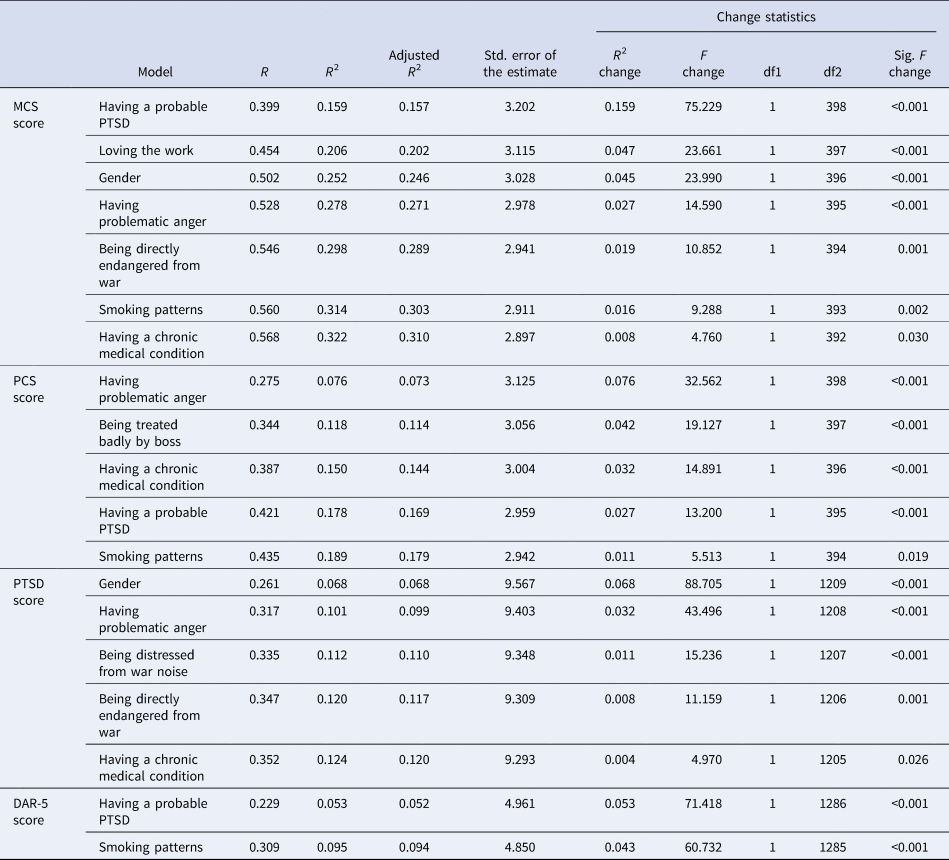
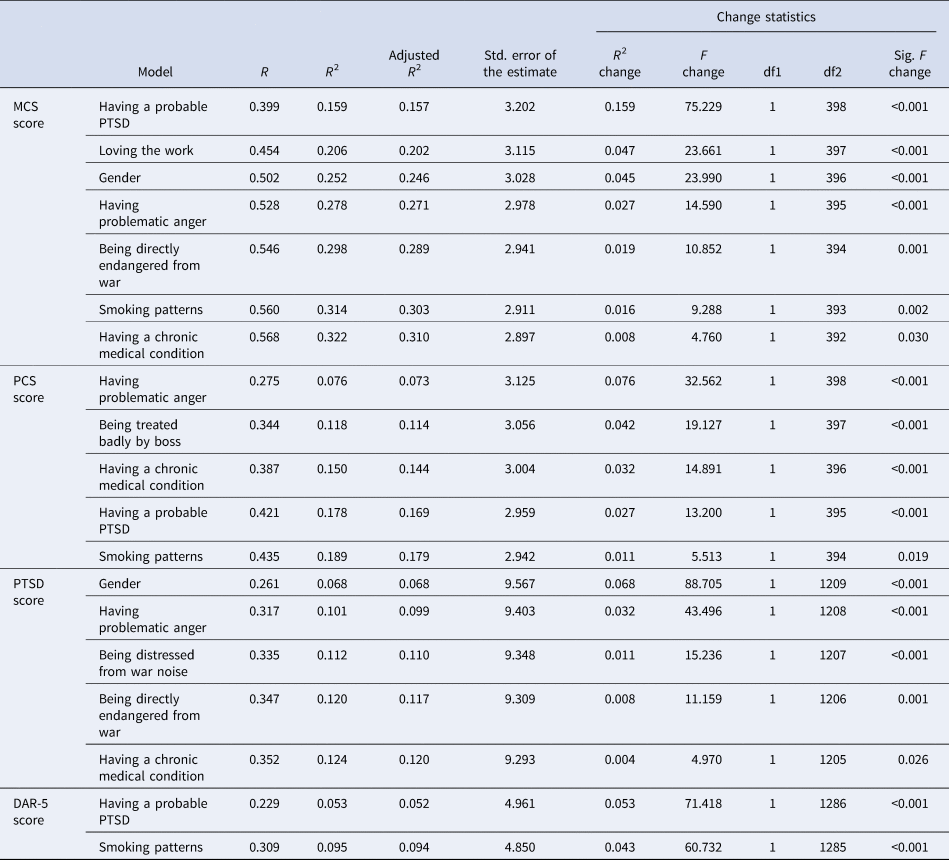
Forward linear regression (Table 2) was used, which can be particularly valuable when models are assumed to be generalisable. R 2 in linear regression explains how much the variation of the dependent variable was explained by the variance of the independent variable. We only included variables of statistical significance in the regression. We did not include arousal scores in the regression as it can greatly overlap with anger and PTSD.
Forward linear regression of MCS, PCS, PTSD, and DAR-5 scores with their relevant statistically significant variables
Bonferroni correction was used to decrease type 1 error when comparing multiple variables in Tables 3–5. Bonferroni correction is determined by p = α\m, where α is 0.05 and m is the number of hypotheses.
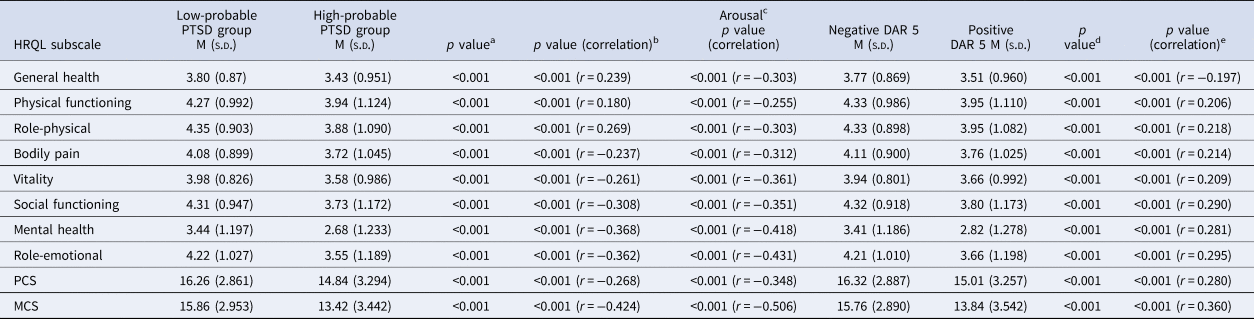
Mean SF-8 scores of students according to PTSD probability (intrusion and avoidance), arousal, and DAR 5 scores
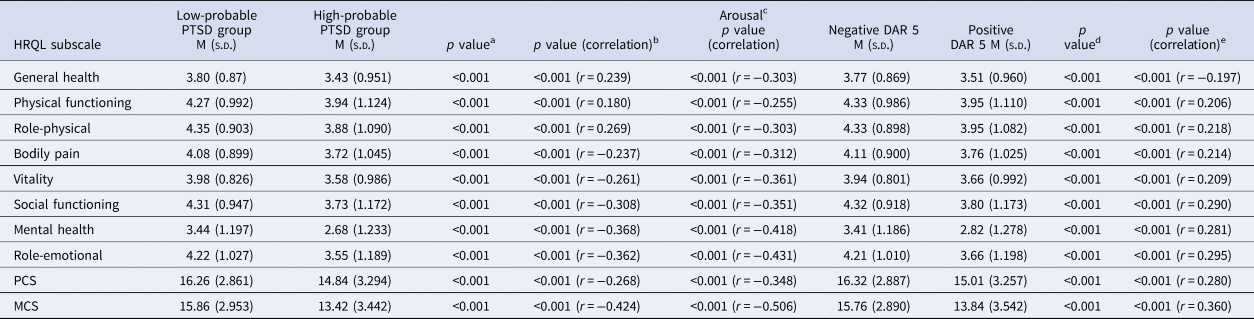
MCS, mental component summary; PCS, physical component summary; NS, not significant; M, mean; S.D., standard deviation.
By using Bonferroni correction, p value significance was determined as 0.005.
a p value is calculated by using independent sample t test between the subscale and low- and high-PTSD group.
b p value is calculated by using the Pearson correlation between the subscale and intrusion + avoidance scores.
c p value is calculated by using the Pearson correlation between the subscale and arousal score.
d p value is calculated by using an independent sample t test between the subscale and negative and positive DAR 5, which indicates psychological distress and functional impairment related to anger.
e p value is calculated by using the Pearson correlation between the subscale and DAR 5 score.
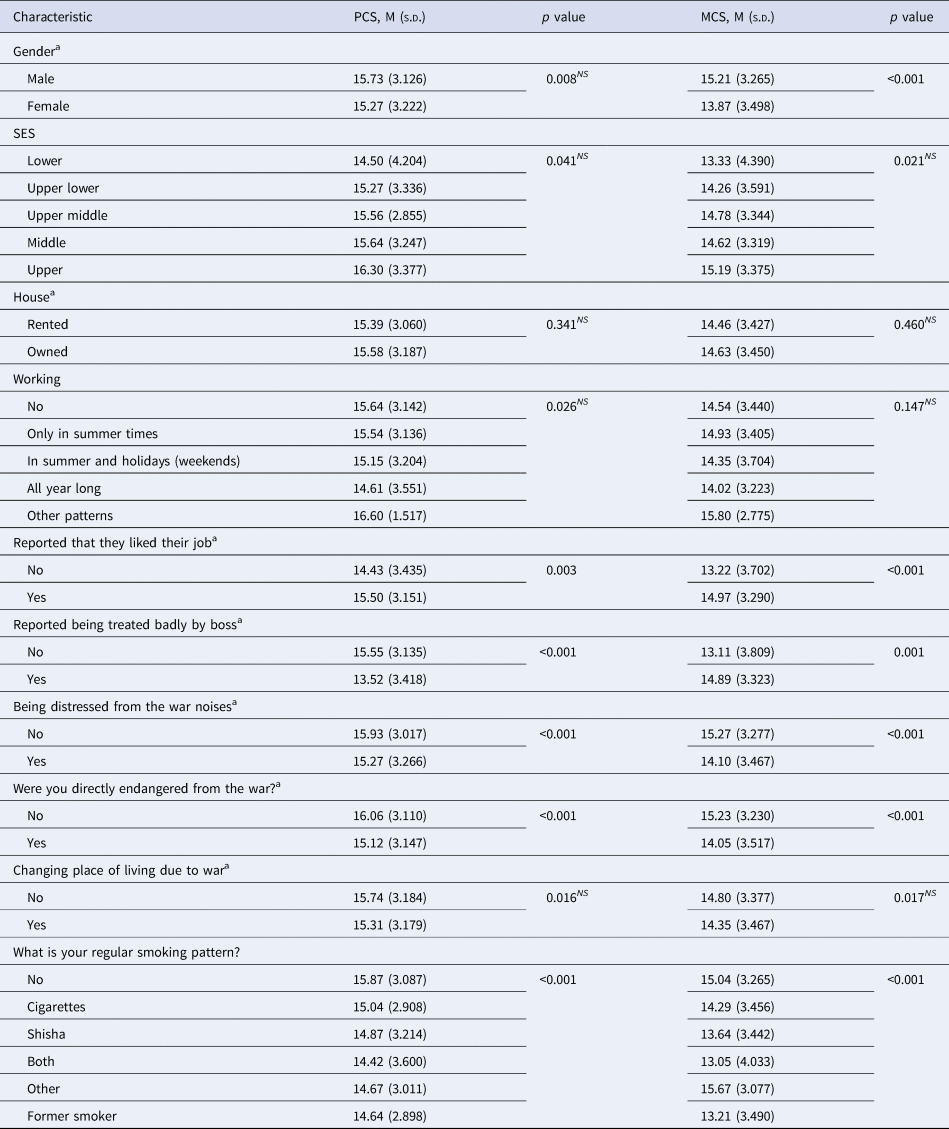
Comparisons between characteristics and mean PCS and MCS scores
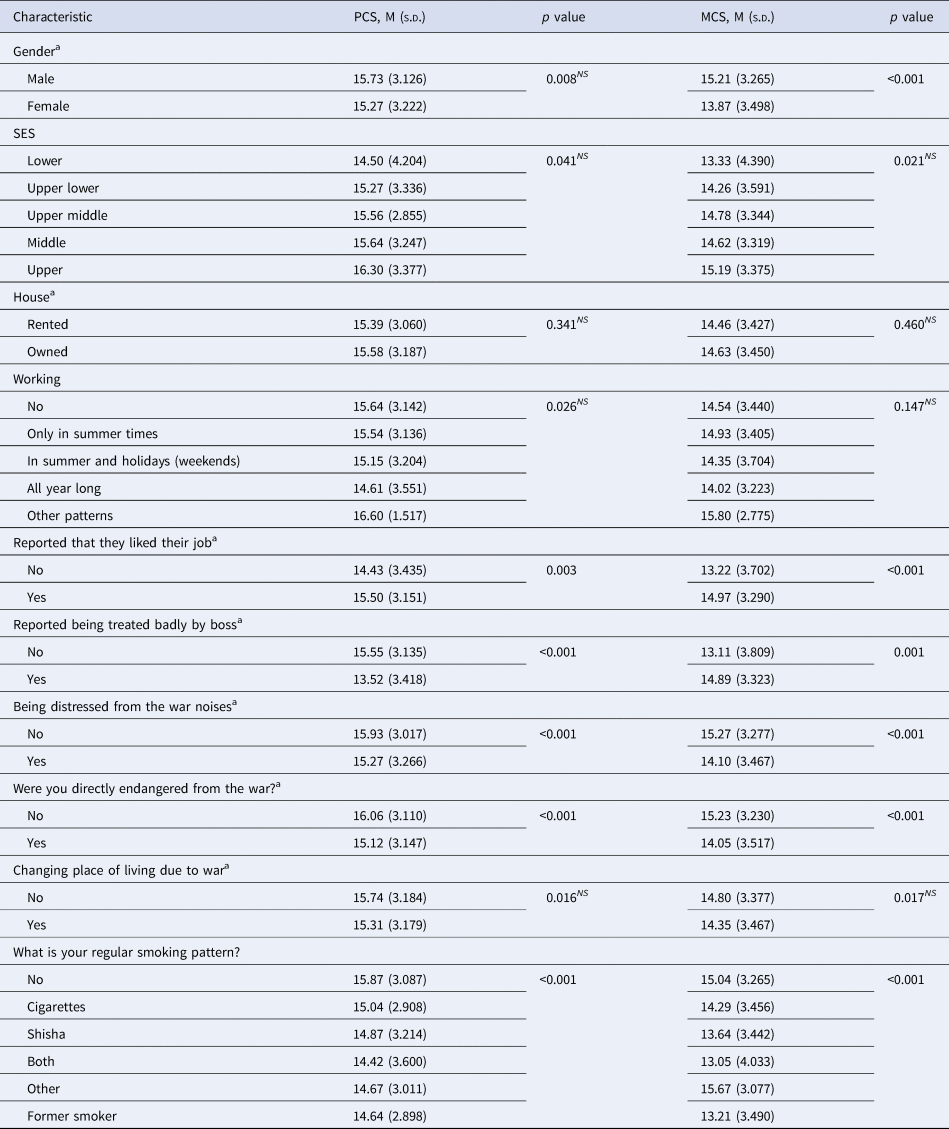
NS, not significant; SES, socioeconomic status; M, mean; S.D., standard deviation; MCS, mental component summary; PCS, physical component summary.
By using Bonferroni correction, the p value significance was determined as = 0.005.
a Independent t test was used while one-way ANOVA was used for the other variables.
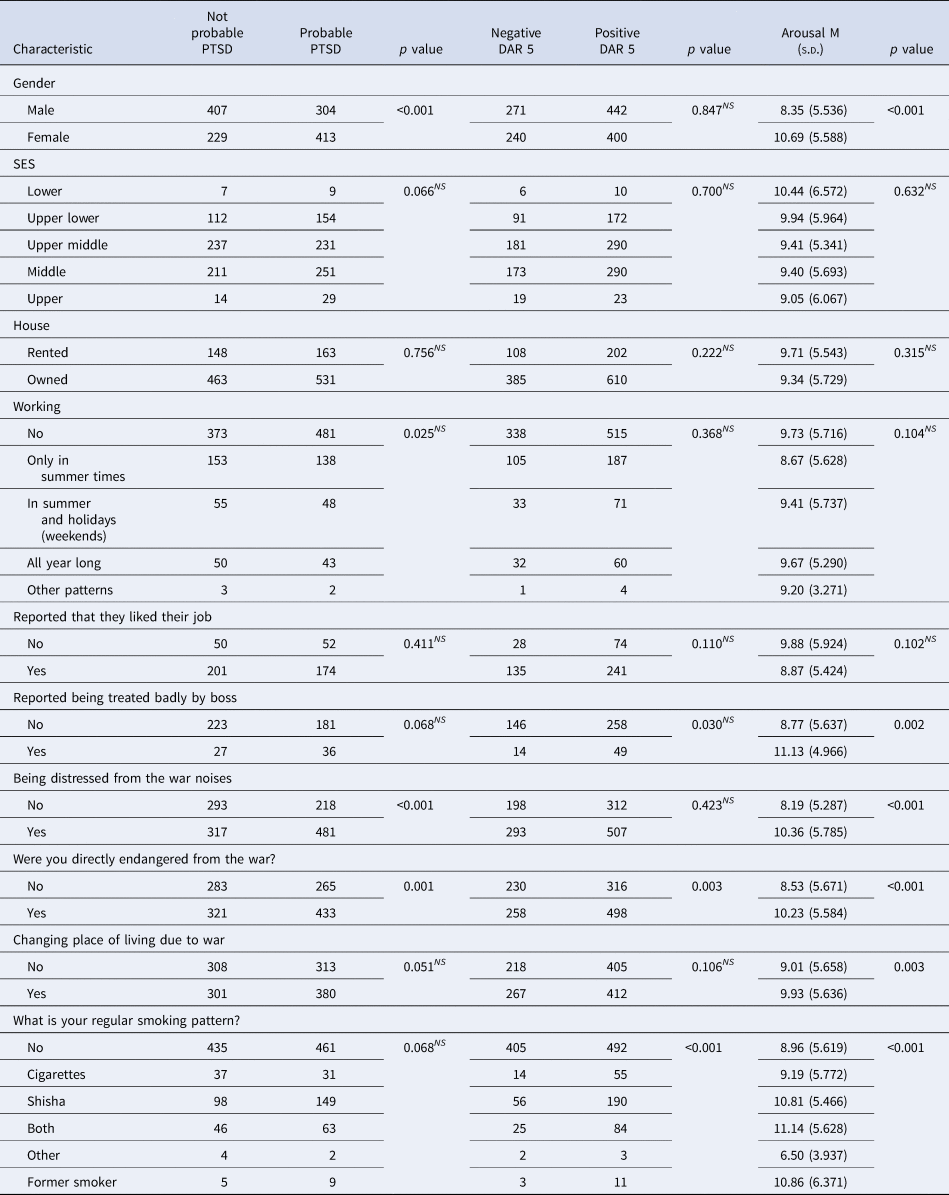
Comparisons between characteristics of PTSD probability (intrusion + avoidance), negative or positive DAR 5, and arousal scores
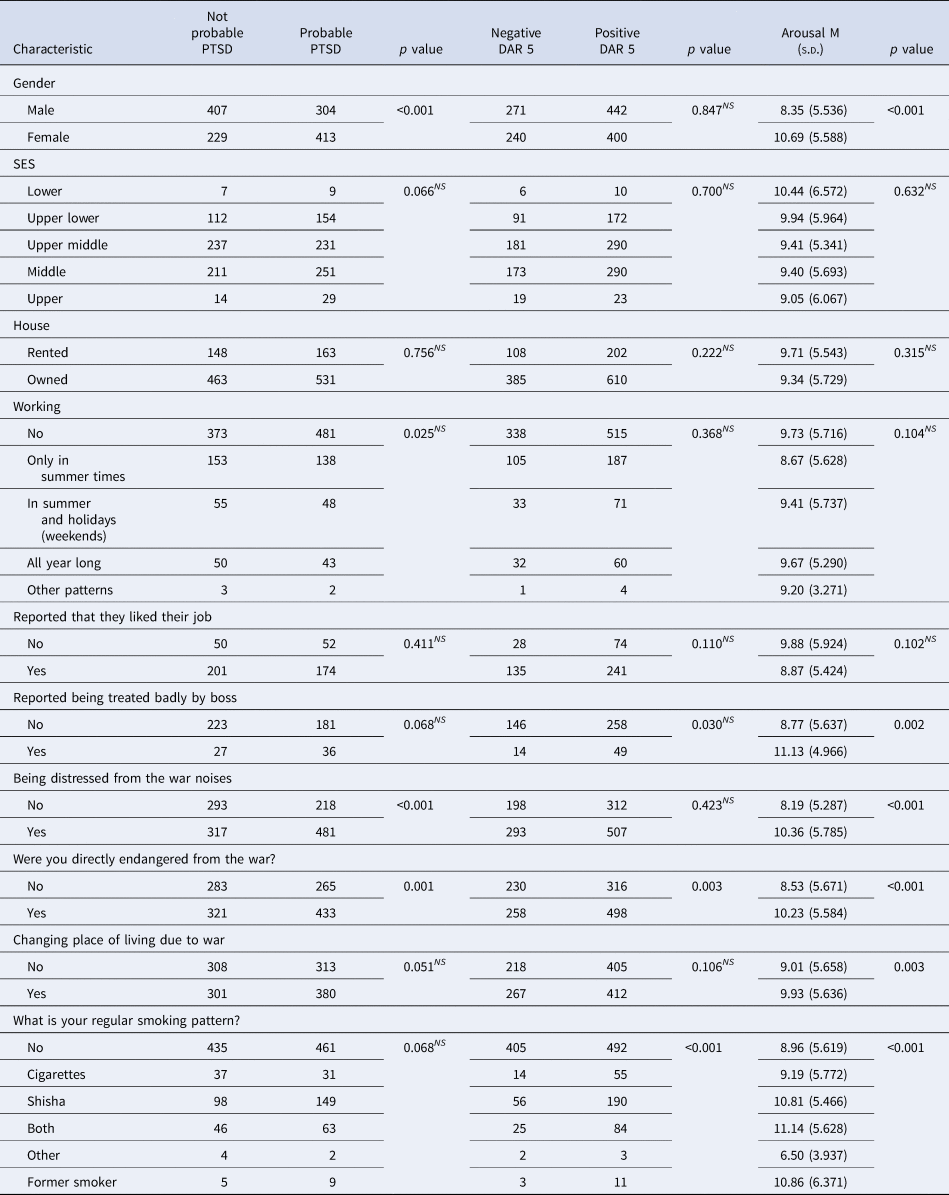
NS, not significant; SES, socioeconomic status; M, mean; s.d., standard deviation.
By using Bonferroni correction, p value significance was determined as = 0.005.
*p value is calculated when using one-way ANOVA and independent t test.
Results
General characteristics
Overall, 1493 students were invited to enrol in the study, of these 41 refused, 21 withdrew after their initial consent, and 62 participants did not respond to enough number of questions and were therefore excluded. Thus, the sample analysed in this study included 1369 students from seven different schools, with 723 (52.8%) being males and a mean age of 16.38 ± 0.79 years. Only 125 (9.3%) participants had no positive war variables. The major characteristics of these children can be foundin Table 1.
Health-related quality of life (HRQL)
Each individual question
Almost all scores of each SF-8 item were significantly, but weakly, correlated with family support and friends support, but not with support from the significant others. Around 46% reported fair or worse general health and 61% had moderate or severe mental health. Around 32.5% have responded to the question about ‘role-emotional’ with somewhat negative or worse. Role-emotional question assesses the limitations on routine activities due to emotional problems.
Each SF-8 item score was correlated with female gender (p < 0.05), except for physical functioning (p > 0.05). Interestingly, a better mental health score was correlated with having consanguineous parents (p = 0.011) which were not significant when the p value was corrected. Reporting being treated badly by the employer and education being affected by work were correlated with poorer SF-8 results (p < 0.01).
Responses to SF-8 individual questions and other parameters are reported in Table 3. Poorer SF-8 results were found in responders with a chronic medical condition, particularly in responders with a cardiac or urinary medical condition (p < 0.001). Cigarette and shisha smoking, and being a previous smoker were correlated with poorer SF-8 results (p < 0.001), except for vitality (p = 0.086). Being distressed from war noise and being endangered from the war were also correlated with poorer SF-8 results (p < 0.05).
Physical and mental components (PCS and MCS)
When comparing PCS and MCS subscales, we observed that both scales were highly correlated with each other (r = 0.526, p < 0.001). Different characteristics of PCS and MCS scores in students are shown in Table 4. PCS and MCS scores regarding PTSD, anger, arousal, social support are shown in Table 3. There were no statistically significant differences with type of work, and PCS and MCS. However, there was a statistically significant difference when having a chronic medical condition (p < 0.001).
When conducting forward linear regression on PCS scores with the variables that had statistically significant differences from Tables 3 and 4, and having a chronic medical condition without including arousal, it was significant (p < 0.05) for having problematic anger, being treated badly by the boss, having a chronic medical condition, having a probable PTSD, and smoking pattern and shown in Table 2. When conducting the same method with MCS scores, it was significant (p < 0.05) for having a probable PTSD, liking their work, gender, having problematic anger, life being endangered by war, smoking patterns, and having a chronic medical condition and shown in Table 2.
Post-traumatic stress disorder (PTSD)
PTSD (intrusion + avoidance) prevalence was 53% with an arousal mean score of 9.46. Correlation between PTSD and SF-8 was discussed in the previous paragraph and shown in Table 3. PTSD and arousal scores correlations with other variables are shown in Tables 4 and 5. Other variables and PTSD are shown in Table 5.
Having problematic anger or PTSD was not correlated with having consanguineous parents, specific chronic medical condition, or type of work. However, they were associated with having a medical condition or not (p < 0.001). Arousal score was significantly associated with having a chronic medical condition (p < 0.001), and with the type of work (p = 0.004). Working in the education sector had the highest arousal scores while working in the industry had the lowest scores. Arousal and PTSD scores were weakly positively correlated with more hours on TV (p < 0.001), but not on the internet (p > 0.05).
When using forward linear regression on PTSD scores with having a chronic medical condition and problematic anger, and the significant findings in Table 5, it was significant (p < 0.05) for gender, having problematic anger, being distressed from war noises, being endangered from war, and having a chronic medical condition, as shown in Table 2. When using the exact same method but with DAR-5 scores instead of interpretations, R 2 for DAR-5 scores was 7.6%.
Anger
Problematic anger was foundin 62.2%. DAR 5 correlations with SF-8 and PTSD are described in the previous paragraphs. Having problematic anger was not correlated with having consanguineous parents, or a chronic medical condition. More distress from anger was moderately correlated (p < 0.001) with arousal (r = 0.405), and weakly correlated (p < 0.001) with PTSD score (r = 0.266), family support (r = −0.161), and friends support (r = −0.098). Other variables are shown in Table 4. The DAR 5 score was also weakly correlated with more hours spent on TV and the internet (p < 0.05).
Gender
Males worked more frequently, worked for more years, and failed more years at school than females (p < 0.001). Males smoked cigarettes, and cigarettes with shisha more frequently than females (p < 0.05), with a mean number of cigarettes smoked per day for females being 8.9 and for males being 13. Females expressed more distress from war noises than males [p < 0.001 (OR 4.632; 95% CI 3.629–5.912)], but there was no significant difference with the other war variables (p > 0.05).
School performance
Higher year ninegradeswere correlated with a higher PTSD (intrusion + avoidance) score (r = 0.074, p = 0.009), and family support (r = 0.076, p = 0.008). Around 17% declared that at least one parent was the main source of support, 11.5% a sibling, 15% someone they loved, and 39.9% a close friend.
Smoking cigarettes and/or shisha was associatedwith lower grades by a mean of 6 (1.94% of the total grade) points with shisha smoking, and 11 (3.5%) points with cigarette smoking (p < 0.002). The high SES groups had a mean of 25 grades (8.1% of the total grade) higher than the lower SES groups (p < 0.001). Interestingly, students who were distressed from the war had a significantly higher mean of ninth grade gradesby 7 (2.6%) points (p = 0.002). Grades were not significantly associated with living in a rented house, losing someone due to war, being endangered from war, arousal score, DAR-5 anger scores, and other social supports (p > 0.05). When using forward linear regression on grades with the previous significant variables, it was only significant (p < 0.001) with gender, and having worked with R 2 of 5.9 and 1.6%, respectively.
Discussion
This study found that the prevalence of PTSD (intrusion + avoidance) was 53.0% and problematic anger was 62% with high mean scores of arousal symptoms (9.46). Moreover, one-third of the students were either previous smokers or current smokers. More than 90% of the students reported at least one positive variable of war exposure. Around half of the students had to change their place of living due to war, 58% reported that they were directly endangered from the war, 61% had distress from war noises, and 40% lost someone close due to war. Only 125 (9.3%) participants reported no exposure to the studied war variables. Therefore, it is evident that war exposure, anger, PTSD, and low mental and physical health rates are very high in Syrian school students.
Post-traumatic stress disorder (PTSD)
PTSD prevalence in our study was lowerthan another study conducted on Syrian adults which used a DSM IV questionnaire similar to our study (Kakaje et al., Reference Kakaje, Zohbi, Aldeen, Makki, Alyousbashi and Alhaffar2020e). However, it used online-based questionnaires that might have overestimated the prevalence. Another study in Damascus schools found that the prevalence of PTSD can be up to 90% with variable degrees (Bahaa Aldin Alhaffar et al., Reference Bahaa Aldin Alhaffar, Mustafa, Sabbagh, Yabrode, Shebib and Kouchaji2018). Another study that used CRIES-8 in schools of Damascus and Latakia showed that 35.1% had PTSD, 32% had depression, and 29.5% had anxiety (Perkins et al., Reference Perkins, Ajeeb, Fadel and Saleh2018). It also found a female predominance in PTSD, which is similar to our study (Rosenfield & Mouzon, Reference Rosenfield, Mouzon, Aneshensel, Phelan and Bierman2013). Losing someone or being endangered from the war was also correlated with a higher PTSD prevalence (American Psychiatric Association, 2013).
When parents are acutely exhibitingsymptoms of PTSD when caring for children, it can contribute to developing persistent PTSD in these children (Meiser-Stedman, Smith, Yule, Glucksman, & Dalgleish, Reference Meiser-Stedman, Smith, Yule, Glucksman and Dalgleish2017). Moreover, PTSD in children is largely shaped by the parents' own acute traumatic stress which can in return be a response to the child's previous trauma (Meiser-Stedman et al., Reference Meiser-Stedman, Smith, Yule, Glucksman and Dalgleish2017). PTSD can also persist for years without being recognised by the parents. Therefore, the fact that at least half of adults had positive symptoms of PTSD (Kakaje et al., Reference Kakaje, Zohbi, Aldeen, Makki, Alyousbashi and Alhaffar2020e) might provide an extra risk for the traumatised children from their parents who exhibit symptoms of PTSD.
Untreated PTSD in children can persist for years and affect their psychosocial development and functioning in adulthood (Kolaitis, Reference Kolaitis2017). Therefore, actions are needed as a large population of children in Syria was affected by this nine-year war. The high PTSD prevalence in Syria may reflect the persistent trauma from the war in Syria which had a more severe effect than being a refugee in a foreign country and living in terrible conditions in camps (Kakaje et al., Reference Kakaje, Zohbi, Aldeen, Makki, Alyousbashi and Alhaffar2020e).
Anger
Problematic anger was observed more frequently when being directly endangered from war. Anger was also associated with more hours spent on TV and the Internet, and it may predispose to smoking. However, anger was not significantly associated with gender, SES, having chronic medical conditions, working, and type of work. Anger association with SF-8 and CRIES 13 was discussed in the previous paragraphs.
Responders who would not admit being psychologically and emotionally traumatised might express these emotions in anger, which justifies screening for anger as it might be more sensitive to screen for PTSD. Inappropriate anger prevalence in the US was found to be around 7.8% with a male predominance (Okuda et al., Reference Okuda, Picazo, Olfson, Hasin, Liu, Bernardi and Blanco2014) which was much lower than our study.
Health-related quality of life (HRQL)
All HRQL items in SF-8 were negatively affected by PTSD, arousal, and anger. HRQL was also worse in females and those with a chronic medical condition. MCS was mostly affected by having a probable PTSD with an R 2 of 15.9% while PCS was mostly affected by having problematic anger with an R 2 of 7.6%. Other variables were also significant with MSC, including liking their work, gender, having problematic anger, being directly endangered by war, smoking patterns, and having a chronic medical condition. In contrast, PCS was affected by being treated badly by a boss, having a chronic medical condition, having a probable PTSD, and smoking patterns.
Most scores of HRQL were better than what was found in Iraq (Aljurany, Reference Aljurany2013). However, that study comprised 52 participants, and they were chosen out of 408 as they had the lowest and highest scores of PTSD. SF-8, mainly MCS, can reflect the psychological burden in the community. The high PTSD prevalence despite having relatively better HRQL than expected may suggest that children who grew up in traumatic events might have coped relatively well that their HRQL is somewhat not as affected as adults who may have worse adaptation methods.
Other variables
A study in Iraq showed that 94% of the sample were exposed to at least one traumatic event (Aljurany, Reference Aljurany2013), which is higher than our study by around 3.3%. Many studies in Syria found that war variables had many ramifications on different health aspects (Bahaa Aldin Alhaffar et al., Reference Bahaa Aldin Alhaffar, Mustafa, Sabbagh, Yabrode, Shebib and Kouchaji2018; Kakaje et al., Reference Kakaje, Alhalabi, Alyousbashi, Ghareeb and Hamid2020a, Reference Kakaje, Alhalabi, Alyousbashi, Hamid and Hosam Aldeen2020b, Reference Kakaje, Alhalabi, Alyousbashi, Hamid and Mahmoud2020c, Reference Kakaje, Zohbi, Aldeen, Makki, Alyousbashi and Alhaffar2020e; Perkins et al., Reference Perkins, Ajeeb, Fadel and Saleh2018).
School grades were only correlated with gender and working when using forward linear regression.
Males were also found to smoke more and tend to smoke both shisha with cigarettes together more frequently than females. Smoking was associated with lower grades, working when being a school student, and living in a rented house or being in lower SES. Smoking prevalence in the school population was not much different from what was found in adults in Syria (Kakaje et al., Reference Kakaje, Alhalabi, Alyousbashi, Ghareeb and Hamid2020a). Smoking in Syria was found to be associated with allergic rhinitis (Kakaje et al., Reference Kakaje, Alhalabi, Alyousbashi, Hamid and Hosam Aldeen2020b), and laryngopharyngeal reflux symptoms (Kakaje et al., Reference Kakaje, Alhalabi, Alyousbashi, Hamid and Mahmoud2020c), which were all associated with being distressed by war noises.
Limitations
This study was not in areas where more severely affected populations may exist. Furthermore, this study did not include students from private schools or children who dropped out which indicates that this study has probably underestimated the true prevalence of PTSD and other war variables.
Only screening self-reported surveys were used due to the unavailability of proper funding. The previous status of children or parents could not be assessed. Moreover, school performance was only assessed by checking the grades of one exam that is unified throughout the country. No more trauma details could be collected as it is a sensitive issue and to ensure a high response rate.
We included high numbers of variables in this study to cover the lack of data on students during wartime in Syria, particularly that it proceeded COVID-19 infection which would affect all future studies, and make it harder to isolate the effect of war on school students in Syria.
Conclusion
More than half of the school students in Syria had probable PTSD and problematic anger while social support played a small role. The high prevalence of mental health disorders and poor general health indicates a serious threat to the future of Syria. Females were affected more than males, and the war was significantly associated with a worse HRQL. Having a probable PTSD was associated with having problematic anger, being more exposed to war variables, and performing negative habits, such as cigarette and shisha smoking, and spending more time on TV or the internet.
This study found that the prevalence of PTSD was 53.0%, and problematic anger was 62%. Around 46% declared having a fair or worse general health and 61% a moderate or severe mental health. Moreover, one-third of the students were previous smokers or current smokers. Around half of the students had to change their place of living due to war, 58% reported that they were directly endangered from the war, 61% had distress from war noises, and 40% lost someone close due to war. Only 9.3% had no positive war variables, and around one-third had to work, mainly in summer times and holidays. Students who had distress from anger also used the internet 9 h more every week. Interestingly, work was correlated with better PTSD, but worse PCS. Furthermore, war variables did not have a significant effect on school performance. Consanguinity and SES were not associated with PTSD, HRQL, or anger.
Data
The data can be made available upon reasonable request.
Acknowledgements
We would like to thank Dr Mohammad Abdulhakim Kiwan, Dr Mazen Abdalhamid Al Janadi, and Ahmed Abdulrazak Haj Ersan for their aid in making this research possible and facilitating its conduction, distribution of the surveys, and making sure that the data werevalid and anonymous. We also sincerely appreciate the valuable contributions made by Dr Khattab Mustafa and Dr Leen Makki in the methodology and acknowledge their kind collaboration which made this research possible and greatly facilitated its conduction. We also appreciate the contribution made by Dr Elliot Dolan-Evans to proof-read the manuscript and make it better.
Authors' contributions
AK: conceptualisation; data curation; formal analysis; investigation; methodology; project administration; supervision; resources; validation; original draft; writing – review & editing. RAZ: investigation; project administration; supervision; resources; methodology. AA: investigation; data curation; methodology; formal analysis; software; and data curation. RNKA: investigation; original draft; writing – review & editing. OHA: investigation; resources; project administration. MMA: methodology; validation; software; conceptualisation. AG: software; resources; conceptualisation. YL: supervision; resources; validation. All authors have read and approved the manuscript.
Financial support
We received no funding in any form.
Conflict of interests
We have no conflict of interest to declare.
Ethical standards
Written consent was given for data collection, and for using and publishing the data from the caregivers before proceeding with the survey by one week when the student was younger than 18 years. The written consent was taken from the participant when being 18 years or older. Confidentiality was assured and no identity-revealing questions were asked. Oral consent was also taken from the student on the day of data collection before giving the survey regardless of the age. Our study protocol and ethical aspects were reviewed and approved by Damascus University, faculty of medicine ethics committee in Damascus, Syria. It was also approved by the Damascus University vice president for the scientific affair, Damascus University faculty of medicine vice dean for scientific affairs, and by the Ministry of Education.