The process of deindustrialization is central to any attempt to understand the organization, governance and experience of British cities in the second half of the twentieth century. Indeed, Jim Tomlinson has recently suggested that deindustrialization could serve as a useful organizing meta-narrative for post-war British history more generally because ‘the process is so significant in its effects, economic, social, and political’.Footnote 1 Within post-war historiography, the process of deindustrialization has been most thoroughly examined at the macroeconomic level. Economic historians such as Stephen Broadberry, Nicholas Crafts and Peter Scott have traced Britain's industrial decline using national economic performance indicators, and assessed the role and responses of the state via national and regional policy-making.Footnote 2 While such approaches usefully outline the broad contours of structural and sectoral change, they can be somewhat divorced from the spaces and experiences of everyday economic life. In particular, economic histories of deindustrialization have not generally incorporated the urban context – that is, the socio-spatial dynamics of cities and the state's role in their organization – into their analyses of structural economic change. Yet it was in the major conurbations where the process of deindustrialization was most pronounced. The sharp decline of industrial employment across the second half of the twentieth century had far-reaching consequences for British cities, and produced new geographies of economic activity (and inactivity) which continue to shape the experience and prospects of urban areas today.Footnote 3
While conventional economic histories often lack an urban dimension, the expanding literature on the post-war governance and planning of British cities has had little to say about deindustrialization, or about urban economies more generally. Recent works have focused on town planners’ fantasies of reordered urban environments (particularly as evidenced by the wave of reconstruction plans produced in the 1940s), on the nature and extent of ‘modernism’ in British planning practice and on city governments’ social housing programmes.Footnote 4 Such accounts rightly situate post-war urban governance within a longer trajectory of technocracy and ameliorative social reform, but the place which economic concerns occupied within planning practices has received little attention.Footnote 5 Yet, as Simon Gunn's investigation of Bradford's post-war redevelopment has indicated, urban renewal in traditional industrial cities was as much about economic revitalization as the provision of social welfare.Footnote 6
The relative absence of an economic dimension from post-war urban historiography is all the more striking given how far deindustrialization came to define the urban experience in the second half of the twentieth century. In the decades after 1945, despite initial optimism about the nation's prospects of an industrial revival, the long-term decline of employment in manufacturing and related services transformed British cities. From the mid-1960s, ‘the inner cities’ emerged as simultaneously an economic, social and political problem – depopulated and underfunded districts which lacked employment and in which high concentrations of the poorest in society resided.Footnote 7 Continued economic difficulties and waves of urban disorder meant that, by the 1980s, the inner areas of British cities were firmly problematized in the national consciousness as sites of crime, decay and racial strife.Footnote 8 Political concern with inner urban conditions was such that, in the early hours of 12 June 1987, having just secured her third general election victory, Prime Minister Margaret Thatcher's first pronouncement was that ‘tomorrow morning, we must do something about those inner cities’.Footnote 9 Concerns over the socio-spatial consequences of deindustrialization led to a new era of urban policy based on the ‘regeneration’ of cities.Footnote 10 The post-1997 New Labour administrations also took up this project; ‘regeneration’ was recast as ‘urban renaissance’, but remained centred on addressing the urban consequences of structural economic change.Footnote 11 We know, then, that deindustrialization transformed British cities materially and culturally, and produced a set of conditions which continue to provoke political anxiety and successive waves of state intervention, and yet we know very little about how the state managed urban economies in the period between 1945 and the 1970s.
This article examines the economic dimension of post-war urban renewal in two English cities: Manchester and Leeds.Footnote 12 Both are emblematic industrial cities, and underwent a familiar developmental path from nineteenth-century expansion, through steady decline in the twentieth century, culminating in late twentieth-century projects of regeneration. Furthermore, both are also cities in which expansive programmes of urban renewal were undertaken in the post-war period. The two cities thus serve as useful case-studies for an investigation of the role which economic objectives played in post-war urban planning, and of the impact which physical redevelopment had on urban industry. The article makes two claims. First, that the architects of post-war renewal were intensely aware of the threat which industrial decline posed to the social and economic bases of their cities, and viewed the reordering of the urban environment as a means to bolster and diversify local industry. Second, that far from revitalizing urban industry, redevelopment and strict land use controls disrupted and destroyed many existing businesses, with attendant consequences for local employment. Evidence from industrialists and from local and central government records is used to show that highly interventionist and inflexible planning practices destabilized local economies through the destruction of vital infrastructures and the displacement of established economic practices. The article argues, then, that not only did post-war urban renewal have an important economic underpinning which has been largely overlooked, but that, through ill-conceived and counter-productive interventions, the governments of post-war cities played a role in the production of the set of ‘urban problems’ which came to define British cities by the 1970s.
Battling industrial decline
The post-war city plans produced by the governments of Manchester and Leeds both evidenced a deep concern with the two cities’ economic prospects. The opening statements of both documents made clear the paramount importance placed upon the industrial and commercial bases of the cities. The 1945 City of Manchester Plan stated that, in producing the city's plan:
One supremely important fact has been kept constantly in mind. Manchester is first and foremost the core and pivot of one of the most highly industrialised regions in the world. An overriding purpose of any Plan for Manchester, therefore, must be by all possible means to promote, and to avoid impairing, the full and prosperous employment of the population engaged in the manufacturing and commercial activities to which the city and its environs owe their wealth.Footnote 13
Leeds’ post-war city plan was a more modest undertaking than Manchester's. The 1951 planning document, City and County Borough of Leeds, was drawn up in response to the requirements of national planning legislation, rather than as part of the wave of locally initiated city plans in the 1940s. Nonetheless, Leeds’ planners also emphasized the primacy of the city's economic outlook. The preamble to Leeds’ plan stated that ‘The economic life and well-being of the city is founded on its varied cultural, commercial and many sided industrial interests, with clothing and textiles predominating, and the Development Plan must have regard to the preservation and improvement of these varied interests.’Footnote 14 Both city plans included statistical data on local industry and employment, detailed information gathered from surveys of local manufacturers and programmes of action designed to bolster and diversify economic activity within the cities.Footnote 15
City officials’ post-war plans for industry demonstrated an awareness of the threat posed by structural economic change, and a continuity of concerns and approach with the pre-war period. As cities which experienced dramatic growth in the nineteenth century, both Manchester and Leeds remained dependent on traditional industries, particularly textiles and engineering, in the twentieth century.Footnote 16 Although their position as regional commercial centres insulated the two cities from the worst effects of inter-war depression, local officials both before and after the war were conscious of the dangerous decline of traditional industries and the drift of economic activity to the south of the country.Footnote 17 The newer, light industries which experienced growth in the inter-war period, such as electrical engineering, food processing, motor vehicles and pharmaceuticals, were generally located on newly developed industrial estates in the south-east and the Midlands, particularly in the rapidly expanding outskirts of London.Footnote 18 Peter Scott's research estimates that, in 1939, there were 65 industrial estates in Britain, employing over a quarter of a million workers, and 70 per cent of this employment was in the south-east.Footnote 19 Planners in Manchester and Leeds were conscious of these trends and pursued development plans which were designed to address the shift of economic activity to southern industrial estates.
In 1938, in its evidence to the Royal Commission on the Distribution of the Industrial Population (the Barlow Commission), Leeds’ Development Committee bemoaned the fact that ‘the development of Leeds. . .has been retarded by the concentration of industry in the South’.Footnote 20 The 1945 City of Manchester Plan noted that between 1934 and 1938, over half of all new factories established in the country were located in and around London and stated that ‘it is vitally important, alike on social, strategic and economic grounds, that this disastrous drift away from the basic industrial regions should be arrested and reversed. That will not happen unless the location of industry is deliberately planned in the public interest.’Footnote 21 Officials in both cities were acutely aware of the dangers of shifting geographies of production and, as the statement from Manchester's plan makes clear, believed that proactive industrial planning could rejuvenate flagging local industries and counter the southwards drift of economic activity.
Post-war plans were based on the reorganization of existing industry and the stimulation of new industrial development on purpose-built industrial estates. Planners in Manchester and Leeds observed the economic successes of large industrial estates at Slough, Park Royal, Welwyn Garden City and Letchworth, and understood the development of industrial estates as a means by which new, growth industries could be attracted to their cities.Footnote 22 Closer to home, the vast industrial estate of Trafford Park, developed from 1896 adjacent to Manchester Docks, had been buoyed by wartime production demands and remained an important centre of industry into the 1960s.Footnote 23 Manchester's 1945 plan called for ‘the provision of larger and better equipped trading estates [in order to] secure that infusion of new industries on which, combined with the reinvigoration of old staples, the future prosperity of Manchester depends’.Footnote 24 The 1945 plan proposed that the city government itself should develop new industrial sites, and construct and lease factories which had been ‘pre-developed by the Corporation’.Footnote 25 In Leeds, despite the city's different planning culture, the same approach was adopted. In 1945, the city's Development Committee argued that ‘Leeds must provide an incentive to potential industrialists’, and that this could be achieved through the provision of planned industrial estates ‘with all essential services laid on’.Footnote 26
The state-led development of industrial sites was a well-established strategy before the war. Central government had, since 1936, sponsored the development of industrial estates in the most heavily depressed regions of the country, and such proactive industrial policies were advocated by many town planning professionals in the 1930s.Footnote 27 As early as 1935, Manchester's Development Committee discussed the important role which industrial estates could play in ‘its endeavours to attract firms to Manchester’.Footnote 28 From the mid-1930s onwards, the governments of Manchester and Liverpool both sponsored light industrial development at the satellite settlements of Wythenshawe and Speke respectively.Footnote 29 In light of these pre-war activities, planners’ post-war efforts to encourage industrial development in specific locales through the provision of subsidized infrastructure did not represent a departure from established ideas and practice. Nonetheless, the post-1945 period did represent a significant moment in as much as the powers granted to city governments to regulate, appropriate and redevelop urban land were substantially expanded. The inter-war growth in the expertise and confidence of planning professionals culminated in the well-rehearsed experiences of the 1940s in which ‘planning’ was understood to have proved its worth in wartime, and was subsequently established as a key branch of state activity through a succession of landmark legislative instruments.Footnote 30 The post-war planning acts empowered and emboldened local planners, and their resultant efforts to reorder and rationalize urban environments, and to rehouse urban populations are familiar terrain within urban historiography. The economic dimension of these endeavours is, however, less familiar. Yet industrial reorganization was an essential component of planners’ wider visions of efficient, functional and productive cities.
Plans for industry were centred on two related strategies, which were themselves integral to the broader objectives of post-war urban renewal. The first was the rationalization and sanitization of existing industrial districts. The unplanned proximity of housing and industry was understood as unhealthy, dangerous and irrational, and functional segregation – effected through area clearance schemes and strict land use controls – was proposed as the remedy. The implementation of these policies and their impact on urban industry is dealt with in the second part of this article. The second strategy for industrial planning was focused on harnessing new development on planned industrial estates to projects of population dispersal. The governments of Manchester and Leeds, like many other post-war local authorities, were committed to decentralization, both as a means of achieving the ‘decongestion’ of the existing urban core, and in order to create spacious and orderly ‘overspill’ settlements on the urban periphery. In accordance with good Garden City principles, planners envisaged such settlements not merely as dormitory estates, but as self-contained communities. The provision of employment was therefore viewed as vital to the success of overspill settlements, and peripheral industrial estates, developed alongside areas of new housing, presented a welcome opportunity to create self-sufficient communities at the same time as enticing new, light industries which would safeguard regional economies. Leeds’ 1951 plan confirmed ‘the local authority's planning policy to provide light industrial areas adjoining the larger Housing Estates in the suburbs to ease the transport problem and reduce the travelling time of the workers’.Footnote 31 The city's vast overspill estate at Seacroft, intended to form a ‘complete new suburban township’, was planned with 50 acres of ‘suburban industrial estates’ designed to attract light industry (see Figure 1).Footnote 32 Similar reservations of land for industrial development were made at Leeds’ Iveson housing estate.Footnote 33 In Manchester, officials also envisaged that large new estates such as those at Wythenshawe and Hattersley would be ‘industrially self-contained’, with industrial development planned ‘to keep pace with housing development and ensure a socially and economically balanced community’.Footnote 34 The city's 1945 plan ambitiously proposed three light industrial estates at Wythenshawe, totalling 400 acres.Footnote 35
City engineer's plan for a light industrial estate at Seacroft, on the outskirts of Leeds. The lease arrangement for the highlighted plot was abandoned in 1948 due to central government restrictions on the location of new industry.

Plans for suburban industrial estates were firmly tied to local projects of population dispersal, yet they were also understood as a positive intervention for industry itself. City planners absorbed an appealing spatial and technological logic that, if provided with the ideal infrastructures and environment, the productive capacities of industry would be unleashed. Spacious and well-designed industrial estates, in which firms were housed in modern, single-storey factories and organized into plots with ample vehicle access and landscaped green space, were seen as a mechanism by which industry could be made more productive and more efficient. Leeds’ 1951 plan, for example, suggested that, in the existing industrial districts, ‘working conditions are very congested and output is suffering’.Footnote 36 Industry here, it was noted, was ‘old, in multi-storey buildings and on congested sites with no room for expansion or adequate space about the buildings’.Footnote 37 The solution advocated was the ‘transfer [to new estates] and replanning of these industries to modern standards’.Footnote 38 Two juxtaposed plates in Manchester's 1945 plan made the same case for industrial improvement in alluring visual terms (Figures 2 and 3). In the first, a set of images of ‘unplanned industry’ present a picture of disorder, congestion and environmental degradation. The second plate offers images of ‘planned industry’, with modernist factories occupying neat, spacious, estate plots, to demonstrate ‘that industry can be orderly, clean and attractive’.Footnote 39 The accompanying text includes the call: ‘Let us make our workplaces pleasant. Our industry will be more efficient, our lives happier.’Footnote 40
Plate from the 1945 City of Manchester Plan which shows images of ‘unplanned industry’

Plate showing images of ‘planned industry’ which was juxtaposed with figure 2 in the City of Manchester Plan

Plans for industrial reorganization drew on motifs of industrial modernity which were in circulation in the inter-war period. The mode of light industrial development which took shape in the 1930s on the trading estates of Welwyn and Slough, and along the North Circular and Great West Road in London, was self-consciously modern. Architectural modernism was bound up with the introduction of technological and organizational innovations, often influenced by American scientific management principles. The application of careful design to the process and facilities of production was understood as key to functionality and efficiency in the ‘New Industrial England’.Footnote 41 Manchester's and Leeds’ industrial planners could thus rely on an established repertoire of expertise and imagery with which to construct their own visions of industrial modernity. In addition to drawing on inter-war models of modernized industry, city planners sought to situate their post-war development plans within nationally orchestrated projects of industrial recovery and improvement. Tomlinson notes that ‘the 1940s inaugurated a public policy concern with productivity that was to become a constant feature of Britain in the second half of the century’.Footnote 42 Nick Tiratsoo has written of the attempts under the Marshall Plan and the Anglo-American Council on Productivity (later the British Productivity Council) to introduce ‘American versions of economic modernity’ to British industrial practices.Footnote 43 In this context, local planners were able to link their efforts to national economic objectives. The 1945 City of Manchester Plan, for example, claimed that reorganizing local industry would put
Manchester's industries in a favourable position to begin that ‘battle of production’ to which Mr. Herbert Morrison has referred as ‘the battle of the next four years – to see that we produce the right goods in ample quantities and in the most efficient way’. . .in an effort to recover those export markets on which our prosperity so largely depends.Footnote 44
Despite the intention to unite local industrial plans with national economic objectives, in practice the divergent interests of local and central branches of the state restricted city planners’ capacities to promote new industrial development. Central government officials were unconcerned with relocating industry within individual cities, and were decidedly unconvinced about the desirability of urban dispersal on the scale envisaged by city governments. Regional industrial policy as operated by the Board of Trade was based on a much more modest scope of intervention, in which central government sponsored industrial development only in those localities with the most severe unemployment.Footnote 45 The Board of Trade's control of the post-war licensing system for industrial development was used as a lever to persuade firms to relocate to depressed districts, and to discourage new development in less immediately suffering locales such as Manchester and Leeds. There is an array of evidence in the archives of both city governments, and in central government records, which shows that throughout the late 1940s, 1950s and 1960s local plans for industrial relocation were persistently frustrated by central government's refusal to grant the necessary licences.Footnote 46 The Board of Trade resisted Manchester's attempts to gain additional powers over new industrial development as ‘eminently undesirable from our point of view when we are trying to get industry out of Manchester’.Footnote 47
There was a clear economic underpinning to the visions of urban renewal which were produced by local officials in the high moment of post-war reconstruction planning. City plans were produced by officials who understood national industrial trends, and who appreciated the potentially disastrous consequences which steady decline could have for traditional industrial centres. Their industrial plans represented a sophisticated response to this challenge, and sought to marry the physical reorganization of industry with sectoral diversification and technological innovations. Local industrial strategies demonstrated a holistic faith that co-ordinated development plans could enhance industrial performance at the same time as fulfilling wider objectives centred on ensuring the city as a whole was healthy and orderly. The realization of such expansive plans was, however, severely curtailed by opposition from central government.
Removing obsolescence
The second section of this article turns to consider the impact of clearance and urban renewal on industrial activity in the existing urban core. City planners viewed inner industrial districts as deeply problematic places. Mixed use neighbourhoods in which industrial activity co-existed with residential properties and other patterns of use were deemed to be dangerous, disorderly and inefficient. This passage from the 1945 City of Manchester Plan illustrates officials’ anxieties about existing industrial districts:
Industry and housing are jumbled together in many districts on the fringe of the central area of the city and among the inner wards. Narrow streets lined with terraced houses lead up to the very gates of old, unsightly, cramped, and ill-planned factories. . .In some areas industries still carry on in rows of houses hurriedly converted into workshops a century ago. Amid these disordered industrial slums are more recent factories rising above their outworn neighbours, but often occupying every available square inch of ground and thus adding to the general congestion.Footnote 48
Leeds’ 1951 plan evidenced the same unease about the ‘admixture of industries and houses’, and such concerns continued to drive local planning decisions into the 1960s.Footnote 49 The city's 1968 Development Plan, for example, complained that ‘in the South and West of the city in particular there are many scattered factories and workshops, mostly small businesses employing comparatively few people, which constitute non-conforming uses in predominantly residential areas. Some are noxious industries and some cause nuisance in other ways.’Footnote 50
The solution proposed for these disordered neighbourhoods was based on comprehensive physical reorganization; a rationalized, functionally segregated urban environment was to be created through wholesale clearance and the stringent enforcement of zoning plans.Footnote 51 Since Michael Young and Peter Willmott's sociological investigations in the late 1950s, the disruptive effects of post-war clearance schemes on social and familial networks have been a recurrent intellectual concern.Footnote 52 Recent historical studies continue to examine the ways in which clearance destabilized established patterns of sociability and transformed models of working-class ‘community’.Footnote 53 Despite this identification of the social and cultural upheaval occasioned by urban renewal, the parallel disruption of local economies has received little attention. Yet evidence from city governments, Westminster departments, contemporary press and academic accounts, and affected industrialists, strongly suggests that post-war planning practices led to significant economic disruption in British cities.
Planners in Manchester and Leeds were willing to countenance considerable economic upheaval in the interests of creating, in the words of the City of Manchester Plan, ‘a well-arranged city’.Footnote 54 In 1966, Manchester's chief planner reported that ‘the City's present large scale slum clearance programme. . .has resulted in a pressing need to remove, and where possible to relocate, many industrial and commercial firms situated in the older parts of the City’.Footnote 55 The same readiness to disrupt existing businesses was evident in Leeds’ planning department, whose 1973 report recognized that ‘the Council's urban restructuring policies including industrial renewal, although intended to benefit the community at large, will unfortunately cause some upheaval to the city's industrial life’.Footnote 56 Renewal projects would, this report noted, ‘affect a large proportion of Leeds industries’.Footnote 57 A year earlier, Leeds’ planners also acknowledged that ‘considerable physical disruption to established local industry has taken place. . .though some of this displacement is self-induced most is occasioned by local authority initiative’.Footnote 58
It is clear that, in both cities, city planners were conscious of the disruptive impact of redevelopment on local economic activity. Council records include details of many individual firms which were constrained or destroyed as part of planned redevelopment. In Longsight, in the east of Manchester, three factories were displaced by a clearance area designated in 1966. One of these, the British Vinegar Company (producers of Sarsons Vinegar), was refused planning permission to upgrade and expand their works because its factory ‘was included in a general development area for housing purposes’.Footnote 59 Two engineering firms in the same area, the Heidleberg and Daisy works, were permitted to stay ‘for the time being’ but notified that their premises would be compulsorily purchased and demolished ‘in due course in order to implement. . .open space proposals’.Footnote 60 Simply by designating a slum clearance area, local authorities placed firms on notice that their premises would be compulsorily purchased and destroyed, and prevented any moves to expand or improve industry in situ.
In Leeds, there were similar cases of firms which were refused permission to expand, or simply demolished, in the interests of fulfilling planners’ environmental objectives. In the old industrial district of Kirkstall, the Abbey Printing Works was affected by a ‘long standing proposal to remove non-conforming industrial uses in Kirkstall valley’.Footnote 61 The Abbey Works was engaged in protracted planning disputes with Leeds city council between the 1950s and the 1970s over its continued presence on the site because ‘long term planning proposals visualise[d] the whole of the area. . .being developed as open space’.Footnote 62 In 1972, the Hare Park Tannery in Leeds was scheduled for compulsory purchase and demolition because ‘while these premises do not occasion nuisance they would be incongruous and visually offensive if retained in the broad linear sweep of public open space’.Footnote 63 Council records in the two cities indicate that the above cases were far from isolated examples. In 1972, there were 425 firms in Leeds facing displacement as a result of council renewal schemes.Footnote 64 In Manchester in 1966, there were 645 firms affected by ongoing compulsory purchase orders.Footnote 65
The disruption and destruction of industry on this scale was motivated by planners’ impulses to rationalize and improve the urban environment, but it was also justified in terms of the benefits to industry that would accrue from relocation. Planning documents drew on a powerful discourse of obsolescence to argue that industrial performance was being held back by outdated physical infrastructures. Manchester's 1945 plan stated that ‘no longer can industry afford to be encumbered by dilapidated premises’.Footnote 66 In 1968, Leeds City Council argued explicitly that the spatial configuration of industry was damaging productivity and exacerbating regional economic difficulties:
Although some industries in Leeds are in modern buildings on spacious sites a large number of firms operate in very old and obsolete premises on sites which are confined and irregular in shape, where street access is limited and facilities of loading and unloading unsatisfactory for present day vehicles. . .It is suggested that low productivity, lower wages and migration may all be linked with this obsolete industrial fabric.Footnote 67
City planners understood the destruction of such ‘obsolete’ spaces as unproblematic, particularly when viewed alongside their assumption that firms would naturally seek to relocate to ‘modern’ premises on peripheral industrial estates. These assumptions, however, proved to be misguided and displayed a fundamental misunderstanding of the nature of much existing urban manufacturing.
Complaints from affected industrialists demonstrate that, contrary to city officials’ predictions, the commercial viability of many firms was dependent on their existing premises, and on their geographic situation within the city. The activities of small-scale, highly specialized, urban manufacturers were embedded in specially adapted buildings where costs were low, and reliant on localized networks of labour, supply, distribution and ancillary economic activities. In 1953, a leading local industrialist and prominent member of the Chamber of Commerce, T.H.G. Stevens, wrote to the council to protest against ‘the disturbance of Manchester's industry which may be caused by the development of the Manchester plan’.Footnote 68 Stevens cited the damaging effects of zoning, compulsory purchase and relocation on manufacturers. He highlighted firms’ dependence on local skilled labour, the costs of transporting raw materials and workers to new peripheral sites, and added that ‘the site in the centre of the city probably has other easy and low-priced facilities which will not be available on an outlying site’.Footnote 69
In contrast to planners’ assumptions that ‘obsolete’ industrial premises were constraining firms, Stevens’ intervention (which was prompted by complaints from his members) suggests that many industries were reliant on the low overhead costs of inner-city factories. Renting newly built factories on industrial estates represented an increase in basic costs which was too much for many firms to bear. The same problem faced firms in Leeds, where, in 1973, the city government noted ‘the rise in costs which a transfer [to a new site] will inevitably incur’, and that ‘additional costs have to be met from individual firms’ profit margins and these are often too slender to match the increase’.Footnote 70 Further evidence from contemporary press reports substantiates this picture. A 1971 Guardian report on urban industry stated that ‘Large numbers of slum factories have been pulled down. But the owners cannot always meet the rents on new industrial estates which are substantially higher than those the slum factory owners or tenants have been accustomed or are willing to pay. Some go out of business: others leave the area.’Footnote 71
Detachment and dislocation from local networks of skilled labour, and from ancillary economic activities, was another factor which industrialists argued prevented their removal to new sites. In 1945, when consulted over relocation, industrialists in Manchester cited ‘nearness to a convenient labour pool’ as the ‘principle advantage’ of their existing locations.Footnote 72 Other benefits noted were access to existing transport infrastructure and the ‘advantages [which] arise from proximity to linked industries’.Footnote 73 Similar views were offered by industrialists in Leeds when consulted in 1951.Footnote 74 One manufacturer in Leeds, Dixon Powner and Sons, protested strongly against the city government's serving of a compulsory purchase order on its premises in 1946. This company, which employed 150 workers producing architectural metalwork, complained that a central location was essential for attracting workers, for liaising with architectural practices and for obtaining raw materials. The company's owner wrote to the town clerk, with a touch of curtness, that ‘we point these facts out as the reason why we have not considered building a single storey workshop away from the centre of the City [as suggested by the city council]’.Footnote 75
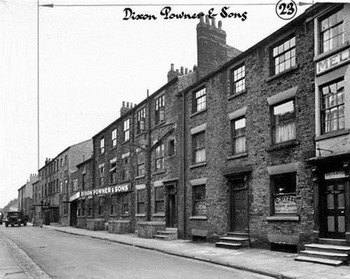
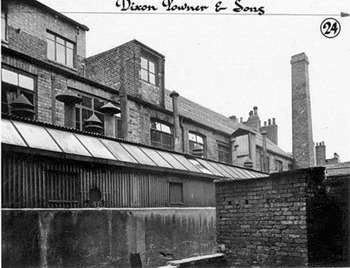
The complaints of industrialists in both cities reveal that business owners viewed plans for industrial reorganization as deeply naïve. In 1952, six years after being served with a compulsory purchase order and still awaiting demolition, the owner of Dixon Powner wrote with exasperation to the city council that ‘we often wonder whether any member of the Committee responsible for this action has the slightest conception of the effect of this order on a business such as ours’.Footnote 76 As well as being dependent on localized networks and services, the activities of small firms took place within workshops in which the technologies of production had been specifically adapted to suit highly contingent working processes. Dixon Powner's owner complained to the council that the company had, since 1912, ‘been constantly adding to and improving the property to suit our particular needs’, and offered a detailed account of his premises to illustrate the way they had been modified to fulfil his company's unique requirements (see Figures 4–7).Footnote 77 Dixon Powner's viability was dependent on a set of established working practices, purpose-built infrastructure and local networks of exchange and supply, and the prospect of disrupting these highly situated economic activities was deeply worrying to the firm's owner. This particular case is just one example for which detailed archival evidence exists from the industrialists’ perspective, but city governments’ own records show that urban renewal affected hundreds of firms in this way.
Leeds city surveyor's photograph of the frontage of Dixon Powner and Sons

City surveyor's photograph of the specially designed workshops at the rear of Dixon Powner and Sons

City surveyor's photograph of the rear vehicle access to Dixon Powner and Sons and adjoining premises

City surveyor's photograph of rear access to Dixon Powner and Sons

By the 1970s, local officials were forced to recognize the damaging consequences which redevelopment schemes had on firms in the city, and acknowledged that many industries had proved to be dependent on their ‘obsolete’ infrastructures and existing locations. A 1972 Leeds council report noted that ‘the non-survival rate of firms displaced through restructuring is relatively high’, and attributed this to ‘the need [for firms] to remain close to linkages’.Footnote 78 Similar conclusions were reached in Manchester where, as early as 1966, the city planning officer reported that
In the main, industrial concerns have in fact shown a marked reluctance to relocate outside the City boundaries because of the financial risks involved and the uncertainty of securing suitable labour; this again underlines the small scale nature of the bulk of the firms affected by redevelopment and the complex local linkages between apparently independent firms within the City.Footnote 79
Leeds’ planners also recognized that ‘it is the small firm sector which is hardest hit by urban restructuring policies’, and that ‘many small firms [were] obliged either to liquidate voluntarily or to move to a property [which was] similarly affected in the longer term by planning/highway proposals’.Footnote 80
Planners’ post-war approach to urban industry was coloured by Fordist and modernist fantasies of large new factories on neatly planned industrial estates. Small manufacturers, particularly in the early post-war years, were imagined by city planners as obsolete, uncompetitive and thus ‘ripe for renewal’.Footnote 81 Yet, such attitudes ignored the basic facts that the small firm sector was responsible for the bulk of manufacturing employment in older industrial cities like Manchester and Leeds. Manchester's 1936 industrial survey revealed that 56 per cent of registered manufacturing workers were employed by firms of less than 250 employees.Footnote 82 In Leeds, the dependence on small firms was even greater. The council's own figures for 1938 showed that 70 per cent of manufacturing workers were employed by firms with less than 100 employees.Footnote 83 These smaller firms were particularly vulnerable to the process of clearance and renewal, and the lack of any resources to subsidize relocation from central government meant that such firms were largely left to fend for themselves financially. Local efforts to assist with relocation were underresourced and ill-coordinated. In 1968, for example, Manchester City Council attempted to contact industrialists displaced by clearance. Of 365 letters sent out to firms, only 25 replies ‘expressed a clear interest’ in relocating to industrial estates, whilst around 40 were returned by the post office because the addresses had already been demolished or abandoned.Footnote 84
Conclusion
Although the impact of post-war redevelopment on urban economies has not featured in historical accounts of deindustrialization, once ‘the inner cities’ became a serious object of national policy intervention in the 1970s, policy-makers were clear that urban renewal had caused significant disruption and job losses in cities.Footnote 85 Under James Callaghan's premiership, a Ministerial Group on Inner City Areas was established led by the secretary of state for the environment, Peter Shore.Footnote 86 Shore's working group collated evidence from various studies of major cities in Britain, and concluded that ‘the process of redevelopment has contributed materially to the demise of small firms in inner areas’ (although central government officials were keen to downplay the restrictive effects of their own regional industrial policies on cities like Leeds and Manchester).Footnote 87 On 17 September 1976, Shore visited Manchester to give a speech on the ‘inner urban problem’, and stated that ‘inner urban areas [faced] problems of a most daunting kind, arising above all from a declining economic and industrial base’, and went on to argue that
[Firms] have died as a consequence – albeit unintended – of the planning and housing policies which have been pursued. Comprehensive redevelopment schemes, uncertainty created by planning blight, and well-intentioned but perhaps over-vigorous efforts to remove ‘non-conforming’ industrial users from areas zoned for residential use have all led to the permanent closure of many firms, and particularly small and medium ones.Footnote 88
Research conducted in Manchester and Leeds supported Shore's analysis. A 1976 report by geographers at the University of Manchester found that ‘43,000 manufacturing jobs were lost from the inner city areas’ between 1966 and 1975 and that ‘most of this decline could be attributed to the death of small, single plant firms in the area’.Footnote 89 The authors concluded that ‘merger, acquisition, rationalization, and re-structuring. . .together with comprehensive urban redevelopment’ were the primary threats to small firms.Footnote 90 Their 1976 report estimated that ‘by 1981 over 25% of [Manchester's] industry will have been affected by [compulsory purchase and redevelopment] involving the loss of 27,000 jobs’.Footnote 91 In Leeds, employment in manufacturing in the inner-city areas fell by nearly 10,000 between 1966 and 1971, and a 1980 study linked declining employment in the city's inner districts with ‘the policy of redevelopment that has been pursued’.Footnote 92 Such findings led to a complete reversal of local and national policy approaches towards Britain's major cities. The landmark 1977 white paper, Policy for the Inner Cities, called for city governments to ‘administer all their powers, including those for housing, planning and the environment, so as to facilitate the growth of employment in inner areas’.Footnote 93 Policies of urban dispersal and wholesale clearance were abandoned, and state resources were redirected into initiatives designed to stimulate employment in inner urban areas. In Manchester, the city government reversed its policy of industrial relocation and launched ‘a crash programme to attract new industrial investment to the inner city areas’.Footnote 94 After being dismissed by post-war planners as obsolete, small businesses were lionized and subsidized as key sources of employment, enterprise and innovation. Callaghan appointed a minister for small business and orchestrated a series of conferences in major cities to support small firms.Footnote 95
The dramatic reversal of state policy demonstrates that urban renewal as practised in the decades after 1945 was understood to have had damaging consequences for industry and employment in inner areas. There were of course other factors at play; national and global shifts in patterns of production and demand, and the emergence of new industrial nations, had profound implications for urban industry and employment in Britain.Footnote 96 Indeed, in the face of these global shifts in economic structure, geographers at the University of Manchester concluded that, instead of undertaking disruptive reorganization, ‘the best thing you can do with inner city industry is hang on to what you have got’.Footnote 97 Small urban manufacturers in post-war Manchester and Leeds faced structural challenges which were dictated by the vagaries of global capitalist production, but urban industry was also subjected to three decades of physical constraints, disruption and in many cases simply destroyed in order to fulfil the environmental objectives which drove projects of urban renewal. The consequences of industrial decline have been so profound for the inner areas, and the residents, of Britain's cities that this planning-induced aspect of urban economic change deserves a place in the wider history of deindustrialization in the twentieth century.