Introduction
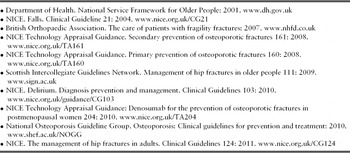
Although surgical repair of a fractured hip is the cornerstone of treatment, available data suggest that factors crucial to optimal functional recovery after hip fracture are independent of fracture repair and instead are related to pre-fracture conditions and post-operative complications.Reference Zuckerman1 Therefore active partnership between the orthopaedic surgeon and orthogeriatrician is needed for successful care and outcome for this vunerable group of mainly elderly patients. In the United Kingdom there is a lot of published guidance to help the delivery of best practice (Table 1).
UK guidance relevant to hip fracture management

Role of the orthogeriatrician
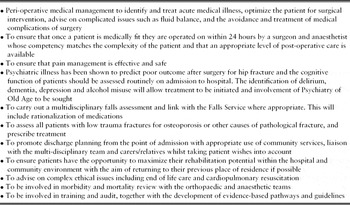
The role of the orthogeriatrician is to ensure that trauma patients receive the highest standards of care from orthopaedic and elderly care services.Reference Aylett, Rosenberg and Topp2 Their responsibilities are listed in Table 2. Orthogeriatricians have knowledge and expertise of age-related changes in physiology and pharmacology, hence they are best placed to identify specialist needs of elderly patients with fragility fractures. The orthogeriatrician also has the skills of holistic care, with a person-centred approach to management. This includes responsibility for co-ordination of care, together with the orthopaedic surgeon, anaesthetist, multidisciplinary team (MDT) and other specialities as needed. The choice of anaesthesia and type of surgical repair is usually not decided by the orthogeriatrician.
Roles and responsibilities of orthogeriatric services (British Geriatrics Society Good Practice Guide on Orthogeriatric Models of Care)Reference Aylett, Rosenberg and Topp2

Hip fractures as a common and complex condition
Hip fracture is a serious injury affecting mainly older people, commonly those with frailty, dependency and pre-existing medical problems. It begins with an accidental fall, usually at home, which initiates the journey of care that takes the patient through the emergency department, orthopaedic ward, operating theatre, recovery ward, rehabilitation and then either back home or to an alternate care facility. Many disciplines and specialities are involved during and after the admission, and outcome largely depends on how different health and social services are co-ordinated to provide acute care, rehabilitation and continuing support. Therefore it is a challenging condition to manage and treat.
About 70,000 to 75,000 hip fractures occur annually in the United Kingdom (UK).Reference Gullberg, Johnell and Kanis3 With the growing elderly population, the number is expected to rise to 91,500 by 2015. The average age of hip fracture patients admitted to acute trauma wards is 84 years for men and 83 years for women. Thus it particularly affects the very elderly population. There is a high mortality, with 10% of patients dying within 1 month and 30% within 12 months.Reference Wolinsky, Fitzgerald and Stump4 Most deaths are related to associated co-morbidities and not just the fracture itself. Of the survivors, about 10–20% of those admitted from home are discharged to institutional care.
Often presentation with a fall and fracture signals underlying ill health. Thus hip fractures, although traditionally managed solely by a surgeon, are by no means an exclusively surgical concern. Their effective management requires co-ordinated medical, surgical and multidisciplinary rehabilitation skills, covering the period right from admission through to discharge and continuing to community follow-up.
Co-morbidities
Patients with hip fractures are mainly elderly and so likely to have co-morbidities that require evaluation prior to and after surgery. Orthogeriatricians are well placed to manage these. First they would evaluate the patient for both acute and chronic conditions. It is important to understand how the fracture occurred, for example whether it was secondary to syncope, orthostatic hypotension or a simple fall. A comprehensive history, review of medications and of body systems is required, together with the gathering of information from family members or witness accounts of injury. A baseline cognitive, functional and social assessment should be documented. Physical examination is likely to demonstrate signs of trauma and accompanying acute illness and/or decompensated chronic disease. All acute conditions require appropriate treatment, which needs to be optimized before surgery.
Co-morbid medical problems are fairly common in older patients. One study showed that 82% of patients had a significant medical condition that complicated a fracture, and 90% had problems where advice of a physician was of value.Reference Sainsbury, Gillespie, Armour and Newman5 Common co-morbidities were dementia (24%), cardiovascular (24%) and respiratory (14%) diseases and stroke (13%).Reference Roche, Wenn, Sahota and Moran6
The orthogeriatrician would also implement strategies to prevent post-operative complications frequently encountered in ‘hip fracture syndrome’. A large prospective observational study showed that post-operative complications occurred in 20% of patients.Reference Roche, Wenn, Sahota and Moran6 Variables associated with increased mortality were acute heart failure, post-operative chest infections, more than three co-morbidities, respiratory disease and malignancy. Other complications noted were deep vein thrombosis (DVT), pulmonary embolism (PE), infections, gastrointestinal haemorrhage, myocardial infarction and stroke. A prospective evidence-based approach targeting potential complications can reduce the morbidity associated with fractures,Reference Beaupre, Cinats, Senthilselvan, Lier, Jones, Scharfenberger, Johnston and Saunders7 hence detection and management of co-morbid conditions is key to improving outcomes.
Joint acute orthopaedic-geriatric care
The traditional model of orthopaedic-geriatric care was where an orthopaedic surgical team led surgical care and post-operative rehabilitation, with limited geriatrician input. Different geriatric interventions have developed over the last few years with mixed results. The original geri-orthopaedic units focused their attention on the rehabilitative phase with variable results. Later programmes included geriatric interventions during the acute phase, with differing degrees of involvement of the geriatric team and organization of interventions. A more collaborative model is combined orthogeriatric care, with trauma patients admitted to a specialized ward under the joint care of both geriatrician and orthopaedic surgeon. This collaborative model is especially relevant to hip fracture patients.
Joint acute orthopaedic-geriatric units (GORU) provide comprehensive surgical and medical care, aiming to improve quality of care and outcomes. Several studies have evaluated combined orthopaedic-geriatric management for orthopaedic patients, many with hip fractures.Reference Vidán, Serra, Moreno, Riquelme and Ortiz8–Reference Swanson, Day, Yelland, Broome, Massey, Richardson, Dimitri and Marsh12 This model of care has an MDT including physiotherapist, occupational therapist and social worker and geriatrician-led case conferences.Reference Naglie, Tansey, Kirkland, Ogilvie-Harris, Detsky, Etchells, Tomlinson, O'Rourke and Goldlist9 The geriatrican is responsible for management of intercurrent medical problems, promotion of early mobilization, avoidance of delays in rehabilitation and co-ordinated discharge planning.Reference Chong, Christou, Fitzpatrick, Wee and Lim13 This has been shown to lead to a significant reduction in post-operative complications and mortalityReference Vidán, Serra, Moreno, Riquelme and Ortiz8, Reference Fisher, Davis, Rubenach, Sivakumaran, Smith and Budge11 and a reduction in length of stay due to more effective discharge processesReference Naglie, Tansey, Kirkland, Ogilvie-Harris, Detsky, Etchells, Tomlinson, O'Rourke and Goldlist9, Reference Antonelli Incalzi, Gemma, Capparella, Bernabei, Sanguinetti and Carbonin10 and can be implemented in most UK hospitals within existing frameworks. A high standard of care can best be achieved by a Consultant or Staff Grade/Specialty Doctor working full-time on the fracture ward.14
Studies evaluating daily geriatric intervention for elderly patients with hip fractures have shown reduced hospital morbidityReference Incalzi, Gemma and Capparella15–Reference Gilchrist, Newman, Hamblen and Williams17 and reduced 12-month mortality.Reference Sanchez Ferrin and Manas18 Less intensive interventions, based on weekly recommendations after a multidisciplinary evaluation, are not as consistent in reducing medical complications.Reference Gilchrist, Newman, Hamblen and Williams17, Reference Sanchez Ferrin and Manas18 The early identification of high-risk patients and daily individualized patient care explains reductions in medical complications and support geriatric intervention during the acute phase of hip fracture.
There is also evidence supporting the effectiveness of the hospital-based model incorporating continuous orthogeriatric supervision from studies of the Hip Fracture Program (HFP). This results in reduced patient mortality at discharge and follow-up, improved functional outcomes at 1 year after discharge, reduced hospital length of stay, reduced risk of delirium and improved cost effectiveness compared with usual care.19 The HFP addresses all the needs of most patients and provides a co-ordinated structure and process of care. Consequently HFP is the dominant strategy for hospital-based multidisciplinary management of hip fracture patients, being less costly and more effective than GORU or usual care.19
Latest National Institute of Clinical Excellence (NICE) guidance in the UK recommends that joint working and a formal HFP should be offered to patients from the time of admission with a hip fracture, with geriatricians providing pre-operative assessment and taking the lead in post-operative care, multidisciplinary rehabilitation and discharge planning.19 If needed, this can be followed by transfer of some patients to other models of rehabilitation, for example intermediate care outside the hospital setting (i.e. in a care home or community hospital) or early supported discharge at home. This will depend on the availability of services locally.
Analgesia
Optimal pain control is essential to ensure patient comfort and to facilitate rehabilitation. Pain should be assessed soon after hospital arrival and then regularly to ensure provision of sufficient pain relief. Routine assessment and formal charting of pain scores are important. Inadequate pain control after hip fractures is associated with poor short- and long-term functional recovery and longer hospitalizationReference Morrison, Magaziner, McLaughlin, Orosz, Silberzweig, Koval and Siu20 and increased risk of delirium.Reference Morrison, Magaziner, Gilbert, Koval, McLaughlin, Orosz, Strauss and Siu21 For pain control, basic principles derived from the World Health Organisation analgesic ladder can be used. For mild pain, non-opioid analgesics such as paracetamol are indicated and should be prescribed regularly. Anti-inflammatory drugs should be used cautiously in older patients due to gastro-intestinal and renal side-effects. For moderate pain, weak opioids such as codeine are recommended and for severe pain strong opioids should be titrated according to response. Narcotic analgesics can worsen mental status and precipitate delirium, and significant sedation may slow post-operative mobilization and balance. However, suboptimal analgesia should be avoided. Regular stool softeners and laxatives can prevent constipation related to opioid use.
Another option for analgesia during the peri-operative period, including use in the emergency department, is a nerve block using local anaesthesia.Reference Parker, Grifiths and Appadu22 A significant reduction can be achieved in pain levels and quantity of oral/parenteral analgesia required, as shown in a Cochrane review.Reference Parker, Grifiths and Appadu22 Few complications have been reported.
Timing of surgery
The timing of surgical repair of hip fractures affects patient outcomes in two ways. Firstly, delayed surgical repair causes a delay in return to weight bearing, affecting functional recovery. Secondly, failure to stabilize medical problems pre-operatively increases the risk of post-operative complications. The rate-limiting factor in surgical timing is the time waiting for pre-operative medical evaluation and optimization.
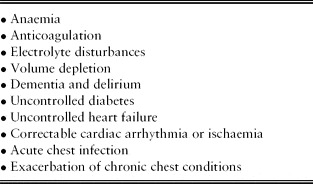
A number of medical conditions are commonly encountered in patients with hip fractures, hence their occurrence should be anticipated and protocols designed and implemented for rapid management. Orthogeriatricans have the necessary skills and experience in pro-actively seeking to identify and treat common co-morbidities (Table 3), regularly reviewing the patient and communicating with the anaesthetist and surgeon, to ensure that surgery is not avoidably delayed. There is no need to wait for results of routine tests that will not affect the surgical or anaesthetic procedure.
Common medical issues and co-morbidities in hip fracture patients

A 2010 systematic review and meta-analysis to determine the effect of early surgery included 16 observational studies involving 13,478 patients.Reference Simunovic, Devereaux, Sprague, Guyatt, Schemitsch, Debeer and Bhandari23 Based on five studies that reported adjusted risk of death, earlier surgery was associated with a significant reduction in mortality (relative risk (RR) 0.81, 95% CI 0.68–0.96, P = 0.01). Unadjusted data showed that earlier surgery also reduced in-hospital pneumonia (RR 0.59, 95% CI 0.37–0.93, P = 0.02) and pressure sores (RR 0.48, 95% CI 0.34–0.69, P < 0.001), but there was no significant effect on DVT or PE. Other studies have shown a trend for those patients in whom surgery had been delayed to have an increased length of hospital stay.Reference Parker and Pryor24
However, serious post-operative complications may arise if co-existing medical problems are not stabilized before surgery. Therefore, delaying surgery while stabilizing patients is judicious and sensible for complaints such as active heart failure, ongoing angina, serious infection and significant arrhythmias. There is evidence that a brief delay of up to 72 hours for optimization of uncontrolled medical conditions will not adversely affect health or functional outcomes in patients with hip fractures.Reference Whinney25
Currently, there is a lack of an accepted definition of what exactly constitutes early surgery. Current NICE guidelines in the UK recommend surgery within 48 hours of admission. The Scottish Hip Fracture Audit showed that 235 patients were deemed unfit at first assessment, but some of these patients could still make it to the theatre within 24 hours.26 The percentage of medically fit patients going to theatre within 24 hours is improving year by year in the National Hip Fracture Database (NHFD) Audit conducted across UK hospitals.27
Prophylactic antibiotics
To prevent post-operative wound infection, prophylactic antimicrobial agents are used. Coagulase negative staphylococci (Staph epidermidis) and methicillin-sensitive Staphylococcus aureus (MRSA) are the most frequently isolated organisms in hip fracture surgical site infections. There is considerable evidence from meta-analysisReference March, Chamberlain and Cameron28 and the Cochrane reviewReference Gillespie, Walen and Kamp29 to support the use of prophylactic antibiotics in patients with hip fractures. Antibiotics reduce the risk of deep wound infection by approximately 44% and probably should be continued for 24 hours, i.e. three doses. A cohort study addressing optimal timing of antibiotic administration in 2847 elective procedures showed that wound infection rates were lowest when antibiotics were administered up to 2 hours before surgery.Reference Classen, Evans, Pestotnik, Horn, Menlove and Burke30 First- and second-generation cephalosporins were used in most studies and are the antibiotics of choice, with vancomycin or clindamycin being reserved for patients with beta lactam allergy.Reference Barsoum, Helfand, Krebs and Whinney31
Anti-platelet therapy
An increasing number of patients are receiving anti-platelet drugs for primary and secondary prevention. Drugs include single or combined doses of aspirin, dipyridamole and clopidogrel. To reduce the risk of bleeding, anti-platelet drugs are usually stopped before elective surgery, but for emergency surgery such as for hip fractures the recommendation is not to delay surgery and to use general anaesthesia rather than epidural anaesthesia, especially in patients on dual anti-platelet therapy.14 Clopidogrel should not be stopped in patients with recent coronary stents.
Reversal of warfarin anticoagulation
Patients who are over anticoagulated and with international normalized ratios (INRs) above the safe range need rapid reversal for prompt surgery to proceed. The aim should be for INR < 1.5 before surgery. Indication for warfarin must be identified and the patient must be stratified according to risk of thromboembolic complications into low, medium or high risk. Withholding of warfarin, use of vitamin K and local policies for reversal of anticoagulation should be followed. The overall balance of risks and benefits is complex in hip fracture patients and should be judged on an individual patient basis.
A large audit showed the majority of patients with INR > 1.6 had their surgery postponed and surgery delayed by >48 hours.26 If all patients requiring coagulation correction for INR > 1.6 could be corrected and taken to theatre within 24 hours, nearly 100 bed-days would be saved each year across the National Health Service (NHS) in Scotland.14
Pre-operative cardiac investigations
Systolic murmurs are common in older people. The presence of a murmur may lead to a request for echocardiography, which may delay surgery. Orthogeriatricians can identify the type and severity of any murmur, together with interpretation of electrocardiograph (ECG) or other cardiac findings. Therefore echocardiography pre-operatively may not be required. This may be a more difficult decision for the non-orthogeriatrician.
A retrospective cohort study showed that pre-operative cardiac investigations made no difference to surgical management, but cardiac testing introduced an average 3-day delay to surgery. This suggests that investigations for cardiac disease for non-cardiac surgery are not needed in most patients.Reference Ricci, Rocca, Combs and Borelli32 Aortic and mitral regurgitation patients do well if they have compensated heart disease and good left ventricular function. Systolic blood pressure <180 mmHg may not be an independent risk factor for poor outcome. Arrhythmias are common peri-operatively in up to 60–80% of patients and are usually clinically insignificant. Sinus tachycardia, sinus bradycardia and atrial fibrillation are the most common. A pacemaker check pre-operatively is only required if the pacemaker appears to be malfunctioning or has not been checked in the previous 12 months. The type of pacemaker and reason for insertion needs to be confirmed with the cardiac laboratory. Anaesthetists should be aware if a patient has an implanted cardiac defibrillator.
Venous thromboprophylaxis
Venous thromboembolism is a substantial cause of post-operative morbidity and mortality in patients with hip fractures. After hip surgery the rate of DVT is approximately 27%, and fatal PE is between 1.4 and 7.5% in the first 3 months.Reference Beaupre, Jones, Saunders, Johnston, Buckingham and Majumdar33 The drugs used in various trials were heparin, low molecular weight heparin (LMWH), warfarin and aspirin. In meta-analysesReference Collins, Scrimgeour, Yusuf and Peto34, Reference Lassen, Borris, Christiansen, Schøtt, Olsen, Sørensen, Rahr and Jensen35 and the Cochrane reviewReference Handoll, Farrar, McBirnie, Tytherleigh-Strong, Milne and Gillespie36, both low-dose heparin and LMWH after hip fracture surgery have been associated with about a 60% reduction in DVT. In most studies heparin was initiated after hospital admission. LMWH is associated with lower incidence of thrombocytopenia compared with unfractionated heparin. Both may accumulate in the renally impaired patient, leading to increased risk of bleeding if dose adjustments are not made. There is increased risk of spinal haematoma in patients given spinal anaesthesia.
The use of aspirin for prophylaxis was evaluated in a meta-analysis of ten trauma trials37 and was shown to significantly reduce the risk of DVT and PE. However, one trial comparing aspirin with LMWH showed that LMWH resulted in a relative risk reduction of 37% in DVT without any difference in bleeding complication rates.Reference Gent, Hirsh, Ginsberg, Powers, Levine, Geerts, Jay, Leclerc, Neemeh and Turpie38
A double-blind trial showed that extended fondaparinux prophylaxis for 4 weeks significantly reduced incidence of venous thromboembolism after hip fracture surgery compared with a 1-week regimen (1.4 and 35%, respectively).Reference Errikson39 Consequently, Scottish Intercollegiate Guideline Network (SIGN) guidelines14 recommend that patients without contraindication should receive thromboprophylaxis using fondaparinex for 28 days starting 6 hours after surgery.
Foot and calf pumping devices and compression stockings reduce the risk of DVT with negligible riskReference Handoll, Farrar, McBirnie, Tytherleigh-Strong, Milne and Gillespie36 and should be used routinely. Compliance, however, can be an issue.
Medication review
All medications should be reviewed for their need and dosages adjusted as appropriate, for example according to blood pressure and renal function. The orthogeriatrician should check also for drug interactions and adverse effects. Sedatives, hypnotics, benzodiazepines (except in patients with alcohol withdrawal), anticholinergics and antihistamines are best avoided and, if used, should be at the lowest effective dose.
Fluid and electrolyte balance
Attention to fluid balance should begin in the emergency department. Soon after admission, most patients will need intravenous fluids, such as Hartmann's solution. Electrolyte disturbances, especially hyponatraemia and hypokalaemia, are common in the pre- and post-operative period, reflecting the limited renal reserve of these patients. Fluid management should be monitored carefully and fluid overload or dehydration should be corrected promptly. Early correction avoids unnecessary surgical delays. Intravenous fluids should be discontinued as soon as oral fluid intake is established.
Anaemia and blood transfusion
Anaemia is common in older people and is an independent risk factor for increased mortality, post-operative complications, poor functional outcome and increased length of stay.Reference Dunne, Malone, Tracy, Gannon and Napolitano40 There is limited evidence regarding blood transfusion for patients with hip fracture and current emphasis is on restrictive rather than liberal transfusion policies. Patients with symptomatic anaemia may need blood transfusions, although a retrospective study of hip fracture patients aged above 60 years found peri-operative transfusion had no effect on mortality in patients with haemoglobin levels equal or greater than 8 g/dl.Reference Carson, Duff, Berlin, Lawrence, Poses, Huber, O'Hara, Noveck and Strom41 Nearly all those with haemoglobin levels less than 8 g/dl received transfusion, precluding further analysis. Other studies suggest that patients with silent myocardial ischaemia may benefit from transfusion.Reference Lundsgaard-Hansen42
Nutritional management
About 20% of patients experiencing hip fractures are severely malnourished.Reference Bastow, Rawlings and Allison43 Malnutrition leads to impaired mobility, mental apathy, impaired cardiac function and impaired immune response leading to increased infection risk, thereby increasing surgical morbidity and mortality.Reference Koval, Maurer, Su, Aharonoff and Zuckerman44 There is evidence from several randomized trials that hip fracture patients who received protein supplementation had significantly more favourable outcomes at 6 months (none or only minor complications), significantly higher albumin levels and significantly shorter length of stay than those patients not receiving supplements.Reference Tkatch, Rapin, Rizzoli, Slosman, Nydegger, Vasey and Bonjour45–Reference Stableforth47
The Scottish Hip Fracture Audit Report found that 55% of patients discharged from orthopaedic wards had a nutritional assessment, compared with 76% of those who received rehabilitation services.48
Pressure sore prevention
The incidence of pressure sores post-fracture ranges between 10 and 40%.Reference Beaupre, Jones, Saunders, Johnston, Buckingham and Majumdar33 Patients with pressure sores have an increased risk of prolonged hospitalization and infections. Good pressure care can be achieved by use of pressure-relieving mattresses, early mobilization, active management of urinary incontinence and regular monitoring of pressure areas by nursing staff.
Dementia and delirium
Patients with cognitive problems form a substantial proportion of the hip fracture population. Such patients have increased risk of delirium, medical complications, mortality, length of stay and failure to return to pre-fracture independence.Reference Nightingale, Holmes, Mason and House49, Reference Holmes and House50 They also benefit from acute comprehensive geriatric assessment and targeted intervention as a means of reducing delirium.Reference Holmes and House50 Intensive rehabilitation is also effective in improving independent living in patients with mild to moderate cognitive impairment.Reference Huusko, Karppi, Avikainen, Kautiainen and Sulkava51 Assessment of mental status can be complex in patients who are in pain or in those who have received strong analgesia, but brief cognitive testing is recommended before and after surgery.27 Realistic rehabilitation goals need to be identified in this population, and this is often best done by the orthogeriatrician.
Delirium can occur in up to 61% of patients with hip fracturesReference Gustafson, Berggren, Brännström, Bucht, Norberg, Hansson and Winblad52 and usually occurs on the first or second post-operative day, and symptoms tend to be worse at night. It has been shown to increase length of stay, risk of complications, mortality and institutionalization in patients with hip fractureReference Edelstein, Aharonoff, Karp, Capla, Zuckerman and Koval53 and affects functional outcome by interfering with rehabilitation and delays return to weight bearing. Baseline risk factors such as advanced age, history of cognitive impairment, greater severity of illness and pre-fracture functional status are associated with a higher risk of delirium.Reference Bitsch, Foss, Kristensen and Kehlet54
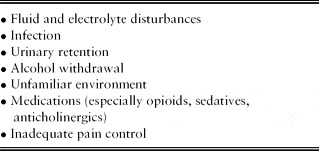
Despite its high prevalence, delirium is often unrecognized or misdiagnosed. Pre- and post-operative geriatric assessments are crucial for early identification and treatment of delirium, as many factors are modifiable, such as avoiding polypharmacy, treatment of electrolyte disturbances, infection, minimizing use of anticholinergic and psychoactive medications, removing urinary catheter and intravenous lines promptly, minimizing sleep interruptions and aggressive treatment of peri-operative reductions in blood pressure (Table 4). Moreover, delirium may be the only manifestation of a life-threatening condition. The orthogeriatrician will have a standard approach, ensuring that serious conditions such as myocardial infarction, haemorrhage, pneumonia, urosepsis and venous thromboembolism are not missed. As development of delirium post-operatively is generally multifactorial, patients will require investigations such as blood count, serum chemistry, oxygen saturation, electrocardiogram, urine analysis, chest X-ray, blood cultures, cardiac enzymes and Doppler assessment for DVT, depending on the history and examination findings.
Factors commonly associated with delirium in hip fracture patients

Environmental manipulation (e.g. turning the light off and limiting noise at night) and supportive reorientation (e.g. use of clocks, calendars, access to spectacles, wearing hearing aid and family involvement) also benefit delirious patients in the hospital. In severely agitated patients, pharmacological therapy may be necessary for a brief period when non-pharmacological measures have failed, to minimize injury and allow for further rehabilitation. Low-dose haloperidol is the most common approach and benzodiazepines are generally best avoided.
Regulation of bowel and bladder function
Constipation is common after the second post-operative day due to decreased mobility and peri-operative use of analgesia. A bowel regimen of stool softeners and laxatives should be routine and titrated to bowel motions.
Urinary tract infection and urinary retention are also common problems after hip fracture surgery. Indwelling urinary catheters should be removed within 24 hours of surgery to reduce incidence of urinary retention and assist in mobilization. Orthogeriatricians should also consider discontinuing medications that could contribute to urinary retention, such as anticholinergics and sedatives. If urinary retention is encountered (i.e. patients are unable to void 8 hours after catheter removal, with a bladder scan urinary volume >200 ml or physical discomfort), then intermittent bladder catheterization is preferable to reinsertion of an indwelling catheter. Urinary incontinence in the post-operative setting needs careful evalution, including a skin care programme to protect skin integrity.
Rehabilitation
Rehabilitation is essential after hip fracture surgery. Prolonged bed rest increases risk of pressure sores, atelectasis, pneumonia and thromboembolic complications. Rehabilitation includes limb and joint mobilization and progressive exercises, physiotherapy and occupational therapy to regain mobility and independence in activities of daily living, as well as psychological counselling and social support. Early assessment by MDT staff to formulate appropriate rehabilitation plans facilitates rehabilitation and discharge. The ultimate goal of rehabilitation is to return the hip fracture patient to pre-fracture function and minimize risk of further injury. The intensity and length of rehabilitation depends on a variety of factors including patient tolerability and prognosis for recovery. Pre-morbid mental state, mobility and function are the most reliable predictors of success of rehabilitation and are useful as screening tools to assess a patient's early rehabilitation needs and potential.Reference Ensberg, Paletta and Galeck55
Patients with co-morbidity, poor functional ability and cognitive impairment prior to admission will benefit particularly from management in an orthogeriatric unit, whereas those who are alert and fit benefit most from supported discharge schemes.14 After hospital discharge, long-term rehabilitation in a skilled nursing facility, a dedicated rehabilitation hospital or on an out-patient basis can be considered.
A randomized trial comparing early mobilization (within 24 hours of surgery) with conventional care found no difference in physical independence at 4 months, but a reduction in healthcare costs.Reference Cameron, Lyle and Quine56 Hence, except for certain patients with specific surgeon's recommendations on weight bearing, early mobilization from the first day after surgery can be implemented with acceptable rates of complications, discharge destination, functional outcomes and mortality. Randomized trial data suggest that geriatric assessment and rehabilitation programmes in hip fracture patients improve functional outcomes and increase the likelihood of patients returning to the community.Reference Applegate, Miller, Graney, Elam, Burns and Akins57 Cohort studies, after adjustment for potential confounding factors such as age and pre-fracture function, suggest that more than one physiotherapy session per day is associated with improved physical independence at 1 year.Reference Magaziner, Simonsick, Kashner, Hebel and Kenzora58 Thus patients may benefit from intensive rehabilitation, including physiotherapy, but more evidence from randomized controlled trials is needed.19
Rehabilitation after hip fracture surgery should ideally start on the first post-operative day, with progression to ambulation as tolerated.Reference Brummel-Smith and Cassel59 On the first post-operative day, quadriceps contractions, isometric exercises and gentle flexion and extension of the hip are commenced. On the second or third post-operative day, patients begin supervised ambulation using parallel bars for support, advancing to a walker or cane and then to independent ambulation as tolerated. The length of cane is important for stability and it should be adjusted to allow 20–30 degrees of flexion at the elbow. The cane should be held with the hand opposite the injured hip and should typically support 15–20% of the patient's body weight. A wheeled walker allows smooth co-ordinated, faster gait and is beneficial in cognitively impaired patients. Crutches can support a patient's weight, but there is risk of brachial plexus injury and unnatural gait pattern.
Patient information, education, reassurance and a positive attitude from healthcare professionals are important to the recovery process. The orthogeriatrician has a key role in supervision of the rehabilitation programme, integration with post-operative care, and co-ordination of teamwork with different professionals including nursing, physiotherapy, occupational therapy, social work, dietetics, pharmacy and clinical psychology.
Falls assessment
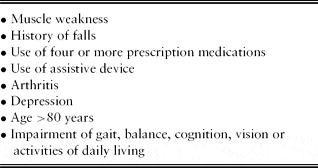
Patients with hip fracture have an increased risk of falls and subsequent fractures. Hence falls assessment and management is an important aspect of care. Several trials have been published on clinical and social interventions to reduce falls, but the majority of the published studies did not specifically target patients after hip fractures. A trial of community-dwelling older people with specific risk factors for falling randomly assigned to a multifactorial intervention (medication adjustment, behavioural intervention, exercise activities targeted to risk factors) showed subsequent reduced risk of falling (RR 0.69, 95% CI 0.52–0.90).Reference Tinetti, Baker, McAvay, Claus, Garrett, Gottschalk, Koch, Trainor and Horwitz60 A meta-analysis has confirmed these findings.Reference Chang, Morton, Rubenstein, Mojica, Maglione, Suttorp, Roth and Shekelle61 Another meta-analysis involving diverse patient populations and interventions showed the adjusted fall incidence ratio for treatment arms including general exercise was 0.90 (95% CI 0.81–0.99) and for those including balance was 0.83 (95% CI 0.70–0.98).Reference Province, Hadley, Hornbrook, Lipsitz, Miller, Mulrow, Ory, Sattin, Tinetti and Wolf62 These studies suggest that interventions to reduce incidence of falls are more likely to be beneficial if they focus on people at risk of falls and target specific risk factors (Table 5). Also, exercise therapy and balance training seem to be effective in reducing the risk for falls. These findings are applicable to the hip fracture population.
Risk factors for falls

Potential interventions for falls prevention include strengthening exercises combined with gait and balance training, assessment of patients’ homes and elimination of hazards, monitoring and adjusting patients’ medications, advice on appropriate footwear and provision of adaptive equipment/walking aids and alarm systems.Reference Frietag and Magaziner63 Specific risk factors, such as postural hypotension, should also be identified and treated.
A Cochrane reviewReference Gillespie, Gillespie and Parker64 showed that hip protectors may prevent hip fractures in patients who have high risk of falls, living in nursing homes, but there is no benefit for the majority of older people living in their own homes. Patient compliance is an issue with hip protectors due to physical discomfort and poor practicality.
Osteoporosis assessment and management
The underlying cause of most hip fractures in older people is related to osteoporosis. Amongst Western 50-year-old females, the estimated lifetime chance of suffering an osteoporotic fracture is approximately 18%.Reference Shabat65 Framingham data has shown that 2.5% of patients with hip fractures have a second hip fracture in the succeeding year and 8.2% have a fracture within 5 years of their first fracture, hence secondary prevention measures for treatment of osteoporosis and falls are essential.Reference Berry, Samelson, Hannan, McLean, Lu, Cupples, Shaffer, Beiser, Kelly-Hayes and Kiel66
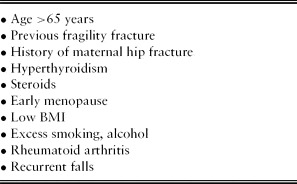
Risk factors for osteoporosis are listed in Table 6. Patients should be encouraged to participate in regular weight-bearing exercises, to stop smoking, to limit alcohol intake and to receive at least 1500 mg of elemental calcium and 800 IU of vitamin D per day. According to NICE guidelines,19 drug therapy for osteoporosis is recommended for fragility fracture patients aged over 75 years and if there is evidence of low bone density in patients below 75 years. Bisphosphonates are contraindicated in patients with renal failure (eGFR < 30 ml/min), drug allergy or severe gastric intolerance. A randomized trial using annual infusion of zoledronic acid within 90 days of hip fracture surgery found not only a reduction in new clinical fractures, but also an improved survival rate (28% reduction in deaths compared with placebo).Reference Lyles, Colón-Emeric, Magaziner, Adachi, Pieper, Mautalen, Hyldstrup, Recknor, Nordsletten, Moore, Lavecchia, Zhang, Mesenbrink, Hodgson, Abrams, Orloff, Horowitz, Eriksen and Boonen67 Bone densitometry using dual-energy X-ray absorptiometry (DEXA) scan is a valid method to diagnose and predict the risk of fractures. The Fracture Risk Assessment Tool (FRAX) integrates risk factors with bone densitometry measurements to predict a 10-year risk assessment of sustaining hip fracture.68 Meta-analysis showed that one standard deviation decrease in bone mineral density at the femoral neck is associated with a relative risk for hip fracture of 2.6.Reference Marshall, Johnell and Wedel69
Risk factors for osteoporosis in post-menopausal women

Patients should be educated about osteoporosis, about future risk for falls and what they can do to prevent them. Studies have reported poor osteoporosis management across acute hospitals in the UK, and geriatric co-management has shown to improve osteoporosis management from 12 to 69% of patients.Reference Fisher, Davis, Rubenach, Sivakumaran, Smith and Budge11 With development of shared orthogeriatric care, osteoporosis management has improved in every National Hip Fracture Database (NHFD) audit.27
Palliative care
If hip fracture complicates or precipitates a terminal illness, the orthogeriatrician, in consultation with the surgeon, the patient and their family may instigate end of life care. Patients with life-threatening cardiorespiratory, neurological or malignant disease can form a substantial proportion of patients presenting with fracture. A palliative approach ensures patients can die with dignity, with appropriate attention to pain and other symptoms, along with support necessary to minimize their own and their family's distress. Families and carers need to be given information about priorities of care, counselling, support available and the local palliative care team.
National Fracture Audit Database
The NHFD27 and the Scottish Hip Fracture Audit48 aim to document hip fracture care and outcomes, improve services by providing feedback data, facilitate comparison between units, monitor effects of changes in the surgical and rehabilitation process and allow national and international comparison of hip fracture care. Having national guidelines for hip fracture care, such as NICE19 and SIGN,14 the NHFD27 in the UK offers opportunities to use audits and guidelines together to document care and to compare the care delivered with that recommended, with a view to locally delivered measurable improvement in organization of specific aspects of care. The NHFD has indicated substantial variations across different hospitals in England and Wales in hip fracture care, and differences in clinical and service quality.27
The UK Department of Health (DOH) has launched the ‘Best Practice Tariff’ (BPT) initiative targeting several performance variables for hip fracture management.70 This was launched in April 2010 to incentivize delivery of the hip fracture component of the DOH Prevention Package for Older People. The BPT offered an incentive of £890 per patient in 2011/2012 for meeting key standards. One of the key variables is the involvement of orthogeriatricians.
Conclusion
Although surgical repair is needed after hip fractures, the orthogeriatrician plays an important role throughout the management process following acute hospital admission, including pre-operative assessment and optimization enabling appropriate timing of surgery, facilitating rehabilitation and recovery and initiating secondary prevention strategies.
Many areas of medical management need to be addressed during the peri-operative period for patients with hip fractures. Orthogeriatricians are well placed to work in partnership with orthopaedic surgeons to manage older people with hip fractures and as a result more and more combined orthogeriatric units are being established to maximize outcomes. Close monitoring and attention to best management of the ‘hip fracture syndrome’ should help to reduce the burden of morbidity and mortality in this significant group of frail elderly patients.
Conflict of interest
The author has no conflicts of interest to declare.