Introduction
The spread of coronavirus disease 2019 (COVID-19) has severely disrupted the lives of individuals around the world and may culminate into a global mental health crisis. In a systematic review investigating the impact of COVID-19 on mental health outcomes across eight countries, the outbreak of COVID-19 was associated with higher levels of anxiety, depression, and stress compared to before the pandemic (Xiong et al., Reference Xiong, Lipsitz, Nasri, Lui, Gill, Phan and McIntyre2020). During the peak of the outbreak in the US in April 2020, at least one-third of young adults reported having clinically elevated levels of depression, anxiety, and post-traumatic stress disorder (PTSD) symptoms. These prevalence rates are at least twice as high compared to rates of mental health symptoms before COVID-19 (Liu, Zhang, Wong, Hyun, & Hahm, Reference Liu, Zhang, Wong, Hyun and Hahm2020). Collectively, these findings suggest that the COVID-19 pandemic led to heightened psychological distress in the general public.
Existing studies investigating the psychological impact of COVID-19 have predominantly focused on health-related stressors. Perceived COVID-19 health risk could contribute to psychological distress by eliciting feelings of uncertainty and fear about potential health consequences of contracting COVID-19. These feelings of uncertainty are exacerbated by the nature of COVID-19 as a novel disease because its clinical spectrum ranges widely from asymptomatic infection to death. People with chronic diseases and a history of medical illnesses are more likely to report symptoms of anxiety and stress during the pandemic due to increased susceptibility to infection and risk of mortality (Wang et al., Reference Wang, Pan, Wan, Tan, Xu, McIntyre and Ho2020; Xiong et al., Reference Xiong, Lipsitz, Nasri, Lui, Gill, Phan and McIntyre2020).
Aside from the health-related stressors, COVID-19 presents significant social and economic challenges. Economic hardship could heighten psychological distress due to the anticipation of problems arising from unemployment and uncertainty about the future. Even among the employed, an economic downturn could still trigger mental health symptoms by eliciting feelings of fear of an impending job loss. Research has shown that economic difficulties such as income and job loss were positively associated with symptoms of depression and anxiety (Kujawa, Green, Compas, Dickey, & Pegg, Reference Kujawa, Green, Compas, Dickey and Pegg2020). Even in countries that have contained the virus more effectively, such as Singapore, the social and economic implications of stringent containment measures could still lead to increased psychological distress and vulnerability.
Beyond health and economic stress, COVID-19 has a pervasive impact on the daily routines of individuals, in terms of lifestyle behaviours, social activities, and work arrangements. Disruptions stemming from the pandemic and associated lockdown measures (e.g., social distancing) could create stressful experiences and increase a sense of isolation. Indeed, perceived impact of COVID-19 on daily life has been associated with greater anxiety symptoms (Cao et al., Reference Cao, Fang, Hou, Han, Xu, Dong and Zheng2020; Tull et al., Reference Tull, Edmonds, Scamaldo, Richmond, Rose and Gratz2020). Disruptions in daily life, such as difficulties in obtaining basic supplies and sudden curtailment of travel plans, as well as disruptions related to educational and professional goals have also been associated with greater depressive symptoms among young adults (Kujawa et al., Reference Kujawa, Green, Compas, Dickey and Pegg2020). Therefore, perceived impact of COVID-19 on daily life may function as an additional stressor which increases psychological vulnerability during the pandemic. The fact that most studies employed a cross-sectional design however limits inferences regarding causality. When COVID-19 stressors and psychological outcomes are measured concurrently, pre-existing psychological symptoms may influence how participants rate their exposure to stressors, which results in a conflated association between COVID-19 stressors and psychological symptoms.
Several studies have investigated factors that might moderate the association between psychological distress and stressors related to COVID-19. For example, psychological inflexibility and intolerance of uncertainty have been found to moderate the association between COVID-19 stressors and mental health outcomes (Smith, Twohy, & Smith, Reference Smith, Twohy and Smith2020). Beyond these factors, self-compassion may also attenuate the negative impact of COVID-19 stressors on mental health, given the nature of the pandemic as a shared human experience. Self-compassion involves adopting a compassionate attitude towards oneself, recognising one's experience as part of the common human experience, and developing non-judgmental awareness towards negative experiences without overidentifying with them (Neff, Reference Neff2003a). Self-compassion has been associated with greater psychological well-being and life satisfaction (Neff, Reference Neff2003b), and lower depression and anxiety (MacBeth & Gumley, Reference MacBeth and Gumley2012; Neff, Reference Neff2003b). Self-compassion may enable individuals to relate to distressing thoughts and feelings in a non-judgmental and kind manner, instead of avoiding or brooding over them (Neff, Reference Neff2003b). Correspondingly, improved emotion regulation (Inwood & Ferrari, Reference Inwood and Ferrari2018) and reduced rumination (Raes, Reference Raes2010) have been found to mediate the relationship between self-compassion and psychological symptoms. In a study involving college students, self-compassion was found to buffer against the effect of stress on depression and anxiety prospectively, such that for individuals with higher levels of self-compassion, stress was less strongly related to depression and anxiety 6 months later (Stutts, Leary, Zeveney, & Hufnagle, Reference Stutts, Leary, Zeveney and Hufnagle2018). Self-compassion was also found to moderate the relationship between academic burnout and depression among students, such that the association between academic burnout and depression was weaker for students with higher self-compassion (Lee, Reference Lee2013). These findings suggest that self-compassion has the potential to buffer against the detrimental impact of COVID-19-related stressors on psychological well-being.
Using a longitudinal design, the present study (1) examined the prospective association between COVID-19 stressors (perceived COVID-19 health risk, economic impact, and impact on daily life) and psychological outcomes (depression, anxiety, and PTSD symptoms) in a sample of young adults in Singapore, and (2) investigated self-compassion as a moderator of the association between these stressors and psychological symptoms. We hypothesised that COVID-19 stressors would predict higher levels of depression, anxiety, and PTSD symptoms. We also predicted that self-compassion would moderate the relationship between COVID-19 stressors and psychological symptoms. Specifically, individuals with higher self-compassion would demonstrate a weaker association between COVID-19 stressors and symptoms of depression, anxiety, and PTSD, compared to those with lower self-compassion.
Methods
Participants
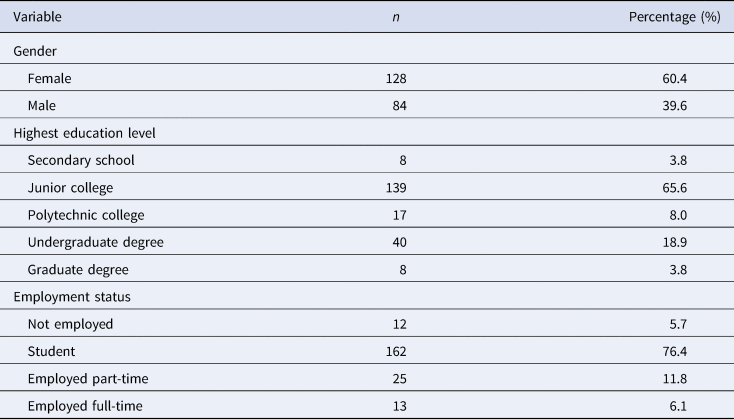
To be eligible for the study, participants had to be (1) between 18 and 30 years old, (2) living in Singapore, and (3) proficient in English. A total of 231 participants were recruited via online social media platforms and from a pool of university research participants. Of these participants, 212 (M = 20.92 years, SD = 2.26 years) completed both surveys and were included in data analyses. Table 1 summarises the participants’ demographic characteristics. The majority of participants were college students (76.4%), and more than half (60.4%) were female. More than half (65.6%) reported a junior college diploma as their highest education qualification. This study was approved by the National University of Singapore's Institutional Review Board.
Demographic Characteristics of Participants (N = 212)

Procedure
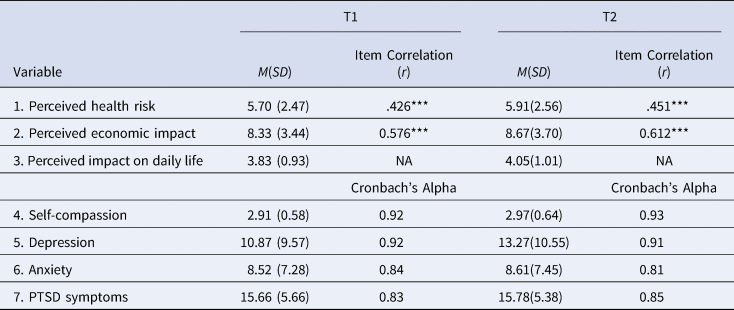
The study was conducted from September to November 2020. Participants who consented to taking part in the study were invited to complete two online surveys that were administered 2 months apart (T1 and T2). With the exception of a demographic data form, which was administered only at T1, all measures were administered at both time points (see Table 2 for the measures’ internal consistencies). Participants who completed both surveys were reimbursed with either SG$10 or research credits.
Descriptive Statistics and Internal Consistencies of Study Measures

Note. ***p < .001.
Measures
Demographic data form
Participants completed questions regarding their age, gender, education, and employment status.
Questionnaire on perceived COVID-19 health risk, economic impact, impact on daily life
Perceived COVID-19 health risk was assessed using two items: ‘You will get infected with COVID-19’ and ‘Assuming you are infected, you will suffer severe symptoms’. These items were adapted from a study investigating perceptions of health risks during the H1N1 pandemic (Bults et al., Reference Bults, Beaujean, de Zwart, Kok, van Empelen, van Steenbergen and Voeten2011). Perceived economic impact was measured using two items: ‘Your personal situation will get worse due to economic consequences of COVID-19’ and ‘You will face more uncertainty in your job prospects or career due to COVID-19’. These items were adapted from a COVID-19 questionnaire developed by Barber and Kim (Reference Barber and Kim2021). Items are rated on a 7-point Likert-type scale (‘Exceptionally unlikely’ to ‘Already happened’).
Perceived impact on daily life was measured using a single item: ‘To what extent has COVID-19 impacted your daily life?’ This item was adapted from Cao et al. (Reference Cao, Fang, Hou, Han, Xu, Dong and Zheng2020) and Tull et al. (Reference Tull, Edmonds, Scamaldo, Richmond, Rose and Gratz2020). The item is rated on a 5-point Likert-type scale (‘Not at all or very slightly’ to ‘Very much’).
Depression, Anxiety, and Stress Scales (DASS-21)
The Depression and Anxiety subscales from the 21-item DASS-21 were used to assess symptoms of depression and anxiety experienced over the past week (Lovibond & Lovibond, Reference Lovibond and Lovibond1995). Items are rated on a 4-point scale (‘Did not apply to me at all’ to ‘Applied to me very much or most of the time’). For each subscale, item scores are summed and multiplied by two.Footnote 1
Civilian Version of The PTSD Checklist (abbreviated PCL-C)
The 6-item Abbreviated PCL-C was used to measure symptoms of PTSD experienced in the past month (Lang & Stein, Reference Lang and Stein2005). Items are rated on a 5-point scale (‘Not at all’ to ‘Extremely’). The scale exhibited good psychometric properties in a civilian sample of primary care patients (Lang & Stein, Reference Lang and Stein2005). The total score was calculated by summing all individual items’ scores.Footnote 2
Self-Compassion Scale (SCS)
The SCS was used to assess predispositions to be kind towards oneself, recognise personal experiences as common to humanity, and to be non-judgmentally aware of negative thoughts (Neff, Reference Neff2003b). This scale consists of 26 items and 6 subscales: self-kindness, self-judgment, common humanity, isolation, mindfulness, and identification. Items are rated on a 5-point Likert-type scale from ‘Almost never’ to ‘Almost always’. The total score was obtained by calculating the grand mean of all six subscales’ mean scores.
Data Analysis
Preliminary analysis was conducted to examine the associations between demographic variables and psychological symptoms at T2. Demographic variables identified as significant correlates of any DVs were included as covariates in subsequent regression analyses involving the respective DVs. Hierarchical multiple regressions were conducted to examine the association between COVID-19-related stressors at Time 1 (T1) and psychological symptoms at Time 2 (T2). Self-compassion and the cross-product terms between self-compassion and each COVID-19 stressor were then entered as additional predictors in subsequent analyses. Moderation analyses were conducted using PROCESS, an SPSS macro. Significant interaction effects were probed using the Johnson-Neyman method.
Results
Preliminary Analyses
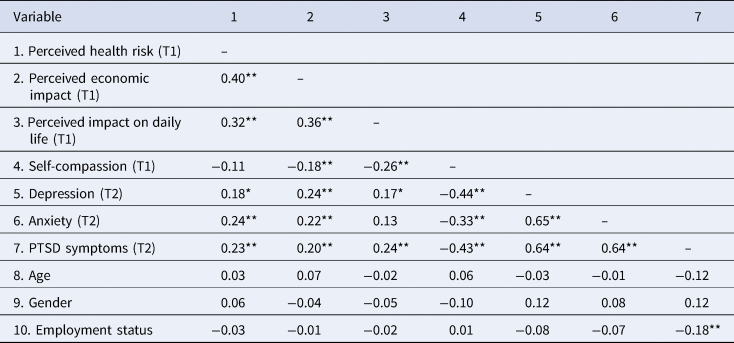
Table 3 reports the inter-correlations among the key study variables. None of the key study variables was correlated with age and gender. Except for PTSD symptoms, there were no significant correlations between key study variables and employment status. PTSD symptoms were negatively correlated with employment status, r (210) = −.18, p = .010, indicating that participants who were working full-time had significantly lower PTSD symptoms than those who were unemployed, working part-time, or students. Employment status was included as a covariate in subsequent analyses involving PTSD symptoms as a DV.
Correlations among Key Study Variables and Demographic Variables

Note. Gender is coded as 0 (male) and 1 (female). Employment status is coded as 0 (Not employed/Part time/Student) and 1 (Full time). *p < .05; **p < .01.
COVID-19 stressors as predictors of T2 psychological symptoms
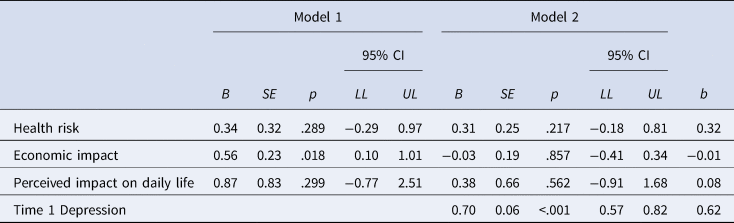
Regression analyses showed that economic impact significantly predicted depressive symptoms at T2, B = 0.56, SE = 0.23, p = .018 (Table 4, Model 1). Health risk and perceived impact on daily life did not predict depressive symptoms at T2. After controlling for T1 depressive symptoms, economic impact, health risk, and perceived impact on daily life did not predict depressive symptoms at T2 (Table 4, Model 2).
Summary of Hierarchical Regression Analysis for Time 2 Depression Predicted by COVID-19 Stressors and Time 1 Depression

Note. Model 1 includes the first block (COVID-19 stressors as the sole set of predictors). Model 2 includes a second additional block (Time 1 Depression as a predictor). CI indicates confidence interval. LL and UL indicate the lower and upper limits of a confidence interval, respectively.
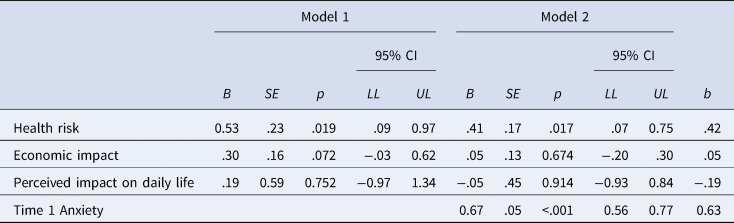
Perceived health risk significantly predicted anxiety symptoms at T2, B = 0.53, SE = 0.23, p = .019 (Table 5, Model 1). Economic impact was a marginally significant predictor of T2 anxiety symptoms, B = 0.30, SE = 0.16, p = .072. Perceived impact on daily life did not predict T2 anxiety symptoms. Controlling for T1 anxiety symptoms, health risk remained a significant predictor of T2 anxiety symptoms, B = 0.41, SE = 0.17, p = .017 (Table 5, Model 2). Economic impact and perceived impact of daily life did not predict T2 anxiety symptoms, after controlling for T1 anxiety symptoms.
Summary of Hierarchical Regression Analysis for Time 2 Anxiety Predicted by COVID-19 Stressors and Time 1 Anxiety

Note. Model 1 includes the first block (COVID-19 stressors as the sole set of predictors). Model 2 includes a second additional block (Time 1 Anxiety as a predictor). CI indicates confidence interval. LL and UL indicate the lower and upper limits of a confidence interval, respectively.
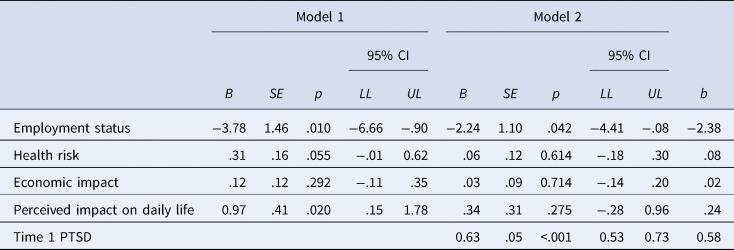
Controlling for employment status, perceived impact on daily life significantly predicted T2 PTSD symptoms, B = 0.97, SE = 0.41, p = .020 (Table 6, Model 1). Health risk was a marginally significant predictor of PTSD symptoms at T2, B = 0.31, SE = 0.16, p = .055. Economic impact did not predict PTSD symptoms at T2. After controlling for employment status and T1 PTSD symptoms, economic impact, health risk, and perceived impact on daily life did not predict PTSD symptoms at T2 (Table 6, Model 2).
Summary of Hierarchical Regression Analysis for Time 2 PTSD Symptoms Predicted by COVID-19 Stressors, Self-Compassion, Time 1 PTSD Symptoms, and Employment Status

Note. Model 1 includes the first block (COVID-19 stressors and employment status as the sole set of predictors). Model 2 includes a second additional block (Time 1 PTSD as a predictor). CI indicates confidence interval. LL and UL indicate the lower and upper limits of a confidence interval, respectively.
Self-compassion as a moderator of the association between COVID-19 stressors and psychological symptoms
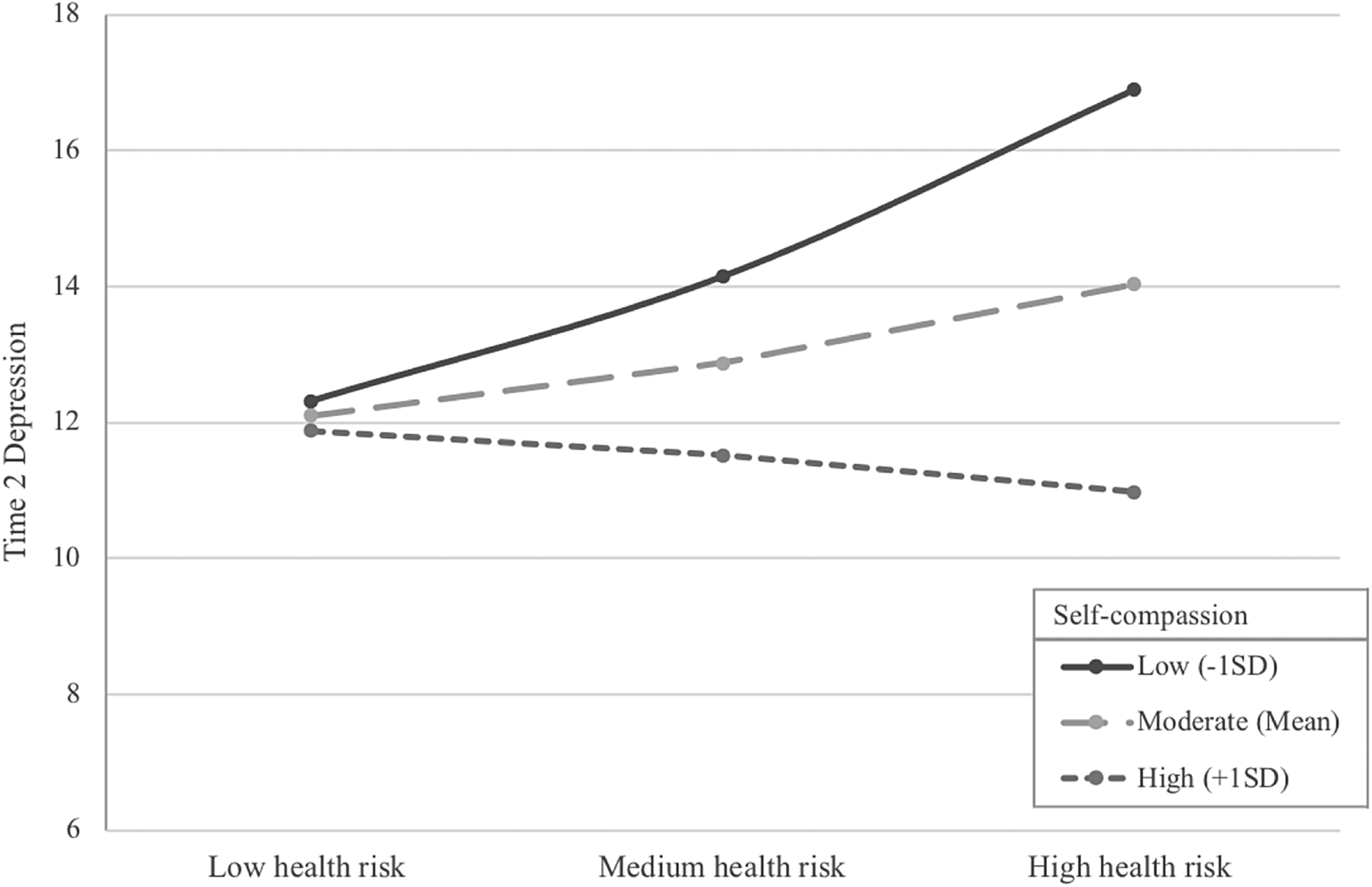
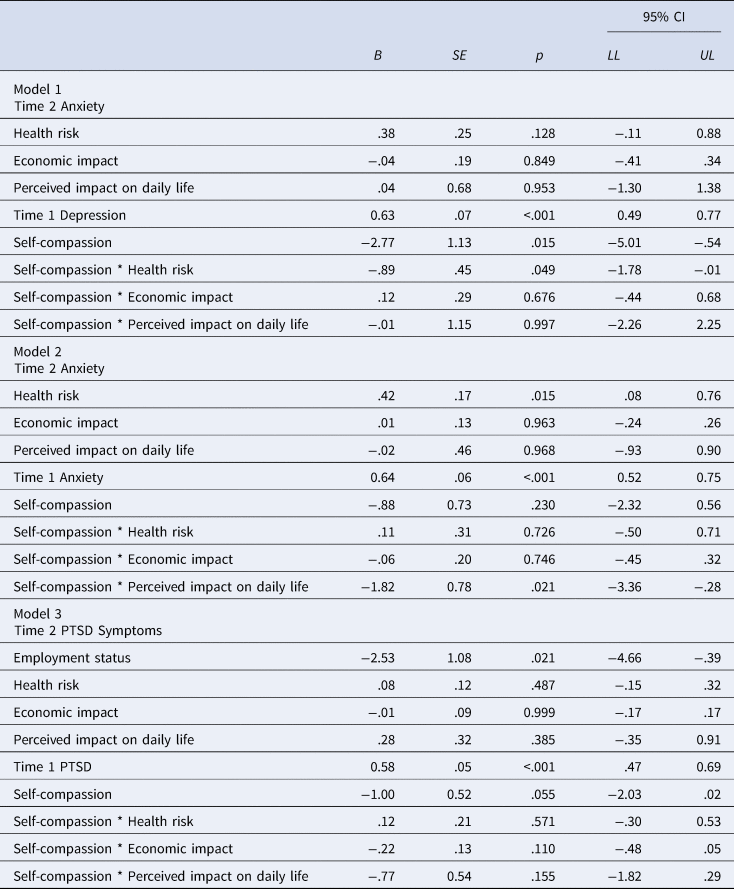
Analyses using PROCESS found that self-compassion significantly moderated the relationship between health risk and T2 depressive symptoms, b = −0.89, SE = 0.45, p = .049 (Table 7, Model 1; also see Figure 1). Results from Johnson-Neyman analysis indicated that there was a positive relationship between health risk and T2 depressive symptoms in participants with low self-compassion (those scoring below 2.74 out of 5 in the SCS). At the range from 2.74 to 1.38, there were increasingly positive relationships between health risk and T2 depressive symptoms. For participants scoring above 2.82, health risk was not significantly associated with T2 depressive symptoms. Self-compassion did not moderate the association between economic impact and T2 depressive symptoms, or the association between perceived impact on daily life and T2 depressive symptoms.
Interaction effect between self-compassion and health risk predicting time 2 depression.

Summary for Hierarchical Regression Analyses with Each Psychological Symptom Predicted by COVID-19 Stressors, Self-Compassion and Their Interactions, Controlling for Time 1 Psychological Symptoms

Note. The models differ by DV. Model 1 reports Depression, Model 2 reports Anxiety, Model 3 reports PTSD symptoms. CI indicates confidence interval. LL and UL indicate the lower and upper limits of a confidence interval, respectively.
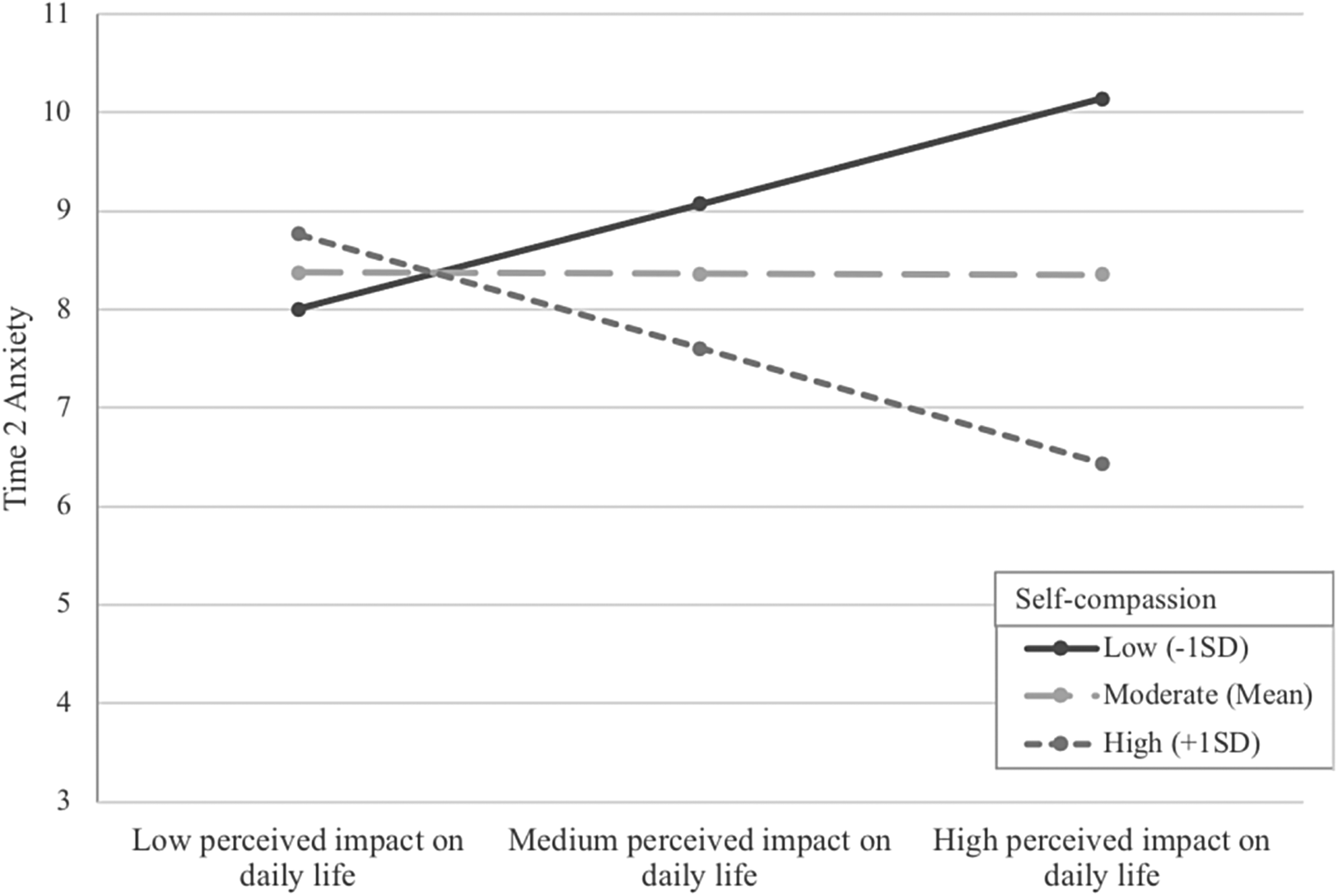
Self-compassion emerged as a significant moderator of the relationship between perceived impact on daily life and T2 anxiety symptoms, B = −1.82, SE = 0.78, p = .021 (Table 7, Model 2; also see Figure 2). Among individuals with low self-compassion (those scoring below 1.59 in the SCS), there was a positive relationship between perceived impact on daily life and T2 anxiety symptoms. At values above 1.59, as self-compassion scores decreased, there were increasingly positive relationships between perceived impact on daily life and T2 anxiety symptoms. In contrast, for individuals with high self-compassion (those scoring above 3.58), there were increasingly negative associations between perceived impact on daily life and T2 anxiety. Self-compassion did not moderate the association between economic impact and T2 anxiety, or that between health risk and T2 anxiety.
Interaction effect between self-compassion and perceived impact of daily life predicting time 2 anxiety.

Lastly, the associations between T2 PTSD symptoms and each of the COVID-19 stressors were not moderated by self-compassion (Table 7, Model 3).
Discussion
This longitudinal study investigated the association between COVID-19 stressors and psychological symptoms, and found that perceived health risk predicted anxiety symptoms 2 months later, controlling for baseline anxiety symptoms. Self-compassion moderated the association between perceived health risk and depressive symptoms, and the association between perceived impact on daily life and anxiety symptoms, such that low self-compassion predicted a stronger positive relationship between each COVID-19 stressor and the corresponding psychological symptom.
The finding that perceived health risk predicted greater anxiety symptoms is consistent with past studies identifying COVID-19 health risk as a predictor of increased psychological distress (Li et al., Reference Li, Zhao, Ma, McReynolds, Lin, Chen and Liu2021; Robinson & Daly, Reference Robinson and Daly2020). Factors related to health risk, such as inadequate supply of sanitising equipment and worries about getting infected with COVID-19 were associated with increased anxiety symptoms over time. Individuals who believe they may contract COVID-19 and suffer severe symptoms from it are more likely to perceive the disease as threatening, which in turn increases negative emotions such as anxiety and anger (Pérez-Fuentes, Jurado, Martínez, & Linares, Reference Pérez-Fuentes, Jurado, Martínez and Linares2020).
Although perceived economic impact predicted depressive symptoms 2 months later, this association did not persist after controlling for baseline depression. Similarly, perceived impact on daily life did not predict PTSD symptoms after accounting for baseline symptoms. Thus, perceived health risk was the only COVID-19 stressor that predicted psychological symptoms above and beyond baseline mental health status. This finding is consistent with Robinson and Daly (Reference Robinson and Daly2020)'s study, which found that changes in perceived health risk was the key mediator of changes in psychological distress during the COVID-19 pandemic, followed by changes in lifestyle and perceived financial risk. Perceived economic burden and impact on daily life may have less impact in this study's context because the pandemic was relatively well-contained in Singapore. The fact that lockdown restrictions were gradually eased by the time of the study might have led to fewer lifestyle and economic disruptions. Therefore, the effects of economic burden and perceived impact on daily life on psychological symptoms may be largely accounted for by pre-existing mental health status and/or contextual factors.
The finding that self-compassion prospectively buffers against the impact of COVID-19 stressors on psychological symptoms extends findings from previous cross-sectional research demonstrating the role of self-compassion as a moderator of the link between threats and psychological symptoms during the pandemic (Lau, Chan, & Ng, Reference Lau, Chan and Ng2020). The results are consistent with Stutts et al. (Reference Stutts, Leary, Zeveney and Hufnagle2018)'s finding that self-compassion attenuated the effects of perceived stress on anxiety and depression prospectively. This may be because self-compassionate individuals are less likely to catastrophize, criticise themselves, and over-identify with negative experiences. In times of distress, self-compassionate individuals tend to cope by treating themselves with more kindness and becoming mindfully aware of negative thoughts, without obsessing over them (Neff, Reference Neff2003a). This may enable a balanced view of negative thoughts and the employment of more adaptive coping strategies (Chishima, Mizuno, Sugawara, & Miyagawa, Reference Chishima, Mizuno, Sugawara and Miyagawa2018). In line with the findings, use of adaptive emotion regulation strategies (Muñoz-Navarro, Malonda, Llorca-Mestre, Cano-Vindel, & Fernández-Berrocal, Reference Muñoz-Navarro, Malonda, Llorca-Mestre, Cano-Vindel and Fernández-Berrocal2021) and maladaptive strategies (e.g., suppression; Zhang, Li, Sun, Peng, & Li, Reference Zhang, Li, Sun, Peng and Li2021) have been found to moderate the effects of COVID-19 stressors on mental health outcomes. The findings highlight the value of cultivating self-compassion in coping with pandemic-related distress, and provide support for the implementation of self-compassion programmes for the public (Poli, Gemignani, & Ciro Conversano, Reference Poli, Gemignani and Ciro Conversano2020). Future research should examine the relative role of self-compassion versus other individual and/or or societal factors (Jetten, Reicher, Haslam, & Cruwys, Reference Jetten, Reicher, Haslam and Cruwys2020) in buffering the effects of the pandemic on mental health outcomes.
The strengths of the study include use of a longitudinal design to examine the relationships between COVID-19 stressors and psychological symptoms. By controlling for baseline psychological symptoms, this study was able to assess the unique effects of COVID-19 stressors on psychological symptoms prospectively. Compared to previous studies that mainly focused on health-related stressors, COVID-19 stressors in this study were broadly conceptualised to include stressors unrelated to health, such as the perceived impact of COVID-19 on one's economic circumstances and daily life. Meanwhile, although this study utilised a longitudinal design, the lack of an experimental manipulation precludes definite causal conclusions about the relationship between COVID-19 stressors and psychological symptoms. Use of self-report measures is subject to biases such as demand characteristics. Further research may utilise objective markers, such as cortisol levels, to assess psychological distress. Additionally, this study was conducted in Singapore, where the risk of contracting COVID-19 was maintained at relatively low levels. Community infections were largely under control during data collection, which may have masked some effects of pandemic-related stressors on mental health. Therefore, these findings may have limited generalizability to countries with higher risk of COVID-19 infection. Future research should replicate the findings in other contexts, as well as examine psychological mechanisms accounting for the effects of self-compassion as a protective factor against psychological distress.
Funding
This work was supported by Yale-NUS College's undergraduate research fund.
Conflict of interest
The authors declared none.
Ethical standards
The authors assert that all procedures contributing to this work comply with the ethical standards of the relevant national and institutional committees on human experimentation and with the Helsinki Declaration of 1975, as revised in 2008.