




No CrossRef data available.
Article contents
Phylogeny of Dictyocaulus (lungworms) from eight species of ruminants based on analyses of ribosomal RNA data
Published online by Cambridge University Press: 09 October 2003
Abstract
In this study, we conducted phylogenetic analyses of nematode parasites within the genus Dictyocaulus (superfamily Trichostrongyloidea). Lungworms from cattle (Bos taurus), domestic sheep (Ovis aries), European fallow deer (Dama dama), moose (Alces alces), musk ox (Ovibos moschatus), red deer (Cervus elaphus), reindeer (Rangifer tarandus) and roe deer (Capreolus capreolus) were obtained and their small subunit ribosomal RNA (SSU) and internal transcribed spacer 2 (ITS2) sequences analysed. In the hosts examined we identified D. capreolus, D. eckerti, D. filaria and D. viviparus. However, in fallow deer we detected a taxon with unique SSU and ITS2 sequences. The phylogenetic position of this taxon based on the SSU sequences shows that it is a separate evolutionary lineage from the other recognized species of Dictyocaulus. Furthermore, the analysis of the ITS2 sequence data indicates that it is as genetically distinct as are the named species of Dictyocaulus. Therefore, either this taxon needs to be recognized as a new species, or D. capreolus, D. eckerti and D. viviparus need to be combined into a single species. Traditionally, the genus Dictyocaulus has been placed as a separate family within the superfamily Trichostrongyloidea. The present molecular phylogenetic analyses support the placement as a separate family, but the current data do not support the placement of the Dictyocaulidae within the Trichostrongyloidea without a reassessment of the placement of the superfamily Strongyloidea. While D. eckerti has been regarded as the one and only lungworm species of cervids, this study showed that 4 host species including 3 members of Cervidae (moose, reindeer, red deer) and 1 Bovidae (musk ox) were infected with this parasite. Host ranges of D. viviparus (cattle), D. filaria (sheep) and D. capreolus (moose and roe deer) were more restricted. No clear pattern of co-evolution between the dictyocaulid taxa and their bovid and cervid hosts could be determined.
Keywords
Information
- Type
- Research Article
- Information
- Copyright
- 2003 Cambridge University Press
INTRODUCTION
Parasitic nematodes of the genus Dictyocaulus (family Dictyocaulidae, superfamily Trichostrongyloidea) are found as adults in the bronchial branches of a range of domestic and wild ruminants (Anderson, 1992). In many host species lungworms are potential causative agents of parasitic bronchitis and, particularly in cattle, sheep and semi-domesticated red deer, they are regarded as important pathogens (Urquhart et al. 1996). However, for a long time the taxonomy has been very confused, both with reference to the number of species and to the phylogeny within the order Strongylida.
Although bovine lungworms were first recognized in 1782 as Gordius viviparus, the genus Dictyocaulus was not described until the start of the 20th century. In the original description of the genus, 4 lungworms exclusively of artiodactylids were included (Railliet & Henry, 1907). Many years later, Skrjabin, Shikhobalova & Schultz (1954) reviewed the taxonomy of the genus Dictyocaulus. They made 2 important contributions to the taxonomy of the genus. Firstly, D. noerneri of cervids was considered an invalid name because no formal morphological description was available. Second, D. eckerti was described from reindeer. More recently, Gibbons & Khalil (1988) revised the genus and concluded that it contained 6 species: D. africanus, D. arnfeldi, D. cameli, D. eckerti, D. filaria and D. viviparus. Collectively these species are all very similar, with a paucity of distinctive morphological characters. The controversies on the composition of the genus Dictyocaulus have continued over the years, particularly in relation to Dictyocaulus of cervids. For example, (Durette-Desset, Hugonnet & Chabaud, 1988) questioned whether D. noerneri (Railett & Henry, 1907) should be dismissed as a valid species. However, as pointed out by Jansen & Borgsteede (1990), D. noerneri was not based on sufficient information to confirm its identity, and according to their opinion it should be considered as a nomen dubium. Instead, these authors were of the opinion that lungworms of cervids are identical to D. eckerti.
The taxonomy and identification of lungworms of the genus Dictyocaulus have increasingly been analysed with various molecular techniques. In most studies, results are based on information of the internal transcribed spacer 2 (ITS2) of nuclear ribosomal RNA (Divina et al. 2000; Epe et al. 1995; Höglund et al. 1999; Schnieder, Epe & Samson-Himmelstjerna, 1996; Von Samson-Himmelstjerna et al. 1997). Sequence analysis of the ITS2 confirmed that lungworms from fallow deer are genetically different from those of donkey, sheep and cattle (Epe, Samson-Himmelstjerna & Schnieder, 1997). Accordingly, the ITS2 sequence of lungworm from fallow deer in Germany was deposited in GenBank as D. eckerti (op. cit.). With a similar analytical approach we could not only confirm the identity of lungworms from cattle, but we could also show that a novel Dictyocaulus species infects roe deer and moose (Höglund et al. 1999). Specifically, as a result, we determined the identity of nearly 300 lungworms with an ITS2 PCR combined with a DNA hybridization assay using species-specific oligonucleotide probes (Divina et al. 2000). Using this assay, we demonstrated that Swedish cattle harboured a monospecific D. viviparus infection. In contrast, infections composed entirely of the new Dictyocaulus species were found in roe deer, whereas in moose, mixed infections containing this species and D. eckerti were recorded (op. cit.). The morphology of the new species has now been described, and it has been formally named as D. capreolus (see Gibbons & Höglund 2002).
The aim of the present study was to investigate the genetic diversity and phylogeny of a range of Dictyocaulus taxa from 8 species of ruminant host, all of which are represented in the Swedish fauna. We employed not only ITS2 sequence data but also new small subunit ribosomal RNA (SSU rRNA) sequence data for all taxa. The inclusion of the SSU rRNA sequence data enabled the evolutionary relationships of the members of Dictyocaulus to other nematodes to be explored. For both data sets we also performed a preliminary assessment of host–parasite relationships.
MATERIALS AND METHODS
Sampling parasites and DNA extraction
Adult worms were obtained from the bronchi and trachea following dissection of lungs from cattle (Bos taurus), domestic sheep (Ovis aries), European fallow deer (Dama dama), moose (Alces alces), musk ox (Ovibos moschatus), red deer (Cervus elaphus), reindeer (Rangifer tarandus) and roe deer (Capreolus capreolus). Most specimens were collected from animals slaughtered for other reasons and sent for autopsy at the National Veterinary Institute in Uppsala, Sweden. Lungworms from reindeer were collected from a herd in northern Norway, fixed in 70% alcohol and then sent to our laboratory. The specimens from musk ox came from Alaska, USA. Genomic worm DNA was extracted either from fresh-frozen (−70 °C) or ethanol-fixed individual specimens by using the QIAamp tissue kit, according to the manufacturer's protocol (QIAgen, Hilden, Germany).
DNA amplification
The ITS2 was amplified by PCR with the primers ITS2F (5′-ACG TCT GGT TCA GGG TTG TT-3′) and ITS2R (5′-TTA GTT TCT TTT CCT CCG CT-3′) (Höglund et al. 1999). The SSU rRNA genes were amplified in two parts, overlapping by ≈60 bp. The 5′ ends of the SSU rRNA genes were amplified with the primer pair OP150 (5′-AAG ATT AGG CCA TGC ATG-3′) and OP151 (5′-TCT TGG CAA ATG CTT TCG-3′). The amplification of the 3′ ends of the SSU rRNA genes was performed using the primer pair OP152 (5′-AGA GGT GAA ATT CKT AGA-3′) and OP153 (5′-ACC TTG TTG TTA CGA CTT-3′). For the PCR, each 50 μl reaction mixture contained 10 mM Tris–HCl, pH 8·3, 50 mM KCl, 1·5 mM MgCl2, 0·4 μM of each primer, 200 μM of each deoxynucleotide, 1 μl of template and 1 U of AmpliTaq DNA polymerase (Applied Biosystems, Foster City, USA). The amplifications were carried out in a PE 2400 thermocycler (Applied Biosystems). After an initial 2 min incubation at 93 °C, the DNA was amplified for 30 cycles of 45 s of denaturation at 94 °C, for 30 s of annealing at 42 °C and for 2 min of extension at 72 °C. The PCR ended with a final extension of 7 min at 72 °C. PCR products were verified on 1·5% agarose gels with 0·5 μg/ml ethidium bromide. The amplicons were purified over spin columns (QIAquick PCR purification kit from QIAgen) and eluted with 30 μl of H2O.
Sequence analysis
The 5′ end of the SSU rRNA gene was sequenced using primers OP150, OP151, OP188 (5′-GCA GGC GCG AAA CTT ATC CAA-3′) and OP189 (5′-CAT TGA AAT AAC CGT TCC ATA GG-3′). The 3′ end of the SSU rRNA gene was sequenced using primers OP152, OP153, OP154 (5′-GCG GTG TTT AGC CGC ACG AG3′) and OP155 (5′CTG ATT CTT CCA TTG TAG CG-3′). BigDye chemistry (Applied Biosystems) was used for the DNA sequencing reactions, and the samples were analysed on an ABI 377 DNA sequencer (Applied Biosystems).
The SSU rRNA sequences were aligned using secondary structure information, following the strategy described by Morrison & Ellis (1997). Those Strongylida sequences available in aligned form in the European Ribosomal Database (Wuyts et al. 2002) were accessed, plus several members of the Rhabditida to serve as outgroups. Then our new sequences, plus those Strongylida sequences available in GenBank, were manually aligned against this prior alignment using MacClade version 3.08a (Maddison & Maddison, 1992). The final alignment included the SSU rRNA sequences of: the 5 Dictyocaulus taxa, Ostertagia ostertagi (GenBank accession number AF036598), Nematodirus battus (U01230), Haemonchus contortus (L04153), Haemonchus placei (L04154), Haemonchus similis (L04152) (all superfamily Trichstrongyloidea); Parafilaroides sp. (U81590), Otostrongylus sp. (U81589) (both superfamily Metastrongyloidea); Syngamus trachea (AF036606) (superfamily Strongyloidea); with Heterorhabditis bacteriophora (AF036593) and Heterorhabditis hepialus (AF083004) as the two outgroup taxa. Several other members of the Rhabditida were tried as outgroups, such as Rhabditella and Caenorhabditis, but these sequences were too different from those of the Strongylida to serve as useful outgroups. The final alignment contained 1744 aligned nucleotide positions.
Phylogenetic relationships among all of the SSU rRNA sequences were then examined (Swofford et al. 1996). The robustness of the phylogenetic analyses was assessed by trying various tree-building methods and several different evolutionary models. Parsimony analysis via a branch-and-bound search, using PAUP* version 4.0b10 (Swofford, 1998), was tried as the simplest model, assuming no corrections for multiple substitutions and with equal rates of variation. Analyses were tried both with gaps treated as missing data or as new states. Neighbour-joining analysis was then used to assess the various models of evolution, involving both corrections for multiple substitutions and for unequal rates of variation. This was done via hierarchical likelihood-ratio tests (Huelsenbeck & Crandall, 1997), in which simpler models are tested against more inclusive models, rejecting the simpler model as inadequate if the test is significant at P=0·05. We used PAUP* and MrModeltest version 1.1b (Nylander, 2002). The data were then analysed via maximum likelihood with the evolutionary model chosen from the testing, using PAUP*, with the default heuristic search strategy and the parameter values specified by the model. The robustness of the branches on the final tree was assessed via Bayesian analysis, using MrBayes version 2.01 (Huelsenbeck & Ronquist, 2001), with a burn-in of 10000 iterations followed by 1000000 further iterations to produce 10000 trees. The final trees were drawn using TreeView version 1.6.6 (Page, 1996).
The ITS2 sequences for the 5 Dictyocaulus taxa were aligned by starting with the alignment of Höglund et al. (1999) and then using the profile alignment option of Clustal-X version 1.5 (Thompson et al. 1997) to align the extra sequences; the final alignment was checked by eye using MacClade. It proved to be impossible to align these sequences reliably to other Strongylida ITS2 sequences, and so they were not included in the phylogenetic analyses. Phylogenetic analyses were performed on the aligned data for the 5 taxa using the strategy as described for the SSU rRNA sequences, except that bootstrap analyses were performed for the maximum likelihood analysis rather than using Bayesian analysis. These data were also examined in a distance-based non-tree context via spectral analysis (Hendy & Penny, 1993), using Spectrum version 2.3.0 (Charleston, 1998), and split decomposition (Bandelt & Dress, 1992), using SplitsTree version 2.4 (Huson, 1998).
The coevolution of the host–parasite relationships for the Dictyocaulus taxa were formally tested using the procedure described by Legendre, Desdevises & Bazin (2002), using the ParaFit program and 10000 permutations. The parasite relationships were taken from the patristic distances of the maximum likelihood trees for both the SSU rRNA and ITS2 data, while the host relationships were determined from the taxonomic ‘distances’ of the family and subfamily classification of Huffman (2003).
RESULTS
Sequence analysis
The SSU rRNA sequences of all Dictyocaulus individuals have been deposited in GenBank, with accession numbers AY168856–AY168864. The ITS2 sequence from a lungworm of European fallow deer has the accession number AY168865. The GC content was approximately 46% for the different rRNA sequences. The differences among the SSU rRNA sequences of the various lungworms included in this study ranged between 1·0 and 5·9%. Cattle, sheep and fallow deer all had lungworms with unique SSU rRNA and ITS2 sequences.
Lungworms isolated from moose, musk ox, red deer and reindeer had ITS2 sequences corresponding to D. eckerti as previously described (GenBank accession number U37716) (Epe et al. 1997). Worms from these animals also had identical SSU rRNA sequences. Similarly, D. capreolus from roe deer and from moose had identical SSU rRNA and ITS2 sequences.
The SSU rRNA sequence determined from D. filaria was 1736 bp long, compared with 1711–1717 bp for other members of the genus Dictyocaulus. Most of the size differences between D. filaria and the other Dictyocaulus taxa can be found within the 43/e helices (Wuyts et al. 2002). Compared with the SSU rRNA of other members of Trichostrongyloidea, all Dictyocaulus species have an extension of helix 43 (Wuyts et al. 2002). A comparison of the stem–loop structures extending from position 1335 to 1383 with reference to the yeast sequence are shown for D. filaria, D. viviparus and H. contortus (Fig. 1). As a reference, we have included the corresponding region from Saccharomyces cerevisiae.

Fig. 1. Comparison of the putative stem–loop structures extending from position 1335 to 1383 (numbering with reference to the yeast sequence) in helix 43 in SSU rRNA from the yeast Saccharomyces cerevisiae as well as from the nematodes Haemonchus contortus, Dictyocaulus filaria and D. viviparus. All Dictyocaulus studied thus far has an extension of this helix compared with the SSU rRNA of other members of Trichostrongyloidea. The boxed nucleotides are conserved among all the different members of Trichostrongyloidea included in this study.
Phylogenetic analysis of SSU rRNA sequences
The maximum likelihood tree based on the final evolutionary model chosen from the hierarchical likelihood-ratio tests of the SSU rRNA sequence data is shown in Fig. 2A. This model was the most complex one available (i.e. all of the simpler models were rejected), which allows the base frequencies to vary, all 6 substitution rates to vary (i.e. the general time-reversible substitution model, GTR), a proportion of the sites to be invariant, and the variable sites to vary with a gamma distribution. Unfortunately, it was not possible to get the PAUP* program to estimate the parameters of the model from the data during the maximum likelihood analysis. Therefore, the robustness of the tree was investigated using the same model and Bayesian analysis, instead. The 50% majority-rule tree from the Bayesian analysis is shown in Fig. 2B.

Fig. 2. Phylogenetic trees for the Strongylida, plus 2 members of the Rhabditida as an outgroup, based on aligned SSU rRNA sequences. (A) Maximum likelihood tree, with branch lengths proportional to the inferred number of nucleotide changes. The evolutionary model used was a fixed version of the general time-reversible model – base frequencies: A=0·2670 C=0·1988 G=0·2575 T=0·2766; rate matrix: A[harr ]C=1·0216 A[harr ]G=4·9788 A[harr ]T=2·9280 C[harr ]G=1·0986 C[harr ]T=5·7062 G[harr ]T=1·0000; proportion of invariable sites: 0·7323; gamma distribution for variable sites with shape parameter: 0·8741. (B) 50% majority-rule tree from the Bayesian analysis, showing the clade credibility values (the percentage of 1000000 sampled trees containing that clade) on the branches. The evolutionary model used was a flexible version of the general time-reversible model, which allowed all of the parameters listed for the maximum likelihood tree to be estimated from the data. Also shown are the known hosts for the species of the Strongylida.
These phylogenetic analyses reveal three well-supported clades: the species from the Dictyocaulidae (the 5 Dictyocaulus species), the species from the Metastrongyloidea (Otostrongylus, Parafilaroides), and the species from the Trichostrongylidae (Haemonchus, Nematodirus, Ostertagia)+Strongyloidea (Syngamus). These 3 clades appeared in most of the analyses, irrespective of the evolutionary model or tree-building method used, but the relationships among them varied depending on the particular analysis.
The parsimony analysis (i.e. the simplest evolutionary model, with no corrections for multiple substitutions and with equal rates of variation) placed the Dictyocaulidae as the sister to the Metastrongyloidea. The neighbour-joining and maximum likelihood analyses with any of the models that correct for multiple substitutions placed the Dictyocaulidae as the sister to the other two clades. Finally, the maximum likelihood and Bayesian analyses with the GTR model and corrections for either invariant sites or gamma distributed sites placed the Dictyocaulidae as the sister to the Trichostrongylidae+Strongyloidea, as shown in Fig. 2. These ambiguous relationships indicate that the phylogenetic position of the Dictyocaulidae cannot be resolved with these SSU rRNA sequence data. Nevertheless, the current data do not support the placement of the Dictyocaulidae within the Trichostrongyloidea without a reassessment of the placement of the Strongyloidea itself.
Within the Dictyocaulidae, the relationships of the 5 Dictyocaulus taxa were identical in almost all of the SSU rRNA analyses, irrespective of the evolutionary model or tree-building method used. The only exceptions were the 2 parsimony analyses, both of which found 2 equally parsimonious trees, 1 with D. eckerti and D. capreolus as sister species (as shown in Fig. 2) and 1 with D. eckerti and D. viviparus as sisters. Also, D. filaria was consistently shown by all of the analyses as the sister species to the remaining Dictyocaulus taxa, with a long branch length. The sequence alignment revealed several places where D. filaria has unique insertions, sometimes quite long, making it the most difficult of the sequences to align within this data set. Finally, all of the analyses indicated that Dictyocaulus sp. is the sister to the clade containing D. capreolus, D. eckerti and D. viviparus (Fig. 2). Therefore, on phylogenetic grounds, as revealed by these SSU rRNA sequence data, either Dictyocaulus sp. needs to be recognized as a new species or D. capreolus, D. eckerti and D. viviparus need to be combined into a single species.
Phylogenetic analysis of ITS2 sequences
The ITS2 sequences were difficult to align, and the final alignment shows only 44–79% raw similarity (i.e. uncorrected for multiple substitutions) among the sequences. D. filaria is the most divergent taxon, having only 44–49% similarity to the other taxa, while the remaining taxa have 70–79% similarity among themselves. Dictyocaulus sp. is at least as different from D. viviparus, D. eckerti and D. capreolus (71–72% similarity) as these 3 species are from each other (73–79% similarity).
The hierarchical likelihood-ratio tests lead to the choice of the HKY85 substitution model for the phylogenetic analysis, with gamma rate variation. The maximum likelihood analysis based on this model, however, found only weak bootstrap support for any of the branches, as shown in Fig. 3. If the tree is rooted using D. filaria, then this tree differs from that for the SSU rRNA (Fig. 2A) in that (i) D. capreolus is placed as the sister to D. viviparus+D. eckerti+D. sp., and (ii) D. sp. is placed as the sister to D. eckerti. However, it seems clear that the ITS2 data do not well support a tree-like arrangement of these taxa.

Fig. 3. Phylogenetic trees for the Dictyocaulus species based on aligned ITS2 sequences. Maximum likelihood tree, with branch lengths proportional to the inferred number of nucleotide changes. The evolutionary model used was a flexible version of the HKY85 nucleotide substitution model with gamma distribution for variable sites, allowing the base frequencies, transition[ratio ]transversion ratio and shape parameter to be estimated from the data. Also shown are the bootstrap values (the percentage of 100 resampled trees containing that clade) on the branches.
Therefore, the relationships among the sequences were explored using evolutionary distances but without imposing a phylogenetic tree. The spectral analysis (based on the K81 substitution model) showed that the aligned sequence data contain as much conflicting information (0·0352) as support (0·0376) for the placement of D. capreolus as the sister to D. viviparus+D. eckerti+D. sp., which is why the tree-building analysis is ambiguous. Furthermore, the spectral analysis shows that there is actually more conflict (0·0325) for the placement of D. sp. as the sister to D. eckerti than there is support (0·0117), and this species could equally well be placed as the sister to D. eckerti+D. viviparus (as it is in the parsimony tree-building analysis, for example). The diagram from the split decomposition analysis confirms these results, producing an anastomosing network showing some support for almost all possible relationships among the sequences.
Host–parasite relationships
Altogether, 5 taxa were identified in the present study. Of these, D. eckerti and D. capreolus were the only taxa recorded from more than one host (Fig. 2B). D. eckerti was found in musk ox (family Bovidae) as well as in red deer, moose and reindeer (all family Cervidae), while D. capreolus was found in roe deer and moose (both family Cervidae). The statistical tests of host–parasite co-evolution were non-significant for both the SSU rRNA (P=0·098) and ITS2 (P=0·109) data sets. Thus, no clear pattern of co-evolution between these taxa and their bovid and cervid hosts could be determined.
DISCUSSION
In this study of Dictyocaulus from 8 different species of ruminants, we recognized 5 distinct taxa based on the analysis of ITS2 and SSU rRNA sequence data. Four of these taxa were identified as D. viviparus (from cattle), D. filaria (sheep), D. capreolus (moose and roe deer) and D. eckerti (musk ox, red deer and reindeer). For several of the taxa we thus have multiple samples from different hosts, and there were generally no sequence differences between the SSU rRNA and ITS2 samples of the same taxa from different hosts. However, the ITS2 and SSU rRNA sequences were unique for the lungworm from fallow deer, indicating that it may represent a new species. This hypothesis was tested by analysing these sequences in the context of genetic variation within the Strongylida.
First, the phylogenetic position of this taxon based on the analysis of the SSU rRNA sequences shows that it is a separate evolutionary lineage from the other recognized species of Dictyocaulus. Using the criteria of Nadler (2002), in which lineage independence is the primary criterion for recognizing new species, this analysis confirms that the taxon is worth recognizing as a new species. Second, the analysis of the ITS2 sequence data indicates that it is as genetically distinct as are the named species of Dictyocaulus. This provides supporting evidence from a second gene. Therefore, either this taxon needs to be recognized as a new species, or D. capreolus, D. eckerti and D. viviparus need to be combined into a single species. The former option seems to be more practical, and therefore we feel that it is appropriate to recognize the taxon isolated here from fallow deer as a new species. However, further information and a formal morphological description will be required to formalize its specific status.
It is thus evident from our genetic analyses that the species diversity within the genus Dictyocaulus is likely to be more complex as previously suggested (Divina et al. 2000; Gibbons & Khalil, 1988; Höglund et al. 1999). This contrasts with previous results for trichostrongyloids of domestic ruminants, where genetic diversity has often been shown to be less than expected from the morphological diversity (Hoste et al. 1995; Stevenson, Gasser & Chilton, 1996; Zarlenga et al. 1998).
No clear pattern of co-evolution between the dictyocaulid taxa and their bovid and cervid hosts could be determined, at least when the comparison was based on the traditional taxonomic affinities among the hosts included in this study. This mostly results from the multiple hosts observed for D. capreolus and D. eckerti, which are clearly not host-specific. Indeed, D. eckerti was found to use both bovid and a range of cervid hosts. It is likely, that this species also occurs in other cervid hosts throughout the cold temperate regions of the northern hemisphere.
The mosaic organization of the SSU rRNA gene has been used to resolve patterns of evolution between genera of all kinds of nematodes (Blaxter et al. 1998; Nadler, 1992; Zarlenga, Lichtenfels & Stringfellow, 1994). However, it has been that suggested that the SSU rRNA gene alone might be inappropriate for assessing phylogenetic relatedness between species in the superfamily Trichostrongyloidea (Zarlenga et al. 1994). In the present study, the trees inferred from SSU rRNA sequence data analysis revealed that it was possible to discriminate between taxa in the genus Dictyocaulus. In these analyses, D. filaria was the most distantly related species among the dictyocaulids with respect to the SSU rRNA gene sequences. Interestingly, D. filaria also differs from other members within this genus in some morphological traits. For example, the anterior end of the 1st-stage larvae is equipped with a small knob, whereas this is absent from other taxa within the genus. Concerning other species in the genus, cattle can be experimentally infected with D. eckerti (Bienioschek, Rehbein & Ribbeck, 1996). This was not the case when naive calves were inoculated with D. capreolus from roe deer (Divina & Höglund, 2002). This suggests that D. eckerti is more closely related to D. viviparus than to D. capreolus. However, this relationship is not supported by the SSU rRNA sequence data in the present investigation, although the ITS2 data is ambiguous (Epe et al. 1997; Höglund et al. 1999).
The differences between the lungworm SSU rRNA genes were usually much smaller than between the ITS2 sequences. Interestingly, the among-species variation of the ITS2 region within Dictyocaulus, 44–79% similarity, is much larger than that reported for other genera in the Trichostrongyloidea, which have 89–99% similarity within genera (Stevenson, Chilton & Gasser, 1995; Hoste et al. 1995), and is more in line with the variation observed between genera, with 60–80% similarity (Heise, Epe & Schneider, 1999). The variation is also somewhat higher than that found within genera of the Strongyloidea, 71–87% (Campbell, Gasser & Chilton, 1995). It is, in fact, more comparable to that found within the related nematode order Ascaridida, which have 74% similarity between species and 50–52% similarity between genera (Jacobs et al. 1997).
When comparing members of the genus Dictyocaulus with other parasitic nematodes, we found that the dictyocaulid lungworms formed a well-supported monophyletic group. They are quite distinct from the rest of the superfamily Trichostrongyloidea, which corroborates their recognition as a separate family (Dictyocaulidae). However, the current data do not support the placement of the Dictyocaulidae within the Trichostrongyloidea without a reassessment of the placement of the superfamily Strongyloidea. This is because Syngamus trachea (Strongyloidea) is nested within the Trichostrongyloidea, as currently recognized. However, this latter conclusion is not robust because of the lack of samples from the Strongyloidea (i.e. one species) and because the phylogenetic analyses revealed ambiguous relationships among the three well-supported clades.
Based on morphological features, Dictyocaulus has variously been seen as related to either the trichostrongylids or to the metastrongylids. For example, members of the genus Dictyocaulus are all equipped with a synlophe on their body surface (Gibbons & Höglund, 2002; Gibbons & Khalil, 1988). This is a cuticular ridge pattern that is shared among many genera within the superfamily Trichostrongylidoide which has been used to differentiate species within this taxonomic unit (Lichtenfels, Pilitt & Lancaster, 1988). On the other hand, the male copulatory bursa of the dictyocaulids is minute, in comparison to what is found in most trichostrongylid taxa. Furthermore, other traits of the dictyocaulids, such as the size of the adult worms, the obligatory somatic migration and their predilection site in the lungs, are similar to what is found among members of superfamily Metastrongyloidea, whereas the appearance of a direct life-cycle is in sharp contrast to an indirect cycle displayed by metastrongylids (Anderson, 1992).
Further investigation of the phylogenetic relationship of the Dictyocaulinae to the other Strongylida will probably require sequence data from another gene. Our data indicate that the SSU rRNA sequences are not variable enough to provide robust evidence of phylogenetic relationships (e.g. the branch lengths in Fig. 2A are not very long), while the ITS2 sequences are too variable even among species within the subfamily (e.g. D. filaria is difficult to align against the other species). Therefore, a gene with intermediate evolutionary variation would provide a better source of evidence on which to base convincing phylogenetic analyses.
In conclusion, the results of this study showed that based on differences in their SSU rRNA, 5 taxa could be distinguished in the genus Dictyocaulus from 8 species of ruminant hosts. Although one of the taxa could not be determined at the species level, these results demonstrate that the taxonomy within the genus Dictyocaulus is more complex than previously proposed. These findings have enriched our knowledge concerning the phylogeny of Dictyocaulus and provide information contributing to the understanding of the transmission patterns of these lungworms. Whether species diversity of Dictyocaulus in other countries is similar to what we have observed in Sweden requires further study. It is also suggested that affinities between members of the genus Dictyocaulus, the trichostrongylids, strongylids and metastrongylids requires further attention.
Project funding was provided to J. Höglund by FORMAS. The authors are also grateful to Dr A. Oksanen (Norges Veterinaerhöjskole) and Professor E. Hoberg (Department of Agriculture, Beltsville) for supplying lungworms from reindeer and musk ox that were used in this study.
References
REFERENCES
ANDERSON, R. C.
(1992).
Nematode Parasites of Vertebrates: their Development and Transmission.
CABI Publishing, Cambridge.
BANDELT, H.-J. &
DRESS, A. W. M.
(1992).
Split decomposition: a new and useful approach to phylogenetic analysis of distance data.
Molecular Phylogenetics and Evolution 1, 242–252.CrossRefGoogle Scholar
BIENIOSCHEK, S.,
REHBEIN, S. &
RIBBECK, R.
(1996).
Cross-infections between fallow deer and domestic ruminants with large lungworms (Dictyocaulus spp.).
Applied Parasitology 37, 229–238.Google Scholar
BLAXTER, M. L.,
LEY, P. D.,
GAREY, J. R.,
LIU, L. X.,
SCHELDEMAN, P.,
VIERSTRAETE, A.,
VANFLETEREN, J. R.,
MACKAY, L. Y.,
DORRIS, M.,
FRISSE, L. M.,
VIDA, J. T. &
KELLEY, T. W.
(1998).
A molecular evolutionary framework for the phylum Nematoda.
Nature, London 392, 71–75.CrossRefGoogle Scholar
CAMPBELL, A. J. D.,
GASSER, R. B. &
CHILTON, N. B.
(1995).
Differences in a ribosomal DNA sequence of Strongylus species allows identification of single eggs.
International Journal for Parasitology 25,
359–365.CrossRefGoogle Scholar
CHARLESTON, M. A.
(1998).
Spectrum: spectral analysis of phylogenetic data.
Bioinformatics 14,
98–99.CrossRefGoogle Scholar
DIVINA, B.,
WILHELMNSSON, E.,
MATTSSON, J. G.,
WALLER, P. &
HÖGLUND, J.
(2000).
Identification of Dictyocaulus spp. in ruminants by morphological and molecular analyses.
Parasitology 121, 193–201.Google Scholar
DIVINA, B. P. &
HÖGLUND, J.
(2002).
Heterologous transmission of Dictyocaulus capreolus from roe deer (Capreolus capreolus) to cattle (Bos taurus).
Journal of Helminthology 76, 125–130.CrossRefGoogle Scholar
DURETTE-DESSET, M. C.,
HUGONNET, L. &
CHABAUD, A. G.
(1988).
Redescription de Dictyocaulus noerneri Railliet et Henry, 1907, parasite de Capreolus capreolus en Europe, comparison avec D. viviparus (Bloch, 1782) parasite du bétail.
Annales de Parasitologie Humaine et Comparée 63, 285–295.CrossRefGoogle Scholar
EPE, C.,
BIENIOSCHEK, S.,
REHBEIN, S. &
SCHNIEDER, T.
(1995).
Comparative RAPD-PCR analysis of lungworms (Dictyocaulidae) from fallow deer, cattle, sheep and horses.
Journal of Veterinary Medicine 42, 187–191.CrossRefGoogle Scholar
EPE, C.,
SAMSON-HIMMELSTJERNA, G. V. &
SCHNIEDER, T.
(1997).
Differences in a ribosomal DNA sequence of lungworm species (Nematoda: Dictyocaulidae) from fallow deer, cattle, sheep and donkeys.
Research in Veterinary Science 62, 17–21.CrossRefGoogle Scholar
GIBBONS, L. &
HÖGLUND, J.
(2002).
Dictyocaulus capreolus n. sp. (Nematoda, Trichostrongyloidea) from roe deer, Capreolus capreolus and moose, Alces alces in Sweden.
Journal of Helminthology 76, 119–124.Google Scholar
GIBBONS, L. M. &
KHALIL, L. F.
(1988).
A revision of the genus Dictyocaulus Railliet & Henry, 1907 (Nematoda: Trichostrongylidea) with the description of D. africanus n. sp. from African artiodactylids.
Journal of African Zoology 102, 151–175.Google Scholar
HENDY, M. D. &
PENNY, D.
(1993).
Spectral analysis of phylogenetic data.
Journal of Classification 10,
5–24.CrossRefGoogle Scholar
HEISE, M.,
EPE, C. &
SCHNEIDER, T.
(1999).
Differences in the second internal transcribed spacer (ITS-2) of eight species of gastrointestinal nematodes of ruminants.
Journal of Parasitology 85, 431–435.CrossRefGoogle Scholar
HOSTE, H.,
CHILTON, N. B.,
GASSER, R. B. &
BEVERIDGE, I.
(1995).
Differences in the second internal transcribed spacer (ribosomal DNA) between five species of Trichostrongylus (Nematoda: Trichostrongylidae).
International Journal for Parasitology 25, 75–80.CrossRefGoogle Scholar
HUELSENBECK, J. P. &
CRANDALL, K. A.
(1997).
Phylogeny estimation and hypothesis testing using maximum likelihood.
Annual Review of Ecology and Systematics 28, 437–466.CrossRefGoogle Scholar
HUELSENBECK, J. P. &
RONQUIST, F.
(2001).
MrBayes: Bayesian inference of phylogenetic trees.
Bioinformatics 17, 754–755.CrossRefGoogle Scholar
HUFFMAN, B.
(2003).
The Ultimate Ungulate Page.
http://www.ultimateungulate.com/Accessed on 2003-02-03.
HUSON, D. H.
(1998).
SplitsTree: analyzing and visualizing evolutionary data.
Bioinformatics 14, 68–73.CrossRefGoogle Scholar
HÖGLUND, J.,
WILHELMSSON, E.,
CHRISTENSSON, D.,
MORNER, T.,
WALLER, P. &
MATTSSON, J. G.
(1999).
ITS2 sequences of Dictyocaulus species from cattle, roe deer and moose in Sweden: molecular evidence for a new species.
International Journal for Parasitology 29, 607–611.CrossRefGoogle Scholar
JACOBS, D. E.,
ZHU, X.,
GASSER, R. B. &
CHILTON, N. B.
(1997).
PCR-based methods for identification of potentially zoonotic ascaridoid parasites of the dog, fox and cat.
Acta Tropica 68, 191–200.CrossRefGoogle Scholar
JANSEN, J. &
BORGSTEEDE, F. H.
(1990).
Dictyocaulus species, lungworms in cattle and deer in The Netherlands.
Tijdschrift voor Diergeneeskunde 115, 155–158.Google Scholar
LEGENDRE, P.,
DESDEVISES, Y. &
BAZIN, E.
(2002).
A statistical test for host-parasite coevolution.
Systematic Biology 51, 217–234.CrossRefGoogle Scholar
LICHTENFELS, J. R.,
PILITT, P. A. &
LANCASTER, M. B.
(1988).
Systematics of the nematodes that cause ostertagiasis in cattle, sheep and goats in North America.
Veterinary Parasitology 27, 3–12.CrossRefGoogle Scholar
MADDISON, W. P. &
MADDISON, D. R.
(1992).
MacClade: Analysis of Phylogeny and Character Evolution.
Sinauer Associates, Sunderland.
MORRISON, D. A. &
ELLIS, J. T.
(1997).
Effects of nucleotide sequence alignment on phylogeny estimation: a case study of 18S rDNAs of Apicomplexa.
Molecular Biology and Evolution 14, 428–441.CrossRefGoogle Scholar
NADLER, S. A.
(1992).
Phylogeny of some ascaridoid nematodes, inferred from comparison of 18S and 28S rRNA sequences.
Molecular Biology and Evolution 9, 932–944.Google Scholar
NADLER, S. A.
(2002).
Species delimitation and nematode biodiversity: phylogenies rule.
Nematology 4, 615–626.CrossRefGoogle Scholar
NYLANDER, J. A. A.
(2002).
Testing Models of Evolution – MrModeltest Version 1.1b.
Department of Systematic Zoology, Evolutionary Biology Centre, Uppsala University, Uppsala.
PAGE, R. D. M.
(1996).
TreeView: an application to display phylogenetic trees on personal computers.
Computer Applications in the Biosciences 12, 357–358.Google Scholar
RAILLIET, A. &
HENRY, A.
(1907).
Sur les variations des strongyles de l'appareil respiratoire des mammifères.
Comptes Rendus des Séances de la Société de Biologie 63, 751–753.Google Scholar
SCHNIEDER, T.,
EPE, C. &
SAMSON-HIMMELSTJERNA, G. V.
(1996).
Species differentiation of lungworms (Dictyocaulidae) by polymerase chain reaction/restriction-fragment-length polymorphism of a second internal transcribed spacers of ribosomal DNA.
Parasitology Research 82, 392–394.CrossRefGoogle Scholar
SKRJABIN, K. I.,
SHIKHOBALOVA, N. P. &
SCHULTZ, R. S.
(1954).
Dictyocaulidae, Heligosomatidae and Ollulanidae in animals. In
Essentials of Nematology
(ed. Skrjabin, K. I.),
Academy of Sciences, Moscow(in Russian). English translation (1971) by Israel Program of Scientific Translation, Jerusalem.
STEVENSON, L. A.,
CHILTON, N. B. &
GASSER, R. B.
(1995).
Differentiation of Haemonchus placei from H. contortus (Nematoda: Trichostrongylidae) by the ribosomal DNA second internal transcribed spacer.
International Journal for Parasitology 25, 483–488.Google Scholar
STEVENSON, L. A.,
GASSER, R. B. &
CHILTON, N. B.
(1996).
The ITS-2 rDNA of Teladorsagia circumcincta, T. trifurcata and T. davtiani (Nematoda: Trichostrongylidae) indicates that these taxa are one species.
International Journal for Parasitology 26, 1123–1126.Google Scholar
SWOFFORD, D. L.
(1998).
PAUP*.
Phylogenetic Analysis Using Parsimony (*and Other Methods), Version 4.
Sinauer Associates, Sunderland, Massachussetts.
SWOFFORD, D. L.,
OLSEN, G. J.,
WADDELL, P. J. &
HILLIS, D. M.
(1996).
Phylogenetic inference. In
Molecular Systematics,
2nd Edn
(ed. Hillis, D. M.,
Moritz, C. &
Mable, B. K.),
pp. 407–514.
Sinauer Associates, Sunderland.
THOMPSON, J. D.,
GIBSON, T. J.,
PLEWNIAK, F.,
JEANMOUGIN, E. F. &
HIGGINS, D. G.
(1997).
The CLUSTAL-X windows interface: Flexible strategies for multiple sequence alignment aided by quality analysis tools.
Nucleic Acids Research 25, 4876–4882.CrossRefGoogle Scholar
URQUHART, G. M.,
ARMOUR, J.,
DUNCAN, J. L.,
DUNN, A. M. &
JENNINGS, F. W.
(1996).
Veterinary Parasitology.
Blackwell Science Ltd, Oxford.
VON SAMSON-HIMMELSTJERNA, G.,
WOIDTKE, S.,
EPE, C. &
SCHNIEDER, T.
(1997).
Species-specific polymerase chain reaction for the differentiation of larvae from Dictyocaulus viviparus and Dictyocaulus eckerti.
Veterinary Parasitology 68, 119–126.CrossRefGoogle Scholar
WUYTS, J.,
VAN DE PEER, Y.,
WINKELMANS, T. &
DE WACHTER, R.
(2002).
The European database on small subunit ribosomal RNA.
Nucleic Acids Research 30, 183–185.CrossRefGoogle Scholar
ZARLENGA, D. S.,
HOBERG, E. P.,
STRINGFELLOW, F. &
LICHTENFELS, J. R.
(1998).
Comparisons of two polymorphic species of Ostertagia and phylogenetic relationships within the Ostertagiinae (Nematoda: Trichostrongyloidea) inferred from ribosomal DNA repeat and mitochondrial DNA sequences.
Journal of Parasitology 84, 806–812.CrossRefGoogle Scholar
ZARLENGA, D. S.,
LICHTENFELS, J. R. &
STRINGFELLOW, F.
(1994).
Cloning and sequence analysis of the small subunit ribosomal RNA gene from Nematodirus battus.
Journal of Parasitology 80, 342–344.CrossRefGoogle Scholar
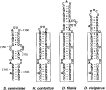
Fig. 1. Comparison of the putative stem–loop structures extending from position 1335 to 1383 (numbering with reference to the yeast sequence) in helix 43 in SSU rRNA from the yeast Saccharomyces cerevisiae as well as from the nematodes Haemonchus contortus, Dictyocaulus filaria and D. viviparus. All Dictyocaulus studied thus far has an extension of this helix compared with the SSU rRNA of other members of Trichostrongyloidea. The boxed nucleotides are conserved among all the different members of Trichostrongyloidea included in this study.
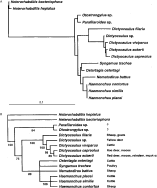
Fig. 2. Phylogenetic trees for the Strongylida, plus 2 members of the Rhabditida as an outgroup, based on aligned SSU rRNA sequences. (A) Maximum likelihood tree, with branch lengths proportional to the inferred number of nucleotide changes. The evolutionary model used was a fixed version of the general time-reversible model – base frequencies: A=0·2670 C=0·1988 G=0·2575 T=0·2766; rate matrix: A[harr ]C=1·0216 A[harr ]G=4·9788 A[harr ]T=2·9280 C[harr ]G=1·0986 C[harr ]T=5·7062 G[harr ]T=1·0000; proportion of invariable sites: 0·7323; gamma distribution for variable sites with shape parameter: 0·8741. (B) 50% majority-rule tree from the Bayesian analysis, showing the clade credibility values (the percentage of 1000000 sampled trees containing that clade) on the branches. The evolutionary model used was a flexible version of the general time-reversible model, which allowed all of the parameters listed for the maximum likelihood tree to be estimated from the data. Also shown are the known hosts for the species of the Strongylida.
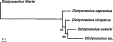
Fig. 3. Phylogenetic trees for the Dictyocaulus species based on aligned ITS2 sequences. Maximum likelihood tree, with branch lengths proportional to the inferred number of nucleotide changes. The evolutionary model used was a flexible version of the HKY85 nucleotide substitution model with gamma distribution for variable sites, allowing the base frequencies, transition[ratio ]transversion ratio and shape parameter to be estimated from the data. Also shown are the bootstrap values (the percentage of 100 resampled trees containing that clade) on the branches.
 You have
Access
- 36
- Cited by