Introduction
The field of developmental origins of health and disease (DOHaD) has identified relationships between adverse environmental influences in early-life and poorer social, educational and health outcomes later in life.Reference Hanson and Gluckman1 This includes evidence that poor maternal nutrition leading up to and during pregnancy is associated with increased risk of non-communicable diseases (NCDs) for resultant offspring and across generations.Reference Pasternak, Aviram, Poraz and Hod2 Knowledge of the impact of early-life environmental exposures on later-life health has reached a point where research in this field should include the translation of evidence into practice.Reference Gluckman, Hanson, Zimmet and Forrester3 Public communication strategies can contribute to the translation of this knowledge into action within societies. An example of a public communication action already underway is the distribution of an early-life nutrition resource, titled the ‘First 1000 Days: Nutrition matters for lifelong health’, given to all new mothers in Australia and New Zealand. Created by the Early-Life Nutrition Working Party, this booklet provides evidence-based guidelines on nutrition throughout preconception, pregnancy and toddlerhood.Reference Davies, Funder, Palmer, Sinn, Vickers and Wall4 It is intended to promote awareness of early-life nutrition concepts to mothers in order to optimise their child’s lifelong health and promote the reduction of risk factors associated with later-life disease.
However, while there is a wealth of DOHaD research and an increasing presence of related early-life interventions within high-income nations, there is a lack of focus on low- and middle-income nations, most of which experience disproportionately higher rates of NCDs.Reference Gluckman, Hanson, Zimmet and Forrester3,Reference Islam, Purnat, Phuong, Mwingira, Schacht and Fröschl5,Reference Tu’akoi, Vickers and Tairea6 The Cook Islands is a small island developing state (SIDS) with a population of 17,430 located in the Western Pacific region.7 In this nation, NCDs cause 80% of all deaths, and 91/72% of adults are affected by overweight/obesity.8,9 Despite this disease burden, there is a lack of local research and information available on the lifelong impacts of pre- and peri-conceptional health. In order to contribute to reducing the burden of disease in the Cook Islands and all developing-economy nations, the role that early-life factors play in determining later health needs to be acknowledged.Reference Gluckman, Hanson, Zimmet and Forrester3
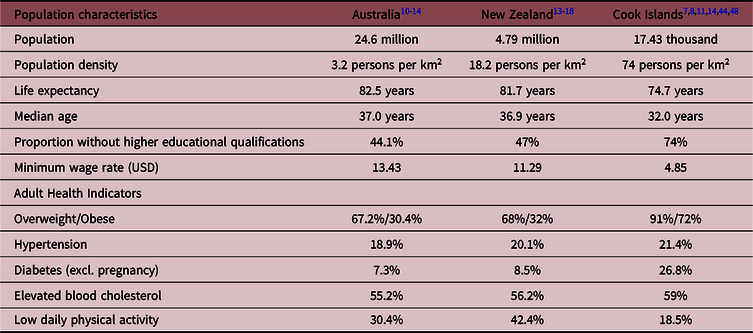
As a way of supporting awareness of the potential of improved early-life nutrition to contribute to reduced NCD risk in later life, key leaders in the Cook Islands Ministry of Health decided that their community could benefit from access to a resource that promoted this information. The early-life nutrition booklet distributed to new mothers in Australia and New Zealand was identified as a public communication resource that could be adapted for the Cook Islands. It was recognised that differences between the contexts of the Cook Islands, Australia and New Zealand would need to be considered in the process of appropriately adapting the booklet. Table 1 highlights contextual differences between these countries including population demographics, socioeconomic status, disease burden, language and culture. The Cook Islands is made up of 15 islands, with approximately 75% of the population residing on the main island of Rarotonga.19 Compared to Australia and New Zealand, the Cook Islands has a considerably smaller population, a younger median age and a lower life expectancy.7,20 Higher rates of disease and related risk factors are also significant, for example, rates of diabetes in the Cook Islands sit at 26.8%, compared to 7.3% and 8.5% in Australia and New Zealand, respectively.10,15,21 Availability of foods is perhaps a key driver of these health outcomes. As a result of changing trade policies and rising food imports, the Cook Islands has undergone a rapid nutrition transition from traditional diets of root crops, seafood and locally grown fruits to an increased reliance on imported foods high in fat and sugar.Reference Tu’akoi, Vickers and Tairea6,Reference Thow, Heywood, Schultz, Quested, Jan and Colagiuri22 Thus, while there is a clear disease burden and a need for improvement in health outcomes in the Cook Islands, the contextual differences between the countries necessitate that health promotion strategies take culture and context into account.
Population comparison between Australia, New Zealand and the Cook Islands

Note: All reported data are from between 2015 and 2019 with the exceptions of Cook Islands life expectancy (2011) and elevated blood cholesterol for all three countries (2008).
It is widely acknowledged in the literature that contextual and cultural considerations are important when developing health strategies and that failing to recognise this can contribute to a lack of intervention success and effectiveness.Reference Telenta, Jones, Francis, Polonsky, Beard and Renzaho23,Reference Wright, Naylor, Wester, Bauer and Sutcliffe24 For example, when Australian researchers sought to develop culturally appropriate health promotion materials regarding blood donations for minority African communities,Reference Telenta, Jones, Francis, Polonsky, Beard and Renzaho23 it was found that engagement from community members throughout the development process was critical and ensured materials were appropriately targeted.Reference Telenta, Jones, Francis, Polonsky, Beard and Renzaho23 As found in other studies, community participation also led to a higher chance of acceptance and effectiveness of the materials.Reference Telenta, Jones, Francis, Polonsky, Beard and Renzaho23 Recognising contextual and cultural differences in the development of targeted health resources is critical, and communities should be empowered to guide this process. Therefore, in order to create a culturally relevant health promotion resource for the Cook Islands, it was imperative that the community had the opportunity to engage in discussions and lead the decisions regarding what would work best for the context. We report here on the outcomes of these discussions, which engaged representatives of the Cook Island community in the co-construction of a local early-life nutrition resource.
Methods
Study design
A community-based participatory research (CBPR) approach challenges traditional research designs which assume that the phenomenon can be separated from its context for study.Reference Holkup, Tripp-Reimer, Salois and Weinert25 CBPR instead emphasises the importance of collaboration and equal participation of the community throughout all stages of research, including identifying the issue and creating strategies and solutions.Reference Rabinowitz26 In this study, a CBPR research design was used via two rounds of semi-structured focus groups to explore community views and opinions and to guide the development of a culturally appropriate health promotion resource (Fig. 1). The first round of focus groups took place between October and November 2018. Participants were asked to consider the Australian and New Zealand early-life nutrition resource and its viability for the Cook Islands context. The questions explored participants’ views regarding the current availability of early-life nutrition information in their community and how they thought information could be best presented to reach Cook Island families. Based on the ideas generated from the first round of focus groups, a draft Cook Islands early-life nutrition resource was created. The second round of focus groups was conducted in February 2019 and presented an opportunity for the same participants to give feedback on the draft resource and discuss whether their views had been translated appropriately into the new resource.
Flow chart of study method.

Data collection
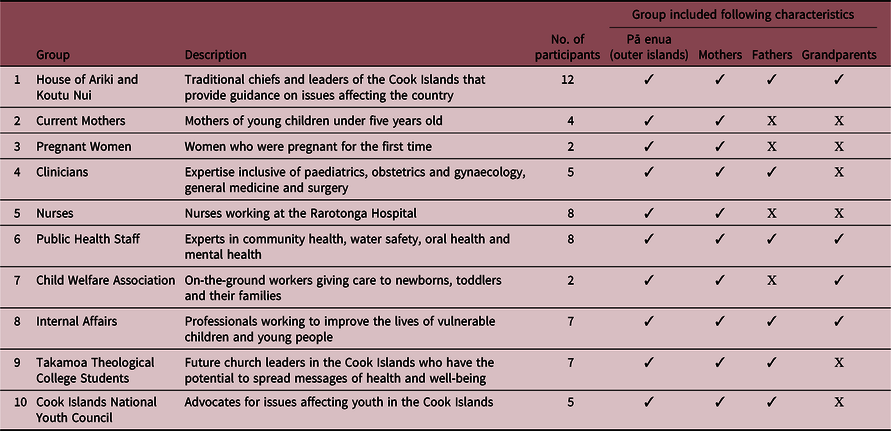
The research team consisted of Cook Islands and New Zealand researchers, the former of whom led the recruitment of participants to ensure a wide range of disciplines and community groups were represented. Focus groups were conducted on Rarotonga, the main island of the Cook Islands. Purposive sampling was used to engage a total of 60 participants across 10 focus groups. This systematic, non-probabilistic sampling technique is considered a rigorous approach that seeks to recruit specific groups relevant to the research.Reference Mays and Pope27 The participants in this study were aged between 18 and 85 years, including 43 women and 17 men. Table 2 outlines the characteristics of the professional, community and traditional groups represented. In addition to their professional, community leadership or stakeholder roles, all 10 groups included participants who were mothers, six included fathers and four had grandparents. Although the pā enua (outer islands) were not able to be consulted for this process, every group had participants that identified themselves as having grown up or worked extensively in the pā enua, and thus wanted to also speak from that perspective in addition to their professional, stakeholder or community role. Participants were also encouraged to converse in Cook Islands Māori if that was more comfortable and responses were translated by a Cook Islands research team member. Each focus group ran for approximately an hour and was audio-recorded and transcribed verbatim.
Descriptions of the 10 focus groups recruited

Data analysis
Thematic analysis was applied to identify patterns of meaning within the transcribed data. The six-phase process identified by Braun and Clarke involved data familiarisation, coding, searching for themes, reviewing and refining themes, defining the themes and reporting.Reference Braun and Clarke28 In line with a relativist ontology and subjectivist epistemology, an inductive approach was utilised to ensure the interpretation of data, and development of themes was directed by the data and not driven by the researchers’ preconceived ideas.Reference Braun and Clarke28,Reference Levers29 This process also allowed for the emergence of themes outside the parameters of the original focus group questions. Rigour was ensured with regard to the reliability and validity of the analysis process.Reference Mays and Pope27 To ensure the final themes were a reliable representation of the data and reduce potential bias, transcript data were independently coded and then checked for consistency by three authors, S.T, M.H.V and J.L.B. To obtain validation of the themes, participants in the second round of focus groups were presented with the findings from the first round. This ensured the analysis process resulted in themes that participants felt were valid and representative of their discussions.
Results
Themes from round one
Despite the diversity of participants, perspectives on early-life nutrition and what was needed in the Cook Islands were homogenous, revealing three common themes in the first round of focus groups: knowledge of the importance of early-life nutrition, recognition of the need for an early-life nutrition resource and the importance of recognising contextual factors.
Knowledge of the importance of early-life nutrition
Lack of knowledge within the community regarding the importance of having a healthy start to life was a theme developed in all first-round focus groups. Every group, both professional and lay, identified and discussed ideas relating to a perceived lack of awareness in the community regarding basic nutrition concepts and even more so when considering the impact of early-life nutrition on later-life health. Participants discussed the importance of accounting for this lack of awareness by including more general nutritional concepts in the booklet, such as a food pyramid.
When I was first pregnant, I didn’t know much about these things. My parents only knew the basics that they could help with the pregnancy, but to go deeper into it, I never knew anything about it. (Female, Takamoa Theological College Students group)
If we can add maybe general nutritional (information) maybe another one or two pages. I think most of the people, the young mothers, even old people they don’t know about nutritional basic concepts. Maybe a food pyramid or something like that. In general, not many people know it. So maybe one or two pictures of general concepts. This is for the lifelong (health) rather than cap it at 1000 days. (Male, Clinicians group)
While participants agreed that people were generally aware that pregnancy was a special time for growing a healthy environment for the baby, they identified pre- and peri-conceptional health as a notion that was very new to the Cook Islands community. Discussions in the clinicians’ focus group highlighted their understandings of early-life nutrition but recognised that this was not common knowledge within the community and that no health resources focused on it.
I’d just like to say I support this – this is a great concept. This is probably my first time seeing something like this, especially on preconception (in the Cook Islands). As I always tell my other colleagues – it’s all about focusing on what is not born. Change our NCD pattern in the future. And if we start early and get parents involved, changing behaviours – all these kids will continue to eat healthily and become healthy in the future. I wish my Mum and Dad had this information. (Male, Clinicians group)
It’s in our culture to give our children… we think that we’re loving them by giving them chocolate giving them lollies and giving them fizzy drinks. And it’s not a treat – we’re basically killing them. It’s really up to the early years and that’s why that the thing came out about the first 1000 days that’s the whole idea around it was those ideas. Setting the children up. (Female, Clinician’s Group)
Five groups identified how a lack of knowledge could sometimes be harmful, as it paved the way for the spread of misinformation. The group of current mothers discussed how common it was to receive misleading advice from well-meaning community members. Examples discussed included encouraging early feeding of solids to a baby and rubbing sugar on toddler’s teeth in order to strengthen them. Participants talked about the difficulty of trying to discern what advice was good and what should be avoided. The current mothers’ group also emphasised the challenge of making sure their child had a healthy diet when the socio-cultural perception in the community was that large babies were healthy babies.
I think people here are very misinformed. (My) baby wasn’t even on solids yet and people were just like “she wants a doughnut.” Like this is just family and people. And I’m like she doesn’t know what a doughnut is. It’s like the societal, cultural thing that food is how you express love. You’re such a mean woman to deprive your child. Like I told myself she wasn’t going to have any junk food and it just got too hard to do that. (Female, Current Mothers group)
[Discussing how families bring large portions of food cooked in coconut cream to mothers who have recently given birth in hospital in order to promote breastmilk production] – Chicken in coconut sauce, everything in coconut sauce and when they (grandmothers) bring it you must eat it. (We tell them that) the breast milk is already there for the baby. But (the grandmothers say) “no eat that and try to finish it”. And that’s when you see the thickening of our young women. Because they are dragged into that. (Female, Nurses group)
Recognition of the need for an early-life resource
Participants in all focus groups expressed their overwhelming support for a Cook Islands-specific resource that focused on communicating early-life nutrition concepts to the general population. They discussed the benefits of having a go-to booklet that could explain evidence-based recommendations in everyday language. Participants agreed that this resource would be helpful not only for prospective mothers and fathers but also to educate the wider community.
I think it’s going to be very, very useful having such information and having such a booklet – it’s important for early childhood, during pregnancy, during preconception. My feeling is that throughout the Pacific, in general, we have failed in terms of nutrition to our children or to our population. For example, the Cook Islands is the most obese country in the whole world which is not a statistic I’m proud of. But I think that my personal view is if we tackle the problem of nutrition at a very early stage of human development – that’s the most critical factor. Getting this out to the mothers, not only to the mothers, I think we should be taking it to the community as well. (Male, Clinicians group)
Yeah, we don’t really have books like this… I mean I’m always going to Uncle Google for advice. But this is quite cool – especially if you’re able to contextualise it to how we live over here. (Female, Cook Islands National Youth Council group)
The importance of recognising the context
The importance of understanding the target audience was a consistent theme across all groups. Participants identified key considerations they believed would be crucial to the booklet’s relevance and potential success in the Cook Islands. These included representations of Cook Islands food and culture, the use of Cook Islands Māori alongside English and factors that would account for differences in educational attainment and literacy levels within the population. Community leaders spoke passionately of prioritising Cook Islands Māori translations in the booklet, not only for usability in the pā enua where Cook Islands Māori is the dominant language but also to strengthen the sense of cultural identity in those on the main island whom primarily speak English. All participants strongly advocated for the booklet to reflect the Cook Islands way of life by including locally available foods and aligning with local health guidelines.
Big part is probably getting that Māori translation – for the pā enua because Māori is strong in the pā enua. Here in Rarotonga, it’s the opposite. So, it will work in both situations then. Be it here or out there in the outer islands. (Male, Public Health Staff group)
Not only are we looking at the main island, but there’s still our Cook Island mothers to be – we’re forgetting our outer islands. This book is also important for them. Hence, I said simple English words, pictures comes with it, our language, as we are looking right across the board not only Rarotonga but the outer islands. I am from an outer island and I know what it’s like out there. (Female, Public Health Staff group)
I would suggest that in addition to the language, the content must be local from beginning to the end. It has to be local. (Older father and grandfather, House of Ariki and Koutu Nui group)
[Referring to the original resource] Because these are all the papa’a (foreign) foods - no local foods like taro, kumara, nu, coconut drink. Include some more photos. What about a photo of the newborn baby? (Young woman, Pregnant Mothers group).
When asked to discuss how information could best be presented to engage with the community, all groups identified the importance of keeping the messages clear and succinct. Participants suggested heavily condensing the amount of text in the original resource and utilising visual techniques such as colour, diagrams and images, to make the key messages easier to understand. In addition to aiding the written information, the use of colour was identified as an important tool for representing Cook Island culture and the island way of life.
Because you’re targeting both – those who can read, those who can’t. Our people, they love the visual, colourful pictures. (Female, Internal Affairs group)
You should use local pictures instead of the cartoon (people). Would be nice because the Cook Islands is surrounded by sea – it would be nice to have pictures of the sea and the land. (Female, Nurses group)
I think some things might have to be simplified. I’m just looking at the language… just things like “build a healthy gut flora”. Like I don’t think many people here would know what that means. Yeah just simplifying it to its simplest form without being you know… without losing its purpose. (Female, Current Mothers Group)
Development of a Cook Islands resource
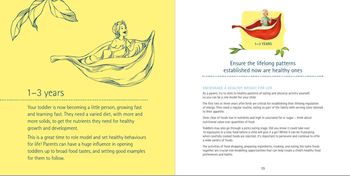
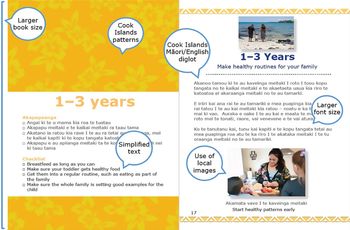
Based on the key themes from the first round of focus groups, the original early-life nutrition booklet was adapted to represent the voice of the Cook Islands community. Fig. 2 shows an example page spread of the ‘1–3 years’ section from the original Australian and New Zealand early-life nutrition resource. Fig. 3 presents the updated Cook Islands version based on the feedback from the first round. Notable changes include simplifying the content, increasing the book size to enable the addition of Cook Islands Māori alongside English, using Cook Island patterns for backgrounds and borders and including more images.
Page spread from the Australia and New Zealand early-life nutrition resource (reproduced with permission).30

Page spread from the draft Cook Islands early-life nutrition resource.

Themes from round two
Hearing the voices of the community
A key theme, unanimous across all participants in the second round of feedback, was the feeling that the new draft booklet represented the voices of the community. Participants commented how the content emphasised the important aspects of early-life nutrition, but in a way that was simple and straightforward, as they had suggested. They also discussed feeling more of a connection with the booklet due to the cultural elements included, such as traditional patterns, bright colours and local images.
When I first saw it, I thought everything we spoke about (in the first focus group) is in here. (Male, Takamoa Theological College Students group)
There’s more of an attachment there for us as Cook Islanders. Based on the pictures and how it will be translated into Cook Island Māori. The majority of things we talked about have been incorporated in here – the size of the book, pictures. (Female, Takamoa Theological College Students group)
It’s simple English too – that’s good. Not too much technical words. That’s the first thing that I picked up when I read it. It’s at the level of our people. Simple English is really good that’s my first impression when I had it. Simplicity of the wording. (It’s good you) took out the medical terms because otherwise I would put this book down. (Female, Internal Affairs group)
In terms of the content itself, it’s remarkable. How you have heard the voice of the ui ariki (traditional leaders) from here. They wanted this thing to be Cook Islands and everything in here is Cook Islands. The other thing that really came out really strong is that we are addressing the beginning of life. We are not only looking at children; we are not only looking at infants or babies; we are looking at the future of the Cook Islands. So it’s very important. Thank you. (Male, House of Ariki and Koutu Nui group)
Further suggestions for improvement
Two groups in the second round identified adjustments that would further enhance the readability of the booklet. Participants pinpointed medical terms that might not be widely understood in the community, such as trimester, preconception and body mass index. A community leader then suggested we include a short glossary in the booklet to explain medical terms and abbreviations to educate people and aid understanding.
Is there any other word for trimester? I was wondering if there were any other basic words we could put there (instead). (Male, Takamoa Theological College Students group)
Just looking at this, I think what is necessary is a glossary. Because many of our people don’t know these words – what is BMI? So, a glossary at the back would be good. Because otherwise you go and get the dictionary. The word depression – what does it mean? If we are directing to the local people (you need) simple everyday English. The postnatal sort of thing. All those words are more or less geared towards (experts). (Female, House of Ariki and Koutu Nui group)
Comparing booklet versions
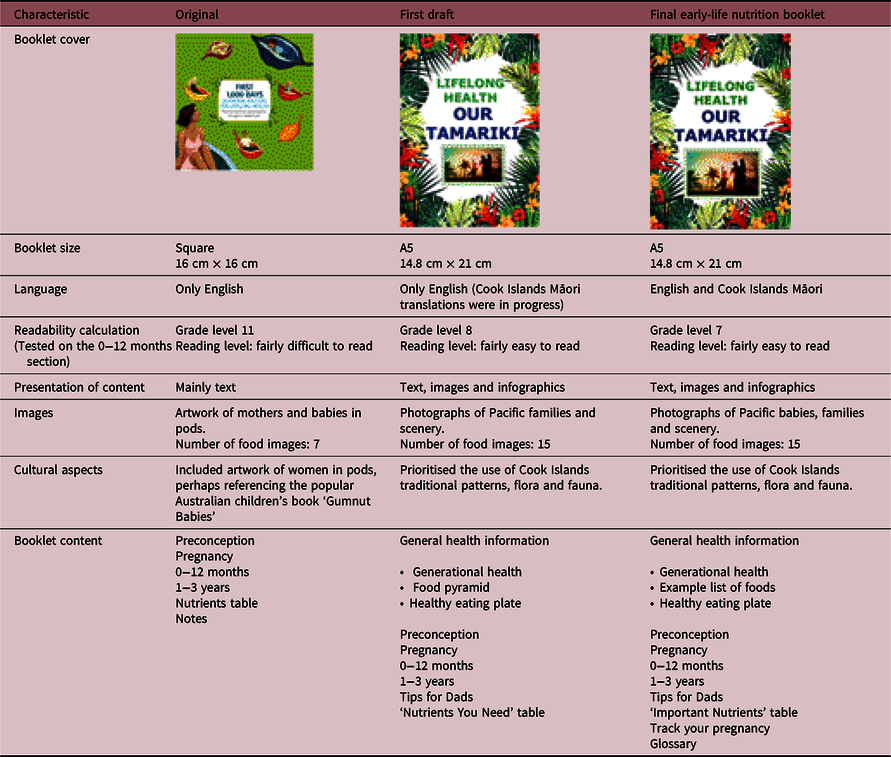
The two rounds of focus groups lead to the development of the final resource (S1), named Lifelong Health: Our Tamariki (tamariki meaning children). Table 3 presents a description of the changes made to the booklet throughout each stage of the research: the original Australian and New Zealand early-life nutrition resource, the first draft for the Cook Islands version and the finalised resource. As a result of the focus groups, key changes included adding more general health information, local images and including contextual and cultural elements. Improved readability of the content, a common discussion point, was assessed using an online calculator of the seven most popular readability formulas.31
Comparison between the original, first draft and final early-life nutrition booklet

Discussion
This study aimed to engage representatives of the Cook Islands community in the co-construction of a local early-life nutrition resource. The findings showed consensus among the groups that community awareness of the importance of the early-life environment for later-life health was limited, and thus there was an urgent need for an informative resource. Discussions revealed that community members, both lay and professional, identified that they thought misinformation in the community was common. An example given by one mother was feeling pressure from family and community members to feed her newborn solid foods early, going against best practice guidelines of exclusive breastfeeding for the first six months of a child’s life.32 Similar findings from Issler and colleagues’ study on pregnant women in Brazil showed a raft of misinformed practices regarding newborn healthcare including a lack of knowledge of breastfeeding duration.Reference Issler, Sá and Senna33 The benefits of exclusively breastfeeding for a child are known to include improved cognitive development, reduced likelihood of overweight/obesity later in life and protection against infections.32 A lack of community awareness of these early-life nutrition concepts can, therefore, have a negative impact on the future health of children.
Health promotion resources that endeavour to address such gaps in awareness must recognise the importance of the audience and context. When presented with the original Australian and New Zealand early-life nutrition booklet, participants stressed the importance of going beyond simply translating the words into Cook Islands Māori, identifying the need to contextualising the content, images and presentation of information. For example, the differing levels of educational attainment and health literacy in the Cook Islands were considered when tailoring health messages. Participants discussed how written information needed to be simple and easy to understand, not only to reach all education levels in the population but also to ensure people engaged with the resource. Table 3 shows how improving readability was prioritised throughout the process to meet the US National Institutes of Health recommendation of a 7–8th grade reading level for printed health resources.34 The use of images and infographics was also recognised as something that would greatly improve readability and engagement. Participants discussed the Cook Islands culture as one that prioritises family above all, and hence, the booklet images and content should not be limited to just mothers but should also reflect the important cultural roles that fathers and grandparents play in raising children. African-American participants in Springston and Champion’s study on the efficacy of breast cancer brochures similarly discussed the importance of recognising the cultural value that the health of a woman greatly influences and is influenced by her wider family network.Reference Springston and Champion35 Reflecting the culture, values and population characteristics of the target community in health promotion strategies is key to ensuring relatability, engagement and increasing potential for success.Reference Springston and Champion35-Reference Kreuter, Lukwago, Bucholtz, Clark and Sanders-Thompson38
In order to ensure this process occurs appropriately, community leadership and engagement throughout the development of health promotion tools are necessary. The importance of hearing the voices of the community was a key finding in this study, and participants discussed the connection and ownership they felt with the resulting Cook Islands resource. This notion of collaborative partnerships between researchers and the community is well documented as a way of facilitating community ownership and empowerment.Reference Telenta, Jones, Francis, Polonsky, Beard and Renzaho23,Reference Barnes39,Reference Schoen, Balchin and Thompson40 In line with what this study found, many other studies identify community engagement as a critical step in the creation of health promotion tools as it ensures messages are appropriately targeted and received.Reference Telenta, Jones, Francis, Polonsky, Beard and Renzaho23,Reference Barnes39,Reference Schoen, Balchin and Thompson40 For example, in order to create an educational workbook targeting smokers with harmful alcohol habits, Minian and colleagues utilised a participatory research framework to engage participants who fit this criteria.Reference Minian, Noormohamed and Zawertailo41 In-depth discussions allowed participants to lead the structure and content of the workbook and express their views on what would most help people like themselves to engage with this resource.Reference Minian, Noormohamed and Zawertailo41 This approach resulted in a collaboratively constructed resource with preliminary evidence indicating increased adoption of resources.Reference Minian, Noormohamed and Zawertailo41 It is important that evidence beyond the traditional scientific model, such as community perspectives, is prioritised in knowledge translation processes.42 Engaging community groups throughout all stages of research can benefit not only the quality of the end resource but also potentially and, more importantly, its future uptake and effectiveness.Reference Rhodes and Rhodes43
The guidance from Cook Island researchers and community leaders from this study’s inception, to participant recruitment and throughout the focus group discussion sessions, was a key strength. The local leadership ensured that focus group participants came from a variety of disciplines and ranged in their age, level of education and home island. While there are limitations to the technique of purposive sampling, this was considered the most appropriate method for the small population. Another area of debate exists regarding the appropriateness of focus groups where participants have pre-existing relationships, as informal power dynamics might exist and influence responses.Reference Hofmeyer and Scott44 While acknowledging this risk, familiarity within focus groups in this study allowed participants to feel more comfortable about expressing their opinions. The Cook Island researchers also recognised that in such a small population, it would be highly unlikely that any group of participants would not have a prior relationship with one another.
A key challenge that emerged during this study related to a debate regarding the type of general health information to include in the Cook Islands early-life nutrition resource. A clinician in the first round of focus groups suggested the addition of a local healthy food pyramid to improve awareness of general health concepts in the community which, in his experience, was lacking. A pyramid was added to the first draft but subsequently removed from the final version after discussion with leaders in the Cook Islands Ministry of Health. The healthy food pyramid was originally created in the United States as a visual way to express the relative amounts of each food group to be consumed daily.Reference Kinney45 However, the debate of whether the food pyramid should be used in modern times is ongoing in literature with criticisms of oversimplification of nutritional principles and limited applicability across all cultures and contexts.Reference Kinney45 The recent development of a healthy food plate, created in place of the pyramid to support portion size and variety in meals,Reference Harvard46 has also been debated regarding its inability to show the range of foods important in a balanced diet. For these reasons, we have incorporated a comprehensive list of local foods alongside a healthy food plate to represent general health concepts in the booklet, as focus group participants suggested. Further research is needed to ascertain the effectiveness and usability of context-specific healthy food pyramids and food plates.
To date, there has been no research exploring the effectiveness of the Australia and New Zealand early-life nutrition resource. Future research will explore the potential effectiveness of the resulting Cook Islands resource in improving community awareness of early-life nutrition concepts. A standardised questionnaire examining public awareness of DOHaD will be used to assess the baseline community knowledge and understanding prior to release of the resource in the community.Reference Oyamada, Lim, Dixon, Wall and Bay47 Following the release of the early-life nutrition resource, the same questionnaire tool will be used to evaluate whether there has been any change in public awareness. This evidence will be supported by focus groups to examine interpretation and again look to the community for evaluation and potential improvements. It is important that this research does not end with the release of the health resource but continues to evaluate effectiveness and whether different ways of dissemination are needed to achieve community awareness and understanding of early-life nutrition.
This study outlines a collaborative effort between researchers and Cook Islands community representatives to co-construct an early-life nutrition resource emphasising the importance of a healthy early-life environment for lifelong well-being. The findings highlighted a need for increased awareness of DOHaD concepts within the community and enthusiasm from participants to provide expertise on the best way to achieve this. Community perspectives are crucial throughout the development of health promotion tools and should be recognised as a key component of scientific evidence. Communities must have an active voice in decision making for their people and are empowered to drive health strategies to improve outcomes for the next generation.
Acknowledgements
The authors acknowledge the focus group participants for their valuable contributions and the Australia and New Zealand Early-Life Nutrition Working Group for their permission to adapt the early-life nutrition resource.
Financial Support
ST was supported by a PhD scholarship from the Health Research Council of New Zealand (reference #17/479). A knowledge translation grant from the Health Research Council of New Zealand supported the printing of the resultant resource (reference #18/291). JLB and MAH were supported by grants from the New Zealand Ministry of Foreign Affairs and Trade Partnerships for International Development Fund (#PF1-280, #PF11-613) which enabled the tripartite partnership between the Cook Islands Ministries of Education and Health and the University of Auckland within which this work was conducted. NTH and KT were employed by the Cook Islands Ministry of Health at the time of the study.
Conflicts of Interest
None.
Ethical Standards
Ethical approvals for this study were obtained by the University of Auckland Ethics Committee, reference number 020723, and the Cook Islands National Research Committee (ethics body), permit #36/17. Informed consent was obtained from each participant.
Supplementary material
To view supplementary material for this article, please visit https://doi.org/10.1017/S2040174420000252