




No CrossRef data available.
Article contents
Are we improving after 10 years of humanitarian paediatric cardiac assistance?
Published online by Cambridge University Press: 13 July 2005
Abstract
Background: Paediatric cardiovascular services are frequently absent or poorly developed in many countries around the world. Our foundation made 83 trips in support of cardiovascular services between April 1993 and March 2003 to help alleviate this problem. In this study, we present an analysis of our results over these period of 10 years. Methods: We performed a review of all available records relating to the trips, including patient databases, audited financial statements, donated product inventory lists, lists of team members, and follow-up data from the host sites concerning the state of the patients treated. Results: We made 83 trips to 14 countries, 40 of these being in Central Europe, 5 in Eastern Europe, 10 in Caribbean, and Central America, 18 in South America, 9 in Asia, and 1 in the Middle East. In the first 5 years, we made 23, as opposed to 60 in the second 5 years, this difference being significant (p less than 0.01). The total number of primary operations performed over 10 years was 1,580. The number of procedures performed yearly increased over the two intervals from 97.0 plus or minus 32.7 to 219.0 plus or minus 41.7, p less than 0.002. The probability of survival between the periods increased from 84.6 to 93.3 per cent, and this was also significantly different (p less than 0.001). Overall, the rate of survival for the period of 10 years was 90.5 per cent. Moreover, the value of services donated to support each trip also differed significantly, decreasing from 105,900 dollars plus or minus 14,581 dollars for the first period to 54,617 dollars plus or minus 11,425 dollars for the second period (p less than 0.001). Conclusions: Improving paediatric cardiac services in under-served countries requires significant financial and personnel commitments, but can produce reasonable outcomes.
Information
- Type
- Original Article
- Information
- Copyright
- © 2005 Cambridge University Press
The care of children with congenital and acquired heart disease in most industrialized countries has become routine and comprehensive, despite the expense. In many parts of the world, nonetheless, children with similar types of cardiac disease continue to suffer from inadequate diagnosis and care.1 Efforts to assist in alleviating this problem range from pro bono long-term commitments to entire institutional programmes.2, 3 In 1993, we established a programme to provide paediatric cardiovascular services to children in developing countries. This report is an analysis of our initial 10-year experience.
Methods
Acquisition of data
We reviewed all the records of the International Children's Heart Foundation, including the computerized patient database, hard copies of the perfusion records, audited financial statements, donated product inventory lists, lists of team members, and annual reports. Medical staff at sites visited was asked to review their own patient databases for numbers of patients and their demographics, the types of operation, and the results. Their data were then compared to the Foundation patient database. If differences were noted, a second request was sent, asking for clarification of specific information.
Statistical methods
Results are expressed as the mean plus or minus standard deviation. Comparisons of variables were made using the Chi-squared and Student's t-tests. Differences were considered significant when p was less than 0.05. Survival is expressed as percentages, and monetary value is expressed in United States dollars. The value of the United States dollar was not corrected for inflation in this multinational environment. We defined early survival as survival during the stay of our team at the distant centre, and late survival on the basis of those who were discharged from hospital.
Recruitment of the volunteer team
Initially, we recruited our team by direct solicitation of individuals by one of the authors. Subsequent recruitment was achieved by previous team members, or via the volunteer page of Foundation web sites. Volunteers were asked to provide curriculums, appropriate licences, diplomas, and references. Recruitment was routinely started 3 months prior to a scheduled mission.
Assessment and determination of sites
A questionnaire was sent to the institutions requesting assistance, requesting information with regard to hospital infrastructure, hardware, disposables, personnel, and the current state of the paediatric cardiac service. The decision to fulfil a request was based on the answers to the questionnaire, and our ability to raise funds to cover the expenses of the team.
Determination of patients
Approximately 4–6 weeks prior to departure, we requested a list of surgical candidates, along with any pertinent cardiac studies. Patients were then prioritized based on the data provided, the new list being returned to the site for consideration and confirmation. No attempt was made by us to limit the complexity of defects or number of children on the list.
Patient database
Data on each patient undergoing surgery was recorded in a central database. Operations were coded according to the European Congenital Heart Surgery Database, and all operations were assigned a categorization for risk using the classification system described by the Pediatric Cardiac Care Consortium.4
Finances and logistics
The funds and materials necessary to perform all necessary care were shared between the Foundation, which had solicited donations, the host institution, and/or local governmental agencies. In addition, the host institution provided nursing, physician, and support staff to augment the volunteers. Expenses for travel, housing, food, visas, and local transportation for the team were supported by the inviting institutions, local governmental agencies, or the Foundation. Our administrative staff handled logistical issues of team travel, and shipping of donated supplies. The value of products donated for a given mission was derived from either wholesale price charts for new materials, or resale value charts for refurbished equipment. The value of services donated by the personnel was derived from formulas used by the American International Health Alliance, working in concert with the United States Agency for International Development. Physicians and biomedical engineers were assigned a value of 1,275 United States dollars per day, whereas nurses and technicians were assigned a value of 675 dollars per day. The cost of surgery in the United States of America was derived from the expenses charged to the Foundation by the host hospital. The cost of providing surgery abroad was determined by dividing the total programme expenses per year by the number of operations per year. No attempt was made to determine the costs incurred by the local institution.
Results
Trips and sites visited
Between 14 April 1993, and 12 April 2003, we made 83 trips to 17 sites in 14 countries. We made 40 trips to Central Europe, 18 to South America, 10 to Central America and the Caribbean, 9 to Asia, 5 to Eastern Europe, and 1 to the Middle East. The number of trips made in each year ranged from 3 to 14. For the sake of comparison, we divided the total experience into 2 periods of 5 years each. The number of trips was significantly greater in the second 5 years, at 60 versus 23, p less than 0.01, and the number of trips per year was significantly greater in the second 5 years, 12.0 plus or minus 1.6 versus 4.6 plus or minus 0.9, p less than 0.001, respectively.
Children undergoing surgery in the United States of America
Between March 1993 and November 1999 a total of 79 children were referred to the United States of America for surgery. A local family, or a sponsor, covered all the non-medical expenses, including airfare, housing, food, and incidentals. Services were provided free for 3 children from the host hospital. The expenses incurred by the host hospital for the remaining 76 children were paid by the Foundation. Services of physicians were free. Over the first 5 years, we provided surgery for 75 children, this number falling significantly to only 4 children in the second period of 5 years (p equals 0.01).
Children undergoing surgery abroad
Over the entire period, we carried out 1,580 primary operations abroad, for an average of 158.0 plus or minus 73.4 per year. The number of operations per year in the second 5 years, at 219.0 plus or minus 41.7, was significantly greater than in the first 5 years, this being 97.0 plus or minus 32.7 (p equals 0.0002).
Participation of volunteers
There were 611 volunteers, recruited from the United States of America, United Kingdom, Belgium, Australia, Denmark, Spain, Croatia, Peru, Chile, Costa Rica, Germany, Serbia, Turkey, and Switzerland. In all, 202 physicians volunteered, including cardiac surgeons, paediatric cardiologists, cardiac anaesthesiologists, and paediatric intensivists. We had 335 nursing volunteers, who staffed the intensive care unit, the operating room, and the catheterization laboratory, along with 74 technicians, including perfusionists, respiratory therapists, echocardiographic, and catheterization laboratory technicians, and bioengineers. The number of volunteers per year ranged from 27 to 83, with a mean of 61.3 plus or minus 15.1. The number of volunteers per trip was 8.7 plus or minus 3.5 for the entire 10 years. Comparison of the number of volunteers per trip between the first and second 5 years was 11.7 plus or minus 2.1 versus 5.7 plus or minus 1.1 (p equals 0.006).
Expenses
Data on the expenses was available for 8 of the 10 years, 4 in each 5-year period (Table 1). A significant difference was found between the yearly expenses for operations abroad over the two periods, albeit that there was no significant difference between the cost per child in the first 5 years when compared to the second 5 years (Table 1). In contrast, the total cost per child of the 76 children receiving surgery in the United States exceeded the cost per child in the overseas programme by a factor of 10 (Table 1). In addition, there was a significant difference in cost per child in the United States between the first and second 5 years (Table 1).
Table 1. Expenses for the services provided for the programme.

Medical education
In all, 28 physicians, nurses, and perfusionists travelled to the United States of America, or to one of our partner sites, for education. This included 3 anesthesiologists, 5 cardiologists, 6 surgeons, 3 perfusionists, 5 intensivists, and 6 nurses. The period of study ranged from 2 to 6 months. The education of medical staff on site was determined only from the sites that were visited more than once. A total of 319 professionals received education, made up of 187 nurses, 36 surgeons, 25 anesthesiologists, 27 cardiologists, 17 intensivists, and 27 perfusionists.
Donated materials and services
The total amount of donated materials and services was 10,204,410 United States dollars. The value of donated materials per year ranged from 200,000 dollars to 1,390,000 dollars, with a mean of 697,875 dollars plus or minus 397,775 dollars. The value of donated services ranged from 421,000 to 753,960 dollars, with a mean of 577,676 plus or minus 113,391 dollars. Comparison of the value of donated materials and services between the first and second 5 years revealed no significant differences. If these values were compared on a per trip basis, however, there was a significant difference in services, with 105,900 plus or minus 14,581 dollars expended in the second period versus 54,617 plus or minus 11,426 dollars in the initial period (p less than 0.001). Donated materials did not differ significantly per trip between the two periods of time.
Classification of risk
Table 2 shows the total number of cases performed in each category. We were not able to classify 52 cases (3.3 per cent). The percentage in each risk category undergoing surgery compared to the total number of cases for each region is also represented (Table 2). The largest percentage of patients having the lowest risk was in the Caribbean and Central American regions. The only sites where patients having the greatest risk underwent surgery were located in South America and Central Europe, at one site in each region.
Table 2. Classification for risk by region.*

Rates of survival
All sites responded to our enquiries concerning survival. The overall early survival was 90.5 per cent, and there was a significant difference in early survival between the first 5 years versus the second 5 years, at 84.6 versus 93.3 per cent (p less than 0.001). Overall, late survival was 96.6 per cent, and did not differ significantly between the first or second 5-year periods. A comparison of early survival between the first and second periods revealed significantly improved survival in the terms of the gradings in the first system of risk adjustment for congenital heart surgery. Thus, for those in the second category, survival improved from 91.8 to 96.5 per cent (p less than 0.01), and for those in the third category from 73.8 to 91.8 per cent (p less than 0.001). Survival also improved for those falling in the fourth category, with a change from 74.5 to 82.5 per cent (p equals 0.08), and the sixth category, the change being from 20.0 survival to 78.6 per cent survival (p greater than 0.05), albeit that these improvements did not reach significance. Survival of those having the lowest risk, at 98.0 versus 98.5 per cent, showed essentially no change.
Discussion
The access to adequate cardiac care for most of the population of the world is now well established,2 and the issues that impede delivery of cardiovascular services in under-served areas of the world are well described.5–7 The ability to alleviate this situation lies clearly within the resources of the industrialized world. Currently, there are many groups in the United States of America and Europe who have approached the delivery of cardiovascular services to children and adult patients.8 The practice of referring patients to cardiovascular centres in the United States of America, Europe, and Asia is slowly changing towards establishing centres in the non-industrialized countries where local caregivers can provide these services.3, 9 Initially, we started a programme of providing services both abroad and in the United States of America. Over time, however, the costs of providing hospital facilities prohibited our ability to provide care to these children in the United States of America. Clearly, fiscal responsibility requires that funds should be expended in the most cost-effective manner.10, 11 The expenditure of providing surgery to one child in the United States of America cannot be rationalized when a team can be flown to a site where 20–25 children can benefit for similar cost. Perhaps Pezzella12 best exemplified this when he wrote “The era of bringing patients to the United States for free cardiac surgery is over”. Our data support the assertion that a far greater number of children can receive surgery abroad with less expense.
The ability to provide travelling teams of paediatric cardiovascular specialists is dependent on the success of recruiting an adequate number of qualified volunteers who can work together to achieve acceptable results for each trip.3 The first trip to any site is the one, where we recruited a full complement of individuals in all specialties. As the number of return trips to a site increased, and if we believed the local medical caregivers could assume the roles of our team members, we reduced the number of the volunteers. This process was espoused by Kalangos.6 Critical to the overall success of a mission is the experience of the volunteers. Our volunteers come from a number of centres in the United States of America, United Kingdom, Europe, and South America. This heterogeneity provided our partner sites with a well rounded approach to the care of the child with cardiovascular disease. Our physicians, nurses, and perfusionists worked side by side with their local colleagues in all areas. Depending on the assessment made by each team member of the understanding and ability of their local counterparts, they would gradually allow them to assume a more responsible role in the care of the children. Moreover, our volunteers provided didactic sessions on specific issues in the care of children with cardiovascular disease.
The challenges of starting or improving a standing programme in paediatric cardiac surgery are different from country to country. The economics in most of the under-served regions of the world have resulted in material deficits that frequently cannot be overcome by the local caregivers, whether they are trying to create a programme or simply upgrade one.8, 13 The need for hardware and disposables is evident in every country to which we have travelled over the years.14, 15 In the first 5 years of our programme, we provided not only disposable materials and medicines during our trips, but also a considerable amount of hardware. Although our results do not reflect a significant difference between the value of donated materials during the first and second 5-year periods, they may be misleading. In the first 5 years, our donations of both hardware and disposables were usually far in excess of what our initial trip would require. Therefore, subsequent visits required no significant amounts of hardware, and a smaller amount of disposables that would fulfil the needs of the patients listed for surgery. The role of bioengineers in this process cannot be overstated. Early in our experience, we had donated equipment repaired by volunteer bioengineers in the United States, but did not include these professionals as part of the travelling team. Over the last 4 years, we have included bioengineers on our travel team whenever we were visiting a site that required significant donations of hardware, and/or had displayed a low level of capability to maintain equipment. This shift in strategy has prevented many misadventures, and given us the opportunity to maintain our donated hardware.
The rates of mortality for paediatric cardiac surgical procedures are widely available in the literature. Moreover, we recognize that there is controversy over the under-representation of published data that compares results from centre to centre.16, 17 Therefore, we have chosen to use the method pioneered by the team representing the Pediatric Cardiac Care Consortium4 as a means of stratifying the risk in our operative caseload. The results reported herein show improvement in mortality between the two different time periods studied. In the second period of 5 years, the results are not too dissimilar from those reported by Jenkins et al.4, 18 Any comparison of rates of mortality, or the probability of survival, between the top centres in the United States of America and Europe with those of a humanitarian mission programme is difficult at best.19 Few, if any, of the programmes we have visited over the years approach the standards, the concepts of team management, or the results that are widely available at centres throughout the industrialized world.20
In an essay published recently in this journal, Neirotti21 points out the complex problems that exist in providing paediatric surgical services in the “less privileged parts of the world”. He concludes that a humanitarian solution will only provide palliation at best. In addition, he espouses the notion of development of local programmes through education and research in receptive countries willing to invest in such an endeavour. We agree with his conclusions, and have shown that a humanitarian approach that includes the utilization of local and extramural resources can provide the education necessary for local medical personnel to advance services in their country, as well as provide immediate care to children in need.
Conclusions
The need for clinical services and education in paediatric cardiovascular disease throughout the under-served areas of the world is critical. The enormity of the problem requires a concerted effort by those of us in the industrialized world if we are to provide adequate care for the children of the world with cardiac disease. A multi-faceted approach, which provides for clinical services, necessary hardware and disposables, education, and a long-term commitment to certain regional sites, is important for the overall success of the programme. Our data demonstrate that a concentrated approach to this problem can be successful.
Acknowledgements
We acknowledge the support received from Paul Nemir Jr., MD Endowed Professorship and Endowment Fund, University of Tennessee Health Sciences Center, and the International Children's Heart Foundation.
References
Cohen AJ, Tamir A, Houri S, et al. Save a child's heart: we can and we should. Ann Thorac Surg 2001; 71: 462–468.Google Scholar
Pezzella AT. International aspects of cardiac surgery. Ann Thorac Surg 1998; 65: 903–904.Google Scholar
McGrath LB. Establishing a pediatric cardiac surgical unit in the Commonwealth of Independent States (formerly the Soviet Union) (Letter). J Thorac Cardiovasc Surg 1992; 104: 1758–1759.Google Scholar
Jenkins KJ, Gauvreau K, Newberger JW, Spray TL, Moller JH, Iezzoni LI. Consensus-based method for risk adjustment for surgery for congenital heart disease. J Thorac Cardiovasc Surg 2002; 123: 110–118.Google Scholar
Borst JG. The hammer, the sickle, and the scalpel: a cardiac surgeon's view of Eastern Europe. Ann Thorac Surg 2000; 69: 1655–1662.Google Scholar
Kalangos A. “Hearts for all”: a humanitarian association for the promotion of cardiology and cardiac surgery in developing countries (Correspondence). Ann Thorac Surg 2002; 73: 341.Google Scholar
Lansing LM. Heart surgery in underdeveloped countries. Success in Panama and Romania (Letter). Ann Thorac Surg 1993; 56: 1439–1440.Google Scholar
Pezzella AT. Global expansion of cardiac surgery in the New Millennium. Asian Cardiovasc Thorac Ann 2001; 9: 253–256.Google Scholar
De Luna AB. International cooperation in world cardiology: the role of the world heart federation. Circulation 1999; 99: 986–989.Google Scholar
Pezzella AT. Progress in international cardiac surgery: emerging strategies. Ann Thorac Surg 2001; 71: 407–408.Google Scholar
Cohen AJ. “Hearts for all”: a humanitarian association for the promotion of cardiology and cardiac surgery in developing countries (Reply). Ann Thorac Surg 2002; 73: 341–342.Google Scholar
Pezzella AT. Worldwide misdistribution of access to cardiac surgery (Letter). J Thorac Cardiovasc Surg 2002; 123: 1016.Google Scholar
Cox JL. Presidential address: changing boundaries. J Thorac Cardiovasc Surg 2001; 122: 413–418.Google Scholar
Shekerdemian LS, Penny DJ, Novick W. Early extubation after surgical repair of tetralogy of Fallot. Cardiol Young 2000; 10: 636–637.Google Scholar
Novick WM, Gurbuz AT, Watson DC, et al. Double patch closure of ventricular septal defect with increased pulmonary vascular resistance. Ann Thor Surg 1998; 66: 1533–1538.Google Scholar
Anyanwu AC, Treasure T. Unrealistic expectations arising from mortality data reported in the cardiothoracic journals. J Thorac Cardiovasc Surg 2002; 123: 16–20.Google Scholar
Mavroudis C, Jacobs JP. Congenital hear disease outcome analysis: methodology and rationale. J Thorac Cardiovasc Surg 2002; 123: 6–7.Google Scholar
Jenkins KJ, Gauvreau K. Center-specific differences in mortality: preliminary analyses using the risk adjustment in congenital heart surgery (RACHS-1) method. J Thorac Cardiovasc Surg 2002; 124: 97–104.Google Scholar
Blackstone EH. Comparing apples and oranges. J Thorac Cardiovasc Surg 2002; 123: 8–15.Google Scholar
Chang AC. How to start and sustain a successful pediatric cardiac intensive care program: A combined clinical and administrative strategy. Pediatr Crit Care Med 2002; 3: 107–111.Google Scholar
Neirotti R. Paediatric cardiac surgery in less privileged parts of the world. Cardiol Young 2004; 14: 341–346.Google Scholar
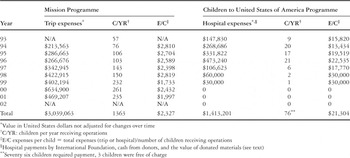
Table 1.
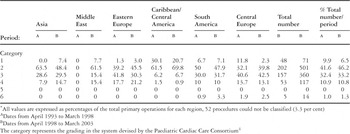
Table 2.
 You have
Access
- 24
- Cited by