Pulmonary atresia with intact ventricular septum is a heterogeneous lesion with high early mortality without intervention.Reference Zuberbuhler and Anderson1–Reference Grossfeld, Lucas and Sklansky4 Management strategies are variable and are based on the right ventricular morphology and other associated abnormalities such as coronary artery anomalies and tricuspid valve size.Reference Bichell5 Previously, neonatal surgery was the only option, with an initial systemic-to-pulmonary arterial shunt or by achieving forward flow across the atretic pulmonary valve either by surgical valvotomy or a patch reconstruction. Many patients require multiple surgical procedures in their lifetime, depending on the growth and performance of the ventricle.Reference Schwartz, Glatz and Dori6,Reference Kotani, Kasahara and Fujii7
Catheter perforation of pulmonary valve in this condition was pioneered at our institution over 25 years ago.Reference Rosenthal, Qureshi and Kakadekar8 It is now an established intervention and the procedure of choice in those with suitable anatomy. Initially, perforation of the atretic valve was performed by a laser “hot-wire”. Currently, radiofrequency perforation is used almost universally, with a smaller experience in the literature using Chronic Total Occlusion coronary wire perforation.Reference Rosenthal, Qureshi and Chan9,Reference Lefort, Saint-Etienne and Soule10 There is still debate about the need for and the timing of ductus arteriosus stenting after valve perforation. Guidance for the optimal management of the duct is lacking, especially in those patients in whom adequacy of the ventricle is uncertain.Reference Alwi11,Reference Schneider, Blom and Bruggemans12
Our institutional practice has evolved to offer all patients treatment with catheter-based valvotomy, unless there was evidence on invasive or computed tomographic angiography of right ventricular-dependent coronary circulation or in only the most extreme cases of right ventricular and tricuspid valve hypoplasia. Coronary ostial atresia, interruption or severe stenosis of a proximal coronary artery or moderate proximal stenoses in two major coronary arteries, in the setting of significant flow from the right ventricle into the coronary circulation were considered to constitute right ventricular coronary dependence.Reference Cheung, Richmond and Turner13
We reviewed the long-term outcome of patients treated initially with percutaneous valve perforation in terms of survival and final ventricular outcome, any early and late complications, as well as predictors of the long-term outcome. We also sought to assess changes in our practice in managing this condition, using two distinct eras of 13 years each.
Material and methods
All patients with pulmonary atresia with intact ventricular septum, diagnosed between 01 May, 1990 and 30 April, 2016, were identified from the database (HeartsuiteTM, Glasgow UK). For the purposes of this study, the condition was defined as membranous pulmonary valve atresia with no forward flow across the right ventricular outflow tract and no other unrelated major cardiac abnormalities. Those patients who underwent attempted catheter-based valve perforation of as the initial treatment were selected for further analysis. Electronic patient records and clinical notes were reviewed to collect baseline demographic and clinical data including echocardiography, clinical course and procedural details, outcomes, and any complications. Z-scores of heart valves were calculated using algorithms derived from Daubeney et al.Reference Daubeney, Blackstone and Weintraub14 The procedure for catheter perforation of the atretic valve in our institution has been described previously.Reference Chubb, Pesonen and Sivasubramanian15 A technically successful procedure was defined by completion of perforation followed by balloon dilation of the pulmonary valve.
Patients were placed in four groups based on their long-term outcome: dead, univentricular circulation (completion of Fontan circulation), one-and-a-half ventricle (bidirectional cavopulmonary connection with right ventricle to pulmonary artery connection, without completion of the Fontan circuit) and biventricular circulation (right ventricle to pulmonary artery connection without systemic arterial to pulmonary connection or systemic venous to pulmonary connection). Additional percutaneous catheter and surgical procedures were documented in each group. Subgroup analysis was performed on the biventricular group to determine factors necessitating further catheter procedures or surgery. Outcome and procedural aspects were compared between the first and the second half (13 years each) of the study period to review the evolution of the treatment strategy. Ethical approval for the study was granted by Guy’s and St. Thomas’ Ethical Committee and Research and Development Committee.
Statistics
IBM SPSS version 23 (IBM, Armonk, NY, United States of America) was used to analyse statistical data. Continuous data were expressed as means with standard deviations for normally distributed variables and as medians and ranges for non-normal distributions. The Shapiro–Wilk test was used as a test of normality, with values of significance greater than 0.05 considered to represent a normal distribution of the data. Categorical data were described by frequency and were analysed using the chi-square test. For numerical data in the four patient outcome groups (dead, univentricular, one-and-a-half ventricle, and biventricular with or without interventions) with non-normal distribution, the Kruskal–Wallis H test was used to check for significant differences. If the groups were normally distributed, a one-way analysis of variance was used. Mann–Whitney U-test was used when comparing differences between two groups (one-and-a-half ventricle versus biventricular group) when the data were not normally distributed, and independent sample t-test if normally distributed. Kaplan–Meier estimate was used to measure the fraction of patients free from interventions after initial treatment. A “p” value of less than 0.05 was considered significant.
Results
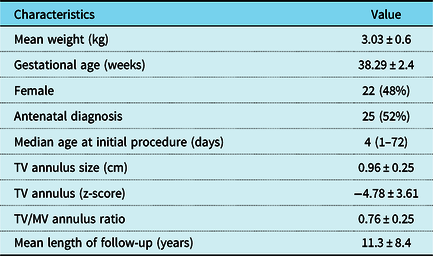
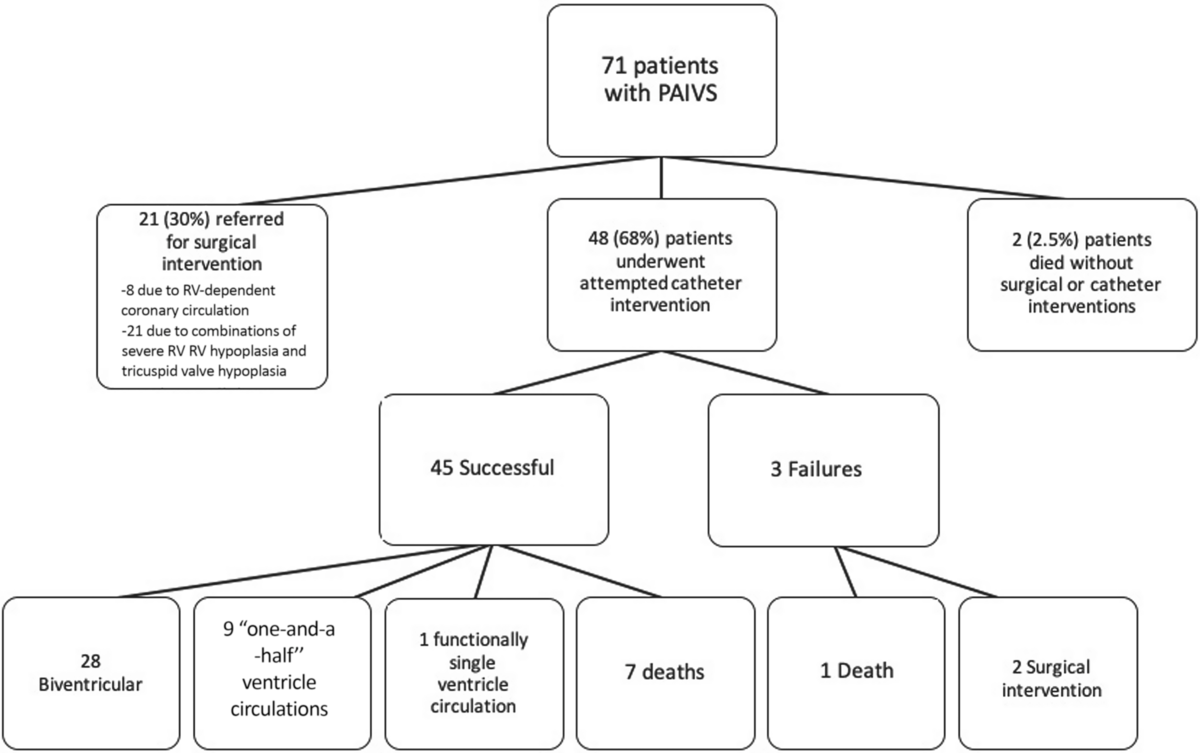
During the study period, 71 patients were identified with pulmonary atresia intact ventricular septum. Forty-eight (68%) underwent percutaneous valve perforation and dilation. The remainder were treated surgically (n = 21) or died (n = 2) without intervention or surgery in the neonatal period. The criteria for consideration of a surgical approach included right ventricular-dependant coronary circulation (n = 8), or a combination of severe right ventricular hypoplasia and severe tricuspid valve hypoplasia (n = 13). Baseline statistics are shown in Table 1. Right ventricle to coronary artery connections were identified in six other patients who underwent catheter-based intervention, but none were considered to have right ventricular dependence.
Summary baseline population characteristics of patients (n = 48) who were brought to the catheterisation laboratory for attempted valve perforation and valvotomy

Data are presented as mean ± SD or median with frequency, n (%).
TV = tricuspid valve; MV = mitral valve.
The median age at the procedure was 4 days (range 1 to 72 days). Five patients, at the start of our experience, had laser perforation of the atretic valve.Reference Qureshi, Rosenthal and Tynan16 All the others underwent valve perforation.Reference Chubb, Pesonen and Sivasubramanian15 The median valvoplasty balloon size was 7 mm (range 4 to 10 mm). One patient had previously had fetal balloon pulmonary valvotomy at 23 weeks of gestation, with a good result. The valve was again noted to be imperforate during the antenatal follow-up 5 weeks later, and a postnatal perforation and dilatation were performed at 9 days. She has a biventricular circulation.
Catheter valvotomy was successful in 45 of the 48 patients attempted (94%). There were three failed procedures. In one case, an 860 g, 32-week gestation patient died in the catheter laboratory following perforation through the antero-superior aspect of the right ventricle, which led to tamponade. Another patient, in whom ventricular free wall perforation occurred, had a pericardial drain placed due to the evidence of an effusion and the procedure was abandoned. Subsequently, a surgical pulmonary valvotomy with outflow tract reconstruction and ligation of the ductus was performed. The patient was significantly desaturated following this and eventually died after a complicated course. In another patient, the atretic valve could not be perforated, despite good contact and delivering radiofrequency energy of up to 80 W. This infant then underwent a systemic-to-pulmonary artery shunt. Surgical exploration determined that there was unrecognised muscular atresia and a coronary configuration, which precluded surgical outflow tract reconstruction. This child has now a Fontan circulation.
Haemodynamic data
Before perforation of the valve, the mean right ventricular systolic pressure was 100 ± 28 mmHg (range 57 to 153 mmHg), and the mean aortic systolic pressure was 66 ± 16 mmHg (range 32 to 120 mmHg). Following perforation and dilation of the valve, the systolic right ventricular and aortic pressures were 50 ± 18 mmHg (p < 0.001) and 62 ± 12 mmHg, respectively. The mean right ventricle to aortic systolic pressure ratio before the procedure was 1.5 ± 0.5 and after the procedure was 0.8 ± 0.3 (p < 0.0001).
Ductus arteriosus stenting
The ductus was stented during the initial procedure in 16 patients and at a subsequent procedure in a further 7 patients. Stent sizes varied according to patient weight and although stent length and diameter were determined during the procedure by the primary operator, we used bare metal coronary stents and aimed for a stent diameter of 1 mm/kg with a minimum of 2.5 mm, in an attempt to balance the hope for medium-term patency with avoidance of excessive pulmonary blood flow. The stent size was also of course influenced by ductal anatomy and degree of constriction on angiography.
Four further patients, in the early years of the technique, had balloon angioplasty of the ductus. In one patient, stenting of the ductus was attempted during the initial procedure, but the stent had to be retrieved after it embolised to the descending aorta. Ductal stenting was not reattempted in this patient.
There were 3 deaths in the stented group. One of these deaths followed development of “circular shunt” haemodynamics. The second death was due to cardiac tamponade 3 hours post procedure caused by perforation of the main pulmonary artery. Severe necrotising enterocolitis and multi-organ failure led to the third death.
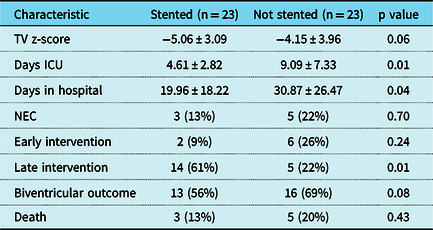
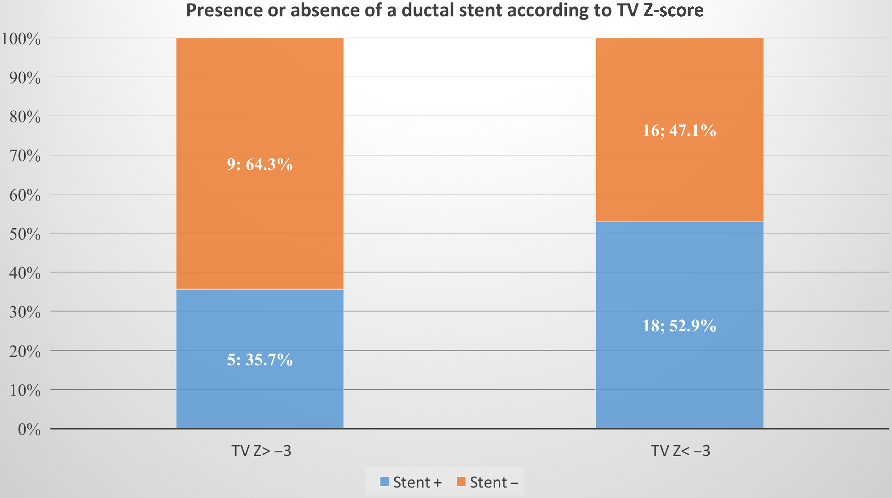
Table 2 summarises the characteristics and outcomes of patients, divided according to the presence or absence of a ductus stent. Although not statistically significant, the z-scores of tricuspid valve annulus tended to be lower in patients who went on to have ductus stenting (Fig 1). The tricuspid valve z-score did statistically influence the decision to place a ductal stent at the initial procedure with 83% of ductal stents (n = 15 of 18) in the smaller z-score group being placed at the initial procedure, whereas 80% of ductal stents (n = 4 of 5) in the larger z-score group were placed at a subsequent cardiac catheterisation.
Summary of patient characteristics divided by the presence or absence of a ductal stent

Data are presented as mean ± SD, n (%).
TV = tricuspid valve; NEC = necrotising enterocolitis.
Illustration of the requirement for a ductal stent as a function of the tricuspid valve (TV) annulus z-score. Although not statistically significant, only about 1/3 of patients with TV z-score ≥ −3 required a ductal stent, whereas more than 50% of those with extreme TV hypoplasia (z-score < −3) had a ductal stent placed. The proportion of patients whose ductal stent was placed at the primary procedure did seem to be influenced by the initial TV z-score (only 20% in patients with z-score > −3 compared with more than 80% of patients with more severely hypoplastic TV z-scores) p < 0.05.

The length of paediatric intensive care and hospital stay was significantly shorter in those who underwent stenting, and early re-interventions were significantly reduced. There was no increase in mortality or incidence of necrotising enterocolitis in the stented group. In the long term, one patient required re-dilation of the ductal stent at 12 months. This was performed at the same procedure as balloon dilation of the outflow tract. One patient required the insertion of further ductus stent at a later procedure. Patients were maintained on aspirin until the duct was not felt to be beneficial to the circulation. At that point, aspirin was discontinued, and all but one ductal stents subsequently occluded spontaneously. The remaining patient had occlusion of the ductal stent performed at 40 months during the same procedure as device closure of the atrial septal defect. There are no incidences of branch pulmonary artery stenosis related to ductal stenting in our cohort.
Complications
There were eight deaths (17%) in total, all occurring within 35 days of the index procedure. Five deaths occurred due to sepsis and multi-organ failure, including three with necrotising enterocolitis. Two deaths were due to cardiac tamponade, one during the procedure. The other occurred 3 hours post procedure. One patient developed profound hypotension, which was unresponsive to inotropes within 90 minutes of the procedure. Clinical and echocardiographic evidence suggested that this was due to a “circular shunt” phenomenon caused by a combination of stented arterial duct and regurgitant pulmonary and tricuspid valves. Of the eight patients who died within 35 days of the procedure, 5 patients (22%) were in the first 13 years of our experience and three patients (12%) in the subsequent 13 years (p < 0.29).
Cardiac tamponade occurred in six patients during the procedure, including those two, who later died. Femoral vascular occlusion led to nine patients receiving thrombolysis and seven others requiring intravenous heparin following the procedure. Two of these patients did not recover normal femoral pulses without any obvious clinical sequel throughout follow-up. Three patients developed significant neurological deficits following the procedure including one with hemiparesis, due to a cerebral abscess diagnosed 3 months after the procedure. This patient developed cerebral palsy, thought to be related to an underlying syndrome, and not related to the procedure.
Long-Term outcome
During a median follow-up of 11.3 years (range 1 to 27 years), there have been no late deaths, arrhythmias, or ischaemic events. Figure 2 summarises the final outcome for the population. At the most recent follow-up, 28 (74%) of the 38 survivors had a biventricular circulation. Of the 10 patients (26%) not achieving biventricular circulation, nine have a one-and-a-half ventricle circulation completed at a mean of 23 ± 15 months, and only one has had a Fontan circulation, completed at 49 months.
Long-term outcomes of PAIVS who underwent percutaneous valve perforation. Note: 1 death in the failed group is included in analysis of outcome as the death was direct result of the attempted pulmonary valve catheter perforation.

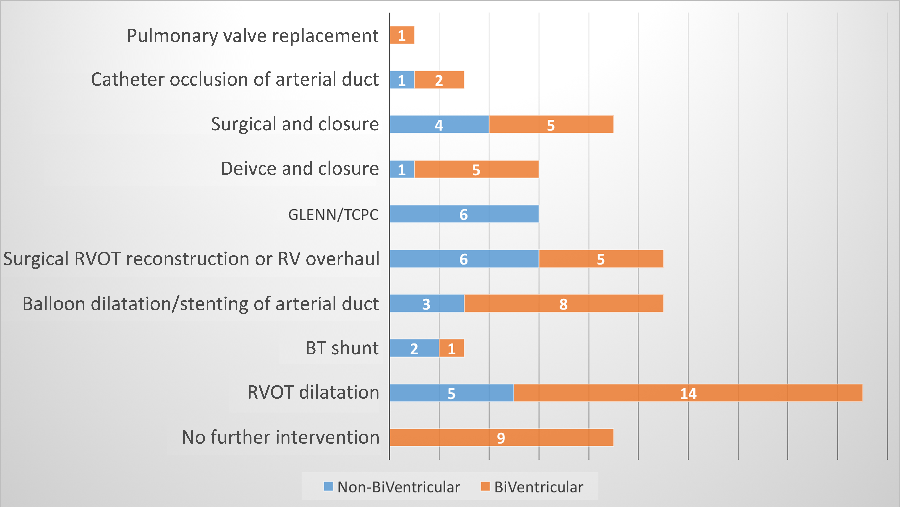
Thirty-six patients, 80% of those having successful valvotomy, have required further surgical or catheter-based procedures, as detailed in Figures 3 and 4. Nineteen patients had 24 repeat balloon dilations of restenosed valves. Eleven required late stenting of the ductus or redilation of a pre-existing ductus stent. Only three patients required insertion of a surgical systemic-to-pulmonary arterial shunt, with two of these eventually achieving a biventricular circulation.
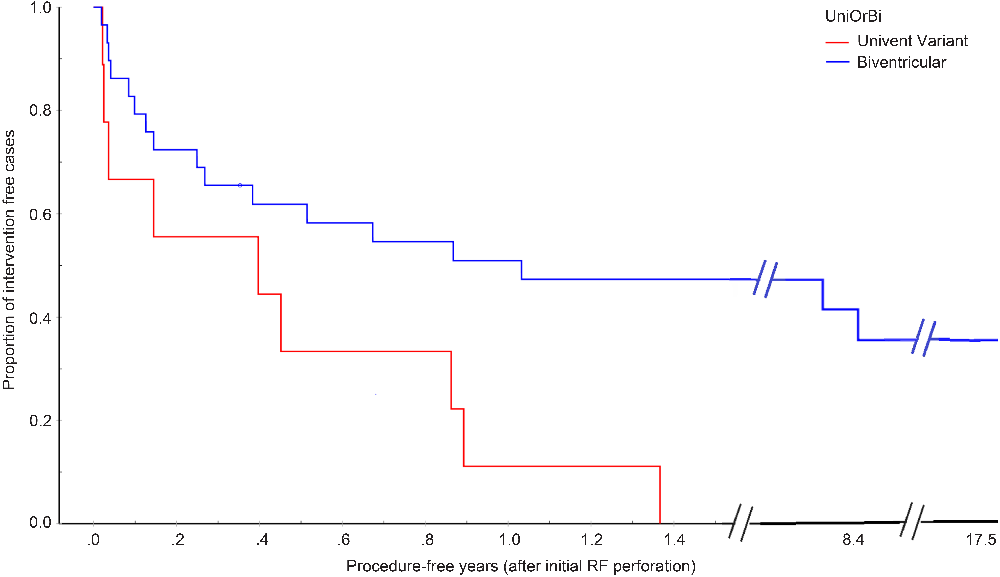
Kaplan–Meir plot showing interventional-free survival in patients post interventional perforation of pulmonary valve.

Distribution of number of patients having additional procedures after initial successful catheter perforation of pulmonary valve.

Fifteen patients had a closure of atrial septal defects once echocardiography showed left-to-right flow in systole and diastole. Percutaneous device occlusion was performed in six patients, at a mean age of 5.9 ± 2.9 years, whereas eight patients had surgical closure, four patients in conjunction with another planned procedure, at a mean age of 3.6 ± 3.4 years.
Evolution of practice
The changes in practice between the two eras of the study are summarised in Table 3. While the number of cases and their phenotype in terms of mean tricuspid valve z-scores remained similar, the mortality has halved; however, it did not achieve statistical significance. There has been a significant increase in the rate of early and late ductal stenting (30% versus 62%, p = 0.037) and a decrease in the average hospital stay (36.1 ± 27.7 versus 16.44 + 13.5, p = 0.001). Although the proportion of early re-intervention, defined as any surgical or catheter intervention within one month of the interventional perforation of the valve, decreased, this did not achieve statistical significance.
Summary of patient characteristics by era of procedure.

Data are presented as mean ± SD, n (%).
TV = tricuspid valve; DA = ductus arteriosus.
Predictors of the long-term outcome
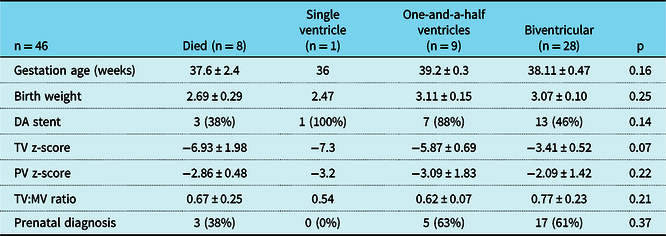
Table 4 represents patient and procedural characteristics against the patients’ long-term outcome. Patients with a smaller initial tricuspid valve annulus were less likely to achieve biventricular circulation. The ratio of tricuspid to mitral valve annulus was also higher in the cohort achieving biventricular circulation; however, neither of these observations achieved statistical significance. There was no statistical relationship between gestation, antenatal diagnosis, birth weight, and outcome.
Predictors of final outcome. Statistical significance is calculated based on biventricular circulation versus all other outcomes (death, univentricular, or one-and-a-half ventricular circulations).

Data are presented as mean ± SD, n (%).
DA = ductus arteriosus; TV = tricuspid valve; PV = pulmonary valve; MV = mitral valve.
Discussion
In patients with pulmonary atresia with intact ventricular septum, decisions relating to biventricular or univentricular pathways often involve a balance between the desire for short-term safety and the long-term goal of maximising quality of life. Decompressing the right ventricle, unless contraindicated by right ventricle-dependent coronary circulation, is likely to be advantageous in the long term, regardless of the final pathway.Reference Niederhüser, Bauer and von Segesser17,Reference Daubeney, Wang and Delany18 Physiological benefits may include improved ventricular function, growth of the right ventricle, and stimulation of pulmonary vasculature development.Reference Tanaka, Yamaki and Kakizawa19 Over the 25-year period since the first procedure, our management strategy has therefore evolved towards a uniform neonatal pathway, starting with decompression of the ventricle in all but the most extreme cases. This allows time for physicians and family to engage in a thoughtful and reflective consideration of the chosen final pathway.Reference Ashburn, Blackstone and Wells20 It may avoid too strident a pursuit of a biventricular repair in the knowledge that an acceptable quality of life can be attained in carefully chosen single ventricle anatomy.Reference d’Udekem, Cheung and Setyapranata21,Reference Karamlou, Poynter and Walters22
We feel that apart from right ventricular coronary dependence, there are no definite contraindications to balloon pulmonary valvotomy in membranous atresia. A number of cut-offs have been suggested in other publications to help categorise patients for percutaneous perforation and valvotomy, including a tricuspid valve annulus of at least 11 mm or a z-score of at least −3.5.Reference Bichell5,Reference Cheatham23–Reference Thaden, Sanon and Geske25 These values appear extremely cautious according to our study population, in which a proportion of patients with tricuspid z-scores in this range have gone on to achieve at least a 1.5 ventricle repair. It is important to note that the z-score calculation is not uniform in all the studies.Reference Daubeney, Blackstone and Weintraub14,Reference Daubeney, Wang and Delany18,Reference Marasini, Gorrieri and Tuo26 Some studies have used algorithms calculated from autopsy measurements or indeed have not clarified which set of algorithms have been used.Reference Schwartz, Glatz and Dori6,Reference Alwi, Geetha and Bilkis27 This is relevant, as the z-score of the tricuspid valve can vary by as much as 3 standard deviations between different algorithms.
The ductus arteriosus was stented in 23 patients, the proportion of these more than doubled in the second half of the study period, from 2003 onwards because of our more aggressive approach. In patients in whom the ductus was stented, there was a significantly reduced ICU and hospital stay without an increased incidence of necrotising enterocolitis, renal failure, or vascular complications. This difference reflects a more stable course for those patients whose ductus was stented. Our institutional practice has evolved towards primary ductus stenting, if the ventricular morphology and tricuspid valve size are considered definitively “too small” to support the pulmonary circulation during scrutiny, at a multidisciplinary meeting. This is borne out when we look at tricuspid valve z-scores in primary versus delayed ductal stenting in our cohort. In cases where the ventricle is considered likely to be adequate to support the pulmonary circulation through the neonatal and early infant period, we tend to avoid ductus stenting during the primary intervention. In these cases, we have instead allowed the physiology to declare itself as necessitating prolonged ductus patency or not.
We noted an increased need for late interventions in patients whose ductus had been stented, reflecting the fact that the stented population had smaller ventricle and tricuspid valve, necessitating later interventions. This staged approach should not be seen as a failure of the initial procedure, but rather as the tailoring of treatment to fit such a heterogeneous group.Reference Kotani, Kasahara and Fujii7 Re-intervention rates also include additional work on the ductus stent, such as re-dilation and eventual percutaneous occlusion.
Seventy-six percent of survivors in our study currently have a biventricular circulation, similar to other published studies but with more open inclusion criteria.Reference Marasini, Gorrieri and Tuo26–Reference Petit, Qureshi and Glatz28 We attribute these impressive rates of biventricular circulation to our low threshold for encouraging forward flow across the valve to promote the growth of the ventricle.Reference Gibbs, Wren and Watterson29 All patients whose eventual outcome was one-and-a-half ventricle or Fontan circulation required intervention before 18 months of age. The biventricular group showed a decline in the need for re-intervention as time passed; however, the overall need for re-intervention was still noticeable. Despite the intrinsically abnormal ventricle and the ongoing abnormal physiology endured by the myocardium, there have been no major arrhythmic problems.Reference John and Warnes30
It is also interesting that this study suggests that there may be a survival and final outcome advantage for those patients who have been diagnosed antenatally. This is in contrast to earlier studies and requires further research.Reference Simpson31,Reference Landis, Levey and Levasseur32
Limitations
This is a single-centre, non-randomised retrospective study that spans both the learning curve of an entirely new procedure together with ongoing refinement of the technique to the one that is now established. Due to limited patient population, we could not perform detailed analysis of subgroups of patient. Since this study was designed to assess outcomes of those patients who had catheter-mediated valve perforation, we acknowledge the need for a more general research. Further studies are being conducted to evaluate and correlate functional outcome with type of circulation achieved also with regard to outcomes of those patients who underwent initial surgical intervention.
Conclusion
Over the time period of this study, the technique of percutaneous valve perforation and valvotomy has evolved from a pioneering intervention using laser energy to a safe and effective procedure using radiofrequency energy in many institutions. Although the procedural risk of decompressing the right ventricle needs to be considered, particularly in borderline cases, we continue to support the argument for percutaneous decompression regardless of the eventual physiological pathway. This study supports a strategy to achieve a circulation, which allows the right ventricle to contribute to, if not fully support, the pulmonary circulation. Concurrent stenting of the ductus should be considered in those cases where all markers point to ventricular inadequacy, but this remains a partially qualitative decision. Overall, mortality beyond the acute phase of treatment is low, and the late complications are rare. We recommend neonatal valve perforation and ventricular decompression as the initial management strategy, except in those with coronary circulations which are dependent on the right ventricle.
Acknowledgements
None.
Financial Support
This research received no specific grant from any funding agency, commercial, or not-for-profit sectors.
Conflicts of Interest
None.
Ethical Standards
Institutional Review Board permission was granted for this research.