INTRODUCTION
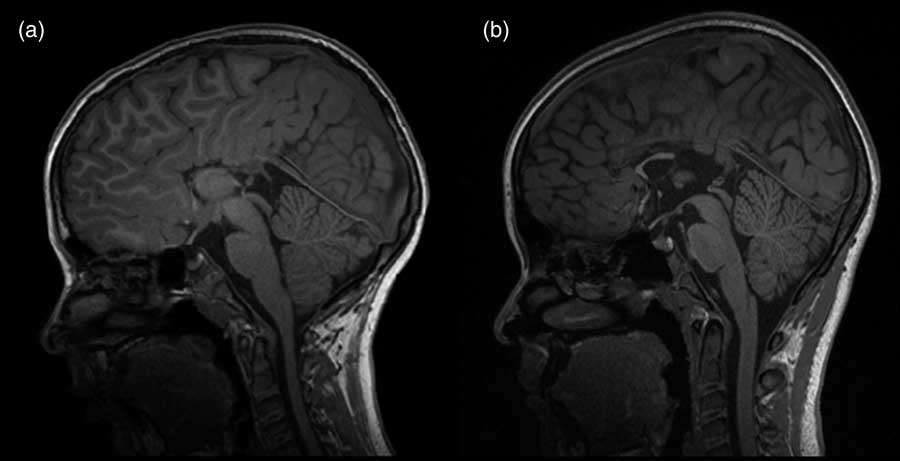
With over 190 million axons, the corpus callosum (CC) is the largest brain white matter pathway and connects homologous structures in the left and right cerebral hemispheres (Paul et al., Reference Paul, Brown, Adolphs, Tyszka, Richards, Mukherjee and Sherr2007). Developmental absence of the CC, or agenesis of the corpus callosum (AgCC), is among the most common brain malformations observed in humans, with an estimated prevalence of 1 to 7 per 4000 live births (Glass, Shaw, Ma, & Sherr, Reference Glass, Shaw, Ma and Sherr2008). Diagnosis is based on brain imaging including prenatal ultrasound and postnatal neuroimaging and can be complete or partial, see Figure 1. AgCC may occur as an isolated malformation or can be associated with other brain malformations or multiple congenital anomaly syndromes. It can result from environmental, metabolic, or genetic causes (Edwards, Sherr, Barkovich, & Richards, Reference Edwards, Sherr, Barkovich and Richards2014).
Postnatal neuroimaging.

Consistent with the variability in presentation and etiology of this brain malformation, previous studies have reported cognitive abilities ranging from “normal,” with children attending mainstream school and adults having a conventional career (Caillé et al., Reference Caillé, Schiavetto, Andermann, Bastos, de Guise and Lassonde1999), to severe cognitive difficulties, with individuals attending special developmental school and requiring assistance in daily living activities (Graham et al., Reference Graham, Visootsak, Dykens, Huddleston, Clark, Jones and Stevenson2008, Reference Graham, Wheeler, Tackels-Horne, Lin, Hall, May and Cox2003). Initial studies of individuals with AgCC reported a pattern of reduced performance across multiple cognitive domains (Chiarello, Reference Chiarello1980; Lassonde & Jeeves, Reference Lassonde and Jeeves1994; Sauerwein & Lassonde, Reference Sauerwein and Lassonde1994). However, these study samples collapsed across children and adults, and had specific selection criteria (e.g., IQ>70). Furthermore, participants were not routinely diagnosed based on MRI scan, which may have impacted diagnostic accuracy (e.g., diagnosis based on CT may lead to hypoplasia being incorrectly diagnosed as AgCC) (Sauerwein & Lassonde, Reference Sauerwein and Lassonde1994).
In a systematic review of neuropsychological functioning in AgCC, where diagnosis was based on MRI (n=110 patients), intellectual functioning was described to be, on average, in the low average range for adults (IQ: mean=88.2; SD=15.18; n=41) and significantly lower for children (IQ: mean=76.4; SD=30.12; n=48; Siffredi, Anderson, Leventer, & Spencer-Smith, Reference Siffredi, Anderson, Leventer and Spencer-Smith2013). Qualitative examination highlighted that individuals (adults and children) with AgCC are at particular risk of impaired arithmetic skills, with 86% demonstrating impairments. In contrast, executive functions, reading, and spelling skills were relatively preserved. Studies examining social functioning in individuals with AgCC report a range of impairments, such as reduced understanding of jokes and humor (Brown, Paul, Symington, & Dietrich, Reference Brown, Paul, Symington and Dietrich2005), proverb and non-literal items (Paul, Van Lancker-Sidtis, Schieffer, Dietrich, & Brown, Reference Paul, Van Lancker-Sidtis, Schieffer, Dietrich and Brown2003), complex social scenes (Brown & Paul, Reference Brown and Paul2000; Paul, Schieffer, & Brown, Reference Paul, Schieffer and Brown2004; Turk, Brown, Symington, & Paul, Reference Turk, Brown, Symington and Paul2010), integration of social information from multiple sources (e.g., paralinguistic cues, nonliteral language; Symington, Paul, Symington, Ono, & Brown, Reference Symington, Paul, Symington, Ono and Brown2010), story-generation skills (Paul et al., Reference Paul, Schieffer and Brown2004), and difficulties experiencing and thinking about complex but not basic emotions in the context of social interactions (Anderson, Paul, & Brown, Reference Anderson, Paul and Brown2017).
Links between AgCC and autism spectrum disorder (ASD) symptoms have also been examined, but results have been mixed. In a convenience sample of 189 children and adults with AgCC, 8.5% met criteria for ASD diagnosis (vs. 1% of their siblings; Doherty, Tu, Schilmoeller, & Schilmoeller, Reference Doherty, Tu, Schilmoeller and Schilmoeller2006) while in a more recent convenience sample of 26 individuals with AgCC, 8 (30.8%) were reported as having autism symptoms but only 3 of 22 (13.6%) met criteria for an ASD diagnosis (Paul, Corsello, Kennedy, & Adolphs, Reference Paul, Corsello, Kennedy and Adolphs2014).
Numerous factors are likely to influence neuropsychological development in children with AgCC, as outlined by Maureen Dennis and colleagues (Dennis, Reference Dennis2000; Dennis, Yeates, Taylor, & Fletcher, Reference Dennis, Yeates, Taylor and Fletcher2006) in their developmental framework. Age is important for understanding level of cognitive functioning, and in AgCC better general intellectual function have been observed in adults compared with children (Siffredi et al., Reference Siffredi, Anderson, Leventer and Spencer-Smith2013). Social factors, including demographic characteristics and family function, can influence a child’s neuropsychological development (Hackman & Farah, Reference Hackman and Farah2009; Sirin, Reference Sirin2005). Neurological factors should also be considered in understanding neuropsychological outcomes in this atypically developing brain.
In the context of AgCC, some of the neurological factors that might influence outcomes include clinical co-morbidities [e.g., additional central nervous system (CNS) anomalies] or the presence of seizures, and associated genetic conditions (Dennis et al., Reference Dennis, Yeates, Taylor and Fletcher2006). Some genetic conditions, such as Aicardi syndrome, are uniformly associated with AgCC, and single gene disorders (e.g., Edwards et al., Reference Edwards, Sherr, Barkovich and Richards2014; Palmer & Mowat, Reference Palmer and Mowat2014) and multiple chromosomal abnormalities associated with AgCC have also been described (D’Antonio et al., Reference D’Antonio, Pagani, Familiari, Khalil, Sagies, Malinger and Prefumo2016). Recently, the first gene for isolated AgCC, DCC, was identified (Marsh et al., Reference Marsh, Heron, Edwards, Quartier, Galea, Nava and Depienne2017). The genetic etiology may also be polygenic and/or reflect complex genetic interactions (Paul et al., Reference Paul, Brown, Adolphs, Tyszka, Richards, Mukherjee and Sherr2007).
Several studies suggest that isolated AgCC appears to carry the best prognosis, with up to 85% of individuals exhibiting average cognitive functioning (Pilu et al., Reference Pilu, Sandri, Perolo, Pittalis, Grisolia, Cocchi and Bovicelli1993; Vergani et al., Reference Vergani, Ghidini, Strobelt, Locatelli, Mariani, Bertalero and Cavallone1994). Several potential candidates for compensation have been suggested, in particular enlargement of the anterior and posterior commissures, as well as the degree of AgCC (partial or complete). Enlargement (hyperplasia) of the anterior commissure, found in approximately 10% of individuals with AgCC (Hetts, Sherr, Chao, Gobuty, & Barkovich, Reference Hetts, Sherr, Chao, Gobuty and Barkovich2006; Loeser & Alvord, Reference Loeser and Alvord1968) and enlargement of posterior commissure might be indicators of CC fibers using these commissures as alternative interhemispheric conduits (Hannay, Dennis, Kramer, Blaser, & Fletcher, Reference Hannay, Dennis, Kramer, Blaser and Fletcher2009). Similarly, the degree of AgCC (complete or partial) could differentially allow white matter fibers to cross the midline, and, therefore, increase the presence of interhemispheric functional connections (Huber-Okrainec, Blaser, & Dennis, Reference Huber-Okrainec, Blaser and Dennis2005).
Currently our understanding of the consequences of AgCC for school-age children on neuropsychological functioning and factors that modulate the consequences of AgCC on these functions is restricted by the inherent problem of small sample studies and conflicting results (Bedeschi et al., Reference Bedeschi, Bonaglia, Grasso, Pellegri, Garghentino, Battaglia and Borgatti2006; D’Antonio et al., Reference D’Antonio, Pagani, Familiari, Khalil, Sagies, Malinger and Prefumo2016; Moutard et al., Reference Moutard, Kieffer, Feingold, Kieffer, Lewin, Adamsbaum and Ponsot2003; Shevell, Reference Shevell2002). The challenge of studying the high heterogeneity of this population has previously been addressed by focusing on individuals with isolated AgCC only, which does not reflect the AgCC population.
A detailed MR-based study of 82 patients with AgCC showed that it was truly isolated in only 4% of patients, with most having additional brain abnormalities such as cortical malformations (Hetts et al., Reference Hetts, Sherr, Chao, Gobuty and Barkovich2006). Clinicians, therefore, lack the necessary knowledge to provide the families of children with AgCC the information regarding prognosis or optimal intervention targets. This study aimed to describe general intellectual, academic, executive, social and behavioral functioning in a large cohort of school-aged children who presented for clinical services to a hospital and diagnosed with AgCC. The influence of age, social risk and neurological factors on neuropsychological functioning was examined. Patients included both those with isolated AgCC and AgCC associated with other brain malformations. This study represents a first step in providing an understanding of the neuropsychological profile of children with AgCC.
METHOD
Sample
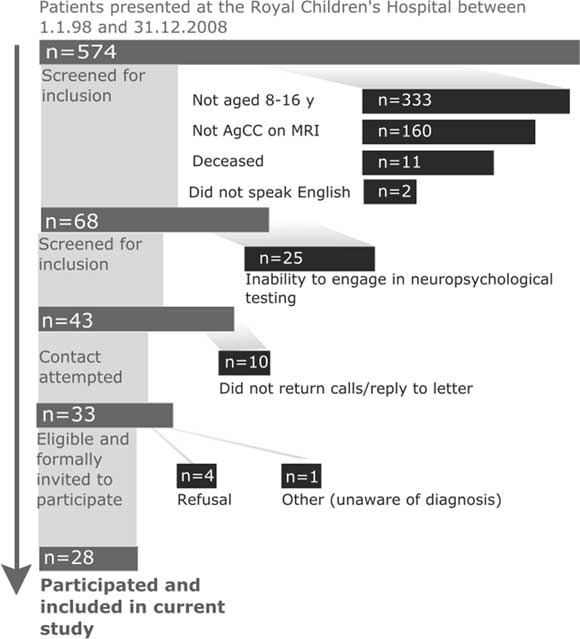
Our AgCC cohort was recruited as part of the “Paediatric Agenesis of the Corpus Callosum Project” at the Murdoch Children’s Research Institute in Melbourne, Australia. Twenty-eight participants (85% of those eligible; n=33), aged 8 to 17 years (M=11.54; SD=2.35) were ascertained by review of the radiology database at The Royal Children’s Hospital (RCH), see Figure 2 for participant flow. Inclusion criteria were: (1) aged 8.0 to 16.11 years at recruitment between September 2009 and February 2014; (2) evidence of AgCC on MRI; (3) English speaking; and (4) ability to engage in neuropsychological testing. Thirty-seven percent of children who were screened for inclusion in the study were excluded due to severe impairment and inability to engage in neuropsychological testing but otherwise met inclusion criteria.
Participant flow.

Procedure
The RCH Human Research Ethics Committee approved the study. Caregivers, and when appropriate participants (based on age), provided informed written consent before participation. Participants completed a neuropsychological assessment and MRI, or gave consent to use previous clinical MRI scans. Caregivers and teachers completed questionnaires.
Measures
Neuropsychological functioning
Child testing was conducted by training child psychologists (M.S.S., A.M., V.S. under supervision by V.A.) using standardized tests to estimate: (1) General intelligence: Full Scale, Verbal and Performance IQ (M=100; SD=15) were generated from the four subtest version of the Wechsler Abbreviated Intelligence Scale (WASI: Wechsler, Reference Wechsler1999; n=21; 75%) or the Wechsler Intelligence Scale for Children, 4th edition (WISC-IV: Wechsler, Reference Wechsler2003; n=7; 25%) based on 10 subtests. (2) Academic functioning: The Wide Range Achievement Test 4 (WRAT-4: Wilkinson & Robertson, Reference Wilkinson and Robertson2006) was administered to estimate: single Word Reading, Spelling and Math Computation (M=100; SD=15).
Parents and teachers completed age standardized questionnaires to estimate: (3) Executive function in everyday life: The Behavioral Rating Inventory of Executive Function: parent form (BRIEF: Gioia, Isquith, Guy, & Kenworthy, Reference Gioia, Isquith, Guy and Kenworthy2000) estimates executive abilities in everyday life over the past 6 months. It generates two summary index scales: Behavioral Regulation Index (BRI: based on Inhibit, Shift and Emotional control subscales) and Metacognition Index (MCI: based on Initiate, Working memory, Plan/organize, Organization of materials and Monitor subscales); as well as a Global Executive Composite (GEC) based on both indices. Higher scores reflect increased difficulties in executive functioning (M=50; SD=10). (4) Behavior: Strengths and Difficulties Questionnaire (SDQ; Goodman, Reference Goodman1997) generates a Total Difficulties score estimating general behavioral and emotional functioning over the past 6 months (based on the subscales Emotional Symptoms, Conduct Symptoms, Hyperactivity-Inattention and Peer Problems). Australian test norms were used (Mellor, Reference Mellor2005). (5) Social function: Social Skills Improvement System (SSIS; Gresham & Elliott, Reference Gresham and Elliott2008) estimated aspects of social functioning. It generates the Social Skills scale and the Problem Behavior scale, including the Autism Spectrum subscale that estimates ASD behaviors. A higher score on the Social Skills scale indicates better social functioning and a lower score on the Problem Behavior scale indicates better behavioral functioning (M=100; SD=15).
Risk factors
(1) Age at testing. (2) Social risk: estimated using the Social Risk Index, a composite score based on information collected from a caregiver questionnaire: family structure, education of primary caregiver, occupation of primary income earner, employment status of primary income earner, language spoken at home, and maternal age at birth. Scores range from 0 to 12, with higher scores representing higher socio-economical risk (Roberts et al., Reference Roberts, Howard, Spittle, Brown, Anderson and Doyle2008). (3) Neurological factors: Structural MR images acquired on 3 Tesla Siemens Magnetom Trio Scanner using a 32-channel head coil [repetition time (TR)=1900 ms; echo time (TE)=2.71 ms; Inversion time (TI)=900 ms; flip angle (FA)=9°, field of view (FoV)=256 mm, and voxel size=0.7×0.7×0.7 mm) were qualitatively reviewed by a pediatric neurologist with expertise in brain malformations (R.J.L.).
A specially modified protocol (Anderson et al., Reference Anderson, Spencer-Smith, Leventer, Coleman, Anderson, Williams and Jacobs2009; Leventer et al., Reference Leventer, Phelan, Coleman, Kean, Jackson and Harvey1999) was used to characterize AgCC and associated CNS anomalies: (a) AgCC type: AgCC was classified as partial=a section of the corpus callosum absent, or complete=the entire corpus callosum absent; (b) anterior and posterior commissures: were classified as absent, reduced, normal or enlarged; (c) CNS anomalies: additional to the AgCC were classified as absent or present (excluding common concomitant anatomical changes due to the absence (complete or partial) of the CC such as Probst bundles, cingulate gyrus alteration, and colpocephaly; Booth, Wallace, & Happe, Reference Booth, Wallace and Happe2011; Lee, Kim, Cho, & Lee, Reference Lee, Kim, Cho and Lee2004; Paul, Reference Paul2011; Paul et al., Reference Paul, Brown, Adolphs, Tyszka, Richards, Mukherjee and Sherr2007). Based on medical records and parent interview, (d) diagnosed genetic condition: classified as present or absent and (d) seizure disorder: classified as present or absent.
Developmental delay
Caregivers completed a structured interview that elicited information on when the child reached developmental milestones and was used to estimate whether the child had a developmental delay. The child was classified as having a motor delay if they achieved the milestones of rolling after 6 months, crawling after 9 months, and walking after 15 months; and a speech delay if they achieved the milestone of speaking single words after 15 months and speaking sentences of 2 to 3 words after 24 months.
Statistical Analyses
To examine differences between the AgCC group mean scores and test norms, one-sample t test or Wilcoxon signed-rank test in the case of violation of normality was used. Mean differences in test scores within each functional domain were examined using paired-sample t test or Wilcoxon signed-rank test. Based on previous studies reporting on individuals with AgCC and the developmental framework of Dennis (Dennis, Reference Dennis2000; Dennis et al., Reference Dennis, Yeates, Taylor and Fletcher2006), backward hierarchical regressions were used as an exploratory model building method to examine associations between risk factors as predictors and neuropsychological functions as outcomes.
The order in which predictors were entered into the model was guided by Dennis’ framework: (1) age at testing; (2) social risk index; and (3) neurological factors, including AgCC type (complete vs. partial), size of the anterior and of the posterior commissures (absent, reduced, normal, or enlarged), additional CNS anomalies (present or absent), diagnosed genetic condition, presence of a seizure disorder. The default stepping criteria of p<.05 was used for inclusion and for removal of variables in the models. To address type II error, Bonferroni correction for multiple comparisons (Field, Reference Field2013) was applied to the resulting regression models: α altered=α original 0.05 / 8 comparisons=0.006.
RESULTS
Sample Characteristics
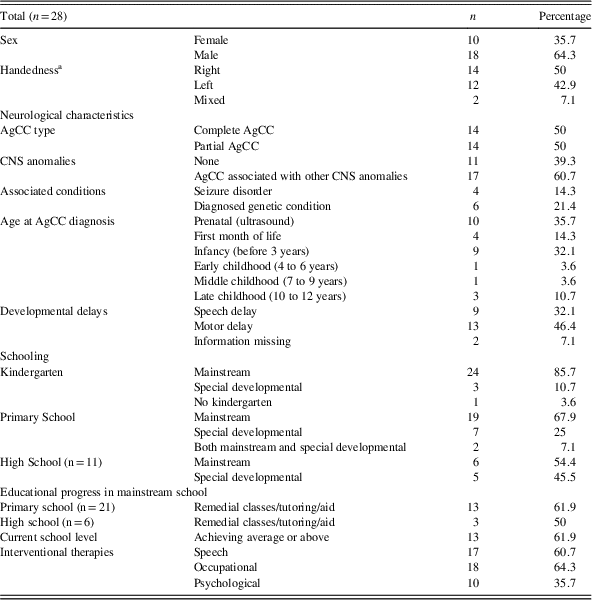
Table 1 presents the characteristics of our pediatric AgCC cohort (n=28), which included more males than females. Half of the cohort was right-handed, almost just as many were left-handed, and a small number showed mixed handedness. There were similar proportions of children with complete AgCC (n=14) and partial AgCC (n=14). There were fewer children with isolated AgCC (n=11) and more children with AgCC associated with other CNS anomalies (n=17) in our cohort. Table 1 highlights the heterogeneity in clinical presentation of children with AgCC. The supplementary table provides details of individuals’ clinical characteristics.
Characteristics of the Pediatric Agenesis of the Corpus Callosum Cohort

Note. aHandedness estimated by the Edinburgh Handedness Inventory (Groen, Whitehouse, Badcock, & Bishop, Reference Groen, Whitehouse, Badcock and Bishop2012; Oldfield, Reference Oldfield1971). Right-handed=+40 to +100, left-handed=-40 to -100, mixed handed=-40 to +40.
AgCC=agenesis of the corpus callosum; CNS=central nervous system; WASI=Wechsler Abbreviated Intelligence Scale; WISC-IV=Wechsler Intelligence Scale for Children, 4th edition; WRAT-4=Wide Range Achievement Test 4; BRIEF=Behavioral Rating Inventory of Executive Function; SDQ=Strengths and Difficulties Questionnaire; SSIS=Social Skills Improvement System.
AgCC Neuropsychological Functioning Compared With Normative Expectations
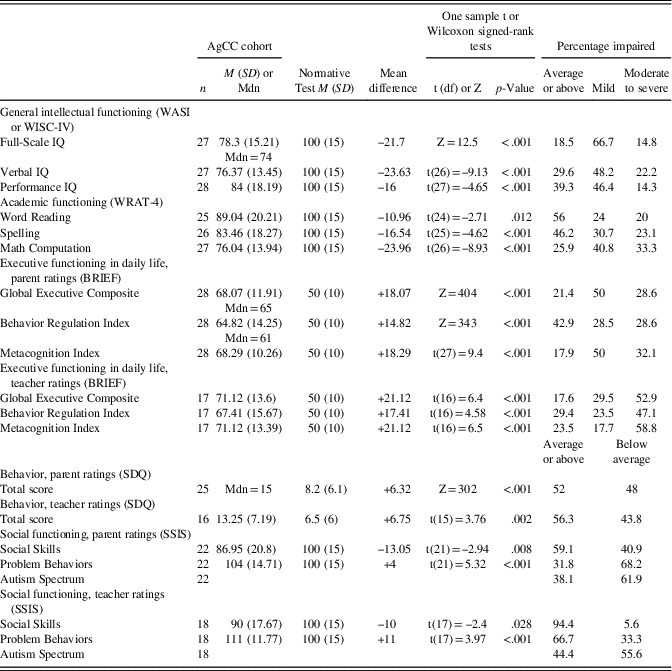
Children with AgCC achieved poorer scores than the normative test mean on all neuropsychological measures, see Table 2. For general intellectual functioning, mean scores were in the borderline range for Full-Scale IQ and Verbal IQ, and higher, in the low average range, for Performance IQ. The overall distribution for each IQ indices was skewed toward the lower end of population expectations. The majority of children (46.4 to 66.7%) were categorized with a mild impairment for intellectual functions.
Neuropsychological functioning of the pediatric agenesis of the corpus callosum cohort: comparison with normative test means, and impairment rates

Note. Average or above=scores>−1 standard deviation (SD) of the test mean, Mild impairment=scores ≤−1 to<−2 SD, Moderate to severe impairment=scores ≤−2 SD. The number of cases differs for each outcome as not all informants provided responses for each measure. WASI, WISC-IV, WRAT-4 higher scores reflect better performance. BRIEF and SDQ: lower scores reflect better functioning. SSIS: higher scores on the Social Skills scale indicates better functioning, while lower scores on the Problem Behavior scale indicates better functioning.
WASI=Wechsler Abbreviated Intelligence Scale; WISC-IV=Wechsler Intelligence Scale for Children, 4th edition; WRAT-4=Wide Range Achievement Test 4; BRIEF=Behavioral Rating Inventory of Executive Function; SDQ=Strengths and Difficulties Questionnaire; SSIS=Social Skills Improvement System.
For academic functioning, mean scores were in the borderline range for Math Computation, and the low average range for Word Reading and Spelling. For Word Reading and Spelling, approximately half of the children performed in the average range or above, with impairments in Math Computation more frequent. For executive functioning in daily life, mean parent and teacher ratings on BRIEF indices were in the clinical range, with the exception of the parent rated Behavioral Regulation Index, which was in the borderline range. For behavioral functioning, mean ratings on the SDQ Total Difficulties score (parent and teacher) were above the average range (+1SD). For social functioning, mean parent and teacher ratings on the SISS scales were in the low average (parent ratings) to average (teacher ratings) range for the Social Skills scale, and in the average range for the Problem Behaviors scale. Of interest, a significant level of autism spectrum behaviors was reported in more than half of the sample by both parents (61.9%) and teachers (55.6%).
Pattern of Functioning Within Neuropsychological Domains
There were some significant within group comparisons for select neuropsychological domains examined. For general intellectual functioning, Performance IQ was significantly better than Verbal IQ, t(26)=3.245, p=.003. For academic functioning, Word Reading, t(24)=−5.221, p<.001, and Spelling t(25)=−3.063, p=.005 were significantly better than Math Computation. For executive functioning in daily life, the parent-rated Behavioral Regulation Index was better than Metacognition Index, t(27)=−2.093, p=.046.
Risk Factors Associated With Neuropsychological Functioning
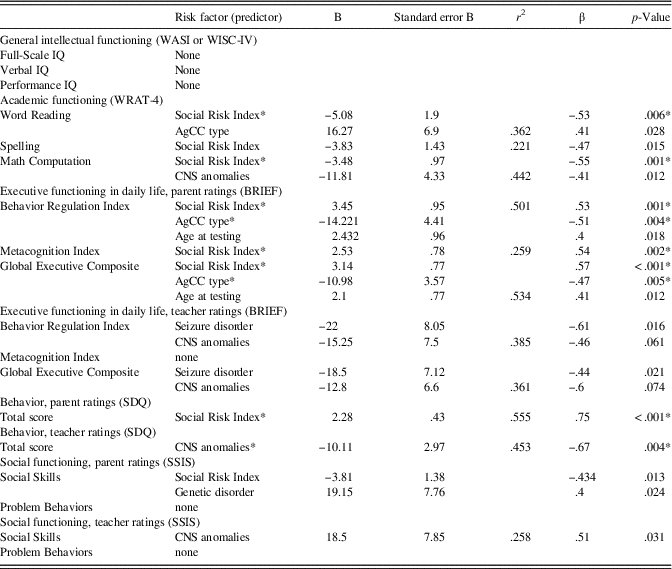
Analyses revealed that some risk factors were important predictors for specific aspects of neuropsychological functioning, even after Bonferroni correction (p<.006), Table 3. For academic functioning, higher Social Risk Index and complete AgCC were associated with poorer Word Reading scores, together accounting for 36.2% of the variance, while higher Social Risk Index and additional CNS anomalies were associated with poorer Math Computation scores, accounting for 44.2% of the variance. For executive functioning in daily life, higher Social Risk Index, complete AgCC, and older age at testing were associated with poorer parent ratings on the BRIEF Behavior Regulation Index and Global Executive Composite, accounting for 38.6% and 35.4% of the variance, respectively, while higher Social Risk Index was associated with poorer parent ratings on the BRIEF Metacognition Index, accounting for 25.9% of the variance. For behavioral functioning, higher Social Risk Index was associated with poorer parent ratings on SDQ Total Difficulties, accounting for 55.5% of the variance, while additional CNS anomalies were associated with poorer teacher ratings on SDQ Total Difficulties, accounting for 45.3% of variance.
Risk factors significantly associated with neuropsychological outcomes in children with AgCC

Note. Sex had a significant impact on SSIS parent ratings and therefore sex was entered as a covariate in regression analyses. Risk factors that reached significance at the Bonferroni-corrected level (p<.006) are indicated with asterisks. Backward hierarchical regressions examined risk factors as predictors of each outcome, including age at testing, social risk index, AgCC type (complete vs partial), size of the anterior and of the posterior commissures (absent, reduced, normal, or enlarged), additional CNS anomalies, diagnosed genetic condition, and seizure disorder.
AgCC=agenesis of the corpus callosum; CNS=central nervous system; WASI=Wechsler Abbreviated Intelligence Scale; WISC-IV=Wechsler Intelligence Scale for Children, 4th edition; WRAT-4=Wide Range Achievement Test 4; BRIEF=Behavioral Rating Inventory of Executive Function; SDQ=Strengths and Difficulties Questionnaire; SSIS=Social Skills Improvement System.
DISCUSSION
A major congenital brain malformation such as AgCC demonstrates the remarkable capacity of the brain for structural and functional plasticity during development. Indeed, individuals with AgCC do not exhibit the classic disconnection syndrome observed in “split-brain” patients, where absence of the CC is acquired through surgical resection for the treatment of epilepsy. Consequences of developmental absence of the CC remain imperfectly understood, largely reflecting the inherent problem of small sample studies and the important heterogeneity of this population in terms of neuroimaging profiles (complete or partial, isolated or associated AgCC), etiologies, neuropsychological difficulties, and clinical sequelae (Bedeschi et al., Reference Bedeschi, Bonaglia, Grasso, Pellegri, Garghentino, Battaglia and Borgatti2006; D’Antonio et al., Reference D’Antonio, Pagani, Familiari, Khalil, Sagies, Malinger and Prefumo2016; Moutard et al., Reference Moutard, Kieffer, Feingold, Kieffer, Lewin, Adamsbaum and Ponsot2003; Shevell, Reference Shevell2002; Siffredi et al., Reference Siffredi, Spencer-Smith, Barrouillet, Vaessen, Leventer, Anderson and Vuilleumier2017). This study provides the first comprehensive report of general intellectual, academic, executive, behavioral, and social functioning in a cohort of school-age children presenting for clinical services to a hospital and diagnosed with AgCC confirmed on MRI.
Our pediatric cohort performed below normative test expectations across all neuropsychological domains studied. However, it is important to note that, despite major atypical brain development, around 20% performed at the average or above average level of functioning across all domains. Overall, general intellectual functioning in our AgCC cohort was in the borderline range, and more than one standard deviation below the average test mean for the general population. As often reported in previous AgCC studies, we observed a significant variability within our pediatric cohort, with Full-Scale IQ ranging from extremely low to superior. The distributions for both verbal and performance IQs were skewed toward the lower end of the normal distribution.
Consistent with low general intellectual functioning in our cohort and previous child and adolescent AgCC studies (Siffredi et al., Reference Siffredi, Anderson, Leventer and Spencer-Smith2013), we observed high rates of parent-reported developmental delays, with 32% of children reported to have had speech delay and 46% motor delay. Our results reveal stronger visual-spatial than verbal abilities, a result that is specific to our cohort and might reflect the inherent heterogeneity of AgCC. For academic functioning, mathematical performance was most impaired, falling in the borderline range, with reading and spelling both in the low average range. This is consistent with previous studies showing high rates of mathematical impairment (Siffredi et al., Reference Siffredi, Anderson, Leventer and Spencer-Smith2013).
In regard to educational placement, more children attended mainstream school in earlier school levels, while in later school levels it was more common for children to attend special developmental school. Almost half of the children attending secondary school were attending special developmental school, while, in contrast, most of the remaining participants were reported by parents as performing at an average level at least in mainstream school (with or without the support of additional tutoring or aid). For executive functioning in daily life, children demonstrated more difficulties in metacognition (e.g., working memory, initiation) than behavioral regulation (e.g., inhibition, emotional control). Significant behavioral and social difficulties were observed in our cohort, consistent with previous studies.
Furthermore, a high rate of ASD symptoms was observed, with more than half of parents and teachers reporting clinical levels of ASD in our cohort (Paul et al., Reference Paul, Corsello, Kennedy and Adolphs2014, Reference Paul, Schieffer and Brown2004). Consistent with previous AgCC studies that have reported a higher proportion of left-handers than in the general population, ranging from 24% to 56% (e.g., Chiarello, Reference Chiarello1980; Lábadi & Beke, Reference Lábadi and Beke2017; Sauerwein & Lassonde, Reference Sauerwein and Lassonde1994), in our AgCC cohort almost half of the children were left-handed. This atypical clinical observation might reflect properties of this brain malformation. It is possible that processes associated with the early development of the corpus callosum and early development of lateralization of hemispheric function in general play a role in determining handedness.
In our cohort of children with AgCC, we found social risk was a key factor in understanding functioning across academic, executive and behavioral domains, but not intellectual or social functioning domains. In typically developing children, the association between high social risk and low achievement in academic functioning, in particular mathematics, as well as low executive and behavioral functioning has been well documented (Farah et al., Reference Farah, Shera, Savage, Betancourt, Giannetta, Brodsky and Hurt2006; Jordan & Levine, Reference Jordan and Levine2009; Sarsour et al., Reference Sarsour, Sheridan, Jutte, Nuru-Jeter, Hinshaw and Boyce2011). This importance of social risk for understanding variability in functional outcomes for children with AgCC is consistent with Dennis’ developmental framework (Dennis, Reference Dennis2000; Dennis et al., Reference Dennis, Yeates, Taylor and Fletcher2006) proposing factors likely to influence neuropsychological development.
However, in contrast to this framework, we found little evidence that the child’s age at testing or a wide range of neurological factors proposed in the literature to influence neuropsychological functioning, including AgCC type, size of the anterior and posterior commissures, additional CNS anomalies, diagnosed genetic condition or seizure disorder, were consistently associated with functioning across intellectual, academic, executive, behavioral, and social domains. We note, there was some suggestion that the presence of additional CNS anomalies was associated with select aspects of academic, executive, behavior and social functioning, and complete AgCC was associated with aspects of academic and executive functioning. Future studies examining age, social risk and neurological factors associated with neuropsychological functioning in larger samples will be important.
The findings of this study should be considered in the context of its limitations. Due to our inclusion criterion for children to have the ability to engage in testing, we acknowledge that our cohort likely represents higher functioning AgCC children (see Figure 2 for participant flow). However, it is also possible our cohort is biased toward individuals with sufficient clinical need for referral for brain scan (only 35.7% were diagnosed prenatally). Given the rapid advances in neuroimaging, including ultrasound, and its growing use in obstetric populations, increased detection of patients with AgCC during fetal life through routine ultrasound screening, including those who are asymptomatic, may result in research documenting alternative profiles of neuropsychological functioning to those that exists in the historical literature (Pisani, Bianchi, Piantelli, Gramellini, & Bevilacqua, Reference Pisani, Bianchi, Piantelli, Gramellini and Bevilacqua2006).
Moreover, we used a subjective method for reviewing MRI scans to describe neurological characteristics, in particular properties of the anterior and posterior commissures that could be involved in compensation mechanisms in individuals with AgCC (Barr & Corballis, Reference Barr and Corballis2002; Hannay et al., Reference Hannay, Dennis, Kramer, Blaser and Fletcher2009; Lassonde, Sauerwein, Chicoine, & Geoffroy, Reference Lassonde, Sauerwein, Chicoine and Geoffroy1991). The use of quantitative measures could provide new insights into compensation mechanisms in this population, such as volumetric or quality of the fibers crossing these commissures, to explore associations with neuropsychological outcomes. The use of test norms rather than a local representative comparison group of children, and the small sample of children across a relatively wide age range with a range of varying etiologies and brain abnormalities on MRI are limitations that should be considered. This study provides a broad understanding of neuropsychological functioning in children with AgCC presenting for clinical services, and future studies examining in further detail neuropsychological domains will contribute to a greater understanding of neuropsychological outcomes.
CONCLUSION
To our knowledge, this is the first cohort study to comprehensively report on general intellectual, academic, executive, behavioral, and social consequences of AgCC in school-age children who present for clinical services to a hospital. We showed that while children with AgCC perform below their peers across a range of neuropsychological domains, they demonstrate some relative strengths within domains. Specifically, we identified relative strengths in non-verbal skills, word reading, spelling, and everyday behavioral regulation. Our results do not support a clear and unique neuropsychological phenotype for AgCC in childhood, further highlighting the heterogeneity of this condition. The variability in neuropsychological functioning we observed appears to be differentially associated with individual factors, in particular social risk.
These findings have important clinical implications, suggesting that providing children and their families with a supportive social environment could promote positive neuropsychological outcomes across a range of domains, for example through school support and aid, parenting advice, access to tailored interventions according to the child’s individual difficulties such as psychological, speech, or occupational interventions. Further research in a larger cohort of patients with AgCC is needed to better understand the neuropsychological outcomes in this heterogeneous population.
ACKNOWLEDGMENTS
We gratefully thank Kate Pope for her assistance in recruitment, the radiographers at Melbourne Children’s MRI Centre and Dr Marc Seal for his support, as well as the families who participated in this study. This study was supported by Victorian Government’s Operational Infrastructure Support Program, and the Murdoch Childrens Research Institute and the Alain Patry Grant from the Geneva Academic Society. Dr Vanessa Siffredi was supported by the Swiss National Science Foundation Doc.CH scholarship. Professor Vicki Anderson was supported by Australian National Health and Medical Research Council Senior Practitioner Fellowship. The authors have no conflict of interest and no competing financial interests to disclose.
Supplementary materials
To view supplementary material for this article, please visit https://doi.org/10.1017/S1355617717001357