Idiopathic dilated cardiomyopathy is a heart muscle disease characterised by left ventricular or biventricular dilatation and systolic dysfunction in the absence of either pressure or volume overload or coronary artery disease sufficient to explain the dysfunction.Reference Pinto, Elliott and Arbustini1 Heart failure is the commonest presentation of dilated cardiomyopathy and is usually associated with increased morbidity and mortality.Reference Maher, Elshehaby, El Amrousy and El Razaky2 Despite the treatment, prognosis remains poor, with high risks of death and hospital readmission.Reference Alexander, Daubeney and Nugent3 Many biomarkers have been used for the prognosis and risk stratification of dilated cardiomyopathy such as B-type natriuretic peptide, ultrasensitive troponins, and soluble protein ST2.Reference Xu, Ramirez-Correa and Murphy4 However, none of them is ideal as they are expensive with limited availability. Therefore, it is crucial to look for affordable, simple, and reliable biomarkers in these patients.
Dilated cardiomyopathy is an inflammatory disease with many circulating inflammatory cytokines being involved in its pathophysiology such as interleukin-6 and tumour necrosis factor-alpha.Reference Hogye, Mandi, Csanady, Sepp and Buzas5–Reference Iravani Saadi, Babaee Beigi and Ghavipishe6 Moreover, inflammation has an important role in the pathophysiology and progression of heart failure.Reference Imtiaz, Shafique, Mirza, Ayoob, Vart and Rao7 Heart failure and inflammation influence leukocyte homeostasis. Neutrophils are increased in inflammation where an increased lifespan was observed due to delayed apoptosis.Reference Tracchi, Ghigliotti and Mura8 Neutrophilia was observed in heart failure and was reported to be independently associated with heart failure severity and prognosis.Reference Shah, Denaxas, Nicholas, Hingorani and Hemingway9
Systemic release of cytokines induced either by the severity of congestion or by episodes of acute decompensation may lead to lymphocyte apoptosis, while higher levels of cortisol and catecholamines secondary to physiological stress may also play an important part in the lymphocytes’ number and function leading to lymphopenia. Considered another marker of inflammation and severity in heart failure, lymphopenia was also independently correlated to poor NYHA class and mortality.Reference Yucel, Ege and Zorlu10
The possibility of a low-cost biomarker drawn from the haemogram data is very useful in clinical practice. The neutrophil-to-lymphocyte ratio is being considered a new inflammatory biomarker and used in the staging prognosis of several cardiovascular diseases.Reference Uthamalingam, Patvardhan and Subramanian11 Interestingly, neutrophil-to-lymphocyte ratio has been investigated in paediatric dilated cardiomyopathy in one study with a promising result.Reference Araújo, Silva, Oliveira and Meira12
As heart failure is an inflammatory process, we suggested that neutrophil-to-lymphocyte ratio can be used in the prognostic evaluation of these patients. Thus, our study aimed to evaluate the predictive and prognostic values of neutrophil-to-lymphocyte ratio in children with dilated cardiomyopathy and to correlate its levels with brain natriuretic peptide levels and with various data in these patients.
Methods
This prospective cohort study was performed at the Pediatric Department, Tanta University during the period from January 2021 to January 2022 on fifty children with acute heart failure due to dilated cardiomyopathy as the patient group. Fifty healthy children matched for age and sex served as the control group. The study was approved by the ethical committee of the faculty of medicine, Tanta University. Written informed consent was signed by all parents of the included children.
Inclusion criteria: children aged less than 18 years diagnosed with dilated cardiomyopathy by echocardiography who were presented with acute heart failure.
Exclusion criteria: children with a history of systemic diseases such as diabetes, uraemia, rheumatic fever, Kawasaki disease, hypertension, systemic lupus erythematosus, or chronic liver disease, children with congenital cardiovascular malformations, children with sepsis, and children with systemic inflammatory illness.
Detailed history taking and complete clinical examination including anthropometric measurements, heart rate, respiratory rate, and complete local cardiac examination were recorded.
Echocardiography
The echocardiographic assessment was performed using Vivid 7 ultrasound machine (GE Medical System, Horten, Norway) with 7 and 4s MHz multi-frequency transducers to all included children. An echocardiographic evaluation of left ventricular function and dimensions was done. Left ventricular systolic function was assessed by measuring fractional shortening and ejection fraction.
The left ventricular end-diastolic dimension and left ventricular end-systolic dimension were measured. Left ventricular fractional shortening (LVFS) was calculated using the following equation: LVFS (%) = (LVEDD – LVESD/LVEDD) × 100.
Left ventricular ejection fraction (LVEF) was calculated from the apical four-chamber and two-chamber views. The left ventricular volumes are calculated by tracing the endocardial border manually at end-diastole and at end-systole. Left ventricular ejection fraction was calculated using the following equation: LVEF (%) = (LVEDV – LVESV/LVEDV) × 100.
A complete blood count with differentiation: was performed to evaluate neutrophil-to-lymphocyte ratio. Whole blood was obtained by standard venipuncture on sterile vaccutte tube containing EDTA.
Serum level of B-type natriuretic peptide: Blood for brain natriuretic peptide assay was taken from peripheral venous puncture and collected in tubes containing EDTA. Plasma was separated and stored at −20°C until the time of analysis. All reagents were brought to room temperature before use. Brain natriuretic peptide was analysed using a commercial brain natriuretic peptide ELISA Kit (Sunredbio, Shanghai, China).
Echocardiographic examination & laboratory investigations were performed at the time of admission. Patients were classified according to modified Ross classifications of heart failure in infants and children to class I, II, III, and IV.Reference Sinagra, Merlo and Pinamonti13
Patients were followed up for 1 year for adverse outcomes such as mortality, complications, and readmission to the hospital. The good prognosis was defined as no mortality, readmission, or complications during the period of follow-up, while poor prognosis was defined as the occurrence of death, readmission, or complications during the period of follow-up.
The primary outcome of this study was to evaluate neutrophil-to-lymphocyte ratio in children with dilated cardiomyopathy. The secondary outcomes were to assess the predictive and prognostic values of neutrophil-to-lymphocyte ratio in these patients and to correlate its levels with brain natriuretic peptide levels and with various clinical and echocardiographic data in these children.
Statistical analysis
Statistical analysis was performed using SPSS V.20. Shapiro–Wilk test was used to assess the normality of the data. For normally distributed quantitative data, the mean and standard deviation were calculated. For skewed quantitative data, median and range were calculated. For qualitative data, numbers and percentages were calculated. A comparison of qualitative data between two groups was performed using the chi-square test. A comparison of the means between the two groups was performed using Student’s t-test, while a comparison of the median between the two groups was performed using Mann–Whitney U-test. For comparison of the mean between more than two groups, one-way analysis of variance test was used. The correlation between variables was evaluated using Pearson’s correlation coefficient (r). The receiver operating characteristic curve was drawn to detect the prognostic and predictive values of neutrophil-to-lymphocyte ratio to predict adverse outcomes among children with dilated cardiomyopathy at different cut-off points. p < 0.05 is considered significant.
Results
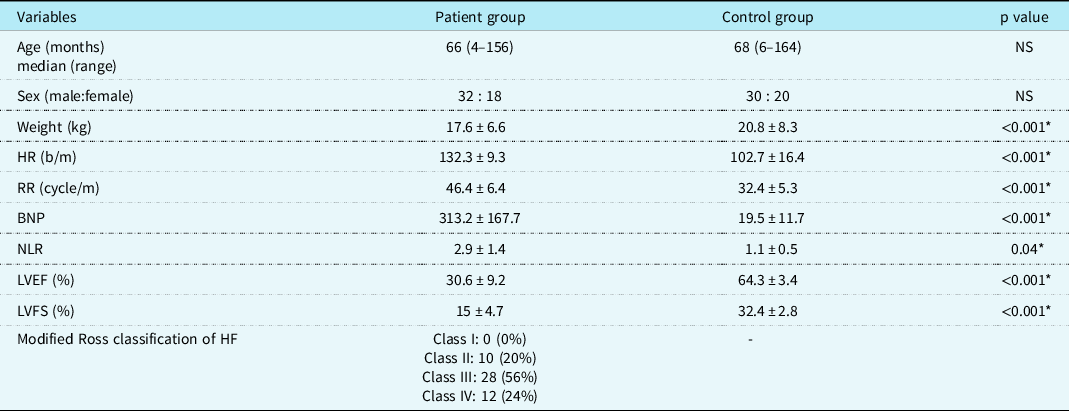
The study included 50 children with dilated cardiomyopathy with a median age of 66 m; they were 32 male and 18 female. Fifty healthy control children had a median age of 68 m; they were 30 male and 20 female. There was no statistically significant difference between the two groups as regards age and sex. However, there was a significantly lower weight in children with dilated cardiomyopathy compared to the healthy control. Heart rate and respiratory rate were significantly higher in children with dilated cardiomyopathy compared to the healthy control group. Brain natriuretic peptide and neutrophil-to-lymphocyte ratio were significantly higher in children with dilated cardiomyopathy compared to the control group. LVEF% and LVFS% were significantly lower in patients with dilated cardiomyopathy as compared to the control group (p < 0.05) (Table 1).
Demographic, clinical, laboratory, and echocardiographic data of the studied groups

* means significant, NS: non-significant, HR: heart rate, RR: respiratory rate, BNP: brain natriuretic peptide, NLR: neutrophil-to-lymphocyte ratio, LVEF: left ventricular ejection fraction, LVFS: left ventricular fractional shortening, HF: hear failure.
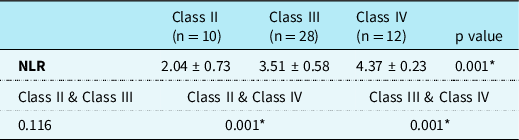
Table 2 shows that neutrophil-to-lymphocyte ratio was significantly higher in patients with Ross class IV (4.37 ± 0.23) compared to those with class III (3.51 ± 0.58) and class II (2.04 ± 0.73), p = 0.001 (Table 2).
NLR in different modified Ross classification in the patient group

* means significant, NLR: neutrophil-to-lymphocyte ratio.
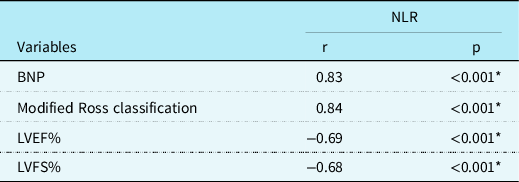
There was a statistically significant positive correlation between neutrophil-to-lymphocyte ratio and both brain natriuretic peptide & modified Ross classification of heart failure. However, there was a statistically significant negative correlation between neutrophil-to-lymphocyte ratio and both LVEF & LVFS% (Table 3).
Correlation between NLR and other variables in children with DCM

r: coefficient correlation, *: Statically significant at p ≤ 0.05, NLR: neutrophil-to-lymphocyte ratio, BNP: brain natriuretic peptide, LVEF: left ventricular ejection fraction, LVFS: left ventricular fraction shortening, DCM: dilated cardiomyopathy.
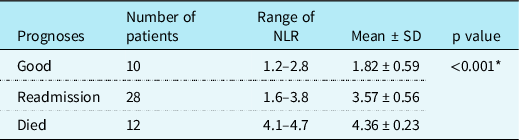
During the period of follow-up, 40 out of 50 patients (80%) with dilated cardiomyopathy had unfavourable prognoses in the form of death and readmission. Neutrophil-to-lymphocyte ratio was significantly higher in patients with poor prognoses compared with those with good prognoses. Moreover, neutrophil-to-lymphocyte ratio was significantly higher in children who died (4.36 ± 0.23) compared to those who were readmitted (3.57 ± 0.56) (Table 4).
NLR in children with good and bad prognoses in the patient group

*: Statically significant at p ≤ 0.05, NLR: neutrophil-to-lymphocyte ratio.
Regression analysis in Tables (5) and (6) showed that neutrophil-to-lymphocyte ratio is an independent predictor for response to conventional treatment and to adverse outcomes respectively in children with dilated cardiomyopathy.
Regression analysis for NLR and BNP to predict response to conventional treatment in children with DCM

NLR: neutrophil-to-lymphocyte ratio, BNP: brain natriuretic peptide, CI: confidence interval, DCM: dilated cardiomyopathy.
Regression analysis for NLR and BNP to predict adverse outcomes in children with DCM

NLR: neutrophil-to-lymphocyte ratio, BNP: brain natriuretic peptide, CI: confidence interval, DCM: dilated cardiomyopathy.
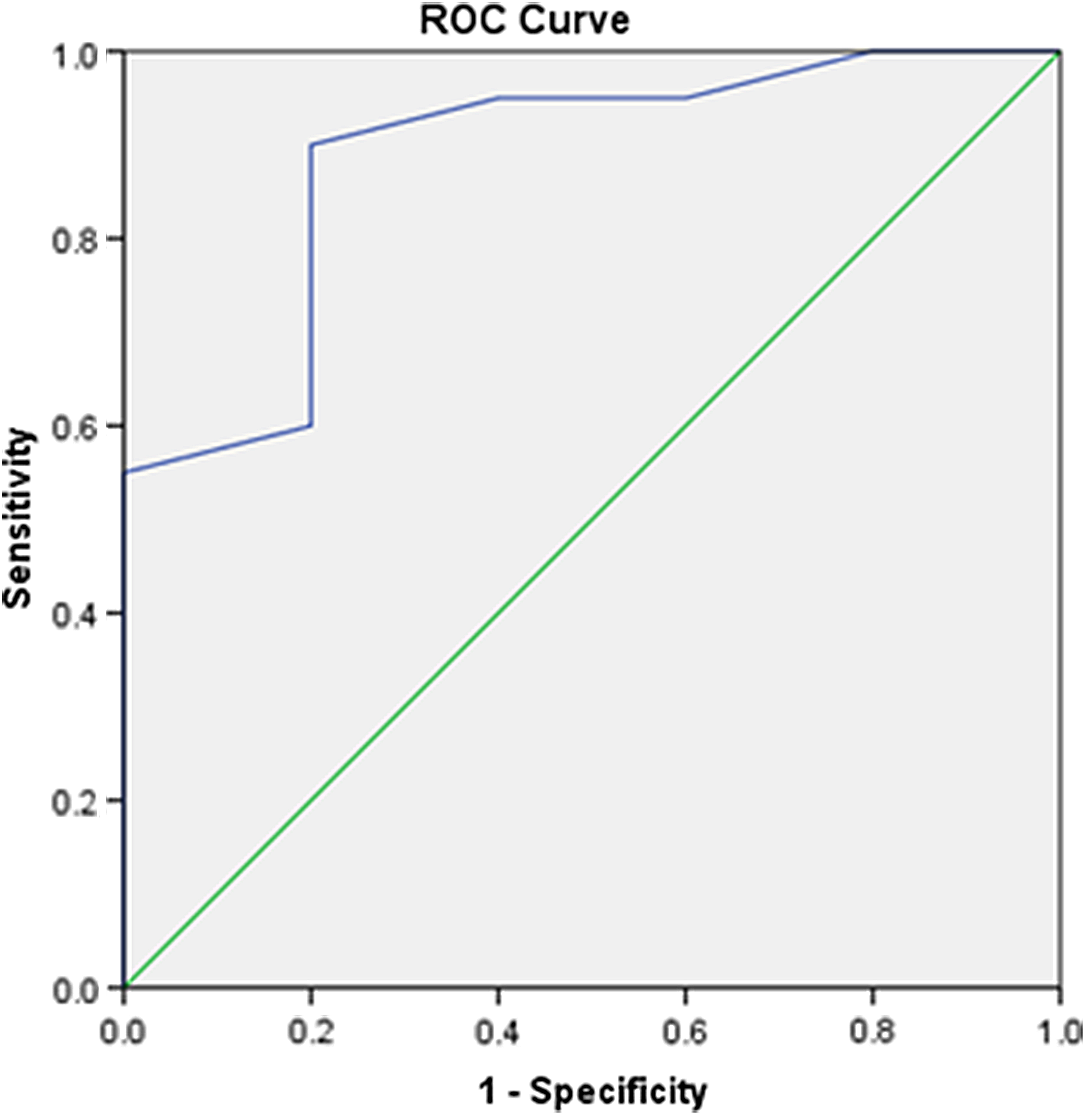
Neutrophil-to-lymphocyte ratio showed 87% sensitivity and 79% specificity to predict a poor prognosis in children with dilated cardiomyopathy at a cut-off ≥3.6 with 85% positive predictive value and 80% negative predictive value (Fig 1). Moreover, the cut-off point of neutrophil-to-lymphocyte ratio to predict the death in our dilated cardiomyopathy patients was ≥4.5 with 91% sensitivity and 88% specificity.
ROC curve for NLR to predict adverse outcome in children with DCM.

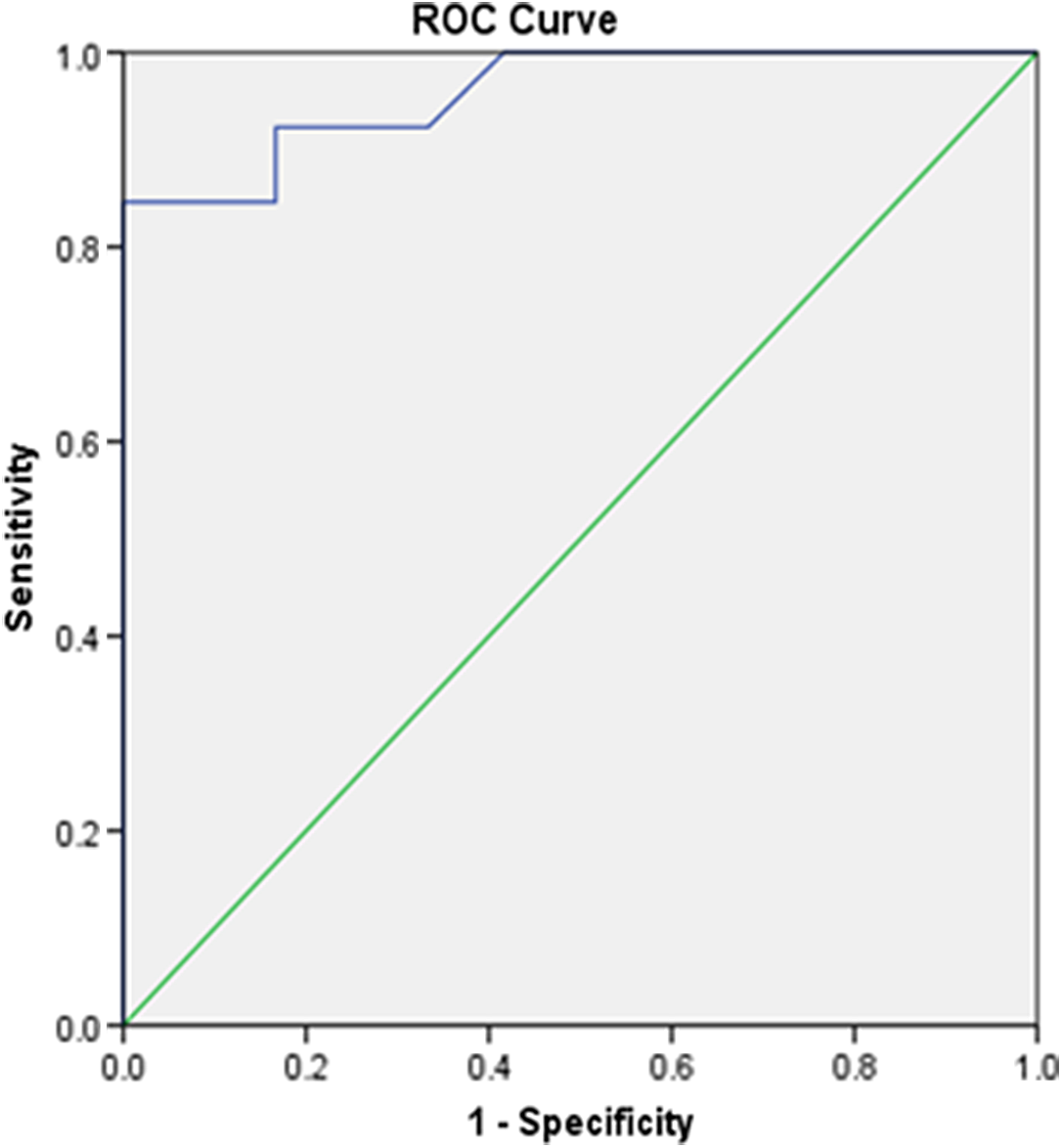
The cut-off point of neutrophil-to-lymphocyte ratio to predict patients who will not respond to conventional treatment of heart failure was ≥3.85 with 85% sensitivity and 100% specificity (Fig 2).
ROC curve for NLR to predict response to conventional treatment in children with DCM.

Discussions
To the best of our knowledge, this is the first study that reported that neutrophil-to-lymphocyte ratio can predict response to conventional treatment in children with dilated cardiomyopathy. Furthermore, we found that neutrophil-to-lymphocyte ratio increased with increasing severity of dilated cardiomyopathy and can predict poor prognosis in children with dilated cardiomyopathy.
In the current study, there was a significant elevation of neutrophil-to-lymphocyte ratio in children with dilated cardiomyopathy as compared to the control group. This is in agreement with the results of Durmus et al. who reported that neutrophil-to-lymphocyte ratio was higher in adult patients with heart failure than that of the controls and that neutrophil-to-lymphocyte ratio was just in itself, an independent predictor of death.Reference Durmus, Kivrak, Gerin, Sunbul, Sari and Erdogan14 Ibrahim et al, also reported higher level of neutrophil-to-lymphocyte ratio in children with heart failure in comparison to the controls.Reference Ibrahim, Khalil and Ali15
Neutrophil-to-lymphocyte ratio is a combination of two independent inflammatory markers involved in two different immune pathways: neutrophils as a marker of the ongoing non-specific inflammation are involved with a much quicker response, and lymphocytes as a marker of the regulatory pathway are associated with the more adaptive long-term response of the immune system, as called physiological stress. So, neutrophil-to-lymphocyte ratio reflects the balance of the neutrophilia of inflammation and the relative lymphopenia of cortisol-induced stress response.Reference Azab, Zaher and Weiserbs16
In the current study, there was a statistically significant positive correlation between the neutrophil-to-lymphocyte ratio and serum level of brain natriuretic peptide and modified Ross clinical stage of heart failure, while there was a negative correlation between the neutrophil-to-lymphocyte ratio and left ventricular systolic function (LVEF% and LVFS%). Delcea et al.Reference Delcea, Buzea and Dan17 reported, in a large systematic review including 12,107 adult patients with heart failure, that neutrophil-to-lymphocyte ratio was correlated to the severity of the cardiac condition quantified by higher NYHA class and NT-proBNP levels, and lower LVEF.Reference Delcea, Buzea and Dan17 While Araújo et al. reported that higher levels of neutrophil-to-lymphocyte ratio were associated with high brain natriuretic peptide and low LVEF in children with dilated cardiomyopathy. Additionally, neutrophil-to-lymphocyte ratio was increased in the group of patients with poor functional class and was correlated with death.Reference Araújo, Silva, Oliveira and Meira12
In our study, the cut-off point of neutrophil-to-lymphocyte ratio to predict adverse outcomes in children with dilated cardiomyopathy was >3.6 with 87% sensitivity and 79% specificity. In agreement with our results, Avci et al. reported that neutrophil-to-lymphocyte ratio correlated to the severity of chronic heart failure, and at a cut-off value ≥2.25, neutrophil-to-lymphocyte ratio can predict the severity of the cardiac condition with a sensitivity of 82% and a specificity of 65%.Reference Avci, Alizade and Fidan18
The cut-off point of neutrophil-to-lymphocyte ratio to predict the death in our dilated cardiomyopathy patients was ≥ 4.1. Similar to our results, Durmus et al.Reference Durmus, Kivrak, Gerin, Sunbul, Sari and Erdogan14 determined that the best cut-off point to predict death in patients with heart failure was ≥5.1. Also, Araújo et al.Reference Araújo, Silva, Oliveira and Meira12 reported that the best cut-off point for predicting death or cardiac transplant in the children with dilated cardiomyopathy was >5.2 with 93.8% sensitivity and 87.8%.
We suggest two possible mechanisms for why higher neutrophil-to-lymphocyte ratio increases all-cause mortality in patients with heart failure. First, neutrophil-to-lymphocyte ratio is an inflammatory marker. Second, neutrophil-to-lymphocyte ratio reflects sympathetic tone. Neutrophil-to-lymphocyte ratio is a combination of two independent inflammatory markers involved in two different immune pathways: neutrophils as a marker of the ongoing non-specific inflammation are involved with a much quicker response, and lymphocytes as a marker of the regulatory pathway are associated with the more adaptive long-term response of the immune system, as called physiological stress.Reference Cho, Cho and Lee19 When another different inflammatory stimulus occurs, leukocytes in response release pro-inflammatory cytokines, such as acid phosphatase, elastase, and myeloperoxidase. The release of these cytokines has detrimental effects on the myocardium, which leads to decreased ventricular function.Reference Briasoulis, Androulakis, Christophides and Tousoulis20 Another plausible mechanism is that neutrophil-to-lymphocyte ratio can be affected by autonomic nerve balance. In other words, a higher neutrophil-to-lymphocyte ratio could imply a higher ratio of sympathetic/parasympathetic tone. When sympathetic tones are stimulated, the number and function of granulocytes are increased. On the other hand, those of lymphocytes are increased by parasympathetic tone.Reference Abo and Kawamura21,Reference Suzuki, Toyabe and Moroda22
The present study is a pioneering one by evaluating the importance of neutrophil-to-lymphocyte ratio to predict response to treatment of heart failure in children with dilated cardiomyopathy. We found that neutrophil-to-lymphocyte ratio ≥3.85 (with a sensitivity of 85% and a specificity of 100%) can predict cases that will not respond to conventional treatment of heart failure and will need intensive inotropic therapy. Thus, neutrophil-to-lymphocyte ratio can help in the early identification of high-risk children with dilated cardiomyopathy who need intensive therapy that can improve the outcome.
Limitations of the study include small sample size, being a single-centre study, and short duration of follow-up.
Conclusion
Neutrophil-to-lymphocyte ratio can be used as a cheap, promising, and easily available predictive and prognostic biomarker in children with dilated cardiomyopathy.
Financial support
This research received no specific grant from any funding agency, commercial or not-for-profit sectors.
Conflict of interest
None.
Ethical standards
The authors assert that all procedures contributing to this work comply with the ethical standards of the relevant national guidelines on human experimentation and with the Helsinki Declaration of 1975, as revised in 2008, and has been approved by the institutional committees of Faculty of Medicine, Tanta University.