INTRODUCTION
The abundance and pattern of plant species can be explained by various abiotic and biotic factors, such as fertility gradients (ter Steege et al. Reference TER STEEGE, PITMAN, PHILLIPS, CHAVE, SABATIER, DUQUE, MOLINO, PRÉVOST, SPICHIGER, CASTELLANOS, VON HILDEBRAND and VÁSQUEZ2006), availability of soil water (Engelbrecht et al. Reference ENGELBRECHT, COMITA, CONDIT, KURSAR, TYREE, TURNER and HUBBELL2007, Schnitzer Reference SCHNITZER2005), topographic gradients (Lan et al. Reference LAN, GETZIN, WIEGAND, HU, XIE, ZHU and CAO2012), seed dispersal limitation (Chao et al. Reference CHAO, WU, FAN, LIN, HSIEH and CHAO2008, Jara-Guerrero et al. Reference JARA-GUERRERO, DE LA CRUZ and MÉNDEZ2011), and herbivore intensity (Burt-Smith et al. Reference BURT-SMITH, GRIME and TILMAN2003, Maron & Crone Reference MARON and CRONE2006). Vegetative propagation capacity may also be an important biological factor, because clonality increases the local abundance of individuals, especially after natural or anthropogenic disturbances (Ledo & Schnitzer Reference LEDO and SCHNITZER2014, Roeder et al. Reference ROEDER, HÖLSCHER and FERRAZ2012). In many plant species, vegetative reproduction may have a greater effect on local and regional abundance than seed reproduction, and is thus considered an important predictor of species abundance (Herben et al. Reference HERBEN, NOVÁKOVÁ and KLIMESONÁ2014).
Aspects of liana (woody climber) community structure that can be affected by natural or anthropogenic forest disturbance include the aggregation of individuals or age structuring in a liana community (Ledo & Schnitzer Reference LEDO and SCHNITZER2014, Roeder et al. Reference ROEDER, HÖLSCHER and FERRAZ2012, Schnitzer et al. Reference SCHNITZER, MANGAN, DALLING, BALDECK, HUBBELL, LEDO, MULLER-LANDAU, TOBIN, AGUILAR, BRASSFIELD, HERNANDEZ, LAO, PEREZ, OLDEMAR VALDES and YORKE2012). In turn, lianas can cause significant effects on the dynamics and functioning of forest trees by influencing mortality or causing large treefalls. The response of lianas to disturbances often is to regenerate vegetatively (Alvira et al. Reference ALVIRA, PUTZ and FREDERICKSEN2004, Gerwing Reference GERWING2006, Ledo & Schnitzer Reference LEDO and SCHNITZER2014, Schnitzer et al. Reference SCHNITZER, PARREN and BONGERS2004, Reference SCHNITZER, MANGAN, DALLING, BALDECK, HUBBELL, LEDO, MULLER-LANDAU, TOBIN, AGUILAR, BRASSFIELD, HERNANDEZ, LAO, PEREZ, OLDEMAR VALDES and YORKE2012).
The high local abundance of certain liana species has been attributed to their high capacity for vegetative reproduction. This has been suggested, for example, in the dominance of Machaerium cuspidatum in Yasuní, Ecuador (Burnham Reference BURNHAM2004, Nabe-Nielsen Reference NABE-NIELSEN2004), the increase of natural populations of Dalhousiea africana in tropical Africa (Caballé Reference CABALLÉ1994), the expansion of Sericostachys scandens in montane forests in the Congo of tropical Africa (Céphas et al. Reference CÉPHAS, BASILE, NICOLAS, FRANÇOIS, JEAN and PIERRE2012), and the high abundance of clonal liana stems in Barro Colorado, Panama (Schnitzer et al. Reference SCHNITZER, MANGAN, DALLING, BALDECK, HUBBELL, LEDO, MULLER-LANDAU, TOBIN, AGUILAR, BRASSFIELD, HERNANDEZ, LAO, PEREZ, OLDEMAR VALDES and YORKE2012). These reports suggest that the vegetative propagation capacity of lianas has influenced their local abundance. We ask, can the capacity of vegetative reproduction be used to explain the relative abundances of liana species at the community level?
Lavergne et al. (Reference LAVERGNE, THOMPSON, GARNIER and DEBUSSCHE2004) observed that, among Mediterranean plants, congeners can show disparate colonization strategies. We posed the following two questions relevant to these observations. For a pair of congeneric lianas representing one rare and one dominant species, does vegetative propagation capacity explain the abundance of the two species at the local scale? And, because lianas are represented across many evolutionary lineages (Angyalossy et al. Reference ANGYALOSSY, PACE, LIMA, Schnitzer, Bongers, Burnham and Putz2015, Gentry Reference GENTRY, Putz and Mooney1991), do any of these lineages include higher than expected vegetative reproductive capacity, suggesting a genetic basis and potential canalization of the vegetative propagation capacity?
We addressed these questions using a species-level liana inventory of 5-ha from permanent plots in the ARIE BDFFP reserve (Areas of Special Ecological Interest, Biological Dynamics of Forest Fragments Project) of Central Amazonia, Brazil. Using the inventory data, we calculated the relative abundance of each liana species, and tested the vegetative propagation capacity of selected species as well as their relative phylogenetic position in the seed plant phylogeny. We hypothesized that high abundance would be correlated with high capacity for vegetative reproduction and that plant lineages including the dominant species (Fabaceae and Bignoniaceae) would have a higher proportion of species capable of vegetative regeneration.
METHODS
Inventory data
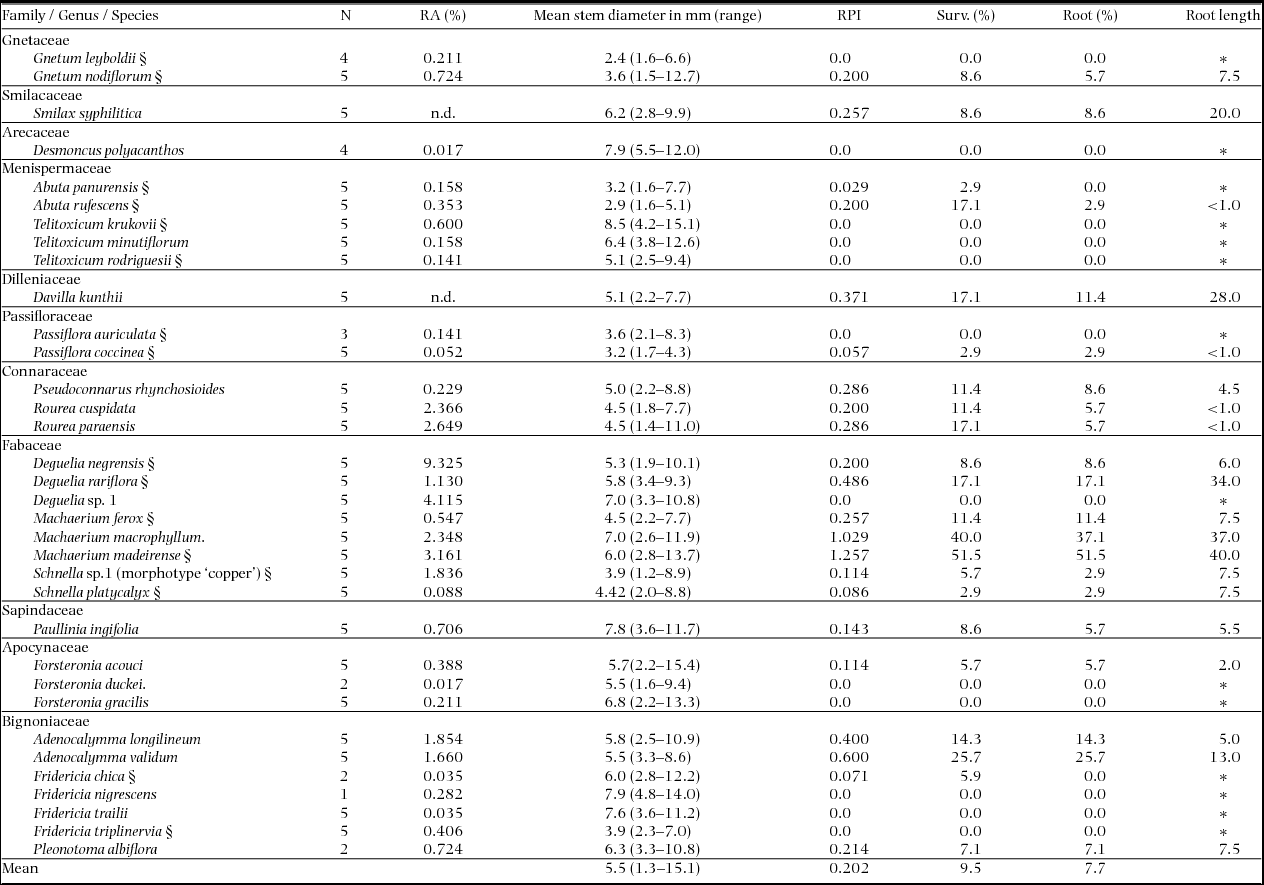
As a part of the Mapping Oligarchic Lianas of the Amazon (MOLA) project, lianas of the ARIE BDFFP Reserve, KM 37 were inventoried and identified (by RJB). The inventory included 10 randomly selected plots of 0.5 ha each, within a 25-ha tropical forest dynamics plot established by BDFFP and the Forest Global Earth Observatory (ForestGEO). Methods followed protocols of Gerwing et al. (Reference GERWING, SCHNITZER, BURNHAM, BONGERS, CHAVE, DEWALT, ESWANGO, FOSTER, KENFACK, MARTÍNEZ-RAMOS, PARTHASARATHY, PÉREZ-SALICRUP, PUTZ and THOMAS2006) and Schnitzer et al. (Reference SCHNITZER, RUTISHAUSER and AGUILAR2008), in which all lianas with stem diameter ≥ 1 cm at 1.3 m from the last major root, with no apparent connection to another liana above ground level, were included. The inventory included 5909 individuals. Lianas were permanently marked with aluminium tags and collected for botanical identification at the species level. Most identifications were based on vegetative characteristics such as phyllotaxy, leaf form, venation, bark odour, colour, texture, lenticel distribution, climbing mechanism(s) and presence of exudates. The botanical evaluation resulted in 265 species, distributed in 35 families, with greatest diversity in Fabaceae, Bignoniaceae, Celastraceae, Dilleniaceae and Connaraceae. Taxonomic identification of all liana stems allowed us to calculate relative abundance of each species. From this inventory, we selected species from across the phylogeny of angiosperms, and then relocated, collected, and subsequently propagated individuals of those species in this study.
Study area and stem materials collected
Lianas were collected in the BDFFP-ForestGEO plot, as mentioned above, in the Rio Preto da Eva municipality of Amazonas state, 80 km north of Manaus. The area supports a well-structured, continuous terra firme forest, with a canopy height of 30–37 m. Tree species richness is high, with an average of 280 tree species ha−1 (Rankin-de-Merona et al. Reference RANKIN-DE-MERONA, HUTCHINGS, LOVEJOY and Gentry1990). The climate is tropical humid, with annual average temperature of 26.7°C, average annual precipitation of 2200 mm, and high relative humidity, with monthly averages from 70% to 88%. The region has two well-defined seasons: a rainy season from December to June and a drier period from July to November, with 3 mo of precipitation less than 100 mm (Radam-Brasil 1978). Soils are heavily leached, clayey in higher portions of the terrain and sandy along streams, typically acidic, with high concentration of aluminium and low concentrations of phosphorus, copper and potassium (Quesada et al. Reference QUESADA, LLOYD, ANDERSON, FYLLAS, SCHWARZ and CZIMCZIK2009).
Collections of 34 species were made between November 2015 and May 2016. Species selection was primarily based on species’ abundance rank from the liana inventory, and then expanded to include the phylogenetic diversity of lianas at BDFFP. Five individuals of each species were collected, except for seven species with low relative abundance, of which one to four individuals were collected. A minimum distance of 50 m between individuals of the same species was maintained to increase the genotypic variation of the collected material and to reduce the possibility of collecting a single genet more than once. All fertile specimens were deposited in the herbarium of the National Institute of Amazonian Research (INPA), and sterile samples were incorporated into the liana reference collection of BDFFP.
Cuttings of lianas were made from stem branches, to limit individual mortality. Branches were trimmed in the field, discarding three leaf nodes of the apex and reserving a total of seven cuttings, each with four foliar nodes. The number of leaf nodes was standardized to provide the same opportunity for root formation and aerial regeneration of all cuttings. Between collection and planting, cuttings were stored in insulated boxes with hydrated coconut fibre of medium texture (Gold Mix®). The fibre maintained moisture in the cuttings and protected them against physical damage during transport. This method for collection roughly simulates a disturbance that might occur when a falling tree snaps or breaks a liana stem or when lianas are cut directly by anthropogenic disturbance (mowing, tree trimming etc.).
Greenhouse experiment and data collection
The experimental treatment was conducted at an INPA greenhouse between November 2015 and October 2016. Translucent polypropylene tiles allow passage of 70% natural light and sides of polyethylene shade screens allow air circulation. The mean temperature and relative air humidity were recorded by a RR Group datalogger, with measurements every 30 min. The monthly average minimum temperature during the experimental period varied between 24.5°C and 24.9°C and monthly average maximum temperature varied between 29.4°C and 30.0°C. The average monthly relative air humidity was high, varying from 73.2% to 79.9%. The conditions of the greenhouse may be most similar to those at a forest edge, under partial shade in a moist tropical habitat. The relatively high humidity throughout the experiment may be unlike most tropical settings over such a long period, but humidity control, especially implementing regular fluctuations, was not possible on a daily schedule.
Cuttings were placed horizontally in white, Plasvale® polyethylene trays of three sizes, depending on cutting length (30 × 20 × 6 cm, 45 × 30 × 8 cm, 60 × 40 × 9 cm; capacity 2.2, 7.0 and 17.0 L, respectively) over a substrate composed of 2 cm of washed sand and 2 cm of moistened palm fibre, the same as used during transport. On top of the cuttings, another 2 cm of moistened palm fibre substrate was placed to fully cover the stems.
A horizontal position and cuttings with exactly four nodes standardized the conditions for above-ground organ formation and for rooting. The horizontal position simulates a prone liana stem in the forest and may increase rooting and above-ground organ formation relative to a vertical position (Ballester et al. Reference BALLESTER, SÁNCHEZ, SAN-JOSÉ, VIEITEZ, VIEITEZ, Rodriguez, Tamés and Durzan1990). Although the orientation of the cuttings allowed for root and foliage formation at more than one point, most rooting was concentrated basally, and foliar organs were produced apically, similar to production from cuttings in a vertical position.
Each tray accommodated one cutting of each individual per species, totalling seven trays per species. Trays were placed randomly in the greenhouse on concrete stands, with manual irrigation once or twice a day, depending on the frequency required to maintain the substrate moisture.
At the end of the experiment (150 d), we calculated: (1) the average percentage survival of cuttings of each species, determined by formation of root and/or aerial portion; (2) the average percentage of cuttings per species with roots only; (3) the maximum root system length, determined as the length of the longest root (in cm) among all individuals of a species; and (4) Regeneration Potential Index (RPI), adapted from Silva et al. (Reference SILVA, VIEIRA, COREDEIRO, PEREIRA and PEREIRA2011), calculated as RPI = [(A × 0) + (B × 1) + (C × 2) + (D × 3)]/(Number cuttings)], where A = cuttings without roots or aerial organs; B = cuttings with only aerial organ formation; C = cuttings with only root formation; D = cuttings with roots and aerial organs. C is given greater weight than B because a plant with root production alone is assumed to have a higher probability of surviving than a plant producing shoots only from existing stem resources. Data were analysed using the statistical program Bioestat 5.3.
Evaluation of vegetative propagation
Stem diameters were measured for each cutting between the second and third node using digital callipers and were grouped into classes defined by the RPI to determine whether the diameter was correlated with vegetative propagation (Supplementary Material Figure 1). Despite diameter variation (Appendix 1), no significant difference was detected among RPI classes (ANOVA, n = 1084, F = 2.2, P = 0.09). Species also were evaluated individually to determine whether a specific stem diameter was more likely to produce roots, but there was no significant correlation (data not shown). Therefore, we did not consider stem diameter as a key variable.
Analysis of the relationship between plot-level relative abundance and vegetative propagation was based on 32 of the 34 liana species, including dominant and rare species, selected from the relative abundance ranking (Appendix 1). Relative abundance and proportional data were not normally distributed and were therefore square-root-transformed for analyses. Pearson's linear correlation analysis and simple linear regression were performed between each vegetative propagation variable (percentages of survival and of rooting, Regeneration Potential Index and root system length) and the plot-level relative abundance of the species.
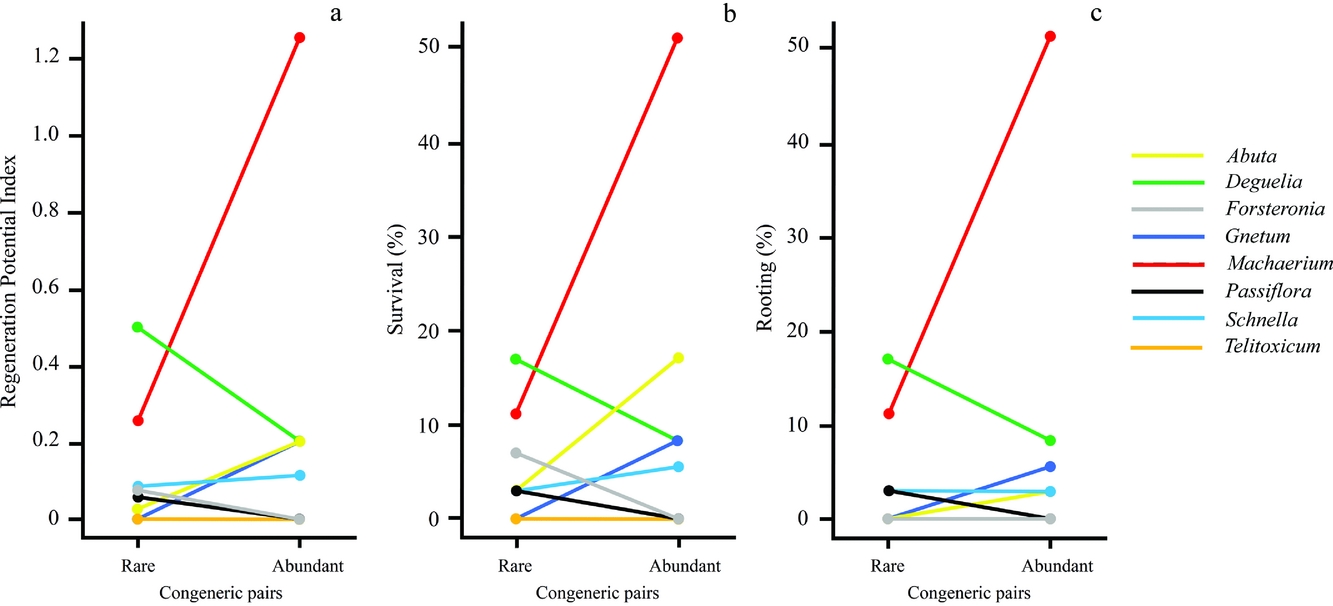
For 32 of 34 species collected, the relative abundance was known at the plot-level. From these 32 species, two species each from eight genera were selected for comparison of the vegetative propagation capacity between congeners (Appendix 1). These congeneric pairs consisted of one species of high and one of low relative abundance, between which the more frequent species was at least twice as abundant as the rare species. Each pair of congeners was treated as an independent comparison. The mean values of three vegetative propagation characteristics (Regeneration Potential Index, per cent survival and per cent rooting) were compared between the members of each species pair, using a Student's t-test (α = 0.05).
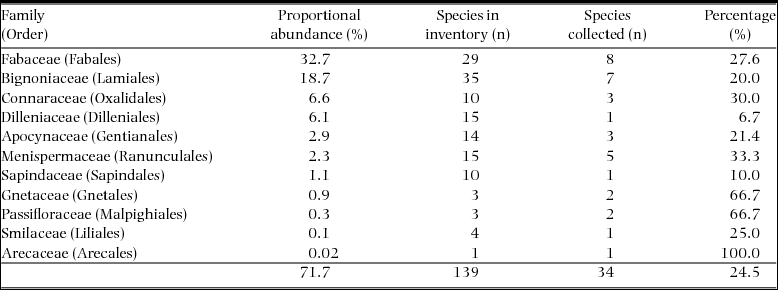
The vegetative propagation variables for the lianas were mapped manually onto a phylogeny of all 34 species that were tested for root and shoot production. Species selection included gymnosperms, monocotyledons and eudicotyledons, representing 11 families. The number of species per family reflected the relative abundance of the families in the reserve (Table 1). To construct the phylogeny, we used species from the species.txt file at http://phylodiversity.net/phylomatic/. In the package, storedtree, we selected R20120829 and generated the file ‘phylo’ (with no extension). Using Phylocom, via the ‘phylocom bladj -f phylo> phylodated.new’ command, we generated a phylodated.new tree file. Within R, using the phytools package we plotted the dated tree, generated by Phylocom.
Families (within orders) selected for analysis, with plot-level proportional abundance, number of liana species per family inventoried on the full Manaus BDFFP-ForestGEO plot, number of species collected for propagation and percentage of species collected of those inventoried. Plot inventory data from R. J. Burnham, unpubl.

Phylogenetic relationships depicted within the cladogram reflect those of LPWG (2017) for Fabaceae, Lohmann (Reference LOHMANN2006) and Lohmann & Taylor (Reference LOHMANN and TAYLOR2014) for Bignoniaceae, and Ortiz et al. (Reference ORTIZ, WANG, JACQUES and CHEN2016) for Menispermaceae. Variables plotted were Regeneration Potential Index, per cent survival, per cent rooting and maximum root length. We normalized quantitative results across all 34 species, using the highest value for each variable, and then classified the results into five qualitative classes ranging from absent to high (Appendix 1).
RESULTS
Relative abundance and vegetative propagation capacity
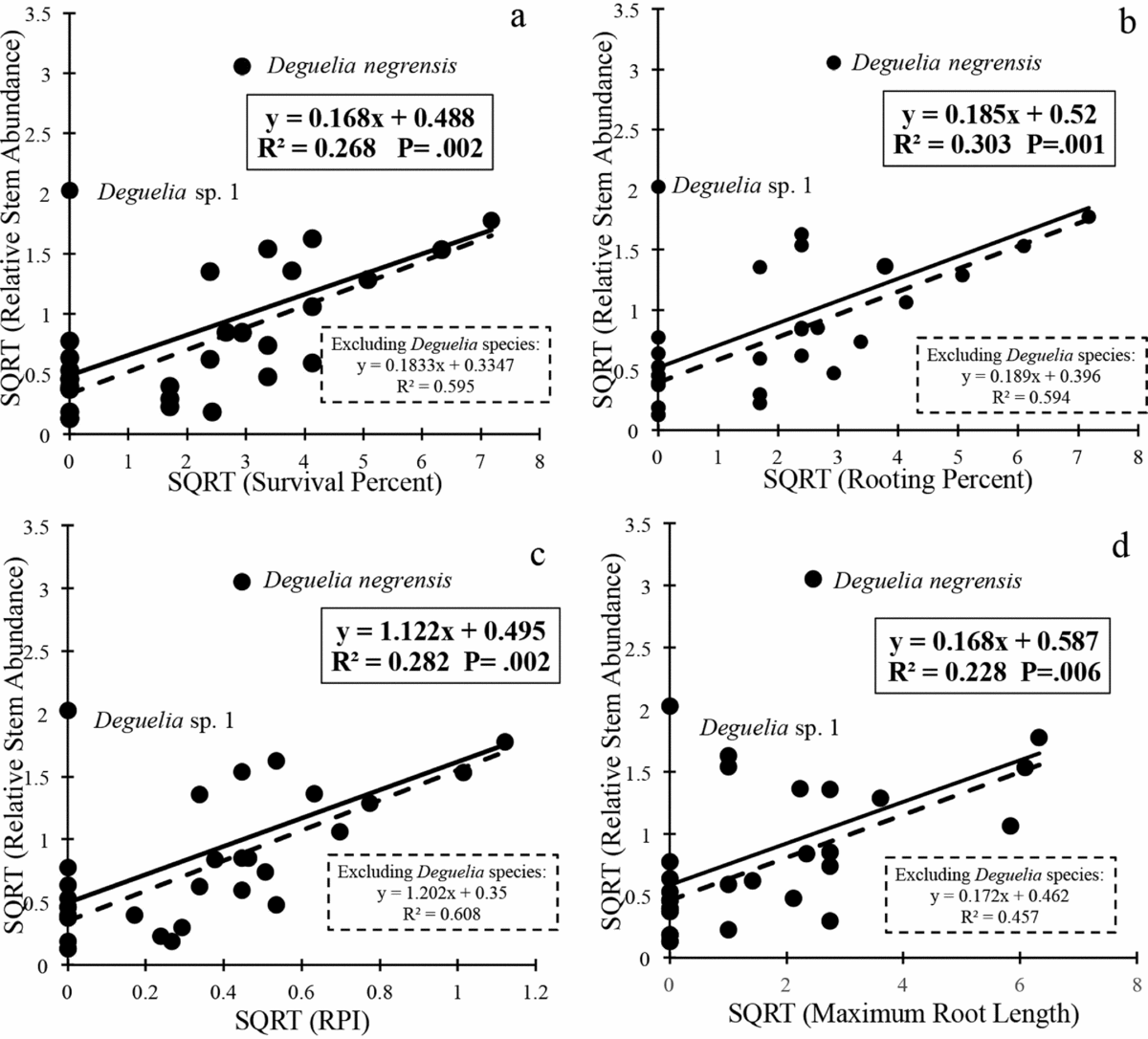
Positive correlations were found between the relative abundance of the 32 liana species evaluated and each of the following variables: survival percentage (R2 = 0.268, P = 0.002), rooting percentage (R2 = 0.303, P = 0.001), RPI (R2 = 0.282, P = 0.002) and maximum root length (R2 = 0.228, P = 0.006), as obtained using Pearson's correlation (Figure 1).
Lianas from BDFFP–ForestGEO plot, Brazil. Pearson's correlation between the relative abundance of lianas and the percentage of cuttings surviving after 150 d (a), percentage of cuttings with roots after 150 d (b), Regeneration Potential Index – RPI (c), and average maximum root length per species, in cm (d). All data were square root transformed to improve normality. Lines represent linear regressions: solid lines represent the regression for all 32 species evaluated, statistics reported in solid box; dashed line represents the regression of species with relative abundances below 4% (n = 30), statistics reported in dashed box, excluding the two dominant species: Deguelia negrensis and Deguelia sp. 1 (labelled dots).

Although Deguelia negrensis and Deguelia sp. 1 were the two species with the highest relative abundances in the inventory, including 9.3% and 4.1% of the inventoried lianas, respectively, they show the lowest correlation between regeneration variables and relative abundance (Figure 1), indicating that these species may have other propagation and occupation strategies. The two species of Deguelia are the only species with relative abundance over 4% in the inventoried area. We thus explored the relationship between the regeneration variables and relative abundance of species with <4% relative abundance (n = 30). This group of species shows a stronger correlation between relative abundance and survival (R2 = 0.797), rooting (R2 = 0.594), RPI (R2 = 0.608) and root length (R2 = 0.457).
Of the vegetative propagation variables examined, survival percentage and RPI were those that best explained liana abundance for the 30 species with abundance below 4% (Figure 1). Root length showed the lowest correlation with abundance of liana species in the inventory (Figure 1d).
Vegetative propagation capacity of congeneric pairs
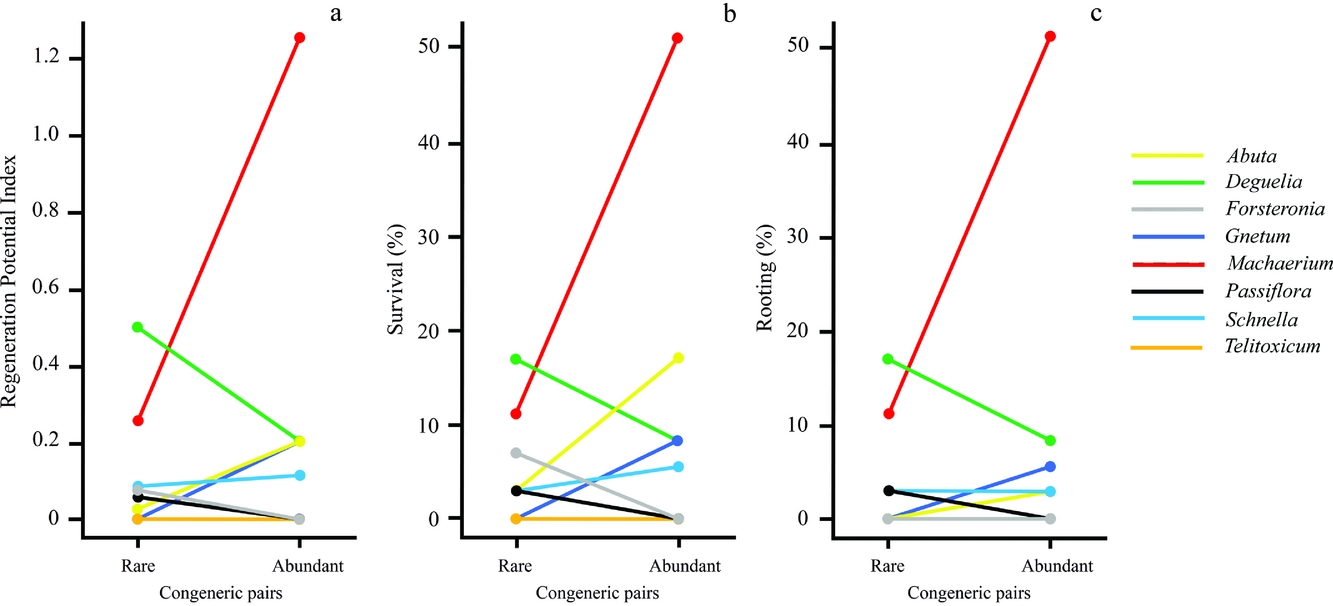
Between species of the eight congeneric pairs, RPI was higher in the most abundant species of four pairs, and higher in the rarer species of three pairs; in the genus Telitoxicum (Menispermaceae), cuttings of neither species survived the experiment (Figure 2a). Survival showed similar results (Figure 2b). Rooting of the most abundant species was higher in three congeneric pairs, higher for the rarer species in two pairs, and not different for two congeneric species in three pairs (Figure 2c). However, we found no difference in any vegetative propagation variables between most of the rare and abundant species of congeners evaluated, with the exception of the Machaerium species. Machaerium madeirense has higher relative abundance (RA = 3.16%) than M. ferox (RA = 0.547%), and in the experiment their RPI (t = 2.35, P = 0.0233), survival (t = 2.56, P = 0.0169) and rooting (t = 2.56, P = 0.0169) were significantly different, with M. madeirense always higher than M. ferox (Figure 2).
Lianas from BDFFP–ForestGEO plot, Brazil with comparison of the vegetative propagation capacity (expressed as RPI) of congeneric pairs with different abundances. A consistent relationship between abundance and vegetative regeneration would be depicted by consistently lower values in rare species and higher values in common species. Only the two species of Machaerium showed a significant difference between the mean values of the congeners (t-test; α = 0.05).
Phylogenetic distribution of vegetative propagation capacity
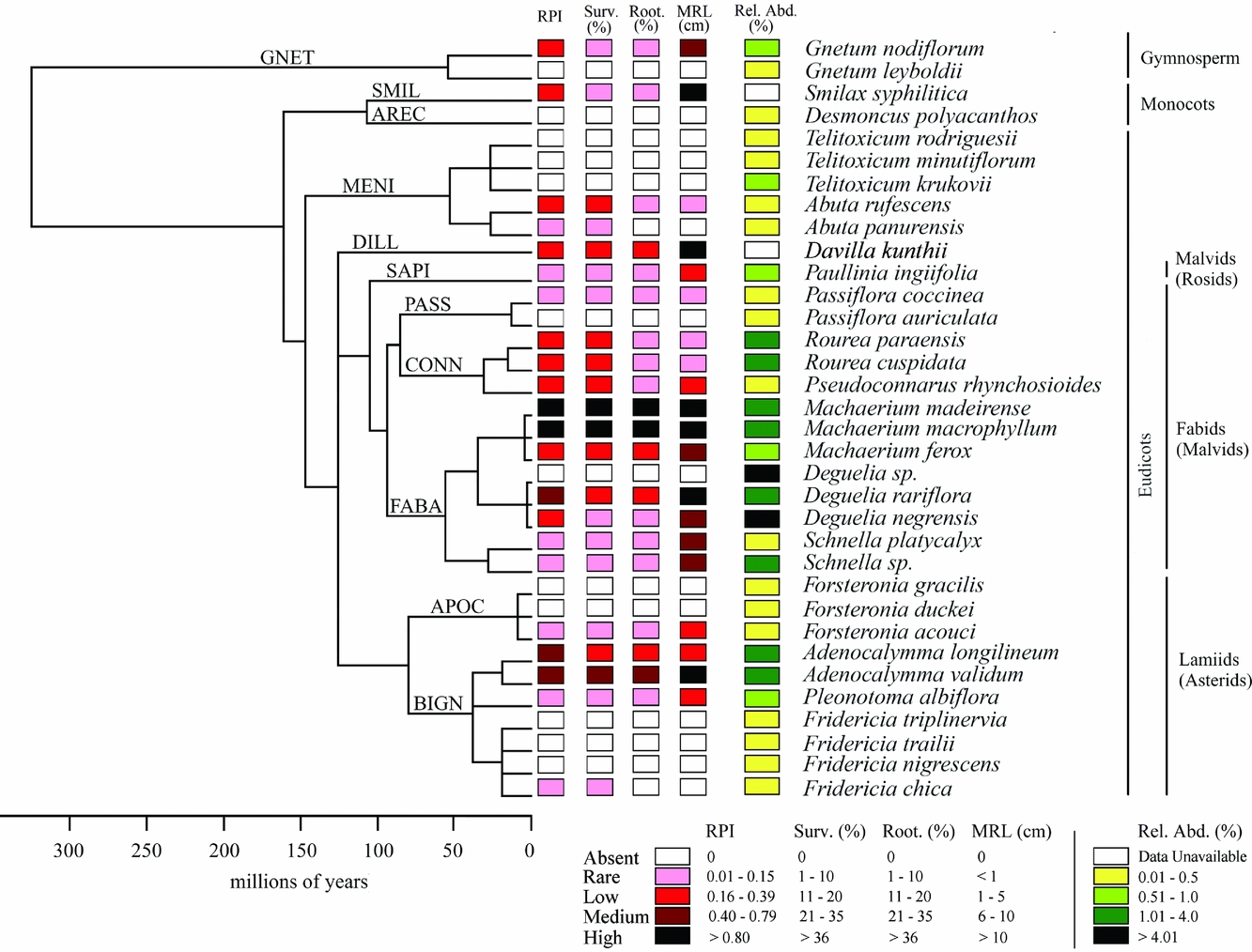
Vegetative propagation of lianas was found in evolutionary lineages from gymnosperms to monocot and eudicot angiosperms (Figure 3). In Gnetum nodiflorum (gymnosperm) both roots and aerial parts were produced, although RPI was low, total root length was medium and survival and rooting were rare (Figure 3).
Lianas from BDFFP–ForestGEO plot, Brazil. Phylogenetic mapping of vegetative propagation characteristics of lianas. We predicted that high regeneration potential would be correlated with high abundance. The null hypothesis proposes no correlation among the bolder shading within any clade. Families are represented by their first four letters. RPI = Regeneration Potential Index, Surv. (%) = Survival of cuttings after 150 d, Root (%) = Rooting percentage of cuttings after 150 d, MRL (cm) = length of the longest root produced per species, Rel. Abd. (%) = relative abundance of species in inventory.
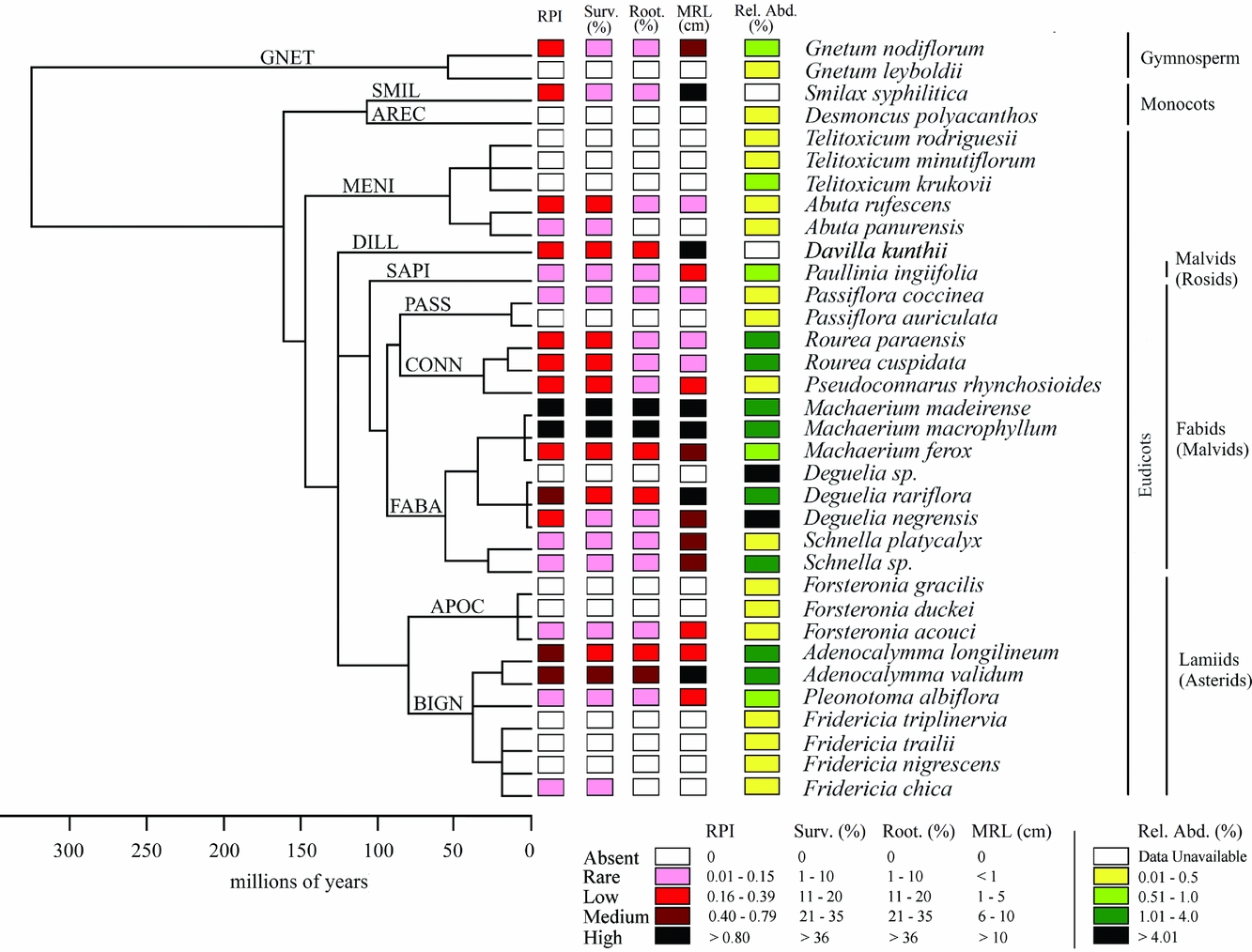
Among monocots, Smilax syphilitica had low RPI although root length was high, reaching 20 cm in length (Figure 3). Survival and rooting were rare (Figure 3). The order Ranunculales was represented by five species, but only in Abuta refescens did individuals survive by producing small roots (Figure 3).
Eight species in three genera of Fabaceae were evaluated. Species of Machaerium and Deguelia (subfamily Papilionoideae) showed the highest values both within the family and across the experiments, whereas Schnella species (subfamily Cercidoideae) had only rare propagation. The Fabaceae species that did root had high root length, such as Machaerium madeirense, M. macrophyllum and Deguelia rariflora, with lengths over 30 cm (Figure 3). Among Fabaceae, only Deguelia sp.1 did not produce any roots (Figure 3).
Connaraceae were represented by three species in two genera: Rourea and Pseudoconnarus. Survival and rooting of all species were classified as low and rare, respectively, however Pseudoconnarus rhynchosioides produced roots up to 4.5 cm long, whereas species of Rourea produced roots < 1 cm (Figure 3).
The family Dilleniaceae (Dilleniales) was represented only by Davilla kunthii. This species scored the sixth highest RPI (0.371) and produced roots with length up to 28 cm.
Three species of Forsteronia (Apocynaceae) were evaluated, however, only Forsteronia acouci demonstrated an ability to reproduce vegetatively, however rarely (Figure 3). In Bignoniaceae, seven species in three genera produced roots up to 13 cm long. In Fridericia, only Fridericia chica developed aerial organs (Figure 3), and none produced roots.
DISCUSSION
Local relative abundance and vegetative propagation capacity
The 32 species selected for manipulation collectively represent 37% of the liana stems identified in the KM 37 Reserve inventory. We found a significant relationship, however weak, between the abundance of these 32 species in the forest and their ability to root and survive under greenhouse conditions. Exceptions to the trend were the two most abundant species, Deguelia negrensis and Deguelia sp. 1, which rooted substantially less than anticipated. Deguelia sp. 1 has not yet been determined to species and is likely a new species, characterized by unifoliate to rarely trifoliate, densely pubescent leaves.
The difference between the estimated values of abundance based on vegetative reproduction and the abundance values from the field inventory suggest that Deguelia negrensis and Deguelia sp. 1 either require different conditions for rooting or that another colonization strategy, likely seed production and dispersal, is responsible for the establishment of most new individuals of these species. In fact, our uniform methods in the greenhouse may not mimic field conditions experienced by a fallen and broken liana stem. For example, the stems used experimentally here were cut into sections and maintained in a relatively moist condition until being placed in the greenhouse substrate. In nature, drying and callus formation may occur on stems before rooting. Applying several experimental rooting methods to the dominant lianas in this forest may reveal entirely different conditions that optimize rooting.
On the other hand, considering the liana species with abundance less than 4%, the correlation between relative abundance on vegetative propagation capacity (as square-root transformed) was strong (Figure 1, dashed lines). Over 99% of the species inventoried in the BDFFP Reserve at Km 37 have a relative abundance <4% and are represented by over 5000 individuals, collectively (R. J. Burnham, unpubl. data), making low-abundance individuals important ecologically. For these species, clonal reproduction may be an important strategy in local colonization. The clonal reproduction capacity of tropical forest lianas on Barro Colorado Island (Panama) is high, with one-third of the living stems still attached to a parent plant (Schnitzer et al. Reference SCHNITZER, MANGAN, DALLING, BALDECK, HUBBELL, LEDO, MULLER-LANDAU, TOBIN, AGUILAR, BRASSFIELD, HERNANDEZ, LAO, PEREZ, OLDEMAR VALDES and YORKE2012). It is unclear how high the long-term survival may be for these stems, if separated from the parent plant.
The cause of observed increase in liana abundance and size across several regions of the western hemisphere (Laurance et al. Reference LAURANCE, ANDRADE, MAGRACH, CAMARGO, VALSKO, CAMPBELL, FEARNSIDE, EDWARDS, LOVEJOY and LAURANCE2014; Schnitzer Reference SCHNITZER2005; Schnitzer & Bongers Reference SCHNITZER and BONGERS2011) must be due to a combination of factors including increased disturbance, changing atmospheric conditions of temperature, precipitation, CO2, as well as differences in the growth strategies of lianas compared with other life forms. Here we tested the capability of immediate vegetative response to disturbance among different species of lianas, but we cannot conclusively isolate this type of disturbance as the main cause for liana increase. What we did find is that differences among species is dramatic, suggesting individualistic responses to change. This interpretation agrees with that demonstrated in a study of lianas resprouting under logging treatment by Parren & Bongers (Reference PARREN and BONGERS2001). They found high variability in species capability to regenerate and to survive almost 2 y after cutting.
Comparison of the vegetative propagation capacity of congeneric pairs
Only the congeners Machaerium madeirense and Machaerium ferox showed the anticipated correlations between high abundance and high vegetative reproduction. This agrees with results from Yasuní (Ecuador), where the high relative abundance of Machaerium cuspidatum was attributed to a high capacity for vegetative propagation, based on observations of cut or fallen stems with dormant axillary buds (Burnham Reference BURNHAM2004, Nabe-Nielson Reference NABE-NIELSEN2004), as well as results from Barro Colorado Island (Panama), where the dominant liana species, Coccoloba excelsa Benth., had 46% clonal stems (Schnitzer et al. Reference SCHNITZER, MANGAN, DALLING, BALDECK, HUBBELL, LEDO, MULLER-LANDAU, TOBIN, AGUILAR, BRASSFIELD, HERNANDEZ, LAO, PEREZ, OLDEMAR VALDES and YORKE2012).
Other pairs of congeneric species did not show different propagation potentials between rare versus abundant species, which suggests that growth via vegetative propagation of the lianas studied does not contribute to the pattern of relative abundance of these species in this community. This differs from observations of Lavergne et al. (2004), who documented different ecological strategies of colonization in species of the same evolutionary lineage, observed across 20 congeners of general and restricted distributions. One difference in our results from other studies that find abundant vegetative regeneration may be in our assumption that we adequately mimicked the natural regeneration process. The response of a cut liana stem placed in moist coconut fibre in a greenhouse is not the same as a liana stem pinned to the forest soil by a fallen tree. Our methods aimed to treat a large number of species, replicated under uniform conditions. Therefore, we look forward to modifications that would reveal the best conditions for testing whether dominant species are more likely to produce roots and axillary bud growth than are scarce species. Specifically, we propose two primary goals for future work in this forest liana community. First, we must determine the optimal conditions for each species rooting under common greenhouse conditions. Second, methods are needed that replicate disturbance conditions across many species under field conditions for assessing vegetative reproduction.
Distribution of vegetative propagation capacity in the liana phylogeny
We found vegetative propagation capacity in several lineages of lianas. The lianescent habit has multiple origins, is represented among 130 angiosperm families (Gentry Reference GENTRY, Putz and Mooney1991) and in other vascular plant groups, such as Monilophyta (Ferns) and the gymnospermous order Gnetales (Angyalossy et al. Reference ANGYALOSSY, PACE, LIMA, Schnitzer, Bongers, Burnham and Putz2015). Species of Gnetum bear more foliar and seed morphological similarities to angiosperms than to most other gymnosperms (Celis & Avalos Reference CELIS and AVALOS2013). Anatomical characteristics of the stem, including tracheid diameters, are also similar to vessels of angiosperm lianas, attributes interpreted as convergence (Fisher & Ewers Reference FISHER and EWERS1995).
Our experiment on vegetative propagation of lianas does not support our initial hypothesis that the most common liana species in the study are also highly likely to engage in vegetative reproduction. Two very abundant liana species in the genus Deguelia were less likely to produce roots than some of the less common species. Therefore, other conditions or mechanisms for propagation of these two species must be sought to explain their dominance in the area. Similarly, less common species of lianas showed strong abundant vegetative regeneration, either by foliage or root production. This was particularly true among Fabaceae species, where both common and rare species of Machaerium showed strong rooting potential. This genus is represented by at least nine species in the studied area (R. J. Burnham, unpubl. data), and the genus collectively represents about 12.7% of all liana individuals that were inventoried in the 25-ha plot. Our observations of phylogenetically closely related species in Fabaceae with similar vegetative propagation potential corroborates the observations of Zulqarnain et al. (Reference ZULQARNAIN, SFAIR, VAN MELIS, ROCHELLE, WEISER and MARTINS2016), who found that closely related liana species tend to occupy similar niches. The vegetative propagation capacity of congeneric species across our study suggests that, in general, closely related species show similarity in this strategy for population expansion (Figure 3).
We found high vegetative reproduction capacity in two eudicot lineages: Bignoniaceae and Fabaceae. The two families are eudicotyledons, but placed respectively in Asterid and Rosid clades, thus are relatively distantly related among angiosperms. Our sampling does not include sufficient sampling among angiosperms to be extrapolated to the origins of vegetative reproduction among lianas. However, we conclude that the high variability of root and shoot production observed within the most densely sampled families, Fabaceae and Bignoniaceae, suggest that opportunistic production of regenerative organs from vegetative parts has evolved in several lineages.
The variation observed among liana species abundance surely is caused by various intrinsic and extrinsic sources, including vegetative propagation, sexual reproduction, dispersal, germination, tolerance of varying light availability, growth efficiency under the extremes of light availability, anatomical distribution of regenerative cells in stems, and historical and chance factors of occupancy. The observed increase in neotropical lianas over the past several decades dictates that the various causes are best understood using controlled experiments, coupled with well designed field observations. The strong variance in species’ response to our experimental conditions suggests that liana species vary greatly in environmental requirements, inhibiting single management regimes. Once we know which species are increasing in neotropical forests, astute management regimes may be applied.
Supplementary material
To view supplementary material for this article, please visit https://doi.org/10.1017/S0266467418000238
ACKNOWLEDGEMENTS
We thank the Biological Dynamics of Forest Fragments Project (BDFFP – INPA), the National Institute for Amazonian Research (INPA) and the Forest Global Earth Observatory (ForestGEO – STRI) for providing access to the study sites, logistics, preliminary funding to RJB and facilities. Both CAPES (Coordination for Improvement of Higher Educational Personnel) and FAPEAM (Amazonas State Foundation for Research) provided fellowship support to PRRP for INPA's Graduate Program in Botany. We also thank BDFFP's Thomas Lovejoy Graduate Fellowship Program for fieldwork support. RJB and IDKF share a ‘Expedição Científica’ (Processo No. 002445/2016-6) under The Brazilian National Council for Technological and Scientific Development (CNPq). Two anonymous reviewers improved the text and made helpful suggestions on presentation and discussion of results. Caroline Vasconcellos helped substantively with the phylogenetic tree. All authors actively participated in all phases of this study. This is research contribution 742 of the Technical Series of BDFFP.
Liana species of PDBFF-ForestGEO, Manaus, Brazil evaluated for rooting potential, listed by plant family. Columns show number of individuals collected (N); relative abundance of species (RA); mean diameter in mm (range) of cuttings used; RPI = Regeneration Potential Index, adapted from Silva et al. (Reference SILVA, VIEIRA, COREDEIRO, PEREIRA and PEREIRA2011); survival percentage of cuttings after 150 d treatment (Surv.); rooting percentage of cuttings after 150 d treatment (Root); and maximum root length produced in cm (Root length). Plant nomenclature follows the online database, TROPICOS. Species treated in the comparison of congeneric pairs are indicated by §; n.d. = local abundance value not available; * = species with no root production.