INTRODUCTION
The loess-paleosol sequences of the Chinese Loess Plateau (CLP, Fig. 1a) contain semi-continuous proxy evidence of Quaternary climatic and environmental change and are accepted as key archives of global paleoclimatic cycles (e.g., Liu, Reference Liu1985; An et al., Reference An, Liu, Chou, Porter, Kukla, Wu and Hua1990; Ding et al., Reference Ding, Derbyshire, Yang, Yu, Xiong and Liu2002; Xiao et al., Reference Xiao, Zong, Li, Hu, Dupont-Nivet, Peng and Zhang2012; Maher, Reference Maher2016). They are also valuable repositories of Paleolithic cultural remains from which deep human histories in northwestern and north-central China can be reconstructed (e.g., Morgan et al., Reference Morgan, Barton, Bettinger, Chen and Zhang2011; Vasiljević et al., Reference Vasiljević, Marković, Hose, Ding, Guo, Liu, Smalley, Lukić and Vujičić2014; Zhu et al., Reference Zhu, Huang, Yi, Qiu, Rao, Yang and Hou2019). Relative to other regions of China, the CLP boasts a long research history in Paleolithic archaeology. Indeed, the first stratified Paleolithic site identified in China is located in this region, discovered in 1920 by French priest and natural historian, Émile Licent (Zhang et al., Reference Zhang, Ma and Zhang2012). During the intervening century, a series of important sites have been discovered in the CLP that span almost the entire Pleistocene (Yang et al., Reference Yang, Xia and Liu2005; Zhu et al., Reference Zhu, Huang, Yi, Qiu, Rao, Yang and Hou2019). Moreover, in the past 50 years, Chinese loess studies have made significant strides in understanding sedimentation, chronology, and environmental proxies. With long archaeological sequences rich in cultural data and embedded within a robust terrestrial Quaternary paleoenvironmental framework, the CLP presents an exceptional research context for studying human evolution in East Asia (Liu, Reference Liu, Xu, Xie and Wang1999).
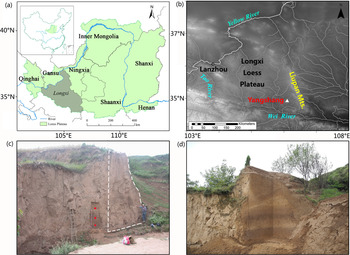
Geographic locations of the Yangshang site and site photographs. (a) Location of the Chinese Loess Plateau and Longxi Loess Plateau in Northern China. (b) Location of Yangshang in the Longxi Loess Plateau. (c) The exposed east profile of Yangshang (Morgan et al., Reference Morgan, Barton, Bettinger, Chen and Zhang2011); red dots indicate the position of three OSL samples collected from the test excavation column in 2007 (based on Barton et al., Reference Barton, Morgan, Bettinger and Zhang2008); the 2013 excavated area is outlined by white dashed line. (d) The stratigraphic section of the 2013 excavation.

The Longxi Loess Plateau in the western CLP is geographically bounded by the Liupan Mountains to the east, the Yellow River to the north, the Wei River to the south, and the Tao River to the west (Fig. 1b). This region has received enhanced archaeological attention in recent years, including a series of intensive Paleolithic archaeological surveys (Barton et al., Reference Barton, Morgan, Bettinger and Zhang2008; Li et al., Reference Li, Chen, Gao, Liu, Zhang and Wang2011; Morgan et al., Reference Morgan, Barton, Bettinger, Chen and Zhang2011) and systematic excavations (Zhang et al., Reference Zhang, Chen, Bettinger, Ji, Morgan, Hui, Cheng, Dong, Guilderson and Zhao2010; Li et al., Reference Li, Chen, Wang, Liu, Wang, Zhang, Gang, Zhang and Gao2012, Reference Li, Zhao and Chen2014; Ren et al., Reference Ren, Zhou, Li, Chen and Gao2017) resulting in identification of over 100 Paleolithic localities. To date, however, our knowledge of human occupation in the western CLP during and before the last glacial cycle remains extremely limited. Among these Paleolithic localities, only eight are known to predate Marine Isotope Stage (MIS) 3 based on their placement in the loess-paleosol stratigraphic framework. Optically Stimulated Luminescence (OSL) dates from three of these sites suggested that the region's earliest human occupation began ~80 ka (Morgan et al., Reference Morgan, Barton, Bettinger, Chen and Zhang2011, Reference Morgan, Barton and Bettinger2019). Morgan and colleagues (Reference Morgan, Barton, Bettinger, Chen and Zhang2011, Reference Morgan, Barton and Bettinger2019) proposed a general model of hominin adaptations in the western CLP over this 80 ka timeframe in which significant behavioral changes correlate with major climate shifts of the last glacial cycle. Evidence was presented for increasingly intensive hominin activity during MIS 3, as well as a broad-based settlement strategy that targeted all of the western CLP's major landform types (Morgan et al., Reference Morgan, Barton, Bettinger, Chen and Zhang2011, Reference Morgan, Barton and Bettinger2019). Important changes in lithic technology, however, are only seen with the development and proliferation of microblade technologies during and after the last glacial maximum (LGM) (Morgan et al., Reference Morgan, Barton, Bettinger, Chen and Zhang2011).
The excavation of the Yangshang site in the western CLP has yielded a set of chronometric dates that demonstrate human activity in this region has a far greater antiquity than previously thought, stretching at least into the penultimate glaciation (Nian et al., Reference Nian, Li, Chen, Zhang, Zhao, Zhou and Gao2016). With its deep middle-late Pleistocene sequence (~220–104 ka), Yangshang is a typical Paleolithic cumulative palimpsest that preserves time-averaged archaeological assemblages with relatively coarse temporal resolution. The site's OSL-based chronology, together with the limited excavation area, hinder our ability to isolate and investigate the individual episodes that make up the palimpsest as a whole. However, as Bailey (Reference Bailey2007) suggested, short-lived phenomena require highly resolved measures of time for their observation and study, while larger and more extensive phenomena require and permit a coarser scale of analysis. In this light, Yangshang's long archaeological sequence and robust proxies of paleoenvironment change spanning the penultimate glacial/interglacial cycle make it ideal for exploring long-term cultural dynamics in relation to macro-scale climatic fluctuations and associated ecological changes. The site provides the first opportunity to reconstruct early human lifeways in the western CLP. In particular, it holds potential for detecting how these hominins responded to environmental and associated resource changes brought about by the penultimate glacial cycle, including aggregate adjustments in subsistence strategies and associated patterns of mobility and land use. This paper examines such responses by undertaking a detailed techno-typological analysis of lithic raw material procurement, technology, and classification, as well as assemblage curation through the main human occupations of the Yangshang sequence. The results are interpreted using a technological organization approach to investigate lithic technological and associated land use strategies employed by past hunter-gatherers for dealing with resource variability through time and space (e.g., Binford, Reference Binford and Wright1977; Shott, Reference Shott1986; Nelson, Reference Nelson and Schiffer1991; Kuhn, Reference Kuhn1995; Robinson and Sellet, Reference Robinson, Sellet, Robinson and Sellet2018).
SITE SETTING
The Yangshang site (34°59'N, 106°10'E) is located in Zhangjiachuan Hui Autonomous County, Gansu Province. It was first investigated in 2007 by Lanzhou University and the University of California, Davis (Barton et al., Reference Barton, Morgan, Bettinger and Zhang2008). Temporarily named Zhangjiachuan Locality 2 (ZJC02), the site's main exposure lies in a deep gully cut on the east side of a ridgetop saddle, immediately off of the small road that descends into Yangshang village. The initial investigation was confined to a single column that removed 0.25 × 0.15 × 1 m block from the site's naturally exposed east profile. This test excavation yielded 205 lithics and 228 animal bone fragments (Barton et al., Reference Barton, Morgan, Bettinger and Zhang2008). Morgan et al. (Reference Morgan, Barton, Bettinger, Chen and Zhang2011) reported three OSL dates based on quartz from this block (Fig. 1c). Two samples retrieved from sequence's uppermost portion yielded ages of ~42–40 ka, while a third sample from the basal strata was dated ~80 ka. Accordingly, Yangshang was interpreted as providing evidence that the earliest human presence in the western CLP occurred during the MIS 5 interglacial (Morgan et al., Reference Morgan, Barton, Bettinger, Chen and Zhang2011). To better understand Early Paleolithic human occupation and adaptations in the western CLP, we conducted a systematic excavation in 2013, followed by interdisciplinary analyses of sediment samples and cultural materials. Chronometric research conducted by Nian et al. (Reference Nian, Li, Chen, Zhang, Zhao, Zhou and Gao2016) provided eight luminescence ages that showed the Paleolithic occupations at Yangshang spanned from ~220–104 ka. These results demonstrate that human occupation both of Yangshang and the western CLP have a far greater antiquity than previously thought.
MATERIALS AND METHODS
Archaeological excavation
New archaeological excavations of the Yangshang site were conducted using a meter grid system. We began with a 1 × 4 m excavation area at the northern edge of the saddle, where stone artifacts were abundant according to the previous survey. Due to the site's northwards sloping surface and related difficulties in establishing vertical profiles at depth, the excavation area was stepped northward as work proceeded (Fig. 1d). This resulted in a maximum excavation area approaching 12 m2, consisting of 7 complete and 14 incompletely excavated units designated N43–48/E100–105. Excavation proceeded following natural stratigraphic divisions within which sediments were removed in arbitrary 10 cm-thick horizontal levels. The extremely moist silty-clayish sediments and lack of convenient water access prevented the sediments from being systematically sieved to collect fine artifacts. A detailed documentation of the three-dimensional position of all the finds > 1 cm was conducted using a Leica total station.
Sedimentological and paleoenvironmental investigation
Visible sedimentary structures (e.g., boundaries of strata, laminations, color and texture variations), as well as post-depositional features (e.g., carbonate nodules, traces of bioturbation, cracks and fissures, discontinuities of sedimentary structures) were described, illustrated, and photographed. Geological layers (GL) were distinguished as excavation progressed using basic lithological field criteria, including changes in sedimentary structures, soil texture and structure, color, and intensity of bioturbation. To further verify these stratigraphic divisions, bulk samples were collected at 2.5 cm intervals from the southern profile for grain size analysis at the Department of Geology Science, Taishan University, China. A total of 257 samples were analyzed following the methods elaborated by Hao et al. (Reference Hao, Wang, Oldfield, Peng, Qin, Song, Xu, Qiao, Bloemendal and Guo2012).
Across the entire CLP, loess-paleosol sequences have been stratigraphically cross-correlated and tied into the global benthic 18O-based MIS framework (Liu, Reference Liu1985; Ding et al., Reference Ding, Yu, Rutter and Liu1994; Heslop et al., Reference Heslop, Langereis and Dekkers2000; Shi et al., Reference Shi, Yang, Tian, Jiang, Fan and Wang2013). Color alternations within and between layers of loess and paleosols can reflect changes in past depositional environments (Yang and Ding, Reference Yang and Ding2003; Sun et al., Reference Sun, He, Liang and An2011; Wang et al., Reference Wang, Song, Zhao and Li2016). Light-yellowish loess layers (L1–L33) were deposited through aeolian mechanisms in cold and dry periods, while interbedded brown-reddish paleosols (S0–S32) were formed in situ under warm and wet conditions (Liu and Ding, Reference Liu and Ding1998; Balsam et al., Reference Balsam, Ji. and Chen2004; Sun et al., Reference Sun, He, Liang and An2011). Yangshang's loess-paleosol sequence and attendant color alternations can thus be employed as coarse temperature and precipitation proxies through the middle-late Pleistocene. To investigate the effects of climatic variability on local vegetation, a set of 128 sediment samples were collected from the southern profile of Yangshang at 5 cm intervals for palynological analysis. Procedures outlined by Zhou et al. (Reference Zhou, Li, Yang, Long, Zhao, Sun and Yang2014) were followed, with the work performed in the Key Laboratory of Vertebrate Evolution and Human Origins, Institute of Vertebrate Paleontology and Paleoanthropology, Chinese Academy of Sciences.
Lithic analysis
We infer general trends in hunter-gatherer technology, mobility, and land use by analyzing lithic assemblages that accumulated at the scale of geological aggregates. This relatively coarse analytical scale is appropriate for the Yangshang archaeological sequence for two main reasons: first, it corresponds directly to the loess-paleosol sequences that have divisions in scale with the Marine Isotope Stages, thus allowing the investigation of long-term, time-averaged behavioral responses to paleoenvironmental change. Second, because sample sizes are typically small, conducting analyses at the geological aggregate scale permits statistically meaningful quantitative analyses of lithic attributes.
Four dimensions of lithic assemblage variability are investigated to explore differences in technological organization between these layers. First, the type and quantities of lithic raw materials are calculated for each layer as an indication of raw material procurement patterns. Second, artifacts are classified into basic typological categories to provide units for comparing tool types and gross technologies. Third, core reduction is investigated by assessing platform arrangement, and measuring the number of core platforms and the number of negative scars on flaking surfaces. Finally, the extent of curation of cores is assessed through the mass (g) of chunks, while that of tools is evaluated using Kuhn's (Reference Kuhn1990) Reduction Index (RI). ANOVA and chi-square tests for comparative analysis among the major artifact-bearing layers were conducted using the RStudio software (RStudio Team, 2020), and correspondence analysis was performed using the CAinterprTools package for RStudio (Alberti, Reference Alberti2015). An alpha level of 0.05 was employed as the significance threshold.
RESULTS
Sedimentary sequence and site paleoenvironment
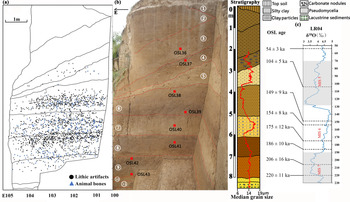
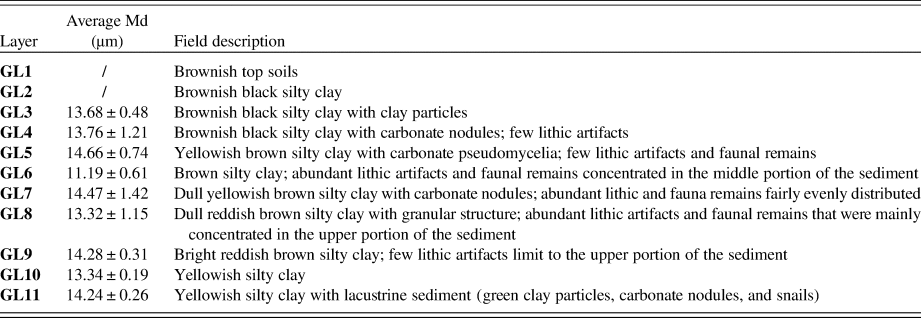
Renewed excavations at Yangshang revealed a sequence ~9 m deep comprised of eleven geological stratigraphic aggregates. From the sequence's surface to base, these stratigraphic layers were numbered GL1 to GL11 (Fig. 2a, b). Field observations (Table 1) determined that the major sediments are composed primarily of silty clays, the color and inclusions of which vary throughout the sequence. The median grain size (Md) of the sediment samples (Fig. 2b) is stable, with mid values from GL11 to GL9. Md values gradually decrease in GL8, increase drastically in GL7, and then drop to their lowest levels during GL6. The values increase again from GL5 to GL3, but fluctuations are evident. Paleolithic cultural remains occur from GL9 to GL4, whereas the layers below and above these horizons, respectively, are archaeologically sterile. Within these mid-sequence levels containing archaeological artifacts, densities vary dramatically. Densities in GL9, GL5, and GL4 are very low, with GL8, GL7, and GL6 representing Yangshang's main artifact-bearing layers.
Artifact distribution, stratigraphy, and chronology of the Yangshang site. (a) Vertical distribution of artifacts back-plotted onto the site's south profile. (b) Stratigraphic sections (boundaries of numbered layers outlined by thin red lines on photo), position of OSL samples (indicated by red squares on photo), and variations in median grain size of bulk samples (red curve on stratigraphic column) of the southern profile. (c) OSL dates and chronological relation to the global MIS framework (LR04 Benthic δ18O Stack; Lisiecki and Raymo, Reference Lisiecki and Raymo2005).

Description and stratigraphy of the Yangshang site. Md = median grain size.

According to the most recent chronological framework (Nian et al., Reference Nian, Li, Chen, Zhang, Zhao, Zhou and Gao2016), Yangshang's sequence covers portions of late MIS 7 (interglacial), early MIS 6 (glacial) and mid-MIS 5 (interglacial) (Fig. 2c). Layers 9 and 8 together comprise 2 m of reddish-brown silty sands that belong to the typical second paleosol S2, indicating that the initial occupation of Yangshang commenced during the warm/wet penultimate interglacial MIS 7. Layers 6 and 7 were then deposited during a phase belonging to the second loess layer L2, which corresponds to MIS 6. The sediment colors of GL6 and GL7 differ, however, with GL7 a yellowish silty clay typical of loess accumulated during a cold and dry glacial period, and GL6 a reddish-brown color that, while not as dark as GL8 and GL9, may nonetheless signal a substantially warm/wet period within MIS 6. This is particularly plausible considering evidence found in the CLP for climate instability during the penultimate glaciation (Yang and Ding, Reference Yang and Ding2003). We were unable to produce adequate on-site vegetation data from Yangshang due to poor pollen preservation in the samples comprising our sediment column.
Archaeological materials
A total of 1696 lithic artifacts and 337 faunal remains (including 48 teeth) were recovered during the excavation. Due to taphonomic and/or anthropologic factors, most animal bones are fragmented beyond morphological identification. Only 49 fragments could be identified to species or genus. Equus make up 69% (NISP=34) of the assemblage. Identifiable species include Equus przewalskii and Equus hemionus. Bos and Cervus make up 16% (NISP = 8) and 8% (NISP = 4) of the assemblage, respectively. Two bone fragments were attributed to carnivores and another broken horn core was identified as Antilopinae. The faunal assemblage's small size precludes the formulation of robust behavioral inferences, placing the onus on the lithic assemblages as the primary basis for reconstructing ancient nomadic ways of life at Yangshang.
Lithic technological organization
The vast majority of lithics (n = 1602, 94.3%) occur in layers 8 to 6, which span from late MIS 7 to early MIS 6. Because frequencies in other layers are too small to draw statistically meaningful conclusions, we restricted our analysis to these three layers.
Raw material procurement
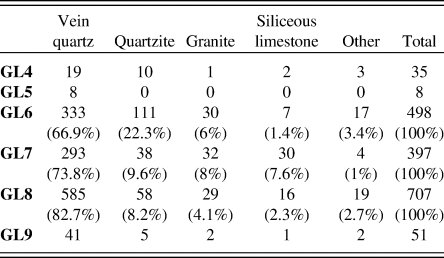
Proportions of the major types of lithic raw materials remain stable through each of the three primary archaeological layers at Yangshang. Coarse-grained materials (vein quartz and quartzite) are always the major type of raw material, followed by granite, siliceous limestone, and others (Table 2). A preliminary survey of the Houchuan River valley, the closest large river to Yangshang at 2.4 km away, suggests that high quality, fine-grained materials there are scarce, whereas vein quartz and quartzite are abundant. Water-worn cortex, moreover, is prevalent (~70%) in the assemblage. It is therefore likely that raw material exploitation over this period was based almost entirely on pebbles (< 64 mm) and cobbles (64–256 mm) commonly found on the nearby riverbeds.
Raw material composition of lithic assemblages at the Yangshang site for layers GL4–GL9, with percent of total given for each raw material in layers GL6–GL8.

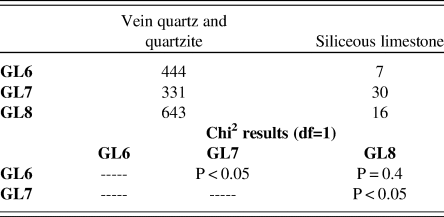
While cryptocrystalline materials such as chert and flint are absent at Yangshang, siliceous limestone—a high-quality material with fewer impurities and inner flaws than vein quartz or quartzite—was used, although it appears to have been less available locally. A chi-square test indicates significant associations among the three major artifact-bearing layers and the distribution of these higher and low-quality materials (Pearson's chi-square test p < 2.2 × 10⁻¹⁶), with GL7 significantly different from GL8 and GL6 (Table 3). While local coarse-grained raw materials dominate all occupational phases, the exploitation of relatively higher quality siliceous limestone increases during GL7. It is also worth noting that the majority of GL7's siliceous limestone artifacts are chunks and debris rather than retouched tools, a pattern that, as discussed below, may reflect changes in site use during this period.
Counts of artifacts made of vein quartz/quartzite and siliceous limestone and chi-square test results for layers GL6–GL8.

Technology and classification
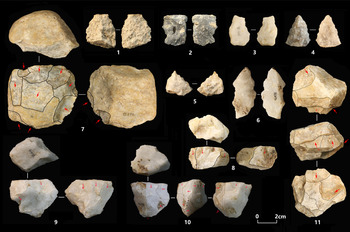
Yangshang's lithic assemblages are dominated by simple core-and-flake technologies characterized by informal core reduction using freehand, hard-hammer percussion. The major artifacts are unretouched flakes (e.g., Fig. 3–1 and 3–2) and chunks (Table 4). Infrequent retouched items occur mostly as irregular forms that include scrapers (e.g., Fig.3–3), points (e.g., Fig.3–4), drills (e.g., Fig.3–5), and denticulates (e.g., Fig.3–6), and for which tool blanks are typically flakes.
A sample of lithic artifacts from the Yangshang site. (1-2, flakes; 3, scraper; 4, point; 5, drill; 6, denticulate; 7 and 11, discoidal cores; 8-10, rotated cores). The red arrows are the direction of percussive strikes.

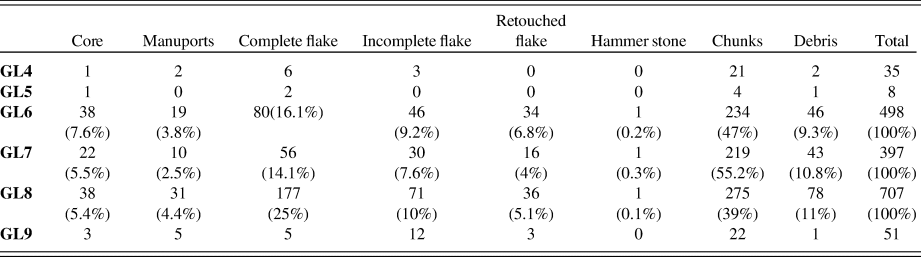
Lithic class inventories of the Yangshang site for layers GL4–GL9, with percent of total given for each class in layers GL6–GL8.

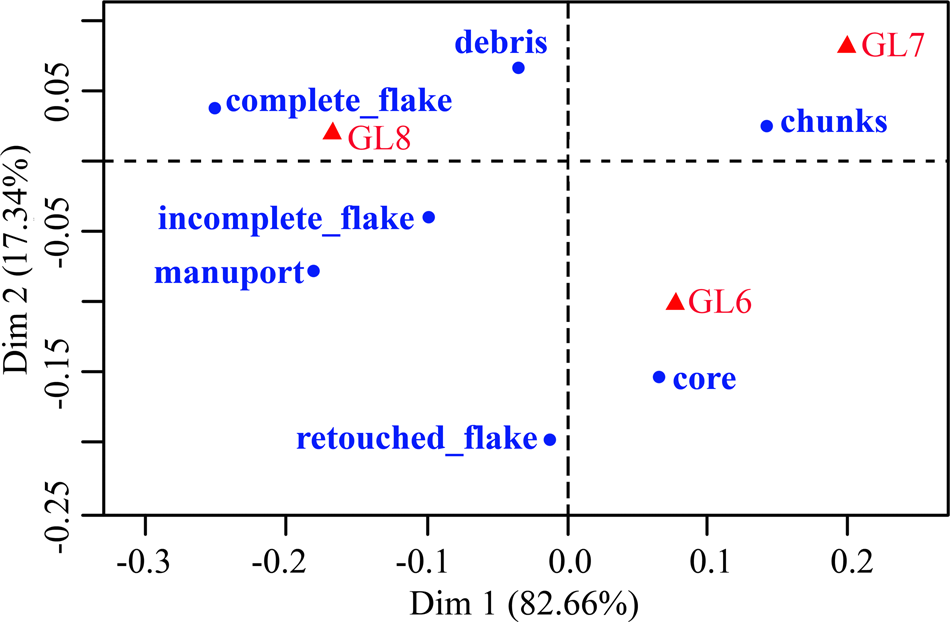
Turning to the lithic class comparisons, we found a significant association between artifact classes and the main archaeological layers from GL8 to GL6 (Pearson's chi-square test p = 2.275 × 10⁻⁵). This suggests that although chunks and complete flakes always dominate, significant variation still exists in the composition of the assemblages. A correspondence analysis reveals that complete flakes, incomplete flakes, and manuports are associated more with GL8, which explains 82.66% of the overall variability in assemblage composition (Fig. 4). In contrast, GL7 contains the lowest proportions of manuports and complete flakes (Table 4) and is instead (along with GL6) more heavily associated with chunks and cores (Fig. 4). Retouched flakes and debris, however, do not make significant contributions to assemblage composition variability in any layer (Pearson's chi-square test p = 0.13). In short, the correspondence analysis and assemblage classificatory composition indicate that GL8 is primarily characterized by unexhausted raw materials and blanks, which are characteristics not shared by the MIS 6-aged layers GL6 and GL7.
Symmetric biplot for correspondence analysis between lithic class composition and layers GL6–GL8.

Assemblage curation
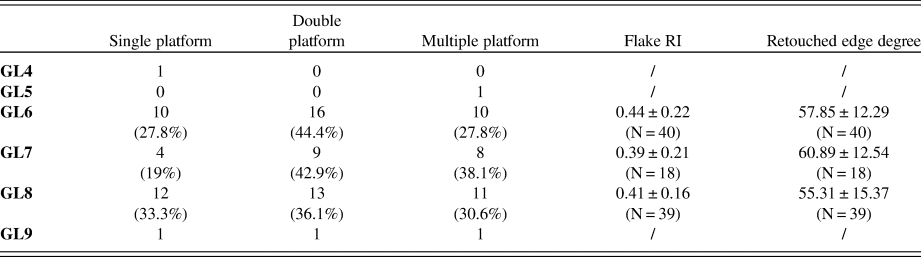
Cores at Yangshang are either rotated (n = 98) or, more rarely, discoidal (n = 5). Rotated cores are divided into single (n = 28, e.g., Fig. 3–8), double (n = 39, e.g., Fig. 3–9), and multi-platform forms (n = 31, e.g., Fig. 3–10). The frequencies of double and multi-platform cores are comparatively high throughout the main contexts (Table 5). There is no statistically significant association between core platform frequencies and layers (Pearson's chi-square test p = 0.7795). Of double and multi-platform cores, 25% possess platforms that used former flaking surfaces as new striking platforms. The relatively high frequency of multiple striking platforms suggests that core exploitation at Yangshang was a fairly opportunistic, migrating, platform strategy rather than a focus on single platform preparation and maintenance. The discoidal cores include both unifacial (n = 3, e.g., Fig. 3–7) and bifacial (n = 2, e.g., Fig. 3–11) forms, all using vein quartz pebbles. One discoidal core was recovered from GL6, and GL7 and GL8 each yielded two. These pebbles were exploited according to their specific volumetric characteristics that enabled various striking platforms to be placed on water-worn cortical surfaces. The peripheral and angular dispositions of these platforms permitted centripetal exploitation of a single flaking surface. Exploitation proceeded by rigidly maintaining the volumetric concept of the core, which required little specific preparation of its striking platforms and flaking surfaces (Terradas, Reference Terradas and Peresani2003). A core resulting from this sort of exploitation has an oval shape and a biconvex asymmetric section.
Counts of rotated cores, RI and Edge degree of retouched tools for layers GL4–GL9, with percent of total given for each class in layers GL6–GL8.

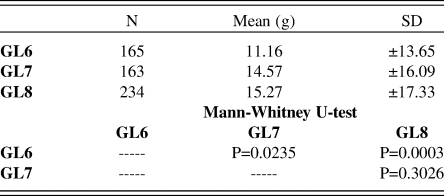
A full 92% of cores at Yangshang are vein quartz and quartzite. Considering the brittleness of these raw materials, heavier reduction would not only have reduced core mass, but also resulted in more unexpected breakage of cores into smaller chunks. If chunks are used as proxies of core reduction, then the more intense the reduction, the more chunks will be produced, and the smaller their individual mass will be. As discussed above, GL6 and GL7 contain higher frequencies of chunks than GL8 (Table 4). The same pattern is detected when using mean vein quartz chunk weight (g) as representative of chunk mass. As seen in Table 6, the average chunk weight decreases from GL8 to GL6. A non-parametric Mann-Whitney U-test indicates that by the time GL6 was deposited, chunk mass had become significantly lower than in GL8. Both the frequency and mass of chunks therefore indicate that core reduction intensity increased from GL8 to GL6. This suggests that reduction at Yangshang was in fact much heavier than that suggested by the high number of expedient cores. Whereas the latter were lightly reduced and survived to be classified as cores, more curated cores tended to shatter into chunks and, as a consequence, become analytically invisible.
Summary of the average weight of vein quartz chunks and Mann-Whitney U-test results from layers GL6–GL8.

Moving finally to the extent of curation on the tools, the RI from GL8 to GL6 varies from 0.39 to 0.44, a ratio of thickness that does not vary much at the termination of retouched scars to medial thickness (Table 5). A one-way ANOVA test indicates no significant variation of RI from GL8 to GL6 (F = 0.261, p = 0.771). The depth of retouch is limited by the coarse-grained nature of the majority of raw materials at Yangshang. As such, retouch typically results in higher edge angles, with 71% of retouched edges > 50°.
DISCUSSION
Sediment deposition and paleoenviromental variation
Given Yangshang's ridge-top location, the stratigraphic integrity of the deposits has potentially suffered from rill erosion. For example, a number of artifacts may have been redeposited by water flow and accumulated in secondary positions towards the base of the branched rill system. However, artifacts that remained atop the ridge itself should have been less disturbed by water flow. Field observations indicate that GL9, GL8, GL7, and GL6 do not contain sand, gravel, or fine laminations that are typical of sediment formed under active water flow conditions. Therefore, the units’ sub-horizontal distribution suggests that these aeolian deposits have not been disturbed significantly by erosional forces, and that the artifacts encased in these layers are not secondarily redeposited. From GL6 upwards, however, all strata dip steeply eastwards and diminish away from the ridge. This has been taken as indicating that the sediments comprising these upper levels of Yangshang's loess-soil sequence were reworked by a long phase of erosive activity initiated during the glacial MIS 6 in Yangshang, an interpretation reinforced by the long hiatus between OSL ages for GL4 and GL3 (Nian et al., Reference Nian, Li, Chen, Zhang, Zhao, Zhou and Gao2016).
Stratigraphic relationships to the benthic MIS framework and sedimentary color proxy data for Yangshang suggest that conditions were relatively warm and wet during GL9 and GL8 (MIS 7), and colder and drier during GL7 and GL6 (MIS 6). While the precise effects of this glacial phase on primary productivity remain unknown due to poor pollen preservation at Yangshang, vegetation reconstructions based on diverse proxies from other loess-paleosol sequences suggest the CLP experienced reduced vegetal biomass and shifts to cold/arid-adapted species from MIS 7 to MIS 6. For example, elemental carbon (EC) as a record of paleofire history in the CLP oscillates sharply across the transition from MIS 7 to MIS 6 (~190 ka). The lowest EC values are registered for MIS 6, signaling a climate too cold and dry for substantial vegetation (fuel) growth (Zhou et al., Reference Zhou, Shen, Sun, Zheng, Yang, Sun and An2007). Pollen and phytolith records reveal that the predominant vegetation in the CLP changed from temperate mixed coniferous-broadleaved forests in MIS 7 to desert-steppe and forest-steppe in MIS 6, and pollen densities decreased significantly (Zhou et al., Reference Zhou, Shen, Sun, Zheng, Yang, Sun and An2007; Cai et al., Reference Cai, Wei, Xu, Miao, Wu and Pan2013). Leaf-wax lipid biomarkers suggest that the relatively sparse vegetation biomass remaining on the landscape mainly consisted of cold-season C3 grasses during MIS 6 (Zhang et al., Reference Zhang, Zhao, Eglinton, Lu and Huang2006). These detailed proxy data are broadly consistent with the coarser picture painted by our sedimentological results from Yangshang.
Response of lithic technological organization to environmental changes during MIS 7–6
Through frameworks of technological organization, researchers are able to contextualize past technological behaviors by linking lithic assemblage characteristics to strategic decisions underlying raw material provisioning and the manufacture, use, transport, and discard of stone tools. Our technological organization-based comparative analysis reveals important differences between the assemblages of GL8, deposited during MIS 7, and those of the subsequent MIS 6-aged layers GL6 and GL7. Mobility and land use can have pronounced influences on the strategies with which hunter-gatherers maintain a supply of tools and raw materials (Kuhn, Reference Kuhn2004). It is commonly hypothesized that in the context of low residential mobility and long-term site occupation, lithic assemblages should reflect an expedient strategy (Binford, Reference Binford and Wright1977) of low reduction intensities of cores and blanks. In such scenarios, place provisioning strategies would be preferred, with the accumulation of workable stone, minimally modified flakes, and manufacturing debris at residential bases all anticipated(Kuhn, Reference Kuhn1995). GL8's assemblages are characterized by the accumulation of still-useful material in the form of manuports and workable blanks, which include complete and incomplete flakes. These are hallmarks of an organizational strategy that emphasizes place provisioning. During late MIS 7, when proxy data from Yangshang signal relatively wet and warm climatic conditions, we suggest that hominins in the western CLP adhered to a more logistical land use strategy. Yangshang may have been used as a long-term residential camp more frequently during this period.
This signature contrasts with that of the following glacial phase MIS 6. Environmental degradation in the western CLP related to climatic cooling and aridity during the MIS 6 glacial likely resulted in enhanced resource patchiness along with lower productivity within each patch, posing resource stresses and associated logistical challenges to local hunter-gatherers. Common strategies employed by terrestrial hunter-gatherers for coping with thinning of resources include increasing residential mobility (Kelly, Reference Kelly2013). More frequent residential moves during MIS 6 in the western CLP may have resulted in Yangshang shifting from a seasonally occupied residential base in GL8 (MIS 7) to a shorter-term site in GL7 and GL6 (MIS 6). In such systems, it may have been more practical to provision individuals (Kuhn, Reference Kuhn1995) with technologies emphasizing the transport, use, and conservation of a small number of highly maintainable items rather than accumulation of workable stones and blanks (Shott, Reference Shott1986; Kuhn, Reference Kuhn1994; Mackay et al., Reference Mackay, Hallinan, Steele, Robinson and Sellet2018). Indeed, when groups move more frequently, especially over long distances caused by enhanced resource patchiness, heightened uncertainties of being caught short of usable stone (Elston, Reference Elston, Elston and Budy1990) encourage the curation of mobile toolkits (Binford, Reference Binford1979).
The increase in core reduction intensity that we detected from GL8 to GL6, represented by the higher frequency and reduced mass of chunks, indicates that raw materials were more economically exploited at Yangshang during MIS 6, when hunter-gatherers likely responded to the cooler/dryer climate and lower regional biomass by becoming more residentially mobile. Moreover, long distance residential mobility and lower vegetation coverage could also enhance encounters with sources of relatively rare fine-grained rocks—materials that could be used to produce maintainable tools that are preferred when provisioning individuals (Binford, Reference Binford1979; Gould and Saggers, Reference Gould and Saggers1985; Baugh and Ericson, Reference Baugh and Ericson1994; Hertell and Tallavaara, Reference Hertell, Tallavaara and Rankama2011). The higher frequency of finer-grained rock (siliceous limestone) found in GL7, and the fact that of most these higher-quality materials are chunks and debitage with no retouched tools identified, may suggest that during the fully glacial conditions of early MIS 6, Yangshang hosted short, intense tooling-up sessions aimed at creating portable and easily maintainable tools that were then taken off-site as part of highly mobile toolkits.
Technological organization and vein quartz/quartzite-dominated assemblages
Lithic technological organization is a loose-knit body of largely informal models. To improve the models’ application, the technological attributes and indexes on which they are based must be accommodated within specific regional historical and environmental backgrounds to transform technological organization from narrative device to a body of specified, predictive theory (Robinson and Sellet, Reference Robinson, Sellet, Robinson and Sellet2018; Shott, Reference Shott, Robinson and Sellet2018). Previous studies have proposed that assemblage retouch intensity can serve as a proxy for detecting extended uselives of transported artifacts when raw material access is uncertain or limited, which is a condition that could have arisen when groups moved frequently and/or over long distances across the landscape (Surovell, Reference Surovell2009; Barton et al., Reference Barton, Riel-Salvatore, Anderies and Popescu2011; Barton and Riel-Salvatore, Reference Barton and Riel-Salvatore2014; Lin, Reference Lin2018). However, we suggest that this may only apply to technological systems with clear distinctions between blanks and formal retouched tools, and where different types of formally retouched tools play dominant roles in hunter-gatherer toolkits. Fracture and use-wear analyses of unmodified macrocrystalline quartz flakes and flake fragments from Mesolithic and Neolithic sites in Scandinavia indicate that these artifacts served diverse functions that included cutting, scraping, planing, piercing, and drilling (Knutsson, et al., Reference Knutsson, Knutsson, Taipale, Tallavaara and Darmakr2015, Reference Knutsson, Knutsson, Molin and Zetterlund2016). The ease with which vein quartz/quartzite shatters, together with the sharpness of resulting flake edges, greatly increases the possible direct uses of this material from the perspective of technological strategies (Mannien and Knutsson, Reference Mannien and Knutsson2014; Lombera-Hermida and Rodríguez-Rellán, Reference Lombera-Hermida and Rodríguez-Rellán2016; Hawkins and Way, Reference Hawkins and Way2020). This multi-functionality likely more than compensated for the lack of a specialized, retouched toolkit.
It is often stated that flakes exhibiting more obtuse edge angles (i.e., > 50°) are particularly unsuited to performing cutting tasks effectively (e.g., Ferguson, Reference Ferguson1982; Jensen Reference Jensen1986; Terradillos-Bernal and Rodríguez, Reference Terradillos-Bernal and Rodríguez2012; Key and Lycett, Reference Key and Lycett2014). On the other hand, quartzite flaking experiments suggest that greater edge thicknesses increase the odds of a flake staying intact and decrease the odds of radial and, especially, bending fractures (Tallavaara et al., Reference Tallavaara, Manninen, Hertell and Rankama2010). At Yangshang, the fairly consistent middling RI suggests the curation of flake blanks was focused on greater edge angles that related to the durability of edges for a specific use, rather than as a necessary step to obtain acute cutting tools or heavily resharpened edges. Because vein quartz and quartzite easily shatter into abundant flakes with sharp, useful edges, retouch was only employed occasionally when Yangshang's inhabitants required tools with more durable edges, such as heavy-duty scrapers. This further renders the Yangshang assemblages largely insensitive to retouch-based proxies of changes in land use and mobility, which we therefore do not consider effective indicators of provisioning strategy at this site. Hence, the persistent RI values and lack of retouched tools in GL7 and GL6 (MIS 6) do not militate against our inference of high mobility, curated toolkits and individual provisioning as the dominant organizational system during this period.
Before the upper Paleolithic (~40–10 ka in China), the Chinese Paleolithic was dominated by relatively simple core-flake (Mode I) technologies (Lycett and Bae, Reference Lycett and Bae2010; Bar-Yosef and Wang, Reference Bar-Yosef and Wang2012; Gao, Reference Gao2013). The long-standing assumption behind the notion of an unchanging crude lithic technology is that crude-looking artifacts were the unavoidable outcome of a reliance on coarse materials, such as vein quartz and quartzite (Seong, Reference Seong2004; Knutsson, Reference Knutsson2014). However, recent technological analyses of Early Paleolithic assemblages in China are beginning to demonstrate the presence of significant variability and sophistication within Mode I technological repertoires, such as diverse methods of core reduction and refined tool retouching techniques (Li, Reference Li2017; Pei et al. Reference Pei, Xie, Deng, Jia, Wang, Guan, Li, Ma and Torre2017; Li et al., Reference Li, Li, Gao, Kuman and Summer2019; Yang et al. Reference Yang, Wang, Xie, Yue, Deng, Zhu and Petraglia2020). Indeed, shedding essentialist, neo-evolutionary (‘modal’) ways of categorizing East Asian lithics might free us to unlock information they may hold regarding early hominin behavioral variability in a paleoenvironmental context (Norton and Jin, Reference Norton and Jin2009). Vein quartz/quartzite assemblages are typical of most Early Paleolithic sites in northern China (Gao and Pei, Reference Gao and Pei2006). Here, we hope to have shown that technological organization offers one set of models for interpreting Paleolithic lithic assemblages as reflective of dynamic, adaptive strategies in the CLP and elsewhere in East Asia.
CONCLUSIONS
Renewed excavation and multidisciplinary investigations at Yangshang demonstrate that ancient hominins occupied the western CLP by at least during MIS 7, and persisted through the cold stage MIS 6 until MIS 5. The site's lithic assemblages are dominated by vein quartz and quartzite-based simple core/flake technology characterized by opportunistic platform-migrating core reduction using hard hammer percussion. Unretouched flakes and chunks dominate the assemblages, with retouched items occurring mostly as irregular forms on flake tool blanks. The Yangshang assemblages do not exhibit obvious technological trends in flake production or core reduction, but nor do they reflect expedient technological stasis. The data presented herein depict fairly clear patterns with respect to place provisioning in GL8, and individual provisioning as well as increased core reduction in GL6 and GL7. We believe that these differences in technological organization stem from low residential mobility and long-term campsite use at Yangshang during MIS 7, and increased residential mobility in the face of heightened resource patchiness during the subsequent MIS 6 glacial period. These proxies for changes in mobility and land use strategies reflect aggregate, time-averaged human responses to environmental shifts from interglacial to glacial climates as recorded at both Yangshang and the broader CLP. By investigating these informal core-and-flake industries in three technological dimensions, i.e, raw material procurement, technology and classification, and assemblage curation, we have detected meaningful behavioral variability within the Yangshang sequence corresponding to major changes in climate and regional paleoenvironments during the late Middle Pleistocene.
ACKNOWLEDGMENTS
The authors thank the National Cultural Heritage Administration for granting permits to excavate at Yangshang. We also gratefully acknowledge Guoke Chen (Gansu Province Institute of Cultural Relics and Archaeology), Hui Wang (Fudan University), Dongju Zhang (Lanzhou University), the Cultural Relics Administration of Zhangjiachuan County, and the Zhangjiachuan Museum of Ethnology for their support during the excavation. We thank Sam C. Lin and John O'Shea for their valuable suggestions that helped to improving our manuscript. We are grateful to the editor and two reviewers for thoughtful comments that helped to strengthen this paper. This research was funded by the Strategic Priority Research Program of Chinese Academy of Sciences (XDB26000000), the National Natural Science Foundation of China (41872028), Zhengzhou University through the “Research on the roots of Chinese civilization” grant (XKZDJC202006), and the Youth Innovation Promotion Association of Chinese Academy of Sciences (2017102).