Implications
Foot disorders are important health problems in dairy cattle, in terms of both economics and animal welfare. In this study, the welfare impact of different types of foot disorders, both clinical and subclinical, were assessed by a modeling approach. Welfare impact was assessed on herd level, taking into account pain intensity, duration and incidence, and on cow level by taking into account the first two only. This model study provides insight into the welfare impact of foot disorders, which facilitates to raise awareness about this welfare problem. Besides, knowledge gaps are revealed, spurring further research.
Introduction
Foot disorders, which are the main causes of dairy cow lameness, are considered to have a major impact on the welfare of dairy cattle (Galindo and Broom, Reference Galindo and Broom2002; Algers et al., Reference Algers, Bertoni, Broom, Hartung, Lidfors, Metz, Munksgaard, Nunes Pina, Oltenacu, Rehage, Rushen, Smulders, Stassen, Stilwell, Waiblinger and Webster2009) and cause economic losses for the dairy farmer (Bruijnis et al., Reference Bruijnis, Hogeveen and Stassen2010). These consequences are mainly because of the pain caused by foot disorders, which likely affects the locomotion of the cow (Flower and Weary, Reference Flower and Weary2009). Pain also has a direct negative effect on the affective state of the cow and causes indirect negative effects by obstructing the performance of cow-specific behavior, as cows may be reluctant to show it because of their stoic nature as a prey animal (O'Callaghan et al., Reference O'Callaghan, Cripps, Downham and Murray2003; Algers et al., Reference Algers, Bertoni, Broom, Hartung, Lidfors, Metz, Munksgaard, Nunes Pina, Oltenacu, Rehage, Rushen, Smulders, Stassen, Stilwell, Waiblinger and Webster2009). The performance of species-specific behaviors is assumed to be rewarding in itself or helps to fulfill physiological needs and allows an animal to live according to its nature (Broom, Reference Broom1996; Dawkins, Reference Dawkins2003). A dairy cow has a wide range of cow-specific needs (Algers et al., Reference Algers, Bertoni, Broom, Hartung, Lidfors, Metz, Munksgaard, Nunes Pina, Oltenacu, Rehage, Rushen, Smulders, Stassen, Stilwell, Waiblinger and Webster2009), of which some are specifically influenced by the presence of foot disorders, such as the ability to rest, to exercise and move freely, to feed and drink, etc. (e.g. Walker et al., Reference Walker, Smith, Routly, Jones, Morris and Dobson2008). Impaired functioning due to foot disorders may manifest as lower milk production (Onyiro et al., Reference Onyiro, Offer and Brotherstone2008), resulting from lower feed intake (Bach et al., Reference Bach, Dinarés, Devant and Carré2007), or as reduced fertility (Bicalho et al., Reference Bicalho, Vokey, Erb and Guard2007).
Approximately 80% of the dairy cows have one or more foot disorders (Somers et al., Reference Somers, Frankena, Noordhuizen-Stassen and Metz2003) and about a third of these cows are visibly lame (Frankena et al., Reference Frankena, Somers, Schouten, Van Stek, Metz, Stassen and Graat2009). The incidence of lameness is reported to be over 50% (Hedges et al., Reference Hedges, Blowey, Packington, O'Callaghan and Green2001). Preventive strategies and therapeutic treatments are available, but dairy farmers may not put these measures into action (Bell et al., Reference Bell, Bell, Knowles, Whay, Main and Webster2009) as they tend to underestimate the problem (Whay et al., Reference Whay, Main, Green and Webster2002). This is problematic, as the role of dairy farmers is crucial in improving dairy cow welfare through the prevention and treatment of foot disorders. More insight into the consequences of foot disorders is likely to increase commitment in combating foot disorders. An important consequence of foot disorders is the impact on economics, as is shown by Bruijnis et al. (Reference Bruijnis, Hogeveen and Stassen2010), as well as the consequences for welfare of the dairy cow. The impact on dairy cow welfare depends on the severity, duration and incidence of the foot disorders and these characteristics are specific for each foot disorder. Some foot disorders, such as interdigital dermatitis and heel horn erosion (IDHE), occur mainly subclinical. Often such foot disorders are not diagnosed and treated and, consequently, develop into a long-lasting and clinical foot disorder. In contrast, interdigital phlegmon (IP) is very acute and painful. Typically, this foot disorder is treated accurately with antibiotics, as it is easy to diagnose and the farmer is aware of the negative consequences (arthritis) when IP is not treated. Differences in welfare impact can be revealed by using different ways of welfare assessment, such as welfare assessment on individual cow level or on herd level.
This study adopts a modeling approach to provide more insight into the welfare impact of different foot disorders, both clinical and subclinical. Existing knowledge, obtained from literature and experts, is used in a dynamic simulation model in order to establish transparency on welfare impact of different foot disorders.
Material and methods
Conceptual framework
The following issues will be addressed before the model is described in this ‘Material and methods’ section: (i) the adopted view on animal welfare, (ii) the way to assess the impact of foot disorders on animal welfare and (iii) a short description of the seven different foot disorders distinguished in our study.
Animal welfare
Animal welfare has been defined from a diversity of views and in this study, the one of Fraser et al. (Reference Fraser, Weary, Pajor and Milligan1997) is adopted. In this view, three different aspects are combined: biological functioning (functioning, health, growth); feelings of the animal (affective state, feel well, minimize suffering); and natural living (through the development and use of natural adaptations). Farmers tend to interpret animal welfare on the basis of biological functioning and are confident that providing care and assuring health leads to good animal welfare (De Greef et al., Reference De Greef, Stafleu and De Lauwere2006). Over the years, in Western societies, increasingly more value has been given to the feelings of the animal, as related to efforts made to cope with environmental challenges or the fulfillment of behavioral needs. The aspect of feeling is often addressed by animal scientists, for example, by recording behavior (Dawkins, Reference Dawkins1980) or physiological parameters (Broom, Reference Broom2007). The third aspect of animal welfare, that is, natural living, seems highly valued nowadays. Natural living relates to how well the animal is able to perform species-specific behaviors and fulfill species-specific needs (Fraser, Reference Fraser1999). The three aforementioned aspects of animal welfare, which do relate and overlap (Von Keyserlingk et al., Reference Von Keyserlingk, Rushen, De Passillé and Weary2009), are valued differently by different groups in society (Fraser, Reference Fraser2008). In this study, these aspects together are assumed to cover what determines animal welfare.
Assessing welfare impact of foot disorders
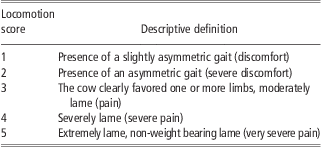
Ideally, welfare impact of foot disorders is assessed by determining how the cows’ functioning, feeling and natural living are affected. Such effects are, in the basis, a result of the pain foot disorders cause (Flower and Weary, Reference Flower and Weary2009). Therefore, pain can be assumed to be a good indicator to assess welfare impact. The behavioral expressions of this pain are tender walking and lameness (Galindo and Broom, Reference Galindo and Broom2002), and locomotion scoring is the most commonly used instrument to assess the pain associated with foot disorders (Flower et al., Reference Flower, Sedlbauer, Carter, Von Keyserlingk, Sanderson and Weary2008). Locomotion scores can be correlated with the severity of foot lesions (Whay et al., Reference Whay, Waterman and Webster1997; Winckler and Willen, Reference Winckler and Willen2001; O'Callaghan et al., Reference O'Callaghan, Cripps, Downham and Murray2003), and therefore will be used as a proxy of pain in this study. We used a scale and description of locomotion scoring on a scale from 1 to 5 (see Table 1), assuming that scores 1 and 2 indicated subclinical foot disorders (low degrees of pain; (severe) discomfort) and that scores of 3 and higher indicated clinical lameness. Subclinical cases are readily overlooked at first sight, but become visible by close inspection, for example, during foot trimming, or more critical assessment of locomotion.
Description of the five categories used to assess the pain impact of the different foot disorders, estimated locomotion scores using knowledge about pathophysiology, with a description of related pain intensity between brackets

Scores 1 and 2 represent subclinical foot disorders; scores 3, 4 and 5 represent clinical foot disorders, which cause lameness.
Different foot disorders
A total of seven different foot disorders were distinguished, based on Somers et al. (Reference Somers, Frankena, Noordhuizen-Stassen and Metz2003), as described in the study by Bruijnis et al. (Reference Bruijnis, Hogeveen and Stassen2010): the primary foot disorders IP, IDHE, digital dermatitis (DD) and sole hemorrhage (SoH), and the secondary foot disorders (subsequent to or as a consequence of another foot disorder) white line disease (WLD), sole ulcer (SUL) and interdigital hyperplasia (HYP). Briefly, IP is an acute, painful inflammation (Blowey and Weaver, Reference Blowey and Weaver2003). IDHE were taken together as in other studies (Somers et al., Reference Somers, Frankena, Noordhuizen-Stassen and Metz2003). IDHE is an epidermitis of the interdigital skin extending to the dermis, and in many cases the infection extends to the heel horn. DD, often called Mortellaro's disease, is an infection of the epidermis of the hoof skin (Blowey and Weaver, Reference Blowey and Weaver2003). SoH is damage to the corium as a result of metabolic disturbances and physical damage due to overloading and pressure on the claw. In the literature, the terms sole hemorrhage, subclinical laminitis and laminitis are used interchangeably. These are all diagnosed as hemorrhages in the sole, and are therefore, in this study, all classified as SoH. Hemorrhages and lesions in the white line, mainly caused by physical damage, are categorized as WLD. SUL occurs after foot disorders like SoH and IDHE or after trauma and applies to all ulcers in the sole, toe and heel. HYP, commonly referred to as fibroma or tyloma, originates as a reaction to long-lasting inflammation of the interdigital cleft or IDHE. The disorder is recognizable by proliferation of the interdigital skin.
Modeling welfare impact
The model in our study is a stochastic dynamic simulation model, simulating at cow level. In our simulations, we assumed a farm with cubicle housing, with a concrete (slatted) floor, pasturing during summer period and two foot trimming interventions per year (spring and autumn). These characteristics represent a common dairy farm in the Netherlands. Input data for the assessment of welfare impact of foot disorders were based on literature and data obtained from experts in the field of dairy cow foot health.
In the following paragraphs, a description is given of the different steps to model welfare impact of foot disorders. First, the modeling of foot disorders (foot disorder dynamics) is described, delivering the duration and incidence of the different foot disorders. Second, it is described how the pain impact is assessed. Third, an explanation is given about calculation of the welfare impact of different foot disorders Finally, the issue of weighing different parameters, pain and duration, to assess welfare impact is addressed.
Dynamics of foot disorders
The model on cow characteristics and foot disorder dynamics has been described in detail by Bruijnis et al. (Reference Bruijnis, Hogeveen and Stassen2010). The model generates outcomes on the duration and the incidence of the different foot disorders, specified for subclinical and clinical stages. Data by Somers et al. (Reference Somers, Frankena, Noordhuizen-Stassen and Metz2003) and Frankena et al. (Reference Frankena, Somers, Schouten, Van Stek, Metz, Stassen and Graat2009), a large field study on the occurrence of foot disorders on Dutch dairy farms (corresponding to our default farm), provided part of the underlying information and was complemented with information on foot disorders (a.o. Lischer et al., Reference Lischer, Dietrich-Hunkeler, Geyer, Schulze and Ossent2001; Holzhauer, Reference Holzhauer, Hardenberg, Bartels and Frankena2006; Nielsen et al., Reference Nielsen, Thomsen and Sorensen2009). Each run of the simulation model represents a cow. The foot disorders are simulated in time-steps of 1 month, for two consecutive years. The data of the second year are used for the welfare simulation, because at this point a steady-state situation has been achieved. For IP, a correction is made to account for the fact that this foot disorder normally is cured within a week (after treatment with antibiotics). For each time step (month) of the year, a cow can have three different statuses for the foot health: having no foot disorder, a subclinical foot disorder or a clinical foot disorder. The probabilities for a cow being in a certain state depend on the foot health status in the previous month and on cow characteristics like parity (first, second, third or fourth and higher calving cow), milk production level (high, average or low producing cow) and stage of lactation (number of months the cow is in lactation or dried off). Using discrete functions, the foot health status is determined for each month. A healthy cow has a probability of getting a foot disorder in the next month or stay healthy. All foot disorders, except IP and SUL, occur subclinically in the first month of presence. When a subclinical foot disorder is present, there is a probability that the foot disorder cures (in case of a foot trimming intervention), the foot disorder stays present subclinically or the foot disorder has a probability to become clinical in the next month. When a clinical foot disorder is present, there is a probability that the foot disorder cures, depending on the probability of treatment and cure after treatment. Furthermore, the model includes the probability that a cow with a clinical foot disorder is culled, based on data about culling lame cows (Whitaker et al., Reference Whitaker, Macrae and Burrough2004). Subsequently, the outcomes on duration and incidence are used to assess welfare impact, using pain as the indicator (see the section ‘Assessing pain impact’).
Assessing pain impact
The impact of foot disorders on welfare is assumed to be reflected by the associated pain. For this reason, severity of pain, together with foot disorder duration and incidence, was used as parameter in the assessment of welfare impact. The pain caused by foot disorders, subclinical and clinical, was assessed by using information and knowledge on the pathophysiology of the foot disorders to estimate the associated locomotion scores, which is assumed to reflect pain impact of the foot disorder. The scoring scale as used for our assessment of pain was based on the different available scoring scales in literature, where normally the scores of 3 and higher are assumed to be clinically lame cows (e.g. Manson and Leaver, Reference Manson and Leaver1988; Garbarino et al., Reference Garbarino, Hernandez, Shearer, Risco and Thatcher2004; Bicalho et al., Reference Bicalho, Vokey, Erb and Guard2007). The scores were based on findings from a literature study and a questionnaire among experts. Literature describing the type and characteristics of the foot disorders and the effects on locomotion was used to make this assessment. In order to substantiate the assessed pain impact of the different foot disorders using the literature, experts in the field of dairy cow foot health (mainly veterinarians) were consulted. Via a short questionnaire, these experts were asked to assess the pain impact of each foot disorder, according to the scale described in Table 1. The experts were asked to make their assessment on the basis of a typical case of a foot disorder on a common Dutch farm, as described earlier. The average of the assessments made by the experts was averaged with the authors’ assessment based on literature. The resulting values for pain impact were used in calculation of welfare impact.
Calculation of welfare impact
The welfare impact (WIi) of foot disorders for each individual cow, i, is calculated by multiplying the simulated incidence (iij) and duration (dij) of each of the five subclinical foot disorders (j; IDHE, DD, SoH, WLD and HYP) with the estimated pain for these subclinical foot disorders (pj) and by multiplying the simulated incidence (iik) and duration (dik) of each of the seven clinical foot disorders (k; IP, IDHE, DD, SoH, WLD, SUL and HYP) with the estimated pain for these clinical foot disorders (pk):

These welfare impacts were used to calculate an average to represent herd-level welfare impact of the foot disorders. The median and 25% and 75% percentile were calculated as well. The welfare impact of one case of a foot disorder, representing welfare impact on cow level, was calculated by correcting for the incidence of the foot disorder.
Weighing pain and duration
Default settings of model parameters include a scale of 1.0 to 5.0 for pain, foot disorder durations in months (maximum of 12) and incidence as number of cases per year. In this default situation, no extra weight was given to any of the parameters or levels within the parameters, assuming a linear relation. The weighing of the parameters pain and duration, that is the ranking of the foot disorders, was benchmarked against information from literature. Literature was searched for information about the effects of specific foot disorders and degrees of pain (represented mostly by locomotion score) on the functioning and behavior of dairy cows. Relatively large differences between two adjacent pain levels in effects on animal functioning and behavior indicate a non-linear relation between pain levels and welfare impact.
Results
Dynamics of foot disorders
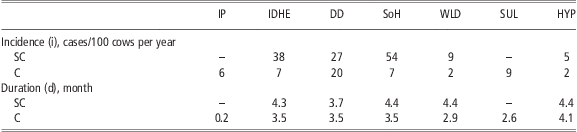
The simulation model produced the incidence and duration of the different foot disorders as presented in Table 2. Subclinical foot disorders have higher incidences and longer durations than clinical foot disorders.
Incidence, cases/100 cows per year, and duration, in months, per case for the different foot disorders, by SC and C cases in default situation (cubicle housing with concrete (slatted) floor, pasturing during summer (April through September), two foot trimming interventions per year (in April and October)
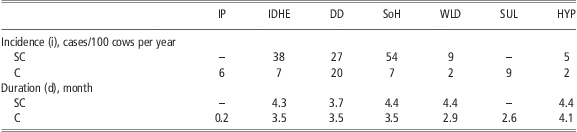
SC = subclinical; C = clinical; IP = interdigital phlegmon; IDHE = interdigital dermatitis and heel erosion; DD = digital dermatitis; SoH = sole hemorrhage; WLD = white line disease; SUL = sole ulcer; HYP = interdigital hyperplasia.
Pain impact
Of 12 experts who were invited, 9 of them assessed the pain impact of specific foot disorders according to the scoring scale as presented in Table 1. Clinical foot disorders were estimated to have higher pain impact than subclinical foot disorders. IP has the highest score, an average score of 4.9, followed by SUL, with an average score of 3.9 (Table 3). These two foot disorders only occur as clinical foot disorders and have a relative short duration. The estimations of pain based on literature match with the assessments of the experts (being within the range of the experts’ estimations).
Average pain impact based on locomotion score (scale 1 through 5) for the different foot disorders, SC and C cases. The average of the assessments by the experts (n = 9) and the assessments based on literature are used to calculate the average pain impact, the minimum and maximum estimation between brackets

SC = subclinical; C = clinical; IP = interdigital phlegmon; IDHE = interdigital dermatitis and heel erosion; DD = digital dermatitis; SoH = sole hemorrhage; WLD = white line disease; SUL = sole ulcer; HYP = interdigital hyperplasia.
Welfare impact
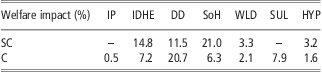
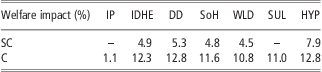
The welfare impact was calculated by using the assessed pain impact of the foot disorders, and duration and incidence as simulated by the model. The results indicate that on average a cow has a negative welfare impact of 12 (skewness = 1.5; 25% and 75% percentiles of 3 and 18, respectively; median = 9). The maximum score for welfare impact is 60, representing a cow with very severe pain for the whole year; thus, on average, a cow is estimated to experience 20% of the maximum welfare impact, which translates to, for example, having severe pain for 3 months. DD has a relatively high clinical occurrence (Table 2) and has the highest impact on dairy cow welfare, followed by SoH and IDHE (Table 4). SoH and IDHE have a high subclinical score (Table 3). The total welfare impact of subclinical foot disorders (54%) is comparable with the welfare impact of clinical foot disorders (46%). The welfare impact of IP, the foot disorder that is assessed to be the most painful foot disorder, is negligible (0.5%) particularly on herd level. At cow level, that is, when excluding the effects of foot disorder incidences, clinical foot disorders have more impact than the subclinical ones (Table 5). With the approach on cow level, the secondary foot disorders, HYP, SUL and WLD, have relatively higher impact than on herd level, mainly caused by its painfulness. Similar to the outcomes at herd level, the welfare impact of DD at cow level is high because of its painfulness, which is also the case for SUL and WLD. The results point out that subclinical foot disorders have a relatively high impact on welfare when taking into account the duration and incidence of a foot disorder, as subclinical foot disorders can be present for a long time (e.g. IDHE) or have a high incidence (SoH). The welfare consequences of subclinical foot disorders may be relatively minor compared to those of clinical foot disorder cases at individual cow level, but substantial at herd level.
Relative impact of the different foot disorders (SC and C) for the average welfare impact (representing herd level impact; pain × duration × incidence)
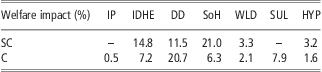
SC = subclinical; C = clinical; IP = interdigital phlegmon; IDHE = interdigital dermatitis and heel erosion; DD = digital dermatitis; SoH = sole hemorrhage; WLD = white line disease; SUL = sole ulcer; HYP = interdigital hyperplasia.
Relative impact of the different foot disorders (SC and C) for the welfare impact per case of a foot disorder (representing cow level impact; pain × duration)
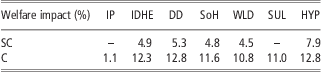
SC = subclinical; C = clinical; IP = interdigital phlegmon; IDHE = interdigital dermatitis and heel erosion; DD = digital dermatitis; SoH = sole hemorrhage; WLD = white line disease; SUL = sole ulcer; HYP = interdigital hyperplasia.
Weighing pain and duration
The literature study reveals that consequences of foot disorders have been studied predominantly by using locomotion score. Most studies have not specified specific foot disorders or gradations in locomotion; typically, the differentiation is made between lame and non-lame cows only, with locomotion score 3 and higher indicating lame cows. Some studies (e.g. Bicalho et al., Reference Bicalho, Vokey, Erb and Guard2007) did indicate relatively strong effects on cow functioning when locomotion scores became higher than 3, for example, on reproduction. Such findings in literature suggest the use of a non-linear scale for the relationship between severity of the disorder (pain) and duration when assessing welfare impact. However, there was insufficient information to back up a deviation from the default linear relationship. More research seems needed to relate effects to a specific foot disorder and different gradations of pain (other than lame or non-lame). In conclusion, literature did not provide the relevant information or reasons for adjusting the weighing of the parameters pain and duration.
Discussion
This study applied a modeling approach to gain insight into the welfare impact of different foot disorders, both clinical and subclinical. Building this model and its outcomes support the identification of knowledge gaps, such as the lack of information on specific effects of foot disorders, in different types of severity and pain, on dairy cow behavior. The model addresses the weighing of different parameters involved in the welfare assessment, as related to foot disorders, and establishes transparency of the consequences of such weighing choices. This study reveals a considerable impact of foot disorders on dairy cow welfare. Insight into the magnitude of the problem of foot disorders and attention for the impact and importance with respect to animal welfare helps to raise the awareness of dairy farmers regarding the need to combat these foot disorders. Farmers value the importance of animal welfare differently and, depending on the farmer, demonstrable impact of foot disorders on animal welfare can be used as a motivator. Besides the importance of animal welfare, the interpretation of the concept of animal welfare can influence the farmer's priority for management improvements. On the basis of the results in our study, the concept of animal welfare held by a farmer, for example mainly based on functioning or feeling, will not affect the priority because the results are not specified to that detail. More research is needed to obtain such knowledge. Insight into the effects on economic consequences plays an important role as well. A previous study showed that foot disorders cause substantial losses, which are likely to be underestimated as well (Bruijnis et al., Reference Bruijnis, Hogeveen and Stassen2010). The differential impact of specific foot disorders on dairy cow welfare and economics may help in setting priorities to approach the problem of foot disorders. Different intervention measures can be used to decrease the number and severity of foot disorders, for example, rubber flooring to reduce pressure on the hoofs (e.g. SoH) and increase cow comfort or improve hygiene of the floor (e.g. IDHE) by more frequent or automatic scraping of the floor. Each measure affects a specific type of foot disorder and will influence the prioritization.
Results show specific impact of foot disorders on dairy cow welfare, mirroring differences in foot disorder painfulness, duration and incidence. On average, DD has the highest impact on dairy cow welfare, because of a high incidence and clinical occurrence and long duration. The varying impact of foot disorders is illustrated by the difference between IP and IDHE. During 1 year, on average, only 6% of the cows get IP, which causes very severe pain (category 5) for about 1 week. In contrast, more than half of the cows get subclinical SoH for 4 months a year, having slight pain (category 1). The subclinical foot disorders SoH and IDHE, which are assumed to cause relatively little pain, are predicted to have a considerable impact on welfare because of a long duration and high incidence; the average welfare impact, representing herd-level impact, of subclinical foot disorders is 54% of the total welfare impact due to foot disorders. Likely, farmers are unaware of these subclinical foot disorders, which (partly) explains why dairy farmers underestimate the occurrence of foot disorders, as found by Whay et al. (Reference Whay, Main, Green and Webster2002), and the associated impact on dairy cow welfare. The impact of subclinical foot disorders might be underestimated even more, because often these foot disorders occur bilaterally. In such cases, a cow is less able to alleviate the pain by sparing the affected leg because both sides are painful. Detection is more difficult because the cows then ‘paddle’ with their hind legs, which is likely to worsen the underestimation by farmers. Simulation of the individual cow welfare, looking at one case of a foot disorder, pointed out the serious impact of the painful foot disorders, for example, SUL. Such differences in welfare impact on herd level and individual level are also mentioned by Fitzpatrick et al. (Reference Fitzpatrick, Scott and Nolan2006): ‘… a low-intensity pain, but for a long duration, may be of different significance to an individual animal within a flock than a high-intensity pain for a short duration, although in terms of flock welfare, both may have equal impact.’ Considering the impact of foot disorders on welfare at the level of individuals or herds may both have its merits. Relatively, much can be gained, that is, in terms of welfare, when preventive measures target subclinical and clinical foot disorders that have high impact on herd level. Curative measures could best target clinical foot disorders, which have a high impact on individual cow level. A predominantly herd-level approach is used already in existing health and welfare monitoring schemes (e.g. Welfare Quality®). The development in husbandry of increasing farm scale size, where attention for the individual cow becomes less likely, stimulates the use of welfare assessment protocols on herd level. Such approaches may underestimate the welfare reduction for individual cows suffering from a very painful foot disorder.
The results in our study are based on assumptions related to an average Dutch farm with cubicle housing with concrete (slatted) floor, pasturing during summer (April through September), two foot trimming interventions per year (in April and October). In practice, incidence and duration of the different foot disorders differ from farm to farm, because each farm has its own characteristics and specific management. The duration of the foot disorders, as simulated by our model, can be longer than reported elsewhere in literature, for example, Nielsen et al. (Reference Nielsen, Thomsen and Sorensen2009). This might be caused due to more accurate treatment in an experimental setting. Regarding the model outcomes on foot disorder incidence and prevalence, the results resemble the numbers reported in literature (Clarkson et al., Reference Clarkson, Downham, Faull, Hughes, Manson, Merritt, Murray, Russell, Sutherst and Ward1996; Somers et al., Reference Somers, Frankena, Noordhuizen-Stassen and Metz2003), supporting the validity of the model. For cows kept under conditions different from those assumed presently, the welfare impact of foot disorders will differ from present model predictions, for example, for cows kept on rubber floors, as the model assumes concrete flooring and rubber flooring improves locomotion (Rushen and De Passillé, Reference Rushen and De Passillé2006) and foot health (Vanegas et al., Reference Vanegas, Overton, Berry and Sischo2006). In addition, the accuracy of treatment of foot disorders by the farmer, which varies among farmers, affects the impact of the different foot disorders; more accurate treatment will reduce the severity and duration of foot disorders. The model is a flexible tool, it does allow a tailor-made assessment, taking into account specific farm characteristics like rubber flooring. In addition, future scientific findings can be used to upgrade the model and improve the assessment of welfare impact.
Our approach on animal welfare includes the three aspects as defined by Fraser et al. (Reference Fraser, Weary, Pajor and Milligan1997). Foot disorder-induced pain causes negative effects in all three domains, causing impaired health and functioning, suffering and affects the ability to perform natural behavior. Frasers’ third domain of welfare, natural living, is of particular interest. Natural living is about more than being able to perform natural behavior, it is also about being able to have a normal life cycle. Foot disorders affect the longevity of cows, as the associated lameness and poor performance are important reasons to cull cows prematurely, as we have modeled. Including an impact value for premature culling in the assessment of welfare impact of foot disorders, therefore, would be valuable. This requires more specific information such as the average age of culling due to the specific foot disorders, which is not available at the moment. It will be challenging to weigh a decrease in life span against the presence of a foot disorder with certain severity and duration. Premature culling due to foot disorders occurs mainly when foot disorders are severe (clinical foot disorders) and are recurrent or long lasting. Lameness is one of the important reasons for culling a cow together with infertility and mastitis (Whitaker et al., Reference Whitaker, Macrae and Burrough2004). Indirectly, there will be an added effect of lameness on culling as, like mastitis, it impacts negatively on fertility (Garbarino et al., Reference Garbarino, Hernandez, Shearer, Risco and Thatcher2004; Ahmadzadeh et al., Reference Ahmadzadeh, Frago, Shafii, Dalton, Price and McGuire2009). The impact of foot disorders on welfare because of these negative impacts on other health traits is likely to be underestimated in our model. Including longevity is likely to give more emphasis on the welfare impact of these severe foot disorders, which cause premature culling, such as SUL and recurrent cases of DD, and thus emphasize the importance of prevention and good treatment. Moreover, including longevity in welfare assessment helps to indicate whether farms ‘solve’ the health and welfare problem of foot disorders by culling cows instead of improving the circumstances and management to improve dairy cow foot health, and with that the welfare of the cows.
The choices for a herd- or a cow-level approach both bring weighing dilemmas. The herd-level approach involves dealing with the trade off between the importance of one severe case against multiple moderate cases. Using the cow-level approach, a comparable issue arises: how important is a long-lasting case of a subclinical foot disorder, compared with a short-lasting clinical foot disorder with high levels of pain. There is no objective method available to weigh foot disorder pain intensity, duration and incidence when assessing impact on welfare, and as a starting point the present model assumes the most basic relationship: a linear one. During our quest to get more insight into the weighing of pain and duration in the assessment of welfare, we searched the literature to find specific information about the effects of foot disorders and lameness on the behavior of dairy cows. Using the existing literature, we were not able to specify the relation between pain intensity and duration with animal welfare based on behavioral effects at certain pain levels and/or with certain duration. It is known that with very severe lameness, like with IP, the animals are not able to perform dairy cow-specific behaviors. However, it is not known at which pain intensity (represented by locomotion score as lameness is a behavioral expression of pain; Galindo and Broom, Reference Galindo and Broom2002) or combinations of pain intensity and duration, behaviors are not performed anymore and what the (long term) consequences are for the dairy cow. As there is no objective method to assess welfare impact and literature did not provide enough information, the use of experts in the weighing of pain and duration could be useful to make an estimation. This has been addressed earlier by Roqueplo (Reference Roqueplo1997): ‘Expert opinion can be used when no study has been run yet to address a specific point (but related studies can help form an opinion of what is most probable to be), and/or when scientific evidence alone cannot solve a problem.’ The experts who were consulted mainly were veterinarians in the field of dairy cattle. Veterinarians, qualified in dairy cattle, are knowledgeable on the various aspects of foot disorders, including locomotion, behavior and pathophysiology, but they expressed varying ideas about the weighing of pain and duration (data not shown). This selection of experts is likely to have steered results in one direction and the inclusion of other types of experts, for example, ethologists or animal welfare specialists, is likely to further enlarge variation in such expert opinions. On average, the experts in our study valued pain intensity as more important than the duration of a foot disorder (data not shown). This outcome corresponds to human pain studies, where duration had a smaller effect on pain experienced by patients than the pain intensity (Ariely, Reference Ariely1998). Severe pain leads to difficulties in performing normal behavior, affecting the health (aspect of functioning) and affective state (aspect of feeling) of the cow directly. In comparison to this, a cow suffering from a subclinical foot disorder experiences less pain and will be better able to perform the necessary behaviors to maintain good health, for example, going to the feeding fence and drinking bowl. However, over time, relatively small changes in behavior, as resulted from moderate pain, can have considerable consequences. For example, cows with subclinical foot disorders may arrive later at and/or have unfavorable places at the feeding fence, resulting in lower feed intake, affecting the functioning of the cow, for example, reduced milk production (Bach et al., Reference Bach, Dinarés, Devant and Carré2007). Specific behaviors, like lying down and standing up, and expressing estrus behavior may be obstructed (Walker et al., Reference Walker, Smith, Routly, Jones, Morris and Dobson2008), leading to discomfort and frustration. Cows may adapt to the moderate pain they experience and the difficulties that it brings, as humans adapt to low levels of pain (Ariely, Reference Ariely1998). In the long term, however, adaptation capacities will be exceeded, as the enduring obstruction of normal behavior affects the functioning and health of the cow, leading to clinical foot disorders, subfertility (Melendez et al., Reference Melendez, Bartolome, Archbald and Donovan2003) and premature culling (Whitaker et al., Reference Whitaker, Macrae and Burrough2004). It would be valuable to have more information on these issues. This requires laborious research into the different stages of the different foot disorders and the associated pain and effects on dairy cow functioning and behavior.
In practice, dairy farmers deal differently with foot health issues in their herd, possibly in part reflecting different ideas about animal welfare. Dairy farmers differ in how they value animal welfare and how they weigh between animal welfare and economics when implementing curative and/or preventive measures on the farm. Cost effectiveness of measures and its effect on welfare may differ, for instance, investing in a rubber floor or improved lying surfaces for the cows could have substantial benefits for animal welfare but requires a large immediate investment compared with say improvement of foot trimming management or more thorough checks for foot disorders. Unfortunately, little is known regarding the precise effects of such interventions on dairy cow welfare and economics. Next to the differences in effect on economics and animal welfare, the type of investment and effect on daily routine will influence the decisions to take certain measures or not. The model provides insight into the complexity of the welfare impact of foot disorders. Our study stresses the need to increase awareness amongst farmers to prevent and remedy impaired foot health, taking into account the complexity of the different foot disorders, subclinical and clinical, at cow and at herd level. More insight into the consequences of foot disorders is also important to inform the public. Public awareness can stimulate the demand for improved foot health, as a measure to improve animal welfare and as such public perception can be an important actor in stimulating farmers to take action. To improve welfare assessment of foot disorders, scientific findings are needed to optimize the weighing of the painfulness, duration and incidence of foot disorders.
Conclusions
The impact of specific foot disorders on welfare was assessed by modeling the occurrence of foot disorders and the pain associated with it. On average, DD has highest impact on welfare, followed by SoH and IDHE. High clinical incidence of DD and high subclinical incidence of SoH and IDHE cause these results. On average, nearly half of the welfare impact (46%) is caused by clinical foot disorders. The fact that clinical and subclinical foot disorders contribute more or less equally to the effect on welfare indicates that farmers may readily underestimate the related welfare impact by a factor two or more. Assessing welfare at individual cow level stresses the importance of pain intensity; the welfare impact of clinical and secondary foot disorders becomes more important. Different approaches on animal welfare assessment, like on herd or on cow level, give different results and may lead to different advices to the farmer. Better understanding of the impact of foot disorders on dairy cow welfare, as demonstrated by our model, should stimulate discussion about objective welfare assessment and, hopefully, stimulates improvement of future scientific studies. The objective and transparent assessment of the welfare impact of foot disorders determines knowledge gaps and helps to increase awareness about this problem and can support in determining strategies to establish good dairy cow foot health, for example, by pointing out the considerable welfare impact of subclinical foot disorders.
Acknowledgments
The authors thank the experts for their contribution to our study.