




No CrossRef data available.
Article contents
Biological control of ticks
Published online by Cambridge University Press: 19 April 2005
Abstract
Ticks have numerous natural enemies, but only a few species have been evaluated as tick biocontrol agents (BCAs). Some laboratory results suggest that several bacteria are pathogenic to ticks, but their mode of action and their potential value as biocontrol agents remain to be determined. The most promising entomopathogenic fungi appear to be Metarhizium anisopliae and Beauveria bassiana, strains of which are already commercially available for the control of some pests. Development of effective formulations is critical for tick management. Entomopathogenic nematodes that are pathogenic to ticks can potentially control ticks, but improved formulations and selection of novel nematode strains are needed. Parasitoid wasps of the genus Ixodiphagus do not typically control ticks under natural conditions, but inundative releases show potential value. Most predators of ticks are generalists, with a limited potential for tick management (one possible exception is oxpeckers in Africa). Biological control is likely to play a substantial role in future IPM programmes for ticks because of the diversity of taxa that show high potential as tick BCAs. Considerable research is required to select appropriate strains, develop them as BCAs, establish their effectiveness, and devise production strategies to bring them to practical use.
Information
- Type
- Research Article
- Information
- Copyright
- © 2004 Cambridge University Press
INTRODUCTION
Since the beginning of the 20th century investigators have documented numerous potential tick biocontrol agents, including pathogens, parasitoids and predators of ticks (Jenkins, 1964; Mwangi, 1991; Mwangi et al. 1991a; Samish & Rahacek, 1999; Kaaya, 2003). Several authors have reviewed specific groups of natural enemies of ticks, including pathogens (Lipa, 1971; Hoogstraal, 1977; Chandler et al. 2000), nematodes (Samish, Alekseev & Glazer, 2000a,b; Samish & Glazer, 2001), parasitoids (Cole, 1965; Trjapitzin, 1985; Davis, 1986; Mwangi & Kaaya, 1997; Hu, Hyland & Oliver, 1998; Knipling & Steelman, 2000), and predators (Barre et al. 1991; Mwangi, Newson & Kaaya, 1991b; Kok & Petney, 1993; Samish & Alexseev, 2001).
In practice, ticks are controlled at present mostly by chemical acaricides (for detailed review see chapter by George, Pound & Davey in this Supplement). However, biological control is becoming an increasingly attractive approach to tick management because of: (1) increasing concerns about environmental safety and human health (e.g. the gradual increase in use of chemical insecticides in several countries is stimulating the growing market of ‘organic’ food); (2) the increasing cost of chemical control; and (3) the increasing resistance of ticks to pesticides. To date, biocontrol has been targeted largely at pests of plants, with only a few efforts to introduce biocontrol agents for the control of ticks. Nevertheless, the knowledge and experience accumulated in plant protection will aid in the development of tick biocontrol methods.
Classical biological control includes the recognition, evaluation and importation of a natural enemy from elsewhere, the conservation of local natural enemies and the augmentation of the biocontrol agents. Application methods can include individual inoculations or inundative releases of the natural enemies. Much effort has been applied to control pests by means of biological agents, often as part of integrated pest management (IPM) programmes (De Bach & Rosen, 1991; Van Driesche & Bellows, 1996). During the early 20th century efforts were made to import parasitoids into the USA for tick control (Larrousse, King & Wolbach, 1928; Cooley & Kohls, 1934; Alfeev, 1946). In addition, oxpeckers have been reintroduced into areas in Africa where these birds had become extinct (Davison, 1963; Grobler, 1976, 1979; Couto, 1994).
Ticks are obligatory blood sucking Arachnids that feed on vertebrates. While argasid ticks (soft ticks) feed for minutes or hours, the ixodid ticks (hard ticks) feed for days to weeks. In most cases, over 90% of the tick's life-cycle is spent off their hosts. Accordingly, two general strategies for controlling ticks with acaricides are in use – ‘on-host’ and ‘off-host’ control. On-host control strategies use the vertebrate as bait for ticks, relying upon the relatively high concentration of the pest on a small area, and kill ticks with a high potential to propagate. Further, this strategy can benefit from the often more stable environment of the host skin, e.g. temperature, relative humidity (RH) – factors especially important for biocontrol. However, off-host control strategies enable treatments far from the host, under conditions that in some cases are more suitable, e.g. high RH with little UV irradiation under trees. Off-host control can minimize exposure of individual vertebrate hosts to pesticides, but large areas of the environment may be exposed to such hazards. In both strategies, environmental hazards associated with tick control can be dramatically reduced if biocontrol techniques are efficiently applied.
In this review, we try to summarize and update published information on biocontrol agents that have the potential to suppress tick populations, emphasizing those not covered in a recent review of the subject (Samish & Rehacek, 1999).
PATHOGENS
The Bio Pesticide Manual (Copping, 2001) lists 96 commercial active ingredients based on microorganisms. Thirty-three are based on bacteria, 36 on fungi and eight on entomopathogenic nematodes. In contrast to the biopesticides used against off-host ticks and most plant pests, development of those targeted at ticks on hosts need to take into account the relatively high temperatures on the skin, the limited ability of the pathogen to penetrate via tick mouthparts while feeding, and, importantly, considerations of safety for people and animals.
Bacteria
Bacteria are commonly found in wild-caught ticks, but most of these bacteria are not considered pathogenic to the ticks (Noda, Munderloh & Kurtti, 1997; Samish et al. 1999a,b). Martin & Schmidtmann (1998) obtained 73 bacterial isolates from field-collected Ixodes scapularis, including 11 species of Bacillus, mostly in the B. thuringiensis–B. cereus species group. Tick haemolymph and cement plugs display bacteriocidal activity (Alekseev et al. 1995; Johns, Sonenshine & Hynes, 1998; Ceraul, Sonenshine & Hynes, 2002) that provide some protection against bacterial attack. Nevertheless, some bacteria show pathogenicity to ticks. For example, Proteus mirabilis is pathogenic to Dermacentor andersoni (Brown, Reichelderfer & Anderson, 1970). Bacteria also attack Amblyomma hebraeum, Hyalomma marginatum and Rhipicephalus eversti eversti (Hendry & Rechav, 1981) and apparently cause the Blackening disease of Boophilus decoloratus. Brum and colleagues (Brum, Faccini & Do Amaral, 1991a; Brum, Teixeira & Da Silva, 1991b; Brum & Teixeira, 1992) found the bacterium Cedecea lapagei (Enterobacteriaceae) to be pathogenic to Boophilus microplus; this bacterium infects ticks via the genital opening and under laboratory conditions can produce up to 100% mortality.
Tick – B. thuringiensis interactions
Since ticks ingest primarily host blood, it seems unlikely that B. thuringiensis, which attacks the midgut of insects, would successfully enter and cause mortality in ticks. However, Hassanain et al. (1997), performing Petri dish tests, found that three commercial varieties of B. thuringiensis (B. t. kurstaki, B. t. israelensis and B. t. thuringiensis) produced mortality when sprayed on unfed or engorged adults of Argas persicus or Hyalomma dromedarii. B. t. kurstaki was the most pathogenic (LC50 215–439 μg/ml on day 5 PI for Argas and 1200–2344 μg/ml for Hyalomma). The susceptibility of the eggs of both tick species increased with increasing time after oviposition. Zhioua et al. (1999a,b) exposed Ixodes scapularis to B. t. kurstaki by dipping engorged larvae for 30 seconds in spore suspensions, and reported pathogenicity with an LC50 of 1×10⁷ spores/ml.
The crystalline δ-endotoxin of B. thuringiensis is produced during sporulation and disrupts insect midgut walls (Gill, Cowles & Pietrantonio, 1992). Unlike spores, the δ-endotoxin shows specificity to particular insect taxa (Flexner & Belnavis, 2000), therefore it is unlikely that the δ-endotoxin kills ticks by causing toxaemia. Furthermore, the δ-endotoxin of B. thuringiensis subsp. kurstaki has to be activated by an alkaline pH and specific proteases. The extent to which the toxin will be activated in ticks with a midgut pH of 6·8 and intracellular cathepsins (pH optimum 3) (Sonenshine, 1991; Ramamoorthy & Scholl-Meeker, 2001) requires additional investigation.
Ticks ingest host body fluids through their mouthparts, but they also ingest water vapour, through both mouthparts and cuticle for hydration (Knulle & Rudolph, 1982). One mechanism involves a highly hygroscopic fluid secreted by the tick that is hydrated by water vapour from the surrounding atmosphere, and is then re-ingested into the tick. Therefore, it is plausible that spraying or dipping ticks in highly concentrated bacterial solutions could result in tick mortality if sufficient fluid was ingested to elicit pathogenic effects on the midgut. However, other mechanisms of pathogenicity are also plausible, including: the actions of other toxins such as B. thuringiensis exotoxins (Sebesta et al. 1981); negative effects associated with bacterial invasion of the haemocoel (Dubois & Dean, 1995); and the physical blocking of spiracles or other openings by bacterial spores.
B. thuringiensis products have proved to be the most popular biocontrol agents in agriculture (Navon, 2000). However, because of the specific biology of ticks and the little information available, further research is required to elucidate the mechanism of bacterial pathogenicity to ticks. The mode of pathogenicity influences potential efficacy, as well as the design of delivery systems of bacterial pathogens for tick control.
Fungi
Over 700 species of entomopathogenic fungi have been reported, but only 10 species have been or are currently being developed for the control of insects (Hajek & St. Leger, 1994; Butt, Jackson & Magan, 2001). The most promising fungi are from the class Deuteromycetes (mitosporic fungi). The ability of entomopathogenic fungi to penetrate the cuticle of arthropods, the ability of a strain to kill several stages of the same pest and the relatively specific virulence of a single strain to one or a small group of pests make them good candidates as biocontrol agents. However, fungi also have some disadvantages: they are slow in killing their host, they need high humidity to germinate and sporulate, they are susceptible to UV irradiation, and some strains can potentially affect non-target arthropods (Ginsberg et al. 2002). Mass production can be quite costly, and the limited shelf-life of some products make them even more expensive. Many of these constraints can be addressed by advanced formulations. Most producers of fungal-based products suggest application methods similar to those used for chemical pesticides (Shelton & Roush, 2000).
Prevalence of tick – fungus interaction
In nature, 20 species of fungi have been reported to be associated with ticks. Some 13 species of ticks from 7 genera were found to be infected by fungi (Kolomyetz, 1950; Samsinakova, 1957; Steinhaus & Marsh, 1962; Cherepanova, 1964; Krylov, 1972; Samsinakova et al. 1974; Estrada-Pena, Gonzales & Casasolas, 1990; Mwangi, Kaaya & Essumen, 1995; Zhioua et al. 1999a; Guerra et al. 2001). Ticks collected in North East USA were infected primarily with Verticillium spp. and Beauveria bassiana; 10 species were isolated in Europe and 3 in Africa (Cherepanova, 1964; Samsinakova et al. 1974; Mwangi et al. 1995; Kalsbeek, Frandsen & Steenberg, 1995; Zhioua et al. 1999a). Of the engorged female B. microplus ticks collected from soil in Brazil, 24·5% were contaminated with B. bassiana, 10% with M. anisopliae (Da Costa et al. 2001), and 22% of the R. sanguineus nymphs were contaminated with fungi from 5 genera (Guerra et al. 2001). The percentage of ticks infected by fungi in collections from natural areas varies considerably, largely according to the stage and species of tick and to the ecological conditions at the sample sites. For instance, 7·5% of the adult Ixodes ricinus collected in central Europe during winter time were infected by fungi, compared to over 50% of ticks collected during the summer (Samsinakova et al. 1974). In northern Europe, between 6 and 32% of engorged I. ricinus females were infected by fungi in nature, depending on the season (Kalsbeek et al. 1995). Only 1·7% of the engorged Rhipicephalus appendiculatus females collected in Kenya died from fungal infection (Mwangi et al. 1995), and in the northeastern USA 4·3% of the collected unfed female I. scaplularis were infected (Zhioua et al. 1999a). In nature, a higher percentage of adult ticks seems to be infected by fungi than their pre-imaginal stages and engorged females seem to be most readily infected (Kalsbeek et al. 1995; Zhioua et al. 1999a).
Laboratory assays
When various fungal genera, species and strains were tested under optimal laboratory conditions, M. anisopliae and B. bassiana exhibited the strongest anti-tick pathogenicity (Guangfu, 1984; Gindin et al. 2001; Samish et al. 2001). In most cases, M. anisopliae strains were more virulent than those of B. bassiana (Mwangi et al. 1995; Castineiras et al. 1987; Barci, 1997; Kaaya & Hassan, 2000; Sewify & Habib, 2001; Zangi, 2003). Under laboratory conditions, at least 15 ixodid tick species and two argasid ticks were found susceptible to fungi (Samish et al. unpublished observation). Studies comparing the susceptibility of unfed larvae of Boophilus annulatus, Hyalomma excavatum and R. sanguineus to 12 fungal strains (from five species of fungi) gave the general impression that Boophilus and Hyalomma larvae showed similar susceptibility while Rhipicephalus larvae were more resistant. In contrast, engorged H. excavatum females were far more resistant to entomopathogenic fungi than females of the other two tick species (Gindin et al. 2003). Tick eggs, in contrast to many insect eggs, are highly susceptible to fungi and up to 100% of the eggs exposed to fungi under laboratory conditions did not hatch (Boichev & Rizvanov, 1960; Gorshkova, 1966; Castineiras et al. 1987; Monteiro et al. 1998a,b; Bittencourt, Massard & Lima, 1994a; Kaaya, 2000; Paiao, Monteiro & Kronka, 2001; Gindin et al. 2003). Fungal infection of engorged female ticks often resulted in longer periods of pre-oviposition, oviposition time, egg-incubation, and egg-hatching of the egg mass, as well as in lowered egg production (Gorshkova, 1966; Bittencourt, Massard & Lima, 1994b; Barci, 1997; Gindin et al. 2001). This suggests that there is a relatively long-lasting sub-lethal influence of the fungi on their tick hosts.
Comparison between the susceptibility of the unfed stages of R. appendiculatus and Amblyomma variegatum or of H. excavatum and R. sanguineus demonstrated decreasing susceptibility to fungi in progression through the larval, nymph and adult stages (Kaaya, 2000; Samish et al. 2001; Gindin et al. 2003), but unfed I. scapularis larvae were less susceptible than unfed adults (Zhioua et al. 1997). Unfed larvae and nymphs seem to become more resistant to M. anisopliae after engorgement (Reis et al. 2001; Gindin et al. 2003).
Fungi take several days to kill ticks. For instance, the LT50 of M. anisopliae (at 1×10⁷ spores/ml) for eggs, unfed larvae and engorged females of B. annulatus, H. excavatum and R. sanguineus generally ranged from <3 to 6.5 days; in some cases it extended to weeks. Engorged larvae of H. excavatum and R. sanguineus took twice as long to die than unfed larvae of the same species, and it took over 3 weeks for 50% of unfed adults to be killed by these fungi (Gindin et al. unpublished observation).
Field trials – off host
A 0·3 ha Abies procera plantation in Denmark was sprayed with M. anisopliae (BIPESCO strain) spores (4–10×1010 spores/m2). Of the 67 unfed Ixodes ricinus ticks collected 2 weeks after treatment, 57% were contaminated with M. anisopliae (Nielsen et al. personal communication). Initial field trials used a commercial anti-termite mycoside based on M. anisopliae (ESC-1 strain, Bio-Blast Biological Termicide) against questing I. scapularis adults (spraying 4–6×10¹⁰ spores/m2). Within 4 weeks, 53% of the adults were killed (Benjamin, Zhioua & Ostfeld, 2002). When potted grass with adult or nymphal R. appendiculatus was sprayed with spores (1×10⁹ spores/ml in water) and kept in the field, the mortality of ticks sprayed with B. bassiana was 96 and 36% for nymphs and adults, respectively; if sprayed with M. anisopliae the mortality reached 76 and 64% for nymphs and adults, respectively. The two fungal species together killed over 99% of the larvae. Similar results were obtained with Amblyomma variegatum (Kaaya & Mwangi, 1995; Kaaya, Mwangi & Ouna, 1996).
In Kenya, 5 acre paddocks were seeded with R. appendiculatus larvae and sprayed once a month with M. anisopliae or B. bassiana spores in an aqueous solution (1·2×109 spores/m2). During the rainy season the fungi had no effect upon the abundance of the ticks on cattle kept in the paddocks, but during the 3 months after the end of the rainy season B. bassiana and M. anisopliae reduced the tick population by 80 and 92%, respectively, compared with the control (Kaaya, 2000; Kaaya, Samish & Glazer, 2000).
Sack-cloth covering poultry houses that were heavily infested with the soft tick Argas persicus was sprayed with an M. anisopliae spore suspension (5×10⁷ spores/ml in water with Tween 80 and 4% oil) and covered with a plastic sheet to maintain high humidity. The tick population was reduced by 53% within a week and after 3 weeks no live ticks could be found (Sewify & Habib, 2001). When two commercial B. bassiana mycoinsecticides (registered for use against pests of ornamentals and turf) were tested against I. scapularis nymphs in a residential area, the tick population was reduced by 59–89%, and some 80–90% of the recovered nymphs developed mycoses (Stafford & Kitron, 2002). Ticks inoculated with B. bassiana were released in a natural D. variabilis microhabitat from which live ticks were collected one year later. Fungal growth was observed after incubation of the ticks under laboratory conditions (Lucas, Fielden & Hererra, unpublished observations). Spraying of a paddock containing B. microplus larvae with M. anisopliae spores resulted in fewer larvae one week after treatment compared to the untreated paddock (Bittencourt, 2000).
Field trials – on host
Spraying M. anisopliae (1×10⁸ spores/ml in water with Triton X-100) on gerbils one day after they had been infested with R. sanguineus nymphs reduced the number of engorged nymphs dropping off by 73% (unpublished observation). Spraying M. anisopliae spores (1×10⁸ to 1×10⁹ spores/ml in water) on cattle infested with B. microplus or B. decoloratus ticks at various development stages generally caused insignificant or low reductions (up to 50%) of the on-host tick population. However, up to 79% of the females collected from the sprayed cattle died in the laboratory, and their egg mass weight was reduced by up to nearly 50% (Castro et al. 1997; Correia et al. 1998; Bittencourt et al. 1999; Kaaya & Hassan, 2000). When B. microplus-infested cattle was treated one or four times with Verticillium lecanii (3·5×107/ml, 5 l per head), the number of ticks was reduced by 48–79% or 94–99%, respectively (Camacho et al. 1998). In other trials, adult R. appendiculatus ticks were allowed to feed in ear bags on rabbits or cattle and were sprayed with M. anisopliae spores at dosages of 2·5×108 or 1×10¹⁰ spores per ear, respectively; 30% of the ticks on rabbits and 83% of those on cattle died. In addition, of the eggs laid by the Beauveria-treated females, none of those on the rabbits and only 48% of those on cattle hatched (Kaaya et al. 1996). Application of a gel formulation containing B. bassiana spores to the ears of horses reduced Anocentor nitens tick populations by 50% (Bittencourt et al. unpublished observation). When B. bassiana and M. anisopliae spores in water with Triton X-100 were sprayed on thoroughly washed ears of cattle, live B. bassiana spores were recovered up to 1 week and those of M. anisopliae up to 3 weeks after application (Kaaya et al. 1996). However, fungal spores suspended in water and sprayed on cattle were found to be virulent to Boophilus ticks for less than a week (Castro et al. 1997; Bittencourt et al. 1999), and most deaths of feeding R. appendiculatus occurred 5–10 days after fungal infection (Kaaya et al. 1996).
In several experiments live ticks were collected from a fungus-infested field or from their vertebrate hosts and incubated under optimal laboratory conditions. A high percentage of these ticks died and fungi grew on many of them even though low tick mortality was observed in the field or on hosts in the same experiments. This suggests that under natural conditions the conidia often adhere to the tick integument, at least for a short time, but in many cases they do not germinate or penetrate the cuticle, and/or cause only a sub-lethal infection under field conditions.
Formulation
In most laboratory tests the spores were suspended only in water with a small amount of dispersing agent. Kaaya & Hassan (2000) compared the anti-tick effect of a suspension of M. anisopliae spores in water with 1% Tween-80 with or without 15% peanut oil. Unfed nymphal and adult ticks were immersed in the suspension and then kept outdoors on vegetation. The mortality of A. variegatum treated with the oil suspension was 30% higher for nymphs and 2·7 times higher for adults, and for R. appendiculatus 15% higher for nymphs and 4·3 times higher for adults than in applications with the water carrier without oil. The influence of the oil itself on the ticks has still to be clarified. In another trial, a powder formulation was prepared by mixing 1 volume of M. anisopliae spores with 9 volumes of various powders and was tested against R. appendiculatus adults feeding on cattle in ear-bags. The spore mixture with millet powder caused 100% mortality, maize 79%, sorghum 64% and starch 53% (Kaaya & Hassan, 2000). Treating A. nitens-infested ears of horses with a B. bassiana suspension in water resulted in less than 20% tick mortality, while their application in a polymerized pulp gel resulted in more than 50% mortality (Bittencourt et al. unpublished observation).
Clearly, the formulation in which the spores are applied is crucial to the level of control obtained with fungus-based anti-tick compounds, but very little has been published as yet on the subject. Much information in formulating fungi for use against free-living ticks can be obtained from experiments on fungal spores for the control of insect pests, but considerable research is still required to develop satisfactory formulations for the control of ticks while they are feeding on vertebrate hosts. Finally, additional research is needed to find more virulent and specific fungal strains.
Entomopathogenic nematodes
Entomopathogenic nematodes (EPNs) of the families Heterorhabditidae and Steinernematidae are known to be obligatory parasites of insects. The only free-living stage of the nematode, the third/infective juvenile (IJ), actively locates and enters the host via natural openings, and then releases symbiotic bacteria that kill the host insect within 24–72 h. The nematodes then multiply within the host cadaver and 6–18 days post infection thousands of IJs are released into the environment. The most common natural habitat of these nematodes is moist ground. The IJs are well adapted to the changing conditions of moisture, temperature, texture and chemical composition associated with different soil types (Glazer, 2001).
The EPNs are known to be pathogenic to over 3000 insect species, whereas each strain may often be relatively specific to a small group of hosts and thus their effects on most beneficial insects have been found to be negligible (Poinar, 1973; Gaugler, 2002). They are produced commercially on four continents, mainly in cottage industries, but also in large fermenters (up to 80000 l), for the control of insect pests of forests and agriculture (Georgis & Manweiler, 1994). About US$10 million-worth of nematodes for the control of insects were sold in 1998; they were used either as an additive to irrigation systems or as sprays from the ground or air.
Tick–nematode interactions
EPNs penetrate engorged female B. annulatus ticks almost solely via the anus or genital pore (unpublished observations). Heterorhabditid nematodes killed engorged B. annulatus females in Petri dishes after less than 2.5 h of exposure, whereas steinernematid nematodes needed more than 4 h to penetrate into ticks (Glazer Alekseev & Samish, 2001). The injection of a single heterorhabditid nematode into a tick can cause mortality (Glazer et al. 2001). The dosages of EPNs needed to kill 50 or 90% of ticks are comparable to that used commercially in the control of insect pests of plants, but the time required to kill ticks is often relatively long (Table 1).

Tick mortality caused by EPNs seems to be due to the rapid proliferation of the nematode symbiotic bacteria within the ticks, since the nematodes do not go through their natural cycle within ticks, and most infective juveniles die shortly after entry (Mauleon, Barre & Panoma, 1993; Samish, Alekseev & Glazer, 1995; Hill, 1998; Kocan et al. 1998b; Hassanain et al. 1999). In vitro experiments demonstrated that tick hemolymph hinders the growth of EPNs (Zangi, 2003), but the reason(s) for nematode mortality within ticks is/are not yet fully understood. Interestingly, when the cuticle of I. scapularis was physically slit before nematode infection, the nematodes S. carpocapsae and S. glaseri reproduced successfully (Zhioua et al. 1995).
Laboratory assays
Ticks exposed to nematodes in Petri dishes lined with moist filter paper showed that six genera of Ixodidae and two genera of Argasidae were readily killed by entomopathogenic nematodes (Table 1). Only B. microplus appeared to be resistant to nematode attack (Mauleon et al. 1993). Various tick stages differ substantially in their susceptibility to EPNs, with the fully engorged female ticks being most susceptible and the pre-imaginal stages least sensitive. During feeding, ticks were highly resistant to EPNs and their eggs were totally resistant. Unfed female ticks were killed up to six times quicker (LT50 1 d for R. bursa) than engorged ticks (6 d for R. bursa) (Samish et al. 2000a,b; Table 1). This may be connected to the strong anti-bacterial activity of the tick haemolymph (Ceraul et al. 2002).
The many strains of more than 25 nematode species from the families Heterorhabditdae and Steinernematidae display a wide range of characteristics, enabling them to adjust readily to the various different pests in different ecological niches. The 42 nematode strains tested for anti-tick activity showed varying degrees of virulence (Table 1). In laboratory tests, heterorhabditid nematodes were generally more virulent to ticks than steinernematids (Mauleon et al. 1993; El-Sadawy & Habeeb, 1998; Hill, 1998; Hassanain et al. 1999; Glazer et al. 2001). Nematode strains virulent to one tick stage of one species were found, in most cases, to be also highly virulent to other tick species and stages (El-Sadawy & Habeeb, 1998; Hassanian et al. 1999; Samish et al. 1999a,b).
Field trials
The virulence of nematode strains to ticks as measured in Petri dish tests in the laboratory often differs considerably from that measured in field trials when the nematodes are sprayed on soil. The difference could result from the specific behaviour of each nematode strain in the soil environment, e.g. how deep in the soil they prefer to live, how they react to UV irradiation, low moisture or other factors.
Among nine strains of three nematode species tested against B. annulatus ticks on soil, under simulated field conditions, the commercial Steinernema carpocapsae Mexican strain was the most effective: a nematode dosage of 50/cm2 of this strain killed 100% of the engorged females with a LT50 of less than 5 days (Samish et al. 1999a).
Environmental conditions strongly influence the pathogenicity of nematodes to ticks. Soils with a high silt concentration or with more than 25% (v/v) manure were found to reduce the anti-tick activity of EPNs relative to that measured on clean sandy soil (Samish et al. 1998, 1999a). The anti-tick activity of EPN strains also varied with temperature (Zhioua et al. 1995): the optimal activity for most strains was 25–28 °C, although some displayed far wider ranges of activity (e.g. 18–34 °C; unpublished observations). EPNs sprayed on humid sandy soil 3 days before ticks were added killed 100% of the ticks, whereas EPNs sprayed on soil containing 25% (v/v) cattle manure resulted in 45% mortality, and on soil containing 40–50% silt only 25% mortality (unpublished observations). EPNs sprayed on soil covered with leaf litter or grass were highly efficient in killing ticks compared with those sprayed on uncovered soil. Shading the soil with nets (10–90% shade) and irrigating it twice a day increased tick mortality from nematode attack in comparison with that on unshaded soil or on plots irrigated only once every 2 days (Zangi, 2003).
Nematodes are potentially useful tools for tick control because: (1) engorged ticks are susceptible to some EPNs and also reside in locations that are preferred by many nematode strains; (2) immobile ticks attract mobile nematodes; and (3) spraying or irrigation can be easily used to apply nematodes to a tick habitat. However, the use of nematodes may be limited to defined ecological niches because their pathogenicity is reduced by low humidity or temperature, high concentrations of manure or silt, and by differences in the susceptibility among the various tick stages and species. The wide genetic variation found among the many nematode strains, and presumably in strains yet to be found, means that genetic manipulation of nematodes could increase the range of ecological conditions in which they could be successfully applied against ticks. The development of improved formulations is also important. Finally, in-depth studies are needed to elucidate the interactions between nematodes and ticks under field conditions.
PARASITOIDS
Most parasitoids used in the biological control of insect pests of plants belong to the order Hymenoptera. This is the dominant order among entomophagous insects, both numerically and in regard to their successful use in biological control. Over two-thirds of the cases of successful biological control of pest species have been achieved with hymenopteran parasites (De Bach & Rosen, 1991).
Only a few species of hymenopteran parasites are known to affect ticks. L. O. Howard first described two species of chalcidoid wasps collected from ticks in Texas (Howard, 1907, 1908). These are now both included in the genus Ixodiphagus of the family Encyrtidae, which includes seven species, all tick parasites (Trjapitzin, 1985; Davis, 1986; Mwangi et al. 1997).
The most widespread species is I. hookeri (synonyms, Hunterellus hookeri, I. caucurtei; see Gahan, 1934; Trjapitzin, 1985) which has been recorded from Asia, Africa, North America and Europe (Hu, Hyland & Mather, 1993). Other species have been reported from these continents and also from Australia (Oliver, 1964; Doube & Heath, 1975; Graf, 1979; Mwangi & Kaaya, 1997). Collection of I. theileri from a specimen of the tick H. rufipes that was attached to a migrating bird in Egypt (Kaiser & Hoogstraal, 1958) suggests a possible mode of long-distance transport for these wasps. Most species of Ixodiphagus are host-generalists, which have been collected from a variety of hard tick species (Oliver, 1964), and in at least one case (I. mysorensis) from soft ticks (Ornithodoros sp.) (Mani, 1941). Nevertheless, some degree of host preference has been reported (Bowman, Logan & Hair, 1986). I. hookeri uses tick odour cues to find hosts (Takasu et al. 2003). Nymphal ticks were parasitized while they were engorging on vertebrates (Smith & Cole, 1943), and parasitoid egg development was found to be associated with ingestion of blood by its host tick (Hu & Hyland, 1998).
The only species that has been released for biological control of ticks is I. hookeri. Larrousse et al. (1928) released I. hookeri (propagated from wasps originally collected in France) on Naushon Island off the coast of Cape Cod, Massachusetts, USA, in 1926. The parasites were released as adults, in parasitized I. scapularis nymphs, and on mice (with parasitized nymphs attached). Infected nymphs of the target species, Dermacentor variabilis, were collected the following summer, which suggests that the parasite overwintered successfully. The ticks were less common the year after the parasite was released, but both D. variabilis and I. scapularis remained common at the site 12 years later, even though the parasite was still present (Cobb, 1942). Smith & Cole (1943) released about 90000 female I. hookeri at two sites on Martha's Vineyard, Massachusetts, but found no evidence of parasite persistence or of tick control. Mwangi et al. (1997) released about 150000 specimens of I. hookeri over a 1 year period to control Amblyomma variegatum on a field with 10 infested cattle in Kenya. They reported a reduction in tick numbers from 44 to 2 ticks per animal, suggesting that inundative releases can provide tick control at individual sites.
One possible explanation for this pattern can be surmised from recent surveys for I. hookeri in southern New England and New York (USA). This species is present on Naushon Island (MA), Prudence Island (RI), Bridgeport and Bluff Point Coastal Preserve in Groton (CT) and on Shelter Island and Fire Island (NY), all sites with extremely dense populations of the tick I. scapularis. However, the wasp is rare or absent at nearby sites with fewer ticks (Hu et al. 1993; Stafford, Denicola & Magnarelli, 1996; Ginsberg & Zhioua, 1999). Furthermore, sharp and sustained reductions in deer populations that lowered tick numbers at sites in Connecticut (USA) resulted in sharply lowered rates of I. hookeri parasitism as well (Stafford et al. 2003). Thus, it appears that I. hookeri requires high tick densities to persist in the northeastern US and is not likely to provide tick control under natural conditions. Nevertheless, inundative releases to control ticks in limited areas (e.g. farms, recreation areas) are still potentially feasible (Mwangi et al. 1997). Furthermore, Knipling & Steelman (2000) argued, on the basis of a simple theoretical and economic analysis, that parasitoids have a high potential as biocontrol agents for I. scapularis. They pointed out that a successful application would require a substantial research effort on parasitoid taxonomy, ecology and behaviour, and an inexpensive production system would be needed (e.g. artificial media for cultivating parasitoids) to produce large numbers of parasites for release. I. hookeri can be reared in large numbers in the laboratory at a modest cost in countries with low price labour (Mwangi & Kaaya, 1997), but the need to maintain large numbers of ticks and vertebrate hosts could be problematical for commercial production. If additional research confirms the efficacy of parasite release for tick control on individual farms or over broader areas, then improved parasite production methods would have to be developed.
Interestingly, Mather, Piesman & Spielman (1987) found that the I. scapularis parasitized by I. hookeri on Naushon Island did not carry the pathogen Borrelia burgdorferi (causative agent of Lyme borreliosis) and rarely carried Babesia microti (agent of human babesiosis), even though these pathogens were common in uninfected ticks at that locale. Thus, wasp infestation might lower pathogen prevalence in ticks, even if it does not control tick numbers. However, the lack of infection in parasitized ticks might have resulted from preferential parasitization of ticks attached to white-tailed deer (Stafford et al. 1996; Hu & Hyland, 1997), a large, conspicuous host that is not a competent reservoir for either pathogen. Furthermore, pathogen-infected ticks are still abundant at many sites where these wasps are present, so wasp parasitism does not, by itself, control the risk of disease. Further study is needed to determine whether wasp infestation influences pathogen infection in ticks.
Ixodiphagus spp. parasitize only ticks, as far as is known. Therefore, non-target effects would presumably be minimal if these parasites were released for tick control. The likely susceptibility of these hymenopteran parasites to many agricultural insecticides would require careful coordination to avoid interference between pesticide applications and parasitoid releases. At present, the lack of efficacy in nature, insufficient information on the efficiency of inundative release and the unknown cost of a parasitoid control programme renders the use of this means for tick control in the near future unlikely.
PREDATORS
Many tick bio-suppressors such as ants, beetles and many bird species are general predators that feed occasionally on ticks, therefore their populations do not depend on the sizes of the tick populations. General predators can sometimes affect the size of a tick population in nature, but manipulating their populations to reduce tick numbers would require large increases in the predator population, which could also cause large changes in populations of non-target species in natural areas (Symondson, Sunderland & Greenstone, 2002). Therefore, general tick bio-suppressors will not be covered in this chapter.
Avians
Some 50 bird species have been reported to eat ticks (Petrischeva & Zhmayeva, 1949; Mwangi et al. 1991a; Samuel & Welch, 1991; Petney & Kok, 1993; Verissimo, 1995; Samish & Rehacek, 1999). However, only a few species seem to feed specifically on ticks, and thus only a few would be expected to have a meaningful effect on tick populations.
Chickens
Chickens (Gallus gallus) confined with cattle in Africa were reported to ingest an average of 338 ticks per bird during 5·5 h. Other experiments found that the birds ate from 9·7 to 81 ticks per bird per hour of foraging. At high tick concentrations, an average of 69% of the ticks were consumed by chickens (Hassan et al. 1991; Hassan, Dipeolu & Munyinyi, 1992; Dreyer, Fourie & Kok, 1997). Chickens are neither tick-specific predators nor obligatory predators, therefore their consumption of ticks depends largely on alternative food availability and the density of the tick population. Thus, chickens are unlikely to reduce tick densities below a certain level. Nevertheless, chickens maintained in any case on small mixed farms can help to reduce tick populations at nearly no cost.
Oxpeckers
Buphagus africanus (the yellow-billed oxpecker, YBO) and B. erythrorhynchus (the red-billed oxpecker, RBO), both native to Africa, are the only birds known to feed specifically on ectoparasites, especially ticks. Oxpecker populations have decreased along with reductions in the numbers of game animals, increased use of bird-poisoning acaricides and possibly also decreased tick populations (Robertson & Jarvis, 2000; Van Someren, 1951; Stutterheim & Stutterheim, 1980; Stutterheim & Brooke, 1981). However, oxpecker reintroduction efforts, an increase in game animals and the introduction of safer acaricides appear to have resulted in increases in these bird populations during the last two decades.
Stomach contents of captured oxpeckers included 16 to 408 ticks per bird (Van Someren, 1951; Bezuidenhout & Stutterheim, 1980). The consumption by young RBOs of larval, nymphal and adult Boophilus ticks averaged 1176, 1549 and 1293, respectively, during 6–7 days of exposure to tick-infested cattle. This result was extrapolated to adult RBOs as the equivalent of 12500 larval or 98 engorged B. decoloratus females. YBOs can consume about 10% more ticks than RBOs (Bezuidenhout & Stutterheim, 1980; Stutterheim, Bezuidenhout & Elliott, 1988).
Oxpeckers are visual predators, first plucking the engorged females, then searching large body areas and scissoring and eating the smaller tick stages. YBOs prefer foraging on buffaloes and white rhinos, whereas RBOs prefer other ungulate hosts. Oxpeckers prefer feeding on weak mammals and will feed repeatedly on specific individuals within the same herd, with preference for the hosts with most ticks (Van Someren, 1951; Mooring & Mundy, 1996). Buphagus birds may also feed on skin, pieces of meat and blood of the mammalian host; thus they may enlarge wounds or even open partially healed wounds, although most publications suggest that such behaviour is quite rare (Bezuidenhout & Stutterheim, 1980; Stutterheim et al. 1988; Weeks, 1999). The YBO was found to be more aggressive than the RBO.
Several programmes have attempted to reintroduce oxpeckers artificially into areas from which they had previously disappeared (Davison, 1963; Couto, 1994; Grobler, 1976, 1979). Oxpeckers are difficult to propagate in captivity and reintroduction programmes were based on translocation of birds that were captured in the wild. When enough birds were translocated, the oxpeckers established themselves successfully, and calf mortality from tick burdens was reduced (Couto, 1994).
For a successful oxpecker introduction programme, a number of problems must be considered (Mundy & Cook, 1975; Couto, 1994; C. Foggin personal communication). The tick population should be monitored to assess the importance of the birds and the success of the introduction programme. A suitable location to capture the oxpeckers is needed (e.g. where they feed on tame calves) – mist nets can be used to capture the birds. Oxpeckers are social birds, therefore a minimum of 20 birds is recommended for translocation. It is important to overcome panic among cattle and game animals in the new location when they first encounter the oxpeckers. The new release area should have a suitable climate and should be at least 10 km away from areas treated with bird-poisoning anti-ectoparasitic compounds. Amitraz or pyrethroid-based dips do not seem to be harmful. The new area should include at least 500 head of game animals or of undipped domestic animals, grazing on at least 3000 ha.
Oxpeckers seem well suited to play an important role in IPM programmes for the control of ticks. However, their major value will be as only one part of a broader integrated programme, because substantial tick populations are known to remain in areas populated with oxpeckers (Masson & Norval, 1980; Norval & Lightfoot, 1982).
CONCLUDING REMARKS
The development of anti-tick biological control agents (BCAs) is still in its infancy. Furthermore, the various steps required for commercialization of these products, including adaptation by companies (production, storage and delivery) and education of consumers (storage, application and evaluation of results), are still in the future. Nevertheless, we believe that the need to develop alternative control methods, and the increasing, though still small, number of scientists working on anti-tick BCAs will yield useful results.
The fact that some BCAs and particular strains are far more specific in their selection of target pests than are acaricides (in some cases, specific to individual stages of a given tick species) and that many strains are effective only under specific ecological conditions, provide considerable advantages over pesticides, because harmful ecological effects are minimized. However, the specificity of some BCAs might require that numerous anti-tick BCAs be developed to deal with tick infestations in different environments.
Partial or total replacement of chemical acaricides with inundative use of tick pathogens and/or parasitoids would require considerable changes in the techniques of producers and suppliers. Products would probably need to be developed for specific small or medium-sized markets, including more pest-specific products with relatively short shelf lives, and quicker-reacting suppliers. The commercial success of such tailor-made control methods may require on-site instructors or even controllers, with the necessary specific knowledge (which may need to be far more comprehensive than that required to use pesticides). Furthermore, clients will have to accept the slower activity of BCAs compared with chemical controls. Commercial viability might vary, depending on the specific pest, the adaptability of BCA-based approaches, and the availability of other effective management techniques.
Biological control of plant pests, by means of parasitoids, predatory mites, viruses, B. thuringiensis, bugs, beetles, and others, has had several striking successes. These include the use of several enemies/pathogens simultaneously or in a pre-determined order. However, only about 5% of all pest problems are treated with biological control methods (Van Dreisch & Bellows, 1996) and many problems have to be solved in order to increase their use (Wysoki, 1998). Relatively few studies have been performed on the existence of promising natural enemies of ticks, or on their use against ticks in most parts of the world. Collaboration between biocontrol experts who have experience in managing plant pests and tick experts could lead to valuable developments in tick biocontrol.
ACKNOWLEDGEMENTS
We wish to thank to Dr Galina Gindin, Dr Amos Navon and Dr Manes Wysoki for their important critical comments on the manuscript and to Dr Monica Mazuz-Lleshcovich for her work in translating papers published in Portuguese.
References
REFERENCES
ALEKSEEV, A. N., BURENKOVA, L. A., PODBORONOV, V. M. &
CHUNIKHIN, S. P. (
1995).
Bacteriocidal qualities of ixodid tick (Acarina: Ixodidae) salivary cement plugs and their changes under the influence of a viral tick-borne pathogen.
Journal of Medical Entomology
32, 578–582.CrossRefGoogle Scholar
ALFEEV, N. I. (
1946).
The utilisation of Hunterellus hookeri How. for the control of the tick, Ixodes ricinus L. and Ixodes persulcatus.
Review of Applied Entomology
B34, 108–109 (abstract).Google Scholar
BARCI, L. A. G. (
1997).
Biological control of the cattle tick Boophilus microplus (Acari, Ixodidae) in Brazil.
Arquivos Instuto Biologico, Sao Paulo
64, 95–101.Google Scholar
BARRE, N., MAULEON, H., GARRIS, G. I. &
KERMARREC, A. (
1991).
Predators of the tick Amblyomma variegatum (Acari: Ixodidae) in Guadeloupe, French West Indies.
Experimental and Applied Acarology
12, 163–170.CrossRefGoogle Scholar
BENJAMIN, M. A., ZHIOUA, E. &
OSTFELD, R. S. (
2002).
Laboratory and field evaluation of the entomopathogenic fungus Metarhizium anisopliae (Deuteromycetes) for controlling questing adult Ixodes scapularis (Acari: Ixodidae).
Journal of Medical Entomology
39, 723–728.CrossRefGoogle Scholar
BEZUIDENHOUT, J. D. &
STUTTERHEIM, C. J. (
1980).
A critical evaluation of the role played by the red-billed oxpecker Buphagus erythrorhychus in the biological control of ticks.
Onderstepoort Journal of Veterinary Research
47, 51–75.Google Scholar
BITTENCOURT, V. R. E. P. (
2000).
Trials to control South American ticks with entomopathogenic fungi.
Annals of the New York Academy of Science
916, 555–558.CrossRefGoogle Scholar
BITTENCOURT, V. R. E. P., MASSARD, C. L. &
LIMA, A. F. (
1994 a).
The action of Metarhizium anisopliae, at eggs and larvae of tick Boophilus microplus.
Revisto da Universidade Rural Serie Ciencias da Vida
16, 41–47.Google Scholar
BITTENCOURT, V. R. E. P., MASSARD, C. L. &
LIMA, A. F. (
1994 b).
The action of Metarhizium anisopliae, at free living stages of Boophilus microplus.
Revista da Universidade Rural Serie Ciencias da Vida
16, 49–55.Google Scholar
BITTENCOURT, V. R. E. P., SOUZA, E. J., PERALVA, S. L. F. S. &
REIS, R. C. S. (
1999).
Efficacy of the fungus Metarhizium anisopliae (Metschnikoff, 1887) Sorokin,1883 in field test with bovines naturally infested with the tick Boophilus microplus (Canestrini, 1887) (Acari: Ixodidae).
Revista Brasileiro de Medicina Veterinaria
21, 78–81.Google Scholar
BOICHEV, D. &
RIZVANOV, K. (
1960).
Relation of Botrytis cinerea Pers. to ixodid ticks.
Zoologicheskii Zhurnal Akademija Nauk USSR
39, 462.Google Scholar
BOWMAN, J. L., LOGAN, T. M. &
HAIR, J. A. (
1986).
Host suitability of Ixodiphagus texanus Howard on five species of hard ticks.
Journal of Agricultural Entomology
3, 1–9.Google Scholar
BROWN, R. S., REICHELDERFER, C. F. &
ANDERSON, W. R. (
1970).
An endemic disease among laboratory populations of Dermacentor andersoni (=D. venustus) (Acarina: Ixodidae).
Journal of Invertebrate Pathology
16, 142–143.Google Scholar
BRUM, J. G. W., FACCINI, J. L. H. &
DO AMARAL, M. M. (
1991 a).
Infection in engorged females of Boophilus microplus (Acari: Ixodidae). II. Histopathology and in vitro trials.
Arquivos Brasileiro Medicina Vetrinaria Zootecnologia
43, 35–37.Google Scholar
BRUM, J. G. W. &
TEIXEIRA, M. O. (
1992).
Acaricidal activity of Cedea lapagei on engorged females of Boophilus microplus exposed to the environment.
Arquivos Brasileiro de Medicina Veterinaria i Zoologia
44, 543–544.Google Scholar
BRUM, J. G. W., TEIXEIRA, M. O. &
DA SILVA, E. G. (
1991 b).
Infection in engorged females of Boophilus microplus (Acari: Ixodidae). I. Etiology and seasonal incidence.
Arquivos Brasileiro de Medicina Veterinaria i Zoologia
43, 25–30.Google Scholar
butt, t. m., jackson, c. w. & magan, n. (ed.) (
2001).
Fungi as Biocontrol Agents – Progress, Problems and Potential.
Oxford, UK, CABI.CrossRef
CAMACHO, E. R., NAVARO, G., RODRIGUEZ, R. M. &
MURILLO, E. Y. (
1998).
Effectiveness of Verticillium lecanii against the parasitic stage of the tick Boophilus microplus (Acari: Metastigmata: Ixodidae).
Revista Colombiana Entomologia
24, 67–69.Google Scholar
CASTINEIRAS, A., JIMENO, G., LOPEZ, M. &
SOSA, L. M. (
1987).
Effect of Beauveria bassiana, Metarhizium anisopliae (Fungi, Imperfecti) and Pheidole megacephala (Hymenopthera, Formicidae) on eggs of Boophilus microplus (Acarina: Ixodidae).
Revista Salud Animal
9, 288–293.Google Scholar
CASTRO, A. B. A., BITTENCOURT, V. R. E. P., DAEMON, E. &
VIEGAS, E. C. (
1997).
Efficacy of the fungus Metarhizium anisopliae (isolate 959) on the tick Boophilus microplus in a stall test.
Revista Universidade Rural, Serie Ciencias da Vida
19, 73–82.Google Scholar
CERAUL, S. M., SONENSHINE, D. E. &
HYNES, W. L. (
2002).
Resistance of the tick Dermacentor variabilis (Acari: Ixodidae) following challenge with the bacterium Escherichi coli (Enterobacteriales: Enterobacteriaceae).
Journal of Medical Entomology
39, 376–383.CrossRefGoogle Scholar
CHANDLER, D., DAVIDSON, G., PELL, J. K., BALL, B. V., SHAW, K. &
SUNDERLAND, K. D. (
2000).
Fungal biocontrol of Acari.
Biocontrol Science and Technology
10, 357–384.CrossRefGoogle Scholar
CHEREPANOVA, N. P. (
1964).
Fungi which are found on ticks.
Botanicheskii Zhurnal
49, 696–699.Google Scholar
COLE, M. M. (
1965).
Biological control of ticks by the use of hymenopterous parasites – a review.
World Health Organization Publication, WHO/ebl/43.65, 1–12.Google Scholar
COOLEY, R. A. &
KOHLS, G. M. (
1934). A summary on tick parasites.
Proceedings of the 5th Pacific Science Congress, Canada 1933. The University of Toronto Press
5, 3375–3381.Google Scholar
COPPING, L. G. (
2001).
The Bio-Pesticide Manual (2nd edition).
British Crop Protection Council Publication, Surrey.
CORREIA, A. C. B., FIORIN, A. C., MONTEIRO, A. C. &
VERISSIMO C. J. (
1998).
Effects of Metarhizium anisopliae on the tick Boophilus microplus (Acari: Ixodidae) in stabled cattle.
Journal of Invertebrate Pathology
71, 189–191.CrossRefGoogle Scholar
DA COSTA, G. L., SARQUIS, M. I. M., DE MORAES, A. M. L. &
BITTENCOURT, V. R. E. P. (
2001).
Isolation of Beauveria bassiana and Metarhizium anisopliae var anisopliae from Boophilus microplus tick (Canestrini, 1887), in Rio de Janeiro State, Brazil.
Micropathologia
154, 207–209.Google Scholar
DAVIS, A. J. (
1986).
Bibliography of the Ixodiphagini (Hymenoptera, Chalcidoidea, Encyrtidae), parasites of ticks (Acari, Ixodidae), with notes on their biology.
Tijdschrift voor Entomologie
129, 181–190.Google Scholar
DAVISON, E. (
1963).
Introduction of oxpeckers (Buphagus africanus and B. erythrorhynus) into McIlwaine National Park.
Ostrich
34, 172–173.Google Scholar
DE BACH, P. &
ROSEN, D. (
1991).
Biological Control by Natural Enemies, 2nd Edn.
New York, Cambridge University Press.
DOUBE, B. M. &
HEATH, A. C. G. (
1975).
Observations on the biology and seasonal abundance of an encyrtid wasp, a parasite of ticks in Queensland.
Journal of Medical Entomology
12, 443–447.CrossRefGoogle Scholar
DREYER, K., FOURIE, L. J. &
KOK, D. J. (
1997).
Predation of livestock ticks by chickens as a tick-control method in a resource-poor urban environment.
Ondersterpoort Journal of Veterinary Research
64, 273–276.Google Scholar
DUBOIS, N. R. &
DEAN, D. H. (
1995).
Synergism between CryIA insecticidal crystal proteins and spores of Bacillus thuringiensis, other bacterial spores, and vegetative cells against Lymantria dispar (Lepidoptera: Lymanntridae) larvae.
Environmental Entomology
24, 1741–1747.CrossRefGoogle Scholar
EL-SADAWY, H. A. E. &
HABEEB, S. M. (
1998).
Testing some entomopathogenic nematodes for the biocontrol of Hyalomma dromedrii Koch (Acarina: Ixodidae).
Journal of the Union of Arab Biologists, Cairo
10A, Zoology
1–11.Google Scholar
ESTRADA PENA, A., GONZALEZ, J. &
CASASOLAS, A. (
1990).
The activity of Aspergillus ochraceus (Fungi) on replete females of Rhipicephalus sanguineus (Acari: Ixodidae) in natural and experimental conditions.
Folia Parasitologica
37, 331–336.Google Scholar
FLEXNER, J. L. &
BELNAVIS, D. L. (
2000).
Microbial insecticides. In
Biological and Biotechnological Control of Insect Pests
(ed. Rechcigl, J. E. & Rechcigl, N. A.), pp.
35–62.
Boca Raton, Florida, USA, Lewis Publishers.
GAHAN, A. B. (
1934).
On the identities of chalcidoid tick parasites (Hymenoptera).
Washington Entomological Society Proceedings
36, 87–88.Google Scholar
GEORGIS, R. &
MANWEILER, S. A. (
1994).
Entomopathogenic nematodes: a developing biological control technology.
Agricultural Zoological Review
6, 63–94.Google Scholar
GILL, S. S., COWLES, E. A. &
PIETRANTONIO, P. V. (
1992).
The mode of action of Bacillus thuringiensis endotoxins.
Annual Review of Entomology
37, 615–636.CrossRefGoogle Scholar
GINDIN, G., SAMISH, M., ALEKSEEV, E. &
GLAZER, I. (
2001).
The susceptibility of Boophilus annulatus (Ixodidae) ticks to entomopathogenic fungi.
Biocontrol Science and Technology
11, 111–118.CrossRefGoogle Scholar
GINDIN, G., SAMISH, M., ZANGI, G., MISHOUTCHENKO, A. &
GLAZER, I. (
2003).
The susceptibility of different species and stages of ticks to entomopathogenic fungi.
Experimental and Applied Acarology
28, 283–288.CrossRefGoogle Scholar
GINSBERG, H. S., LEBRUN, R. A., HEYER, K. &
ZHIOUA, E. (
2002).
Potential nontarget effects of Metarhizium anisopliae (Deuteromycetes) used for biological control of ticks (Acari: Ixodidae).
Environmental Entomology
31, 1191–1196.CrossRefGoogle Scholar
GINSBERG, H. S. &
ZHIOUA, E. (
1999).
Influence of deer abundance on the abundance of questing adult Ixodes scapularis (Acari: Ixodidae).
Journal of Medical Entomology
36, 376–381.CrossRefGoogle Scholar
GLAZER, I. (
2001).
Survival biology. In
Entomopathogenic Nematology
(ed. Gaugler, R.), pp.
169–187.
Oxford, UK, CABI.
GLAZER, I., ALEKSEEV, E. &
SAMISH, M. (
2001).
Factors affecting the virulence of entomopathogenic nematodes to engorged female Boophilus annulatus.
Journal of Parasitology
87, 808–812.CrossRefGoogle Scholar
GORSHKOVA, G. J. (
1966).
Reduction of fecundity of ixodid ticks females by fungal infection.
Vestnik Leningradskogo Universiteta Seria Biologia
21, 13–16.Google Scholar
GRAF, J. F. (
1979).
The biology of an encyrtid wasp parasitizing ticks on the Ivory Coast. In
Recent Advances in Acarology, Volume I
(ed. Rodriguez, J. G.), pp.
463–468.
New York, Academic Press.CrossRef
GROBLER, J. H. (
1976).
The introduction of oxpeckers into the Rhodes Matopos National Park.
Honeyguide
87, 23–25.Google Scholar
GROBLER, J. H. (
1979).
The re-introduction of oxpeckers Buphagus africanus and B. erythrorhynchus to Rhodes Matopos National Park, Rhodesia.
Biological Conservation
15, 151–158.Google Scholar
GUANGFU, T. (
1984).
Experiment of infection and killing of Hyalomma detritum with fungi.
Journal of Veterinary Sciences (China)
7, 11–13.Google Scholar
GUERRA, R. M. S. N. C., TEIXEIRA FILHO, W. L., COSTA, G. L. &
BITTENCOURT, V. R. E. P. (
2001).
Fungus isolated from Rhipicephabus sanguineus (Acari: Ixodidae), Cochliomya macellaria (Diptera: Muscidae) and Musca domestica (Diptera: Muscidea), naturally infected on Seropedica, Rio de Janeiro.
Ciencia Animal
11, 133–136.Google Scholar
HAJEK, A. E. &
ST. LEGER, R. J. (
1994).
Interaction between fungal pathogens and insect hosts.
Annual Review of Entomology
39, 293–322.CrossRefGoogle Scholar
HASSAN, S. M., DIPEOLU, O. O., AMOO, A. O. &
ODHIAMBO, T. R. (
1991).
Predation on livestock ticks by chickens.
Veterinary Parasitology
38, 199–204.CrossRefGoogle Scholar
HASSAN, S. M., DIPEOLU, O. O. &
MUNYINYI, D. M. (
1992).
Influence of exposure period and management methods on the effectiveness of chickens as predators of ticks infesting cattle.
Veterinary Parasitology
43, 301–309.CrossRefGoogle Scholar
HASSANAIN, M. A., DERBALA, A. A., ABDEL-BARRY, N. A., EL-SHERIF, M. A. &
EL-SADAWY, H. A. E. (
1999).
Biological control of ticks (Argasidae) by entomopathogenic nematodes.
Egyptian Journal of Biological Pest Control
7, 41–46.Google Scholar
HASSANAIN, M. A., EL GARHY, M. F., ABDEL-GHAFFAR, F. A., EL-SHARABY, A. &
MEGEED, K. N. A. (
1997).
Biological control studies of soft and hard ticks in Egypt, I. The effect of Bacillus thuringiensis varieties on soft and hard ticks (Ixodidae).
Parasitology Research
83, 209–213.CrossRefGoogle Scholar
HENDRY, D. A. &
RECHAV, Y. (
1981).
Acaricidal bacteria infecting laboratory colonies of the tick Boophilus decoloratus (Acarina: Ixodidae).
Journal of Invertebrate Pathology
38, 149–151.CrossRefGoogle Scholar
HILL, D. E. (
1998).
Entomopathogenic nematodes as control agents of developmental stages of the black-legged tick, Ixodes scapularis.
Journal of Parasitology
84, 1124–1127.CrossRefGoogle Scholar
HOOGSTRAAL, H. (
1977).
Pathogens of Acarina (ticks). In
Pathogens of Medically Important Arthropods
(ed. Roberts, D. W. & Strand, M. A.), pp.
337–342. No. 55.
Geneva, WHO.
HOWARD, L. O. (
1907).
A chalcidid parasite of a tick.
Entomological News
18, 375–378.Google Scholar
HOWARD, L. O. (
1908).
Another chalcidoid parasite of a tick.
The Canadian Entomologist
40, 239–241.CrossRefGoogle Scholar
HU, R. &
HYLAND, K. E. (
1997).
Prevalence and seasonal activity of the wasp parasitoid, Ixodiphagus hookeri (Hymenoptera: Encyrtidae) in its tick host, Ixodes scapularis (Acari: Ixodidae).
Systematic and Applied Acarology
2, 95–100.CrossRefGoogle Scholar
HU, R. &
HYLAND, K. E. (
1998).
Effects of the feeding process of Ixodes scapularis (Acari: Ixodidae) on embryonic development of its parasitoid, Ixodiphagus hookeri (Hymenoptera: Encyrtidae).
Journal of Medical Entomology
35, 1050–1053.CrossRefGoogle Scholar
HU, R., HYLAND, K. E. &
MATHER, T. N. (
1993).
Occurrence and distribution in Rhode Island of Hunterellus hookeri (Hymenoptera: Encyrtidae), a wasp parasitoid of Ixodes dammini.
Journal of Medical Entomology
30, 277–280.CrossRefGoogle Scholar
HU, R., HYLAND, K. E. &
OLIVER, J. H. (
1998).
A review on the use of Ixodiphagus wasps (Hymedoptera: Encyrtidae) as natural enemies for the control of ticks (Acari: Ixodidae).
Systematic and Applied Acarology
3, 19–28.CrossRefGoogle Scholar
JENKINS, D. W. (
1964).
Pathogens, parasites and predators of medically important arthropods.
Bulletin of the World Health Organization, Supplement No. 30. pp.
1–150.Google Scholar
JOHNS, R., SONENSHINE, D. E. &
HYNES, W. L. (
1998).
Control of bacterial infections in the hard tick Dermacentor variabilis (Acari: Ixodidae): evidence for the existence of antimicrobial proteins in tick hemolymph.
Journal of Medical Entomology
35, 458–464.CrossRefGoogle Scholar
KAAYA, G. P. (
2000).
Laboratory and field evaluation of entomogenous fungi for tick control.
Annals of the New York Academy of Science
916, 559–564.CrossRefGoogle Scholar
KAAYA, G. P. (
2003).
Prospects for innovative methods of tick control in Africa.
Insect Science and Application
23, 59–67.CrossRefGoogle Scholar
KAAYA, G. P. &
HASSAN, S. (
2000).
Entomogenous fungi as promising biopesticides for tick control.
Experimental and Applied Acarology
24, 913–926.CrossRefGoogle Scholar
KAAYA, G. P. &
MWANGI, E. N. (
1995).
Control of livestock ticks in Africa: possibilities of biological control using the entomogenous fungi Beauveria bassiana and Metarhizium anisopliae.
Proceedings and Abstracts, Krugers National Park, South Africa
1995, 5–16.Google Scholar
KAAYA, G. P., MWANGI, E. N. &
OUNA, E. A. (
1996).
Prospects for biological control of livestock ticks, Rhipicephalus appendiculatus and Amblyomma variegatum, using the entomogenous fungi Beauveria bassiana and Metarhizium anisopliae.
Journal of Invertebrate Pathology
67, 15–20.CrossRefGoogle Scholar
KAAYA, G. P., SAMISH, M. &
GLAZER, I. (
2000).
Laboratory evaluation of pathogenicity of entomopathogenic nematodes to African tick species.
Annals of the New York Academy of Science
916, 303–308.Google Scholar
KAISER, M. N. &
HOOGSTRAAL, H. (
1958).
Hunterellus theileri Fiedler (Encyrtidae, Chalcidoidea) parasitizing an African Hyalomma tick on a migrant bird in Egypt.
Journal of Parasitology
44, 392.CrossRefGoogle Scholar
KALSBEEK, V., FRANDSEN, F. &
STEENBERG, T. (
1995).
Entomopathogenic fungi associated with Ixodes ricinus ticks.
Experimental and Applied Acarology
19, 45–51.CrossRefGoogle Scholar
KNIPLING, E. F. &
STEELMAN, C. D. (
2000).
Feasibility of controlling Ixodes scapularis ticks (Acari: Ixodidae), the vector of Lyme Disease, by parasitoid augmentation.
Journal of Medical Entomology
37, 645–652.CrossRefGoogle Scholar
KNULLE, W. &
RUDOLPH, D. (
1982).
Humidity relationships and water balance of ticks. In
Physiology of Ticks
(ed. Obenchain, F. D. & Galun, R.), pp.
43–70.
Oxford, Pergamon Press.CrossRef
KOCAN, K. M., BLOUIN, E. F., PIDHERNEY, M. S., CLAYPOOL, P. L., SAMISH, M. &
GLAZER, I. (
1998 a).
Entomopathogenic nematodes as a potential biological control method for ticks.
Annals of the New York Academy of Science
849, 355–356.Google Scholar
KOCAN, K. M., PIDHERNEY, M. S., BLOUIN, E. F., CLAYPOOL, P. L., SAMISH, M. &
GLAZER, I. (
1998 b).
Interaction of entomopathogenic nematodes (Steinernematidae) with selected species of ixodid ticks (Acari: Ixodidae).
Journal of Medical Entomology
35, 514–520.Google Scholar
KOK, O. B. &
PETNEY, T. N. (
1993).
Small and medium sized, mammals as predators of ticks (Ixodoidea) in South Africa.
Experimental and Applied Acarology
17, 733–740.Google Scholar
KOLOMYETZ, U. S. (
1950).
Aspergilus fumigatus as a parasite of ticks.
Priroda
39, 64–65.Google Scholar
KRYLOV, B. (
1972).
Some problems in the study of fungal diseases of the bed bugs Cimex lectularius and ticks Argas persicus.
Microbiol met borby s ectoparazit ptic Frunze, Ilim, 53–55.Google Scholar
LARROUSSE, F., KING, A. G. &
WOLBACH, S. B. (
1928).
The overwintering in Massachusetts of Ixodiohagus caucurtei.
Science
67, 351–353.CrossRefGoogle Scholar
LIPA, J. J. (
1971).
Microbial control of mites and ticks. In
Microbial Control of Insects and Mites
(ed. Burges, H. D. & Hussey, N. W.), pp.
357–373.
London, New York, Academic Press.
MANI, M. S. (
1941).
Studies on Indian parasitic Hymenoptera. I.
Indian Journal of Entomology
3, 25–36.Google Scholar
MARTIN, P. A. W. &
SCHMIDTMANN, E. T. (
1998).
Isolation of aerobic microbes from Ixodes scapularis (Acari: Ixodidae), the vector of Lyme disease in the eastern United States.
Journal of Economic Entomology
91, 864–868.CrossRefGoogle Scholar
MASSON, C. A. &
NORVAL, R. A. I. (
1980).
The ticks of Zimbabwe. I. The genus Boophilus.
Zimbabwe Veterinary Journal
11, 36–43.Google Scholar
MATHER, T. N., PIESMAN, J. &
SPIELMAN, A. (
1987).
Absence of spirochaetes (Borrelia burgdorferi) and piroplasms (Babesia microti) in deer ticks (Ixodes dammini) parasitized by chalcid wasps (Hunterellus hookeri).
Medical and Veterinary Entomology
1, 3–8.CrossRefGoogle Scholar
MAULEON, H., BARRE, N. &
PANOMA, S. (
1993).
Pathogenicity of 17 isolates of entomophagous nematodes (Steinernematidae and Heterorhabditidae) for the ticks Amblyomma variegatum (Fabricius), Boophilus microplus (Canestrini) and Boophilus annulatus (Say).
Experimental and Applied Acarology
17, 831–838.CrossRefGoogle Scholar
MONTEIRO, S. G. M., BITTENCOURT, V. R. E. P., DAEMON, E. &
FACCINI, J. L. H. (
1998 a).
Effect of the entomopathogenic fungi Metarhizium anisopliae and Beauveria bassiana on eggs of Rhipicephalus sanguineus (Acari: Ixodidae).
Ciencia Rural, Santa Maria
28, 461–466.Google Scholar
MONTEIRO, S. G. M., BITTENCOURT, V. R. E. P., DAEMON, E. &
FACCINI, J. L. H. (
1998 b).
Pathogenicity under laboratory conditions of the fungi Beauveria bassiana and Metarhizium anisopliae on larvae of the tick Rhipicephalus sanguineus (Acari: Ixodidae).
Revista Brasileira de Parasitologia Veterinaria
7, 113–116.Google Scholar
MOORING, M. S. &
MUNDY, P. J. (
1996).
Factors influencing host selection by Yellow-billed oxpeckers at Matoba national park, Zimbabwe.
African Journal of Ecology
34, 177–188.CrossRefGoogle Scholar
MUNDY, P. J. &
COOK, A. W. (
1975).
Observation of the yellow-billed oxpecker Buphagus africanus in northern Nigeria.
Ibis
117, 504–506.CrossRefGoogle Scholar
MWANGI, E. N. (
1991).
The role of predators, parasitoids and pathogens in regulating natural populations of the non-parasitic stages of Rhipicephalus appendiculatus, Neumann and other livestock ticks, and related aspects of the tick's ecology. PhD thesis. Kenyatta University, Nairobi, Kenya.
MWANGI, E. N., DIPEOLU, O. O., NEWSON, R. M., KAAYA, G. P. &
HASSAN, S. M. (
1991 a).
Predators, parasitoids and pathogens of ticks: a review.
Biocontrol Science and Technology
1, 147–156.Google Scholar
MWANGI, E. N., HASSAN, S. M., KAAYA, G. P. &
ESSUMAN, S. (
1997).
The impact of Ixodiphagus hookeri, a tick parasitoid, on Amblyomma variegatum (Acari: Ixodidae) in a field trial in Kenya.
Experimental and Applied Acarology
21, 117–126.CrossRefGoogle Scholar
MWANGI, E. N. &
KAAYA, G. P. (
1997).
Prospects of using tick parasitoids (Insecta) for tick management in Africa.
International Journal of Acarology
23, 215–219.CrossRefGoogle Scholar
MWANGI, E. N., KAAYA, G. P. &
ESSUMEN, S. (
1995).
Experimental infections of the tick Rhipicephalus appendiculatus with entomopathogenic fungi, Beauveria bassiana and Metarhizium anisopliae, and natural infections of some ticks with bacteria and fungi.
Journal African Zoology
109, 151–160.Google Scholar
MWANGI, E. N., NEWSON, R. M. &
KAAYA, G. P. (
1991 b).
Predation of free-living engorged female Rhipicephalus appendiculatus.
Experimental and Applied Acarology
12, 153–162.Google Scholar
NAVON, A. (
2000).
Entomopathogenic bacteria: from laboratory to field application. In
Bacillus thuringiensis Application in Agriculture
(ed. Charles, J. F., Delecluse, A. & Nielsen-Le Roux, C.), pp.
455–365.
Dordrecht, Kluwer Academic Publishers.
NODA, H., MUNDERLOH, U. G. &
KURTTI, T. J. (
1997).
Endosymbionts of ticks and their relationship to Wolbachia spp. and tick-borne pathogens of humans and animals.
Applied and Environmental Microbiology
63, 3926–3932.Google Scholar
NORVAL, R. A. I. &
LIGHTFOOT, C. J. (
1982).
Tick problems in wildlife in Zimbabwe. Factors influencing the occurrence and abundance of Rhipicephalus appendiculatus.
Zimbabwe Veterinary Journal
13, 11–20.Google Scholar
OLIVER, J. H. Jr. (
1964).
A wasp parasite of the possum tick, Ixodes tasmani, in Australia.
The Pan-Pacific Entomologist
40, 227–230.Google Scholar
PAIAO, J. C. V., MONTEIRO, A. C. &
KRONKA, S. N. (
2001).
Susceptibility of the cattle tick Boophilus microplus (Acari: Ixodidae) to isolates of the fungus Beauveria bassiana.
World Journal of Microbiology and Biochemistry
17, 245–251.CrossRefGoogle Scholar
PETNEY, T. N. &
KOK, O. B. (
1993).
Birds as predators of ticks (Ixodoidea) in South Africa.
Experimental and Applied Acarology
17, 393–403.CrossRefGoogle Scholar
PETRISCHEVA, P. A. &
ZHMAYEVA, Z. M. (
1949).
Natural enemies of field ticks.
Zoologichesku Zhurnal
28, 479–481.Google Scholar
POINAR, G. O. Jr. (
1973).
Entomogenous Nematodes. A Manual and Host List of Insect-Nematode Associations.
Leiden, Belgium, E.J. Brill.
RAMAMOORTHY, R. &
SCHOLL-MEEKER, D. (
2001).
Borrelia burgdorferi proteins whose expression is similarly affected by culture temperature and pH.
Infection and Immunity
69, 2739–2742.CrossRefGoogle Scholar
REIS, R. C. S., MELO, D. R., SOUZA, E. J. &
BITTENCOURT, V. R. E. P. (
2001).
In vitro action of the fungi Beauveria bassiana Vuill and Metarhizium anisopbiae Sorok on nymphs and adults of Amblyomma cajenense (Acari: Ixodidae).
Arquivos Brasileiro de Medicina Veterinaria i Zootecnologia
53, 544–547.CrossRefGoogle Scholar
ROBERTSON, A. &
JARVIS, A. M. (
2000).
Oxpeckers in north-eastern Namibia: recent population trends and the possible negative impacts of drought and fire.
Biological Conservation
92, 241–247.CrossRefGoogle Scholar
SAMISH, M. &
ALEKSEEV, E. A. (
2001).
Arthropods as predators of ticks (Ixodoidea).
Journal of Medical Entomology
38, 1–11.CrossRefGoogle Scholar
SAMISH, M., ALEKSEEV, E. A. &
GLAZER, I. (
1995).
The development of entomopathogenic nematodes in the tick B. annulatus. In
The Second International Conference on Tick Borne Pathogens at the Host Vector Interface: A Global Perspective
(ed. Coons, L. & Rothschild, M.), pp.
2–4.
Krugel National Park, South Africa:
Proceedings and Abstracts. S.I.: The conference, 1998.
SAMISH, M., ALEKSEEV, E. A. &
GLAZER, I. (
1998).
The effect of soil composition on anti-tick activity of entomopathogenic nematodes.
Annals of the New York Academy of Science
849, 402–403.CrossRefGoogle Scholar
SAMISH, M., ALEKSEEV, E. A. &
GLAZER, I. (
1999 a).
Efficacy of entomopathogenic nematode strains against engorged Boophilus annulatus females (Acari: Ixodidae) under simulated field conditions.
Journal of Medical Entomology
36, 727–732.Google Scholar
SAMISH, M., ALEKSEEV, E. A. &
GLAZER, I. (
1999 b).
Interaction between ticks (Acari: Ixodidae) and pathogenic nematodes (Nematoda): susceptibility of tick species at various developmental stages.
Journal of Medical Entomology
36, 733–740.Google Scholar
SAMISH, M., ALEKSEEV, E. A. &
GLAZER, I. (
2000 a).
Biocontrol of ticks by entomopathogenic nematodes.
Annals of the New York Academy of Science
916, 589–594.Google Scholar
SAMISH, M., ALEKSEEV, E. A. &
GLAZER, I. (
2000 b).
Mortality rate of adult ticks due to infection by entomopathogenic nematodes.
Journal of Parasitology
86, 679–684.Google Scholar
SAMISH, M. &
GLAZER, I. (
1992).
Infectivity of entomopathogenic nematodes (Stainernematidae and Heterorhabditidae) to female ticks of Boophilus annulatus (Arachenida, Ixodidae).
Journal of Medical Entomology
29, 614–618.CrossRefGoogle Scholar
SAMISH, M., GINDIN, G., ALEKSEEV, E. &
GLAZER, I. (
2001).
Pathogenicity of entomopathogenic fungi to different developmental stages of Rhipicephalus sanguineus.
Journal of Parasitology
87, 1355–1359.CrossRefGoogle Scholar
SAMISH, M. &
GLAZER, I. (
2001).
Entomopathogenic nematodes for the biocontrol of ticks.
Trends in Parasitology
17, 368–371.CrossRefGoogle Scholar
SAMISH, M. &
REHACEK, J. (
1999).
Pathogens and predators of ticks and their potential in biological control.
Annual Review of Entomology
44, 159–182.CrossRefGoogle Scholar
SAMSINAKOVA, A. (
1957).
Beauveria globulifera (SPEG) Pic. as a parasite of the tick Ixodes ricinus L.
Zoologicke Listi
20, 329–330.Google Scholar
SAMSINAKOVA, A., KALALOVA, S., DANIEL, M., DUSBABEK, F., HOUZAKOVA, E. &
CERNY, V. (
1974).
Entomogenous fungi associated with the tick Ixodes ricinus.
Folia Prarasitologica (Praha)
21, 39–48.Google Scholar
SAMUEL, W. M. &
WELCH, D. A. (
1991).
Winter ticks on moose and other ungulates: factors influencing their population size.
Alces
27, 169–182.Google Scholar
SEBESTA, K., FARKAS, J., HORSKA, K. &
VANKOVA, J. (
1981).
Thuringiensin, the beta-exotoxin of Bacillus thuringiensis. In
Microbial Control of Pests and Plant Diseases (1970–1980) (
ed. Burges H. D.), pp.
249–281.
New York, Academic Press.
SEWIFY, G. H. &
HABIB, S. M. (
2001).
Biological control of the tick fowl Argas persicargas persicus by the entomopathogenic fungi Beauveria bassiana and Metarhizium anisopbiae.
Journal of Pest Science
74, 121–123.Google Scholar
SHELTON, A. M. &
ROUSH, R. T. (
2000).
Resistance to insect pathogens and strategies to manage resistance. In
Field Manual of Techniques in Invertebrate Pathology
(ed. Lacy, L. A. & Kaaya, H. K.), pp.
829–845.
Dordrecht, Kluwer Academic Publishers.CrossRef
SMITH, C. N. &
COLE, M. M. (
1943).
Studies of parasites of the American dog tick.
Journal of Economic Entomology
36, 469–472.Google Scholar
SONENSHINE, D. E. (
1991).
Biology of Ticks. Vol. 1.
Oxford, Oxford University Press.
STAFFORD, K. C. III, DENICOLA, A. J. &
KILPATRICK, H. J. (
2003).
Reduced abundance of Ixodes scapularis (Acari: Ixodidae) and the tick parasitoid Ixodiphagus hookeri (Hymenoptera: Encyrtidae) with reduction of white-tailed deer.
Journal of Medical Entomology
40, 642–652.CrossRefGoogle Scholar
STAFFORD, K. C. III, DENICOLA, A. J. &
MAGNARELLI, L. A. (
1996).
Presence of Ixodiphagus hookeri (Hymenoptera: Encyrtidae) in two Connecticut populations of Ixodes scapularis (Acari: Ixodidae).
Journal of Medical Entomology
33, 183–188.CrossRefGoogle Scholar
STAFFORD, K. C. &
KITRON, U. (
2002).
Environmental management for Lyme Borreliosis control. In
Lyme Borreliosis Biology, Epidemiology and Control. (
ed. Gray, J. S., Kahl, O., Lane, R. S. & Stanek, G.), pp.
301–334.
Oxford, UK, CABI.CrossRef
STEINHAUS, E. A. &
MARSH, G. A. (
1962).
Report of diagnoses of diseased insects 1951–1961.
Hilgardia
33, 349–390.CrossRefGoogle Scholar
STUTTERHEIM, C. &
BROOKE, R. (
1981).
Past and present ecological distribution of the yellow billed oxpecker in South Africa.
African Journal of Zoology
16, 44–49.Google Scholar
STUTTERHEIM, C. J. &
STUTTERHEIM, I. M. (
1980).
Evidence of an increase in a red-billed oxpecker population in the Kruger National Park.
South African Journal of Zoology
15, 284.CrossRefGoogle Scholar
STUTTERHEIM, I. M., BEZUIDENHOUT, J. D. &
ELLIOTT, E. G. R. (
1988).
Comparative feeding behavior and food preferences of oxpeckers (Buphagus erythrorhynchus and B. africanus) in captivity.
Onderstepoort Journal of Veterinary Research
55, 173–179.Google Scholar
SYMONDSON, W. O. C.
SUNDERLAND, K. D. &
GREENSTONE, M. H. (
2002).
Can generalist predators be effective biocontrol agents?
Annual Revue of Entomology
47, 561–594.Google Scholar
TAKASU, K., TAKANO, S.-I., SASAKI, M., YAGI, S. &
NAKAMURA, S. (
2003).
Host recognition by the tick parasitoid Ixodiphagus hookeri (Hymenoptera: Encyrtidae).
Environmental Entomology
32, 614–617.CrossRefGoogle Scholar
TRJAPITZIN, V. A. (
1985).
Natural enemies of Ixodes persulcatus. In
Taiga Tick, Ixodes persulcatus Schulze (Acarina, Ixodidae) – Morphology, Systematics, Ecology, Medical Importance
(ed. Filippova, N. A.), pp.
334–347.
Leningrad, Russia Nauka Publishers.
VAN DRIESCHE, R. G. &
BELLOWS, T. S. J. R. (
1996).
Biological Control.
New York, Chapman & Hall.CrossRef
VAN SOMEREN, V. D. (
1951).
The red billed oxpecker and its relation to stock in Kenya.
East African Agricultural Journal
17, 1–11.CrossRefGoogle Scholar
VERISSIMO, C. J. (
1995).
Natural enemies of the cattle parasitic tick.
Agropecuaria Catarinense
8, 35–37.Google Scholar
WEEKS, P. (
1999).
Interaction between Red-billed oxpeckers, Buphagus erythrorhynchus and domestic cattle, Bos taurus, in Zimbabwe.
Animal Behaviour
58, 1253–1259.CrossRefGoogle Scholar
WYSOKI, M. (
1998).
Problems and trends of agricultural entomology at the end of the 2nd millennium.
Bollettino del Laboratorio di Entomologia Agria ‘Fillipo Silvestri’
54, 89–143.Google Scholar
ZANGI, G. (
2003).
Tick Control by Means of Entomopathogenic Nematodes and Fungi. MSc thesis.
The Hebrew University of Jerusalem, Israel.
ZHIOUA, E., BROWNING, M., JOHNSON, P. W., GINSBERG, H. S. &
LEBRUN, R. A. (
1997).
Pathogenicity of the entomopathogenic fungus Metarhizium anisopliae (Deuteromycetes) to Ixodes scapularis (Acari: Ixodidae).
Journal of Parasitology
83, 815–818.CrossRefGoogle Scholar
ZHIOUA, E., GINSBERG, H. S., HUMBER, R. A. &
LEBRUN, R. A. (
1999 a).
Preliminary survey for entomopathogenic fungi associated with Ixodes scapularis (Acari: Ixodidae) in southern New York and New England, USA.
Journal of Medical Entomology
36, 635–637.Google Scholar
ZHIOUA, E., HEYER, K., BROWNING, M., GINSBERG, H. S. &
LEBRUN, R. A. (
1999 b).
Pathogenicity of Bacillus thuringiensis variety kurstaki to Ixodes scapularis (Acari: Ixodidae).
Journal of Medical Entomology
36, 900–902.Google Scholar
ZHIOUA, E., LEBRUN, R. A., GINSBERG, H. S. &
AESCHLIMANN, A. (
1995).
Pathogenicity of Steinernema carpocapsae and S. glaseri (Nematoda: Steinernematidae) to Ixodes scapularis (Acari: Ixodidae).
Journal of Medical Entomology
32, 900–905.Google Scholar
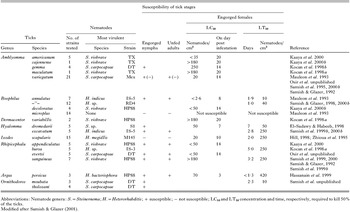
Table 1. Effects of entomopathogenic nematodes upon various tick species (Petri-dish tests)
 You have
Access
- 156
- Cited by