


1. INTRODUCTION
In a fluid where the mean-free-path is small compared with the dimensions of the system, the front of a shock wave is a few mean-free-paths thick (Zel'dovich & Raizer, Reference Zel'dovich and Raizer2002). As such, it is treated as a discontinuity in the fluid limit. In plasmas where the mean-free-path is much larger than the characteristic lengths involved, shock waves can also develop, with a front much smaller than the mean-free-path (Petschek, Reference Petschek1958; Sagdeev, Reference Sagdeev1966). Such shocks have been dubbed “collisionless shocks”. While their very existence was still under debate in the 1980s (Sagdeev & Kennel, Reference Sagdeev and Kennel1991), in-situ measurements of the earth bow shock have definitively confirmed they do exist, as its front is about 100 km thick, while the proton mean-free-path at this location is comparable with the Sun–Earth distance (Bale et al., Reference Bale, Mozer and Horbury2003; Schwartz et al., Reference Schwartz, Henley, Mitchell and Krasnoselskikh2011).
Being electromagnetic objects, the formation of these shocks from the encounter of two plasma shells, vastly differs according to the initial energy of the collision, or the presence and orientation of an external magnetic field (Treumann, Reference Treumann2009; Stockem et al., Reference Stockem, Fiuza, Bret, Fonseca and Silva2014). When two electron/ion plasmas collide for example, each one displays a Debye sheath at its border (Gurnett & Bhattacharjee, Reference Gurnett and Bhattacharjee2005), with a potential jump ~ k B T e/q high, where T e is the electronic temperature and q is the elementary charge. If the kinetic energy of the shells is smaller than this potential jump, the formation is mediated by the interaction of the Debye sheaths, and an electrostatic shock follows (Stockem et al., Reference Stockem, Fiuza, Bret, Fonseca and Silva2014). At higher energies, the shells easily overcome the Debye sheaths, and the formation is mediated by the counter-streaming instabilities, which grow when the two shells overlap (Stockem Novo et al., Reference Stockem Novo, Bret, Fonseca and Silva2015; Ruyer et al., Reference Ruyer, Gremillet, Bonnaud and Riconda2017).
Note that electrostatic shocks have already been produced in laboratory (Yuan et al., Reference Yuan, Li, Liu, Zhong, Zhu, Li, Wei, Han, Pei, Zhao, Li, Zhang, Liang, Wang, Weng, Li, Jiang, Du, Ding, Zhu, Zhu, Zhao and Zhang2017). Weibel-type shocks should require NIF-type installations. As such, they have not been produced yet, although experiments are scheduled in the near term (Park et al., Reference Park, Ross, Huntington, Fiuza, Ryutov, Casey, Drake, Fiksel, Froula, Gregori, Kugland, Kuranz, Levy, Li, Meinecke, Morita, Petrasso, Plechaty, Remington, Sakawa, Spitkovsky, Takabe and Zylstra2016). The present paper focuses on the second case, namely, high-energy collisions.
Consider, to simplify even further, the encounter of two identical, cold, pair plasmas. Being made up of particles of identical masses, they do not display any Debye sheaths at their border. If their initial velocity is relativistic, then the Weibel instability is the fastest growing one when the two shells overlap (Bret et al., Reference Bret, Gremillet and Dieckmann2010; Bret, Reference Bret2016a ). This instability generates magnetic filaments, which may be able to block the flow that keeps entering the overlapping region (Bret, Reference Bret2015a , Reference Bret b ).
Note that at least in pair plasmas, the formation process in the non-relativistic regime follows the same pattern (Dieckmann & Bret, Reference Dieckmann and Bret2017). Here the absence of Debye sheaths allows the two shells to overlap, regardless of their initial kinetic energy. Because the Weibel instability eventually relies on the Lorentz force repelling opposite currents (Bret, Reference Bret2012), its growth rate vanishes in the limit of zero counter-streaming velocity, and the two-stream instability takes the lead (Bret, Reference Bret2016a ). The two-stream instability grows, saturates, and generates enough turbulence to block the incoming flow, and build-up the shock (Dieckmann & Bret, Reference Dieckmann and Bret2017).
When a collisionless shock does form, it fulfills the Rankine–Hugoniot (RH) jump conditions to a very good approximation. The agreement is not perfect though, because particles reflected at the front, or accelerated, escape the RH budget (Stockem et al., Reference Stockem, Fiúza, Fonseca and Silva2012; Bret, Reference Bret2015a , Reference Bret b ). Yet, it was thought until recently that magnetohydrodynamics (MHD) was a good guide for the shock properties, even in the collisionless regime. The aim of this paper is to explain when microphysics allows for the fulfillment of the MHD prescriptions, and when it does not.
Section 2 is devoted to the analysis of particles’ trajectories in the Weibel filaments, when no external magnetic field is present. In accordance with particle-in-cell (PIC) simulations, such analysis concludes that a shock always forms for the simple system considered. Section 3 briefly reviews the MHD expectations for the kind of system treated here. Section 4 then explains how a flow-aligned magnetic field can hinder shock formation, even though such a field is perfectly decoupled from the fluid in the MHD approximation. Finally, Section 5 presents a series of PIC simulations confirming the analysis conducted in Section 4.
2. SHOCK FORMATION AND PARTICLE MOTION IN UNMAGNETIZED WEIBEL FILAMENTS
Let us start treating the unmagnetized case first. The two plasma shells have initial densities n
0, velocities
 $ \pm v_0{\bf e}_z$
and common Lorentz factor
 ${\rm \gamma} _0 = (1 - {\rm \beta} _0^2 )^{ - 1/2}$
, with β0 = v
0/c.
Here the plasma shells overlap and the overlapping region turns unstable. While many instabilities grow, the Weibel one is the fastest in the relativistic regime (Bret et al., Reference Bret, Gremillet and Dieckmann2010; Bret, Reference Bret2016a ). Choosing z as the axis of the flow (see Fig. 1) the Weibel instability grows with growth rate δW and develops at saturation a field which reads
 $${\bf B}_{\rm W} = B_{\rm f} \;{\rm \sin} \,kx\,{\bf e}_y,$$
where k is the fastest growing wave mode and B f the amplitude of the Weibel field at saturation. At this stage, we can therefore schematically model the system by the three regions represented in Figure 1-bottom. The left/right regions where the flow keeps streaming rightward/leftward, and the central region where stands the field describes by Eq. (1).
System considered. Two identical pair plasma shells run toward each other. As they overlap, the overlapping region turns unstable to the Weibel instability. At saturation, this instability generates the magnetic filaments, which are schematically represented on the bottom figure.

Working in the test particle approximation, the trajectory of particles entering this region can be analyzed numerically. Assume one of them is injected at x = x
0 with velocity
 ${\bf v} = v_0 {\bf e}_z$
. Proceeding to the following change of variables:
 $${\bf X} = k{\bf x},\,{\rm \tau} = t{\rm \omega} _{B_{\rm f}}\quad {\rm with}\quad {\rm \omega} _{B_{\rm f}} = \displaystyle{{qB_{\rm f}} \over {{\rm \gamma} _0mc}},$$
the equations of motion read
 $$\ddot X = - \dot Z\sin \,X,$$
 $$\ddot Y = 0,$$
 $$\ddot Z = \dot X\sin X$$
with initial conditions
 $${\bf X}({\rm \tau} = 0) = (kx_0,0,0),$$
 $$\dot {\bf X}({\rm \tau} = 0) = \left( {0,0,\displaystyle{{kv_0} \over {{\rm \omega} _{B_{\rm f}}}}} \right).$$
The symmetries of the problem allow one to restrict the analysis to X ∈ [0, π] (Bret, Reference Bret2015a , Reference Bret b ).
The analytical/numerical determination of the region of the phase-space parameters
 $(X_0,\dot Z_0)$
where the test particle does not stream through the filaments results in the shaded region in Figure 2. It turns out that regardless of its initial position and velocity, a particle entering the filaments keeps streaming through it if,
 $$k^{ - 1} \lt \displaystyle{{v_0} \over {{\rm \omega} _{B_{\rm f}}}},$$
which simply states that the Larmor radius in the peak field is larger than k −1, the coherence length of the Weibel field. On the contrary, that is, if the Larmor radius is much smaller than k −1, test particles are trapped in the Weibel filaments.
Whenever a particle in injected into the Weibel filaments with initial conditions out of the shaded area, it keeps streaming through the filaments.

Since B
f can be assessed through
 ${\rm \omega} _{B_{\rm f}}{\rm \sim} {\rm \delta} _{\rm W}$
(Davidson et al., Reference Davidson, Hammer, Haber and Wagner1972; Grassi et al., Reference Grassi, Grech, Amiranoff, Pegoraro, Macchi and Riconda2017), a little algebra shows that Eq. (8) is never fulfilled at saturation of the Weibel instability. In other words, the Weibel filaments at saturation are large enough to block the incoming flow. As a result, the density in the overlapping region increases until the shock forms (Bret et al., Reference Bret, Stockem, Fiúza, Pérez Álvaro, Ruyer, Narayan and Silva2013a
, Reference Bret, Stockem, Fiuza, Ruyer, Gremillet, Narayan and Silva
b
).
Before we turn to the magnetized case, let us briefly remind the predictions of MHD for the collision of two such plasma shells.
3. MHD PREDICTIONS
Our two plasma shells are cold and collide at relativistic velocities. We thus expect a shock to be formed. For γ 0 ≫ 1, and measuring all quantities in the downstream reference frame, we expect a density jump ~ 4 and a shock front velocity ~ c/3 (Blandford & McKee, Reference Blandford and McKee1976; Marcowith et al., Reference Marcowith, Bret, Bykov, Dieckman, Drury, Lembège, Lemoine, Morlino, Murphy, Pelletier, Plotnikov, Reville, Riquelme, Sironi and Stockem Novo2016; Pelletier et al., Reference Pelletier, Bykov, Ellison and Lemoine2017). Such are indeed the values consistently obtained in PIC simulations of the process. Although binary collisions are absent, the fields are capable of isotropizing the particles’ distribution functions, so that MHD conclusions remain valid (Bret, Reference Bret2015a , Reference Bret b ).
How does a flow-aligned external field modify these conclusions? The key point here is that in the case of a flow-aligned field, the field and the fluid are mathematically decoupled (Lichnerowicz, Reference Lichnerowicz1976; Majorana & Anile, Reference Majorana and Anile1987). As a result, head-on collision of two plasma shells over a flow-aligned field gives, according to MHD, exactly the same shock, regardless of the field strength. The density jump at the shock front should therefore be the same.
Such are the macro-physical prescriptions: no field effects. However, these prescriptions apply insofar as particles are trapped in the overlapping region, with an isotropized distribution function. Let see now how a flow-aligned field can jeopardize this property from the microscopic level.
4. PARTICLE MOTION IN MAGNETIZED WEIBEL FILAMENTS, DEPARTURE FROM MHD PREDICTIONS
We here elaborate further on Section 2 by considering a flow-aligned field
 ${\bf B}_0$
. One can expect such a “guiding” field to precisely guide the particles, making them more difficult to trap. We therefore include now an external field
 ${\bf B}_0 = B_0 \;{\bf e}_z$
in the study. Again, the trajectory of a test particle injected in the filaments is considered. System (3) now reads (Bret, Reference Bret2016b
)
 $$\ddot X = - \dot Z\sin X + {\rm \alpha} \dot Y,\quad {\rm with}\quad {\rm \alpha} = B_0/B_{\rm f},$$
 $$\ddot Y = - {\rm \alpha} \dot X,$$
 $$\ddot Z = \dot X\sin X$$
still with initial conditions (6). The evolution of Figure 2 when the external magnetic field
 ${\bf B}_0$
increases, is pictured of Figure 3. Remarkably, beyond
 $${\rm \alpha} \gt 1/2,$$
all test particles stream through the filaments, regardless of their initial position and velocity. This suggests that a strong enough flow-aligned field could jeopardize the ability of the filaments to stop the flow and initiate the shock formation. Such a behavior would therefore stand in sharp contrast with the MHD predictions.
Evolution of Figure 2 when the external magnetic field
 ${\bf B}_0$
measured by α = B
0/B
f increases. Beyond α > 1/2, all test particles stream through the filaments, regardless of their initial position and velocity.

Before we check this hypothesis with PIC simulations, we need to elaborate on the criteria (12) by expressing B
f in terms of the parameters of the problem. Here also, we consider the Weibel field reaches saturation when
 ${\rm \delta} _{\rm W} = {\rm \omega} _{B_{\rm f}}$
(Davidson et al., Reference Davidson, Hammer, Haber and Wagner1972; Grassi et al., Reference Grassi, Grech, Amiranoff, Pegoraro, Macchi and Riconda2017). In the presence of a flow-aligned magnetic field, the growth rate of the Weibel instability reads (Stockem et al., Reference Stockem, Lerche and Schlickeiser2006; Bret, Reference Bret2016a
)
 $${\rm \delta} _{\rm W} = {\rm \omega} _{\rm p}\sqrt {2{\rm \beta} _0^2 - {\rm \sigma}}, $$
where
 $${\rm \sigma} = \displaystyle{{B_0^2 /4{\rm \pi}} \over {{\rm \gamma} _0n_0mc^2}},$$
 $${\rm \omega} _{\rm p} = \sqrt {\displaystyle{{4{\rm \pi} n_0q^2} \over {{\rm \gamma} _0m}}}. $$
Inserting Eq. (13) into
 ${\rm \delta} _{\rm W} = {\rm \omega} _{B_{\rm f}}$
, we find the criteria (12) is eventually equivalent to,
 $${\rm \sigma} \gt \displaystyle{2 \over 3}.$$
The analysis of particle trajectories within the Weibel filaments suggests therefore that we could observe some departure from the MHD prescription beyond σ = 2/3. Let us now check it with PIC simulations.
5. PIC SIMULATIONS
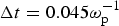
We use the three-dimensional (3D) code TRISTAN-MP, which is a Massively Parallel evolution of the code TRISTAN (Buneman, Reference Buneman, Matsumoto and Omura1993; Spitkovsky, Reference Spitkovsky, Bulik, Rudak and Madejski2005). The space domain simulated is 2D, while the fields and the velocities are tracked in 3D. The setup sketched in Figure 1 is simulated by the reflecting wall method, where a reflecting wall is positioned along the x-axis, at the z-position where the two shells make contact. Only the right shell is modeled. It first moves leftward, bounces back against the wall, and the bounced part interacts with the flow, which keeps flowing from the right (Spitkovsky, Reference Spitkovsky2008; Dieckmann et al., Reference Dieckmann, Ahmed, Sarri, Doria, Kourakis, Romagnani, Pohl and Borghesi2013). Each cell is initialized with 16 electrons and 16 positrons. Each cell is c/ωp/10 large, and the time step is
 ${\rm \Delta} t = 0.045{\rm \omega} _{\rm p}^{ - 1} $
.
The initial Lorentz factor is set to γ
0 = 10, and we scan the σ-window 0 < σ < 3. Some simulations have been run with γ
0 = 30, showing the same effects, as expected from criteria (15). Figure 4-top shows the density profiles of the system at time
 $t = 450{\rm \omega} _{\rm p}^{ - 1} $
. At low magnetization, say σ < 0.6, a shock if already formed, with a density jump ~4 in accordance with the RH jump conditions. Yet, as magnetization increases, the “downstream” density steadily departs from the MHD predictions. As expected from the analysis performed in Section 4, the shock formation is hindered by the guiding field.
PIC simulations of the process for various values of σ. The plots show the density profiles at
 $t = 450{\rm \omega} _{\rm p}^{ - 1} $
and
 $t = 3600{\rm \omega} _{\rm p}^{ - 1} $
. The angle θ between the flow and the field is 0.

Could it be that
 $t = 450{\rm \omega} _{\rm p}^{ - 1} $
is too short a time for the shock to form at high σ’s? Previous works on shock formation found that the formation process takes a few tens of
 ${\rm \delta} _{\rm W}^{ - 1} $
(Bret et al., Reference Bret, Stockem, Narayan and Silva2014, Reference Bret, Stockem Novo, Narayan, Ruyer, Dieckmann and Silva2016). In the present case, this translates to
 ${\rm \sim} 30{\rm \omega} _{\rm p}^{ - 1} $
, at most. The snapshots in Figure 4-top are thus taken long after the expected shock formation time.
In order to further check the observed departure from MHD prescriptions, Figure 4-bottom shows the same profile at time
 $t = 3600{\rm \omega} _{\rm p}^{ - 1} $
. Again, while a MHD-type shock has been formed and propagates for small σ’s, the MHD departure is confirmed for large ones. Noteworthy, the width of the density jump dramatically increases with σ. At low magnetization, when the MHD shock is formed, the front is about ~70c/ωp thick. In contrast, the transition from the upstream to the “downstream” for σ = 3 reaches ~3000c/ωp. In the respect, “density gradient” seems more appropriate than “density jump” to describe the density profile.
If the “downstream” were isotropized, the MHD equations would apply. We can therefore expect an increasing deviation from isotropy in the downstream at high magnetization, when a departure from the MHD prescriptions is observed. In order to assess the isotropy of the distribution function, we compute
 $${\rm \varphi} = \displaystyle{{{\rm Var}(\,p_y) + {\rm Var}(\,p_z)} \over {2{\rm Var}(\,p_x)}},$$
where Var(x) is the statistical variance of the variable x. This quantify when measured in the reference frame of the wall, equals unity for the downstream of a formed shock, and tend to
 $ \propto \;{\rm \gamma} _0^{ - 1} $
in the far upstream (instead of 1, because of the relativistic contraction). Its value is plotted in Figure 5 at times t = 450 and
 $3600{\rm \omega} _{\rm p}^{ - 1} $
. We observe what was expected: while the downstream of MHD shocks at low σ’s is isotropized with φ = 1, this part of the system is no longer so at high σ’s. A closer look at the distribution function in those cases shows it retains a two beams nature, in line with the micro physics analysis conducted in Section 4.
Measure φ of the isotropy of the distribution function as defined by Eq. (16). At low magnetization, when a shock is formed, it equals unity in the downstream indicating an isotropic medium. At high magnetization, the downstream is not isotropized, even at late times. A closer scrutiny shows that it retains a two beams nature. The angle θ between the flow and the field is 0.

6. CONCLUSION
In conclusion, we have found that too strong a flow-aligned magnetic field produces a significant departure from MHD expectations in shock formation, even though MHD tells such a field should not have any effects of the process. The magnetization threshold corresponds to σ > 2/3, and is independent of the initial Lorentz factor.
This departure from MHD is apparently explained by the micro-physics analysis conducted in Section 4. When the guiding field becomes too strong, particles tend to follow the field, and can no longer be trapped in the Weibel filaments. The density in the overlapping region still increases but not up to the expected density jump. The analysis of the “downstream” distribution function in that case shows it retains a two beams nature. Note also that simulations have been run tilting the field by an angle θ = 5° in order to check the present effect is not strictly restricted to θ = 0°. Similar results have been found, evidencing the robustness of the effect.
At this junction, several questions arise:
-
• Is the shock formation simply delayed, or really cancelled? Does the “downstream” eventually isotropize, even at high magnetization, or does the guiding field always forbid it?
-
• What are the properties of these “failed shocks”? In particular, do they accelerate particles efficiently? Do they radiate?
-
• Is it possible to modify the MHD equations so that they render the observed micro-physics? Is it possible to express the anisotropy in terms of the field, using then modified MHD equations accounting for an anisotropic downstream (Gerbig & Schlickeiser, Reference Gerbig and Schlickeiser2011), to retrieve the observed density jump?
These questions will be the objects of future works.
ACKNOWLEDGMENTS
A.B. acknowledges grants ENE2013-45661-C2-1-P, PEII-2014-008-P, and ANR- 14-CE33-0019 MACH. A.P. acknowledges support by the European Union Seventh Framework Program (FP7/2007-2013) under grant agreement no. 618499, and support from NASA under grant no. NNX12AO83G. R.N.’s research was supported in part by the NASA grant TCAN NNX14AB47G. O.S. acknowledges support by NASA through Einstein Post-doctoral Fellowship number PF4-150126 awarded by the Chandra X-ray Center, operated by the Smithsonian Astrophysical Observatory for NASA under contract NAS8-03060. M.E.D. acknowledges grant SNIC2015-1-305.



