





Impact statement
Cancer stigma is a hidden but consequential barrier to the diagnosis and treatment of cancer in sub-Saharan Africa, driven in no small part by its significant effects on mental health. With the incidence of cancer rising, interventions that address the multifaceted drivers of stigma are urgently needed. Despite the timely nature of this issue, there remain significant deficits in stigma-focused care across the region. This article highlights that stigma operates alongside myriad cultural and social structural factors that must be addressed in culturally sensitive ways to be effective. By synthesizing evidence across cultural, psychological and structural aspects of stigma, this article provides a comprehensive examination of a driving force behind increased cancer mortality. These insights can help guide policymakers, clinicians and global health professionals in designing multilevel interventions and supporting the lives of patients with cancer in sub-Saharan Africa.
Introduction
Cancer-related stigma is increasingly recognized as a significant yet largely unaddressed influence on cancer mortality due to stigma-driven screening avoidance, late presentation, low treatment adherence and worsened quality of life (Corrigan et al. Reference Corrigan, Knettel and Suneja2020a). Specifically, people affected by cancer in sub-Saharan Africa face a complex and interrelated set of challenges in a unique sociocultural environment, specifically in low-resource settings marked by inadequate infrastructure and lack of availability of high-quality cancer care (Tessema et al., Reference Tessema, Worku, Tesema, Alamneh, Teshale, Yeehaw, Alen, Ayalew and Liyew2022). While service-delivery factors are undoubtedly major contributors to poor outcomes, challenges are further exacerbated by pervasive stigma (Bray et al., Reference Bray, Laversanne, Sung, Ferlay, Siegel, Soerjomataram and Jemal2024). Notably, cancer incidence is rapidly rising, and survival rates in sub-Saharan Africa are among the lowest globally (Henry et al., Reference Henry, Stephens, Galyean, Young, Zickmund, Knettel, Bartlett, Watt, Pollak, Ubel, Fagerlin and Suneja2023). Addressing cancer stigma is therefore consistent with global mental health policy priorities, including the WHO’s Comprehensive Mental Health Action Plan 2013–2030, which calls for the integration of mental health into broader health systems and the reduction of stigma as a barrier to care-seeking (World Health Organization, 2021). In sub-Saharan Africa, stigma-reduction interventions that leverage existing community infrastructure represent a scalable pathway for expanding mental health support within cancer care systems.
Stigma can operate in tandem with structural limitations, intensifying delays in recognition and treatment-seeking behavior. About 85% of cancer patients report experiencing at least one type of stigma (Squiers et al., Reference Squiers, Siddiqui, Kataria, Dhillon, Aggarwal, Bann, Lynch and Nyblade2021), and stigma can worsen psychological outcomes in cancer patients (Yilmaz et al., Reference Yilmaz, Dissiz, Usluoğlu, Iriz, Demir and Alacacioglu2019). Specifically, in one study, negative attitudes toward cancer were associated with an ~2.5-fold higher likelihood of depression (Cho et al., Reference Cho, Smith, Choi, Kim, Chang, Park, Guallar and Shim2013). Ultimately, worsening mental health and delayed diagnoses associated with stigma may contribute to excess mortality among cancer patients (Chang and Lai, Reference Chang and Lai2022), underscoring the urgency of addressing cancer stigma in the sub-Saharan African region.
In this context, the integration of stigma-targeting care faces unique challenges, but these can be addressed through a multilevel, culturally competent framework. Doing so is essential for improving survival rates and mental health, and for promoting health equity among cancer patients on a global level. This perspective synthesizes existing literature on cancer stigma in sub-Saharan Africa to inform multilevel interventions. Multilevel intervention frameworks recognize how issues operate simultaneously at different levels and how effective mitigation strategies require tailored approaches at each level. Rather than employing a formal systematic search, this perspective draws on relevant literature to identify actionable priorities to address cancer stigma in the region. The proposed framework draws on the Social-Ecological Model (SEM), which conceptualizes health behaviors as shaped by interacting individual, interpersonal, community and policy-level factors (Bronfenbrenner, Reference Bronfenbrenner1979; McLeroy et al., Reference McLeroy, Bibeau, Steckler and Glanz1988). This model has been successfully applied to stigma-reduction efforts in HIV and other chronic illness contexts in sub-Saharan Africa (Henry et al., Reference Henry, Stephens, Galyean, Young, Zickmund, Knettel, Bartlett, Watt, Pollak, Ubel, Fagerlin and Suneja2023) and is well-suited to address the multilevel drivers of cancer stigma described in this perspective.
Cultural and societal drivers of stigma in sub-Saharan Africa
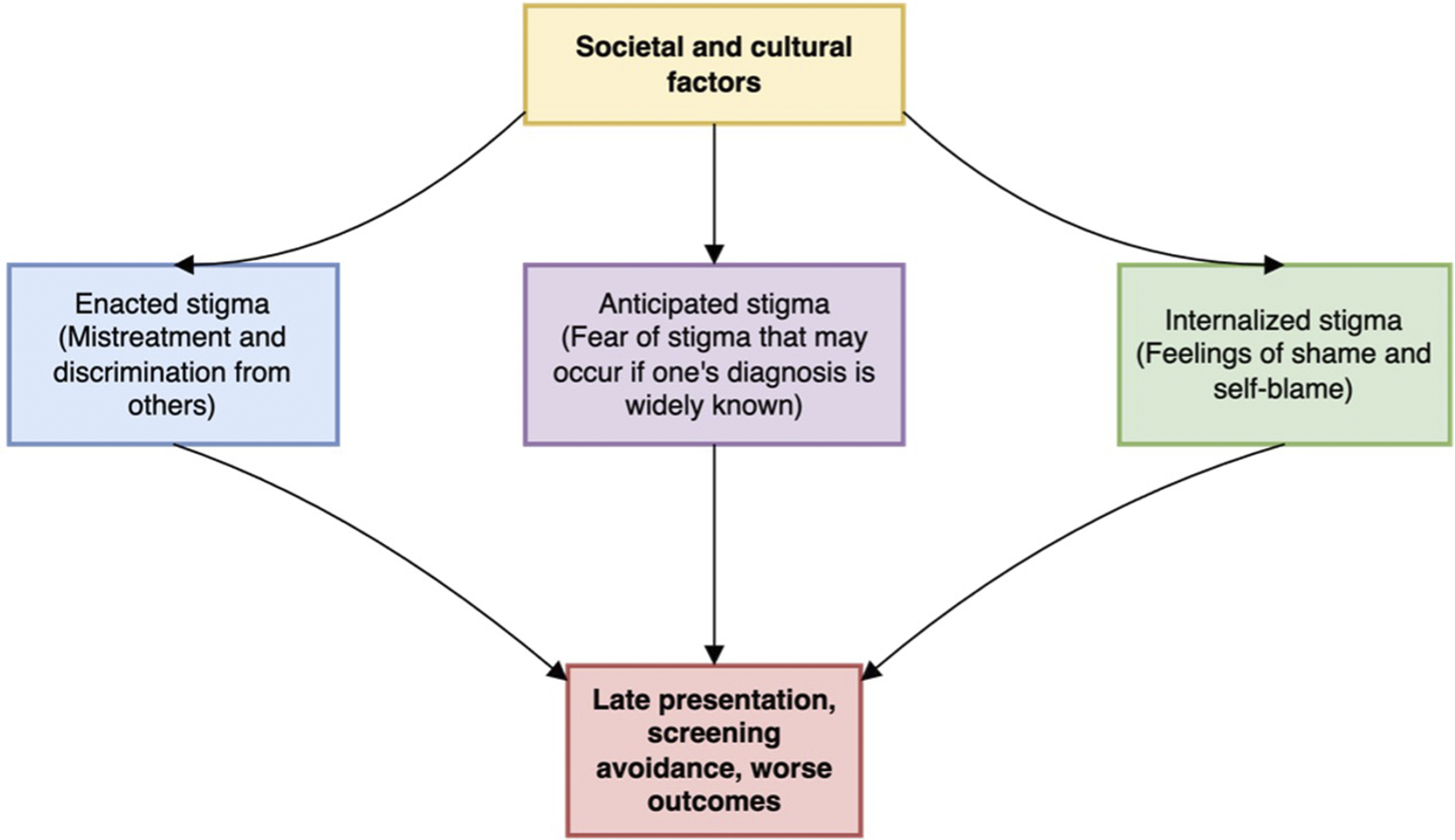
Stigma is defined as a social process characterized by labeling, negative stereotyping and power asymmetry (Andersen et al., Reference Andersen, Varga and Folker2022). Stigma is a multilevel challenge and can be conceptualized as internalized, or self-stigma, enacted, involving actual mistreatment and discrimination by others and anticipated, involving the fear of stigma that might occur if one’s diagnosis is shared (Knettel et al., Reference Knettel, Minja, Msoka, Tarimo, Katiti, Pan, Mwobobia, Juhlin, Knippler, Watt, Suneja, Kimani, Abouelella, Mmbaga and Osazuwa-Peters2024; Mwobobia et al., Reference Mwobobia, Knettel, Headley, Msoka, Tarimo, Katiti, Juhlin and Osazuwa-Peters2024) (Figure 1). Internalized stigma often involves cancer patients experiencing feelings of shame, withdrawing from social life due to their cancer, feeling uncomfortable sharing their diagnosis or actively hiding their diagnosis (Squiers et al., Reference Squiers, Siddiqui, Kataria, Dhillon, Aggarwal, Bann, Lynch and Nyblade2021). Enacted stigma can affect patients through discrimination in employment, housing or even physical harassment. Anticipated stigma places a significant mental burden on cancer patients due to their anxieties about being devalued by their social network (Earnshaw et al., Reference Earnshaw, Quinn and Park2012). Furthermore, anticipated stigma and the associated strain on a cancer patient’s mental health can dissuade open communication with healthcare providers, thus delaying effective treatment (Chapple et al., Reference Chapple, Ziebland and McPherson2004). These different dimensions of stigma interact to create a psychological burden that is often cyclical and far-reaching, shaping mental well-being, quality of life and cancer outcomes, including depression, social withdrawal, workplace discrimination and treatment dropout (Yilmaz et al., Reference Yilmaz, Dissiz, Usluoğlu, Iriz, Demir and Alacacioglu2019; Amini-Tehrani et al., Reference Amini-Tehrani, Zamanian, Daryaafzoon, Andikolaei, Mohebbi, Imani, Tahmasbi, Foroozanfar and Jalali2021).
Conceptual model demonstrating how societal and cultural factors can cause three types of cancer-related stigma and subsequent worse health outcomes.

Figure 1. Long description
The flowchart consists of three levels connected by arrows.
* Top Level: A yellow box labeled Societal and cultural factors. Three arrows point downward from this box to the middle row.
* Middle Level: Three boxes arranged horizontally.
1. Left (blue box): Enacted stigma (Mistreatment and discrimination from others).
2. Center (purple box): Anticipated stigma (Fear of stigma that may occur if one’s diagnosis is widely known).
3. Right (green box): Internalized stigma (Feelings of shame and self-blame).
* Bottom Level: A red box labeled Late presentation, screening avoidance, worse outcomes. Three arrows point from each of the middle boxes down toward this final box.
In the context of sub-Saharan Africa, stigma around cancer is often driven by deeply rooted cultural misconceptions about the illness – for example, there are prevalent beliefs that religious punishment manifests as cancer, or that the disease can be contagious, spread through food or clothing (Maingi and Arch, Reference Maingi and Arch2025). In fact, one study showed that cancer is sometimes viewed in sub-Saharan Africa as the consequence of being “bewitched” (Oystacher et al., Reference Oystacher, Blasco, He, Huang, Schear, McGoldrick, Link and Yang2018). Ultimately, these falsehoods may be associated with increased social isolation and mental stress in cancer patients. These notions may be reinforced by inaccurate messaging from traditional or religious healers within sub-Saharan African communities (Mwobobia et al., Reference Mwobobia, Knettel, Headley, Msoka, Tarimo, Katiti, Juhlin and Osazuwa-Peters2024). Unlike the formal healthcare system, these healers are unregulated, yet they are key leaders who hold considerable influence and often serve as the first point of contact for medical advice. Notably, more people seek traditional medicine to treat cancer in Africa than in any other global region (James et al., Reference James, Asiimwe, Wardle, Mwaka and Kasilo2022), making thoughtful engagement with healers essential.
Cancer stigma and associated mental distress are particularly common in cancers associated with sexual and reproductive health, such as cervical cancer, penile cancer and anal cancer. These cancers often carry connotations of socially stigmatized behaviors such as promiscuity or homosexuality (Gugliotti and Miskolci, Reference Gugliotti and Miskolci2024). For example, HPV infections and associated cervical cancer are often seen as the consequence of women’s unfaithfulness, and one significant barrier to screening for anal cancer for men is discomfort surrounding disclosure of sexual experiences (Sam et al., Reference Sam, Dang, Iu, Luo, Xiang and Smith2025). These associations can lead to intersectional stigma: layered discrimination based not only on health status but also on other aspects such as sexuality and gender norms (Mwobobia et al., Reference Mwobobia, Sardana, Abouelella, Posani, Ledbetter, Graton, Osazuwa-Peters and Knettel2025). Cancers like breast cancer and testicular cancer may be perceived as threatening the traditional concepts of femininity, masculinity, fertility and virility that may significantly shape one’s sense of self and, thus, their mental state (Dax et al., Reference Dax, Ftanou, Tran, Lewin, Wallace, Seidler and Wiley2022). These negative perceptions, driven primarily by societal norms, can lead individuals with cancer to conceal symptoms or delay care due to worries about the dissolution of intimate relationships (Zarei et al., Reference Zarei, Kazemi, Bahrami and Beigi-Harchegani2025). Thus, stigma may influence not only health behaviors but also disrupt family structures, adding to the mental health burden on patients.
Beyond these psychosocial effects, visible symptoms and treatment side effects are also highly stigmatizing, including visible lesions, hair loss and surgical outcomes such as mastectomy. A survey of breast cancer patients in sub-Saharan Africa found that mastectomies are seen as mutilation and as processes that leave a woman “incomplete” (Ogunkorode et al., Reference Ogunkorode, Holtslander, Ferguson, Maree, Anonson and Ramsden2021). These physical changes, which often serve as involuntary disclosures of a person’s cancer status, are likely to increase social isolation, impact intimacy and lead to feared or real abandonment by one’s partner (Mwobobia et al., Reference Mwobobia, Knettel, Headley, Msoka, Tarimo, Katiti, Juhlin and Osazuwa-Peters2024, Reference Mwobobia, Sardana, Abouelella, Posani, Ledbetter, Graton, Osazuwa-Peters and Knettel2025). Left unaddressed, these fears can evolve into long-term mental health issues and may delay or prevent treatment altogether.
As culture, rural/urban setting and education vary across sub-Saharan Africa, cancer stigma is unlikely to be uniform across the region. While there exists limited literature on the differences in cancer stigma between countries in sub-Saharan Africa, research shows marked differences in HIV-related stigma incidence between sub-Saharan African countries (Teshale and Tesema, Reference Teshale and Tesema2022). Interventions must therefore involve tailored input from local health officials and community members.
Cancer stigma has been unaddressed in sub-Saharan Africa
Unlike HIV, which is endemic in sub-Saharan Africa and has a comparatively well-described stigma literature, there is a noticeable paucity of both observational and interventional data on cancer stigma in the region (Corrigan et al. Reference Corrigan, Knettel, Ho, Carr, Shah, Cahill, Chino, Watt and Suneja2020b). We recently conducted a systematic review of research examining cancer stigma in Africa and identified a total of 98 studies on the topic, including distinct focus areas on adult cancers, pediatric cancers and HPV and cervical cancers (Mwobobia et al., Reference Mwobobia, Sardana, Abouelella, Posani, Ledbetter, Graton, Osazuwa-Peters and Knettel2025). Disappointingly, only two of these identified studies described a stigma reduction intervention, both of which were brief educational interventions for improving knowledge and reducing stigma related to cervical cancer (Rosser et al., Reference Rosser, Njoroge and Huchko2015; Nkwonta et al., Reference Nkwonta, Hilfinger Messias, Felder and Luchok2021). Additionally, neither study provided support directly to people with cancer. These findings and the lack of longitudinal interventions represent a significant research gap in a region with an increasing incidence of cancer and a missed opportunity to address a growing burden of disease through effective interventions. This gap additionally reflects a larger pattern of underfunding for psychosocial oncology interventions across the region.
This gap in intervention research also reflects a broader lack of attention toward psychological care for cancer patients. Mental health and oncology are not commonly integrated in a sub-Saharan African context. In fact, one systematic review found that the prevalence of optimal, multidimensional cancer care in sub-Saharan Africa was low, with nearly two-thirds of cancer patients reporting unmet needs (Bore et al., Reference Bore, Dadi, Ahmed, Hassen, Kibret, Kassa, Amsalu, Ketema, Perry, Alemu, Shifa, Alebel, Leshargie and Bizuayehu2024). Expanding this evidence base is essential for guiding sustainable, scalable programming.
Cancer stigma also has direct financial and social consequences. Survivors may suffer high medical expenses, loss of income or loss of employment due to discrimination, leading to feelings of burden and a desire for hastened death (Mwobobia et al., Reference Mwobobia, Knettel, Headley, Msoka, Tarimo, Katiti, Juhlin and Osazuwa-Peters2024), which can worsen or trigger depression and anxiety. In sub-Saharan Africa, where collectivist ideals prioritize communal harmony and familial viewpoints (Appiah et al., Reference Appiah, Raviola and Weobong2024), the loss of social support networks due to stigma is especially damaging. Patients may struggle to pursue treatment that risks alienating them from their community. These anticipated threats to social status may significantly increase the risk of severe mental health consequences such as depression and anxiety, both of which are critical comorbidities with cancer (Alwhaibi et al., Reference Alwhaibi, AlRuthia and Sales2023). In fact, among the 20 million people who will be newly diagnosed with cancer in 2025 globally, it is estimated that 30,000–40,000 of these individuals will die by suicide (Rafiei et al., Reference Rafiei, Pashazadeh Kan, Raoofi, Shafiee, Masoumi, Bagheribayati, Javan Biparva, Noorani Mejareh, Sanaei, Dolati, Abdollahi, Khani, Parnian, Nosrati Sanjabad and Ghashghaee2024). Specifically, suicide mortality in cancer patients is up to four times higher than in the general population, depending on cancer type (Osazuwa-Peters et al., Reference Osazuwa-Peters, Simpson, Zhao, Boakye, Olomukoro, Deshields, Loux, Varvares and Schootman2018). Remarkably, there is no data estimating the prevalence of suicide among people with cancer on the African continent, a striking gap given the growing incidence of cancer in the region. This gap means that policymakers have little incentive or guidance to pursue evidence-based policy solutions that effectively address the issues people with cancer face in a structural and sustainable manner. Thus, the relative lack of attention to cancer stigma in sub-Saharan Africa poses significant challenges to developing comprehensive, evidence-based interventions.
Developing a multilevel intervention to address cancer stigma in sub-Saharan Africa
Individual interventions
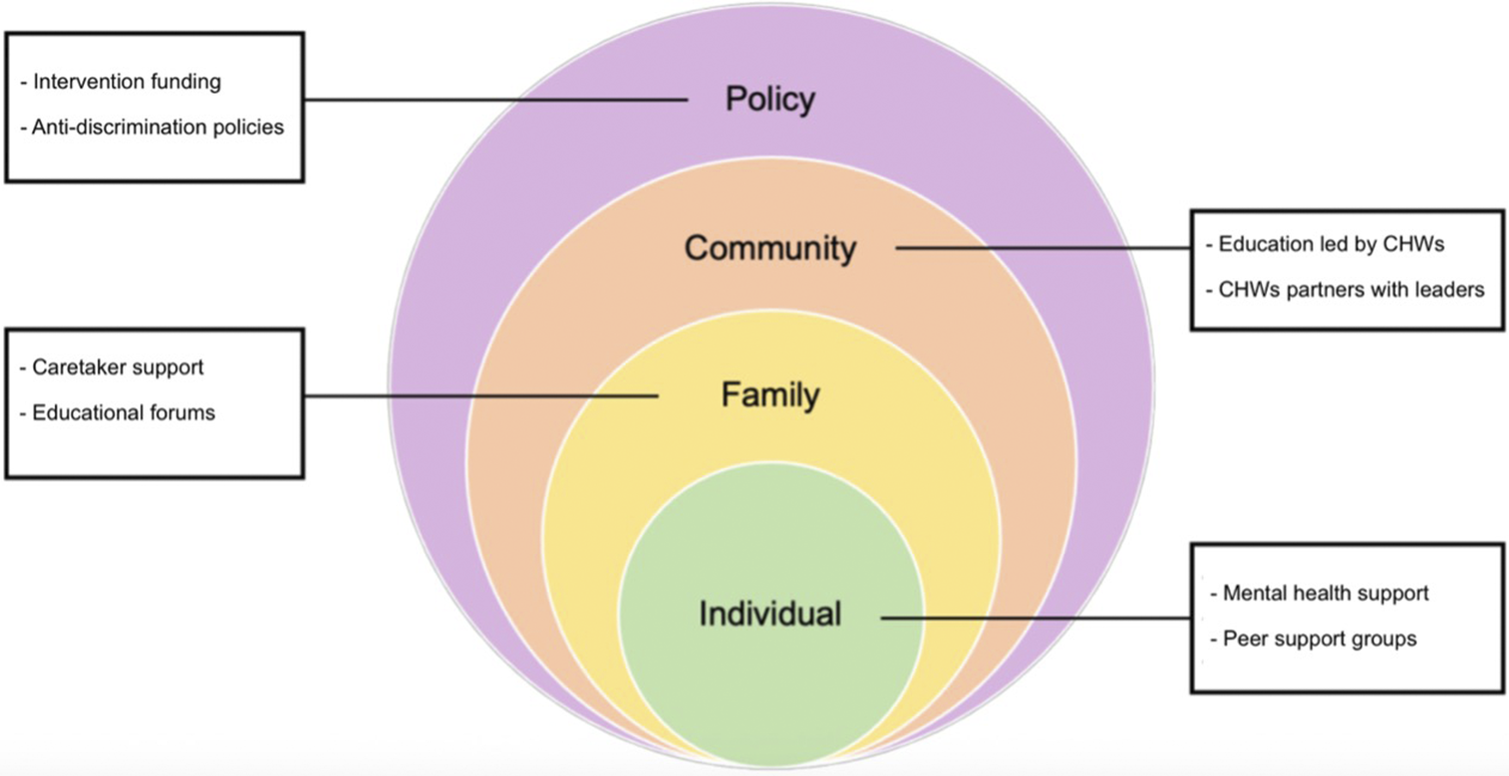
Given that the drivers of stigma in sub-Saharan Africa are deeply embedded in cultural and societal norms, effective interventions will likely need to be both multilevel and multifaceted (Figure 2). This includes four categories of intervention that target stigma: individual, interpersonal, community and policy interventions. At the individual level, interventions should focus on reducing internalized stigma through education and mental health support. The awareness of shared experiences can be therapeutic, reducing the feelings of internalized shame and isolation that often accompany a diagnosis. Peer support for individuals with cancer has been shown to improve quality of life outcomes and even extend survival as participants exchange coping strategies and witness examples of recovery (Holtz et al., Reference Holtz, Mitchell, Strand and Hirko2024). Methods such as forums and open dialogues facilitated by mental health professionals or trained social workers have been proven to reduce mental distress (Li et al., Reference Li, Laginha, Boyle, Daly, Dinner, Hirsch, Hobbs, Kirsten, Mazariego, McAuley, O’Brien, O’Reilly, Taylor, Tobin, Lewis and Smith2025). Efforts can foster a sense of individual empowerment for cancer patients to seek treatment and educate their own families, and reduce internalized stigma, with important implications for survivorship.
Socio-ecological model of stigma-reduction interventions illustrating multilevel targets for addressing cancer stigma.

Figure 2. Long description
The diagram consists of four nested circles.
* At the center is a green circle labeled Individual. A line connects it to a box on the right containing: Mental health support and Peer support groups.
* The next layer outward is a yellow circle labeled Family. A line connects it to a box on the left containing: Caretaker support and Educational forums.
* The third layer is an orange circle labeled Community. A line connects it to a box on the right containing: Education led by C H Ws and C H Ws partners with leaders.
* The outermost layer is a purple circle labeled Policy. A line connects it to a box on the left containing: Intervention funding and Anti-discrimination policies.
In contexts such as sub-Saharan Africa, where individual access to psychiatrists is relatively limited, peer networks and interactions can serve as sources of consistent support and individual mental strength (Atewologun et al., Reference Atewologun, Adigun, Okesanya, Hassan, Olabode, Micheal, Ahmed, Ukoaka, Idris, Oso and Lucero-Prisno2025). This objective may be achieved through the recital of shared experience and storytelling, which are both effective and tested means of oral communication, knowledge transmission and fostering of collective resilience in many African settings.
Interpersonal interventions
While addressing the needs of people with cancer themselves is undoubtedly essential, sustainable interventions to combat stigma should incorporate a holistic approach and thus address the family of a cancer patient as well. Research shows that there exists limited psychosocial support for the families of cancer patients in sub-Saharan Africa (Guan et al., Reference Guan, Qan’ir, Conklin, Zimba, Bula, Jumbo, Wella, Mapulanga, Bingo, Chilemba, Haley, Montano, Bryant and Song2023). Family-centered stigma-reduction interventions will likely be effective in many sub-Saharan African settings due to prevailing collectivist ideals in various parts of the region. Mental health support for family members, either in a clinic setting or through home visits, can help facilitate stronger social networks for the patient while preventing misinformation or resentment. These interventions can take the form of support groups or counseling sessions led by healthcare workers. Additionally, involving families in interventions can prevent caretaker burnout (Wang et al., Reference Wang, Xu, Yu, Liu, Han, Zhao and Zhang2025). Ultimately, the feasibility of family-centered approaches will vary depending on context, including health systems capacity, the availability of trained facilitators and familial norms.
Community interventions
Education and cancer awareness interventions may help to mitigate stigma and decrease misconceptions related to cancer. Key to this will be evidence-based, culturally informed community engagement and education of traditional healers and religious leaders, whose established trust with their communities can help them serve as effective public health communicators (Oystacher et al., Reference Oystacher, Blasco, He, Huang, Schear, McGoldrick, Link and Yang2018; Mwobobia et al., Reference Mwobobia, Knettel, Headley, Msoka, Tarimo, Katiti, Juhlin and Osazuwa-Peters2024; Mwobobia et al., Reference Mwobobia, Sardana, Abouelella, Posani, Ledbetter, Graton, Osazuwa-Peters and Knettel2025). These community leaders can be trained to become strategic partners to disseminate cancer-related health information and counter disinformation, making substantial inroads with sub-Saharan African communities. These initiatives may contribute to increases in cancer screening, early treatment, improved engagement with care, better mental health among cancer patients and ultimately higher survival rates (Mwobobia et al., Reference Mwobobia, Knettel, Headley, Msoka, Tarimo, Katiti, Juhlin and Osazuwa-Peters2024). This intervention model has been shown to be successful in the case of HIV-related stigma and could be adopted to address cancer stigma (Henry et al., Reference Henry, Stephens, Galyean, Young, Zickmund, Knettel, Bartlett, Watt, Pollak, Ubel, Fagerlin and Suneja2023). Having community leaders explain stigma via traditional and social media can also be helpful and cost-effective, especially for those uncomfortable with the relatively public nature of open forums or without the ability to attend in-person interventions (Metwally et al., Reference Metwally, Blumberg, Ladabaum and Sinha2017).
Additionally, given the absence of a readily available public health workforce and the relative shortage of mental health professionals in many sub-Saharan African settings, task-shifting to include community health workers will be critically important in establishing community-level interventions. Community health workers are vital in low-resource settings, serving as a critical link between the community and formal care systems (Anstey Watkins et al., Reference Anstey Watkins, Griffiths and Goudge2021). In fact, nearly 80% of the sub-Saharan African population relies heavily on community health workers for care (Idriss-Wheeler et al., Reference Idriss-Wheeler, Ormel, Assefa, Rab, Angelakis, Yaya and Sohani2024). They can be particularly effective for populations that perceive formal healthcare settings as stigmatizing (Carrara et al., Reference Carrara, Bobbili and Ventura2023). Therefore, future interventions should include these valued and trusted members of the healthcare workforce in this region to help address distrust regarding the formal healthcare system. These workers can be equipped not only with clinical skills but also with foundational mental health literacy (Barnett et al., Reference Barnett, Gonzalez, Miranda, Chavira and Lau2018). This training may enable them to recognize signs of mental health distress and dispel any misconceptions that drive community-based stigma and associated issues. Factors such as local health system capacity and the availability of CHWs will be important determinants of the effectiveness of interventions.
Policy interventions
Finally, policy-based interventions to address discrimination against cancer patients in the workplace, fund community-based interventions and promote widespread public education campaigns throughout the sub-Saharan African region are critical. While community health workers and traditional healers have great potential to reduce stigma in sub-Saharan Africa, structural constraints must be addressed. Many sub-Saharan African health systems face chronic underfunding, attrition of CHWs and a limited capacity to integrate new training/programming. Therefore, dedicated and sustained financing is needed to ensure the effectiveness of stigma-reduction interventions and retention of CHWs. Policymakers can help integrate stigma-reduction training into existing CHW programs to strengthen trust while simultaneously remaining cost-effective (Miyares et al., Reference Miyares, Stansert Katzen, Vaughan, Baskin, Ballard, Kok, Jimenez, Iberico, Ernst, Cook, Bienvenue Ishimwe, Martin, Kawooya, Aranda, Mantus, Bruce Kumar, Finnegan, Mudhune, Dennis, Palazuelos, Nansima Mbewe, Nshimayesu, Nagraj, Vreeman and O’Donovan2026). Additionally, strengthening anti-discrimination protections in employment can help mitigate enacted stigma (Stergiou-Kita et al., Reference Stergiou-Kita, Pritlove and Kirsh2016). Such protections can simultaneously reduce stigma on a societal level while ensuring patients are well-equipped to manage financial toxicity associated with treatment and the potential psychological stress of feeling burdensome. Framing stigma reduction as a cost-effective strategy for improving early detection and therefore decreasing healthcare system strain may also enhance policymaker engagement. Notably, policies must be tailored to account for heterogeneity across sub-Saharan Africa.
Conclusion
Cancer stigma in sub-Saharan African countries will take significant and targeted work to overcome, as it is driven by complex cultural, social and structural factors that worsen mental health and lower survival rates. The heterogeneity of the region will require tailored, locally informed interventions. Stigma can directly impact a cancer patient’s access to employment or housing and significant work is urgently needed to develop, implement and sustain culturally informed, multilevel interventions grounded in local infrastructure and community networks. Health system capacity, cultural perceptions of mental illness and the availability of trained mental health workers will significantly determine how interventions can be feasibly delivered across different sub-Saharan African contexts, and any future interventions must account for these factors. Future interventions should be systematically evaluated across feasibility, effectiveness and implementation outcomes. Feasibility outcomes, such as patient and family acceptance of interventions and the capacity of health systems, should be analyzed. Effectiveness outcomes should measure whether interventions increase patient engagement and timely diagnoses, and implementation outcomes should measure whether interventions using the suggested multilevel framework can be sustained in a meaningful way.
As this is a perspective and does not employ a systematic search strategy, it may not describe all relevant possible avenues for interventions in sub-Saharan Africa. Furthermore, relatively few intervention studies exist in the region, limiting generalizability and requiring cautious interpretation. However, there is considerable opportunity for community-integrated healthcare given the structure of sub-Saharan African society and its collectivist nature. These efforts must be buttressed by sustained policy commitments and funding. Without tailored interventions to address the issue, cancer stigma will remain a key driver of poor mental health and decreased survival rates among cancer patients in sub-Saharan Africa.
Open peer review
To view the open peer review materials for this article, please visit http://doi.org/10.1017/gmh.2026.10252.
Data availability statement
Data sharing is not applicable to this article as no datasets were generated or analyzed during the current study.
Acknowledgments
The authors would like to thank the members of the ECaSSA (Exploring Cancer Stigma in Sub-Saharan Africa) Group, including Linda Minja, Elizabeth Msoka, Victor Katiti and Elizabeth Knippler, and Clotilda Tarimo, for their collaboration and support.
Author contribution
H.H.: writing – original draft (equal); writing – review and editing (equal); conceptualization (equal); visualization (lead). B.K.: writing – original draft (equal); writing – review and editing (equal); supervision (equal); funding acquisition (equal); conceptualization (equal). J.M.: writing – review and editing (equal), conceptualization (equal). M.H.: writing – review and editing (supporting). K.M.: writing – review and editing (supporting). F.H.: writing – review and editing (supporting). B.T.M.: writing – review and editing (supporting). K.S.: writing – review and editing (supporting). N.O.-P: writing – original draft (equal); writing – review and editing (equal); supervision (equal); funding acquisition (equal); conceptualization (equal).
Funding statement
This work was supported by pilot funding from the Duke Global Health Institute. N.O.-P. is supported by a Career Development Award from the NIH National Institute of Dental & Craniofacial Research (K01 DE030916). B.K. is supported by a Career Development Award from the NIH National Institute of Mental Health (K08 MH124459).
Competing interests
N.O.-P. is a scientific advisor to Navigating Cancer, and B.K. is a scientific advisor to Cancer Support Community.

 Open access


Comments
Dear Dr. Bass and Dr. Chibanda,
Please consider our comment, titled: “The growing and urgent need for interventions to mitigate cancer-related stigma in sub-Saharan Africa,” by Nosayaba Osazuwa-Peters, Brandon Knettel, Huda Haque, Judith Mwobobia, Megan Huchko, Kim Madundo, Furaha Serventi, Blandina Mmbaga, and Kristin Schroeder.
Cancer-related stigma remains a significant barrier to care globally, particularly across the sub-Saharan African region where incidence is rapidly rising and survival rates are among the lowest worldwide. While HIV-related stigma in the region has been relatively well-quantified, cancer-related stigma and its effects on patients’ mental health remain overlooked from both research and interventional perspectives. Drawing on qualitative data and established cultural/societal contributors to cancer-related stigma in the region, this comment calls for urgent attention to research and interventional gaps. Specifically, we propose that multilevel, sensitive interventional strategies are crucially needed to address the rising incidence of cancer and associated mental health implications. Interventions should engage with various aspects and the existing cultural infrastructure of sub-Saharan African society, including traditional and religious healers, family networks, and policies to support the mental health of patients.
Given the focus of this comment on global mental health and the need for interventional changes regarding sociocultural stigma and cancer outcomes, we believe it will be of interest to Global Mental Health’s readership. We are grateful for the opportunity to submit our work here and are thankful for your consideration.
Lastly, we declare the following:
1. This is an original work that is not being considered for publication elsewhere, either in whole, or part.
2. The views and opinions stated in this work are solely those of the authors, and do not represent the view of employers, or of any organization or corporation. All conflicts of interest have been declared, as well as coauthors’ funding information.
3. We confirm that all authors had full access to all aspects of the research, participated in writing and approving this manuscript for publication, and take final responsibility for the paper.
Sincerely,
Nosayaba Osazuwa-Peters, BDS, PhD, MPH, CHES
Associate Professor
Duke University School of Medicine
Department of Head and Neck Surgery & Communication Sciences
Member, Duke Cancer Institute
Department of Population Health Sciences
Duke Global Health Institute
40 Duke Medicine Circle, Duke South Orange Zone 4212
DUMC 3805, Durham, NC 27710-4000