Introduction
Futures trading as a standardized business practice emerged gradually starting approximately in the 1860s. Its rise was embedded in a period of increasingly greater market integration in the decades leading up to World War I.Footnote 1 However, the legitimacy of trading in futures was hotly debated, making the public controversies about this practice an essential part of understanding it historically.
Futures trading was the result of a process of standardization. Specifically tailored so-called forward contracts about the upcoming delivery of a commodity became increasingly standardized, so that quantities, qualities, and delivery dates of the commodity did not have to be negotiated with every new contract. Trading in futures (today mostly called derivatives) is the trading of such standardized contracts on organized exchanges, where they can be bought and sold. Buyers and sellers come together more easily and more efficiently because the market provides a standard format for these contracts, which reduces transaction costs and uncertainties.Footnote 2
In the period concerned—the 1880s to the 1930s—the legitimacy of futures exchanges was contested. The two most frequently voiced concerns focused on the effects that futures trading had on commodity prices, and that these transactions did not entail any exchange of money for a factually delivered good. As historian Morten Rothstein put it, “Many contemporary (nineteenth century) critics were suspicious of a form of business in which one man sold what he did not own to another who did not want it.”Footnote 3 Based on this specific concern, futures trading was often compared to (and stigmatized as) a form of gambling.Footnote 4
The historical literature on futures trading is extensive but has focused on North America.Footnote 5 We know much less about the emergence of this practice in other world regions. If at all, histories of global trade mention it merely as a sidenote, and comparative perspectives are generally rare. If comparisons are provided, they almost exclusively deal with the US context, for which evidence is most readily available. This, we believe, is a missed opportunity. Comparative studies with other countries will help broaden the debate by highlighting that aspects that are central to the US case are not necessarily of equal importance in other parts of the world. In short, they help us see what is idiosyncratic to the US case rather than assuming it to be innate to the practice of futures trading. For the purpose of opening the debate to more and to more diverse arguments, it helps to engage in comparisons of diverse and geographically distant places.
Recently, it was particular scholars of non-Western societies, such as Laura Bear, Ritu Birla, Stine Simonsen Puri, and also Arjun Appadurai, who have explored interesting new arguments about practices related to market speculation and have asked a range of broader, globally relevant questions. These authors explore not just the legitimacy of trading practices but also the concrete mechanisms by which actors worked toward or against making (in particular vernacular) practices legitimate—with varying success. This agenda promises to be equally stimulating for Western contexts and requires detailed historical analysis of social practices. An excellent example of late colonial India is Ritu Birla’s Stages of Capital. Birla and others guide readers to a better understanding of the evolution of market practices and call on scholars to carefully situate different forms of speculation in specific local and historical conditions.Footnote 6 These authors’ works do not just add the context of vernacular capitalism to the debate but also reframe it by highlighting new topics and research questions. This includes on-the-ground dynamics of legitimization work and the motivations of actors, which ultimately unearth the processes by which some trading practices became accepted while others failed.Footnote 7 For example, the negotiations over the line between, on the one hand, legal and morally appropriate finance and, on the other hand, illegal gambling activities is a historical process worthwhile studying.Footnote 8 At the same time, historians of futures trading in Germany, such as Laura Rischbieter, Alexander Engel, Boris Gehlen, and Knut Borchardt, have also put forth novel and related arguments, suggesting the relevance of business community, customs, and rituals for fully understanding the on-the-ground practices of futures trading, not just the letter of the law.Footnote 9
The work of these authors inspired us to pursue an unusual comparison: British India and Germany. We acknowledge that these two countries have major differences, and that we are unable to do either of the two contexts full justice in a comparative article. However, we benefit from and build on regional specialists’ scholarship to compare and contrast both cases. What they have in common is that in both British India and Germany, the legitimacy of futures trading was heavily debated. However, the two countries also differed distinctly in the way futures trading first emerged and how it was regulated. Germany was the first country worldwide to pass a law that banned futures trading in certain commodities (i.e., grain and flour). In British India, by contrast, futures trading remained largely unregulated during the time period of this article.
For Germany, we build on the detailed monograph by Laura Rischbieter on coffee trade as well as on excellent articles by Alexander Engel, Knut Borchardt, and Boris Gehlen.Footnote 10 For India, the above mentioned work by Ritu Birla, in particular, highlighted that the debate about legitimate market practices and illegitimate gambling in India “was manifest in the mapping of distinct spatial and temporal stages: the anachronistic, customary, and informal kinship-based operations of the bazaar, and the formal legalities of modern economy.”Footnote 11 Studying the allegedly anachronistic bazaar practices in comparison with the ostensibly “modern” economy reveals, first, areas of overlap and, second, the agency of specific groups of actors in defining what is appropriate in a modern economy. For example, we noted that scholars of India convincingly show the important role of kinship-based networks on the organization of futures trading.Footnote 12 Rather than seeing the ongoing influence of kinship on the modern Indian economy as exceptional, we take it as a starting point for asking questions about the importance of tight-knit merchant networks in Germany and exploring the similarities and differences between Germany and colonial India.
While we believe that our comparative perspective adds great value to the historiography on futures trading debates, it also comes with challenges. First, to allow for some empirical depth, we specifically focus on two groups of traders who heavily engaged in forward speculation. For Germany, we look at groups of coffee wholesalers at the local futures exchanges. For India, we focus on the community of the Marwari because they were pioneers in futures trading and remain important entrepreneurs in India to the present day. In both cases, focusing on these specific groups allows us to better understand social practices related to futures trading. However, it also means that we are approaching the debates from a specific viewpoint. In both countries, the debates were certainly larger and other communities may have experienced them in different, idiosyncratic ways.
Second, the availability of sources is different for both contexts. For Germany, we use material on coffee traders from archives as well as the publications of the Börsen-Enquête-Kommission (German Exchange Enquiry Commission), which held no less than 93 conferences and gave 115 witnesses—academic experts and practitioners—the opportunity to elaborate on advantages and disadvantages of trading practices. The publications of this commission, including more than 2,000 pages of testimonies, are an extremely valuable (German language) source for historians working on the history of exchanges before World War I. For India, we rely on newspaper coverage, English-language sources from the colonial administration, and, most importantly, on the previous work by India experts. Most notably, the skillfully researched monograph by Ritu Birla focuses specifically on the early futures trading practices and their links to market ethics, primarily based on government archival sources, vernacular newspapers, and legal cases.Footnote 13 We also build on the work of Omkar Goswami and Thomas Timberg on the commercial community of the Marwari, which was most engaged with different kinds of forward transactions.Footnote 14 It is a significant limitation of our comparative study that our work on India is confined to English-language sources, and we are greatly indebted to the specialists who have unearthed material in a variety of Indian languages and argued convincingly for a fresh look at futures trading.
As our article focuses on the debates about futures trading in both countries, we follow Per Hansen’s narrative approach to business history and trace how contemporaries used the public debates about futures trading as an instrument “for ordering reality, assigning causality, and constructing meaning.”Footnote 15 Comparing the debates in Germany and British India, we find that the claim that futures trading has the primary and universal purpose to manage risk is at the very least misleading. As historian Alexander Engel also criticizes, hedging and speculation are often falsely perceived as concepts that exist independently of specific historical contexts. As a consequence, futures trading may have been falsely reduced to an economically rational solution “to a universal and timeless ‘problem of risk.’”Footnote 16 We also did not find much evidence for the oft-made claim that futures trading was perceived as illegitimate primarily because traders lacked the intent to deliver factual goods and rather speculated on price differences.Footnote 17
Instead, we found that belonging to specific, socially defined communities conditioned the access to futures markets, even though innovations in communication and transportation technologies were theoretically available to anyone who could afford them. Thus, the expectation that opportunities for participating in and profiting from futures trading became widely available to the public was unmet. Knowledge remained restricted to the few, not the many. Instead of a democratizing effect, the new trading practices created further advantages for those who already possessed privileges. The historical debates about the ethics of futures trading were thus concerned with the unevenly distributed opportunities that came with this new form of trading. Contemporaries debated the power it gave to the privileged few. To make this argument, we engage in a comparative historical analysis of the public debate on futures trading and the groups of traders that strove to achieve legitimacy for themselves and competitive advantages over rivals. We conclude this article by summarizing our results.
World Markets and the Organization of Futures Trading
The late nineteenth century saw the development of a new organizational structure in global wholesale trade. At the beginning of that century, businessmen had generally combined the functions of shipper, wholesaler, and warehouse keeper.Footnote 18 This changed slowly beginning in the 1880s, when most companies restricted their operations to only one of these functions,Footnote 19 giving rise to a new division of labor in overseas trade.Footnote 20 This applied just as much to the exchange of goods as to the services of financing, storage, and transportation. Simultaneously, the introduction of the telegraph triggered new forms of trading and pricing.Footnote 21 Besides spot trading, forward trading became increasingly more common. The subcategory of futures trading began to appear in the 1880s, with a few earlier examples. Predecessors to commodities exchanges existed in the sixteenth century. However, futures exchanges as a regular form of commodities exchanges for multiple commodities did not come into existence until the establishment of the Chicago Board of Trade in 1848. An increasing number of commodities future exchanges for various products began in the 1880s.Footnote 22
Spot trading differed from forward trading in the way the business transaction was carried out. Spot trading involved a contract for the purchase or sale of commodities that were available at the time (and location) when the contract was made, requiring that the contract be fulfilled directly after it had been completed, generally within two business days. Forward trading involved making a contract for delivery and absorption of a commodity at a previously agreed upon price. Fulfillment of the contract, however, did not occur until some agreed upon date in the future.Footnote 23
Forward trades were often standardized by types, which traders had previously agreed upon. Deals were made based on models and descriptions of certain qualities of the commodities, as well as on the legal basis of Cf (cost and freight) and Cif (cost, insurance, and freight) contracts, which included these transaction fees. Suppliers and buyers conducted their business transactions without any of the actual commodities being present. Forward trading meant that the exporter had to present a sample to the importer and to deliver a certain amount at a negotiable price at a future point in time.Footnote 24 In the case of coffee, exporters provided small amounts of coffee beans to potential customers, usually in various grades at the beginning of the harvest. The samples served as proxies for future delivery.Footnote 25
International telegraphy and shipping served as trigger factors for implementing forward trade. Telegraphs, which importers used regularly since the 1880s, made it possible to analyze the market situation in the major ports of different growing areas and to predict the quality of the produce. Depending on the demand for any given quality, exporters could put their offerings on the market and deliver the goods to exchanges within a few weeks.Footnote 26 Forward trade, nevertheless, relied on the traditional practices of international trade, such as letters of credit and transfers of all risks and costs to the importer. Traders and commodities no longer had to be present in one place. However, the contracting parties still exchanged money for commodities, even if the payment was sometimes delayed by months or if contracts were sold to third parties prior to delivery. Ultimately, a delivery took place.Footnote 27
Futures trading was similar in that contracts were only fulfilled at an agreed upon time in the future. However, futures trading differed from forward trading in four points. First, futures trading was based on standardized types based on an average overall quality on all futures exchanges. They were independent of the gradual differences in harvest quality, and in theory always deliverable and thus fungible.Footnote 28 Second, this average quality could be traded at a fixed minimum quantity: a batch. Derivatives (standardized contracts) were used to facilitate the trade. On the date of fulfillment, the contractual parties only had to agree on the price and number of batches. Third, futures trading opened up the possibility of betting on future harvests, as contracts with delivery periods of up to twenty-four months became possible. Fourth, the decisive difference was that the parties were not interested in buying and selling real commodities. Until the date of payment, derivatives could be bought and sold any number of times. In contrast to forward trading, futures trading was, in the words of Max Weber, a means for “the technical arrangement of credit intervention and thus speculative establishment of markets.”Footnote 29 Only on the day of fulfillment could the contract price be compared with the market prices, making futures trading a matter of speculation on price differences. If the market price was higher than the contract price on the day of fulfillment, the difference was a profit for the buyer. If not, the buyer had to cover the difference. In practice, however, the liability was often “squared up” with offset transactions before the contract ended—based not on the difference between contract price and market price at the date of fulfillment, but on the respective prices when the contract switched owners. Traders had little desire to fulfill their completed business transactions and deliver actual goods. These transactions—detached from the actual trading of the commodity—made futures exchanges potentially attractive to the general public seeking to profit from price differences.
Public Debates on Futures Trading in India
Futures trading first emerged in British India in the late nineteenth century. The Cotton Trade Association started futures trading in 1875. Markets for other commodities followed, such as oilseeds in Bombay/now Mumbai (1900), raw jute in Calcutta/now Kolkata (1912), wheat in Hapur (1913), and bullion in Bombay (1920).Footnote 30 Futures trading, as a form of speculation on commodity prices, was important because India was a major exporter of primary products.
Futures trading practices were often criticized for their speculative nature. The trade in “imaginary goods,” without intent to actually deliver them, triggered debates about market ethics. Consequently, it was criminal law that was first directed at these forms of economic speculation. Between 1890 and 1930, the government of India, like many governments around the world, debated the criminality of speculating in the prices of major commodities.
In the colony India, the British public discourse informed the debate, but futures trading practices and legislation in other countries were also observed. Germany was the first country banning futures exchanges for selected commodities, and its decision to legislate was scrutinized by officials in both India and Great Britain. In 1895, for example, a British Parliamentary Select Committee solicited information from representatives in Belgium, Germany, and the United States for a report titled Legislative Measures for Suppressing Gambling in Fictitious Wheat Contracts. In May 1898 a more comprehensive report titled Gambling in Option and Future Contracts, on different European countries, as well as Russia, Argentina, and the United States, was submitted to the British Parliament.Footnote 31 While the specific definition of futures trading remained tentative, the debate about legitimate trade as opposed to illegitimate gambling was under way.Footnote 32
In this article we focus on the region of Bengal and its capital and major trading port, Calcutta. In particular in that region, the public debate about commodity price speculation focused on one commercial community, the Marwari, which was closely involved with raw jute and opium trade and had a history in finance and speculation. Many of the large business groups that are prominent in India today come from this community.Footnote 33 The Marwari were a commercial group bound together by caste, religion, and kinship. They originally hailed from Rajasthan, and they migrated in large numbers to Bombay since the 1880s and to Calcutta since the 1890s. They operated the intermediary trade between domestic producers and consumers, on the one hand, and foreign exporters and importers, on the other hand.Footnote 34
The Marwari trading community is not a caste, strictly speaking. It is more a group—or a cluster—of castes that is based on similar customs and traditions, and therefore often considered one community. Over generations, the commercial community of the Marwari developed institutions that supported trading activities. Wandering traders could rely on support and housing provided by other members of the community. When traveling, Marwari often settled in dedicated places run by a large firm or on a cooperative basis, which helped to start professional lives outside of the home region.Footnote 35 The Marwari community has also been described as providing a well-functioning credit network that was essential for smooth trade.Footnote 36 Communal apprenticeship, profit-sharing systems, and conflict-solving mechanisms were traditionally embedded in the community.
In Calcutta, the Marwari played a central role in the city’s commercial life. The Marwari population increased rapidly from two thousand in 1891 to fifteen thousand in 1911.Footnote 37 By 1915 the Marwari had become the dominant force in the jute trade, operating as intermediary commission agents and financiers to British managing agencies trading in jute. It was six members of the Marwari community that introduced the futures market in jute in Calcutta in 1905–1906, and the Marwari made the most of the profitable futures trades and hedge contracts. After World War I, many Marwari used their newly made fortunes and moved from trade and speculation to industry by establishing new companies, mainly in jute and collieries, and by purchasing shares in companies that were controlled by Europeans.Footnote 38
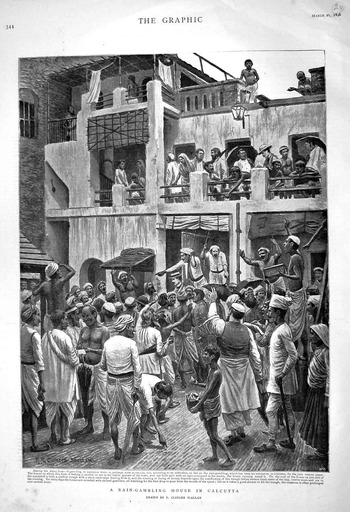
As Ritu Birla shows in her pathbreaking study of futures trading in India, it was in the regulation of recreational gambling that the distinction between illegitimate and legitimate trading practices was first made.Footnote 39 The first acts regulating gambling were passed between 1866 and 1868 in various presidencies and provinces in India. They were first and foremost concerned with questions of public disorder and the gathering in common “gaming houses” located in town centers. In particular, the practice of “rain gambling” came under attack early on. Rain gambling was a popular recreational gambling activity in Rajasthan, which was brought to Bombay and Calcutta by the Marwari immigrants. There were different forms of rain gambling, which in essence all centered on the betting on the time and intensity of the rainfall. In the Council of the Lieutenant-Governor of Bengal, rain gambling was described as “a form of public gambling . . .which tends to affect larger and larger numbers.” The source of the evil was easily found (Figure 1).
Rain-gambling was introduced into this City many years since by the Marwaris, who are much addicted to play and wagering of one kind or another, and is practiced in the Bara Bazar quarter, where they chiefly reside. For some years it was confined to one house containing a large courtyard where the gamblers can assemble. Two more houses were subsequently opened, and facilities for gambling are now offered at three establishments.Footnote 40
A Rain Gambling House in Calcutta, March 21, 1896.
Source: The Graphic March 21, 1896, 344. Retrieved from: https://commons.wikimedia.org/wiki/File:A_rain-gambling_house_in_Calcutta,_from_The_Graphic,_1896.jpg. In public domain.

The game itself was easy and accessible. It was explained as follows:
The bets are made on the occurrence of rain within a certain time, and they are registered three or four times daily. The proprietors of the premises offer odds against rain, and these depend chiefly on the state of the weather, ranging from level money to 2 to 1, 3 to 1, and so on, sometimes up to 50 to 1. Those who back the rain do not win unless the fall suffices to cause an overflow from a small raised tank through a spout, which is visible from the courtyard. A clock is kept on the premise to regulate the time. Footnote 41
For the most part, rain gambling was organized informally; as its popularity grew, it also occurred in betting stalls that followed more standardized procedures.
Rain gambling and speculations on commodity prices were jointly debated because observers saw many similarities. Both were confined mainly to the bazaar area of Burrabazar in the northern part of Calcutta, which was the wholesale and speculative commercial center of the city and mainly inhabited by the Marwari community. Speculation markets were held for cotton, jute, hessians, linseed, and shares.Footnote 42 Like rain gambling, they took place where Marwari agents would negotiate deals, which was in closed courtyards and alleyways that were entered through guarded doorways. The center of Burrabazar was the “Opium Crossing,” which by the late 1890s had become the center of speculation in cotton and opium but which also included other commodities.Footnote 43 In the last third of the nineteenth century, several betting houses opened their doors in this area. Betting was first confined to the Marwari but gradually other groups started participating in the speculative activities as well.Footnote 44 “Crowds of all nationalities are, indeed, to be observed at the gaming establishment. . . . They are frequented by Europeans, East Indians, West Indians, native Christians, Jews, Hindus, and Mahommedans, . . . native women, and even children.”Footnote 45 Each house provided a number of Marwari agents who registered bets for the proprietors in exchange for a commission.
Members of the Marwari community held a privileged role in the gaming houses. Because Marwari had started and organized the betting, other members of the community were granted access to supplementary credit that was denied to outsiders. They also took part in a widespread and well-functioning information sharing networks. A Calcutta journal of the English business community noted in 1891: “It is difficult to ascertain the sources whence he [the Marwari] derives his information, but that it is correct in nine cases out of ten, and that he has it before anyone else, is a fact which cannot be contradicted.”Footnote 46
During the 1890s, several reports complained about the gaming houses and the problems they caused for the inhabitants of the neighborhood. Starting in September 1896, all English-language newspapers reported about the popular recreational activity.Footnote 47 Many articles made the claim that rain gambling was almost indistinguishable from other commercial activities, most importantly from futures trading. The editor of the Hindu Patriot, Kristodas Pal, for example stated, “If rain gambling is to be stopped . . . then . . . forward transactions of every kind, whether in Government papers, gold and other shares, or jute or opium or indeed in any other kind of produce . . . ought to be suppressed also.”Footnote 48 Many voices claimed that the lines between gambling, wagering, and everyday market practices were blurred.
Despite these arguments and several protest letters by the Marwari community, the Legislative Council introduced a bill that forbade rain gambling in common gaming houses on March 20, 1897, which was passed on April 3, 1897.Footnote 49 The newspaper Pioneer criticized the bill by arguing that the distinction between gaming and betting was entirely arbitrary. It made reference to Germany’s ban of 1896 and called it a moral rather than a material measure. “When the German Emperor, recently in excess of his passion for shaping the manners and morals of the empire after the young Hohenzollern pattern, endeavoured to put a stop to forward trading in grain, the corn exchanges were promptly deserted.”Footnote 50 Further unsuccessful protests by the Marwari community followed the act, trying in vain to draw a line between legitimate futures trade and illegitimate gambling.Footnote 51
While rain gambling was henceforth forbidden, futures trading prevailed. Exchanges for jute existed since 1905–1906. Some were better organized than others. The East India Jute Association Ltd., for example, published fairly elaborate rules for “delivery contracts” and “hedge contracts,” and defined their aims and workings, and in the process legitimized the practices as moral and appropriate. The association also made periodical reports about them available. Most exchanges were run by Marwari, and they enjoyed widespread popularity with people of different nationalities and castes.Footnote 52
Over time, the Marwari community became increasingly more organized and lobbied collectively and proactively for its causes. This went hand in hand with indigenous—mostly Marwari—traders beginning to compete with British interests. In the jute industry, Marwari futures markets were not only highly profitable but also they allegedly destabilized the operations of the jute mills that were usually run by the British. British agencies depended on the price of raw jute, which they bought on spot basis. The speculative quotations from Marwari futures markets were telegraphed to different parts of the country, and they were used as the basis for adjusting raw jute prices. If they were high, they rendered British jute mill operations less profitable. Although the British often complained about the “gambling Marwari” and the volatile prices of jute, they nevertheless also relied on them to buy their excess production.Footnote 53 By 1911 futures markets for jute had become so important and influenced spot prices so significantly that the Indian Jute Mills Association appealed to the Bengal government to ban all futures trading on the ground that it was “making legitimate trade something of a huge gamble,” with the result being that “the price of jute was maintained at a level above its proper value.”Footnote 54
In 1912 another issue related to the distinction between legitimate trading and gambling took center stage in Calcutta: the betting on raw cotton prices. In March 1912, the government of Bengal reported to the government of India that this new form of wagering was omnipresent and triggering poverty and crime in the city. The “Cotton Figures Clubs” were reportedly “brilliantly lit” and “keep open till the early hours of the morning. Most of them are filled with excited groups of babus waiting for the momentous telegram which decides whether they have lost or won.”Footnote 55 According to Bengal police proceedings, however, the agents in the betting houses falsely declared the number on which the fewest wagers have bet to be the winner: “There is no doubt that the owners of these shops take advantage of the ignorance of the public. . . . Pure and simple gambling is in question. It has no relation whatever to the cotton trades.”Footnote 56
In this case, the clear characterization of betting on cotton prices as a gambling activity, as opposed to sound trading, resulted in an uncontested public condemnation. Cotton gambling was not as clearly associated with the Marwari as rain gambling. Maybe for that reason, or simply to avoid any potential association, the Marwari publicly demanded the immediate elimination of cotton gambling, which they characterized as an illegitimate practice. The Marwari, in taking a stance against this form of gambling, presented themselves as respectable businesspeople.Footnote 57 By working toward a clear line between morally acceptable trading and illegitimate gambling, the Marwari businessmen invested in raising their profile and countering critics.
Newspaper coverage and public outcry requested immediate action on the issue of cotton gambling. The press reported that “the evil continues to grow in Calcutta, and has now attached colossal dimensions. Some streets, Harrison Road especially, are at times almost blocked by crowds of eager gamblers.”Footnote 58 In the British Parliament, a parliamentarian asked “whether the Government are aware of the evils arising from gambling in cotton prices in India; and whether it is proposed to take any measures for its prevention,” and he was answered that the issue was being observed and that legislation may possibly be proposed.Footnote 59 In March 1913, the Bengal Public Gambling Amendment Bill was passed, clarifying that gaming also includes wagering or betting, with the exception of horse-race betting.Footnote 60 Notwithstanding the gambling bill, the press continued to report instances of cotton gambling.Footnote 61
Interestingly, for the Marwari community, cotton gambling was an opportunity to highlight the legitimacy of their futures markets in contrast to the game of chance of cotton gambling. Starting in 1900, the Marwari community organized itself in the Marwari Chamber of Commerce (later renamed Bharat Chamber of Commerce). To prove its respectability, the Marwari spoke out against different forms of gambling, which they wanted to see clearly distinguished from their commercial endeavors.Footnote 62 By the 1920s, prominent Marwari leaders turned to the possibility of legislation to protect their futures markets. Different Marwari associations, among them the above mentioned Chamber of Commerce, supported two bills calling for the regulation of wagering associations.Footnote 63 Debi Prosad Khaitan, a prominent Marwari leader and member of the Bengal Legislative Council, introduced the Wagering Association Bill on July 6, 1926.Footnote 64 It proposed that exchanges should be incorporated under the Indian Companies Act and that standardized rules should be established on how to trade on these exchanges. It further stipulated that any exchange not complying with those conditions should be declared a common gambling house.
The Wagering Association Bill was first delayed in council and then it lapsed automatically with the dissolution of the council in September 1926. In 1927 a nearly identical proposition was made by P. D. Himatsingka via the Futures Market Bill.Footnote 65 This bill argued for the necessity of futures markets:
Transaction[s] in commodities for futures delivery are an important feature of modern business. They enable traders to minimize the risk that they have to undergo in their legitimate business due to constant fluctuations in the price of all commodities, brought about by world factors. Transactions of this nature have been systematized in the commercial world by the establishment of institutions which in America and other European countries are known by the name of Exchanges. . . . [They] serve to provide a continuous market for the producer and consumer, to steady the market and prevent . . . “scares” . . . to reduce the risks of the bona fide trader and therefore, to restrict gambling.Footnote 66
The Marwari highlighted the positive effects of futures trading and even suggested it as a way to restrict gambling. The Futures Market Bill circulated for opinion, but Himatsingka absented himself from the council for political reasons and the bill fell through.Footnote 67
The Marwari futures markets continued to exist and be an exclusive affair of the community. Outsiders, who were granted access to the exchanges, lacked information or access to credit to successfully trade. British agents, in particular, voiced their concerns about the futures markets and the Marwari merchants operating them. Expatriate entrepreneur Edward C. Benthall, head of the large business group Bird-Heilger, wrote in 1929 to a colleague, “Since I see no possibility of stopping the existing phutka [Marwari futures exchange] we might as well acknowledge the fact and try to get one in which we can safely and openly deal.”Footnote 68 However, commenting on the interwar period, historian Tomlinson wrote, “While the expatriates continued to deplore the existence of this important market that they could not control, … their Marwari rivals developed futures trading to a fine art.”Footnote 69
The debates about the legitimacy of future trading can be summarized in three major points: the similarities between futures trading and gambling, the privileged position of a small minority that organized the trade, and the different points of view toward state regulation. In the first point, the similarities between futures trading and gambling were highlighted by the opponents of futures trading, who argued that futures trading was, in essence, a game of chance. In the second point, criticism from the beginning highlighted that the small group of the Marwari, bound together by kinship and caste, possessed an unfair advantage due to their privileged access to capital and information. In the third point, the Marwari themselves led the initiatives to regulate future trading hoping to achieve greater respectability for their business endeavors. Because the debates centered on ideals of morally acceptable behavior, it was important for the Marwari that a line should be drawn between pure gambling and acceptable forms of speculation. However, due to the political context and the different interest groups, the suggested laws ultimately failed to be passed in council.
Public Debates on Futures Trading in Germany
As occurred in India, both futures trading and the individual practices of those involved in business on the exchanges first became a matter of public interest in Germany in 1889, and a frequent critique was that futures trading was not based on actual commodities but was speculation on price differences. According to the critics, this made it a matter of manipulative power that would allegedly erode the morals of business. The call for government regulation to outlaw, or at least regulate, commodities futures trading was growing louder. For that reason, the chancellor of the German Empire appointed an Exchange Enquiry Commission in 1892 to investigate how futures trading actually worked and what effect it had on the German economy. In 1896 the Exchange Law Act (Börsen-Gesetz) prohibited futures trading of two commodities: grain and mill products. Futures on other commodities, such as coffee, cotton, and sugar, however, remained legal.Footnote 70
Scholars have long debated the effect of the Exchange Law Act. Some older arguments are that the law hurt the German business community and caused a migration of “business on the exchanges into other countries.”Footnote 71 More recent studies, however, find that by and large the law had no effect, and some scholars even debate possible positive consequences.Footnote 72 The increasing significance of German futures exchanges from the 1890s to World War I supports the argument that the law did little immediate damage. However, it has yet to be determined the extent it may have impacted trading practices and the organization of the futures markets.
As early as the 1880s, when futures exchanges were first established in Germany, a broad opposition formed among the traders who were not organized on the local futures markets. Over the years, the annual reports of multiple chambers of commerce and business associations registered their complaints.Footnote 73 An artificial boom at the Hamburg futures exchange in September 1888 strengthened this hostile position. Exchange traders had assembled with the common goal of buying up all available stocks of a certain class to drive up prices.Footnote 74 Stakeholders and the public at the time pondered the pros and cons of futures trading in brochures and newspaper and magazine articles.
The meetings of the Exchange Enquiry Commission in 1892 and 1893 marked the high points of this debate. The commission consisted of twenty-eight members nominated by the governments of the federal states in which the exchanges were situated, by imperial departments, and (in the case of scholarly experts) by the Imperial Ministry of the Interior.Footnote 75 In a series of meetings, which lasted multiple months, the commission questioned salespeople, agents, and commission merchants involved in business on the exchanges. It also questioned those dealing in different commodities but not involved in business on the exchanges; it also queried scholars, who were asked to respond to a catalogue of questions.Footnote 76 The questioning thus dealt as much with individual commodities as with general aspects of futures trading, such as specialized practices and possible bans or regulatory measures for the intended Exchange Law Act.Footnote 77
The commission made speculation on price differentials a matter of discussion, along with the question whether it implied a form of gambling. Although the gambling question was the most popular issue among the public and within the German Parliament at the time (similar to the situation in India), it was interestingly not the main concern of the commission. In the actual questioning, gambling received only secondary treatment. In one case at least, that of the September 1888 boom at the futures exchange in Hamburg, the commodities futures traders did concede the existence of unsound business practices. They argued, however, that it was simply a “childhood illness of the futures trade,”Footnote 78 which could be prevented by modifying regulation. Related to this was the question of who were the speculators that had caused such booms. The interviewed experts categorized groups of people on the exchange into “unsound” and “sound” speculators as well as “the general public.” As in India, the questions of who was a “good gambler” and which rules should be established dominated the discussion. The fear was that a flood of uncontrollable consortia would develop like an “epidemic” and that speculators would meet in public beer houses to make deals.Footnote 79 These speculators would also use advertising and disreputable means to seduce the general public into business deals based on futures, or they would use “agents, who go from house to house” to “catch” unsuspecting average people.Footnote 80 Whether speculation on price differences was simply gambling (i.e., situations in which luck determines a winner) was often asked to strengthen the hostile position against futures trading.Footnote 81 Those questioned unanimously rejected “illegitimate” speculators and demanded that only “sound” business partners be allowed access to the exchanges.Footnote 82
The dealers organized on the futures exchanges were confronted with the accusation that futures trading would corrupt the “morals” of businesspeople. Their response to this was the figure of the “reputable business man,” who was indeed dependent on futures trading but who found the business practice rather unpleasant. As a form of legitimacy work, traders proactively created and publicized their image. The owner of the Hamburg brokerage Embden & Drishaus, for example, stated:
I have had my own business since 1853 and have been in the coffee business since 1849. I was thus raised as an old-fashioned person, someone who was one of the biggest opponents of futures dealings. . . . . A short time, however, after futures trading was introduced, we saw that imports in Hamburg had revived, that the power of the Hamburg markets on the world market, which had nearly disappeared completely, had returned, and thus we gradually saw—I at least came to this gradually—that I believed futures trading to be a fully necessary evil. By no means do I believe it to be a pleasant business; for me personally it is actually always very unpleasant.Footnote 83
Cleverly, the futures traders painted a picture of themselves as “sound speculator[s].”Footnote 84 They also presented the existing organization of the futures exchanges as a means of guaranteeing both protection for the undiscerning public as well as the systematic exclusion of unsound business partners.
Suggestions to intervene in the organization and practices of futures trading turned out to be difficult to implement.Footnote 85 Everyone involved, moreover, recognized the basic difficulties and moral implications of a practical investigation into sound and unsound business practices. Commentators reflected on the difficulty of defining these terms and the problem of enforcing penalties. One commentator explained, “The transition from legitimate futures trading into stock market gambling rested on such a shaky and ill-defined dividing line that I believe it is scarcely possible to implement any sort of inhibitory penalties.”Footnote 86 To penalize speculation on differences, law makers needed to differentiate between commercially legal forward trading, on the one hand, and differences trading, on the other hand. This posed a challenge, as the only criteria for differentiating between the two was whether or not there was a deliberate intent to never fulfill a transaction for future delivery. Speculation on price differentials could only be prosecuted if evidence existed that a business deal was made without any intention of being fulfilled. The problem of definition, which criteria should be used to differentiate between sound trading based on price differential and pure speculation, or gambling, also characterized the debate on who should have access to the futures exchanges and which authorities should determine this.Footnote 87
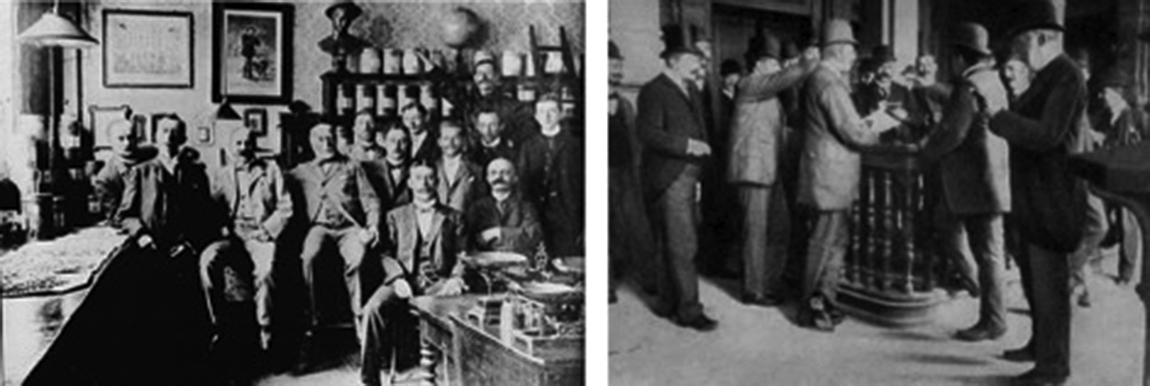
There was no satisfactory answer to any of these questions because a completely different problem was being ignored: all futures exchanges were organized by selected groups of merchants who de facto controlled access to them. This meant that every attempt to regulate them was difficult to carry out.Footnote 88 Critics of futures trading by and large failed to suggest any reasonable and enforceable protective measures for the general public. The traders on the futures markets, by contrast, worked hard on their image and pointed out that the restrictive access to their organizations was precisely the protection needed to prevent the general public from engaging in this trade. Only organization members were admitted to conduct futures transactions. Furthermore, all activities of the coffee organization in Hamburg where embedded in existing networks of personal relationships based on kinship, on ethnicity, and on being a “Hanseat.” This final point related to most of the members (up to 91 percent between 1870 and 1914) descended from families of prestigious rank who constituted the ruling class of the free imperial city of Hamburg (called Hanseaten). Along with strong ethical integration, no one could simply apply for a membership by himself. At least two members of the organization had to vouch for a potential candidate before all members voted by secret ballot on the nomination of a new member (Figure 2).Footnote 89
Coffee wholesalers at the local exchange in Hamburg, c.1900.
Source: Staatsarchiv Hamburg 612-5/8. Used with permission.

Correspondingly, the scholarly experts among the proponents repeatedly highlighted the mechanisms designed to produce trust among business partners (the criteria for access to the organization) and trust in the individual business transactions (the organization’s strict execution modalities on commodities liquidation payments), as well as their successful enforcement of sanctions.Footnote 90 On the most urgent questions that needed to be addressed under imperial law—questions of access to futures trading, fixing of prices, and own-name transactions of commission agents—the proponents of futures trading held unwaveringly to their positions.
The opponents, on the other hand, were a much more heterogeneous group, both in terms of their demands and in their means for articulating their interests. There was a multitude of individual demands, and many of them were incomprehensible and highly contradictory.Footnote 91 The domestic wholesaler Magenau, when asked whether the advantages of future trading would outweigh the disadvantages, cut to the heart of the matter: “Very much so! But I differentiate between interests.”Footnote 92 Only a small number of people even had the possibility of participating in futures trading.Footnote 93 Ultimately the critics were concerned with the consequences of the concentration of trade in a few local centers – made all the worse by the establishment of futures exchanges – and the advantages enjoyed exclusively by selected groups in those centers. The modalities for executing futures transactions as required by the organizations gave members of the organization further advantages and made it nearly impossible for outsiders to participate as profitably in futures trading.Footnote 94
Organization members monopolized the profitable futures trade in Germany. They presented themselves as ideal agents for the futures trade to outside parties who were not interested in commodities alone. The combination of local business, shipping business, and futures trading made it possible to balance the differences in supply and demand. For transactions carried out on an enterprise’s own account, futures trading could work as a risk management practice to protect against future price developments. It also made it possible to do business relatively independently of location, salesperson, and buyer. The way in which German wholesalers were able to shape new mechanisms of the global futures trade at the local level (for their own benefit) represents a shift in the power relationship within the commodity chain: importers and exporters now profited much more than domestic traders.Footnote 95 These changed market circumstances are an important part of the conflict. They split the wholesale sector into several different interest groups, each with its own set of political demands. At the core of the debate was not just the question of gambling versus legitimate trading but also, and just as important, the question of who had access to the advantages of futures trading.
As early as 1891 a study of futures trading by Carl Johannes Fuchs pointed out the problem that traders who were not organized on the local futures exchanges had much less access to pertinent information. This meant that they were excluded from the benefits of futures trading. The majority was “not in a position to evaluate the situation on the futures markets at any given moment.”Footnote 96 Those wholesalers, let alone the retailers, who were not organized on the futures exchanges were in no position to take on the enormous expenses of gathering information in the way that those organized on the futures exchanges could.
Critics complained about these disadvantages both in the public debate and in the context of the Exchange Enquiry Commission. The proponents of futures trade, on the other hand, pointed out that statistics on cultivation lands and trade exchanges had only started to be compiled after the introduction of futures trading. A decade earlier there had been no data at all on the market situation, whereas now it was even being published in the daily papers. Looking to the past for legitimization, they argued that there was more information available than ever before.Footnote 97 But that, of course, was not what critics of futures trade took issue with. As trader van Gülpen stressed:
Because futures trading came together at all with telegraphic connections etc., so it is also in the position to clarify many things, to attain harvest statistics, messages, and much more, much more quickly. But the real issue today is to see behind the scenes [of the exchanges] where those running things operate, and this we cannot do, this is taken from us. Individual gentlemen are able to do this. But when Mr. Robinow says: the truth can be more clearly seen today, this only refers to those operating behind the scenes, for everyone else the truth is obscured.Footnote 98
Ultimately, those questioned at the commission hearings agreed that futures trading as such was necessary and should not be prohibited. Even van Gülpen, its harshest critic, stated, “Oh certainly, futures trading fully has its justification, and differences trading also has its justification, in that every legitimate business with fully important reasons can become nothing more than trading in differences.”Footnote 99 The interviewed scholars, in particular, expressed the opinion that futures trading could not be given up as long as other exchanges also conducted business transactions in this manner, otherwise a ban in Germany would put German business interests at a blatant disadvantage.Footnote 100 Should futures trading be prohibited in Germany, those interested in such activities would simply conduct their business abroad. In this way all foreign wholesalers and their foreign branches, such as shipping and merchant banks, would profit while these branches in Germany would be at a disadvantage.Footnote 101
In its final report, the Exchange Enquiry Commission referred to the monopoly situation of futures traders. It determined that the concentration of trade in a small number of futures exchanges was detrimental to domestic business. A resulting disadvantage for the final consumer was presumed as well.Footnote 102 Yet, the commission also spoke in favor of futures trading and recommended no ban for individual commodities. For monitoring, it suggested a state board to oversee the exchanges and the establishment of an exchange register for commodities futures trading.
Shortly after the publication of the commission’s resolution, a fierce political fight broke out. The draft of a first exchanges law, presented in December 1894, was still largely oriented toward the suggestions of the Exchange Enquiry Commission. However, the German Parliament, the Reichstag, strengthened the law’s regulatory limitations. In the Exchange Law Act that went into effect on January 1, 1897, lawmakers recognized commodities futures trading as such. To complete futures transactions on the exchanges, traders now had to be registered in an exchange register. Due to the intense objections of Prussian grain traders in the spot markets, the law also contained specific exemptions for grain and mill products.Footnote 103 At the end of the long, drawn-out debate was an Exchange Law Act that generally forbade futures trading with grain or grain products—in contrast to the recommendations of the commission.
Upon publication of the Exchange Law Act, an immediate massive wave of criticism was unleashed. From a legal perspective, the political character of the law—particularly evident in its lack of uniformity—discredited it. It seemed impossible to implement. In practice, the exchange participants applied the law differently. The traders of some Prussian commodities exchanges, among them the Berlin traders, no longer went to the official markets. Instead, they met “at another location and, on the basis of business stipulations newly formulated among themselves,” they “began to conduct commercial forward trade transactions, even in grains. . . . Formally this meant that based on the literal construction of the Exchange Law Act, which was naively formulated in decisive points, the traders were in the right.“Footnote 104 Based of these experiences, in 1908 every kind of standard forward trades, even in grains and mill products, were explicitly allowed, though they had all the features of futures trading.
Interestingly, the Exchange Law Act of 1896, while establishing a ban on grain products, largely incorporated (not rejected) the demands of the proponents of futures trading. It did not put into question the essential organization of futures markets and explicitly allowed futures trading, the setting of prices, the defining of types, and the liquidation of commodities. The proponents achieved their most important goal: continuing in their established legal norms and business practices. Futures traders now had to register in the exchange registers, but since the exchanges were subject to the authority of trader organizations, they could still ban nonmember companies from conducting independent futures trading on their exchanges. The organizations still regulated access. Due to the regulations and practices of the organizations, however, even entry in the exchange register was not entirely necessary. Commission agents conducted most futures trades for committees anyway, and the committees were not forced to list in the register.Footnote 105
The stipulations of the Exchange Law Act of 1896 and its practical application thus helped indirectly to cement the monopolization of advantages in futures trading held by a small number of people. The law did not even mention the actual reason that opponents objected to futures exchanges; that is, the monopolization of international trade in a few centers and the corresponding exclusion of the majority of salespeople from the large profit margin of the value chain. Additionally, outsiders had to rely on futures market wholesalers as intermediaries. They had to pay for their services and accept the commodities and their qualities as they were. The commission recognized this dependency and made an explicit point of mentioning it in its final report. It even argued that the establishment of futures trading brought a majority of salespeople into a precarious situation in which they were forced “to live from hand to mouth.”Footnote 106 The final stipulations of the Exchange Law Act incorporated the multilayered criticism of commodities futures trading and its consequences. However, they did not call into question the existing rules (usages) and business practices on the part of a small number of traders on the local exchanges, with the exception of the temporary ban on futures trading for grain and grain products.
Comparative Perspectives and Conclusions
Debates about the legitimacy of futures trading were ubiquitous in the highly integrated world economy of the late nineteenth and early twentieth centuries. Innovations in transport and communication technologies triggered major changes in the way trade was conducted. The end of the nineteenth century saw a greater division of labor in international commerce than previous decades. Most firms operated in only one function among the many along the value chain. This way of organizing trade emerged as the norm for overseas trade. New technologies and the related opportunities, however, did not automatically democratize the access to markets. Comparing Germany and India, we have shown that new barriers of entry appeared that excluded a majority of potential traders from futures markets and increased opportunities for only a small minority.
As a consequence, public debates in both Germany and British India addressed the profits of a minority of traders at the expense of a larger majority of interested, but uninformed and inexperienced, market participants. Social ties based on kinship, ethnicity, and (in the case of India) caste defined this select minority. The shared place of residence reinforced their social community, with the traders spending much of their time in close physical proximity. In both countries, being present at the place of trade was of pivotal importance for profitably participating in futures trading. Customs and rituals were central to building and confirming the cohesion of the group—a point Andrew Popp also made in his study of Liverpool’s nineteenth-century cotton brokers.Footnote 107 While seemingly making the marketplace more global and allowing investors to buy and sell contracts in faraway places, the social reality of futures trading reemphasized the importance of the local.
We find several reasons for this development. First, the costs of accessing and using futures markets for any individual were high. Constant access to information, although it was technically possible, was expensive to realize outside of a tight-knit social community. Staying informed about trade developments through subscriptions to news agencies via the telegraph, or later the telephone, and the subsequent communication with potential clients all incurred substantial costs.
Second, considerable social barriers limited access because futures trading occurred in locally organized exchanges in selected spaces. Only members of socially defined groups could hope to profit from the advantages of these exchanges, including access to information. While this is very clear for the Marwari community in India, being part of a socially defined “in-group” was equally important for the wholesalers in Germany. In both contexts, the criticism against futures trading was rooted just as much in the privileged access of select social groups as in the lack of intent to deliver actual goods.
This was, third, reinforced through being part of a social network, which allowed members of these communities to profit from futures trading in multiple ways. Being active on both the spot and futures market made it possible for members to balance differences in supply and demand. In that respect, futures trading acted as a risk management instrument to protect against price developments on the spot market. Furthermore, it allowed traders to profit from arbitrage in different local markets for their own accounts. Finally, members of these communities were also well equipped to offer their auxiliary services to outsiders against payment.
Both minority groups—the wholesalers in Germany and the Marwari in India—benefited from the new form of trade organization, but both were also confronted with criticism for their business practices. These market circumstances, we argued, were an important and, so far, understudied object of the debate and conflict. In Germany, the conflict split the wholesale sector into several different interest groups, each with its own set of political demands. Similarly, in India, different interest groups mobilized in response to the accusation of engaging in illegitimate business. Most important, British agents who feared lack of opportunity and falsely calculated spot prices that were to their disadvantage accused the Marwari of immoral speculation. The debates in both places centered on the question of who had access to the advantages of futures trading and who suffered the disadvantages from it. Not surprisingly, the advantaged groups of traders also had a voice and agency in the debate and actively projected an image for themselves as “sound speculators,” while actively differentiating their practices from illegitimate and unsound business. Undoubtedly, new information and communication technologies made many of the social practices related to futures trading possible. However, it was not just technology that paved the way for change but also the struggle for legitimacy and the competing narratives about futures trading. In line with arguments made by Per Hansen and Deirdre McCloskey, the rhetoric surrounding the value of business and the conflicts around what was considered appropriate, and by whom, shaped the development of futures trading in both countries.Footnote 108
In Germany and India, closed social groupings organized most exchanges, making it difficult for local and national governments to regulate them. Selected contemporaries in both countries identified this problem. Even in Germany, where a ban on grains and mill products was passed in 1896, actors circumvented the regulation through alternative strategies. A decade later, in 1908, the act was de facto dissolved when standard forward trades in grains were explicitly allowed, even though they had all the features of futures trading. Despite the debates about futures trading and attempts to regulate in both Germany and British India, small socially defined groups continued to profit from their privileged access and to exploit the trade organization for their own benefit.
Germany and British India are but two examples of countries in which futures trading regulation was debated. We have reviewed the very different contexts in these two countries and the similarities in the debates and challenges. The narratives on futures trading in both countries did not focus predominantly on the economic practice of futures trading (i.e., engaging in a contract that does not lead to the delivery of a good), but looked at the legitimacy, rights, and power of socially defined interest groups that controlled access and exercised their influence. Foregrounding the social inclusion and exclusion and the important role of business communities for understanding the practice of futures trading allows for a different perspective than the largely US-focused literature on futures trading has put forward so far.Footnote 109 The results of our comparative exercise question the argument that the universal purpose of futures trading is risk management. We instead unveil the historical power scuffles and socially embedded practices at play during the emergence of a business practice that struggled for legitimacy.